





9 Train Etiquette Tips You Need To Know
9 Train Etiquette Tips You Need To Know

As with airplanes and hotels, there are both written and unwritten rules of passenger etiquette when traveling by train. That’s true whether you’re riding aboard Amtrak or the local subway. Some etiquette rules may be considered common sense, but if you don’t ride the rails frequently, you may not be familiar with the ins and outs of being a considerate passenger to your fellow train travelers and staff members. Here are nine helpful train etiquette tips to keep in mind.
Keep Bags Off Seats
Frequent rail riders say taking up too much space is one of the most annoying things other passengers do on trains. Seats are intended for humans, not your personal belongings (or pets). This is especially important on crowded trains — such as those during rush hour — where available seating may be scarce. While you may be tempted to place a bag on the seat so you have extra personal space, doing so is considered rude.
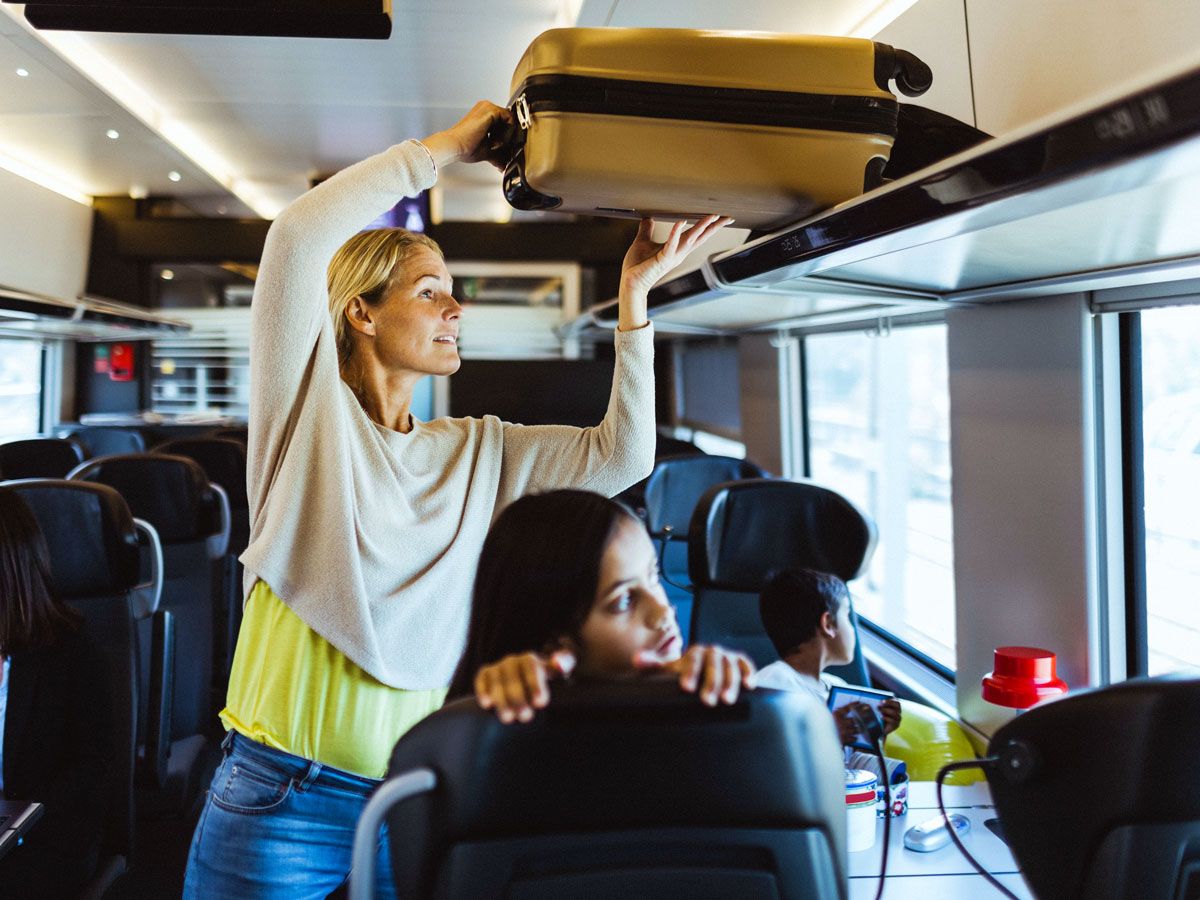
Instead, keep bags or other personal objects on your lap, in your hands, under the seat in front of you, or atop any luggage racks that may be available overhead or at the end of the car. Making each seat available not only provides other passengers with the comfort they’re entitled to but also helps keep the amount of standing passengers in crowded aisles and vestibules to a minimum.
In addition to keeping bags off seats, be sure to keep your body confined to just one single seat and avoid kicking up your feet or lying down across multiple seats. Thankfully, you’ll find footrests located in front of you on most Amtrak trains.
Use Headphones
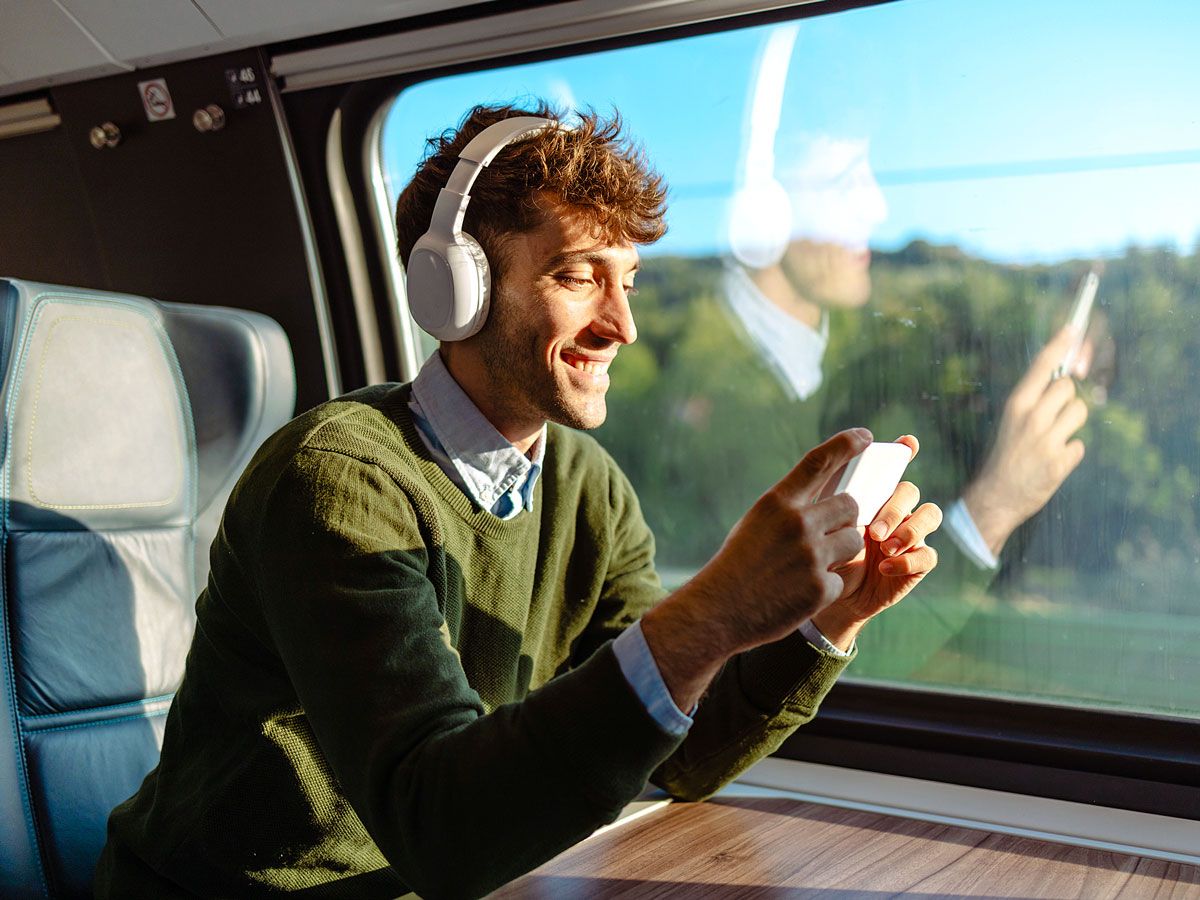
I’m a frequent train rider myself, and nothing irritates me more than other people watching videos, listening to music, or having loud speakerphone conversations without headphones. Unfortunately, this is becoming a more frequent occurrence. Avoid being part of the problem and always pack a pair of headphones when riding the rails. Remember, nobody else in the car wants to hear what you’re listening to.
Speak in Subdued Tones
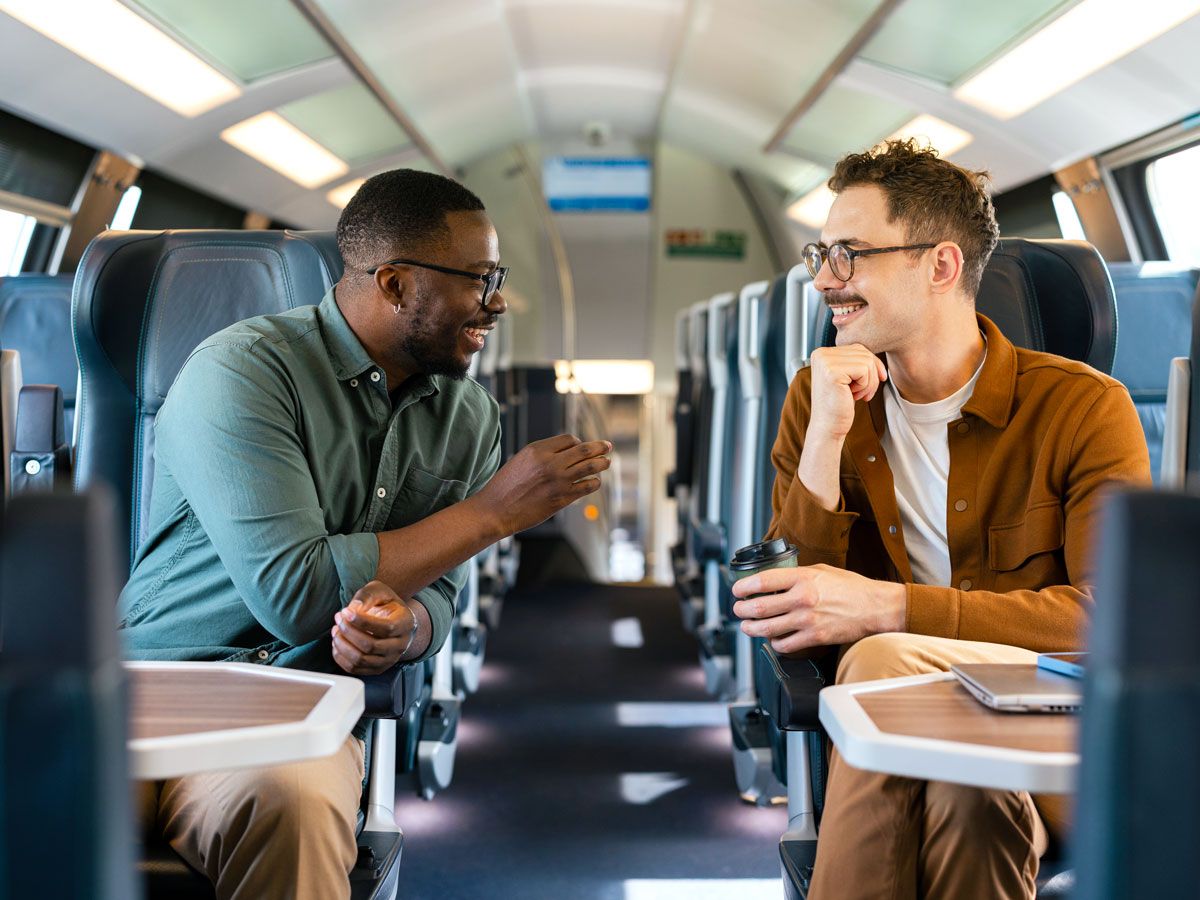
Much like in other public places, you should aim to keep the volume of your conversation at a reasonable level so your voice doesn’t echo throughout the car. But with train travel, there are a few additional distinctions.
For instance, it’s more acceptable to talk aloud on the subway than it is on an Amtrak train. On Amtrak, there are also stricter rules if you find yourself seated in one of the quiet cars, which are located on many Amtrak trains and regional rail lines and are clearly labeled as such. These cars are intended for peaceful and quiet rides, which means all phone calls are explicitly prohibited. If you need to chat with the person next to you, speak in a soft voice and keep conversation to a minimum.
Wait for Riders To Exit Before Boarding
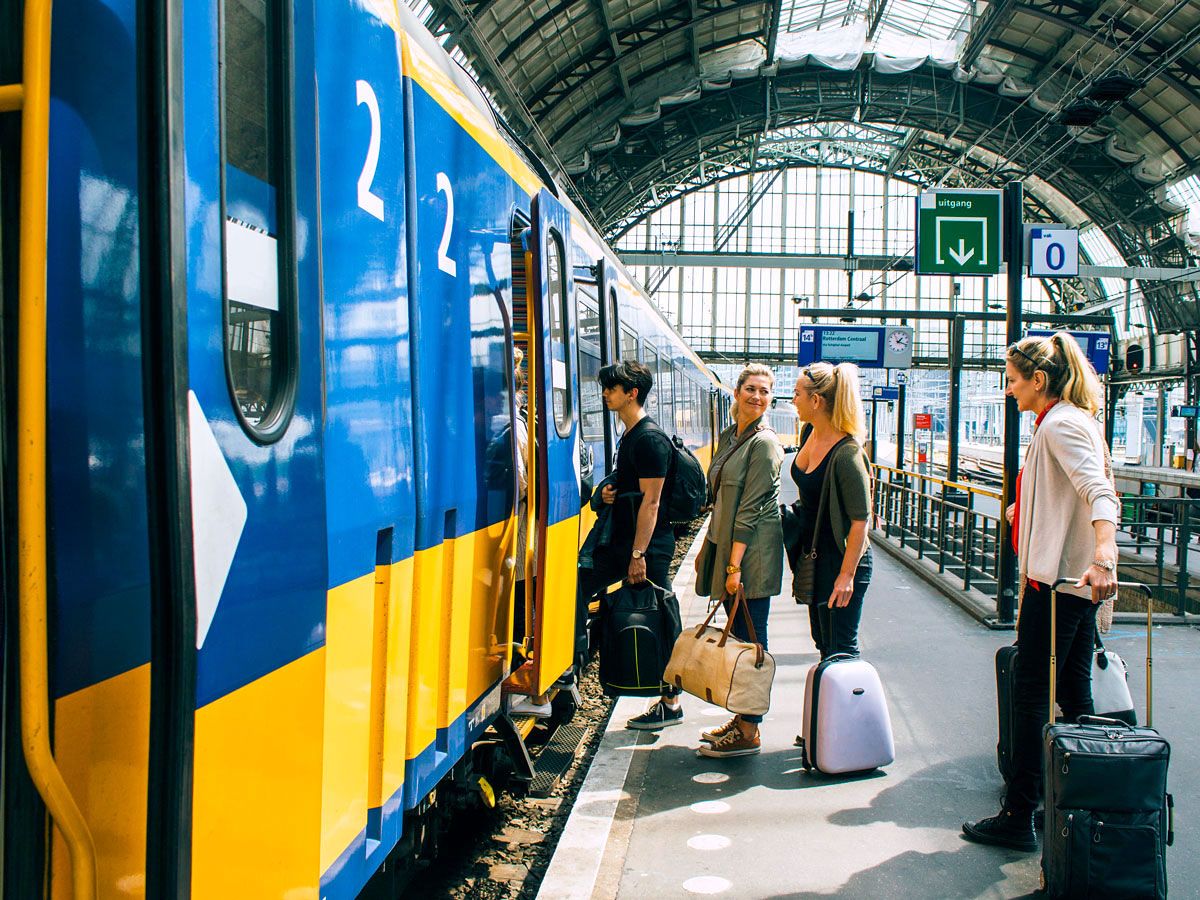
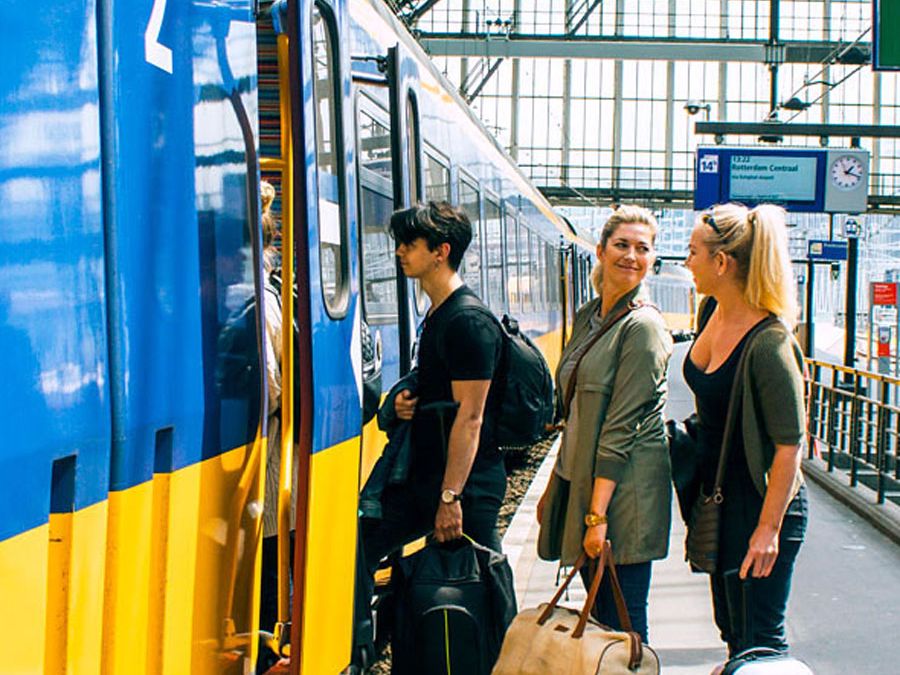
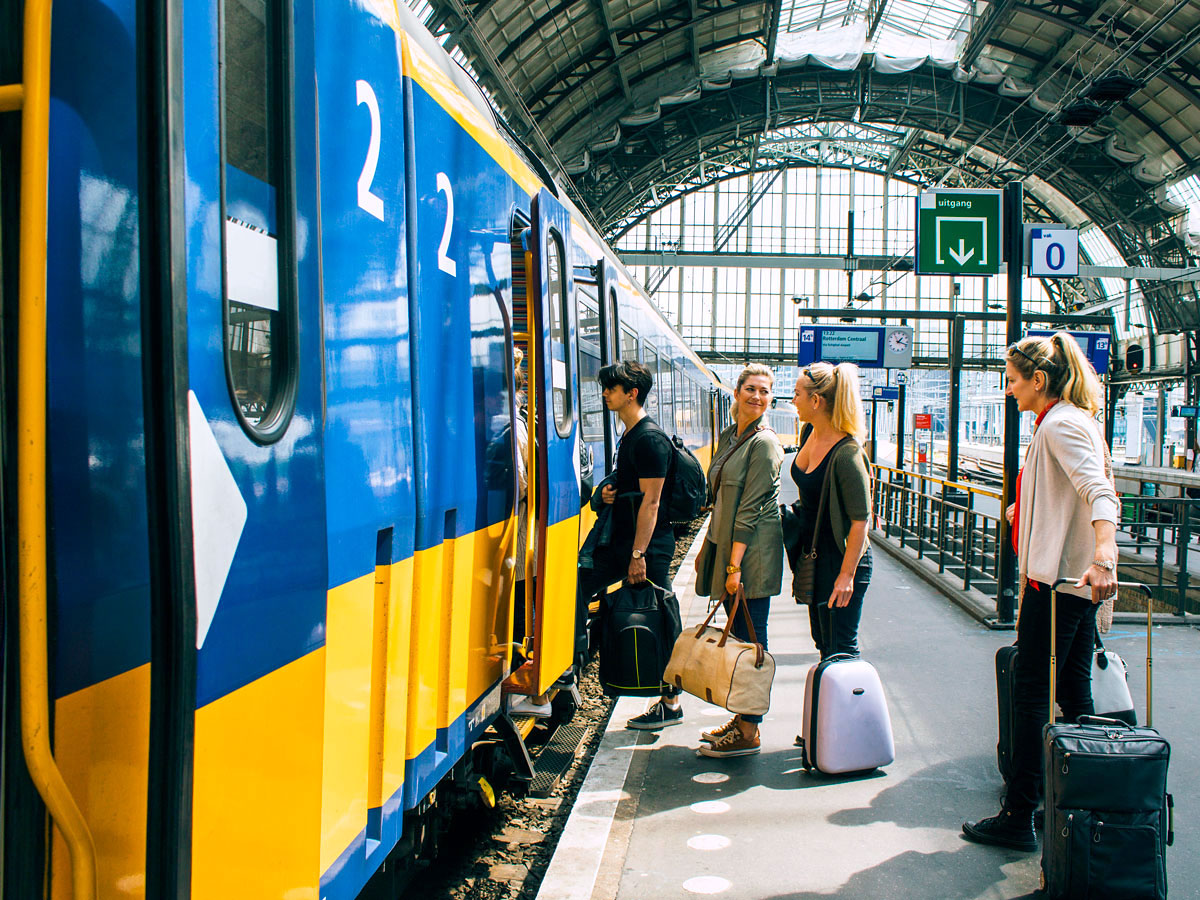
When boarding a train, the proper etiquette is to stand off to the side of the open doors and wait for passengers to exit. Only once it’s clear should you attempt to board the train yourself. If you try to push onto the train too early, you’ll end up bumping into those who are trying to leave, causing an unnecessary traffic jam — and potentially forcing the train to sit in the station for longer than necessary.
Don’t Block Aisles or Doors
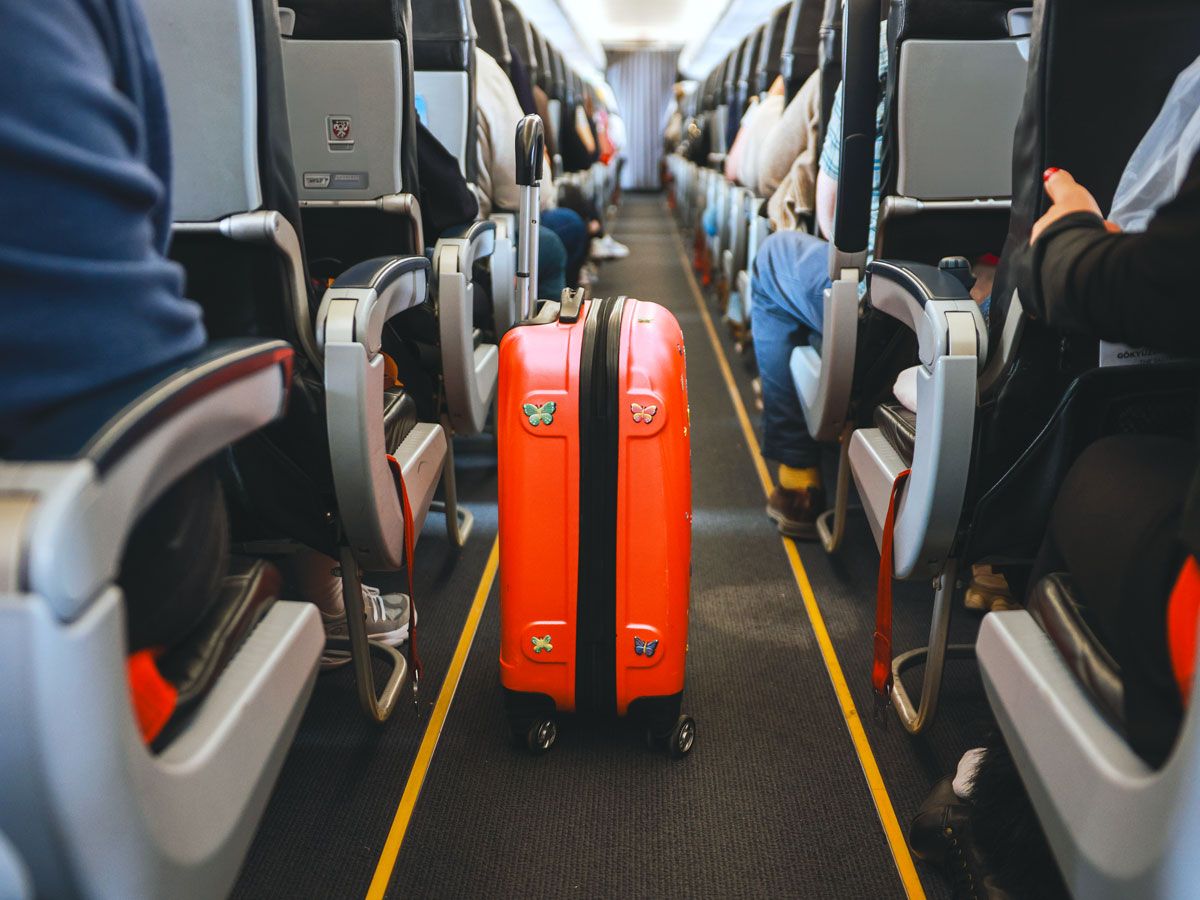
Extending your legs into the aisle or keeping your luggage in the middle of the walkway prevents your fellow passengers from easily getting on and off the train, especially in the rare event of an emergency. This holds true for the vestibules at the end of the car, too, as you should never stash your luggage in front of the doors.
Share Outlets
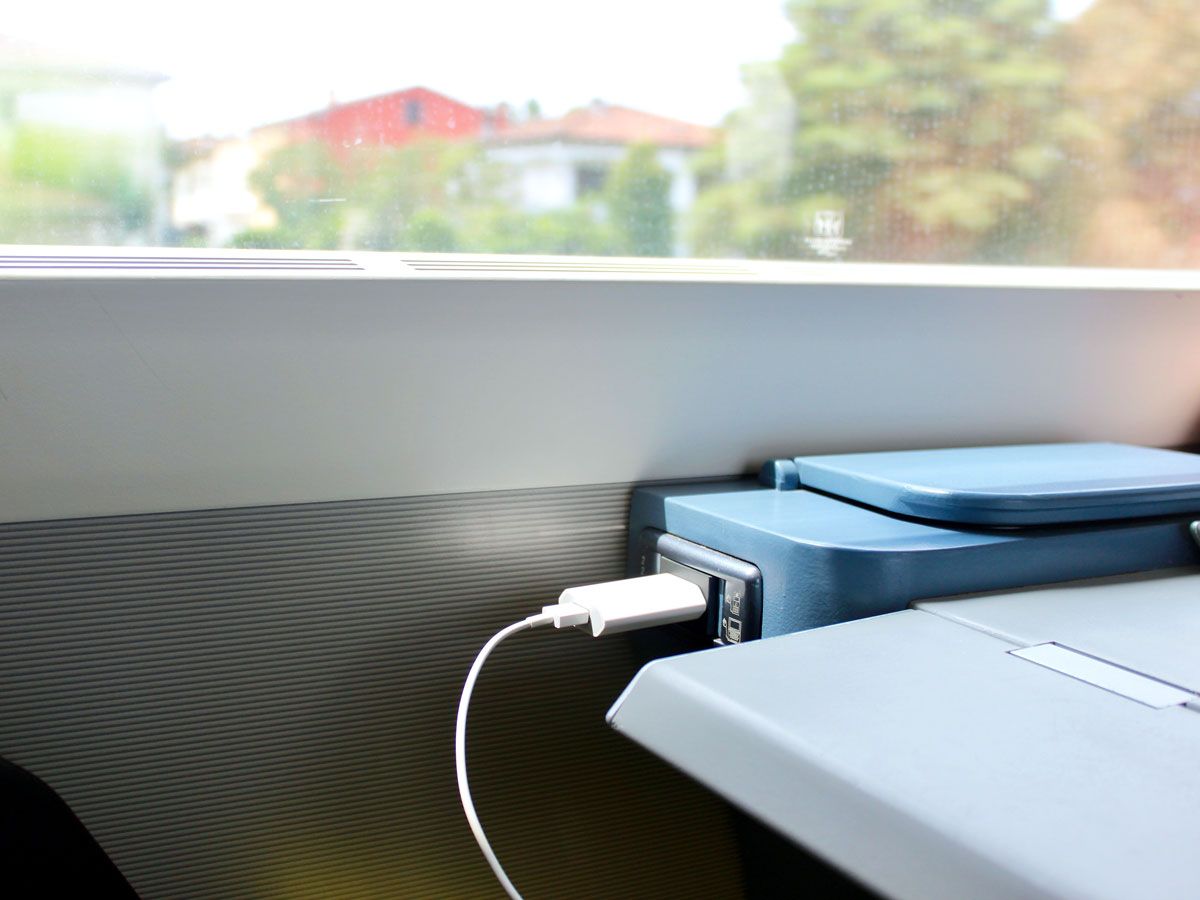
Amtrak provides two outlets for every pair of seats, though they’re often located closer to the window. This means that the person sitting in the window seat has easier access than the passenger sitting on the aisle. But if you need to charge your device, don’t be a hog — always share with your seatmate, even if it means their power cord running underneath your legs.
Offer Up Accessible Seating
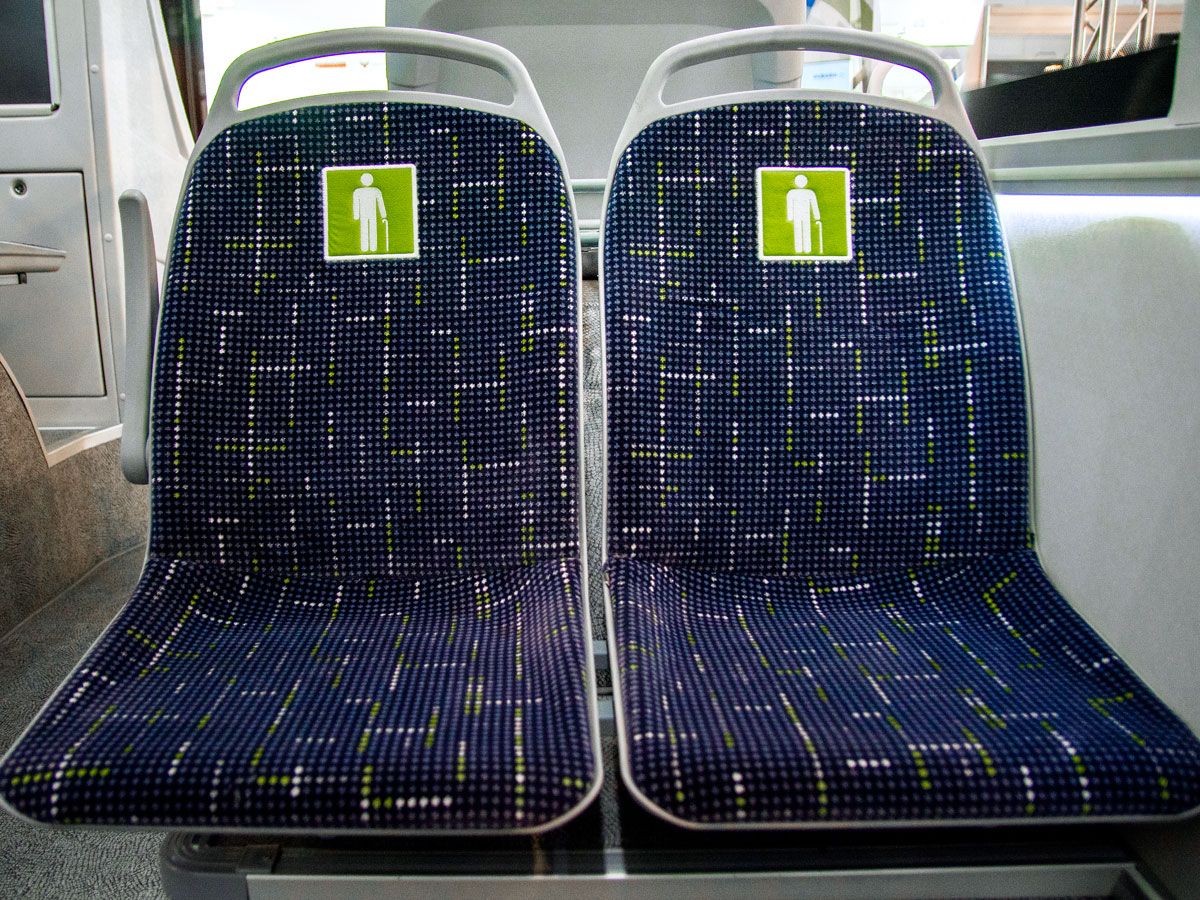
Typically, there are certain sections or seats of a train car — whether it’s regional rail or a city metro line — designated for people with accessibility needs. These seats are often clearly marked; for example, the New York City subway has signs that read, “Priority Seating for persons with disabilities.”
While it’s fine to sit there in an otherwise empty car where there’s nobody with special seating needs, you should relinquish your seat and move to a different location if someone requests to sit there, keeping in mind hidden disabilities.
Be Prepared To Disembark
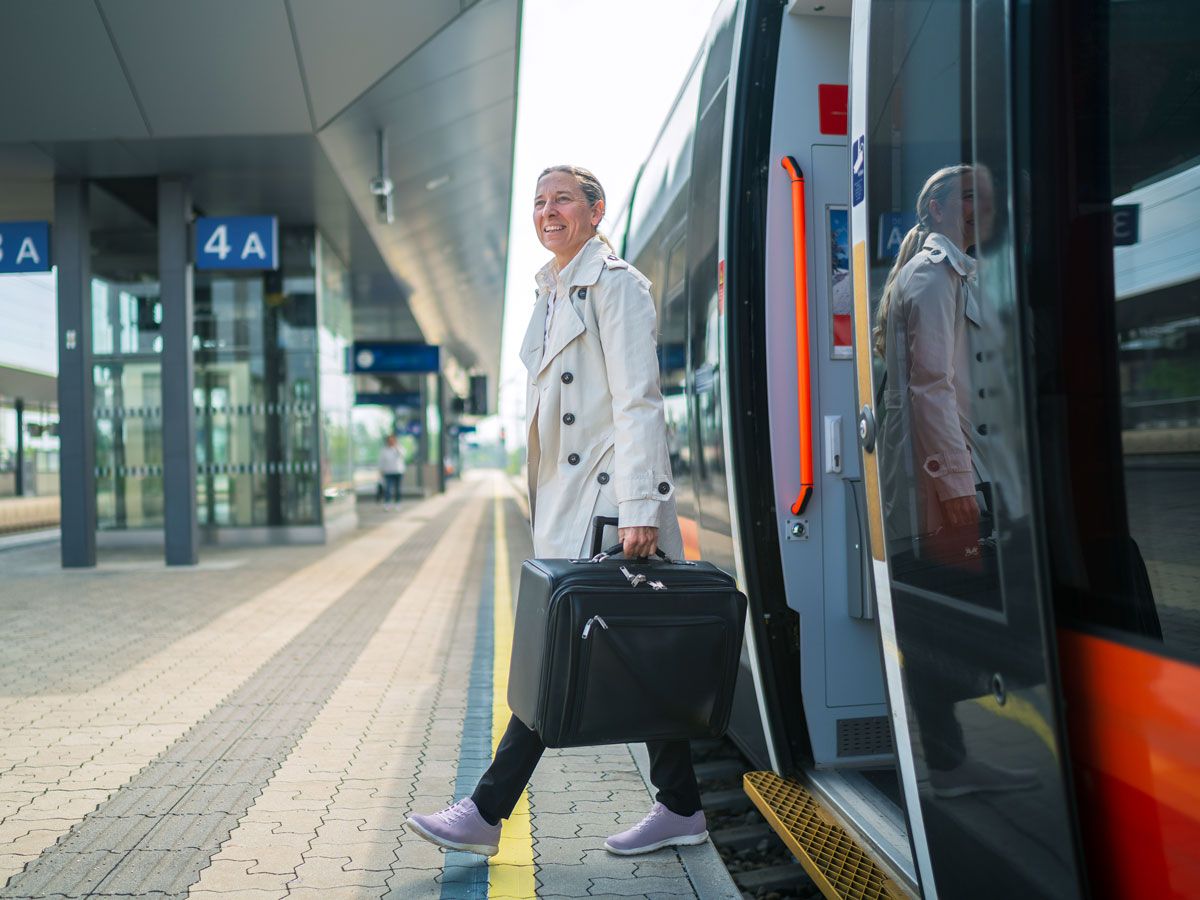
Rather than waiting until the last minute, start to gather your belongings as you approach your stop. Otherwise, you may have to scramble to get off or cause a delay at the station. (You could also get caught in a traffic jam if you don’t make it to the exit before people start to board.) A little preparation can go a long way in terms of respecting your fellow passengers.
Be Mindful About Eating (And Your Trash)
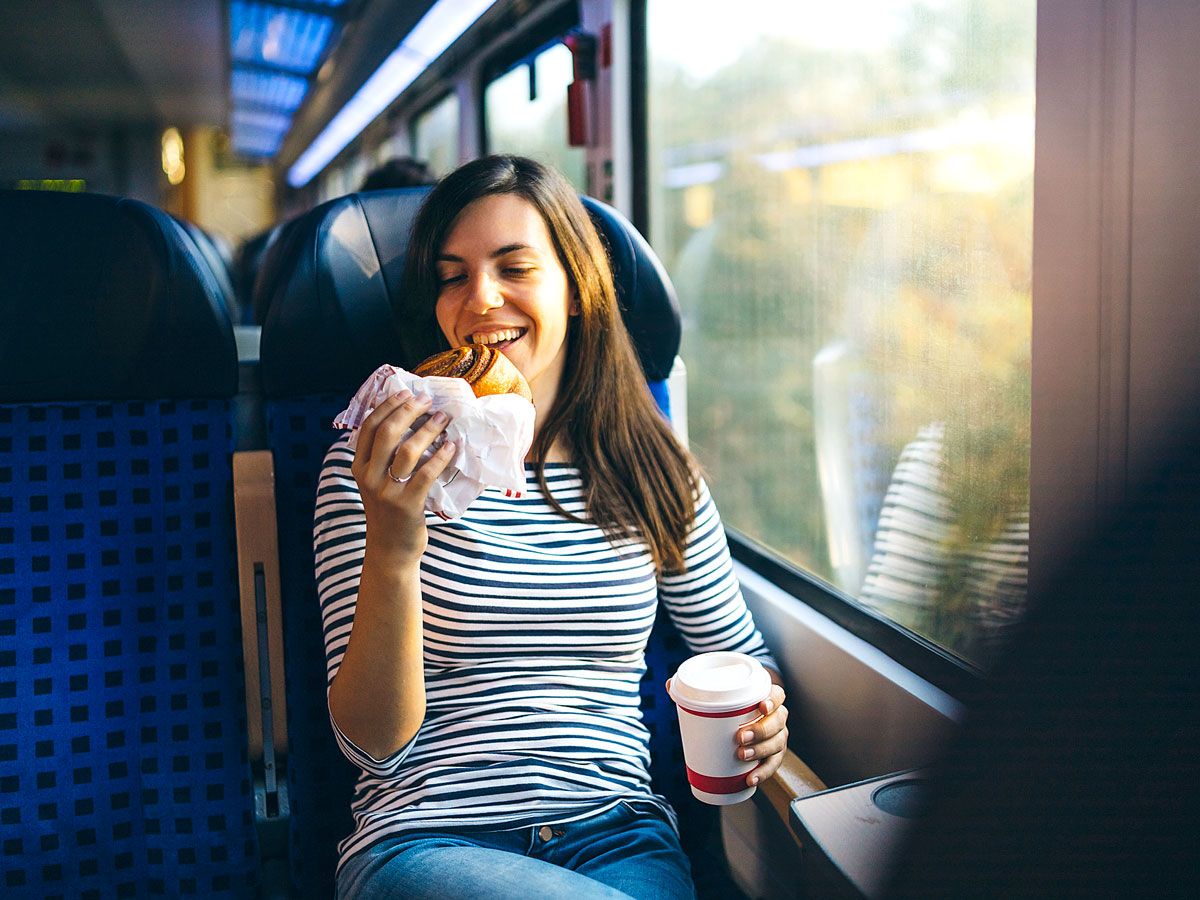
When it’s time to leave the train, you should always clean up all of the trash at your seat, such as food wrappers or beverage bottles. Usually, you’ll find dedicated garbage bins at the end of the car on Amtrak trains and aboard many regional rails. If not, take your trash off the train and dispose of it in any garbage cans located on the platform.
Additionally, when bringing food aboard, particularly in more crowded train vehicles like subways, try to be considerate of what you eat. According to The New York Times, for example, “It is an unspoken compact among subway riders in New York City: If you are going to eat on the train, keep it simple.” That means avoiding messy or smelly foods that may be inconsiderate to your fellow passengers and train cleaning crews.
More from our network
Daily Passport is part of Inbox Studio, an email-first media company. *Indicates a third-party property.