




Why Wine Hits You Harder on a Plane

For many travelers, enjoying a glass of wine or a beer is part of their normal flying routine. But you may notice that when you drink on a plane, you can’t handle alcohol as well as you do at home. Ever wondered why? Here’s the science behind why alcohol hits differently at 30,000 feet and a few tips to alleviate its effects while flying, so you can feel better when you arrive at your destination.
The Consequences of Drinking on a Plane
The level of humidity in a plane’s cabin is significantly lower than it is on the ground, and this can have a dehydrating effect on passengers. According to the U.K.’s Civil Aviation Authority, the humidity in airplane cabins is around 10% to 20%, which is nowhere near what we’d experience in a building on the ground (40% to 50%). This means that over the course of an eight-hour flight, for example, we lose around 5 fluid ounces of moisture on average, which is why we might experience dry skin, eyes, noses, or lips.
Alcohol on its own also has a dehydrating effect, so when we consume it while flying, it acts as a double whammy. Like caffeine, alcohol is a diuretic. This means that it prompts your body to limit production of a hormone called vasopressin, which in turn causes you to urinate more often and flushes out much-needed fluids from your body.
Impact on Blood Oxygen Levels
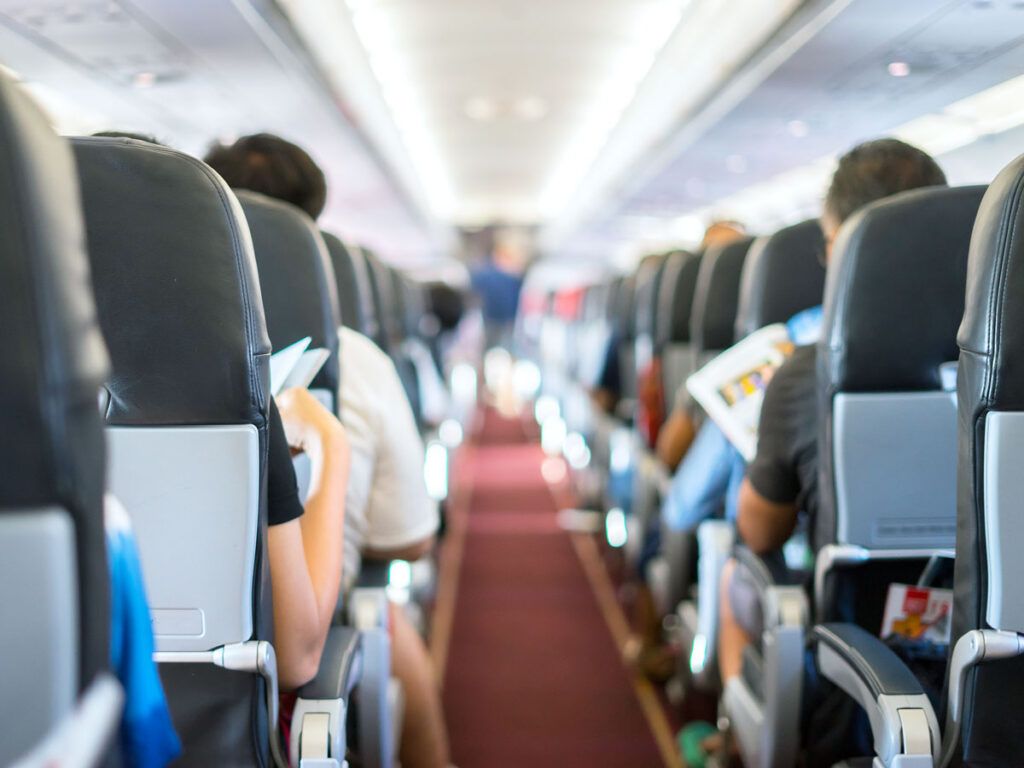
The air we breathe at sea level typically has an oxygen content of about 21%. In the pressurized cabin of an aircraft, this can fall to around 15%. According to Harvard Health, when we spend time in a pressurized aircraft cabin, our blood oxygen levels naturally drop from a normal range of 96% to 100%, down to 90% or below. We need to breathe faster or more deeply to counteract this.
Add alcohol into the mix, and you might increase the strain on your body. Some medical professionals believe that alcohol could make our red blood cells less effective at taking up oxygen. One study in the medical journal Thorax suggested that the combination of in-flight alcohol and cabin pressure could even put passengers’ heart health under strain while asleep.
Sober Is Safer
While no one expects to be faced with an emergency when flying, accidents do happen occasionally. Alcohol impairs coordination, slows reaction times, and increases the chance of falls, so you may not respond as quickly as those around you if you’ve consumed a significant amount of alcohol while in the air.
A 2020 article published by the Institute of Alcohol Studies stated that “alcohol has a range of psychomotor and cognitive effects that increase accident risk” and that “research has found that the severity of both limb and head injury correlate directly with blood alcohol concentration.” In short, if you need to evacuate the plane in an emergency, you’ll be far better off if you haven’t been drinking.
Counteracting the Effects of Dehydration
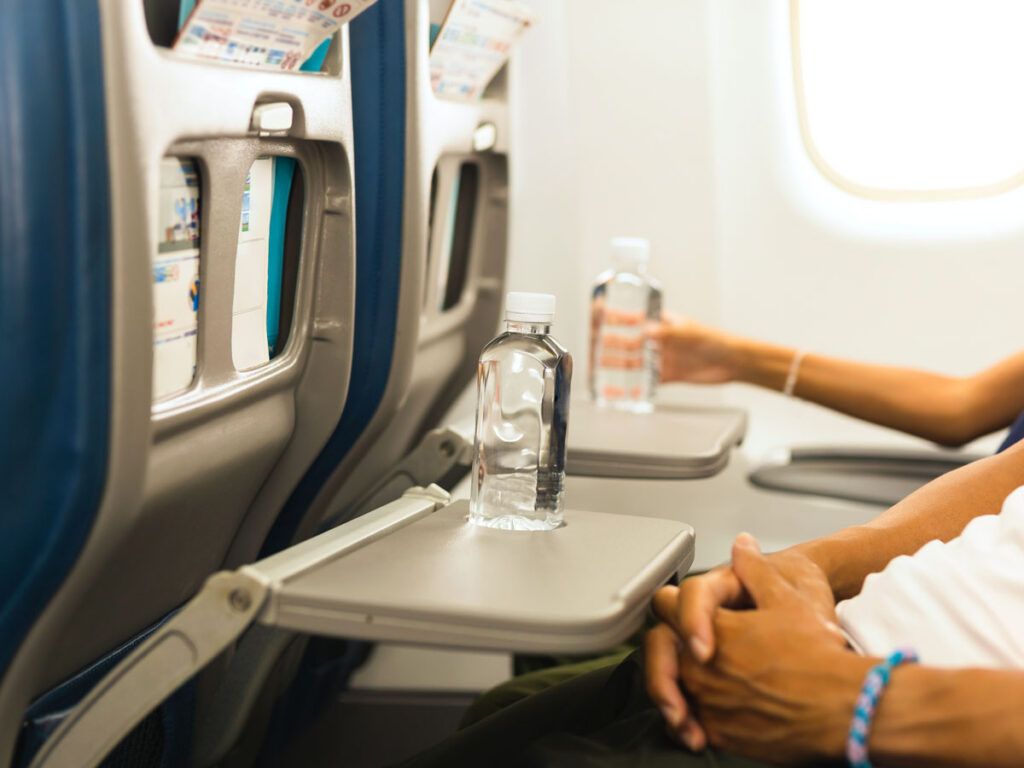
The easiest and most effective change you can make the next time you fly is to choose not to drink alcohol at all. If you drink too much during a flight, hangover symptoms are more pronounced, and there’s a higher chance you’ll experience a headache or fatigue as well as feel extra thirsty. Not to mention, airlines may deny you boarding if you’re showing visible signs of intoxication.
If you’d still like to enjoy an alcoholic beverage or two, plan to also consume plenty of water. Better still, bring a refillable bottle through airport security and seek out a water fountain before you board so you have your own supply.
As with alcohol consumption in general, moderation is key. But if you really want to be kind to your body next time you go on vacation, consider waiting until you’re at the hotel bar to order that first glass of wine.
Featured image credit: © Jaromir—Moment/Getty Images
More from our network
Daily Passport is part of Inbox Studio, an email-first media company. *Indicates a third-party property.