






Why Some Pet Passports Are No Longer Valid
Why Some Pet Passports Are No Longer Valid

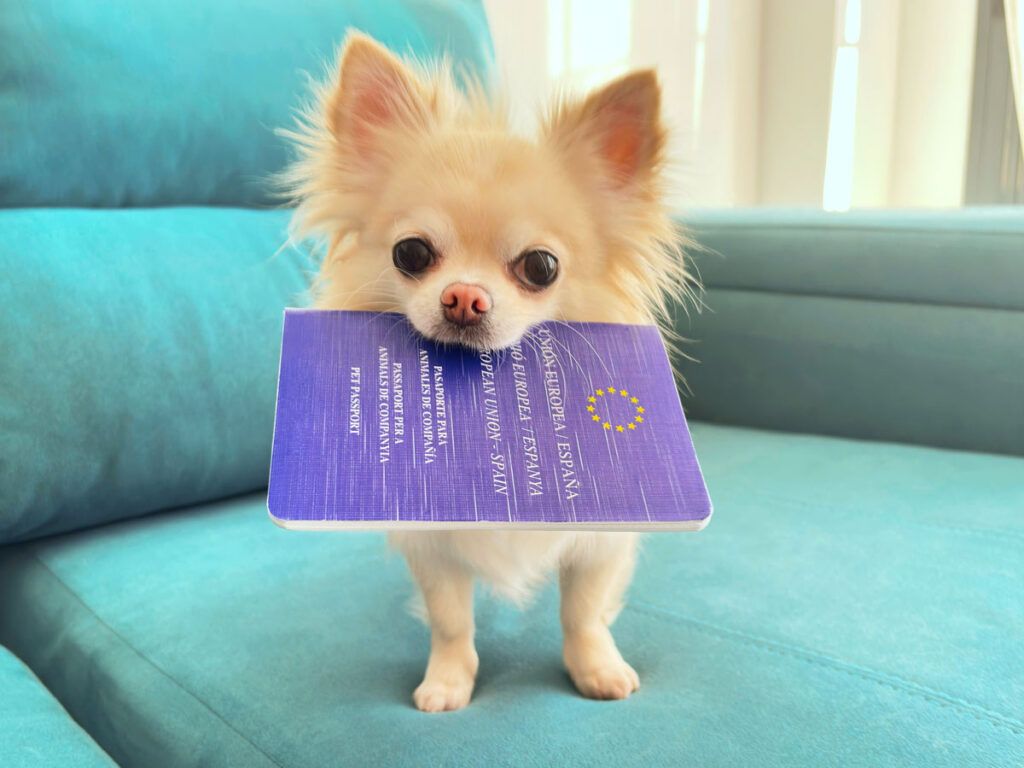
It may be true that all dogs go to heaven, but they can’t all go to Europe with you — at least not without jumping through quite a few hoops first. Until recently, Brits traveling with a pet to the European Union (of which they were a part before 2020’s Brexit) could do so easily enough with an EU pet passport, a travel document specifically for cats, dogs, and ferrets. (Sorry, every other animal.) However, as of April 2026, that’s no longer the case for British pet owners. Here are all the details.
Papers, Please
Traveling with pets requires a fair amount of extra planning and paperwork — particularly if you’re traveling overseas. The USDA’s Animal and Plant Health Inspection Service has a handy website that explains these many steps and directs you to look up the individual requirements of your destination country.
If you live in the U.S., your pet does not need a U.S. passport. However, there are several other important documents to obtain. For example, if you’re traveling to France with Fido, you must meet the EU’s microchip and rabies vaccination requirements, consult an accredited veterinarian to issue an EU health certificate for your dog, and have the USDA endorse this certificate before you can enter the country.
The EU pet passport aims to simplify this process if you’re moving between member states of the European Union, so you don’t have to obtain a health certificate for each individual country, which can be time-consuming and costly.
Sadly, EU pet passports are not issued in the U.S. and are available only to EU residents, but reports suggest that non-European pet owners have been able to skirt those requirements and obtain one once they arrive in Europe (even though the rules officially do not allow for this). Obtaining an EU pet passport can be a major time-saver — not to mention far cheaper — for people who travel around Europe frequently with pets.
New Regulations

Brits with pets were still able to obtain and use the EU pet passport even after Britain exited the EU in early 2020, but that changed earlier this year. And like many post-Brexit regulations, the new process is more arduous than the old one.
“[Great Britain] residents should no longer use EU pet passports to travel into the EU,” according to new guidance posted on the Department of Environment, Food and Rural Affairs (Defra) website. “EU pet passports may now only be issued to people whose main home is in the EU and should not be used by people who have holiday homes in the EU or visit seasonally.”
Any pet passports issued prior to April 22, 2026, are no longer valid. The U.K.’s Animal and Plant Health Agency (APHA) now says that “anyone planning to travel should check guidance on GOV.UK, and the entry rules for their destination. To avoid delays and ensure a smooth journey, pet owners residing in Great Britain should get an Animal Health Certificate if they’re travelling from Great Britain to an EU country.” ACHs must be issued within 10 days of entering the European Union and are valid for four months.
According to The Guardian, some British pet owners have had to pay 250 pounds ($334) for a single ACH, though they can be less expensive at veterinary offices located near ports and the Chunnel — as low as 69 pounds ($92) for one pet and 94 pounds ($126) for two. Animal Health Certificates are single-use and limited to five pets per private vehicle — bad news for anyone who prefers to bring the whole gang on holiday with them.
The new rules don’t just affect normal pets, as service animals are beholden to them as well. In a statement to the BBC, Guide Dogs for the Blind said that “the cost and complexity of obtaining an Animal Health Certificate for every journey has prevented many guide dog owners from being able to work, attend important events, and travel independently.” The BBC spoke with several pet owners about the changes, some of whom now have to pay 500 pounds (about $667 USD) more than they were expecting to for their planned trip. Others have had to cancel their plans altogether.
Featured image credit: © Olga Yastremska—iStock/Getty Images
More from our network
Daily Passport is part of Inbox Studio, an email-first media company. *Indicates a third-party property.