


The World’s Only Airport Shared Between Two Countries
The World’s Only Airport Shared Between Two Countries
You may have heard of the Schengen Treaty. Signed in 1985, it facilitates cross-border movement between the 25 EU countries currently part of the Schengen Area, plus four other European nations. This goes to show how close cooperation across European borders is nothing new — in fact, two countries have even figured out a way to pull off an airport under joint control, making it the world’s first and only binational airport. Here’s the fascinating story of how it came to be and what travelers can expect.
An Airport for Basel
City planners in Basel, Switzerland, realized as early as the 1930s that aviation was changing rapidly and that the tiny airstrips of the era would need to make way for much bigger airports. At that time, there was just a small airfield in the area called Basel-Sternenfeld. The authorities in charge of the Swiss cantons of Basel-Stadt and Basel-Landschaft had to come up with a plan if they were to be able to accommodate new, larger aircraft such as the Douglas DC-3, which was set to revolutionize commercial aviation.
Officials for the city — located on the Rhine River near where the Swiss, French, and German borders meet — began talking to their neighbors in France, where the idea of an airport right on the border received a warm reception. A suitable location across the border in France was found, but negotiations hit a road bump when World War II started, and the idea was shelved.
A Symbol of Renewed Cooperation
In the immediate aftermath of the war, communities and governments alike were keen to build bridges and forge connections to repair relations and look to the future. In the trinational Basel-Mulhouse region, this meant that the airport project was back in favor. The French city of Mulhouse also stood to gain, as the new airport would represent a significant upgrade over their existing Mulhouse-Habsheim Airfield (now mainly used for light aircraft).
Talks resumed, and a plan called for France to supply the necessary land, and Switzerland to put up the money for construction. Once the agreement was finalized, work began quickly and a cross-border airport of sorts was inaugurated in May 1946. A formal Franco-Swiss treaty made things official in July 1949, but by that time, the airport had been operational for three years.
What Makes This Airport So Unusual?
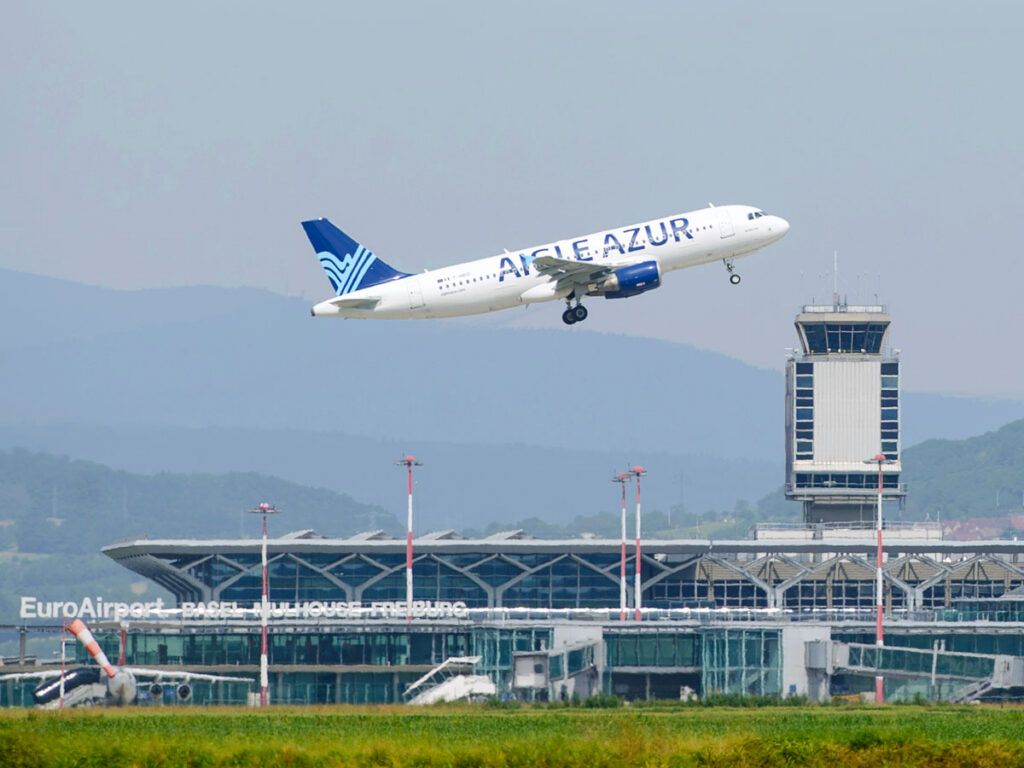
The transit hub that took shape in those early years had one problem — access was initially cut off from Switzerland, which paid for the airport’s construction. (The only way to reach it was by passing through France.)
From 1951 to 1952, a 1.6-mile-long connecting road was built that linked Basel to the airport. This became Swiss territory, which allowed air travelers to exit the airport directly into Switzerland and, in the process, bypass French customs clearance. These days, as both countries are part of the Schengen Area, this isn’t really necessary. Still, the road remains Swiss territory, even though it runs right through France.
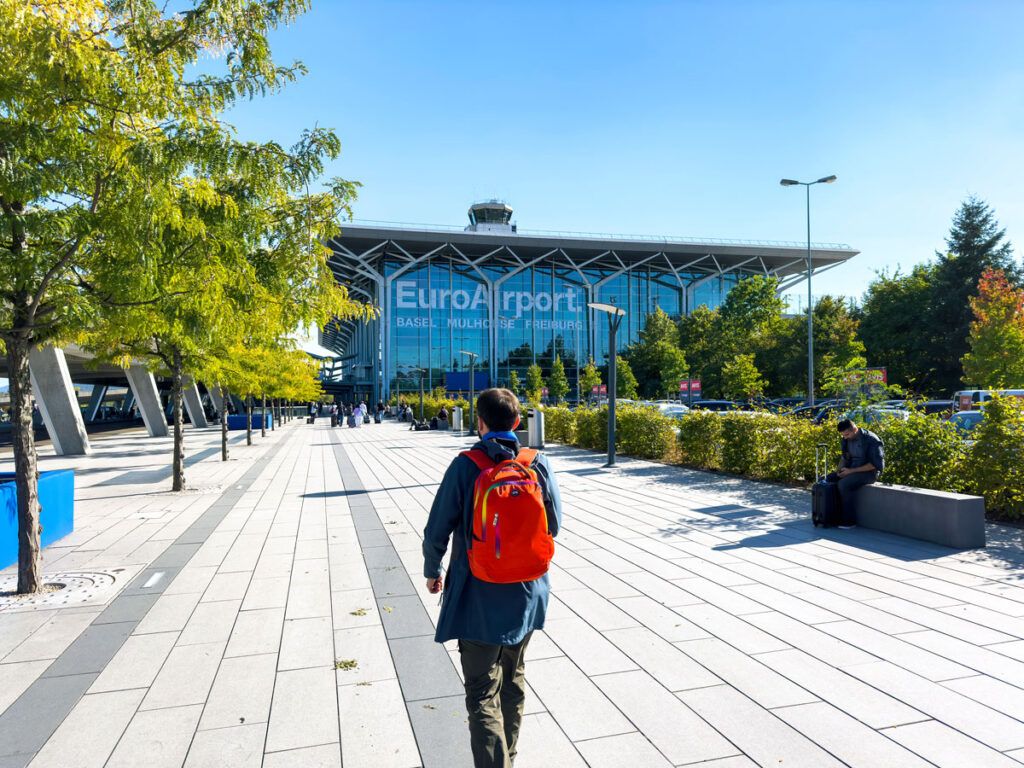
Today, EuroAirport Basel-Mulhouse-Freiburg maintains its unusual status as the world’s only binational airport, jointly administered by France and Switzerland. It is situated at the crossroads of three regions: northwest Switzerland, Alsace in France, and Baden-Württemberg in Germany. The airport’s name was modified in 1987 to incorporate Freiburg in recognition of how close it is to the German border and the role it serves as a regional hub.
How It Works in Practice
Because of its unique geography, EuroAirport has three official IATA codes: MLH (the French code for Mulhouse), BSL (the Swiss code for Basel), and the neutral code EAP (for EuroAirport). Most of the time, however, your ticket will read BSL, as this is the most commonly used code.
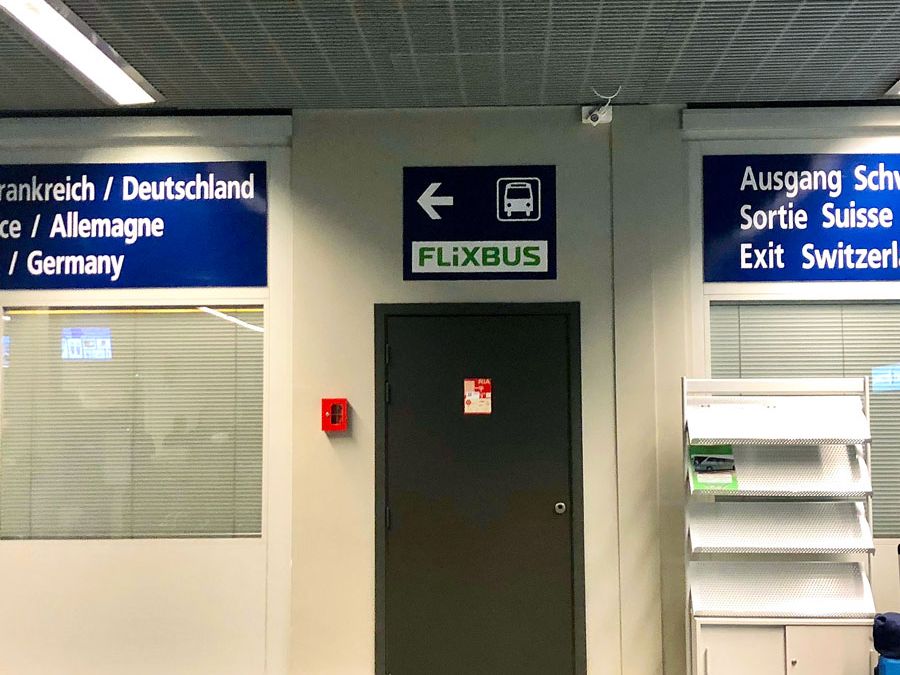
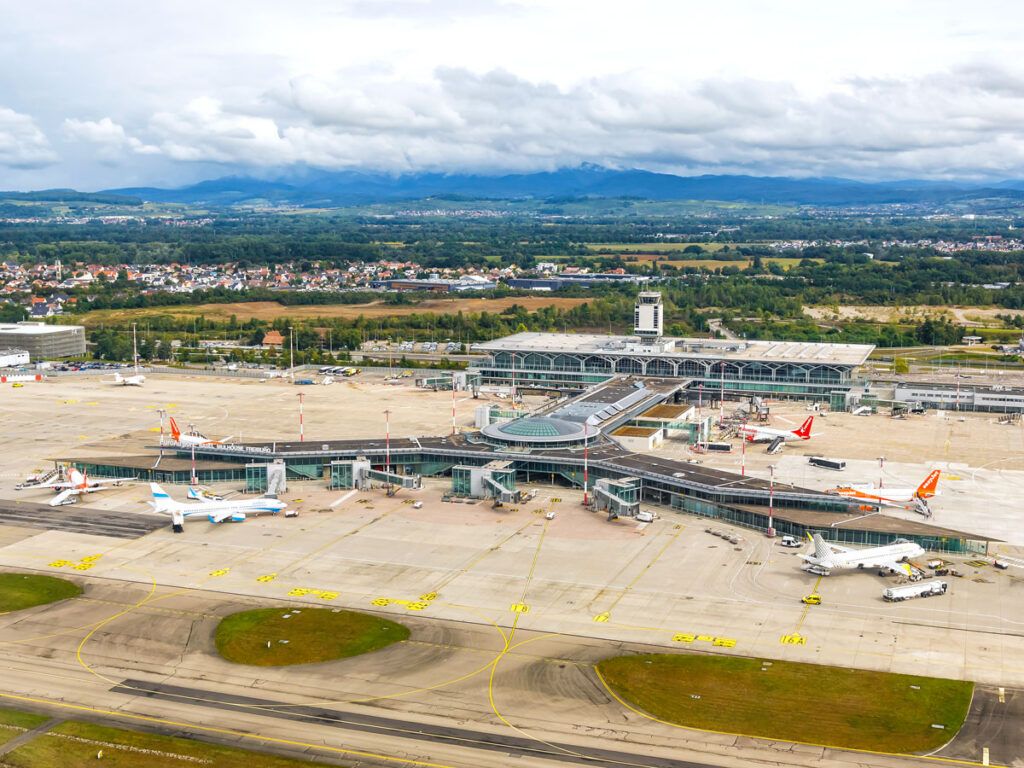
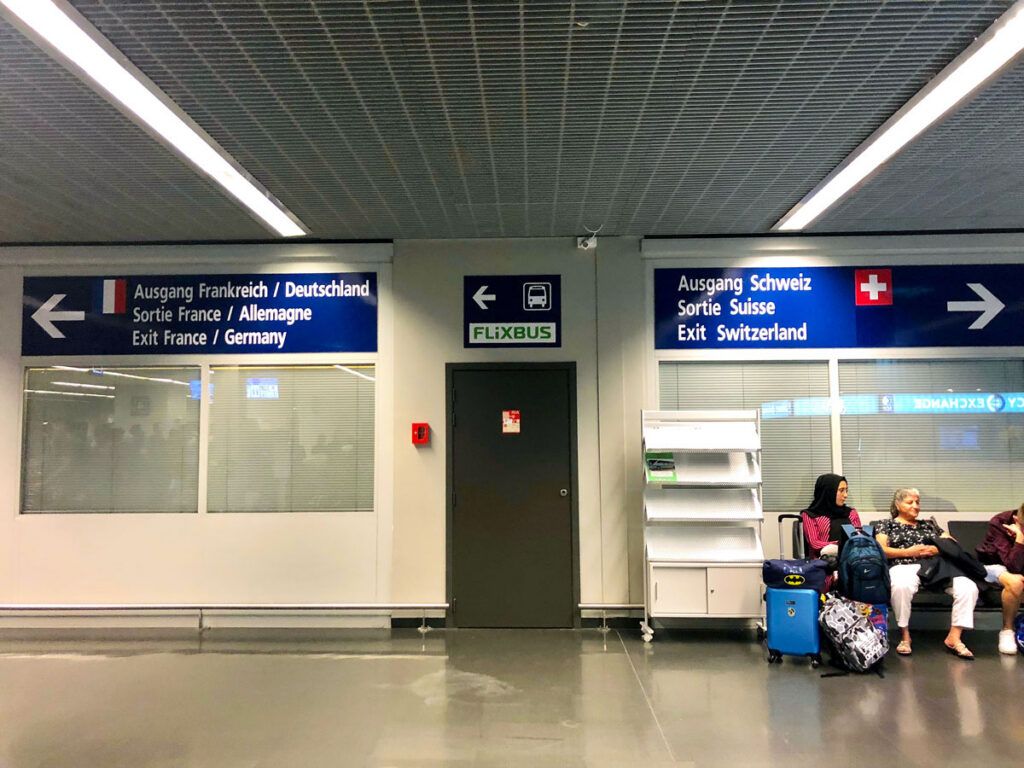
The airport functions efficiently and seamlessly, serving around 9 million passengers each year. The single terminal building is divided into French and Swiss sectors, allowing for separate check-in areas and customs areas. A single central pier houses the boarding gates. Swiss police have jurisdiction over the Swiss sector, while French police oversee the rest of the airport.
This setup allows the French and Swiss authorities to apply their own rules where and when needed. For example, different regulations apply for taxation, labor legislation, and health-related procedures such as those implemented during the pandemic, when the two nations compiled different safe-country lists.
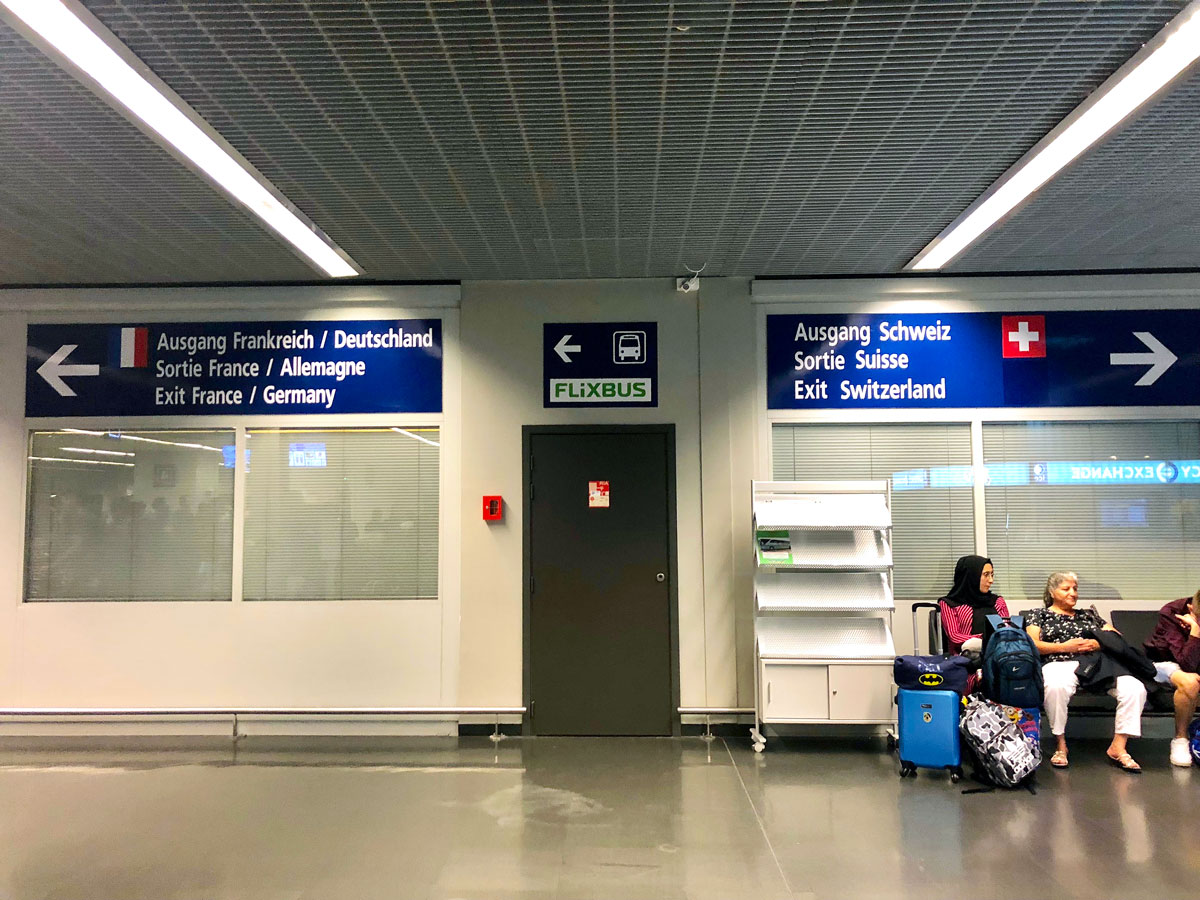
Upon arriving at the airport, passengers can choose whether they want to exit to the baggage claim area in France or in Switzerland (because both are within the Schengen Area). If you’re vacationing in France, follow signs to that exit; if you plan to explore Switzerland, take the other route. But before you continue on your journey, take a moment to appreciate the collaborative spirit and dogged determination that made EuroAirport Basel-Mulhouse-Freiburg possible.
More from our network
Daily Passport is part of Inbox Studio, an email-first media company. *Indicates a third-party property.