

5 Fascinating Abandoned Mansions in the U.S.
5 Fascinating Abandoned Mansions in the U.S.
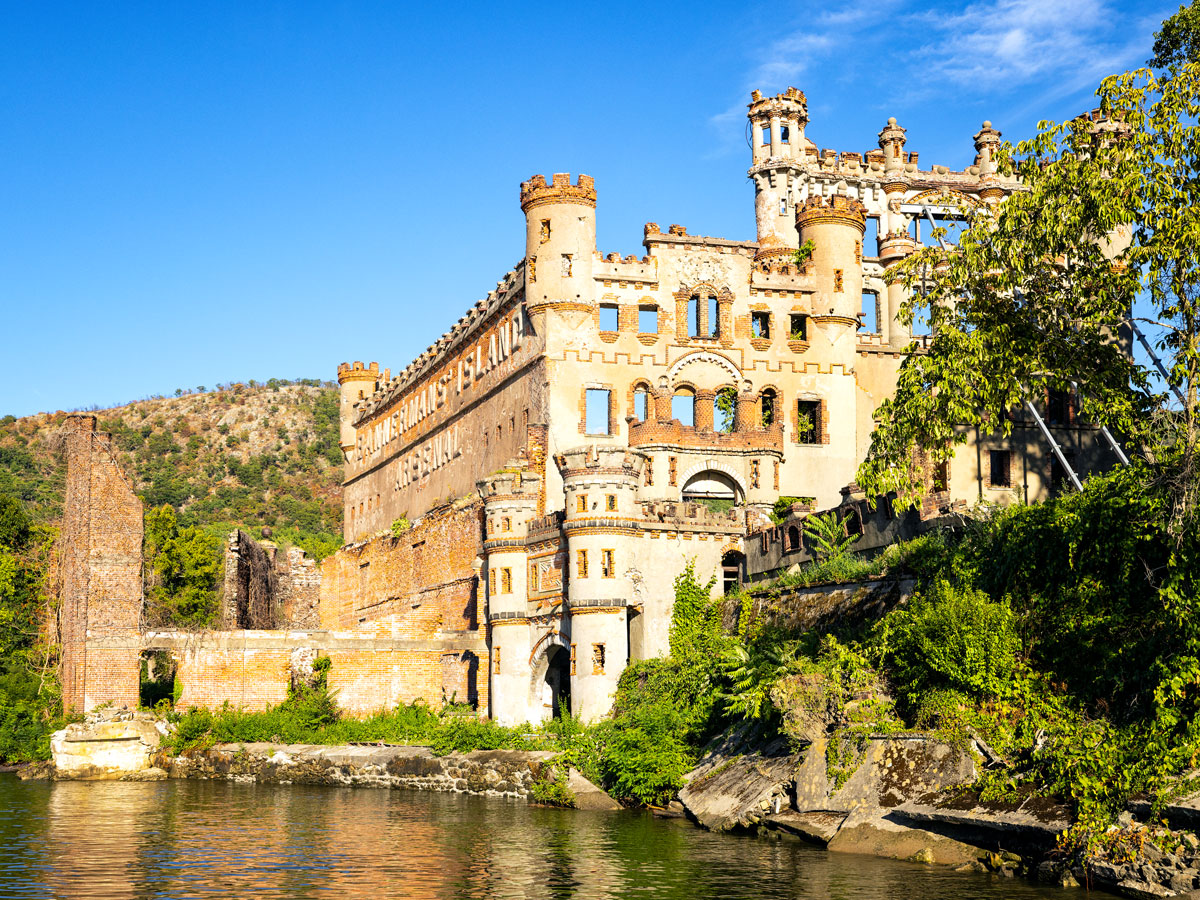

Across the U.S., abandoned mansions hint at lives once filled with wealth, ambition, and, in some cases, tragedy. From crumbling ruins to perfectly preserved homes, each of these five abandoned properties has a fascinating story to tell.
Lynnewood Hall – Elkins Park, Pennsylvania
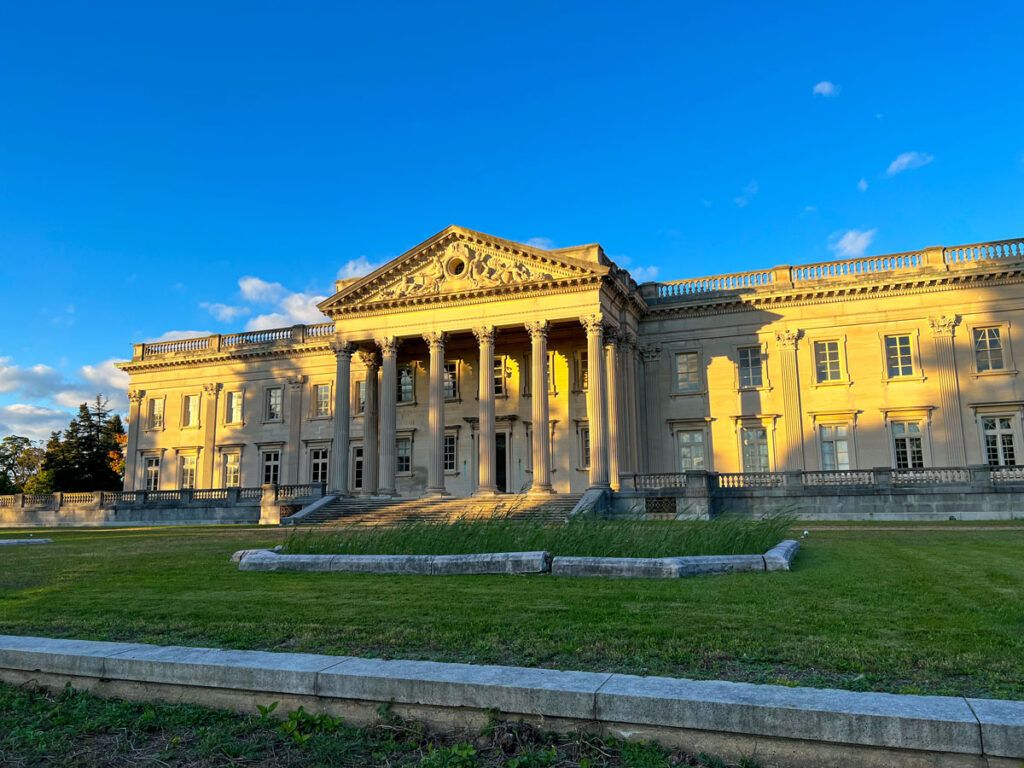
Lynnewood Hall is a quietly haunting remnant of America’s Gilded Age. Built in the early 1900s for industrialist Peter A. B. Widener, the massive 110-room neoclassical estate spans roughly 100,000 square feet. Together with his son Joseph, Widener built one of the finest private art collections in the country, featuring works by Rembrandt, El Greco, and Claude Monet. The family even opened their home from October through June each year so the public could view the collection.
However, their passion for art ultimately had a devastating consequence. In 1912, Widener’s oldest son, George, along with his wife and son, traveled to Paris to acquire rare pieces. They were sailing back to the U.S. on the RMS Titanic when it tragically sank, claiming the lives of George and his son (his wife survived). A few years later, Widener passed away, leaving the mansion in Joseph’s care until it was sold in the 1940s, after which it fell into disrepair. While the estate is currently not open to the public, the Lynnewood Hall Preservation Foundation acquired it in 2023 and is now working to restore the magnificent mansion.
Bannerman Castle – Beacon, New York
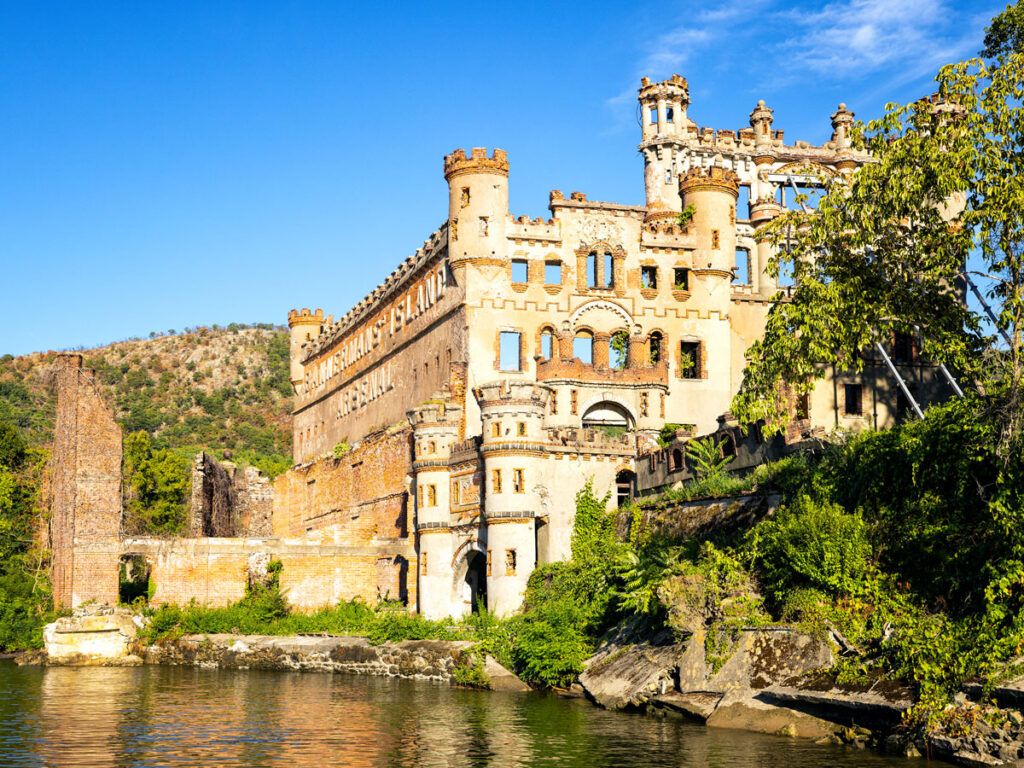
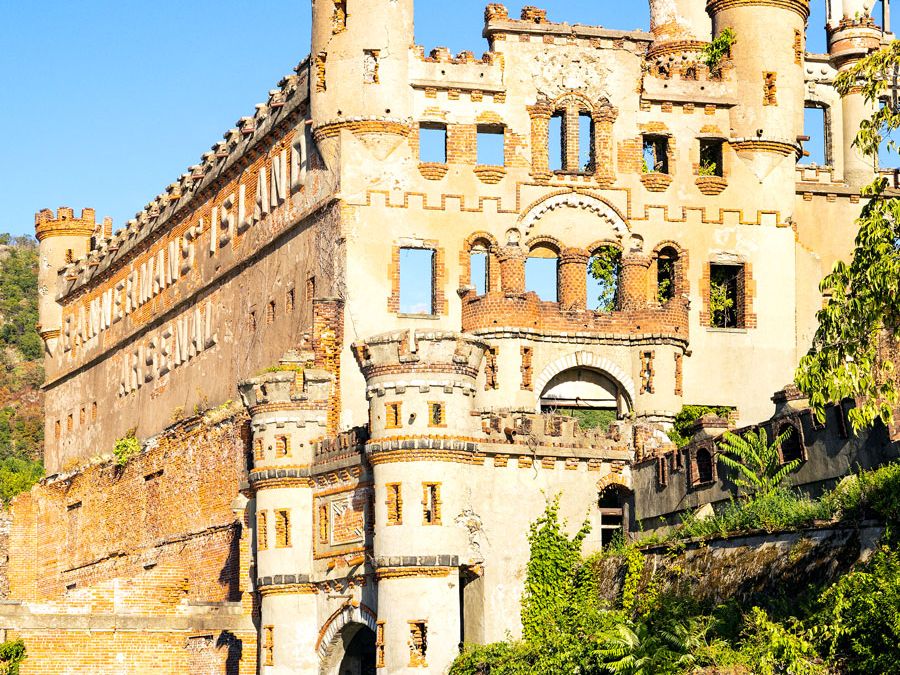
Modeled after a Scottish castle, Bannerman Castle sits on Pollepel Island in the Hudson River in upstate New York. The formerly private island passed through a handful of owners before Francis Bannerman VI purchased it in 1900. Bannerman built the castle on the island as a storage site for his military surplus business, and at one point, it held thousands of weapons and ammunition.
The island later became a summer home for the Bannerman family, who stayed in a residence adjacent to the castle, until it was eventually abandoned. An ammunition explosion in 1920 caused major damage, and a fire in 1969 left much of it in ruins. What’s left of Bannerman Castle today is a mix of intact walls and collapsed sections that are slowly being taken over by nature. You can still visit the island on guided tours to see it up close.
Franklin Castle – Cleveland, Ohio
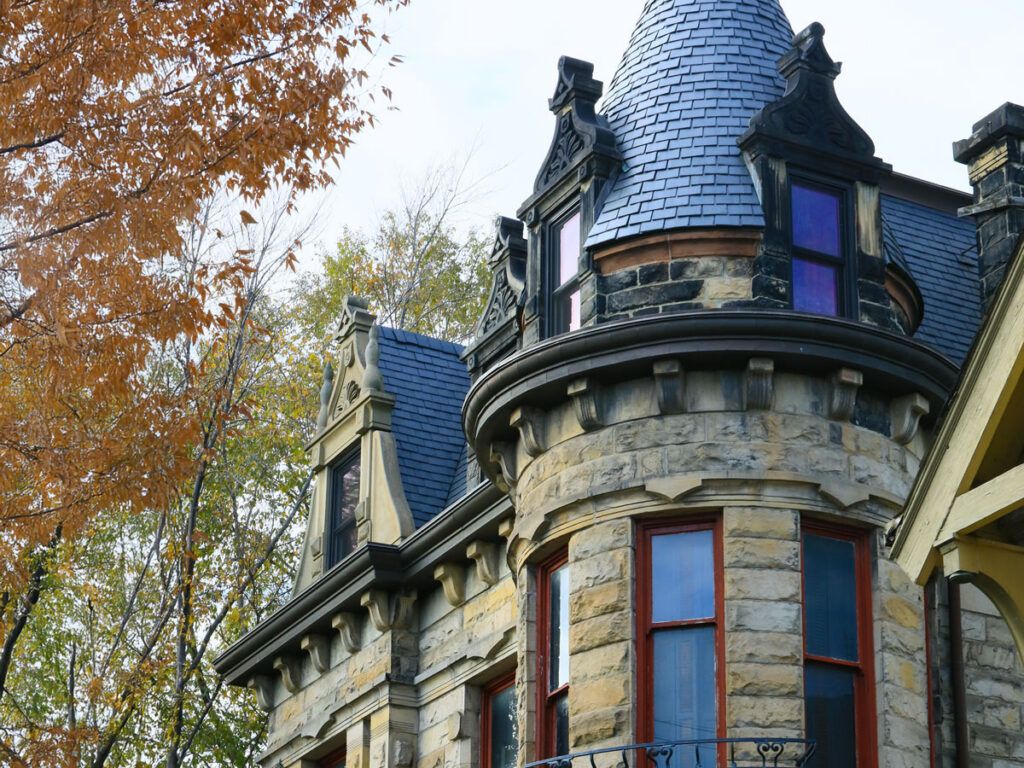
Franklin Castle is one of the most notorious historic homes in Cleveland — and not just for its architecture. Constructed in 1883 for Hannes Tiedemann, a German immigrant who built a prosperous career as a banker, the Victorian mansion has some unusual features, from obscure passageways to hidden rooms, concealed staircases, and underground tunnels. The tunnels are rumored to have been used during Prohibition to smuggle alcohol into the castle.
Others claim they were used by Mr. Tiedemann to conceal family deaths. Several family members passed away in the house, including Tiedemann’s wife and daughter, and although their deaths were ruled natural, speculation has persisted. Fueling the fire are the human bones that were uncovered in a small room within the castle in the 1970s. Today, the house is widely considered one of the most haunted homes in the area, with reports of voices and shadowy figures appearing in windows.
Clark Estate – Santa Barbara, California
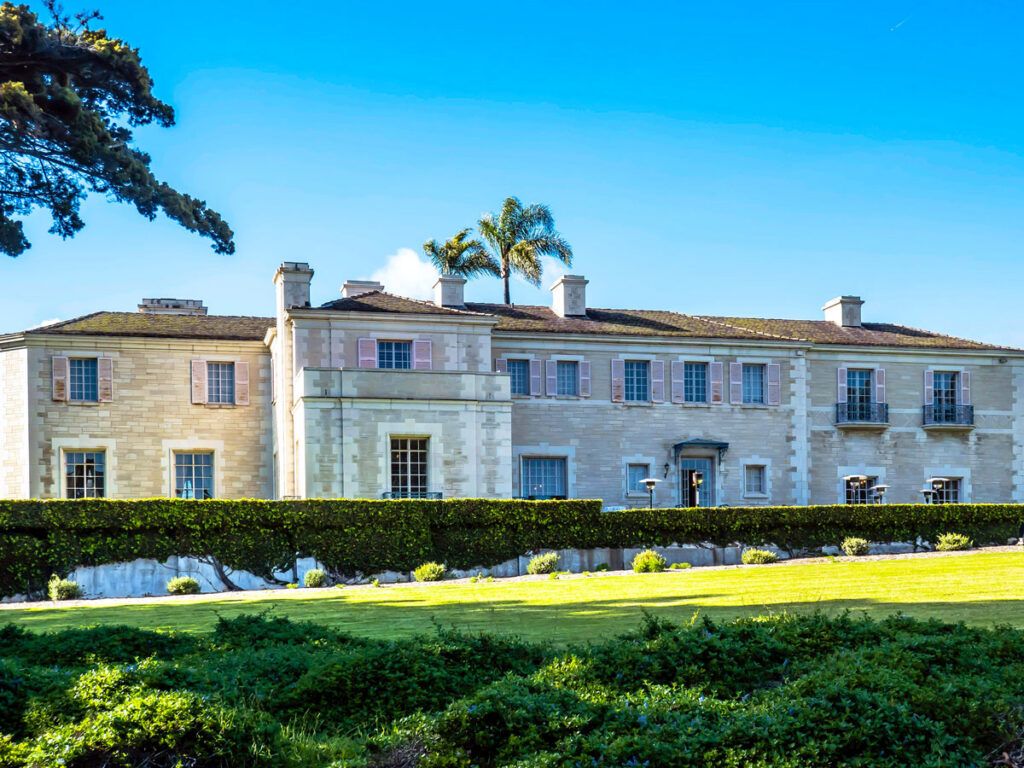
The Clark Estate was built in 1936 by Anna Clark, the widow of William A. Clark, who made his fortune in the copper industry. The 18th-century French-style home spans more than 23,000 square feet and features 27 rooms, including an artist’s studio built for Anna’s daughter, painter Huguette Clark. Once a summer retreat for Anna and Huguette, the home is decked out with ornate moldings, wood paneling, and detailed chandeliers.
After Anna died in 1963, Huguette inherited the property but never returned, leaving it largely untouched for decades while staff maintained it. The house and everything inside remained frozen in time, with furniture covered, carpets protected, and even cars like Anna’s Chrysler convertible and Cadillac limousine still sitting in the garage. Huguette passed away in 2011, and the Bellosguardo Foundation acquired the estate in 2018. Today, it remains mostly closed to the public, with only occasional special events and small guided tours, which tend to sell out quickly.
Bishop’s Palace – Galveston, Texas
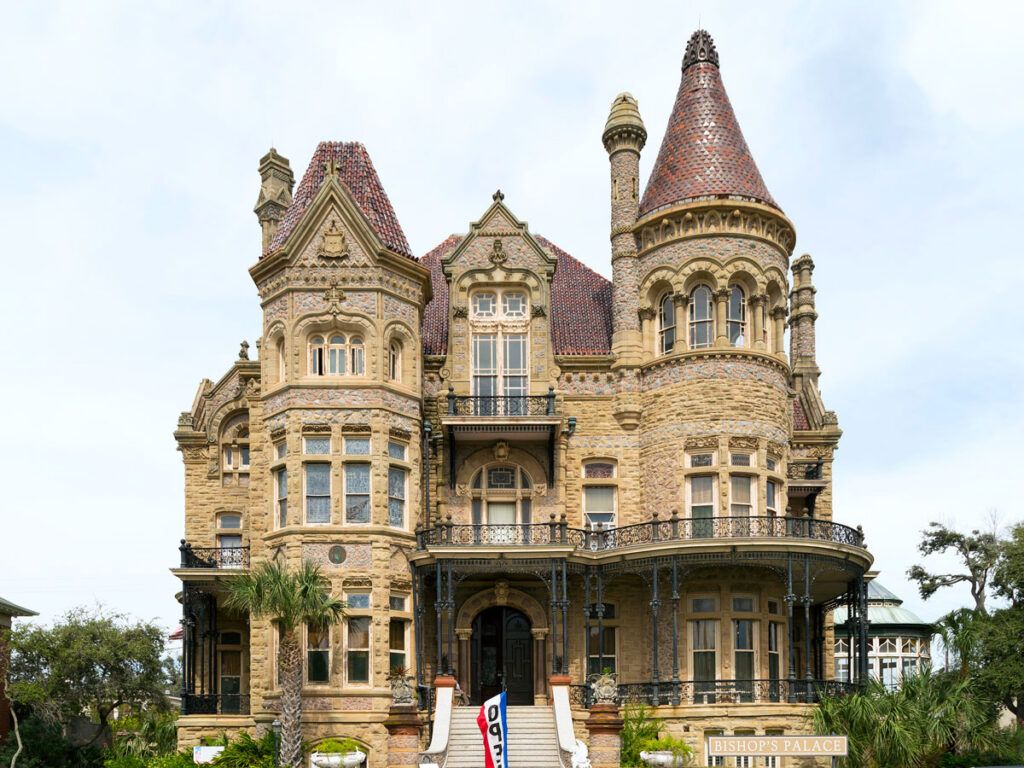
Also known as Gresham’s Castle, Bishop’s Palace is one of Galveston’s most iconic buildings. Located in the historic East End district, the mansion was built between 1886 and 1892 for lawyer Colonel Walter Gresham and designed by local architect Nicholas Clayton. Packed with detail, from richly colored stone and intricate carvings to rare woods and stained glass windows, the mansion feels over the top even for the Gilded Age. Even the fireplaces stand out, with one lined in pure silver.
The home proved just as impressive structurally, surviving the Great Storm of 1900 without major damage, a testament to its craftsmanship. After Gresham’s death in 1920, the house was sold to the Catholic Church and later became the residence of Bishop Christopher Byrne. Today, it’s a National Historic Landmark and a museum operated by the Galveston Historical Foundation.
More from our network
Daily Passport is part of Inbox Studio, an email-first media company. *Indicates a third-party property.