





The Meaning Behind Every U.S. State Flag
You’re probably quite familiar with the symbolism behind the flag of the United States. Its 13 red and white stripes pay homage to the original colonies, while the 50 white stars represent the individual states. But the 50 states also have unique flags of their own, and you may not be as familiar with the many colors and symbols that hold significance in each of those states. So, let’s take a look at the fascinating meanings and histories behind all 50 state flags.
Alabama
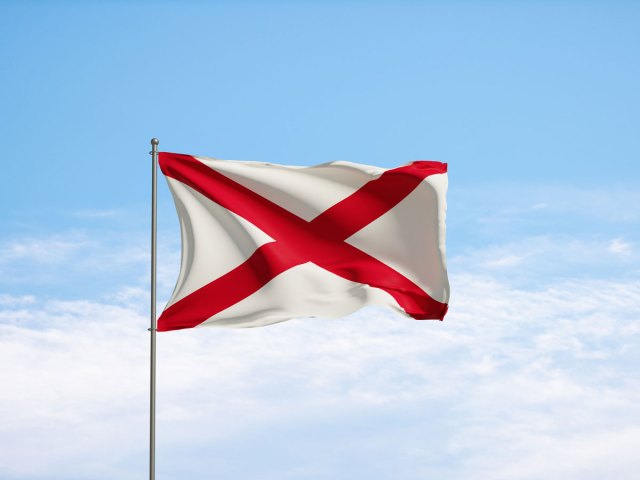
Alabama’s state flag was formally adopted in 1895. Designed by state Attorney General John W. A. Sanford Jr., the flag features a white background with a red saltire (an X-shaped cross, also called a St. Andrew’s cross). There isn’t much on record as to the intended symbolism of Alabama’s flag, but many believe that its design is a subtle reference to the Battle Flag of the Confederate States of America, as Sanford served as a Confederate officer during the Civil War. While there have been calls to update the flag, it remains in official use.
Alaska

In 1926, back when Alaska was still a territory, 14-year-old Alaska resident Benny Benson won a competition to design a new territorial flag. It was adopted by the territorial legislature the next year and remained the official flag when Alaska achieved statehood in 1959. The design features a dark blue background, symbolizing the vast Alaskan skies, and also contains depictions of the Ursa Major constellation and the North Star, which is appropriate given Alaska’s status as the northernmost state.
Arizona
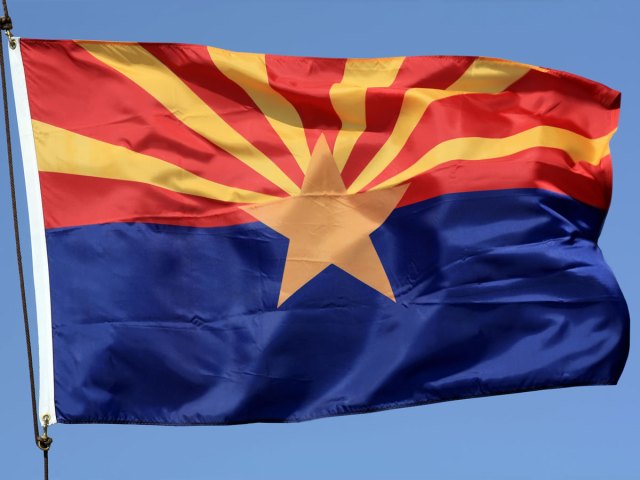
Charles Harris, a colonel in the Arizona National Guard, designed a flag in 1910 that would later inspire the Arizona state flag, adopted in 1917. The top half of the design features 13 alternating yellow and red beams of light, representing the sun setting over the horizon. The 13 beams also pay homage to the original colonies. In the center of the flag is a single star that signifies the state’s rich copper industry. The field of blue at the bottom matches the color of the national flag.
Arkansas
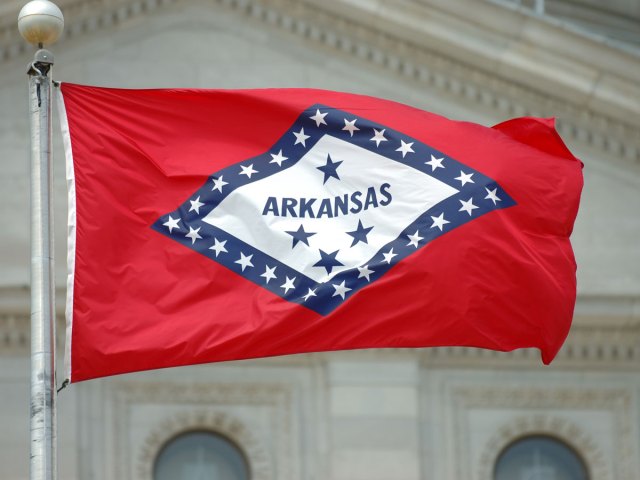
In 1912, the Daughters of the American Revolution launched a statewide competition to create a new flag for Arkansas. The following year, the committee selected a red, white, and blue flag designed by state resident Willie Kavanaugh Hocker. It originally featured three blue stars, an homage to the three countries that the Arkansas territory once belonged to before statehood (the U.S., France, and Spain). A fourth star was later added symbolizing the Confederacy, and it remains today despite calls to remove it. The flag also features 25 white stars symbolizing Arkansas as the 25th state.
California

California officially adopted a state flag for the first time in 1911, 61 years after achieving statehood. The design was inspired by an unofficial flag that flew during the 1846 Bear Flag Revolt. That flag was designed by Peter Storm and William L. Todd (cousin of Mary Todd Lincoln) and featured a grizzly bear, portraying strength, looking toward a red star, symbolizing courage. With some minor tweaks, California adopted this design as the state flag, which was updated again in 1953.
Colorado
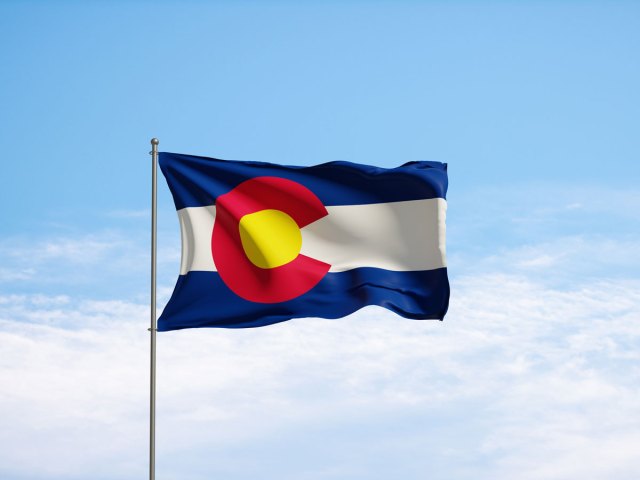
The state flag of Colorado was designed by Andrew Carlisle Johnson and adopted in 1911. It features three alternating blue and white stripes with a circular red “C,” which match the colors on the national flag. The “C” stands for the name of the state (which comes from the Spanish word colorado, meaning “red”) and contains a golden disc inside. The gold color represents the state’s gold mining history, while the white on the stripes reflects its silver deposits, both of which drew many early settlers to Colorado.
Connecticut
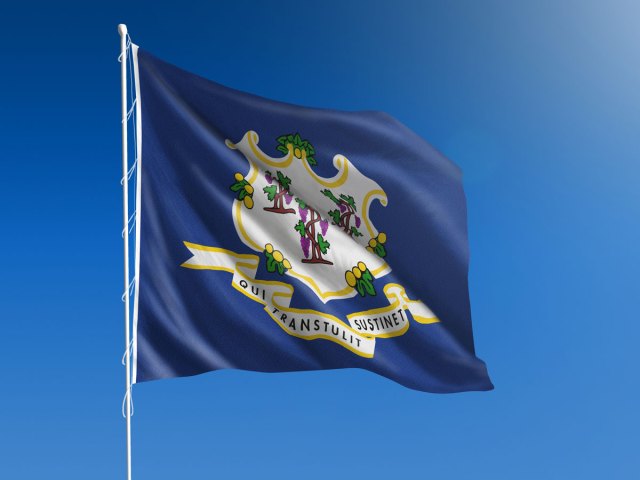
Adopted in 1897, Connecticut’s flag features the state’s Latin motto, “Qui transtulit sustinet” (“He who transplanted still sustains”), on a ribbon below a coat of arms based on the 1711 colonial seal. The coat of arms features three grapevines that are believed to represent either the original colonies of Connecticut, New Haven, and Saybrook that merged to form the state, or its three oldest settlements (Hartford, Wethersfield, and Windsor).
Delaware
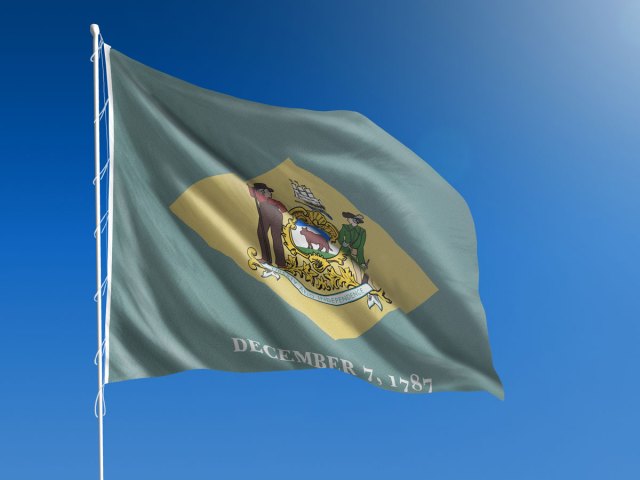
Introduced in 1913, the Delaware state flag features the date December 7, 1787 — the day that Delaware became the first U.S. state to ratify the Constitution. The design also includes the state’s coat of arms at its center, which contains images of a ship that represents commerce, as well as wheat, corn, and a farmer to symbolize agriculture. The coat of arms is overlaid atop a colonial blue background, which is based on the color of the uniform worn by George Washington.
Florida
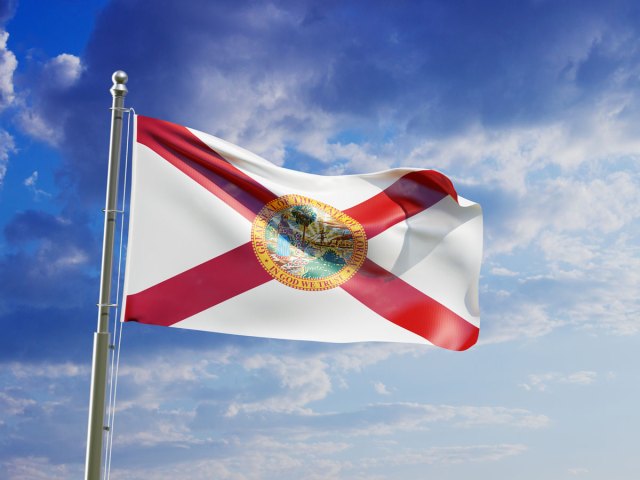
Florida’s current state flag design was adopted in 1900. Prior to that, the flag featured a simple white background with the state seal in its center. In the 1890s, Governor Francis P. Fleming suggested that the flag was too similar to a white flag of surrender. To remedy this, he proposed the red diagonal cross that was later added to the design. The state seal depicts the sun shining over a Seminole woman standing beside a sabal palm (Florida’s state tree) and a steamboat representing commerce and progress.
Georgia
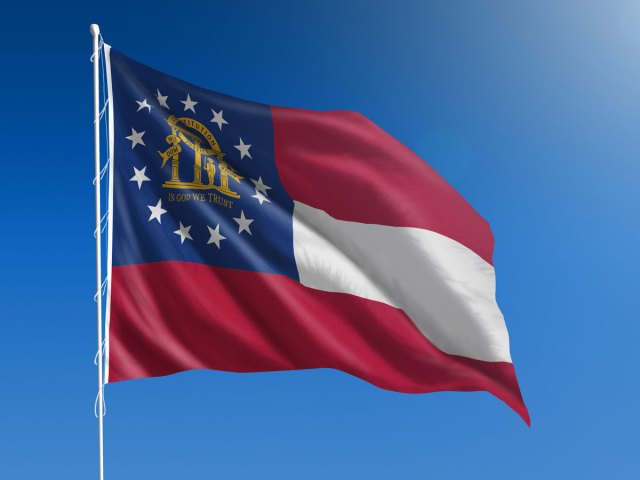
The current state flag of Georgia was adopted in 2003. It contains three alternating red and white stripes with a blue square in the upper left corner, similar to the national flag. The blue square contains the state’s coat of arms surrounded by 13 stars, symbolizing Georgia being one of the 13 original colonies, along with the state motto, “Wisdom, Justice, Moderation.”
Hawaii

Hawaii’s flag was designed by King Kamehameha I, who ruled over the islands in the late 18th and early 19th centuries. It has eight red, white, and blue stripes, which symbolize the eight major Hawaiian islands. Britain’s Union Jack also features in the upper left corner as a nod to Hawaii’s historical ties to Great Britain, which makes Hawaii’s flag the only state flag to incorporate the flag of a foreign nation. The flag was adopted in 1845 and remained in use when Hawaii became a state in 1959.
Idaho
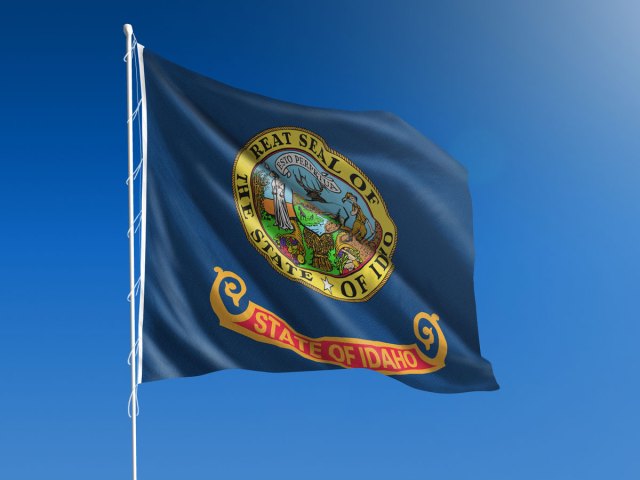
The Idaho Territory seal, adopted in 1891, is the only U.S. seal created by a woman, painter and designer Emma Edwards Green. It incorporated symbolic imagery such as the state’s Shoshone River, an elk’s head, a woman holding scales to symbolize justice and liberty, and a miner to represent the state’s biggest industry at the time. This seal became the centerpiece of the Idahoan flag in 1907, with a blue background featuring the name of the state.
Illinois
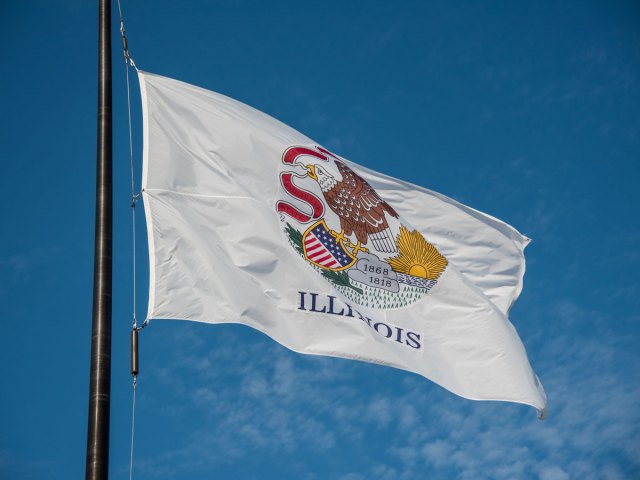
Introduced in 1915 and updated in 1970, Illinois’ state flag resulted from a contest sponsored by the Daughters of the American Revolution. It features a white background with elements of the state seal emblazoned in the center. The design includes a rock etched with the years 1818 and 1868, representing the years Illinois achieved statehood and the first year that the state seal was used, respectively. The flag also features a bald eagle, rising sun, and the state motto: “State Sovereignty, National Union.”
Indiana
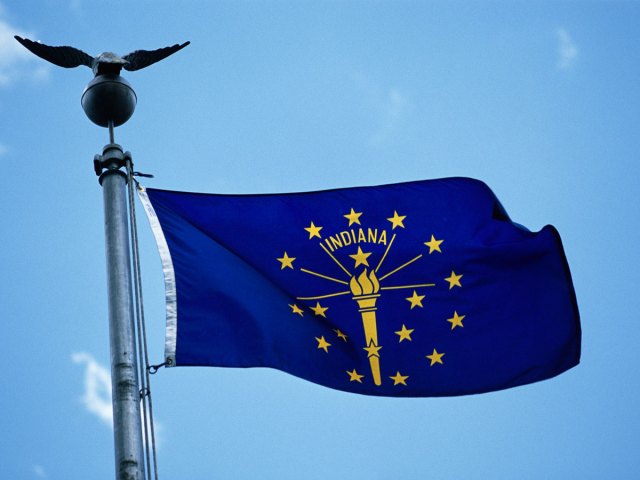
The Indiana state flag showcases a gold torch on a blue background with the rays of 19 stars radiating outward. Designed by Indiana artist Paul Hadley, it was adopted in 1917 and then updated to feature the name of the state in 1955. The 19 stars commemorate the fact that Indiana was the 19th state to join the Union, while the torch stands for liberty and enlightenment and their far-reaching influence.
Iowa

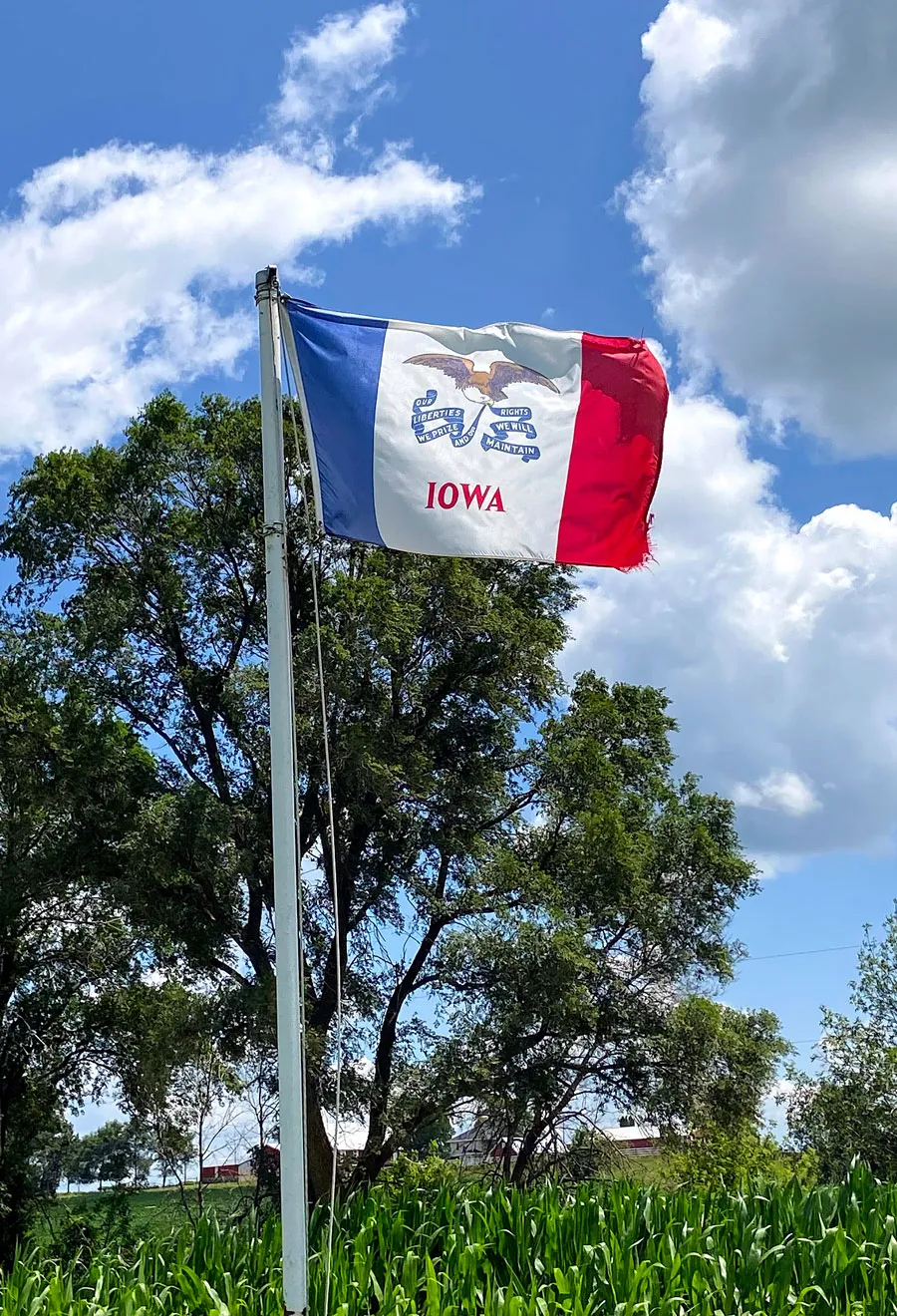
Iowa’s flag was developed in tandem with the Daughters of the American Revolution. The flag features vertical blue, white, and red stripes from left to right, with an eagle in the center holding a banner with the words of the state motto: “Our liberties we prize and our rights we will maintain.” The color blue represents loyalty, white is for purity, and red stands for courage. The flag was approved by the state Legislature in 1921.
Kansas
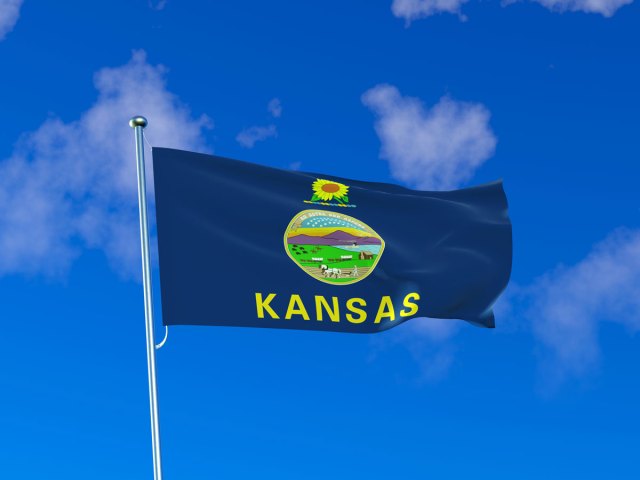
The state flag of Kansas, introduced in 1927, was designed by Lincoln seamstress Hazel Avery. It includes the state name below the state seal, which features a rising sun, a steamboat on a river (symbolizing commerce), and a cabin, settler, and horses (together representing agriculture). A sunflower — the official state flower of the Sunflower State — is featured above the seal.
Kentucky
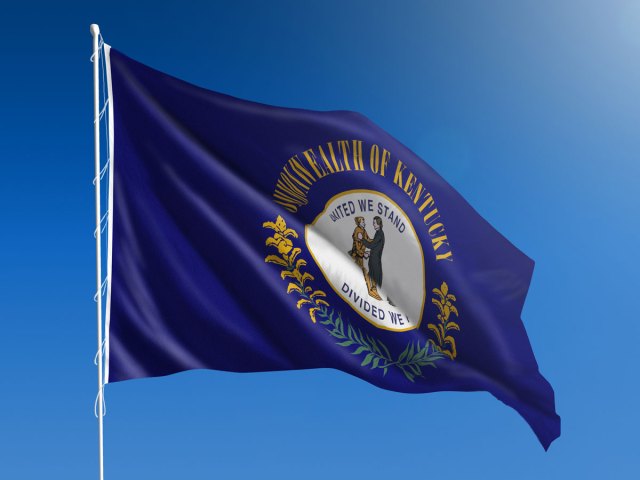
Kentucky’s state flag has a dark blue background featuring the words “Commonwealth of Kentucky” and the state seal, which itself reads, “United we stand, divided we fall.” The seal also contains the image of a frontiersman shaking the hands of a gentleman dressed in formal attire, which, along with the state motto, symbolizes the meeting of east and west, as Kentucky joined the Union as part of the state’s western frontier in 1792. The flag, adopted in 1918, was designed by Frankfort art teacher Jesse Cox Burgess.
Louisiana
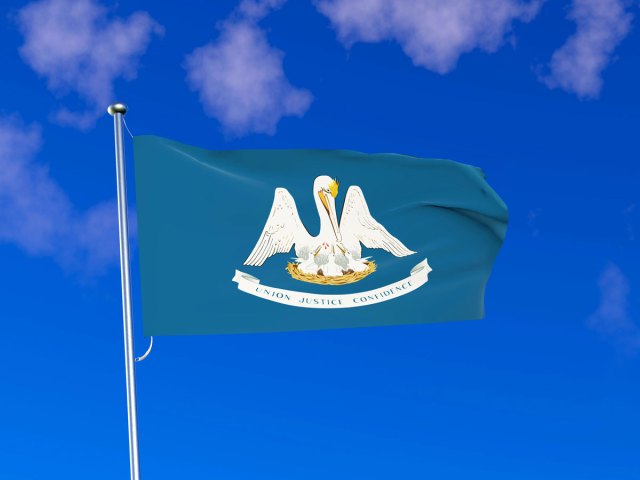
The pelican has been a symbol of Louisiana since 1812, when it first appeared on the state seal, and a pelican feeding its three young hatchlings is the focal point of the Louisiana state flag. The image symbolizes self-sacrifice and caring for the young, along with Louisiana’s commitment to its people. It appears above the state motto, “Union Justice Confidence,” atop a dark blue background. While a pelican-themed flag has been in use since Louisiana’s centennial celebration in 1912, the pelican was updated to a more realistic design in 2010.
Maine

Adjutant General John T. Richards designed an early version of the Maine state flag that was adopted in 1901, but it was updated to its current design in 1909. The flag features a coat of arms that shows a moose sitting under a pine tree (the official state tree and the source of its nickname), flanked by a sailor and a farmer representing the sea and agriculture, respectively. The flag also features the state name and the Latin motto “Dirigo,” which means “I direct.”
Maryland
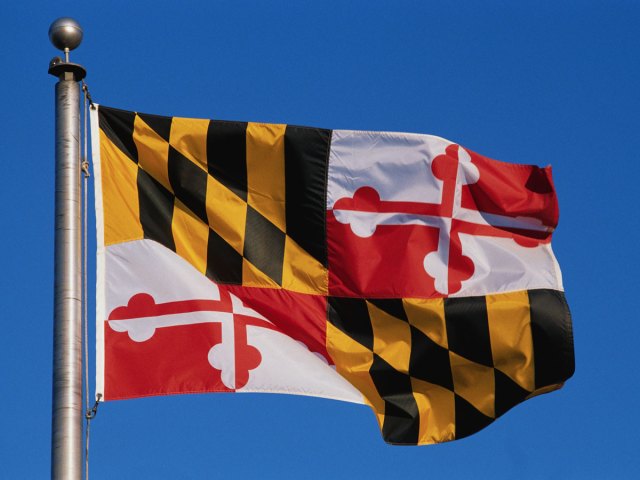
Maryland’s unique state flag features alternating quadrants based on the coats of arms of the Calvert and Crossland families. The black-and-yellow quadrants are the paternal family colors of George Calvert, the first Lord Baltimore who founded Maryland, while the red-and-white ones are the colors of Calvert’s maternal family. The flag was based on one flown under British rule that fell out of use after the American Revolution, but it was reintroduced in the late 19th century and later adopted by the Maryland General Assembly in 1904.
Massachusetts
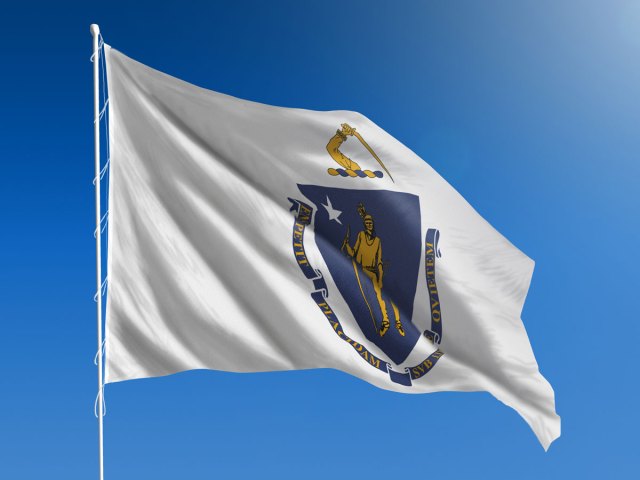
Designed by illustrator Edmund Garrett, the state flag of Massachusetts was adopted in 1908. It features an all-white background with a blue coat of arms at the center, containing a likeness of a Native American figure holding an arrow pointing downward, symbolizing peace. The flag also features the state’s Latin motto, “Ense Petit Placidam Sub Libertate Quietem,” which translates to “By the Sword We Seek Peace, but Peace Only Under Liberty.” As of 2025, the state is reviewing submissions for a new state flag, seal, and motto.
Michigan

In 1835, Michigan adopted a coat of arms with three Latin mottos that reflect the state’s values and geography: “E Pluribus Unum” (“Out of many, one”), “Tuebor” (“I will defend”), and “Si quaeris peninsulam amoenam circumspice” (“If you seek a pleasant peninsula, look about you”). The coat of arms also features images of an eagle (to represent the United States), an elk and a moose as representative animals of Michigan, and a man with a rifle standing on a peninsula, symbolizing the defense of the frontier. This coat of arms serves as the centerpiece of the state flag, which was formally adopted in 1911.
Minnesota

The state flag of Minnesota is the newest in the country. Adopted on May 11, 2024, it contains two sections. On the left, there’s a dark blue indented portion that takes the stylized shape of Minnesota. The lighter part on the right represents water, as Minnesota is known as the “Land of 10,000 Lakes.” The design also includes a white eight-pointed star, with one point directed due north in reflection of the state motto, “L’étoile du Nord” (“The Star of the North”). Luverne resident Andrew Parker’s winning design was selected from 2,218 submissions.
Mississippi
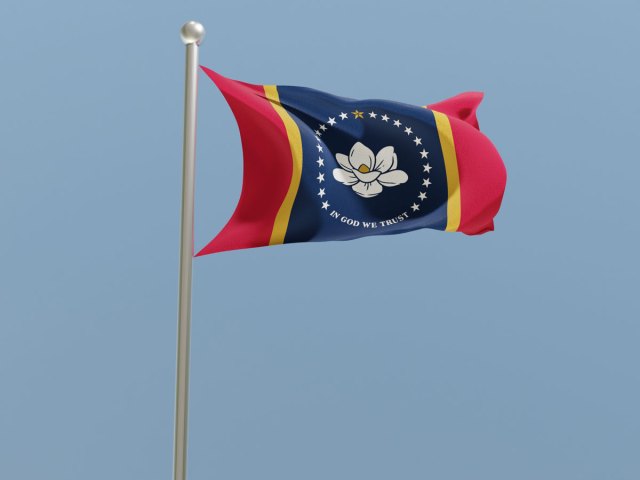
In 2021, Mississippi adopted a new flag to replace its previous design. The current flag features vertical stripes of red, gold, and blue, along with a magnolia bloom (Mississippi’s state flower) in its center, representing hospitality, hope, and rebirth. The flag also has 20 stars, symbolizing the fact that Mississippi was the 20th state to join the Union. The additional gold star at the top center represents the Native American people who originally inhabited the state.
Missouri

The Missouri state flag was designed by Marie Elizabeth Oliver, wife of senator Robert Burett Oliver, in 1909. The large blue stripe symbolizes vigilance, the red stripe represents valor, and the white stripe represents purity. At the center is the Great Seal of Missouri, which contains two bears symbolizing the strength of the state and its people. There are also 23 white stars surrounding the seal, signifying the fact that Missouri joined the Union as the 24th state after 23 others. It became the official state flag in 1913.
Montana
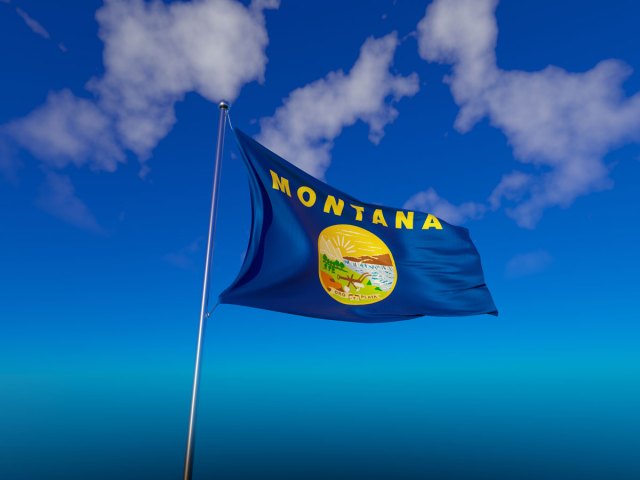
With a dark blue background and the state name written in gold, the flag of Big Sky Country was originally adopted in 1905. It’s based on a design for the First Montana infantry regiment used during the Spanish-American War. The flag features a visual representation of the Rocky Mountains, which define Montana’s landscape, and the state’s Spanish motto “Oro y Plata,” which means “gold and silver” — a nod to its mining industry.
Nebraska
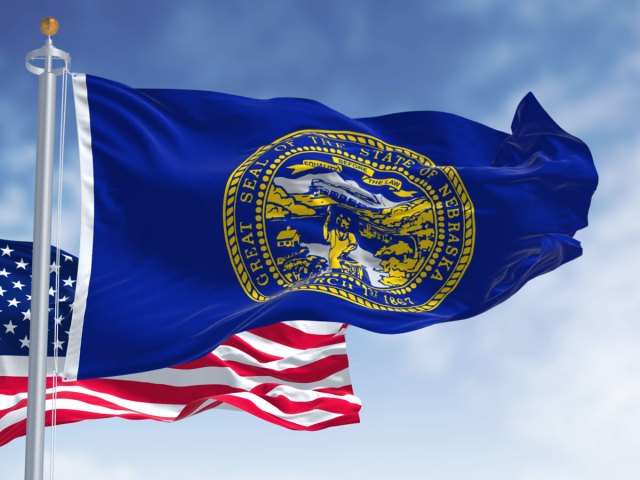
In 1925, Nebraska became the last of the contiguous 48 states to adopt a state flag. It depicts the state seal, originally designed by state Representative Isaac Wiles in 1867 when Nebraska first became a state. The flag is colored gold, silver, and blue, and features the state motto, “Equality Before the Law.” It depicts the image of a blacksmith working with a hammer and anvil in the foreground and a steamboat on the Missouri River in the background — representing the state’s agricultural and industrial prowess.
Nevada
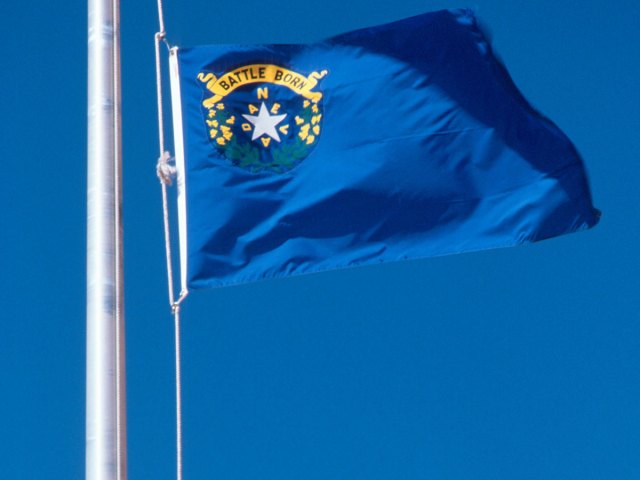
Nevada’s fourth and current state flag dates to 1991. Against a blue background, you’ll find a symbol in the upper left corner with the words “Battle Born,” referencing the fact that Nevada became a state during the Civil War. Under those words is a silver star, paying homage to Nevada’s “Silver State” nickname.
New Hampshire
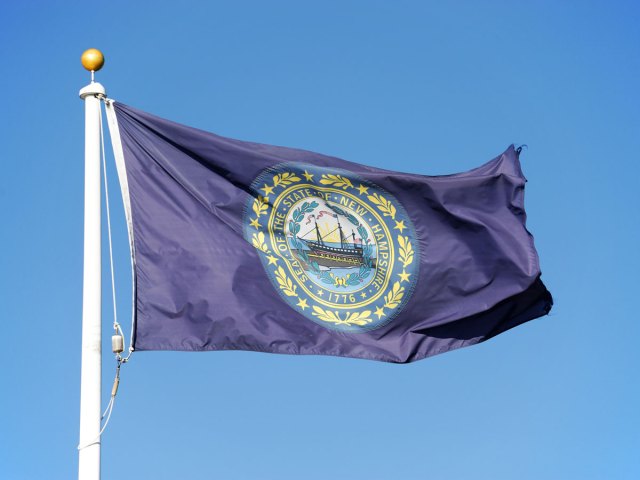
The New Hampshire state flag was introduced in 1909. It has a blue background with the state seal in the center. The seal was updated in 1931 to depict the USS Raleigh; built in Portsmouth, New Hampshire, it was one of the first 13 warships authorized for the Navy by the Continental Congress. The seal is encircled in a series of wreaths and nine golden stars, symbolizing New Hampshire being the ninth state.
New Jersey
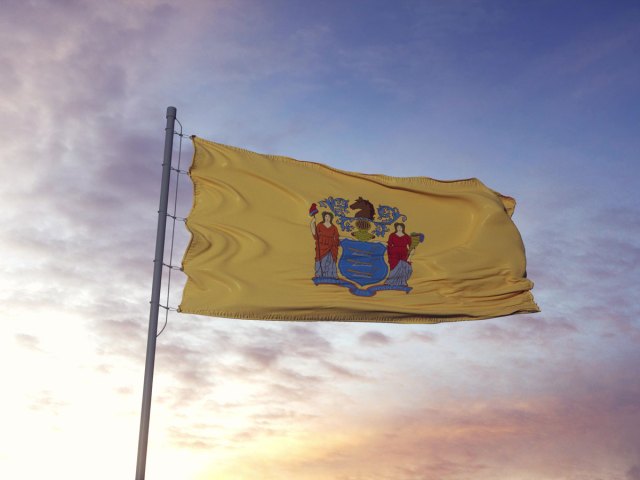
Adopted in 1896, New Jersey’s state flag features the state’s two official colors — buff (a yellowish hue) and a dark Jersey blue — originally selected by George Washington when he was headquartered in New Jersey during the Revolutionary War. At the center of the flag is the state seal, which features a horse’s head symbolizing speed and strength, a knight’s helmet representing sovereignty, and a shield with images of plows that reflect the state’s rich agricultural industry. The flag also depicts Liberty and Ceres, the Roman goddess of grain.
New Mexico
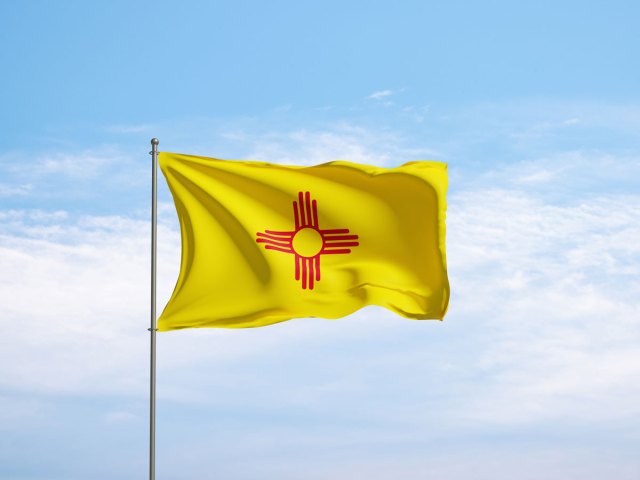
In 1920, the New Mexico chapter of the Daughters of the American Revolution helped spearhead the design of a new state flag, which was formally adopted in 1925 based on a winning proposal from archaeologist and physician Dr. Harry Mera. The flag features a red Zia sun symbol of the state’s Zia Pueblo peoples atop a yellow background. The flag is a modern interpretation of the ancient symbol, which also inspired the design of New Mexico’s Capitol building in Santa Fe. The red and yellow color scheme matches Isabel of Castilla’s colors, which Spanish conquistadors introduced to the Americas.
New York
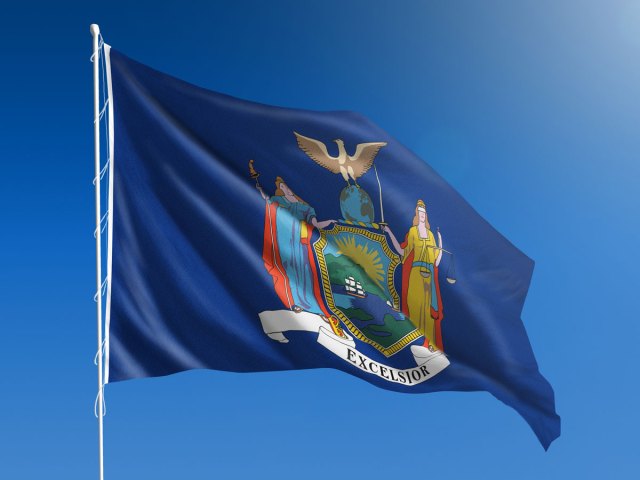
The state flag of New York was first adopted in 1882 and underwent slight modifications several times thereafter. It contains a seal that may have been inspired by the coat of arms of Jonas Bronck, a 17th-century settler who resided in the present-day Bronx. The flag depicts the figures of Liberty and Justice standing beside an image that shows the sun rising over the Hudson River, with an eagle perched atop a globe. The banner below shows the state motto, “Excelsior” (“Ever Upward”), and “E Pluribus Unum” (“Out of many, one”).
North Carolina
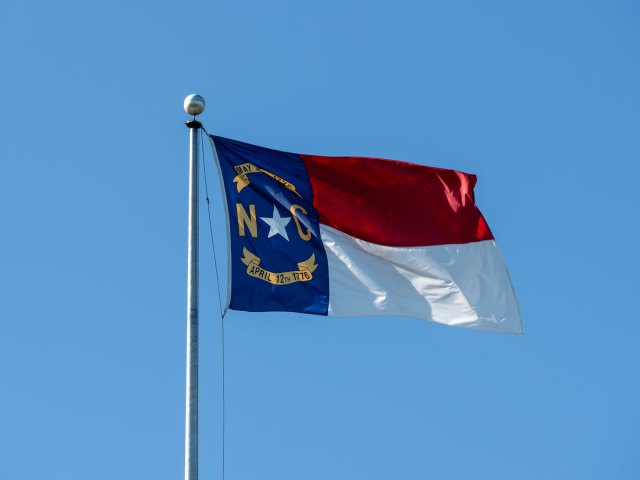
North Carolina’s flag is divided into three bars — horizontal red and white bars and a vertical one with a dark blue background. On the blue bar are the letters “N” and “C” for the state’s name. There are also two dates: May 20, 1775, which honors the Mecklenburg Declaration, when North Carolinians informally declared independence from Great Britain; and April 12, 1776, the date of the Halifax Resolves, which was the first official colonial action calling for independence from Great Britain. North Carolina’s flag was officially adopted in 1885.
North Dakota
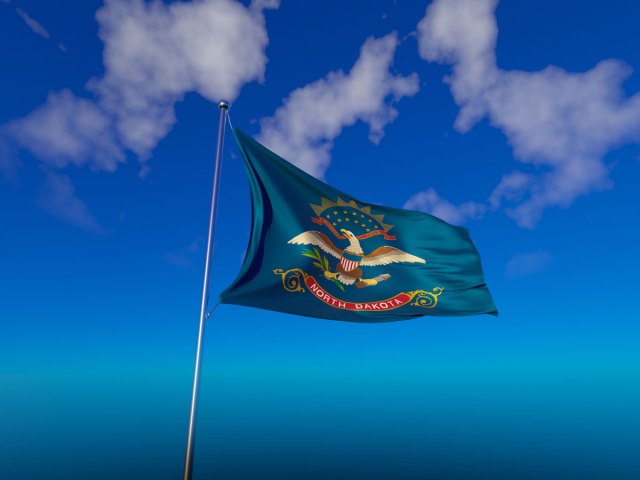
The state flag of North Dakota is based on the design of the flag used by the Dakota Territorial Guard in the late 19th century. It was formally adopted as the state flag in 1911. The flag depicts a bald eagle holding a banner in its mouth that reads “E Pluribus Unum” (“Out of many, one” — North Dakota’s state motto). It also features 13 stars representing the original colonies and has the state’s name written at the bottom.
Ohio
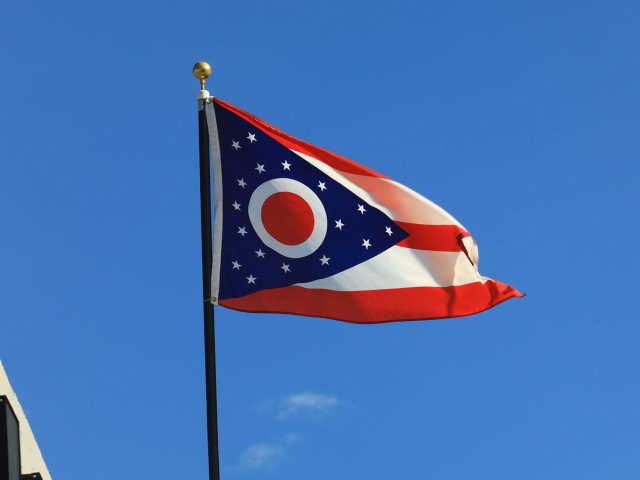
Ohio’s state flag has existed since 1902. Designed by Cleveland architect John Eisenmann, it’s the only state flag in the country without a rectangular shape. Instead, the flag is a swallow-tailed burgee, which means that it’s triangular with a V-shaped indent at one end. It contains a red and white circle symbolizing both the letter “O” for Ohio, as well as the buckeye, which is a state symbol. The flag contains 17 stars, symbolizing Ohio being the 17th U.S. state.
Oklahoma
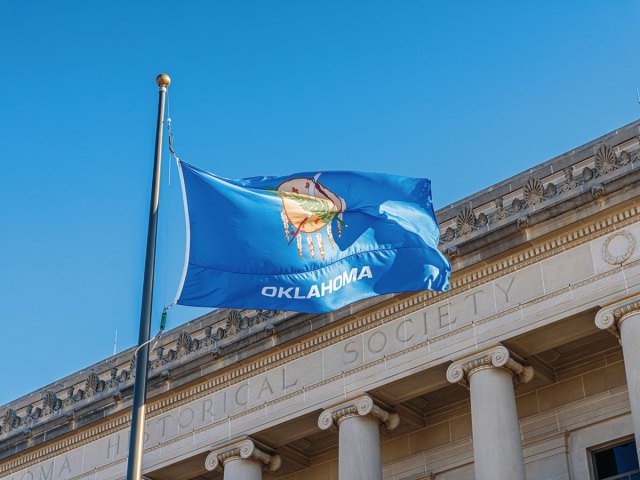
Oklahoma adopted its current state flag in 1925, based on the results of a competition held by the Oklahoma Society Daughters of the American Revolution. Shawnee resident and artist Louise Funk Fluke designed the flag, which features a blue background and the bison hide shield of the Osage Nation, symbolizing themes such as loyalty, devotion, and peace. The state name was added to the flag in 1941.
Oregon

Adopted in 1925, the Oregon state flag is the only U.S. state flag to feature different images on the front and back. On the front, you’ll find the words “State of Oregon” above a shield that contains mountains, forests, elk, a wagon, and the Pacific Ocean, each representing the state’s history and natural beauty. Surrounding the shield are 33 stars, pointing to Oregon being the 33rd state to join the Union. The year Oregon became a state (1859) is also written on the front, while the back of the flag features an image of a beaver, the official state animal.
Pennsylvania
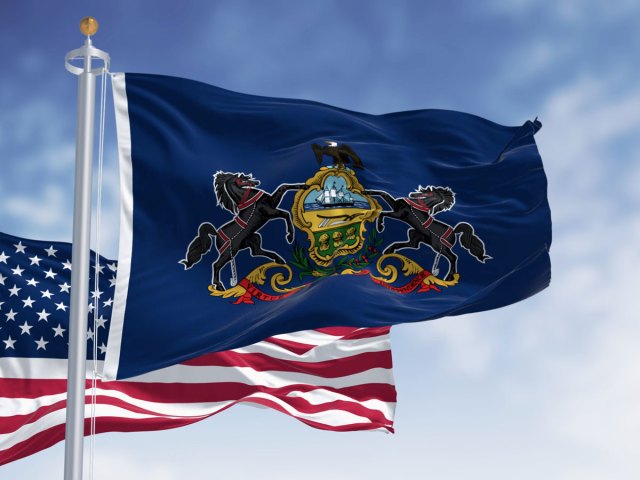
The Pennsylvania General Assembly authorized the official state flag in 1907, mandating that the blue background be the same shade as the blue on the flag of the United States. In the flag’s center is the state’s coat of arms, which has a shield depicting a ship, a plow, and sheaves of wheat, symbolizing Pennsylvania’s commerce and agriculture. Surrounding the shield are two horses, a bald eagle, and the state motto, “Virtue, Liberty, and Independence.” The flag also has a yellow-knotted silk trim around its border.
Rhode Island

Rhode Island’s current flag, introduced in 1897, depicts a yellow anchor at its center with the state motto, “Hope,” below it. This anchor served as the colonial seal as far back as 1647. In 1882, 13 yellow stars were added, symbolizing the fact that Rhode Island was one of the original 13 colonies and the 13th state to ratify the U.S. Constitution.
South Carolina
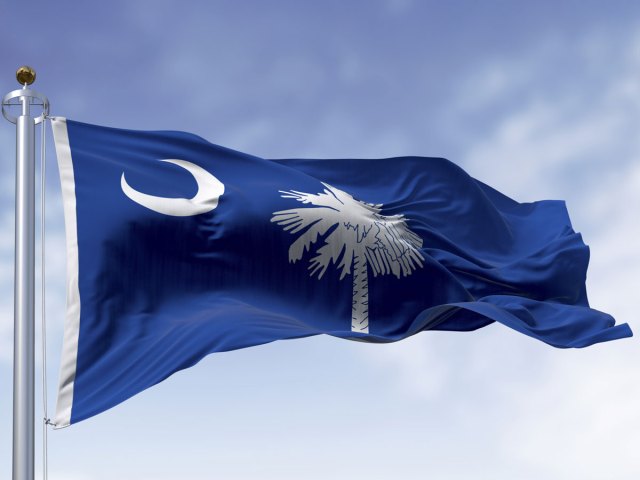
Although it can be traced back to an earlier design from 1775, the current South Carolina flag was adopted in 1861. It has a white crescent in the upper left corner on a dark blue background, which pays homage to a similar flag used by Colonel William Moultrie and his troops during the American Revolution. The design of the flag was based on the blue uniforms and white crescent badges on the caps of the fort’s patriot guards. In 1861, a palmetto tree, the official state tree of South Carolina, was added to the center.
South Dakota
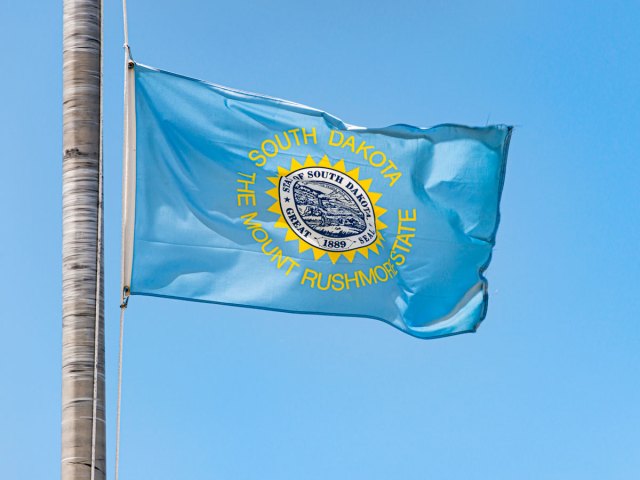
South Dakota adopted its current state flag in 1992, which updated the wording of the previous flag. It depicts the state seal surrounded by a shining sun. The seal contains symbols of commerce, industry, and the state’s natural resources. It also includes South Dakota’s motto (“Under God the people rule”), the year it joined the Union (1889), and the state nickname (“The Mount Rushmore State,” after its most famous landmark). ”
Tennessee

Designed by LeRoy Reeves of the Third Regiment, Tennessee Infantry, the flag of Tennessee dates back to 1905. It contains three white stars inside a blue circle, which represent the three Grand Divisions of the state: East, Middle, and West Tennessee. The background is crimson red, though there’s also a vertical blue bar at the right end. According to Reeves, “The final blue bar relieves the sameness of the crimson field and prevents the flag from showing too much crimson when hanging limp.”
Texas
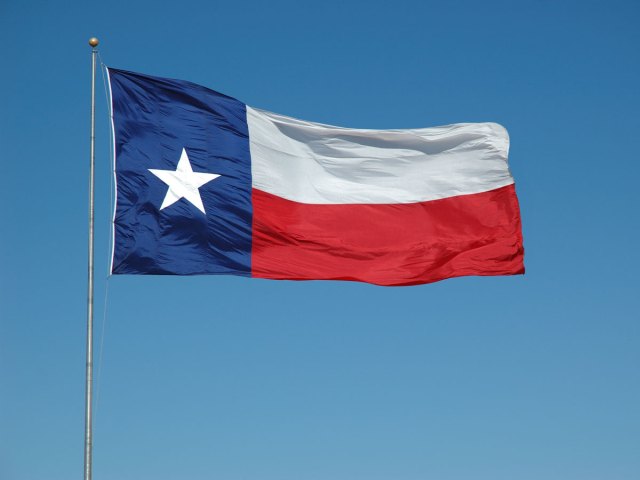
Introduced in 1839, the Texas state flag once served as the national flag of the short-lived Republic of Texas. Colored red, white, and blue, it contains a single five-pointed star atop the blue bar, which pays homage to Texas’ nickname of “the Lone Star State.” Each of the colors represents a different ideal: blue for loyalty, white for purity, and red for bravery.
Utah
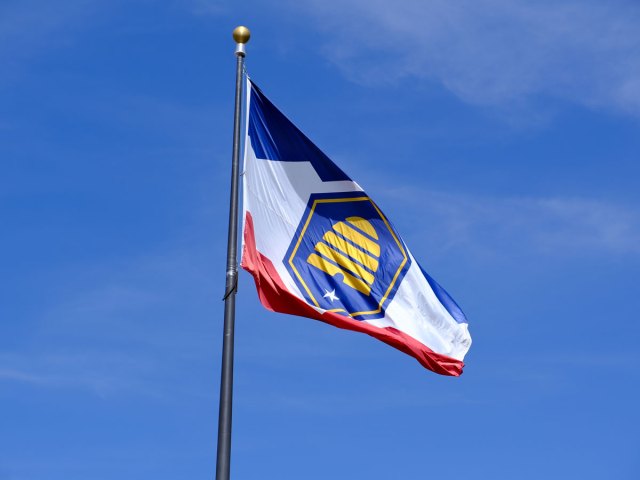
Utah’s current state flag is one of the newest on this list. Adopted in March 2024, the flag is layered in symbolism. The blue field represents Utah’s skies and lakes, the rugged white stripe recalls the state’s snowy mountains, and the indented red stripe symbolizes the dramatic canyons the state is known for. There’s also a gold-rimmed hexagon symbolizing prosperity, a beehive paying homage to the state emblem (signifying hard work and the pioneering spirit of its people), and a single white star on top representing hope.
Vermont
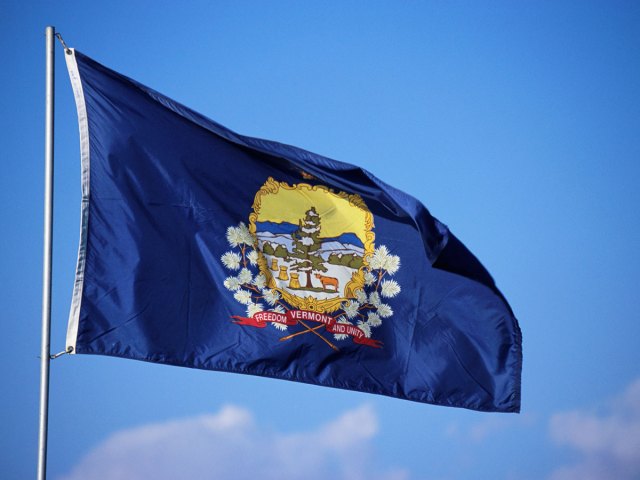
Dating to 1923, the flag of Vermont showcases the state coat of arms against an azure background. The seal depicts the Green Mountains in the background and a cow and a large pine tree in the foreground, representing the state’s natural landscapes. It also has the words “Freedom and unity,” as well as a deer head, signifying Vermont’s wildlife, situated atop the crest.
Virginia
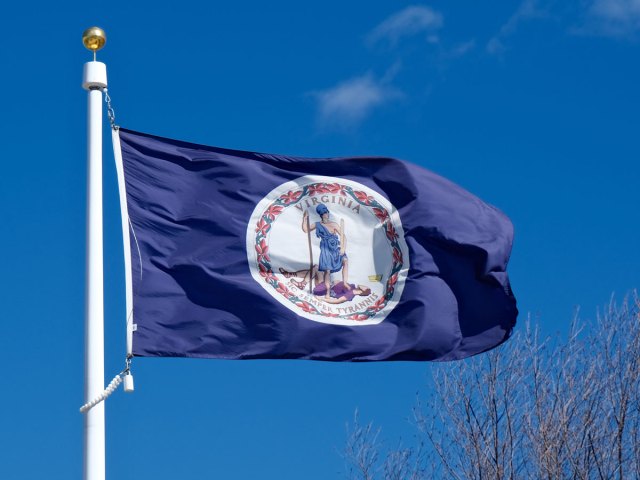
Virginia’s state flag was introduced in 1912 and depicts the state seal on a dark blue background. It shows a woman dressed as an Amazon in Greek mythology and depicting virtue. With her breast exposed, it’s the only U.S. state flag to depict nudity. The woman is standing over a slain tyrant, with the state’s Latin motto, “Sic semper tyrannis” (“Thus always to tyrnats”), written below.
Washington
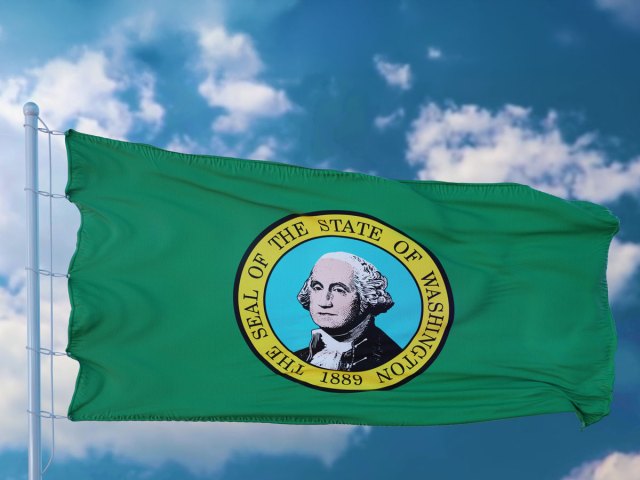
Adopted in 1923, the Washington state flag was based on a 1915 design created by a local chapter of the Daughters of the American Revolution. It is the only U.S. state flag with a green background. In the center is a seal designed by Olympia jeweler Charles Talcott, which denotes the year 1889, when Washington became a state. The seal also features the likeness of George Washington, making it the only state flag with the image of a U.S. president.
West Virginia
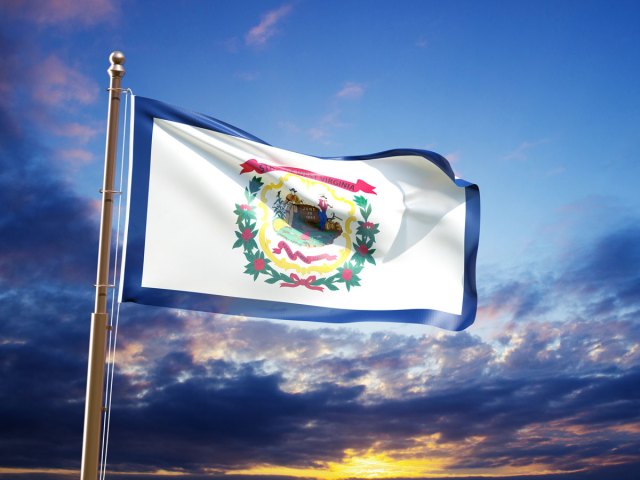
West Virginia’s flag, adopted in 1929, features a blue border, white background, and the state coat of arms at its center. The seal depicts a farmer and miner flanking a rock, and on that rock is the date West Virginia achieved statehood: June 20, 1863. The design also features the Latin motto “Montani semper liberi,” meaning “Mountaineers are always free.” The seal is surrounded by a laurel of Rhododendron maximum, which has been the state flower since 1903.
Wisconsin
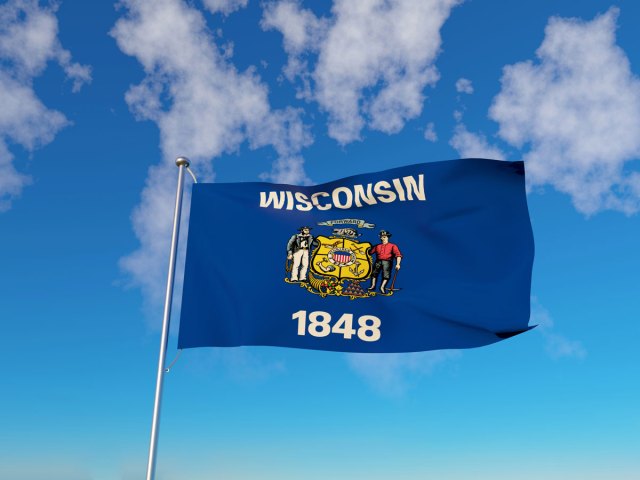
The Wisconsin state flag features the state name at the top and the year 1848 below, which denotes the year that the Badger State achieved statehood. While the current design was officially adopted in 1981, it dates back to 1863. The coat of arms at the center features a sailor and a miner, representing common professions during the era. There’s also a badger, which is the official state animal.
Wyoming
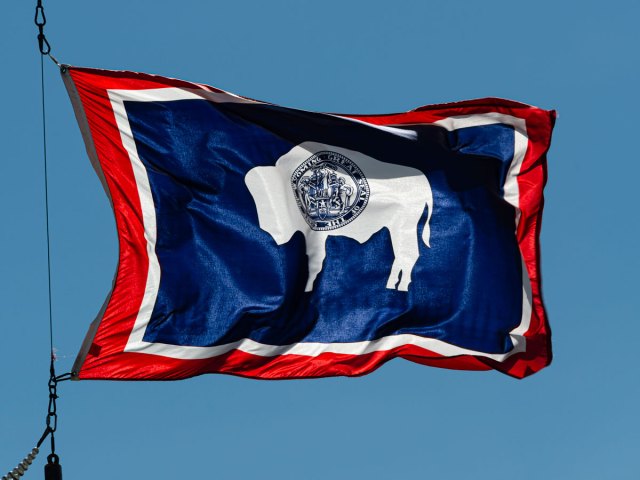
Wyoming adopted its state flag in 1917. Designed by Casper resident A.C. Keyes, it features a blue background bordered by white and red. The red represents both local Native American tribes and the pioneers who fought to claim the soil. The color white symbolizes purity, and blue is for the sky and mountains. At the center of the flag is the outline of a bison — many of which you can find in Wyoming’s Yellowstone National Park — and inside the outline is the state seal.
More from our network
Daily Passport is part of Inbox Studio, an email-first media company. *Indicates a third-party property.