

7 of the Most Beautiful Places To Visit in Hawaii
America’s only state entirely composed of islands, Hawaii is a tropical paradise located about 2,500 miles off the coast of California. Filled with golden beaches, lush rainforests, active volcanoes, and rich Polynesian culture, it’s a state like no other. Whether it’s your first or your 10th visit to the Aloha State, discover seven places in Hawaii that belong on your travel bucket list.
Road to Hana – Maui
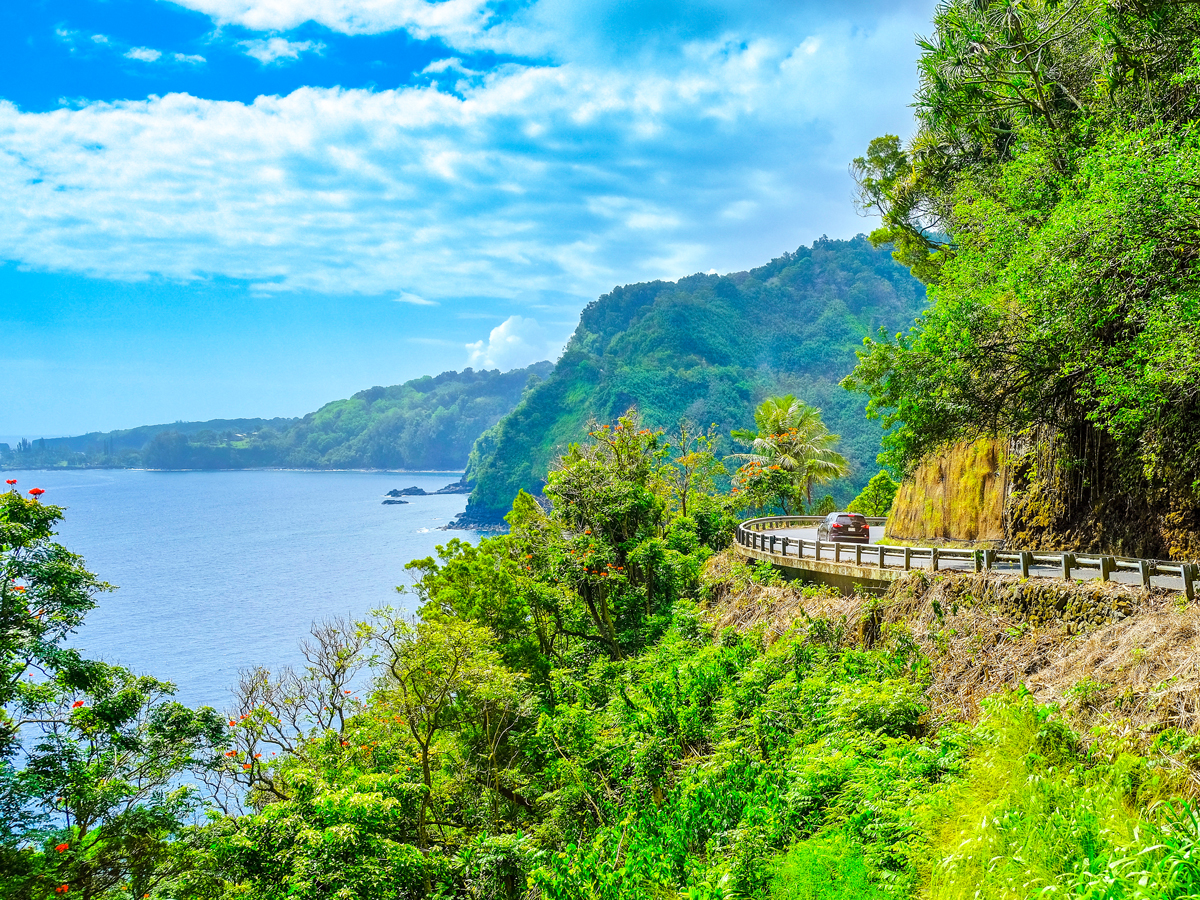
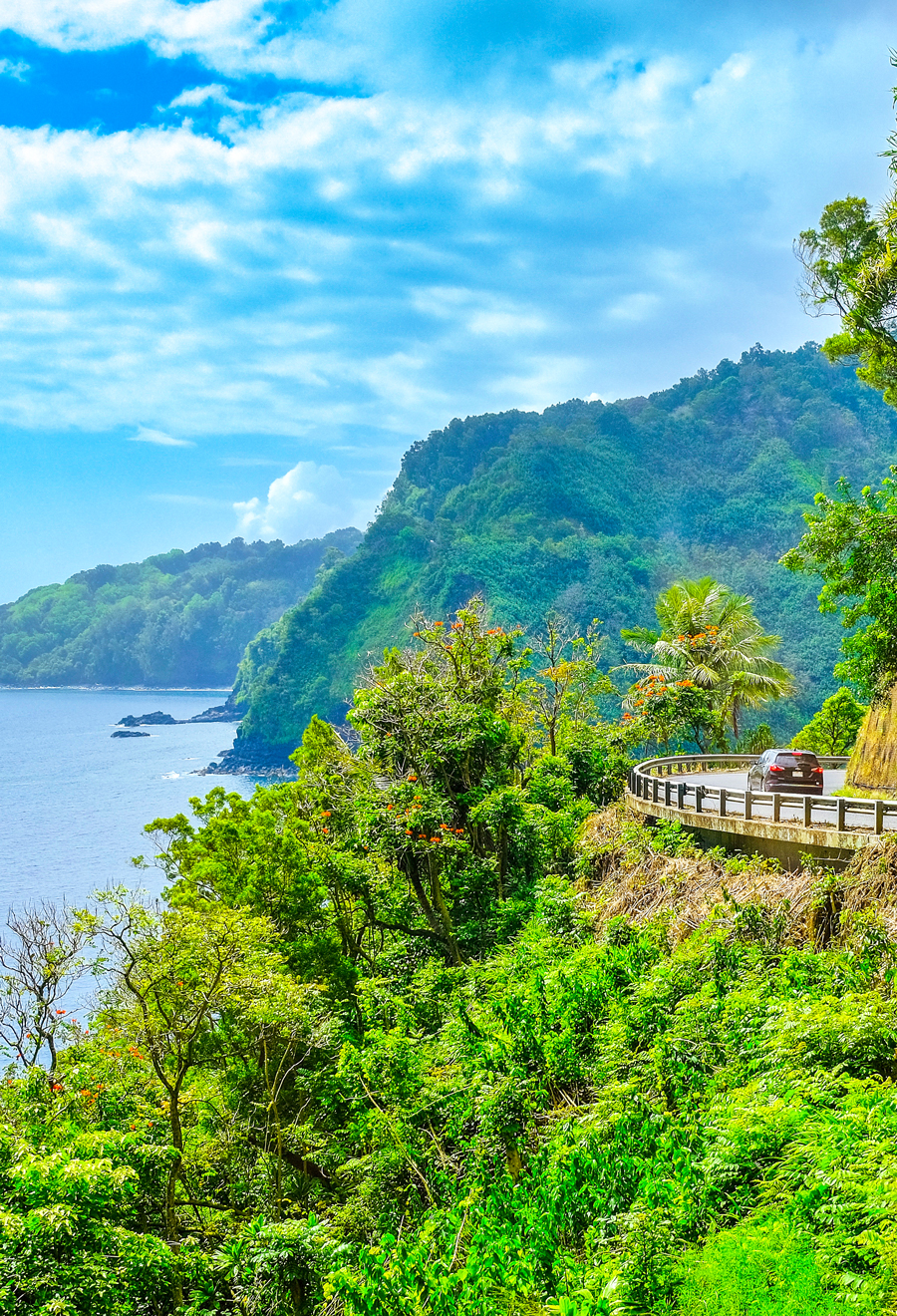
The Road to Hana is one of the most breathtaking drives in the U.S., but it isn’t for the faint of heart. Over a 64-mile route weaving across the island of Maui in Hawaii, you’ll drive through 620 hairpin curves and pass over 59 often-narrow bridges. After all, there’s a reason that many shops in Maui sell souvenirs with the phrase, “I Survived the Road to Hana.”
But the drive is well worth it for the spectacular scenery along the way, from pounding waterfalls to verdant tropical rainforest and rugged coastline. The route starts in Kahului on the west side of the island and — as the highway’s name suggests — ends in Hana Town on the east side. Hana is one of Hawaii’s most isolated communities and considered one of its last unspoiled frontiers.
Hawai’i Volcanoes National Park – Big Island
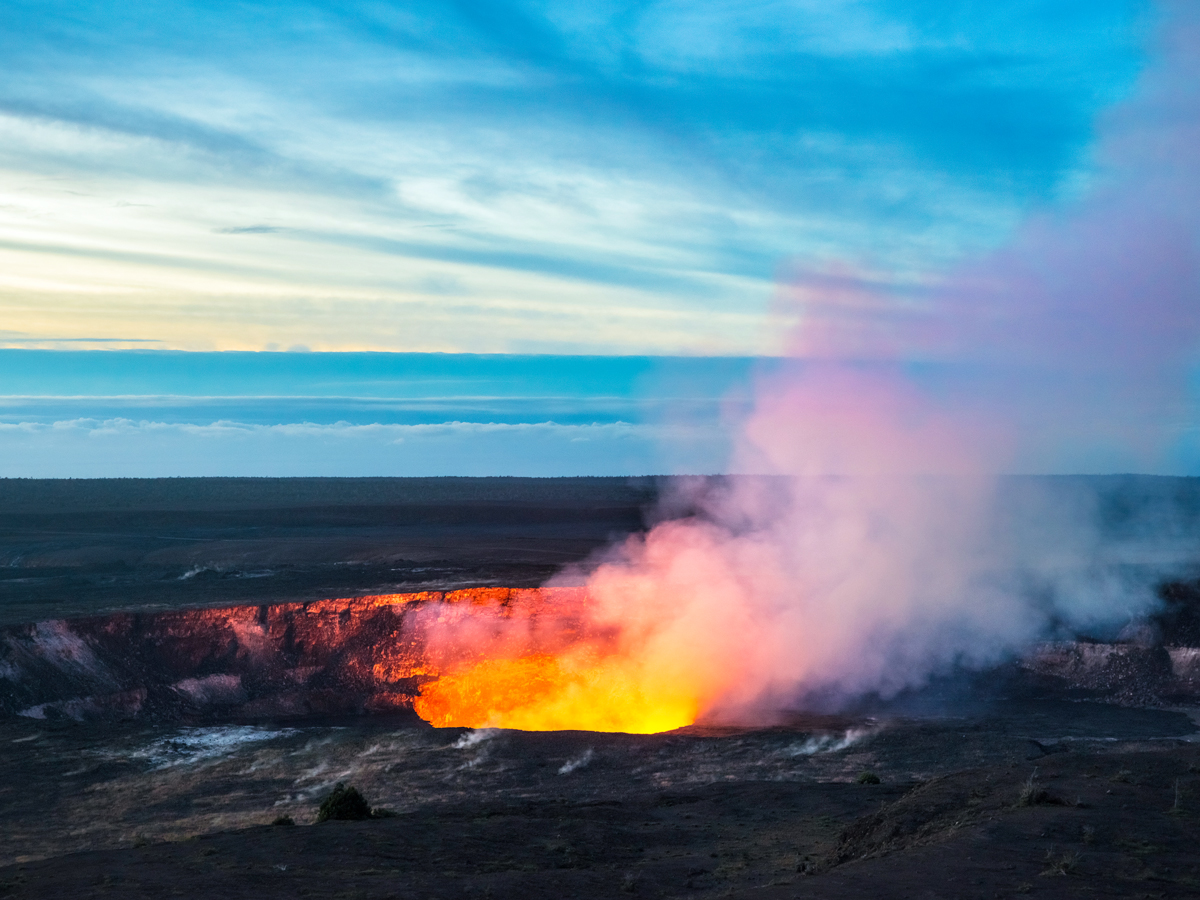
In many parts of Hawai’i Volcanoes National Park, you might feel like you’re on another planet. Witness: hot molten lava snaking its way, bubbling and glowing, across a rugged, Martian-like landscape before falling over steep cliffs and meeting the Pacific Ocean in an explosion of steam. The park was established in 1916 around one of the world’s most active volcanoes, Kīlauea, which has been in continuous eruption since 1983, and neighboring Mauna Loa, which last erupted in 1984. When measured from the Pacific Ocean floor, Mauna Loa is the largest volcanic mass on Earth.
The similarity to Mars is no coincidence: Kīlauea’s lava fields contain vast amounts of basalt, as does the surface of the Red Planet. In fact, NASA has spent years in the national park to simulate conditions on Mars. But for earthlings, the park — a UNESCO World Heritage Site — offers 150 miles of hiking trails through incredibly varied topography, from cliffs to scalded deserts and rainforests. Just be sure to take care in such a sacred place to traditional Hawaiian culture: Legend says that Pele, the goddess of volcanoes and creator of the islands, once resided in Halemaʻumaʻu crater at Kīlauea’s summit.
Napali Coast – Kauai
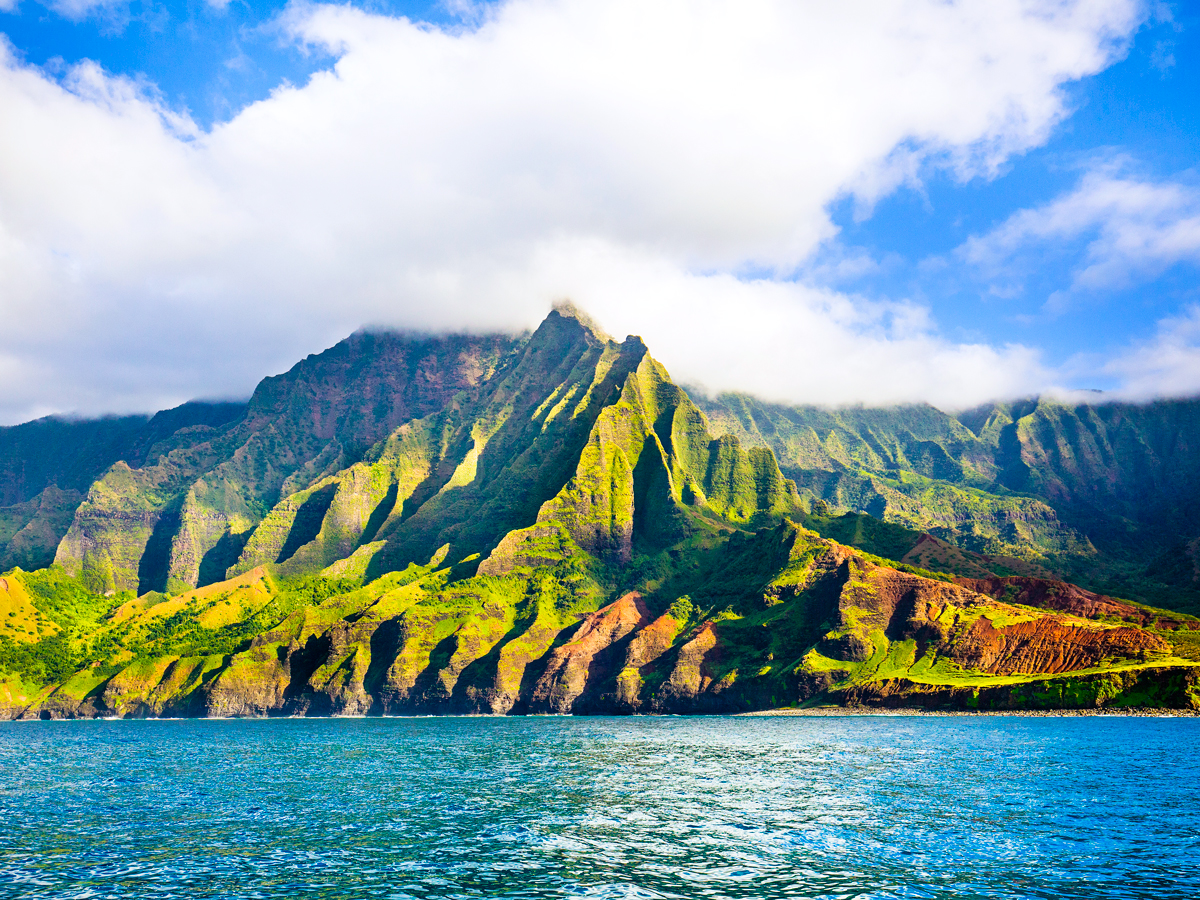
Even if this 17-mile stretch of Kauai’s North Shore looks familiar (the Pirates of the Caribbean and Jurassic Park franchises both filmed here), there’s still a not-of-this-world look to these sacred razor-ridged cliffs. Their emerald slopes — some cascade-streaked — plunge dramatically into the Pacific, the occasional beach, sea cave, or valley hidden in their impossibly lush folds.
Though experienced hikers may be able to traverse the Napali Coast State Wilderness Park on foot (always check the latest trail conditions first, and make sure you’ve got proper permits and gear), arguably the best views are on offer from the water and air. For those who tour the coast by kayak, raft, or motorized boat, the potential bonus is a thrilling encounter with dolphins or humpback whales (or both), depending on the season. On the other hand, a helicopter tour affords mind-bending perspectives on such features as Manawaiopuna Falls, nicknamed the Jurassic Park Falls for their famous role in the opening scene of the original 1993 movie.
Pearl Harbor National Memorial – Oahu
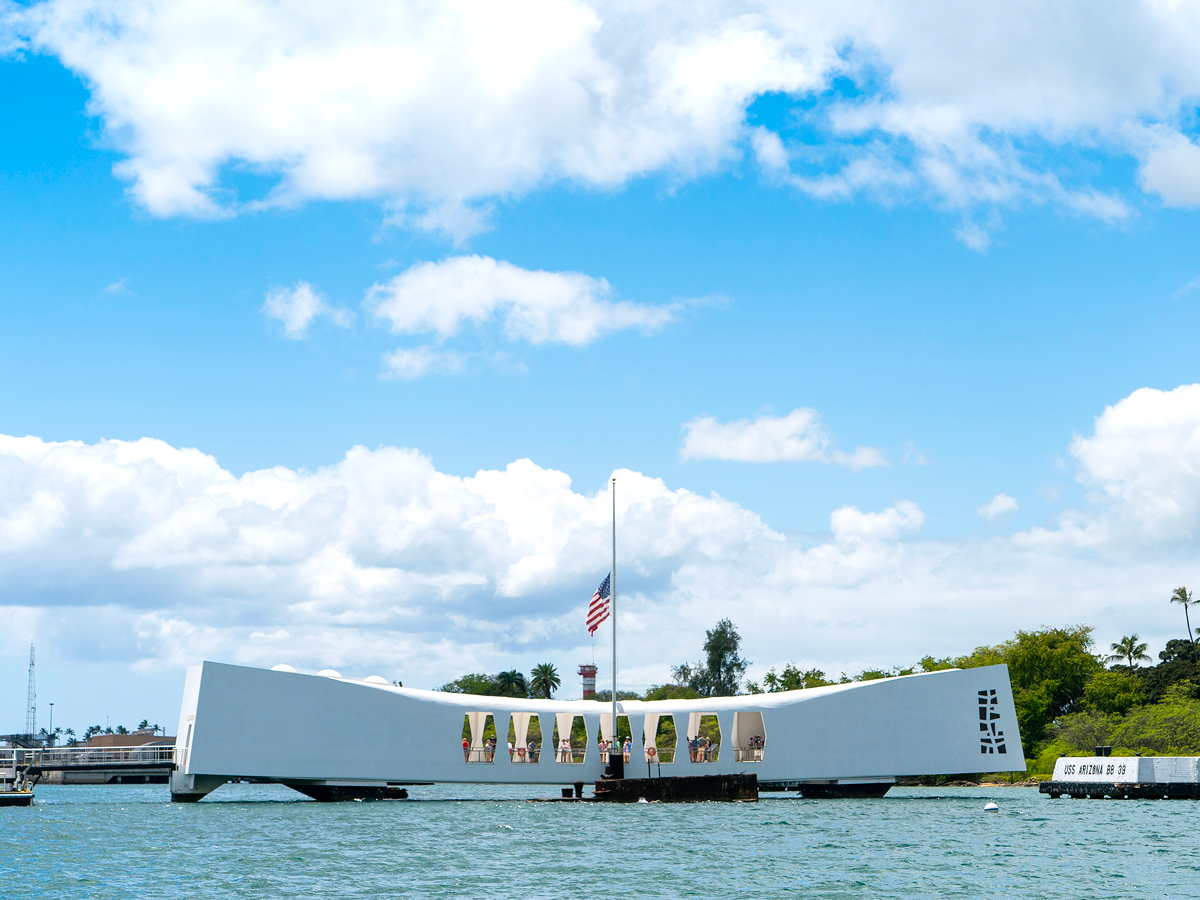
On December 7, 1941, “a date which will live in infamy,” as FDR so memorably described it, Japanese forces attacked Oahu’s Pearl Harbor, the event that finally precipitated the United States’ long deliberated entry into World War II. Eighty years after the fact, the Pearl Harbor National Memorial stands as a sobering reminder of the unthinkable number of lives lost on that day — and remains one of the most visited attractions in the state of Hawaii.
The centerpiece of the experience is the USS Arizona Memorial, which sits alongside a still-active military base and is accessible only by shuttle boat (for which you’ll need a ticket and designated departure time). The unique floating white concrete-and-steel structure, designed by Austrian architect Alfred Preis, is built atop the eponymous sunken battleship. Visitors can still see its remains from the surface, and its 1,177 deceased officers and crewmembers are enshrined in marble at the site. Around the broader national memorial, you’ll find surprisingly serene natural spaces, artifacts from the damaged ships, and educational films about one of the most pivotal moments in American history.
Waimea Canyon – Kauai
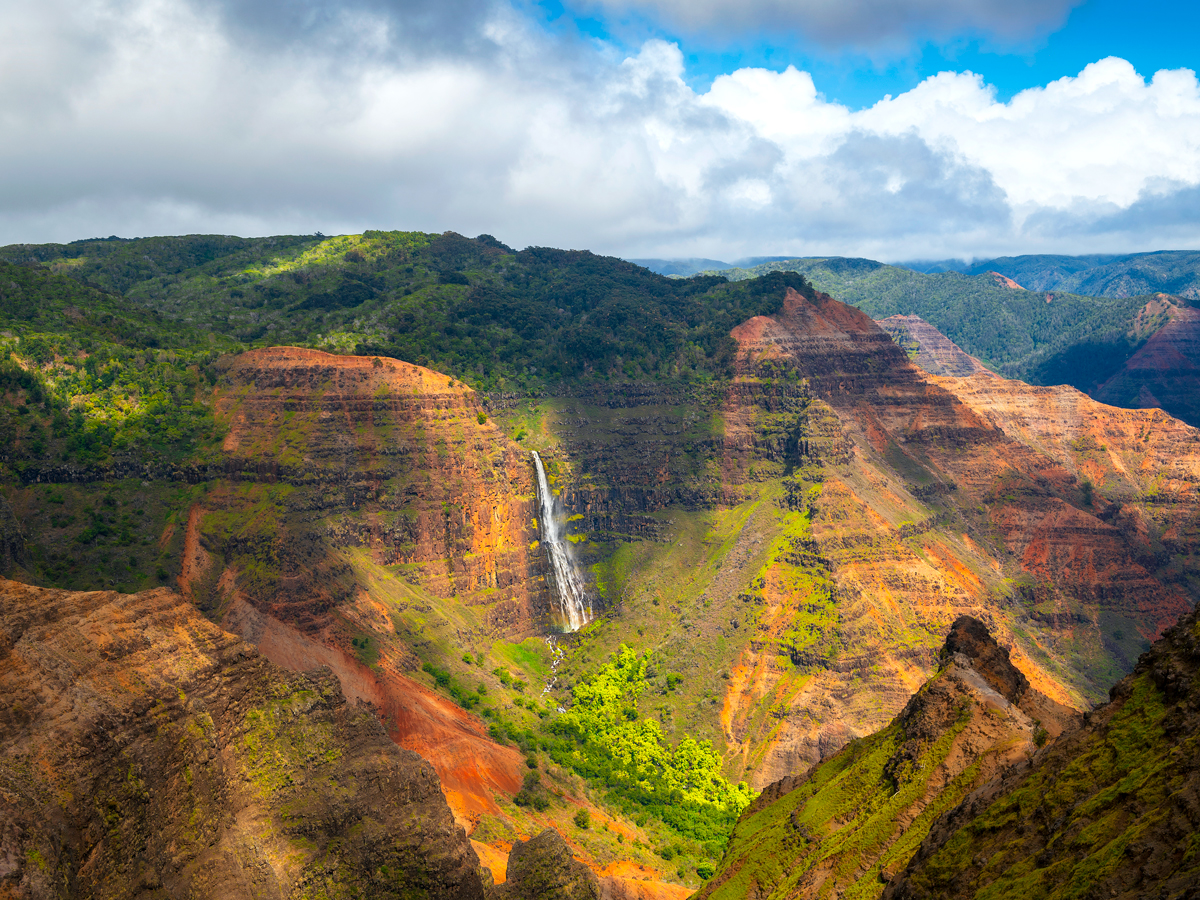
Located on the rugged western side of the Hawaiian island of Kauai, Waimea Canyon has been dubbed the “Grand Canyon of the Pacific.” At 14 miles long, a mile wide, and over 3,500 feet deep, Waimea is a bit smaller than the actual Grand Canyon, but much more vibrant.
Unlike most canyons, which are formed by rivers, Waimea came into existence when a portion of the volcanic island collapsed about 4 million years ago. The resulting depression filled with lava flows, which over time were eroded by Kauai’s abundant rainfall. The canyon’s colorful blend of red, green, and brown hues are perfectly accented by waterfalls and occasional rainbows.
Diamond Head – Oahu
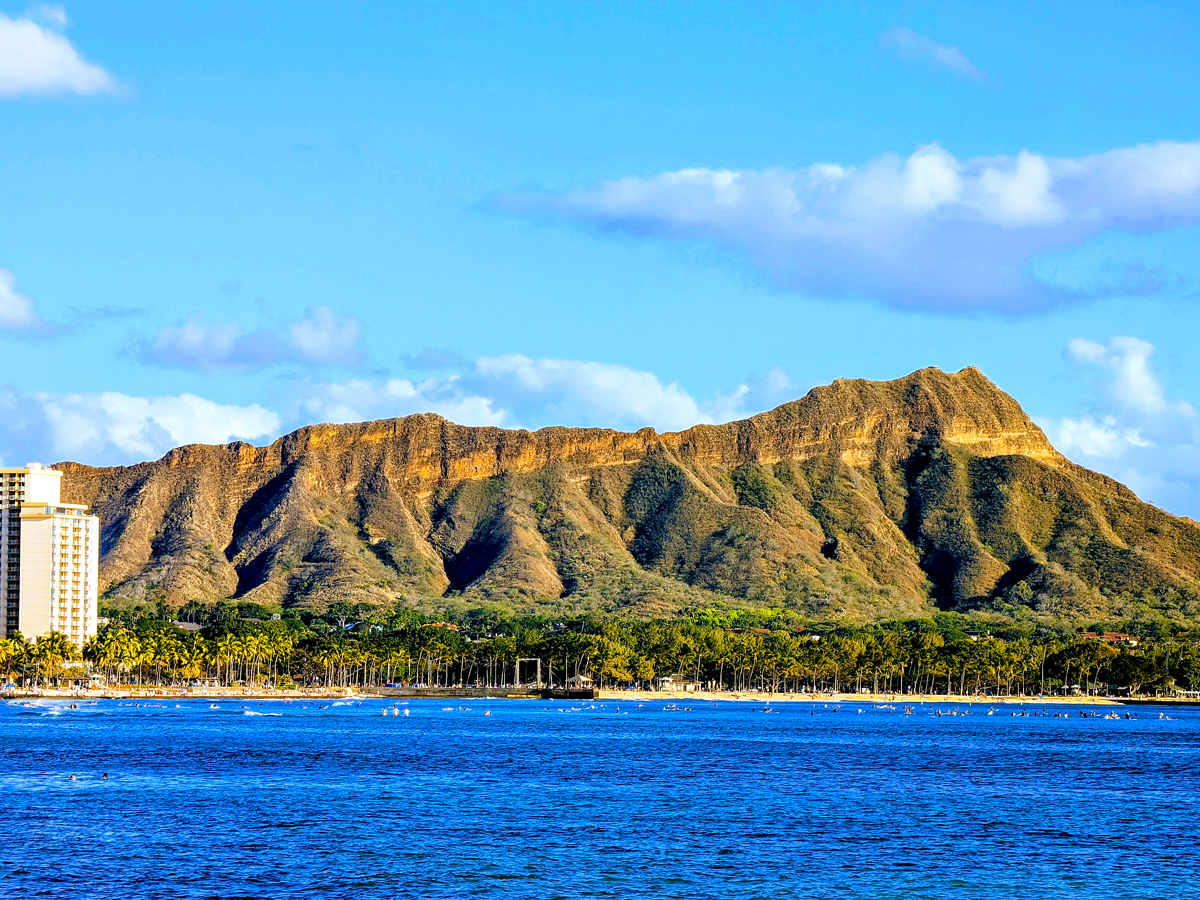
Known in Hawaiian as Leahi or “brow of the tuna,” Diamond Head is one of Oahu’s most recognizable landmarks, towering behind Waikiki Beach. Formed over 100,000 years ago, the volcanic crater, which reaches about 760 feet high and stretches 3,520 feet across, was named by British sailors who believed they had found diamonds in the cater, but the minerals they came across turned out to be calcite crystals. At one point, it served as a strategic military lookout, but it is now a state monument and national natural landmark that serves as a popular hiking spot for visitors to Honolulu.
Papakolea Beach – Big Island
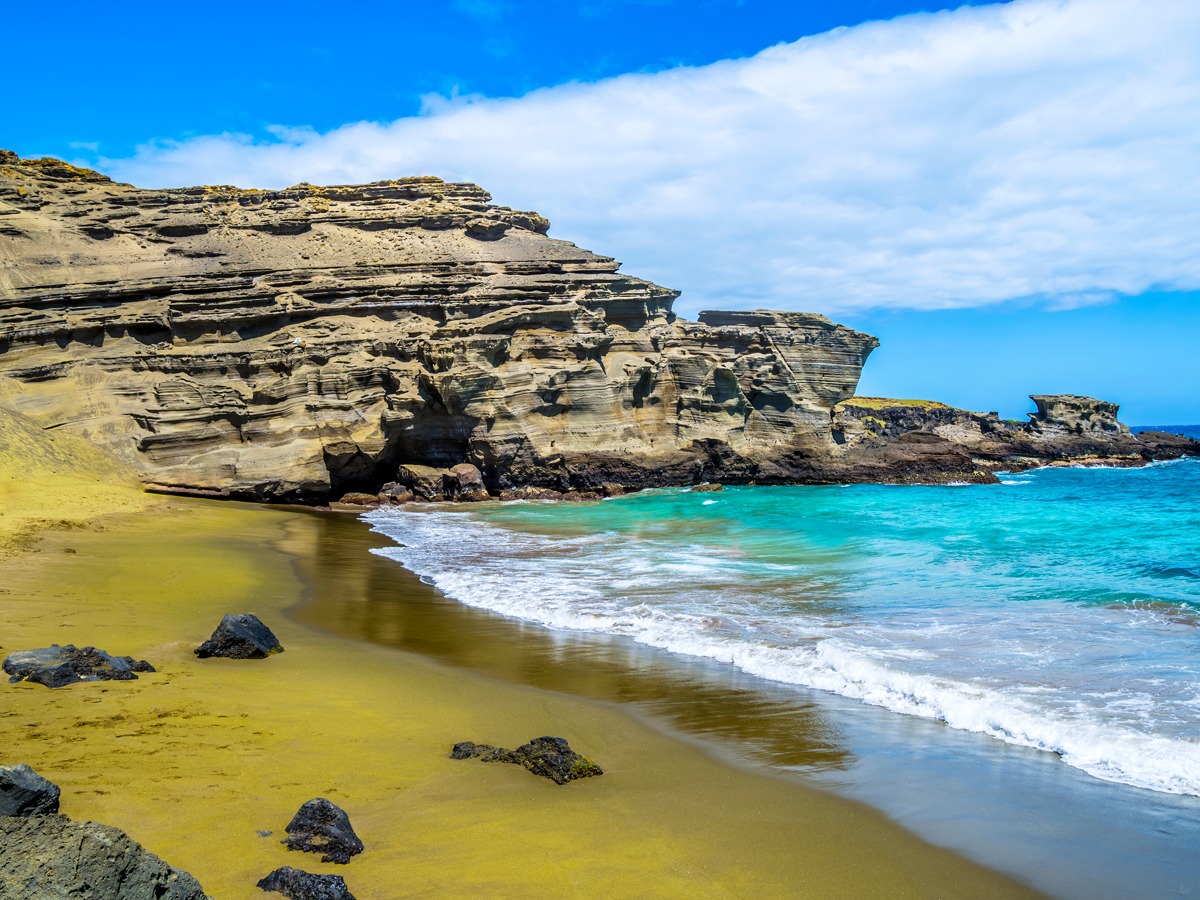
There are four green beaches in the world, but the only one in the United States is found on Hawaii’s Big Island. Called Papakolea Beach, it sits on a tuff ring — the site of a volcano eruption that happened thousands of years ago. The green color is due to a silicate called olivine, a relatively heavy mineral that tends to stick around instead of washing out to sea. It comes from ancient lava flows, and the color can range from a pea soup green-gold to deep jade. You’ll also find green sands at Talofofo Beach in the U.S. territory of Guam, Punta Cormorant in Ecuador, and Hornindalsvatnet in Norway.
More from our network
Daily Passport is part of Inbox Studio, an email-first media company. *Indicates a third-party property.