7 of the Most Beautiful Places To Visit in Greece
There’s a reason Greece is one of the world’s most-visited countries: Travelers would be hard-pressed to find a destination that offers such an incredible mix of ancient landmarks, stunning islands, and laidback Mediterranean culture. While you can’t go wrong wherever you travel in Greece, these seven sites are standout places to add to your itinerary.
Meteora
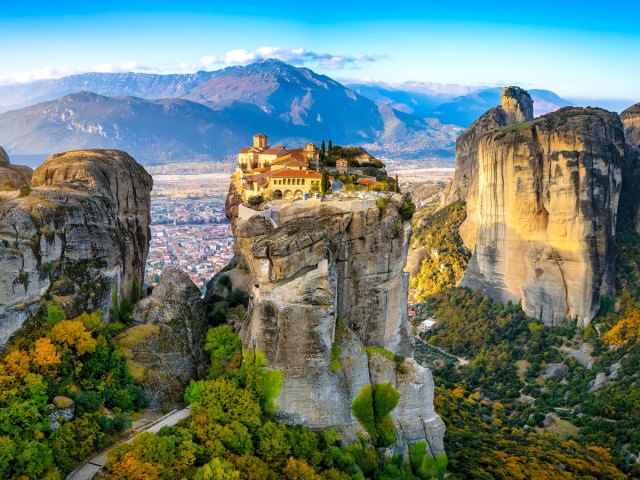
Sometimes, location names bear little relation to the facts on the ground. (See: Greenland.) Other times, the name alone leaves no question you’ve reached the right place. Metéora, derived from the Greek words for “suspended in the air,” is the highest expression of the latter. Emphasis on high: These Orthodox monasteries are perched atop the sandstone megaliths of the Plain of Thessaly in central Greece that reach an average of 1,000 feet tall, with some soaring to almost twice that height.
The sheer improbability of the setup — 60-million-year-old rocks sculpted by earthquakes and the elements serving as the support for a spiritual center in the sky — is reason enough to visit. But the UNESCO World Heritage Site also happens to be breathtakingly beautiful. At their 16th-century peak, the structures numbered in the dozens, but today, six remain in working order and are open to visitors who are willing to brave the staircases and pathways that are cut into the rock. Of course, as Game of Thrones fanatics know, at least one visitor wound up here against his will: Tyrion Lannister (Peter Dinklage), whose sky cell at the Eyrie (in the Vale of Arryn) was a part-CGI rendering of this fantastical place.
Oia – Santorini
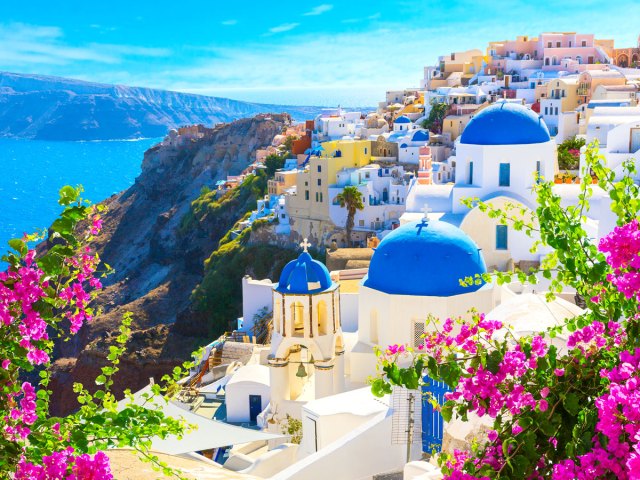
Even the sparest description of Oia — a whitewashed onetime seafaring village that overlooks the local caldera and the Aegean Sea from the Greek island of Santorini — would tempt most travelers. But factor in one of most famous sunsets in existence, and you’ll see why so many romantics land on these shores. Indeed, Santorini has become such a wedding photography hotspot that The New York Times covered the trend, and many Oia photographers and stylists cater specifically to couples.
While pro photographers can certainly capture the orangey-fuchsia sun exactly as it’s casting the perfect glow on you, the sea of selfie-takers flooding Oia’s waterside cafés and streets at sunset likely won’t be any less pleased with the resulting shots. Yes, the crowds are a thing. They’re almost as famous as the sunset itself. But the collective applause that erupts as the sun slips into the sea is so lovely that you may find the communal joy to be a major bonus in the end.
Elafonisos
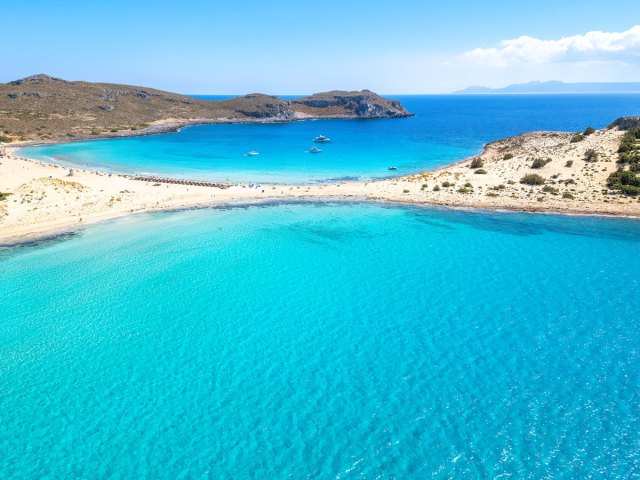
In a country with more than 6,000 islands, how do you manage to stand out? Here’s one way: The tiny island of Elafonisos, off the southern tip of Greece’s Peloponnese peninsula, overlooks the world’s oldest known submerged city. Scientists believe earthquakes were responsible for sinking Pavlopetri in the Aegean Sea sometime around 1000 BCE. Today, the 9-acre site lurks about 13 feet under the surface of Elafonisos’ azure-green waters, inviting curious snorkelers to swim around two-story homes with attached gardens, temples, roads, and even a cemetery.
If you’re in search of nothing more than clearing your head on a gorgeous island off the beaten tourist path, Elafonisos fortunately has just as much to offer above water. Not only is it accessible via a 10-minute ferry from the mainland, but the island’s 12 square miles are also flush with sugar-like sand, prismatic wildflowers, and optimal windsurfing conditions. Much of the local population works in the fishing industry, and in the island’s only village, Elafonisos Town, octopuses hang from boats in the marina, ready to be served up at tavernas with idyllic sunset views.
Samaria Gorge – Crete
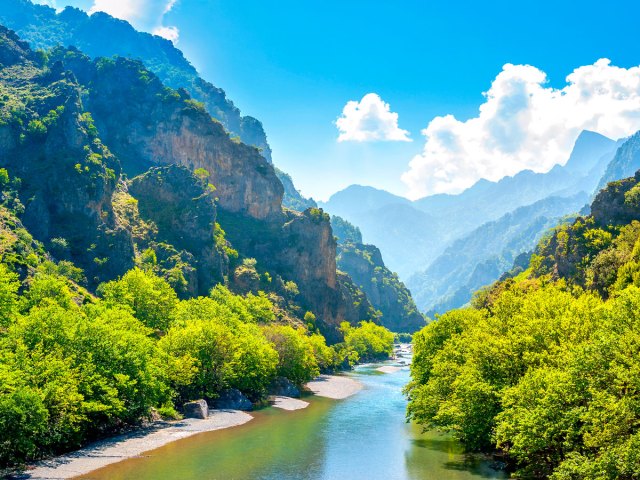
Slicing through the Lefka Ori mountain range down to the Mediterranean coast of Greece’s largest island, the Samaria Gorge is the longest gorge in Europe. It’s renowned for both its spectacular geological value and unparalleled biodiversity — and fortunately, thanks to its steepness and historic inaccessibility, the natural beauty of the area surrounding the gorge remains intact. Visitors can descend the trail from an elevation of 4,000 feet all the way to sea level amid unspoiled nature. Hikers who embark on the 8-mile trek will pass through “the Gates” — a narrow stretch that’s only 13 feet wide and lined with mountainous rock looming hundreds of feet in the air — before ultimately emerging at the coastal village of Agia Roumeli.
The Samaria Gorge is also a haven for animal lovers, as it houses several endemic species such as the Cretan Agrimi goat (known for cliff-climbing), the rare bearded vulture, and Blasius’ horseshoe bat. New species of flora are still being discovered, including a perennial chasmophyte plant that was first recorded in 2007. Upon arriving at the end of the Samaria Gorge, be sure to gaze across the Mediterranean to the island of Gavdos, Greece’s southernmost inhabited island.
Acropolis of Athens
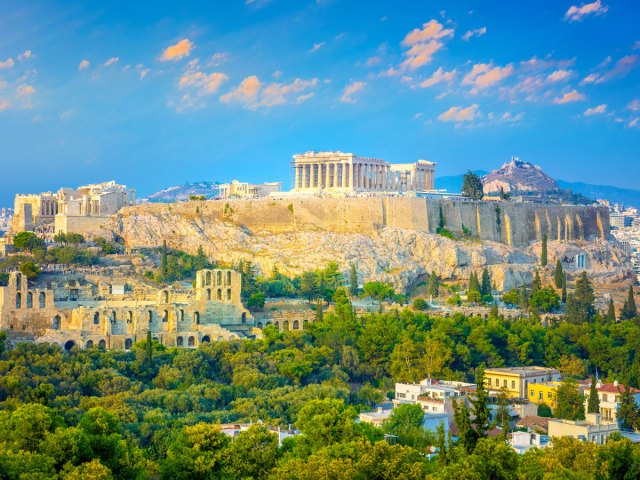
The Acropolis of Athens is one of the most significant sites of ancient Greek history still standing today. The word “acropolis” translates to high city, but in ancient times the site was instead known by the name Cecropia — after the city’s mythical first king, Cecrops. According to legend, Cecrops had the body of a human but a serpent’s tail instead of legs and was said to be the first of the gods to defy Zeus. He also helped the goddess Athena win the coveted title of the city’s protector — so it’s only fitting that the impressive citadel was named after him. Today, the UNESCO World Heritage Site is home to the remains of several famous temples, including the Parthenon, and receives more than a million visitors annually.
Mount Olympus
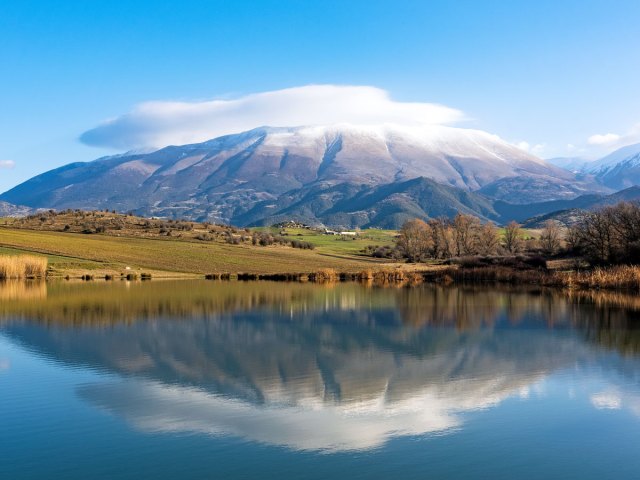
According to legend, Mount Olympus is the home of the Olympian Greek gods. In Greek mythology, there were 12 Greek gods who lived on the 9,570-foot-tall peak: Hestia, Hermes, Demeter, Hephaestus, Aphrodite, Ares, Artemis, Apollo, Athena, Poseidon, Hera, and Zeus himself. Beyond the legends, Mount Olympus is the tallest mountain in Greece, which makes it a natural draw for travelers. Located on the border between Thessaly and Macedonia, it is the site of its home country’s first national park and was named a UNESCO World Biosphere Reserve for its unique ecology. Every year, hundreds of mountaineers climb the mysterious mountain, though none have yet found the thrones of the Greek gods.
Milos
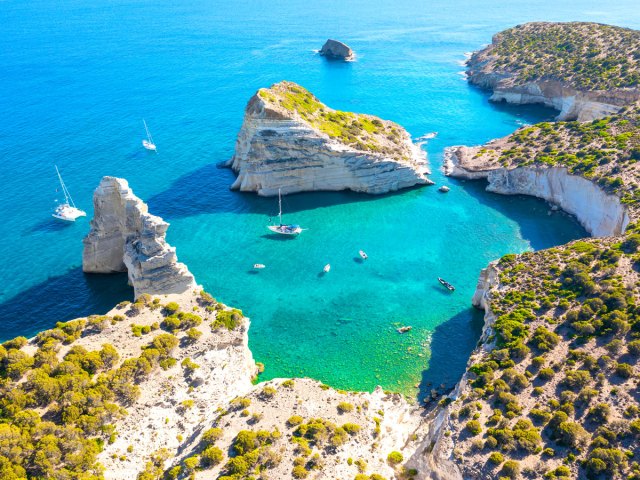
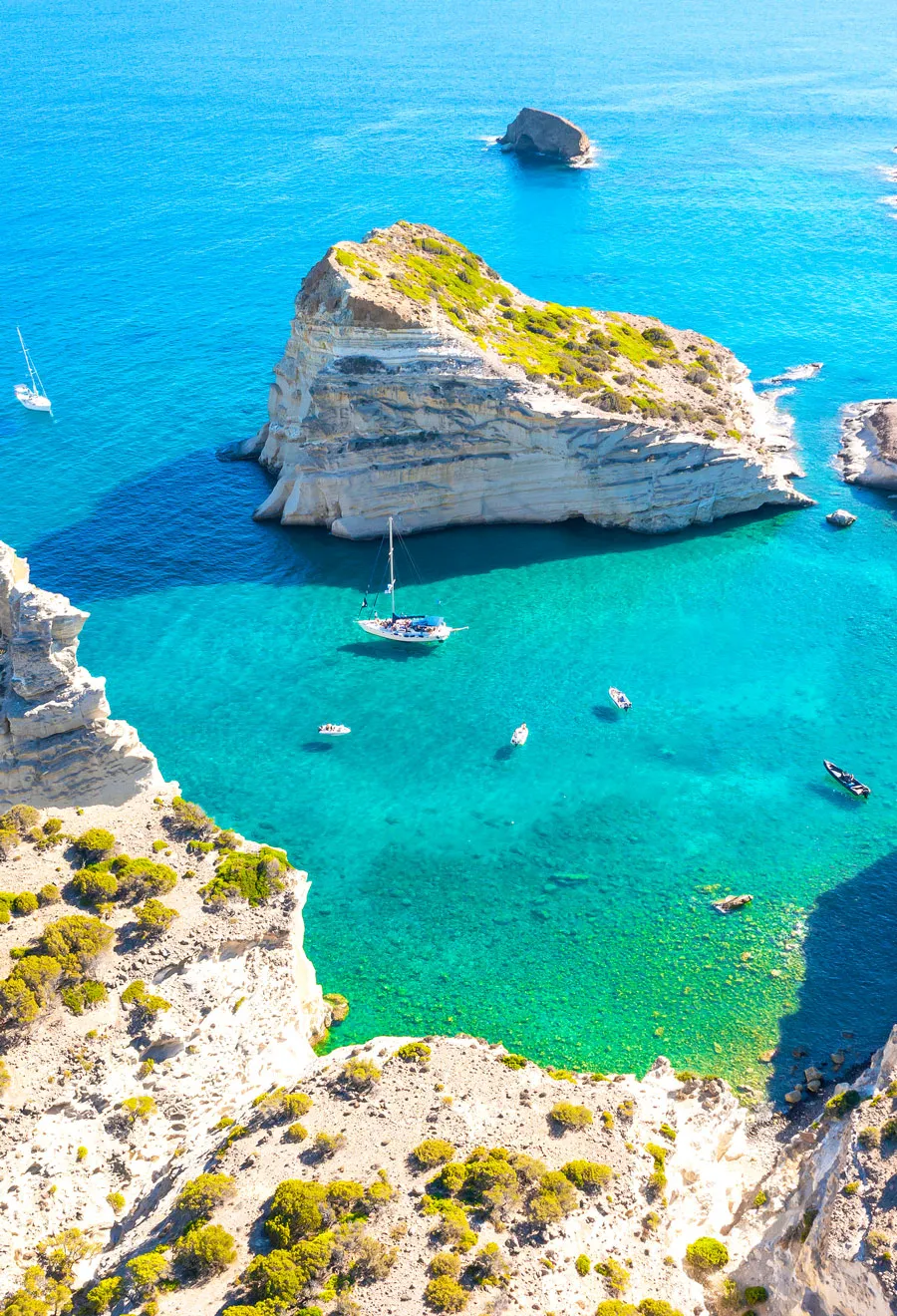
Another under-the-radar Greek island, Milos is home to an eye-catching landscape of turquoise waters and waterfront white cliffs filled with caves. These hidden caverns were prime locations for pirates from all around the region — including Venetian, Corsican, Berber, and Saracen pirates — to set up their ambushes against trade vessels from at least the fifth century BCE to around the 15th century.
While there were quite a few cave areas that the pirates used as their home base, Kleftiko was a favorite, thanks to the ideal cave positions. It was easy enough for pirates to hide away here, often for days on end. Fortunately, Milos’ caves are no longer filled with gold-hungry pirates — piracy in the Mediterranean officially came to an end in the 19th century, but today the island makes for an epic getaway.
More from our network
Daily Passport is part of Inbox Studio, an email-first media company. *Indicates a third-party property.