





Why Are Airplane Seat Belts Different From Car Seat Belts?
Why Are Airplane Seat Belts Different From Car Seat Belts?
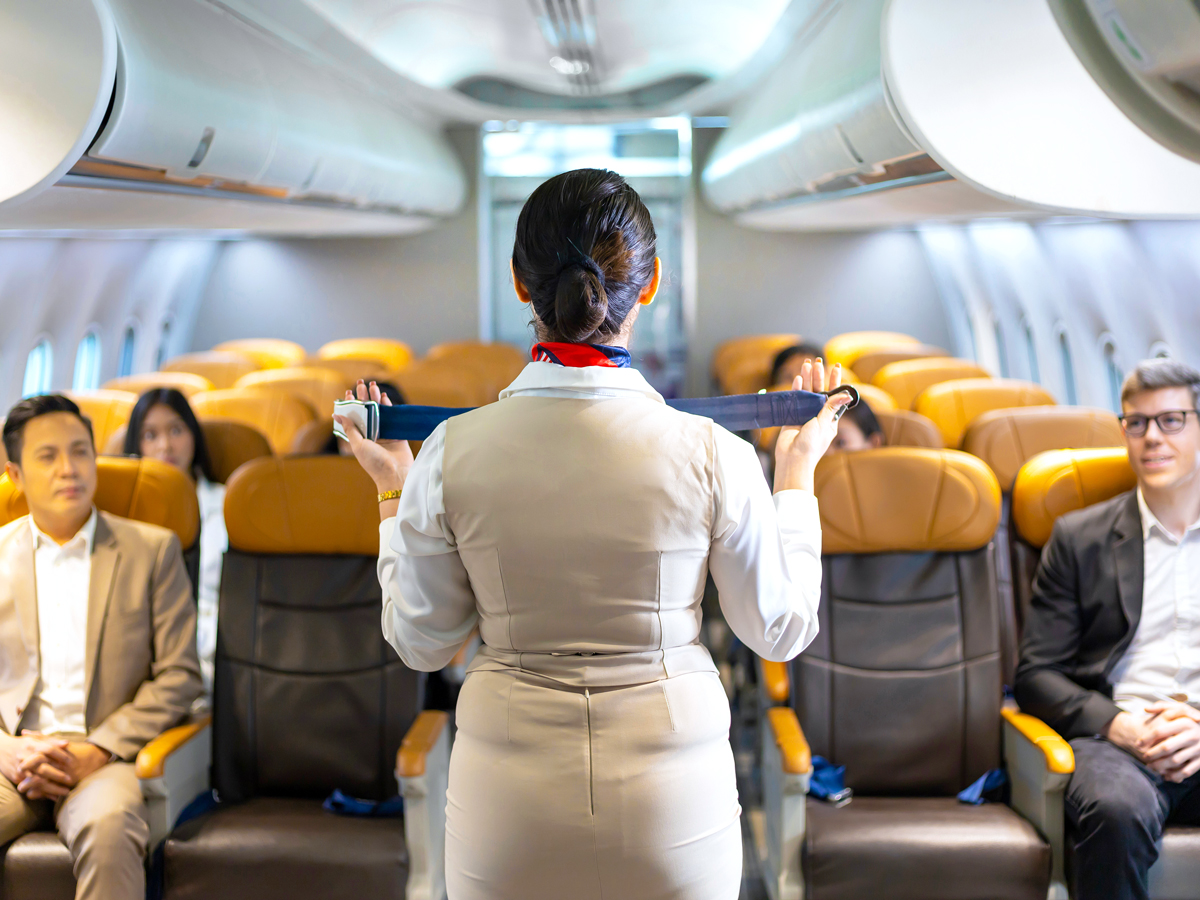

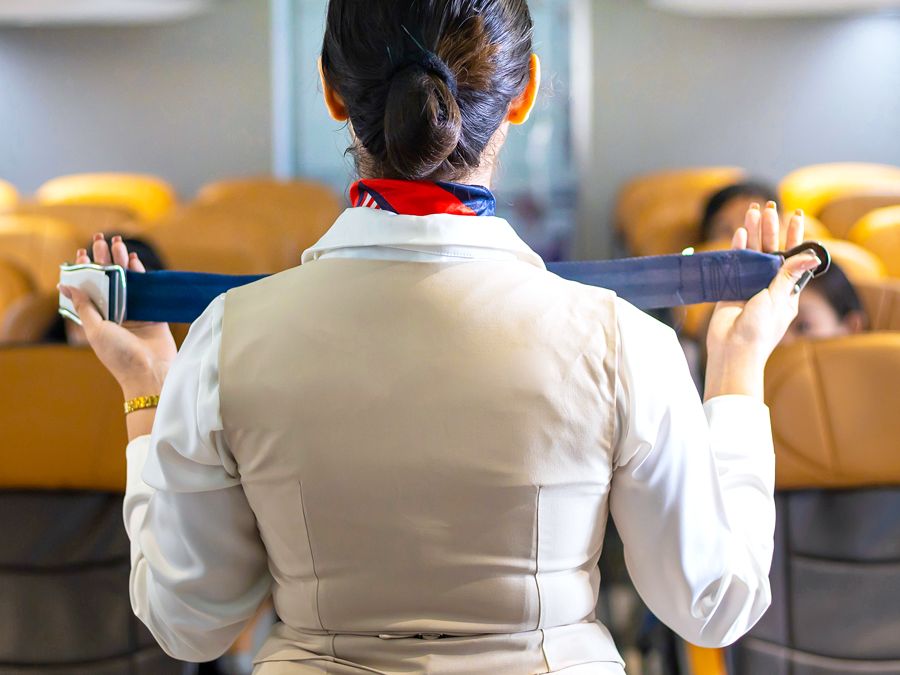
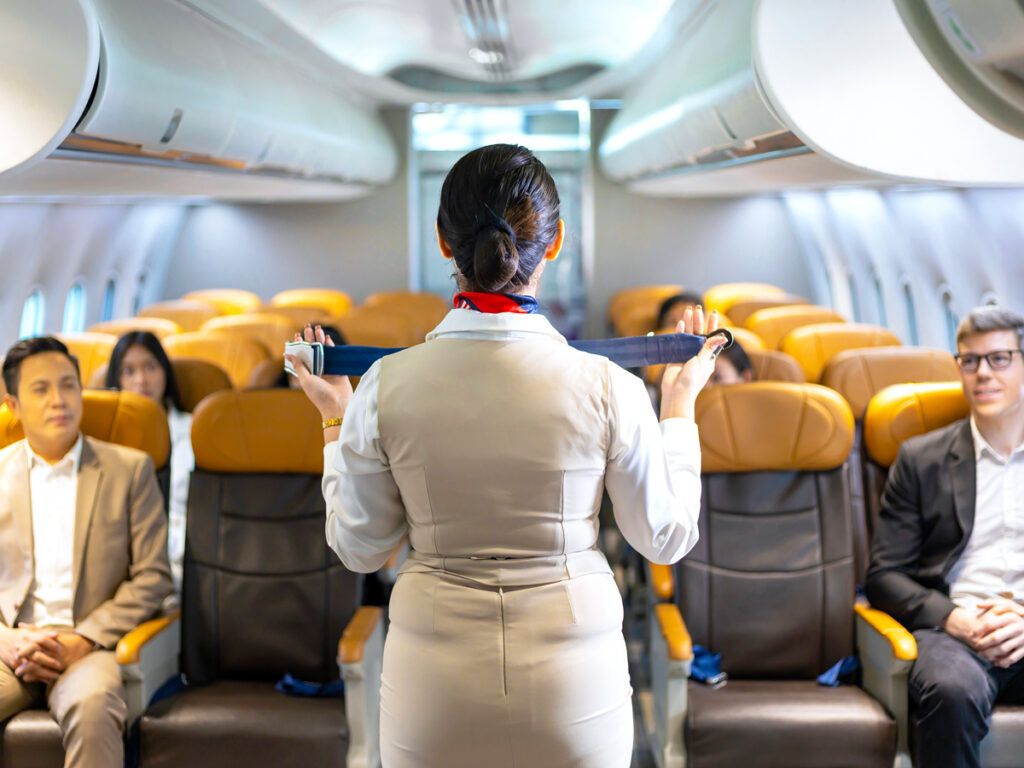
You might not learn anything new the next time you watch a flight attendant demonstrate how to fasten your seat belt, but you might be struck by a question that’s somehow never occurred to you: Why are airplane seat belts different from car seat belts? And isn’t it odd that they don’t really do anything to secure your upper body? Here’s what explains the difference.
Different Precautions
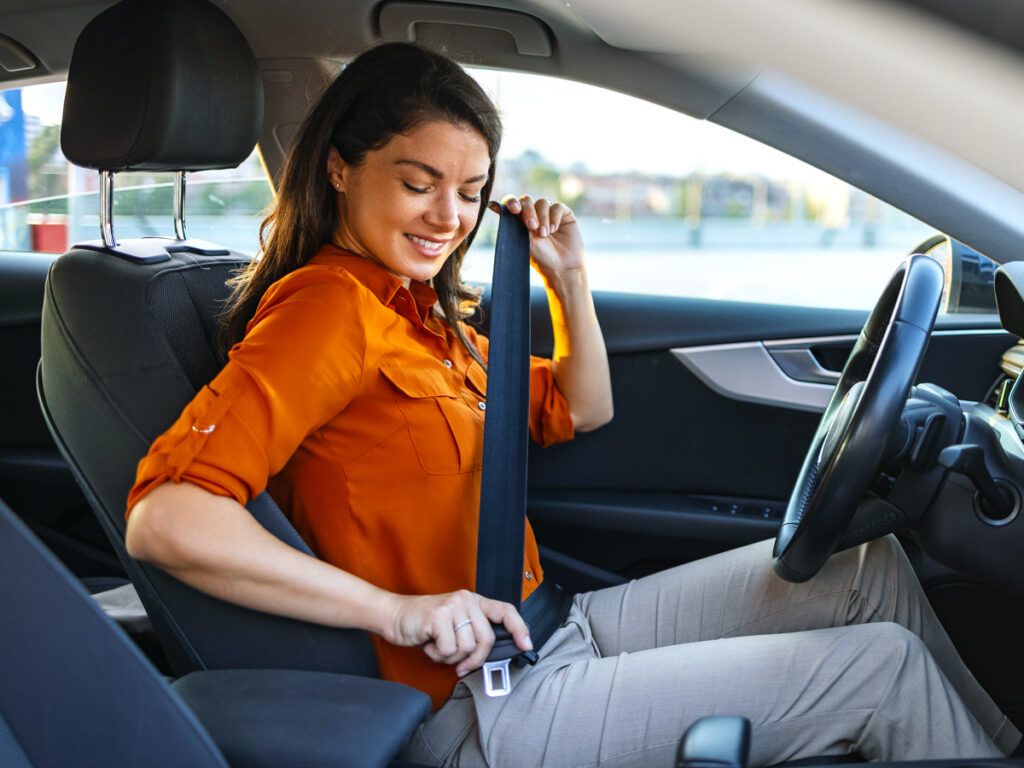
Modern car seat belts have two parts: a shoulder belt that goes diagonally across the body and a lap belt that pushes into a buckle at the hip and unlocks with the push of a button. In contrast, the vast majority of commercial airplane seats have a simple lap belt with a lift-lever buckle in the center (a design that used to be common in cars before the 1970s).
So, why the different designs? According to a 2018 report from Atlas Obscura, the answer has to do with what kind of situation the respective safety mechanisms are intended to keep you safe from. In a car, the main danger arises from abrupt forward, backward, or sideways collisions involving other automobiles on the road — so a shoulder belt will help restrain your entire upper body in the event of sudden acceleration or deceleration. In a plane, that’s less of an issue — if a 747 collides with another aircraft (or anything, really), there’s only so much that any kind of seat belt can do.
Airplane seat belts are mostly meant to protect from turbulence severe enough to cause rapid vertical drops. Lap belts are sufficient to restrain your body in the event of up-and-down movement, while a shoulder belt wouldn’t provide much utility in that case. If you’ve ever seen a video in which someone who isn’t wearing a seat belt on a plane hits their head on the overhead compartment after a sudden bout of turbulence, that’s exactly what lap belts are meant to prevent.
As Simple Flying reports, however, there are some exceptions for business-class seats in individual pods, which have a much greater distance between seats. Without a shoulder belt in the event of a crash landing, passengers could hit the hard shell surrounding the pods with dangerous force. Thus, the FAA — which conducts dummy crash testing in these scenarios — requires shoulder belts to protect passengers from head injuries. (This is the same reason you’ll find shoulder belts in the cockpit and flight attendant jump seats.)
Safety First
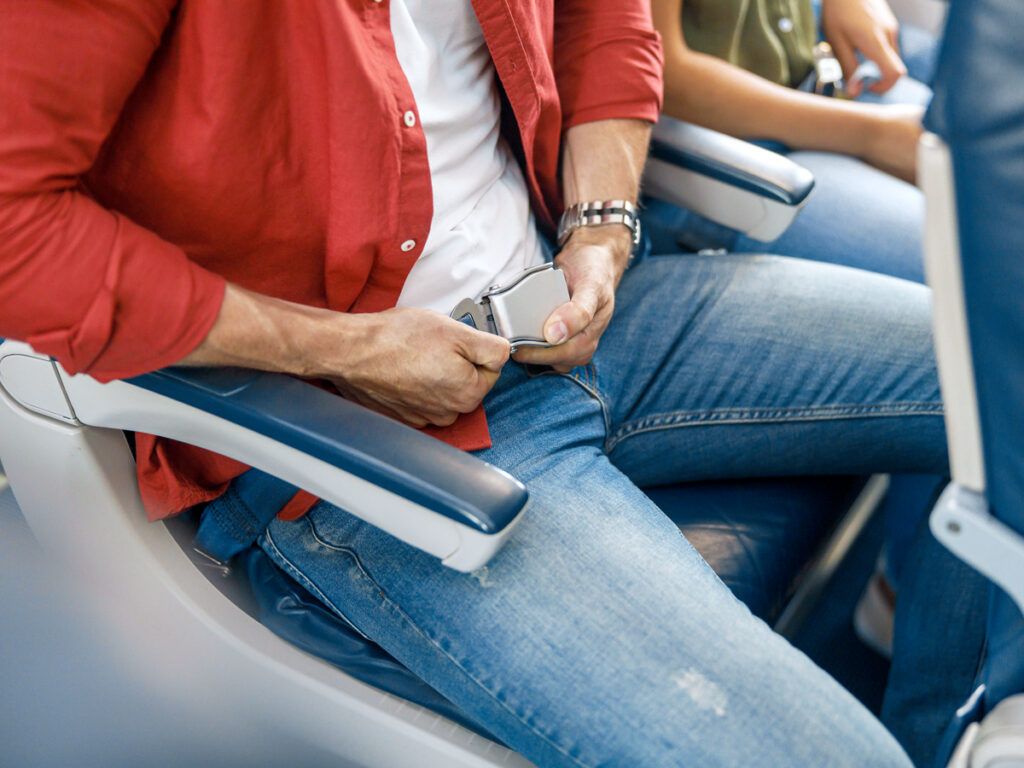
It isn’t an accident that airplane seat belts are so simple in their design. Every second counts in an emergency situation, and everything about them is designed with safety and speed in mind. They can be unbuckled in an instant, the lack of shoulder straps means they won’t get tangled, and the buckle is centered so that they can be easily unfastened (whether by the passenger themself or a rescue worker), even in low-visibility settings. In a car, meanwhile, emergency workers can cut off the seat belt’s entire strap rather than waste time trying to unbuckle them if the situation is urgent.
The Bottom Line
As with most else involving commercial aircraft, cost is a factor as well. Because they use less material, simple waist belts cost less to manufacture at scale than a more complicated design would. They also weigh less, which saves on fuel, and with hundreds of seat belts on every single plane, small costs like that add up quickly. (For further proof of that idea, recall that in the 1990s American Airlines made headlines for cutting a single olive in its first-class meals, which saved the carrier $2 million a year.)
So, while you might not be given any new information during your next safety demonstration, you can at least appreciate all the thought that went into your waist belt’s conception and design.
More from our network
Daily Passport is part of Inbox Studio, an email-first media company. *Indicates a third-party property.