





Why Your Electronics Might Explode Abroad
Why Your Electronics Might Explode Abroad
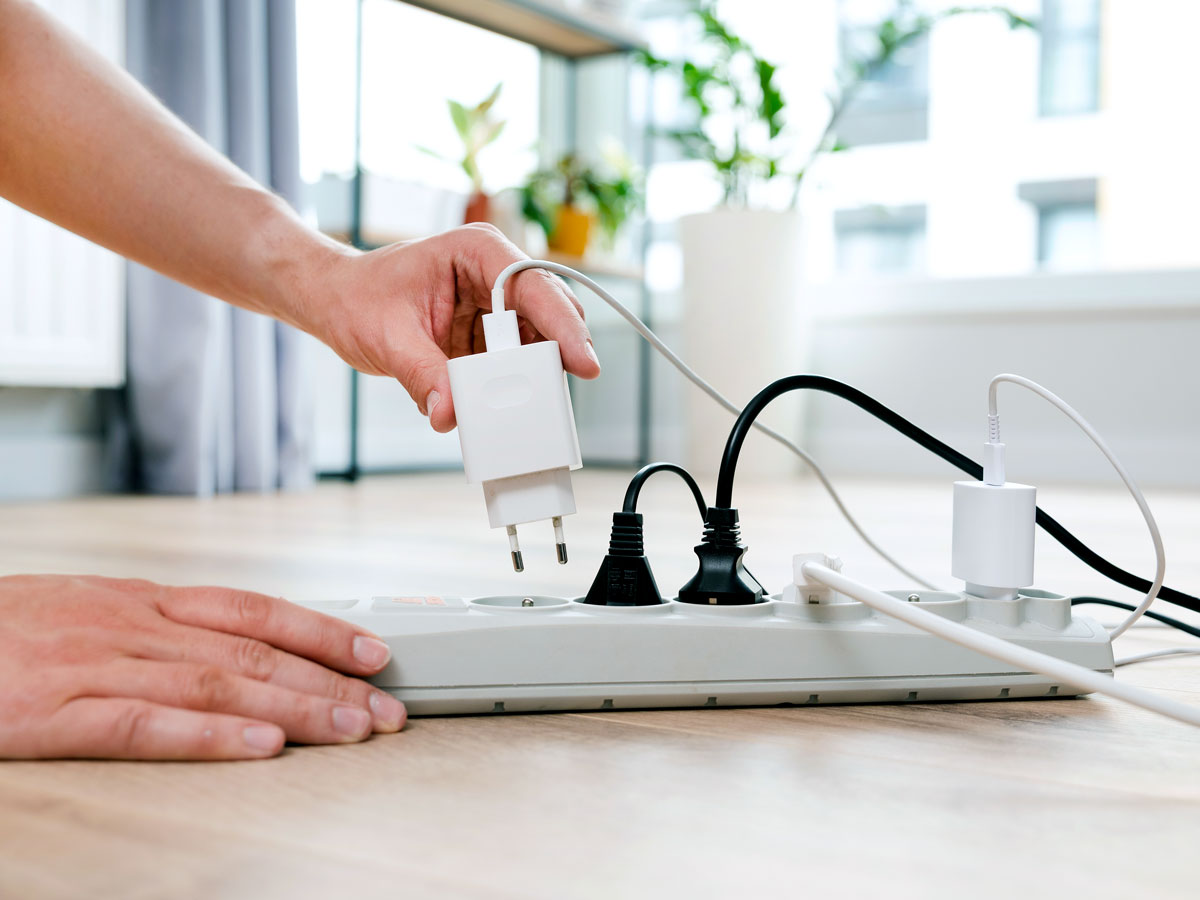

Whether it’s your electric toothbrush, a curling iron, or your phone, keeping your electronics running smoothly when you’re traveling overseas might seem straightforward. However, the wrong setup can lead to a blown fuse or, worse, a damaged device you can’t use for the rest of your trip. To help keep everything charged, functional, and in one piece, travelers should follow these important steps for powering your devices safely.
Step 1: Get a Plug Adapter

To begin with, the shape of a plug outlet in the U.S. is different from that of outlets in most countries outside of North America. A plug adapter can help with this.
This small device allows you to connect your electronics to wall outlets in other countries by altering the configuration of the prongs. It’s important to note, though, that a plug adapter doesn’t change the voltage; it changes only the shape of the plug so your charger can fit into the outlet. Voltage is a separate issue — more on that in a minute.
If you travel often, a universal adapter is your best bet since it comes with multiple built-in plug types, making it compatible with outlets around the world.
Step 2: See if You Need a Voltage Converter
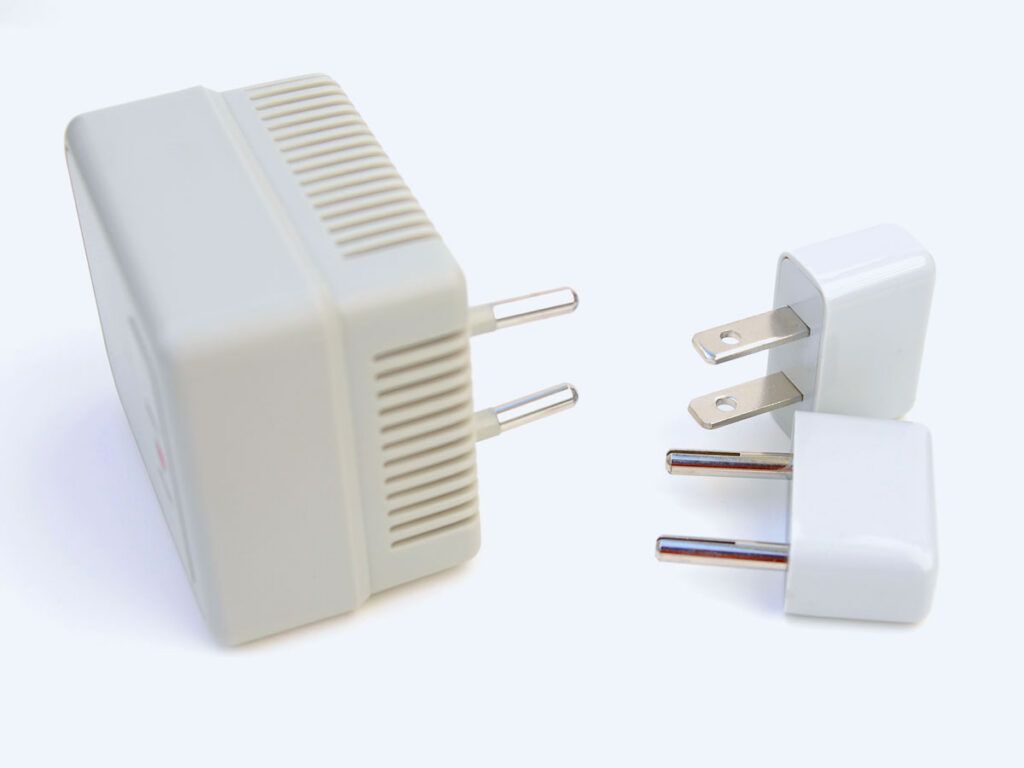
A plug adapter is only one piece of the puzzle. In some cases, to safely charge your device abroad, you may also require a voltage converter.
Have you ever plugged in your personal hair dryer abroad, only to find that it stopped working instantly? This usually happens when the voltage supplied by the outlet doesn’t match the voltage your appliance is designed to use. When the voltage is too high, the electrical components inside the device receive more power than they can safely handle. Motors may spin too fast, components can overheat, and the appliance can burn out within seconds. In some cases, you might even see sparks or smell smoke.
The United States runs on a standard voltage of 110V to 120V, so if you bought your device in the U.S., that’s the voltage it’s designed for. If you’re not sure, check the small print on the device itself, the charger, or the user manual. Look for words like “input” or “output” followed by a number and “V” (which stands for volts — for example, 120V).
In many places — like Canada, Mexico, and much of the Caribbean — the voltage is similar to the voltage in the U.S., so your devices will typically work without any extra gadgets. But in Europe, most of Africa, and many parts of Asia, outlets usually run at a much higher voltage of around 220V to 240V. In those cases, you may also need a converter, not just a plug adapter.
As a general rule, anything with a motor, a heating element, or a fixed power cord that runs straight into the device isn’t safe to plug in without the right voltage support. It can cause your device to malfunction or even blow up.
The good news is that most modern electronics are already designed to handle different voltages. Phones, laptops, tablets, and cameras usually fall into this category because they charge through removable power bricks that manage the voltage conversion for you. Many modern chargers are labeled “100V to 240V.” If you see that label on your device, you’re usually good to use and charge it abroad with just a plug adapter. USB charging is even simpler, since the standard output is consistent worldwide, which is why it tends to be the most travel-friendly option.
Other Tips for Charging Your Devices Abroad
- Don’t assume every outlet is safe for fast charging: Some older hotels or airports may not support high-wattage charging. Overloading an outlet can lead to overheating; plus, your device may charge more slowly than at home.
- Be careful with shared or public USB ports: They can be convenient, but according to the TSA, using your own wall adapter or power bank is generally more secure.
- Carry a backup power bank: Flight delays and long travel days drain your battery faster than expected, and a power bank can save you in a pinch.
More from our network
Daily Passport is part of Inbox Studio, an email-first media company. *Indicates a third-party property.