



This Desert Is Home to the World’s Largest Aircraft Graveyard
This Desert Is Home to the World’s Largest Aircraft Graveyard
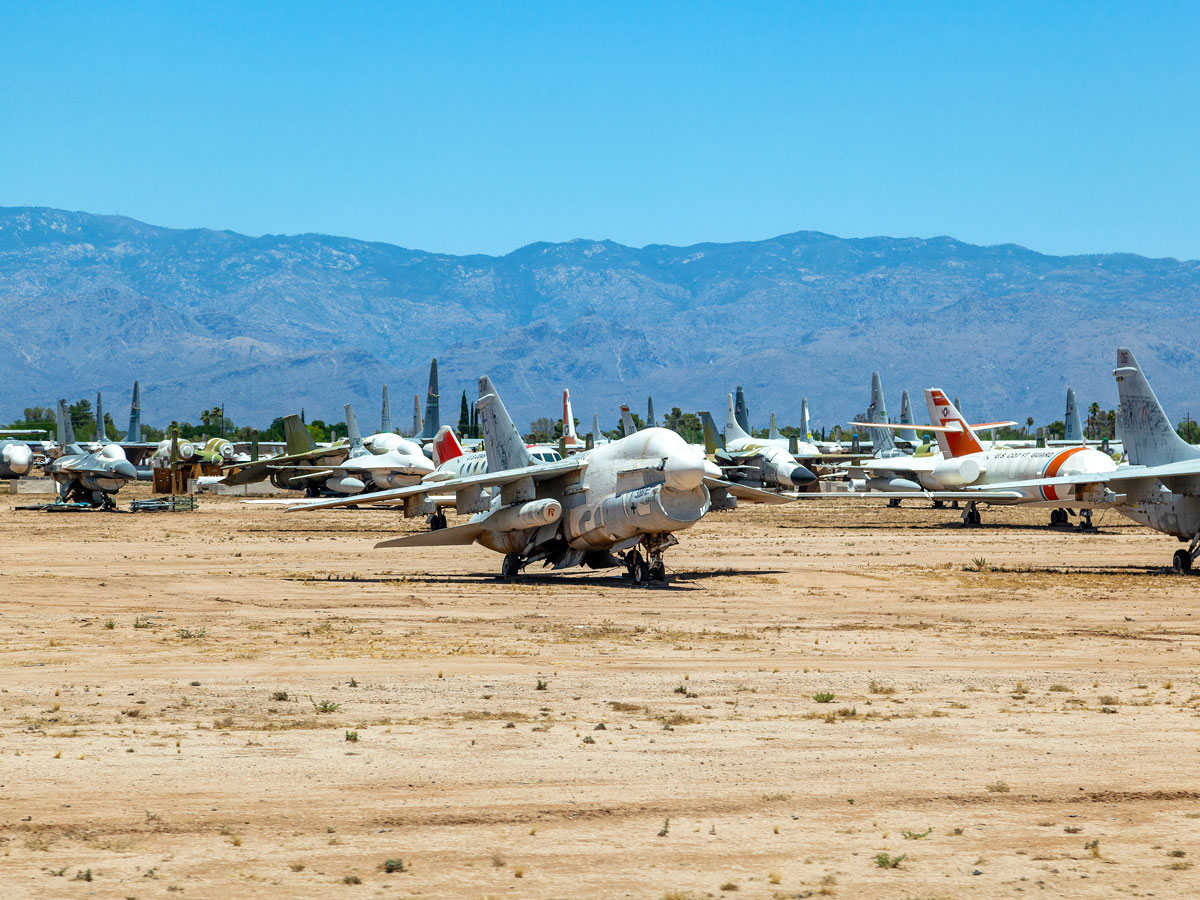

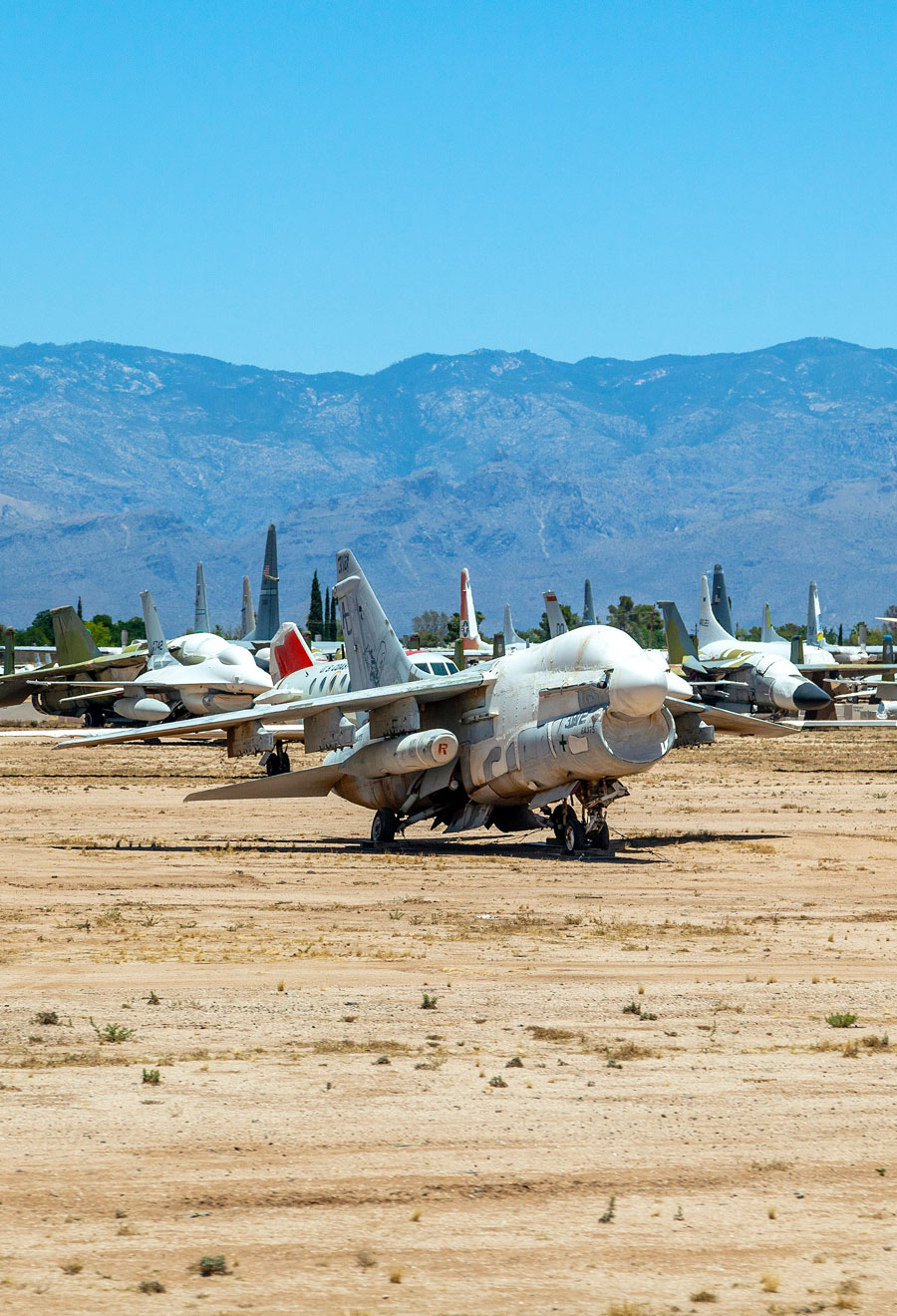
Airplanes are designed to soar among the clouds, but where do they go when their days of reaching cruising altitude are behind them? Not to a great hangar in the sky, alas. After taking their last flight, decommissioned aircraft remain forever earthbound. Many are sent to so-called aircraft graveyards or “boneyards,” including the largest one in the world: the Davis-Monthan Air Force Boneyard, located in the desert about 5 miles southeast of downtown Tucson, Arizona. Take a look at this fascinating facility and how it breathes new life into military operations.
By the Numbers
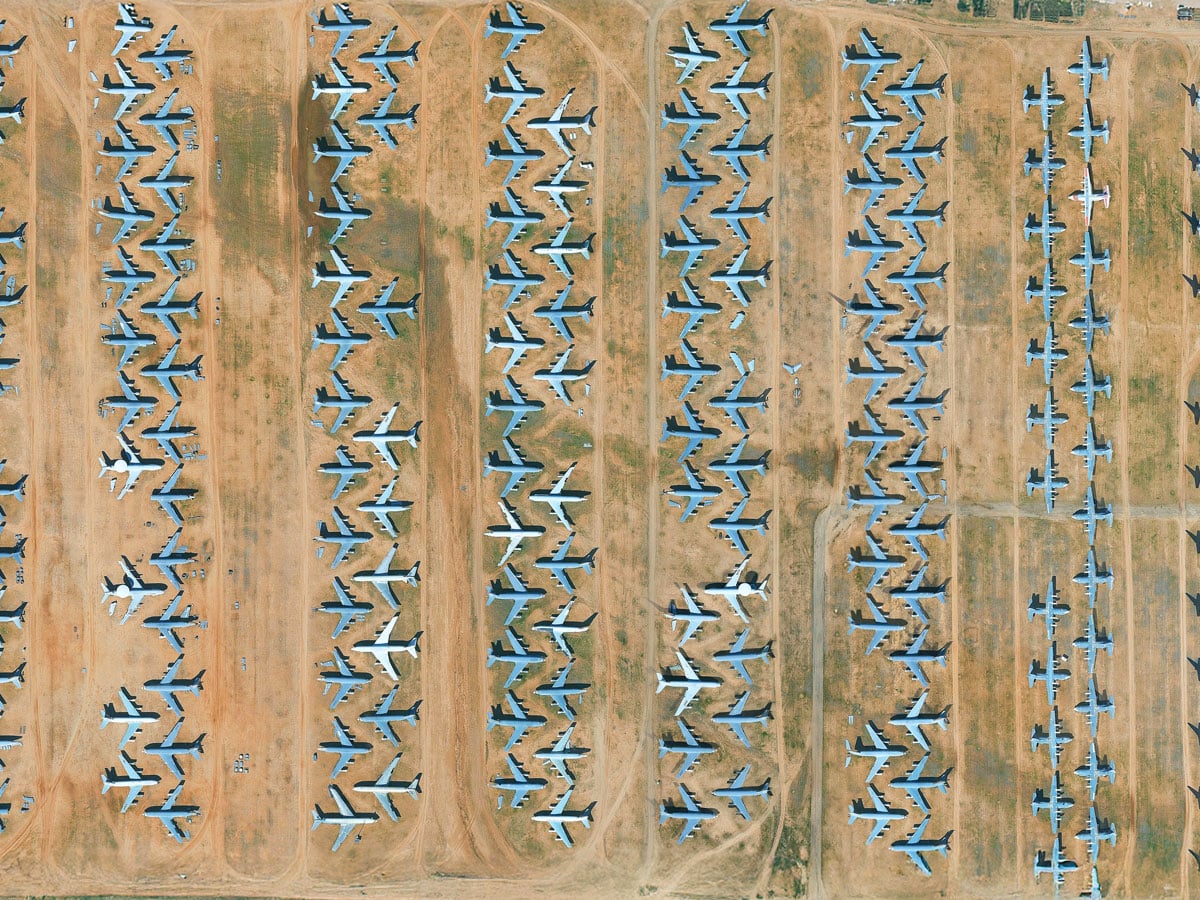
Serving as the final resting place of thousands of aircraft, the Davis-Monthan Air Force Boneyard has been officially known as the Aerospace Maintenance and Regeneration Group (AMARG) since 1985. Before moving to its current location in Tucson in 1965, the facility opened in Phoenix in the wake of World War II.
The U.S. Air Force had a lot of airplanes after its WWII triumph, and they had to go somewhere. Nearly 65,000 aircraft were stored (or eventually decommissioned) at 30 airfields, including Davis-Monthan, which is now the primary aviation boneyard for America’s military and employs more than 500 people.
Not all of the 3,500 planes at Davis-Monthan are there forever. Some are merely stored on-site while being updated before returning to service or being sold, while others have rare and valuable parts removed for use in other aircraft.
Many of them are permanently retired, however. According to the U.S. government, nearly 300 planes arrive every year, with more than 6,700 engines stored in the boneyard’s 540,000-plus square feet of maintenance facilities. The desert location isn’t a coincidence: Arizona’s low humidity and precipitation are ideal for preserving sensitive machinery, as is the abundance of wide open space.
Life After Retirement
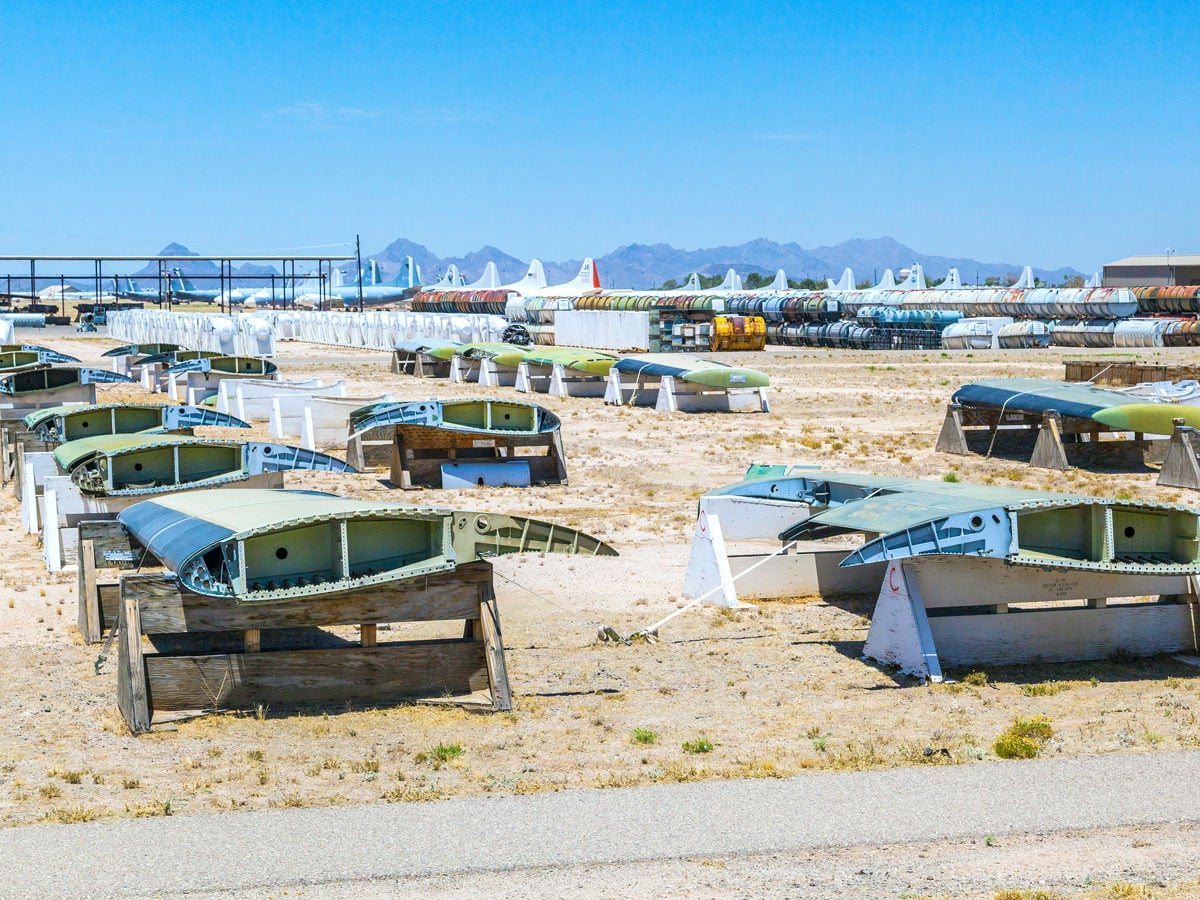
Different planes meet different fates upon entering the boneyard. Those that are of no further use are taped off and sealed, and they are painted with a special coating to reflect the sun’s UV rays to keep the interior cool and limit corrosion. Eventually, they’re disposed of by being shredded, with whatever valuable metals that get recovered during the process — especially aluminum and copper — covering the cost.
More than a thousand frames have been turned into unmanned aerial targets (UATs), also known as target drones, which are used to train anti-aircraft systems. These include F-102 Delta Daggers, F-100 Super Sabres, F-106 Delta Darts, F-4 Phantom IIs, and F-16 Fighting Falcons. Planes that get stripped for parts save the government a considerable amount of money. Around 10,000 parts worth some $500 million can be reclaimed and used in other aircraft in a single year.
Not every plane in the boneyard belongs to the Air Force, though. NASA, the Department of Homeland Security, the Smithsonian Institution, the National Science Foundation, and the U.S. Forest Service also sometimes store aircraft there, as do allied nations. Aviation enthusiasts hoping to get a look at all that hardware are out of luck, alas, as the boneyard — like most others of its kind — is not open to the public.
Featured image credit: travelview/ Adobe Stock
More from our network
Daily Passport is part of Inbox Studio, an email-first media company. *Indicates a third-party property.