




What In-Flight Meals Were Like 50 Years Ago
What In-Flight Meals Were Like 50 Years Ago

When’s the last time you were served a meal on a flight that was truly memorable? Chances are, the answer is not anytime recently — unless you were fortunate enough to “Book the Cook” when flying first or business class on Singapore Airlines, or to try the famed French cuisine from celebrity chef Daniel Boulud when flying up front on Air France. For most travelers, in-flight dining is a far cry from what it used to be, which had us wondering: What was airplane food really like 50 or 60 years ago? Take a trip back to the golden age of aviation with these retro airline menus from the 1960s and 1970s.
A Brief History of Airline Food
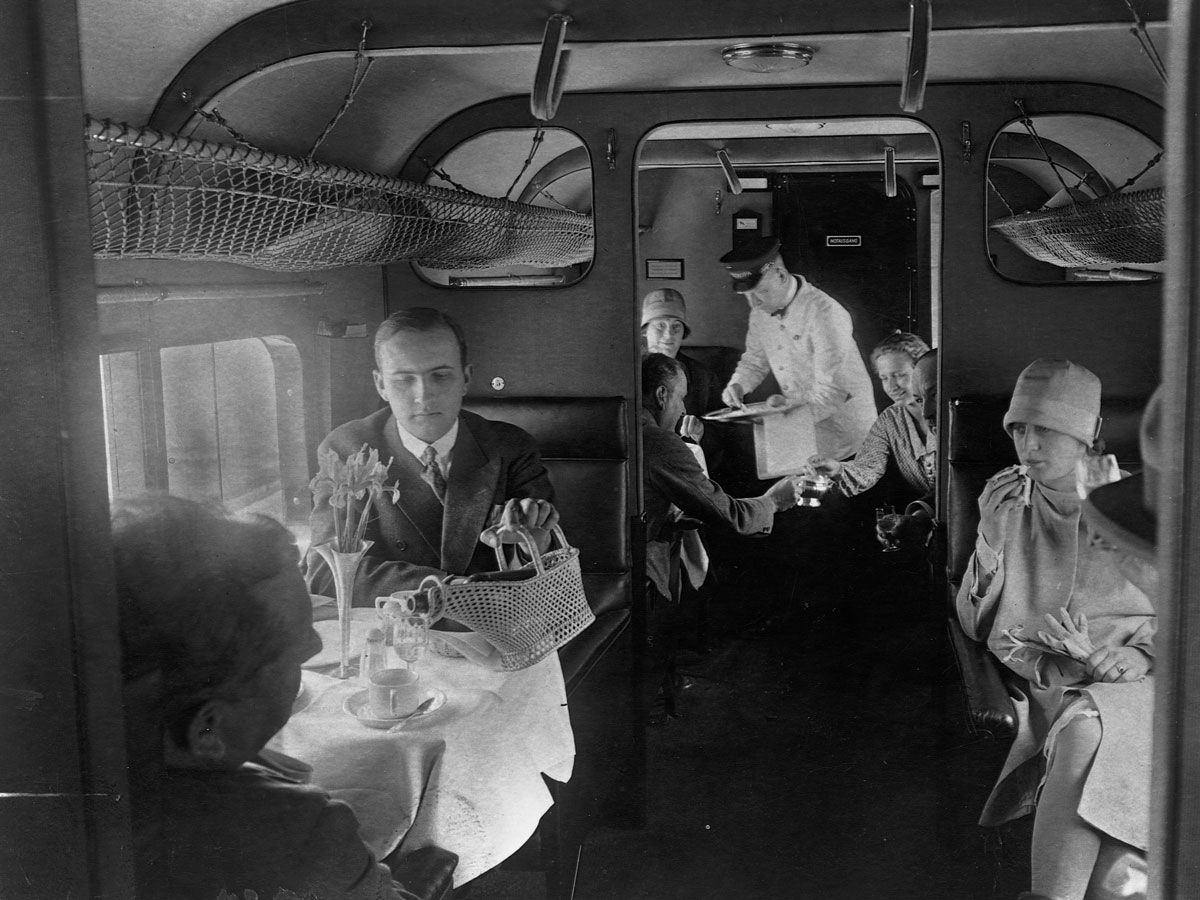
According to Food Network Magazine, the concept of in-flight meal service debuted in 1919 on the now-defunct airline Handley Page Transport. Perhaps surprisingly, the meals on the carrier’s London-to-Paris route were similar to what you might find in economy class today — simple boxed lunches served cold, for a price of three shillings (about $13 USD today). Almost two decades later, in 1936, United Airlines became the first to install kitchens onboard to provide hot meal service to passengers, with a choice of dishes such as fried chicken or scrambled eggs.
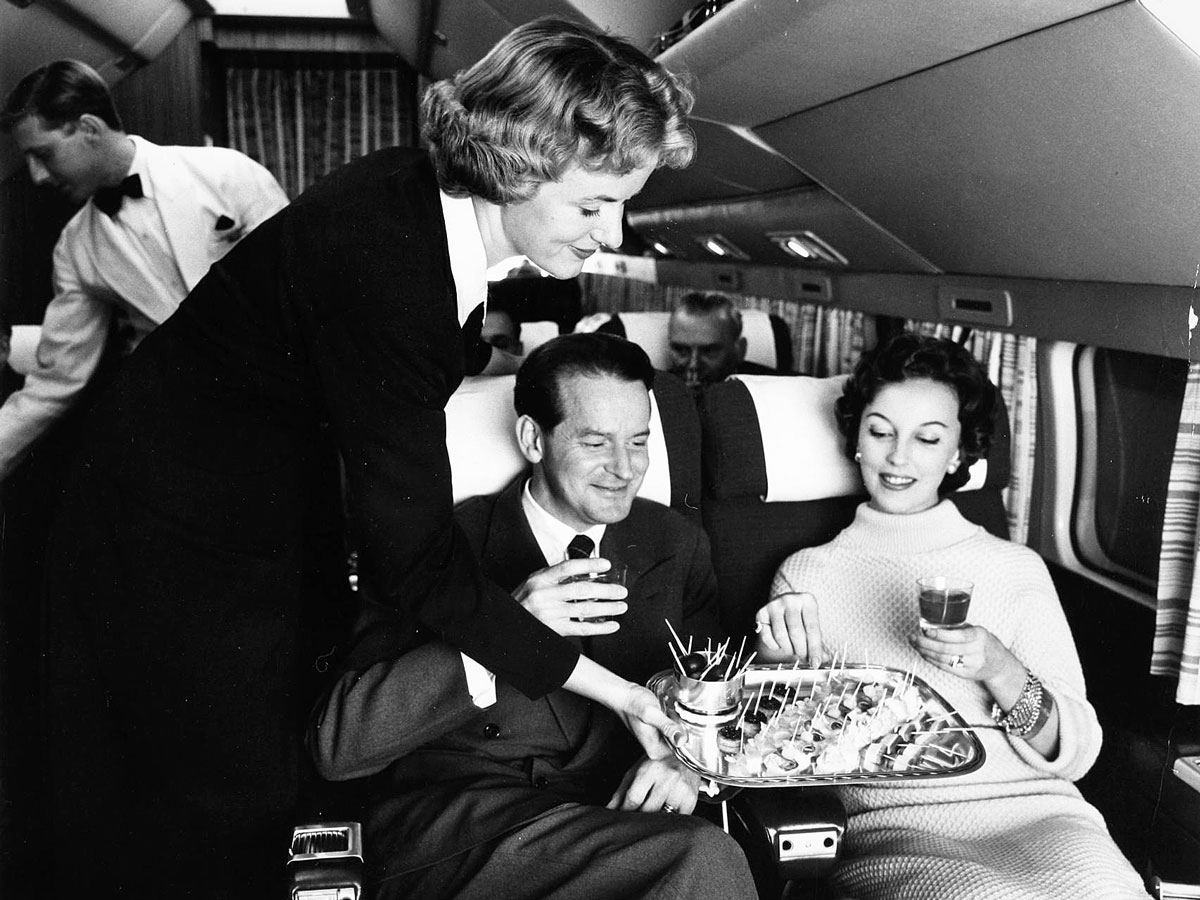
Things continued to improve from there. By the late 1950s, airlines like Pan American World Airways — better known as Pan Am — were flying jets across the Atlantic from New York City to Europe, offering passengers in all cabins complimentary gourmet meals served on white tablecloths and fine china. This marked the beginning of what many consider to be the golden age of air travel — and airline food. Advertisements from the era even touted the quality of the in-flight dining, with one TWA ad bragging about “a meal you’ll talk about for days!”
This was in part because airfares at the time were regulated by the U.S. government, so airlines had to find other ways to set themselves apart from the competition. After the government deregulated the aviation industry in 1978, however, carriers began to compete on price and a new wave of low-cost airlines took to the skies. Most famously, Southwest Airlines offered free peanuts instead of meals on its flights, in exchange for low fares, a model other airlines soon followed. The 9/11 terrorist attacks — and the shock waves they sent through the airline industry — led most U.S. airlines to stop offering meals to economy-class passengers on domestic flights shortly thereafter.
The Heyday of In-Flight Dining
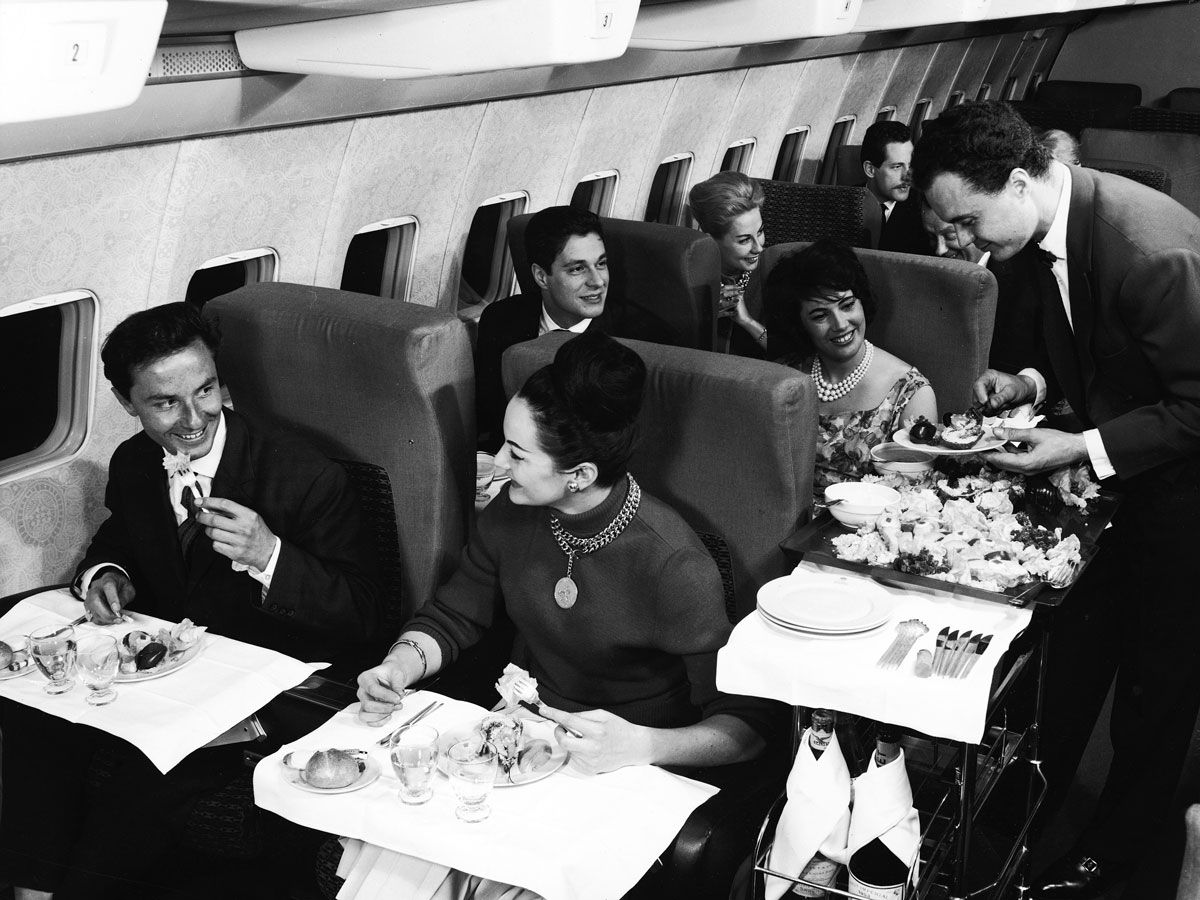
So, what could passengers traveling in the 1960s and 1970s expect to eat onboard? Anne Sweeney, a flight attendant with Pan Am from 1964 to 1975, revealed to CNN the surprising lengths airlines went to in an attempt to elevate their meal service, noting that eggs were cooked to order for breakfast — including in coach.
Other dishes served to Pan Am economy-class passengers during Sweeney’s time onboard included chicken vol-au-vent, beef bourguignon, Cornish hen, and beef stroganoff. And if you were flying coach on American Airlines in the 1960s, you could expect the “Royal Coachman” menu, with options such as beef consommé starter, chicken breast sautéed in wine, and a fruit tartlet for dessert.
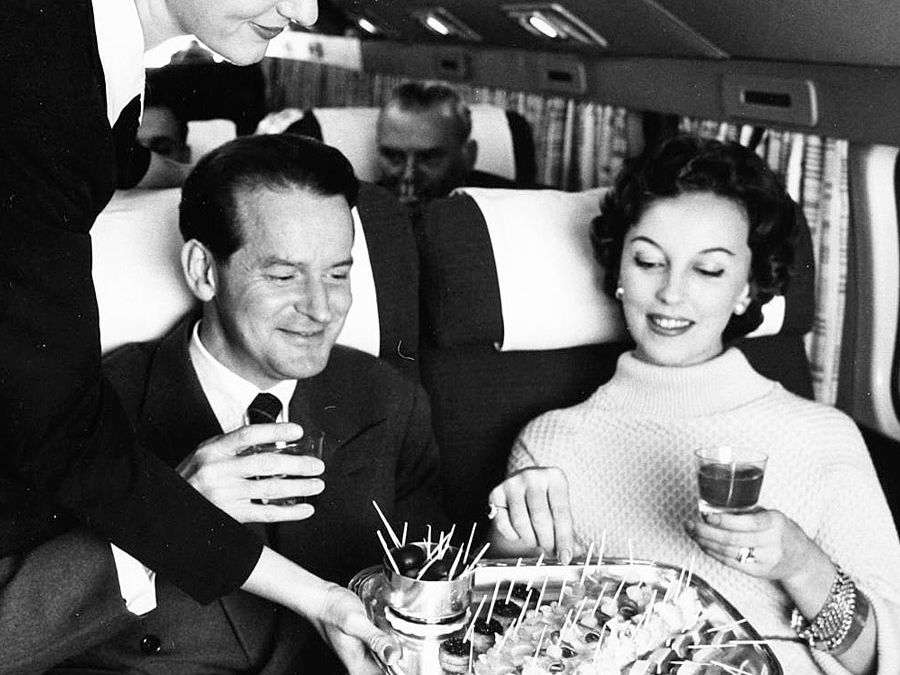
Of course, meal service was even more refined in first class and business class — and not just the food itself. The SFO Museum at San Francisco International Airport features a collection of airline meal service sets with the likes of embossed fine bone china tableware, Swedish glassware, and ceramic teapots. For example, TWA’s Royal Ambassador service (international first class) used those meal sets to plate dishes that wouldn’t be out of place at a fine-dining restaurant — Chateaubriand carved and served from a cart in the aisle, veal piccata, and lobster thermidor are just a few examples.
And while it may come as a shock to younger flyers who don’t remember what it was like to fly in a smoke-filled airplane cabin, not only was smoking permitted onboard, but many airlines also passed around complimentary cigarettes to first-class customers after meal service.
Sample In-Flight Menus
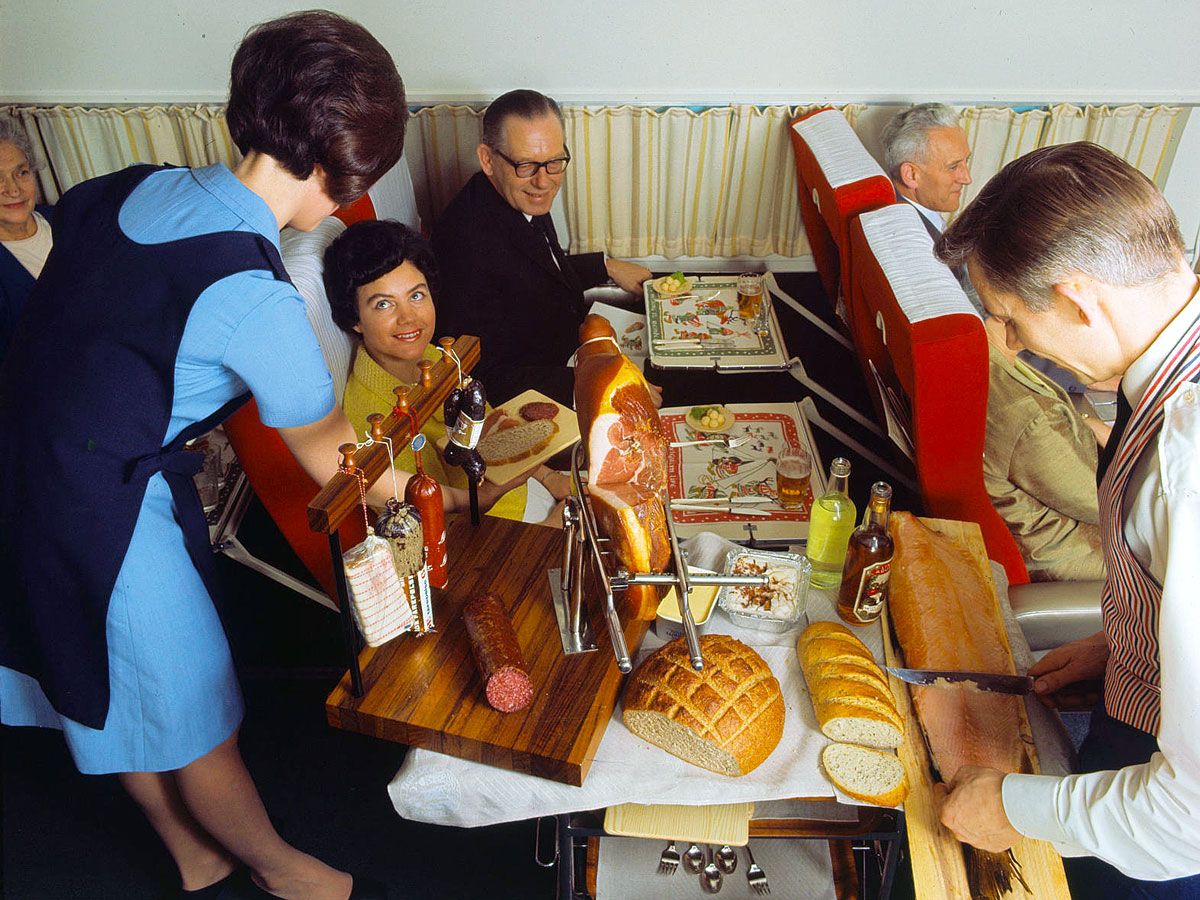
Luckily for aviation fans and foodies who love reading every detail of a menu, the Northwestern University Transportation Library has an extensive collection of vintage in-flight menus that you can browse online.
For instance, if you were flying in coach — yes, coach — to London on TWA in 1978, you could expect:
- Dungeness crab meat sauteed in butter, spices, and tomatoes to start
- Harvest salad bowl with choice of blue cheese or Canadian bacon dressing
- Entree choice of charbroiled filet mignon with sauce Bordelaise, veal scallopini with fettuccine alfredo, or roast pork loin in cherry sauce
- A banana split and a cheese platter for dessert
- An extensive list of cocktails (such as a martini or a Manhattan), spirits, liqueurs, and other beverages
Even if you were flying the short, 200-mile flight from Pittsburgh to Baltimore on United Airlines in 1963, according to this menu from the New York Public Library, you’d receive:
- A lobster cocktail appetizer
- Stuffed chicken breast with white wine sauce, diced potatoes, sweet peppers, and buttered green peas
- A Parker House roll
- Pineapple cheesecake to finish
And in the late 1960s, Alaska Airlines launched its “Golden Samovar” in conjunction with charter flights to the former U.S.S.R. The elaborate Eastern European-themed service offered:
- A selection of Russian beverages as Russian music was played to set the mood
- Hors d’oeuvres such as Russian pelmeni dumpling, king crab leg, and caviar
- A salad course with Siberian dressing and warm black bread on the side
- Main course options such as chicken Kiev, veal Orloff, and beef stroganoff
- A pecan tart with fruit and cheese for dessert
Clearly, a lot has changed with in-flight dining, unless you’re splurging for the most expensive fares, but the reality is that flying back then was a lot more expensive. In 1979, a basic domestic round-trip airfare cost about $615 in today’s money, compared with $345 in 2026. Though the stale dinner roll and indistinguishable entree mean that meal service is no longer a highlight of air travel, at least it’s more affordable (not to mention safer) than before.
Featured image credit: Archive PL/ Alamy Stock Photo
More from our network
Daily Passport is part of Inbox Studio, an email-first media company. *Indicates a third-party property.