


6 Buildings That Don’t Look Real
6 Buildings That Don’t Look Real

In a world where many buildings blend together, unusual architecture can lift travelers’ spirits and provoke a reaction. Love them or hate them, you can’t deny these structures get us talking — whether they appear to defy gravity, tease us with their optical illusions, or please us with their unconventional shapes. Some buildings don’t even look like buildings in the first place, yet manage to function just like any other. Explore six of our favorite examples around the world below.
Heydar Aliyev Center – Baku, Azerbaijan
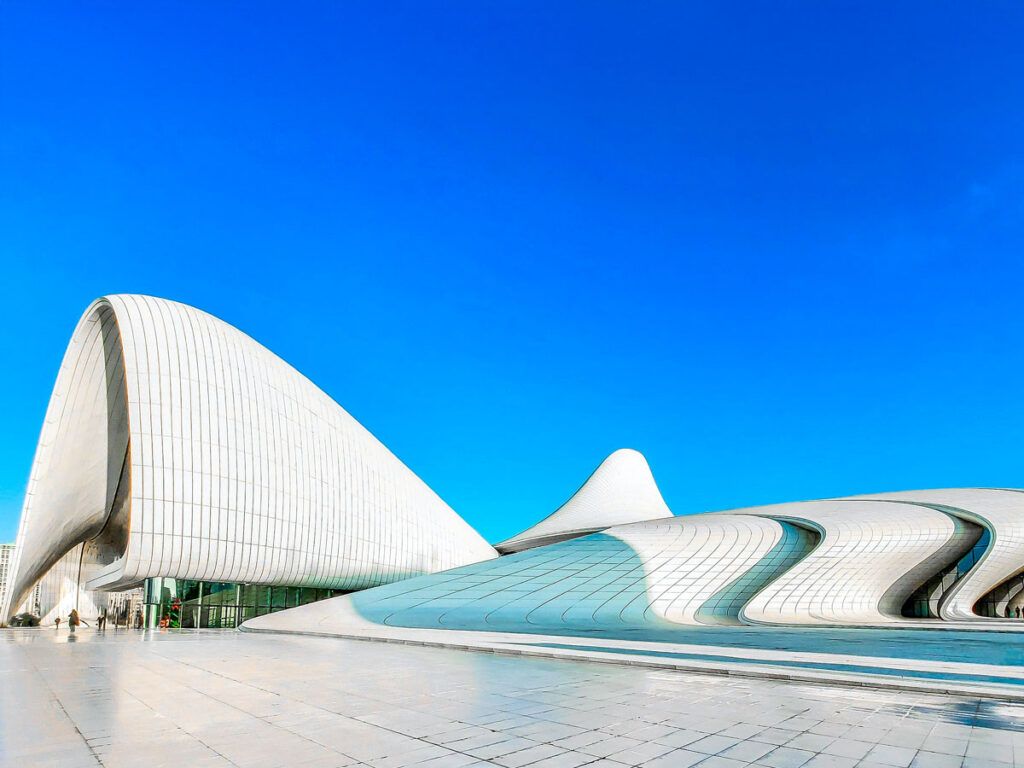
With its futuristic curves and simple white cladding, the award-winning Heydar Aliyev Center, opened in 2012, makes a bigger statement than your average building. It’s the work of renowned firm Zaha Hadid Architects, which won the contract to design a cultural center for Azerbaijan’s capital. Once the former USSR member country gained independence from the Soviet Union in 1991, there was a concerted effort to leave behind the functionality of the Soviet era and embrace modern architecture.
In a city where skyscrapers are increasingly the norm, the Heydar Aliyev Center’s sleek appearance offers a refreshing change of pace. The use of fluid lines and folds in the building’s fabric is designed to blur the boundary between the building itself and the spacious plaza that surrounds it. The result is an attractive city icon that invites passersby to sit and admire its beauty, or venture inside for regular events and exhibitions.
Crazy House – Da Lat, Vietnam
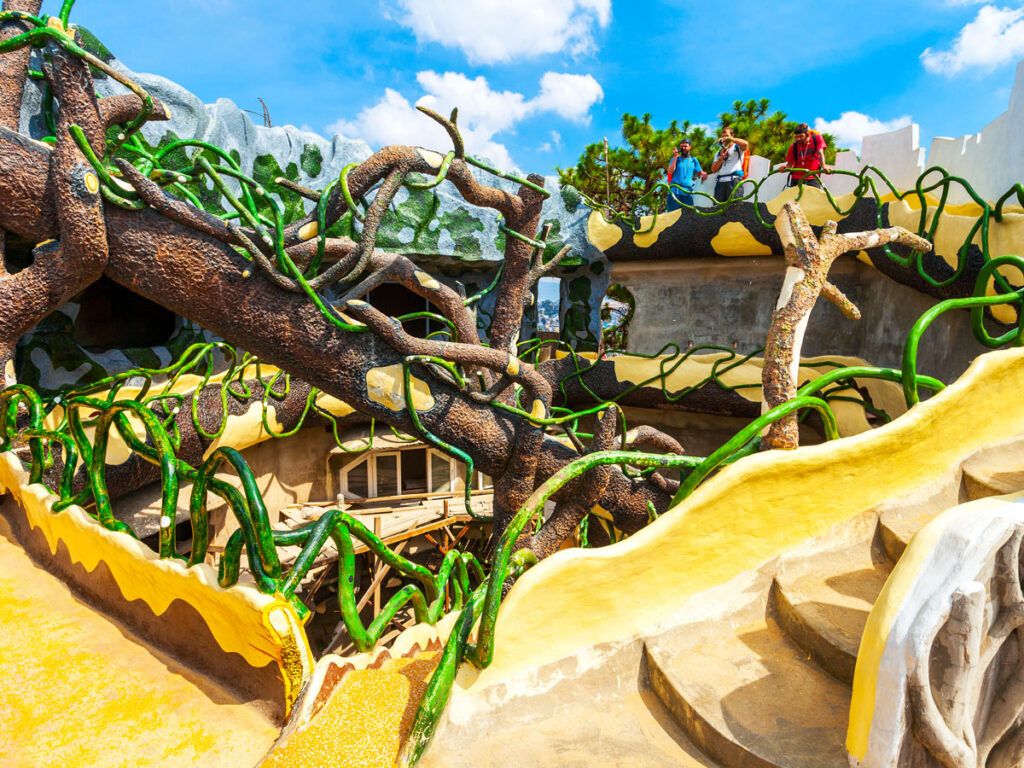
The central Vietnam resort town of Da Lạt is known for its year-round spring climate and French colonial architecture. Set incongruously in the middle of this delightful destination is the Crazy House, also known as Hằng Nga Guesthouse.
Unconstrained by a client brief, Vietnamese architect Đặng Việt Nga gave her imagination free rein when designing the home, which explains the building’s playfulness. She peppered her unorthodox design with fairy-tale-inspired organic shapes and forms, hoping that those who saw it would feel closer to nature. Indeed, from the outside, the structure looks more like a gnarly old tree than a residence. Inside, each room is dedicated to a different animal, among them kangaroos, tigers, and bears.
Walt Disney Concert Hall – Los Angeles, California
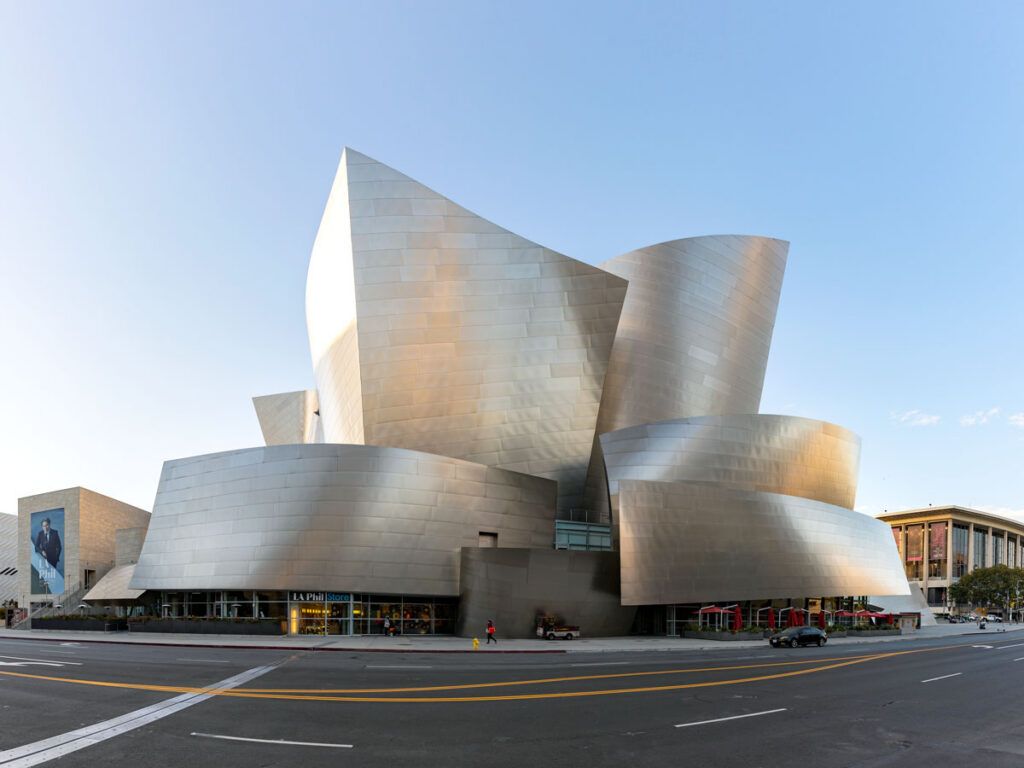
Frank Gehry’s signature style centered on deconstructivist architecture and curvilinear forms. He experimented with shapes and materials, combining them to create something extraordinary. The Walt Disney Concert Hall in downtown Los Angeles is a case in point.
Its key attributes are mirrored in the Gehry-designed Guggenheim Museum in Bilbao, Spain, which is a triumph of titanium cladding. The American building’s radical exterior is mitigated by the use of stainless steel, which reflects light and glitters in the L.A. sunshine. As unusual as it is from the outside, inside, the Walt Disney Concert Hall boasts incredible acoustics, in part because Gehry designed it from the inside out. The result is a joyful and uplifting space that aims to trigger an emotional response in the way that music does.
Inntel Hotels Amsterdam Zaandam – The Netherlands
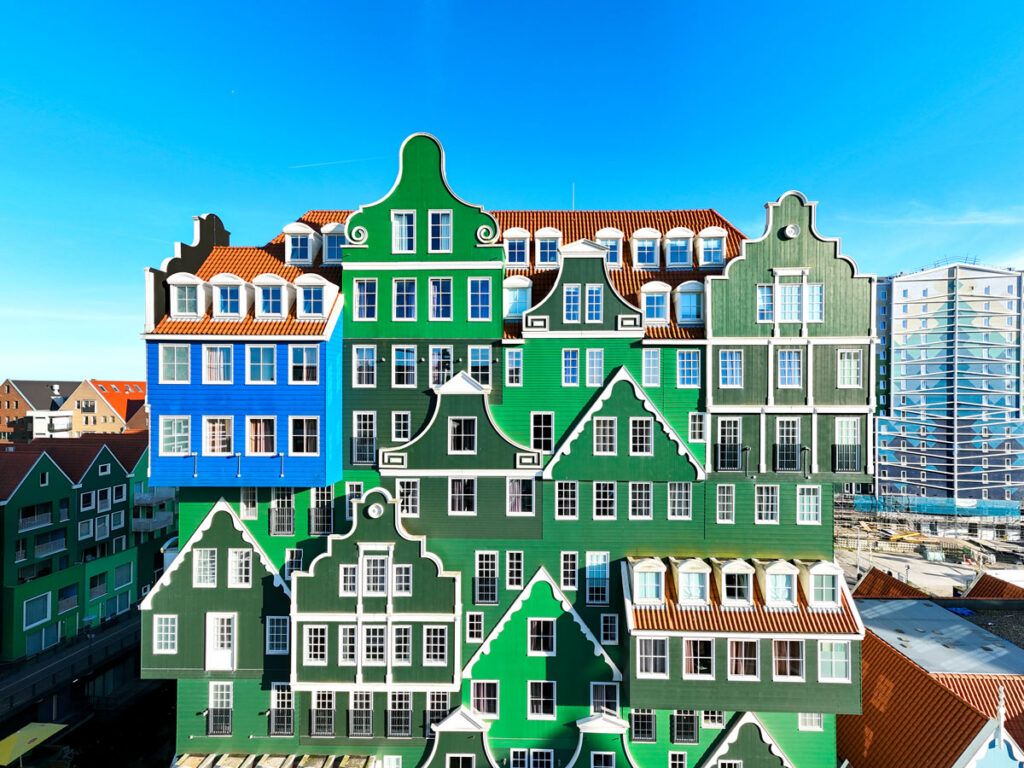
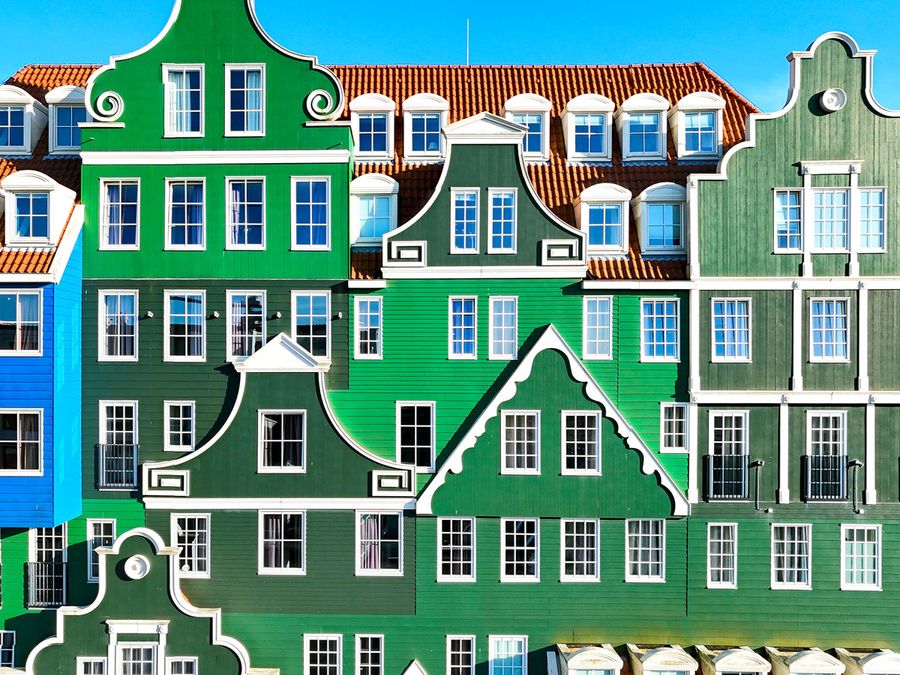
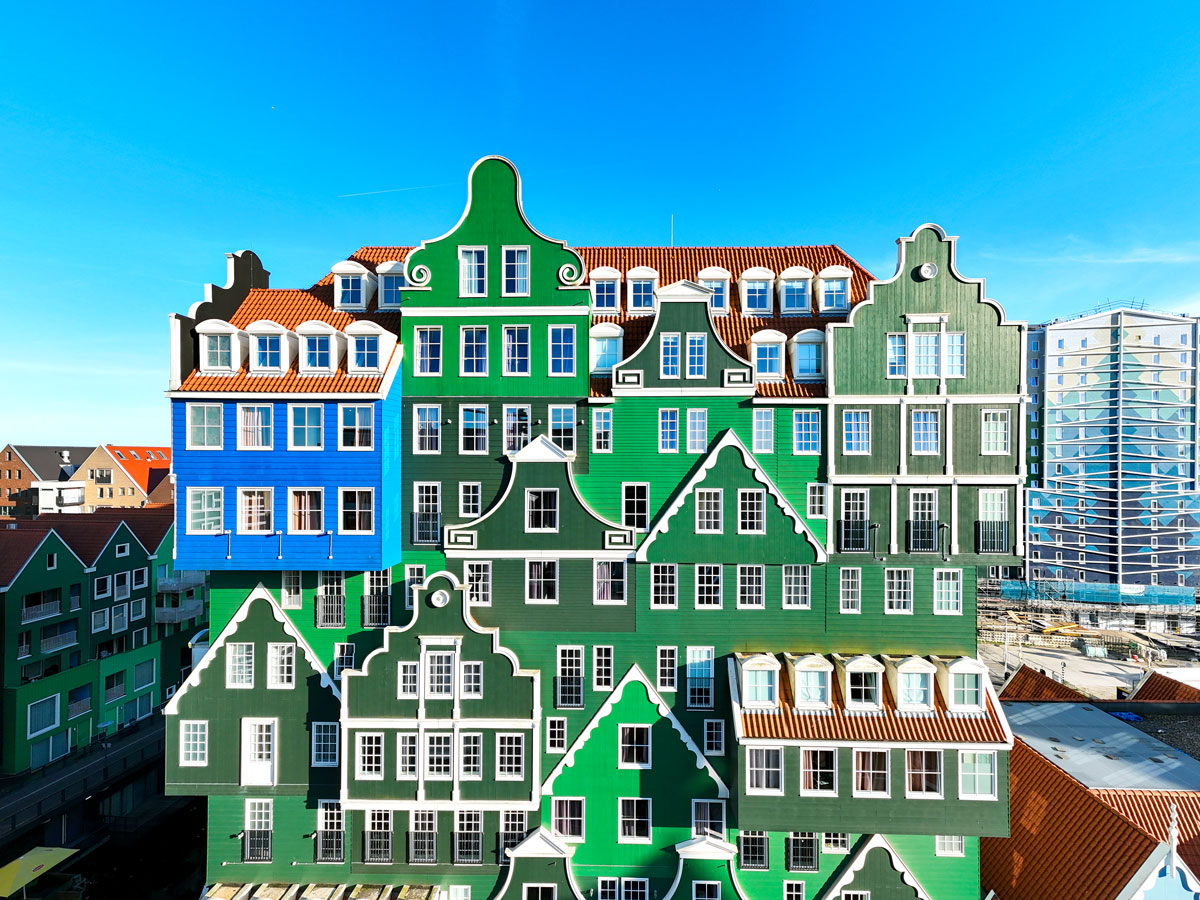
Traditional wooden houses in the Zaan region of the Netherlands were typically brightly painted in shades of green. They provided the inspiration for this hotel, which somehow manages to be familiar yet outlandish all at once. The firm responsible for the design, Delft-based WAM Architecten, aimed to capture some of the region’s history, including a blue “house” that pays homage to Claude Monet’s work “Het Blauwe Huis” (“The Blue House”).
The building features a striking stacked design, with overhanging sections that might conjure up images of a street performer’s balancing act. Yet, this bold and confident hotel also manages to celebrate classic architectural details — such as those distinctive gable ends — in the process.
Tianzi Hotel – Hebei Province, China
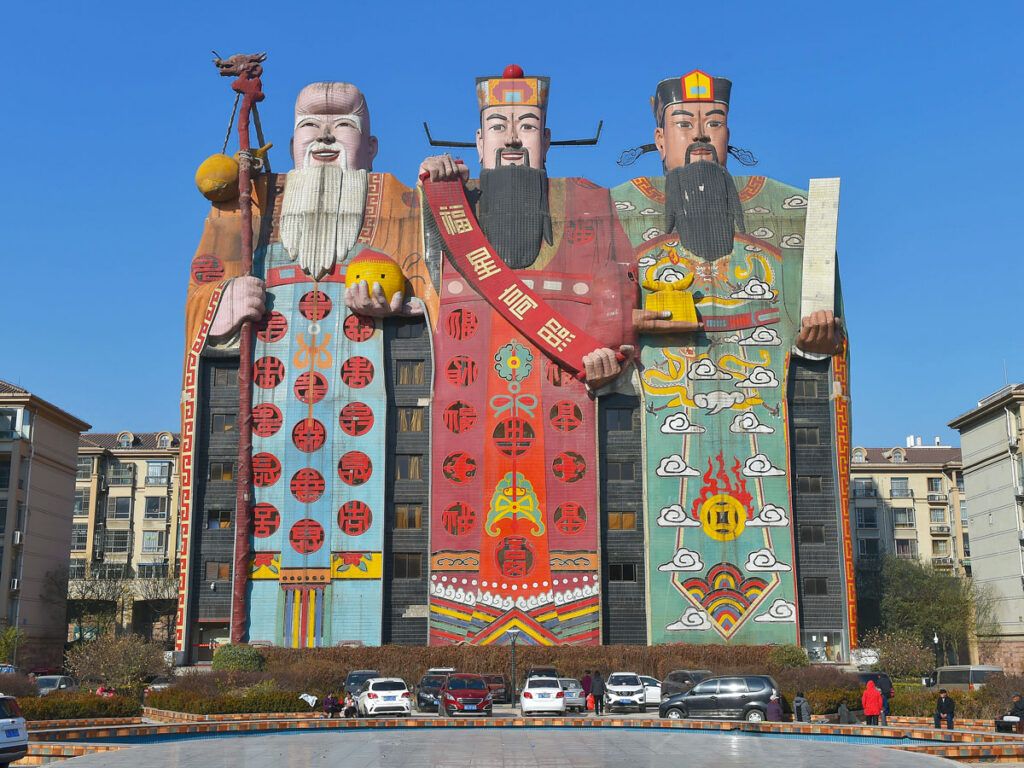
This improbably shaped hotel east of Beijing in China’s Hebei province is guaranteed to make an impression one way or another. It commands attention thanks to its unusual design, constructed to resemble a trio of Chinese deities: Fu, Lu, and Shou. These gods represent good fortune, prosperity, and longevity, respectively. Standing around 136 feet high, the hotel (sometimes now referred to as Fulushou Hotel) has become a tourist attraction in its own right since opening in 2000.
Nevertheless, its quirky shape created a headache when fitting out the interiors, which are accessed via Shou’s “shoe.” And don’t expect too many others like it — in 2016, the South China Morning Post reported that the Chinese government had grown tired of weird and wacky buildings, and had issued a directive that banned bizarre architecture.
Zayed National Museum – Abu Dhabi, UAE
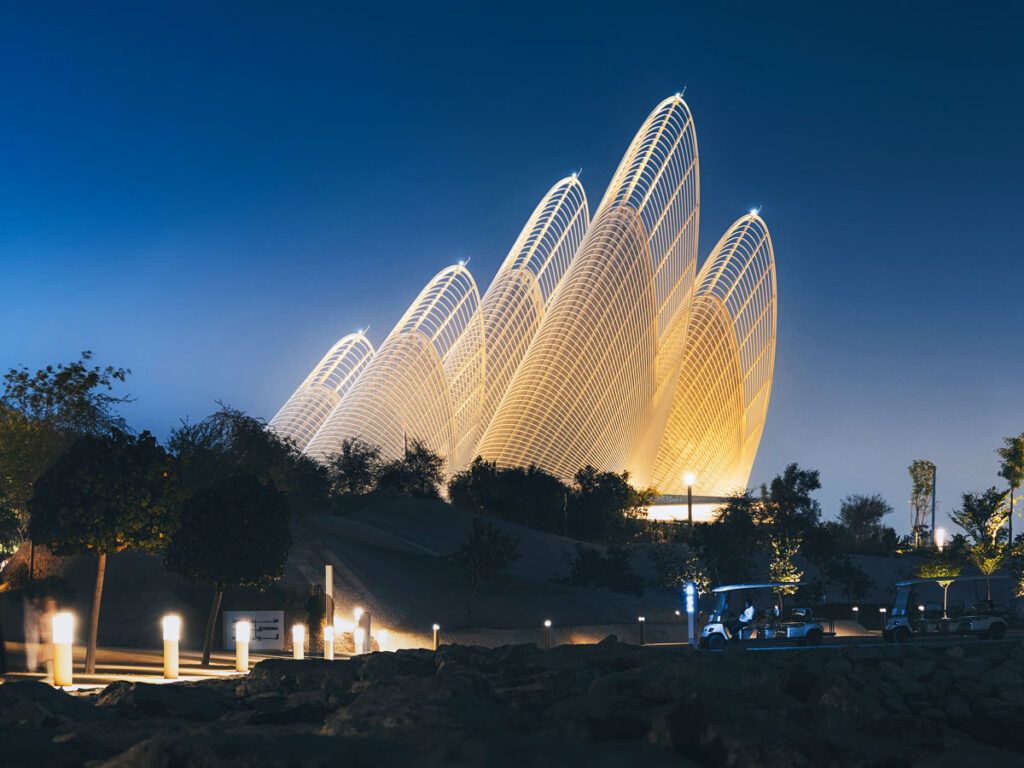
The National Museum of the United Arab Emirates is as much a piece of sculpture as it is a building. Architects Foster + Partners were tasked with creating an impressive landmark to sit at the heart of the Saadiyat Cultural District in Abu Dhabi. The result is five delicate-seeming towers that take their inspiration from the wings of a falcon.
Together, they provide a “wow” factor but also serve a useful purpose. They are integral to the building’s ventilation system, harnessing a similar technology that’s been used by the Emirates’ traditional barjeel wind towers for centuries. The low-slung structure on which they sit is a representation of the local desert topography — even its color is intentional, reflecting the hues of local sand — while the landscaped garden that surrounds the museum is another reminder of the relationship between people and their environment.
More from our network
Daily Passport is part of Inbox Studio, an email-first media company. *Indicates a third-party property.