




Is This the Best Road Trip in Europe?
Is This the Best Road Trip in Europe?

Europe’s many islands are blessed with long histories, diverse landscapes, rich cultural heritages, and standout local food. That leaves adventurous travelers with an enviable problem: How do you choose between them when planning which island is best for a road trip? Fortunately, car rental company Avis has crunched the data, studying terrain, Instagrammable landmarks, and even EV charging points to arrive at a list of the 10 most enticing island destinations in Europe. Find out which island road trip came out on top.
Tenerife Tops the List
Though they are located about 600 miles closer to the coast of Africa than to Europe, the Canary Islands are part of Spain. Of the eight that are populated, the largest — both in terms of land area and population — is Tenerife, and it’s what Avis chose as the best European island for a road trip. With 785 square miles to explore and great weather almost year-round, it’s perhaps little wonder that Tenerife received more than 6.4 million visitors in 2025 — over six times its population.
To do Tenerife justice, allow at least four days (preferably more) to explore the island by car. The southern coast of the island is heavily developed, particularly the strip connecting Costa Adeje, Playa de Las Américas, and Los Cristianos. If you’ve flown into Tenerife South Airport expecting paradisiacal views, you might wonder whether you’ve landed on the wrong island. But don’t worry: You don’t have to drive far to leave behind the high-rise hotels and congested roads and reach more impressive scenery. Below are a few highlights of a Tenerife road trip.
Mount Teide National Park
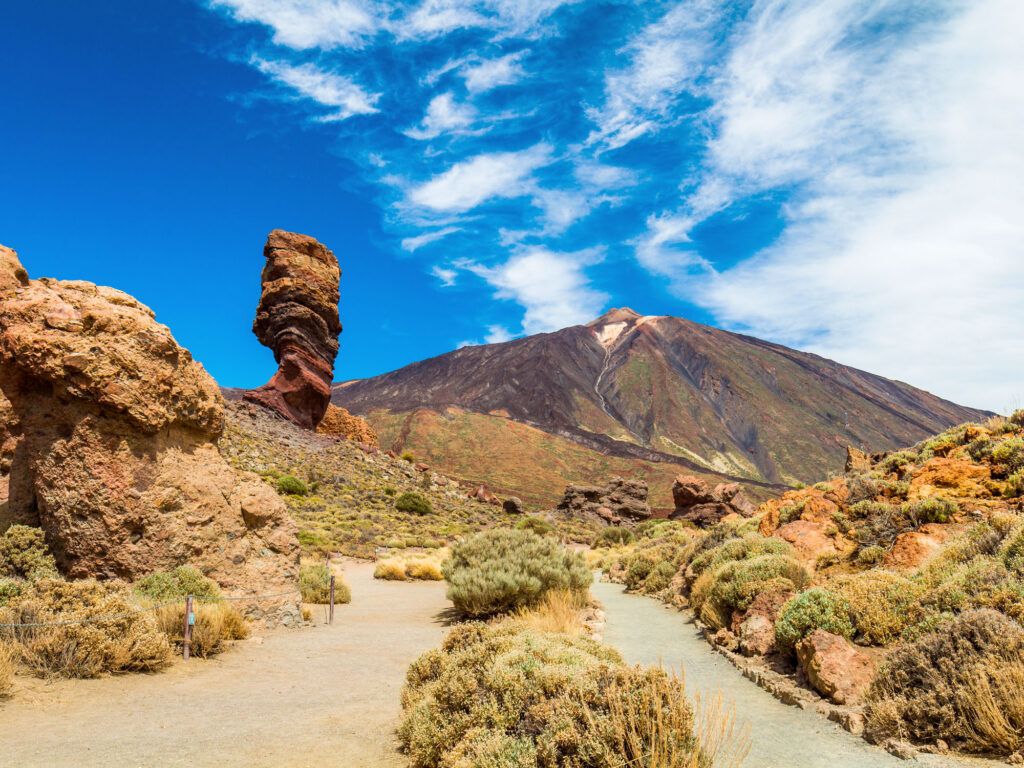
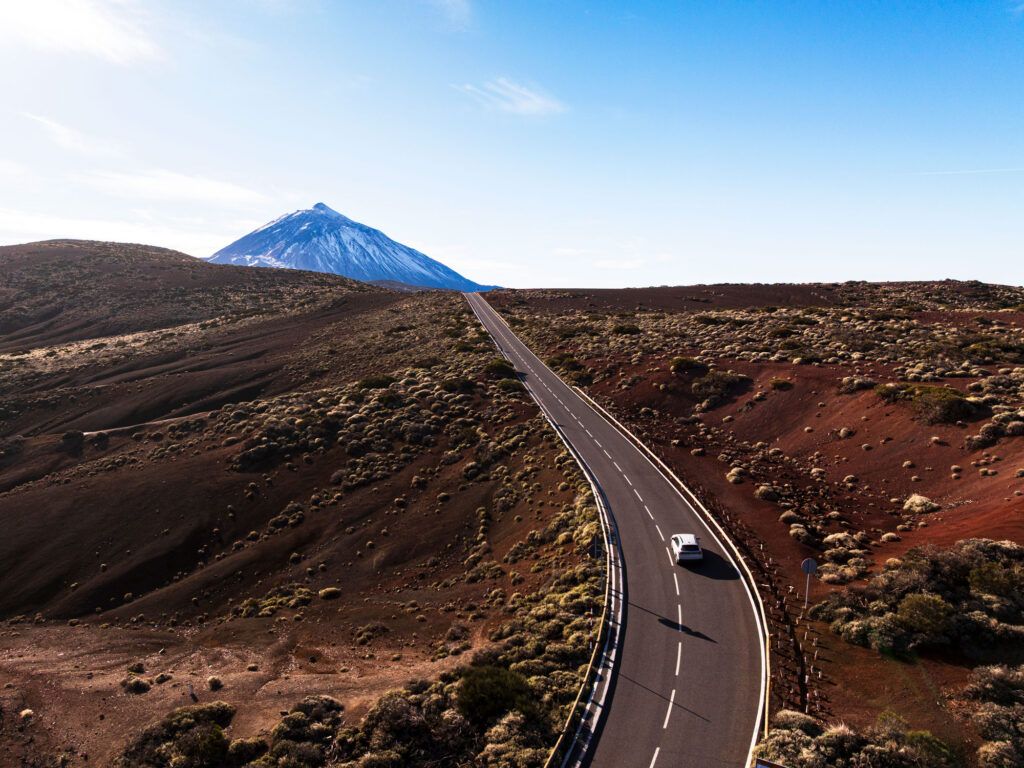
Mount Teide National Park isn’t known just for its 12,198-foot-tall dormant volcano, though that’s rightly a visitor favorite. Travelers can also admire the wind-sculpted and weathered volcanic rock formations known as the Roques de Garcia, look out over a sea of clouds from the Mirador de Chipeque, and marvel at the tall flower spikes of the red tajinaste plant, endemic to the Canary Islands. To reach the summit of Spain’s highest peak, though, you’ll need to leave your rental in the parking lot and catch a gondola to the top. Return to the summit after dark to appreciate Teide’s dark skies from its landmark observatory.
San Cristóbal de la Laguna
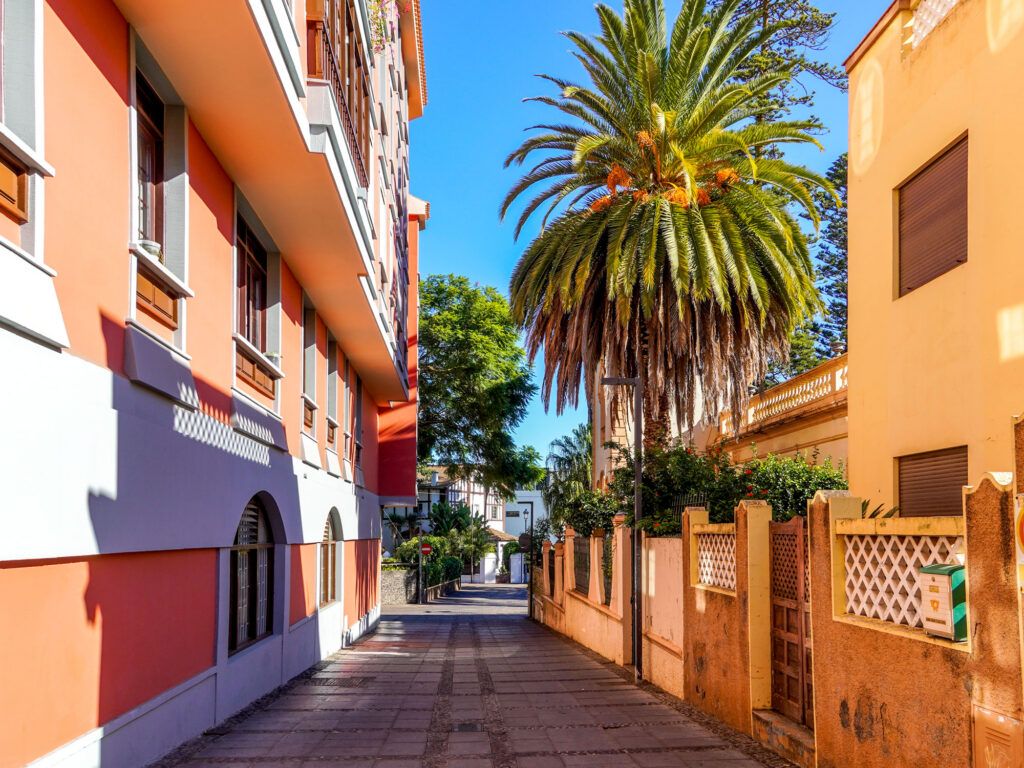
This historic university city — a UNESCO World Heritage Site — will delight travelers seeking a more authentic Canarian experience. Even if you don’t opt to stay here, it’s a worthy detour on your road trip. Balconied homes, 15th-century churches, cobbled streets, and cute cafés abound. From here, venture north for the secluded Playa de Benijo (Benjio Beach), or inland to hike the Sendero de los Sentidos, a trail that meanders through the laurel forests of the Anaga Massif mountain range.
Garachico and Icod de los Vinos
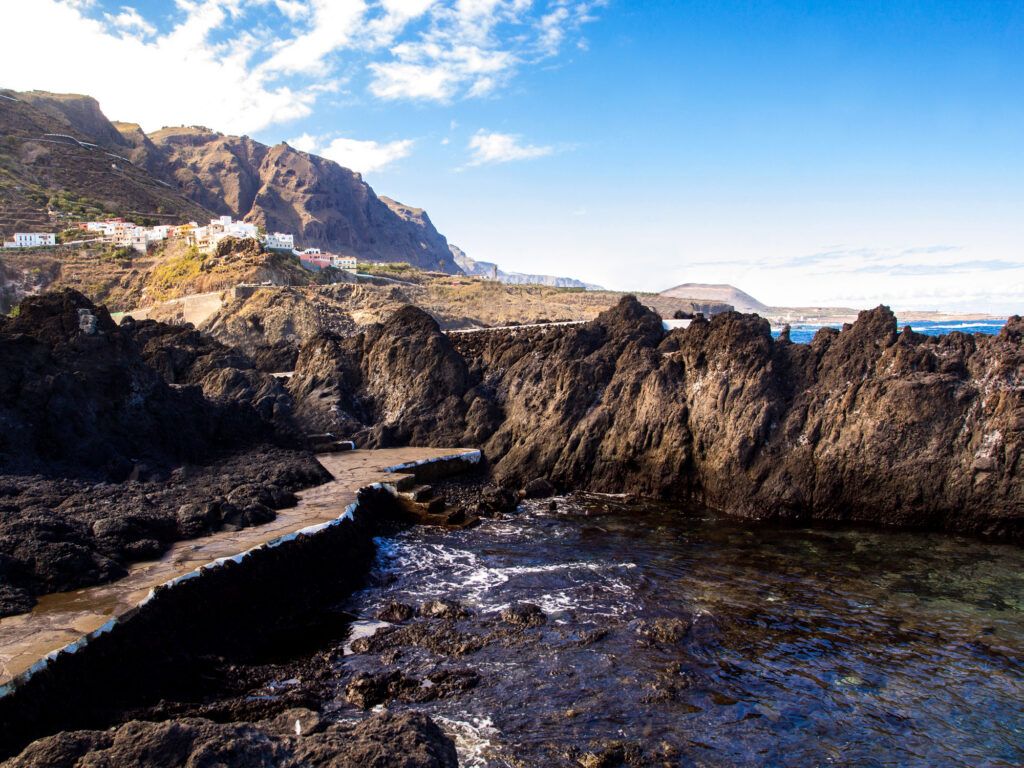
In summer, make a beeline for El Caletón de Garachico. These volcanic lava pools in the town of Garachico, on Tenerife’s northern coast, formed during a 1706 volcanic eruption. Today, they attract bathers hoping to cool off on a hot day. After drying off, history buffs can visit the Castillo de San Miguel, a waterfront castle built in the 1570s. Continue up the coast to Icod de los Vinos, where the main draw is its ancient dragon tree. This 60-foot-tall specimen is thought to date back at least 800 years and is the symbol of Tenerife.
The Masca Valley
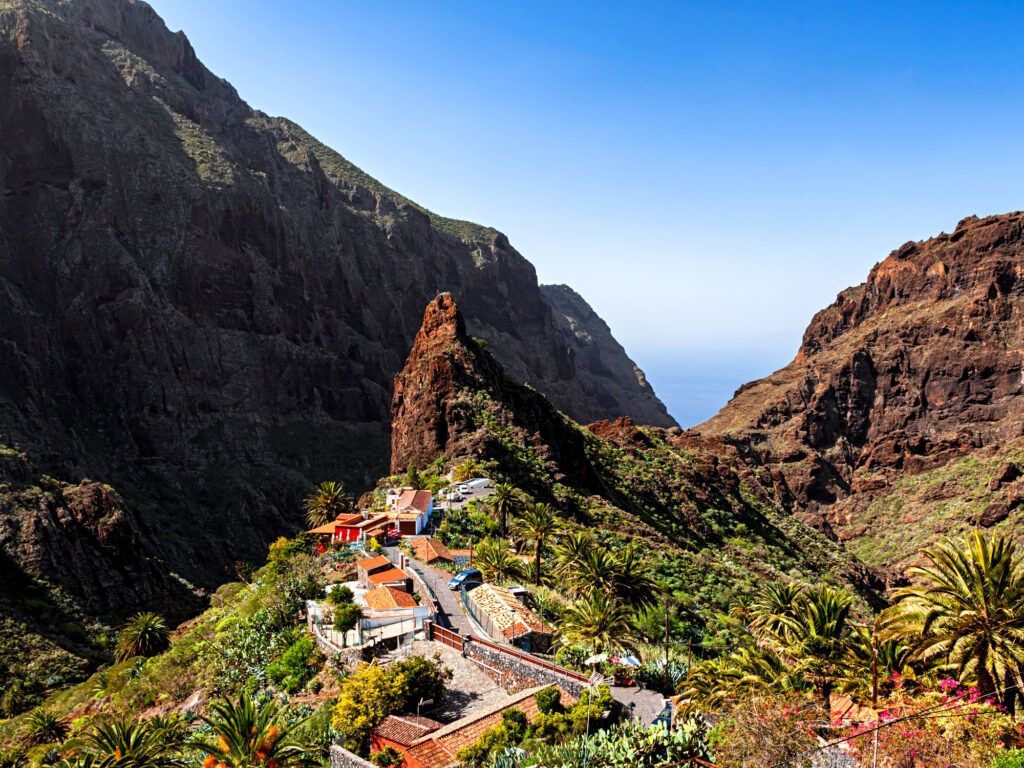
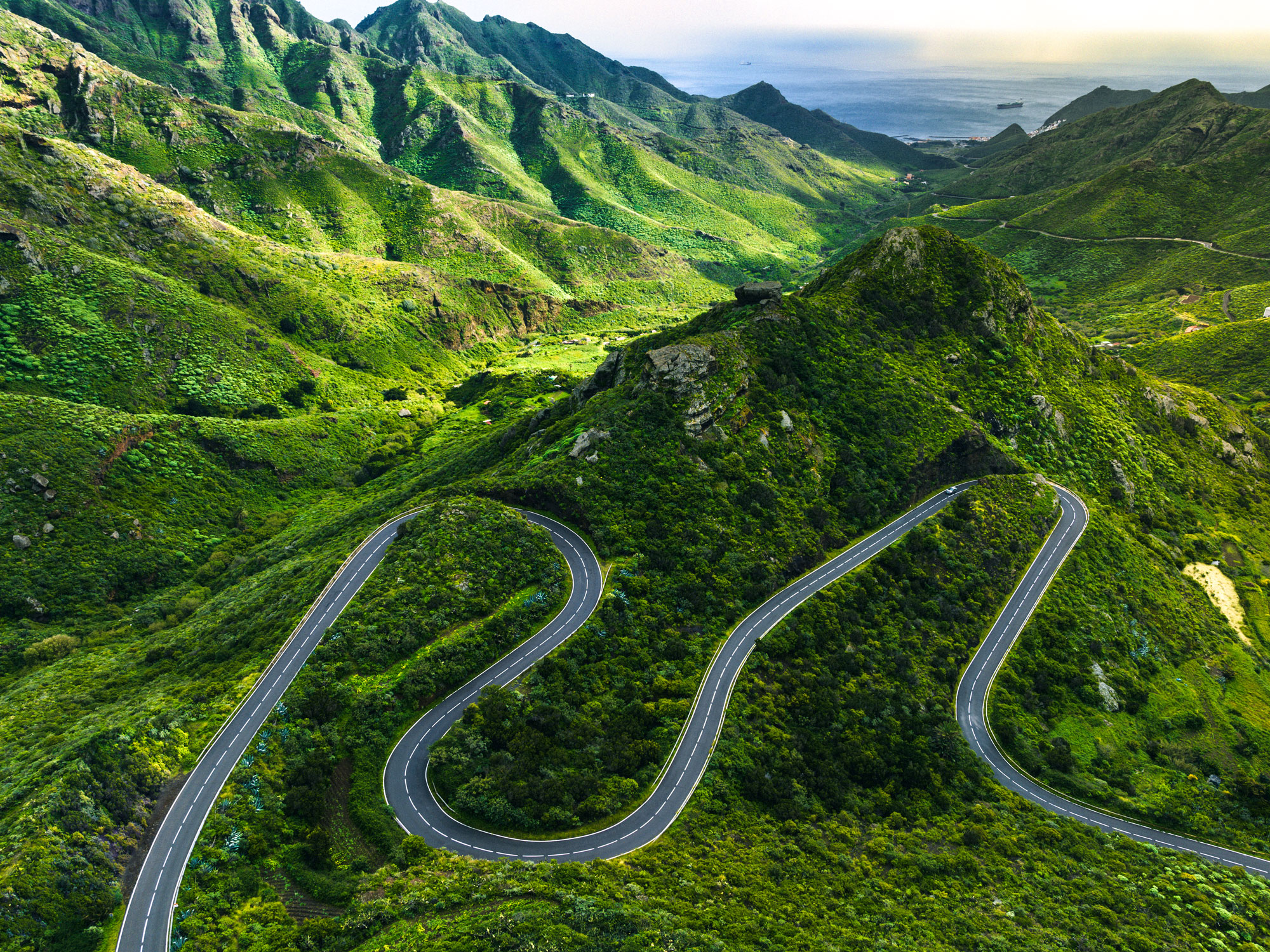
Nervous drivers, beware: The TF-436 is perhaps Tenerife’s most terrifying road. The heavily trafficked road traverses the Teno Mountains, and you’ll find many vertiginous drop-offs and tight switchbacks along the route to Masca. This picturesque hamlet is perched precariously on a ridge; it was inaccessible by road until 1972. If you’re not the designated driver, stop somewhere to enjoy a barraquito — a sweet, alcoholic layered coffee — before you return to the car and steel yourself for the descent to the cliffs below, aptly named Los Gigantes (“The Giants”).
Tips for a Successful Tenerife Road Trip
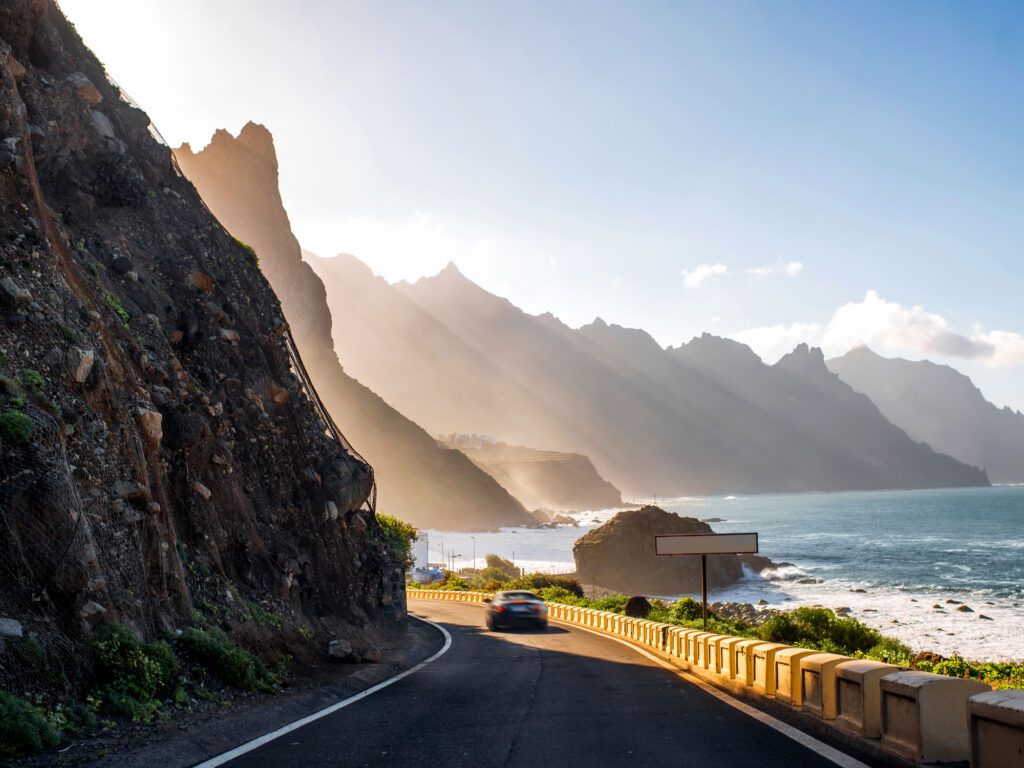
Some of Tenerife’s most scenic roads are steep and narrow. Choose your rental car carefully: It needs to be sufficiently powerful to cope with the gradient but small enough to allow oncoming traffic to pass. And before choosing which car to rent, think carefully about your experience behind the wheel — such roads are no place to train yourself on a stick shift if you’ve never driven one before.
Don’t try to loop the entire island all at once, either. You’ll want to stop often to enjoy the scenery and give yourself a break. Additionally, try to schedule the most popular spots for weekdays, especially in summer, as finding a parking space and distancing yourself from weekend crowds can be quite a headache.
Also consider that the direct route might not always be the best one. For instance, a cursory glance at Google Maps suggests a journey time of under an hour from Santa Cruz to Costa Adeje using the TF-1, the island’s main north-south coastal highway. However, just because you could go that way doesn’t necessarily mean you should. Choosing the winding route along Tenerife’s north coast will take about twice as long, but it delivers big on authentic villages and stellar ocean overlooks.
The Rest of the Top 10
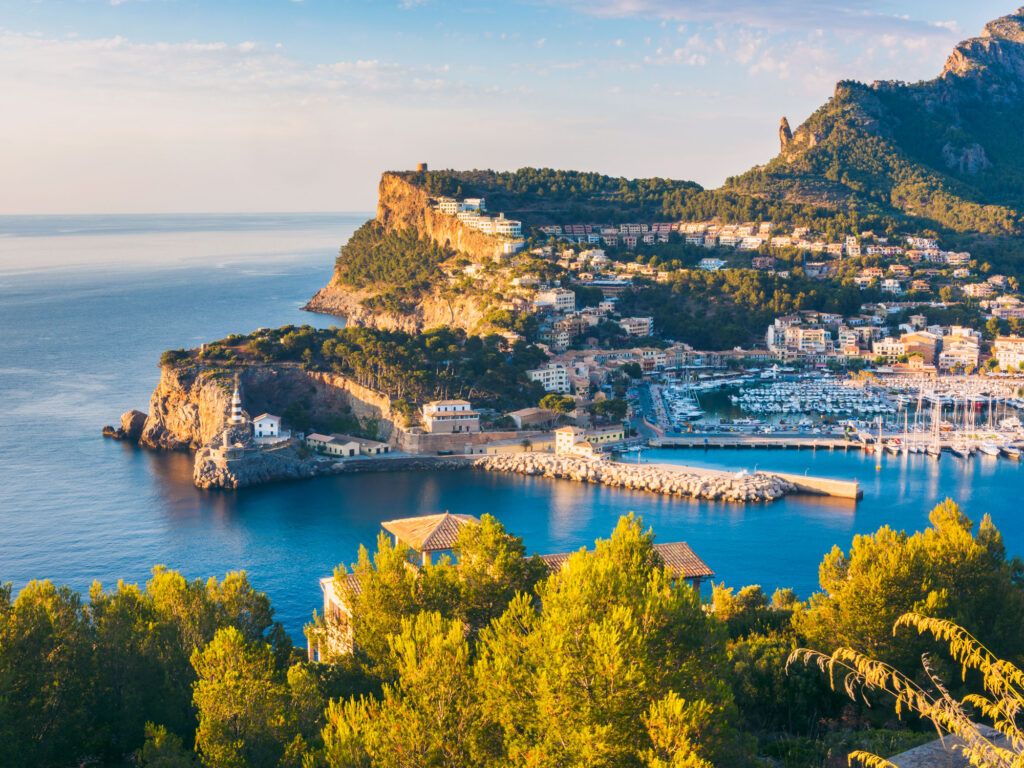
Avis’ shortlist is heavily skewed to Spanish islands. It includes three other Canary Islands: Gran Canaria, La Palma, and La Gomera. The largest of the Balearic Islands, Mallorca, makes the cut, too. Rounding out the list are Madeira (Portugal), Crete and Rhodes (Greece), Corsica (France), and the Isle of Skye (Scotland).
But there are some surprising omissions, too — not least Norway’s beautiful Lofoten Islands, São Miguel in Portugal’s Azores, untamed Streymoy in the Faroe Islands, and striking Sicily. And let’s not forget Europe’s island nations, also a must-do for any serious road-tripper: wild and windswept Iceland, the lush green landscapes of Ireland, and Mediterranean gems like Malta and Cyprus. Best extend that vacation!
Featured image credit: © EP-stock—iStock/Getty Images
More from our network
Daily Passport is part of Inbox Studio, an email-first media company. *Indicates a third-party property.