




5 Things You Should Never Put in a Seatback Pocket
5 Things You Should Never Put in a Seatback Pocket
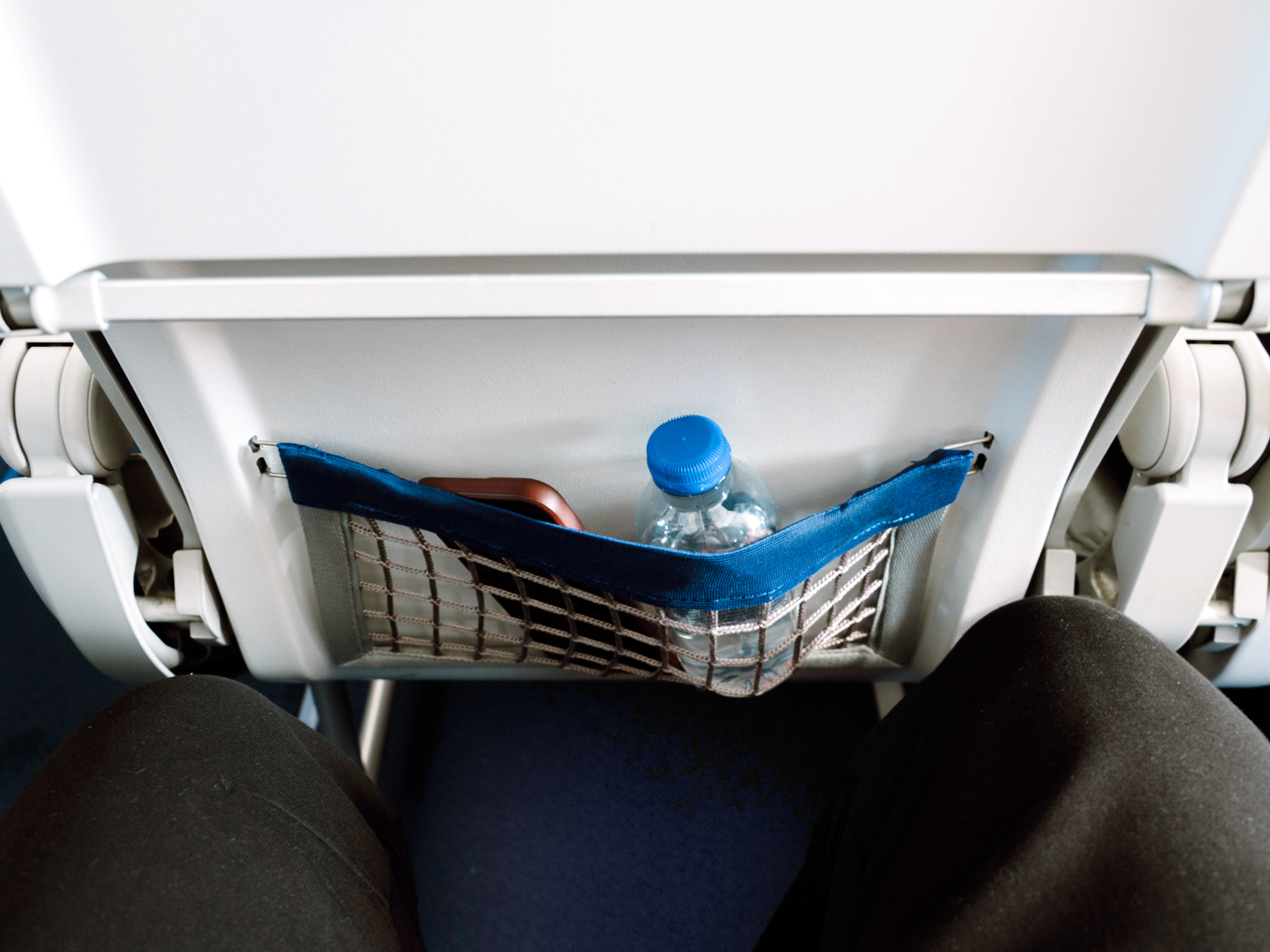

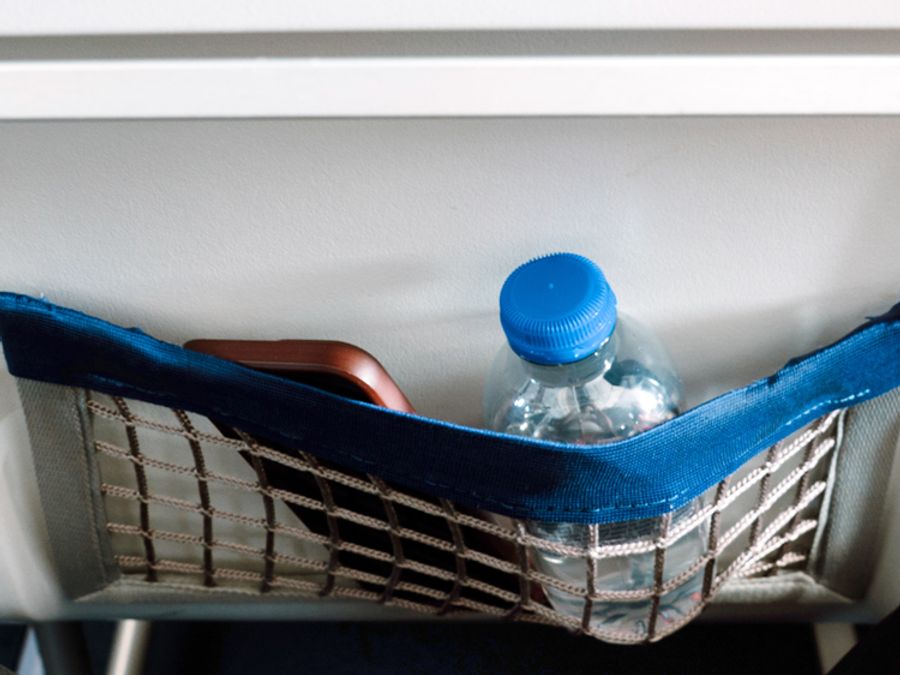
Many passengers don’t think about just how dirty airplane surfaces can be. A home toilet has an average of 127 colony-forming units of bacteria per square inch, but a 2015 study found that your airplane tray table may be harboring nearly 17 times that amount. Another high-touch surface you may overlook is the seatback pocket, a convenient spot where you can store items such as your phone or a book. But should you? Superbugs like MRSA and other pathogens can survive on the seatback fabric for up to a week, thanks to the low humidity and dry air. With that in mind, here are five types of personal items to store safely away from the seatback pocket on your next flight, if you can avoid it.
Smartphones and Tablets
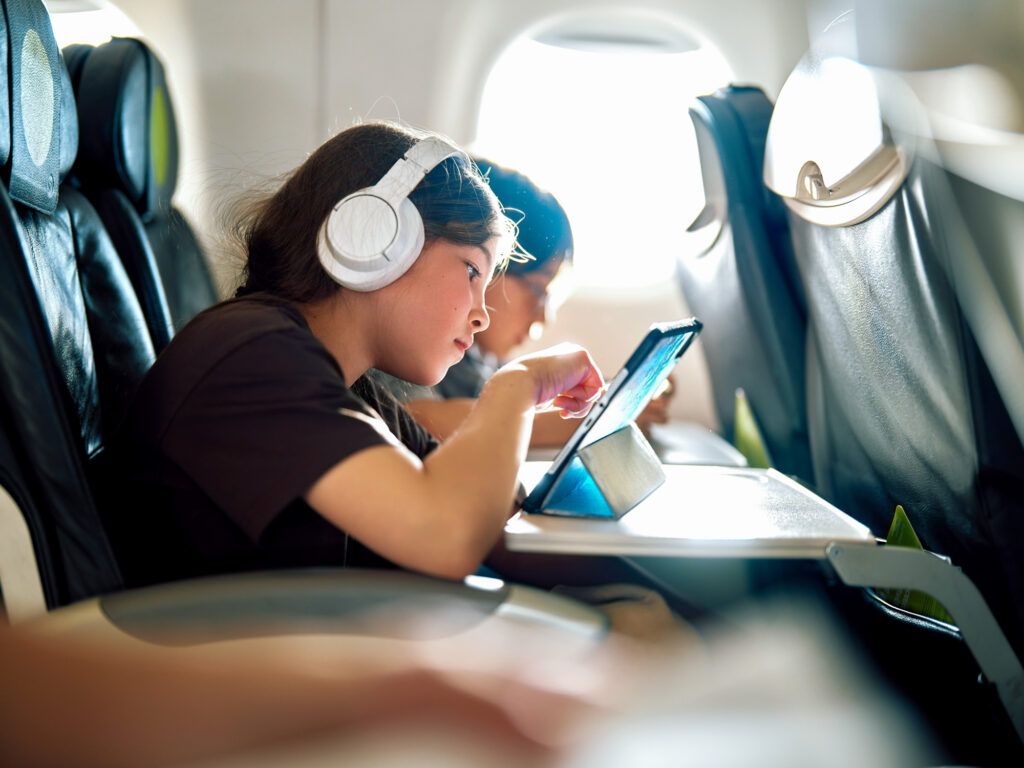
On average, a person touches their phone 2,617 times a day, which means you have 2,617 chances in the 24 hours after your flight to come into contact with whatever might be hiding in the seatback pocket. As passengers have been known to place dirty tissues, napkins, and food waste in the pocket from time to time, there’s no telling what might linger on your phone long after you deplane. Keep that phone or tablet in your pants pocket, purse, or backpack instead.
Unwrapped Food and Snacks
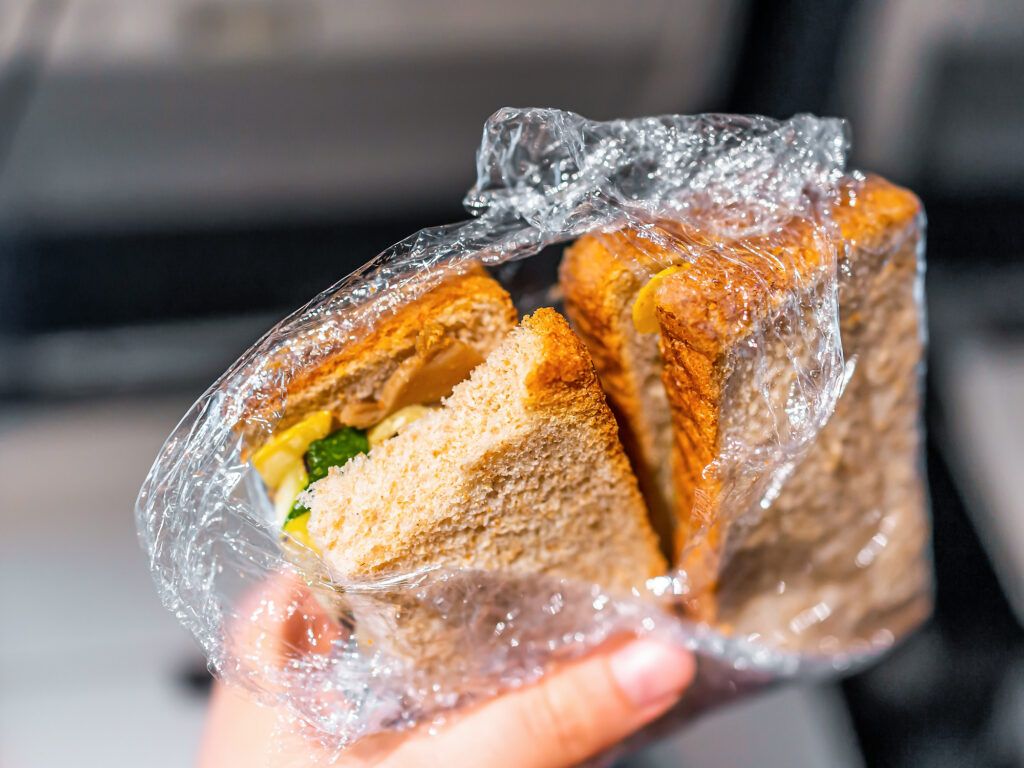
We all get hungry on flights, but think twice before stuffing that apple or sandwich snugly inside the seatback pocket. If you’re consuming unwrapped food that has been exposed to the fabric, you’ll be ingesting plenty of bacteria, too. Snacks should be kept inside aluminum foil or a bag lined with paper or plastic to avoid picking up bacteria, mold, or other residue from the fabric or mesh lining of the seatback pocket.
Laptops and E-Readers
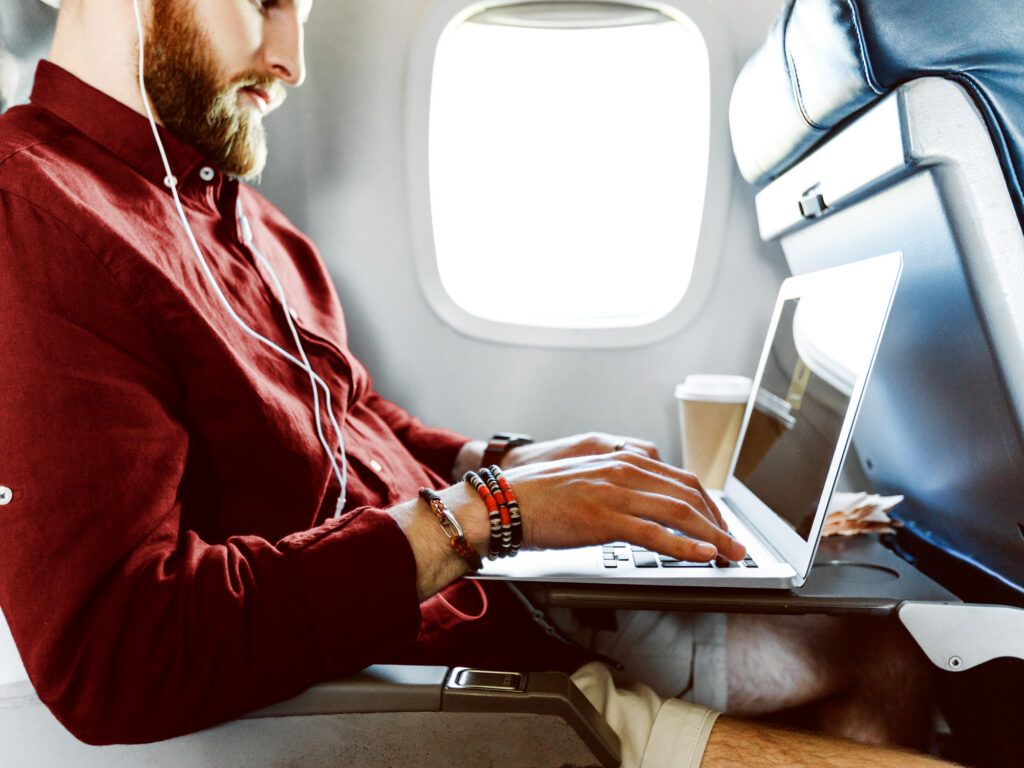
Similar to your phone or tablet device, laptops and e-readers are touched far too often each day for you to consider exposing them to the unsanitary seatback pocket. Plus, these important items are easy to accidentally leave behind when they are lodged deep inside the pocket in front of you. If you’re planning to work or read on the plane, consider investing in a washable laptop sleeve or e-reader pouch that you can use to store the device.
Eyeglasses and Cases
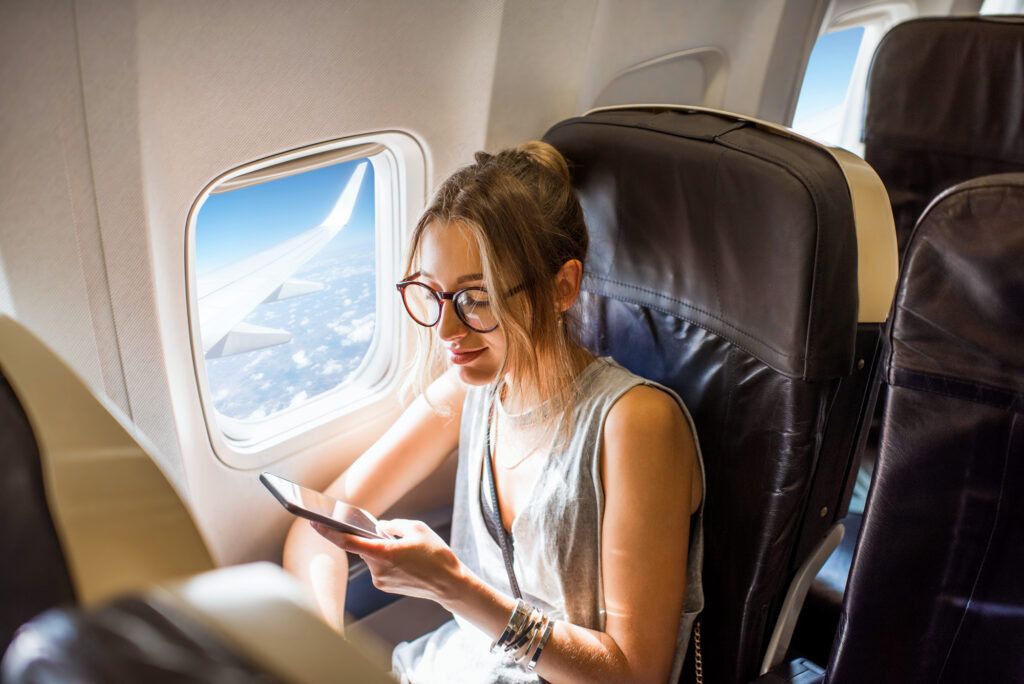
Many viruses are easily transmitted from people touching their eyes, which means you may be exposed to any bacteria from the seatback material if you store your glasses or other eyewear items inside. Additionally, with the tight legroom in economy cabins these days, there’s a chance you could accidentally crack your glasses if they’re stowed in the pocket. A simple solution? Just wear them during the flight and don’t take them off.
Water Bottles and Cups
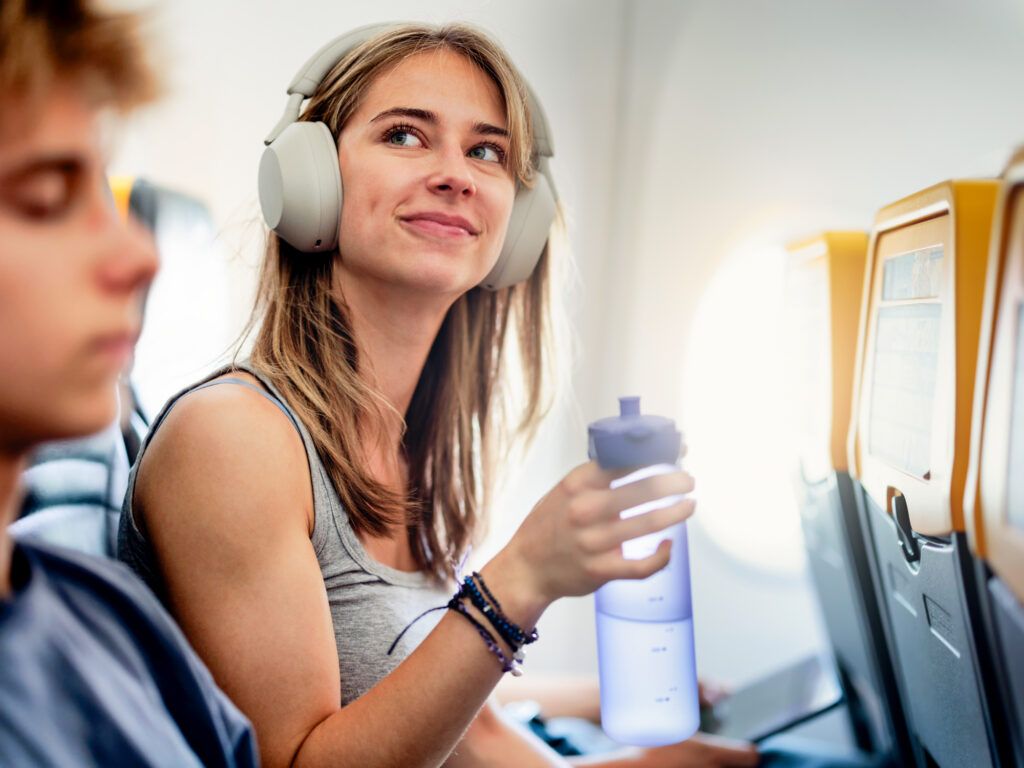
Water bottles and cups are a necessity during a long flight, but consider this: Bacteria can easily contaminate the mouthpiece of a reusable water bottle, and even bottles with caps don’t prevent the germs from spreading. Keep any drinking vessels in your backpack or tote pockets instead, or simply order from the drink cart when it comes around.
How To Safely Stow Items in the Seatback Pocket
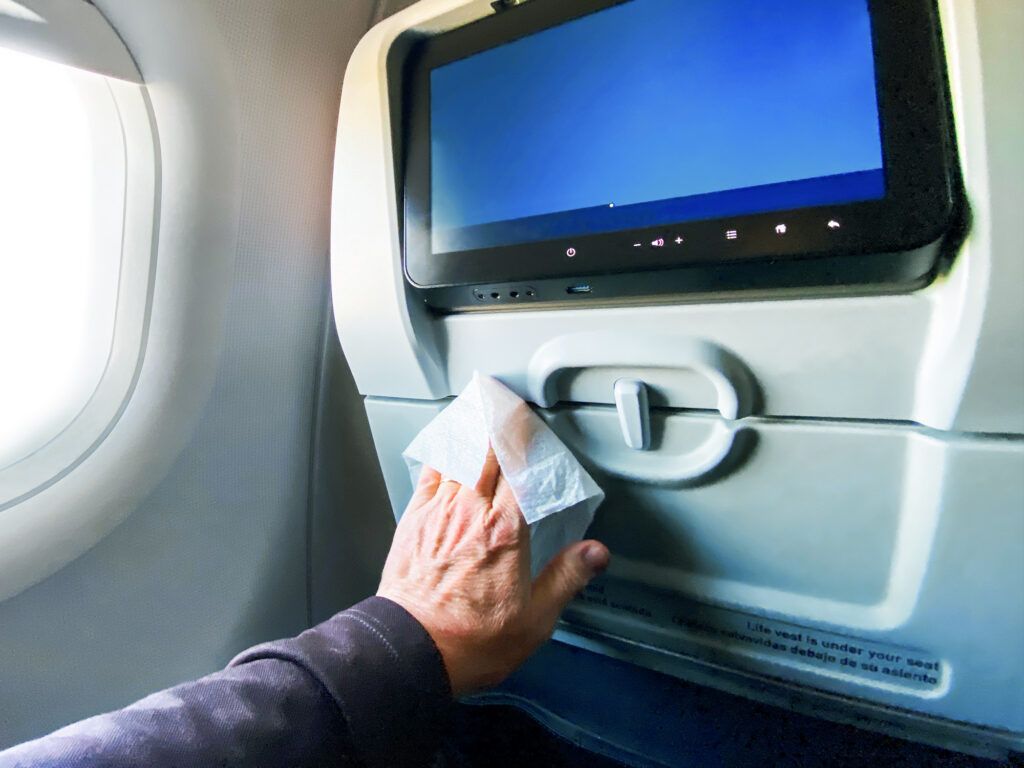
We get it: Those economy seats are snug, and there aren’t many places to put all your belongings, especially on a long-haul flight. Fortunately, there are ways to prevent the spread of bacteria while still keeping items within reach during your flight — but they may require some extra items when packing.
Pack Cleaning Wipes
Disinfectant wipes, especially flushable, biodegradable ones, are a lifesaver during flu season, so you may want to toss a small pack in your purse or backpack before a flight. In addition to the seatback pocket, wipe down the tray table, lavatory door handles, armrests, toilet flush buttons, sink handles, overhead bin latches, and any other high-touch surfaces.
Use a Washable Packing Cube
Avoid the seatback pocket altogether by bringing a packing cube. Available in an assortment of washable fabrics and fun colors, packing cubes protect your chargers, headphones, and snacks from coming into contact with bacteria. Packing cubes are also a great way to free up space in your carry-on and keep your belongings organized. Just be sure to give them a quick clean with a disinfectant when you get to your destination.
Line the Pocket With a Plastic or Paper Bag
If you have a plastic shopping bag from the terminal gift shop handy, you can use it to line the seatback pocket before placing your items inside. Alternatively, many brands sell compostable bags to reduce plastic waste, so you don’t have to feel guilty about discarding them after such short use. You can also use a paper bag — even the air sickness bag the airline provides is likely a cleaner place for your wallet and phone.
Featured image credit: Credit: © MarioGuti—iStock/Getty Images
More from our network
Daily Passport is part of Inbox Studio, an email-first media company. *Indicates a third-party property.