





What Are the Best Seats To Choose on an Amtrak Train?
What Are the Best Seats To Choose on an Amtrak Train?

Whether you’re taking a short Amtrak trip down the Northeast Corridor or a multiday cross-country trek, you want to make sure you’re in the best seat. But determining which seat is the best depends on a lot of different factors, such as whether you prioritize comfort, budget, stunning views, accessibility, or other considerations. With that in mind, let’s look at the best seats to pick on your next Amtrak trip, broken down by factors that may matter most to you.
The Best Choice for Comfort
It may come as no surprise, but the most comfortable seats on Amtrak trains are the more expensive options in higher classes. All Amtrak trains offer the option to book seats in coach class, business class, or a dedicated section for travelers who have accessibility concerns. High-speed Acela trains — which run along the Northeast Corridor — also offer first-class seating. And long-distance trains offer private sleeper cars.
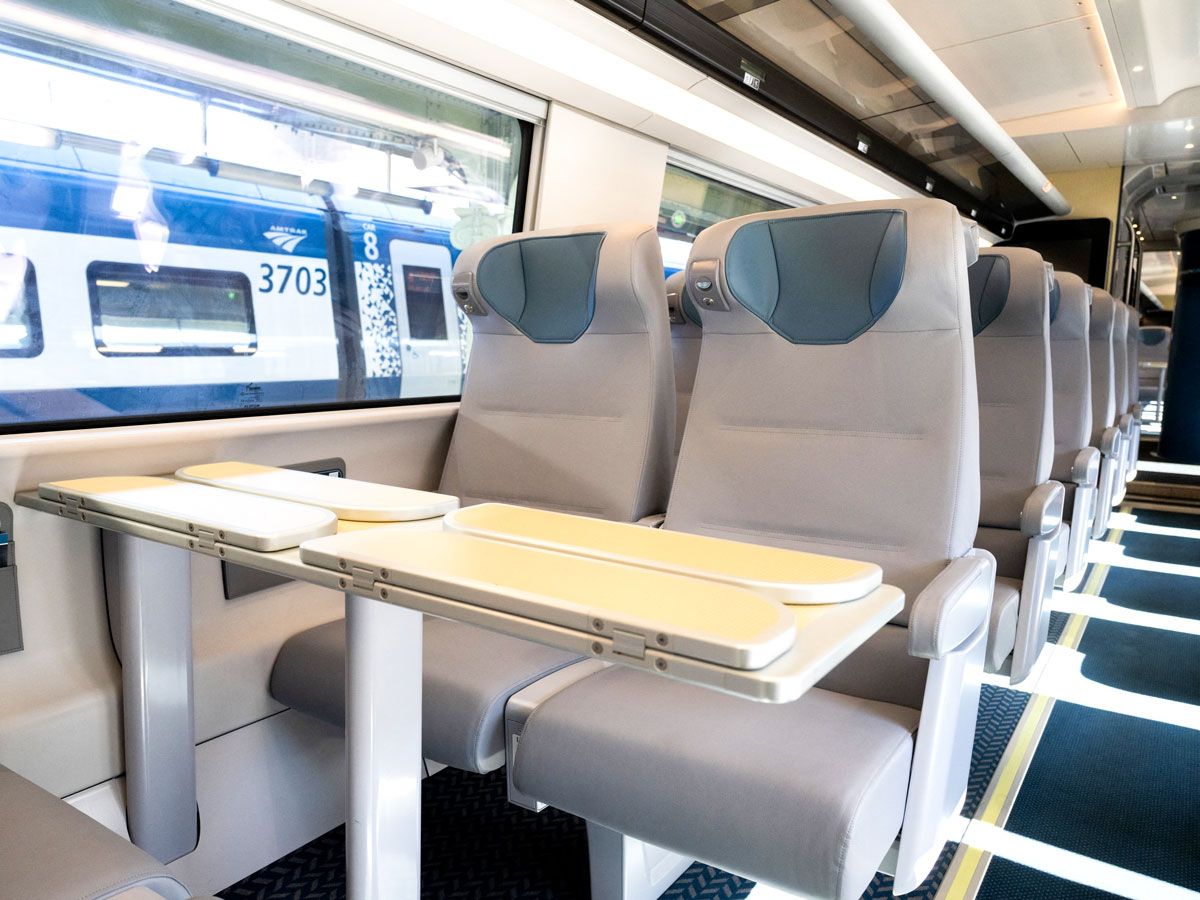
Despite being the most inexpensive option, coach class is more comfortable than you might expect — especially compared with economy class on a plane these days. Amtrak coach class seats are situated in a roomy two-by-two layout and measure roughly 23 inches wide on average, with 39 inches of legroom. A standard coach seat on a plane, in comparison, is around 17 to 18 inches wide with 30 to 31 inches of legroom.
If you’re willing to shell out a little more, business class offers slightly wider seats and roughly 3 to 4 inches of additional legroom. Some business-class seating (depending on the route) is organized in a one-by-two layout, providing even more space and comfort.
Those who are willing to pay several hundred (if not thousands of) dollars may consider one of Amtrak’s private sleeping cars, which offers the most comfortable private seating on long-distance trains. Private room options include a compact roomette, a more spacious bedroom, an even more spacious bedroom suite, or a large family room.
On Acela trains serving the Northeast, all first-class seats are arranged in a one-by-two layout, and each seat includes adjustable headrests, lumbar support, and footrests. Legroom, however, is the same 42 inches as in business cass.
The Top Options for Views
Part of what makes Amtrak such an appealing travel experience is the opportunity to gaze out your window and bask in the beauty America has to offer. Certain seats, however, offer better views than others, and you don’t want to be caught on the wrong side of the train while everyone across the aisle “oohs” and “aahs.”
The seat offering the best view varies by route and the direction that you’re traveling. For instance, when riding the Adirondack line northbound from New York to Montreal, Sojourner White — a frequent Amtrak rider — advised in Business Insider that it’s better to sit on the left side of the train for the portion that runs from New York City to Albany, and then to move to the right side for the rest of the journey. (This is possible since Amtrak seats typically aren’t assigned.)
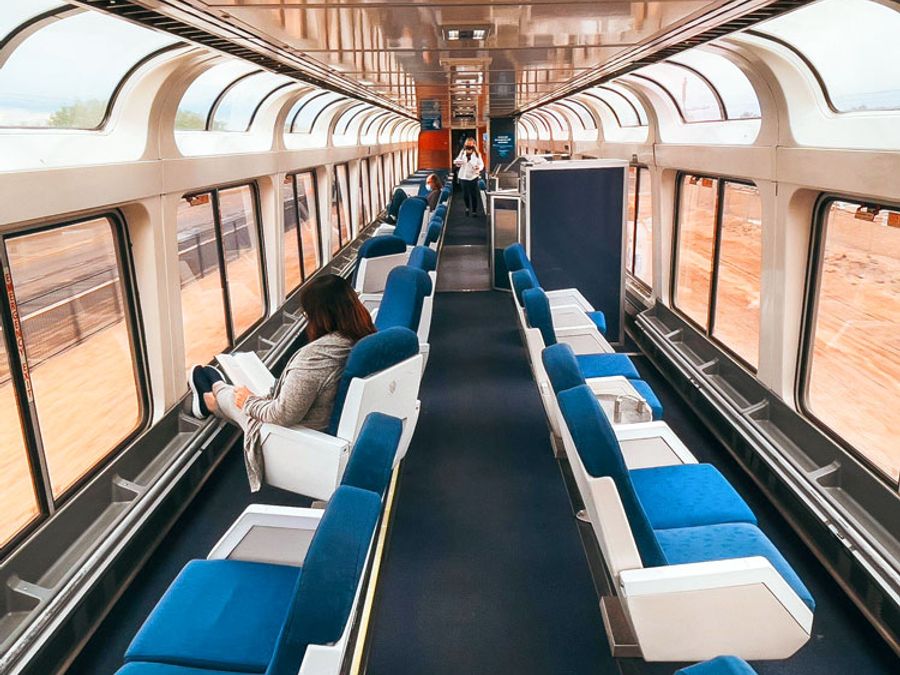
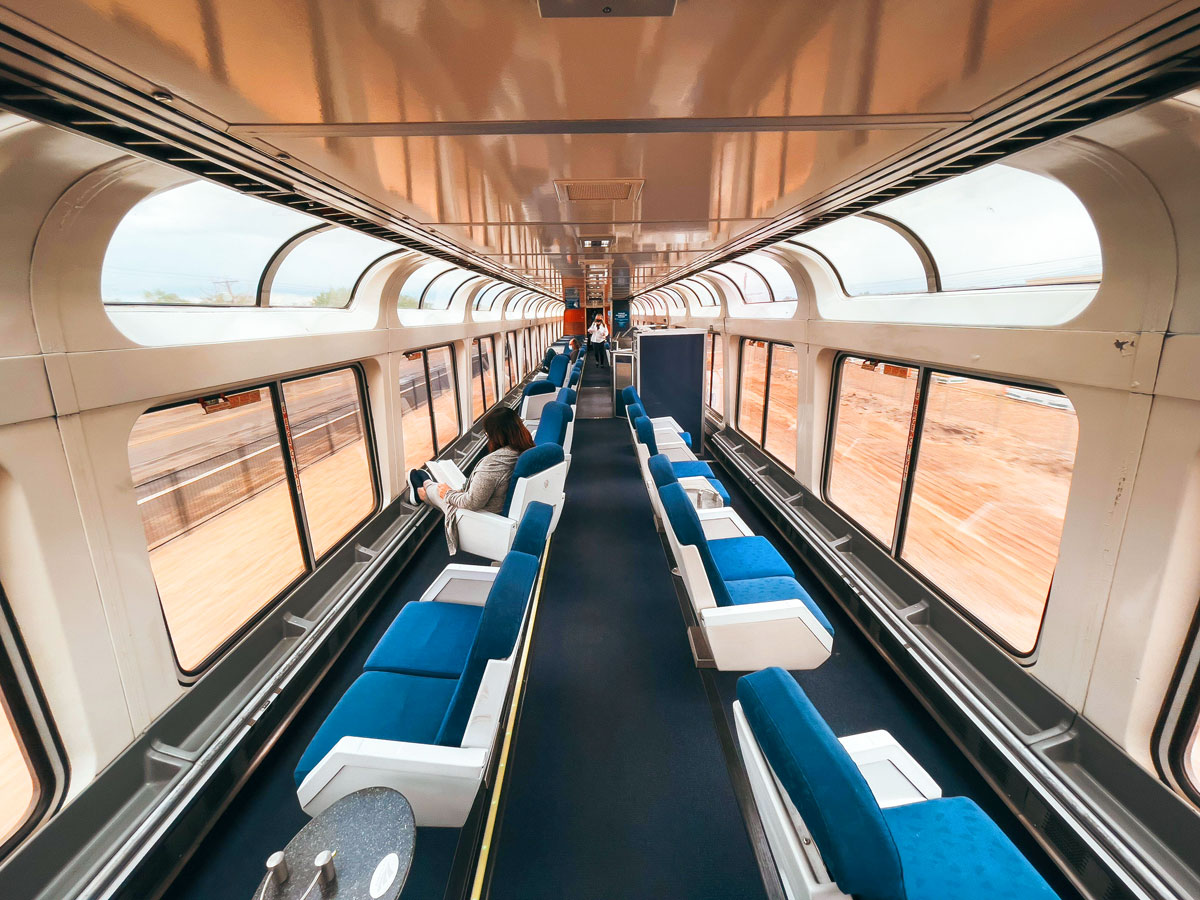
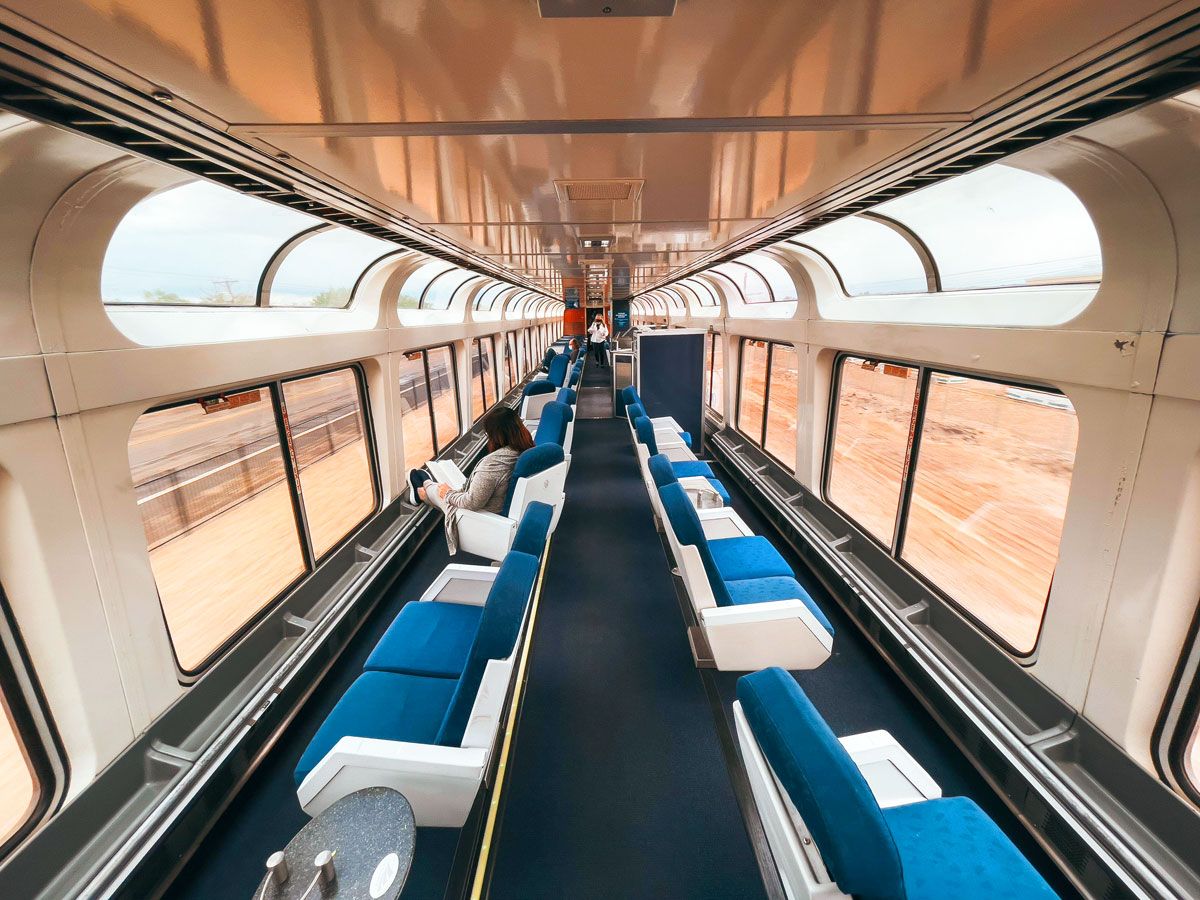
If you’re riding along the Pacific coast, on the other hand, you’re going to want to sit on the ocean-facing side of the train for the whole trip. Select routes (listed here) also offer observation cars with floor-to-ceiling windows for more expansive views. Anyone on the train can sit in these cars on a first-come, first-served basis.
For further guidance about where to sit for the best views depending on your route, online forums such as Amtrak Unlimited are great resources to explore.
Upper vs. Lower Level
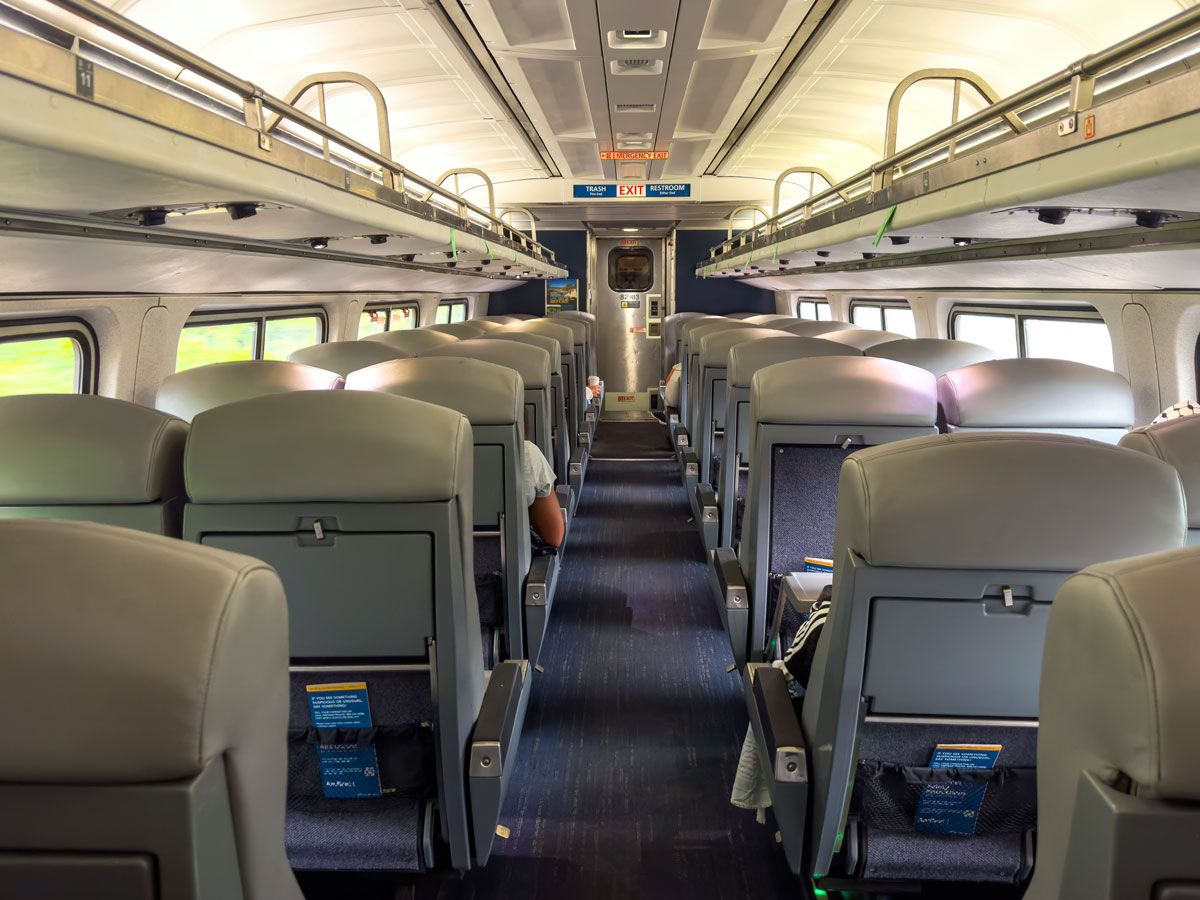
If you’re on a dual-level Amtrak train with upper and lower sections, you might want to sit in the upper section if you’re planning to move between cars several times during the journey. That’s because you can pass from car to car directly from the upper level, whereas those sitting in the lower level need to climb up and down the stairs whenever they want to access the observation or dining car. The upper level also offers better views and less track noise.
The lower level has certain advantages, too. It offers more restrooms than up top, closer proximity to the luggage storage area if you need to grab your bag, and less motion sway, which can be helpful to those who suffer from motion sickness.
For those with mobility impairments or other disabilities, Amtrak offers dedicated accessible seating sections on all trains, with reserved space for wheelchairs or service animals. Typically, it’s required to reserve these spaces in advance.
More from our network
Daily Passport is part of Inbox Studio, an email-first media company. *Indicates a third-party property.