


Is This America’s Spookiest Airport?
Is This America’s Spookiest Airport?

Is the bustling hub officially known as Denver International Airport but referred to by locals as DIA merely the 10th-busiest airport in the world, or is it secretly a clandestine entrance to the underworld? Like a lot of conspiracy theories, those related to DIA range from the sinister to the silly. If you’ve ever seen the bizarre murals that line its walls, heard references to its labyrinthine underground bunkers, or pondered its supposed connection to lizard people, you may be inclined to believe the theories. Discover a few of the most fascinating conspiracy theories surrounding America’s spookiest airport.
Art or Armageddon?
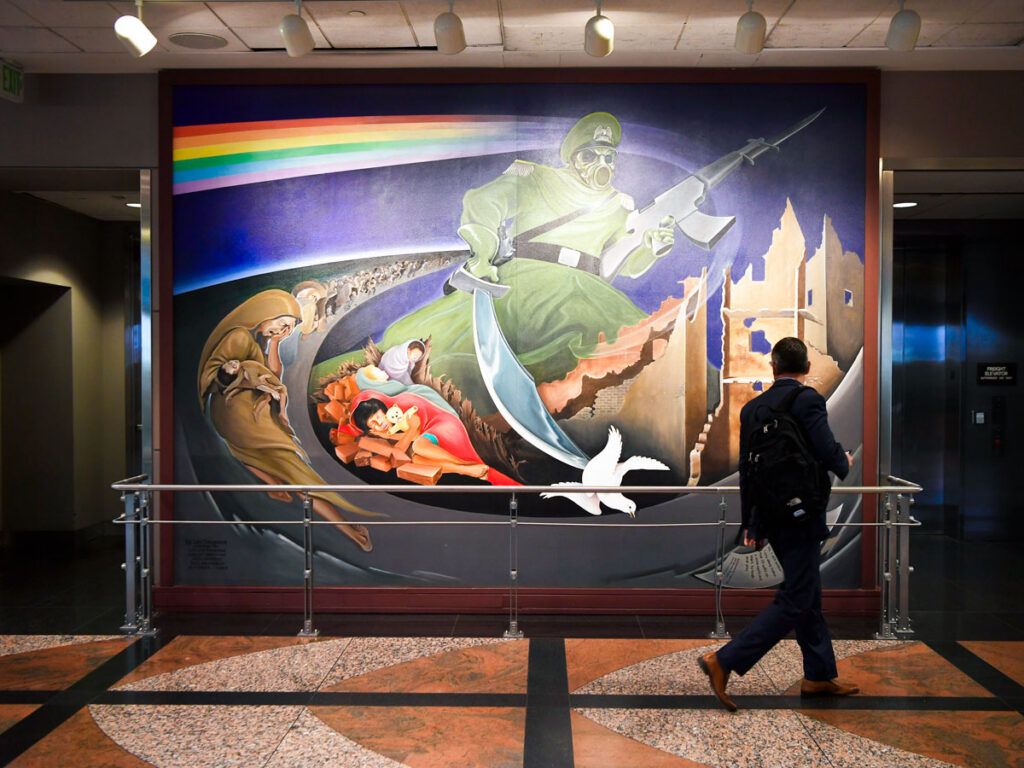
Let’s start with those murals, which were painted by local artist Leo Tanguma as the airport was being built in 1995. There are two of them, both of which are located near the baggage claim: “In Peace and Harmony with Nature” and “Children of the World Dream of Peace.” The murals feature everything from flames and turtles to desert landscapes and a soldier wearing a gas mask. Though beautiful, they’re also, well, a lot to take in visually. And to some, they may lend themselves to apocalyptic interpretations, especially with the way children huddle around a futuristic plant in “In Peace and Harmony,” or the gun-toting soldier in “Children of the World.”
There are also mysterious underground tunnels in the airport, but they don’t lead to Hades or, as some have suggested, to North American Aerospace Defense Command (NORAD) in Colorado Springs, a full 100 miles away. Others think either lizard people or doppelgangers live in them, with the latter theory becoming especially popular after the release of Jordan Peele’s 2019 thriller Us. The truth is far more mundane: They were originally intended for transporting luggage through an advanced automated baggage system that never came to fruition.
The airport plans to repurpose some of the dormant tunnels as pedestrian walkways by 2029, alleviating one of the biggest headaches that passengers experience whenever they fly in or out of DIA: having to take a train between concourses. “I often say that the lack of redundancy for the trains is the original sin of DEN,” CEO Phil Washington told Denverite. “It’s like eating the apple, I guess.”
It’s Alive!
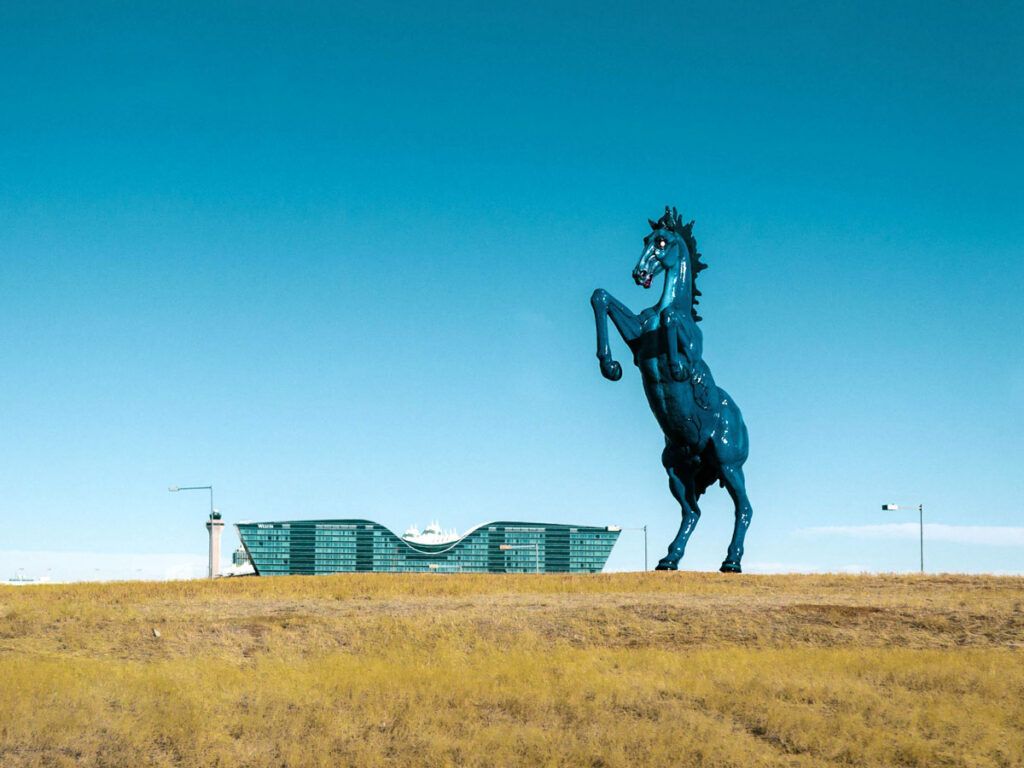
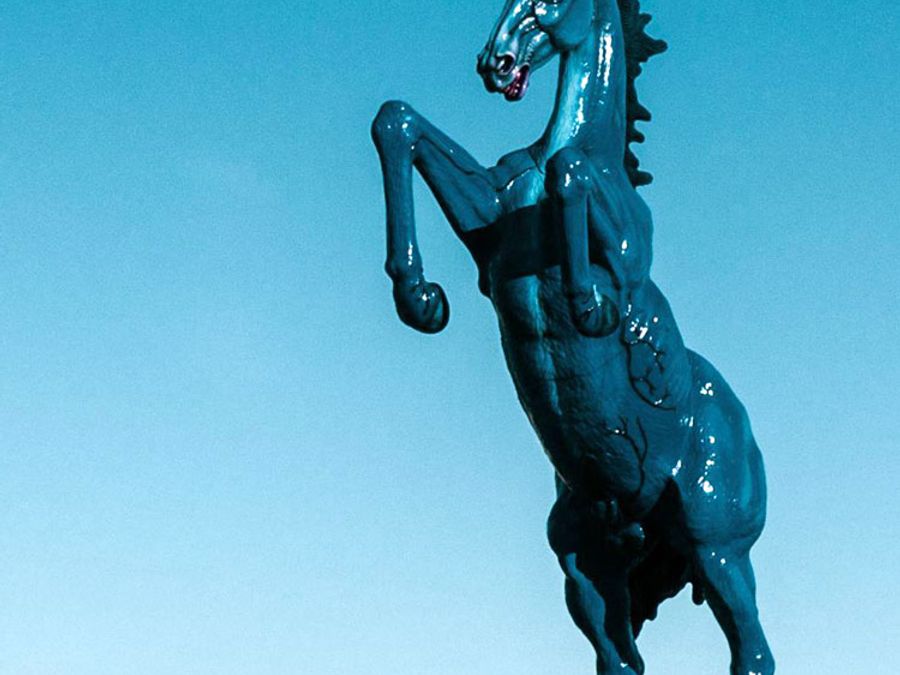
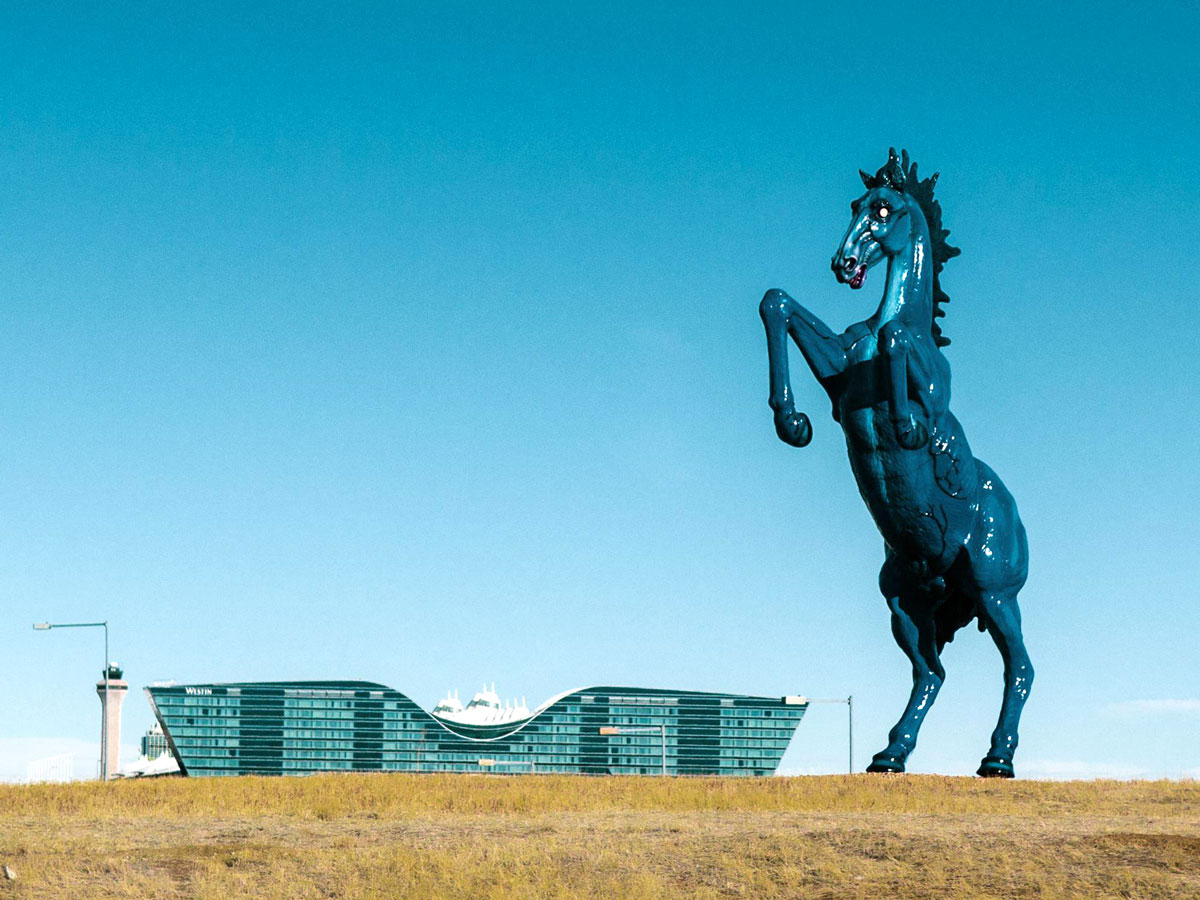
For many travelers, DIA’s creepiest aspect is actually outside the airport. Blue Mustang, better known by locals as Blucifer, is a 32-foot sculpture of a blue mustang with glowing — and, let’s just say it, devilish — red eyes that greets visitors in the most ominous way imaginable.
But it isn’t just Blucifer’s appearance or its $650,000 price tag that unsettles. It’s the fact that it (or he) tragically killed its sculptor, Luis Jiménez, when it fell upon the artist at his studio shortly before he finished it. The artist’s friends and family opted to complete it with the assistance of painters Camillo Nuñez and Richard LaVato, and it has stood guard over the airport since 2008.
Despite (or perhaps because of) its inauspicious origins, Blucifer is widely beloved among Denverites: “We have this fierce blue mustang that we look at as kind of a protector of travelers, guarding this airport,” Stacey Stegman, the airport’s senior vice president of communications, marketing, and customer service, said in an interview with Colorado Public Radio.
Leaning Into It
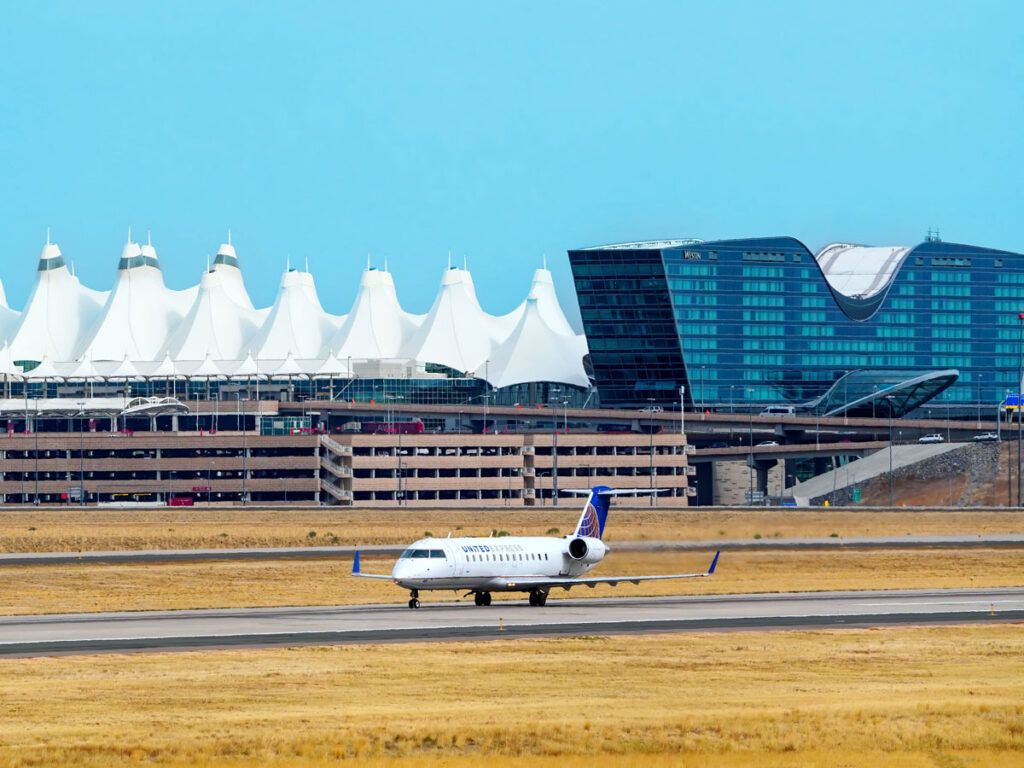
Many conspiracy theories eventually lead back to the Illuminati, a shadowy cabal said to secretly pull the strings of just about every government in the world, and DIA is no exception.
The strange artwork and symbols found at Denver International have inevitably led some true believers to read into them, including a mine cart inscribed on the floor with “Au Ag” written on it. Though merely meant to represent Colorado’s mining history (“Au” and “Ag” are the chemical symbols for gold and silver, respectively), some have interpreted it as a reference to a lethal pathogen known as the Australian Antigen that will eventually wipe out the world. (Among the many reasons this doesn’t make any sense is that an antigen triggers an immune response, meaning it would actually protect against a deadly virus.)
For their part, authorities are well aware of the conspiracy theories surrounding the airport — and have jokingly decided to lean into them while DIA undergoes renovations. One “pardon our dust” poster asks, “What are we doing?” and offers three answers: “A) Adding amazing new restaurants and bars, B) Building an Illuminati headquarters, C) Remodeling the lizard people’s lair.”
More from our network
Daily Passport is part of Inbox Studio, an email-first media company. *Indicates a third-party property.