



The Best Historic Architecture of the U.S. Rust Belt
The Best Historic Architecture of the U.S. Rust Belt

America’s Rust Belt spans multiple states, including much of Ohio, as well as significant tracts of Indiana, Michigan, Illinois, and Pennsylvania. This umbrella term, coined in the 1980s, refers to a region that once formed the backbone of America’s manufacturing and industry in the 20th century. While parts of the Rust Belt faced declining economic headwinds in the second half of the 20th century, many of the spectacular buildings built at the height of the Rust Belt’s power remain. Indeed, today the revitalized cities of the Rust Belt boast some of the most interesting architecture in the country. From their fascinating backstories to their varied present-day uses, these six historic buildings, bridges, and transportation hubs are worthy of attention.
Cincinnati Music Hall – Cincinnati, Ohio
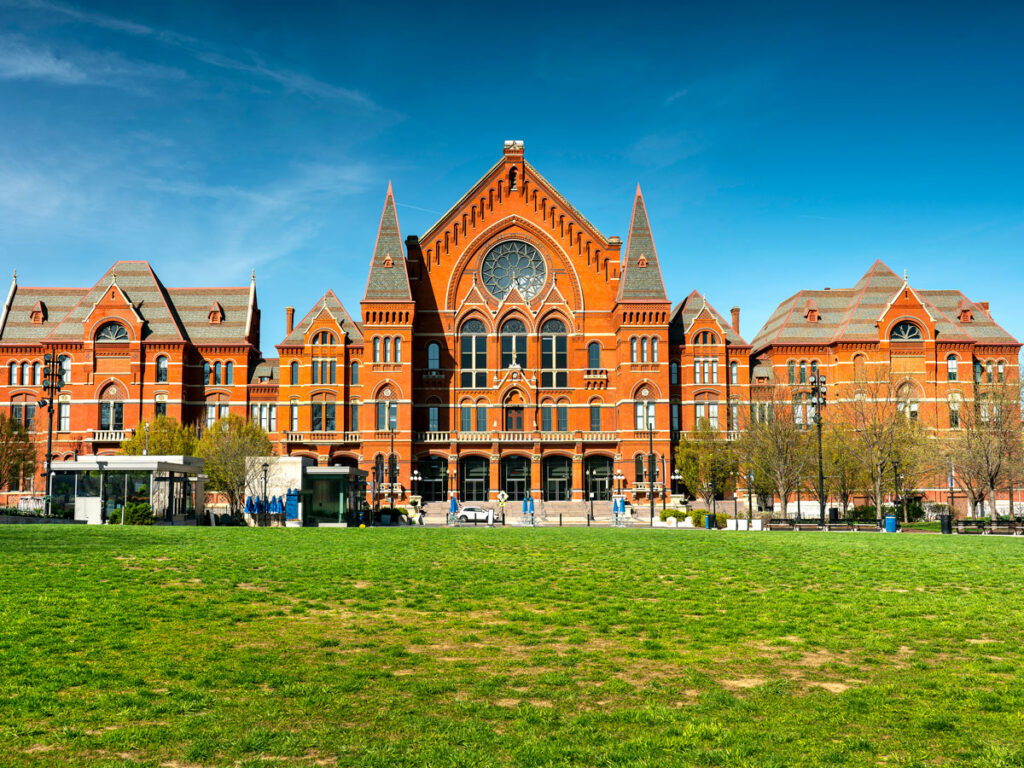
The splendid Cincinnati Music Hall opened in 1878 to much fanfare. Decorative flags fluttered above a delighted crowd outside, while those lucky enough to secure a ticket watched as the May Festival Chorus played to a full house. The following year, the building hosted the seventh Cincinnati Industrial Exposition, attracting around 250,000 visitors, including President Rutherford Hayes and General W.T. Sherman.
Built in the High Victorian Gothic style, the building is still a much-loved landmark. In recent years, several vital restoration projects — including work on the finials of the Music Hall’s gables, balcony doors, and stone floor — have breathed new life into this magnificent arts venue. That’s good news for the Cincinnati Symphony Orchestra, the Cincinnati Pops Orchestra, the May Festival, the Cincinnati Opera, and the Cincinnati Ballet, which are all based here.
Detroit Central Station – Detroit, Michigan
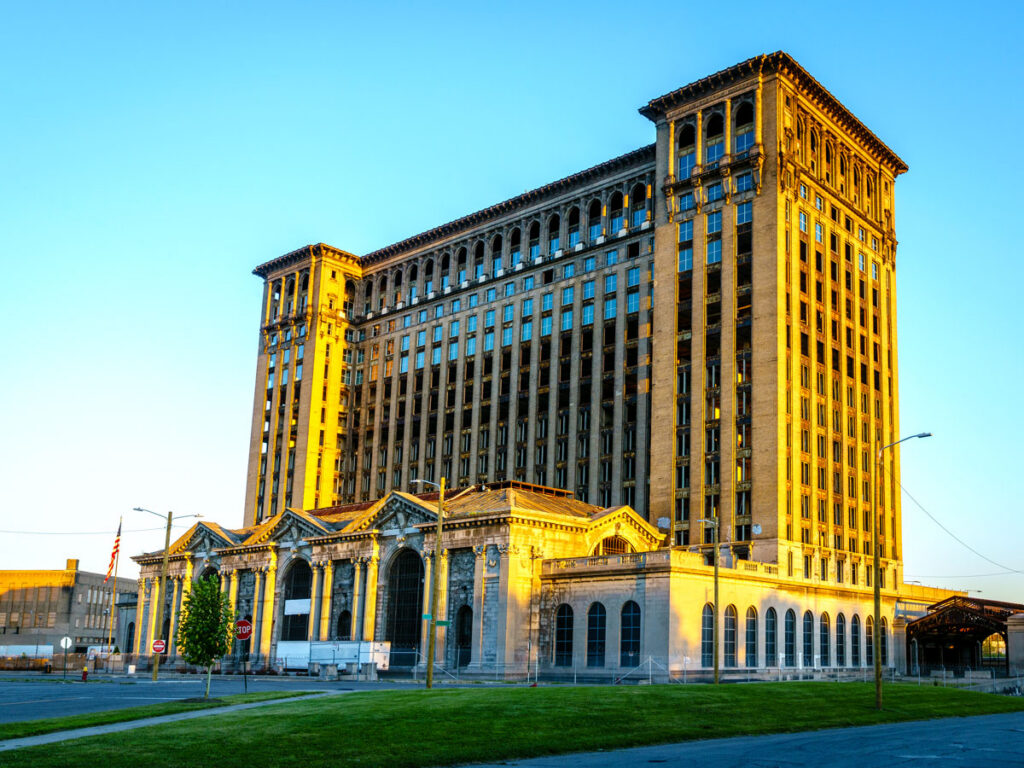
The resurrection of Detroit Central Station exemplifies the city’s commitment to preserving its industrial and commercial heritage. When it opened in 1913, the 18-story building was the tallest train station in the world. The same architects who were responsible for New York City’s Grand Central Terminal designed the Beaux Arts landmark in Detroit. Marble floors, tiled vaulted ceilings, Corinthian columns, and bronze chandeliers lent the waiting room an unmistakable grandeur.
Yet, times changed, and after the station closed in 1988 due to declining passenger traffic, the building sat empty for decades. In 2018, Ford Motor Company bought the site and spent a huge sum to revitalize and reimagine the building. It reopened in 2024 as the centerpiece of an innovation hub, which marks a new chapter in this Rust Belt city’s history.
Andy Warhol Museum – Pittsburgh, Pennsylvania
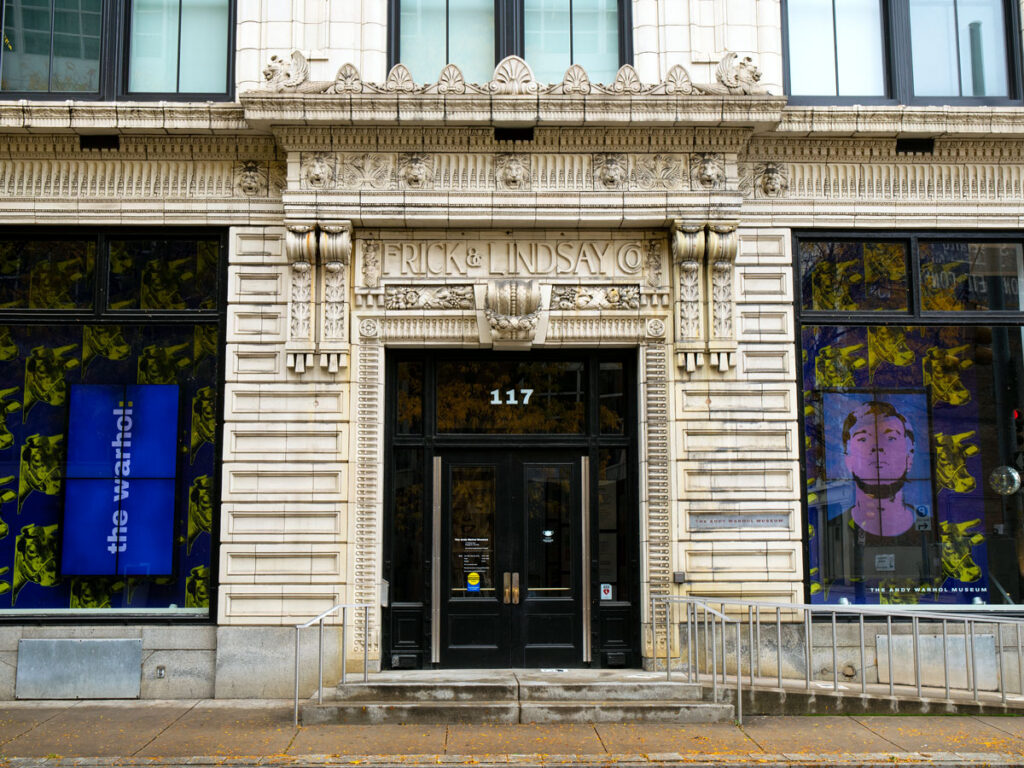
Pittsburgh’s Andy Warhol Museum occupies a remarkably ornate warehouse built in 1911. Previous owners William E. Frick and William G. Lindsay once used it to store products from their industrial supplies business, the Frick and Lindsay Company. The original cornice (what you see now is a faithful replica fashioned from lightweight fiberglass) was constructed in the Beaux Arts style.
In 1994, the building opened as the Andy Warhol Museum, the largest museum in North America dedicated to a single artist. While the shell of the seven-story building offered sufficient space to exhibit the Warhol collection, many of the nonstructural elements of the interior were removed, leaving little more than the exterior walls, piers, and concrete floors. Galleries are accessed via an old freight elevator.
Pullman Historic District – Chicago, Illinois
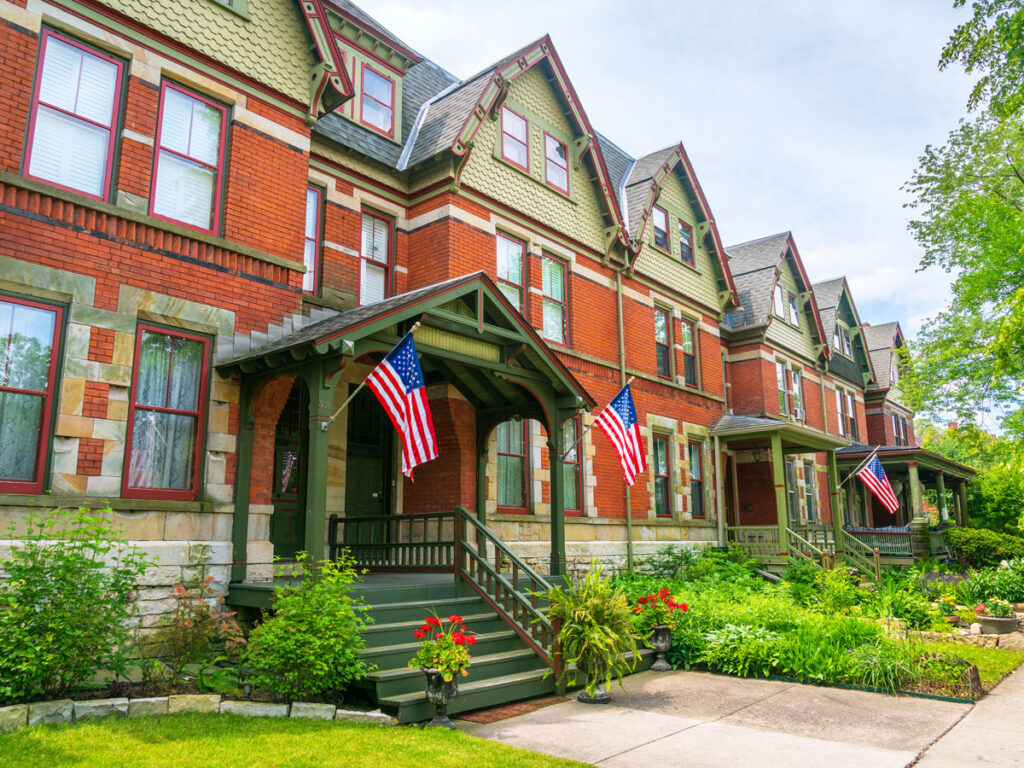
Visitors to the Windy City with a keen interest in architecture should venture out to the South Side neighborhood of Pullman, home to the Pullman National Historical Park. In the 1880s, industrialist George Pullman constructed the neighborhood as a company town, aiming to create a place where workers employed at his Pullman Palace Car Company could live in what were (in those days) comfortable Queen Anne and Victorian row houses fitted with modern conveniences such as indoor plumbing.
However, the venture didn’t prove as popular as Pullman hoped, nor did orders for his company remain buoyant. When he simultaneously raised rents and lowered wages, his workforce chose to strike. After the strike, Pullman ceased to be a company town and transitioned to a regular residential neighborhood. But today, you can tour the original complex and learn about its legacy.
Greyhound Bus Terminal – Evansville, Indiana
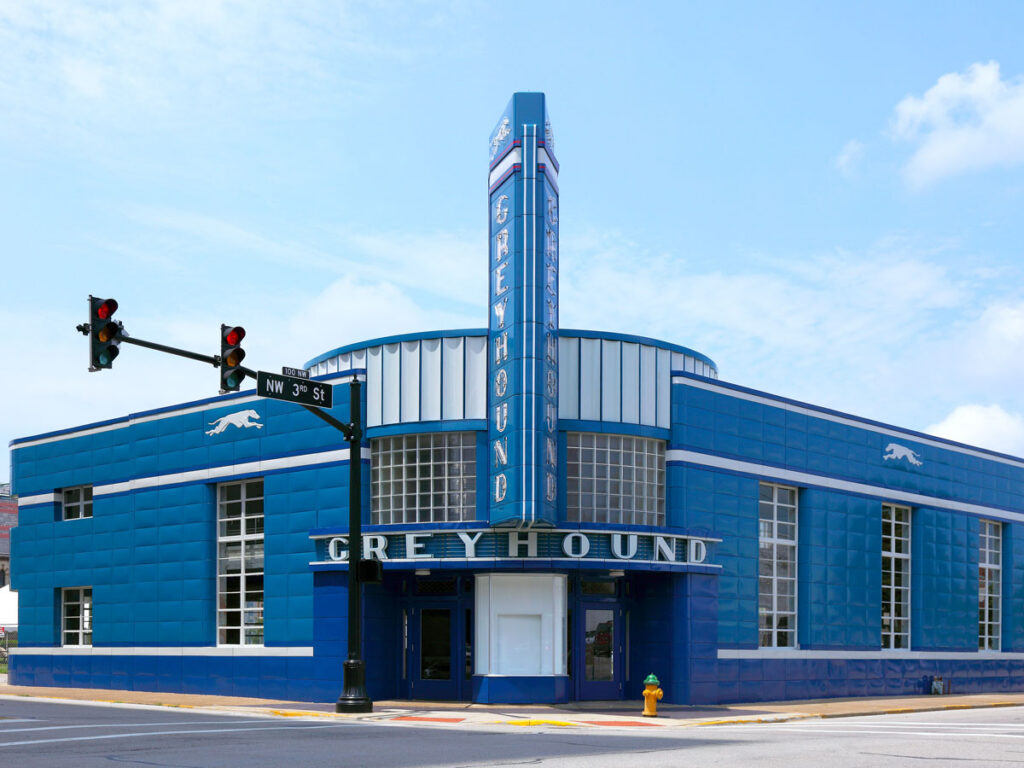
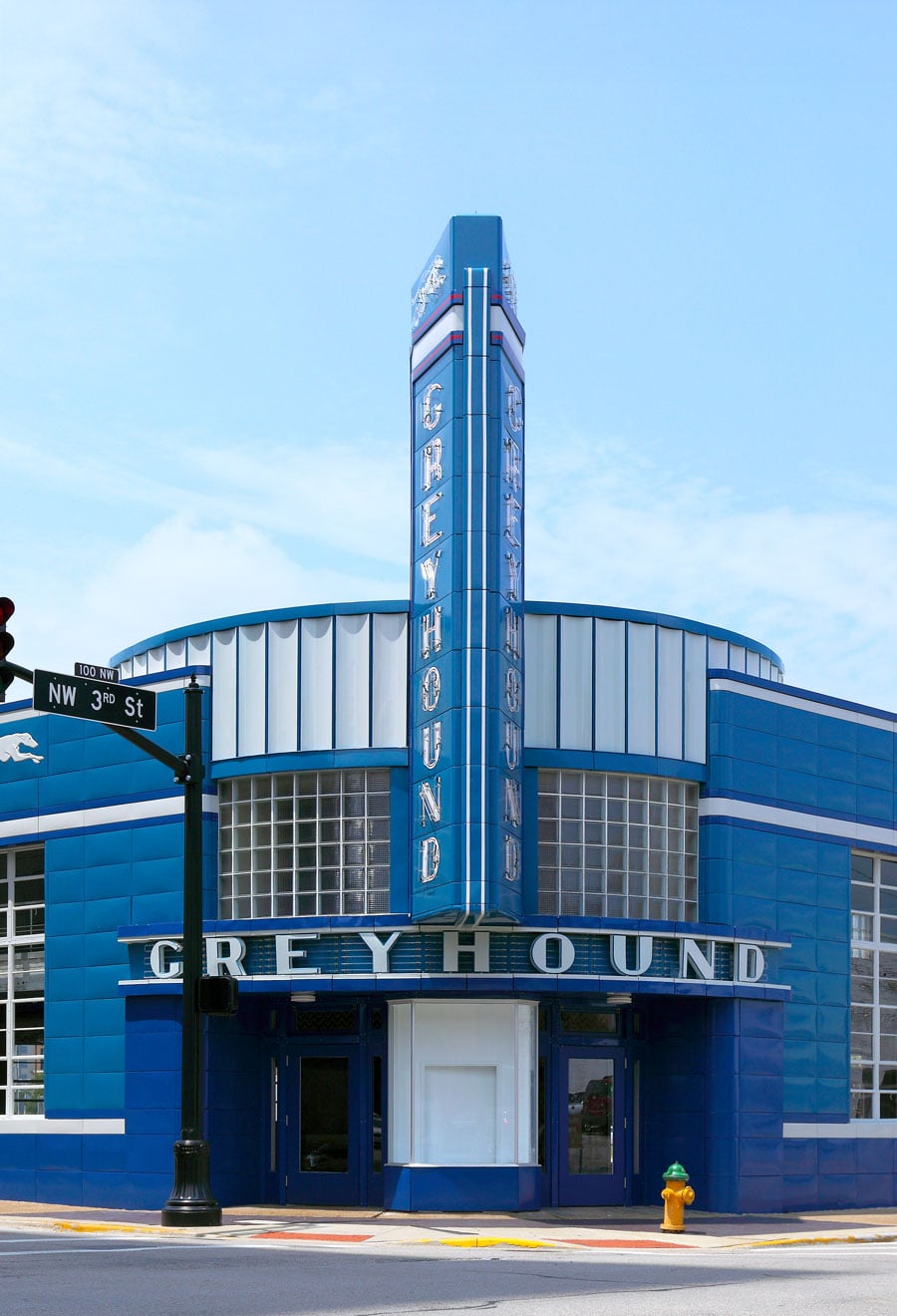
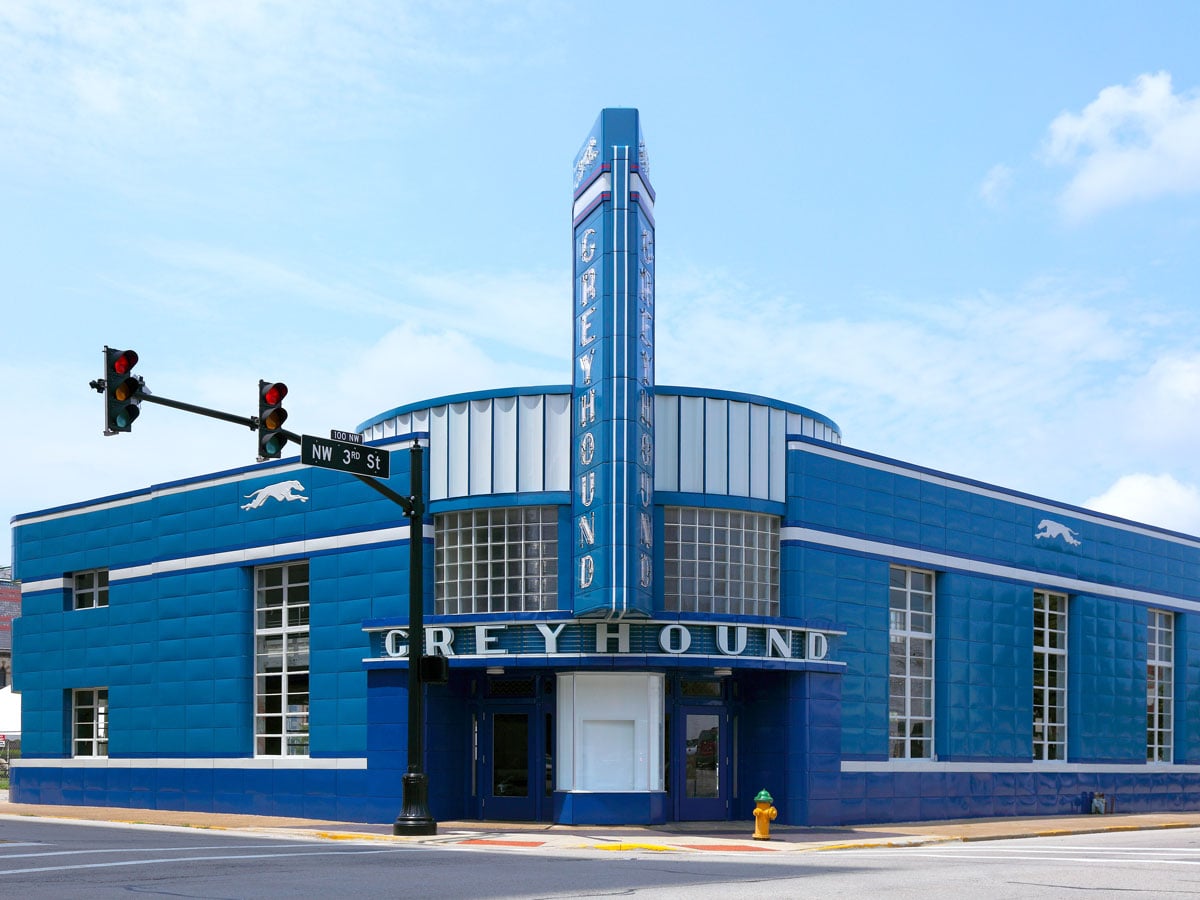
Streamline art moderne architecture evolved from the art deco era in the 1930s. The sleek appearance of the former relied heavily on strong horizontal lines and curved corners, bringing to mind luxurious cruise liners and airplanes. But the buildings that embraced this architectural type were often much more mainstream.
The former Greyhound bus depot in Evansville, Indiana, is a prime example. Now an outlet for local burger chain BRU Burger Bar, it was painstakingly restored with the help of the Indiana Landmarks organization. Skilled artisans renovated the metal that clad its exterior and crafted a replacement stained glass window featuring the bus company’s signature greyhound motif. Memorabilia such as ledger books dating from the early 1940s and a traveler’s sketchbook were unearthed during the $2.3 million rebuild.
Guardians of Traffic – Cleveland, Ohio
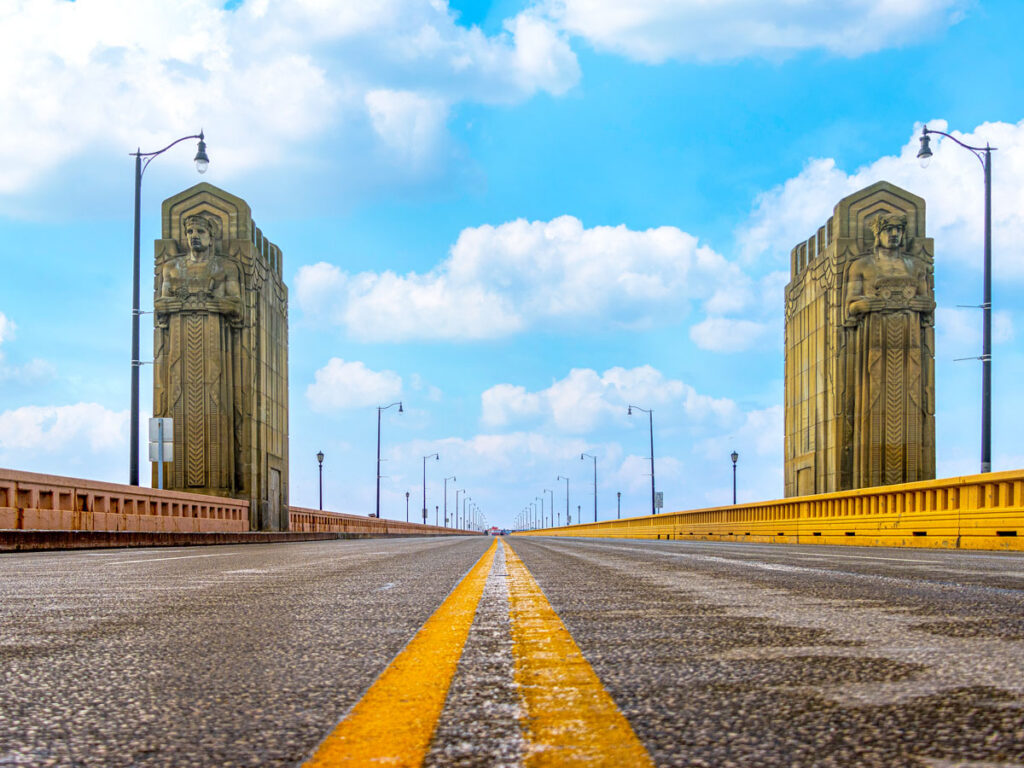
The Guardians of Traffic adorn Cleveland’s Hope Memorial Bridge, formerly called the Lorain-Carnegie Bridge. These colossal art deco figures date back to 1932, when masons in the city’s Little Italy neighborhood carved them out of sandstone. A variety of vehicles are incorporated into their design, among them a covered wagon, stagecoach, passenger car, and truck, symbolizing the evolution of transportation in the U.S. The Guardians of Traffic’s emblematic status was cemented in 2022 when Cleveland’s Major League Baseball team, formerly the Indians, rebranded as the Cleveland Guardians.
More from our network
Daily Passport is part of Inbox Studio, an email-first media company. *Indicates a third-party property.