




This Airport Has a Road That Crosses Right Through the Runway
This Airport Has a Road That Crosses Right Through the Runway

Can you imagine driving across an airport runway without straying from an official highway? Until recently, that was part of the daily commute for many drivers coming and going from the British overseas territory of Gibraltar. So, how did such an unusual route even work, and why was it necessary in the first place? Check out the fascinating history of Gibraltar International Airport and the road running straight through its runway.
Yield for Air Traffic

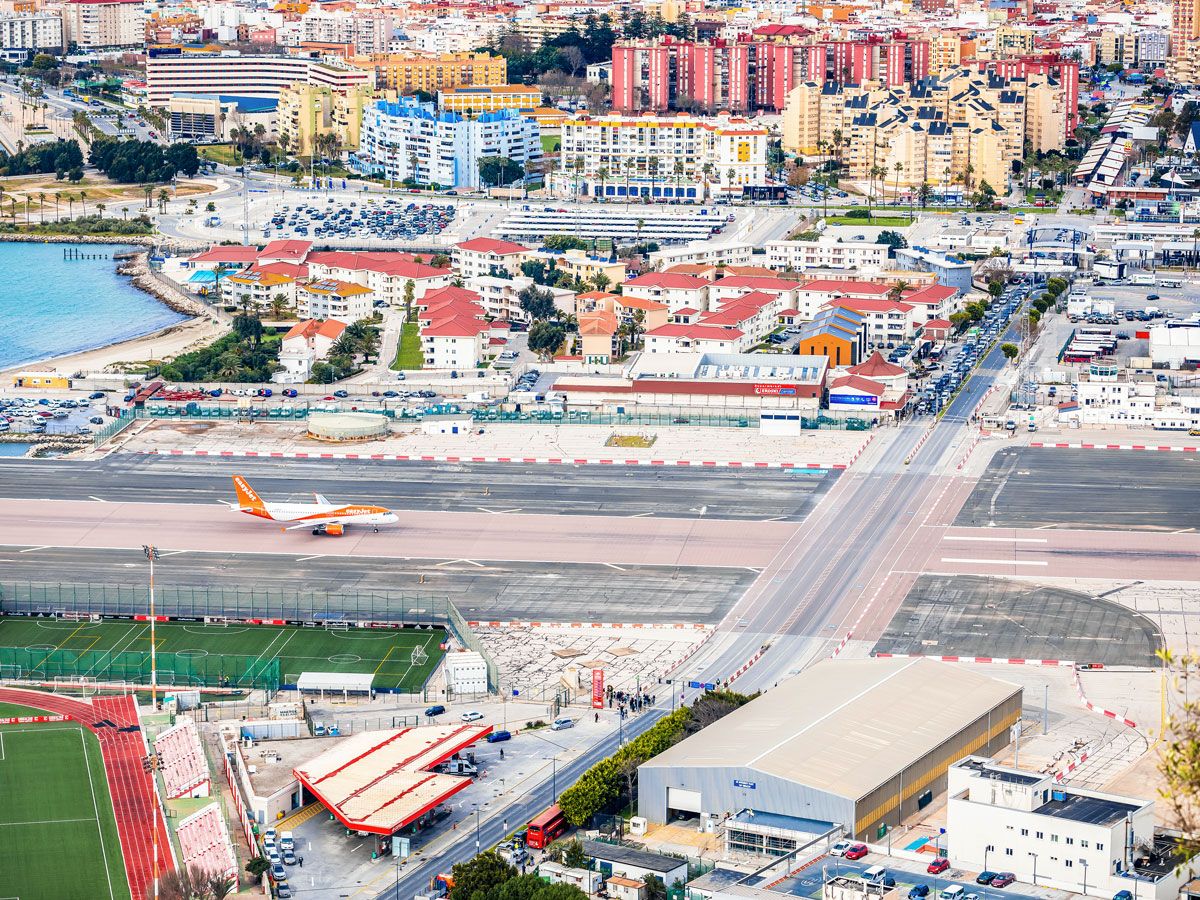
For decades, motorists traveling between Gibraltar and Spain via Winston Churchill Avenue — the sole land link connecting the territory to Spain — had to drive across the runway of a major commercial airport. Traffic was routinely held while a plane landed or took off — similar to how highway-rail grade crossings work, but with added jet engine noise.
Though it could be frustrating for regular commuters, many tourists viewed it as one of the territory’s unique attractions. Unless you’re part of an airport’s ground staff, getting to be on the runway while planes taxi by within close proximity is a rare experience.
A Road Paved With History
Understanding the unusual setup requires a brief history lesson. Though officially a territory of the U.K., the rocky peninsula of Gibraltar connects to the southern tip of Spain via a narrow, sandy isthmus that’s about a mile long. Its history and identity are closely intertwined with the Mediterranean country.
In 1501, the territory formally became part of Spain. Then, at the end of the War of the Spanish Succession, Gibraltar was permanently ceded to Great Britain as part of the settlement agreed upon under the Treaty of Utrecht in 1713. That decision has never sat well with the Spanish, who have consistently argued that this small but significant parcel of land should be returned.
Even today, Gibraltar and Spain maintain close ties, with close to 15,000 Spaniards commuting to Gibraltar to work each day. This relationship has shaped the flow of traffic over the shared border. For many years, both sides were members of the EU, which permits free movement between its members. Even Brexit wasn’t enough to change things permanently; though border controls were temporarily reinstated, they were scrapped in 2026 when a work-around was devised.
An Airport With Military Origins
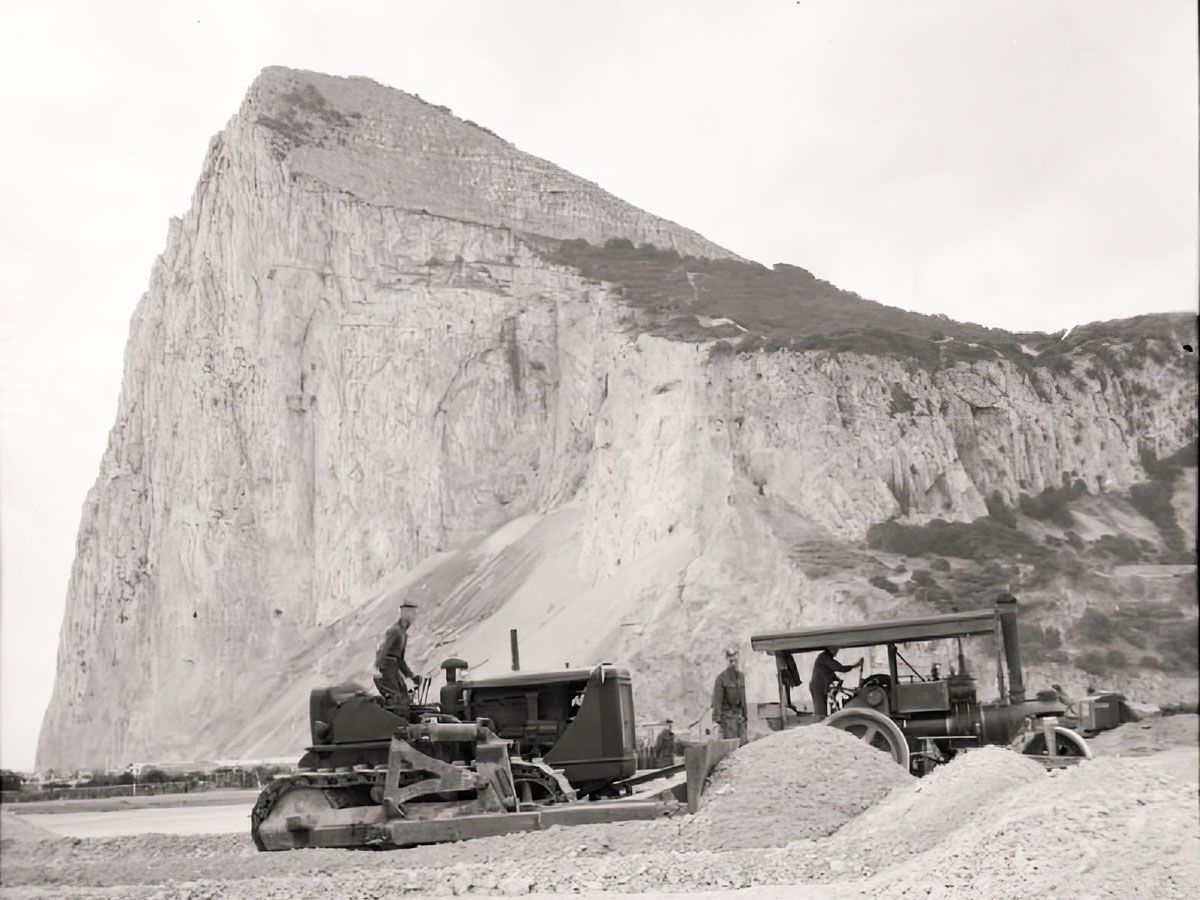
So that explains the importance of Winston Churchill Avenue, but how did it end up intersecting a major airport? In short, because of geographical limitations.
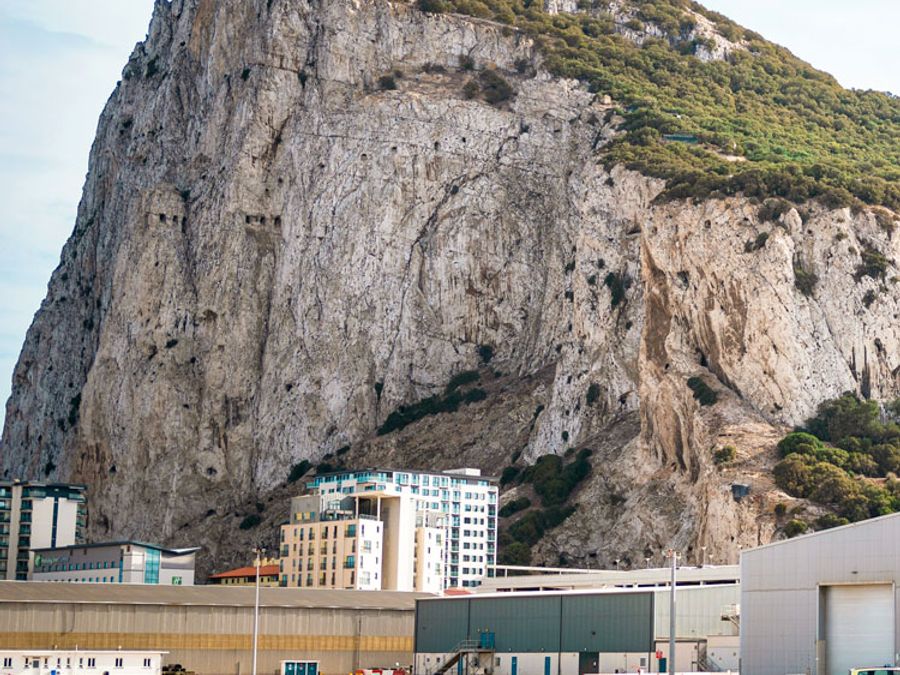
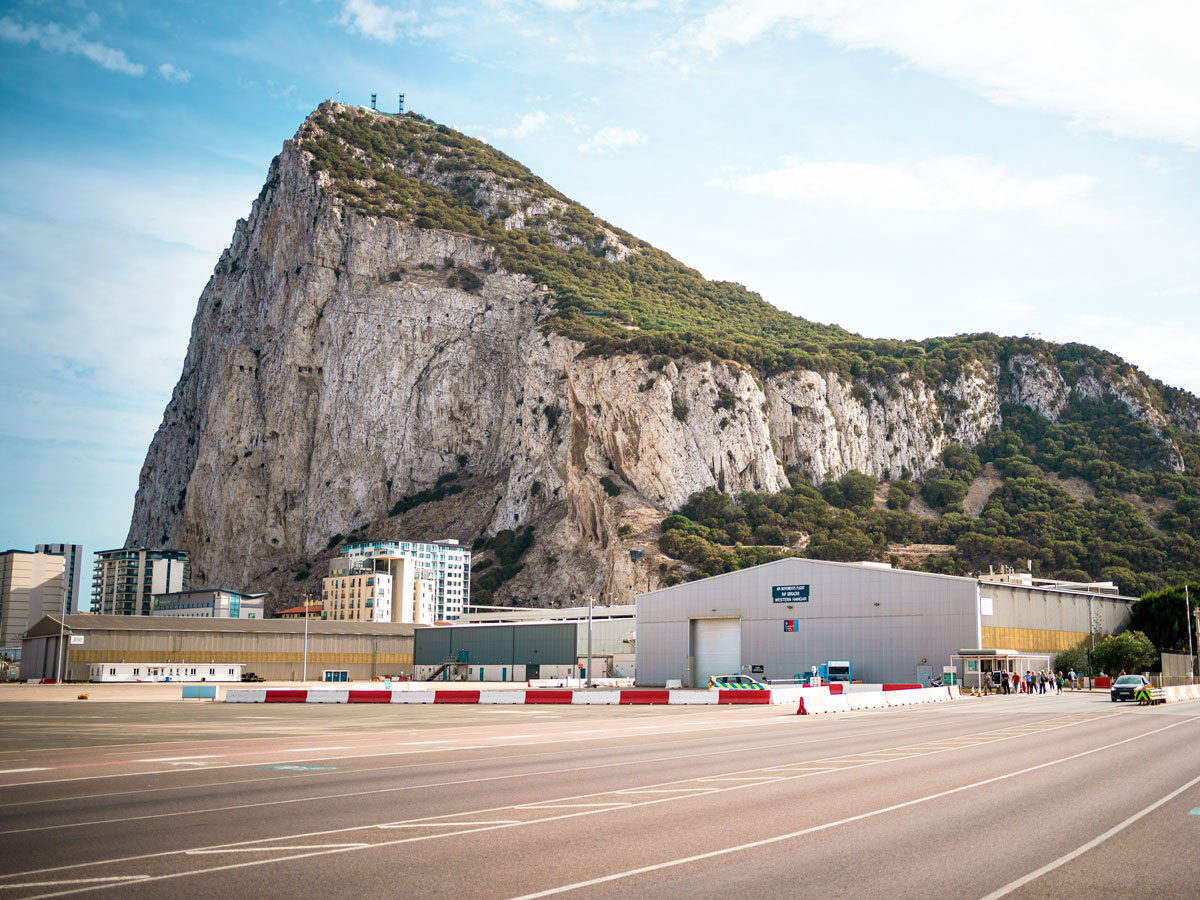
At the start of World War II, the British military was racing to beef up its facilities. Gibraltar’s position at the western edge of the Mediterranean and its proximity to both Africa and the Atlantic made it strategically important. The British Royal Navy wished to construct an emergency landing strip in Gibraltar, but due to its small size and challenging topography, suitable land was scarce. The 2.6-square-mile peninsula is dominated by a massive lump of limestone known as the Rock of Gibraltar.
The military settled for a site adjacent to the north face of the Rock of Gibraltar that had previously been used as a horse-racing course. This thin strip of land was the only feasible location for the airport, but it wasn’t wide enough to accommodate both a runway and the road connecting the territory to Spain, so the runway was built over the road. It was later extended to the west into the Bay of Gibraltar to accommodate larger planes.
After the war, the British Ministry of Defence continued to oversee the airport, which had come to be known as Royal Air Force (RAF) Gibraltar. At the same time, civilian demand for commercial air travel was increasing, so in 1959, the government of Gibraltar built a passenger terminal to operate alongside it. Though the building itself was rebuilt and upgraded in 2012, that dual civilian-military purpose remains.
An Underground Solution
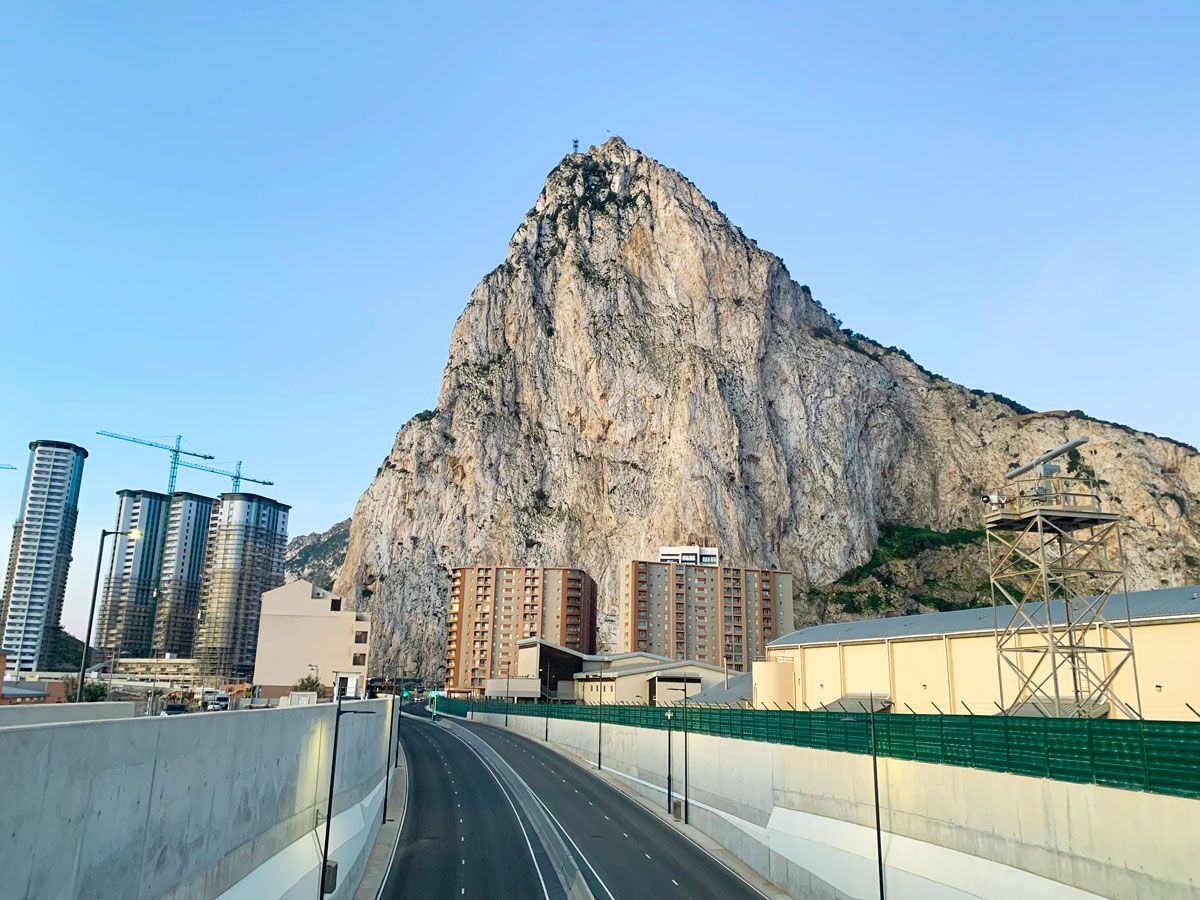
In 2023, a landmark change came into effect. After 14 years of construction, delays, and litigation, an airport underpass dubbed the Kingsway Tunnel (named after King Charles III) officially opened. Now, cars, trucks, and buses traveling in or out of Gibraltar don’t need to cross the airport’s runway to do so. Crucially, the arrival and departure of flights no longer impacts traffic flows — a welcome end to gridlock.
It‘s still possible (and legal) to cross the runway on foot, a bicycle, or a scooter when the road gates are open. RAF Gibraltar even shares guidance on how to do so safely, reminding people to stay vigilant and to avoid lingering on the runway to take photos. They also ask visitors to keep children and pets under control and to refrain from dropping litter that could find its way into an aircraft’s engine.
These requests are reminders of how unusual (and potentially dangerous) it is to build a road across a runway. If you plan to visit Gibraltar to experience it for yourself, remember to do so safely.
Featured image credit: © Fabian Navarro/Unsplash.com
More from our network
Daily Passport is part of Inbox Studio, an email-first media company. *Indicates a third-party property.