


The Incredible Organization of Airport Jet Bridges
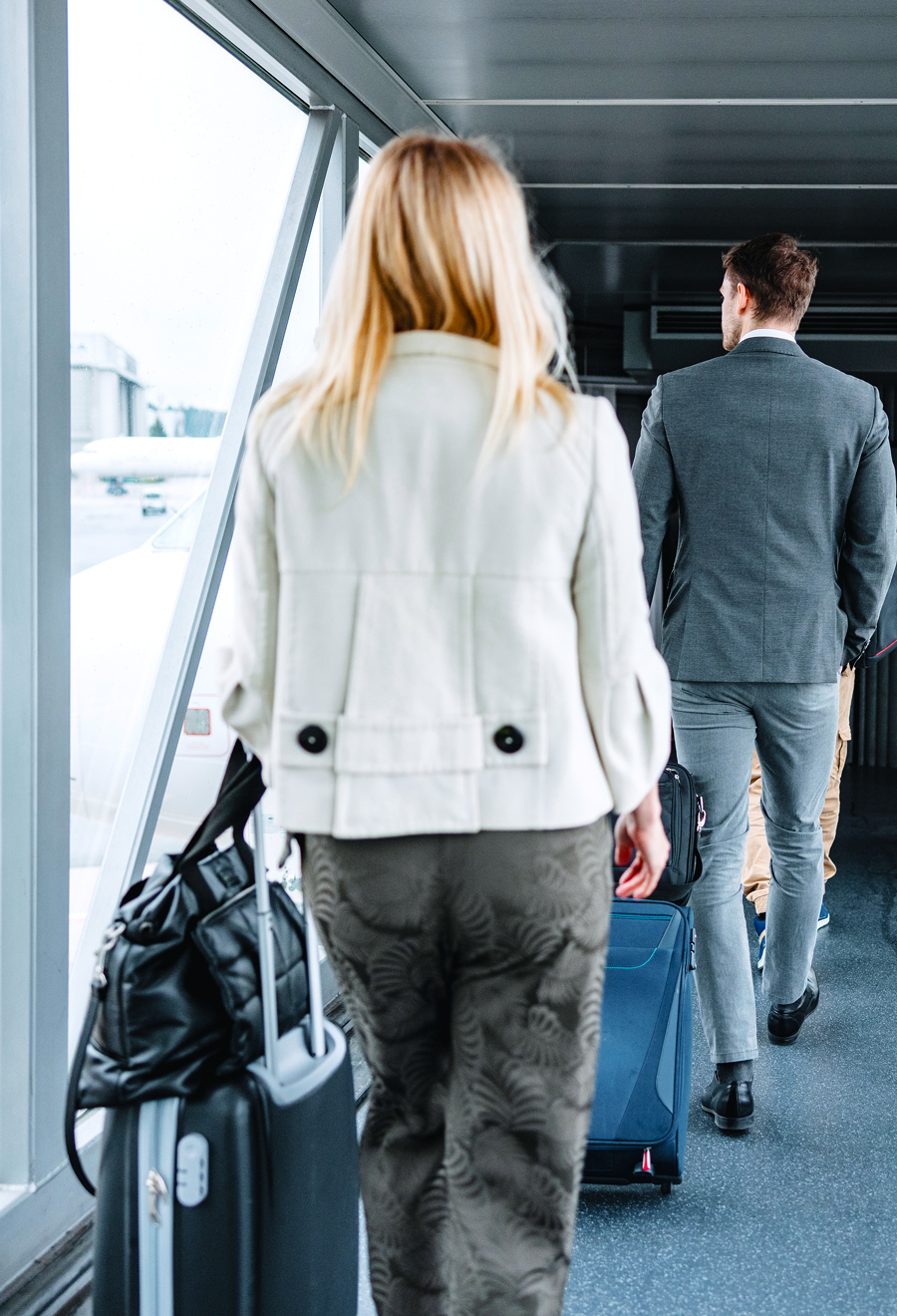
One often-overlooked airport feature is the jet bridge. It’s understandable why — the typical boarding process these days is hectic enough that you might not even think to take stock of the (possibly overheated) tunnel you’re standing in as you anxiously await getting settled onboard. But before enclosed passenger boarding bridges came around in the late 1950s, it was common to venture out onto the tarmac and board a plane via stairs, which obviously didn’t bode well in adverse weather conditions or for those with mobility challenges. Take a look at how the modern jet bridge came to exist — and why it’s such a useful tool for helping your flight depart on time.
A Brief History of the Jet Bridge
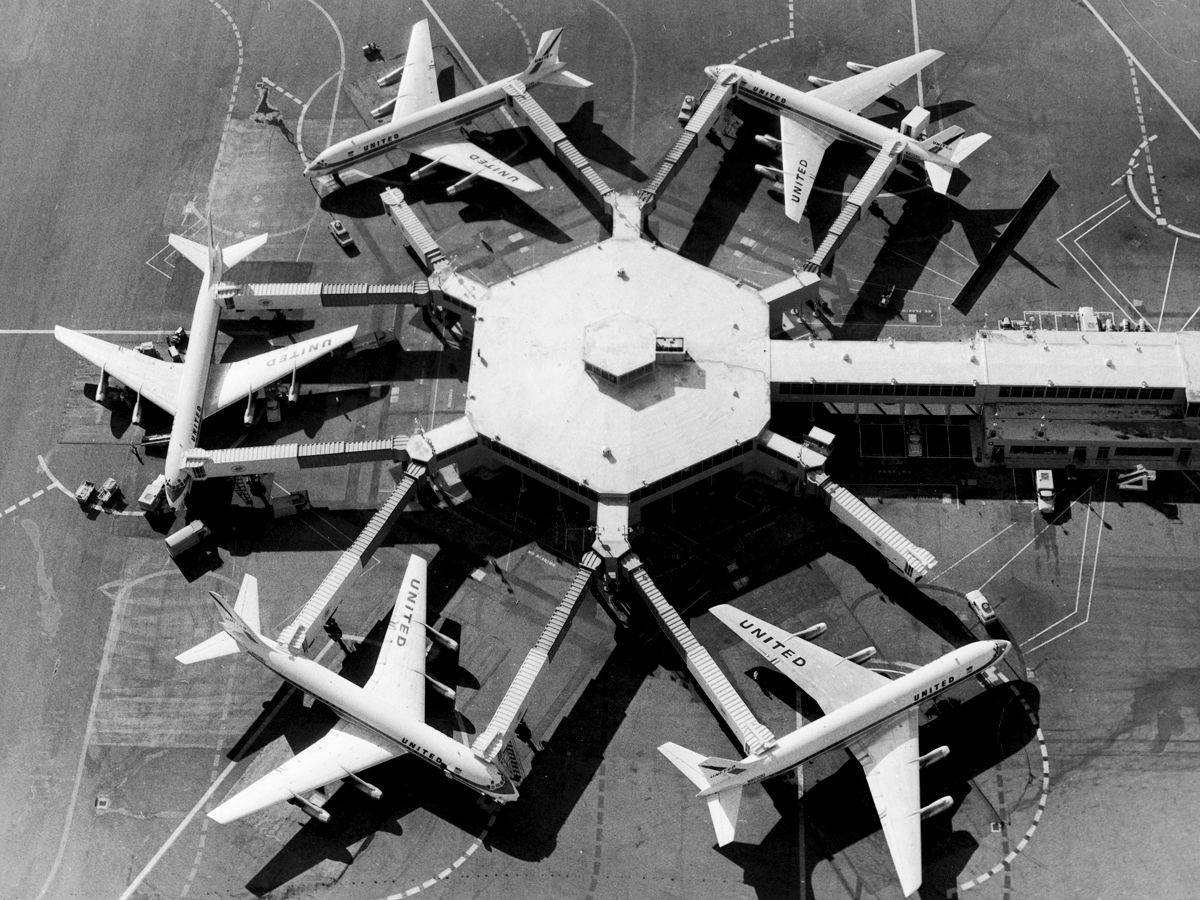
According to the Smithsonian National Air and Space Museum, Chicago O’Hare International Airport debuted the first jet bridge in 1958. Known as the “Aero-Gangplank,” it provided passengers a direct link from the terminal to the aircraft, and not only was it shielded from the elements, but it also made for a more efficient turnaround between flights by eliminating passengers having to walk across the tarmac as crews worked to prepare the plane for its next departure.
Other early adopters of the passenger boarding bridge in the late 1950s included what is now Hartsfield-Jackson International Airport in Atlanta, Los Angeles International Airport, New York’s LaGuardia Airport, and San Francisco International Airport. At the latter hub, American was the first carrier to install the modern, telescoping version of the jet bridge passengers are now familiar with. Its brand name, Jet Way, became synonymous with the structure and is still used today. By the 1970s and ’80s, jet bridges were standard at every major airport in the country.
Interestingly, the first passenger boarding bridges were arranged a little differently than the ones we’re used to today. Back then, airplanes typically parked parallel to the terminal building, with two short jet bridges that connected to the front and rear doors of the aircraft. As air travel rapidly expanded in the 1960s, jet bridges were repositioned so that planes parked perpendicular to the terminal, which allowed for more efficient use of terminal space.
How Jet Bridges Keep Flights on Time
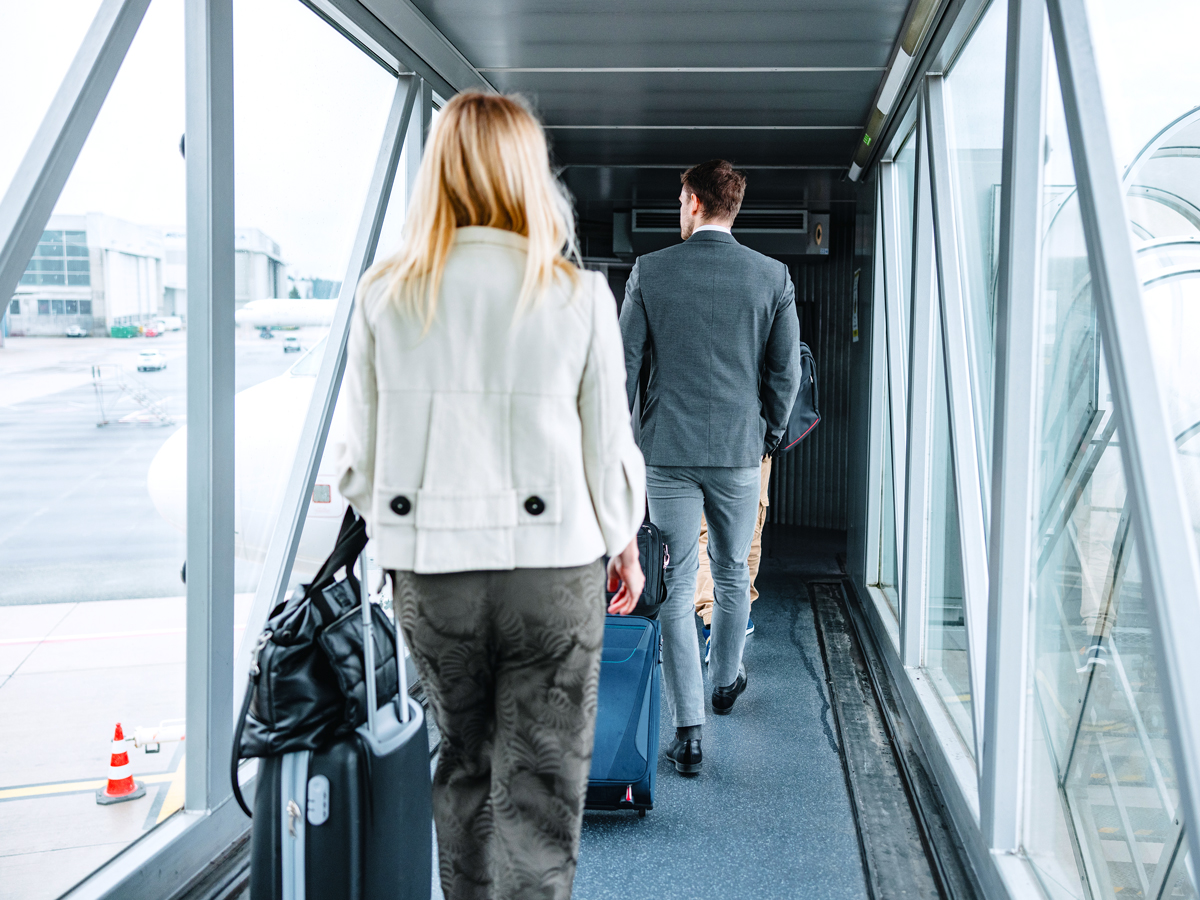
While there have been upgrades to jet bridges over time — air-conditioning, automated sensors, dual jet bridges to board larger planes — the basic concept hasn’t changed much. The operator (typically an airline gate agent) uses a joystick and a computer screen to extend the telescoping sections of the boarding bridge and maneuver it to dock with the aircraft boarding door. The height of each jet bridge is adjusted based on the individual aircraft type. Once the operator pulls the bridge up to the aircraft, a canopy extends overhead to attach to the aircraft fuselage and a lever attaches to the aircraft, as seen in this video.
Speaking of different aircraft types, the next time you’re waiting to board, take a look at the ground outside the window. You’ll notice a long yellow line extending away from the terminal building — the pilot uses this to align the forward wheel to guide the aircraft to its parking position. There are also several smaller yellow lines that are arranged perpendicular to the main line. These are each marked with a different aircraft type and indicate when the pilot should hit the brakes for ideal alignment with the jet bridge, based on the position of that aircraft’s boarding door.
While the technology is relatively straightforward, jet bridges are essential to keeping modern airports running efficiently. By providing a seamless, climate-controlled link to the terminal, they allow passengers to board quickly and without weather delays or the need to be bused across the tarmac to a remote parking stand. They also provide separation from passengers and the ground crews that are working to fuel the aircraft and load baggage for its next flight. Some jet bridges are even equipped with real-time data sensors that can provide the airline’s ground operations center with updates on the progress of boarding.
Airports Without Jet Bridges
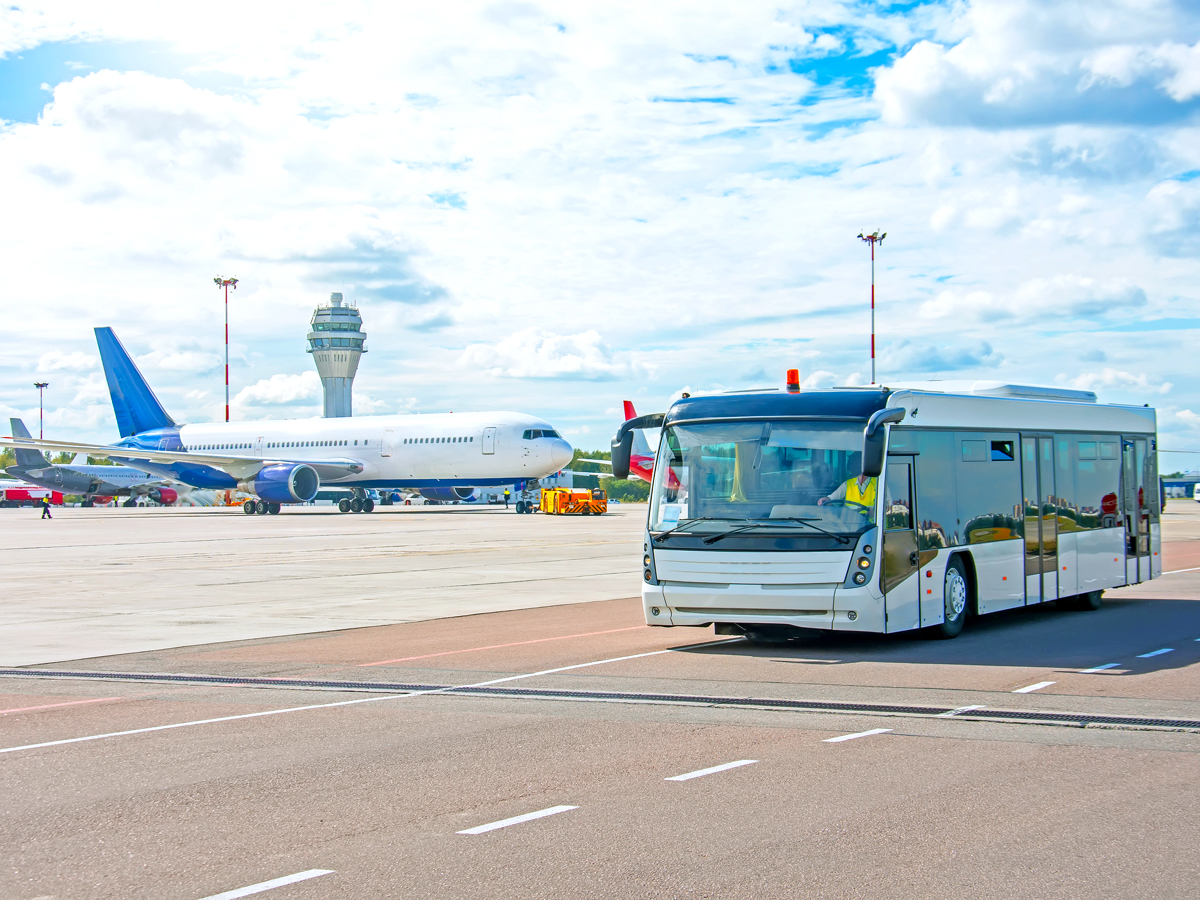
If you’ve ever traveled to Europe, you may have noticed that — even if your airport is equipped with jet bridges — some flights are still boarded via a bus to airstairs on the tarmac. Indeed, bus boarding is more common in Europe due to a variety of factors, including more gates that are shared between airlines instead of owned by an individual airline and a preference of low-cost carriers to use bus boarding to save on airport fees. In North America, conversely, boarding via airstairs is relatively rare, though not unheard of; at Hollywood Burbank Airport, for example, passengers walk out to the tarmac and board via airstairs or a long, open-air ramp.
One big reason is that jet bridges are expensive to install. They typically cost upwards of $500,000 and as much as $1 million to $2 million per boarding bridge, depending on its capabilities. That means you’ll typically find a lack of jet bridges at smaller regional airports — ones that don’t handle enough traffic to justify the investment or with good enough weather year-round to keep the boarding experience pleasant for passengers. In addition to Burbank, examples include Kona International Airport in Hawaii, Bellingham International Airport in Washington, and Long Beach Airport in Southern California.
At major airports, there are some exceptions. For example, some regional flights at Toronto Pearson International Airport board via airstairs on the tarmac. Seattle-Tacoma International Airport has also introduced bus boarding to handle growing demand and to provide more capacity as construction projects are underway at the airport. And at Denver International, low-cost carrier Frontier Airlines is moving to ground boarding to save on costs.
More from our network
Daily Passport is part of Inbox Studio, an email-first media company. *Indicates a third-party property.