





Some Hotels Are Charging Guests for Smoking — Even if They Didn’t
Some Hotels Are Charging Guests for Smoking — Even if They Didn’t

Imagine returning home from a relaxing vacation only to discover an unexpected charge on your credit card statement: a fee for smoking in your hotel room. As more hotels adopt smoke-free policies and air-quality monitoring technology, complaints about wrongful smoking fees have become increasingly common. What’s worse, the fees can appear days after checkout, making them difficult to dispute and leaving travelers in a lurch. Here’s why these charges happen — and the steps you can take to prevent them in the first place.
How Hotels Determine Smoking Fees
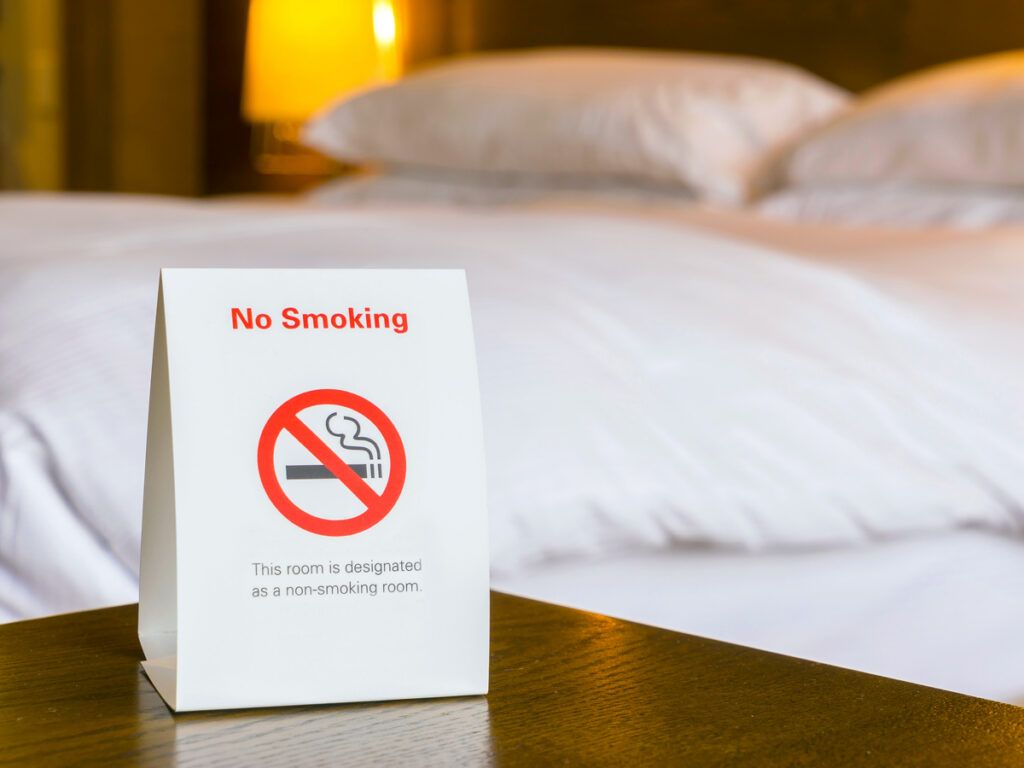
While policies vary by hotel, at most properties these days, all forms of smoking are typically prohibited indoors, including tobacco, cannabis, and e-cigarettes. Charges generally range from $250 to $500 per violation, depending on the property, room size, and extent of the housekeeping work required. These fees help hotels recoup the cost of deep cleaning, which includes removing residue, stains, and lingering odors. According to one company that specializes in smoke odor removal, even minor smoke damage can cost hundreds of dollars and take several days to resolve.
This is one reason why, in recent years, most major hotel brands have shifted toward smoke-free policies. In January 2006, Westin became the first to implement a 100% smoke-free policy across all U.S. locations, followed by Marriott later that year. As of 2026, at least six states and 260 U.S. cities — including Atlanta, New Orleans, and Indianapolis — require all hotels to be 100% smoke-free indoors. Some also restrict smoking in most outdoor areas.
Why Nonsmokers Sometimes Get Charged

While these industry-wide smoke-free policies are good news for most customers, they can prove to be problematic for those who encounter surprise fees. Hotels rely on a combination of housekeeping reports, guest complaints, and air-quality monitoring systems to detect violations, but none of these methods is foolproof. Residual odors may remain from previous guests or creep in from nearby rooms or exterior windows, for example.
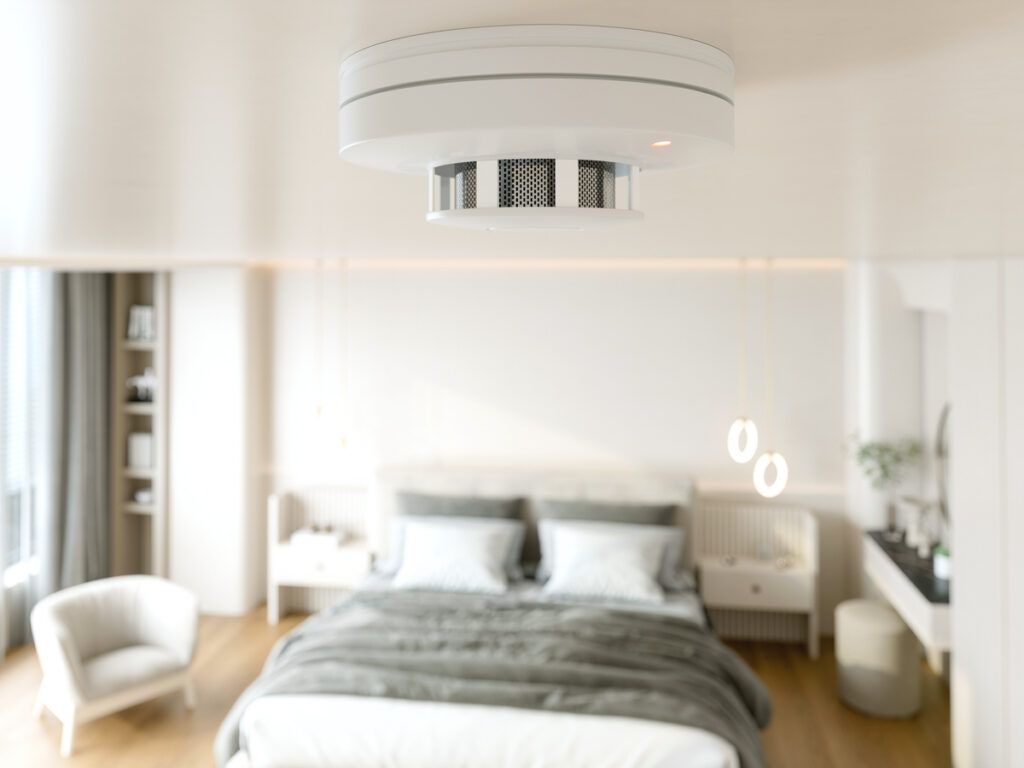
To complicate matters even further, several major chains have begun using advanced air-quality sensors that can detect smoke particles and chemical changes associated with cigarettes, marijuana, and vapor-based products. While these systems are designed to exclusively report on smoking activity, some nonsmoking travelers claim they have received unfair charges due to the devices.
Concerns About Faulty Sensors
Stories of faulty smoke sensors leading to false smoking fees have been circulating in the news as of late. In 2025, 8 News Now Las Vegas spoke with Mary Ferguson, a former health educator who led tobacco cessation programs, about a surprise $419 smoking fee on her credit card bill after a trip to Las Vegas.
According to hotel management, an air-quality monitoring device classified the room air as “hazardous,” indicating that occupants were smoking. Ferguson maintains that she and her husband were not smoking, and no violations were communicated during their stay. The fee initially appeared on the couple’s bill, but it was later waived after the local news station launched an investigation into the case.
Cases like Ferguson’s have raised questions about how smoke-detecting devices work and how some hotels verify violations. Across the country, other travelers who have experienced similar situations were not given the opportunity to dispute the charges and have not yet been refunded.
How To Protect Yourself From False Charges

Protecting yourself from unwarranted smoking fees starts at check-in. When entering a hotel room, immediately inspect the space and take pictures of anything that might suggest prior smoking, such as stains, burn marks, or ash residue. If the room smells smoky, notify the front desk immediately and request that your complaint be documented.
During your stay, it may also help to minimize anything that could potentially interfere with air-quality monitors. According to manufacturers, these systems are not designed to react to ordinary airborne toiletries or heat from hair tools. Still, some travelers who disputed smoking fees reported using aerosol sprays, heat styling tools, or heavily scented products. Turning on fans and opening windows during use may help, but the safest option may be to avoid them altogether.
Other potential sources of airborne particles or strong odors can include cooking smoke (in rooms with kitchens or kitchenettes), candles, cleaning products, bug spray, fragrances, and even heavy dust.
What To Do if You Receive a Smoking Violation

If you receive an incorrect smoking fee on your bill, contact hotel management as soon as possible and ask for documentation supporting the charge. If the hotel provides a timestamp, gather any evidence that might show you were elsewhere at the time, such as photos, messages, or receipts. If you were in the room at the time, you still have options.
Some travelers have successfully disputed charges by providing evidence that they are nonsmokers via medical records, though outcomes vary by hotel. If management refuses to waive the fee, you may want to file a dispute through your credit card company and share all supporting evidence you’ve collected to strengthen your case.
If these attempts fail, you can also file a consumer complaint against the hotel. Possible options include the Better Business Bureau or the state attorney general’s office. If multiple guests report similar issues at the same property, a formal investigation may be launched.
While smoking fees aim to deter smoking and keep hotel rooms clean and comfortable for future guests, the recent uptick in questionable charges is concerning. However, taking these simple precautions can go a long way toward protecting you from having to pay for something you didn’t do.
Featured image credit: © makistock/stock.adobe.com
More from our network
Daily Passport is part of Inbox Studio, an email-first media company. *Indicates a third-party property.