





What Happens if You Lie to a TSA Officer?
What Happens if You Lie to a TSA Officer?

TSA officers have heard it all. A passenger may say they forgot or didn’t know a prohibited item was in their bag, or falsely claim that something they’re trying to get through security — possibly a new souvenir from their travels — was allowed through screening the last time, even though there wasn’t a last time. But while a minor lie or unintentional omission might only lead to extra screening and delays, more serious deceptions could result in hefty fines or even criminal charges. Find out what could happen if you lie to a TSA officer.
Small Lies May Mean More Screening
Though ultimately low-stakes, small lies — even if they’re unintentional or impulsive — can still cause headaches and delays for TSA employees and travelers alike. Passengers, especially if they put up a fight, may even be denied entry through security and miss their flights altogether.
According to TSA workers sharing their experiences online, the first step in these cases is simply to give the passenger the option of surrendering their item or returning it to their car or checked luggage if possible. If something gives officers pause at security, they may also conduct additional screening or questioning, which may include manual bag searches, swabbing belongings for residue, or pat-downs or body scans to determine no actual danger.
Concealing Something Can Get Expensive
The TSA tends to treat accidental mistakes — say, forgetting you had a bottle of water or a pocket knife in your carry-on — differently from what they may interpret as intentionally deceptive behavior. If officers believe someone may be trying to conceal a prohibited item or circumvent security, civil penalties can come into play.
These penalties are typically issued through what’s known as a Notice of Violation. According to the TSA, this is considered a civil matter because it violates transportation security regulations. It’s not a criminal charge, though those are also possible in some situations. Typically, the TSA will confiscate the item and collect your information before allowing you to proceed through the checkpoint, and a notice of your fine will arrive in the mail following the incident.
These fines can be steep: In carry-on or checked luggage, flammable liquids and weaponlike devices such as BB guns or hatchets carry a penalty of up to around $2,500, for example.
When Police Get Involved
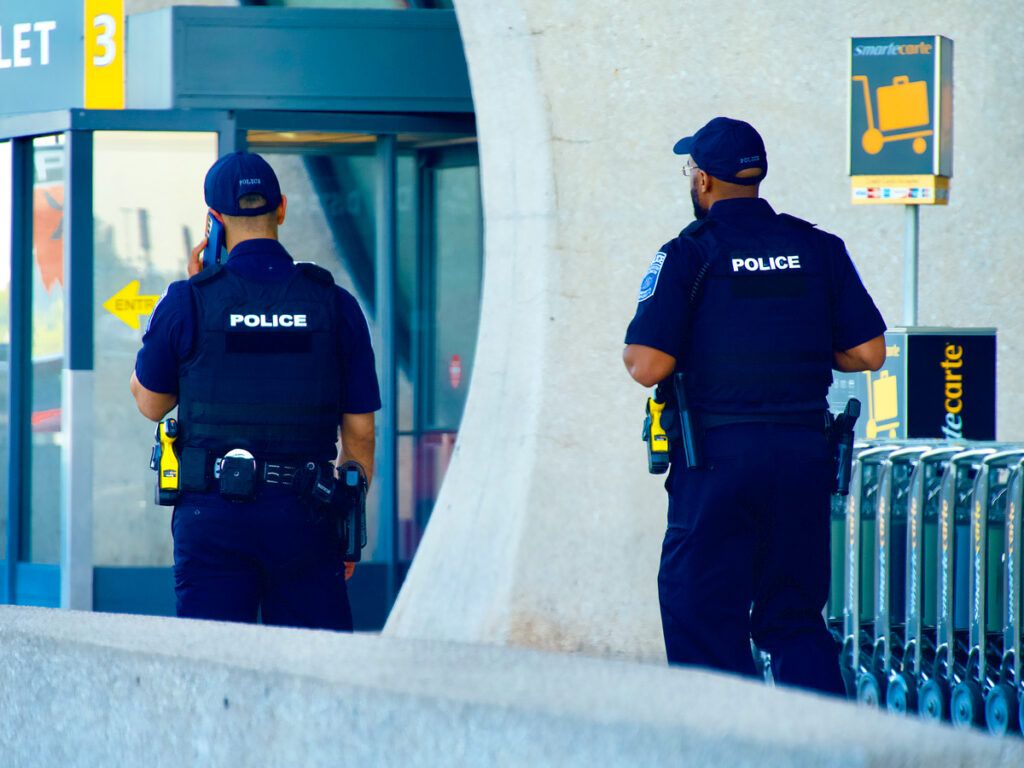
Some cases, however, will immediately escalate beyond the TSA’s authority. Situations involving firearms, explosives, or realistic weapon replicas are automatically turned over to law enforcement, and passengers may also face civil penalties. Additionally, if a passenger denies that one of the above prohibited items is in their carry-on, gives inconsistent explanations about how the item got into their luggage, or appears to be deliberately concealing a prohibited item, it can shift the interaction from a screening issue to a potential criminal investigation.
In one account posted on Reddit, a TSA employee described a passenger denying having the firearm that security discovered in his backpack. While the passenger seemed genuinely surprised that his firearm was in his bag, he was subjected to extensive additional screening. Police were called, and they confiscated the firearm and issued the passenger a court date.
TSA guidelines show that unloaded firearms can carry a minimum fine of $1,500, while loaded firearms (or unloaded with accessible ammunition) can result in penalties exceeding $17,000 for repeat violations. Criminal penalties are separate and vary depending on the situation and the airport jurisdiction.
The same escalation can apply in cases involving fraudulent identification documents. If you’re caught lying about your identity, whether you’re using a fake ID, altering a passport, or using someone else’s ID, the TSA will typically involve law enforcement immediately. Depending on the circumstances, you may be detained and questioned, and you could possibly face charges under federal or state law. The TSA fine alone for this can be upwards of $10,000.
At the end of the day, passengers forget about prohibited items in bags every day, and TSA officers encounter nervous explanations for them just as often. The best thing to do in such situations is to be truthful about mix-ups. Most security mistakes are resolved without much complication, but when officers believe someone is intentionally lying or concealing information or items, the consequences can be far more serious.
Featured image credit: © AzmanJaka—E+/Getty Images
More from our network
Daily Passport is part of Inbox Studio, an email-first media company. *Indicates a third-party property.