






Why Do Airlines Sell Flights With Short Connection Times?
Why Do Airlines Sell Flights With Short Connection Times?


When you take a connecting flight, you’ll sometimes find that your layover is generous, allowing you plenty of time to move between terminals, enjoy an unhurried meal, or even leave the airport and tour the city. However, there are also times when the amount of time you’ll spend on the ground is significantly tighter, increasing the chance that you’ll have to rush between gates or, worse, miss your onward flight. That raises the question: Why do connection times vary so much? And why do 30-minute layovers exist in the first place? Read on to find out everything you need to know about minimum connection times.
What Are Minimum Connection Times (MCTs)?
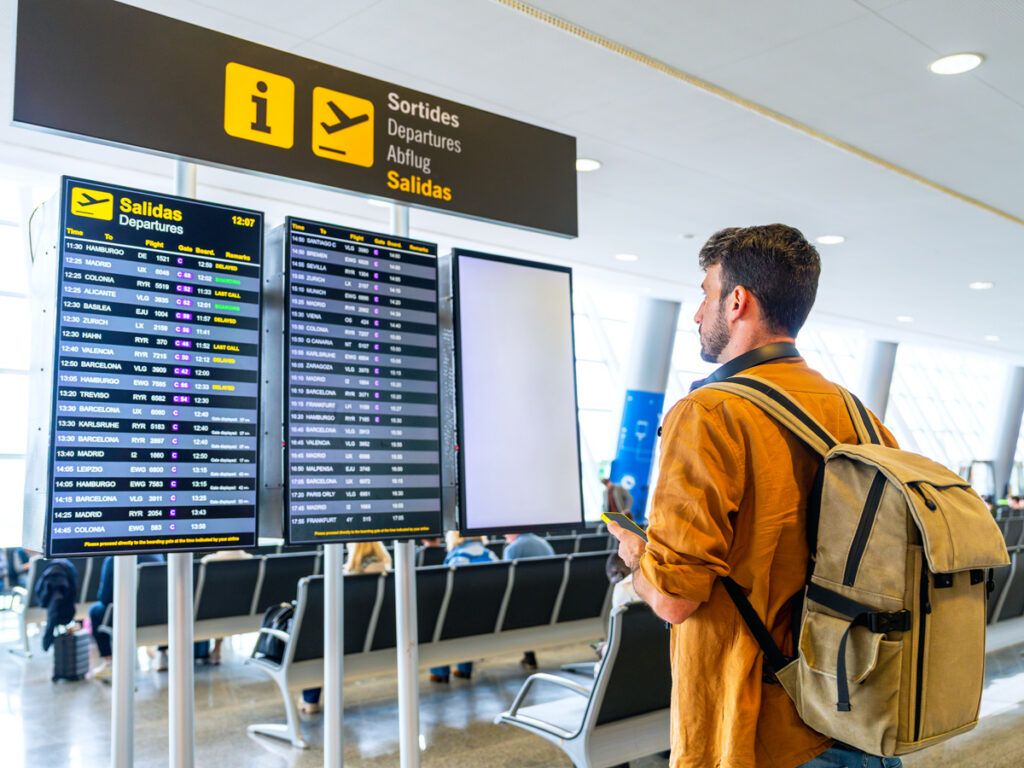
Airlines work with airport and aviation authorities to set minimum connection times, or MCTs — the shortest duration needed for passengers (and their checked bags) to transfer between connecting flights. Typically, airlines don’t publish such information for travelers to view, as many factors come into play.
Nevertheless, when you make a booking for a connecting flight, this information prevents online booking systems from selling you an impossible connection. Likewise, if the booking process presents a layover that is comparatively short, often the website will flag this detail with a warning message so you’re fully informed before making the decision to book.
Why Do MCTs Vary So Much?

MCTs can be quite different from airline to airline and from airport to airport. Domestic MCTs tend to be around 45 to 60 minutes on average, while those involving an international leg might be 90 to 120 minutes. Unusually, Air Canada is one of the few airlines that publish their MCTs, which illustrates this range. Some are as short as 25 minutes for domestic itineraries at smaller airports, while itineraries involving an international connection may require as much as 1 hour and 25 minutes.
This is because travelers need to complete certain formalities at an airport, which depend on where you fly. For a domestic flight, if you’re arriving on a connecting flight, you’re already within the terminal, so you’ll simply need to present a valid form of ID and your boarding pass at the gate of your next flight. On the other hand, if your flight arrives from overseas, you will usually need to complete immigration and security formalities rather than simply move from one gate to another.
The size of the airport and the walking distances between gates and terminals are also factors. In general, a domestic-to-domestic MCT where passengers are required to switch flights within the same terminal of a small airport, for example, will be significantly less than the MCT of an international-to-international transfer at a larger hub.
What To Know About MCTs

When booking indirect flights, it’s important to be aware of transfer times. For instance, say you wanted to fly with American Airlines from Denver to San Diego. One option you can choose is a flight via Phoenix that has a planned layover of just 30 minutes. If you’re the kind of traveler who likes an unhurried airport experience, this connection probably isn’t for you. (In the recent past, American Airlines has sold flights with a mere 25-minute connection in Phoenix.)
While the above itinerary meets the airline’s minimum connection time, travelers should take into consideration the fact that they need to be at the gate at least 15 minutes before the scheduled departure time of their next flight. With a 30-minute layover, that leaves only 15 minutes to deplane and get to the right gate, which is likely to put even the most unflappable frequent flyer in a state of anxiety, even if the inbound flight is on time.
Booking a flight with a short MCT can be stressful, though for flights with a promising punctuality record, some travelers may be tempted to go for it anyway. But at certain times of day, airports can be particularly crowded thanks to banked flight schedules, making it tricky to run between gates — even without carry-on bags. However, you can improve your chances of making a tight connection by choosing a seat toward the front of the plane or alerting the flight attendants before you land, so they can request that other passengers remain seated to let those with short layovers off the plane first.
Why Airlines Do This

You might wonder why an airline would sell a flight with a short connection if they know there’s an increased chance passengers will miss that flight. After all, it’s not good business for an airline to rebook passengers on a regular basis. The fact is, while MCTs are reviewed and adjusted periodically, airlines tend to play the odds: In most cases, everything will go as planned. In the event of major disruption, such as during bad weather, even generous layovers can prove inadequate.
Selling flights with short connection times allows airlines to boost aircraft utilization and maximize connections as they route passengers through hubs, which translates to more revenue. It might also enable airlines to fill seats at a relatively unpopular departure time, such as late in the evening, which otherwise wouldn’t be as attractive to travelers. It’s all part of a calculated gamble to fill as many seats as possible.
A short MCT doesn’t have to be a deal breaker. Indeed, some travelers search by overall travel time and are drawn to itineraries that allow them to reach their destinations the quickest. In this case, many are happy to play the odds and take the chance they’ll need to take a later flight if things don’t go their way.
But if you choose to roll the dice, make sure you book a through ticket so the airline is on the hook to rebook you on the next available flight in the event of any delay. If you purchase two separate tickets, the airline that operated the first delayed flight has no obligation to rebook you, and you will most likely forfeit the second ticket.
More from our network
Daily Passport is part of Inbox Studio, an email-first media company. *Indicates a third-party property.