





5 Plane Essentials That Should Always Be Within Reach
5 Plane Essentials That Should Always Be Within Reach

Airplane etiquette extends to all manner of things, from whether you should recline your seat to who has the right to use the armrest. If you’re in a window or middle seat, another topic for discussion is how frequently it’s acceptable to get up and disturb your neighbor in the aisle seat. Going to the restroom is obviously unavoidable, but people get up for other reasons, too — such as to fish certain items out of a bag they’ve stowed in the overhead bins. There’s an argument, therefore, for keeping the things you know you’ll need at some point during the flight close by, either in your seatback pocket or stashed under the seat in front of you. Not only will it be less of a hassle to get up during the flight, but you’ll also keep your seatmates happy, too. Here are five plane essentials you should always keep within easy reach.
Entertainment and Headphones
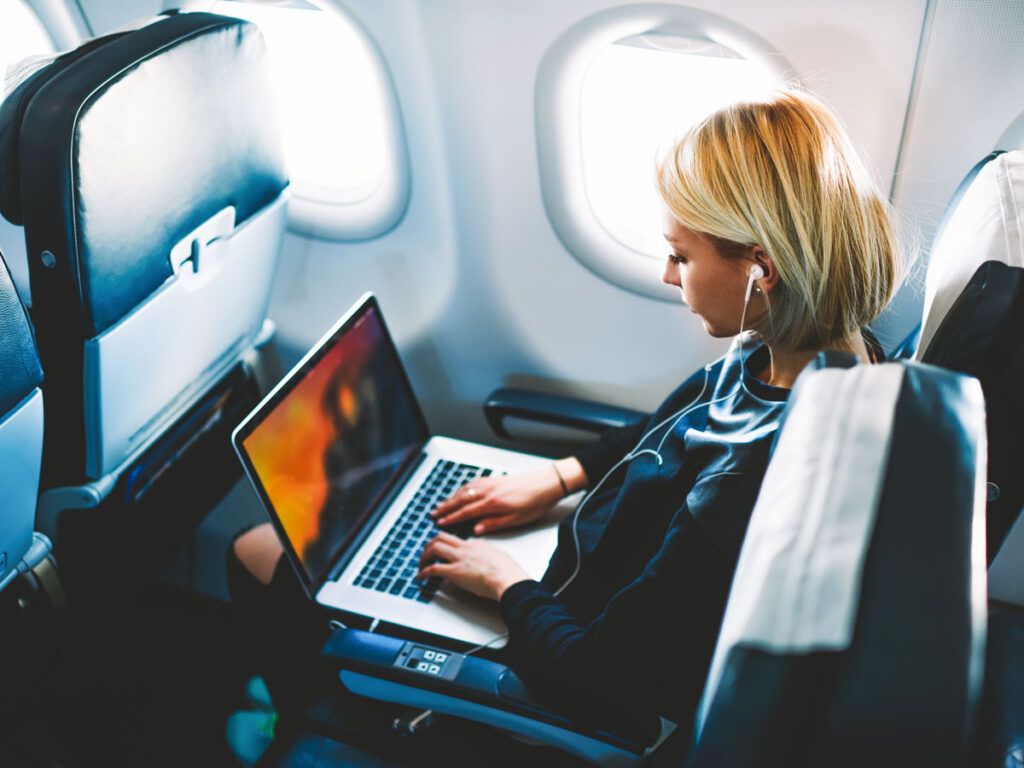
While JetBlue claims to be the only U.S. airline to provide seatback entertainment at every seat, it’s also a common feature on flights with major carriers like United and Delta. (American Airlines announced in August that it was reintroducing the technology on narrow-body planes, too.) Other times, you may choose to play content you’ve already downloaded onto your own device or stream using onboard Wi-Fi. In that case, make sure your device is close by before you get settled into your window or middle seat.
In either situation, having a set of headphones handy — not tucked at the bottom of your backpack in the overhead — is a smart move to help pass the time in the air. It’s worth bringing your own set because some airlines charge for them. And even when earbuds are handed out free of charge, they might not give you the quality of sound you’re used to.
A Power Bank
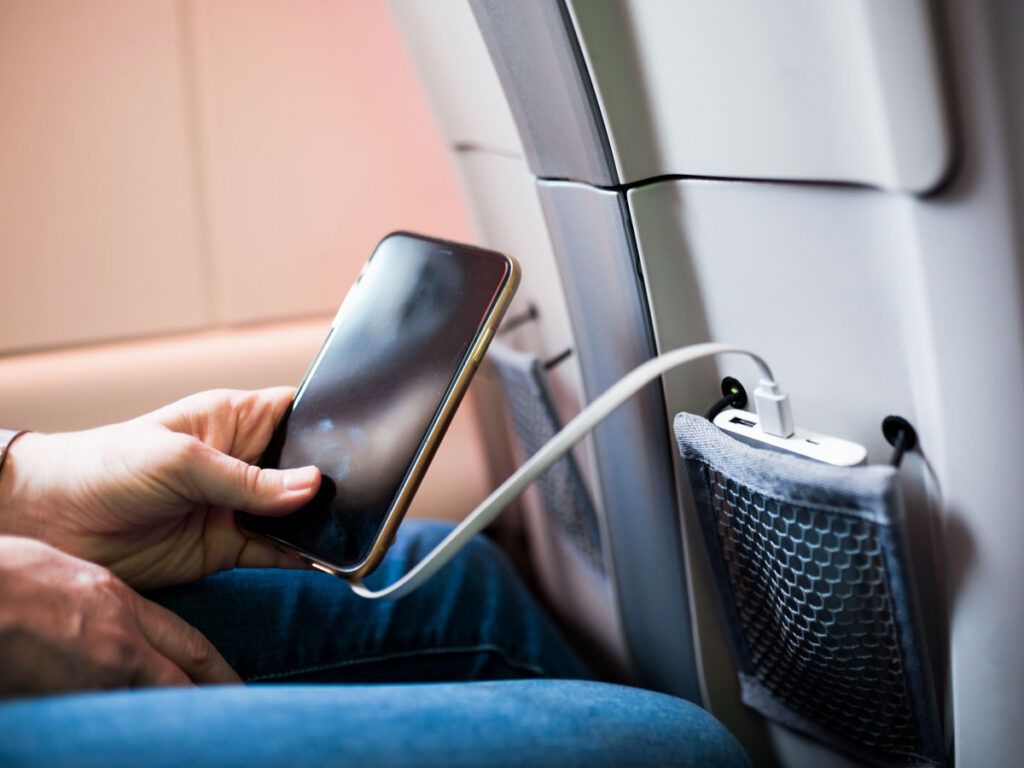
If you’re about to embark on a long-haul flight, you may want to have a power bank at hand, especially if you don’t know whether or not the plane will have charging ports for your devices. TSA and FAA regulations prohibit power banks from being transported in checked baggage for safety reasons, as they can overheat and catch fire. However, their use is generally permitted in the cabin. (Notable exceptions include Emirates, Cathay Pacific, and Singapore Airlines, which let travelers bring them on board but don’t allow charging.)
Most airlines specify a limit of two portable chargers per passenger, each of which must not exceed 100 watt hours. Keeping your power bank in your seatback pocket or under the seat in front of you is not only convenient but also now mandatory on airlines such as American, Delta, Southwest, and United, which have banned the devices from overhead bins due to the safety risks.
A Comfy Sweater
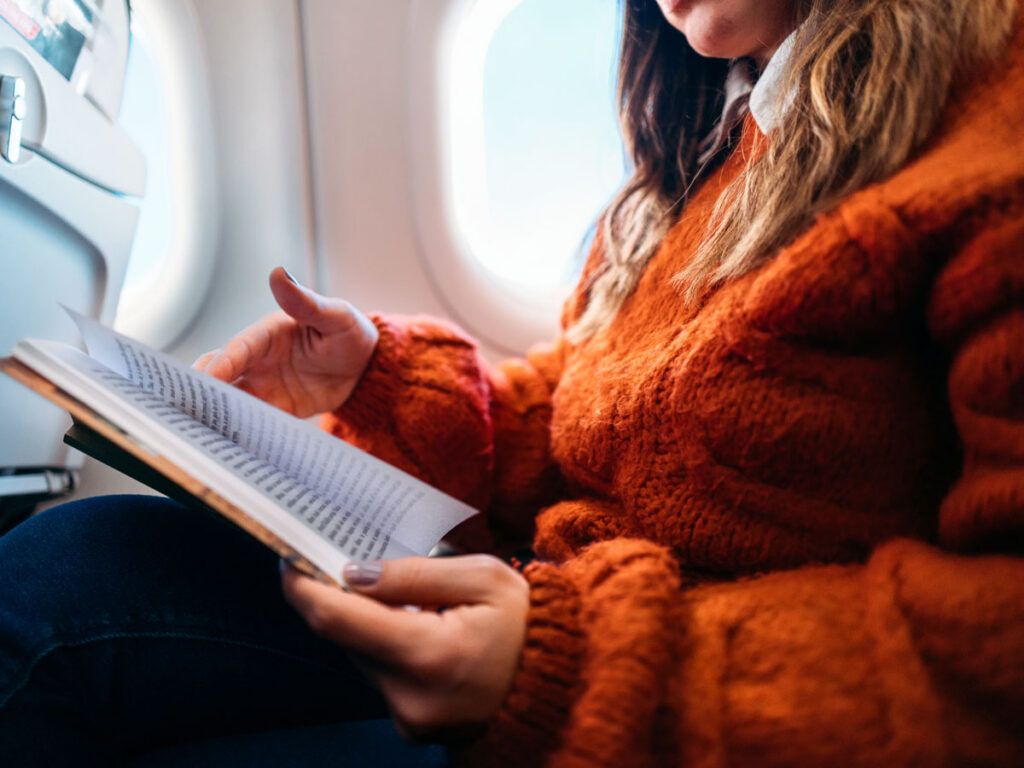
If you fly a lot, you may have noticed a pattern: Plane cabins are often chilly. Flight attendants have the ability to alter the temperature, so you may be wondering why they would set it to a colder setting than many travelers might like. As it turns out, it’s for our own good. Keeping the temperature around the low 70s means passengers are less likely to faint or feel unwell. Cabin pressure at cruising altitude mirrors what you’d encounter outside at around 6,000 to 8,000 feet, meaning the air you breathe while airborne can have around 25% less oxygen than you’d get at sea level. Not getting enough oxygen can lead to fainting.
The bad news is, many airlines no longer hand out free blankets on shorter flights. Where blankets are handed out, they tend to be thin so airlines can save on costs. Having a sweater handy can help you stay comfortable if the plane gets chilly. And given the confined space, you’ll most likely find it more comfortable to wear than a jacket or coat. This one is one of our favorites for travel.
Water
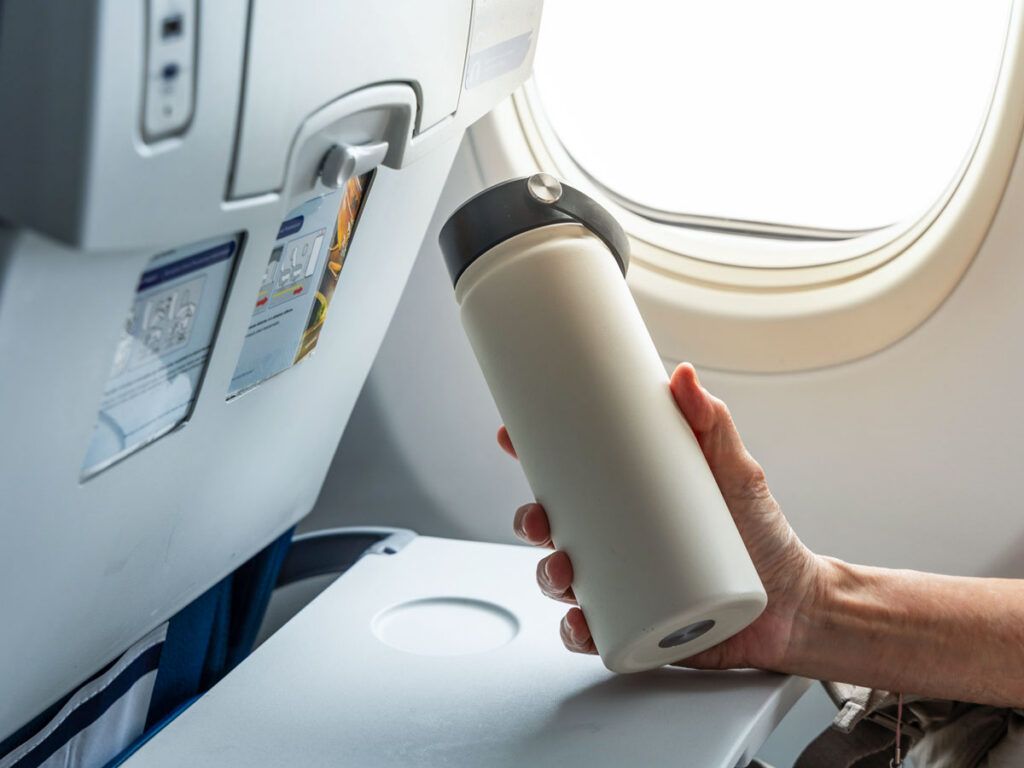
Flying can be very dehydrating due to the characteristics of dry, recycled cabin air. According to a study published by the National Library of Medicine, “Typically, at cruise altitudes, relative humidity is maintained at 10%-20% by removing moisture from the cabin air.” No wonder you feel thirsty.
While flight attendants will usually be happy to bring you a glass of water, the cup they hand out tends to be small. To drink enough liquid to stay hydrated, you’d need to be pressing that call button over and over. Instead, come prepared and travel with an empty bottle, which you can fill from an airport water station right before you board. As a bonus, this saves a pricey airport purchase and reduces consumption of single-use plastics. Consider keeping a Chapstick and moisturizer in your pocket as well, since the air will also make your skin feel drier.
Hand Sanitizer
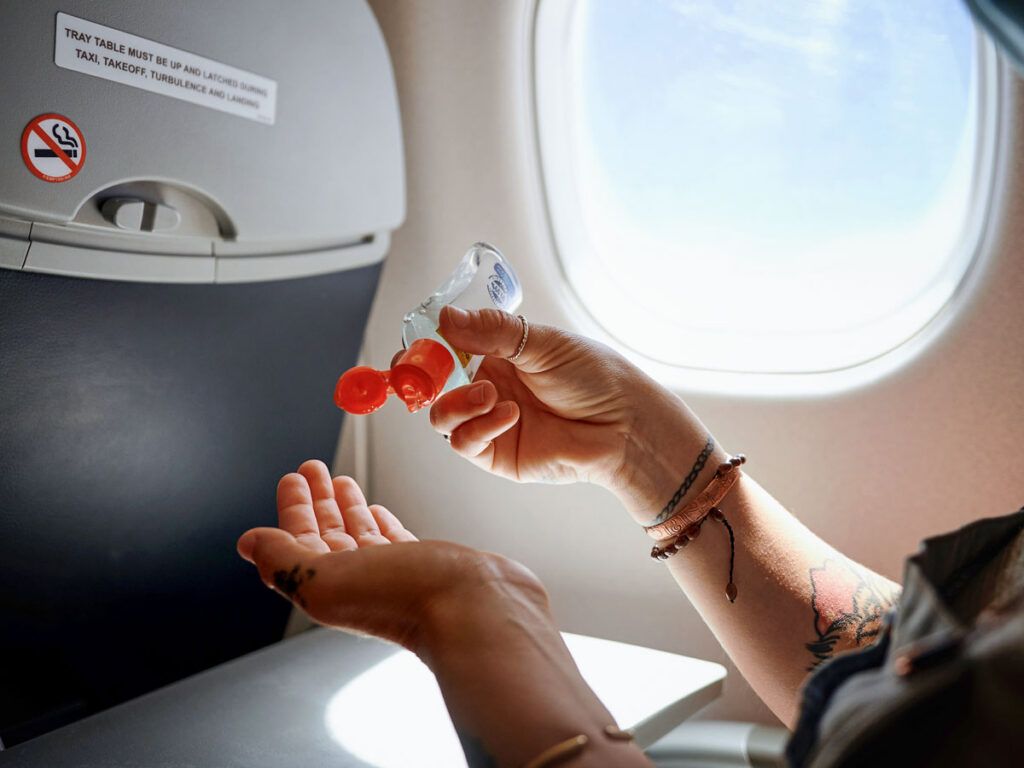
Even if you’re not a full-on germaphobe, you’re likely aware that many parts of a plane harbor bacteria and viruses. An investigation by CBC found that seat pockets and headrests were the filthiest surfaces you encounter on a plane. But there’s more bad news: From tray tables to seat belts, anything that’s been touched by other passengers might not be as clean as you’d hope. Tight turnarounds and the need for airlines to stay on schedule often means that a deep clean in between flights is impractical.
And once you’re settled in your seat, it’s not always practical to pop to the restroom to wash your hands before the meal service starts. That’s why it’s a good idea to have a travel-sized bottle of hand sanitizer within easy reach.
Featured image credit: © bignai/stock.adobe.com
More from our network
Daily Passport is part of Inbox Studio, an email-first media company. *Indicates a third-party property.