






The Safest Hotel Floors To Stay On
The Safest Hotel Floors To Stay On

Staying safe when away from home is, of course, a top priority for travelers. But have you ever considered how the hotel room you occupy might have an impact? Not every room — or even every floor — of a hotel is the same when it comes to potential risks. In this article, we’ll take a look at how to identify the safest hotel floors to stay on based on a few common scenarios.
Some Floors Are More Prone to Thefts and Break-Ins
According to a recent security report from the American Hotel and Lodging Association (AHLA), “U.S. hotels experienced 12,450 reported thefts from guest rooms, accounting for 62% of all property crimes in hospitality venues” in 2022. It’s not an insignificant number, though in reality a tiny fraction of stays will be impacted.
However, the floor on which your room is located can affect your odds of being a victim of a break-in, according to experts. Lower floors, especially those with direct access onto a street, parking lot, courtyard, or public beach, are the most susceptible. That’s because lower floors help facilitate a quick getaway, while in some hotels, only staff members and those in possession of a room key card can reach rooms on higher floors. Therefore, consider avoiding the first and second floors of a hotel.
What Happens in the Event of a Fire?
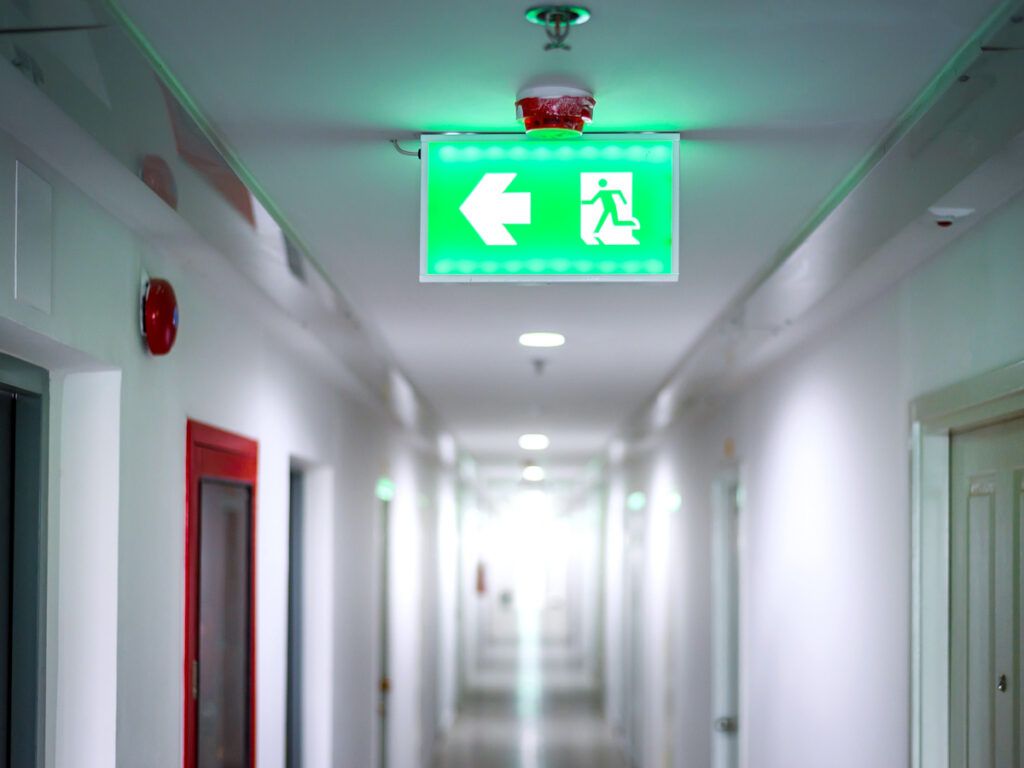
It’s tempting to reserve a high-floor room for the best views and a quieter stay away from street noise. However, in the event of an evacuation due to fire in a high-rise hotel building, the lower floors will most likely be safer. Assuming flames or smoke don’t impede guests, occupying a room closer to street level facilitates a speedier exit via a stairwell or fire escape.
Also consider that fire ladders have a finite reach, and this varies across departments and cities. Typically, this is anywhere from 75 feet to 135 feet. So, if you’ve been allocated a room in a high floor of a hotel, there’s a chance a fire truck ladder would fall short. While staying on the ground floor isn’t recommended for the potential theft concerns outlined above, staying too high up, on the other hand, may lead to a slower evacuation.
What About Earthquakes?
Severe earthquakes are relatively rare, but if you’re planning a hotel stay in a city that has experienced them in the past, you may wish to consider this unlikely scenario. When one occurs, lower floors can pancake under the weight of those above. When this happens, the higher floors remain vulnerable to collapse when aftershocks occur — even if they make it through the main quake intact.
Therefore, choosing a room on a floor somewhere in between is a safer bet. (However, as the nature of damage varies wildly, it’s impossible to predict.) No matter what, figuring out exit routes up front and familiarizing yourself with earthquake safety drills is a smart way to prepare for the unthinkable.
How Not To End Up With a Room Where You Feel Unsafe

Given the scenarios outlined so far, the general conclusion is that floors 3 to 6 are the safest, according to one travel safety expert interviewed by Smarter Travel. But how do you ensure that’s where your room will be? As is often the case, being proactive is the best strategy.
Book directly with the hotel (versus a third-party site, where you’re likely to get the last pick of rooms) and contact the front desk or reservations team in advance of your stay to discuss your needs. If that’s not possible, try to arrive at the hotel as soon as possible after check-in opens, as the inventory of available rooms will shrink as guests arrive throughout the afternoon and evening. Even the most helpful and empathetic receptionist won’t be able to do much if the hotel’s fully booked and there are no alternative rooms left.
More from our network
Daily Passport is part of Inbox Studio, an email-first media company. *Indicates a third-party property.