




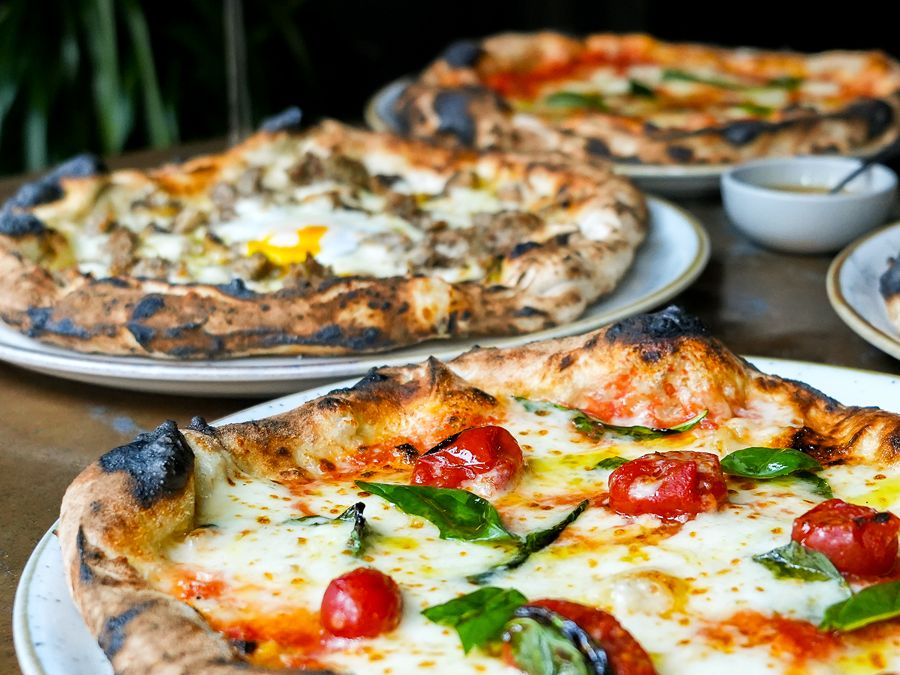
Tokyo Pizza Is the Newest Style You Need To Try
Tokyo Pizza Is the Newest Style You Need To Try

When you think of Tokyo cuisine, a number of local favorites likely come to mind: ramen, yakitori, and sushi, to name a few. In fact, Japan’s capital is home to more Michelin-starred restaurants than any other city in the world, making it a mecca for foodies. Pizza, however, tends not to be top of mind. That would appear to be in the process of changing, as Tokyo-style pizza is becoming increasingly popular — and not just in Japan. But what makes it different?
A New Neapolitan
New Yorkers lucky enough to experience two pop-ups earlier in 2026 already know why this new take on a perennial favorite has been making waves. Pioneered by Susumu Kakinuma and perfected by his protege, Tsubasa Tamaki, Tokyo-style ’za has already been named as among the best in the world by the pizza ranking site The Best Pizza.
Several factors make this pizza style unique: how long ingredients are fermented (30 hours), the high temperature (nearly 900 degrees Fahrenheit) at which they’re cooked in the center of a wood-fired oven, and a proprietary blend of flours that had to receive special Food and Drug Administration approval to be flown in for the New York City pop-ups.
After studying pizza-making in Naples for a year, Kakinuma returned to Tokyo and opened Savoy, his first restaurant, in 1995. Twelve years later he opened Seirinkan, which makes only marinara and Margherita pies. His latest creation bears some similarity to those traditional styles, but neither Kakinuma nor the Neapolitan Pizza Association believes it fits the (surprisingly strict) definition.
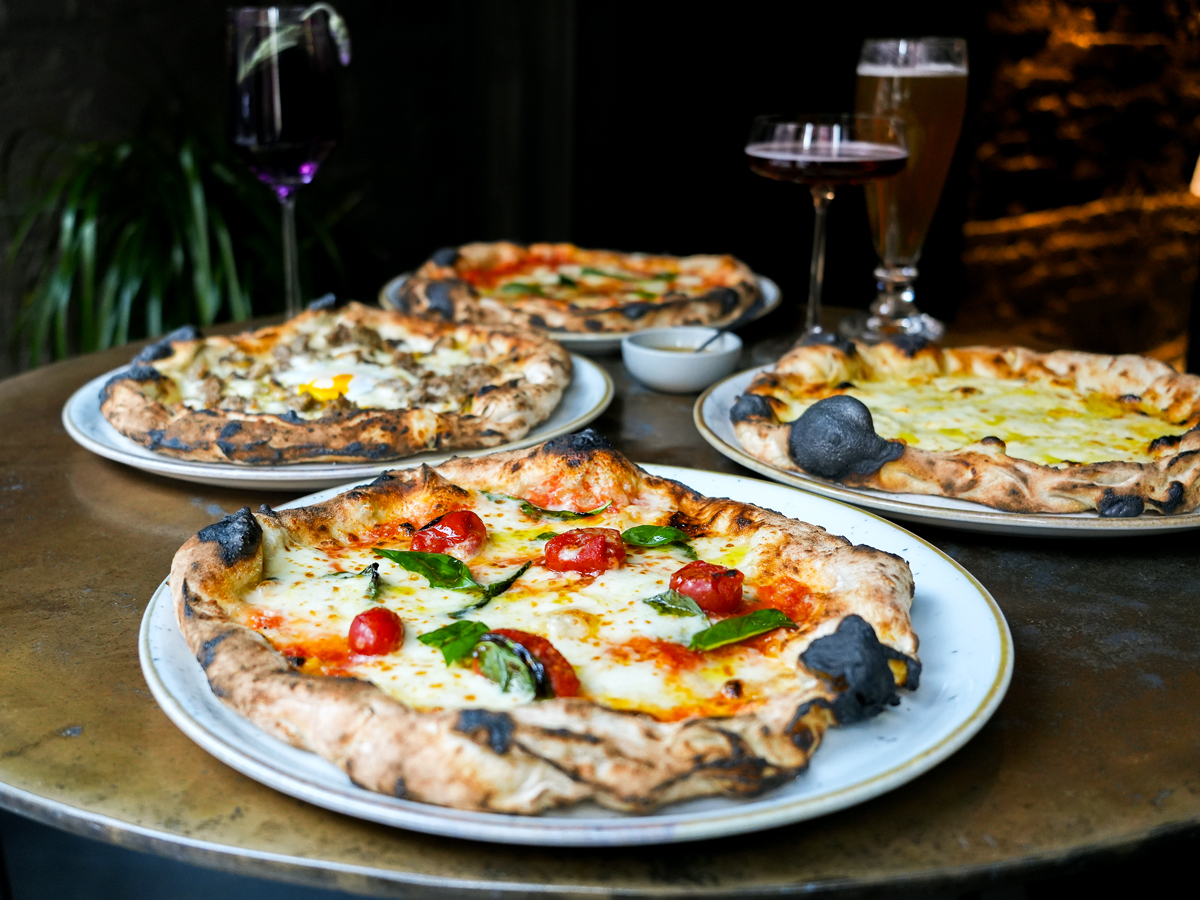
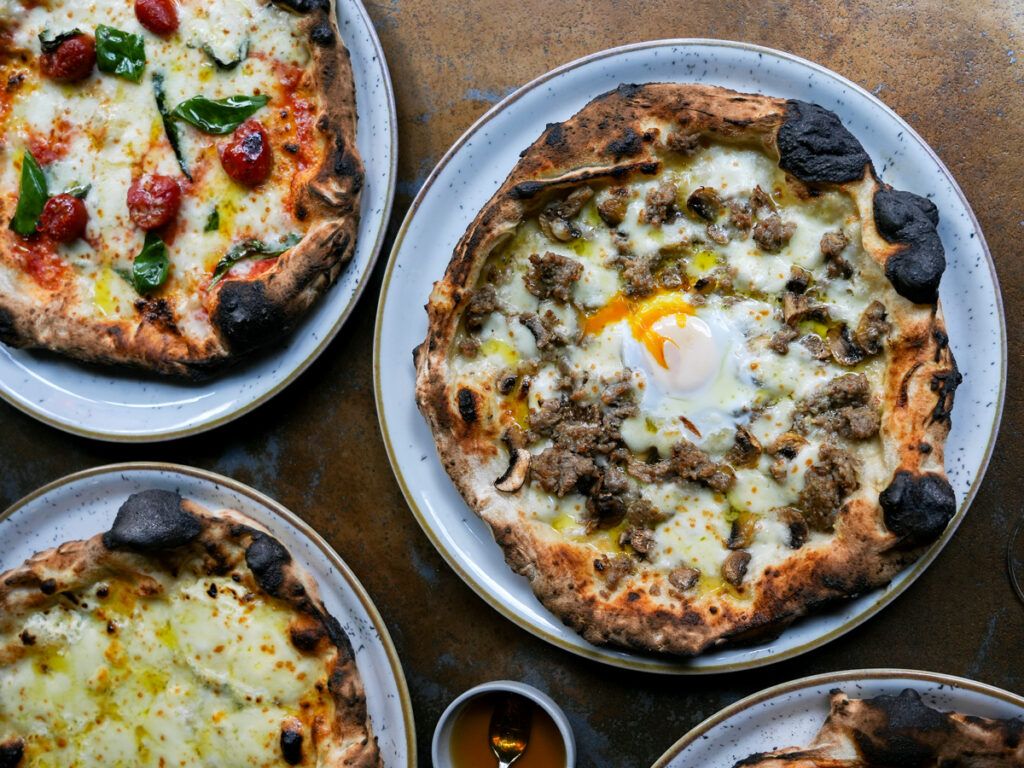
The differences are small but crucial: The cornicione (outer crust) has charred air bubbles, the thin bottom crust is sprinkled with Okinawan salt crystals to add shio no shigeki, or “salt punch,” and the wood-fired oven adds a smoky scent.
In an interview with Eater, Tamaki, Kakinuma’s protegee, explained the process even further. He places the pizza in the center of the oven, close to the flames. “When other pizza guys see this they can’t believe I’d take this risk,” he said. “There is no room for mistake in the center. Timing has to be perfect.”
The flavor has to be perfect, too, which is why he throws in sugi chips (Japanese cedar). This has the effect of “flaring up the fire, glazing the dough, giving it just the slightest hint of bitterness from the wood. That bitterness deepens all the other flavors and amplifies the umami.” That’s an appropriately in-depth description of a complex flavor profile, but like all food, this dish is best understood not by reading about it but by trying it.
When and Where
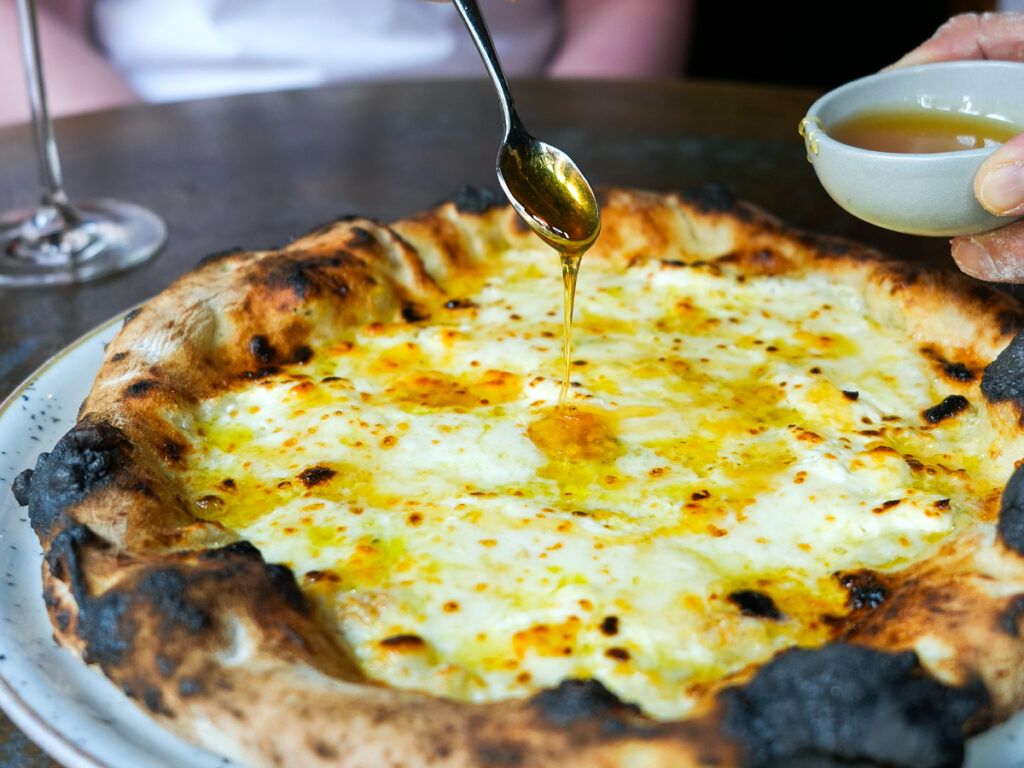
So, where can you taste Tokyo-style pizza? Moody Tongue Pizza in Manhattan’s East Village, which hosted Tamaki’s pop-up in February, will soon become Pizza Studio Tamaki — the style’s first major foothold in the U.S. An opening date hasn’t been announced yet, but there’s already a full menu listed online.
In addition to the Tamaki original (ingredients: San Marzano DOP tomatoes, cherry tomatoes, smoked mozzarella, pecorino Romano, and basil), the menu features nine other pies. They include marinara, Margherita, Romana, diavola, arrabbiata, five formaggi, nduja, Bismarck, and bianca speciale.
Chef Tamaki isn’t stopping there, either. He also plans to open locations in Australia, France, Thailand, the Philippines, Indonesia, the U.K., and Singapore. In the meantime, as you build up an appetite for this latest pizza craze, you can try one of the many other regional styles found across the U.S.
Featured image credit: Image courtesy of Erin Byrne/Pizza Studio Tamaki
More from our network
Daily Passport is part of Inbox Studio, an email-first media company. *Indicates a third-party property.