





Your Business-Class Ticket May Soon Come With Fewer Perks
Your Business-Class Ticket May Soon Come With Fewer Perks

While business-class plane tickets are typically priced much higher than economy class, the comforts and conveniences can be well worth the added cost. But the experience in business class may be shifting, as one major U.S. airline is now offering new pricing tiers for premium seating. Will this be a move that makes business-class tickets more affordable? Or are critics right in believing that it will end up making you pay more for perks that used to be included? Here’s what you can expect from United’s new “basic” business class.
United’s New “Basic” Business Class
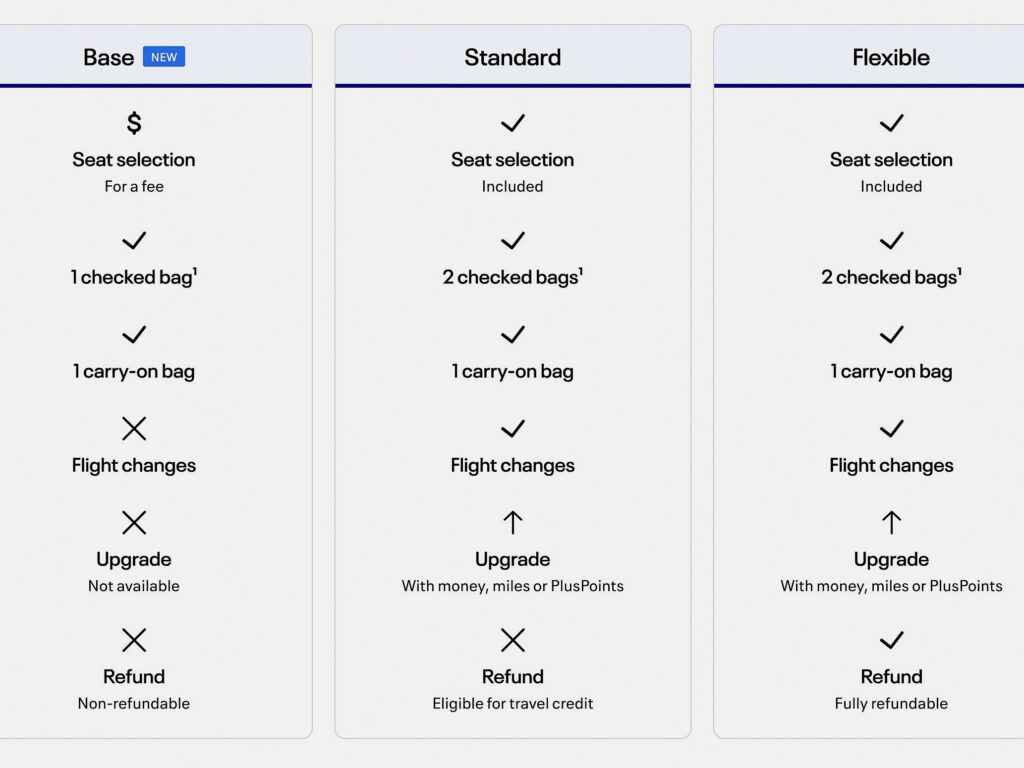
In April 2026, United announced plans for new segmented fare options for United Polaris, the name of the airline’s business class on long-haul international, transcontinental, and select Hawaii flights. Prior to the announcement, United offered two categories of business-class tickets: refundable and nonrefundable. Under the new system, Polaris tickets will be divided into three tiers: flexible, standard, and base.
Flexible, the most expensive tier, is essentially the new name for the refundable category, while standard mirrors the previous nonrefundable option. Base, now the lowest option, is new. And while base seating is more affordable than the flexible or standard tiers, it comes with restrictions.
Base Polaris tickets do away with some perks that many travelers value — and are used to seeing for premium fares. For instance, flexible and standard-tier seats come with free seat selection, two free checked bags, travel credits and refunds, and access to United Polaris lounges.
However, with a base Polaris ticket, you can’t select your seat without paying a fee (if you don’t, one will be assigned automatically at check-in), you can bring only one free checked bag, refunds are prohibited, you’ll have to pay a cancellation fee to receive a future travel credit, and you’re not allowed inside the United Polaris lounge (though you can use the less premium United Club).
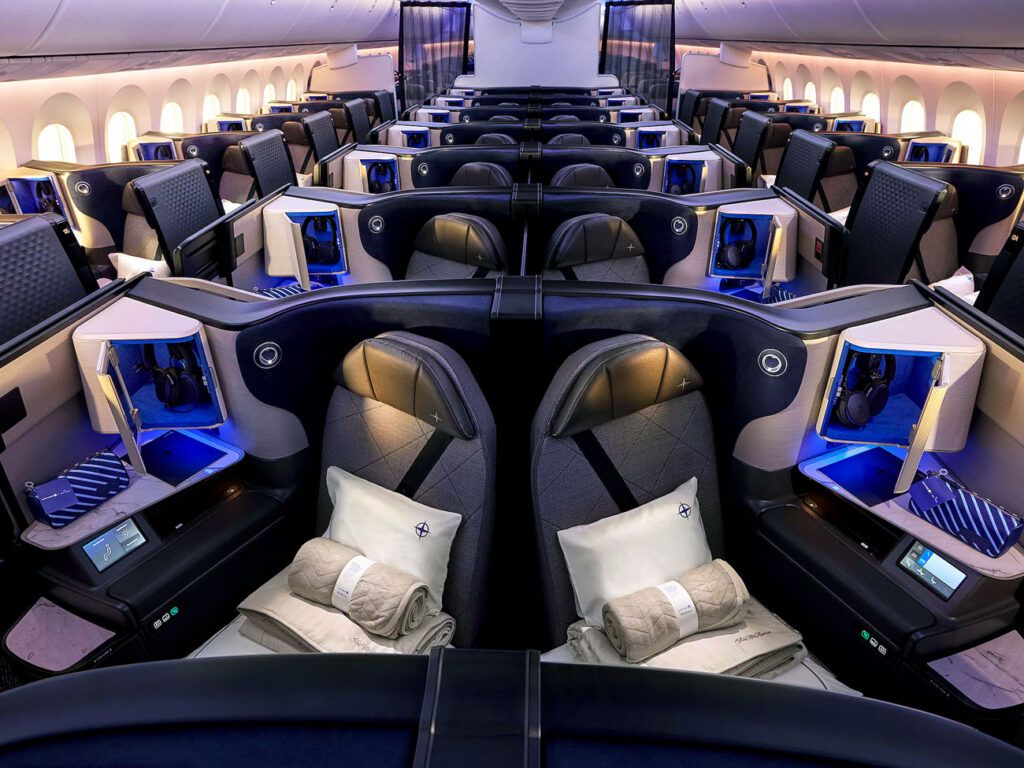
On top of that, you’ll also earn fewer miles and points than those who book at the higher-priced tiers. However, you will still have access to the same lie-flat seating, dedicated service, and curated food and drink that other United Polaris passengers get.
Cost and Availability
As of the time of writing, United has rolled out the base Polaris option in select markets and plans to expand it in more markets later this year. But we do have an idea of what you can expect to pay.
For example, a round-trip base Polaris ticket from Newark, New Jersey, to Lima, Peru, this June costs $3,191 as of this writing. That’s $400 cheaper than the standard tier, and $900 cheaper than flexible. Based on further research, it seems these upsells between tiers are consistent across routes where the new fares are available.
On the surface, the $400 savings from booking a base ticket may seem attractive, but those savings can quickly evaporate if you want to check a second bag (an extra $100) or pick your seat. And if you need to change your flight, you’ll have to pay a fee to do so.
Comparisons to Basic Economy
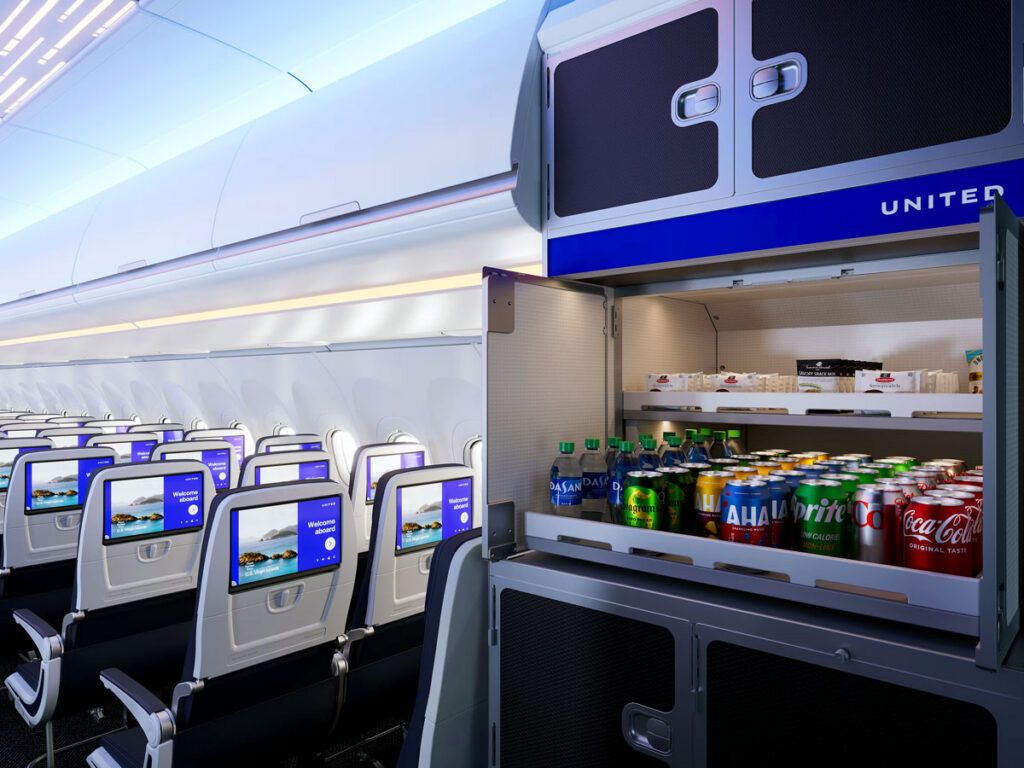
“Basic” business class is still a relatively new concept, and United is the first U.S. airline to introduce it. It shares similarities with the idea of basic economy, which was unveiled in the 2010s. While airlines sold basic-economy tickets as a more affordable option, in practice, it mostly resulted in reduced value for the same price.
Before basic economy, you might have been able to purchase a seat from Miami to Chicago for $200, which included a checked bag and seat selection. But after airlines introduced basic economy, they didn’t make those tickets cheaper — that same seat now cost $200 without the bag and seat selection. If you wanted those perks, you’d have to pay for a more expensive fare.
Given how basic economy was unveiled and priced, some critics are expecting the same trajectory for basic-business-class tickets. Airlines are going to tout these tickets as being more affordable, but they may be priced similarly to what was available before — only without many of the perks.
International Equivalents
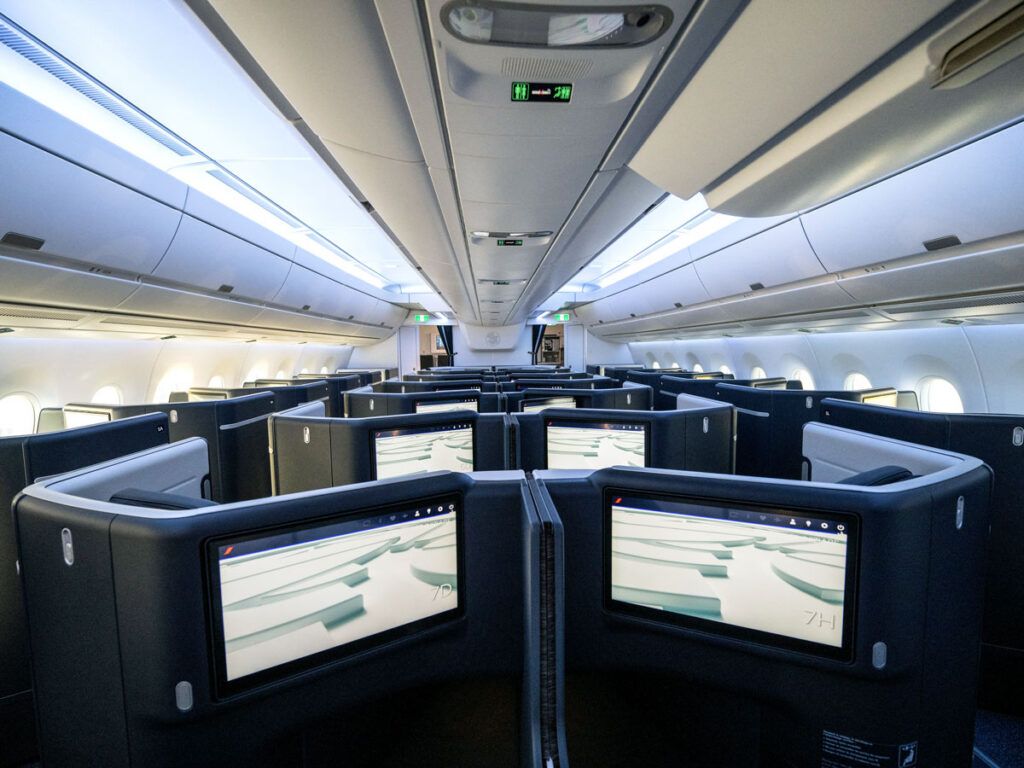
“Basic” business class has been around for several years in Europe. For instance, Air France and the Dutch-based KLM offer “business light.” Much like United’s base tier, business light restricts seat selection, lounge access, and other amenities. In terms of price, the cost of a business-light ticket averages out to about 100 euros ($117 USD) cheaper than the next level up, and roughly 150 euros ($176 USD) cheaper than buying the highest-tier business-class seat.
Lufthansa also recently introduced a “light” business class fare, limiting passengers to a single checked bag, charging a seat selection fee of 80 to 120 euros ($94 to $141 USD), and imposing a higher fee to make any changes.
Featured image credit: Credit: © Jacob Lund/stock.adobe.com
More from our network
Daily Passport is part of Inbox Studio, an email-first media company. *Indicates a third-party property.