






What To Know Before Volunteering Your Seat on an Overbooked Flight
What To Know Before Volunteering Your Seat on an Overbooked Flight


Not every passenger for every flight shows up 100% of the time. So airlines try to maximize revenue by selling more seats than they have available to decrease the likelihood of taking off with empty seats. But what happens when the people the airline banked on being absent actually make it in time? In those cases, gate staff have the unenviable task of deciding who gets bumped. One of the tools they have at their disposal is to seek volunteers who’ll give up their seats and postpone their journey in exchange for compensation. Before you come forward, here’s what you need to know.
Why Do Airlines Overbook Flights?
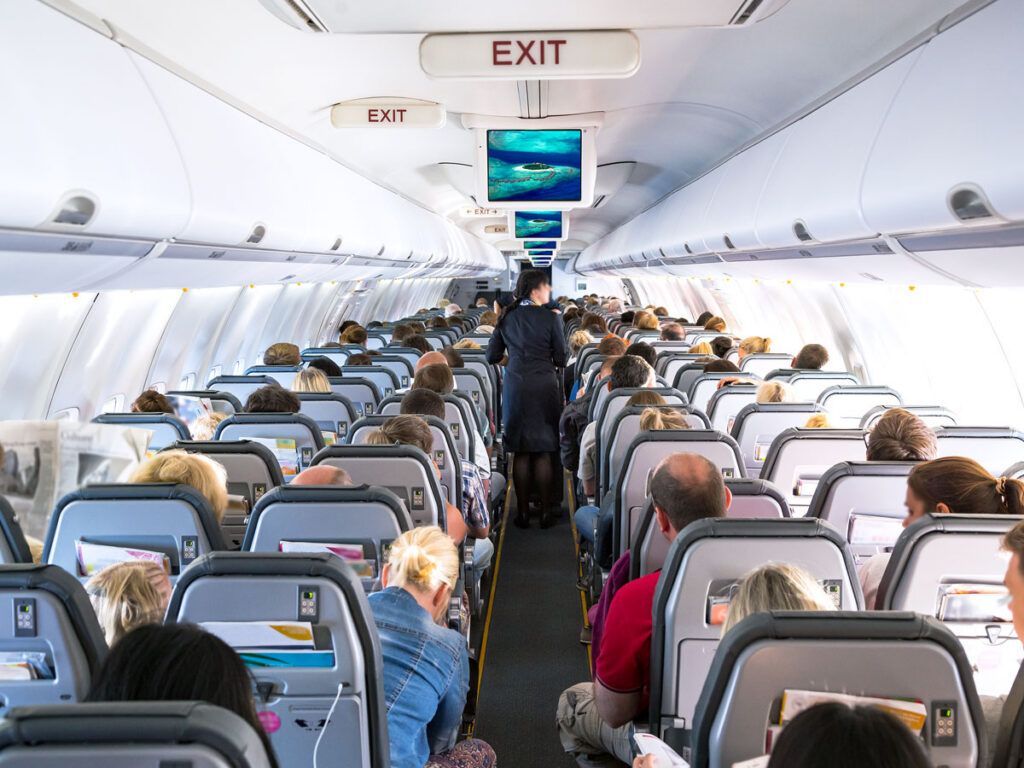
Airlines routinely overbook flights, and while it can be annoying or inconvenient for passengers, the practice is totally legal. They anticipate that some people won’t make it onto the plane for any number of reasons — for example, passengers may miss connections, show up late to the airport, or change their flights at the last minute. By scrutinizing historical data to gain insight into flight patterns and consumer behavior, forecasting tools can predict the number of no-shows.
It’s a bit of a gamble, though, as people don’t always do what’s expected. And if airlines end up with more passengers than seats on a plane, they’re allowed to rebook you. The contract of carriage (which lays out the terms you agree to when buying a ticket) generally states that the airline is responsible for getting you from point A to point B, but specific flight times or routes aren’t guaranteed.
What Happens if You’re on an Oversold Flight?

Before just bumping unsuspecting passengers from an oversold flight, airlines will attempt to find volunteers who will willingly agree to give up their seats.
To achieve this, they offer compensation, typically in the form of vouchers or credits for future travel with the airline, or even cash or gift cards. Where applicable, staff may also offer overnight accommodation for stranded passengers who do the airline a favor by taking a later flight. Then, only if there aren’t enough volunteers, gate staff will decide who to bump from the flight, according to the airline’s published protocols.
Before You Accept an Offer…

If your schedule is flexible, you may be receptive to the idea of postponing your journey. And when the airline is offering compensation, it can be tempting to volunteer immediately. However, there are a few things to be aware of before doing so, and accepting the deal can come with strings attached.
The amount of compensation can change: The airline will always make a low offer first. After all, why would they pay out more than necessary? In theory, the longer you hold out, the more desperate the airline will become and the better the offer will be — though someone else may step up before you. But if no one takes the initial offer, the amount of compensation may be increased, sometimes significantly.
Once agreement is reached, get the offer in writing: When voluntarily giving up your seat, you are negotiating with the airline representative, so once you reach an agreement, read the written confirmation before signing on the dotted line. In doing so, you’ll waive your rights to the government-mandated compensation for involuntary denied boarding, so be sure it’s something you want to do.
Check the use-by date for vouchers: Before you accept compensation in the form of a voucher or travel credit, check when it expires, along with other conditions of use, such as blackout dates. Also consider whether you’ll have the opportunity to use them — if you’re not a frequent flyer, it might be more sensible to hold out for cash.
Compare the offer with payouts mandated by law: If you are flying from the EU or U.K., or traveling anywhere on a flag carrier from that region, there are certain regulations to be aware of. EC 261/2004 (commonly called EU 261) and the U.K. equivalent provide passenger protections, including guaranteed compensation for being bumped from a flight. Before accepting what the airline is offering, compare it to what you’re entitled to by law and make sure you aren’t being short-changed. (See our guide to EU 261 compensation.)
Find out what other expenses are covered: While the airline’s offer might seem generous, consider the fact that you’ll likely incur other expenses during your self-imposed delay. Before you accept, ask if the costs of a hotel room, ground transportation, and meals are covered separately, or whether you’re expected to pay for this yourself.
Confirm how you’ll continue your journey: Before volunteering your seat, make sure that the plan B you’re offered is a confirmed seat on a specific flight rather than being put on standby.
Anticipate that things could change: If you offer to give up your seat and accept compensation, you expect that you won’t fly as planned. Yet, sometimes the situation changes at the last minute. If other passengers don’t show, you could potentially end up on the exact same flight you originally planned to take — except you may have forfeited the seat you reserved if it’s been released to someone else in the meantime.
Don’t expect to receive the exact same offer from airline to airline: Lastly, another factor to keep in mind is that each airline has its own policy for compensating volunteers when flights are overbooked. For example, Delta pays out via their Delta Choice Gift Card Program in addition to complimentary accommodation, while other airlines may take different approaches.
More from our network
Daily Passport is part of Inbox Studio, an email-first media company. *Indicates a third-party property.