





Here’s What Flight Attendant Training Is Really Like
Here’s What Flight Attendant Training Is Really Like

Have you ever dreamed about turning your love of travel into a rewarding career? Or maybe you’ve wondered how flight attendants make their jobs look effortless while juggling safety requirements and customer service. Behind that calm confidence — and those awesome travel perks — is a training process that is far more rigorous and competitive than most travelers would imagine. To get the full picture, we went straight to the source: official U.S. airline training guides and firsthand accounts from U.S. flight attendants who’ve gone through the process. Here’s what flight attendant training is really like, from the moment you apply until the day you earn your certification.
Requirements To Become a Flight Attendant
The requirements to apply to be a flight attendant vary, but most major U.S. airlines have a few nonnegotiables for candidates, including age- and education-based requirements. For instance, all applicants must have a high school diploma or GED equivalent and must possess a passport before applying. Fluency in English is required at U.S. airlines, and bilingual qualifications are often an asset. Effective communication skills in high-stress situations are also a must.
There are physical requirements, too, as flight attendants spend much of their time on their feet performing safety procedures and assisting passengers. United Airlines, for example, requires the ability to “stand, walk, kneel, bend, stoop, stretch, reach, and lift heavy objects,” as well as to push and pull a beverage cart weighing up to 250 pounds. Similarly, American Airlines specifies that “height and weight must allow for safe aircraft operation.” This includes the ability to sit in a jump seat and fasten the harness, and to navigate the cabin aisle and operate emergency exits.
The final major requirement is age. All airlines have age minimums for application, but these also vary. At United Airlines and Delta Air Lines, it’s 21 years, but at American Airlines and Southwest Airlines, it’s 20 years.
Initial Interview

Though airlines have different hiring processes, in general, passing one or more interviews and obtaining a conditional job offer are required before the training process begins. Megan, an Orlando-based flight attendant we interviewed, shared that she was invited to a phone interview after applying online.
The following month, she attended an in-person interview, after which she received a conditional job offer. “I say ‘conditional’ because I still had to pass flight attendant training,” she explained. For Megan, the entire process, from application through passing training, took about seven months. Other flight attendants we interviewed echoed similar experiences, with two or three rounds of interviews before they secured a training spot.
Rachael, a Pittsburgh-based flight attendant, explained that the interviews consist of practical questions and tests: “You have to pass a variety of tests that gauge your experience, personality, and how you handle stressful situations.”
Training Overview

Typically, flight attendant training begins a few weeks after the candidate receives a conditional job offer at the final interview. Kaitlyn, a Philadelphia-based flight attendant, explained that the company flies the candidate to a designated training facility, where they are paid for their time and given hotel accommodations.
Megan, the Orlando-based flight attendant, shared that, while every airline does training a little differently, it generally ranges from three to eight weeks. She recalled an array of topics from her training: “flight regulations, evacuation drills, case scenarios, firefighting, CPR, trafficking, intoxicated passengers, security threats, and so much more!”
Delta Air Lines, for one, conducts its training at its headquarters in Atlanta, Georgia, in six-week sessions for new hires and shorter requalification sessions for current crew members. Casandra, a certified flight instructor and former Delta Air Lines flight attendant, detailed her experience in Delta’s training program in a series of online videos. Typical training hours are Monday through Friday for six hours a day, plus study time for exams and evening homework. Flight attendant candidates must put everything else on hold during training because it is a full-time job.
Hands-On Experience
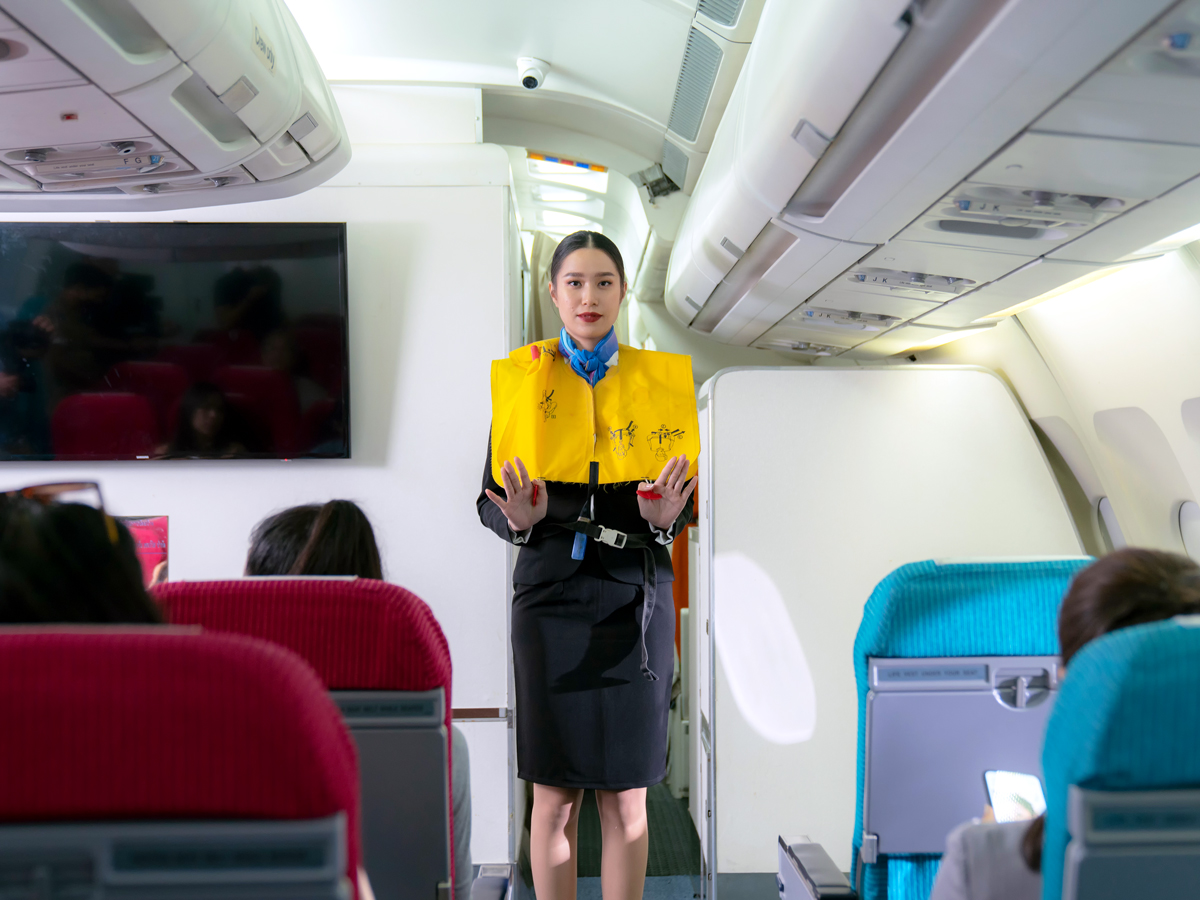
From the very beginning, flight attendants are trained to be prepared for the unexpected. The training process features classroom-style lectures, group work, and hands-on training in simulators and life-size model airplanes. For instance, during her first week, Casandra recalled sitting in on a mock emergency in which the cabin lost air pressure, while her instructors initiated emergency protocols.
In each training module, flight attendants prepare for serious, albeit rare, events, such as medical emergencies, evacuations, and cabin depressurization. From smoky cabins to unconscious passengers, flight attendants learn to handle any situation with a calm, professional approach.
A notable component of flight attendant training is water-emergency-exit training, conducted in a swimming pool in the center. These simulations teach the crew how to use life vests, identify exits, escape the aircraft, and assist passengers in swimming to safety rafts, all while staying calm in a sinking plane. This builds muscle memory to help future flight attendants remain calm in high-stress situations.
Final Exam and Certification
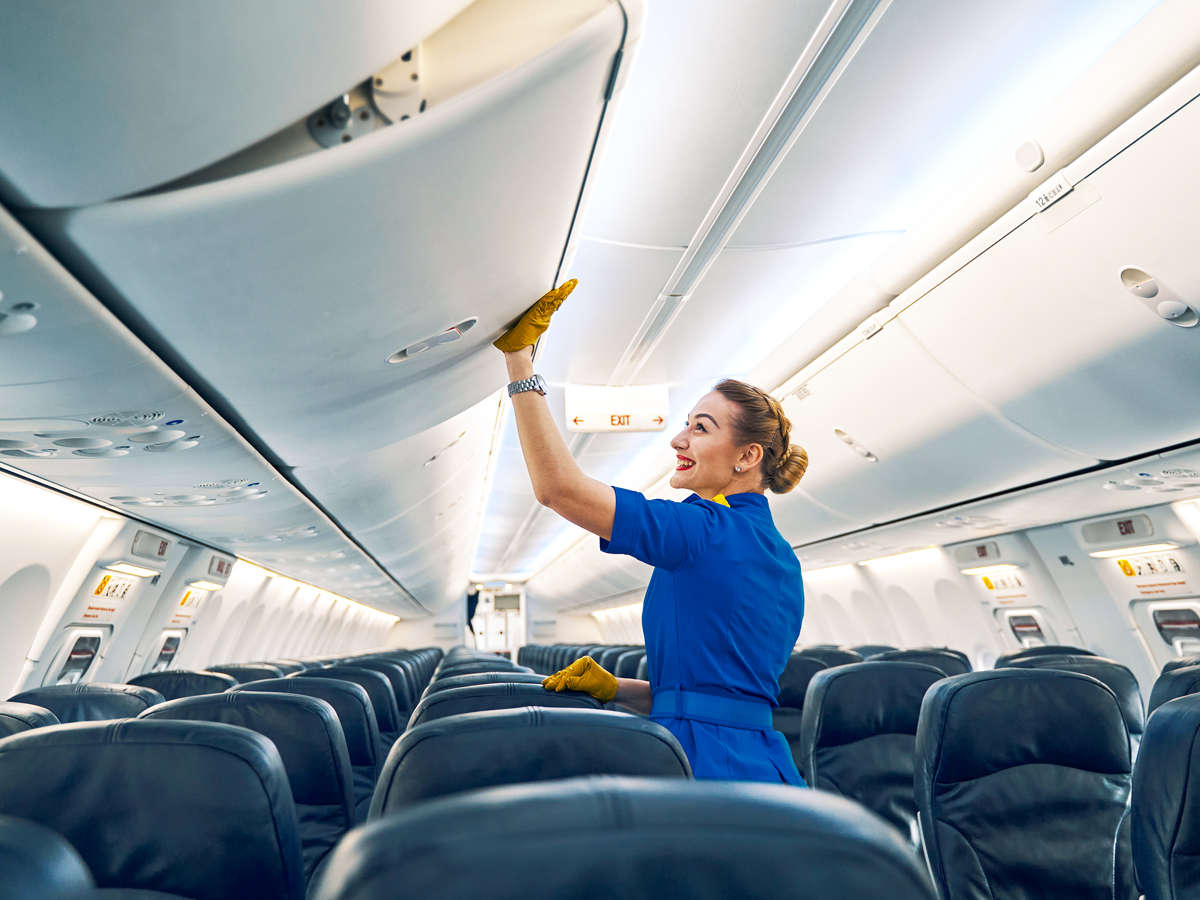
Following training, candidates must complete an initial operating exam to showcase their new knowledge, which usually involves a combination of written assessments and practical, hands-on evaluations. The exam comprises all aspects of being a flight attendant, including safety, security, emergency procedures, equipment operation, general aviation knowledge, and customer service.
Although requirements vary by airline, after passing the exam, the final step to becoming airline-ready is to receive a Certificate of Demonstrated Proficiency from the Federal Aviation Administration, which is issued after all requirements are met. New flight attendants then report to their initial base assignment, which is typically a major hub for the airline they work for. Then, their journey in the skies officially begins.
More from our network
Daily Passport is part of Inbox Studio, an email-first media company. *Indicates a third-party property.