





Why Is the First Day of the Week Different in Other Countries?
These days, many of us are just “working for the weekend,” but until relatively recently, weekends didn’t exist. Over a century ago, laborers worked all day, every day. The five-day workweek was introduced in 1908, when a mill in New England allowed its workers two days off to honor the Sabbath, and it became popularized in the 1920s, when Henry Ford discovered that factory workers became more productive when given some rest. The concept of the weekend also ushered in a standardized first day of the week. Religion helped shape this new standard, as the weekend doubled as time for religious worship, leading to different schedules across the globe. Find out when other countries around the world kick off the week (and why).
Sunday
Sunday is the first day of the week in several countries, especially those with a predominantly Christian culture, like the U.S. and Canada. Early forms of Christianity marked Sunday as the day of Christ’s resurrection, which became a day of worship and also represented a fresh start to the week. In Judaism, Sabbath is traditionally observed from sunset on Friday to sunset on Saturday, which allowed for Sunday to be the natural start of the week.
Since Christianity is the most common religion in North America and there is also a significant Jewish population, Sunday became the default first day of the week here, which is why calendar weeks are typically printed Sunday to Saturday. Monday, however, is when the workweek typically starts.
Japan is an example of a non-Christian country that also starts the week on Sunday, but the country’s calendar reflects the cosmos as opposed to religion. In Japan, each day correlates with a planetary body. Sunday represents the sun — it was chosen as the first day of the week since it reflects the cosmic order of the sky. In this way, Japan is similar to North America, with calendars beginning on Sunday but Monday functioning as the first day of business.
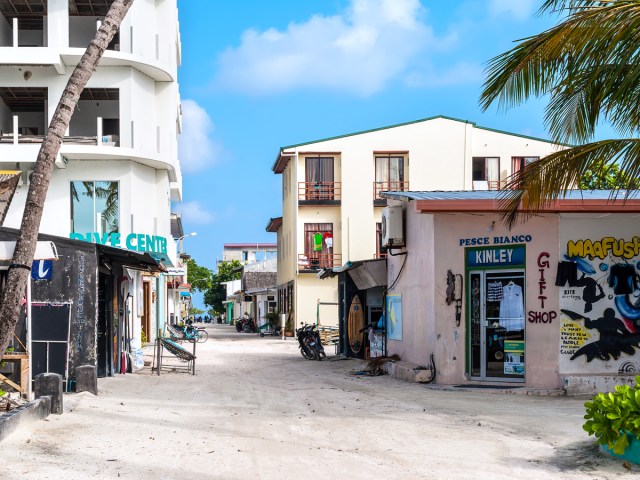
The Maldives — one of the world’s smallest countries — is a unique case because the first day of business actually starts on Sunday. In the Maldivian business world, the workweek runs from Sunday to Thursday, with most citizens resting on Friday and Saturday. Since Islam is the state religion, Friday is a day of rest and prayer for the predominantly Muslim country, while Sunday serves as a regular workday.
Monday

Across the rest of the world, Monday is most often recognized as the first day of the week, thanks to the ISO-8601 standard, an internationally recognized method of marking the year, date, and time. While the U.S. never adopted this standard, it is widely followed across Europe, South America, Australia, New Zealand, and China, where Monday is marked as the first day of the week on all calendars and serves as the weekly start of business, civil, and government purposes.
Although many countries start the week on Monday, not all countries observe a two-day weekend. In certain nations — like Mexico, the Philippines, and Colombia — there is only one official weekend day (Sunday), with business returning to normal on Monday and continuing through Saturday (though in many cases, that is slowly changing). Other countries, such as India, didn’t observe weekends until the concept was introduced by Western culture. Before the British instilled Sunday as a day of rest, Indians observed days off based on the lunar calendar and Buddhist or Hindu religious holidays.
Saturday
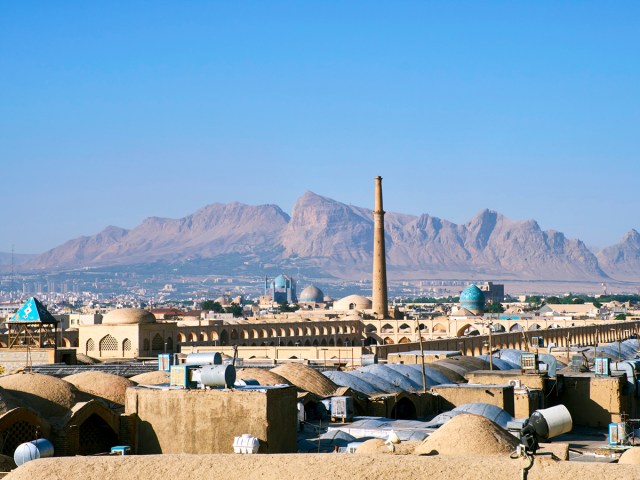
Saturday is the standard start of the week for many Muslim countries, as Friday is considered a day of worship in Islam. Although most Muslim countries have Fridays off, the weekend varies depending on the country. Certain countries, such as Iran, Somalia, and Djibouti, historically have had only one day off (Friday) with Saturday serving as the start of the workweek, although their calendars have often shifted to a two-day weekend over time. Afghanistan allows for two days off, with the weekend on Thursday and Friday, and a standard start to business on Saturday.
A Thursday-Friday weekend also used to be commonplace in Yemen, Saudi Arabia, and Sudan, but many of these countries have since changed their weekly schedule. In the early 2000s and 2010s, more Middle Eastern and North African countries began to switch to a Saturday-Sunday weekend to become aligned with the predominant international schedule. In 2021, the United Arab Emirates transitioned to a Saturday-Sunday weekend for public employees, while allowing for a half-day of prayer on Friday.
More from our network
Daily Passport is part of Inbox Studio, an email-first media company. *Indicates a third-party property.