





How In-Flight Entertainment Has Changed Over the Decades
How In-Flight Entertainment Has Changed Over the Decades

Though some people can do without it, in-flight entertainment is an essential part of flying for most travelers. Watching a movie, reading a book, or simply scrolling the internet are as good a way to pass the time as any at cruising altitude — especially for those who can’t sleep on planes. But the hundreds of movies and shows on the seatback screen and the internet connectivity we’ve come to expect when flying today haven’t always been at our fingertips. Here’s how in-flight entertainment has evolved over the years.
Magazines
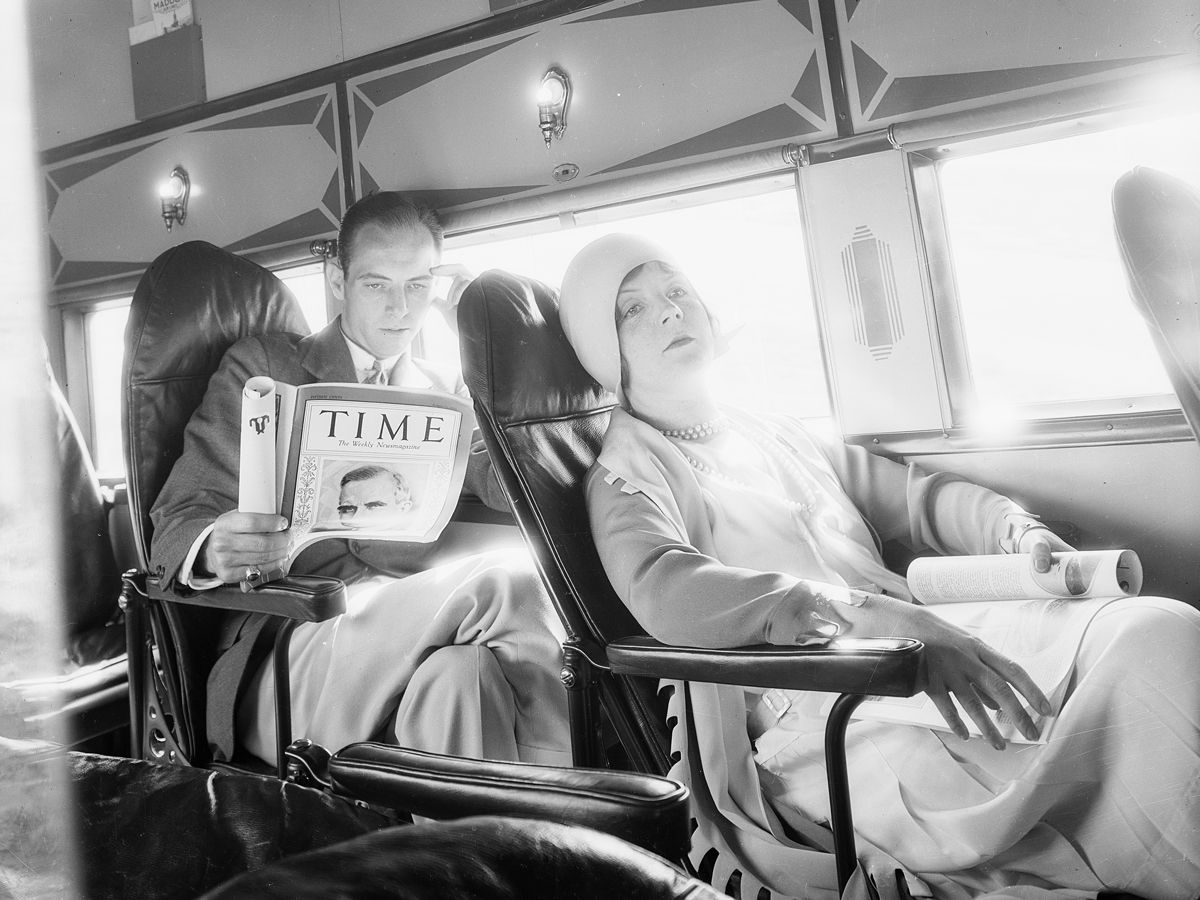
Pan American World Airways — better known as Pan Am — introduced the first in-flight magazine in 1952. Clipper Travel, later shortened to Clipper, was named after the Boeing 314 Clipper, the groundbreaking “flying boat” introduced in the late 1930s that later became synonymous with the airline.
Other airlines quickly followed suit in introducing their own magazines. These periodicals reached their peak in the late 1980s and early ’90s, with Japan Airlines going so far as to remove seats in order to make more space for their 300-page publications because the ad revenue was so profitable. While some airlines still have magazines these days, many have gone by the wayside due to cost cutting and changing passenger habits. Some, like United’s Hemispheres, are now only online, while others are distributed only in first and/or business class.
Movies
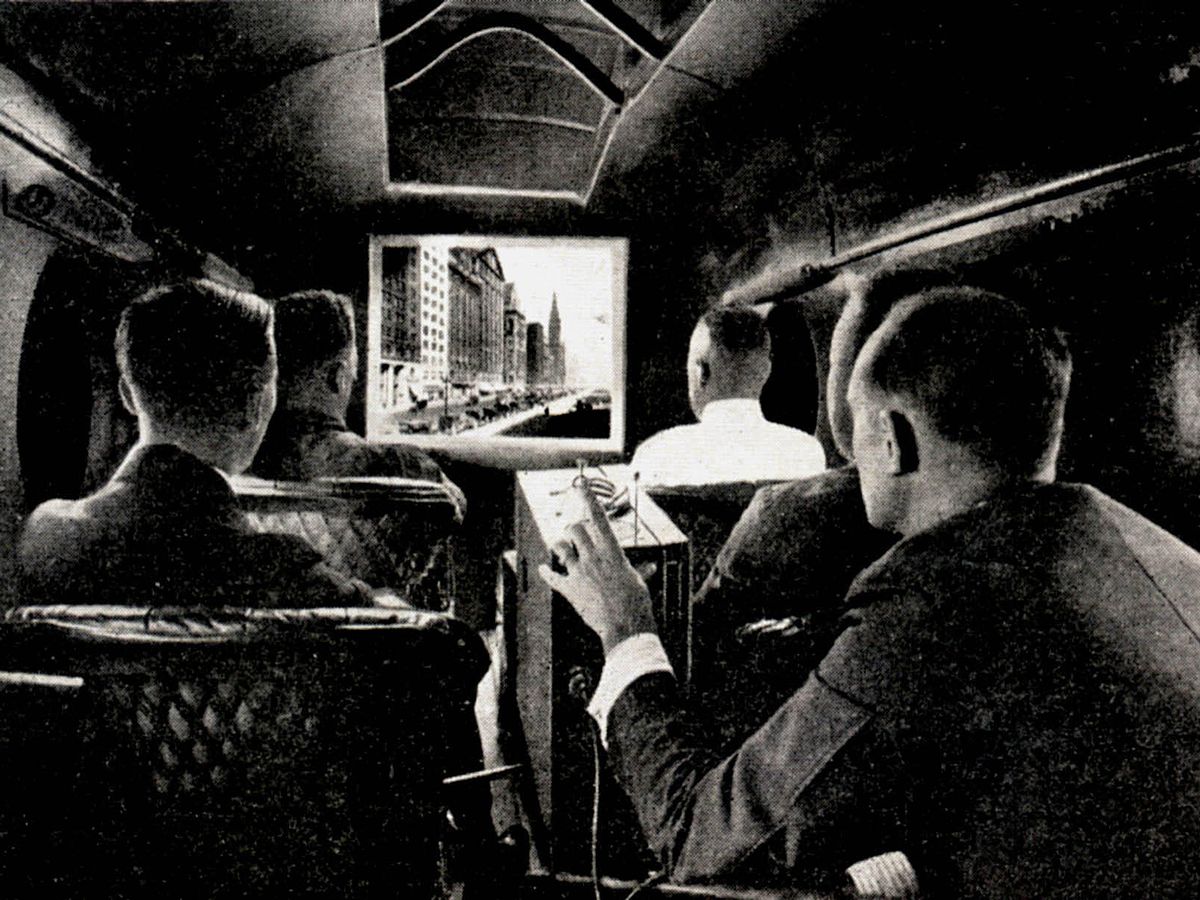
You’ve probably never heard of Howdy Chicago!, but it has a unique place in history as the first movie ever shown on an airplane, back in 1921. The short promotional film was projected on the walls of an Aeromarine Airways hydroplane as 11 passengers were flown around the Windy City as part of an industrial exhibition called the Pageant of Progress.
“Before the flight, it was feared that the vibration of the giant hydroplane as it shot through at 90 miles an hour would seriously interfere with the screening. But it did not,” a 1921 issue of Aerial Age reported. “This historic flight demonstrated the practicability of movie entertainment for transatlantic aerial commuters in the days to come.” A few years later, the 1925 sci-fi adventure The Lost World became the first feature-length Hollywood production to be screened at cruising altitude, when Imperial Airways played it for passengers aboard a flight from London to Paris.
These were mostly one-off novelties, however, and in-flight entertainment didn’t become standard until several decades later. In 1961, Trans World Airlines (TWA) became the first airline to offer regularly scheduled movies on its flights. David Flexer of Inflight Motion Pictures, who developed the projector system TWA used, later remarked that he was inspired to do so upon observing that “air travel is both the most advanced form of transportation and the most boring.”
In 1962, Pakistan International Airlines became the first airline not based in the United States to show movies. Overhead screens spaced at regular intervals throughout the cabin were the norm for decades, until a new innovation emerged.
Seatback Screens
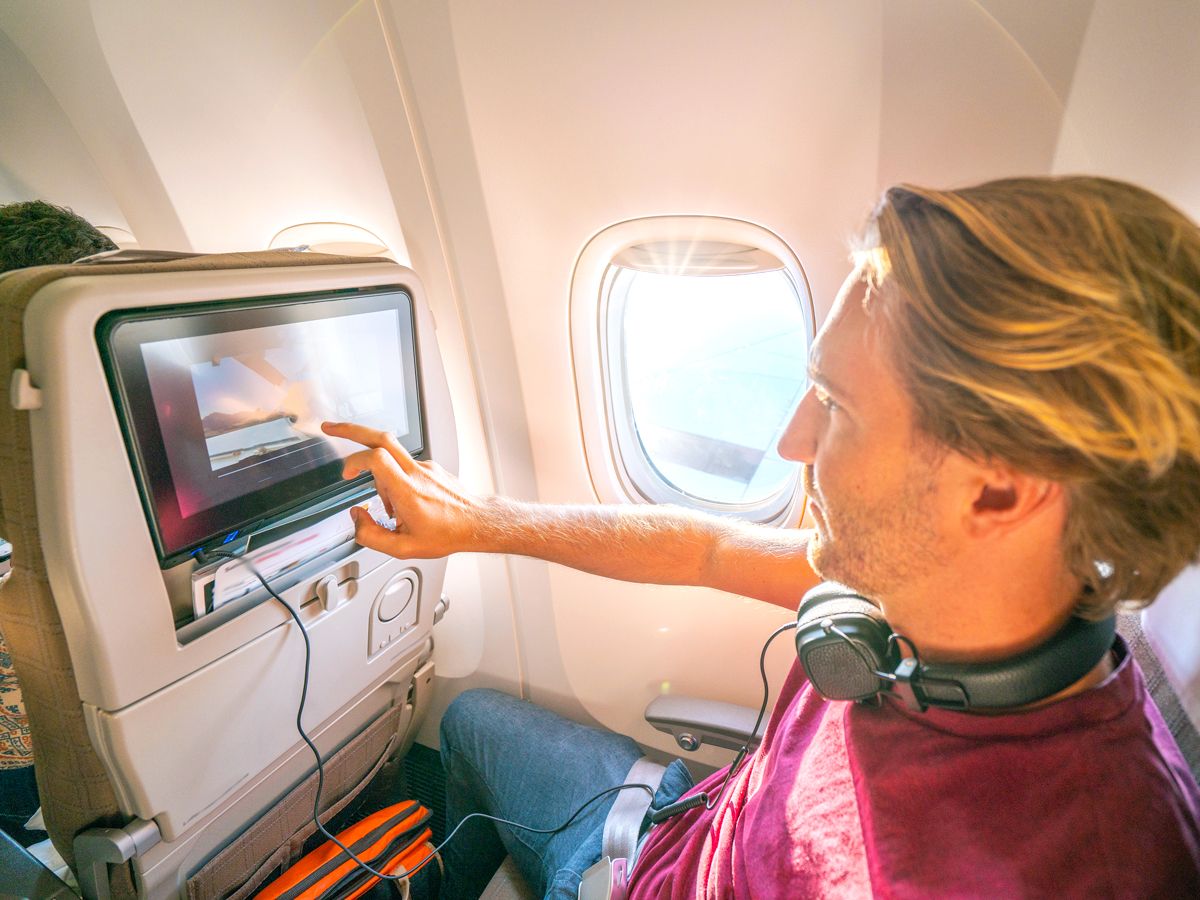
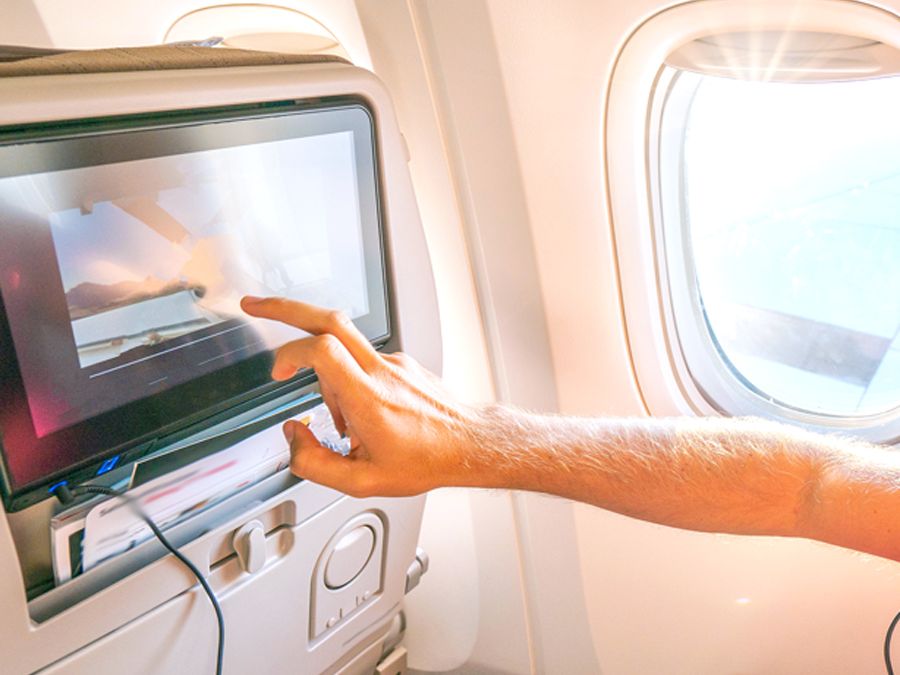
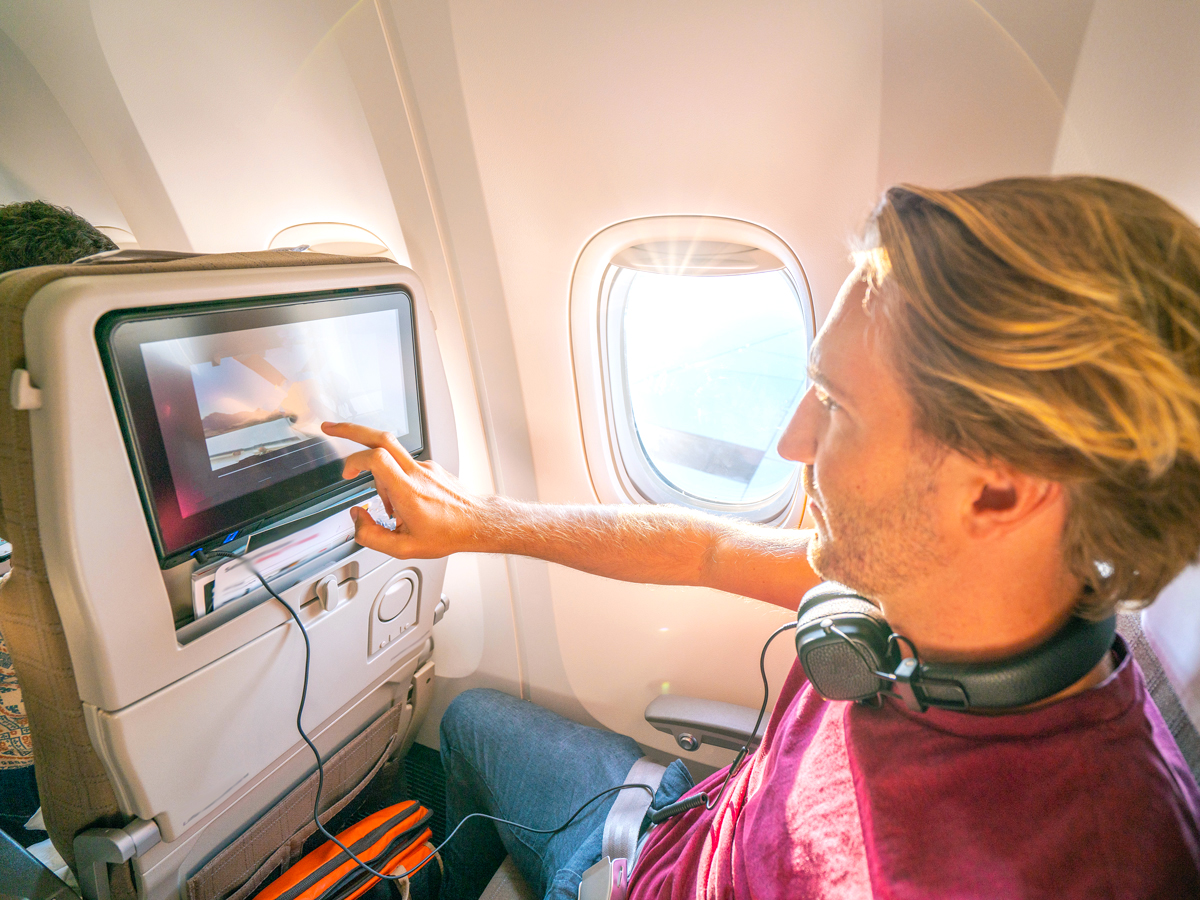
In the 1980s, Airvision, a subsidiary of Philips, introduced a 2.7-inch LCD screen that allowed passengers to choose what to watch rather than going with whatever the airline happened to be playing on the drop-down screens. Northwest Airlines was the first airline to install seatback screens on its Boeing 747s in 1988; Virgin Atlantic made them standard across all classes three years later.
While seatback screens have become the norm on long-haul flights, many airlines have opted not to install them on planes operating shorter routes, since they cost around $10,000 per seat to install and add thousands of pounds to planes. Some airlines, such as American, have even gone as far as to remove screens to cut costs, arguing that more and more passengers are bringing their own devices to stream movies and TV shows on their phones or tablets.
Wi-Fi
This one is older than you’re probably expecting: Boeing announced Connexion, its in-flight internet connectivity service, in 2000 and first implemented it on a Lufthansa flight between Munich and Los Angeles in 2004. However, the service lasted only two years before being discontinued, with the company saying that the market for it had “not yet materialized” at the time.
That’s clearly changed, and Wi-Fi is now as synonymous with flying as complimentary snack mix and soft drinks. JetBlue was the first U.S. airline to offer free fleetwide Wi-Fi, and now complimentary connectivity is offered on most major airlines, including American, Delta, and United. While early versions of in-flight Wi-Fi had a reputation for slow speeds and connection issues, the technology has improved considerably in recent years, with airlines like United rolling out SpaceX’s Starlink Wi-Fi, which offers gate-to-gate browsing, streaming, and gaming at speeds similar to what you’d find on the ground.
More from our network
Daily Passport is part of Inbox Studio, an email-first media company. *Indicates a third-party property.