





Can You Bring CBD on a Plane?


Cannabidiol — better known as CBD — is everywhere these days, from edible gummies to topical lotions and even such bizarre-sounding crossovers as toothpicks and pillowcases. For more and more travelers, the question isn’t what the latest everyday item to be infused with CBD is — it’s whether the CBD oil they keep on their nightstand can be brought aboard their next flight. The short answer? It depends. The long answer has to do with where your journey begins and ends, and exactly what kind of CBD product you’re planning to bring along. Here’s what you should know before packing for your next trip.
What Are the Rules?
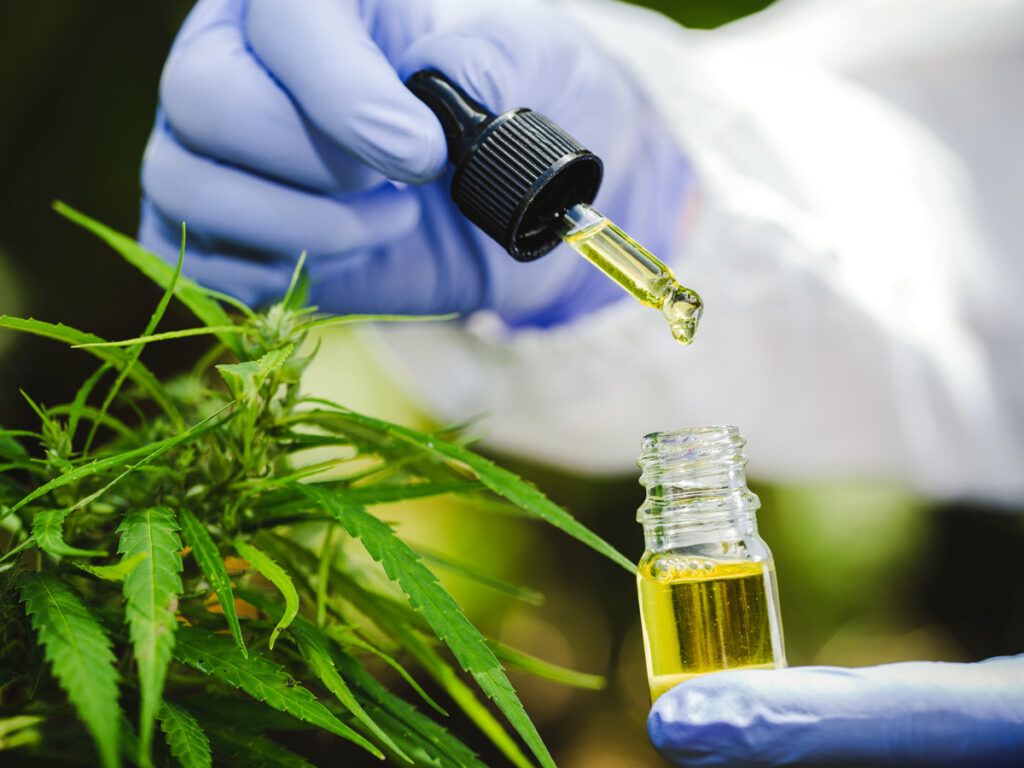
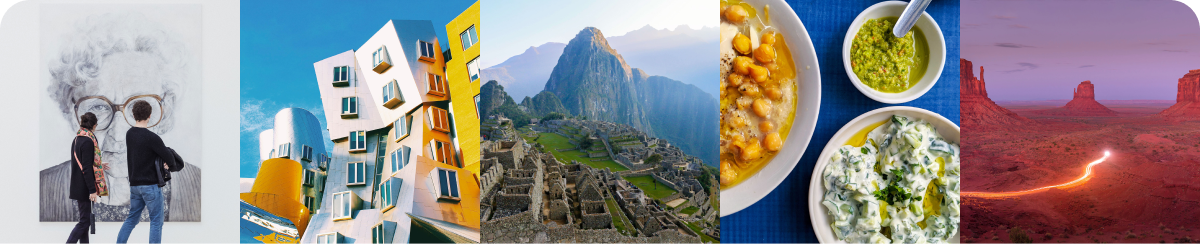
For anyone unfamiliar with CBD, a bit of context might be necessary. The biggest misconception surrounding cannabidiol is that it’s the same thing as marijuana. It isn’t. Because it contains little or no THC — tetrahydrocannabinol, which is what lends marijuana its psychoactive properties — CBD doesn’t get you high.
CBD was legalized at a federal level by the 2018 Farm Bill, which made any hemp-derived product containing less than 0.3% THC perfectly acceptable as far as Uncle Sam is concerned. However, the law is set to change. If Congress moves ahead as planned on December 11, 2026, products containing THC will be limited to 0.4 milligrams or less of total THC per container, which is a much lower threshold and could affect some CBD products — something to be on the lookout for.
Since 2018, however, CBD has legally been used to treat everything from anxiety and insomnia to chronic pain and inflammation, albeit with few clinical studies verifying its efficacy in these matters. (One exception is Epidiolex, an FDA-approved oral solution that uses CBD to treat seizures.) As it’s now widely available in foods, oils, and lotions, CBD has become increasingly popular among people who’d like something that may relieve pain or help them relax (without any mind-altering effects).
Case by Case, State by State
“Legal at a federal level” and “OK to bring on a plane” aren’t necessarily the same thing, however. CBD laws and availability vary from one state to another, with stricter restrictions found in places like Hawaii, Idaho, Kansas, Louisiana, Pennsylvania, and Utah. As for international travel, CBD is prohibited entirely in countries such as Japan and Singapore. Some parts of Europe permit it only if it contains no THC whatsoever, so be especially cautious on your next globe-trotting adventure.
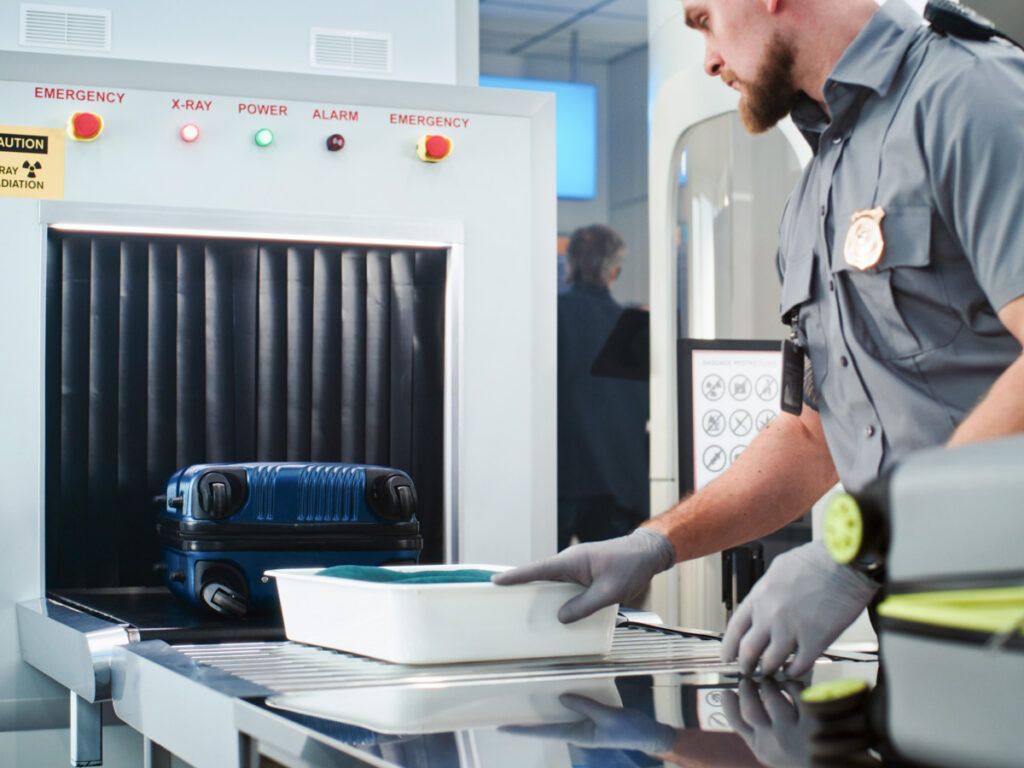
As for the TSA, while the agency doesn’t have a specific section on its website about carrying CBD, it’s safe to assume that federal laws apply — meaning products containing less than 0.3% THC are permitted (for the time being). Keep in mind that liquid CBD products such as oils and tinctures must still follow 3-1-1 liquid guidelines, though.
Furthermore, the TSA’s guidance on medical marijuana (allowed in both checked luggage and carry-ons) explains that the agency does not search for illegal drugs anyway. “TSA’s screening procedures are focused on security and are designed to detect potential threats to aviation and passengers,” per their policy. “Accordingly, TSA security officers do not search for illegal drugs, but if any illegal substance or evidence of criminal activity is discovered during security screening, TSA will refer the matter to a law enforcement officer.”
The Bottom Line
If you’re flying from one state with lax CBD laws to another that treats CBD similarly, and your gummies or oil contain less than 0.3% THC, there’s probably no reason to worry. That said, there are still a few things to consider, including what form of CBD you’re bringing. Oils, capsules, and creams are fine in your carry-on, as long as they are 3.4 ounces or less; larger amounts should be packed in checked luggage. Meanwhile, CBD vape pens are allowed in carry-ons only.
Also make sure whatever product you have is in its original packaging with the THC content (or lack thereof) clearly labeled. If possible, print a certificate of analysis (COA) that verifies your CBD contains less than 0.3% THC.
Featured image credit: © Vane Nunes/stock.adobe.com
More from our network
Daily Passport is part of Inbox Studio, an email-first media company. *Indicates a third-party property.