





Why Your Checked Bags Are Getting More Expensive
Why Your Checked Bags Are Getting More Expensive

Checking a bag on your next flight? Despite their unpopularity, baggage fees likely aren’t going anywhere soon. These dreaded fees have become a major revenue driver for U.S. airlines, to the tune of nearly $5.5 billion in 2025, according to the Bureau of Transportation Statistics. And in recent weeks, we’ve seen increases in bag fees across the board, with airlines saying the hikes are necessary to counter soaring fuel costs. Find out how much you can now expect to pay for checked bags — or better yet, how to avoid checked bag fees altogether.
Fuel Prices Are Making Bag Fees Worse
With major disruptions to the global oil supply, the war in Iran has caused fuel prices to spike around the world. Airlines have been particularly hard-hit, as jet fuel prices have doubled since the war began at the end of February 2026. While airlines have already hiked fares and cut flights, they’ve also looked to bag fees as a way to cover their rising costs.
In late March, New York City-based JetBlue was the first to raise checked baggage fees, by $4 and $9 for a traveler’s first and second checked bag, respectively. Back in 2024, the carrier was also the first to introduce peak and off-peak pricing for checked bags. Passengers flying in off-peak periods can expect to pay $10 less per bag than those flying during high-demand times such as summer, Thanksgiving, and Christmas. (You can find the full list of peak dates on JetBlue’s website.)
A week after JetBlue increased fees, United Airlines followed suit and increased bag fees by $10 for the first and second pieces of checked luggage — and a whopping $50 per bag beyond that. The increase applies to tickets purchased on or after April 3, 2026.
Alaska, American, Delta, and Southwest have also raised their bag fees. (As on United, these increased fees apply only to new bookings.) Interestingly, American Airlines announced that, for tickets booked on or after May 18, 2026, passengers who book a basic-economy fare (as opposed to Main Cabin) will have to pay $5 extra for baggage on top of the newly increased fee — a first for U.S. airlines.
Not counting Southwest, which only began charging customers for checked bags last year, this is the first time since 2024 that the major U.S. airlines have raised their baggage fees. Back then, Delta also blamed the increase on rising costs. Southwest, for its part, was long known for its generous “bags fly free” policy, which allowed most passengers two checked bags free of charge, but the airline abandoned that long-standing practice in March 2025, saying it was leaving money on the table. It was the last major airline not to charge for checked bags, which the airline ultimately didn’t view as enough of a competitive advantage as it looked to reduce costs and boost profitability.
What Checked Bags Cost on U.S. Airlines in 2026
As of April 2026, travelers on most U.S. domestic flights can expect to pay $45 to $50 for their first checked bag and $55 to $60 for their second piece of luggage. That’s up to 28% higher than at the start of the year.
Pro tip: Try not to wait until you check bags at the airport to pay the fee. If you plan ahead and prepay online before check-in, several airlines offer a discount on baggage fees.
Below is a list of checked bag fees for domestic flights on the largest U.S. airlines. Fees can vary considerably for long-haul international flights, so be sure to check your airline’s website when traveling outside the U.S.
- Alaska Airlines: $45 for first bag; $55 for second bag
- American Airlines: $50 for first bag ($45 if prepaid online); $60 for second bag ($55 if prepaid online); basic-economy fares pay $5 more (starting May 18)
- Delta Air Lines: $45 for first bag; $55 for second bag
- JetBlue: $49 for first bag (off-peak); $59 for first bag (peak); $69 for second bag (off-peak); $79 for second bag (peak); save $10 by prepaying online 24 hours in advance
- Southwest Airlines: $45 for first bag; $55 for second bag
- United Airlines: $50 for first bag ($45 if prepaid online); $60 for second bag ($55 if prepaid online)
Note that bags — both carry-on and checked — are priced variably (and often cost even more) on ultra-low-cost budget carriers such as Spirit and Frontier. Check your airline’s website during booking, and look for any discounts you get for paying bag fees in advance.
How To Avoid Checked Bag Fees
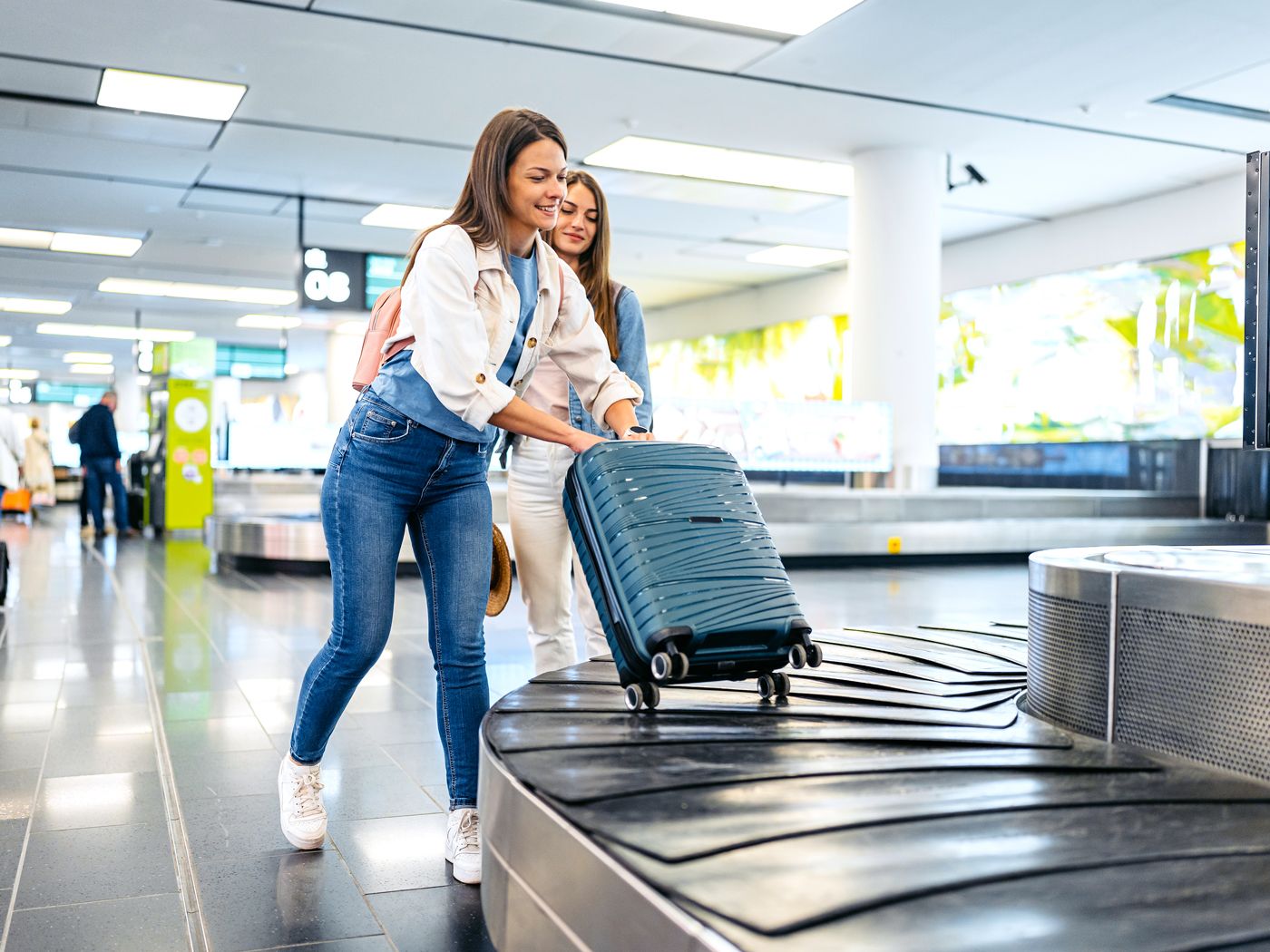
The first answer may seem obvious: Try to fit more in your carry-on bag. That task becomes easier with these clever tricks — such as rolling your clothing instead of folding it — that promise to save valuable space and help you avoid checked bag fees altogether. (Plus, you won’t have to worry about the airline losing your luggage while on vacation.) If you do manage to fit enough in your carry-on but don’t want to deal with the hassle of finding overhead space, most airlines will let you check your bag at the gate free of charge.
Another option is to look for fare options that include a checked bag, like premium economy or even first class — the math on the cost of the upgrade might work out better if you were planning to check bags anyway, and these tickets come with other perks like extra legroom and priority boarding.
Lastly, most major airlines offer co-branded credit cards that waive baggage fees for the cardholder and up to nine passengers traveling together on the same reservation. Though these credit cards typically charge an annual fee, the savings on bag fees for even just one or two trips could be substantial. For instance, when Southwest announced checked bag fees, the airline noted that those with a Rapid Rewards credit card, along with up to eight additional passengers traveling on the same reservation, would still be allowed to check one bag for free.
The same goes for those who hold elite status (what Southwest calls “A-List”), which is similar to other airlines that offer anywhere from one to three bags free, depending on your status tier. Even if you don’t have elite status yourself, if you’re flying with someone who does, their benefits extend to those on the same reservation.
More from our network
Daily Passport is part of Inbox Studio, an email-first media company. *Indicates a third-party property.