





5 Famous Love Lock Bridges Around the World
5 Famous Love Lock Bridges Around the World

Couples around the world have found a romantic tradition: attaching padlocks to bridges as a symbol of lasting love. From the iconic bridges of Paris to bridges found on scenic mountain peaks, these five sites capture the hearts of visitors everywhere.
Most Ljubavi – Vrnjačka Banja, Serbia
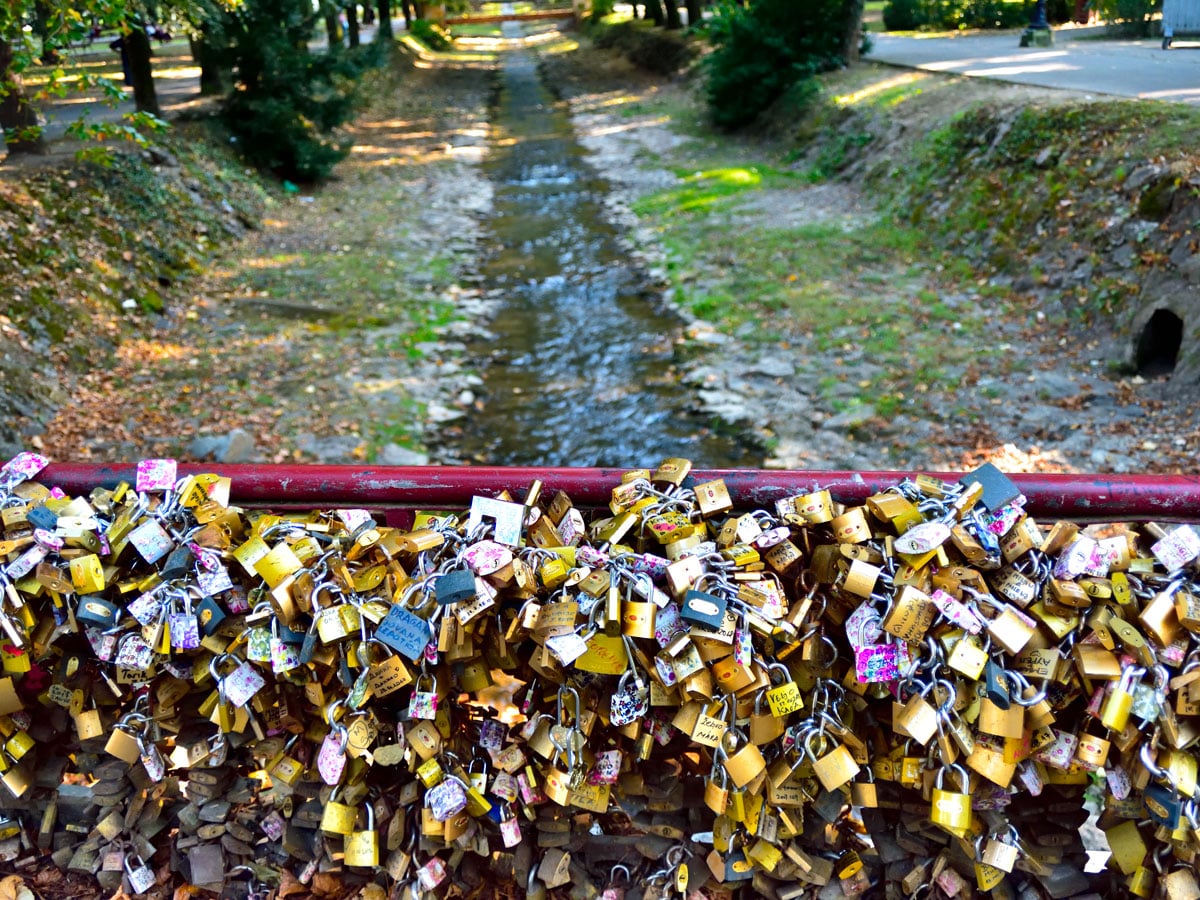
Most Ljubavi (Bridge of Love) is often considered the original love lock bridge, with the tradition dating back to World War I. As the story goes, a local schoolteacher named Nada and her boyfriend, Relja, often met at the bridge during their courtship. Relja went off to war in Greece, where he fell in love with another woman and remained on the Greek island of Corfu, never returning to Serbia. Heartbroken, Nada died young, with many saying it was from heartbreak.
Afterward, young women in town began fastening padlocks to the bridge as a symbolic gesture to protect their own relationships. Today, thousands of locks cover the small bridge, and they have largely been embraced as part of the town’s romantic history.
Luzhkoz Bridge – Moscow, Russia
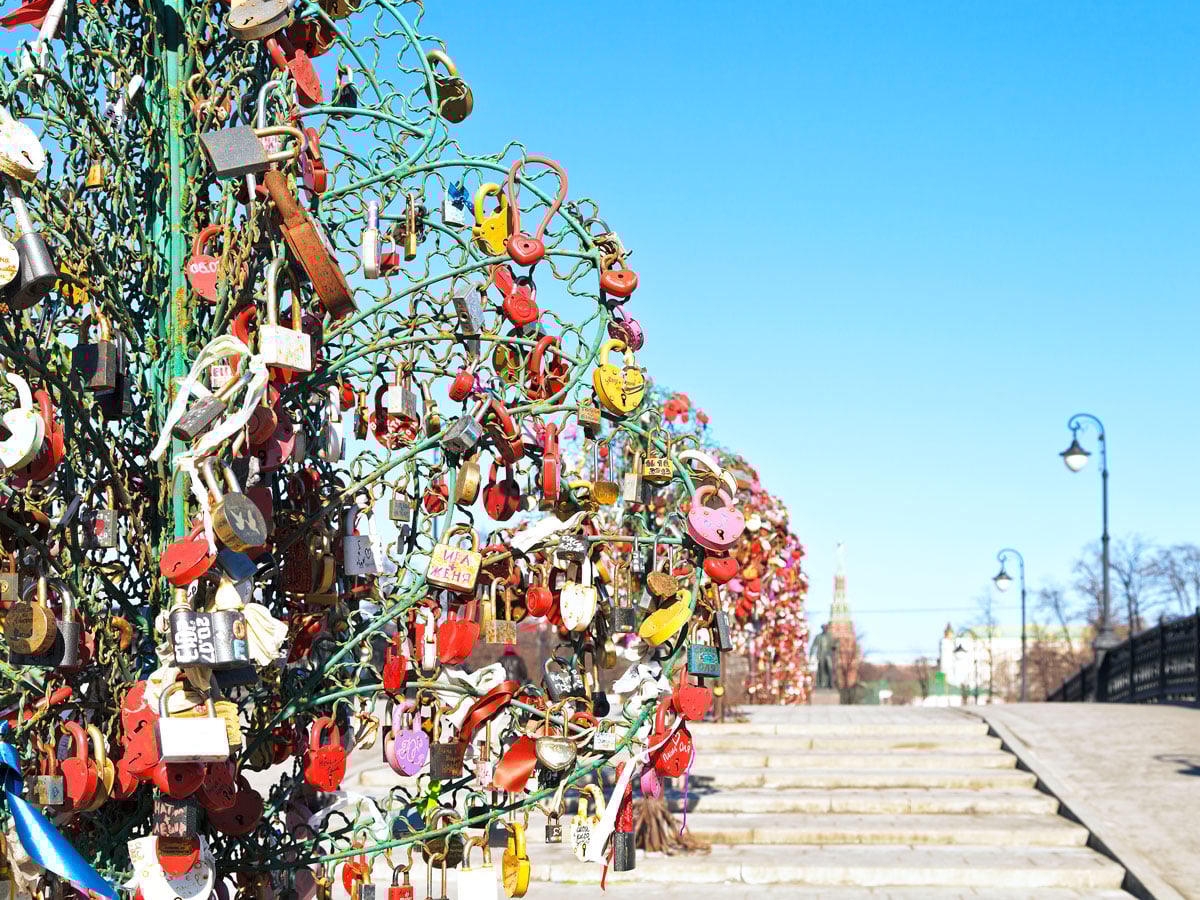
Luzhkov Bridge, a pedestrian bridge in Moscow that spans the Vodootvodny Canal, has earned a reputation as one of the city’s most romantic spots. Soon after the bridge was built in the 1990s, couples began using it as a place to declare their love. In the 2000s, lovebirds began attaching padlocks to the railings as a symbol of their everlasting commitment and then throwing the keys into the canal.
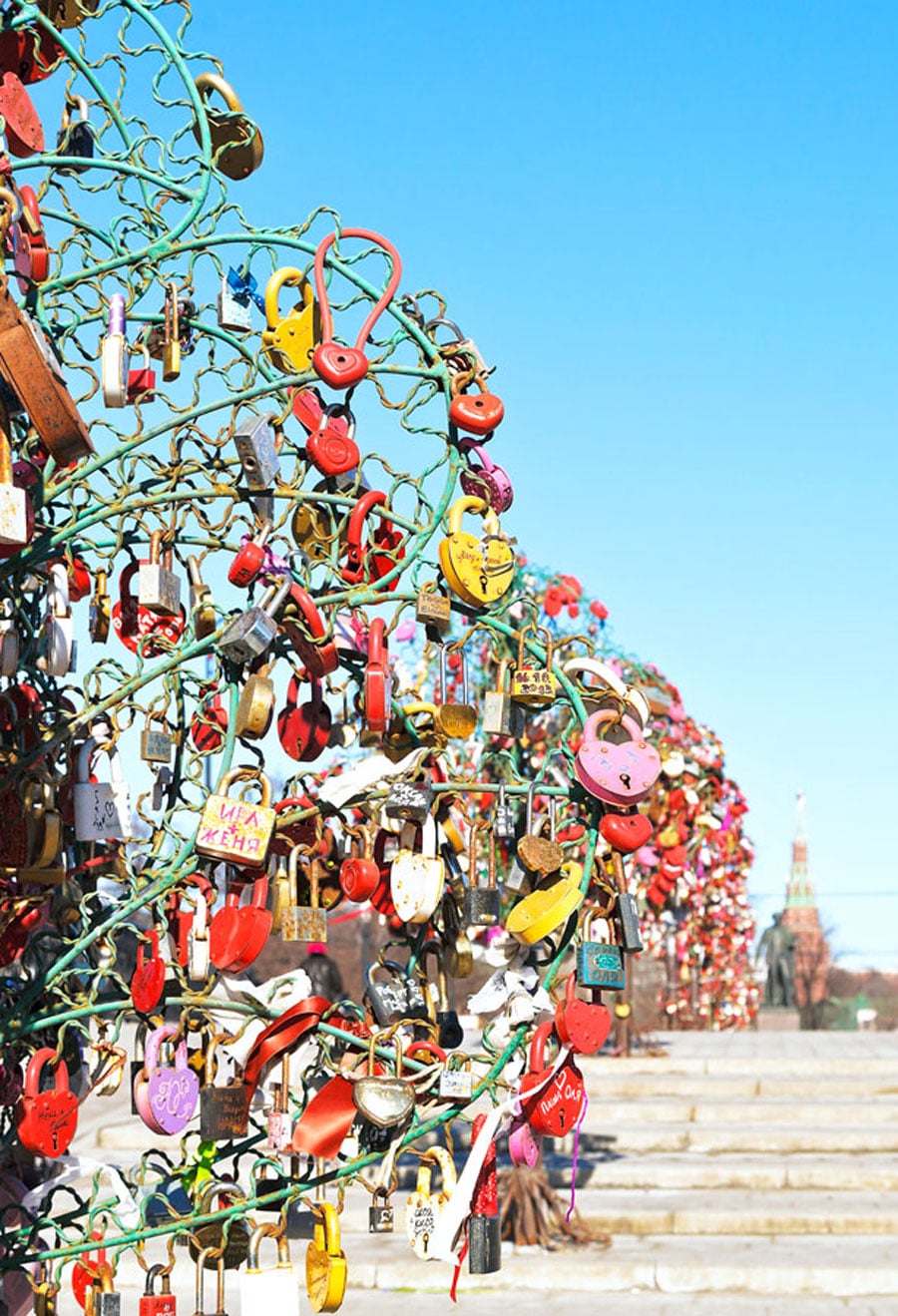
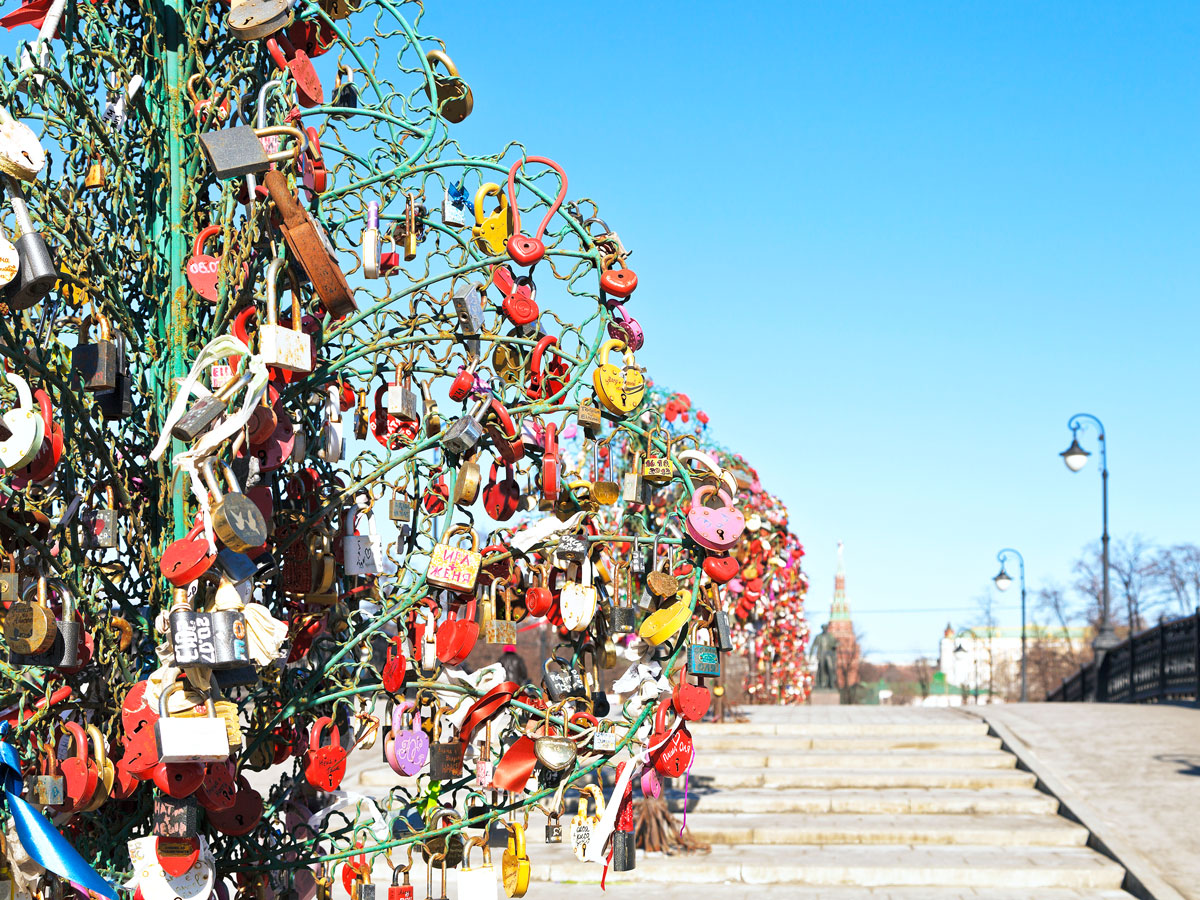
As the number of locks grew into the thousands, city officials chose a creative solution — instead of removing the locks or banning their existence, they installed decorative metal “love trees” along the bridge. That provided a safe and stable place for the growing collection of love locks while still preserving the structural integrity. Today, the trees are covered with locks, creating a shimmering display across the bridge.
Mount Huangshan – Anhui, China
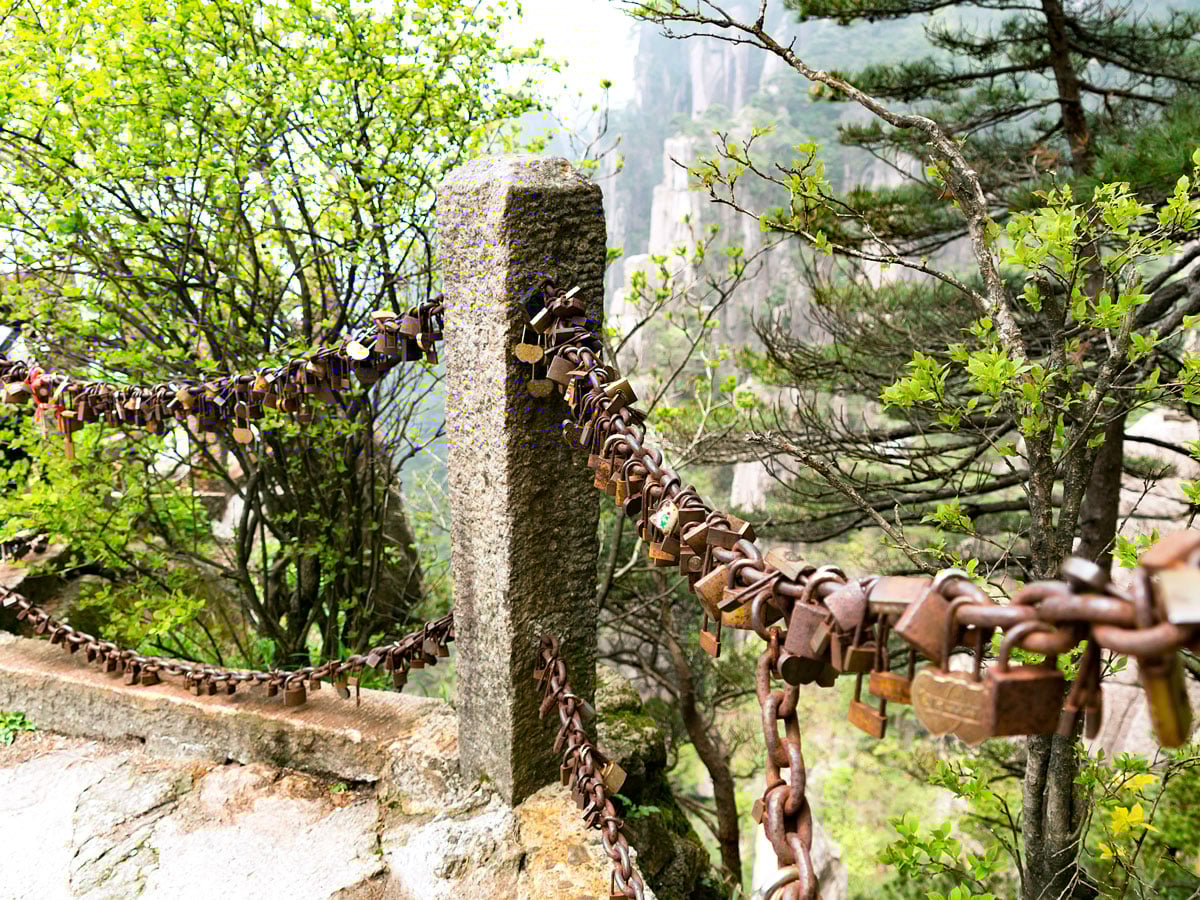
Mount Huangshan, also called Yellow Mountain, in China’s eastern Anhui province, is a UNESCO World Heritage Site known for its stunning granite peaks. Since the 2000s, it has also become a spot for love locks, with couples attaching padlocks to the iron guardrails around popular summit areas like Lotus Peak.
Visitors often write their names on a lock and snap it onto the rail, sometimes dropping the key down into the valley to solidify their unbreakable bond. The shiny locks stand out against the rugged mountain scenery, making the peaks not only a breathtaking place to hike but also a favorite spot for couples to celebrate their romance.
Hohenzollern Bridge – Cologne, Germany

Cologne’s Hohenzollern Bridge is Germany’s busiest railway bridge, spanning the Rhine River, with a wide path running alongside the tracks for pedestrians. The love lock tradition began here around 2008, when couples started clipping their padlocks to the metal fencing and throwing the keys into the river as a symbol of their commitment.
The practice quickly gained popularity, and the bridge is now covered with hundreds of thousands of locks that together weigh an estimated 50 tons. Although there were early concerns about the added weight, railway authorities confirmed the structure could handle it and chose not to remove them. The locks have since become a well-known feature of the bridge and a popular draw for visitors, especially with Cologne Cathedral — once one of the world’s tallest buildings — visible just steps away.
Pont des Arts – Paris, France

Pont des Arts in Paris has been around in some form since 1804, making it one of the city’s oldest pedestrian bridges. It was also the first metal bridge to be built in Paris. The bridge links the Institut de France and the Louvre Museum, one of the most-visited and recognizable landmarks in the city.
In the late aughts, Pont des Arts became famous when couples started attaching padlocks to the railings of the bridge and tossing the keys into the Seine River as a symbolic way to eternalize their love. At its peak, more than a million locks weighed down the bridge, totaling approximately 45 tons, causing part of the railing to collapse in 2014.
Parisians didn’t take too kindly to the tradition and started a petition to have the locks removed to protect the structural integrity of the bridge. In 2015, their wish was granted, and the locks were finally removed. Even without the locks, the bridge remains one of the most romantic spots for a stroll in Paris.
More from our network
Daily Passport is part of Inbox Studio, an email-first media company. *Indicates a third-party property.