





Do Movies on Planes Actually Make Us Cry More?
Do Movies on Planes Actually Make Us Cry More?
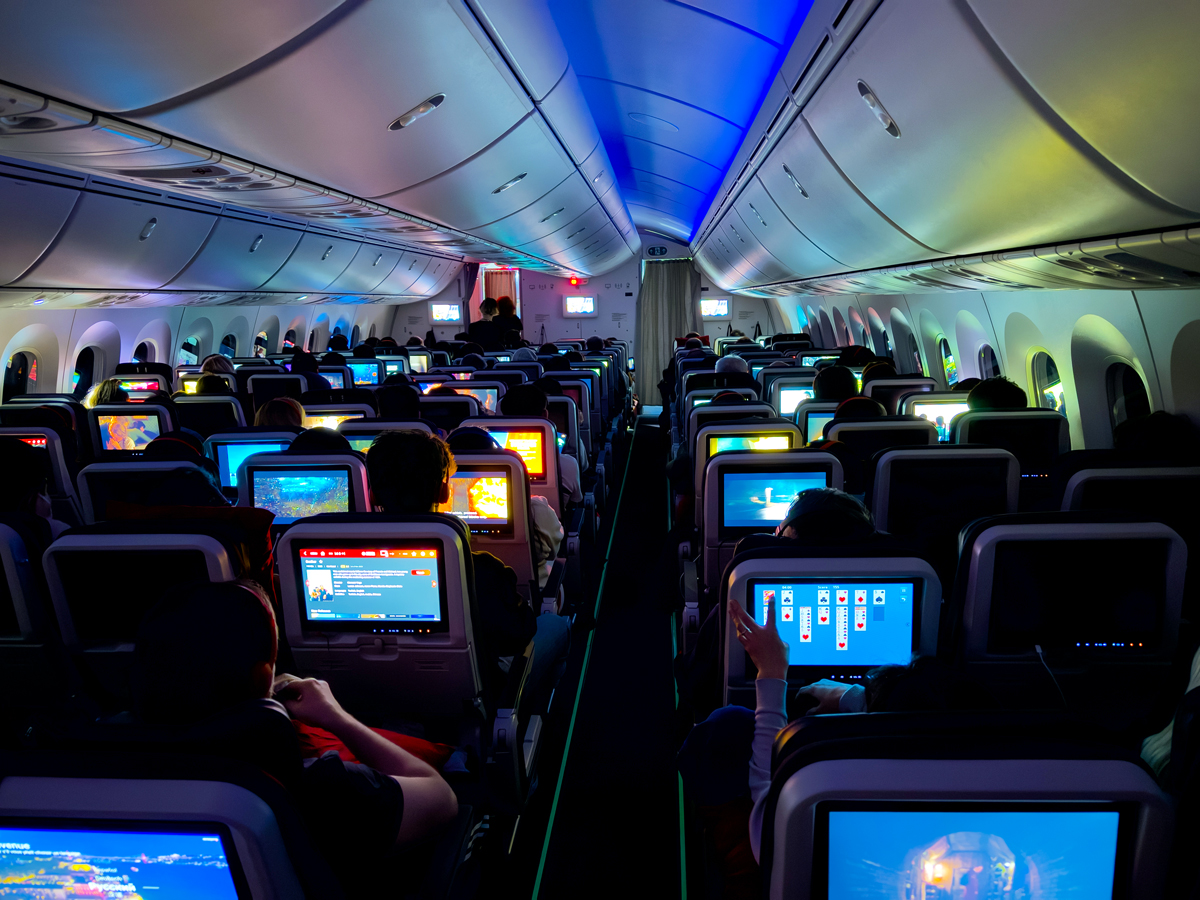

Who doesn’t love a good tearjerker? Crying can be cathartic, but many of us prefer to do it in the comfort of our own homes. Before you pick which movies you’re going to see on the plane, you might pause to consider the genre. Some say that you’re more likely to cry when you fly, while others debunk the claim. Who’s right? Let’s take a look at the evidence and find out.
The Physical Impact of Flying
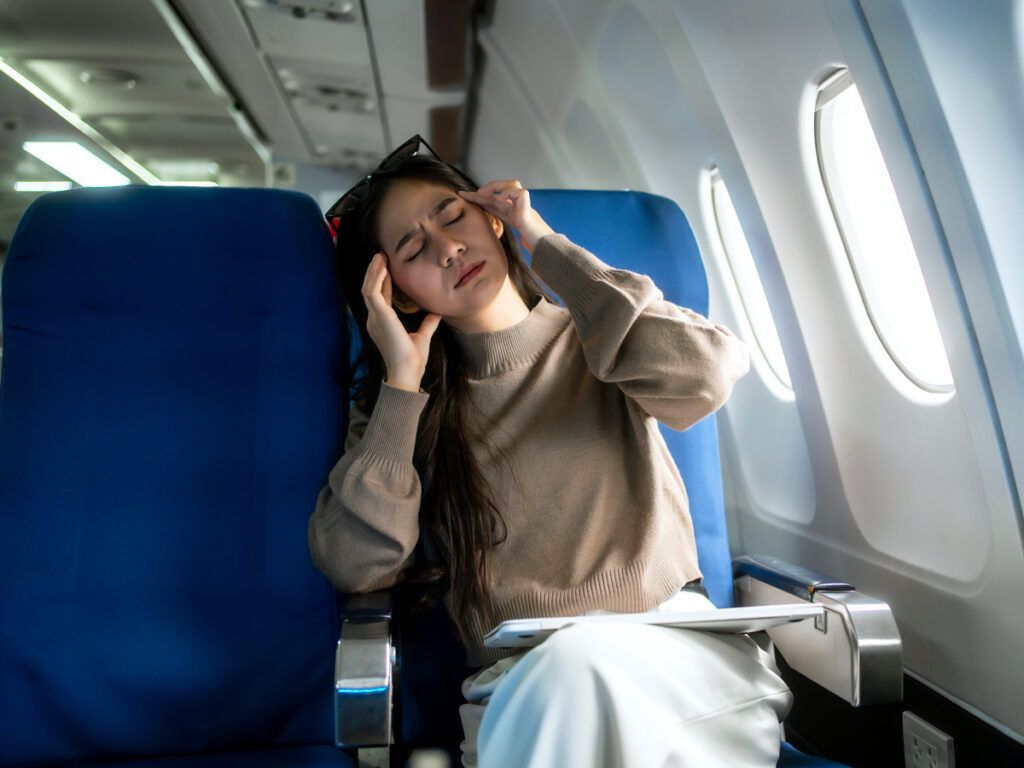
Transiting airports can be a stressful process. Whether we’re wondering if our carry-on is going to be gate-checked or dealing with weather-related delays leading to missed connections, staying calm isn’t always easy. So, by the time we sink into our seats on the plane, many of us are already feeling the effects of stress.
Those effects become a little more noticeable in the air: Once the plane reaches cruising altitude, oxygen levels fall slightly. Aircraft cabins are pressurized to mimic an altitude of about 6,000 to 8,000 feet, and this subjects the body to mild hypobaric hypoxia (low oxygen levels). An article in a Malaysian medical science journal suggested that this could lead to changes in mood and even a degree of impairment to cognitive functions.
Why You Might Be More Likely To Cry When You Fly
Aside from the physical effects on the body, passengers might be emotional for a range of reasons before they even board a flight. If a journey signals the end of a trip to see relatives, for instance, then sadness is a very logical emotion. Meanwhile, factors such as fatigue come into play — those early starts and long spells in the air can easily take their toll on your state of mind. Jet lag causing disruptions to sleep patterns can also leave travelers feeling a little less robust than usual.
Though Wi-Fi is increasingly common on aircraft, for many travelers a flight still acts as a digital detox. An enforced break such as this encourages reflection, and depending on what’s going on in your life, facing multiple hours in the air without the usual range of distractions might make you feel more emotional. Consuming alcohol — which affects you differently at altitude — might also lower inhibitions, while being surrounded by strangers may make passengers feel more vulnerable (and perhaps more tearful) than usual.
Is It a Real Phenomenon or Just a Coincidence?
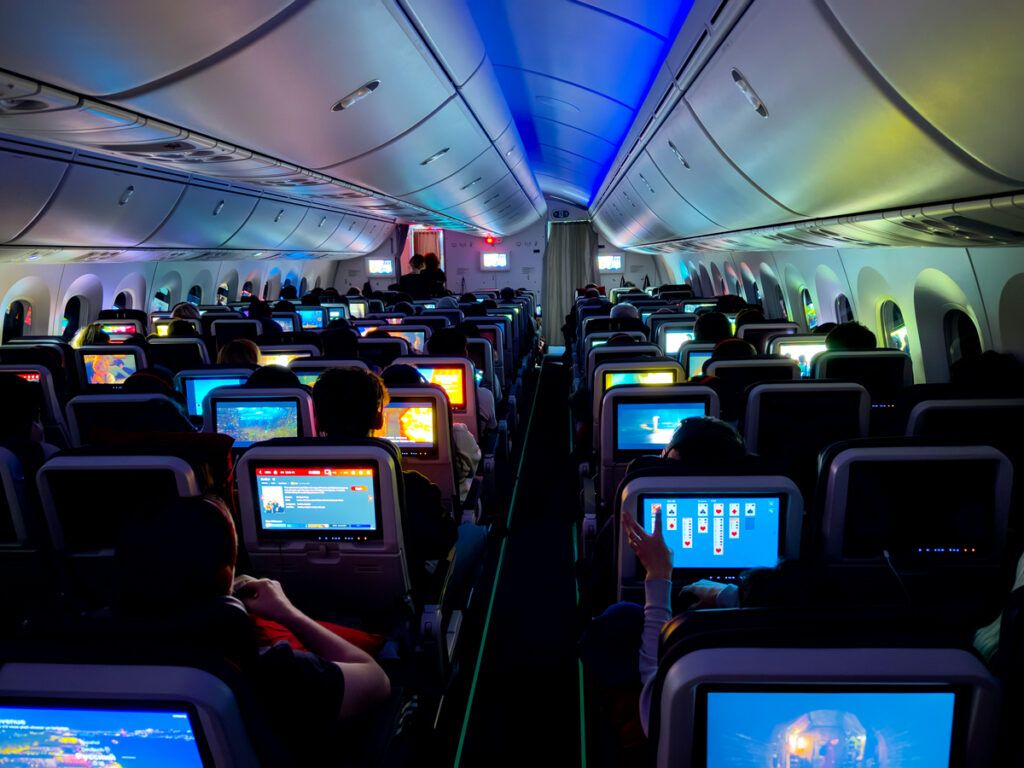
Throw a movie into the mix — particularly one that sets out to tug on your heartstrings — and it could act as a trigger to release that pent-up emotion. In response to a 2011 survey in which 55% of respondents reported experiencing heightened emotions when flying, U.K. carrier Virgin Atlantic flagged certain films on its entertainment screens with a tongue-in-cheek weep warning to get the tissues on standby. Toy Story 3, Water for Elephants, and Just Go With It were among the movies the airline singled out.
One academic believes intimacy plays a part in increasing our likelihood of crying when flying. In 2014, Stephen Groening, a professor of cinema and media studies at the University of Washington, published a paper that stated:
“Airplane media technology creates a relationship of extreme proximity between passenger and media form: The screen is but a few feet away from the viewer and the headphones put speakers virtually inside the body.” He added that the setup inspires “active involvement and a level of intentness akin to the engagement associated with intimacy.”
Neuroscientist Stephen Macknik, meanwhile, argued in a paper for PeerJ that travelers are more likely to cry at movies on planes simply because they watch more of them in a short space of time. The nature of those films also has a significant part to play. He referenced Quentin Tarantino’s interview with Stephen Colbert in which the acclaimed movie director admitted to becoming emotional when watching rom-coms, in particular, at 30,000 feet.
He’s not the only one to fess up. In 2016, British comedian David Baddiel told The Guardian: “I cry a lot. Especially on planes. What is that about? On a plane, I’ll be in floods at The Good Dinosaur.” And in an interview with late-night host Seth Meyers, Irish actor Andrew Scott commented that the opening scenes of the movie Up triggered him emotionally on a recent flight.
But not everyone’s convinced there’s anything different about being on a plane. In 2018, health expert Paul Wicks analyzed the behavior of 1,035 Americans and found that 25% admitted to crying while watching films during a flight, but also that a very similar proportion (22%) wept at a movie they watched at ground level.
So, it seems the findings are inconclusive and more rigorous scientific research is needed. Next time you fly, though, you might want to think carefully before you choose a film (just in case).
More from our network
Daily Passport is part of Inbox Studio, an email-first media company. *Indicates a third-party property.