






This Airline Is Launching a Record-Breaking 22-Hour Flight
This Airline Is Launching a Record-Breaking 22-Hour Flight

In the 1950s and 1960s — what many consider the golden age of air travel — a simple hop across the Atlantic from New York to London usually required a fuel stop in Gander, Newfoundland. Today, however, you can fly nonstop from New York to Singapore — a journey of more than 9,500 miles — in around 19 hours. That’s currently the world’s longest nonstop passenger flight, but a longer route is on the horizon. It’s been in the works for close to a decade, and in 2027, travelers will finally be able to book tickets. Here are all the details.
Project Sunrise
In 2017, Australian flag carrier Qantas announced its intention to connect the east coast of Australia to both London and New York with nonstop flights for the first time. Dubbing the new service “Project Sunrise,” the airline described it as the “final frontier of aviation” due to the distance between the respective cities (upwards of 10,000 miles) — farther than the range of any commercial aircraft currently in service.
Qantas currently flies to both cities, but not nonstop. To reach New York from Sydney, you’ll need to fly via Auckland; the Auckland-to-JFK route is currently one of the world’s 10 longest nonstop flights. London flights require a layover in either Singapore or Perth, Australia, with the latter also ranking among the longest nonstop routes currently in service.
Interestingly, Qantas has a long history on the London route, also known as the Kangaroo Route. When it launched in the 1940s, the flying time was as long as 58 hours, requiring refueling stops in seven cities en route.
The Airbus A350-1000ULR
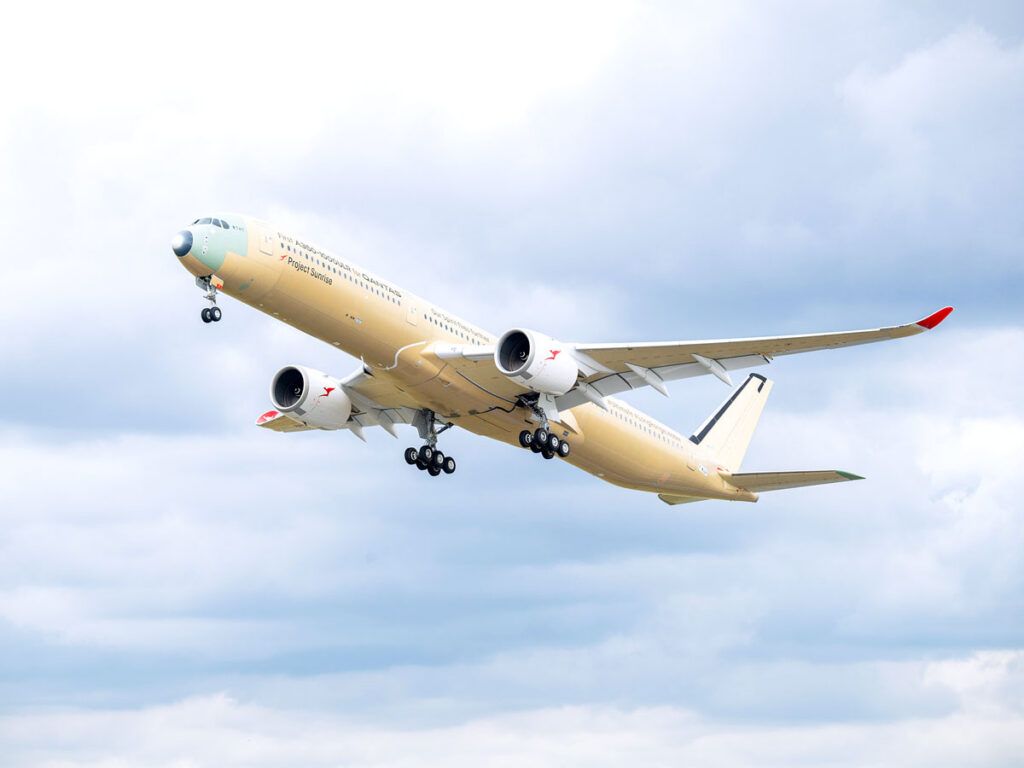
Enter the Airbus A350-1000ULR, which completed its first test flight in June 2026. It’s an upgraded version of the Airbus A350-1000 wide-body aircraft, currently in service with airlines such as British Airways and Qatar Airways. “ULR” stands for “ultra-long-range,” and indeed, the A350ULR boasts additional fuel capacity that gives it the greatest range of any commercial aircraft. It is capable of flying for up to 22 hours nonstop.
Thus far, Qantas has ordered 12 of these planes, the first of which (named Vega) is scheduled for delivery in April 2027, after years of delays. Qantas plans to launch the new Sydney-to-London flights in October 2027, with tickets going on sale in February of next year. (New York flights will be announced at a later date.) The flight between Sydney and London covers a distance of 10,573 miles and will take up to 22 hours.
Inside Qantas’ New Planes
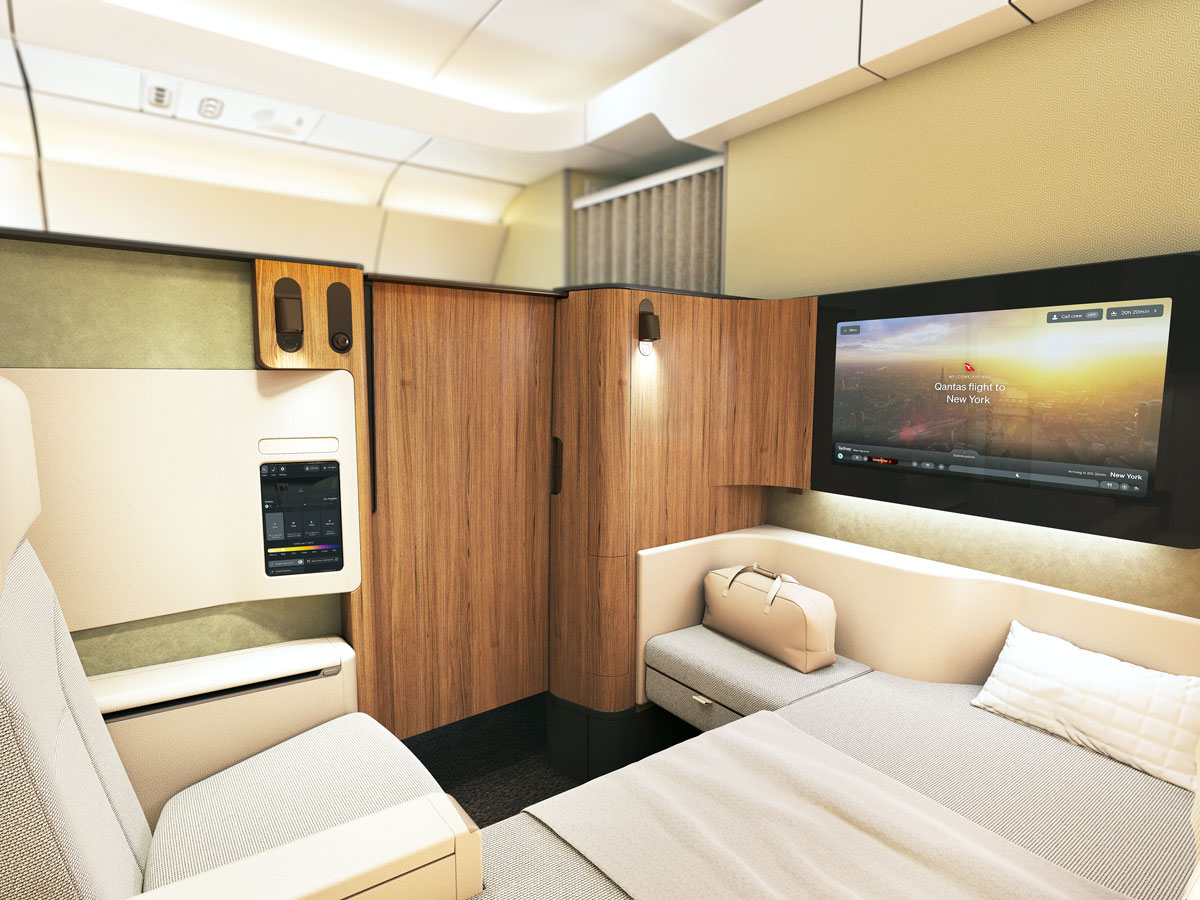
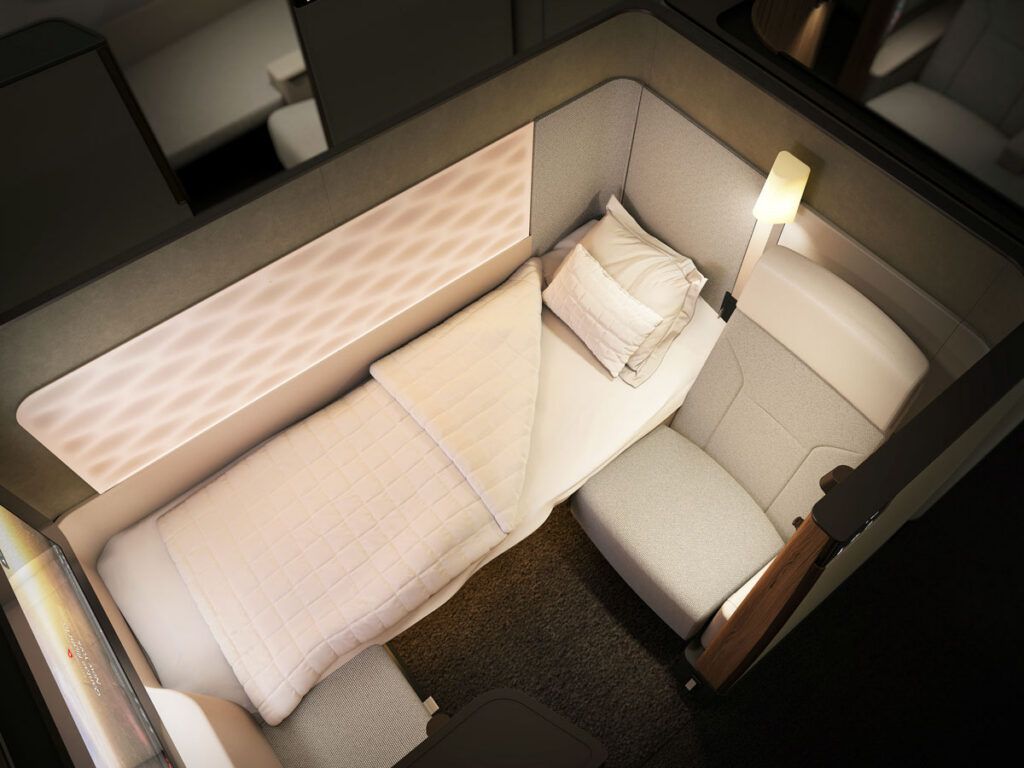
Flying such long distances clearly takes a toll on the body, something Qantas took into consideration when designing the cabins of the new planes. The interior includes a lighting system meant to mimic sunrise and sunset. It’s based on circadian-rhythm science, helping passengers adjust to each time zone and minimize jet lag upon arrival.
The airline is planning the lowest-density configuration of any Airbus A350 in service, with only 238 seats. (In contrast, the A350-1000s at Qatar Airways have up to 395 seats.) More than 40% of the seats on Qantas’ planes will be premium, with six first-class suites, 52 business-class suites, and 40 premium-economy seats, the latter of which are wider and roomier than those found in standard economy. Toward the back of the plane, travelers will find 140 economy seats, some of which will offer an extra inch or two of legroom.
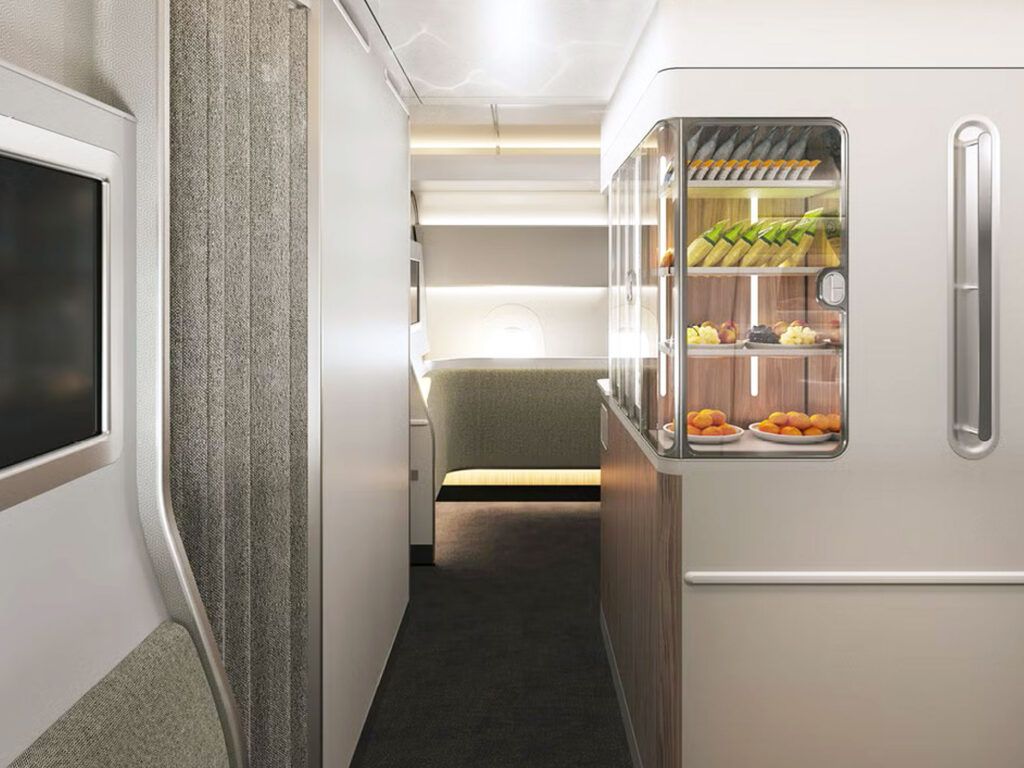
Qantas is also introducing a new concept called the “Wellbeing Zone” between the economy and premium economy cabins. It’s meant to promote movement, stretching, and hydration throughout the flight. The dedicated space will feature sculpted wall panels to lean on that are equipped with stretch handles, monitors with a guided on-screen movement program, and a hydration station with a selection of refreshments.
No matter which cabin you’re traveling in, you should find plenty to keep you entertained during your 20-plus hours in the sky. Qantas’ A350ULR will offer fast and free Wi-Fi in all cabins, Bluetooth audio connectivity for personal devices, and seatback entertainment screens with hundreds of TV shows and movies on demand.
Featured image credit: Image courtesy of Qantas
More from our network
Daily Passport is part of Inbox Studio, an email-first media company. *Indicates a third-party property.