


This Underrated Polish City Is an Architecture Lover’s Dream
This Underrated Polish City Is an Architecture Lover’s Dream
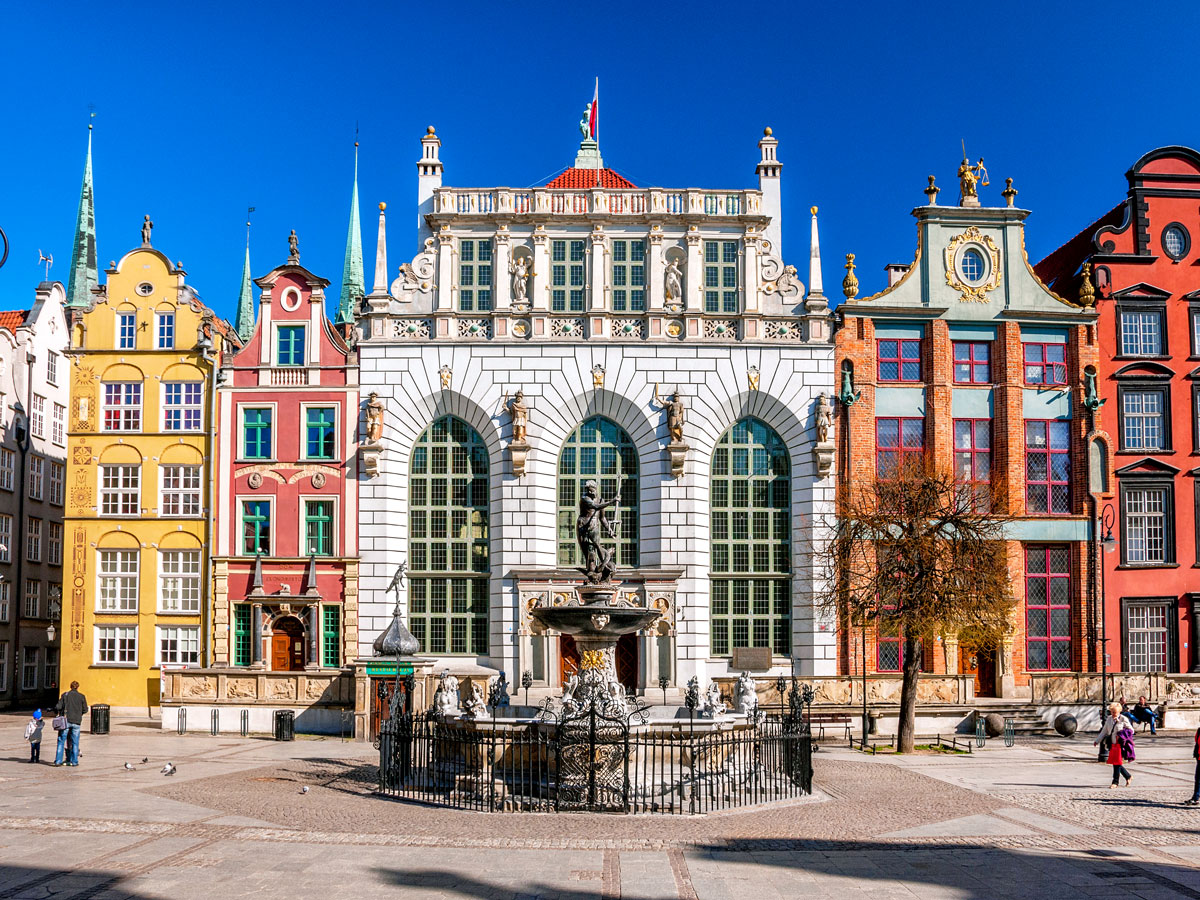

Europe is a treasure trove of beautiful historic architecture, but with so many places to take it all in, some cities fly under the radar. Gdańsk, Poland, is one such example. Its long and checkered past has resulted in a fascinating array of architecture. As you stroll along the city’s waterfront and through its old town, you have a window into a thousand years of history, though not everything is as it seems. Since around 90% of Gdańsk was destroyed during World War II, many of the buildings are in fact modern reconstructions. Let’s take a closer look at this underrated Polish city and why it’s an architecture lover’s dream.
The Early Years
The first written record of settlement in Gdańsk dates back to around 997 CE. Then, in 1308, the Teutonic Knights seized the city from the Kingdom of Poland and renamed it Danzig. Its position at the delta of the Vistula River close to the Baltic Sea meant that it was ideally situated for mercantile trade, and it flourished as a Hanseatic League port during that period. Thanks to the export of vast quantities of grain, timber, and amber, wealth flooded in, resulting in some of the city’s most magnificent buildings. Here are a few highlights:
St. Mary’s Basilica
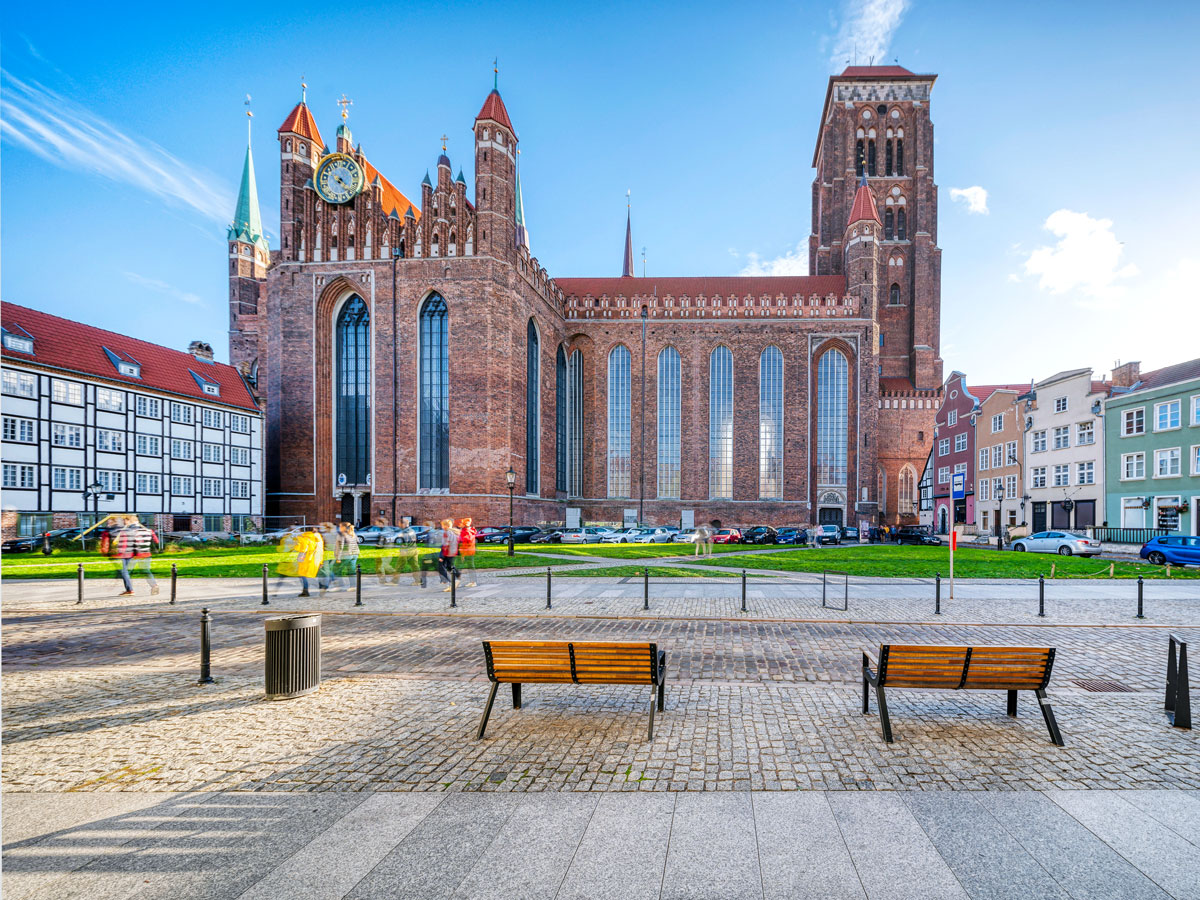
The foundation of this landmark church was laid in 1343, but work wouldn’t be completed for another 159 years. The brick structure was constructed in the Gothic style; it remains one of the largest Gothic brick churches in the world, with a capacity of around 20,000 people. Visitors can climb around 400 steps to the top of its 256-foot-tall tower for a remarkable view of the city.
The Great Mill
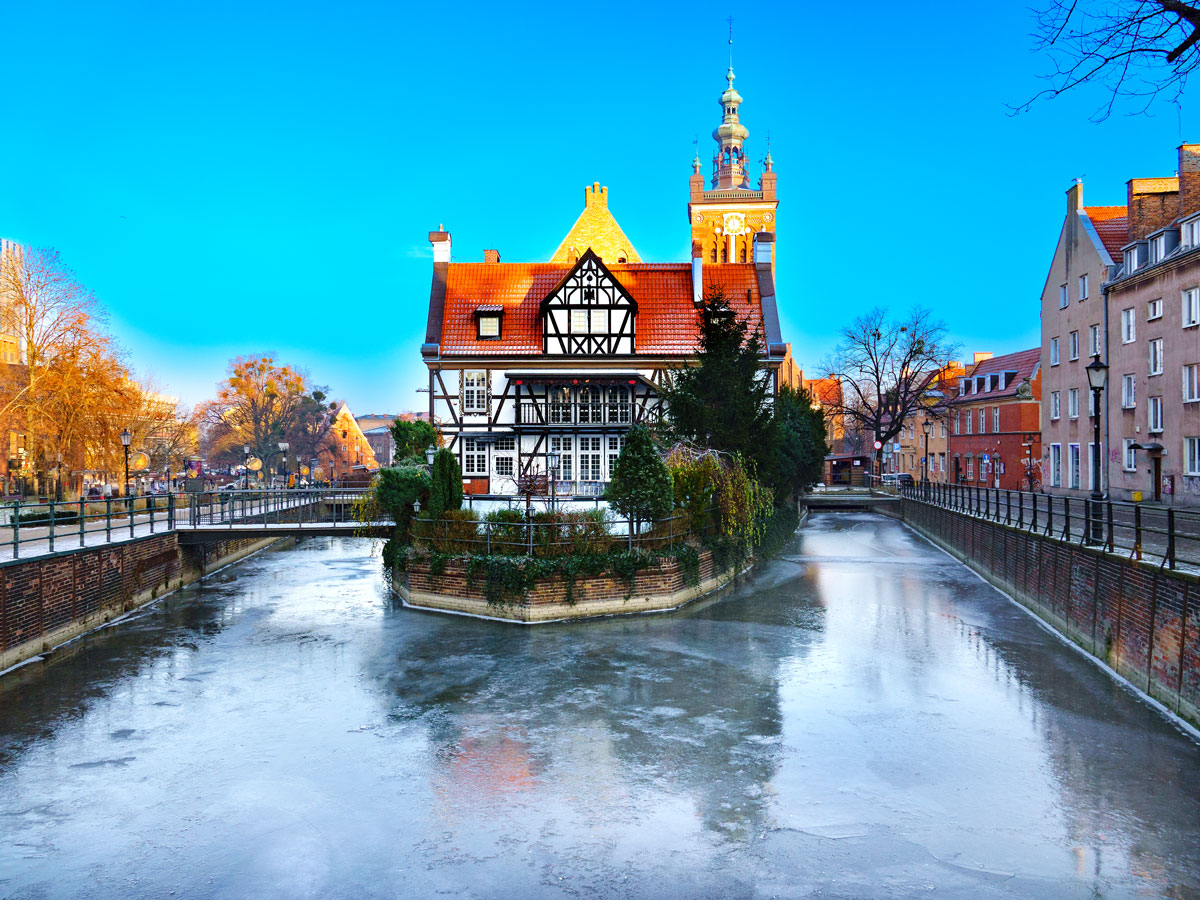
The Great Mill is another Gothic landmark that served a very different purpose from St. Mary’s Basilica. Built around 1350 on an artificial island, this watermill was powered by the adjacent Radunia Canal. Back then, there would have been many other mills nearby. The architecture of the Great Mill stands out for its steeply pitched roof and a relatively plain, largely functional design. Today, it houses the city’s Amber Museum.
Mariacka Street
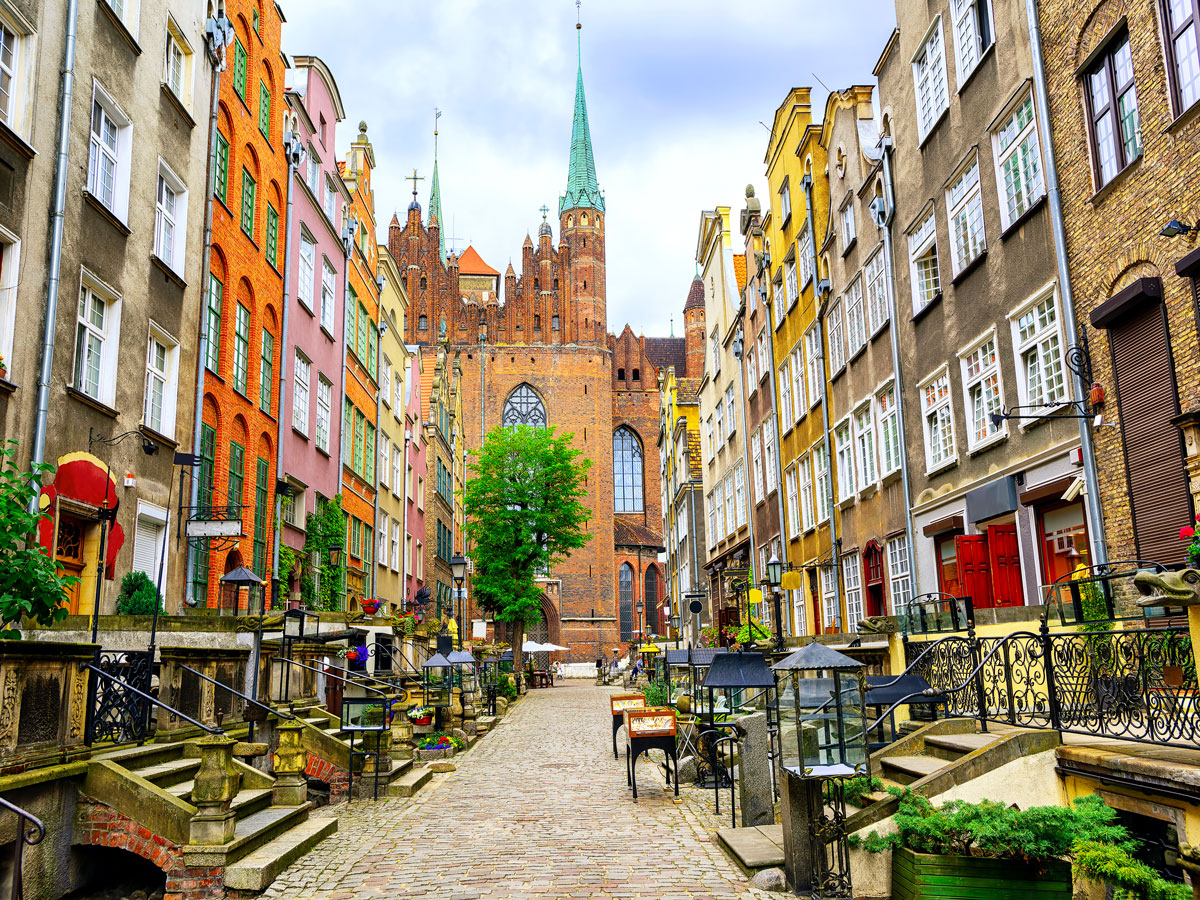
Mariacka Street, most likely first laid out in the 14th century, is one of the quaintest streets in Gdansk, drawing on Gothic, Baroque, Dutch Mannerist, and Renaissance influences in the architecture of its terraced houses. Many of these buildings are embellished with gargoyle rain gutters and ornate porches, which give the cobbled street added character. Rebuilt after World War II, the street connects the Motława River, a tributary of the Vistula, to St. Mary’s Basilica via St. Mary’s Gate.
Żuraw Gdański (Gdańsk Crane)
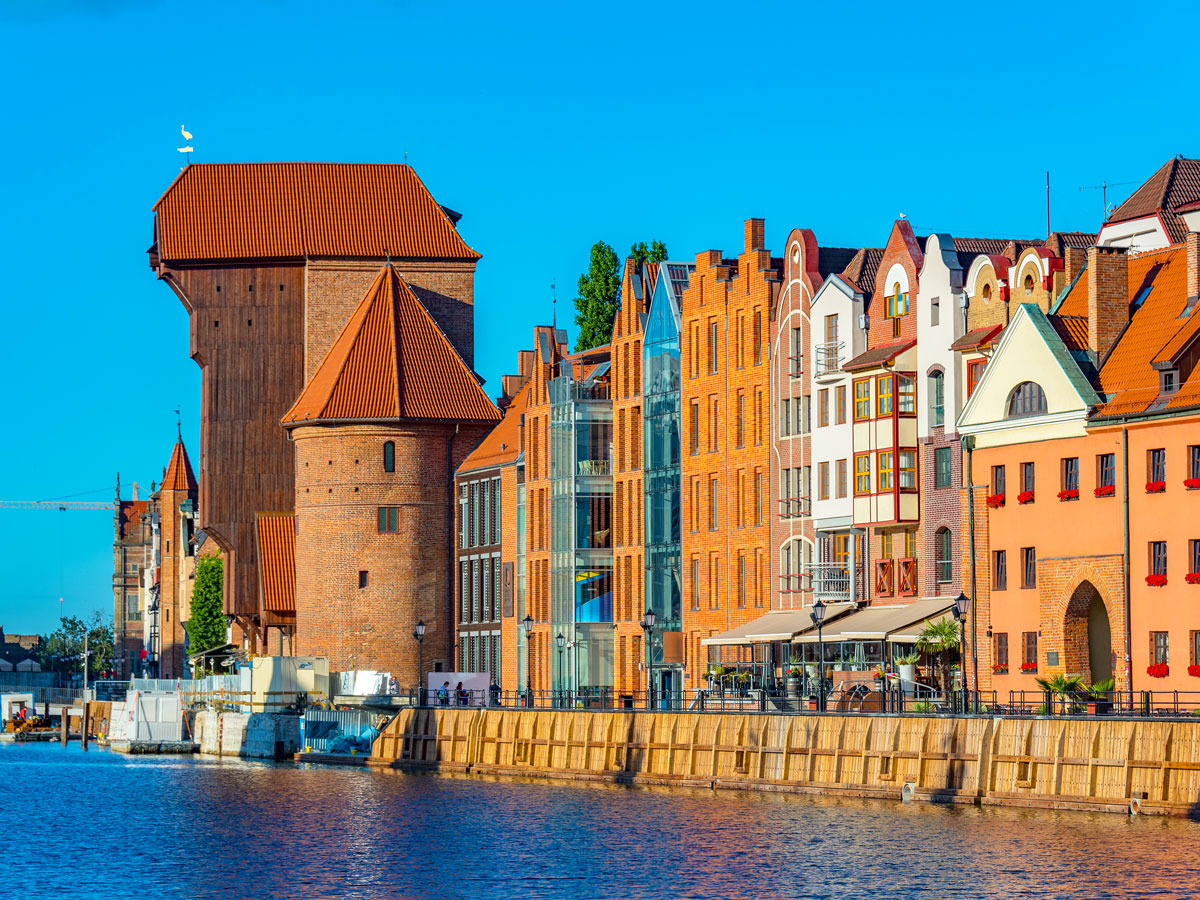
Gdańsk’s imposing waterfront crane is a reconstruction, since much of it was destroyed during World War II. Its story can be traced back to the 14th century, but the original wooden structure was lost in a fire in 1442, after which a masonry replacement, a dual-purpose building that was also a city gate, stood for centuries as the largest medieval port crane in Europe. Two massive wooden treadwheels enabled heavy goods to be unloaded from ships on the quayside.
Gdańsk Main Town Hall
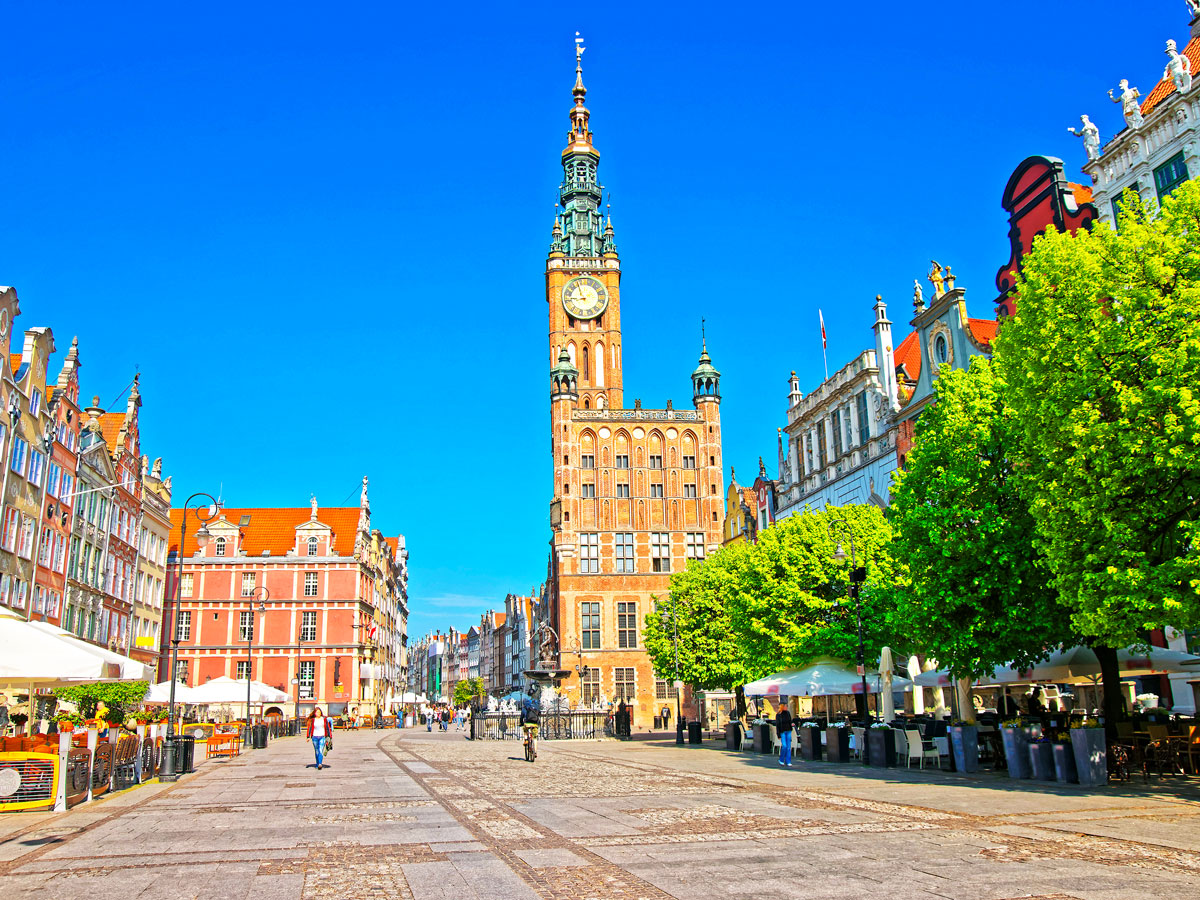
The city’s medieval Main Town Hall is now a museum. Dating back to 1346, the building is a delightful blend of Renaissance and Gothic architecture. Set foot inside to admire the richly decorated interior halls, which were redone in the 16th century in Dutch Mannerist style. In particular, the fabulous painted ceiling of the Sala Czerwona (Red Room) illustrates the substantial wealth accrued by the city merchants who helped finance it.
A Political Tug of War
In the 15th century, Polish-Lithuanian forces regained control of the city, but in the following centuries it was attacked by the Russians and then fell to the Prussians. Napoleon had a hand in its destiny for a short time beginning in 1807, before French forces were forced to surrender in 1814, after which Danzig became Prussian again. Below are a few standout buildings from the 15th to 17th centuries.
Artus Court
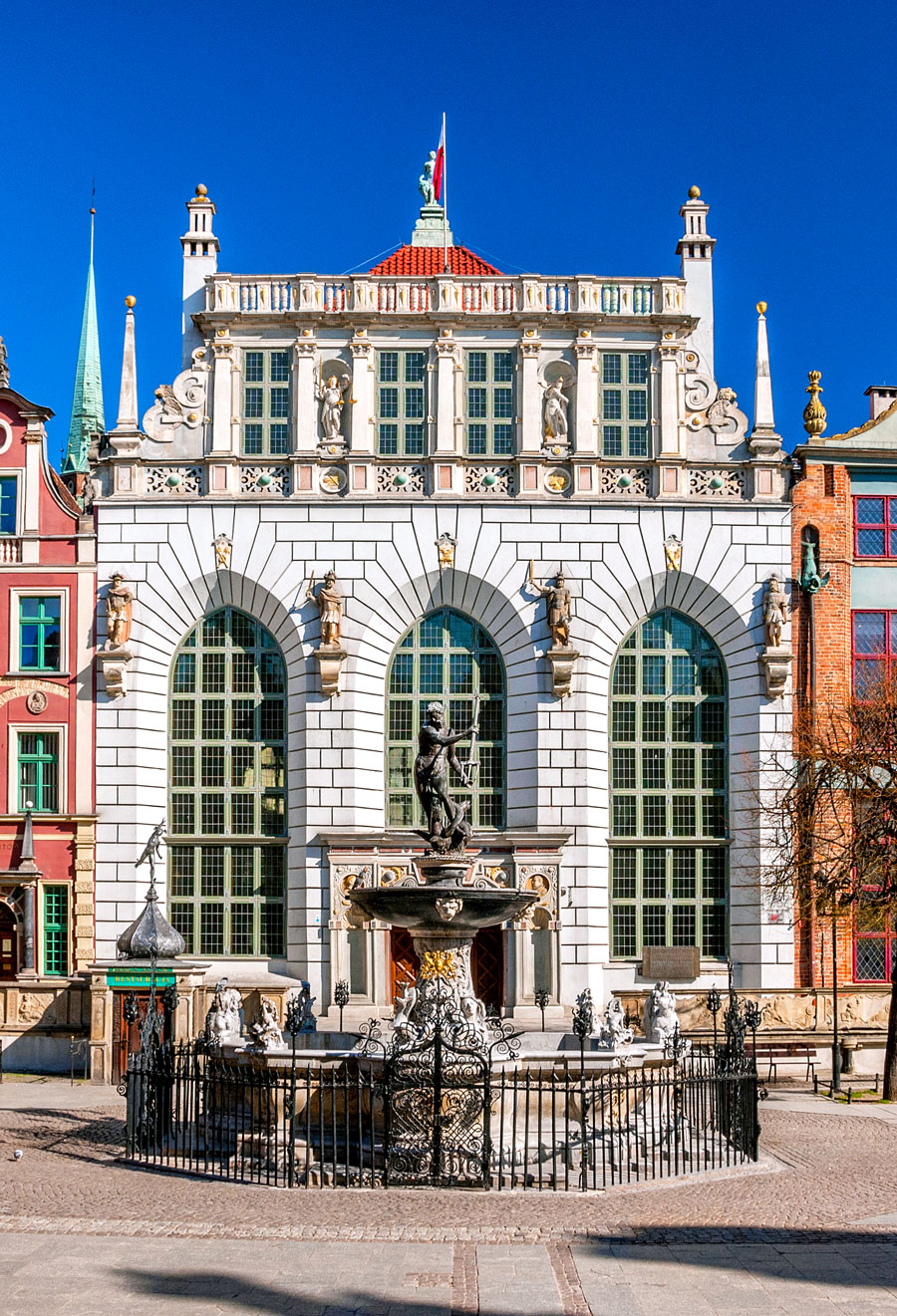
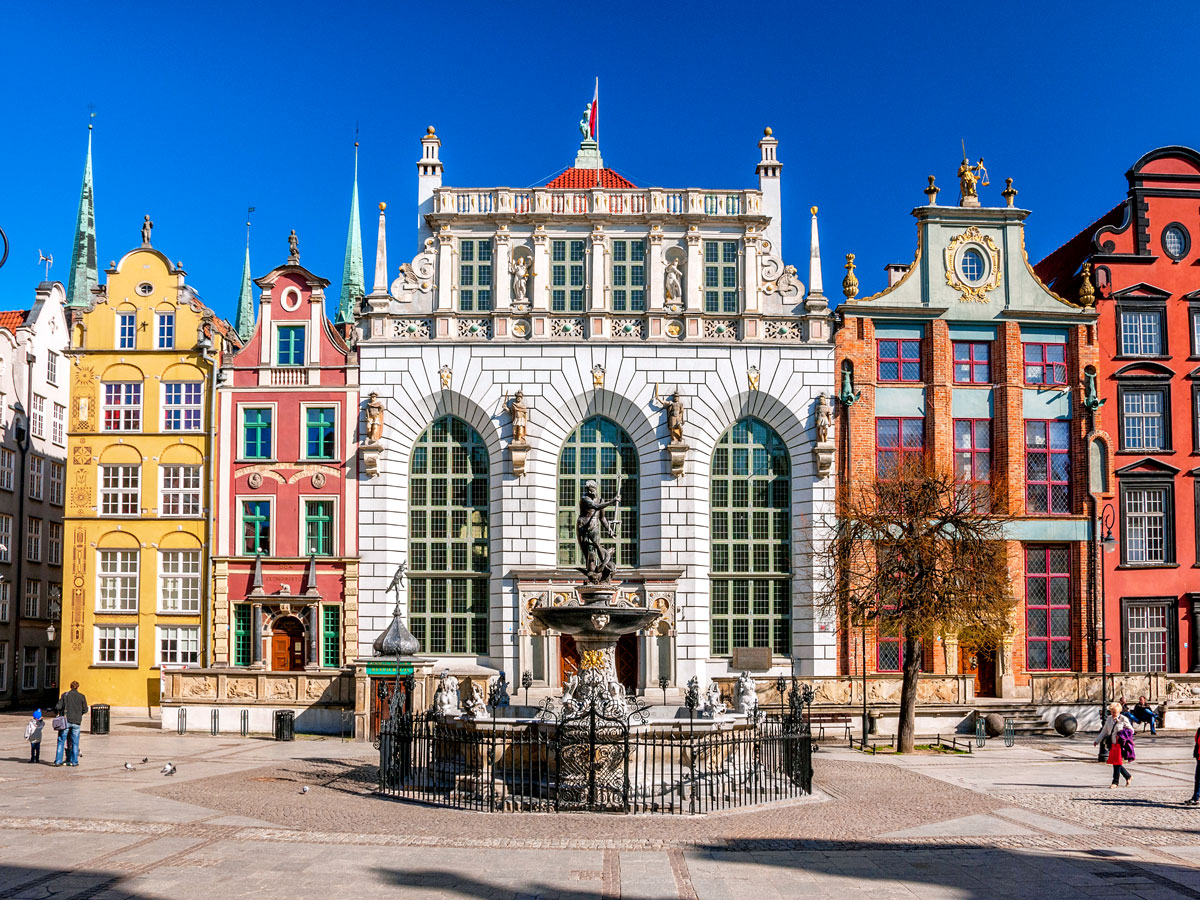
The Gothic-style Artus Court in Gdańsk was constructed in the 1470s, and its elaborate white façade demands attention. It has served various functions over the years, including stints as a base for merchant guilds, a courthouse, and the city’s stock exchange. Today, it’s a museum. Inside, you’ll find a magnificent 16th-century stove that stands about 35 feet tall. The colorful handmade tiles that adorn it — depicting royalty, coats of arms, and allegorical characters — are almost all original.
The Great Armoury
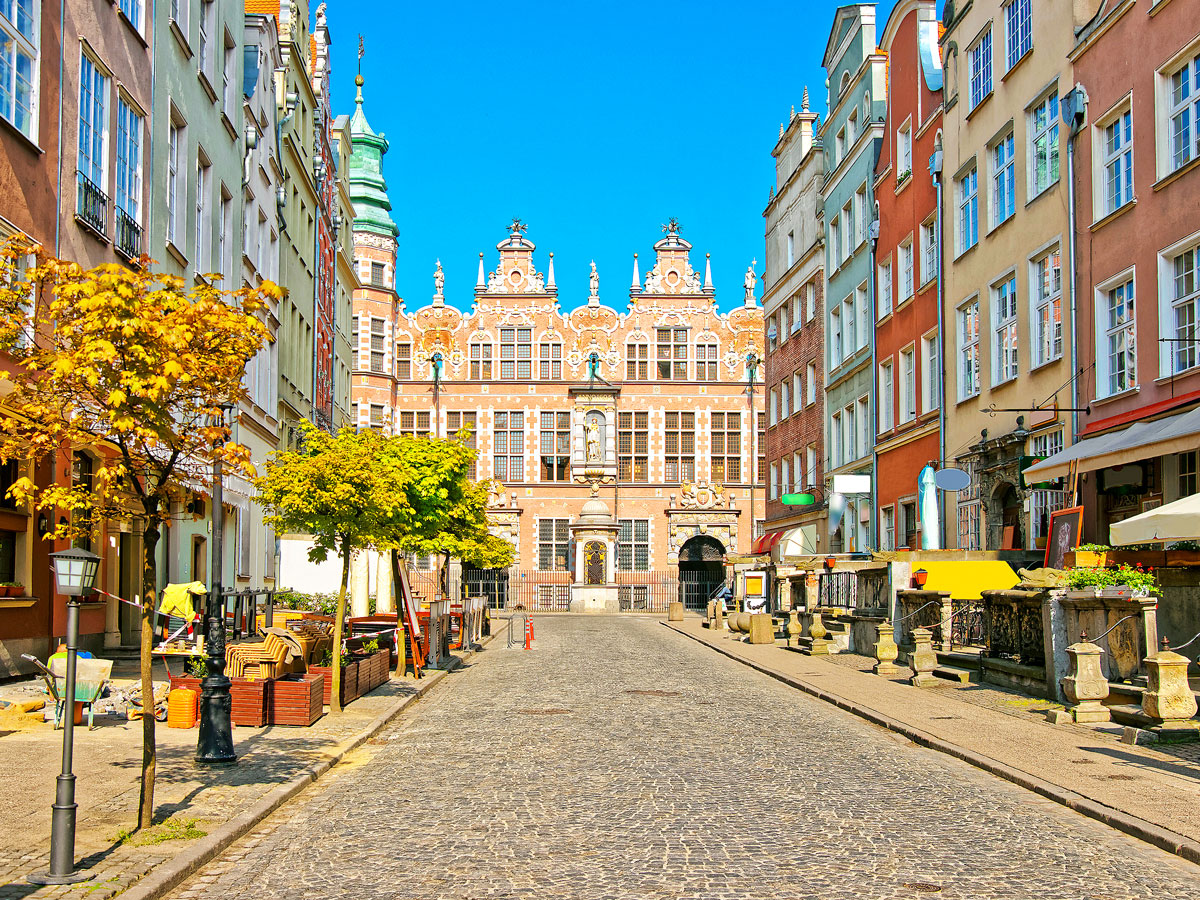
The sumptuous Renaissance architecture of the Great Armoury, built at the start of the 17th century, was the work of Flemish architect Anthonis Van Obbergen. What looks like a well in front of the building served a different purpose, enabling cannonballs and gunpowder to be easily lifted from the basement to ground level. Following extensive damage in World War II, the armory was painstakingly restored and now houses the Academy of Fine Arts.
Neptune’s Fountain
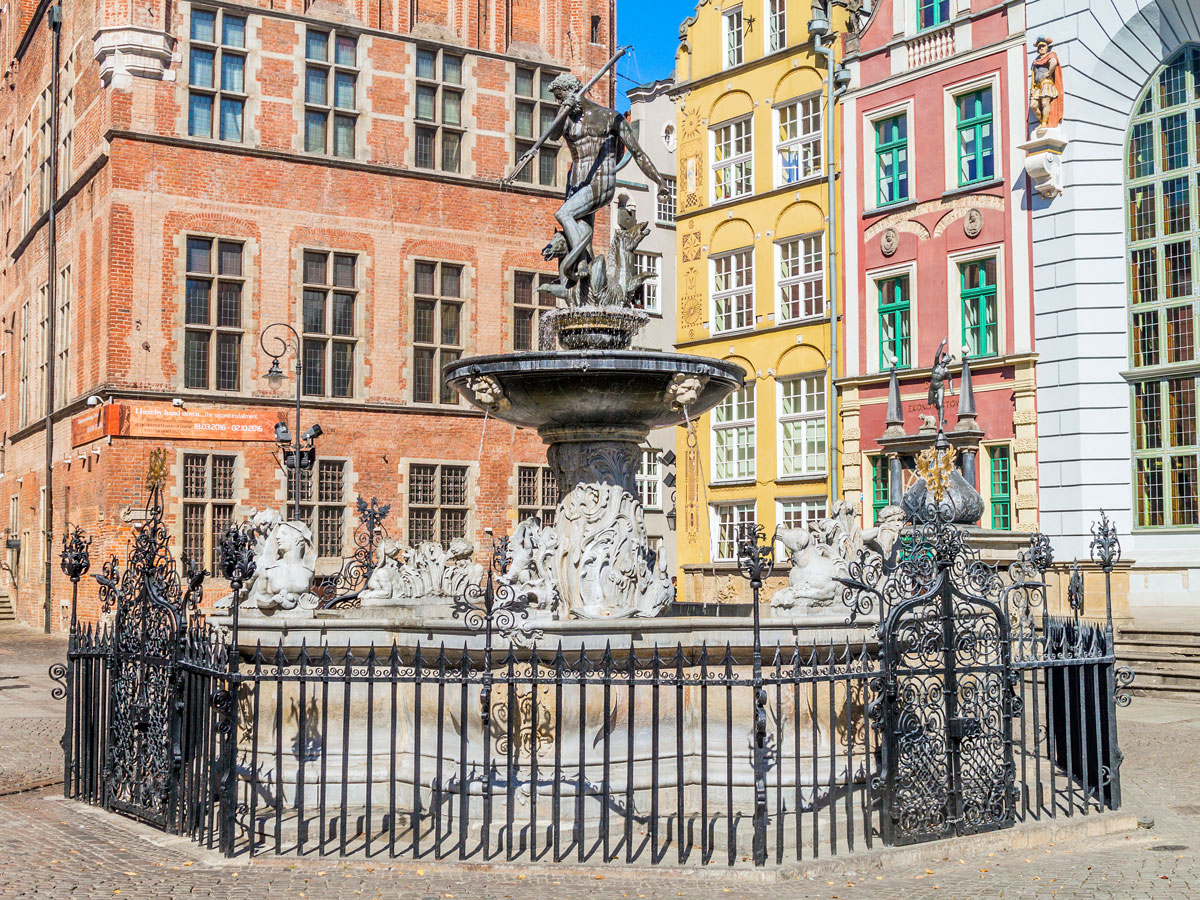
A splendid fountain depicting Neptune with his trident dominates the Długi Targ (Long Market Square). Positioned in front of the city’s town hall beside Artus Court, the fountain has stood there since the early 17th century. The central bronze sculpture was the work of Flemish artist Peter Husen. Soon after it was built, the sculpture was adapted to become a fountain that blends Dutch Mannerist and Rococo elements in its ornate design.
The Modern Era
After World War I ended, the League of Nations established the semiautonomous Free City of Danzig that gave Poland access to the Baltic Sea while remaining separated from Germany. Soviet-controlled Poland finally reclaimed Gdańsk after World War II. With the city having been almost entirely razed to the ground during the conflict, anti-German sentiment was prevalent during this era. When rebuilding their city, the Poles were keen to erase any trace of their foe and instead opted for architecture that wouldn’t have been out of place in Amsterdam. These types of buildings are most prevalent today.
Museum of the Second World War
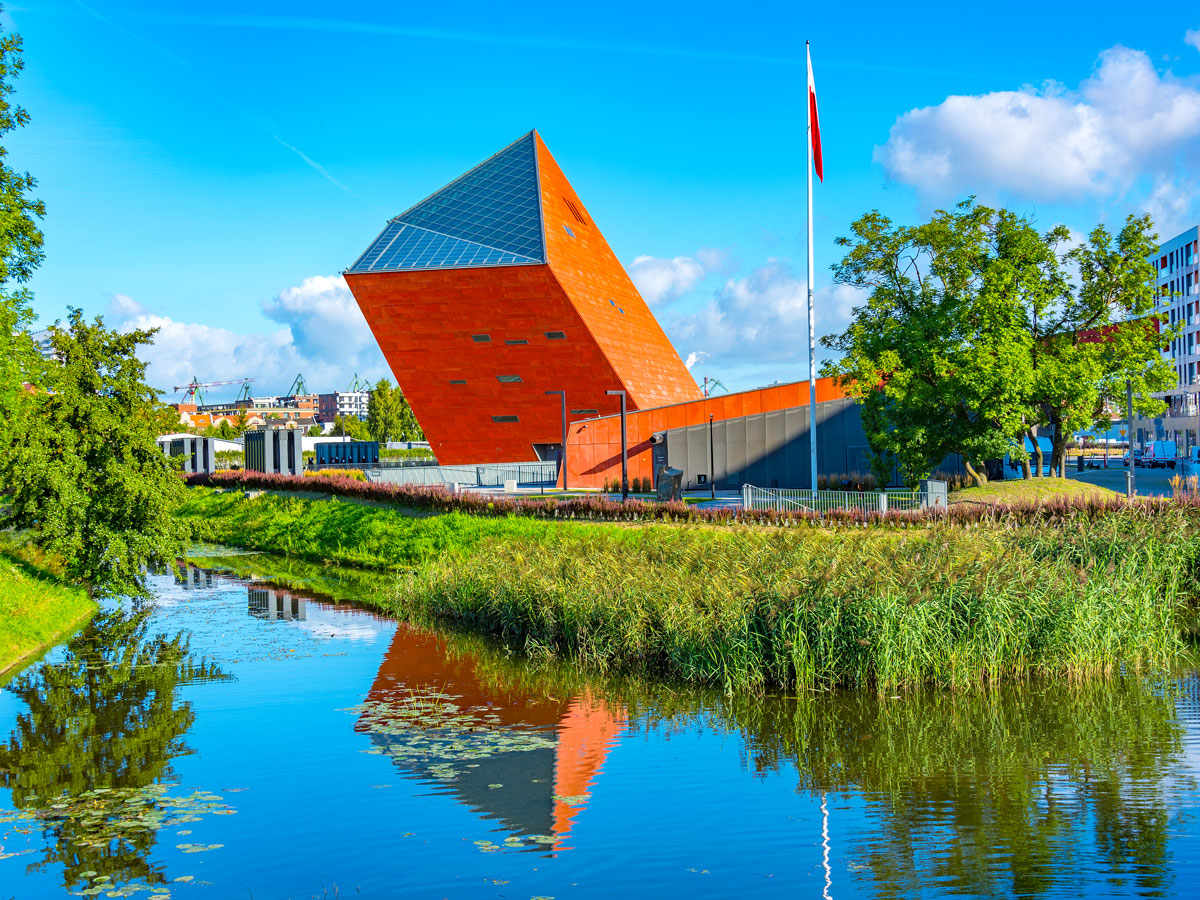
The geometric shapes that define the architecture of Gdańsk’s Museum of the Second World War make this a firm favorite with lovers of modern architecture. The collection explores the city’s role as the invasion site that drew the Allies into the prolonged conflict while also serving as a memorial to the fallen.
Gdańsk Shipyard and the European Solidarity Centre
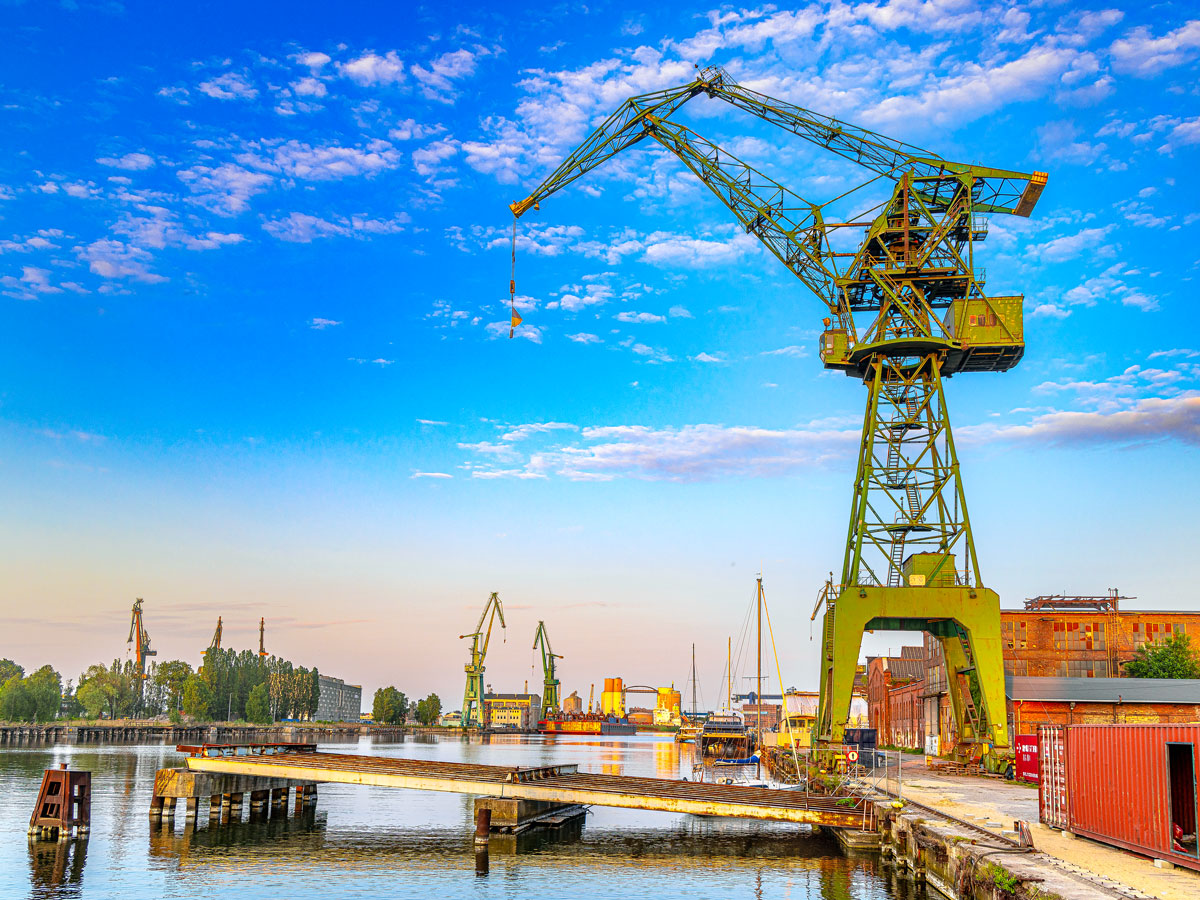
The Gdańsk Shipyard is known as the birthplace of the Solidarity movement, which played a pivotal role in the fall of Communism and thus Poland’s path to independence. This working shipyard is striking, though semiderelict; it employs a fraction of its heyday workforce, and its oldest cranes have been left to rust. Learn about the importance of the shipyard to Gdańsk’s heritage through exhibits on display at the European Solidarity Centre, built in the contemporary industrial style, or on a guided walk with Walkative.
More from our network
Daily Passport is part of Inbox Studio, an email-first media company. *Indicates a third-party property.