






Traveling to Europe Soon? Prepare for Long Lines at Border Control
Traveling to Europe Soon? Prepare for Long Lines at Border Control


While Americans continue to visit Europe in record numbers, they’ve faced a few road bumps as of late. Some popular European hubs have experienced chaotic scenes at border control, with lines snaking around terminals and widespread confusion due to a new digital security system introduced this spring. If you have an upcoming trip to Europe booked, here’s what to know about the situation and how best to prepare.
What Is the EES?
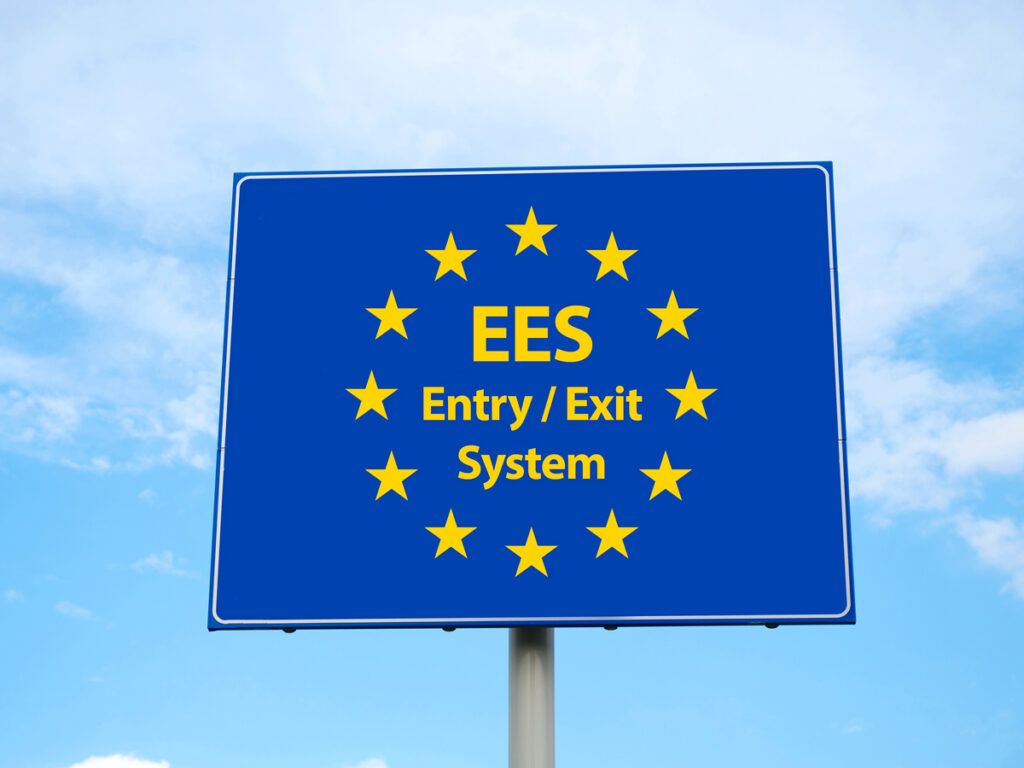
Europe’s Entry/Exit System (EES) went into effect on April 10, 2026, though it had been partially rolled out and trialed in the months leading up to that date. It requires all non-EU nationals to register each time they cross a European border. The system is designed to replace manual stamping of passports — which the EU views as time-consuming, inefficient, and vulnerable to fraud — with electronic passenger details and biometrics.
The requirements remain the same for tourist stays: Visitors may stay for a maximum of 90 days in any 180-day period. If you wish to stay longer, you’ll need to apply for a visa instead. Participating countries in the EES include almost all member states of the EU, plus Iceland, Switzerland, Liechtenstein, and Norway. However, travelers won’t have to submit their biometrics if they visit only the Republic of Ireland or Cyprus, as these non-Schengen nations are not participating in the program.
Teething Problems
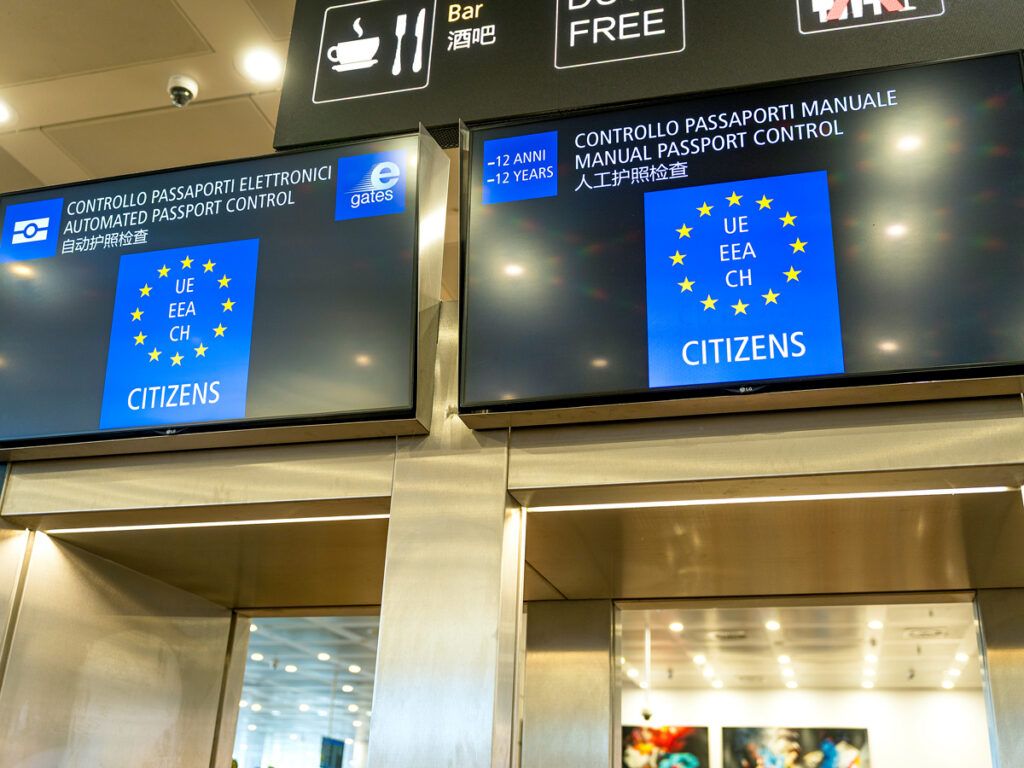
On July 1, 2026, Airports Council International (ACI) published an open letter to the EU criticizing the EES rollout. It stated: “The current implementation of the EES is creating severe operational consequences disrupting passengers and putting border authorities, airports, and airlines under unsustainable pressure. We therefore urge your immediate intervention before the situation deteriorates further during the peak summer travel season.”
Low-cost airline Ryanair has also been highly critical of the EES rollout, calling for a pause on the program until after the peak summer season. In a July 2 press release, the budget carrier highlighted airports that it considered especially unprepared, including Tenerife South, Palma, Alicante, and Malaga in Spain, as well as Krakow in Poland, Milan Bergamo, and Paris Beauvais.
Indeed, the International Air Transport Association (IATA) has warned that queues in some airports could be as long as six hours. While some passengers have breezed through passport control in a matter of minutes, others have missed flights due to lengthy delays.
Italy’s airports have been repeatedly affected, with exceptionally long lines reported in Rome, Milan, Verona, and Pisa. In April, it was reported that a flight from Milan’s Bergamo Airport to Manchester, England, took off while leaving 100 of its passengers behind. They were stuck in border control lines at the airport and didn’t make it to the gate in time. Unfortunately, it was not an isolated incident.
What’s Causing These Problems?
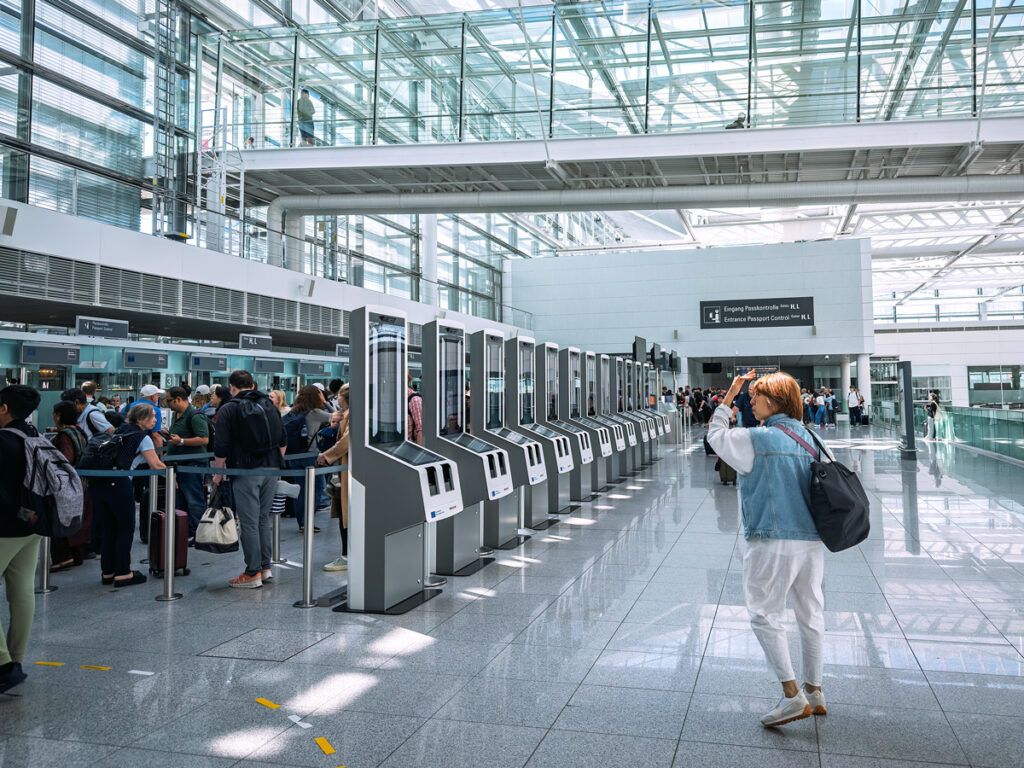
An airport’s ability to process passengers through border control in a timely fashion varies according to a wide range of factors, from the availability of border control officials to machine availability (and reliability), the spacing of arriving flights, and the proportion of non-EU nationals to EU passengers. This means wait times can vary widely, even within the same airport on the same day.
Under the new system, travelers are required to use electronic kiosks to scan their passports and collect fingerprints. (In some airports without kiosks, border control agents manually process these details.) Unfortunately, many passengers have reported that the process can be cumbersome, and the kiosks themselves have experienced outages or persistent software glitches, requiring passengers to start the process over and increasing the bottleneck at border control.
Couple that with staffing shortages and the fact that the new system arrived just as the peak summer travel season in Europe was kicking off, and you have a recipe for long lines and problematic delays.
Steps Travelers Can Take

While the EU has stood by the new system, saying its security advantages outweigh the inconvenience experienced by travelers at some airports, it has also allowed member states to suspend the new border checks during periods of exceptionally high passenger volumes. The New York Times reports that Rome’s main airport, Fiumicino, has been doing so on a near-daily basis this summer.
Aside from avoiding countries participating in the EES scheme altogether, travelers have a few options. If you’re planning to visit Portugal or Sweden, it’s possible to preregister your details using the Travel to Europe app. You can enter your dates of travel up to three days in advance, which will enable you to confirm your identity and answer a few questions about your trip, including your accommodation plans and access to funds. Border officials may ask to verify that the information you’ve given is correct, but in theory, using this app should speed up the process.
Try to book nonstop, where possible, or if you have a connection, book an extra cushion to account for possible border delays. Frommer’s recommends a minimum of three hours. But if you have a choice of layover airport, consider those that don’t require EES checks, such as London-Heathrow, Dublin, or Istanbul.
Traveling light can help, too. Passengers who don’t need to wait for airline baggage check-in to open can arrive earlier and complete border formalities sooner so they have more time to relax in the airport.
More from our network
Daily Passport is part of Inbox Studio, an email-first media company. *Indicates a third-party property.