






The Most Challenging Airports for Pilots To Fly To
The Most Challenging Airports for Pilots To Fly To


For most of us, the hardest decision we’ll have to make when flying is what movie to watch or what beverage to order. But while we relax during a journey, pilots are preparing for the most demanding part of a flight: the landing. Airports are typically designed to make this job as easy as possible, but there are some that test even experienced pilots. From airfields located in mountain valleys to ones with short runways and constantly changing winds, here are six of the world’s most challenging airports to fly into.
Aspen/Pitkin County Airport – Colorado
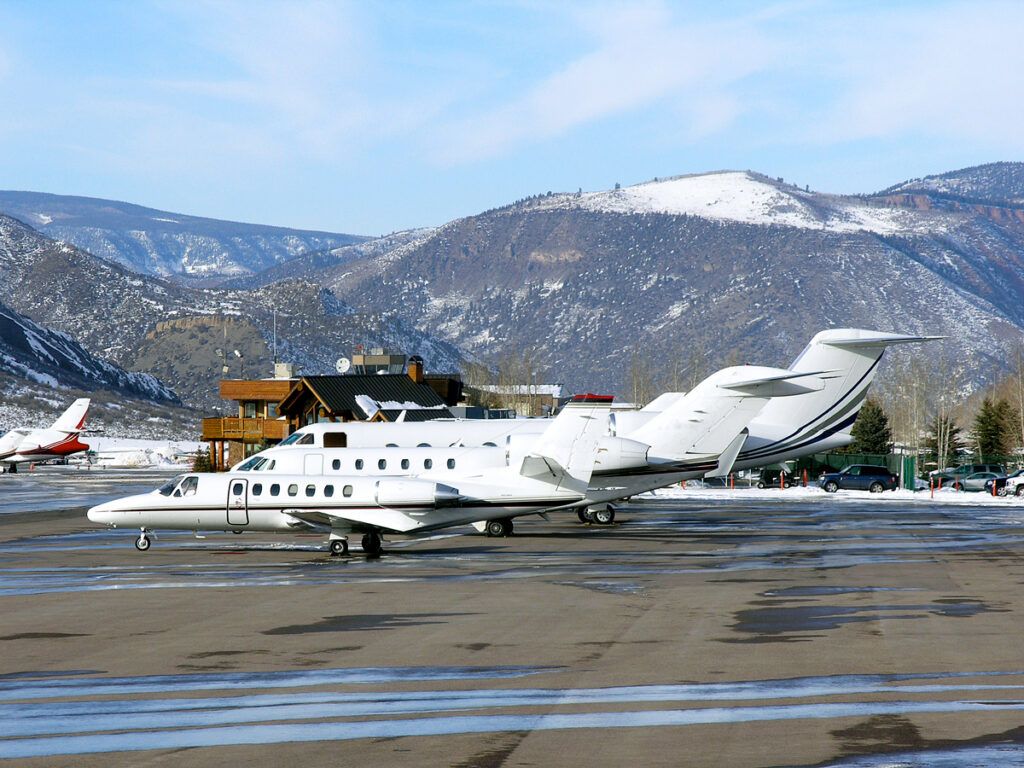
Nestled in Colorado’s Rocky Mountains, Aspen/Pitkin County Airport is the gateway to one of America’s most famous ski resorts. Just minutes from the runway are world-class slopes, upscale lodges, high-end shopping, and opportunities for year-round hiking. However, reaching the town by air is another story. The airport sits in a narrow valley framed by towering, often snow-capped peaks. And at 7,820 feet in elevation, the air there is thinner, which reduces a plane’s performance and requires faultless calculations by pilots and dispatchers.
Changing mountain weather, like turbulence-creating wind patterns and visibility-reducing snowstorms, add to the challenge. The approach is also steeper than standard, meaning pilots rely greatly on visual flying rather than instruments during the final approach to the short runway. The difficulty of operating at Aspen Airport is such that the Federal Aviation Administration (FAA) requires specific training, with SkyWest Airlines (which operates regional flights for airlines like United, Delta, and American) currently the only airline with certified crews.
Cristiano Ronaldo International Airport – Madeira, Portugal
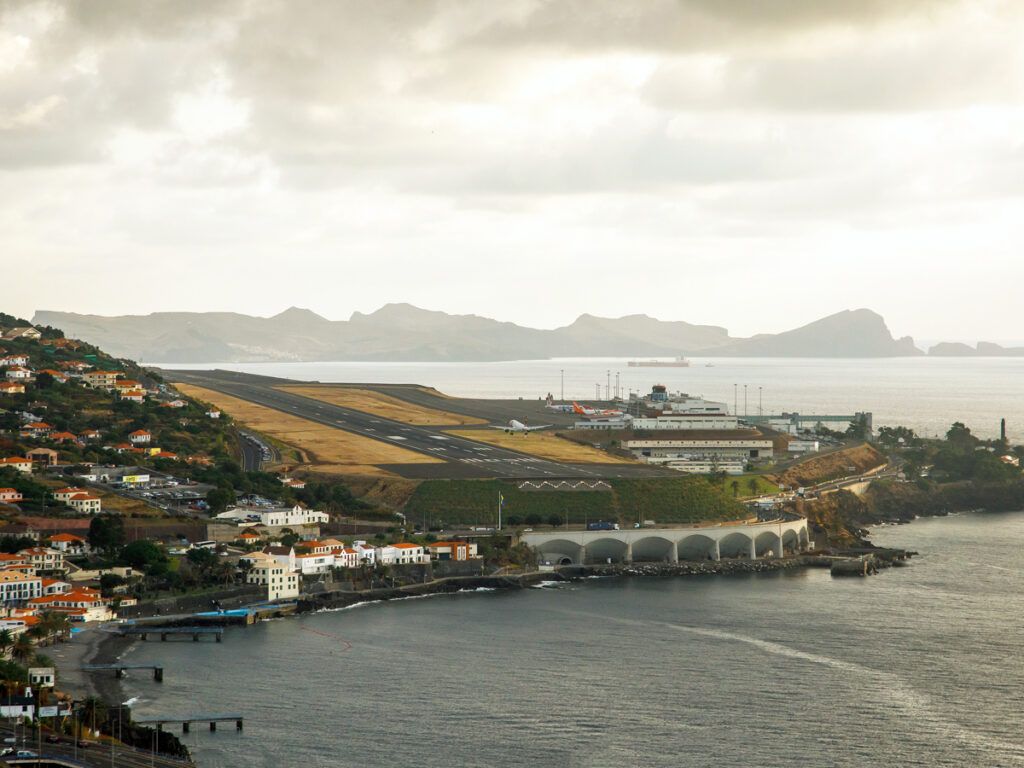
The Portuguese island of Madeira is home to one of Europe’s most technically demanding commercial airport landings. It’s influenced by the airport’s location between the Atlantic Ocean and nearby mountains, leading to strong coastal winds, unexpected gusts, and an approach that can’t be flown in a straight line. Until 2000, the runway measured just 5,900 feet; its current length of 9,124 feet was made possible by an extension constructed on pillars stretching over the ocean.
Even with the technological capabilities of modern aircraft, pilots have to complete special requirements to operate here. This can include simulator training with extreme weather conditions, along with takeoff and landing observations from the cockpit jump seat. From a passenger perspective, it makes for a sometimes adventurous approach to the Hawaii of Europe, famed for its black-sand beaches, waterfall hikes, and fortified wine.
London City Airport – England
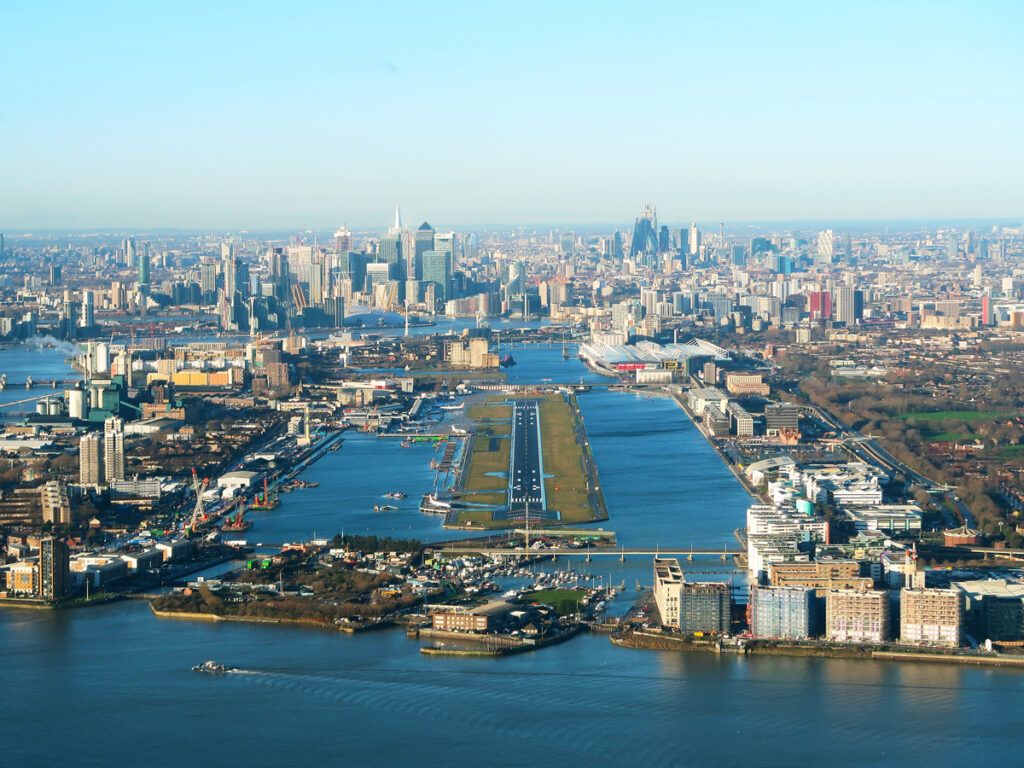
London City Airport packs several challenges into the U.K.’s busiest urban area. To begin with, aircraft arrivals require a steep 5.5-degree approach angle, which is nearly double that of a standard descent. This is to make sure that aircraft safely clear the skyscrapers of the nearby Canary Wharf before landing. The 4,948-foot-long runway is also shorter than the runways at most international airports, leaving little room for error. In addition, the airport is surrounded by the Thames River and Royal Docks, making overshooting into water a potential hazard.
The airport’s location at the edge of central London further complicates matters. Operational hours are limited, and there are strict noise pollution regulations. Pilots must, therefore, be meticulous when managing engine power and climb rates. Furthermore, fewer navigational aids make touching down in poor weather more demanding. The rewards, however, are takeoffs and arrivals with sweeping views over London, plus convenient access to the Docklands Light Railway, before connecting to the Tube to check out the city’s world-famous attractions.
Paro International Airport – Bhutan
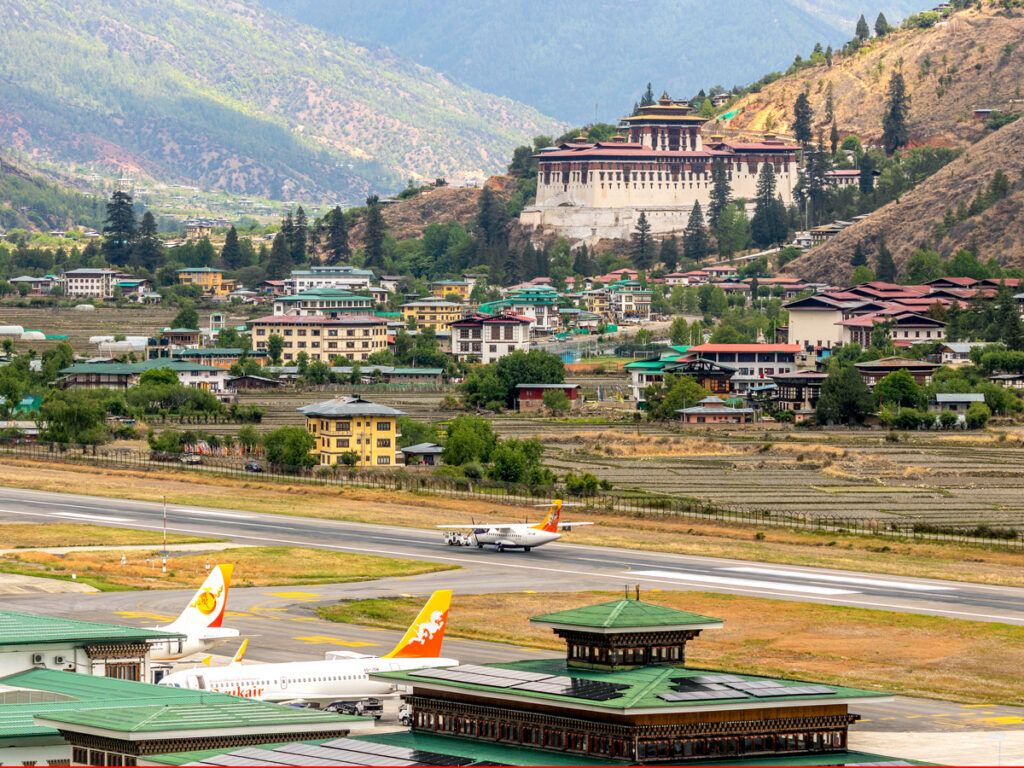
Bhutan is a mystical land of ancient monasteries, hilltop fortresses, and centuries-old Buddhist traditions in the heart of the Himalayas. However, only two airlines operate international flights to the country, and fewer than 50 pilots are qualified to land here. Earning that certification requires 1,500 hours of flying time, of which 500 should be mountain flying, followed by simulator tests, practical training, and 30 supervised landings.
Several factors make Paro International Airport a tricky place to fly into, chief of which is the fact that it sits at 7,364 feet above sea level and is encircled by 18,000-foot-tall Himalayan peaks. Pilots must weave through mountains and over village rooftops, which calls for pinpoint maneuvers. Moreover, the runway is visible just 1 to 2 miles out, and a lack of an Instrument Landing System (ILS) means pilots fly almost entirely by sight and hand.
Princess Juliana International Airport – St. Maarten

With planes landing seemingly within touching distance of beachgoers, Princess Juliana International Airport is in a class of its own. It demands the utmost accuracy from pilots the second the runway comes into view. Stretching 7,546 feet, the runway leaves relatively little margin for larger aircraft, so pilots aim to touch down as close to the threshold as possible. The approach takes them low over Simpson Bay before crossing the shoreline right before landing. Meanwhile, departing planes require maximum thrust to get airborne so they can make a sharp turn to avoid mountainous terrain at the other end of the runway.
These operational challenges have turned both the airport and Maho Beach into one of the world’s best planespotting destinations. Visitors gather on the golden sands, cameras in hand, waiting for the thrill of an aircraft passing less than 100 feet above them. Others linger to experience the blasts of sand sent flying across the beach as planes depart the island.
Tenzing-Hillary Airport – Nepal
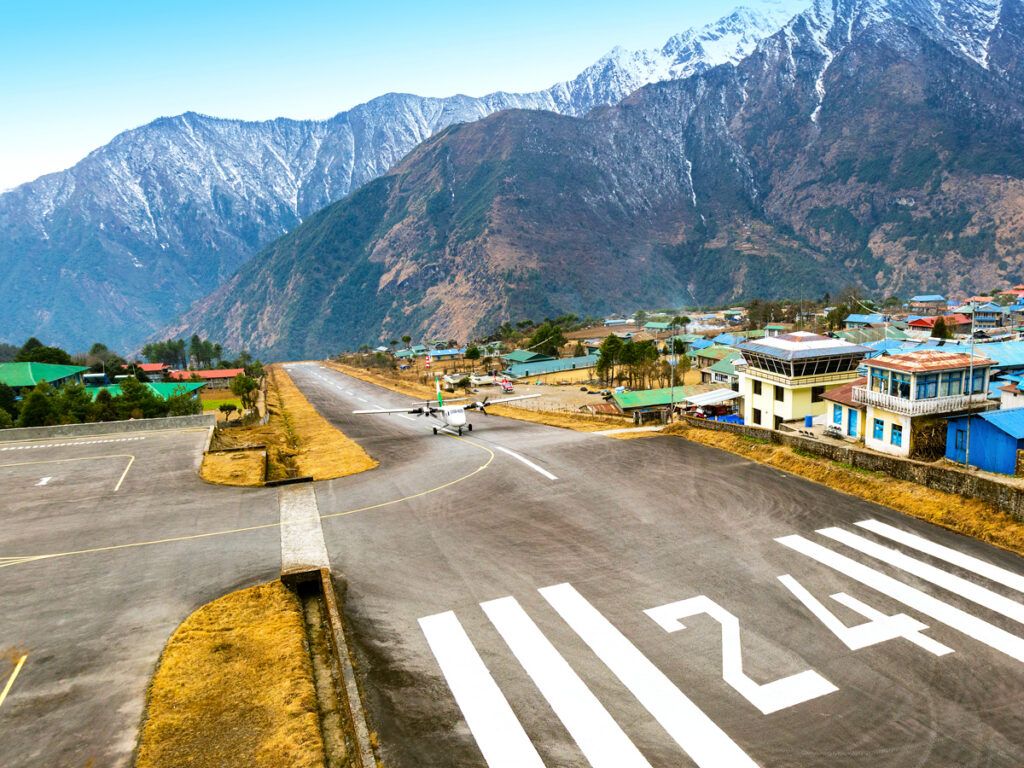
About a 30-minute flight from Kathmandu, Tenzing-Hillary Airport (also known as Lukla Airport) is the gateway to Nepal’s Everest region. It’s where trekkers begin their journeys up the world’s tallest mountain, and groceries and building supplies are delivered for members of the Sherpa community. For pilots, Lukla is considered one of the world’s most dangerous airports. Perched at 9,354 feet, the commercial airport has a notably short 1,729-foot runway set at a gradient of 12%. The uphill slope helps aircraft slow down after landing, while downhill takeoffs guarantee the speed needed before the runway drops off to the valley below.
With the airport and town enclosed by mountains, precision and timing are vital. For this reason, pilots must be specialists in short takeoffs and landings, as well as hold a certificate from the Civil Aviation Authority of Nepal (CAAN). Those who meet the criteria help meet the needs of everyday life in the Khumbu region, in addition to giving visitors access to Everest Base Camp and Sagarmatha National Park.
More from our network
Daily Passport is part of Inbox Studio, an email-first media company. *Indicates a third-party property.