





What Do Travel Warnings Actually Mean?

Travel warnings are official government reports that outline risks and precautions for citizens traveling to a foreign destination. They are updated regularly as conditions change, but without context, travel advisories can create confusion, spark unnecessary fear, or even lead to pertinent information being dismissed entirely. When used correctly, however, such warnings are powerful tools for staying safe while traveling. Here’s a helpful guide to what travel warnings actually mean for your next trip abroad.
U.S. Travel Advisory Levels
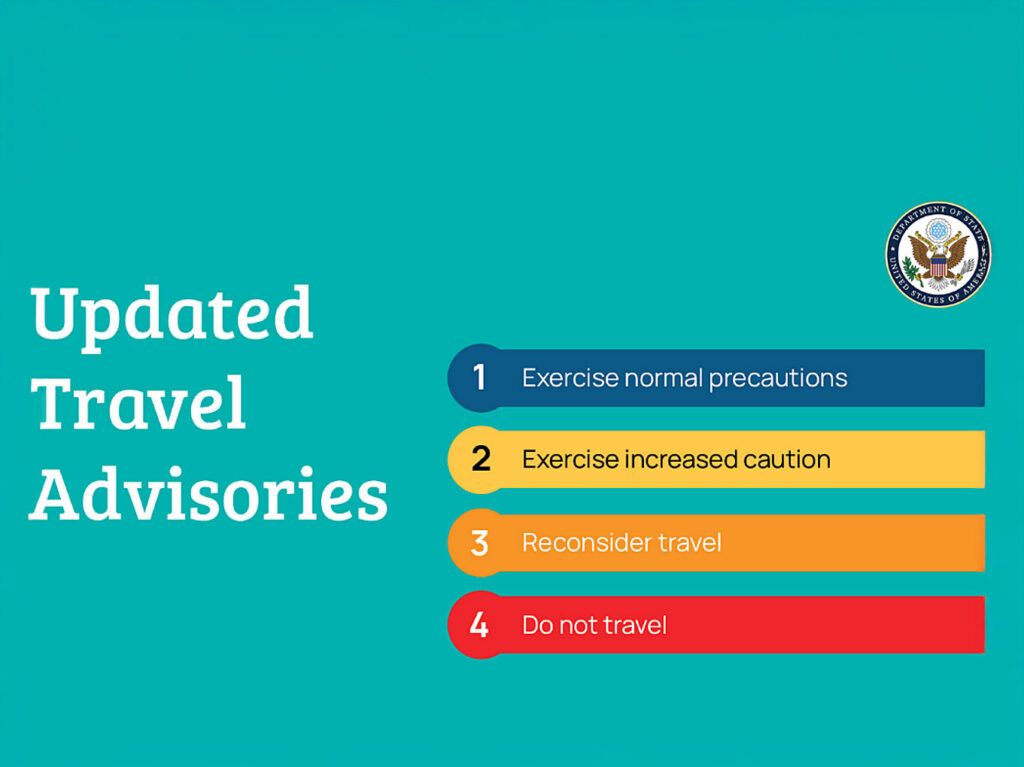
In the United States, travel warnings, which the U.S. Department of State officially calls travel advisories, are written specifically for U.S. citizens, nationals, and legal residents. They span four levels: Level 1 is the lowest threat, and Level 4 is the highest.
These advisories often apply to entire countries, even if only certain regions are impacted. The Department of State regularly reviews advisories and updates them as conditions change or new security concerns arise. At a minimum, Levels 1 and 2 are reviewed every 12 months, while Levels 3 and 4 are reviewed every six months, though updates can happen at any time.
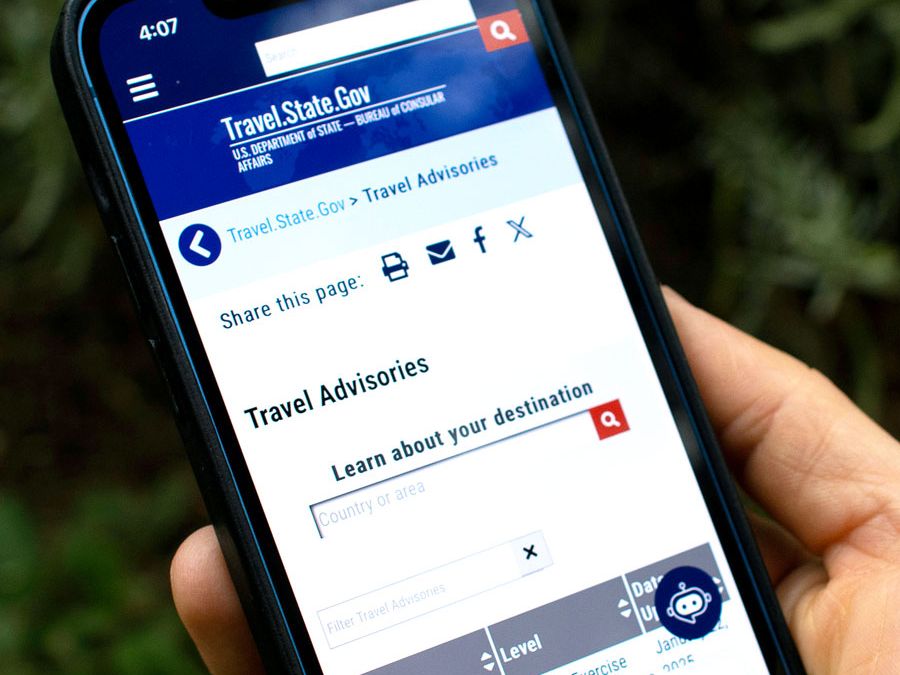
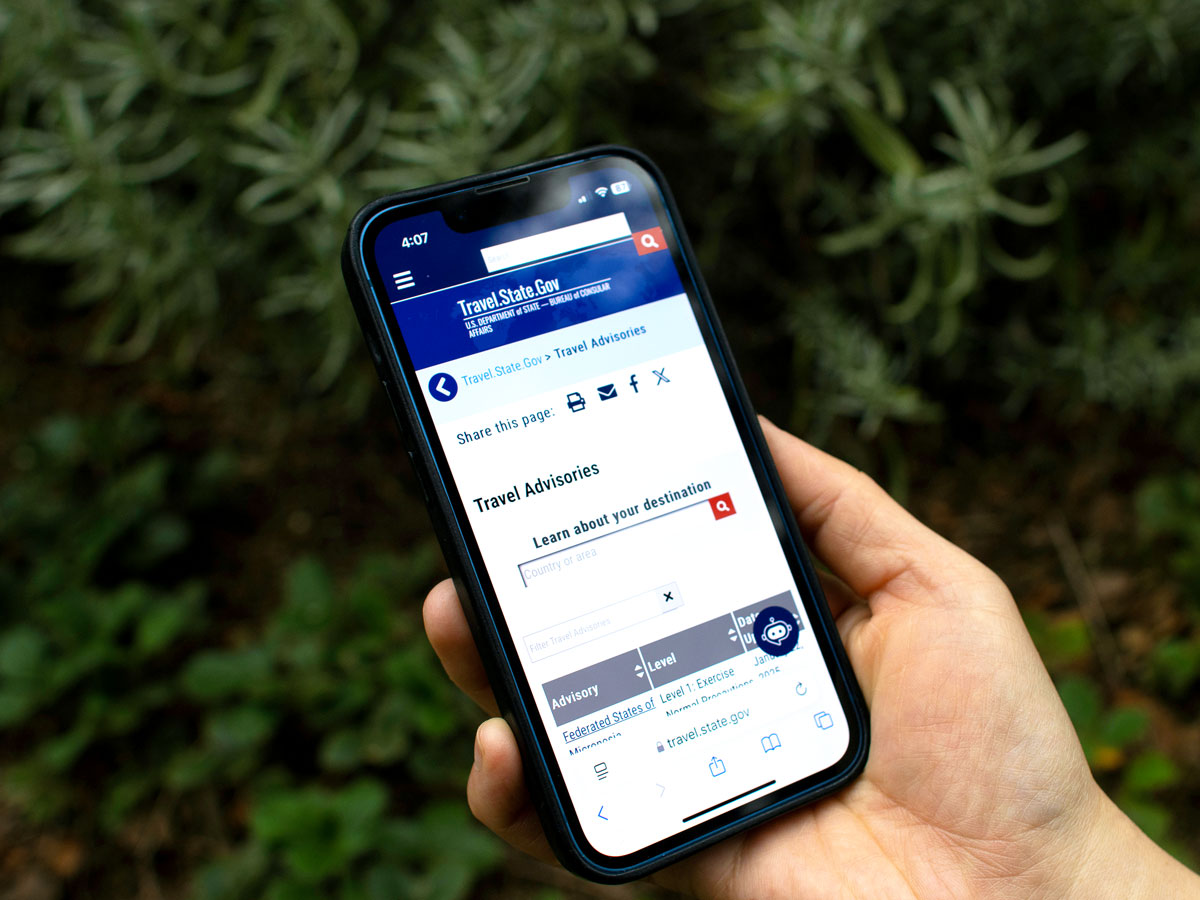
You can find these advisories on the Department of State’s website, which features a color-coded map and a search tool to help you quickly find your destination.
Levels 1 and 2: Lower Risk
Travelers can likely anticipate smooth sailing if their destination has a Level 1 advisory, under which the State Department suggests visitors should “exercise normal precautions.” Canada and Australia, for example, currently have Level 1 travel advisories for U.S. travelers. The State Department notes that while there is always some risk with international travel, this is the lowest-level advisory in terms of safety and security.
Level 2 advisories suggest there may be “increased risks to safety and security.” Many popular tourist destinations fall under this advisory, including most of Europe — Italy, Spain, France, and Germany, among other countries — as well as Peru, South Africa, and the Philippines. Specific risks are further outlined in travel advisories, including any areas that may be more dangerous for tourists.
Levels 3 and 4: Reconsider or Do Not Travel
If your destination has a Level 3 travel advisory, the U.S. Department of State urges would-be visitors to “reconsider travel.” This level of advisory signals serious safety and security risks. Several Mexican states are currently classified at Level 3, including Chihuahua, Sonora, and Baja California.
A Level 4 travel advisory comes with life-threatening risks and a “do not travel” warning. While specific dangers are described in detail under each advisory, in general, this means the U.S. government has very limited or no ability to assist travelers during an emergency (as opposed to countries with Level 1, 2, or 3 warnings). If you are traveling in a country and the advisory escalates to Level 4, follow official guidance and leave if it is safe to do so. Countries with current Level 4 advisories for U.S. travelers include Russia, Ukraine, Syria, Iraq, Iran, Burma, North Korea, and about a dozen others.
U.S. Travel Advisory Risk Factors

The risk factors behind each advisory fall into nine categories, and the State Department assigns each one an abbreviation: crime (C), terrorism (T), unrest (U), health (H), natural disaster (N), time-limited event (E), kidnapping or hostage-taking (K), wrongful detention (D), and other (O).
While most risk factors are self-explanatory, crime is the most variable — and also one of the most commonly cited. It refers to the increased risk that a U.S. traveler will be a victim of crime. This can include anything from pickpocketing and scams to more serious violent incidents, which is why it’s important to read the full advisory.
For example, the U.K. has a Level 2 advisory for crime related to “snatch and grab” theft of phones, watches, and jewelry, as well as robberies in unlicensed taxis or at ATMs. However, the advisory notes that “violent crimes or crimes against property are rare.” In contrast, Somalia, which has a Level 4 advisory, also bears a “crime” label, but for widespread violent or organized crime.
How To Use Travel Warnings Wisely

Not all risks affect tourists equally, and they can vary widely by location and circumstances. Mexico, for instance, is assessed on a state-by-state basis, with advisory levels spanning all four categories. It is up to travelers to research the state they’re visiting to understand the risk. For example, Yucatán — home to iconic tourist highlights such as Chichén Itzá, Tulum, and Cancún — currently holds a Level 1 advisory (the lowest).
When you see an advisory, it should also encourage you to take precautions. For example, you might choose to stay exclusively in resort areas, opt for guided tours, or purchase travel insurance that covers trip cancellations and medical evacuation. You can also enroll in the Smart Traveler Enrollment Program (STEP), a free service from the U.S. Department of State that sends real-time safety updates and helps the nearest embassy contact you in case of an emergency.
Featured image credit: Credit: © Tada Images/stock.adobe.com
More from our network
Daily Passport is part of Inbox Studio, an email-first media company. *Indicates a third-party property.