





How To Avoid a Noisy Hotel Room

Vacations are supposed to be relaxing, right? And since a part of that goal involves getting enough sleep each night, selecting the right accommodation is a top priority. If you’re seeking a calm, peaceful refuge, the last place you want to find yourself is a room where an elevator pings constantly at all hours of the day, or where it seems every single person staying at the resort is passing right outside your door. With that in mind, let’s take a look at some strategies to avoid the noisiest rooms.
Are There Room Numbers To Avoid on Each Floor?
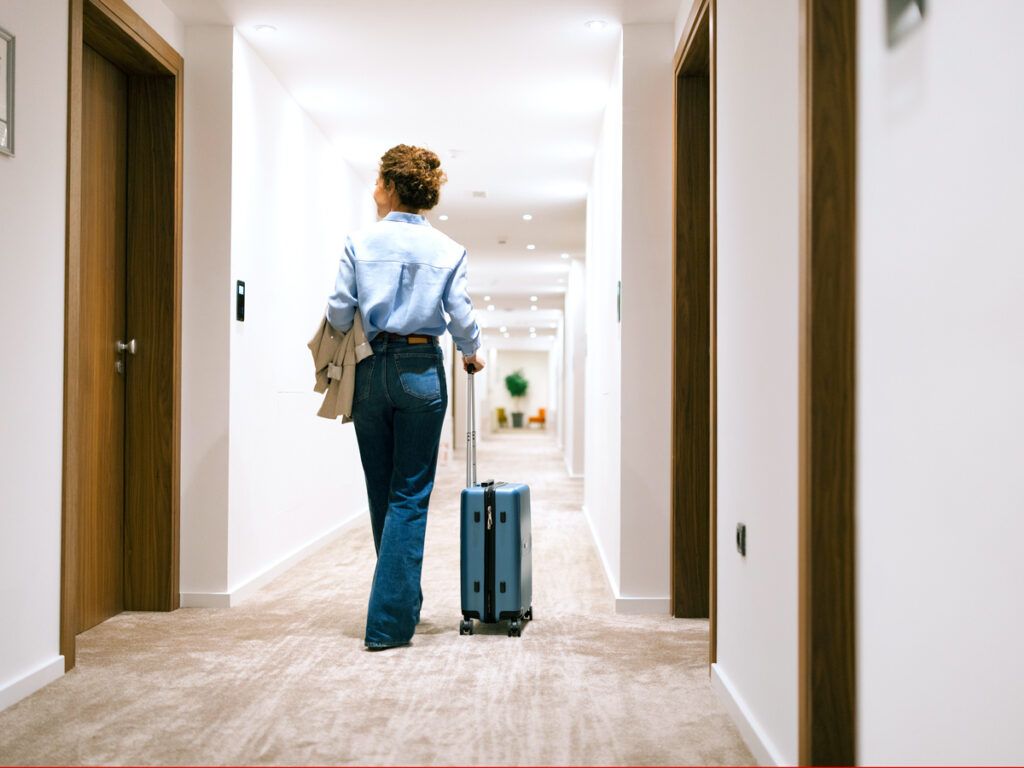
Some sources suggest that rooms ending in -01 or -02 can be prone to noise, as they are likely to be located close to an elevator. But is this just another internet myth? While there may be some truth to it, the reality is that knowing which room numbers to avoid because of foot traffic or elevator issues depends heavily on where you plan to stay.
Hotel layouts vary as much as their décor, vibe, and amenities. Some consist of floors made up of long corridors, while others are a maze of passageways and nooks. The size of a hotel will also influence how far rooms are from sources of noise — fewer rooms per floor can mean there’s an increased likelihood you’ll be disturbed by noise.
Be Proactive With the Front Desk

Many hotel chains don’t publicize their entire floor plans online for logistical, privacy, and security reasons. Unfortunately, the absence of readily available data makes it hard to figure out which rooms you want to avoid. (Disney properties, however, are one notable exception. On the Touring Plans website, you can check the quietness rating of the room you’ve selected, along with the quality of the view.)
Where online information is scant, try review sites such as Google Reviews or TripAdvisor, or reviews on OTAs such as Booking.com or Expedia, filtering for words such as “noise.” If, for example, you’re planning a countryside or beach vacation and the absence of noise is important to you, look for a property where accommodations are spread out across stand-alone villas, bungalows, or lodges. .
Another option is to use tools like Google Street View to take a virtual walk around the property. Take note of the location of any potential external sources of disturbance, such as the proximity of backup electricity generators, bars and restaurants that stay open late, and neighboring construction sites.
Once you’ve selected an accommodation and made your booking, your best bet is to focus on building a relationship with the hotel. Call or email hotel staff prior to arrival and communicate your preference for a room that’s not close to an ice or vending machine, elevator, stairwell, or housekeeping closet. In a city hotel, request a room away from the street, such as one overlooking an internal courtyard. Also be wary of rooms that look out over the pool, as these can be especially noisy. Try reaching out at least two to three days before your arrival, which can allow the hotel more time to accommodate your request.
Another often overlooked source of noise? Connecting rooms. Some hotel rooms have interior doors that connect to an adjacent room. These are designed for families or groups, but often there is little soundproofing around the doorway.
After checking in, if you feel the room you’ve been allocated is subpar, you can always ask to switch. Note, however, that lower floors typically will be more prone to street noise, which is why some hotel chains market higher floors as a premium upgrade. Still, it never hurts to ask, as long as you do so politely. Pro tip: The earlier you arrive at the hotel, the more likely it is that there will still be an alternative room available.
Products That Can Help
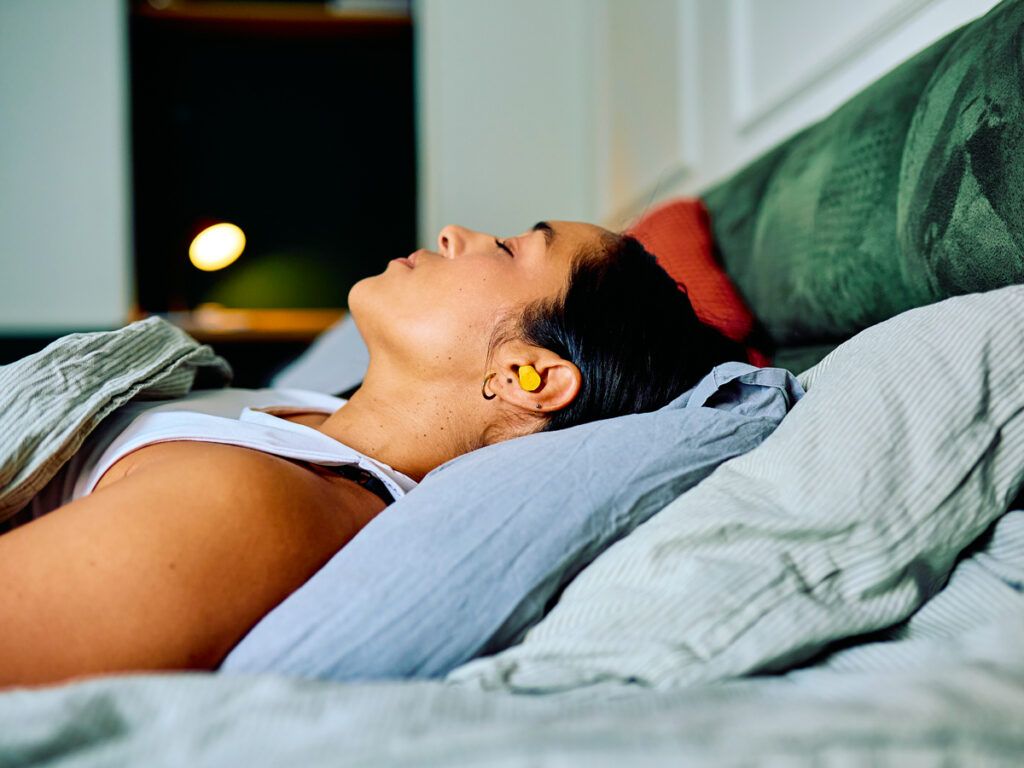
Sometimes, even if we try to be proactive, we may end up stuck in a room that’s noisier than we’d like. That’s why it’s a good idea to always pack items that mask or muffle noise as a backup — particularly if you’re a light sleeper. Earplugs are an obvious choice; be sure to choose a pair that fits comfortably and fills the ear canal. Look for earplugs with an effective noise reduction rating (over 20 dB) and check that they’re designed for sleeping and not for another activity such as swimming.
You might also consider playing ambient white noise on a portable travel sound machine. This creates a constant hum by producing all audible frequencies at the same intensity. By reducing the contrast between the noise within your hotel and disruptive sounds outside, you might find you sleep more soundly. Or sometimes, making the most of what’s already in the room can help: A rhythmic fan or even a clattering air conditioner can work in a similar way for some travelers.
Featured image credit: © Anchiy—E+/Getty Images
More from our network
Daily Passport is part of Inbox Studio, an email-first media company. *Indicates a third-party property.