Post Banner Image
Tips

These Places Have Figured Out the Secret to a Longer, Happier Life

By Frank Gargione
Read time: 6 minutes
December 20, 2023
Updated: January 24, 2024

These Places Have Figured Out the Secret to a Longer, Happier Life

By Frank Gargione

National Geographic journalist Dan Buettner spent years investigating the regions of the world where residents not only enjoy long lives but also an unprecedented quality of life and low instances of chronic disease — even in their later years. His research brought him to Japan before discovering other areas where individuals commonly live to see their 100th birthday — in Greece, Italy, Costa Rica, and even in the United States. In 2000, Buettner, along with researchers Michel Poulain and Giovanni Mario Pes, coined the term “Blue Zones” to describe these exceptional regions, which were the subject of a 2023 Netflix documentary. Curious as to what makes people live longer in these places? Read on to learn more about the original five Blue Zones and why one might be next on your travel bucket list.

Okinawa, Japan

Natural arch and cliffs along coast of Okinawa, Japan

In 2000, Buettner traveled to Okinawa, a subtropical archipelago about 400 miles south of the rest of Japan, to investigate the extraordinary longevity of its residents. He found that people in Okinawa are roughly three times more likely to see their 100th birthday than the average American. Not only that, elders remained vital members of their communities and active in pursuits such as gardening, cooking, and socializing. 

This lifelong social network, what the Japanese call a moai, along with a strong sense of purpose in life, called ikigai, is likely key to their longevity. But it is also the diet of Okinawans — plant-based and focused on vegetables, tofu, sweet potatoes, and herbs and aromatics like mugwort, ginger, and turmeric. Even the fact that residents sit on mats on the floor, forcing them to sit, squat, and stand up several times a day, benefits their overall fitness.

Okinawa is Japan’s southernmost and most remote region, but the area’s sundrenched beaches, warm, blue waters, and candy-colored coral reefs are easily accessible via direct flights from various Asian cities. Highlights include the ancient limestone cave at the heart of the Valley of Gangala — a lush nature reserve of banyan trees and dramatic rock formations — and the coastal village of Yomitan, an epicenter for the area’s famed ceramicists. Okinawa is also considered the probable birthplace of karate, so there are plenty of martial arts-themed workshops and showcases to experience. 

Ikaria, Greece

Waterfront buildings and cafe tables in Ikaria, Greece
Photo credit: Gatsi/ iStock

Ikaria is a tiny Greek island known for its rocky topography and its long history as a target of Persian, Roman, and Turkish invaders. Isolated in the Aegean Sea, the Greeks of Ikaria largely avoid dementia, and one in three live past the age of 90. The area’s rugged terrain and pleasant weather are key to their health. Residents lead active, outdoor lifestyles, and enjoy a slower pace and a culture of gathering, napping, and even wine drinking. Their diets are typically Mediterranean: fruits and vegetables, beans and grains, potatoes, olive oil, and goat’s milk, plus antioxidant-packed herbal teas.

Located about 30 miles off the coast of Turkey, the mountainous island is dotted with vineyards and features white pebble beaches overlooking the turquoise Aegean. The relaxing vibe is immediately obvious — clocks are seemingly of little importance as residents spend their days joking, enjoying seafood, and harvesting fruit. Landmarks include famously blue-domed churches, ancient wineries, and olive groves. Ikaria’s hot springs — rich in radon, iron and sulfur — are also a popular healing destination. That’s especially true in the town of Therma, where the springs are among Roman ruins, and in Lefkada, which overlooks a picturesque bay.

Sardinia, Italy

Boats docked in marina in Sardinia, Italy
Photo credit: Mlenny/ iStock

The island of Sardinia, located at the toe of Italy’s famous boot shape, is where the concept of Blue Zones originally took shape. Two demographic researchers, Gianni Pes and Michel Poulain, identified the area as having the highest concentration of male centenarians in the world. The team also identified nine lifestyle habits the residents of these regions ascribe to, including naturally active lifestyles, a sense of purpose, friendship, faith, and a plant-centered diet. 

Like their counterparts in Japan and Greece, Sardinians don’t eat a lot of meat — their diets consist of whole grain breads, beans, fruits and vegetables, sheep’s cheese, and mastic oil. Mnay Sardinians still grow their own vegetables, hunt, and fish. Their families are close-knit and multigenerational, and they famously joke over antioxidant-rich wine.  

Sardinia is Italy’s second-largest island, and it offers more than 200 idyllic beaches, ranging from glamorous party scenes to quiet coves overlooking marine parks where visitors can snorkel among flamingos. The island is also rich in history. Ruins dot the landscape, including the Su Nuraxi di Barumini, a series of Bronze Age conical watchtowers and a UNESCO World Heritage Site. Popular resort towns include Porto Rotondo and Porto Cervo, while the rugged inland areas are a paradise of hiking trails and wineries. 

Nicoya, Costa Rica

Beach goers on sandy beach in Nicoya, Costa Rica
Photo credit: SimonDannhauer/ iStock

Costa Rica — a small Central American nation bordered by the Caribbean Sea to its east and the Pacific Ocean to its west — has a generally healthy population, thanks in part to its economic security and healthcare system. But in the Costa Rican region of Nicoya, just south of the Nicaraguan border, residents are especially long-lived. 

Part of that can be attributed to a reason to live, or plan de vida, that many residents — and especially elders — subscribe to. It’s an attitude that goes hand in hand with how many people here live their lives: lots of laughter and conversation, and a focus on family and friends in multigenerational households. In terms of diet, Nicoyans eat light evening meals centered around the “three sisters” of agriculture: squash, corn, and beans. They also drink a lot of water, which in Nicoya is loaded with calcium — great for cardiac and bone health. 

Visiting Nicoya is all about relaxation and nature, as a low-stress lifestyle is one of the likely reasons Nicoyans lead such healthy lives. Tourists can take surfing lessons, snorkel along coral reefs, practice yoga, or simply enjoy the beaches. Tamarindo and Montezuma are lively seaside towns with plenty of restaurants, while the Ostional Wildlife Park is a famous sea turtle nesting ground and the Palo Verde National Park is a top spot for birders. Or, hop a boat to the uninhabited island paradise of Isla Tortuga.  

Loma Linda, California

City hall of Loma Linda, California
Photo credit: CRobertson/ iStock

Located in Southern California’s San Bernardino County, Loma Linda is America’s only Blue Zone. Residents here tend to live a decade longer than other Americans. One possible explanation is the Seventh-day Adventist church, a Protestant denomination in which health and wellbeing are central tenets. The 9,000 Adventists in Loma Linda are often vegetarians, exercise regularly, rest on the sabbath, and eschew tobacco and alcohol. Their diets are biblically inspired — predominantly fruits and vegetables, nuts, legumes, and grains. Like residents in other Blue Zones, Loma Lindans tend to eat lighter meals in the evening, and community plays a role in their everyday lives.

Loma Linda is a small municipality near San Bernardino and Riverside, part of a region called the Inland Empire. The area is sandwiched between Los Angeles and Orange County to the west and Palm Springs and Joshua Tree National Park to the east. Here, outdoor recreation is less about the beach and centers on hiking, swimming, skiing, and enjoying nature at spots like San Bernardino National Forest and Big Bear Lake.  

Post Banner Image
Geography

What Are the World’s Only 2 Doubly Landlocked Countries?

By Daily Passport Team
Read time: 5 minutes
December 20, 2023
Updated: January 24, 2024

What Are the World’s Only 2 Doubly Landlocked Countries?

By Daily Passport Team
Author
Daily Passport Team
Daily Passport writers have been seen in publications such as National Geographic, Food & Wine, CBC, Condé Nast Traveler, and Business Insider. They're passionate about uncovering unique destinations and sharing expert tips with curious travelers.

As their name suggests, landlocked countries are completely surrounded by land, with no direct access to a major body of water. There are 44 such countries in the world, but only two of those are considered doubly landlocked: Liechtenstein and Uzbekistan. That means these countries aren’t just separated from a major body of water by one country — they are, in fact, surrounded by other landlocked countries. Wondering what it’s like to live in a country where you’d need to travel across two international borders to reach the ocean? Check out these fascinating facts about the world’s only doubly landlocked countries.

Liechtenstein Became Double Landlocked in 1918

Countryside view through the stone window in Balzers, Liechtenstein
Photo credit: Denis Kabanov/ iStock

It’s easy to miss Liechtenstein on a map at first glance — as the world’s sixth-smallest country, it covers only 62 square miles. However, that’s more than enough space for the fewer than 40,000 residents who live there. The micronation is landlocked in the scenic Alps, between Switzerland and Austria. It is double-landlocked by France, Germany, Czech Republic, Slovakia, Hungary, Slovenia, and Italy. 

Liechtenstein shares much in common with the two countries it borders, including many economic, military, and financial similarities. The residents of Liechtenstein speak German like their Austrian neighbors and use the Swiss franc as their currency, a nod to their close financial ties with Switzerland.

Although Liechtenstein became an independent nation in 1719, it wasn’t doubly landlocked until the end of World War I, thanks to the dissolution of the Austro-Hungary Empire. The end of the empire saw the formation of Czechoslovakia, along with many other nations, which sealed Liechtenstein’s status as a doubly landlocked country in 1918. It remained the world’s only doubly landlocked country until 1991, when Uzbekistan would gain the same designation.

Liechtenstein Hasn’t Slowed Its Economy Down 

St. Florin Cathedral and surrounding buildings in Vaduz, Liechtenstein
Photo credit: AleksandarGeorgiev/ iStock

Because landlocked countries have no direct access to an ocean, they have a natural disadvantage on the global market. It takes more time and money to import and export goods without access to ocean ports. This became such an issue that the United Nations called for an international conference on landlocked countries’ rights in 2003. The goal was to ensure the landlocked countries had transit rights so they could take part in international trading, with a particular concern for double landlocked countries. These nations have to rely on a variety of international agreements to maintain their ability to import and export.

While other countries struggle to develop economically due to their landlocked status, Liechtenstein hasn’t suffered the same fate. It’s a relatively wealthy nation, thanks in part to its ties to other prosperous European nations. According to the country’s official website, there are over 5,000 businesses in Liechtenstein, mostly in the financial and tech industries. It also has a very low unemployment rate. 

However, Liechtenstein came under intense international scrutiny around 2008 for its reputation as a tax haven. Historically, many corporations and wealthy individuals have looked to Liechtenstein to avoid paying higher taxes elsewhere. While that tax haven status helped to bolster the small nation’s own economic strength, it started to cast a shadow on the country’s reputation. Liechtenstein now shares financial information with the United States, as well as several other nations, and continues to work on tightening regulations within the financial sector.

Uzbekistan Was Part of the Ancient Silk Road

Upward view of the intricate tiles of Shah-i-Zinda Mausoleum in Samarkand, Uzbekistan
Photo credit: Mlenny/ iStock

Uzbekistan formed in 1991 after the dissolution of the U.S.S.R. The collapse of what was once the world’s largest country left 15 new independent nations in its place. Today, Uzbekistan is landlocked by Kazakhstan, Kyrgyzstan, Tajikistan, Afghanistan, and Turkmenistan. It is double-landlocked by China, Pakistan, Iran, Azerbaijan, and Russia.

Looking at a map, however, it’s not immediately clear that Uzbekistan is double-landlocked. Two of the nations that landlock Uzbekistan — Kazakhstan and Turkmenistan — border the Caspian Sea. While it may be called a sea, geographically speaking, a body of water is a sea only when it feeds into an ocean. The Caspian Sea doesn’t, so it’s technically the world’s largest lake, with an area of 143,000 square miles. 

Uzbekistan is significantly larger than its fellow double-landlocked country, Liechtenstein. It has nearly 173,000 square miles and more than 32 million residents. Uzbekistan is located along the famous Silk Road, a network of trade routes used from the second century BCE until the mid-15th century. That location led to a significant amount of ethnic diversity in the country.

Uzbekistan Is a Major Exporter of Cotton

Exterior of Gur-e-Amir Mausoleum in Samarkand, Uzbekistan
Photo credit: Borisb17/ iStock

The landlocked status of Uzbekistan has created many economic disadvantages for the nation. The World Bank reports that two factors slowing down economic growth in the region are delays in the time it takes trucks trying to cross the Uzbekistan border, as well as extra fees. Almost a quarter of those fees are considered unofficial costs, such as bribes to pass through more quickly. Unfortunately, that means it’s sometimes faster and cheaper to avoid Uzbekistan altogether when it comes to imports and exports.

Nonetheless, Uzbekistan is working to overcome the economic disadvantages it faces. A change in leadership in 2016 led to the country looking to play a bigger role in the global marketplace. The country is the third-largest cotton exporter in the world, with much of its production done by small farmers. Uzbekistan’s cotton was once referred to as “white gold” for the profitability of its industry. While cotton still plays a major role in the country’s economy, production has scaled back since the height of the Soviet era because of concerns over labor practices, environmental impacts, and depletion of the country’s water supply, particularly the Aral Sea. 

The country is also heavily influenced by neighbors Russia and China, so when their economy slows down, so does Uzbekistan’s. Government officials are trying to encourage diversification in exports and are looking to increase the amount of international investment in the country. 

Post Banner Image
History

4 Historic U.S. Suburbs That Are Worth a Visit

By Julia Hammond
Read time: 3 minutes
December 20, 2023
Updated: January 24, 2024

4 Historic U.S. Suburbs That Are Worth a Visit

By Julia Hammond
Author
Julia Hammond
Julia is a U.K.-based travel writer whose work has been featured in The Independent, The Telegraph, The New Zealand Herald, and Culture Trip, among others. She’s an enthusiastic advocate for independent travel and a passionate geographer who has had the privilege of traveling to more than 130 countries in search of a story.

Suburbs can sometimes get a bad rap, often criticized for their architectural blandness, overreliance on cars, and a propensity towards chain stores and restaurants. While that may be true of some U.S. suburbs, writing off all of the nation’s bedroom communities would be unfair. There are some U.S. suburbs that boast unique architecture, interesting histories, and thriving local cultures. Consider visiting these four historic U.S. suburbs. 

Coral Gables, Florida

Exterior of Biltmore Hotel in Coral Gables, Florida
Photo credit: Galina Savina/ Shutterstock

Since its inception in the 1920s, Coral Gables has been renowned for its Mediterranean Revival architecture. Heavily influenced by the City Beautiful movement, property developer George Merrick transformed 1,600 acres of grapefruit groves that he inherited from his father into a meticulously planned settlement. The suburb is located only seven miles from downtown Miami, which makes it eminently commutable.

The architects and landscapers Merrick hired created a stylish place to live, while the iconic Biltmore Hotel hosted those from out of town. A highlight of any visit to Coral Gables is the hotel’s Venetian Pool, opened in 1924, which transformed a redundant limestone quarry into a spring water pool fed by an underground aquifer. It is the only swimming pool listed in the U.S. National Register of Historic Places.

Boerne, Texas

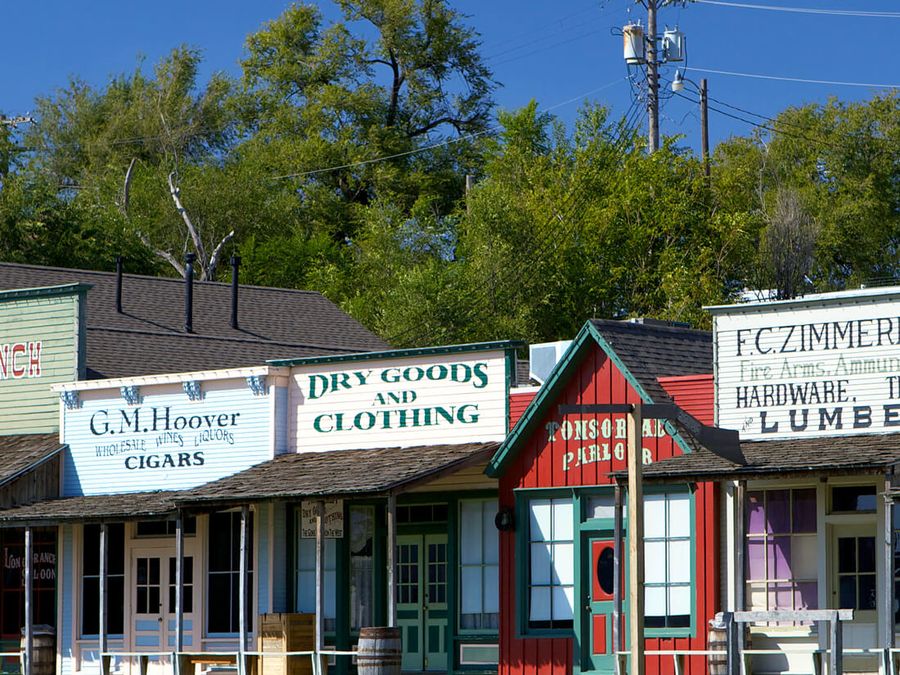
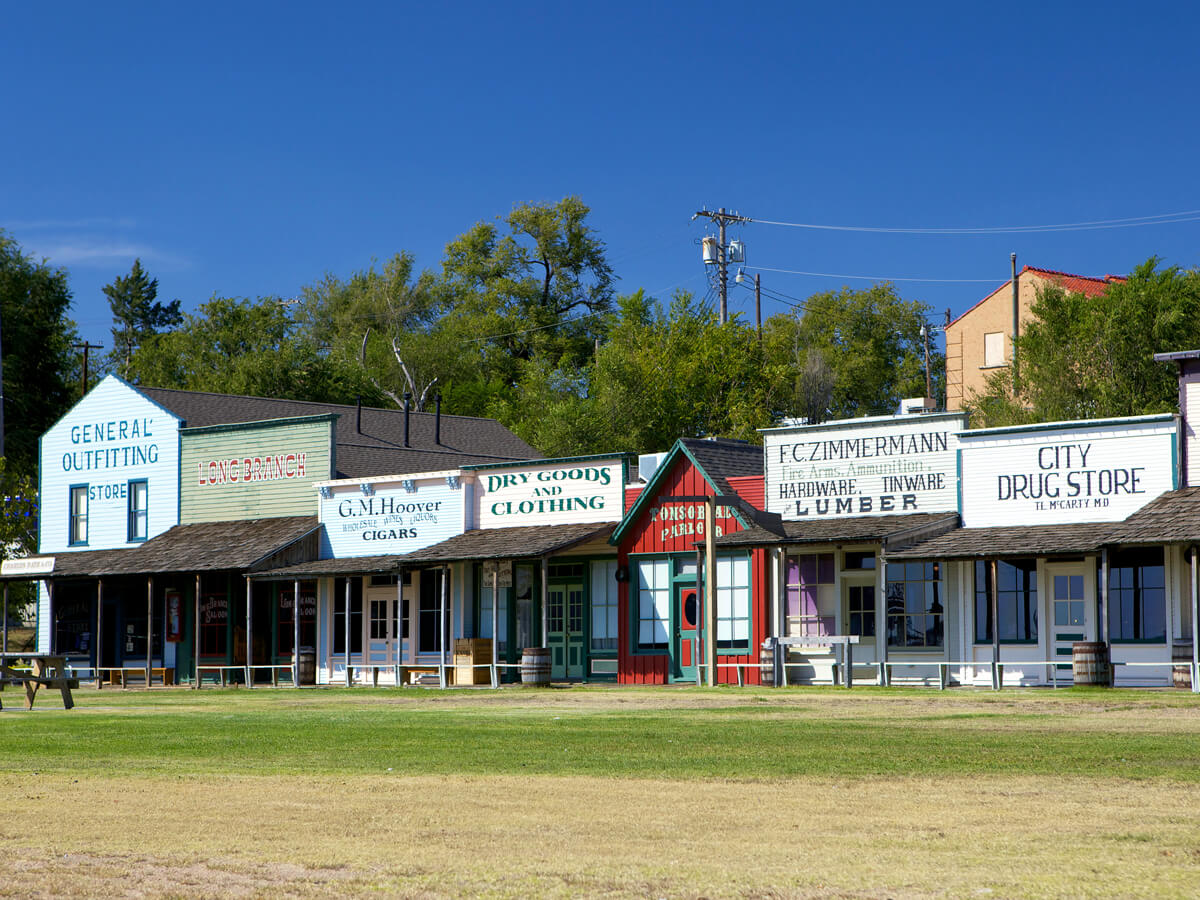
Old West buildings in Boerne, Texas
Photo credit: Alpha Stock/ Alamy Stock Photo

Boerne (pronounced “Bernie”) is located near San Antonio in Texas Hill Country. The suburb embraces the German heritage of its original settlers, who arrived in the mid-19th century. As you stroll along Main Street, you’ll immediately notice that Boerne retains many buildings from that era. The abundance of limestone in the area meant that Boerne’s early thatched log cabins were quickly torn down and replaced with more substantial structures.

Among the most architecturally interesting are Philip Manor (built in 1860), Carstanjen Hall (1872), Weyrick-Beissner-Kidwell House (1879), and the Traditions-Wendler House and Depot, which date from the late 19th century. Visitors can also visit the Old Jail Museum and the Kuhlmann-King Historical Complex.

Brighton, New York

Brighton Presbyterian Church in New York
Photo credit: Peter Steiner/ Alamy Stock Photo

These days, Brighton serves as a suburb of Rochester, but this upstate New York settlement was once a peaceful farming community. After the Erie Canal was built in 1825, Rochester’s population swelled due to increased immigration, and some residents sought to escape the noise and bustle of the city to areas such as Brighton. Brighton became a haven for the well-heeled, whose affluence is reflected today in the mansions of its districts such as Houston-Barnard Tract

To discover more about how Brighton’s landscapes were used in the past, head over to Brighton’s Sandra L. Frankel Nature Park. There, visitors can walk the Brickyard Trail, which winds through land that once provided the raw clay used to make bricks, formerly an important industry in this area. It’s also worth seeking out the Stone-Tolan House, built in 1792, which was a tavern in the early days of the town’s history. Tours run on Tuesday and Sunday afternoons from April through December. 

Issaquah, Washington

Front Street in Issaquah, Washington
Photo credit: Ian Dewar/ Alamy Stock Photo

Head east out of Seattle and you’ll soon find yourself in storied Issaquah, a 25-minute drive from the Space Needle. The Snoqualmie and Sammamish peoples were the area’s original settlers, followed by pioneering homesteaders from the mid-19th century onwards. Coal deposits were discovered here in 1862, and after the Seattle, Lake Shore & Eastern Railroad arrived in 1887, mining became a profitable industry. Sawmills and lumber camps were also prevalent; afterwards, the deforested land was repurposed for dairy farming. 

A display about the importance of logging in the area is one of the stops on History Link’s Issaquah tour, which also incorporates some of Olde Town’s oldest properties — such as Gilman Town Hall, now a museum, and Hailstone Feed Store, restored to look as it did in the 1940s.

Post Banner Image
Tips

7 Secrets of Airplane Cabins Most Passengers Don’t Know

By Daily Passport Team
Read time: 6 minutes
December 20, 2023
Updated: July 26, 2024

7 Secrets of Airplane Cabins Most Passengers Don’t Know

By Daily Passport Team
Author
Daily Passport Team
Daily Passport writers have been seen in publications such as National Geographic, Food & Wine, CBC, Condé Nast Traveler, and Business Insider. They're passionate about uncovering unique destinations and sharing expert tips with curious travelers.

From crowded airports to packed planes and strict security rules, flying can be a stressful experience. With the complex nature of air travel, there are dozens of regulations and protocols that must be followed on any given flight, and most parts of the process are designed for a very specific purpose. It might help you breathe a little easier on your next flight knowing, for example, exactly why window blinds should be open for takeoff or what those pings over the airplane PA system really mean. Here are seven secrets of airplane cabins most passengers don’t know.

Cabin Lighting Has a Specific Purpose

Airplane cabin with mood lighting
Photo credit: nktwentythree/ iStock

You’ve probably noticed that the cabin lights on your flight are dimmed during takeoff and landing. Turns out, there are two very good reasons for this. The first reason is safety. If the lights stayed on at full brightness and were to suddenly switch from bright to dark in an emergency, it would take precious seconds for passengers’ eyes to adjust. With dim lighting during takeoff and landing, our eyes are already adjusted — making it easier to find an exit.

The second reason is the mood. Dim lights are more relaxing than bright lights and might calm a passenger who struggles with flight anxiety. Some airlines take this a step further by adding colored mood lighting — for example, on JetBlue Airways passengers will notice the airline’s signature calming blue color throughout the cabin during flight. 

Those Chimes Have Different Meanings

View of airplane cabin from aisle looking toward front of plane
Photo credit: EllenMoran/ iStock

We’re all familiar with the pings that come over an airplane’s PA system during flight, but if you listen closely, you’ll notice subtle differences. These chimes are used to indicate important stages of the flight, such as takeoff, ascent, and descent — as well as communications between flight attendants and the cockpit.

Each airline has its own specific protocol, and these chimes can often vary. On many carriers, a double chime right before entering the runway usually means that the pilots have been given takeoff clearance, according to airline pilot Jack Herstam

After being airborne for a few minutes, you’ll notice another double chime indicating the plane has exceeded 10,000 feet in altitude — which is when it’s usually safe for flight attendants to start moving about the cabin and for passengers to use larger electronic devices. The same double ping occurs on descent when the airplane passes below 10,000 feet. And when the fasten seatbelt sign comes on and off, the indicator light will also be accompanied by a single chime. 

During the flight, you might also hear a single chime indicating a passenger has pressed his or her call button for assistance. A high-to-low chime means that flight attendants are trying to communicate with one another over the airplane’s phone system, according to a viral TikTok video from flight attendant Tommy Climato. A rare triple chime will indicate an emergency. 

The Temperature Is Cold on Purpose

Toddler looking out of airplane window
Photo credit: ArtMarie/ iStock

Passengers sometimes complain about the cold temperature in airplane cabins. If you’re lucky, some airlines will provide passengers with a blanket, but it’s rare for the flight attendants to turn up the heat in the cabin. That’s because the temperature on an aircraft has been set in a very intentional way for your safety.

A study by ASTM International found that people were more likely to faint on an aircraft than on the ground due to a condition called hypoxia. The pressurized environment of an airplane cabin can prevent our body from getting enough oxygen, which causes fainting. The warmer the temperature onboard the aircraft, the more likely this is to happen. To prevent passengers from passing out, airlines intentionally lower the cabin temperature. While this might be slightly uncomfortable, it’s much safer for your body.

The Air Is Cleaner Than You Think

Person rolling suitcase in airport, seen from behind
Photo credit: Prostock-Studio/ iStock

A common myth about air travel is that being confined in an airplane means you’re more likely to share germs and air particles with all the other passengers on board. In reality, modern airliner cabins have advanced HEPA — which stands for high-efficiency particulate air — filtration systems for maintaining clean air quality onboard the aircraft. 

According to the International Air Transportation Association (IATA), this is the same type of filter used to clean the air in hospital operating rooms. Cabin air is refreshed through this system 20 to 30 times per hour, which is more than double the average office building. Fresh air is brought in from the outside, which flows through the filter and helps to remove viruses and bacteria from the air — making the air you breathe on an airplane cleaner than you think.

Bathrooms Can Be Unlocked From the Outside

Lavatory sign in airplane
Photo credit: sharrocks/ iStock

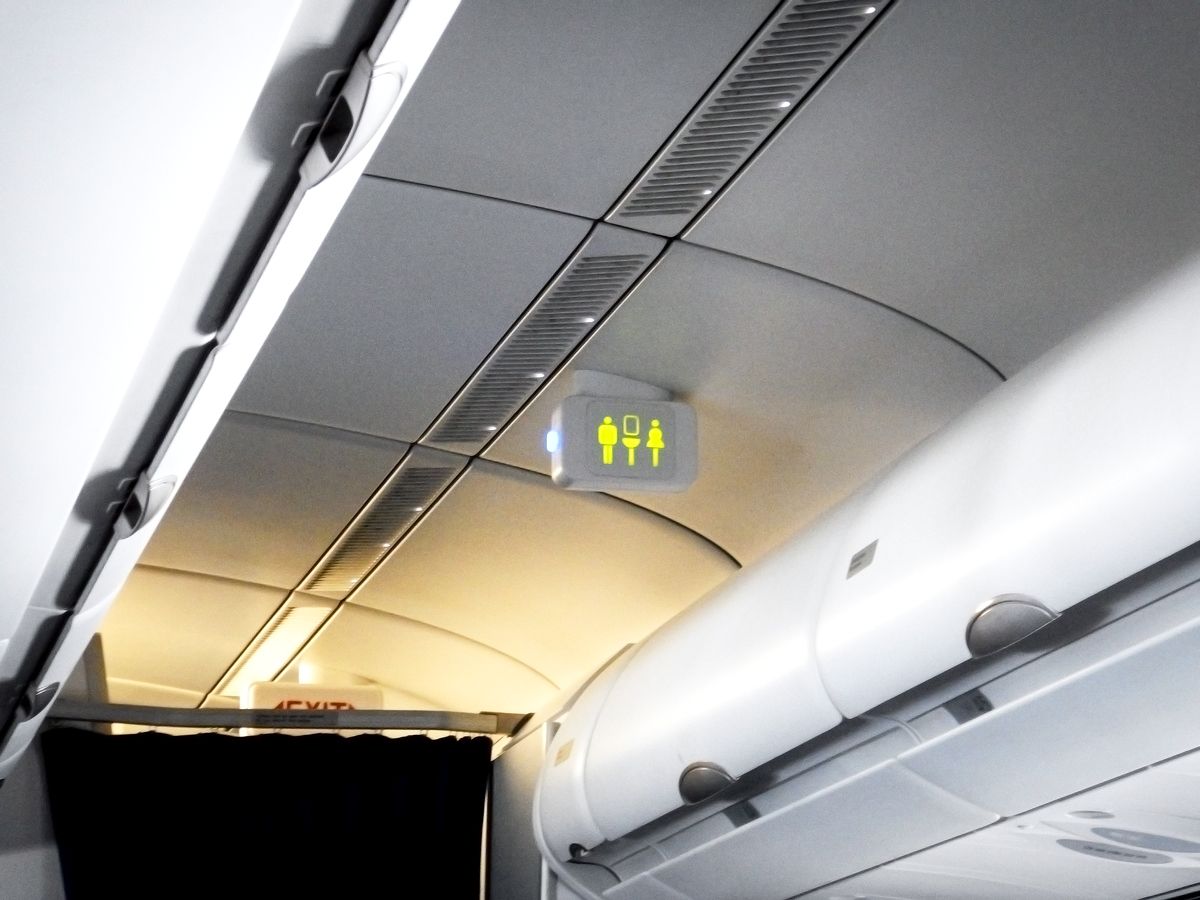
While there is a lock inside cabin bathrooms for passengers to use, flight attendants also have the ability to quickly unlock the door from the outside. It’s usually hidden under the “lavatory” sign on the door, which can be flipped up. This is for passenger safety: In the event of an emergency, flight attendants need to be able to access the bathroom without picking the lock or taking the door off its hinges. It also may be necessary if a passenger has a health scare or needs assistance while in the bathroom, or can also be used for children who are unable to unlock the door themselves.

Window Blinds Must Remain Open at Certain Times

Close-up of person lowering airplane cabin window shade
Photo credit: luza studios/ iStock

During takeoff and landing, flight attendants on many airlines will ask that passengers lift their window blinds. Like other rules on an airplane, there’s an important reason for this. Open blinds allow the flight staff to see any issues on the ground or on the airplane itself. Passengers might also report unusual circumstances they observe from their windows. 

Lifting the blinds also allows our eyes to adjust to the conditions outside quickly in case of an emergency. However, while the practice is broadly recommended by international aviation safety organizations like the ICAO, there’s no blanket rule in place, so not all airlines will require it. 

There’s a Secret Hand Rail

Passenger walking through airplane aisle
Photo credit: MesquitaFMS/ iStock

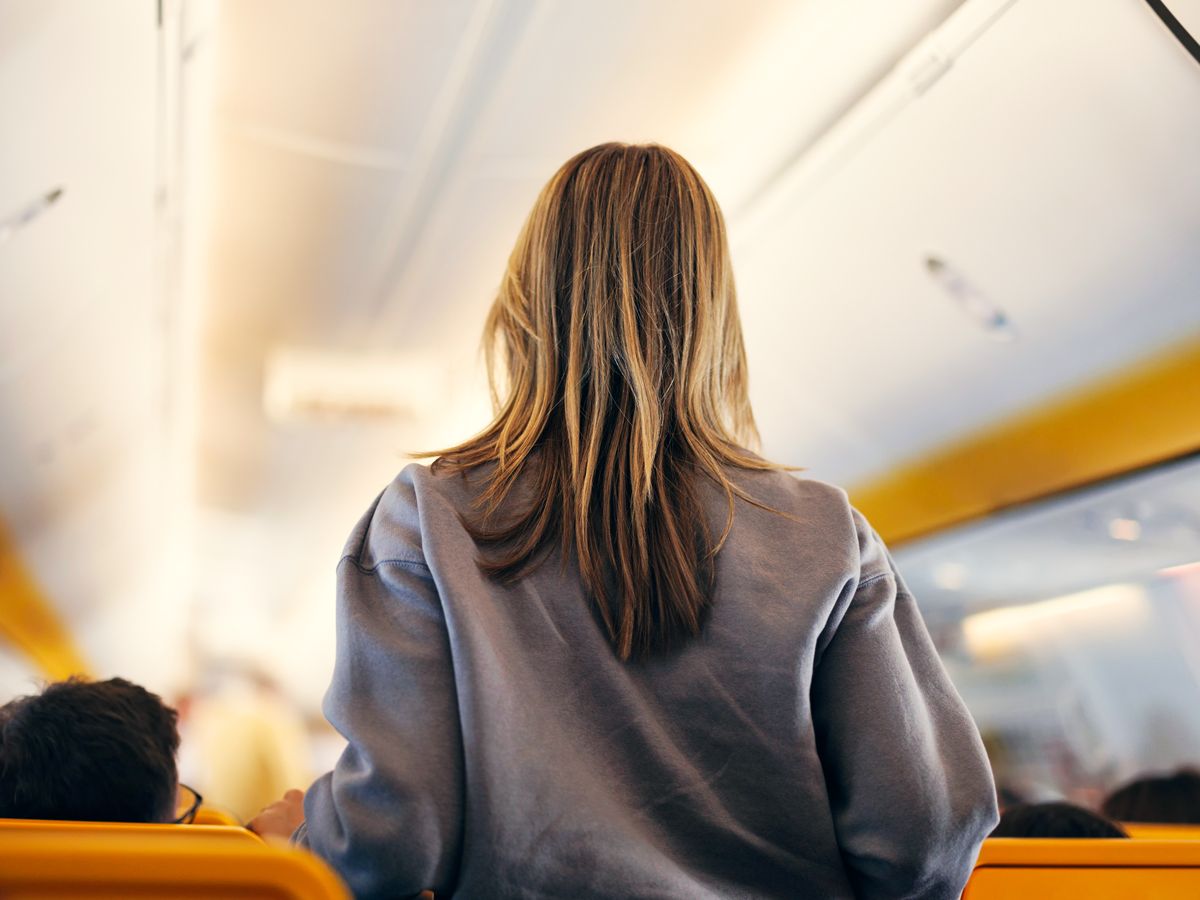
Walking down the aisle of a moving airplane can be a wobbly experience — especially when there’s turbulence. Most passengers end up grabbing the seats as they walk, which can disturb the people in those seats, but there’s actually a better way.

If you watch the flight attendants, you’ll notice that they repeatedly reach up to the ceiling when they walk down the aisle. That’s because there’s a built-in handle rail along the bottom edge of the storage compartment, which can be used to steady yourself. Next time, follow the lead of the flight attendants and avoid aggravating fellow passengers — use this secret rail instead.

Post Banner Image
Geography

What Is Actually at the North Pole and South Pole?

By Bennett Kleinman
Read time: 4 minutes
December 19, 2023
Updated: January 24, 2024

What Is Actually at the North Pole and South Pole?

By Bennett Kleinman
Author
Bennett Kleinman
Bennett is a New York City-based staff writer for Daily Passport. He previously contributed to television programs such as the Late Show With David Letterman, as well as digital publications like the Onion. Bennett has traveled to 48 U.S. states and all 30 Major League Baseball stadiums.

Sitting at opposite ends of Earth, the North Pole and South Pole are two of the coldest and most isolated locations on the planet. The North Pole is an icy expanse incapable of supporting human life (no, not even Santa Claus), while the South Pole is home to a handful of temporary residents and scientific research buildings. Have you ever wondered what is actually at the North Pole and the South Pole? Find out everything you ever wanted to know below. 

The North Pole Is Made Entirely of Ice

Glaciers and ice at the North Pole
Photo credit: Christopher Wood/ Shutterstock

The North Pole sits squarely in the center of the Arctic Ocean, Earth’s smallest ocean, at 90°N latitude. Contrary to what you might think, there’s actually no permanent landmass at this spot — in fact, the nearest land is located approximately 450 miles away in northern Greenland. The closest inhabited region, located 508 miles away, is the military base in Alert, in Canada’s Nunavut territory. Home to around 55 people, it is the northernmost continuously inhabited place in the world.

In lieu of any firmly entrenched land, the North Pole is almost always covered with a six- to 10-foot-thick layer of ice. The ice separates the surface from the ocean floor, which is located a staggering 13,123 feet below sea level. The seabed is home to the only permanent fixture located at the North Pole: a titanium Russian flag planted by a submersible during the 2007 Arktika expedition.

While there are no permanent structures located at the surface of the North Pole, floating research stations often pass by the exact spot. These stations track important details about the Arctic region, such as temperature changes, ice depth, and weather conditions, before they eventually float down to areas with warmer temperatures.

The North Pole Has Numerous Visitors, But No Permanent Residents

Icy landscape of the North Pole
Photo credit: river34/ Shutterstock

In terms of animal life at the North Pole, there are rare migrations of mammals such as polar bears and Arctic foxes, though they often stay away given the constantly shifting ice. Under the surface, though, you’re likely to find plenty of creatures such as shrimp, sea anemones, and Arctic cod. There’s also the incredible Arctic tern, a bird that performs an annual 18,641-mile-long migration between the Arctic and Antarctic each year — the longest migration of any animal on Earth.

While humans rarely pass through the North Pole, there have been a number of notable expeditions. One of the earliest to the region occurred in 1926 and was led by Roald Amundsen, Lincoln Ellsworth, and Umberto Nobile, who accessed the North Pole using a dirigible. Today, you’re likely to see humans pass through the North Pole on massive boats known as “icebreakers,” which carve through the ice and create routes for cargo and military ships to pass through.

The South Pole Is Colder Than the North Pole

Research station on icy landscape of the South Pole
Photo credit: Mesa Studios/ Shutterstock

While the North Pole is largely devoid of human life, the South Pole is home to an inhabited research facility called the Amundsen-Scott South Pole Station. Between 50 and 200 individuals live and work at the facility at any given time, which has been in operation since 1956. For decades, researchers lived in an older facility that contained a 52-foot-high geodesic dome, though a newly updated station opened in 2008.

The new station is elevated above the ground and is entirely self-sufficient during the harsh winter months, when it’s harder to deliver supplies. The station contains laboratories, housing, and a greenhouse where vegetables are grown in a nutrient solution instead of soil. The entire complex is powered by three generators running on jet fuel.

The South Pole is located on the continent of Antarctica on a bed of ice that’s approximately 9,000 feet thick. This thickness makes the South Pole sit at a higher elevation than the North Pole, which also leads to colder temperatures. The warmest temperature ever recorded at the South Pole is 9.9 degrees Fahrenheit, while the coldest temperature was  -117 degrees. Like the North Pole, the South Pole also experiences six months of complete daylight plus six months of total darkness annually.

The Location of the South Pole Changes Every Year

Ceremonial South Pole on icy landscape surrounded by national flags
Photo credit: Michael Lodge/ Shutterstock

Several ceremonial poles are found throughout the region, as the exact location of Earth’s southernmost point shifts about 30 feet each year due to the moving ice. Every year on January 1, a new pole is unveiled to commemorate this updated location, in a tradition that’s occurred since 1959.

One of the South Pole’s notable landmarks is a ceremonial pole located a few hundred feet away from the Amundsen-Scott South Pole Station. This tiny red-and-white post is surrounded by the national flags of the 12 countries that signed the original Antarctic Treaty (Argentina, Australia, Belgium, Chile, France, Japan, New Zealand, Norway, South Africa, the Soviet Union, the United Kingdom, and the United States). It’s also an integral aspect of joining a bizarre local tradition: the 300 Club. On days where temperatures drop below -100 degrees Fahrenheit, scientists looking to join the 300 Club spend time in a 200-degree sauna before running outside completely naked, doing a lap around the pole, and returning to the sauna where they’re awarded with a ceremonial patch.

Post Banner Image
Culture

10 Real-Life Destinations That Belong in the Pages of a Fairy Tale

By Daily Passport Team
Read time: 8 minutes
December 18, 2023
Updated: November 13, 2025

10 Real-Life Destinations That Belong in the Pages of a Fairy Tale

By Daily Passport Team
Author
Daily Passport Team
Daily Passport writers have been seen in publications such as National Geographic, Food & Wine, CBC, Condé Nast Traveler, and Business Insider. They're passionate about uncovering unique destinations and sharing expert tips with curious travelers.

Few things ignite the imagination like a fairy tale — the scenes of grand castles, charming villages, and enchanting forests can often sweep us away to magical land. But if you know where to look, you can experience these storybook wonders in real life. From the Fairy Pools of Scotland to a Slovenian castle built into the side of a cave, these 10 places look like they belong in the pages of a fairy tale. 

Rakotzbrücke – Germany

Rakotzbrücke bridge in Germany with reflection on lake creating perfect circle
Photo credit: afonsofalcao/ Shutterstock

It’s hard to believe that a place referred to as the “Devil’s Bridge” could be so beautiful. But Rakotzbrücke, located in the Rhododendron Park Kromlau in Gablenz, Germany, is one of the most breathtaking scenes in all of Europe. The medieval-style, 19th-century stone bridge features thin rock spires at both ends and arches up in a near-perfect semicircle. On a clear day with calm wind, visitors will witness the illusion of a full circle in the Rakotzsee lake’s reflective water below.

Rakotzbrücke isn’t the only Devil’s Bridge in Europe. The name was given to several bridges with local legends behind them. In the case of Rakotzbrücke, it’s said that the bridge’s designer consulted with the devil when coming up with its gravity-defying shape.

Predjama Castle – Slovenia

Predjama Castle built into a cave entrance in Slovenia
Photo credit: Tomas Zavadil/ Shutterstock

It’s hard to tell where the Predjama Castle ends and its surrounding cave begins. Originally constructed in the 12th century and rebuilt in the 15th century, the Renaissance-style fortress was built directly into the face of a dramatic, 400-foot-tall, Slovenian cliffside. Surrounded by beautiful greenery, the location was chosen to make access difficult — and escape easy. Hidden behind the whitewashed stone façade, secret passageways lead into underground caves (including the nearby famous Postojna Cave) and out onto the top of the cliff.

The castle’s fantastical elements only lend to its mysterious past. One of the castle’s most enduring legends is that of Erazem Lueger, a Robin Hood-esque baron who once hid out in the castle but continued to steal from the rich by sneaking out through a secret passage behind an unassuming stone wall. He was eventually caught, but Lueger is said to still haunt the castle to this day.

Fairy Chimneys of Cappadocia – Turkey

Cave dwellings in Cappadocia, Turkey
Photo credit: kerocan/ Shutterstock

The unusual rock formations of Cappadocia’s famous “fairy chimneys” might look like something out of a storybook, but they’re the result of a natural phenomenon. The spires that stretch high from the grounds of Turkey’s surreal Göreme National Park formed from volcanic eruptions millions of years ago. The ash later formed into a rock sediment called tuff; the soft stone was shaped by years of erosion into the whimsical hoodoos, rock formations, and valleys.

While the fairy chimneys of Cappadocia are a geological wonder, the resourceful way humans have used the formations throughout history is perhaps even more extraordinary. As Christians fled persecution during the Roman Empire, they congregated in Cappadocia — excavating the soft tuff of the fairy chimneys to create safe harbors. The caves were used as modest homes, expanding the network into underground cities that sheltered thousands in need over centuries. 

Today, the refuge is a UNESCO World Heritage Site and a popular tourist destination that offers hot-air balloon rides and unique accommodations within the caves themselves where guests can enjoy the comforts of a boutique hotel room (complete with cozy fireplaces and unparalleled views) while surrounded by millions of years of history.

Tunnel of Love – Ukraine

Tunnel of Love in Ukraine surrounded by fall foliage
Photo credit: Chatham172/ Shutterstock

It began as a Cold War decoy and is still an active industrial railway today, but the Tunnel of Love in Klevan, Ukraine, is also one of the most beautiful sites in the country. The nearly two-mile stretch of tracks is covered with a lush arch of vegetation. The romantic feature was sculpted by the trains transporting plywood panels from a nearby factory that travel the route up to three times a day.

Couples are especially fond of the tree-covered trail thanks to the local legend, which posits that they will be granted a wish after walking its length (as long as their intentions are pure, that is). History buffs are also fond of the spot where the railway forks and leads to a hidden military base in the forest. The bending trees that now define the tracks were reportedly planted during the Cold War era in order to cover up the transport of military hardware to and from the camouflaged base.

Mont Saint-Michel – France

Sheep grazing on field with tidal island monastery of Mont Saint-Michel, France, in the background
Photo credit: ChiccoDodiFC/ Shutterstock

The stately Mont Saint-Michel, nestled just off the coast of Normandy in northwest France, is a tidal island village anchored by a medieval abbey that’s one of the most popular tourist destinations in France. Mont Saint-Michel is only completely surrounded by water once every month or two; otherwise, the tides recede, leaving the island surrounded by sand. The island’s stark surroundings only add to its utopian appearance, giving the otherworldly illusion that it could be floating in the clouds.

Mont Saint-Michel’s Gothic-style abbey and spires are so whimsical that the location famously served as a real-life inspiration for the Lord of the Rings trilogy, as well as Rapunzel’s parents’ castle in the Disney movie Tangled. The island is home to only about 40 full-time residents, but is visited by over 3 million people each year.

Neuschwanstein Castle – Germany

Imposing facade of Germany's Neuschwanstein Castle
Photo credit: ecstk22/ Shutterstock

This might be as close as it gets to a real-life fairy tale location. Perched high on a steep, rocky hill above the village of Hohenschwangau in southwest Bavaria, Germany, Neuschwanstein Castle was built in the 19th century by King Ludwig II of Bavaria, who was also known as the “Fairy-tale King.” The stunning structure has since become one of the most recognizable castles in the world, not only for its own impressive presence, but for the magical place it inspired.

Before he built Disneyland, Walt Disney took a trip to Europe that included a stop at the magnificent fortress. He adapted the castle’s turrets and towers for the centerpiece of his theme park (the very first Disneyland) in Anaheim, California, using Neuschwanstein as the model for Sleeping Beauty’s Castle. Just as the Disney princess’ castle is one of the most recognizable landmarks in the U.S., Neuschwanstein Castle is one of the most beloved and visited tourist destinations in Europe, welcoming more than 6,000 visitors on a busy day.

Castello di Miramare – Italy

View of Italy's Castello di Miramare on peninsula, framed by trees
Photo credit: Andrew Mayovskyy/ Shutterstock

Castello di Miramare, with its brilliant, whitewashed, Gothic-style exterior and dazzling seaside surroundings, looks more like the setting for a soap opera than it does a 19th-century Italian castle. Located just outside of the beautiful coastal city of Trieste, Miramare was originally built for Austrian Archduke Ferdinand Maximilian.

The elegant edifice looks straight out of a storybook. Situated on a cliff above the famously blue Adriatic Sea on a lush, 54-acre park, the castle was designed by the archduke himself and was custom landscaped to feature tropical trees and plants. While it’s hard to pick just one standout feature of Miramare and its surroundings, one highlight is undoubtedly the gorgeous terraces that encircle the castle. With unparalleled views of the sprawling park and the Adriatic, the scenery is definitely fit for a princess.

Fairy Pools – Scotland

Fairy Pools of Scotland surrounded by mountains
Photo credit: JORGE CORCUERA/ Shutterstock

Isle of Skye is a breathtaking place in the Inner Hebrides, an archipelago off the west coast of Scotland. From majestic, medieval castles to picturesque villages and magnificent seaside views, the landscape offers no shortage of sightseeing adventures. But one of the most memorable is the magical Fairy Pools, a cluster of small waterfalls, rugged rocks, and pools of crystal-clear, teal water that inspired some of the best fantasy fiction ever written.

Located on the River Brittle at the foot of the Black Cuillin mountain range, the pools are fed spring water from a series of waterfalls in the adjacent mountains. Though they may look inviting, the springs are bone-chillingly cold — tempting only the most adventurous swimmers to take a dip. Given Scotland’s penchant for folklore and legends, it’s somewhat surprising that the pools themselves don’t have any major myth attached to them (other than being named after fairies, of course), but that doesn’t take away from the sense of wonder found on Skye.

Kawachi Fuji Gardens – Japan

Tunnel of purple wisterias at Kawachi Fuji Gardens in Japan
Photo credit: Chanawin Tepprasitsakda/ Shutterstock

The Japanese cherry blossom might be the national flower of Japan, but the elegant, vining wisteria plant is the star of one of the dreamiest places in the country. Located in the Kawachi Fuji Gardens in Kitakyushu (about a six-hour drive from Tokyo), the wisteria tunnel features 300 feet of pretty, pastel-colored blossoms The plant’s vines easily adapt to their surroundings, wrapping their stems around anything they come into contact with. The result is about 150 wisteria plants, spanning 20 different species of the flower, gracefully climbing and dangling from the tunnel’s overhead in a floral fever dream of white, blues, purples, and pinks.

The walkway isn’t the only place to take in the flowers’ romantic splendor. An overlook provides a perfect view of the tunnel’s expansive blossoming roof. The wisterias are at peak bloom in spring, and while it’s typically tough to secure a ticket among the thousands of other tourists, it doesn’t mean you can’t daydream about having the tunnel to yourself for the perfect bridal shoot, romantic walk, or solitary stroll to find peace in nature.

Glowworm Caves – New Zealand

Inside of Waitomo Caves in New Zealand lit by glowworms
Photo credit: Thomas Wong/ Shutterstock

The wondrous glowworm (officially known as arachnocampa luminosa) emits an unmistakable iridescent, blue-green light. Bioluminescent marine life lives around the world, such as in the famous reefs of the Maldives’ shimmering Sea of Stars, but glowworms are unique to New Zealand, and create a magical subterranean phenomenon in the country’s many caves.

As thousands of glowworms dangle from the caves’ limestone ceilings, the gentle glow resembles a serene, starry wonderland — creating an illusion that feels otherworldly. The Waitomo Caves, located about 125 miles from Auckland in the village of Waitomo, offer one of the most magical viewing experiences in the country. Glowworms can also be found in other damp and overgrown areas like lakes and rivers, although these dwellings pale in comparison to the ambience of the enclosed caves.

Post Banner Image
Culture

7 New Year’s Traditions Around the World

By Daily Passport Team
Read time: 4 minutes
December 18, 2023
Updated: December 18, 2025

7 New Year’s Traditions Around the World

By Daily Passport Team
Author
Daily Passport Team
Daily Passport writers have been seen in publications such as National Geographic, Food & Wine, CBC, Condé Nast Traveler, and Business Insider. They're passionate about uncovering unique destinations and sharing expert tips with curious travelers.

There’s nothing like the anticipation of a new year and new beginnings. In the United States, New Year’s Eve is often celebrated with Champagne, dancing, loved ones, and watching the ball drop in Times Square, but the holiday takes on many different forms in different cultures. From breaking plates when the clock strikes midnight to ringing bells 108 times, here are seven unique new year traditions around the world. 

Spain – Eating 12 Grapes

Revelers in Spain holding 12 grapes each for the new year
Credit: martin-dm/ iStock

If you’re traveling to Spain to celebrate New Year’s, make sure you have some grapes on hand. While some people exchange a New Year’s Eve kiss for good luck, as the clock strikes midnight in Spain, it’s customary to eat 12 grapes. The superstitious tradition is said to prevent bad luck in the coming year — by eating a grape for every stroke of midnight once the New Year rings in, Spaniards believe they’re setting their luck for the 12 months ahead. The “miraculous grapes” must be eaten quickly within those first 12 strokes, so if you take part, beware of choking hazards. Though Spain is credited for the tradition, the custom is also common in many Latin American countries, which use other round fruits instead of grapes.

Scotland – Hogmanay

Torchlight procession for Hogmanay in Edinburgh, Scotland
Credit: IAN GEORGESON / Alamy Stock Photo

In Scotland, December 31 is Hogmanay, a time to celebrate the final day of the year and usher in the new one. In addition to enormous torchlit processions, Scots get the New Year off on the right foot with the tradition of first-footing. Traditionally the luckiest “first foot” to cross the door after the stroke of midnight should be a dark-haired male (perhaps in response to those blond Viking invaders). Today, friends or family who cross the door can bring luck. If the Hogmanay hangover the next day is crushing, join a thousand or more costumed Edinburghians for Loony Dook, where the hearty partiers throw themselves into the frigid waters of the Firth (estuary) of the River Forth.

Denmark – Breaking a Glass or Plate

Close-up view of broom cleaning broken plates for Danish new year celebration
Credit: kmatija/ iStock

If you wake up in Copenhagen to a pile of smashed pottery on your doorstep New Year’s Day, congratulations are in order. The Danes consider smashing crockery to be good luck, and go out throwing plates to bring New Year’s blessings on their friends and family. Just grab a broom and watch your step. No one is precisely sure how this tradition originated, but one guess is it involved akvavit (a type of strong liquor) — and lots of it.

Japan – Eating Noodles and Ringing Bells

Traditional “year-crossing noodles” consumed for new year celebrations in Japan
Credit: Kengo Nishiura/ Alamy Stock Photo

Japan has a wealth of traditions welcoming the New Year, a celebration known as Ōmisoka, but toshikoshi-soba (buckwheat noodles) are by far the tastiest. “Year-crossing noodles” are long, symbolizing longevity, but also easily cut, symbolizing cutting ties and letting go of the past year. In Japan, Buddhist temples also ring their bells on New Year’s Eve 108 times. This annual tradition is known as Joya-no-Kane. In the Buddhist religion, there are 108 potential sins that you can commit, so ringing the bells is a way of cleansing yourself of those sins as you enter the new year.

Austria – St. Sylvester Feast

New year fireworks display and onlookers in Vienna, Austria
Credit: amriphoto/ iStock

December 31 is the feast day of St. Sylvester, and the Austrians celebrate the 33rd Pope (who ruled in the early fourth century CE) by feasting on pork. Specifically, they prepare Sylvesterabend, or roast suckling pig. Cute marzipan (almond paste) pigs decorate tables, and a toast of mulled wine is raised in honor of the saint. Across the cities in Austria, all church bells ring at midnight. In Vienna, a glittering ball is held at the Imperial Palace, and outdoor concerts and dances bring in the New Year.

Estonia – Eating Seven Meals

Chefs preparing traditional holiday foods at market in Estonia
Credit: John D. Ivanko/ Alamy Stock Photo

Pack your comfy pants for New Year’s Eve in Estonia, a time for “lucky meals” — typically seven or more in a single day. Tradition says that each meal one eats that day gives the strength of seven, or nine, or even twelve men for the coming year. These numbers are considered especially auspicious (as long as you aren’t counting calories). Popular items include wild boar and marzipan. Since you should also leave something on the plate for spirits and ancestors, perhaps you won’t walk away from the table too full.

Uruguay – Burning of the Strawmen

Straw figure used for Uruguay new year celebrations
Credit: Ninja Artist/ iStock

Getting fresh apparel is a popular way to celebrate many holidays in many cultures, but South Americans make it even more festive by putting old clothes on straw figures — and then setting them alight. To add an extra layer of amusement, the faces of unpopular people (politicians are a favorite choice) are painted on the figures before they’re burned. It makes for a festive blaze — unless, of course, you’re one of the unfortunate effigies.

Post Banner Image
Culture

Do You Know These Country Names in the Local Language?

By Daily Passport Team
Read time: 7 minutes
December 15, 2023
Updated: September 19, 2024

Do You Know These Country Names in the Local Language?

By Daily Passport Team
Author
Daily Passport Team
Daily Passport writers have been seen in publications such as National Geographic, Food & Wine, CBC, Condé Nast Traveler, and Business Insider. They're passionate about uncovering unique destinations and sharing expert tips with curious travelers.
Sponsored content

Have you ever traveled to Suomi? What about Nippon? As Americans, we know most countries around the world by their English names, but many of these countries are called something quite different in the local language. Discover 10 country names in their native languages.

Before You Go

Before you visit a foreign country, it’s helpful to not only know its local name, but it can also be incredibly useful to learn some of the language to get around. That’s where Babbel can help. Their lessons can help you master languages such as French, Spanish, or German in as little as 10 minutes a day. See how fácil it is to learn a new language, with Babbel.

Sakartvelo – Georgia

The Peace Bridge over river in Tbilisi, Georgia, seen at night
Photo credit: Boris Stroujko/ Shutterstock

If you ever visit Sakartvelo, you’d find yourself in a nation that stretches from the eastern shoreline of the Black Sea across the Caucasus Mountains. To much of the world, this country is known by its western name of Georgia, but to Georgians themselves, it is Sakartvelo. This native name translates to “Land of Kartvelians” and refers to the people who inhabited the country’s central region of Kartli. One of the first documented uses of Sakartvelo was found in the ancient Georgian Chronicles; by the 1200s it referred to the entire unified medieval Kingdom of Georgia.

So why is the country widely known as Georgia? Some argue that it derives from Gurgan, the Persian demonization for Georgians, while others say that it represents the native people’s enthusiasm for St. George, or that it comes from a Greek word that means “tiller of the land.” Throughout much of the former Russian Empire, the country goes by the name Gruziya.

Suomi – Finland

Ships in marina and apartment buildings in Helsinki, Finland
Photo credit: Valery Bareta/ Alamy Stock Photo

Tune into the Olympics or watch an international ice hockey match and you might see uniforms with the word Suomi. The word is the Finnish name for Finland, the Northern European country known for thousands of lakes, the northern lights, and wilderness of Lapland. 

The word’s origins are unclear, but there are a number of hypotheses. One suggests that it comes from suomma, which translates to “swampland” and could relate to an ancient belief that the nation’s lakes were once swamps. An alternate theory considers the word suomo (“fish scale”) and implies that the Finish people made clothes from fish skin. Some linguists speculate that the words Suomi and Sami — which refer to the native peoples of Finland, Norway, and Sweden — are derivations of zeme, a Proto-Baltic word for land or territory.

Travel to Finland and you’ll hear most Finns proudly refer to their nation and language as Suomi. In fact, Finland wasn’t a name invented by the Finnish; instead, it likely comes from the Old English word finna, once used to describe Scandinavian people. Interestingly, the letter “f” didn’t even exist in the Finnish alphabet and was introduced through words borrowed from other languages.

Bhārat – India

Gateway of India in Mumbai, seen from above at sunrise
Photo credit: MUZAZAH/ Shutterstock

India has an immense population, the second-highest in the entire world with a mind-boggling 1.34 billion people. The Indian people are spread across the country’s diverse geographic regions, which can be roughly divided into three main areas: a mountainous northern region, an agricultural plain, and the central and southern plateau region.

Cultural variance is also the norm in India. The region includes Hindus, Muslims, Christians, Sikhs, and other religious practices. Also, the people speak 22 officially-recognized languages other than English, which is often used for commercial and political purposes. These languages include Hindi (the most popular), Bengali, Marathi, Telugu, and Tamil.

With all of this language variation, it makes sense that India would go by many names. It is called Bhārat, Bharôt, Bhāratadēsam, the Republic of India, and Bhāratam. India is also part of the nickname for Sri Lanka, which is called the “Teardrop of India” due to its location and shape.

España- Spain

Coastline of Costa del Azahar, Spain, seen from castle tower
Photo credit: Alex Tihonovs/ Shutterstock

Spain is another country with a rich cultural swirl of languages. While most people are familiar with Spanish as a language, a significant portion of the 47 million inhabitants of the country speak something else as their primary language. Catalan is the official language of Catalonia and the Valencian community (though the language itself has a different name and is called Valencian by these speakers). The people of Galicia speak Galician. The Basque region also has its own eponymous language.

Each of these languages has a slight variation on the name of their country, and none of them call it Spain. The Spanish translation is España, and the Catalan version is Espanya. Meanwhile, the Basque language refers to the land as Espainia.

Hayastan – Armenia

Ruins of the Zvartnos Temple in Yerevan, Armenia, with Mount Ararat in the background
Photo credit: MindStorm/ Shutterstock

Armenia is a small country with a complicated history. In many ways, both geographically and politically, it can be aligned with either Europe or the Middle East. With a land area smaller than the state of Maryland, Armenia is a landlocked country home to only around 3 million people.

The official language of Armenia is Armenian, and it has near-universal status due to 97.9% of the population using it. Armenians would not refer to themselves as Armenians, however. They call themselves Hayastani. The familiar Persian suffix “-stan” simply means “place” or “land” and is a common ending for many country names, including Pakistan, Kazakhstan, and Afghanistan. The name pays homage to a legendary folk hero, Hayk. Legend has it that Hayk rebelled against a repressive ruler to return to his homeland in Ancient Armenia. His descendants are the Hay people, and Hayastan is the “Land of the Hay.”

Dhivehi Raajje – The Maldives

Palm trees on sandy beach with path to overwater huts in the Maldives
Photo credit: Tatiana Popova/ Shutterstock

Maldivians call a group of islands in the Indian Ocean their home. The entire country is only slightly larger than Washington, D.C. Known for its white sandy beaches and tropical weather, the Maldives is a bucket-list tourist destination for many travelers. As the world’s flattest country, the highest point in the Maldives is only eight feet above sea level.

The official language of the country is Dhivehi, which is a dialect derived from a mixture of Arabic, English, Hindi, Sinhalese, and Urdu. In Dhivehi, the name of the country is Dhivehi Raajje, which means simply the “country of the Dhivehi people.”

Nippon – Japan

Couple standing on riverfront path under cherry blossom trees in Yokohama, Japan
Photo credit: AaronChenPS2/ Shutterstock

The country known as Japan in English is certainly not called that by its native speakers, but there is some dispute over the “correct” pronunciation of the local name. Japan has a population of 126 million people. It is among the least ethnically diverse countries, with 98.1% of its population identifying as Japanese. Japanese is, understandably, the national language.

Native speakers refer to the country as either Nippon or Nihon. Nippon is the older of the two names and is widely considered the original name. However, 61% of Japanese people surveyed admit to reading it as Nihon, and the younger crowd favors it disproportionately. So, it looks like Nippon may be on its way out.

Why is the name so different in English? Blame Marco Polo. He heard about the name from people he met in China, and the dialect of the region had them pronounce “Rìběn” (the name the Chinese then used for Japan) as “Jipen.” His mistranslation morphed and spread.

Éire – Ireland

Bridge overlooking river and church in Galway, Ireland
Photo credit: STLJB/ Shutterstock

The official language of Ireland is English, and it’s generally used throughout the land. However, about 40% of the population also speaks Irish. In regions along Ireland’s western coast, Irish (or Gaelic) is the most prominent language in use.

The Irish word for the country’s name is Éire, and the term is even written into the constitution for the nation. The same document makes both Ireland and Éire interchangeably acceptable terms for the country. The name of the country has been a source of some dispute, as the British have — at some points in history — refused to recognize “Ireland” as an acceptable term. The country, after all, does not inhabit the entire “land” of the island since Northern Ireland is a part of the United Kingdom. After a long dispute, though, the country has claimed both Éire and Ireland as its own.

Han-guk – South Korea

Hwaseong Fortress on hilltop overlooking Suwon, South Korea
Photo credit: wittaya photo/ Shutterstock

South Korea is home to about 51 million people, and the official languages include both Korean and English. We, again, have Marco Polo to thank for our English-language version of this country’s name. Korea came into use during the Silk Road dynasty and was a transliteration from the word Goryeo, which was the name of the dynasty in Korea at the time. South Koreans refer to the entire undivided region as Han-guk. The North Koreans call the undivided region Choson.

Hellas – Greece

Staircase between homes overlooking the sea in Thessaloniki, Greece
Photo credit: trabantos/ Shutterstock

Greece is home to almost 11 million people, and Greek is overwhelmingly the most common language of the country. The native term for the country is Hellas. This word should make sense to English speakers as the word Hellenic means “something Greek.” How did the English language version come to be? It’s a Latin translation. “Greece” comes from the Latin word “Greacus.” All the way back in the days of Aristotle, the inhabitants of the land were referred to as “Graiko.” Today, the people of Greece still refer to their country as Hellas.

Post Banner Image
Culture

8 Places Where You Can Visit Santa Claus

By Daily Passport Team
Read time: 6 minutes
December 15, 2023
Updated: December 16, 2024

8 Places Where You Can Visit Santa Claus

By Daily Passport Team
Author
Daily Passport Team
Daily Passport writers have been seen in publications such as National Geographic, Food & Wine, CBC, Condé Nast Traveler, and Business Insider. They're passionate about uncovering unique destinations and sharing expert tips with curious travelers.

Does Santa live at the North Pole? Turns out, not all the time. Santa Claus is a recognized figure in many cultures around the world, going by names such as Sinter Klaas, Kris Kringle, Père Noël, Babbo Natale, or Father Christmas. And since Santa can travel around the world in a single night, it makes sense that he has more than one “home.” From Scandinavia to central Michigan, here are eight of St. Nick’s residences around the globe.

Rovaniemi, Finland

Snow-covered Santa Claus Village in Rovaniemi, Finland
Photo credit: Mark Waugh/ Alamy Stock Photo

In Finland’s Lapland region, the Santa Claus Village in the city of Rovaniemi celebrates Christmas 365 days a year. Entry to the massive complex is free of charge, with plenty of Christmas and winter-themed attractions to choose from, including the official post office of Santa Claus and Santa’s Workshop, where visitors can send letters to friends and family around the world. (If you can’t visit, you can send Santa a letter — he receives 500,000 letters annually at this P.O. address.) Visitors can also see Santa in person at his personal office before meeting Mrs. Claus at her Christmas cottage.

In addition to Santa’s residences, the village offers ample snow-themed activities during winter, such as dog sledding, snowmobiling, and reindeer sleigh rides. Kids will love Snowman World, a frosty playground featuring ice slides, snow tubing runs, and an ice skating rink.

Akureyri, Iceland

Red exterior of the Christmas House in Akureyri, Iceland
Photo credit: Joe Eldridge/ Alamy Stock Photo

Located on a fjord in northern Iceland, the Akureyri Christmas House doubles as Santa’s workshop and a holiday gift shop. Santa Claus is often there to greet guests, even during summer. Inside, the Scandinavian-style workshop features decorations from around the world and sells handmade, Christmas-themed gifts from Icelandic artists. Outside, the Christmas Garden contains a miniature replica of an Icelandic church and the Wishing Well of Unborn Children, where guests are asked to make wishes for future generations.

The Akureyri Christmas House also pays homage to several Icelandic holiday traditions, such as the Yule Lads — 13 mischievous Santa Clauses who take turns visiting Icelandic children on the 13 nights leading up to Christmas Day. The Christmas House is also home to a cave that houses Grýla, a character from Icelandic folklore who gave birth to the Yule Lads, as well as an oversized advent calendar painted with scenery from fairy-tales.

North Pole, Alaska

Red sled and decorated house in North Pole, Alaska
Photo credit: Chon Kit Leong/ Alamy Stock Photo

Although North Pole, Alaska, is not the actual North Pole, Santa still uses it as a residence. The town’s Santa Claus House is open year-round, and since it’s only 20 minutes from Fairbanks, it’s an easy day trip any time of the year. In fact, many summertime visitors to Alaska make special trips to North Pole to buy Christmas decorations, ornaments, artisan-made gifts, and children’s toys from the available 9,000 square feet of retail space.

In addition to sending Santa letters from North Pole, visitors can purchase a deed to one square inch of North Pole property. The town’s 50-foot-tall statue of Santa Claus allows people to take photos with Santa year-round, and there are even opportunities to meet his reindeer at the nearby Antler Academy. In the weeks leading up to Christmas, the Santa Claus House also features an ice sculpture contest with artists from around the world, making it a popular destination for families in December.
Drøbak, Norway

Santa's post office in Drøbak, Norway
Photo credit: Marcin Kadziolka/ Alamy Stock Photo

A mere 20 miles from Oslo, the town of Drøbak, Norway, is home to Tregaarden’s Christmas House, or “Julehus” in Norwegian. Open year-round, Tregaarden is the place to shop for anything Christmas-related, including napkins, tablecloths, candles, ornaments, and “Nisse” figurines an elf-like mythological creature associated with Nordic Christmas.

During winter, Santa Claus’ cousin (Uncle Tom) often lives at Tregaarden, monitoring the mail and posing for photos. (Obviously, the real Santa Claus is way too busy in December to be lounging around taking photos.) Interestingly, the town of Drøbak is the only place in the world with government-designated traffic signs warning people to watch out for Santa’s sleigh.

Mora, Sweden

Buildings along river in Mora, Sweden
Photo credit: Johner Images/ Alamy Stock Photo

Just outside Mora, Sweden, Tomteland is a 45-acre interactive theme park dedicated to Christmas fairy-tales. An interactive experience for children and adults, Tomteland produces musicals and outdoor plays, made even more magical by the presence of fairytale-like creatures who mingle with guests. Much of Tomteland revolves around Santa, whose workshop also doubles as a restaurant that serves Swedish fare to hungry patrons.

In addition to Santa and his reindeer, Tomteland is dedicated to Swedish folklore, which includes the likes of gnomes, trolls, witches, and snow monsters. Guests to Tomteland are able to choose from a wide variety of themed activities, including strolling through the elf forest, making crafts in the gnome village, or learning how to speak troll.

Midland, Michigan

Santa's House in Midland, Michigan
Photo credit: Al Bello via Getty Images

The small city of Midland, Michigan, is home to one of the most prestigious Christmas schools in the world — the CWH Santa Claus School. Founded in 1937 by Charles W. Howard, the school was created to combat the onslaught of mediocre Santas that often pop up around the holidays. Since then, the Santa School has offered a competitive program for aspiring Santas and Mrs. Clauses.

As the longest continuously operated Santa Claus school in the world, Midland’s Santa Claus School provides annual education for over 200 Santas to learn the tricks of the trade. Offering workshops on singing, dancing, and child psychology, the school teaches aspiring Santas what they need to be successful, from basic sign language to how to curl beards (synthetic and otherwise). Alumni of the CWH Santa School are the real deal.

Minnedosa, Manitoba, Canada

Snow-covered landscape in Manitoba, Canada
Photo credit: Corrado Baratta/ Shutterstock

Canada has a robust Santa letter program, and it all began in Minnedosa, Manitoba. During the 1970s, a local shopkeeper had a small mailbox for Santa letters in his store. In an effort to emulate the generosity of Santa Claus, the shopkeeper’s wife, Verna Green, began replying to each letter. Word eventually spread that Santa was answering letters in Manitoba, and Green began receiving — and replying to — hundreds of Santa letters every year.

In the 1980s, the tradition was handed over to Canada Post, becoming the official Santa letter program of Canada. To send a letter to Santa, children can use the following address: “North Pole, H0H H0H, Canada.” In order to receive a reply, domestic letters must be sent by December 10, 2021, while international letters have varied deadlines.

Myra, Turkey

Ancient tomb in Myra, Turkey
Photo credit: Yalcin Sonat/ Alamy Stock Photo

Before he was called Santa Claus, Father Christmas was simply known as St. Nicholas. Born thousands of years ago in modern-day Turkey, St. Nicholas was buried in a tomb near the ancient town of Myra. Over time, his posthumous popularity spread throughout Europe, and he became known as the protector of children and sailors. Eventually, the name Santa Claus was derived from the Dutch translation of St. Nick (Sinter Klaas) — and the rest is Christmas history.

To visit the tomb of the original St. Nick, travelers can make the journey to St. Nicholas Church in Myra. Although the church where St. Nicholas presided as bishop is no longer standing, the existing St. Nicholas Church was built at the same site in 520 CE and then restored by Tsar Nicholas I in the 1800s.

Post Banner Image
Outdoors

These 10 Places Are True Winter Wonderlands

By Daily Passport Team
Read time: 6 minutes
December 15, 2023
Updated: December 18, 2025

These 10 Places Are True Winter Wonderlands

By Daily Passport Team
Author
Daily Passport Team
Daily Passport writers have been seen in publications such as National Geographic, Food & Wine, CBC, Condé Nast Traveler, and Business Insider. They're passionate about uncovering unique destinations and sharing expert tips with curious travelers.

As the Northern Hemisphere heads into winter, it may be tempting to hunker down indoors under a cozy blanket. But you’d be remiss not to explore winter’s natural beauty. From a storybook village high in the Swiss Alps to the dazzling display of the northern lights seen in Finland’s northernmost region, these are 10 of the world’s most spectacular winter wonderlands to visit.
Quebec City, Canada

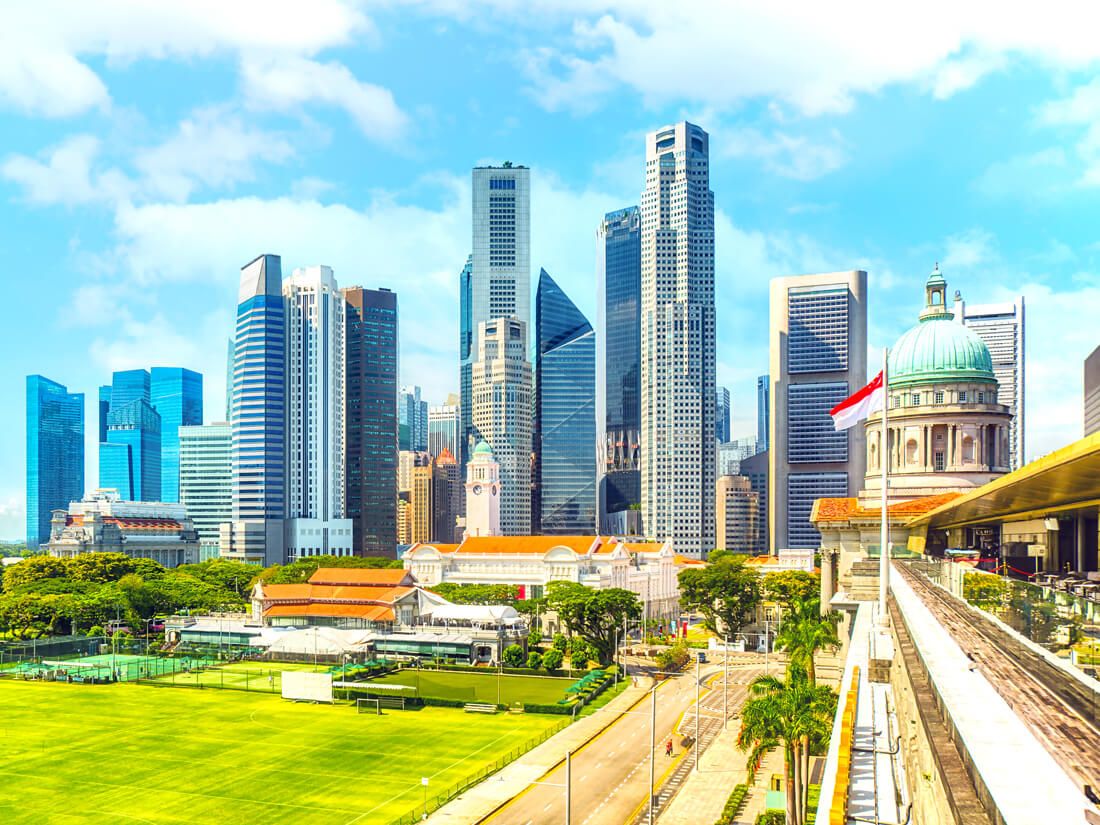
Snow sculptures in Quebec City, Canada
Photo credit: Vespasian/ Alamy Stock Photo

The only walled city remaining in North America north of Mexico City, this French-speaking city packs plenty of historic charm (reflected by the fact that it was named a UNESCO World Heritage Site in 1985). Come winter, however, Quebec City is rife with holiday wonder, too. Start at Place de l’Hôtel-de-Ville to experience the Notre-Dame Cathedral, City Hall, and the German Christmas Market. 

Next, visit the stunning Le Chateau Frontenac overlooking the St. Lawrence River. The world’s most photographed hotel, it also offers visitors a taste of winter adventure via its adjacent toboggan run. For more outdoor wintry fun, consider a few laps around the ice rink at Place D’Youville, a public square near some of the city’s most popular sites.

Shirakawa-go, Japan

Snow-covered traditional thatched-roof homes of Shirakawa, Japan
Photo credit: zincreative/ Shutterstock

The historic mountain villages of Shirakawa-go and nearby Gokayama were recognized as a UNESCO World Heritage Site in 1995 for their famed farmhouses, some of which are centuries-old. Their steep thatched roofs are an example of Gassho-zukuri style architecture, an approach explained by its literal translation: “like hands in prayer.” 

The image becomes more evocative in the colder months, when these roofs are able to sustain epic amounts of snow — a particularly memorable sight come evening, when all of the homes glow through wintry veils of frost and icicles. The village hosts special light shows each winter that put the unique farmhouses on full display.
Grindelwald, Switzerland

Ski lift and skiers on snow-covered mountain in Grindelwald, Switzerland
Photo credit: imageBROKER.com GmbH & Co. KG/ Alamy Stock Photo
Situated in the Bernese Alps of Switzerland’s famed Jungfrau region, this storybook village is known for its pristine mountain resorts and world-class skiing. Grindelwald also comes alive around the holidays, when the town hosts Christmas in the Forest, a chance to congregate over hot drinks and carols, as well as the Mulled Wine Festival and — because we’re in Switzerland — a Fondue Gondola. 

The festivities continue into January, when the World Snow Festival features an array of awe-inspiring ice sculptures —  all the more reason to stay put as long as you can. That mission is made easier with the debut of the Bergwelt Grindelwald, a luxurious new hotel featuring stellar Alpine views.

Bergen, Norway

Snowy lane in Bergen, Norway
Photo credit: Tatyana Vyc/ Shutterstock

Known as the world’s “Fjord Capital,” Bergen not only has epic views of Norway’s fjords but ample charm and character to boot — traits that are only dialed up during the year’s chillier season. In November, residents join forces to build their very own miniature gingerbread town called Pepperkakebyen, considered to be the largest in the world and featuring edible creations in every form, from houses and churches to castles and rockets. 

The Bergen Christmas Market in Torgallmenningen is a favorite for locals and visitors alike, and the city appears even more magical under the illumination of electric candles atop Mount Fløyen, which symbolize the weeks leading up to Christmas. 

Lapland, Finland

Northern lights seen over snow-covered forest landscape in Lapland, Finland
Photo credit: Yevhenii Chulovskyi/ Shutterstock

Northern lights devotees will appreciate a visit to Lapland, the northernmost region in Finland, with sprawling subarctic terrain and wide, open skies that are ideal for witnessing the dazzling displays of aurora borealis. Boost your holiday spirit with a visit to Santa Claus Village in Rovaniemi, where you can meet the man himself. 

One reason you’ll feel like you’re in the North Pole here: The reindeer population outnumbers the human inhabitants in Lapland. They are an important part of life for the area’s Indigenous Sámi people, who have historically relied on reindeer for their main mode of transportation.

Strasbourg, France

Traditional architecture along canal in Strasbourg, France
Photo credit: ecstk22/ Shutterstock

Affectionately dubbed the “Capital of Christmas,” this French city welcomes more than 2 million visitors every year with its captivating holiday market, spread across 10 sites within the Grande Île district. A nearly-100-foot tree serves as a focal point at Place Kléber Square, while Place Broglie hosts Christkindelsmärik, a smaller market full of décor and festive flavors. Throughout it all, experience caroling; enticing, Alsatian-inspired fare; and a stately cathedral at this UNESCO World Heritage Site.

St. Moritz, Switzerland

Red train cars on snowy mountainside in St. Moritz, Switzerland
Photo credit: Peter Stein/ Shutterstock

This ski resort town has twice hosted the Winter Olympics — and has gained international fame for its access to an array of wintry sports, from ski and snowboard areas to snow polo on a frozen lake.

But what really elevates St. Moritz into a winter wonderland are the parties this time of year. The highlight is “Tales of a Tree,” a spectacle of lights and music that shares a Christmas story about the region’s enchanting forest animals, all while spotlighting a mounted Christmas tree in the town’s city center. As for accommodations, look no further than Badrutt’s Palace, a historic five-star hotel that has counted luminaries such as Alfred Hitchcock, Audrey Hepburn, and Charlie Chaplin among its guests over the years.

Aachen, Germany

Snow-covered street and colorful row homes in Aachen, Germany
Photo credit: Dan Race/ Shutterstock

Aachen is Germany’s westernmost city, situated near the Netherlands and Belgium, and is known for its hot springs and its cathedral, founded around 800 CE. It’s around this landmark that the town’s Christmas market takes place in late November, winding its way through the streets and squares with twinkling lights and festive booths that boast everything from mulled wine to Aachener Printen, the area’s beloved gingerbread that has been baked there since the early 19th century.

Hallstatt, Austria

Snow-covered buildings beside lake and mountains in Hallstatt, Austria
Photo credit: canadastock/ Shutterstock

Austria is full of cities and villages whose mountainous backdrops draw visitors year-round, but Hallstatt’s lakefront location in Austria’s Salzkammergut Mountains is straight out of a fairy-tale — think cobblestone streets, quaint cafés, ornate churches, and abundant inns. Winter snow pushes the town’s charm to a whole new level. 

Hallstatt gets its name from the lake on which it lies, but it is also a UNESCO World Heritage Site and home to the world’s first known salt mine, which dates back 7,000 years. If you’re in Hallstatt during the holiday season, you’ll see this charming town decorated with Christmas lights and hear Christmas music playing in the streets. After exploring the holiday market, take the railway up to the World Heritage Skywalk for panoramic views of the town and the lake.

Harbin, China

Ice sculpture of giant castle in Harbin, China

The cold temperatures in Harbin, the capital of China’s northeast Heilongjiang province, don’t stop millions from visiting to attend the annual Harbin International Ice and Snow Sculpture Festival, the largest of its kind in the world. The festival starts in early January and typically lasts for about a month, during which the city is transformed into a magical winter dreamscape. 

The most spectacular part of the festival is the Harbin Ice and Snow World, created entirely from blocks of ice and snow hauled out of the nearby Songhua River. The venue spans over 6,500 square feet and includes more than 100 landmarks sculpted from ice and snow, as well as incredible ice castles lit up in all colors of the rainbow. Visitors can also explore the extensive number of ice sculptures created by artists from around the world who come to compete in the festival’s annual ice carving competition.