Post Banner Image
History

7 Eerie Ghost Towns You Can Still Visit in the U.S. 

By Daily Passport Team
Read time: 7 minutes
October 25, 2023
Updated: October 25, 2023

7 Eerie Ghost Towns You Can Still Visit in the U.S. 

By Daily Passport Team
Author
Daily Passport Team
Daily Passport writers have been seen in publications such as National Geographic, Food & Wine, CBC, Condé Nast Traveler, and Business Insider. They're passionate about uncovering unique destinations and sharing expert tips with curious travelers.

In the 19th century, miners looking to strike gold established settlements throughout the American West. Once bustling with people and businesses, these towns have long been abandoned, and their empty buildings and idle streets have become dusty time capsules of days gone by. Although many former mining boom towns have fallen into ruin, others are remarkably well-preserved. Below, discover the histories of seven of America’s most interesting ghost towns you can still visit today.

Bodie, California

Abandoned car and buildings in Bodie, California
Photo credit: Boris Edelmann/ Shutterstock

Now one of the best-preserved ghost towns in the U.S., Bodie was once a booming gold town near the Nevada border. Prospector William Bodey discovered gold there in 1859, and within a few years, the area had a mill, stores, and a continual influx of would-be miners. By the 1880s, the town’s population had swelled to 10,000 residents.

Although some families settled there, Bodie also had its fair share of saloons (in 1877, there were reported to be 65 of them), casinos, and brothels where the miners could spend their earnings. This would lead to one local preacher referring to the town as “a sea of sin.” It was not, unfortunately for the miners, a sea of gold — there was only so much to be found, and by the 1890s, the town was starting to fade. Several fires destroyed much of what was left.

What remained of the once-bustling Bodie became a state park in 1962. The dry desert air has helped to delay any further decay of the 200 buildings that are still standing. The park is open year-round to visitors, but its mountain elevation means it is accessible only by snow vehicles in the winter months. If you do visit, be warned: It is said there is a curse on anyone who takes any mementos away from Bodie, so you’re advised to leave everything as you find it.

Garnet, Montana

Preserved interior of 19th-century home in Garnet, Montana
Photo credit: MISHELLA/ Shutterstock

Most of us tend to imagine ghost towns as dry, dusty, desert locales, but some had much greener surroundings. One such location is Garnet, Montana, which sits at 6,000 feet above sea level. Despite the fact that the town was named for a semi-precious ruby-colored stone, gold was what attracted people to set up claims in these remote mountains east of present-day Missoula. In fact, a lot of silver was discarded in the search for more valuable metal. When prospectors finally struck gold in 1862, a small town grew around the site.

Once the railroad came to a nearby town and allowed for easier movement of goods, the population started to boom, and by the 1880s, about 1,000 people called Garnet home. However, by 1905 that figure had shrunk to only about 200 residents. Fire destroyed many of the wooden buildings in 1912, and there were no attempts to rebuild, though the post office remained open until 1928.

The Bureau of Land Management has managed the site since 1970. Visitors can see the old jail (although records seem to show only one arrest), the town’s sole hotel, a saloon, a schoolhouse, and several homes. On the edge of Garnet, a walking trail passes through several mining areas, with explanations of the mining process. Those feeling adventurous can even spend the night here: Several cabins are open to overnight guests, but only in winter, so you’ll need to ski in and make do with propane and wood fires.

Chloride, Arizona

Abandoned storefronts in Chloride, Arizona
Photo credit: Witold Skrypczak/ Alamy Stock Photo

Although nowhere near as busy as it was in its heyday, Chloride, Arizona, stands out from the rest of the towns on this list as a sort of living ghost town. Among the abandoned buildings, there are still a handful of occupied residences and businesses, determined to keep going in this remote part of the Mojave Desert in northwest Arizona. The 2010 census listed its official population as 271. The town was named for the silver chloride mined there, although the area was also a source of lead, gold, zinc, and copper. Soon after it was settled in 1862, business boomed until World War II, when a lack of both workers and ore led to Chloride’s decline from its population peak of around 5,000 residents.

Today, Chloride has an eccentric funky vibe to it, largely due to the collection of junk art that is on display around town. After visiting the cemetery, jail house, former railroad station, and Arizona’s oldest continually operating post office, pick up a map so you can see all of the murals and sculptures that decorate the residents’ gardens. If you visit on weekends, mock gunfights are held in the main street. Before you go, be sure to stop by Digger Dave’s café and bar for a drink and a chance to admire the memorabilia that covers every inch of wall space.

Rhyolite, Nevada

Abandoned building in Rhyolite, Nevada
Photo credit: Laurens Hoddenbagh/ Shutterstock

Located just outside the boundaries of Death Valley National Park, Rhyolite, Nevada, is another example of a true boom-and-bust town. Gold ore was discovered in the area in 1904, and Rhyolite (named for the silica-rich volcanic rock in the area) was one of the mining camps established in the Bullfrog Mining District, about 120 miles northwest of Las Vegas. A significant amount was invested in the town — unlike Garnet, which had wooden huts, Rhyolite had multilevel concrete buildings, electricity, and a telephone system.

However, a financial panic in 1907 marked the start of the town’s decline. By 1916, the electricity was cut off, and by 1920, the former city of 6,000 was a ghost of its once-proud self, with just 14 residents.

Fortunately for visitors, the desert air and the solid structure of the buildings mean that the bulk of the town is still in good condition. Headstones in the nearby graveyard tell the stories of those who came here from far and wide. Also of interest are a bottle house, constructed entirely of empty beer bottles, and the ghostly sculptures at the Goldwell Open Air Museum on the edge of town.

Kennecott, Alaska

Buildings on hillside in Kennecott, Alaska
Photo credit: Steven Schremp/ Shutterstock

Situated in the heart of Alaska’s Wrangell-St. Elias National Park, America’s largest national park, Kennecott (or Kennicott, as it is sometimes spelled) is a National Historic Landmark. It is believed to be the best-preserved example of 20th-century copper mining.

Kennecott consisted of the copper mines and the nearby mill town where the mined ore was processed. Although the town itself was relatively small compared to other ghost towns (approximately 200 worked in the town and another 300 in the mines), Kennecott had its own hospital, store, skating rink, school, dairy, and other facilities. It is estimated that $200 million worth of copper was mined here between 1911 and 1938, making it the world’s richest copper mine.

Eventually, the Kennecott company opened more profitable mines in Chile, and the Alaska settlement wound down. By 1950, it was deserted, the buildings left to fall into decay. Now under management of the National Park Service, the town is being carefully restored so that visitors can continue to enjoy and learn for decades to come.

Frisco, Utah

Beehive-shaped stone structures in Frisco, Utah
Photo credit: Chris H. Galbraith/ Shutterstock

In addition to the remains of old buildings and the cemetery containing Frisco’s former residents, one notable attraction alone makes Frisco worth visiting. The town, located in Beaver County in southwest Utah, is dotted with dome-shaped stone kilns that resemble giant honeybee hives. These kilns were used to process silver ore, and have earned the town its place on the National Register of Historic Places. Silver was first discovered here in 1875, and in its heyday, Frisco was home to around 6,000 people.

The decline of Frisco came earlier than that of most other mining towns, largely due to a mine collapse in 1885. The resulting earthquake was felt 10 miles away, and the town never quite recovered afterward. A few attempts were made to reopen the mines, but by the 1920s, hardly anyone was left to work in them.

Visitors today can walk among the old buildings and kilns, but less is known about Frisco than the other ghost towns on this list, something that adds to the eerie atmosphere of this once-booming place in the Utah desert.

St. Elmo, Colorado

Wooden buildings surrounded by mountains in St. Elmo, Colorado
Photo credit: Nadja Rider/ Shutterstock

If you want to visit a ghost town that still has a few ghosts of its own, you might want to head to St. Elmo, Colorado, one of the best-preserved ghost towns in the West. Located at about 10,000 feet above sea level near the town of Buena Vista, St. Elmo was, like so many other ghost towns, created around the mines. In this case, both gold and silver were discovered in the 1870s, leading to the town’s official founding in 1880. The town was originally called Forest City, but since another Forest City already existed, residents were forced to choose a different name. One decided on St. Elmo, after a novel he was reading at the time.

With the railroad passing through, the town was a popular supply hub for nearby settlements and prospectors. However, with decreasing demand, the railroad closed in 1922. By 1930, St. Elmo’s once-prosperous population of 2,000 people had fallen to just seven, enough to run the hotel and store. Many claim to have seen the ghost of one of these last residents, Dirty Annie Stark. In fact, ghost hunters say that St. Elmo is one of the most haunted places in the entire state of Colorado. Visitors to the town, which is open from May through September, can explore the former homes and other buildings, including the general store.

Post Banner Image
Geography

What Are the World’s Only 3 Enclave Countries?

By Daily Passport Team
Read time: 5 minutes
October 25, 2023
Updated: May 29, 2024

What Are the World’s Only 3 Enclave Countries?

By Daily Passport Team
Author
Daily Passport Team
Daily Passport writers have been seen in publications such as National Geographic, Food & Wine, CBC, Condé Nast Traveler, and Business Insider. They're passionate about uncovering unique destinations and sharing expert tips with curious travelers.

The planet is home to 44 landlocked countries — ones entirely surrounded by land borders — but just three of them boast a far more unusual claim to fame. These countries are known as enclaves, and they aren’t just landlocked — they are located entirely within the territory of another state. Discover the fascinating histories of the world’s only three enclave countries. 

San Marino

Stone pathway leading to hilltop fortress in San Marino
Photo credit: rudi1976/ Alamy Stock Photo

The Republic of San Marino was established in 301 CE, making it the world’s oldest-surviving constitutional republic. This microstate sits on the northeastern side of the Apennine Mountains in northern-central Italy, encompassed by the regions of Emilia-Romagna and Marche. Home to 33,000 permanent residents and covering an area of just 24 square miles, San Marino is also one of the smallest countries on the planet. The official language of this enclave is Italian.

According to legend, San Marino was founded when Saint Marinus (from whom the country derives its name) moved from Rab Island in present-day Croatia to Mount Titano and attracted a group of followers. While there, he performed a miracle and was given Mount Titano by its legal owner; he subsequently bequeathed it to the community upon his death. Historically under the political control of the Pope, San Marino first started to move toward independence in the 1300s. In 1463, the Pope awarded independence to the towns of Fiorentino, Montegiardino, and Serravalle in return for helping him defeat the Malatestas. These additions marked the country’s borders, which have been unchanged ever since.

Despite its miniature size, San Marino has huge touristic appeal. The namesake capital city sits atop Mount Titano and is inscribed on the UNESCO World Heritage List. It’s notable for its medieval walls, cobblestone streets, and Three Towers — defensive bastions dating back to the 1200s and perched on Mount Titano’s three peaks. Those wanting to delve into the state’s history and culture can do so at the Museo di Stato and Modern Art Gallery. Meanwhile, food and drink lovers will find gelaterias, pizzerias, seafood restaurants, and wine bars scattered around the country’s charming streets.

Lesotho

Aerial view of a waterfall and lush countryside of Lesotho
Photo credit: mbrand85/ Shutterstock

Lesotho, officially known as the Kingdom of Lesotho, is a mountainous country that’s entirely encircled by South Africa. Occupying an area of 11,720 square miles, this high-altitude territory was inhabited by a tribe of hunter-gatherers called the Khoisan beginning during the Neolithic Period. By around 500 CE, Bantu-speaking people arrived after a mass migration from West Africa and were later followed by Sotho-Tswana peoples. King Moshoeshoe I, the country’s first monarch, united the land that was then known as Basutoland under one rule in 1822. Just over two decades later, Moshoeshoe agreed to a treaty that made Basutoland a British protectorate.

A few more twists were to come before Basutoland eventually became Lesotho. It was annexed by the British-governed Cape Colony in 1871, but, after an inability to control revolts, the territory was returned directly to the British Crown in 1884. Full independence came in 1966, when Basutoland was renamed the Kingdom of Lesotho with King Moshoeshoe II as the head of state.

Today, Lesotho — nicknamed the “Kingdom in the Sky” — is famous for its breathtaking mountain landscapes. Visitors have no shortage of opportunities to hike and trek to mountaintops, across lush rolling pastures, and around national parks. At 11,424 feet, Thabana Ntlenyan is the highest point in the country and the tallest mountain in southern Africa.

Other interesting sights in the country include the ruined hideout of King Moshoeshoe I in Thaba Bosiu, near the capital city of Maseru, and Mount Qiloane, which is sacred in Basotho folklore. Visitors to Lesotho will also have the chance to indulge in cuisine which has been influenced by both Indigenous peoples and European settlers. The main staple is papa, a thick maize porridge, served with a bean, meat, or vegetable stew. To savor it like a true local, eat it by hand rather than with cutlery.

Vatican City

View of St. Peter's Basilica in Vatican City at dusk
Photo credit: Pani Garmyder/ Shutterstock

Located 140 miles south of San Marino is Vatican City. Officially called Vatican City State, this walled nation is entirely surrounded by the city of Rome. It is the headquarters of the Roman Catholic Church and the home of the Pope, who serves as both the bishop of Rome and leader of the Catholic Church. Occupying only 0.17 square miles, the Vatican is also the world’s smallest independent state.

For over a millennium, up until 1870, the Pope held sovereignty over the vast Papal States. They were made up of territories in central Italy and included the modern-day regions of Lazio, Umbria, Marche, and parts of Emilia-Romagna. This changed during the movement for Italian unification, when Rome came under the rule of Piedmont-led forces. The popes refused to accept the new political reality and retreated to live in the Apostolic Palace, the official papal residence. The situation was eventually resolved in 1929, when Benito Mussolini signed the Lateran Treaty on behalf of the Holy See and the Kingdom of Italy. It established the Vatican City as a city-state and gave special status to Catholicism in Italy.

In addition to being the center of Catholicism, Vatican City is a treasure trove of art and architectural masterpieces. Some of the most revered include the enormous St. Peter’s Basilica and the pillared Apolistic Palace, which houses the Vatican Museums. The Sistine Chapel hosts Michelangelo’s intricate ceiling frescoes, while elsewhere around the museums are works by Botticelli, Carvaggio, and Botecelli, among others. In 1984 the Vatican City became the first country to be inscribed on the UNESCO World Heritage List.

Post Banner Image
Architecture

8 of the World’s Tallest Buildings Throughout History

By Daily Passport Team
Read time: 5 minutes
October 25, 2023
Updated: May 14, 2024

8 of the World’s Tallest Buildings Throughout History

By Daily Passport Team
Author
Daily Passport Team
Daily Passport writers have been seen in publications such as National Geographic, Food & Wine, CBC, Condé Nast Traveler, and Business Insider. They're passionate about uncovering unique destinations and sharing expert tips with curious travelers.

Towering 2,717 feet above the modern metropolis of Dubai, the Burj Khalifa is currently the world’s tallest building. However, the record-breaking skyscraper has only held the title since 2010. Dozens of other phenomenal structures before it were once the tallest of their kind, from European cathedrals to ancient pyramids. Travel back in time to discover eight of the world’s tallest buildings throughout history. 

Great Pyramid Of Giza – Egypt

Camels standing in desert in front of Great Pyramid of Giza in Egypt
Photo credit: Anton Aleksenko/ iStock

Original height: 481 feet

Record held: Approximately 2560 BCE – 1311 CE

Arguably the most famous tomb on the planet, the Great Pyramid of Giza was built by the Pharaoh Khufu as his final resting place. This limestone structure was the tallest building in the ancient world — no other civilization could match its prowess. It’s also the oldest pyramid on the Giza site; construction was finished in approximately 2560 BCE. The Great Pyramid was once filled with the treasures the Pharaoh needed for safe passage into the afterlife, but has long been plundered by grave robbers.

How the pyramids were built is one of history’s most persistent mysteries. Each stone block weighs over two tons, so moving them and layering them in such a geometric fashion was no small task. Archaeologists continue to investigate the ancient monument and regularly uncover new information about Egyptian society as a result.

Lincoln Cathedral – England

View of Lincoln Cathedral in England between trees
Photo credit: jremes84/ Shutterstock

Original height: 525 feet

Record held: 1311-1548

The Great Pyramid retained its title as the world’s tallest structure for thousands of years, until Lincoln Cathedral in Lincoln, England, surpassed its height in 1311 CE. Medieval architects added a new central spire to the existing Norman church, which raised its total height to a reported 525 feet.

Made from wood and capped with lead, this new spire meant that Lincoln’s mighty cathedral could be seen from miles in any direction. Lincoln Cathedral remained the world’s tallest building until 1548, when a powerful gale took the central spire out. It was never replaced, and the remaining spires struggled to support their own weight, so the cathedral was ultimately redesigned in the early 19th century.

Strasbourg Cathedral – France

Stained glass and spires of the Strasbourg Cathedral in France
Photo credit: RossHelen/ Shutterstock

Height: 466 feet

Record held: 1647-1874

This picturesque city on the banks of the Rhine River (which marks the border between France and Germany) is home to a stunning Gothic-Romanesque cathedral, which became the world’s tallest building in 1647 after its ornate spire was completed. Novelist Victor Hugo described Strasbourg Cathedral as a “skillful combination of monumental size and delicateness.”

Constructed on the site of a Roman temple, Strasbourg Cathedral is considered one of the finest examples of Gothic architecture in Europe and is still the fourth-tallest church in the world. If you visit, make sure to see the fascinating astronomical clock and trek up to the 216.5-foot-tall viewing platform.

Cologne Cathedral – Germany

Twin spires of Cologne Cathedral in Germany, seen between trees
Photo credit: Neill Taylor/ Alamy Stock Photo

Height: 515 feet

Record held: 1880-1884

The late 19th century saw a number of churches compete for the title of the world’s tallest building, with each holding the record for a handful of years. The most well-known holder of the title (albeit briefly) was Cologne Cathedral.

The cathedral took over five centuries to complete, interrupted by wars, revolutions, and funding problems. When Cologne Cathedral was finally finished in 1880, it was the world’s tallest building for just four years — and the last religious structure to hold that title.

Washington Monument – Washington, D.C.

Pathway leading to Washington Monument in Washington, D.C.
Photo credit: Bitkiz/ Shutterstock

Height: 555 feet

Record held: 1884-1889

The central feature of D.C.’s National Mall, the Washington Monument reigned as the world’s tallest building in the late 1880s. Built to commemorate the first U.S. President, George Washington, the obelisk “stood in no one’s shadow” — just like the man himself.

Construction began in 1848 and was financed by a private group of Washington’s admirers, but money ran out and work was halted until after the Civil War. In 1876, construction restarted and was paid for with public funds. However, a different kind of stone had to be sourced —  if you visit the monument today, you’ll notice a brown line about one-third of the way up that shows where the new (lesser-quality) stone was used. The Washington Monument is still the tallest building in D.C., as well as the world’s tallest masonry structure.

Eiffel Tower – Paris, France

View from base of Eiffel Tower to tip in Paris, France
Photo credit: Gurgen Bakhshetyan/ Shutterstock

Original height: 1,024 feet

Record held: 1889-1930

People from all over the world flocked to the 1889 world’s fair, held in Paris, where the star attraction was undoubtedly the event’s incredible main entrance — the new Eiffel Tower.

Designed by Gustave Eiffel, this wrought iron structure was not only striking to look at, but also a marvel of engineering. It utilized a lattice pattern to reach never-before-seen heights, catapulting the Eiffel Tower to the top of the tallest structure leaderboard. The original 1,024-foot structure was made even taller in 1957, when a television antenna was added. This took the Eiffel Tower’s total height to 1,063 feet.

Chrysler Building – New York, New York

Chrysler Building in New York City, seen between skyscrapers
Photo credit: Brownstock/ Alamy Stock Photo

Height: 1,046 feet

Record held 1930-1931

In the 1930s, a skyscraper construction boom in New York City precipitated a new era of supertall structures. A number of projects in Manhattan raced to become the world’s tallest building, but it was the Art Deco Chrysler Building that finished first.

Architect William Van Alen found himself in competition with his former protégé, H. Craig Severance, who was working on 40 Wall Street at the same time. The two kept hearing of each other’s plans, making last-minute adjustments to their designs so their project would be taller. However, Van Alen beat Severance by adding a 180-foot stainless steel spire to the Chrysler Building, completing the project in 1930.

Empire State Building – New York, New York

View up at Empire State Building in New York City from street level
Photo credit:  lucky-photographer/ Alamy Stock Photo

Original height: 1,250 feet

Record held: 1931-1970

Shortly after the Chrysler Building opened, a new office building just a few blocks away in Midtown Manhattan snatched its crown — the Empire State Building. An internal steel frame supports the concrete exterior, which is also a prime example of Art Deco architecture. An antenna at the top, added in 1985, brings its total height to 1,454 feet.

The Empire State Building has 102 stories, with 1,872 stairs leading up to the Observation Deck at the top. Every year, there’s a competition to see who can run up them the fastest — but if you’d rather not do all that legwork, take one of the 73 elevators to the top instead.

Post Banner Image
Culture

Why Is It Called a Baked Alaska? How 5 Foods Got Their Names

By Jersey Griggs
Read time: 4 minutes
October 13, 2023
Updated: October 13, 2023

Why Is It Called a Baked Alaska? How 5 Foods Got Their Names

By Jersey Griggs
Author
Jersey Griggs
Jersey is a travel and lifestyle writer whose work has appeared in publications such as Condé Nast Traveler, Business Insider, and Bust. When she’s not exploring her adopted home state of Maine, she’s likely planning her next big trip.

Have you ever wondered why it’s called a baked Alaska and not a Baked New York? Or why Hollandaise sauce is named after Holland when it originated in France? When food is named after a specific place, the reasoning behind the name isn’t always straightforward. Read on to discover the unique origin stories of five popular foods named after places around the world.

Baked Alaska

Cityscape of downtown Juneau, Alaska
Photo credit: wanderluster/ iStock

Before it was renamed for America’s northernmost state, the baked Alaska was inspired by another cold-weather destination. The dessert’s first iteration was a similar French confection called omelette Norwegge, or Norway omelet. Consisting of layers of cake, ice cream, and toasted meringue, baked Alaska must be baked in the oven before being served, thus earning the other half of its appellation. 

When French pastry chef Charles Ranhofer created a variation of omelette Norwegge at New York’s Delmonico’s in 1867, he originally called it “Alaska, Florida.” Ranhofer often inserted social and political commentary into the names of his desserts, and given the U.S.’s recent purchase of Alaska for $7.2 million dollars — a controversial subject at the time — the name of his new dessert was intended to draw attention. It was also a nod to the variation in temperatures between the cold ice cream (Alaska) and the toasted meringue (Florida). In the 1880s British journalist George Sala coined the term “baked Alaska,” and the name stuck.

Boston Baked Beans

Park, bridge, and skyscrapers in Boston, Massachusetts
Photo credit: Chris LaBasco/ iStock

Although baked beans are Boston’s signature dish, they weren’t invented in the Massachusetts capital. Similar versions can be found around the world, from French cassoulet to Portuguese feijoada. In the U.S., the dish dates back to pre-colonial America, when Native Americans cooked beans in earthenware pots. They later taught the technique to the Pilgrims, who borrowed the slow-cook method as a way to avoid working during the Sabbath. 

However, Boston did put its own spin on the ubiquitous dish. During the 17th and 18th centuries, the port city was a key hub in the rum trade, with ships carrying molasses between the Caribbean, Boston, and Africa. Molasses was so plentiful that citizens put the sweet ingredient in their slow-cooked beans. It became such a popular dish that Boston became henceforth known as “Beantown” — a nickname that has stuck for centuries.

California Roll

Skyline of downtown Los Angeles, California
Photo credit: Ron and Patty Thomas/ iStock

Sit down at any sushi restaurant these days, and you’ll be sure to find a California roll on the menu. The combination of imitation crab meat, avocado, and cucumber has proven popular since its creation. But before the 1960s, the ubiquitous sushi staple didn’t exist. 

There are several competing theories about the roll’s creation. According to one, it was invented in the 1960s by Ichiro Mashita, a sushi chef who worked in Los Angeles’ Little Tokyo. Another gives credit to Hidekazu Tojo, who studied culinary arts in Japan and moved to Vancouver, British Columbia, in 1971. The chef took the principles of sushi from Japan and tweaked them slightly for Western palates, which were not used to raw fish. This also included flipping the sushi rice from the outside to the inside to mask the seaweed. Tojo says the name “California roll” came from the out-of-towners, many from Los Angeles, who gave the roll rave reviews that led to its surging popularity in the late 1970s.

Worcestershire Sauce

Church along river in Worcester, England
Photo credit: leighcol/ iStock

Not only does Worcestershire Sauce bring loads of umami flavor to drinks, marinades, and salad dressings, but it is also the secret ingredient to beloved dishes like the Ceasar salad, shrimp cocktail, and bloody mary. But how did this fish-flavored, brown sauce become the powerhouse ingredient it is today?

Its origin story is an accidental one. After Lord Sandys of Worcester, England, sailed home from India in 1835, he missed Indian cuisine. He tasked two chemists, John Lea and William Perrins, to recreate a particular favorite sauce from his travels. Lea and Perrins concocted a mixture of fish and vegetables that smelled so terrible they had to move it to the basement — where they promptly forgot about it.

After two years of fermentation, the pair remembered the basement sauce and discovered that it had turned out quite tasty. They began to bottle the sauce up and named it after their hometown, Worcester, England. Though there are many other variations today, Lee & Perrins Worcestershire Sauce remains the original version of the famous sauce. 

Hollandaise Sauce

Bridge over canal in Amsterdam, the Netherlands
Photo credit: a_Taiga/ iStock

It might be named for a region in the Netherlands (aka Holland), but Hollandaise Sauce is very much a French creation. As one of the French mother sauces, Hollandaise is a variation of sauce Isigny, a rich butter and cream sauce named for a town in Normandy.

During World War I, food rationing changed French cuisine. Due to the government’s restriction of cream and milk and the cessation of butter production, sauce Isigny was no longer on the menu. Fortunately, France was able to import butter from Holland, and a new sauce was born. This new variation had no cream — only butter, eggs, and lemon. Today, the rich, buttery sauce is a key ingredient in eggs Benedict, the beloved brunch dish made with English muffins, Canadian bacon, and poached eggs.

Post Banner Image
Outdoors

9 Famous Coastlines You Should Know About

By Nicole Villeneuve
Read time: 6 minutes
October 13, 2023
Updated: October 13, 2023

9 Famous Coastlines You Should Know About

By Nicole Villeneuve
Author
Nicole Villeneuve
Nicole is a writer and researcher with over 15 years of experience seeking out arts, culture, and lifestyle stories in places like remote northern Quebec and the unforgettable streets of Amsterdam. Her work has also appeared in PureWow, Brit + Co, AUX TV, and CBC.

Coastlines hold a special allure, with their sheer natural beauty, dynamic ecosystems, and profound influence on human history and culture. These liminal spaces where the land meets the sea are forces of both tranquility and power. Often, they offer ample exploration and recreation opportunities — or at the very least, one of the best photo ops around. From the rugged beauty of Italy’s Amalfi Coast to the dramatic coastline of California’s breathtaking Big Sur, here are nine famous coastlines that are worth the trek.

Antrim Coast – Northern Ireland

Lush green landscapes of the Antrim Coast in Northern Ireland
Photo credit: zhuzhu/ iStock

Game of Thrones fans will recognize the Antrim Coast as one of the principal filming locations of the blockbuster show. Located in Northern Ireland, the captivating coastal region offers some of the most dramatic and varied countryside vistas in the country. In fact, the region is so stunning it’s been designated an official Area of Outstanding Natural Beauty

The coast is best explored through the Causeway Coastal Route. Across about 120 undulating miles, visitors can explore the Carrick-a-Rede Rope Bridge, the historic Dunluce Castle perched on a cliff’s edge, and, most notably, Giant’s Causeway, famed for its tens of thousands of interlocking basalt columns that are the result of an ancient volcanic eruption.  

Big Sur – California

Pacific Coast Highway stretching along cliffs of Big Sur, California
Photo credit: Pgiam/ iStock

This stunning slice of the Pacific Coast Highway — located between Carmel and San Simeon in central California — is famous for its dramatic cliffs, towering redwoods, hidden coves, and marvelous views of the Pacific Ocean. The beauty of Big Sur has intrigued adventurers, nature enthusiasts, and artists of all disciplines for generations. The list includes writers Jack Kerouac and Henry Miller, music legends the Beach Boys, and Australian-born landscape artist Francis McComas, who called the area the “greatest meeting of land and water in the world.” 

Despite its popularity, Big Sur remains relatively isolated and sparsely populated due to environmental protections and the challenging access of its steep coastal mountain range and rugged coastline. Its breathtaking vistas remain a must-see, however, including spots such as Bixby Creek Bridge and McWay Falls, where the Santa Lucia Mountains meet the Pacific Ocean. 

Amalfi Coast – Italy

Colorful homes stacked on hillside overlooking the Amalfi Coast in Italy
Photo credit: neirfy/ iStock

The Amalfi Coast, situated along the southern edge of Italy’s Sorrentine Peninsula, is famous for its steep limestone cliffs and coves, terraced vineyards, and lemon groves — all overlooking the crystal-clear waters of the Tyrrhenian Sea. Charming towns such as Positano, Ravello, and Sorrento dot the coast, each with distinct old-world and leisurely charm. 

The region also boasts a rich historical heritage dating back to Roman times. Visitors can explore several historic sites, ranging from cathedrals to ancient ruins and significant works of art like the ceramics of Vietri. Outdoor enthusiasts can also tackle scenic hiking trails such as the Path of the Gods, while foodies have their pick of abundant lemon farms to visit. The Amalfi Coast was designated as a UNESCO World Heritage Site in 1997 for its topography, history, and culture.

Gold Coast – Australia

Stairs leading to translucent waters off the Gold Coast of Australia
Photo credit: DarrenTierney/ iStock

Coastlines don’t have to be all about natural beauty, and Australia’s Gold Coast is a prime example. Spanning over 40 miles along Queensland’s southeastern coastline — from Paradise Point along the Pacific Highway to Coolangatta at the New South Wales state border — Gold Coast is a bustling seaside city famous for its beautiful beaches, vibrant urban culture, and stunning skyline. 

Iconic resort areas like Surfers Paradise, situated on its namesake beach, and Broadbeach, located on Kurrawa Beach, make the Gold Coast a mecca for surfers and sunbathers alike. The city is also home to world-class theme parks like Dreamworld and Warner Bros. Movie World, as well as the lush bushwalks of the Gold Coast Hinterland

French Riviera – France

Colorful beachfront buildings on the French Riviera
Photo credit: Flavio Vallenari/ iStock

World-famous for its idyllic beaches, mild Mediterranean climate, and azure-blue waters (the inspiration for the French name of the region, Côte d’Azur), the French Riviera has been a magnet for artists, celebrities, and tourists for centuries. This coastline in the South of France coastline is home to glamorous cities like Cannes and Nice, the rolling hillsides of Provence, and the hilltop town of Eze, which feels straight out of a fairytale. It’s also home to fascinating historic sites such as the Monaco Opera and the Trophy of Augustus. 

Garden Route – South Africa

Overlook of the Garden Route coastal trail in South Africa
Photo credit: Willem Cronje/ iStock

Spanning 125 miles along the southern coast of South Africa, the Garden Route extends from Mossel Bay in the Western Cape to Storms River in the Eastern Cape. This glorious stretch of coastline, hugging the Indian Ocean, is known for its natural beauty — from lush forests to sparkling lakes, rocky mountains, and pristine beaches. Visitors can enjoy the Garden Route in a variety of ways: road tripping with surreal coastal views, taking in the picturesque marinas of the enchanting town of Knysna, hiking the mountains of Plettenberg Bay, or daring to traverse the famous suspension bridge in Tsitsikamma National Park.

Turquoise Coast – Turkey

Stairs leading to beach on Turkey's Turquoise Coast
Photo credit: nejdetduzen/ iStock

Also known as the Turkish Riviera, this famous coastline curving along Turkey’s southwest shore is as beautiful as the name suggests. The word turquoise comes from the French pierre tourques, meaning Turkish stone, which was first brought to Europe via Turkey. The coast has bays that indeed sparkle that distinct turquoise blue, particularly the otherworldly lagoon known as Ölü Deniz (Dead Sea). The coast is also rich in history and culture, with ancient Lycian tombs, rock-cut churches, and bustling bazaars.

Great Ocean Road – Australia

Cliffs and sea stacks along the Great Ocean Road in Australia
Photo credit: superjoseph/ iStock

The Great Ocean Road, spanning 150 miles along Australia’s southern coastline, is not only one of the country’s most popular tourist destinations, but also a historical marvel. Constructed by Australian soldiers returning from World War I between 1919 and 1932, this coastal highway offers visitors a unique opportunity to explore the stunning vistas along Australia’s southern edge, while also commemorating an important chapter in the nation’s history. 

As it meanders alongside the mighty Southern Ocean, the Great Ocean Road showcases dramatic seaside cliffs, the lush Maits rainforests, and the towering 12 Apostles limestone rock formations of Port Campbell National Park. 

Cabot Trail – Nova Scotia, Canada

Roadway winding through autumn foliage on the Cabot Trail in Nova Scotia
Photo credit: Lisa-Blue/ iStock

The Cabot Trail is a 186-mile-long roadway that winds through Nova Scotia’s Cape Breton Highlands, offering awe-inspiring vistas of the Gulf of St. Lawrence and the Atlantic Ocean. Named in honor of explorer John Cabot, this breathtaking coastal area on the northern tip of the island also features old-growth Acadian forests, diverse wildlife, dramatic headlands and cliffs, and charming fishing villages rich with Celtic culture. The Cabot Trail is especially famous for its vibrant autumn foliage, making it a popular destination for those seeking picturesque coastal scenery in the maritime provinces of Canada.

Post Banner Image
Architecture

7 Iconic Brutalist Buildings for Architecture Buffs to Visit

By Julia Hammond
Read time: 5 minutes
October 13, 2023
Updated: October 13, 2023

7 Iconic Brutalist Buildings for Architecture Buffs to Visit

By Julia Hammond
Author
Julia Hammond
Julia is a U.K.-based travel writer whose work has been featured in The Independent, The Telegraph, The New Zealand Herald, and Culture Trip, among others. She’s an enthusiastic advocate for independent travel and a passionate geographer who has had the privilege of traveling to more than 130 countries in search of a story.

Brutalism originated after World War II in Marseilles, France, where the famous Swiss architect Le Corbusier described a housing development he was working on as “bétonbrut,” which translates to raw concrete. This material features heavily, though not exclusively, in Brutalist architecture, and Le Corbusier’s vision was to build in such a way that nothing was hidden. But this concept of honesty in construction divides opinion, and since its inception, Brutalism has been a “love it or hate it” style of architecture. Find out which camp you fall into as you take a look at these seven beautiful Brutalist buildings around the world.

La Cité Radieuse – Marseille, France

View up at La Cité Radieuse Brutalist housing complex in Marseilles, France
Photo credit: Shaun Higson/ Provence/ Alamy Stock Photo

In the 1920s, the architect Le Corbusier developed a visionary housing concept he called Unité d’Habitation (housing unit). It would be many years before he could realize his vision, as La Cité Radieuse took shape in Marseille, a port city in the south of France, between 1947 and 1952. A collection of 337 two-story apartments — plus shops, galleries, restaurants, and a hotel — create a concrete community on stilts. Broad corridors run through the complex on some of the floors, forming elevated streets, while the flat roof is home to a running track, swimming pool, and shared terrace. Four similar developments followed: in Nantes-Rezé, France; Berlin, Germany; Briey, France; and Firminy-Vert, France. Since 2016, the Marseille original has held UNESCO World Heritage status for its contribution to modern architecture. 

Geisel Library – La Jolla, California

La Jolla's Brutalist Geisel Library framed by foliage
Photo credit: InnaPoka/ iStock

This fabulously unique library was the work of William Pereira. Appropriately for a library, the architect wanted to create a sense of holding knowledge in one’s hands. The building took two years to come together, opening in 1970, and consists of eight floors made of glass and reinforced concrete. The cantilevered structure required heavy-duty slope beam columns to provide sufficient support, but these also serve to enhance the design. A rooftop carillon was installed in 1989, which chimes at hourly intervals during the day. Visitors can take an online or self-guided tour of the library at any time, or visit at noon to listen to a live carillon concert. Since 1995, this Brutalist gem has been dedicated to Theodor Geisel, the children’s author responsible for Dr. Seuss, and his wife Audrey. 

Habitat 67 – Montreal, Canada

Stack houses of the Habitat 67 complex in Montreal, Canada
Photo credit: Adrian Wojcik/ iStock

Habitat 67 is an iconic Brutalist complex located in Montreal, Quebec. Taking the lead on this pioneering project was a young architect named Moshe Safdie, who later achieved worldwide fame. Unveiled at the 1967 World Exposition, the development was intended to demonstrate that prefabricated structures could be both practical and beautiful. Habitat 67 comprises 158 apartments over 12 levels; each one was made in a factory and craned into place. The modular construction enables each property to have its own roof garden, and the different sizes of the apartments prevent the design from becoming uniform and dull. 

The Barbican Estate – London, England

Courtyard and apartments of the Barbican Estate in London, England
Photo credit: coldsnowstorm/ iStock

After London suffered extensive bombing during World War II, just 48 people remained residents of the area that’s now the Barbican at the time of the 1951 census. Thus, architects were given a space that could be used for something bold and innovative. Chamberlain, Powell, and Bon — the firm which won the contract to reimagine the area — created a raised city within a city that would be the basis for a new community of around 4,000 people. 

Though the architects went big on concrete, the site isn’t all hard edges — the Barbican Conservatory provides an oasis-like injection of greenery, while the lakeside terrace and sculpture court offer further spaces for leisure and recreation. In 2001, the development was awarded England’s Grade II status, a measure of how important it was to retain the complex and its architectural integrity. Guided tours take place on a regular basis.

Teresa Carreño Cultural Complex – Caracas, Venezuela

Person admiring the Teresa Carreño Cultural Complex in Caracas, Venezuela
Photo credit: Jose M Ruiz V/ iStock

The Teresa Carreño Theater, a landmark Brutalist building in Caracas, hosts live events across two auditoriums: Sala Rios Reyna Hall and Sala José Félix Ribas. You’ll find this cultural complex in the Bellas Artes district of the Venezuelan capital. Architecture tours showcase this and other significant buildings in the city, but the best way to experience the building is to go inside — where opera, music, dance, and theater performances are staged regularly. And the theater, named after a Venezuelan pianist, is not the only famous Brutalist structure in the city. During your visit, be sure to check out the Centro Simón Bolívar (also known as the Towers of Silence) and the Parque Central Urbanistic Complex, which houses the city’s Contemporary Art Museum.

Jatiya Sangsad Bhaban – Dhaka, Bangladesh

Brutalist exterior of the National Parliament House of Bangladesh
Photo credit: mashkawat/ Shutterstock

Jatiya Sangsad Bhaban, the National Parliament House of Bangladesh, was constructed from concrete, brick, and white marble. Set among artificial lakes, its imposing walls are almost fortress-like, and act as insulation from the heat outside. Architect Louis Kahn utilized different shapes to emphasize the different functions of the buildings in this complex. The geometric designs used to create the openings in the columns were a nod to Bengali cultural motifs. Construction began when the country was still East Pakistan, and as the newly independent, fledgling state was born, Jatiya Sangsad Bhaban became a symbol of the start of a new era. Kahn died before the project was completed in 1982, but it was posthumously awarded the Aga Khan Award for Architecture.

Boston City Hall – Boston, Massachusetts

Brutalist exterior of Boston City Hall
Photo credit: APCortizasJr/ iStock

You know you’ve hit on a controversial design when people start calling for demolition before the building is even finished. That’s exactly what happened as Boston City Hall approached completion in the late 1960s, and it has polarized opinions ever since. Some find beauty in its stark lines, while others believe they’ve never laid eyes on anything as ugly. Regardless, it certainly makes a statement. The firm responsible for the project, Kallmann McKinnell & Knowles, produced the winning design in a competition that attracted more than 250 entries. The brick that characterizes its lower levels contrasts to the cantilevered concrete and repetitive shapes of the upper part of the building. Bold, functional, and unique, it’s one of Boston’s greatest architectural talking points.

Post Banner Image
Outdoors

Land of Fire and Ice: 7 Breathtaking Landmarks in Iceland

By Julia Hammond
Read time: 5 minutes
October 13, 2023
Updated: October 13, 2023

Land of Fire and Ice: 7 Breathtaking Landmarks in Iceland

By Julia Hammond
Author
Julia Hammond
Julia is a U.K.-based travel writer whose work has been featured in The Independent, The Telegraph, The New Zealand Herald, and Culture Trip, among others. She’s an enthusiastic advocate for independent travel and a passionate geographer who has had the privilege of traveling to more than 130 countries in search of a story.

Iceland possesses a raw and rugged beauty unlike anywhere else on Earth. In this Nordic island nation, geothermal and tectonic processes combine with often wild weather to dramatically shape the landscape. Visitors can travel almost as far north as the Arctic Circle to see glaciers that hide subterranean volcanoes and glittering ice caves, waterfalls tucked away at the end of remote valleys, and beautiful, unspoiled beaches backed by cliffs teeming with birds. Wondering where to start? Here are the seven most breathtaking natural landmarks in Iceland, the so-called “Land of Fire and Ice.”

Svartifoss (Black Falls)

Image of Svartifoss (Black Falls) in Iceland
Photo credit: miroslav_1/ iStock

Waterfalls are abundant in Iceland, but a handful of them stand out for their remarkable geology. One of the most striking is Svartifoss, flanked by charcoal gray basalt columns that were created from a lava flow 300,000 years ago. Located in the heart of the Skaftafell nature reserve, it forms part of Vatnajökull National Park. 

To reach Svartifoss, you’ll need to follow a mile-long hiking trail that slowly climbs up from the visitor center. Standing less than 66 feet high, Svartifoss doesn’t come close to being Iceland’s tallest waterfall — that honor goes to Morsárfoss, which is more than 10 times the size. Yet, Svartifoss is a tourist favorite. In summer, lush vegetation springs up at the water’s edge, while in winter, under a dusting of snow, it’s one of the most exquisite sights in the country. 

Jökulsárlón Glacier Lagoon

Image of the Jökulsárlón Glacier Lagoon in Iceland
Photo credit: Adellyne/ Shutterstock

Jökulsárlón is one of the jewels of Iceland’s popular south coast. The glacier lagoon sits in the shadow of Breiðamerkurjökull, an outlet glacier of the much larger Vatnajökull glacier. As Breiðamerkurjökullr travels downhill under the effect of gravity, chunks of ice calve into the saltwater lagoon of Jökulsárlón. 

Zodiacs ferry passengers to the glacier’s mouth and weave in and out of the bobbing hunks of ice. Often, you’ll see seals sprawled out on the larger icebergs or swimming leisurely in the chilly water. Walk along the shoreline towards the ocean, and you’ll soon reach Fellsfjara, better known by its “Diamond Beach” nicknames. Here, the waves interact with the icebergs that have drifted out to sea, washing them back onto land and eroding them until they melt into the black sand. 

Strokkur 

Iceland's Strokkur erupting
Photo credit: Puripatl/ iStock

Strokkur, Iceland’s most active geyser, is the reason most people come to the Haukadalur valley. Also referred to as the Geysir Geothermal Area, it’s a highlight of Iceland’s famous Golden Circle route. This is where you’ll find the original Geysir, now inactive, and a wealth of other steaming fissures, mud pots, and mineral speckled grounds. 

But all eyes turn to Strokkur: This landmark is a reliable performer, putting on a show about every six to 10 minutes. The first sign of action comes as the turquoise pool begins to shiver and then dome. As the surface of the water fractures, the geyser shoots a plume of superheated water and steam into the air, typically between 30 and 60 feet high.

Studlagil Canyon

Greenish waters flowing through dramatic Studlagil Canyon in Iceland
Photo credit: benedek/ iStock

Until 2009, Studlagil’s natural beauty was hidden underwater. Then, a dam was constructed upstream as part of the Kárahnjúkavirkjun hydroelectric power project. As a result, the level of the Jökulsá á Dal River fell, and the stunning canyon was revealed. Studlagil has rapidly become one of East Iceland’s must-see attractions thanks to its remarkable concentration of rust-covered basalt columns. If you visit in early summer, the water should be a dazzling blue-green. But even when glacial water, heavy rainfall, or snow melt turns it a dull gray, the canyon’s still an impressive sight.    

Reynisfjara 

Stacked rock formations along Reynisfjara beach in Iceland
Photo credit: demerzel21/ iStock

Reynisfjara is a breathtaking beach located near the village of Vik on Iceland’s south coast. A broad strip of black sand lines the shore, and behind it sits Hálsanefshellir, a sizable cave cut by the waves. The cave’s walls are formed from basalt columns and cooled pillow lava. Flanking the cave is an 1,115-foot-tall tuff cliff, the ocean-fronting face of Reynisfjall mountain. Throughout the summer breeding season, puffins make their nests on its grassy ledges. 

Just offshore, the skinny, gnarled sea stacks of Reynisdrangar bear the scars of constant wave erosion. But it’s the waves themselves that make this place infamous — they often arrive unannounced and sweep back to the sea with great force.

Landmannalaugar

Overview of Iceland's Landmannalaugar geothermal pools
Photo credit: :Fyletto/ iStock

The Landmannalaugar area is often considered the highlight of Iceland’s Highlands. Accessible by road only for a short period of time in summer, Landmannalaugar forms part of the Fjallabak Nature Reserve, occupying a space on the edge of the Laugahraun lava field backed by hills. These rhyolite peaks are streaked with red, blue, yellow and green, making this one of the most colorful areas in the country. 

Locals often call this place “the People’s Pools” because the area is geothermally active. Once, this would have been a stop for weary travelers and farmers moving livestock between grazing lands, but today it’s a tourism hub. One of the most popular activities after a day of hiking in Landmannalaugar is to follow the wooden boardwalks to its naturally heated warm water pools for a restorative soak. 

Crystal Cave

View inside Iceland's Crystal Cave
Photo credit: Wirestock/ iStock

With the arrival of spring in Iceland, rising temperatures create meltwater streams in glaciers such as Vatnajökull. This water trickles down through cracks and crevasses in the ice, hollowing out vast caverns that are hidden from sight. Crystal Cave is one such example, and because of the way it’s formed, the precise location of the cave can change from one year to the next. 

By late November, the colder weather has stabilized the ice, and it’s considered safe enough for visitors kitted out with helmets, crampons, and ice axes to venture across the glacier with a qualified guide. Inside the cave, an extraordinary scene awaits — the ice cave’s translucent blue ceilings and walls are as if a hugely talented sculptor had been at work, yet no human could match the work of nature.

Post Banner Image
History

19 of the Most Haunted Hotels Around the World 

By Daily Passport Team
Read time: 12 minutes
October 12, 2023
Updated: October 21, 2025

19 of the Most Haunted Hotels Around the World 

By Daily Passport Team
Author
Daily Passport Team
Daily Passport writers have been seen in publications such as National Geographic, Food & Wine, CBC, Condé Nast Traveler, and Business Insider. They're passionate about uncovering unique destinations and sharing expert tips with curious travelers.

Hotels with rich histories add a layer of intrigue to any vacation. That’s especially true when those histories are of the paranormal variety — from ghosts that wake up guests just for fun to deceased hotel owners still said to roam the halls at night. Celebrate the spooky season with a stay at these 19 hotels with haunted histories… if you dare.

Stanley Hotel – Estes Park, Colorado

Exterior of the Stanley Hotel in Estes Park, Colorado
Photo credit: Paul Brady/ Alamy Stock Photo

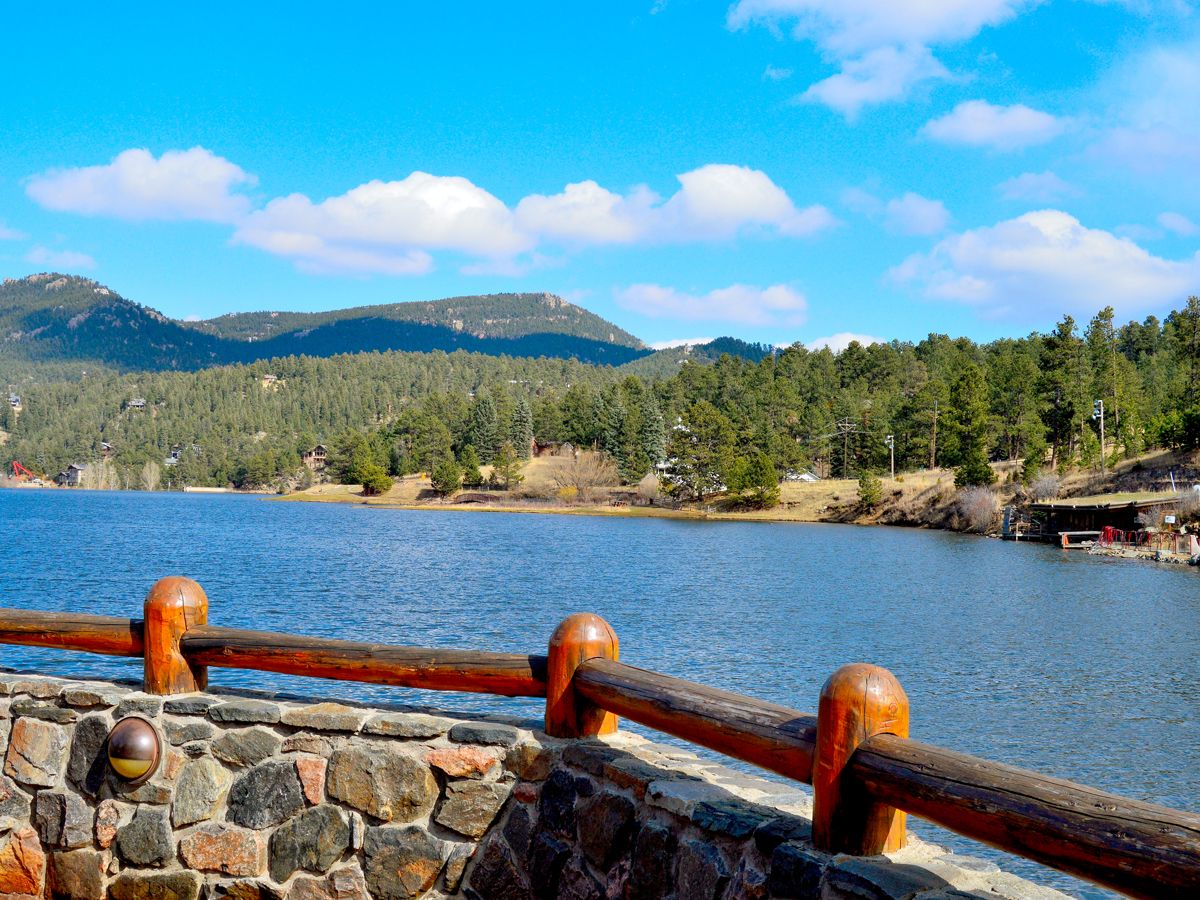
Most people know the Stanley Hotel as the inspiration for Stephen King’s The Shining, which he wrote after staying just one night at the property in 1974. The hotel opened in 1909 as an oasis in the Colorado mountain wilderness, boasting modern amenities for the time, such as electric lights, en-suite bathrooms, and telephones. But even before Stephen King’s arrival, the hotel had a reputation for paranormal activity.

Hotel owner F.O. Stanley, who died in 1940, has been a common sighting at the check-in desk since his death. There have also been reports of mysterious piano playing, laughter, shadowy figures, items moving on their own, and lights turning on and off. Ghost-goving guests at the hotel can book a special package guaranteeing them a stay on the most haunted floor, plus a ticket to the evening ghost tour.

The Langham Hotel – London, England

Image of the Langham Hotel in London, England
Photo credit: Philip Sayer/ Alamy Stock Photo

One of Europe’s first grand hotels, the Langham debuted in London in 1865 to much fanfare — even the Prince of Wales came to the opening. It has remained a posh place ever since, hosting illustrious guests such as Charles Dickens, Sir Arthur Conan Doyle, and Princess Diana.

But among those famous visitors, you can also find occupants of the ghostly kind — particularly in Room 333, considered to be the most haunted hotel room in London. It’s said to be home for more than a few ghosts, including one who likes to shake the bed just for fun, a Victorian doctor who stares into the distance, and a German prince in military dress. Throughout the hotel, you may also be greeted by a man with a wounded face, a footman in a powdered wig, a lost butler, or Emperor Napoleon III himself.

The Shelbourne – Dublin, Ireland

Entrance to the historic Shelbourne hotel in Dublin, Ireland
Photo credit: noel bennett/ Alamy Stock Photo

In the heart of Dublin, the Shelbourne is reportedly haunted by a ghost named Mary Masters, who loves to mess with water fixtures in one of the rooms. She died of cholera in the hotel, which opened in 1824, when she was just seven years old. Mary enjoys startling guests by opening and closing wardrobe doors, but her favorite thing to do is turn on the water. Guests regularly report the taps, shower, and tub being turned on unexpectedly. In fact, so many guests have recounted the same unexplained activities that the hotel had a staff member sleep in the room to see if the claims were true — it turns out, the staff member had the same experience.

Fairmont Le Château Frontenac – Quebec City, Canada

Exterior of the Fairmont Le Château Frontenac in Quebec City, Canada
Photo credit: Adrien Le Toux/ Shutterstock

The Fairmont Le Château Frontenac towers over Quebec City, high up on a hill overlooking the old town and its European-style streets. It replaced a previous castle used as wartime headquarters, and though it’s styled to look much older, it has only been there since 1893 and has been a hotel the entire time. But even still, the hotel reportedly has ghosts roaming the halls. One is Louis de Buade, Comte de Frontenac, who mourns his lost love, and the other is a woman dressed in a nightgown who enjoys waking people up at night.

Crescent Hotel – Eureka Springs, Arkansas 

Exterior of the Crescent Hotel in Eureka Springs, Arkansas
Photo credit: Bonita R. Cheshier/ Shutterstock

It doesn’t get much spookier than a hotel with an old morgue in the basement (now conveniently located right next to the spa). The Crescent Hotel, often deemed the most haunted hotel in America, originally opened in 1886 as a luxurious resort for wealthy train travelers making their way through Eureka Springs. It didn’t stay that way for long, though.

Within just a few years, the hotel fell into disrepair. It reopened as the Crescent College and Conservatory for Young Women in 1908 and operated as a college of some form until 1934. Then, in 1937, the dark history of the place began to take shape. A crooked “doctor,” Norman Baker, bought the property and turned it into a cancer hospital (hence the morgue). The problem was, he wasn’t offering actual treatment — instead, he was hawking natural spring water with flavoring as a bogus cure. After countless deaths, the hospital was shut down in 1940, and Baker was sent to prison. 

The hotel’s current iteration opened in the early 2000s, but ghosts of the past remain. Guests and paranormal investigators have reported seeing full-body apparitions of adults and children, and the hotel even offers ghost tours of the property.
Dragsholm Slot – Zealand, Denmark

Exterior of Dragsholm Slot castle in Zealand, Denmark
Photo credit: tomtsya/ Shutterstock

Dragsholm Slot was originally built in 1215 as a palace. From there, it transformed into a castle, a prison, back to a castle, and now a hotel. It’s often considered to be one of the most haunted buildings in Denmark — legend says it’s home to more than 100 ghosts.

Three of them are more famous than the others. The White Lady was the daughter of one of the noblemen who lived in the building. She fell in love with a commoner — something her father viciously disapproved of — and as punishment, she was imprisoned and bricked into the castle walls. She’s reportedly seen wandering the halls wearing a white dress. The second famous ghost, James Hepburn, died in the dungeon in 1578 — now, his ghost tears into the courtyard on horse and carriage every night. The third ghost, the Grey Lady, is much happier than the others. She had a terrible toothache in life that was healed by someone at the castle. In death, she is said to traverse the halls looking for good deeds to do as repayment.

Hotel Monte Vista – Flagstaff, Arizona

Yellow sign indicating the Hotel Monte Vista in Flagstaff, Arizona
Photo credit: Christian Offenberg/ Alamy Stock Photo

According to the Hotel Monte Vista, more than seven ghosts haunt the halls of the property — and guests are encouraged to try to communicate with them. The hotel opened on January 1, 1927, just off Route 66 in Flagstaff. It’s connected to other downtown buildings through secret underground tunnels, and it was used as a speakeasy during Prohibition. Famous visitors have included Mary Costigan (who broadcast her radio show from there), Michael J. Fox, Bob Hope, Bing Crosby, and Siouxsie Sioux.

But as far as ghostly guests, you can expect to meet a man who messes up the bed and turns on the TV at full volume, a rocking chair that moves on its own, a bellboy, a crying baby, a dancing couple, and a bank robber who rearranges the bar and wishes people a good morning.

First World Hotel – Pahang, Malaysia

Multi-colored facade of the First World Hotel in Pahang, Malaysia
Photo credit: wai yee thang/ Alamy Stock Photo

The popular First World Hotel in Malaysia isn’t just a colorful favorite —  it’s also the world’s largest hotel, with more than 7,300 rooms. Guests with rooms on the 21st floor may find it a bit difficult to get to bed at night, however, as it’s rumored to be a cursed floor that the elevator skips. In other rooms at the hotel, visitors report seeing vanishing figures and being pushed while sleeping. The hotel has a built-in casino, which many say is the reason for the ghosts; supposedly people who have lost their fortune there decided never to leave.

Lord Milner Hotel – Matjiesfontein, South Africa

Exterior of the Lord Milner Hotel in Matjiesfontein, South Africa
Photo credit: Eric Nathan/ Alamy Stock Photo

The Lord Milner Hotel opened in 1899 just as the South African War was beginning. During the war, it was a military hospital with a lookout tower. It reopened in 1970 after renovations, with 15 rooms decorated in old-world splendor. But it’s the hotel’s history as a military space that gave way to the ghosts reported to live there today.

One is Kate, a young nurse who used to play cards with soldiers as they recovered; she tends to walk up and down the staircase. Mary-Anne likes to jiggle the doorknob on Room 26. Lucy walks around in her nightgown. Olive hangs out in the gardens. British officers and soldiers congregate on the hotel balcony and spend time in the library. And with even more ghosts beyond that, the hotel certainly lives up to its legend as the most haunted hotel in South Africa.

The Queen Mary – Long Beach, California

Queen Mary historic ocean liner turned hotel docked in Long Beach, California
Photo credit: Rigucci/ Shutterstock

In 1972, the first hotel rooms opened in the permanently docked Queen Mary, a former luxury ocean liner that also served as a troop ship for World War II. It now serves as a kind of floating museum in Long Beach, California, but even before the ship was permanently docked, people reported hearing knocking on doors and seeing full-body apparitions, flickering lights, mysteriously running water, a woman in a wedding gown, disappearing children, and ghostly crewmembers. Today, the hotel might just be one of the most haunted in America — curious visitors can take ghost tours to judge for themselves.

Le Château de Marçay – Marçay, France

Exterior and grounds of Le Château de Marçay in Marçay, France
Photo credit: F1online digitale Bildagentur GmbH/ Alamy Stock Photo

Le Château de Marçay is a 15th-century castle that was converted into a 22-room hotel in 1973. A mysterious legend lies at the heart of the property’s rumored ghost encounters. It’s said that a former female resident of the castle turned into a werewolf every night, until she was shot by a terrified farmer. When the sun rose, the farmer realized he hadn’t shot a wolf at all, but instead a woman. He secretly buried her, in her white shroud, on the property. Now she’s seen every night, wandering the courtyard and the castle halls in her white dress.
Congress Plaza Hotel – Chicago, Illinois

Red sign indicating Congress Hotel in Chicago, Illinois
Photo credit: Randy Duchaine/ Alamy Stock Photo

The Congress Plaza Hotel opened in 1893 to house visitors to the World’s Columbian Exposition that same year. In the years since, president after president has stayed at the ornate hotel, including William Taft, Calvin Coolidge, and Franklin Roosevelt — a distinction that earned it the nickname “The Home of Presidents.” It’s also known, however, as the most haunted hotel in Chicago. Dozens of ghosts are said to walk the halls, from businessmen who perished in nearby Lake Michigan to roller skaters who played in the roller rink before it became a ballroom.

Dalhousie Castle Hotel – Edinburgh, Scotland

Driveway leading to Dalhousie Castle Hotel in Edinburgh, Scotland
Photo credit: Gabriela Antosova/ Alamy Stock Photo

For more than 800 years, Dalhousie Castle has stood guard over the Scottish countryside. In the beginning, the fortress and castle welcomed knights suited up in armor, who crossed a moat to get into the building. The moat is still there, along with remnants of the original drawbridge, but its function has changed. The castle has been used as a fortress, a home, a boarding school — and, since 1972, a hotel. Dalhousie runs ghost tours for curious guests to see some of the famous specters — like the Grey Lady, a mistress of one of the former lairds who was locked in a turret by his wife around 1500, and Sir Alexander Ramsay, a former resident who died there in 1342.

The Pfister – Milwaukee, Wisconsin

Exterior of the Pfister Hotel in Milwaukee, Wisconsin
Photo credit: Chuck Eckert/ Alamy Stock Photo

The most well-known ghost stories at the Pfister Hotel come from professional sports teams — some players have been so scared that they refuse to stay there again. Charles Pfister built the hotel in 1893, and since he passed away, there have been reports of his ghost wandering the hotel to make sure things are running properly. But when Major League Baseball players started staying there regularly, more stories began to surface. Colby Lewis said he saw a skeleton in his room. Matt Treanor heard tapping and a child shouting. Brandon Phillips had a radio in his room that turned on and off by itself. Carlos Gomez saw his iPod move across the bedside table on its own. The stories go on.

Taj Mahal Palace – Mumbai, India

Image of the Taj Mahal Palace in Mumbai, India
Photo credit: Dinodia Photos/ Alamy Stock Photo

The 1903 Taj Mahal Palace hotel has seen a lot of history. It has served as a military hospital, been the site of terrorist attacks, and welcomed illustrious guests including royalty and even Alfred Hitchcock — which is rather apt for how haunted the hotel is said to be. One main ghost haunts the property: its architect, W.A. Chambers. He designed the hotel, approved the plans, and then went on a short trip out of the country. When he returned, he discovered — to his horror — that the hotel had been built backwards. It was too far along in construction to start over, and Chambers stewed in the misery of it until he couldn’t take it anymore. Now his ghost looks after the hotel and fights off people trying to steal or damage the property.

Mermaid Inn – Rye, England

Ivy-covered entrance to the Mermaid Inn in Rye, England
Photo credit: Michael Harris/ Alamy Stock Photo

Though the original building from the spot is gone, the cellars at the Mermaid Inn date back to 1156. It was a hotel from the 12th century until 1770, welcoming sailors during the Middle Ages and smugglers in the early 1700s, the latter of whom built tunnels and secret cellars. When it finally reopened as a hotel in 1993, it welcomed famous guests including Charlie Chaplin. Ghosts from the building’s past might visit as well. There’s a lady in white sitting by a fireplace, a rocking chair that moves on its own, and smugglers who still roam the halls.

Fairmont Banff Springs Hotel – Banff, Canada

Driveway entrance to the Fairmont Banff Springs Hotel in Banff, Canada
Photo credit: Pierrette Guertin-EC/ Alamy Stock Photo

The Fairmont Banff Springs Hotel was built in 1888 as a luxurious accommodation for those passing through the Canadian Rockies on the Canadian Pacific Railway. It has continued to grow and expand ever since, except for a brief three-year shutdown during World War II.

Ghost stories have grown with the hotel as well. Some specific rooms are considered haunted — though staff won’t reveal the exact room numbers — by ghosts that either push guests out of bed at night or wake them up with screaming. Elsewhere in the hotel, a ghost of a bride haunts the staircase where she fell and the ballroom where she never got to dance. And a bellman from the 1960s and 1970s named Sam roams the hotel looking for guests to help.

The Russell Hotel – Sydney, Australia

Doors to the Russell Hotel Bar in Sydney, Australia
Photo credit: martin berry/ Alamy Stock Photo

Carrying the designation of Sydney’s most haunted hotel, the Russell Hotel was built in 1887 on the site of Australia’s first general hospital in The Rocks, the city’s oldest neighborhood. Bubonic plague sufferers were treated there, and once the hotel was built, it was used as a sailors’ hostel and allegedly a brothel for a period of time.

Its long rocky past has given way to the ghosts of today. Room 8 is supposed to be the scariest, with a sailor appearing only to women at the foot of the bed and waking them up. A woman in white appears in the downstairs part of the hotel, footsteps with no person attached walk around the floors and up the stairs, and other paranormal activity happens regularly — like temperature changes and electronics losing power.

Chillingham Castle – Northumberland, England

Exterior of Chillingham Castle in Northumberland, England
Photo credit: Gail Johnson/ Shutterstock

Built in the 12th century with full battlements added in 1344, Chillingham Castle looks the same as it did when it struggled through battles, hosted royalty, and handled treason cases. Members of the current royal family still visit, continuing a long tradition of royals staying in private rooms at the castle. The hotel challenges guests, asking if they’re “brave enough” to stay the night at one of England’s most paranormal spots. At least four spirits are said to reside there: a frail woman in white in a pantry area, a ghostly sensation in one of the rooms, two men having a conversation in the chapel, and shadows in the courtyard.

Post Banner Image
Outdoors

Where To Find the World’s Best Northern Lights Displays

By Daily Passport Team
Read time: 5 minutes
October 12, 2023
Updated: February 11, 2025

Where To Find the World’s Best Northern Lights Displays

By Daily Passport Team
Author
Daily Passport Team
Daily Passport writers have been seen in publications such as National Geographic, Food & Wine, CBC, Condé Nast Traveler, and Business Insider. They're passionate about uncovering unique destinations and sharing expert tips with curious travelers.

Witnessing the natural wonder of the northern lights (officially known as aurora borealis) is a bucket-list experience for many travelers. This astronomical phenomenon occurs when energetic particles from the sun collide with gaseous particles in the Earth’s atmosphere. When this happens, the particles emit different colors — and since the human eye is most capable of seeing the color green, this is the hue most often associated with the northern lights. But in order to witness this incredible phenomenon, the conditions have to be exactly right. Want to witness this dazzling light show in person? Here are the best places to see the northern lights.

Reykjavík, Iceland

Aurora borealis seen above Hallgrimskirkja Church in Reykjavik, Iceland
Photo credit: basiczto/ iStock

Reykjavík, Iceland, is often called the “Northern Lights Capital of the World” — for good reason. As the northernmost national capital on the planet, Reykjavík often affords visitors the opportunity to spot the arresting green glow of the lights without even leaving the city. However, since light pollution can adversely affect how much you’ll see, booking a northern lights tour to a more isolated location is usually recommended. Auroras are most often spotted from late August to early April in Reykjavík, with the capital city’s coastal areas providing the most expansive views of the mystical sight.

Fairbanks, Alaska

Intense green hues of the aurora borealis above snowy landscape of Fairbanks, Alaska
Photo credit: NotYourAverageBear/ iStock

Two important factors make Fairbanks, Alaska, one of the best places in the world to view the northern lights. First, it’s located just beneath the Aurora Oval, an imaginary line that encircles the northern tip of the globe, demarcating the highest concentration of aurora activity. Secondly, the city’s location away from the coast results in low precipitation and a higher number of clear evenings. When the sky is clear, visitors can witness the aurora an average of four out of every five nights during peak season, which runs from August 21 to April 21. As light pollution is one of the biggest hindrances to witnessing the phenomenon, visitors are also encouraged to venture a bit away from the city for optimal viewing. Fairbanks offers a few unique ways to witness the northern lights, including dog sled tours, hot spring resorts, and ice fishing.

Rovaniemi, Finland

Greenish hue of the northern lights above snow-covered trees in Rovaniemi, Finland
Photo credit: Wirestock/ iStock

Rovaniemi is located just outside the Arctic Circle, which means the northern lights make frequent appearances in this small Finnish city. On average, auroras are reported 150 nights each year, most often materializing in winter, when darkness rules for most of the day. For this reason, winter is considered peak tourist season in Rovaniemi, with many people trekking this far north simply for a chance to witness the near-nightly sky show.

Upper Peninsula, Michigan

Aurora borealis lighting up night sky in Upper Peninsula, Michigan
Photo credit: Brian Sevald/ iStock

For a chance to see the northern lights within the lower 48, the Upper Peninsula of Michigan may be your best bet. Not only does it sit at a high-enough latitude, but the peninsula also has low light pollution — both of which are important for improving your chances of witnessing the phenomenon. Home to 100 miles of shoreline along Lake Superior, the Upper Peninsula offers plenty of lakeside camping opportunities to get out into the wilderness to see the lights. Pictured Rocks National Lakeshore, for one, provides unrestricted views of the lake and the lights, should they appear. And just across the peninsula over the Mackinac Bridge is Headlands Dark Sky Park, which is also a renowned site for viewing the lights on a clear evening.

Tromsø, Norway

Northern lights seen over waterfront cityscape of Tromsø, Norway
Photo credit: RelaxFoto.de/ iStock

Located within the Aurora Oval in northern Norway, Tromsø offers an ideal vantage point for the northern lights for more than half the year. From early September to early April, they can often be spotted within city limits — although for the best show, it’s recommended that you travel away from the light pollution. Tromsø is so far north that it experiences two months of the Polar Night, a period of the calendar year where the sun doesn’t rise at all. On a positive note, these unlit days make it much easier to spot the “night-time aurora,” which is particularly intense and vibrant in this corner of the world.

Lapland, Sweden

The northern lights seen over treetops in Lapland, Sweden
Photo credit: Borisenkov Andrei/ iStock

Lapland, the northernmost province of Sweden, is also located beneath the Aurora Oval and offers many opportunities to see the northern lights. Auroras frequently appear in the fall, winter, and early spring, when this area of Sweden is under a thick blanket of snow. Although the lights can often be seen on clear evenings throughout the region, the lack of light pollution in the town of Abisko provides particularly spectacular viewing of the dancing green light. On a clear night, hop on the chairlift from the town of Abisko to the top of Mount Njullá for one of the surest ways to witness the northern lights in action.

Yellowknife, Canada

The northern lights seen over snow-covered forest landscape of Yellowknife, Canada
Photo credit: NZSteve/ iStock

Located in Canada’s Northwest Territories and nearly entirely unspoiled by civilization, Yellowknife is known for electrifying auroras that take over the night sky. Unsurprisingly, the majority of people who travel to this far-flung outpost are in search of these elusive lights. Tours are available through Aurora Village, an Aboriginal-owned company that offers an exclusive experience, including private dining in a teepee, snowshoeing, and multi-day aurora tours.

Caithness, Scotland

The northern lights seen over the cliffs of Caithness, Scotland
Photo credit: Ollie Taylor/ Shutterstock

At the northernmost tip of mainland Scotland is a region known as Caithness, an isolated, historic county known for its dramatic coastline. This remote part of the United Kingdom also happens to be one of the best places to see the northern lights. Situated at a northern latitude of 58 degrees, Caithness is as far north as Stavanger, Norway, and the Alaskan peninsula, making it an ideal location for the lights to appear. In this part of the world, the northern lights are referred to as “Mirrie Dancers,” named for the ways in which the brilliant lights move across the sky.

Post Banner Image
Geography

6 Captivating European Border Cities Worth Visiting 

By Daily Passport Team
Read time: 4 minutes
October 12, 2023
Updated: October 12, 2023

6 Captivating European Border Cities Worth Visiting 

By Daily Passport Team
Author
Daily Passport Team
Daily Passport writers have been seen in publications such as National Geographic, Food & Wine, CBC, Condé Nast Traveler, and Business Insider. They're passionate about uncovering unique destinations and sharing expert tips with curious travelers.

Most city getaways predictably involve visiting a single country, but border towns are a unique exception — allowing travelers to easily step foot into two different countries on the same visit. Thanks to their locations along territorial lines, these cities offer a fascinating mix of culture and history found in few places around the globe. From the only national capital in the world to border two foreign countries to the glitz and glamor of the French Riviera, explore six captivating European border cities and all they have to offer. 

Bratislava, Slovakia

Red-roofed buildings in Bratislava, Slovakia
Photo credit: SCStock/ Shutterstock

Nestled along the Danube River and surrounded by the Little Carpathian Mountains, Bratislava is the only national capital in the world to border two sovereign countries. The Slovakian capital borders Austria to the west and Hungary to the south. In addition to serving as the political and economic epicenter of its country, the city happens to be a postcard-perfect depiction of old-world Europe — filled with charming cafes, historic architecture, and a pristine hilltop castle (plus, it’s located near plenty of vineyards). Soak up 18th-century vibes with a stop at Primate’s Palace, an ornate dwelling filled with tapestries and period pieces, and check out Michael’s Gate, the only remaining section from the city’s 14th-century fortified walls.

Monaco City, Monaco

Street and buildings in Monaco City
Photo credit: FrimuFilms/ Shutterstock

This glitzy coastal city is situated in the south-central ward in the Principality of Monaco, the world’s second-smallest country. The city-state is nicknamed the “Billionaire’s Playground,” thanks to its high concentration of wealth (almost one in three people who live there is a millionaire) and the elite institutions hosted there, such as the Monaco Grand Prix, the Monaco Yacht Show, and the Casino de Monte Carlo. Monaco City (or Monaco-Ville, as locals often refer to it) is the oldest of the four quarters of the city-state, and is where the royal family lives.

The area is often called “The Rock” for its placement on Le Rocher, an elevated headland that projects into the Mediterranean Sea, which adds epic views to this already majestic site. And when you’re ready to cross over into France, there’s even more to explore along the French Riviera — from the hilltop commune of ​​Èze to the promenades of Nice and the vineyards of nearby Provence.

Geneva, Switzerland

View of Geneva cityscape and Lac Léman from church tower
Photo credit: Alexander Demyanenko/ Shutterstock

Expect extraordinary views (and plenty of chocolate, bien sur) in this Swiss city, which sits on Lac Léman and is surrounded by the Alps and Jura Mountains. Though a bit farther from the border than other cities on this list, Geneva is still within a 30-minute drive to France’s central-eastern region. That makes for easy trips to culinary hotspots like Lyon or Dijon, though with all of the excitement happening on the Swiss side of the border — from Mont Blanc cable car rides to everyday affairs of the United Nations or Red Cross headquarters — you may decide to stay put.

Malmö, Sweden

Waterfront buildings in Malmö, Sweden
Photo credit: Diego Grandi/ Shutterstock

The third-largest city in Sweden after Stockholm and Gothenburg, Malmö is located in the country’s Skåne province and known for its peaceful parks, waterfront, and cycling paths. (It’s no wonder the city ranked as Sweden’s happiest town.) There’s plenty to do in this charming city, but Malmö is also home to the Øresend, a bridge built in 2000 that connects it to Copenhagen, the Danish capital, in just 20 minutes. (Many residents actually live in one city and work in the other.) For visitors, that’s all good news when faced with decisions of where to shop, eat, and sight-see — both cities are spoiled with options.

Kerkrade, The Netherlands

Historic buildings in Kerkrade, The Netherlands
Photo credit: joris484/ Shutterstock

Found in the southeast of Limburg, the southernmost region of the Netherlands, Kerkrade is situated alongside Germany’s western border. For centuries, the city served as a vital coal-mining hub, which changed in the 1970s when the mines were closed. Today, the city has plenty of appeal for travelers — especially when it comes to entertainment. Festivals like the World Wind Music Contest and Orlando Festival have put the destination on the map for concertgoers, while other sites — such as the 13th-century Castle Erenstein, zoos including the GaiaZOO and Safaripark Beekse Bergen, a fascinating museum called the Discovery Center Continium, and the Parkstad Limburg Football Stadium — prove there’s a little something for everyone here.

Strasbourg, France

Traditional buildings reflecting on canal in Strasbourg, France
Photo credit: SCStock/ Shutterstock

The capital of the region formerly known as Alsace, Strasbourg showcases a marriage of German and French influences, from its architecture to its culture (and, of course, delicious food and wine). Visit the Cathédrale Notre-Dame, once recognized as the tallest building in the world, and ascend its tower for show-stopping views of the city and surrounding Rhine River and Black Forest. There’s perhaps no better time to visit than the holidays, when the town transforms itself into the “Capital of Christmas” — thanks to one of Germany’s most popular outdoor holiday markets, featuring more than 300 stalls across the city center.