




Post Banner Image
Tips

The Best-Kept Secrets of Travel Agents

By Rachel Gresh
Read time: 5 minutes
April 11, 2025
Updated: April 11, 2025

The Best-Kept Secrets of Travel Agents

By Rachel Gresh
Author
Rachel Gresh
Rachel is a Washington, D.C.–based travel and lifestyle writer with roots in the Great Lakes region. When she’s not writing for publications such as The Discoverer and Interesting Facts, you’ll find her wandering through museums or exploring destinations off the beaten path.

Travel agents curate unforgettable vacations for their clients using their industry knowledge — along with a few insider secrets. Often, travel agents have exclusive access to private discounts, memberships, tours, and industry tips that the average traveler doesn’t. We set out to uncover some of the best-kept secrets and expert advice that only the most seasoned travel agents know.

FAM Trips Are More Than a Free Vacation

Woman sitting on wall overlooking island of Procida, Italy
Credit: Mario Martinez/ Moment via Getty Images 

One of the most coveted perks of being a travel agent is the opportunity to go on “FAM trips,” short for “familiarization trips.” But these all-expenses-paid or heavily discounted vacations aren’t just for leisure. They’re funded by tour operators, airlines, and hotels in hopes that agents will recommend the destinations, hotels, and tours to their clients. 

For example, a relative of mine who is a veteran travel agent with over four decades of industry experience says that some of her most unforgettable FAM trips still influence her bookings today. These experiences range from a thrilling helicopter tour over the mountains of Oahu to a leisurely cruise down Europe’s longest river, the Volga. 

While the cost and inclusions vary depending on the type of FAM trip, most expenses — such as accommodation, transportation, and meals — are paid for by the brand. These exclusive opportunities create lasting brand relationships and instill confidence in agents, allowing them to steer clients toward the best options they can personally vouch for. 

Agents Can Unlock “Hidden” Discounts

Customer and travel agent reviewing brochure
Credit: M_a_y_a/ iStock via Getty Images Plus 

Nowadays, many vacationers feel equipped to book their own travel online, but they might not have access to the best discounts. Often, travel agents do. Travel agents are the bargain hunters of the industry, using their insider knowledge to unlock offers you’d never find otherwise. 

According to The Travel Team (a full-service travel provider for corporate, group, and leisure travel), travel advisers leverage their long-term relationships with hotel chains, car rental services, and cruise lines to gain access to exclusive perks and discounts. Finding deals is actually a significant part of their job: “Most travel advisers spend a lot of their time wading through dozens of vendor offers to find the right ones for their clients,” the company explains on its blog.

These types of deals are often time-sensitive, unadvertised, and unavailable to the average customer. If you’re setting out on a group tour, a luxury vacation, or an action-packed getaway, a travel agent could be the key to cutting costs (by hundreds or even thousands of dollars) without sacrificing quality. 

Related: When Should You Use a Travel Agent?

Peak Season Isn’t Always the Best Option

Crowded street in Rome, Italy
Credit: Alexander Spatari/ Moment via Getty Images 

Every destination has its own peak season, but some destinations have multiple busy seasons throughout the year, which can cause problems for unknowing travelers. Seasoned travel agents are experts at pinpointing the best time of year to visit a destination based on cost and experience, creating a perfect balance between the two. 

For instance, a summer trip to the coast of Italy might sound like a dream come true, but an agent may advise you to book during a quieter time of the year (called a “shoulder season”) when the weather is still mild and the crowds are far fewer. “For those who are willing to skip the summer splashiness of … July jaunts around Europe, there’s a lot more ability to stretch a dollar (or euro),” Henley Vazquez, co-founder of Fora travel agency, said in a recent interview with The Points Guy.

Travel agents also know about local events and holidays impacting tourist numbers and costs. For example, Vazquez explained that before and after the 2024 Olympics in Paris, there was a unique opportunity for travelers to save money and avoid crowds during a regularly buzzing summer in Paris, as most tourists (and locals) avoided the city in the weeks surrounding the Olympics. Similarly, Italy will be impacted by the Catholic Church’s Jubilee for the entirety of 2025, with estimates of 32 million pilgrims traveling throughout the country. A travel agent can steer you toward a less busy time to visit. 

Luxury Hotel Programs Offer Agent-Only Access

Couple receiving room service delivery at hotel
Credit: Dimensions/ E+ via Getty Images 

Any traveler can join loyalty programs at hotel chains like Hilton or Marriott, allowing them to earn points, perks, and upgrades. However, it usually takes an insider to unlock some of the world’s most luxurious hotel memberships. 

The Four Seasons, for example, does not have a public loyalty program. Instead, it operates an invitation-only program called the Four Seasons Preferred Partner program. This program is granted to only the “highest-tier luxury travel agencies,” explains Fora Travel, a network of travel agents. 

By booking through a travel adviser affiliated with this program, travelers receive Preferred Status during their trip. That comes with exclusive perks and amenities at all Four Seasons hotels worldwide, including hotel, dining, and spa credits, along with free upgrades when available.

Image Ad

They Can Handle Airline Mishaps Better and Faster 

Traveler in airport speaking on cellphone
Credit: hxyume/ E+ via Getty Images 

Travel is unpredictable, and when significant delays and cancellations happen, getting reimbursed and rebooked can be challenging. For example, a recent flight from Los Angeles to China made headlines when the plane was turned around because a pilot forgot his passport. One passenger told CNN that she received two meal vouchers totaling $30 and filed a claim on the airline’s website, from which she could expect a response in 14 business days. 

Although this is a standard response, it can be frustrating for travelers. However, travel agents can easily navigate these situations thanks to their experience and their relationships with travel providers, which often allow them to secure better refunds and rebookings for their clients.  

“Travel agents are among the first to know about flight cancellations and delays, making it easy for them to rebook itineraries right away,” Christopher Elliott, a consumer advocate and journalist, explained in a recent interview with U.S. News & World Report. Agents receive up-to-date notifications of all clients’ trips — they might know your flight will be canceled before you do. 

Sometimes, travel agents can even obtain higher reimbursement or vouchers through their relationships with airlines, and, if necessary, book a complimentary stay at an airport hotel. Instead of hours of stressful phone calls or navigating airline websites, a travel agent will file claims for you, making a flight cancellation only a minor snag in your getaway.

Post Banner Image
Culture

9 of the Most Densely Populated Cities on Earth

By Bennett Kleinman
Read time: 5 minutes
April 11, 2025
Updated: April 11, 2025

9 of the Most Densely Populated Cities on Earth

By Bennett Kleinman
Author
Bennett Kleinman
Bennett is a New York City-based staff writer for Daily Passport. He previously contributed to television programs such as the Late Show With David Letterman, as well as digital publications like the Onion. Bennett has traveled to 48 U.S. states and all 30 Major League Baseball stadiums.

There are more than 8.2 billion people living on Earth, residing across the planet’s 57 million square miles of total land area. While some regions are devoid of life for hundreds of miles in each direction, in many major metropolitan areas, you’ll find tens of thousands of residents crammed into every single square mile. Let’s examine nine of the world’s most densely populated cities.

9. Levallois-Perret, France

Boats docked in river in Levallois-Perret, France
Credit: Martial Colomb/ Photodisc via Getty Images 

Estimated population density: 68,000 people per square mile

This residential suburb of Paris is located on the banks of the Seine River, roughly 2 miles north of the Eiffel Tower and 4 miles northwest of Notre Dame Cathedral. The commune has a total area of 0.92 square miles and, as of 2025, a population of 62,600 residents. This gives Levallois-Perret a higher population density than Paris, which has roughly 56,000 inhabitants per square mile. 

Though small in size, Levallois-Perret plays an important role in France’s automobile sector. It contains the longest-operating Citroën manufacturing plant in the country, as well as the majority of garages for Parisian taxi fleets.

8. Caloocan, The Philippines

Elevated train above busy street in Caloocan, the Philippines
Credit: KishoreJ/ iStock via Getty Images Plus 

Estimated population density: 77,000 people per square mile

The Philippines contains several cities on the list of most densely populated cities in the world. One of these is Caloocan, a suburb located roughly 4 miles northeast of the Filipino capital in Metropolitan Manila, formally known as the National Capital Region. As of the country’s 2020 census, Caloocan has 1.66 million people who call its 21.54 square miles of total area home. While the city suffered severe damage during World War II, it has since blossomed into a major residential suburb and industrial center.

7. Port-au-Prince, Haiti

Homes on hillside in Port-au-Prince, Haiti
Credit: Stephen Howard/ iStock via Getty Images Plus 

Estimated population density: 86,000 people per square mile

Port-au-Prince was first laid out in 1749 by French colonialists, and has served as Haiti’s capital since the country gained its independence in 1804. There are an estimated 3.1 million people residing in the metropolitan area around Port-au-Prince, but closer to 1.2 million people who live in the 14 square miles that make up the city proper. This makes it the most densely populated city in Haiti, as well as the entire Western Hemisphere.

6. Bnei Brak, Israel

High-rise buildings over treetops in Bnei Brak, Israel
Credit: Engin Korkmaz/ Alamy Stock Photo

Estimated population density: 87,000 people per square mile

Bnei Brak is an Israeli city located east of Tel Aviv that covers a total area of 2.74 square miles. In 2017, the city surpassed 200,000 residents for the first time, and now has an estimated population of 240,000, making Bnei Brek the most densely populated city in the country. 

One of Bnei Brek’s most notable characteristics is its religious importance. It was a key scholarly center around 100 BCE and during the compilation of the Talmud in the centuries that followed. Today, many Talmudic schools are located in Bnei Brek, helping to maintain its religious significance.

5. Mumbai, India

Gothic architecture in Mumbai, India

Estimated population density: 95,000 people per square mile

As of 2025, India is the most populous country in the world, with roughly 1.45 billion people calling it home. While Delhi is the most populous Indian city, with around 33.8 million residents, it’s not the densest. That honor goes to Mumbai (formerly known as Bombay).

Mumbai spans approximately 233 square miles of land area, where an estimated 22.1 million people live. Part of the reason for Mumbai’s high population density is its status as a major economic center. The city is home to Asia’s oldest stock exchange, dating back to 1875. Mumbai is also a thriving entertainment hub, serving as the epicenter of India’s Bollywood film industry.

4. Mandaluyong, The Philippines

Skyline of Mandaluyong, The Philippines

Estimated population density: 98,000 people per square mile

According to the Philippines’ 2020 Census of Population and Housing, 425,758 people live in Mandaluyong, which covers 4.34 square miles. Mundaluyong is one of the most densely populated cities in the Manila capital region, along with others such as Caloocan and Pateros. Mandaluyong was originally settled by Muslim Filipinos, followed by Spanish colonizers, and it was later occupied by American forces in the 1900s. It finally became an independent municipality in 1994. 

3. Giza, Egypt

The pyramids of Giza, Egypt
Credit: Nick Brundle Photography/ Moment via Getty Images 

Estimated population density: 121,000 people per square mile

An estimated 4.6 million people live in the city of Giza, Egypt, as of 2023. Known for the Great Pyramid, one of the largest buildings ever constructed, Giza spans a total area of 38 square miles. Located west of the Egyptian capital of Cairo on the west bank of the Nile River, Giza remains a particularly popular tourist destination thanks to the Giza Necropolis, a complex of pyramids that includes the Great Pyramid of Giza, the only surviving structure of the Seven Ancient Wonders of the World.

2. Dhaka, Bangladesh

Boots moored in harbor in Dhaka, Bangladesh
Credit: Md Shanjir Hossain/ iStock via Getty Images Plus 

Estimated population density: 180,000 people per square mile

Dhaka is the capital and most populous city in Bangladesh, a country located north of the Bay of Bengal in South Asia. The city is estimated to be home to around 20.7 million people as of the 2022 Bangladeshi census, making it one of the most populous cities on Earth. In terms of size, Dhaka has expanded to roughly 115 square miles, but it still has a staggeringly high population density of around 180,000 people per square mile. 

Dhaka is the cultural and economic center of Bangladesh. One of the city’s most notable historic sites is the 17th-century Lalbagh Fort, a Mughal-era fortification that was never completed. People still flock here to gaze upon the stunning pinkish hues of the fort, which is reminiscent of Mughal architecture.

1. Manila, The Philippines

Skyline of Manila at dusk
Credit: fazon1/ iStock via Getty Images Plus 

Estimated population density: 192,000 people per square mile

The 2020 Filipino census found there to be 1,845,513 residents in Manila, the country’s capital city. At just 9.64 square miles of total area, this gives Manila’s city proper a population density of nearly 200,000 inhabitants per square mile — high enough to make it the most densely populated city in the world. However, the entire Manila metro area encompasses more than 245 square miles and over 15 million people, while the city proper is a much smaller portion. 

Manila owes its densely packed nature to a migration of Philippine residents from the country’s rural regions into the city in search of economic opportunity. However, this influx has put a strain on the city’s municipal infrastructure, which remains quite limited due to the small total land area.

Post Banner Image
Tips

Traveling Abroad? Why You Should Avoid Uber’s New Currency Option

By Peter Vanden Bos
Read time: 3 minutes
April 11, 2025
Updated: April 11, 2025

Traveling Abroad? Why You Should Avoid Uber’s New Currency Option

By Peter Vanden Bos
Author
Peter Vanden Bos
Peter is a Toronto-based journalist, editor, content strategist, and self-professed avgeek with 15 years of experience covering all things travel. Prior to joining Daily Passport, he oversaw newsletter publication for Travelzoo. His favorite destinations to explore include Japan, France, Chile, New Zealand, and his adopted home country of Canada.

Questions around currency exchange often vex travelers. Should you pay for a credit card purchase in your home currency or the local currency? Will you be charged an exorbitant foreign exchange fee at the ATM? Well, there’s now another wrinkle in the currency exchange equation travelers should be aware of. If you plan to use the popular rideshare service Uber when traveling abroad, here’s what to know about Uber’s new Preferred Currency Pricing — and why you should probably skip it on your next trip.

The Basics of Uber’s Preferred Currency Pricing

Woman stepping into rideshare vehicle
Credit: lechatnoir/ E+ via Getty Images 

Hailing a cab in a foreign city can turn into quite the headache if you’re unfamiliar with the language or local customs. That’s why Uber has become a popular option for many travelers. The service — now available in over 10,000 cities in around 70 countries — allows you to plug in your destination in your preferred language and automatically be charged for the ride with your linked credit card. You can also monitor the progress of your trip and the route in the app and contact Uber’s support team if anything goes wrong. 

In February 2025, Uber introduced a new feature called Preferred Currency Pricing, currently available in select markets. When requesting a ride in a country away from home, users will be able to see pricing and pay for the ride in their home currency instead of the local currency.

There’s an important catch, though. While Uber says it won’t mark up the exchange rate, the company will automatically add a 1.5% surcharge into the trip fare when using Preferred Currency Pricing. And because users are enrolled in this option automatically, you could end up paying more for rides in a foreign destination without even realizing it.

How To Opt Out of Uber’s Preferred Currency Pricing

Person standing on street holding cellphone
Credit: d3sign/ Moment via Getty Images 

When paying by credit or debit card for a souvenir or a meal in a restaurant, it’s almost always a better option to be charged in the local currency while traveling abroad. Many establishments will offer customers the choice to pay in their home currency, but this often comes with a markup compared with the exchange rate offered by your credit card. 

Because of the 1.5% fee, the same is true with Uber’s new option. While it may be convenient to skip the exchange rate math and see pricing in a familiar currency, you’ll probably want to opt out of the service to avoid overpaying for rides on your next international trip.

To do so, go to your Wallet in the Uber app, select the option for “Set preferred currency,” and choose “No preferred currency” to always pay in the local currency on your Uber rides.

Note that, as of April 2025, this option is only available on rides in the U.S., Canada, and Europe to users whose home currency is U.S. dollars, Canadian dollars, euros, or British pounds. If you are taking a ride in a country where Preferred Currency Pricing isn’t available yet, the fare will show in the local currency.

Image Ad

Consider a Card With No Foreign Transaction Fees

Customer tapping credit card on payment terminal
Credit: miniseries/ E+ via Getty Images 

An important consideration is how you plan to pay for Uber rides internationally. If your linked card is one that charges a fee for foreign transactions, you may be tempted to use Uber’s Preferred Currency Pricing, since these fees are typically around 2.5% to 3% on every transaction.

However, many credit cards don’t levy these fees. If you don’t already have a card with no foreign transaction fees, it may be worth signing up for one. While some of these cards charge an annual fee, there are also some that don’t, such as the Bank of America Travel Rewards credit card and the Capitol One Savor Rewards credit card.

Related: The Best Travel Perks You Can Get From Credit Cards

Featured image credit: Nisian Hughes/ Stone via Getty Images 

Post Banner Image
Tips

10 Things the TSA Wants You To Know

By Marissa Kozma
Read time: 6 minutes
April 11, 2025
Updated: April 11, 2025

10 Things the TSA Wants You To Know

By Marissa Kozma
Author
Marissa Kozma
Marissa is a cheap airfare aficionado who loves exploring offbeat destinations with her husband. Based in Los Angeles and Joshua Tree, Marissa has been featured in publications such as San Diego Magazine, Palm Springs Life Magazine, 303 Magazine, and Mountain Living.

Nobody enjoys going through airport security, but there are several tips and tricks to make it less painful. On June 23, 2024, the Transportation Security Administration (TSA) screened a record-breaking 2.99 million passengers at U.S. airports, and the numbers don’t seem to be dwindling. That means keeping the line moving is crucial to a positive terminal experience. Here are 10 important tips TSA officers want you to know to help operations run more smoothly. 

Note: All featured products and deals are selected independently and objectively by the author. Daily Passport may receive a share of sales via affiliate links in content.

Download the Free myTSA App

Traveler looking at cellphone while sitting on bed and packing suitcase
Credit: petrunjela/ E+ via Getty Images

Planning to bring bulky or hazardous items such as strollers, unloaded firearms, knives, skis, golf clubs, or musical instruments on your trip? The free myTSA app is your best friend. The app’s “What can I bring?” feature will let you know whether to pack the item in a checked bag or a carry-on; it also highlights items that are prohibited. Even if you don’t plan on packing anything unusual, the app notifies passengers of flight updates such as delays, cancellations, estimated checkpoint wait times, and PreCheck lane availability. 

Related: 6 Things You Should Never Pack in Checked Luggage

Don’t Use a Nickname on Your Boarding Pass

Passenger handing boarding pass to airport employee
Credit: izusek/ E+ via Getty Images 

If your full legal first name is Benjamin on your passport or driver’s license, using just “Ben” on your boarding pass may raise suspicion when you’re going through airport security. Entering your full name as it appears on your ID when purchasing your flight is the only way you will be allowed to board successfully. This is particularly important for those who may have gotten married recently but still have yet to be issued an ID with their new last name.

Arrive Early

Passenger rolling suitcase through airport
Credit: d3sign/ Moment via Getty Images 

The TSA officially recommends following your airline’s guidance on when to arrive at the airport. With most U.S. airlines, that means getting to the airport at least two hours before your scheduled departure time for domestic travel and three hours for international travel. Most flights board 20 to 30 minutes before departure, so take that time — along with checked baggage cutoff times — into consideration, too. During busy seasons such as summer and holidays, account for longer screening lines, and stay up to date on your flight status so you know of delays and cancellations before you get to the airport.

Related: Can You Fly Through This Quiz About TSA and Airport Rules?

Practicing Good Hygiene Is Essential

Traveler applying hand sanitizer
Credit: SDI Productions/ E+ via Getty Images 

Since thousands of travelers are coming into contact with the same surfaces, TSA officers (like everyone else) want to prevent the spread of germs and viruses as much as possible. First, always wear socks with your shoes when you fly, so you don’t have to walk barefoot through the airport when taking off your shoes for security screening. Slip-on shoes, rather than bulky lace-ups, will help you speed through the process.

Using hand sanitizer and keeping personal items that often come into contact with your face packed away are all good ways to stay hygienic. And, unlike with your laptop or tablet device, keeping your mobile phone in a carry-on bag or a personal item like a purse or backpack is perfectly acceptable. Placing it safely zipped inside will prevent the spread of bacteria since the bins are where passengers place their shoes.

Keep Your Bag Organized 

Traveler packing clothes in suitcase
Credit: FreshSplash/ E+ via Getty Images 

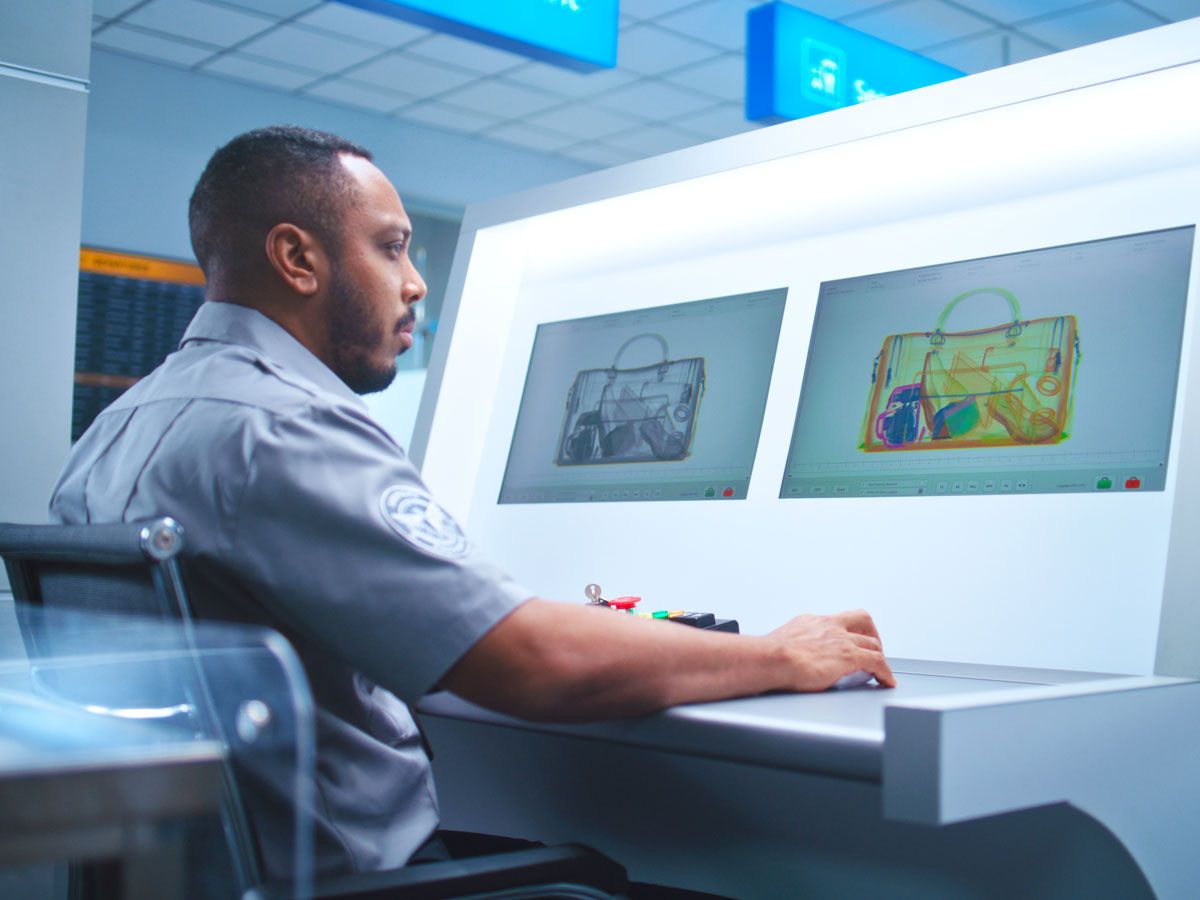
Packing cubes aren’t only beneficial for helping you pack — they also prevent you from time-consuming TSA searches. If X-ray scans can’t easily identify items in your luggage, a more thorough search is required, so make sure you keep toiletries, clothes, electronics, and food items separate. The TSA recommends that travelers use clear zipped bags for toiletries and jewelry, as well as backpacks and purses with laptop compartments to make the screening process quicker. The neater your bag, the better.

Related: The Real Reason You Need to Remove Your Laptop for Airport Security

Most Medications Are Fine 

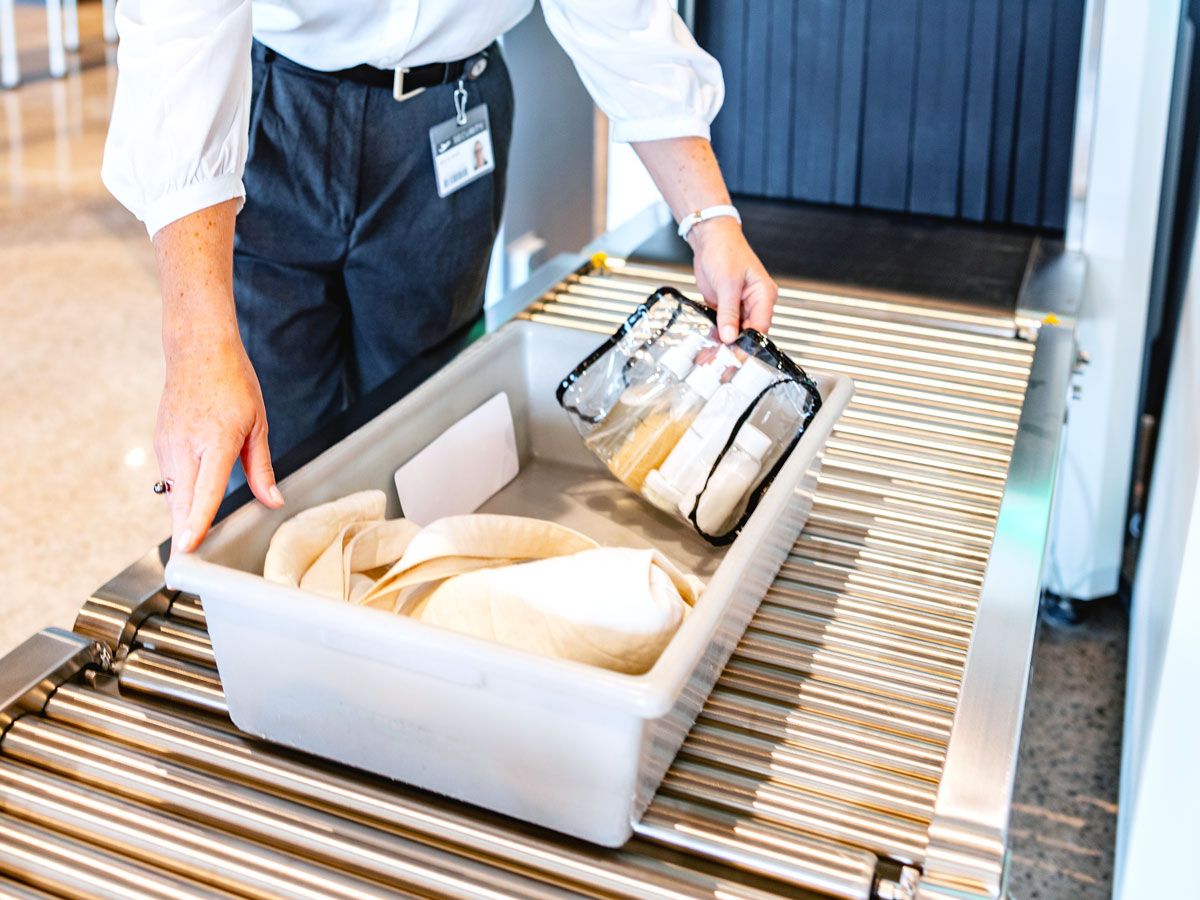
Toiletries in tray to be sent through X-ray scanner at TSA security checkpoint
Credit: AzmanL/ E+ via Getty Images 

The TSA doesn’t require travelers to carry prescriptions in their bottles, so carrying a pill organizer with unlabeled medications in it is perfectly acceptable to board your flight. Medically necessary inhalers, ointments, gels, or aerosols are also allowed in your purse or carry-on so long as you mention them to TSA officers during the screening process.

If you’re traveling with liquid medications — a bottle of cough syrup, for example — be aware that you’re required to inform officers of those, too. Travelers are permitted to bring more than 3.4 ounces of liquid medications in their carry-on, but only in what the TSA describes as “reasonable quantities for your flight.” 

Most Food Is Fine

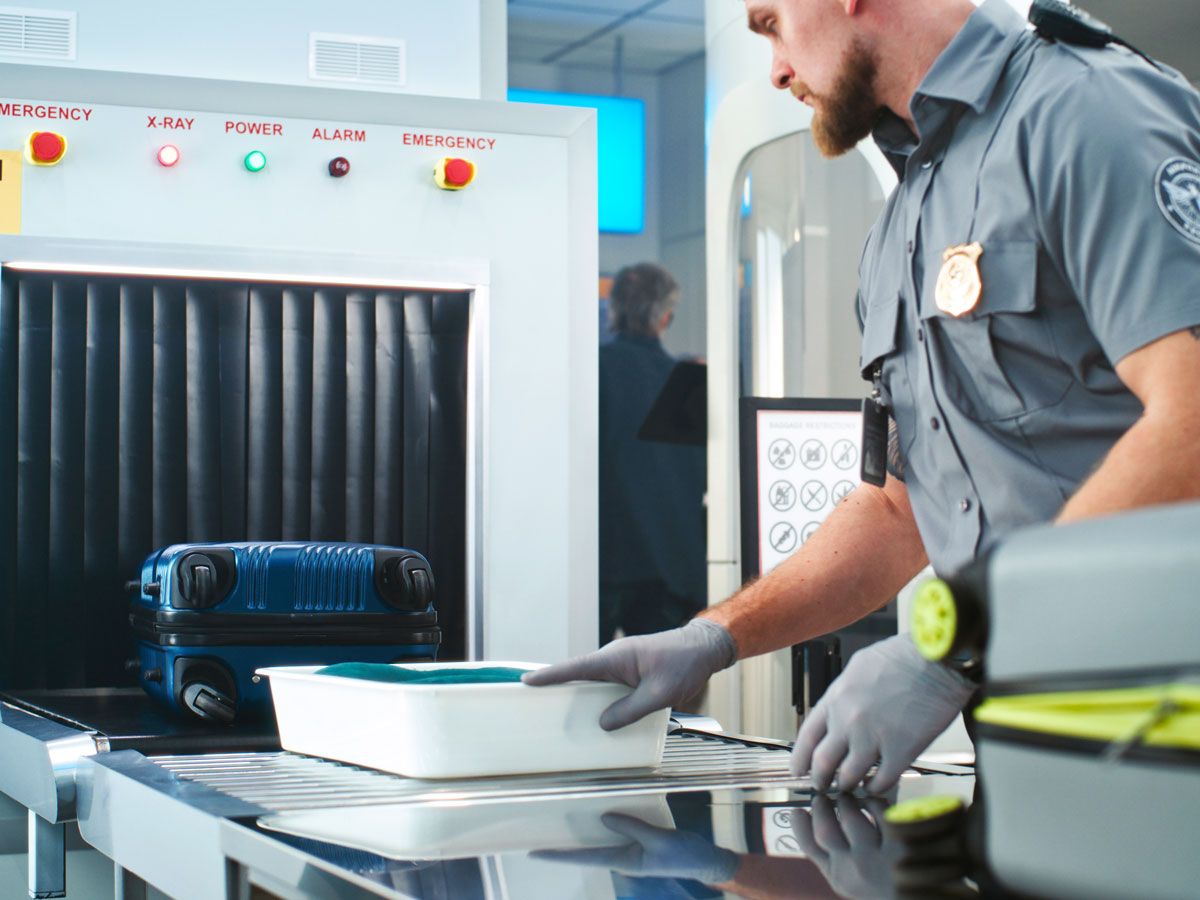
Passengers waiting in line for airport security screening
Credit: AzmanL/ E+ via Getty Images 

It might seem surprising, but packed foods can be put on the conveyor belt — as long as they are solid and not in liquid or gel form. Mostly anything goes: pies, casseroles, sandwiches, you name it. For easy inspection, do not pack them in your bag and let TSA officers know what they are before screening. If you have questions about what type of food products are allowed in your carry-on or checked bag, the agency publishes a helpful guide here

Consider Enrolling in TSA PreCheck

Traveler entering security queue at airport
Credit: d3sign/ Moment via Getty Images

Want to avoid the hassle of removing your shoes, belt, light jacket, and laptop from your bag? Enrolling in TSA PreCheck ahead of your departure promises a speedier journey to your gate, as it’s typically a lane for frequent travelers who are more familiar with the screening process. According to the TSA, 99% of PreCheck passengers wait 10 minutes or less. Also note that children ages 17 and under can go through the TSA PreCheck lane with their enrolled parents, as long as they are traveling on the same reservation.

Related: What's the Difference Between TSA PreCheck, Global Entry, and CLEAR?

Never Joke About Explosives

Group of passengers sitting at airport gate
Credit: SolStock/ E+ via Getty Images

It goes without saying, but even if you don’t mean any harm, joking about a bomb or a weapon at the airport is never a good idea. If you even discuss the matter, TSA personnel may ask you to step out of line for further questioning. Avoid being pulled aside to have a serious discussion with the TSA or local law enforcement — and potentially missing your flight.

If You’re Asked To Step Aside, It Isn’t Personal

Airport security officer screening passenger
Credit: AzmanJaka/ E+ via Getty Images

At times, TSA officers may see or hear something that’s cause for concern, but they’re only doing their jobs if they ask you to step aside. Inspections are also randomly conducted, so don’t feel offended if you’re asked to answer more questions or offer a more rigorous search of your bag or pockets. The more compliant and cooperative you are, the quicker you’ll get to your gate.

Post Banner Image
Culture

10 U.S. Cities That Eat the Most Ice Cream

By Rachel Gresh
Read time: 5 minutes
April 11, 2025
Updated: April 11, 2025

10 U.S. Cities That Eat the Most Ice Cream

By Rachel Gresh
Author
Rachel Gresh
Rachel is a Washington, D.C.–based travel and lifestyle writer with roots in the Great Lakes region. When she’s not writing for publications such as The Discoverer and Interesting Facts, you’ll find her wandering through museums or exploring destinations off the beaten path.

The average American eats 20 pounds of ice cream annually. This sweet treat has endured as a popular dessert for decades, offered everywhere from classic soda shops and diners to beachside stands. But not all cities indulge in this tradition equally. SiteSeer has determined the top ice cream-buying markets in the U.S. by analyzing grocery store spending patterns, focusing on at-home ice cream purchases (though, notably, not purchases made from ice cream shops). The results encompass all corners of the country, from Alaska to Hawaii, revealing the top 10 U.S. markets that spend the most on ice cream per capita.

10. Albany, New York

Ssyline of Albany, New York
Credit: halbergman/ iStock via Getty Images Plus 

Average ice cream spend per person per year: $41.43 

New York’s capital city sure loves its ice cream. Albany residents spend over $40 per person on the sweet stuff in stores annually — and that’s not to mention the dozens of ice cream stands, shops, and drive-ins found around the city. According to recent data, the most popular ice cream flavor in New York state overall is chocolate, but Albany strays from the status quo. In a local news survey, residents declared their three favorite flavors to be coffee, black raspberry, and mint chocolate chip, in that order.

9. Chico-Redding, California

Street in Redding, California
Credit: MattGush/ iStock via Getty Images Plus 

Average ice cream spend: $41.45

The neighboring Northern California cities of Chico and Redding are included in the same market for this study, and they share a love of ice cream. Situated north of Sacramento, this region boasts plentiful sunny days that pair perfectly with an icy treat. Residents spend a lot of money in ice cream shops, too. One local favorite, Savor, churns 60 to 75 gallons per week to keep up with demand, offering both traditional and unique flavors, such as balsamic strawberry and Thai basil and honey.

8. Monterey-Salinas, California

Fisherman's Wharf in Monterey, California
Credit: Federica Grassi/ Moment via Getty Images 

Average ice cream spend: $41.52

The seaside region of Monterey and Salinas is known for its rugged coastline, charming villages, and local seafood, which many locals follow with a tasty treat: ice cream. Residents here spend an average of $41.52 on grocery store ice cream annually. Visitors to this popular tourist area should head to Revival Ice Cream, known for its award-winning Bee’s Knees flavor, made with local honey and beeswax.

Related: Prove Your Knowledge of Regional U.S. Desserts Isn’t Half-Baked

7. Springfield-Holyoke, Massachusetts

Bridge and skyline of Springfield, Massachusetts
Credit: DenisTangneyJr/ iStock via Getty Images Plus 

Average ice cream spend: $41.85

Springfield, Massachusetts, and Holyoke, its neighboring city to the north, spend more on ice cream than any other cities in New England. According to recent data, the most popular ice cream flavors in Massachusetts are coffee, chocolate, strawberry, vanilla, and rocky road, respectively. While Ben & Jerry’s is the top-selling regional brand of ice cream in Massachusetts, many locals also opt for Richardsons Ice Cream, based in Middleton.

6. Juneau, Alaska

Mountains and trees reflecting on water near Juneau, Alaska
Credit: htu/ Moment via Getty Images 

Average ice cream spend: $42.38

Alaska’s state capital is no stranger to cold weather, but that doesn’t stop residents of Juneau from purchasing plenty of ice cream. Locals spend an average of $42.38 per person on store-bought ice cream annually. When perusing the aisles for their favorite ice cream, many shoppers choose Tillamook, the top-selling national brand of ice cream in Alaska. One of the most popular local ice cream shops in town is Coppa, a local staple that has made headlines for its unique flavors, including roasted turmeric or candied ginger.

5. Sacramento, California

Yellow-painted Tower Bridge in Sacramento, California
Credit: SpVVK/ iStock via Getty Images Plus 

Average ice cream spend: $42.50

When Sacramento residents aren’t shopping for ice cream in the freezer section of the grocery store, they’re probably at Gunther’s Ice Cream, a local mainstay that has been serving California’s capital since 1940. One of its original flavors, Butter Brickle, is still served today, but they have over 50 flavors to choose from. If you’re having trouble deciding which to try, opt for California’s favorite flavor: rocky road.

4. Anchorage, Alaska

Snowy coastline surrounding Anchorage, Alaska
Credit: Felipe Mahecha/ iStock via Getty Images Plus

Average ice cream spend: $43.51

Anchorage, Alaska’s most populated city, spends more money on ice cream per capita than any other Alaskan city. The city is home to WooHoo! Ice Cream, Alaska’s bestselling regional brand, which stands out from most brands because it doesn’t use sugar as a sweetener; only maple syrup and honey are added. Some of WooHoo!’s favorite flavors include Earl Grey tea and velvet thunder (dark chocolate). But if you’re looking for something a little more traditional, they also carry Alaska’s top three favorite ice cream flavors: vanilla, chocolate, and strawberry.

Related: Why Is It Called a Baked Alaska? How 5 Foods Got Their Names

3. San Francisco, California

Residential street in San Francisco, California
Credit: Alexander Spatari/ Moment via Getty Images 

Average ice cream spend: $43.75

San Franciscans spend more money on ice cream than any other West Coast city. The most popular ice cream flavors flying off California’s shelves include rocky road, chocolate, mango, strawberry, and green tea. For something more unique, head to one of San Francisco’s many ice cream shops for regional flavors like black sesame or even garlic-topped ice cream.

2. Honolulu, Hawaii

View of Diamond Head over Honolulu skyline
Credit: eyfoto/ E+ via Getty Images Plus 

Average ice cream spend: $44.80

What better way to cool down on a warm Hawaiian day than with a bowl of ice cream? While Baskin-Robbins is the most popular national brand in Hawaii, a regional favorite is Lappert’s Hawaii, based in Kauai. If you’re visiting Honolulu or another Hawaiian city, be sure to also stop by one of the many ice cream shops offering local flavors like ube (purple yam), macapuno (a type of coconut), lilikoi (passion fruit), and Hawaii’s favorite ice cream flavor, green tea. 

1. New York, New York

Street in Manhattan, New York City
Credit: Alexander Spatari/ Moment via Getty Images 

Average ice cream spend: $45.27

It’s official: New Yorkers love ice cream the most. While the Big Apple’s high cost of living certainly helps explain the high per-capita spending, there’s no denying that New Yorkers love a frozen treat. 

Based in New York City, Van Leeuwen Ice Cream is the top-selling regional brand in the state, and also sells one of the most unique ice cream flavors in the country: Kraft macaroni and cheese. To truly immerse yourself in the ice cream culture of New York City, be sure to visit the MOIC (Museum of Ice Cream) to enjoy unlimited ice cream and explore fun installations and displays.

Image Ad
Post Banner Image
Culture

Why Europe Is Having a “Rail Renaissance”

By Nicole Villeneuve
Read time: 5 minutes
April 9, 2025
Updated: April 9, 2025

Why Europe Is Having a “Rail Renaissance”

By Nicole Villeneuve
Author
Nicole Villeneuve
Nicole is a writer and researcher with over 15 years of experience seeking out arts, culture, and lifestyle stories in places like remote northern Quebec and the unforgettable streets of Amsterdam. Her work has also appeared in PureWow, Brit + Co, AUX TV, and CBC.

For much of the 19th and 20th centuries, Europe’s rail networks were the backbone of transportation. But as air travel became cheaper and car ownership more widespread, riding the rails took a backseat in modern transport. Now, however, trains in Europe are having a major comeback. With new routes in the works and ambitious infrastructure investments in place, a new golden age of European rail may be beginning. Here’s what’s driving Europe’s so-called “rail renaissance.”

The Early Days of European Trains

Historical image of Liverpool train station in the 19th century
Credit: Science & Society Picture Library/ SSPL via Getty Images 

Europe has a storied history when it comes to the rails. In the early 19th century, as the Industrial Revolution was rapidly reshaping the continent, the Stockton and Darlington Railway in England became the first train system to carry both freight and passengers in 1825. Just five years later, the Liverpool and Manchester Railway became the first intercity railway, marking a turning point for mass transportation. 

Though early trains were noisy, slow, and uncomfortable by today’s standards, they ultimately revolutionized travel by offering faster and more reliable alternatives to the then-dominant horse-drawn carriages and boats. By the mid-19th century, rail networks had expanded across the continent, and in the 1880s, luxury trains such as the Orient Express had captured the imagination of Europe’s elite. 

Like in the U.S., European rail travel reached its peak in the early 20th century, and the postwar era brought a decline. Car production soared, highway routes expanded, and, later, with the proliferation of budget European airlines throughout the late 1980s and into the ’90s, passengers were further lured away from train travel by speed and convenience. 

Related: The Orient Express Is Returning to the Rails

A European Railroad Revival

Train crossing bridge with hilltop palace in background
Credit: Jean-Marc Lallemand/ Alamy Stock Photo

In recent years, however, rail travel has been having a somewhat unexpected resurgence. While nostalgia for simpler times may have something to do with this trend, there are other factors at play. Increasingly, travelers are opting to practice slow travel, embracing the journey as much as the destination. Long-distance train travel enables both.

Meanwhile, European governments have introduced low-cost passes to encourage train use. Germany’s Deutschlandticket, for example, allows unlimited regional travel on all public transportation, including trains, for a monthly fee of €58 (about $63 USD). Budget-friendly train operators such as Ouigo in France and Spain and Italy’s Italo offer lower fares on high-speed routes.

Another key factor is the environment. Trains are widely seen as a more sustainable option; rail travel produces approximately 1% of the CO2 emissions per passenger compared to planes, and about one-tenth of the emissions generated by a car. Carbon-conscious policies such as France’s ban on short-haul domestic flights when a rail alternative exists has also pushed travelers to opt for trains over planes. 

Add in rising fuel costs for cars, an airline industry that increasingly offers fewer amenities for more money, and the fact that more countries are considering short-haul flight bans, and trains have suddenly become an attractive alternative.

Infrastructure, Investments, and Reinventions

High-speed trains in station in Seville, Spain
Credit: Amanda Ahn/ Alamy Stock Photo

With interest in train travel increasing, so too are investments and infrastructure. Decades of neglect are being reversed to modernize tracks and stations, and new routes are popping up frequently. 

One of the rail resurgence’s most notable aspects is the return of overnight trains. Once a staple of European travel, overnight trips had dwindled or been entirely discontinued by the early 2000s thanks to competition from budget airlines. 

The European Sleeper, a private Belgian and Dutch railway, is one company that is capitalizing on the renewed demand for overnight train travel. After launching a Brussels-to-Berlin route in 2023, the company announced a new route between Brussels and Venice for 2025. The overnight ride will stop in Eindhoven, Cologne, Munich, Innsbruck, Bolzano, and Verona. Meanwhile, the ÖBB’s NightJet has invested in 33 new sleeper trains to be introduced into service by the end of 2025. 

Prefer daytime train journeys? Spanish-owned Renfe railway is expanding service throughout France, with a new, high-speed trip connecting Barcelona and Toulouse set to debut in late 2025. The 3.5-hour journey will also include stops in Girona, Figueres, Perpignan, and Carcassonne. 

And in July 2025, Belmond will debut the chic new Britannic Explorer, a luxury train (complete with sleeper cars and an onboard spa) offering scenic journeys through London, Cornwall, Wales, and the mountainous Lake District. Unique experiences along the way include a private party in a Cotswolds pub and a Cornish wine tasting with views of St Michael’s Mount. 

Finally, the new La Dolce Vita Orient Express is offering an exclusive journey that covers eight routes across 14 breathtaking regions of Italy — and it might just be worthy of a spot on your travel bucket list.  

Related: All Aboard! See How Much You Know About Famous Train Stations

The Future Is Bright (and Fast)

Train traveling through Strasbourg, France
Credit: Leonid Andronov/ Alamy Stock Photo

Amid the excitement around Europe’s rail renaissance, some challenges remain. Border control regulations, disparities in investment among European countries, and inconsistent ticketing systems mean that, while some regions are seeing rapid expansion, others lag behind. 

Still, the momentum remains strong. A unified ticketing system for rail operators across Europe could be in place as soon as 2026, and a large-scale shift from the road to the rails remains one of the key objectives of the European Green Deal. With train travel continuing to grow year over year across the continent, the new golden age of European train travel looks like it’s guaranteed to be high-speed ahead.

Related: 6 Bucket-List Train Trips To Take in Europe
Post Banner Image
Tips

8 Hotels With Unexpected Perks

By Marissa Kozma
Read time: 5 minutes
April 9, 2025
Updated: April 9, 2025

8 Hotels With Unexpected Perks

By Marissa Kozma
Author
Marissa Kozma
Marissa is a cheap airfare aficionado who loves exploring offbeat destinations with her husband. Based in Los Angeles and Joshua Tree, Marissa has been featured in publications such as San Diego Magazine, Palm Springs Life Magazine, 303 Magazine, and Mountain Living.

From hot-stone treatments at the on-site spa to gourmet meals delivered via room service, many hotels offer a variety of amenities to pamper you on vacation. But some properties go above and beyond to give their guests a dash of something extra to make their experience more memorable. Depending on your destination, these quirky offerings range from unique late-night snacks to unusual animal experiences. You likely won’t forget your stay at these eight hotels around the world with one-of-a-kind perks.

Note: All featured products and deals are selected independently and objectively by the author. Daily Passport may receive a share of sales via affiliate links in content.

The Peabody – Memphis, Tennessee

Duck procession taking place in the lobby of the Peabody Memphis
Credit: Hemis/ Alamy Stock Photo

Guests of the iconic Peabody Hotel in Memphis can partake in an unusual tradition that dates back to 1933. Each day at 11 a.m. and 5 p.m., you can watch the hotel’s five resident mallard ducks march through the hotel’s elegant wood-paneled lobby accompanied by music. 

It all began when hotel manager Frank Schutt and his friend returned from a hunting trip in Arkansas and jokingly placed three of their live call ducks in the fountain after consuming too much Tennessee whiskey. The guests loved it, and soon the mallards made the Peabody their permanent home. The hotel — arguably one of the most historic properties in the South — opened in 1869 and is listed on the National Register of Historic Places.

Tradition Julen Hotel – Zermatt, Switzerland

Tradition Julen Hotel framed by the Alps in Zermatt, Switzerland
Credit: Hemis/ Alamy Stock Photo

This four-star Swiss chalet is nestled next to the iconic Matterhorn peak, but it also has some furry friends nearby. At Tradition Julen Hotel, which traces its roots back to 1910, guests can meet hotel owner Paul Julen’s flock of 300 or so Valais Blacknose sheep in a barn at the edge of the village. 

From mid-December to mid-April, those who spend the night on Wednesdays can meet in the lobby at 5 p.m. to take a taxi to the barn to hang out with the sheep. In July and August, the sheep graze on Gornergrat, a rocky ridge of the Pennine Alps, so you may also encounter them on a hike through the area’s stunning nature.

Le Pavillon – New Orleans, Louisiana

Entrance to Le Pavilion Hotel in New Orleans, Louisiana
Credit: William Morgan/ Alamy Stock Photo

If you find yourself in the mood for a late-night snack on vacation, Marriott’s Le Pavillon New Orleans has you covered. The hotel serves complimentary peanut-butter-and-jelly sandwiches, hot chocolate, and glasses of milk every night in the lobby from 10 to 11 p.m. 

The service began on September 10, 1988, when a guest ordered a single glass of milk from the bar and explained that he needed it to accompany his PB&J with his daughter — a ritual they shared every night. The bartender on duty was the general manager of the hotel, and he requested kitchen staff make sandwiches for the pair. Soon, everyone working that evening wanted one as well, and a popular tradition was born.

Hotel nhow – Berlin, Germany 

Waterfront setting of Hotel nhow in Berlin, Germany
Credit: laranik/ iStock Editorial via Getty Images Plus 

Proclaiming itself Europe’s first “music hotel,” Hotel nhow Berlin is located in between the trendy neighborhoods of Friedrichshain and Kreuzberg. The hotel’s design reflects its hip surroundings with bold magenta décor and stylish furnishings. 

But the highlight for musically inclined guests is the ability to experiment with rhythm or see what it’s like to record a podcast in the property’s two available custom recording studios, available to rent for a fee. Featuring state-of-the-art sound technology, the soundproof studios have a breathtaking view of the Berlin skyline and Spree River — a lovely way to inspire your creativity.

Four Seasons Hotel Houston – Houston, Texas

Exterior of Four Seasons Hotel Houston
Credit: Raymond Boyd/ Michael Ochs Archives via Getty Images

You don’t need to worry about packing high-fashion accessories for your visit to Houston if you’re planning to spend the night at the Four Seasons. The hotel allows guests to rent a designer handbag on a complimentary basis for an evening through Vivrelle, a unique membership club on the property that rents out luxury handbags. Select from couture brands such as Gucci, Prada, Dior, and more. Opened in 1982 in Houston’s downtown business district, the five-star accommodation sure knows how to make visitors feel pampered. 

Related: 5 Secret Hotel Perks Most Guests Don’t Know About

Fairmont Vancouver Airport – Richmond, British Columbia

Fairmont Vancouver Airport hotel overlooking departures area
Credit: George Rose via Getty Images News 

If you have an early morning flight from Vancouver or a late-night arrival and prefer to stay close to your terminal, Fairmont Vancouver Airport is a convenient option. And you don’t have to be an avian enthusiast to enjoy a complimentary bird-watching backpack, complete with binoculars, snacks for the trail, and maps.

The hotel is located along the British Columbia Bird Trail, one of North America’s best locations for spotting migratory birds making the journey between Patagonia and Alaska. The trail is the temporary resting place for blue herons, western sandpipers, snow geese, dunlins, and other fowl you likely won’t find back home. 

The Carlyle – New York, New York

Entrance to the Carlyle hotel in New York City
Credit: Barry Winiker/ Stockbyte Unreleased via Getty Images 

Your very own “fragrance butler” will help you select a scent by luxury perfume brands such as Stella McCartney, Ralph Lauren, Giorgio Armani, and Tom Ford when you stay at the Carlyle, an upscale hotel by Rosewood on New York City’s Upper East Side. Guests can ring the butler at any time during their stay for a quick spritz to freshen up. It’s a great way to try out a new scent before you splurge at the mall back home.

Grand Hyatt Baha Mar – Nassau, The Bahamas

Benches overlooking grounds of Grand Hyatt Baha Mar in Nassau, the Bahamas
Credit: tony quinn/ Alamy Stock Photo

Downward dog and the child’s pose are certainly more relaxing by the beach, but at Grand Hyatt Baha Mar in Nassau, guests can say “namaste” to the hotel’s resident flamingos during an outdoor yoga session. The birds are friendly with fellow yogis and, of course, are also quite good at balancing on one foot. After yoga, be sure to explore the sprawling grounds of this luxury resort, which includes a water park.

Related: 5 of America’s Quirkiest Themed Hotels
Post Banner Image
Tips

6 Countries With No Income Tax

By Bennett Kleinman
Read time: 5 minutes
April 9, 2025
Updated: April 9, 2025

6 Countries With No Income Tax

By Bennett Kleinman
Author
Bennett Kleinman
Bennett is a New York City-based staff writer for Daily Passport. He previously contributed to television programs such as the Late Show With David Letterman, as well as digital publications like the Onion. Bennett has traveled to 48 U.S. states and all 30 Major League Baseball stadiums.

Considering a move abroad? While there are several factors to take into consideration — such as culture, weather, and location — one of the most important considerations is how the move will affect your bank account. One issue that affects cost of living is income tax. Certain countries levy more than a 50% tax on personal paychecks, the highest of which is Finland at 57.3%. If you’re looking to take home more of your hard-earned salary, you’ll be pleased to know that some nations don’t levy income tax at all. Here are six countries where you won’t pay a cent of income tax.

The Bahamas

Aerial view of colorful waterfront homes in Nassau, the Bahamas
Credit: mphillips007/ iStock via Getty Images Plus 

Many are attracted to this Caribbean paradise for both its beautiful warm weather and its status as a tax haven. Not only do the Bahamas have no personal income tax, but there are also no taxes on capital gains, gifts, or inheritance. Instead, the Bahamas largely generates revenue through value-added taxes (VATs) and stamp duties on the purchase of property.

In order to be considered a resident of the Bahamas and qualify for the lack of income tax, you need to spend at least 183 days of the year living in the country, or establish a permanent residence there. Those who don’t fall into either of those categories are subject to withholding tax on personal income.

Monaco

Homes overlooking the Mediterranean Sea in Monaco
Credit: NANCY PAUWELS/ iStock via Getty Images Plus 

Monaco hasn’t had any personal income tax since 1869, thanks to an ordinance from Charles III, Prince of Monaco. That said, while Monegasque residents won’t pay any tax on income generated within Monaco’s borders, they may still be subject to any taxes if they earn money elsewhere. It’s also worth noting that French nationals are required to pay income tax to the French government even if they reside in Monaco, as per a 1963 bilateral agreement between the French and Monegasque governments.

In addition to a lack of any income tax, Monaco also imposes no wealth tax or annual property tax on its residents, though there is a tax levied on profits earned from the sale of real estate and for industrial and commercial profits. But living in Monaco comes with one notable drawback — locals are prohibited from gambling, despite the country’s reputation as a gambling mecca. This rule dates back to the mid-1800s, when Princess Caroline forbade locals from gambling at Monegasque casinos so that they could maintain their money. 
Related: The Billionaire’s Playground: 6 Fascinating Facts About Monaco

Antigua and Barbuda

Aerial view of marina in Antigua and Barbuda
Credit: Chris LaBasco/ iStock via Getty Images Plus 

The push to eliminate income tax in this small Caribbean nation was first proposed in 2016 as part of a national tax reform initiative, and an amendment officially passed in 2019 that formally abolished income tax. There is, however, an exception for those who earn income through self-employment. For such earners, Antigua and Barbuda levies a progressive tax anywhere from 0% to 25%, based on total income.
For those considering moving to Antigua and Barbuda, the country offers a citizenship by investment program, which requires a minimum contribution of $230,000 to the country’s National Development Fund. While this may be a large amount to commit up front, the lack of income tax may be beneficial in the long run.

United Arab Emirates

Modern skyline of Dubai, United Arab Emirates
Credit: GordonBellPhotography/ iStock via Getty Images Plus 

Over 88% of the 11 million-plus people residing in the UAE are expatriates. Many people flock to the country for business opportunities and tax relief, as the Gulf state levies no tax on personal income — a trait shared by other nations on the Arabian Peninsula, including Saudi Arabia, Oman, and Kuwait. This lack of tax also applies to money earned through dividends, interest, and foreign real estate.

However, if you own and operate a business in the UAE, you may be subject to a tax on corporate profits, which was introduced in 2023. Those earning less than AED 375,000 (approximately $102,000 USD) are still entitled to a 0% tax rate, but those earning more are subject to a 9% tax on their profits.

Related: The 8 States Without Income Tax

Vanuatu

Sandy beach shaded by trees in Vanuatu
Credit: Max shen/ Moment via Getty Images 

Vanuatu — made up of around 80 islands in the South Pacific — became an independent nation in 1980. The country soon began to attract new residents and investors thanks to its lax tax laws. There are no income taxes of any kind in Vanuatu, whether on personal income for residents, international investors, or corporations. To make up for lost revenue, the Vanuatu government levies an indirect 15% value-added tax on goods and services.

Even if you don’t live in Vanuatu full time, you can apply for tax residency through investment, which comes with a $130,000 financial payment into the country’s economy.

Brunei

Omar Ali Saifuddien Mosque in Bandar Seri Begawan, Brunei
Credit: Pierre Fouet/ 500px via Getty Images 

The East Asian nation of Brunei offers tax relief across the board. There’s no income tax, nor any tax on export, sale, payroll, or manufacturing. The only exception applies to companies, which are subject to a 22% tax rate as per the Income Tax Act of 1949. 

However, there’s one quirk to be aware of for those who earn money in Brunei. Employees and employers must contribute 5% of their income to a government-run employee trust fund called the Tabung Amanah Pekerja. This program is a public pension fund akin to Social Security in the U.S.

A Note for U.S. Citizens and Green Card Holders

Church of Our Lady of the Rosary in Asmara, Eritrea
Credit: benedek/ iStock Unreleased via Getty Images 

There are two countries in the world that impose a tax on the worldwide income of expatriates, no matter where they live: the United States and Eritrea. So, even if U.S. citizens move to a nation that provides income tax relief, they’ll still have to file U.S. taxes. In order to rid yourself of this tax burden, you’ll need to renounce either your U.S. citizenship or your green card.

Green card holders can fill out a Form I-407 to abandon their permanent residence status within the United States. Renouncing your citizenship, on the other hand, requires several steps — including obtaining a second passport, ensuring you’ve been tax compliant for the last five years, meeting with government officials, and filing one final tax return when the process is complete. 

Post Banner Image
History

How Death Valley Got Its Sinister Name

By Michael Nordine
Read time: 3 minutes
April 9, 2025
Updated: April 9, 2025

How Death Valley Got Its Sinister Name

By Michael Nordine
Author
Michael Nordine
Michael is a staff writer for Daily Passport and film critic who writes the weekly newsletter Movie Brief. His writing and criticism have also appeared in the Los Angeles Times, Variety, and the Washington Post, among others. A native Angeleno, his favorite countries to visit are Norway and Japan.

The hottest temperature ever recorded on Earth, an astonishing 134.1 degrees Fahrenheit, was in Death Valley on July 10, 1913, and the mercury continues to regularly rise into the triple digits here. They don’t call it Death Valley for nothing, but anyone who’s been to this arid basin in Southern California will be surprised to learn that the imposing name has nothing to do with the area’s (in)famous heat. 

The History of Death Valley

Sand dunes and mountains in Death Valley National Park, California
Credit: JeffGoulden/ E+ via Getty Images 

The heat wasn’t the problem for a group of settlers who got lost there in the winter of 1849 to 1850. Known as the Lost ’49ers, they were among the many people who came to the state during the California gold rush.

Early in the autumn of 1849, a group of wagons in Salt Lake City intended to make the journey west across the Sierra Nevada en route to Sutter’s Fort (in modern-day Sacramento). Well aware of the fate met by the Donner Party a few years earlier, the group opted to use the Old Spanish Trail, which was safe to travel in winter. Around 100 wagons led by a man named Jefferson Hunt departed on October 1, arriving in what’s now called Death Valley more than two months later.

Due to a lack of supplies and exhausted beasts of burden, most of the group opted to wait while two scouts went ahead more than 300 miles to Mission San Fernando near Los Angeles before turning back and bringing food and water to those who stayed behind. One person perished while waiting in the driest place in North America, which was enough for one of the survivors to look back on the basin as they ascended the Panamint Mountains and proclaim, “Goodbye, Death Valley.”

Eventually, the story of the lost settlers became part of the nation’s western lore, and the inhospitable name they gave the valley stuck. In 1933, Death Valley became a national monument, and it was established as a national park in 1994.

Related: The Best U.S. National Monuments to Add to Your Bucket List

Livelier Than It Sounds

Cracked salt landscape of Badwater Basin in Death Valley
Credit: Zaw Win Htun/ 500px via Getty Images 

Death Valley now draws well over a million visitors per year. Most of them aren’t adrenaline junkies looking to test their fate, however. Though commonsense precautions need to be taken due to the heat, Death Valley is a strikingly beautiful place that’s especially lovely in winter and spring. The wildflowers that arrive in spring are among the park’s most popular attractions, especially when there’s a superbloom, and the lack of light pollution makes it an ideal spot for stargazing.

Those who are especially averse to the heat will prefer winter, when temperatures rarely exceed the low 70s. A bit of a chill in the air makes Badwater Basin especially surreal. It is the lowest point in North America (282 feet below sea level), and the salt flats extend for 200 square miles. 

It’s an amazing place to look around and take in the scenery, or nerd out on the unique landscape, especially for biologists — there’s even a species of snail found nowhere else on the planet. The basin is thought to have gotten its name from a mule that refused to drink from a spring-fed pool in the area — that level of salinity isn’t exactly thirst-quenching.

Enjoying the Great Outdoors

Hiker standing atop sand dune overlooking Death Valley
Credit: minoandriani/ iStock via Getty Images Plus 

For as much as there is to simply look at in Death Valley, there’s even more to do. Anyone who enjoys hiking, camping, trail running, backpacking, or mountain biking will have an abundance of activities to choose from, as will Star Wars fans who want to see the real-life Tatooine. There’s no formal entrance to Death Valley, as there are at most other national parks, but given that it stretches for 5,270 square miles, you can be confident you’ll know it when you see it.

Related: 10 Fascinating Facts About the U.S. National Parks
Post Banner Image
Tips

8 Tips and Products for Sleeping on Overnight Train Journeys

By Bennett Kleinman
Read time: 6 minutes
April 8, 2025
Updated: April 10, 2025

8 Tips and Products for Sleeping on Overnight Train Journeys

By Bennett Kleinman
Author
Bennett Kleinman
Bennett is a New York City-based staff writer for Daily Passport. He previously contributed to television programs such as the Late Show With David Letterman, as well as digital publications like the Onion. Bennett has traveled to 48 U.S. states and all 30 Major League Baseball stadiums.

Long-haul train trips can be an exciting way to travel from place to place, as you can enjoy the scenic beauty of your surroundings without having to focus on the road ahead. But for all the sightseeing opportunities that trains offer, it can be challenging to get a good night’s sleep. As someone who’s taken their fair share of overnight train journeys, I can tell you that the constant chatter from fellow travelers, coupled with the bumpy nature of some train tracks, can make it difficult to doze off and sleep soundly through the night. Here are a few helpful hacks that I’ve successfully used before that can help you get a good night’s sleep aboard a train, too.

Note: All featured products and deals are selected independently and objectively by the author. Daily Passport may receive a share of sales via affiliate links in content.

Opt for the Quiet Car

Traveler reading book on train
Credit: FreshSplash/ E+ via Getty Images 

If you have the financial means, sleeper accommodations are the best way to ensure privacy and comfort on overnight train trips. But those tickets can be cost-prohibitive, leaving some of us looking for cheaper options in coach class.

Luckily, companies such as Amtrak in the U.S., Shinkansen in Japan, and ÖBB in Austria are just a few of the rail providers that offer a dedicated quiet car for passengers, which may be an ideal place to post up for your overnight trip. 

People in the quiet car are asked to limit their conversations to a minimum and speak in subdued tones. Phone calls are strictly prohibited in most quiet cars, and passengers are required to wear headphones if listening to any videos or music. In my personal experience riding Amtrak, fellow passengers are generally quite respectful of these rules, and rarely need a reminder from the conductor.

While there’s nothing to be done about environmental train noise, quiet cars will have a lower level of passenger noise than other cars. As a bonus, certain quiet cars feature low lighting, which creates a more relaxing atmosphere conducive to sleep.

Explore Eye Masks and Earplugs

Train passenger wearing noise-canceling headphones
Credit: Milko/ E+ via Getty Images

Sleep masks, noise-cancelling headphones, and earplugs are an absolute must for any overnight train traveler. You never know if you’ll end up sitting next to a snorer, or if your neighbor will have their phone screen turned up to full brightness. (Believe me, it happens way more often than I’d ever hoped it would.)

One of my favorite products for overnight train journeys is this weighted sleep mask, which helps limit outside stimuli and encourages sleep. This mask is ergonomically designed to block out light entirely, which I’ve discovered is quite helpful when the train pulls into a well-lit station or if you’re trying to get some shut-eye in the middle of the day. 

A pair of soft earplugs is essential as well, as they’ll block out both noise from other passengers and the clattering of the train rolling down the tracks. Noise-cancelling headphones also do wonders. My favorite are the Apple AirPods, either for playing relaxing songs or even white noise to lull me to sleep.

Choose the Window Seat

Traveler sleeping in train car
Credit: helivideo/ iStock via Getty Images Plus 

On Amtrak, coach seats are first-come, first-served, while business class and private rooms are assigned. If you’re traveling in coach, I recommend showing up early so you can hop on the train and snag a window seat, as it helps to have a wall to rest your head against. I’ve found that sitting on the aisle, on the other hand, may invite a slew of distractions — nothing disturbs a deep sleep like having your arm bumped by a passenger walking down the aisle to the bathroom in the middle of the night.

Related: The Most Scenic Amtrak Routes in America

Invest in a Travel Pillow

Train passenger sleeping with neck pillow
Credit: Adene Sanchez/ iStock via Getty Images Plus

The moment I first used the neck pillow I purchased during my travels, I wondered how I ever took an overnight train trip without it. Memory foam pillows are particularly helpful, as they contour to your neck and help create a soft cushion between your head and the hard wall of the cabin.

Assuming your train has tray tables in front of every seat, you could also try an inflatable travel pillow. When deflated, these pillows fit easily into a carry-on bag. Once inflated, the pillow stands tall and has a hole on top for you to rest your face against, and holes on each side to stick your arms through. Lower the tray table, place the pillow down flat, and lean forward for maximum comfort.

Set Alarms (Or Request a Wake-Up Call)

Traveler holding phone in train station
Credit: RgStudio/ E+ via Getty Images 

Nothing strikes fear and anxiety into my heart quite like the prospect of sleeping right through my stop. This has kept me from getting a good night’s sleep far more often than I’d like to admit. 

One thing I’ve found that puts my mind at ease is setting multiple alarms as an added caution, though, of course, this comes at the risk of disturbing other passengers. You could also consider buying a vibrating pocket alarm to shake you awake when the time comes. 

If you’re traveling in Amtrak’s sleeper section, you can also request a wake-up call from the train attendant. As you near your stop, the attendant will come by your room and make sure you’re aware and ready to depart. While Amtrak offers no formal wake-up service in coach class, I’ve found that if you politely ask a crew member for assistance, they’re often happy to help.

Stretch Before Bed

Passenger walking through train car
Credit: SrdjanPav/ E+ via Getty Images 

Before trying to fall asleep, get up and stretch your muscles. This encourages blood flow and can leave you feeling less achy when you wake up. If traveling in coach, you can head to one of the communal cars, such as the cafe car or the observation car, where you can find a private table to do some basic arm, neck, or leg stretches.. Do a few minutes of leg stretches, then return to your seat; you’ll likely feel better in the morning and noticeably less stiff — I know I do.

Wear Comfortable, Loose Clothing

Passenger waiting on train platform with luggage
Credit: TravelCouples/ Moment via Getty Images 

Loose clothing can help you get restful slumber, because it allows for more freedom of movement and also helps with the circulation of air. Whether you run cold or hot, consider packing layers in breathable fabrics so you can easily adjust to the temperature onboard. Stretchy pants and baggy hoodies are both great choices; I wear the latter aboard trains quite often. (Bonus: Pulling the hood over your head provides some additional privacy.)

Make Use of the Footrest

Traveler relaxing in train car
Credit: pkanchana/ iStock via Getty Images Plus 

Whenever I’m riding on one of Amtrak’s long-distance routes, I always take advantage of the small barlike footrests attached to the seat in front, which allow you to prop your legs up and improve circulation. While you won’t be able to lie completely flat, combined with the seat’s recline, you should be able to get comfortable enough to sleep through the night. Many European trains also provide reclining seats and similar small footrests for added comfort.

Related: What To Know About Amtrak's Epic New Long-Distance Train Route