Sip Away and Discover America’s Lesser-Known Wine Regions
By
Cynthia Barnes
Read time: 4 minutes
September 13, 2023
Updated: April 29, 2024
Sip Away and Discover America’s Lesser-Known Wine Regions
Culture •September 13, 2023•Updated: April 29, 2024
By Cynthia Barnes
Author
Cynthia Barnes
Cynthia kicked around the world for a while before landing in Colorado. Her work has appeared in Food & Wine, the Boston Globe, and National Geographic, among others. She loves dives — both scuba and bars — baseball, the Oxford comma, and live music.
Napa, Sonoma, Willamette: These names are synonymous with “fine wine,” and rightly so. Some of the most impressive vintages in the U.S. come from these regions, and they attract millions of visitors each year. But popularity can come at a price, and tastings at the most sought-after wineries can cost a pretty penny and require reservations months in advance. Fortunately, there are many wonderful and affordable American wine getaways beyond the big names. Here are five of our favorite lesser-known U.S wine regions.
Northern California is home to world-famous wine regions such as Napa and Sonoma, but the southern part of the state also has its standouts. Only an hour north of San Diego, the rolling hills of the Temecula Valley are home to over 40 wineries. Sheltered between mountains and the Pacific coast, this Inland Empire region offers the opportunity to enjoy carefully crafted vintages in a relaxed atmosphere that still honors its Old West, equestrian roots. Take a trail ride, treat yourself to a massage, soak up the scenery from a hot air balloon, or stroll through the historic downtown — that is, when you’re not tasting wines made from the more than 30 varietals grown in the valley. One standout is Fazeli Cellars, where Iranian-born B.J. Fazeli and his family continue a long tradition of producing award-winning boutique wines.
The largest wine-producing region in the U.S. east of California, upstate New York’s Finger Lakes region boasts more than 100 wineries and four wine trails. Explore the Cayuga Lake Wine Trail, the Seneca Lake Wine Trail, the Keuka Lake Wine Trail, or the Canandaigua Wine Trail — all within a landscape covering 9,000 picturesque square miles of lakes, waterfalls, and rolling hills. Although the mainstays of the region have been chardonnays, rieslings, and Gewürztraminers, the area is now home to a number of notable rosés and sparkling wines, too. For noteworthy reds, check out the Lemberger and cabernet sauvignons at Bright Leaf Vineyard.
The first designated AVA (American Viticultural Area) was not in California, nor Washington, but in unassuming Augusta, Missouri. German settlers found the rolling hills of the Missouri River Valley similar to their native Rhineland, and quickly established vineyards. In fact, fine French wines might not exist without Missouri: When the phylloxera louse was ravaging crops in Europe in the mid-19th century, millions of phylloxera-resistant Missouri rootstock were grafted onto Old World vines, saving the industry. If you decide to visit, don’t skip sampling wines made from native grapes like Catawba and Norton for a 100% All-American wine experience, and be sure to check out the German architecture (and wines) in the nearby town of Hermann, too.
Low humidity, cool mountain breezes, and an average of 300 days of sunshine a year make Colorado a natural choice for wine grape production. The Centennial State boasts more than 170 licensed wineries, primarily concentrated in the mountainous west. The Four Corners region has some of the state’s most stunning scenery, including glorious Victorian-era mining towns like Silverton and Durango and the jaw-dropping Ancestral Puebloan ruins at Mesa Verde. It also offers some of Colorado’s finest wines, including award winners like Sutcliffe Vineyards, which crafts in the traditional French style, and Fox Fire Farms, which highlights unusual cold-climate varieties like Traminette, Corot Noir, and Petite Pearl.
Willamette and Walla Walla may get more publicity, but the wines produced in this region in eastern Washington can definitely hold their own. Beer lovers know that this fertile agricultural area produces some of the nation’s best hops. Yakima Valley also produces more than half of Washington’s grapes, and has more than 90 wineries and five distinct AVAs. The vibe here is unpretentious, with come-as-you-are tastings that won’t break the bank. The quaint town of Prosser has more than 30 wineries, a dozen of them within walking distance of each other. In Zillah, relax amongy lavender fields as you sample the Petit Verdot at J. Bell Cellars.
Advertisement
More from our network
Daily Passport is part of Inbox Studio, an email-first media company. *Indicates a third-party property.
Culture •September 12, 2023•Updated: December 18, 2025
By Daily Passport Team
Author
Daily Passport Team
Daily Passport writers have been seen in publications such as National Geographic, Food & Wine, CBC, Condé Nast Traveler, and Business Insider. They're passionate about uncovering unique destinations and sharing expert tips with curious travelers.
Love spinach? Perhaps you’ve visited the “Spinach Capital of the World” — which happens to be the small town of Alma, Arkansas. Or maybe you’re intrigued by UFOs or Bigfoot — there are world capitals for both, in Wisconsin and California, respectively. Being the world capital of a specific food, product, or even mythical creature doesn’t require any official certification — often, a city or town will claim bragging rights due to their unique cultural history, geographical quirks, or the mainstay of their economies. Explore 17 U.S. cities and towns that claim to be the capitals of strange and surprising things.
One of the most useful inventions for keeping warm in winter came from Farmington, Maine, in the late 19th century. The earmuff was the brainchild of Chester Greenwood, who came home from a particularly cold day of skating when he was just 15 years old and decided tucking an itchy wool scarf into his hat to cover his ears would no longer suffice. Using wire and beaver fur, sewed into place by his grandmother, he created the first “ear muffler” prototype. When Greenwood was 18, he was awarded a patent for his design.
Farmington is now proudly known as the “Earmuff Capital of the World,” and on the first Saturday of December, the town celebrates Chester Greenwood Day. The festival includes activities such as a charity run, craft fair, chili cook-off, polar bear dip, and the town’s official holiday tree-lighting ceremony. There’s even a parade in which people, animals, and even vehicles proudly wear earmuffs.
Artichoke Capital of the World – Castroville, California
The sun, soil, and dewy fog in Castroville, California, create the perfect storm for agriculture. The Monterey County town produces three-quarters of the state’s artichoke supply and has built a booming tourism business centered around its identity as the artichoke center of the world.
There’s the world’s largest artichoke, the Giant Artichoke restaurant, and an annual artichoke festival — where a burgeoning star known as Marilyn Monroe was crowned Castroville’s first unofficial Artichoke queen in 1948.
Troll Capital of the World – Mount Horeb, Wisconsin
This small Wisconsin village celebrates its Scandinavian heritage proudly. Dozens of life-sized wooden troll carvings are scattered all throughout the streets, a nod to the traditional folklore of the Norwegian immigrants who helped settle the region in the 1800s.
Mount Horeb’s largest concentration of trolls are found along the town’s Main Street. The Chamber of Commerce renamed the stretch the “Trollway,” attempting to divert highway traffic through the downtown and into local businesses. As you amble through the charming downtown with your handy map and hunt for all the troll statues, you can even stop into the popular Grumpy Troll Brew Pub for some decidedly non-grumpy refreshments.
Spinach Capital of the World – Alma, Arkansas
In 1937, Crystal City, Texas, declared itself the spinach world capital and erected a statue of the cartoon icon Popeye the Sailor, known for eating the leafy greens for strength.
However, that changed by the late 1980s. The Allen Canning Company in Alma, Arkansas, canned 65% of the country’s spinach by that time, 60 million pounds of which came from local crops. The city took over the Spinach Capital of the World title, erecting its very own Popeye statue and even repainting the town’s water tower as the world’s biggest spinach can. Despite some friendly back-and-forth from Texas in the beginning, Alma’s title has remained more or less uncontested — and both Crystal City and Alma still hold popular annual spinach festivals.
Lost Luggage Capital of the World – Scottsboro, Alabama
Some airport luggage never gets claimed. If, after three months, U.S. airlines are unsuccessful in locating the owners of orphaned bags, they will sell and ship them to primarily one place: the Unclaimed Baggage Center in Scottsboro, Alabama.
Since 1970, the center has sold, donated, or recycled the contents to the public, making it the only lost-luggage retailer in the country. While the majority of the recovered items are standard vacation fare such as clothing or electronics, true gems occasionally pop up — such as a suitcase full of Egyptian artifacts.
Bigfoot Capital of the World – Willow Creek, California
Tourists hoping to catch a glimpse of Bigfoot have flocked to this tiny Northern California town since the 1960s. It’s been the site of several alleged sightings over the years, and Sasquatch has become a big part of the town’s identity.
Visitors can drive the Bigfoot Scenic Byway, stay at the Bigfoot Motel, visit the Bigfoot exhibit at Willow Creek China Flat Museum (including footprint casts, photos, and maps of where the creature has been spotted), and celebrate at the annual Bigfoot Daze festival.
UFO Capital of the World – Belleville and Elmwood, Wisconsin
Move over, Roswell. The New Mexico town may have a legendary reputation as the site of a mysterious government UFO cover-up, but Wisconsin is home to two towns that claim to be the UFO Capital of the World.
The Badger State seems to be a hub of alleged extraterrestrial activity. Elmwood famously had a string of sightings in the 1970s and later tried to fundraise to build a UFO landing site. Meanwhile, Belleville made regional headlines in the 1980s for a widely reported UFO sighting. Several other Wisconsin towns, such as Long Lake and Dundee, have also reported an alien presence, but don’t claim to be the capital of anything — they merely celebrate their otherworldly visitors with festivals and public memorabilia displays.
Speed Capital of the World – Bonneville Salt Flats, Utah
Northwestern Utah is home to a massive, 30,000-acre expanse of salt flats so barren that they are uninhabitable by plants or animals. The flats are, however, home to the Bonneville Speedway, a stretch used for extreme motorsports where several land speed records have been set — earning the area the title of Speed Capital of the World.
The salt desert has been used as a raceway since the early 1900s. Since then, several major land-speed events featuring cars, trucks, and motorcycles have become annual celebrations, including Speed Week, World of Speed, and the World Finals.
Toilet Paper Capital of the World – Green Bay, Wisconsin
Your mind might wander to all kinds of places envisioning how Green Bay became the Toilet Paper Capital of the World. Record-breaking bathroom habits? Epic prank wars? However, the very reasonable origin is actually thanks to the city’s long-running paper manufacturing industry.
In the early 1930s, the Northern Paper Company put Green Bay on the toilet paper map by manufacturing the first splinter-free toilet paper. (Yes, earlier versions had actual wooden splinters because of the way toilet paper was manufactured. Ouch!) The paper industry in Green Bay did much more than provide a memorable world capital status — it actually helped the Wisconsin city avoid the worst of the Great Depression.
Shark Attack Capital of the World – New Smyrna Beach, Florida
The International Shark Attack File (ISAF) is a scientifically verified database of global shark attacks managed by the Florida Museum of Natural History and the University of Florida. According to their data, New Smyrna Beach, Florida, is the Shark Attack Capital of the World, and anyone who has swam there has likely been within 10 feet of a shark.
Fortunately, shark attacks in this central Florida coast city do not tend to be fatal, and the number of attacks has dipped in recent years, likely due to changing migration patterns of the blacktip shark. Despite New Smyrna’s shark attack status, the Shark Tooth Capital of the World is actually in Venice, Florida.
Anoka, Minnesota, is believed to be the first U.S. city to hold an organized Halloween celebration. It started on November 1, 1919, when Anoka residents awoke to a chaotic post-Halloween scene: cows set loose through downtown buildings and streets, wagons on rooftops, and overturned outhouses. The following year, the community came together to plan a massive celebration complete with a parade, activities, and lots of treats — intended to prevent kids from partaking in destructive Halloween pranks.
Now, the festivities take over the entire month of October, featuring several parades and attracting Halloween-loving tourists from around the world. In 1937, Congress officially named Anoka the Halloween Capital of the World.
Fried Chicken Capital of the World – Barberton, Ohio
Ohio probably isn’t the first place you might expect to find the Fried Chicken Capital of the World. But the city of Barberton, located about 40 miles south of Cleveland, has been famous for the delicious dish since the 1930s, when Serbian immigrants Smiljka and Manojlo Topalsky lost their farm to the Great Depression and instead started selling their Serbian-style fried chicken. The recipe quickly caught on at other restaurants in the area, and soon, Barbertonians were reportedly eating upwards of 30,000 of the now-famous chicken meals every week.
While the Serbian chicken recipe hasn’t spread too far outside of Barberton, several local restaurants still serve the beloved dish — including Belgrade Gardens, the original restaurant opened by the Topalskys in 1933.
No, this small Kansas city isn’t the birthplace of barbed wire. But much of it did make its way through the midwestern town after barbed wire was invented in the late 1800s, becoming an important part of La Crosse’s settlement and agricultural history.
During the 1960s, La Crosse became a hotspot for barbed wire collectors, leading to the establishment of the Kansas Barbed Wire Museum — where you can view over 2,400 varieties of the spiky metal barricade — and the nicknaming of the city as the Barbed Wire Capital of the World.
Corn Cob Pipe Capital of the World – Washington, Missouri
Corn cob pipes may largely be a thing of the past, but Washington, Missouri, still proudly celebrates their heritage. It’s all thanks to Henry Tibbe, a Dutch woodworker who, in 1869, made a sweet-smoking pipe out of a corncob for a friend. By the early 1900s, the invention was so popular that Tibbe — and about a dozen other enterprising people — founded companies specifically for making corn cob pipes out of the small Missouri city.
Eventually, Tibbe’s company rebranded as Missouri Meerschaum, and while the other manufacturers eventually shuttered, Meerschaum — which once counted actor Douglas Fairbanks Jr. and writer Mark Twain as loyal customers — remains the only factory in the world still solely dedicated to making corn cob pipes.
Decoy Capital of the World – Havre de Grace, Maryland
Maryland is known for its crabs, so it’s no surprise the state has an official state crustacean (the blue crab) and even a town that claims to be the Crab Capital of the World. But the Old Line State also has a town with a more obscure title: the Decoy Capital of the World.
Havre de Grace, located at the head of the Chesapeake Bay, has long been known for its duck hunting. For almost as long, the town’s decoy woodwork has been an inherent part of its heritage — at one time, more wooden ducks and geese were carved here than anywhere else. While initially used strictly to lure waterfowl for hunters, the decoys have become collector’s items and treasured works of art. In 1986, the Havre de Grace Decoy Museum opened as a way to preserve their historical and cultural legacy.
Red Flannel Capital of the World – Cedar Springs, Michigan
This Michigan town got its unique title by accident. In 1936, a New York newspaper column lamented the country’s shortage of red flannel during a particularly cold winter. However, a newspaper in Cedar Springs — a booming lumber town whose residents sported the iconic lumberjack look on just about every street corner — challenged the claim and asserted there was plenty to go around.
Orders reportedly flooded in from around the country, and three years later, in the fall of 1939, Cedar Springs celebrated the first Red Flannel Day. The tradition continues to this day, with a popular festival that takes place during the last weekend in September and the first weekend in October.
Leap Year Capital of the World – Anthony, New Mexico/Texas
Once every four years, an extra day is added to February, the shortest month of the year, to keep the Earth’s rotation aligned with our calendar. And every leap year, the twin small towns of Anthony, which straddle the New Mexico and Texas border, hold a huge party to celebrate.
The neighboring towns share the self-proclaimed Leap Year Capital of the World title. In 1988, a member of the Anthony (Texas) Chamber of Commerce who celebrated a February 29 birthday proposed a local festival for the community on the date. Each year since, the celebration has grown to include events and a popular parade — attracting leaplings from around the world for a festive few days of live music, barbecues, and more.
8 Landmarks That Are Entirely Different From Their Original Purposes
By
Daily Passport Team
Read time: 6 minutes
September 12, 2023
Updated: September 13, 2023
8 Landmarks That Are Entirely Different From Their Original Purposes
History •September 12, 2023•Updated: September 13, 2023
By Daily Passport Team
Author
Daily Passport Team
Daily Passport writers have been seen in publications such as National Geographic, Food & Wine, CBC, Condé Nast Traveler, and Business Insider. They're passionate about uncovering unique destinations and sharing expert tips with curious travelers.
Despite the best efforts, buildings with long and interesting histories sometimes fall into despair and abandonment. But fortunately, many of these storied places have been given a new lease on life. From a Dutch church-turned-bookstore to a Beaux-Arts railway station that’s transformed into a world-renowned art museum, these are eight fascinating tourist sites that were originally constructed for different purposes.
Boekhandel Dominicanen – Maastricht, The Netherlands
Boekhandel Dominicanen is a popular independent bookstore on a cobblestone street in Maastricht’s picturesque city center — but its walls weren’t always covered by books. The store originally opened in the 13th century as a Dominican church, and ecclesiastical activities continued until 1796, when the church began to be used as a stable and exhibition space.
A plan was hatched in 2005 to return the landmark to its former glory following decades of neglect. The original stained-glass windows, vaults, frescos, and a 700-year-old secco painting were all restored. Then, a modern, two-story steel book tower was added. Nowadays, the store receives roughly 700,000 annual visitors who come to peruse around 50,000 books, order coffee at the café, and bask in the celestial ambience.
El Ateneo Grand Splendid – Buenos Aires, Argentina
El Ateneo Grand Splendid is another example of a bookstore that has given new life to a historic landmark. The one-of-a-kind shop opened in 2000, but the building’s history dates back to 1919, when it was known as the Teatro Grand Splendid. For about a decade after opening, the theater was an esteemed venue for ballet, opera, and variety performances. It welcomed tango singers such as Carlos Gardel and Ignacio Corsini to its stage, and it had its own radio station and recording studio, the latter of which was responsible for some of the earliest tango recordings.
In 1929, the theater became a cinema and was the first place in Argentina to screen sound films. Fast forward to today, and the shop maintains its opulent theater decor. Exquisite frescoes, friezes, and sculptures adorn the balconies and ceiling. Visitors are welcome to browse through thousands of books while sitting in the theater’s boxes and on the stage café.
Haus des Meeres – Vienna, Austria
After the RAF Bomber Command launched air raids on Berlin in 1940, Adolf Hitler sought a way to protect his cities. Consequently, he ordered the construction of anti-aircraft gun blockhouses called flak towers. Many were demolished after the end of World War II, but some remained as stark reminders of a bygone era.
One such example stands in Vienna’s Esterhazy Park. This imposing concrete structure rises 154 feet above the park’s leafy gardens. Since 1957, it has been the venue for the Haus de Meeres Aqua Terra Zoo. Nine floors were added to the tower’s original two to create an aquarium home to birds, crocodiles, fish, monkeys, and snakes. It also houses an exhibition about the tower’s wartime history, a panoramic observation deck, and a 98-foot-high exterior climbing wall.
Landschaftspark – Duisburg, Germany
Landschaftspark, which is German for “Landscape Park,” is a paradise for cultural, leisure, and sporting activities. This isn’t your average urban city park, however. It occupies nearly 445 acres of an ironworks site that was abandoned in 1985. Award-winning landscape architect Peter Latz won a competition to redevelop the area. Rather than tear down the arresting structures, Latz chose to use them creatively and honor the region’s industrial heritage.
The old casthouse is now an abseiling course, the ore deposit bunker is a climbing wall, and the gasometer is Europe’s largest indoor scuba diving pool. The park is also home to biking and walking trails, playgrounds, a performance stage, and bird’s-eye views from the summit of a blast furnace. Those who visit in the evening get to see the ironworks glimmer beneath a light installation.
Musée d’Orsay – Paris, France
Art lovers delight in the displays of 19th- and 20th-century European art at the Musée d’Orsay, which houses masterpieces by artists including Claude Monet, Edgar Degas, Paul Cézanne, and Vincent van Gogh. But the museum is also notable for its historical, grandiose Beaux-Arts building. Inaugurated for the 1900 Paris Exhibition, the building operated as the Gare d’Orsay railway terminal until 1939, when advances in train technology led to the decommission of the terminal.
Almost half a century would pass before the opening of the museum. In between, the obsolete station was a wartime mailing center, the place where Charles de Gaulle announced his return to politics, and a filming location for Orson Welles’ drama and mystery movie The Trial.
Seoullu 7017 – Seoul, South Korea
Pedestrians in downtown Seoul benefit from intimate encounters with nature amid the city’s skyscrapers at Seoullu 7017 sky garden. This 0.6-mile raised walkway is an ever-changing arboretum decorated with roughly 24,000 flower, shrub, and tree species. Plants are exhibited in alphabetical order and change with the seasons. Alongside gardens and lily ponds are cafés, a children’s theater, play areas, a public foot bath, and shops.
The sky garden was unveiled in 2017, but for the 47 years prior it was an overpass of a downtown highway. It’s part of a plan to make Seoul a greener and friendlier city. And it isn’t the first time the city has turned a thoroughfare into a public recreation space. In 2005, an elevated highway was removed in order to reopen the 6.8-mile-long Cheonggyecheon Stream.
Tate Modern – London, England
If not for the sign, you might not expect the building of the Tate Modern to be home to one of the United Kingdom’s finest modern art collections. Overlooking the River Thames from London’s South Bank, the monstrous, brick-clad landmark is the former site of the Bankside Power Station. The man responsible for the building was Sir Giles Gilbert Scott, who also designed Battersea Power Station and Waterloo Bridge. From 1947 to 1989, the power station generated electricity for the city and was a training center for engineering apprentices.
In 1994, the Tate Gallery announced its takeover of the site for a new contemporary and modern art gallery. Architects created a huge exhibition space by stripping the building back to its steel-and-brick shell and adding a rooftop light box. Today natural light illuminates a collection of masterpieces by Dali, Picasso, and Warhol, among others.
Tequendama Falls Museum – San Antonio del Tequendama, Colombia
The Tequendama Falls Museum occupies a luxuriant, French-style mansion perched on a clifftop above the Bogotá River. Revered for its uninterrupted views of the 433-foot Tequendama Falls, the museum features exhibitions about Colombia’s biodiversity, cultures, and history. Travel back in time to the early 20th century, however, and life here was somewhat different.
In 1923, a mansion-like train station was built to celebrate the 1920s affluence of Colombian high society. It operated as the Hotel del Salto from 1928 and was the scene of decadent banquets and parties. In 2016, plans to transform the train station went underway, but there are still traces of its glamorous past. Ghostly apparitions have shrouded the landmark in mystery for many years. Local lore states that the Muisca tribespeople jumped from the waterfall to flee from the Spanish in the 1500s. Some say that the voices of their spirits continue to resonate around the museum and falls.
Advertisement
More from our network
Daily Passport is part of Inbox Studio, an email-first media company. *Indicates a third-party property.
Discovering the Trans Canada Trail, the World’s Longest Recreational Trail
By
Daily Passport Team
Read time: 6 minutes
September 12, 2023
Updated: September 13, 2023
Discovering the Trans Canada Trail, the World’s Longest Recreational Trail
Outdoors •September 12, 2023•Updated: September 13, 2023
By Daily Passport Team
Author
Daily Passport Team
Daily Passport writers have been seen in publications such as National Geographic, Food & Wine, CBC, Condé Nast Traveler, and Business Insider. They're passionate about uncovering unique destinations and sharing expert tips with curious travelers.
“Epic” doesn’t begin to describe the Trans Canada Trail. As the longest network of multi-use recreational trails on Earth, it stretches over 17,000 miles — touching three oceans, passing through incredibly varied landscapes, and connecting more than 15,000 communities across the Great White North. Eight out of every 10 Canadians live within 30 minutes of the trail. If you’re seeking a coast-to-coast Canadian adventure, here’s everything you need to know about the Trans Canada Trail.
The concept of a national trail that would stretch from coast to coast was first discussed in 1992, when authorities sought a way of marking the country’s 125th anniversary. Also known as the “Sentier Transcanadien,” the trail would connect many shorter trails across the nation, with the potential to expand over time, and preserve greenspace for future generations. In a country as vast and sparsely populated as Canada, the trail would also signify a culturally diverse nation and serve as a reminder that rural communities are as valued as major cities.
The Trans Canada Trail launched in 2017, to coincide with Canada’s 150th anniversary, but since then it has evolved further. By August 2021, the length of the Trans Canada Trail exceeded 17,400 miles. Impressive though that is, the recreational path is set to grow even more, thanks to the continued commitment of local trail groups.
The real joy of exploring the Trans Canada Trail is traversing such diverse terrain. Some sections of the route are backcountry paths through pristine Canadian wilderness, while others follow roads or waterways through urban and rural communities. As such, adventurous trail-blazers are encouraged to partake in a range of outdoor activities along the way, such as hiking, cycling, paddling, horseback riding, cross-country skiing, and snowmobiling. In other words, it doesn’t really matter how you use the trail, as long as you enjoy the great outdoors.
If you maintained a steady pace, covering 20 miles a day, it would take you more than two years — probably more — to complete the main section of the Trans Canada Trail, which stretches from St. John’s, Newfoundland, to Victoria, British Columbia. You’d need to add even more time if you planned to head up to the Arctic and back. Few have achieved such a feat, but those who have form an elite club. Just ask pioneering trailblazers Dana Meise and Sarah Jackson; both managed to finish this incredible trail in 2018 and 2017, respectively — a triumph that took them years.
A more recent thru-hiker who completed the trail is filmmaker Dianne Whelan. She set out on her groundbreaking journey in 2015, before the Trans Canada Trail’s official launch, and reached her destination six years later on August 1, 2021, having averaged about eight months each year on the trail. After achieving her ambitious goal, Whelan told reporters that she hoped to turn her experience into a documentary.
Another equally intrepid hiker is German-Canadian resident Melanie Vogel, who set out from Cape Spear in June 2017. Her plan is to head west from Newfoundland, through Nova Scotia and Québec, and on to Ontario and Manitoba, before reaching the cold tundra of Yukon and the Northwest Territories. After reaching the Arctic Ocean, she plans to travel south to Alberta before finishing in Victoria.
Though Vogel intended the journey to be a solo hike, a stray yellow lab, whom she named Malo, had other ideas and tagged along for company in Manitoba. The COVID-19 pandemic, however, forced Vogel to hang around in Yukon for a year, briefly abandoning her plans. Now, as restrictions in the Northwest Territories have finally lifted and the borders are now open, this remarkable woman intends to finish what she started. When she does, it will be an extraordinary achievement.
Many people don’t have the determination, stamina, and sheer grit necessary to finish the Trans Canada Trail in its entirety, but exploring sections of this epic route is for everyone. To get the most out of the trail, it’s rewarding to take time to explore the sights along the way. Planning such a trip is easy, thanks to an interactive map provided on the Trans Canada Trail website and a handy app that makes light work of logistics. Here are some especially breathtaking sections to help you get started.
This trail capitalizes on the Bay of Fundy’s pristine beauty, offering visitors the chance to peer out from more than 20 scenic overlooks. From the Lighthouse Observation Deck, you’ll enjoy a breathtaking view of the bay all the way to the lighthouse at Quaco Head west of St. Martin’s, while the Fuller Falls Observation Deck gets you up close to one of the area’s prettiest waterfalls.
Cross a 275-foot-long suspension footbridge, admire the iconic sea stack known as Flowerpot Rock, and learn how the region’s early settlers made a living from the logging industry. With stretches past wild beaches along the coast, home to the highest tides on the planet, as well as 600-million-year-old rock formations, it’s not hard to see why this section is a clear favorite.
Lake Ontario is the star of this waterfront path that links Toronto to the city of Burlington and beyond. Enjoy stellar views of well-known landmarks, such as the CN Tower, Fort York, and the Toronto harbor, as well as other attractions, such as the Humber Bay Butterfly Habitat (check out the monarchs when they gather here in September) and the Royal Botanical Gardens.
Stick to the shoreline for the flattest terrain. Continue on, by bicycle or on foot, through the Niagara Wine Region, stopping in some of the area’s charming vineyards. End your journey at Niagara Falls, where you can hop on the famous Maid of the Mist ferry, one of the best ways to appreciate the currents that create North America’s greatest cascade.
The Bow Valley and Quaite Creek trails meet to form the Kananaskis Country Trail. This is the highest point along the entire route, which skirts around alpine lakes with dramatic views of the Canadian Rockies. As you’d expect in Alberta, the trail offers endless unspoiled vistas, yet you’re barely an hour’s drive away from the bustling city of Calgary.
Get an adrenaline rush with a canyoning tour in Bow Valley, tackling a series of descents, jumps, slides, and rappels in this outdoor playground. The wilderness surrounding the trail shares many elements that you’d find in nearby Banff National Park — with a fraction of the crowds. In summer, hike or kayak; when the winter snow appears, swap your boots for cross-country skis.
The Sea to Sky Marine Trail connects the Pacific Ocean to the snowy peaks of the Coast Mountains. Running from the British Columbian villages of Pemberton to Squamish for just over 100 miles, the section of the Trans Canada Trail passes Whistler, one of the country’s premier ski resorts, along the way. Expect jaw-dropping views of canyons and mountains, with craggy rocks punctuating dense groves of trees. Continue south toward Vancouver by kayak or canoe.
If you still have the energy, hike the Grouse Grind — dubbed Nature’s StairMaster — up Grouse Mountain. This grueling hike involves climbing 2,830 steps over an elevation gain of 2,800 feet in less than two miles, but the panoramic view at the top is well-worth the effort.
Advertisement
More from our network
Daily Passport is part of Inbox Studio, an email-first media company. *Indicates a third-party property.

6 Spectacular Gothic Landmarks Architecture Buffs Should Visit
By
Julia Hammond
Read time: 5 minutes
September 7, 2023
Updated: September 7, 2023
6 Spectacular Gothic Landmarks Architecture Buffs Should Visit
Architecture •September 7, 2023•Updated: September 7, 2023
By Julia Hammond
Author
Julia Hammond
Julia is a U.K.-based travel writer whose work has been featured in The Independent, The Telegraph, The New Zealand Herald, and Culture Trip, among others. She’s an enthusiastic advocate for independent travel and a passionate geographer who has had the privilege of traveling to more than 130 countries in search of a story.
Gothic architecture originated in Europe during the Middle Ages. The elaborate style is characterized by flying buttresses (beams that extend outwards from a building to supporting pillars), rib vaults that support ceilings, pinnacles, spires, pointed arches, ornate doorways, and grand stained glass windows. Many of the best examples of Gothic buildings are churches, but over time, the style has evolved, and neo-Gothic landmarks — such as the Tribune Tower in Chicago, Illinois, and the parliament building in Budapest, Hungary — have also taken shape. Consider yourself an architecture buff? Here are six spectacular Gothic buildings to visit around the world.
Work began on the grand Kölner Dom (Cologne Cathedral) in 1248 and continued, on and off, until the 19th century. The cathedral was built in the Rayonnant Gothic architectural style, which emerged in France in the height of the Gothic period. Impressively, the construction teams across the years stuck faithfully to the same plans — perhaps it’s no wonder, then, that the remarkable church became a UNESCO World Heritage Site in 1996.
In the 1880s, the Cologne Cathedral was the tallest building in the world. It remains the largest Gothic church in Northern Europe, with the tips of its twin spires soaring 515 feet above ground. And that’s not the only super-sized feature: Among the cathedral’s bells is the Petersglocke, which locals have nicknamed the “Pitter.” Cast in 1923, it was the largest free-swinging bell in the world until 2018, when a larger one was made in neighboring Poland.
Restoration work continues on perhaps the most famous Gothic cathedral of all: Notre-Dame de Paris, located on the Île de la Cité in the French capital. Work initially commenced on this glorious cathedral in the 12th century and continued for 300 years. Two early Gothic towers combine with carvings and figures of Old Testament kings to create an imposing western façade. Three magnificent rose windows adorn the cathedral, with the stained glass in the north window dating from the 13th century.
At the opposite end of the building, flying buttresses support the apse. They weren’t in the original plans, but as stress fractures appeared in the thin walls, they were an effective and beautiful fix. In 2019, a fire tragically broke out at Notre-Dame, causing extensive damage to the roof, some of its rib vaulting, and the cathedral’s 19th-century spire. Fortunately, the cathedral has partially reopened to visitors as of 2023.
From 1448 to 1469, architect Matthijs van Layens oversaw work on a Gothic-style town hall for Leuven, a central Belgian city located east of Brussels. Though the structure, replete with turrets and balustrades, was in many respects complete by the time the architect finished his work, he left more than 200 alcoves to be filled with statues.
However, that stage of the project ran into difficulties almost immediately. A ship carrying the first five statues sank in a storm, and their replacements were stolen. Five more were ordered and installed, but they came crashing down to the ground in bad weather not long afterwards. It took an angry letter in 1852 from none other than the French writer Victor Hugo to galvanize the authorities into action, and voilà — all 236 niches soon had a statue. The statue of controversial monarch King Leopold II, however, was removed in 2020, leaving 235 on public view.
Spread over 109,000 square feet and reaching heights of 345 feet, the Duomo di Milano is Italy’s largest cathedral. Simone da Orsenigo, the chief engineer first tasked with creating it in the 14th century, envisaged building with brick. However, work had barely started when his plan was abandoned, and it was decided the cathedral should be clad in pale pink Candoglia marble instead.
French architect Nicholas de Bonaventure introduced a strong Gothic element to the cathedral, but over the course of its construction many others would have a hand in its design. The marathon project would eventually be completed nearly 600 years later, in 1965. Its roof is particularly popular with tourists, who can inspect its many pinnacles, spires, and flying buttresses as they take in the view over the city.
This elegant Gothic palace — with Renaissance and Baroque enhancements — was constructed in the 15th century to serve a dual purpose: as the offices and the residence of the Rector (governor) of the Dubrovnik Republic. Onofrio de la Cava, an architect from Naples, was placed in charge of the project, but no one would admire his finished work for long.
A gunpowder explosion in 1463 and a devastating fire in 1667 caused considerable damage to the building. Disaster struck again in 1667, when a powerful earthquake largely destroyed the interior of the Rector’s Palace and its courtyard, necessitating another extensive rebuild. Today, the carefully restored palace houses the city’s Cultural History Museum.
Corvin Castle — one of the Seven Wonders of Romania — is a 15th-century Transylvanian Gothic-Renaissance castle that was built on top of an older fortress. Some claim it inspired Bram Stoker’s Dracula, though there’s no record the author ever visited here. And what visitors see today is a reconstruction after a fire left the place semi-derelict, with some critics arguing that it’s not as true to the original as it should have been.
Nevertheless, the castle is still a remarkable place. Pointed turrets rise above a drawbridge leading to a stone courtyard. A late Gothic banqueting hall in the castle’s large palace, known as the Knights Hall, features striking cross ribs and marble columns.
Advertisement
More from our network
Daily Passport is part of Inbox Studio, an email-first media company. *Indicates a third-party property.
10 of the Best Historical Sites To Visit in the Midwest
By
Jersey Griggs
Read time: 8 minutes
September 7, 2023
Updated: August 5, 2025
10 of the Best Historical Sites To Visit in the Midwest
History •September 7, 2023•Updated: August 5, 2025
By Jersey Griggs
Author
Jersey Griggs
Jersey is a travel and lifestyle writer whose work has appeared in publications such as Condé Nast Traveler, Business Insider, and Bust. When she’s not exploring her adopted home state of Maine, she’s likely planning her next big trip.
Looking for Midwest landmarks to visit? This sometimes overlooked region is home to its fair share of history, with fascinating monuments honoring pivotal events in our nation’s past, Indigenous peoples and their cultures, and notable presidents. Next time you find yourself in the middle of the country, make sure to stop at 10 of our favorite historical sites in the Midwest region.
There is perhaps no natural landmark more iconic in Nebraska than Chimney Rock, which rises 325 feet above the surrounding landscape and is visible for miles in every direction. This National Historic Site has long been a marker on the Midwestern horizon, particularly as pioneers ventured west in the 1800s on the Oregon Trail. Beside the natural site is the Chimney Rock Museum, which holds a treasure trove of pioneer artifacts, firsthand accounts of the Oregon Trail, Native American history, and geological history. We recommend it as a requisite stop for anyone interested in the region’s past, and it also offers fantastic views of Chimney Rock.
Crazy Horse Memorial – Custer County, South Dakota
More than 75 years in the making, this massive monument in the Black Hills of South Dakota is set to become the world’s largest sculpture when it is finally completed. The brainchild of Polish-American sculptor Korczak Ziolkowsk, the memorial pays homage to Crazy Horse, or Tasunke Witco, an Oglala Lakota warrior who made history fighting for his peoples’ freedom. In 1876, Crazy Horse led the charge against General Custer and the Seventh U.S. Cavalry Battalion, in what is known as Custer’s Last Stand or the Battle of Little Big Horn.
Today, the partially completed image of Crazy Horse is carved into Thunderhead Mountain in South Dakota, on land considered sacred by his tribe. Beginning at the visitor center and museum, shuttle buses run to the base of the mountain to allow for a better view of the sheer enormity of the project. (Fun fact: All four presidents on nearby Mount Rushmore can fit into the side of Crazy Horse’s face.)
Funded by the Mission of Crazy Horse Memorial Foundation, the monument is one of the most famous landmarks in the Midwest region. It’s open year-round as a way to educate, protect, and preserve the heritage of Native Americans.
The Gateway Arch is not only one of the most recognizable landmarks in the Midwest, but it’s also a monument steeped in U.S. history. Formerly known as the Jefferson National Expansion Memorial, the Gateway Arch was built in 1963 to honor Thomas Jefferson and his vision of Westward Expansion. To this day, it remains the tallest monument in the U.S.
Jefferson, who negotiated the Louisiana Purchase in 1803, hoped to create a nation that stretched from coast to coast. The shape of the arch — designed by famed architect Eero Saarinen — represents the door to the west and the completion of Jefferson’s vision.
To make the most of your visit, stop by the museum to learn more about St. Louis’ role in westward expansion or visit the virtual reality theater to experience a typical 1850s riverfront. Then take the short tram ride to the top, where a viewing platform offers incredible views of St. Louis and beyond.
This little-known UNESCO World Heritage Site is the largest pre-Columbian site north of Mexico — and it happens to be located in the heart of the Midwest, about 13 miles from St. Louis. The Cahokia Mounds were built by the prehistoric Native Americans of the Mississippian, who lived in the region around 1200 BCE. Historians believe that the Cahokia Mounds may have been inhabited by Indigenous peoples, including the Cherokee, until French traders arrived in the 1600s.
The Mississippians most likely built these mounds to bury their dead and hold ceremonies. Of the 120 earthen mounds, 70 are still in existence, including the 35-foot-tall Emerald Mound that is accessible via stairs. Visitors are invited to walk around the site, with interpretive guides explaining the various mounds and how they functioned as part of the settlement. At its peak around 1150 CE, the population was about 20,000 people, larger than the city of London at the time.
Another one of the Midwest’s most famous landmarks, Mount Rushmore is a popular stop for road trippers, averaging approximately 2 million visitors per year. Nestled in the Black Hills of South Dakota, about a 30-minute drive east of the Crazy Horse Memorial, the monument pays homage to four U.S. presidents: George Washington, Thomas Jefferson, Theodore Roosevelt, and Abraham Lincoln.
Mount Rushmore’s sculptor, Gutzon Borglum, selected each president to represent a pivotal moment in the creation of the United States: Washington represents the nation’s birth; Jefferson, the nation’s growth; Roosevelt, the nation’s development; and Lincoln, the nation’s preservation.
Measuring 200 feet long and 60 feet high, the mountainside sculpture took 14 years to complete. By the time it was finished in 1941, about 400 people had worked on the sculpture, often using dynamite to bust through the granite. Beneath the monument, visitors can walk through the Avenue of Flags, which features 56 flags to represent the states, districts, territories, and commonwealths of the U.S.
Lincoln Home National Historic Site – Springfield, Illinois
One of the most fascinating Midwest historical sites is an unassuming two-story Greek Revival home on Eighth and Jackson Streets in Springfield, Illinois. And it holds more history than meets the eye. As the Lincoln Home National Historic Site, the structure was formerly owned by President Abraham Lincoln, who lived here with his wife and sons for 17 years. Lincoln purchased the home in 1844 and moved out in 1861 after he was elected President.
Built in 1839, the home retains its original foundation and much of its original structure, with an interior that reflects the time period during which the Lincolns resided in the home. Incredibly, some of Lincoln’s furniture was passed down to tenants after he was assassinated in 1865 and remains in the house today.
Tours of the home are available to the public, led by National Park Rangers who share anecdotal details about the family, and how Lincoln’s time in Springfield shaped his career and rise to the presidency.
If you’re fans of history and true crime like us, you will be delighted by Glensheen. Built by the wealthy Congdon family between 1905 and 1908, this 27,000-square-foot mansion is located on the shores of Lake Superior. The Jacobean Revival estate is set on 12 exquisite acres, featuring formal gardens, stained glass windows, and ornate wood paneling. Now a historical museum, the estate’s well-preserved interior allows visitors to see how this wealthy family lived in the early 20th century.
It’s also the site of one of Duluth’s most notorious crimes: the murder of Elisabeth Congdon, heiress to the Congdon fortune. Since no family members wanted to return to the mansion after the crime, the home’s tragic past engendered its transition to a historic time capsule and museum.
Located on the University of Notre Dame campus in South Bend, Indiana, the Basilica of the Sacred Heart is northwest Indiana’s oldest church. The church’s site dates back to the 1830s when it was a log chapel built by the university’s founder, Father Edward Sorin. After burning down in 1848, the chapel was replaced by the grand basilica, although a replica of the original log chapel can be visited on campus.
For the basilica’s elaborate design, Sorin hired an Italian artist to paint 56 frescoes and employed various French artisans to create the ornate stained glass artwork. As a result, the neo-Gothic basilica contains one of the largest collections of 19th-century French stained glass in the world. It has been on the National Register of Historic Places since 1978 and is open to the public year-round.
Spanning the Straits of Mackinac, where Lake Michigan and Lake Huron meet, the Mackinac Bridge is the longest suspension bridge between anchorages in the Western Hemisphere. It has a total suspended length of 12,826 feet. Recognized as a National Historic Civil Engineering Landmark, the bridge opened to the public in 1957. Before then, the only way to travel between Michigan’s two peninsulas was by ferry, which shuttled around a million cars per year in the mid-1950s before the bridge opened.
When engineer David B. Steinman designed the Mackinac Bridge, he set out to create a bridge that could withstand massive winds and instability. With the 1940 Tacoma Narrows Bridge failure on his mind and a total budget of almost $100 million (equivalent to over $1.1 billion today), he implemented an innovative porous deck design that has stood the test of time. Today, “Mighty Mac” sees 5 million vehicles crossing the 5-mile-long bridge on an annual basis.
Located along Route 90 in South Dakota, Dignity of Earth and Sky is a tribute to the women of the Lakota and Dakota Nations. Unveiled in 2016, this soaring sculpture by South Dakota artist Dale Claude Lamphere brings awareness to the stories of Indigenous women, an underrepresented population in the nation’s history.
Initially known as the Oceti Sakowin, or “Seven Council Fires,” the Lakota and Dakota nations occupied the Great Plains for centuries before European settlers arrived in the region, at which point they were referred to as the Sioux. Known for their nomadic lifestyle, they were masterful horseback riders who were forced to defend their way of life, resulting in conflicts during the westward expansion of the nation.
Dignity of Earth and Sky stands 50 feet high, overlooking the Missouri River and the homelands of the Lakota and Dakota peoples. The woman in the sculpture carries a star quilt decorated with diamond-shaped LED lights, a pattern that represents honor and generosity in Lakota culture.
Advertisement
More from our network
Daily Passport is part of Inbox Studio, an email-first media company. *Indicates a third-party property.

Outdoors •September 7, 2023•Updated: September 7, 2023
By Bradley O'Neill
You don’t need to travel deep into the cosmos to discover otherworldly sights. Here on Earth, curious travelers can find an abundance of strange natural attractions that appear to belong to another planet. Here are seven of the world’s most bizarre landforms.
On the western shores of Chile’s Lake General Carrera sits a natural wonder consisting of spellbinding caverns, sculpted pillars, and vaulted ceilings. Made of calcium carbonate, the Catedral de Marmol (Marble Cathedral) was carved over millennia by a reaction between the lake’s waters, rocks, and glacier movement. In the morning, the caverns give off a celestial blue hue, the result of light reflecting off the lake’s deep turquoise color. When water levels recede during winter, lower sections of the caves that are usually hidden come into view.
To experience the beauty and serenity of this natural cathedral, you’ll need to hop on a boat or paddle a kayak. Tours depart from the lakeside town of Puerto Rio Tranquilo.
Spreading across the center of Bohol Island, the Chocolate Hills are certain to whet your appetite for adventure. There are estimated to be over 1,200 hills (or more) in this mystical Philippine landscape. Ranging in height from 100 to 395 feet, the hills are actually leftover limestone deposits from a period when the island’s rivers flowed above sea level. At the end of the dry season (typically early May), the hills turn brown to resemble oversized truffles, hence their name.
A great place to observe the mounds is to climb the 214 steps to the Chocolate Hills Complex, located between the towns of Batuan and Carmen. At the top, visitors can contemplate the local legends surrounding their formation — one implies that the hills were formed during a brawl between two giants, while another claims that they are the tears of a giant pining for a love interest.
At first sight, you’d be forgiven for thinking that the psychedelic colors, acidic ponds, and hot springs of Dallol Volcano were part of a 1960s album cover. Located in a remote part of northeast Ethiopia, this is the world’s lowest subaerial volcano discovered to date, extending 410 feet below sea level. With average daily temperatures exceeding 106 degrees Fahrenheit, it’s also one of the hottest places on Earth.
The dramatic landscape is caused by an active volcanic area situated under miles-deep salt deposits. Supersaturated brine pushes through the hot springs, then evaporates to leave a kaleidoscope of salt formations. Guided excursions to Dallol are possible, although they aren’t for the faint of heart due to the extreme climate and remote location.
Journey into the heart of Turkmenistan’s Karakum Desert, and you’ll arrive at what locals like to call the “Door to Hell.” Characterized by dancing flames and crackling fire, the Darvaza Gas Crater appears to be a portal into the netherworld. This 226-foot-wide and 98-foot-deep crater was created in 1971 when Soviet geologists arrived in search of gas and oil. They penetrated a subterranean cave, which quickly collapsed, swallowing their equipment with it.
What’s left is an eerie depression with flames caused by natural gas escaping from the encircling rock. When the gas rises, it reacts with the oxygen in the atmosphere and bursts into flames. Incredibly, Canadian explorer George Kourounis successfully traversed and descended into the crater. While not recommended to the average tourist, camping at the edge of the phenomenon is allowed.
Turkey’s semi-arid central region of Cappadocia is famous for its distinctive rock formations known as Fairy Chimneys. The rocks could be a movie set conjured up by Salvador Dalí and Walt Disney, but they are actually pillars eroded over centuries following volcanic eruptions.
This UNESCO World Heritage Site isn’t just something spectacular to look at, either. During the Roman occupation, Christians escaped to the Cappadocian town of Göreme to take advantage of the chimneys’ soft crust to build homes and churches. Soon, underground cave cities began to form in Derinkuyu and Kaymakli. Nowadays, it’s even possible to sleep inside some of the chimneys. Alternatively, a Cappadocia hot air balloon ride promises an unparalleled bird’s-eye view.
Giant’s Causeway – County Antrim, Northern Ireland
Looking across the Atlantic Ocean from Northern Ireland’s northern coastline, Giant’s Causeway is a mesmerizing collection of some 40,000 hexagonal basalt columns. According to local legend, Irish giant Finn McCool made the causeway to cross the Irish Sea to face his Scottish rival, Benandonner. A competing legend, as detailed in an 1830 poem by Irish author Mary Anne, claims it was built for love rather than battle.
Scientific evidence, however, tells us that it appeared almost 60 million years ago, when Ireland was still connected to North America. As European lands began to break away from the Americas, huge rifts formed on Earth’s surface. Cracks then appeared, through which flowed lava and molten rock. When the lava reached the sea, it cooled and turned into columns. Visitors to the UNESCO-protected site can walk across the columns, follow nature trails, and explore interactive exhibits at the visitor center.
Zhangye Danxia Landform Geological Park – Gansu Province, China
Often called the “Rainbow Mountains,” this series of multicolored hills in China’s Zhangye Danxia Landform Geological Park come in stunning shades of blues, greens, reds, and yellows. The mesmeric landforms are cretaceous sandstones and siltstones that appeared prior to the formation of the Himalayas. Their striking colors are the result of the iron and other trace minerals found within the sand and silt. Several million years ago, a collision between the Indian Plate and Eurasian plate forced the mountains upwards and thus exposed rock formations once hidden beneath the surface.
Appreciating the mountains is easy via a network of walking paths and viewing platforms. Visitors can admire curiously named mountains, like “A Dragon Playing with Fire”, “Monkeys Rush into the Sea of Fire,” and “Sleeping Beauty.”
Advertisement
More from our network
Daily Passport is part of Inbox Studio, an email-first media company. *Indicates a third-party property.
8 Strange and Unusual Guinness Records From Around the World
By
Bennett Kleinman
Read time: 6 minutes
August 31, 2023
Updated: August 31, 2023
8 Strange and Unusual Guinness Records From Around the World
Culture •August 31, 2023•Updated: August 31, 2023
By Bennett Kleinman
Author
Bennett Kleinman
Bennett is a New York City-based staff writer for Daily Passport. He previously contributed to television programs such as the Late Show With David Letterman, as well as digital publications like the Onion. Bennett has traveled to 48 U.S. states and all 30 Major League Baseball stadiums.
In the 1950s, Sir Hugh Beaver worked as managing director of the Guinness Brewery in Dublin, Ireland. After attending a party where he and some friends argued over the fastest game bird in Europe, he realized there was no definitive source for that type of information. Beaver decided to publish a record book of his own, leading to the release of the first Guinness Book of Records in 1955. Since then, countless individuals worldwide have sought to set Guinness World Records of their own, including many in unusual and highly specific categories. Discover eight of the strangest Guinness World Records from around the world.
Narrowest Street – Reutlingen, Germany
Photo credit: Jonas Schöll/ picture alliance via Getty Images
While the world’s widest avenue is located in Buenos Aires, Argentina, the world’s narrowest street is found across the globe in Reutlingen, Germany. This tiny alleyway known as Spreuerhofstrasse was officially measured by Guinness in February 2006. The street extends for 65 feet and spans a mere 19.68 inches wide at its widest point, while narrowing to just 12.2 inches at its tightest spot. Spreuerhofstrasse was inadvertently created in the 18th century during the rebuilding process after a devastating fire in 1727. Today, it features plaques affixed to the walls at each end notifying the public about the record. Curiously, Spreuerhofstrasse is getting narrower each year, as the surrounding walls are slowly leaning further into the space.
Dubai isn’t just home to the world’s tallest building, the Burj Khalifa. The city also contains a more unusual architectural feat: the world’s largest permanent vertical maze. The maze adorns the front facade of the Al Rostamani Maze Tower on Sheikh Zayed Road in the heart of the Dubai Financial District. Completed by the Al Rostamani Group on January 1, 2012, the maze spans 55 stories and has a total surface area of 42,487.35 square feet. The stone used to build the maze has a lighter hue than the rest of the dark green building, which allows the work to stand out. Though visitors are unable to physically traverse through the maze, it offers a fun visual puzzle to curious onlookers.
Thrill-seeking adventurer Jamie Stevenson isn’t your normal skier. In March 2014, the U.K. resident set the record for most countries skied in a single month. Stevenson hit the slopes across 17 European countries in a matter of 21 days. The first of these record ski trips occurred on March 1 in Cairngorms, Scotland. From there, Stevenson went on to ski in Spain, Andorra, France, Italy, Switzerland, Liechtenstein, Austria, Germany, Slovenia, Poland, Slovakia, Czechia, Estonia, Finland, and Sweden. Stevenson’s final trip in this record-setting adventure was on March 21 in Oslo, Norway. Speaking of Norwegian ski records, a group of 170 other skiers set the Guinness World Record for longest skis in 2011, after riding a pair of skis that were 1,820 feet and 10.35 inches long.
On October 28, 2017, Chinese company Xiangnian Food Co., Ltd. created the world’s longest noodle. This record-setting carbohydrate measured a staggering 10,119 feet and 1.92 inches long, and weighed a whopping 147.5 pounds. The record was set in the city of Nanyang in China’s Henan province, where a team of cooks combined 88.1 pounds of bread flour, 7.6 gallons of water, and 1.3 pounds of salt to create the dough — which was then kneaded and rolled into a thin noodle over the course of 17 hours. Over the following three hours, judges officially measured the noodle, confirming it shattered the previous record of 1,800 feet, 2 inches. After entering the Guinness record books, the noodle was sliced up and cooked in a mixture of egg, garlic, and tomato sauce. It was then served to over 400 hungry diners at a local Senior’s Day festival.
Kami Rita Sherpa, also known as Topke, is a Nepalese mountaineer who has summited the tallest mountain in the world a record 28 times, as of May 2023. Topke was born on January 17, 1970, and completed his inaugural Everest climb on May 13, 1994. He’s scaled the mountain at least once nearly every year since, and tied a climber named Pasang Dawa Sherpa by reaching Everest’s 29,032-foot peak for a then-record 27th time on May 17, 2023. Six days later, he summited Everest again, claiming sole ownership of the Guinness World Record. The record for most ascents of Everest by a female climber belongs to Lhakpa Sherpa, who summited Everest for the 10th time on May 12, 2022.
Formerly known as southern Khoisan, the language !Xóõ — also known as Ta’a — holds the Guinness World Record for language with the most sounds. Spoken by around 3,000 semi-nomadic peoples in southern Botswana and eastern Namibia, !Xóõ contains 161 distinct sounds, according to Guinness, though some linguists disagree on that exact number. Of its 161 sounds, !Xóõ includes 130 consonants, 28 vowels, and three different tones. (For context, standard English only has 40 distinct sounds.) !Xóõ contains many “click” sounds commonly found in other southern African languages, with “tsk,” “tut,” and “clop” among the most common and accessible sounds.
On January 29, 2014, Guinness officially certified U.K. resident Bruce Masters for visiting the most pubs of anyone in the world. Masters began his boozy journey in 1960 at the Unicorn in Hertfordshire, just a week before his 16th birthday. In 1971, Masters began working in London full-time and decided to attempt to visit as many pubs as possible. He started keeping track of each pub he visited in a handy spreadsheet. In 1994, Guinness acknowledged Masters’ then-record of 27,695 pub visits, a number that expanded to 46,495 when he was re-certified in 2014. Since claiming the Guinness World Record in 2014, Masters has continued to visit as many pubs as possible and is well in excess of 50,000 — albeit unofficially — as of 2023.
Deserts are normally known for being extremely dry, but the Sonoran Desert in Arizona holds the record for the world’s wettest desert. The Sonoran Desert reaches daytime temperatures in excess of 104 degrees Fahrenheit, but the heat is mitigated to some degree by its 4.7 to 11.8 inches of annual rainfall. This desert has two distinct wet seasons, one from December to March and another from July to September. The former season usually features light rainfall fueled by storms coming from the northern Pacific Ocean, whereas the latter wet season is known for its more violent and localized thunderstorms. Given its lusher than normal desert terrain, the Sonoran Desert is the only place in the world where the saguaro cactus grows in the wild.
Advertisement
More from our network
Daily Passport is part of Inbox Studio, an email-first media company. *Indicates a third-party property.
Outdoors •August 31, 2023•Updated: August 31, 2023
By Daily Passport Team
Author
Daily Passport Team
Daily Passport writers have been seen in publications such as National Geographic, Food & Wine, CBC, Condé Nast Traveler, and Business Insider. They're passionate about uncovering unique destinations and sharing expert tips with curious travelers.
Even if you’re not an avid hiker or climber, chances are you’ve heard of mountain ranges like the Andes, the Rockies, the Alps, and the Himalayas (home to Earth’s highest peak, Mount Everest). Perhaps you’re even familiar with the Seven Summits — the tallest peaks on each continent. But if you’re looking to venture off the beaten path, check out these six lesser-known mountain ranges around the world.
Lebombo Mountains – Eswatini, Mozambique, andSouth Africa
This long, narrow mountain range in Southern Africa gets its name from the Zulu word for “big nose,” ubombo. Although the mountain range doesn’t rise more than 2,600 feet, the several rivers — such as thePongola, Usutu, and Ingwavuma — which cut through the range have created some of the most impressive gorges in the world. The dense tropical forest growth on the Lebombo Mountains thins out at lower elevations, where you can see flora and fauna characteristic of a savanna. Indeed, the mountain range’s close proximity to Kruger National Park makes it an ideal location for a safari. Visitors can go to see the big five: lions, leopards, rhinos, elephants, and buffaloes.
Although the Blue Mountains are Jamaica’s largest range, most of the island is mountainous and home to other, smaller mountain ranges. Located in the northern part of Clarendon Parish, along the southern portion of the island, the Mocho Mountains are Jamaica’s geographical center. They reach a maximum elevation of 1,430 feet above sea level. While this area was once full of lush tropical rainforests, unfortunately, years of farming and extreme weather have changed that.
Baudó Mountains – Colombia
Photo credit: LUIS ROBAYO/ AFP via Getty Images
The dramatic seaside cliffs of the Baudó Mountains are an extension of the isthmus of Panama along Colombia’s Pacific coastline. Although this range is small compared to the Cordillera Occidental of the Andes, which lie in the center of the country, it’s home to the Atrato River, one of the fastest flowing rivers in the world. Currently, plans are in the works to increase tourism along the entire Baudó Mountains coastal region. Look for the construction of a new port to attract tourists who want to go whale watching.
When you think of the Emerald Isle, you likely think of rolling hills and seaside cliffs. Ireland is full of landscapes that make you grab your camera, and one of those is the Wicklow Mountains located outside of Dublin. This small mountain range only rises a little more than 3,000 feet above sea level, but its infamous history and easy access make it the perfect mountain range to visit. Today, the majority of the Wicklow Mountains lie within a protected national park, where visitors can hike, camp, and enjoy water sports in the range’s abundant lakes and rivers.
You’ve heard of the French Alps and the Swiss Alps, but you might not know that these broad references include dozens of mountain ranges across Europe. Located in central Switzerland, the glacier-covered Glarus Alps are one of these ranges. You can find great ski resorts, health resorts, and ample hiking opportunities throughout the Alps, but the Glarus range has some special characteristics.
First, the Glarus Alps rise more than 10,000 feet, with their highest point, Tödi, at almost 12,000 feet. Also, they are part of the Swiss Tectonic Arena Sardona, which has been a UNESCO World Heritage site since 2008. This area is one of the places on earth where you can see how mountains erupt when continents, or tectonic plates, collide. That makes it a great locale to mix a family ski vacation with some science education. Additionally, the Glarus Alps are also home to the largest landslide in the region since the end of the Ice Age.
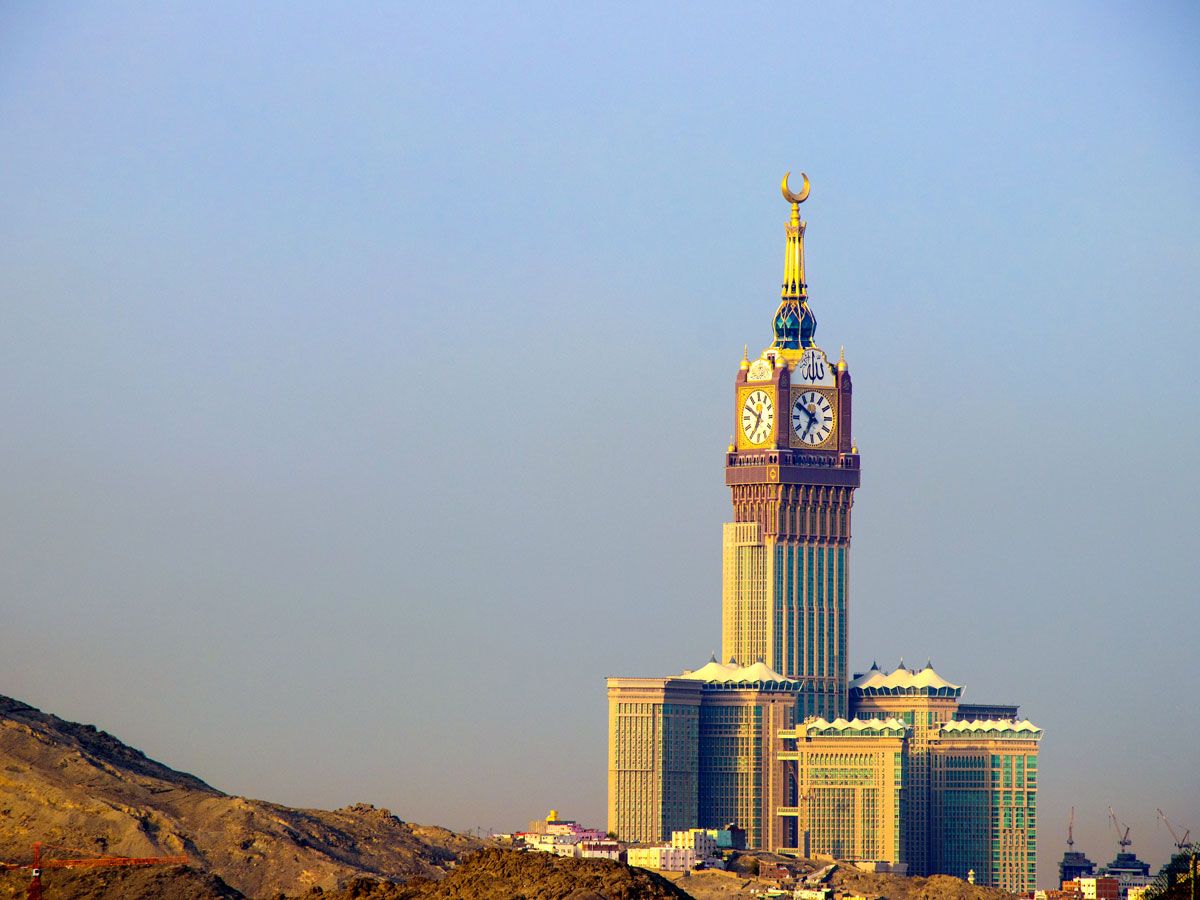
The Hijaz Mountains follow the Red Sea’s coast along the western side of the Arabian Peninsula. This mountain range is home to Islam’s second holiest city, Medina, where Muhammad established the first Muslim community. Muslims from around the world travel to Medina on a pilgrimage. The Hejaz Mountains are also home to Jeddah, known as Saudi Arabia’s cosmopolitan city. Jeddah is a port city on the Red Sea, which typically serves as the gateway to those who plan to visit Mecca and Medina’s waterfront resorts and world-class dining.
Advertisement
More from our network
Daily Passport is part of Inbox Studio, an email-first media company. *Indicates a third-party property.
Architecture •August 31, 2023•Updated: September 7, 2023
By Daily Passport Team
Author
Daily Passport Team
Daily Passport writers have been seen in publications such as National Geographic, Food & Wine, CBC, Condé Nast Traveler, and Business Insider. They're passionate about uncovering unique destinations and sharing expert tips with curious travelers.
When you picture Egypt, chances are pyramids come to mind. There’s a reason for that: The awe-inspiring Great Pyramid of Giza — built around 2500 BCE and the only remaining Wonder of the Ancient World still standing today — is one of the world’s most fascinating tourist destinations. But Egypt isn’t the only place to see great pyramids. Around the world, ancient civilizations constructed these architectural marvels with the limited tools available to them at the time. Here are eight places (besides Egypt) to see amazing pyramids around the world.
The ancient Maya city of Tikal was once home to almost 100,000 people at its peak between 600 CE and 800 CE. Some of the pyramid temples in the ancient city remain, and a handful of them poke above the dense rainforest canopy in modern-day Guatemala. One of them — the impressive Templo I — is also known as the “Temple of the Great Jaguar.” Visitors are allowed to climb its steps to take in the spectacular view from the top. The tallest pyramid in Tikal is the 70-foot Templo IV, a soaring limestone structure that the Maya called the “Temple of the Two-Headed Snake.” Dating to 741 CE, Templo IV is believed to have been constructed in honor of the 27th ruler, Yik’in Chan K’awiil.
Numerous pyramids are scattered across the Yucatán Peninsula, including those within the ancient Maya cities of Coba and Uxmal. The most famous, of course, is at the UNESCO World Heritage Site of Chichén Itzá. This striking landmark is known as “el Castillo,” or the Castle. It is over a thousand years old, but was constructed on top of an older structure. One of the most impressive aspects of its design is witnessed during the spring and autumnal equinoxes, when triangular shadows fall on its stepped flank, creating the illusion of a serpent. This is intentional, as the pyramid is dedicated to Kukulkan, a serpent deity prevalent in many Mesoamerican religions.
But Mexico’s pyramids aren’t confined to the Yucatán Peninsula. The Great Pyramid of Toniná in Chiapas is the tallest Maya temple ever uncovered. At Teotihuacan, located close to Mexico City, you’ll find the Pyramids of the Sun and Moon. To the southwest of the capital close to the city of Puebla, pyramid enthusiasts will want to make the trip to the Great Pyramid of Cholula, which is the largest pyramid in the world in terms of volume. Much of this mega-structure is underground, as successive civilizations built on top of what they found. This unique construction has led to the pyramid being described as six pyramids in one.
Archaeology in Peru doesn’t begin and end with Machu Picchu. Though the country’s most famous historical site doesn’t have a pyramid itself, you can find them elsewhere in the country. One of the most significant areas is the region of Túcume. Often referred to as South America’s “Valley of the Pyramids,” Túcume is home to 26 mud-brick pyramids surrounded by carob forest. These monuments are thought to date from 700 CE.
A three hour-drive north of Lima, you’ll reach the ruins of Caral, dubbed the “First City of the New World.” There, a sizable archaeological site contains what’s left of six ancient pyramids, the largest of which is the Pirámide Mayor, standing almost 100 feet tall. Using radiocarbon dating, archaeologists estimate that the pyramid might even be 5,000 years old.
Egypt’s neighbor Sudan has more pyramids than any other country in the world: an estimated 350 can be found clustered across five sites. The best-preserved are at Meroë, an official UNESCO World Heritage Site. They once formed part of Kingdom of Kush, an ancient Nubian civilization that thrived from 300 BCE until about 350 CE.
As with the Egyptian pyramids, the sandstone structures at Meroë were built as tombs for royalty and other prominent members of nobility. However, these pyramids are smaller than those over the border in Egypt — the Great Pyramid of Giza is about four times as tall. Despite the wealth of treasures this archaeological site holds, Meroë receives relatively few visitors due to the ongoing civil unrest in the country.
You’ll find the temple complex of Koh Ker deep in the Cambodian jungle. It lies about 70 miles north of the Angkor Wat temple complex and was the capital of the Khmer Empire in the 10th century. Of the ruins that remain, the most impressive is a seven-tiered temple called Prang. It features elaborate sandstone carvings and is the showstopper of the Prasat Thom group at the rear of the site.
Prang is likely to have been the state temple of Angkorian King Jayavarman IV and stands around 120 feet tall. Historians estimate that a 13-foot-tall lingam, a symbol of the Hindu god Shiva, once stood on top. If you visit Koh Ker, it’s possible to climb stairs up some of the temples. The views overlooking the surrounding jungle at the top are extraordinary.
You might be surprised to learn that the Pyramid of Cestius in Rome was the tomb of a magistrate rather than an emperor. When it was erected in 12 BCE, this steep, impressive pyramid would have been located in open countryside. A few hundred years later, it was incorporated into the city’s Aurelian Walls as a triangular bastion.
The ancient Romans constructed the Pyramid of Cestius using bricks and cement on a travertine base. Then, they encased the bricks with slabs of white marble. Though it bears the name of Gaius Cestius, the pyramid was believed by locals to be the tomb of Remus, one of the two mythical founders of Rome. It wasn’t until the 1660s that the vegetation that had concealed the inscription was cleared and the truth was revealed.
Numerous Maya ruins can be found across Belize. In its heyday, the ancient Maya city of Caracol (“the Snail”) had a population nearly twice that of present-day Belize City, which has a current population of 61,400. Today, its star attraction is a 141-foot-tall pyramid called Caana, or “Sky Palace.” For those brave enough to climb its many steps, the pyramid provides the ideal vantage point to survey the rest of this sprawling archaeological site.
El Castillo, another pyramid at Xunantunich archaeological site in Belize, is another reminder of the influence the Maya civilization had on Central America. Within Belize’s borders, only Caracol’s Sky Palace is taller; this one is nearly 130 feet tall. Construction began at the site in about 800 CE. This interesting pyramid features detailed reliefs of scenes depicting the Maya tree of life, as well as Maya gods and the royal family, though some of what you’ll see are replicas rather than the real thing.
Strictly speaking, the Pyramids of Güímar, or Majanos de Chacona, on the island of Tenerife in the Spanish Canary Islands shouldn’t be classified as ancient. Six pyramids exist, made of blocks of lava rock, and it’s highly probable — though not certain — that they date from the 19th century. But mystery surrounds these pyramids and no one quite knows how or why they were put there.
Some famous names have offered theories about their origins, including Norwegian explorer and anthropologist Thor Heyerdahl best known for his work on Easter Island. Though he was convinced the pyramids were many centuries old, shards of pottery recovered from the lower layers of the pyramids didn’t support this theory.
Advertisement
More from our network
Daily Passport is part of Inbox Studio, an email-first media company. *Indicates a third-party property.