



Post Banner Image
Outdoors

The 10 Longest Rivers in the World

By Bradley O'Neill
Read time: 7 minutes
August 30, 2023
Updated: November 19, 2024

The 10 Longest Rivers in the World

By Bradley O'Neill

Earth is home to thousands of meandering rivers, each of which plays a vital role in the lives of animals, ecosystems, and people. Often called the “arteries of the world,” rivers help to connect major cities and remote settlements and serve as major trade and tourism travel routes. As well as being important to our planet, many of these water bodies are not only breathtakingly beautiful, but are also responsible for the birth of modern civilizations. Here, we’ll take a look at the world’s 10 longest rivers. 

10. Amur River – China, Mongolia, and Russia (2,761 Miles)

Amur River, seen from above
Photo credit: Kutikan/ Shutterstock

The Amur River (known as Heilong Jiang in China) forms a natural border between the unspoiled wilderness of northeast China and southeast Russia. The river starts its course in the steppes of Mongolia and empties into the Strait of Tartary, over 2,700 miles to the east. Encompassing the river is an enormous region of pristine grasslands and virgin forests. In this largely untouched ecosystem, some 6,000 plant species thrive, including the Korean pine and wild ginseng. It’s also a natural habitat for approximately 600 bird species, 200 mammals, and 130 types of fish. Some of the riverbed’s most well-known residents are the endangered Amur tigers and Amur leopards.  

9. Congo River – Central Africa (2,900 Miles)

Waters of the Congo River in Central Africa with mountains in distance
Photo credit: Sergey Uryadnikov/ Shutterstock

Originating in a continental rift zone called the East African Rift, the Congo River consists of nearly 3,000 miles of wild rapids, waterfalls, gorges, lakes, and gentle currents. It is the only major river on Earth to cross the equator twice, as it passes through the Democratic Republic of Congo as well as countries such as Cameroon, Zambia, and Angola. The Congo is also the world’s deepest river, reaching depths of up to 722 feet. Humans have inhabited the river and surrounding Congo Basin for some 50,000 years. Today, it helps to provide freshwater and food to around 80 million people. The basin is also home to hundreds of wildlife species, including forest elephants and mountain gorillas.

8. Paraná River – Argentina, Brazil, and Paraguay (3,032 Miles)

Boat parked along the shore of South America's Paraná River
Photo credit: Wolfgang Diederich/ Alamy Stock Photo

The name of South America’s second-longest river means “like the sea” in the Tipu-Guarani language. Beginning at the confluence of Brazil’s Rio Grande and Paranaiba rivers, the Paraná River forms a water border between Brazil and Paraguay, as well as Paraguay and Argentina. After flowing through the Argentine city of Rosario, it converges with the Uruguay River to form the Río de la Plata estuary. The Paraná is home to the Itaipu Dam, one of the largest hollow gravity dams in the world. One of the river’s main tributaries is the Iguazú River on the Argentina-Brazil border, which creates the spectacular, UNESCO-listed Iguazú Falls.

7. Ob River – Kazakhstan and Russia (3,362 Miles)

Ob River, seen from bluffs along bank
Photo credit: Salcido/ Shutterstock

Emerging in the Altai Mountains and flowing north to the Arctic Sea, the Ob River is one of Siberia’s major transportation routes. Frozen much of the year, it is typically only navigable for between 150 to 190 days annually. The river is used primarily for drinking water, irrigation, fishing, and hydroelectric energy. The landscapes surrounding the Ob vary from swampy forests and marshland in the central region of Kazakhstan and Russia to swathes of barren, icy tundra in the north. Set along the riverbanks are some of Russia’s main industrial and agricultural centers. Among these is Novosibirsk, the country’s third-largest city, whose growth was fuelled by the introduction of the Trans-Siberian Railway.

6. Yellow River – China (3,395 Miles)

Dramatic rock formations along China's Yellow River
Photo credit: Ian Winslow/ Shutterstock

The Yellow River (also known as the Huang He) is China’s second-longest river. It’s named for the silt in the water that produces a yellow-brown color and the yellow-hued residue left behind after it overflows. Beginning in the Bayankala Mountains, the river weaves through nine provinces to the Bohai Sea. As the birthplace of Chinese civilization, the Yellow River is often called the “Mother River.” Villages began to appear on its riverbanks sometime between 2100 and 1600 BCE, culminating in the formation of the Xia Dynasty, which was the first of China’s ancient dynasties. Visitors can get a glimpse into the country’s diverse history and culture on multi-day river cruises.

5. Yenisei River – Mongolia and Russia (3,442 Miles)

View of the Yenisei River from mountaintop
Photo credit: Valerii_M/ Shutterstock

From the headwaters of the Selenga River in Mongolia, the Yenisei River begins its meandering course through Siberia to the Arctic waters of the Kara Sea. On its journey of nearly 3,500 miles, the river passes varied landscapes, including grasslands, taiga boreal forests, and tundra. The Yenisei is a relatively shallow river, but it flows into Lake Baikal, which is the world’s deepest and oldest lake. Starting in the 1600s, Russians have used the river for hydroelectricity, oil, and the lumber trade. Prior to this, it was inhabited by ancient tribes such as the Ket, Kott, and Yogh. In 2001, four adventurers and filmmakers battled frozen waters and subzero temperatures to become the first group to navigate the entire river

4. Mississippi-Missouri River – United States (3,902 Miles)

Bridge over the Mississippi River
Photo credit: Sopotnicki/ Shutterstock

Winding through the American heartland, the iconic Mississippi River flows through no less than 10 states on its journey from Lake Itasca in northern Minnesota south to the Gulf of Mexico below New Orleans, Louisiana. A major tributary of the Mississippi is the Missouri River, and together they form North America’s longest river system, flowing over 3,900 miles. Their varied landscape includes forests, uplands, marshes, and sandy beaches. This creates habitats for abundant species of birds, fish, and mammals. 

From approximately the fourth millennium BCE onwards, Choctaw, Chickasaw, Sioux and other Indigenous groups used the river for fresh water and fish. European explorers traveled the Mississippi to reach the interior and northern regions of the U.S. Today, the Mississippi is a hub for tourism and home to natural and cultural sites such as Great River Bluffs State Park, Delta Blues Museum, and Mark Twain Boyhood Home. A cruise onboard an authentic Mississippi paddle wheel gives passengers the chance to experience the golden age of steamboating.

3. Yangtze River – China (3,915 Miles)

Ship on the Yangtze River in China
Photo credit: wxj651208/ Shutterstock

The world’s third-longest river and longest to flow within a single country, the Yangtze River loosely marks the division between north and south China. This magnificent waterway — which begins in the Tibetan Plateau and flows east to the East China Sea — has about 700 tributaries, and its basin occupies around one-fifth of China’s total land area. 

Like the Yellow River, the Yangtze is also a cradle of Chinese civilization. It has given birth to significant cultures such as the Hemudu and Chu. Chongqing, Nanjing, Shanghai, and other major cities sit on the banks of the river. It’s also home to varied wildlife, including the Chinese giant salamander, golden monkey, and red panda. A popular tourist cruise between Chongqing and Yichang sails through the spectacular Three Gorges region. 

2. Amazon River – South America (4,000 Miles)

Calm waters of the Amazon River in South America
Photo credit: s.tomas/ Shutterstock

Though it has been the source of much debate over the years, most scientists agree that the Amazon River is the second-longest river on the planet, flowing for about 4,000 miles. The Amazon is also the largest in terms of width and volume. On its route from the Peruvian Andes to Brazil’s Atlantic coastline, it weaves through the Amazon rainforest, which is among the world’s most important ecosystems. In fact, the river is so large that it carries an estimated 20% of all river water on Earth’s surface that enters the ocean. 

The Amazon River basin extends into Bolivia, Brazil, Colombia, Ecuador, Peru, and Venezuela. It shelters around 350 Indigenous groups, several of which live in complete isolation. The river is also rich in wildlife, namely the Amazon river dolphin, Amazonian manatee, and 60 species of piranha. Cruises departing from Iquitos, Peru, and Manaos, Brazil, offer an up-close and fascinating glimpse of the river’s varied peoples, flora, and fauna. 

1. Nile River – Northeast Africa (4,100 Miles)

Sailboats on the Nile River in Africa
Photo credit: Calin Stan/ Shutterstock

Connecting the lands of ancient civilizations with modern cities, the Nile flows longer than any other river on Earth. Originating from Lake Victoria (in Kenya, Tanzania, and Uganda), the Nile flows north for over 4,000 miles to the Mediterranean Sea in northern Egypt. In total, it travels through or along the border of 10 African countries. 

Aside from being a lifeline of water and natural resources to millions of people, the Nile carries the footprint of Egyptian history. Ancient Egyptians created irrigation systems to take advantage of the river’s annual flooding to cultivate beans, cotton, wheat, and more. They used the river as a highway to transport these goods and people. Along its banks, Ancient Egyptians built remarkable settlements such Aswan, Cairo, and Luxor, which are still decorated today with pyramids, temples, and tombs. 

Post Banner Image
Culture

10 U.S. Cities Famous for Their Culinary Creations

By Daily Passport Team
Read time: 10 minutes
August 30, 2023
Updated: February 11, 2026

10 U.S. Cities Famous for Their Culinary Creations

By Daily Passport Team
Author
Daily Passport Team
Daily Passport writers have been seen in publications such as National Geographic, Food & Wine, CBC, Condé Nast Traveler, and Business Insider. They're passionate about uncovering unique destinations and sharing expert tips with curious travelers.

From hot wings to brownies, the nation’s most popular dishes all have an origin story. Often, where these foods were invented is just as important to the story as why they were invented. To learn more about the birthplace of some of America’s favorite dishes, check out these 10 U.S. cities that are famous for food.

Buffalo, New York – Buffalo Hot Wings

Art Deco-style Buffalo City Hall
Photo credit: Wangkun Jia/ Shutterstock

There’s no dispute as to the birthplace of hot wings — this finger-licking food was invented in its namesake city of Buffalo, New York, in 1964. But there are two varying origin stories that explain how Teressa Bellissimo of the Anchor Bar created the iconic Super Bowl snack.

Bellissimo’s husband claimed the restaurant received the wrong shipment of chicken parts, forcing her to find a way to use up the unwanted chicken wings, while Bellissimo’s son insisted she made it as a snack for his hungry teenage friends. Regardless, the result was the same — Bellissimo bathed the chicken wings in a flavorful sauce, served it with blue cheese and celery, and the rest was food history.

Today, the city of Buffalo remains proud of its signature dish. Food tours take travelers on a tasting journey of the city’s hot wings, while also explaining how the dish shaped the city’s history. There’s also plenty more history to be found in and around Buffalo, including Old Fort Niagara, a Revolutionary War military site, Frank Lloyd Wright’s Martin House, and the Theodore Roosevelt Inaugural Site.

Omaha, Nebraska – The Reuben

Downtown Omaha, Nebraska
Credit: Davel5957/ iStock via Getty Images Plus 

Did you know that Omaha, Nebraska, is the birthplace of the Reuben sandwich? Found on menus throughout the city, Omaha’s most famous culinary creation dates back to 1925. At the time, local grocer Reuben Kulakofsky was tasked with feeding a group of late-night poker players at the Blackstone Hotel. He went to the hotel’s kitchen and crafted a hot sandwich using Swiss cheese, corned beef, sauerkraut, and Russian dressing. The sandwich was such a hit that one of the poker players, Charles Schimmel, began to serve it at his restaurant, the Plush Horse.

Despite Omaha’s love of Reubens — which goes as far as celebrating National Reuben Sandwich Day each year on March 14 — there’s a conflicting account of the sandwich’s origin. Arnold Reuben claimed he invented the sandwich at his New York delicatessen in 1914. His version used ham, turkey, coleslaw, and dressing. Since the New York story relies on family accounts, while Omaha’s is supported by recorded history, most historians give credit to the Nebraska version.

Philadelphia, Pennsylvania – Philly Cheesesteak 

Downtown Philadelphia skyline and Schuylkill River
Photo credit: dibrova/ Shutterstock

The iconic Philly cheesesteak dates back to 1930, when hot dog vendor Pat Olivieri was searching for a new dish to entice more customers. When Olivieri decided to serve grilled beef and onions in a toasted roll, word of his tasty creation spread quickly, and the simple sandwich eventually grew into Philadelphia’s signature dish.

Since then, the Philly cheesesteak has evolved into a somewhat of an art form. Customers can order one wit mushrooms and onions (if you want to sound like a true local) and choose between American cheese, Provolone, or, what some purists prefer, Cheese Whiz. And of course, you’ll have to pick a winner in the legendary cheesesteak rivalry: Pat’s versus Geno’s. No visit to Philadelphia is complete without a visit to one (or both) of these famous cheesesteak eateries, conveniently located on the same street corner of South 9th Street and Passyunk Avenue.

Once you’ve gotten your fill of cheesesteak, you can explore the City of Brotherly Love’s many historic sites. Run up the steps of the Philadelphia Art Museum like Rocky did in the movies, snap a photo in front of the famed Liberty Bell or the iconic LOVE sculpture, or tour Independence Hall, where the Declaration of Independence was signed. Be sure to stroll through Longwood Gardens, a stunning 1,000-acre botanical garden showcasing 9,000 varieties of plants and flowers.

Milford, Connecticut – Lobster Roll

Public park in Milford, Connecticut
Credit: DenisTangneyJr/ iStock via Getty Images Plus 

A visit to the New England coast wouldn’t be complete without a lobster roll, perhaps the region’s most beloved dish. Despite its current popularity in Maine, where the fishing industry relies heavily on lobsters, it’s believed that the famous dish was invented farther south at Perry’s Restaurant in Milford, Connecticut, around 1929. The sandwich variation was created when a customer requested a “hot grilled lobster sandwich.” The proprietor, Harry Perry, made a new dish on the spot, placing hot lobster meat between two slices of white bread.

Eventually, word of the dish spread up to Maine, and Red’s Eats, a local favorite, began serving its own version in the 1970s. As its popularity grew, the lobster roll evolved into two separate styles. Connecticut-style is closer to Perry’s original dish, with hot lobster meat in drawn butter, while Maine-style is served cold with mayonnaise, lemon juice, and herbs. Regardless of the style, a lobster roll is traditionally served in a top-split hot dog bun, which cradles the precious lobster meat and resembles the white bread used in the original dish.

New Orleans, Louisiana – Oysters Rockefeller 

New Orleans' French Quarter at night
Photo credit: f11photo/ Shutterstock

In the late 19th century, New Orleans chef Jules Alciatore created a new dish that would put his father’s restaurant, Antoine’s, on the map. At the time, escargot was popular throughout the Big Easy, but difficult to come by. To make up for the snail shortage, Jules coined oysters Rockefeller. Named after business magnate J.D. Rockefeller for its richness, the dish consisted of baked or broiled half-shell oysters, topped with a sauce of butter, herbs, and bread crumbs.

As one of the country’s most historic restaurants, Antoine’s remains a French Quarter institution, with its signature dish still prominent on the menu. While you’re in the neighborhood, stroll down the lively Bourbon Street or visit the Historic New Orleans Collection for a deep dive into the city’s multicultural history.

Music buffs can visit the New Orleans Jazz Museum to learn about the genre the city gave birth to, while art lovers can check out the New Orleans Museum of Art, featuring 40,000 pieces ranging from the Italian Renaissance to Georgia O’Keefe. And consider a stroll through City Park, a 1,300-acre green space filled with walking paths and live oaks dripping with moss.

Related: Prove You’re a True Foodie With This Quiz on Food Origins

New York, New York – Eggs Benedict

Skyline of Manhattan, New York City
Credit: Barry Winiker/ Stockbyte via Getty Images 

On any given weekend, eggs Benedict can be found at brunch tables across the country — all thanks to the New York chef who invented it in the 1860s. There are two main competing theories: that it was invented at the Waldorf Astoria hotel or that it was created at Delmonico’s, a classic New York steakhouse dating to 1837.

As the more popular story goes, Chef Charles Ranhofer was working at Delmonico’s when a longtime customer, Mrs. LeGrand Benedict, requested that he make her a brand-new dish off the menu. Chef Ranhofer concocted an entree with poached eggs, ham, and hollandaise sauce, and thus, eggs Benedict was born in Manhattan’s Financial District.

Presumably, Mrs. Benedict enjoyed the dish, because Chef Ranhofer published the recipe in The Epicurean in 1894. Ranhofer called the dish “Eggs a la Benedick,” and the rest is food history. Today, Delmonico’s continues to serve a dish called “Royal Eggs Benedict,” featuring duck eggs, king crab, and black truffles, with an option to add caviar for additional decadence.

San Francisco, California – Popsicles 

View of the Golden Gate Bridge from shores of San Francisco Bay
Photo credit: Rudy Balasko/ Shutterstock

Considering its status as a beloved childhood summertime treat, it’s only appropriate that this frozen confection was invented by an 11-year-old boy. In 1905, Frank Epperson unwittingly invented the popsicle by mixing a sugary powder concoction with water and leaving it out overnight. When he awoke the following day, the chilly Bay Area weather had caused the liquid to freeze, forcing Epperson to lick it up with a wooden stirrer. Pleased by his accidental creation, the “Epsicle” became popular with local kids, and as it spread nationwide, the “Epsicle” evolved into the “popsicle.” 

Today, San Francisco remains a food mecca for adventurous eaters like Epperson, with Mission burritos, Michelin-starred restaurants, and a historic Chinatown. For a post-meal stroll, the city is home to several beautiful parks, including the San Francisco Botanical Garden, the Japanese Tea Gardens, and the incredible Palace of Fine Arts. Don’t miss a chance to get on the water, either by taking the ferry to Alcatraz Island — home to the country’s most famous prison — a San Francisco Whale Tour to watch the humpbacks and blue whales on their annual migration.

Chicago, Illinois – Chocolate Fudge Brownies 

Chicago River and downtown Chicago skyscrapers
Photo credit: Sean Pavone/ Shutterstock

A visit to Chicago warrants a bite at one (or all) of the city’s well-known food establishments: Lou Malnati’s for a deep-dish pizza, Portillo’s for an Italian beef sandwich, and Vienna Beef for a Chicago-style dog with mustard. But stopping by the historic Palmer House hotel for a fudge brownie isn’t on most people’s radars. 

It should be — after all, the brownie was invented here in 1893. At the time, socialite Bertha Palmer was tasked with creating a dessert to fit in boxed lunches at the Women’s Pavilion for the World’s Columbian Exposition. She asked the hotel’s pastry chefs for assistance, and before long, the chocolate fudge brownie was born (though it wasn’t called a brownie until it appeared in cookbooks a few years later).

Today, the historic Palmer Hotel still makes and serves the original brownie recipe — a decadent fudge creation topped with walnuts and an apricot glaze. Fortunately, you can walk it off after. The hotel is located in the Chicago Loop, with many of the city’s most popular sites within walking distance, including the Bean, the Art Institute of Chicago, and Navy Pier. Head south along the lakefront to check out the Shedd Aquarium and the Field Museum, companion attractions that teach visitors about the natural world.

Wichita, Kansas – Sliders

Arkansas River and Keeper of the Plains sculpture in Wichita, Kansas
Credit: Betty LaRue/ Alamy Stock Photo

Not only is Wichita the birthplace of sliders, but Kansas’ biggest city is also credited with popularizing hamburgers among the American public. In 1921, Walter Anderson and Billy Ingram established White Castle in Wichita as America’s first fast-food chain. At the time, Americans weren’t too keen on ground beef — only a decade prior, novelist Upton Sinclair had exposed the poor sanitation practices in the meatpacking industry. To make it more palatable, White Castle had fresh beef delivered twice a day and ground it in front of its customers. They also sold the small burgers for the low price of 5 cents a piece. It was enough to turn people back on to beef. 

It is also believed that the name White Castle chose for the sandwich, “slider,” originally came from the U.S. Navy, whose members used the term to describe a small, greasy burger that “slid” easily down the throat. In an ironic turn of events, after Ingram moved the business to Ohio in the 1930s, no other White Castles were established within Kansas. To this day, there are no White Castle franchises in the state of Kansas, a fact that many locals would love to change.

Related: Here's Where 6 Iconic American Fast-Food Chains Got Their Start

Lewiston, Maine, vs. Lancaster, Pennsylvania – Whoopie Pie

Lewiston, Maine, in autumn
Credit: DenisTangneyJr/ iStock via Getty Images Plus 

Who was the original inventor of the whoopie pie? That question is still up for debate, with dueling states each believing to have a rightful claim over the dessert’s origins. Lancaster County, Pennsylvania, which is home to a large Amish population, claims the sweet treat has been passed down through generations of Pennsylvania residents. According to oral tradition, Amish wives made the sandwich cookies with leftover cake batter, leading their husbands and children to exclaim, “Whoopie!” when they opened their lunches and discovered them. 

The Maine origin story is similar to that of Pennsylvania: leftover cake mix turned into a small portable treat for children. However, Labadie’s Bakery in Lewiston, Maine, claims to have officially invented the whoopie pie in 1925, when it began selling it to hungry customers. Since the original Labadie’s Bakery has since burned down, there is no substantiated evidence of this claim. Regardless of their origin, you can try a whoopie pie for yourself at bakeries and shops throughout Pennsylvania and Maine. (Labadie’s also ships whoopie pies nationwide.)

Post Banner Image
Outdoors

11 of America’s Best Destinations for Leaf Peeping

By Fiona Mokry
Read time: 7 minutes
August 30, 2023
Updated: August 28, 2025

11 of America’s Best Destinations for Leaf Peeping

By Fiona Mokry
Author
Fiona Mokry
Fiona has spent her career exploring the world and working in the travel industry, turning her lifelong passion into a profession. From planning custom trips to sharing stories as a travel writer for publications such as The Discoverer, she’s all about helping others experience the world in a deeper, more meaningful way.

Travelers often look forward to fall as a time to take advantage of cooler temperatures and a colorful change of scenery. In autumn, many towns in the U.S. go through a fleeting transformation, as leaves on trees start to crinkle up and turn from green to fiery reds, oranges, and yellows. This is a leaf peeper’s favorite time of year — a time when hunting down the most spectacular fall foliage becomes a full-blown sport. Take a peak at 11 of the best leaf peeping locations around the U.S.

Asheville, North Carolina

Fall foliage in park with lake in Asheville, North Carolina
Credit: MargaretW/ iStock via Getty Images Plus 

Asheville is one of the best places in the Southeast to catch fall colors, thanks to its high number of tree species, diverse elevations, and unique mountain microclimates. All of that comes together to give the area one of the country’s longest leaf-peeping seasons, which typically lasts from late September to early November. The Asheville area’s mix of trees (over 140 native species) blankets the Blue Mountains in vivid yellow, orange, red, purple, pink, and brown hues. For the best light, head out at sunrise or sunset and enjoy a leisurely drive on the Blue Ridge Parkway, stopping at the many overlooks and hiking trails, including Mount Mitchell — the highest peak east of the Mississippi River.

Conway, New Hampshire

Church surrounded by fall foliage in Conway, New Hampshire
Credit: DenisTangneyJr/ iStock via Getty Images Plus 

The small town of Conway charms any time of the year, with its quaint New England architecture, quirky boutiques, and cozy coffee shops. Come fall, however, Conway becomes one of New England’s top leaf-peeping destinations. Located on the edge of the White Mountains National Forest, the town is surrounded by rugged peaks and rolling foothills that glow with fiery reds, oranges, yellows, and golds from late September into mid-October.

To best admire them, take the Kancamagus Highway (Route 112), which winds for 34.5 miles through the heart of the White Mountains. Around every bend, brilliant foliage steals the show, with plenty of pull-offs and trails along the route where you can stop, stretch your legs, and take in the glorious colors. 

Sedona, Arizona

Autumn colors amid red-rock landscape of Sedona, Arizona
Credit: JeffGoulden/ iStock via Getty Images Plus 

Fall foliage isn’t just reserved for the East Coast — many regions along the West Coast and in the Southwest put on a spectacular display as well. In particular, the dramatic red-rock landscapes of Sedona, Arizona, make the vibrant colors even more striking come autumn. Peak foliage season runs from late September to late October, but the season extends into November and even December at lower elevations. 

One of the most beloved spots to take in the colors is Red Rock Crossing, where golden cottonwoods along Oak Creek glow against the fiery backdrop of Cathedral Rock, drawing photographers from all over the country. For an easy, relaxing way to take in the scenery, cruise the Oak Creek Canyon Scenic Drive, which stretches for 30 miles between Seonda and Flagstaff. Must-stop spots include Midgley Bridge and Slide Rock State Park.

Stowe, Vermont

Church in Stowe, Vermont, surrounded by fall foliage
Photo credit: haveseen/ Shutterstock

Stowe packs a big punch when it comes to outdoor pursuits — and fall is when the tiny town of 5,000 truly comes alive. In autumn, the abundance of sugar maple trees surrounding this popular northern Vermont ski area put on a spectacular color show. Visitors can enjoy it all while hiking up Elmore Mountain or Stowe Pinnacle, taking a scenic drive along the backcountry roads, or venturing out into the Waterbury Reservoir on a private boat cruise. In Stowe, the best time for fall foliage viewing starts in early September and runs through late October.

Jackson Hole, Wyoming

Trees in autumn reflecting on lake with mountains in background in Jackson Hole, Wyoming
Credit: Matt Anderson Photography/ Moment via Getty Images 

The scenery around Jackson Hole is nothing short of breathtaking, and autumn takes it to a whole new level. Brilliant gold, orange, and red leaves pop against the majestic backdrop of the Teton Range, making late September to mid-October a truly magical time to visit this small mountain town.

Scenic drives through Grand Teton National Park — especially along the Snake River — show off some of the best fall colors. Hiking is another favorite pastime for leaf-peepers, with trails like Taggart Lake and the Jenny Lake Loop offering unique views of the foliage reflecting in the water. Fall in Jackson Hole is gorgeous but fleeting, with snow often arriving by November, so plan to visit in early October to catch peak leaf-peeping season.

Bar Harbor, Maine

Pond surrounded by orange, red, and yellow foliage in Bar Harbor, Maine
Photo credit: Randall Vermillion/ Shutterstock

As the gateway to stunning Acadia National Park, the small coastal town of Bar Harbor is already on many tourists’ radars. Peak tourist season is July and August, but it’s well-worth holding off a few months to experience a slice of Maine magic in autumn. Hiking and biking the carriage trails within the park is often the best way to see the vibrant colors of fall, or you could embark on a kayak tour or whale watching excursion along Maine’s rugged coast. Don’t delay too long, though —  prime foliage season is short-lived in Maine, typically kicking into gear in the last week of September and lasting into the first or second week of October.

Catskills Mountains, New York

Waterfall in the Catskills Mountains of New York
Photo credit: James Parascandola/ Shutterstock

Upstate New York is known for its pristine mountains, crystalline waterfalls and rivers, and a rich profusion of trees. As you might guess, when summer fades into fall, the Catskills Mountains — located about midway between New York City and Albany — turn into a leaf peeper’s dream.

Hiking and taking scenic drives are the most popular way to see the fiery fall leaves, but visitors who prefer a more unique experience can hop aboard the Delaware & Ulster Railroad to cruise through the mountain landscape aboard a vintage train. Be sure to also visit Vernooy Kill Falls to see one of the area’s most picturesque waterfalls adorned in autumn colors. Leaf-peeping season in the Catskills usually peaks during the first few weeks in October. 

Columbia River Gorge, Oregon and Washington

People on bridge over Multnomah Falls in Oregon
Photo credit: Bill Perry/ Shutterstock

New England is stacked with idyllic leaf-peeping destinations, but discounting the West Coast would be a mistake. Columbia River Gorge is stunning in any season, but the fall foliage bloom is nothing short of spectacular. Running along the boundary of Oregon and Washington, the river canyon stretches 80 miles long and reaches 4,000 feet deep in places, creating a breathtaking natural landscape that draws visitors from across the nation. 

There’s plenty of fall foliage to admire on a hike through the rocky cliffs and Cascade Mountains surrounding the gorge, but you can also hop onto Highway 30 and soak up the spectacular views on the drive between Rowena and Mosier. Or cruise down the Historic Columbia River Highway, aptly dubbed “the King of Roads” for its stunning scenery. Time your visit for late September to mid-October for peak leaf peeping.

Munising, Michigan

Beach in Munising, Michigan, with fall foliage
Photo credit: VirtualV/ Shutterstock

Leaf peeping usually conjures images of dense forests flush with color. What makes Munising special is the burst of fall color along the waterscape of the Pictured Rocks National Lakeshore, located on Michigan’s Upper Peninsula. Visitors can take to the 100 or so miles of hiking trails along Lake Superior’s shore, mountain bike or ATV through an extensive trail system, hike the famous Chapel Basin Loop, or glide out onto the chilly waters of the lake on a boat tour. No matter how you decide to see the foliage, the fiery trees that top the soaring lakeside cliffs are a sight to behold. Plan your visit during the first two to three weeks of October to catch the most colorful show. 

The Berkshires, Massachusetts

Church in Williamstown, Massachusetts, with fall colors surrounding
Credit: DenisTangneyJr/ iStock via Getty Images Plus 

Spanning western Massachusetts to northern Connecticut along the New York border, the Berkshires are famous for their natural beauty — especially in fall. Starting in late September, the dense forests of this mountainous region turn into vibrant carpets of gold, red, and orange, and there are plenty of ways to take it all in.

The 63-mile-long Mohawk Trail (Route 2) and the 35-mile Jacob’s Ladder Scenic Byway (Route 20) are both great choices, with many pull-offs, viewpoints, and quirky roadside shops. Hiking is another popular way to catch the colors. Beginners and families can enjoy the easy, paved Ashuwillticook Rail Trail, while experienced hikers can tackle Mount Greylock for panoramic views that stretch for miles.  

Breckenridge, Colorado

Autumn-colored trees in the mountains outside Breckenridge, Colorado
Photo credit: Paul Gana/ Shutterstock

Famed for its hiking, biking, and skiing trails that criss-cross the Rocky Mountains, Breckenridge is a nature lover’s dream. When the temperatures start to dip in autumn, though, the area’s beauty is showcased in a whole new way. Visitors can start wandering around Breckenridge’s charming downtown, set against a picturesque mountain backdrop, and then venture off on one of the 100-plus hiking trails nearby.

Aspen Alley is a popular hike in fall, or opt for a scenic drive along Boreas Pass Road. After a day on the trail, take a load off at a fall festival or event in town. Just be sure to consider Breckenridge’s location prior to planning your trip — due to the high elevation (9,600 feet above sea level), leaves start to change here in early September.

Post Banner Image
Culture

5 Cities Every Classical Music Fan Should Visit

By Cynthia Barnes
Read time: 4 minutes
August 30, 2023
Updated: August 30, 2023

5 Cities Every Classical Music Fan Should Visit

By Cynthia Barnes
Author
Cynthia Barnes
Cynthia kicked around the world for a while before landing in Colorado. Her work has appeared in Food & Wine, the Boston Globe, and National Geographic, among others. She loves dives — both scuba and bars — baseball, the Oxford comma, and live music.

Swelling violins, challenging etudes, soaring arias — the magic of classical music draws aficionados together like crashing cymbals. The spaces where performances are held are often as beautiful as the music itself, and many symphony, chorale, and opera fans spend their time planning the next pilgrimage to experience the performance of a favorite piece in an acoustically perfect or historically opulent setting. Here are five cities classical music lovers should visit for their next melodic getaway.

Vienna, Austria

Exterior of Vienna State Opera House in Austria
Photo credit: Diego Grandi/ Alamy Stock Photo

Perhaps the city most closely associated with classical music, Vienna was home to many of the great composers, including Mozart, Mahler, Haydn, Schubert, Beethoven, and Brahms. (The latter three are buried in the city’s Zentralfriedhof Cemetery.) A hotbed of European culture since the 1700s, Vienna can still delight modern visitors with its treasure of concerts, from small groups of amateurs to the internationally famous Vienna Boys Choir and Vienna Philharmonic.

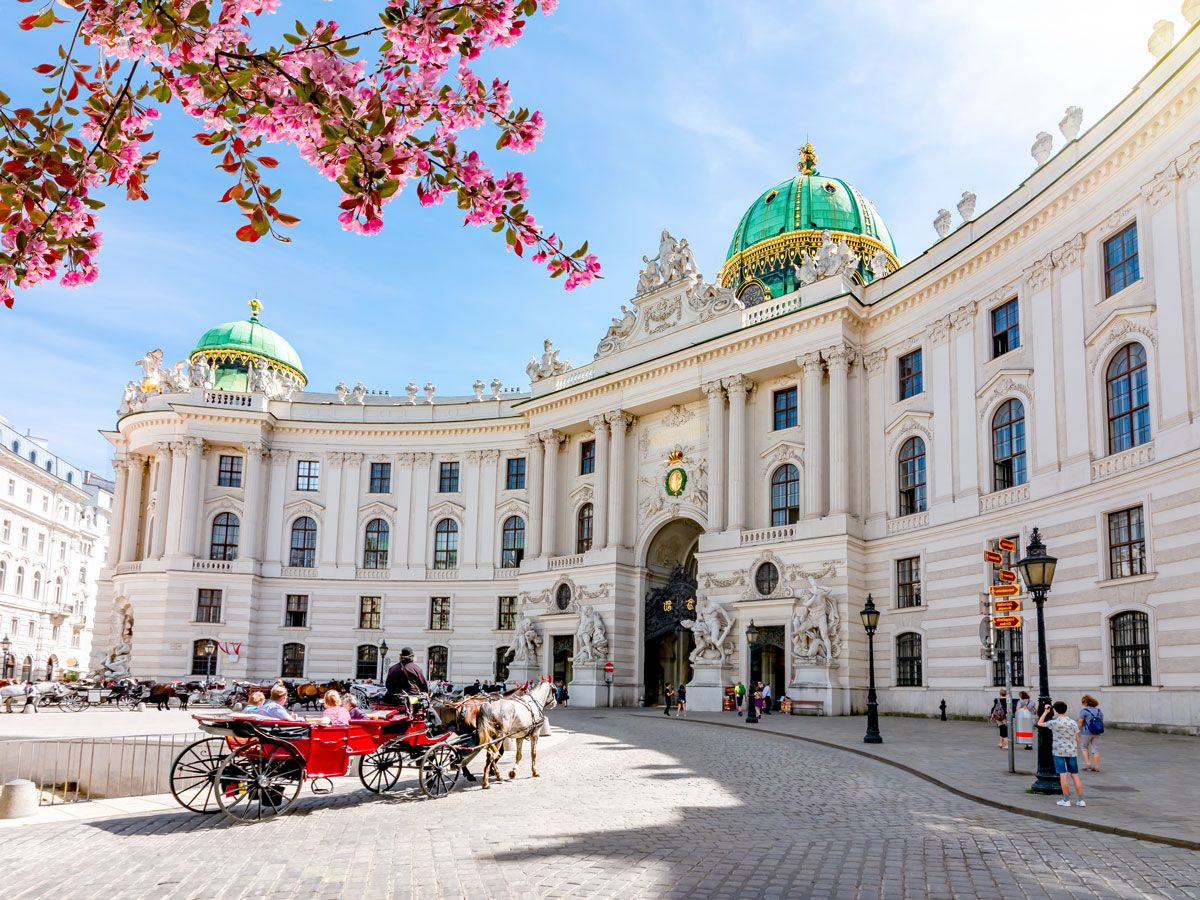
The first major building on the Vienna Ring Road, the Vienna State Opera was built in 1869, replacing the prestigious Kärntnertortheater. (The site of the Kärntnertortheater is now home to famed Hotel Sacher.) The Renaissance Revival palace was destroyed by bombing in World War II, but it has been lovingly reconstructed and now hosts around 350 performances each season. While in Vienna, make time to see a show at one of the city’s oldest continually operating theaters, der Josefstadt, which was founded in 1788.

Paris, France

Striking modern silver facade of the Paris Philharmonic in France
Photo credit: BERK OZDEMIR/ Alamy Stock Photo

“Punk deconstructivist” isn’t the first thing that comes to mind when thinking “Paris” and “classical,” but that’s exactly what architect Jean Nouvel delivered with the opening of the shiny and futuristic symphonic concert hall in Montmartre’s Cité de la Musique complex. Inaugurated in 2015, the 2,400-seat Philharmonie de Paris hosts the Paris Orchestra but has also offered shows by performers from all genres, including De la Soul, Elvis Costello, and the late David Bowie.

Those who prefer more classical settings for their classical music will find no shortage of appropriately opulent and traditional venues in the City of Light. Emperor Napoleon III personally commissioned in 1861 the Palais Garnier, a spectacle of Beaux Arts, Baroque, and Second Empire design. For imperial lodging in the city’s historic opera district, consider the Hôtel Scribe Paris Opera.

Leipzig, Germany

Exterior of Leipzig Concert Hall in Germany, seen at night
Photo credit: Llewellyn/ Alamy Stock Photo

Can you picture Johann Sebastian Bach directing your church choir? The German city of Leipzig can: The famed composer was the cantor at St. Thomas from 1723 to 1750 — the same place reformer Martin Luther preached sermons behind the pulpit in 1539. The oldest citizen’s concert orchestra in the world, the Gewandhaus, also holds some performances at St. Thomas — and Mendelssohn himself once conducted. 

But those are only parts of Leipzig’s pivotal role in the development of classical music. In addition to Mendelssohn, other marquis names like Mahler and Wagner composed here, and Leipzig is home to a number of world-renowned festivals. Be sure to take the self-guided walking tour, which follows the music trail along some of the city’s significant historical sites. For elegant lodging, put your feet up at the Steigenberger Grandhotel Handelshof, which was built in 1909.

Milan, Italy

Exterior of La Scala opera house in Milan, Italy, at night
Photo credit: Leonid Andronov/ Shutterstock

For passionate opera aficionados, Milan is an absolute must. The Teatro alla Scala (“La Scala” for short) opened for its first performance in 1778, and is associated with some of the most famous names in opera and ballet, including the greatest of all Italian composers. Giuseppe Verdi, who wrote such season staples as La traviata, Rigoletto, and Aida, died in Milan in 1901. Verdi and his wife are interred at Casa Verdi, and their former home is now a museum as well as a rest home for aged musicians. 

If an Italian getaway allows time for two cities, opera lovers may also want to see Venice’s La Fenice. Like its namesake (“the phoenix” in Italian), the grand theater, first constructed in 1792, has risen from the ashes after a fire destroyed the original structure in 1837.

Sydney, Australia

View of Sydney Opera House across Sydney Harbour in Australia
Photo credit: Nan_Photography/ Shutterstock

With a series of gleaming white roof panels that recall billowing sails, the Sydney Opera House is the city’s most iconic landmark and one of the most-photographed buildings in the world. Aspiring to be recognized as a world-class capital of culture, the leaders of New South Wales inaugurated the magnificent structure in 1973 — 16 years after its design (by Danish architect Jørn Utzon) was approved and 10 years after its initial targeted completion date.

In addition to the 2,679-seat concert hall for symphonies and other concerts, plus a 1,507-seat theater for opera and ballet, the complex houses smaller multi-use venues, a recording studio, and an outdoor area that can be used for performances. It was designated a UNESCO World Heritage Site in 2007.

Post Banner Image
Architecture

20 of the World’s Most Stunning Libraries

By Daily Passport Team
Read time: 12 minutes
August 30, 2023
Updated: April 23, 2024

20 of the World’s Most Stunning Libraries

By Daily Passport Team
Author
Daily Passport Team
Daily Passport writers have been seen in publications such as National Geographic, Food & Wine, CBC, Condé Nast Traveler, and Business Insider. They're passionate about uncovering unique destinations and sharing expert tips with curious travelers.

For bookworms, libraries are more than just a place to borrow books. They are places of reverence, reflection, and endless fascination. The buildings they occupy are often historical landmarks and architectural marvels, from beautiful Baroque-style buildings to modern, minimalist structures. Love libraries? Get ready to swipe your library card at 20 of the world’s most beautiful libraries. 

Admont Abbey Library – Admont, Austria

Fresco ceilings and rows of books inside the Admont Abbey Library in Austria
Photo credit: imageBROKER.com GmbH & Co. KG/ Alamy Stock Photo

Built in 1776, this breathtaking library is housed in the Admont Abbey, a Benedictine monastery located on the Enns River in Admont, Austria. It was designed by architect Joseph Hueber and is known for its ornate, Baroque architecture, art, and of course, books. Inside, the books are almost uniformly bound in white to match the predominant interior colors of white and gold.

The dazzling hall is also accented with the peaceful pastel hues of Austrian artist Bartolomeo Altomonte’s ceiling frescoes, which represent the evolution of human knowledge. The additional ceiling features seven stunning cupolas (small, dome-like lookouts to allow light in), along with Josef Stammel’s limestone “Four Last Things” sculptures dramatically depicting death, heaven, hell, and the Last Judgement. Together, these heavenly embellishments make the Admont Abbey a one-of-a-kind work of art.

Bodleian Library – Oxford, England

Housing over 12 million printed items, Oxford University’s Bodleian Library is the second-largest library in Britain (surpassed only by the massive British Library in London). Its impressive collection — which includes rare medieval maps, a copy of the Gutenberg Bible, and even William Shakespeare’s “The First Folio” (without which some of the playwright’s most revered works would be lost) — would be enough to make it one of the most awe-inspiring libraries in the world.

But its buildings make it breathtaking in its own right. The 18th-century Radcliffe Camera building, with its majestic, circular design, is one of the most impressive structures, and also happens to be the oldest circular library in the U.K. Eagle-eyed visitors will also recognize parts of the library’s interior from several of the Harry Potter films.

Seattle Public Library – Seattle, Washington

Modern glass exterior of the Seattle Public Library
Photo credit: B.O’Kane/ Alamy Stock Photo

The Seattle Public Library‘s central branch stands 11 stories tall from its hilltop perch. Although it was only built in 2004, its glassy shell has become an essential part of the city’s skyline, and its interior is now a functional and flexible public space. Designed by Dutch architect Rem Koolhaas, the library’s various glass-faceted platforms allow natural sunlight inside and visitors to enjoy city views throughout the building.

Koolhaas envisioned the space as the ideal representation of a modern library, which should serve as “an information store where all potent forms of media, new and old, are presented equally and legibly.” It also happens to be one of the most Instagrammed libraries in the world.

Biblioteca Vasconcelos – Mexico City, Mexico

The stark hanging shelves — and the almost 500,000 books that adorn them — are the real standout of this industrial masterpiece in Mexico City. But the Biblioteca Vasconcelos’ bold interior design, (the brainchild of local architect Alberto Kalach) has plenty of other curiosities to discover as you walk the 409,000-square-foot “megalibrary” — the see-through glass floors create some staggering dimension to the space, and a not-so-subtle whale bone sculpture in the main lobby by artist Gabriel Orozco was inspired by the building itself. Outside, the building is beautifully integrated with a lush botanical garden, providing visitors with a tranquil oasis away from the hustle and bustle of the city.

Library of Congress – Washington, D.C.
Exterior of the Library of Congress in Washington, D.C.
Photo credit: Rob Crandall/ Alamy Stock Photo

Perhaps the most famous (and beautiful) of the three buildings that make up Washington, D.C.’s Library of Congress is the Thomas Jefferson Building; it opened in 1897 and houses the iconic domed Main Reading Room, which was inspired by the reading room at the British Museum Library in London. The library’s stately, neoclassical architecture houses beautifully intricate American artworks beloved by the over 1 million tourists who visit the historic U.S. government site annually.

Not only is the Library of Congress one of the most beautiful libraries in the U.S., but it also happens to be the biggest library in the world based on shelf space and the number of materials, which tops a staggering 170 million.

Strahov Monastery Library – Prague, Czechia

Prague’s Strahov Monastery was founded in 1143 as part of the historic Clementium building complex. Over the years, the monastery endured multiple wars, a communist takeover, and other disasters until it became a library in 1679. The building’s best-known and most beloved features are the textured ceilings — especially those in the Theological Hall — adorned with biblical frescoes. Tourists also flock to the beautiful, Baroque-style library for its “compilation wheel,” a tool that makes books easier to hold while reading; its massive celestial globes; and two secret passageways reportedly hidden behind shelves that are opened by moving prop books.

Central Library – Vancouver, Canada

Exterior of the Central Library in Vancouver, Canada
Photo credit: Jit Lim/ Alamy Stock Photo

Vancouver is better known for its natural beauty than its architecture, but the Central branch of the Vancouver Public Library system is a standout structure in the western Canadian city. The downtown building was inspired by Rome’s famous Colosseum and was built after the city held a design competition. The competition was won by Safdie Architects and the library opened to great public acclaim in 1996. Inside, the spiraling space is surrounded by a multi-story colonnade and glass façades all around. At the top of the structure is a bright reading room and a spectacular, green roof that doubles as a public park.
Geisel Library – San Diego, California

The Geisel Library at the University of California – San Diego sits on the edge of a canyon near the center of campus. While the library’s setting is certainly striking, it’s the building’s arresting, geometric shape that has made it the campus’ — and one of the city’s — most iconic structures. The Brutalist-style building designed by American architect William Pereira is supported by the lower two pedestal levels, which ascend into a full six-story, stepped-glass tower reflecting the bright, blue California sky.
The library was named in honor of Audrey and Theodor Seuss Geisel (better known as children’s author Dr. Seuss) for their contributions to both the library and literacy initiatives at large. The building, perhaps unsurprisingly, houses an impressive Dr. Seuss collection that consists of original manuscript drafts, drawings, books, memorabilia, and more.
Royal Portuguese Reading Room – Rio de Janeiro, Brazil

People inside the Royal Portuguese Reading Room in Rio de Janeiro, Brazil
Photo credit: Sergio Monti/ Alamy Stock Photo

If you close your eyes and dream of the ideal library, you might just end up picturing something that looks like Rio De Janeiro’s Royal Portuguese Reading Room. Built in 1887, the limestone building features over 350,000 volumes, which line the vertical shelves that stretch as high as the vibrant, red-and-blue, stained glass skylight. The cozy space is surrounded by dark wooden arches, more stained glass, a showstopper of a chandelier, and an altar made of silver, marble, and ivory that’s fit for a royal.

Stuttgart City Library – Stuttgart, Germany

Many of the world’s most beautiful libraries are more traditional with ornate reading rooms, but the City Library in Stuttgart, Germany, makes a strong case for modern minimalism. Designed in 2011 by Cologne-based Korean architect Eun Young Yi, the building is a white concrete cube on the outside and an equally stark, stunning vision on the inside. The main reading room resembles an inverted pyramid, surrounded by white shelves that are lined with impressively tidy stacks of thousands of books.

By night, the building’s exterior turns into an oversized light sculpture, emitting a radiant, blue light and transforming the evolving cityscape that surrounds it. According to the architect, the library’s design takes cues from Noah’s Ark, the Confucian theory of concentric order, and Stanley Kubrick’s 2001: A Space Odyssey.

Royal Library – Copenhagen, Denmark

Interior of the Royal Library in Copenhagen, Denmark
Photo credit: imageBROKER.com GmbH & Co. KG/ Alamy Stock Photo

The most recognizable building on the Copenhagen waterfront is officially known as the Royal Library, but it’s better known by its quasi-official nickname: the Black Diamond. Built in 1999, the building earned its colloquial name from the sheets of polished, black granite that flank the clear glass center of the structure.

The glass panel is part of the interior’s main draw, housing the massive atrium that divides the space in two. Inside, it affords visitors beautiful panoramic views of the waterfront and diffuses daylight all throughout the building. While it does boast six reading rooms, the Black Diamond is more than just a library. It also contains a 600-seat performance hall and a roof terrace that serves as a public space.

Trinity College Library – Dublin, Ireland

Dublin’s Trinity College Library has the famous Book of Kells — an illuminated manuscript dating back to the year 800 CE — in its collection. And while this would be enough to make the location noteworthy on its own, the library’s Long Room also makes it a visual wonder to behold. The two-story, 213-foot-long hallway is stacked with over 200,000 old books, a sight for any literary lover. Keep looking up and you’ll see the arched, carved wooden ceiling; all around, visitors to this magnificent space are also surrounded by appropriately scholarly marble busts of writers and philosophers.

Austrian National Library – Vienna, Austria

Statues and two stories of bookshelves inside the Austrian National Library in Vienna
Photo credit: Art Kowalsky/ Alamy Stock Photo

The Austrian National Library — the biggest library in the country — is located in the Hofburg Palace in Vienna. The building once housed emperors and kings, and today serves as the official home for the country’s president and stores over seven million books and documents. One of the handsome, Baroque-style building’s best features is the massive fresco on the ceiling of the stunning State Hall. Created by Austrian artist Daniel Gran, the cupola fresco depicts the deification of Charles VI of France. The domed room is also decorated with statues by sculptor Paul Strudel that honor members of Austria’s Habsburg monarchy over the years.

Beitou Public Library – Taipei, Taiwan

The district of Beitou just north of Taipei City is famous for its hot springs, so it’s only fitting that the Beitou branch of the Taipei Public Library system looks more like a spa than it does a public facility. The building is Taiwan’s first green building, designed to reduce water and electricity consumption. The two-story façade is wrapped with large windows, and the building’s slanted roof is more than a distinct design choice — it helps generate electricity through solar cells and captures rainwater, which is used in the building’s plumbing system.

The Beitou Library’s collection also reflects its ecological purpose — within its 63,000 books is a large collection dedicated to ecological conservation. The natural wooden frame and scenic balconies help the building blend into its natural surroundings.

Bibliotheca Alexandrina – Alexandria, Egypt

Reflective pool outside the Bibliotheca Alexandrina in Egypt
Photo credit: dbtravel/ Alamy Stock Photo

Alexandria was once home to one of the most significant libraries in scholarly history. Now, on the shore of the Mediterranean Sea, the city pays homage to its roots with the stunning Bibliotheca Alexandrina. Designed by Norwegian architecture firm Snohetta, the contemporary building’s circular granite form is key to this tribute, reflecting the cyclical nature of knowledge throughout time.

The exterior walls are carved with over 100 different scripts that honor the human language, while inside, the 11-story structure is illuminated by vertical, north-facing skylights. The grand reading room, with space for more than 2,000 visitors, sits under a welcoming, glass roof, measuring more than 500 feet wide and angled towards the sparkling Mediterranean Sea.

Library of Parliament – Ottawa, Canada

Ottawa’s Library of Parliament, which opened in 1876, originally housed the country’s Parliamentary headquarters. Situated on the banks of the Ottawa River, the Victorian Gothic-style building is known for its oversized, ornate flying buttresses and ornamental ironwork. The interior is characterized by its warm, white-pine paneling, which consists of thousands of intricate carvings of flowers, masks, and mythical beasts.

But the defining feature of the grand room is the white marble statue of Queen Victoria that sits in the center. The stately, Gothic building is so beloved and so recognizable that it was once featured on the Canadian $10 bill. (It was updated in 2018 to feature civil rights activist Viola Desmond, as well as a depiction of the Canadian Museum for Human Rights in Winnipeg, Manitoba.)

UNAM Central Library – Mexico City, Mexico

Massive exterior mural of the UNAM Central Library in Mexico City, Mexico
Photo credit: Kamira/ Alamy Stock Photo

The UNAM Central Library, located on the Ciudad Universitaria campus at the National Autonomous University of Mexico in Mexico City, houses one of the country’s largest collections at over 400,000 materials — and the building itself is also considered a work of art. Its massive exterior mural, created by Mexican architect and artist Juan O’Gorman, takes up the entirety of the 10-story building, telling the visual story of the history of the country.

Although it appears to be a painted work of art, O’Gorman made the mosaic out of brightly colored stones that he sourced from around the country. The base of the building is also made of the volcanic rock upon which it sits — further cementing the building as an intrinsic piece of the country’s culture. In 2007, the building officially became a UNESCO World Heritage Site.

Starfield Library – Seoul, South Korea

You’d be forgiven for mistaking Seoul’s Starfield Library for a bookstore since it was built, rather unconventionally, within a shopping mall. The Starfield Coex Mall is located in the business district of Gangnam and is Asia’s biggest underground shopping mall. The library, designed by the Gensler firm, sits in the center of this subterranean structure; the top floor of its two stories is covered by a glass roof, and four imposing, 43-foot-tall bookcase columns hold the library’s collection of 50,000 books, as well as over 600,000 magazines and journals. With warm natural wood accents and ample natural light, the Starfield is a welcoming cultural and community space in a most unexpected place.

Rampur Raza Library – Rampur, India

Ornate exterior of India's Rampur Raza Library
Photo credit: Salman Usmani/ IndiaPictures/ Universal Images Group via Getty Images

The palatial Rampur Raza Library, located in the northern Indian state of Uttar Pradesh, was originally built in 1904 as a mansion for Nawab Hamid Ali Khan. In 1957, under the last Nawab of Rampur (and the building’s now namesake), Raza Ali Khan, it was converted into the library it is today. The ornate, high-domed and turreted mansion houses an impressive collection; the materials once lived elsewhere and were contributed by the Nawabs of Rampur State over the years.

Rare manuscripts, historical documents, Islamic calligraphy, and even the original manuscript of the first translation of the Qur’an — not to mention the over 60,000 printed books — led to the Raza being named an institution of national importance by the government in 1975.

National Library of Finland – Helsinki, Finland

Although Helsinki’s National Library of Finland originally dates back to 1840, the warmth of its current interior almost gives it a stylish, contemporary flair. The building’s interior and exterior architecture primarily draw from Classicism. Eclectic dashes of decorative Empire-style architecture and Art Nouveau accents alongside the temple-based design make for visual discoveries at every turn.

The National Library is considered one of Finland’s most important cultural spaces, and great efforts have been made to preserve and restore its distinct beauty. Throughout the 2000s, the building’s spectacular ceiling murals and original wooden floors were restored, and an underground book bunker was built to help house the collection of over three million books.

Post Banner Image
Architecture

Cruise Down 10 of the World’s Longest Highways

By Daily Passport Team
Read time: 6 minutes
August 24, 2023
Updated: September 5, 2023

Cruise Down 10 of the World’s Longest Highways

By Daily Passport Team
Author
Daily Passport Team
Daily Passport writers have been seen in publications such as National Geographic, Food & Wine, CBC, Condé Nast Traveler, and Business Insider. They're passionate about uncovering unique destinations and sharing expert tips with curious travelers.

Roadways criss-cross our planet, providing a vital transportation link between countries, cities, villages, and far-flung places. By some estimates, there are nearly 40 million miles of roads on Earth, ranging from tiny Main Streets to highways that span thousands of miles. If you’re looking to explore the latter on an epic road trip, buckle up and journey down 10 of the world’s longest highways. 

10. Interstate 80 – United States

Lone tree on the side of Interstate 80
Photo credit: Peter Ptschelinzew/ Alamy Stock Photo

Spanning 2,899 miles, Interstate 80 is the second-longest highway within America’s Interstate Highway System. Starting in Teaneck, New Jersey, it passes through 11 states before finishing at the point where San Francisco’s Mission District, Potrero Hill and SoMa neighborhoods meet. This transcontinental road roughly follows the route of the Lincoln Highway — the nation’s first transcontinental road for automobiles — and also retraces historic emigrant routes, such as the Oregon Trail and California Trail. There are dozens of interesting and offbeat attractions to keep travelers busy along the way. Among them are Ohio’s Cuyahoga Valley National Park, the World’s Largest Time Capsule in Nebraska, and Tahoe National Forest in California’s Sierra Nevada Mountains.

9. Interstate 90 – United States

Giant dinosaur roadside attraction off Interstate 90
Photo credit: Images By T.O.K./ Alamy Stock Photo

Beating Interstate 80 by just 121 miles to the top spot on the list of longest interstate highways is the 3,020-mile-long Interstate 90. It crosses 13 states in the northern part of the country, traveling between Boston and Seattle. From the shorelines of Lake Erie and Lake Michigan (two of the Great Lakes) to the Great Plains of South Dakota and the Rocky Mountains, the highway passes through many areas of breathtaking natural beauty. Due to its northerly location, temporary closures of the route are common in the winter following heavy snowfalls. A few highlights along the route include Minnesota’s 55-foot-tall Jolly Green Giant Statue, Mount Rushmore National Monument, and Garnet Ghost Town in Montana.

8. U.S. Route 6

Sign for Provincetown, Massachusetts, along U.S. Route 6
Photo credit: Earl D. Walker/ Shutterstock

U.S. Route 6 makes it possible to drive for 3,199 miles from Provincetown, Massachusetts, on the northern tip of Cape Cod, to the city of Bishop, which sits close to the California-Nevada border. Starting in the east, the road passes the dune-covered beaches of the Cape Cod National Seashore before winding through 14 states. Travelers can look forward to exploring the northern suburbs of New York City, stargazing in Pennsylvania’s Cherry Springs State Park, and driving around the hair-raising Loveland Pass at the Continental Divide. In 1953, the route adopted the name Grand Army of the Republic Highway in honor of Civil War veterans.

7. Ruta 40 – Argentina

Sign indicating Ruta 40 in Argentina, with mountains in distance
Photo credit: kavram/ Shutterstock

Ruta 40 is Argentina’s longest road, winding 3,227 miles from the town of La Quiaca, on the Bolivian border, to Cabo Virgenes, on the southeastern corner of the country. Che Guevara famously traversed a stretch of this part-paved, part-dirt track, a journey which was portrayed in the 2004 film The Motorcycle Diaries. The route crosses 11 provinces and dozens of national parks. From the Andes mountains and gigantic glaciers to vineyards and wild rivers, Ruta 40 offers an amazing showcase of Argentina’s natural treasures. Popular sights include the Salinas Grandes Salt Flats, Seven Lakes Road, and Perito Moreno Glacier, located within Los Glaciares National Park. At a staggering 16,050 feet in elevation, the Abray del Acay mountain pass is one of the highest in the world.

6. U.S. Route 20

Close-up view of roadway on U.S. Route 20 with snow-capped mountains in the distance
Photo credit: David R. Frazier Photolibrary, Inc./ Alamy Stock Photo

Dating back to 1926, U.S. Route 20 is the longest road in America. Running almost parallel to Interstate 90, the route links Kenmore Square in Boston, Massachusetts, with the Pacific coast town of Newport, Oregon. The highway visits 12 states on its 3,365 mile coast-to-coast journey. Road trips along this epic highway take in several natural wonders, such as the Mississippi and Missouri rivers, Yellowstone National Park, and the wild beaches and sea stacks of Yaquina Bay State Recreational Site. For quirky roadside attractions, don’t miss Carhenge, Nebraska’s curious automobile homage to Stonehenge.

5. Golden Quadrilateral National Highway – India

Empty two-lane stretch of India's Golden Quadrilateral National Highway
Photo credit: ABIR ROY BARMAN/ Shutterstock

Covering an impressive 3,632 miles, the Golden Quadrilateral National Highway is India’s largest and most ambitious highway project, which created a network of roads that connect the country’s four major metropolitan cities: Delhi, Chennai, Kolkata, and Mumbai. Marking a line on a map between these cities forms a loose quadrilateral, hence the highway’s name. Comprised of four main sections, the entire highway runs through 13 states of India and provides links between the country’s key agricultural, industrial, and cultural centers. Anyone embarking on an adventure along India’s longest road will encounter mystical landmarks such as the Taj Mahal, Udaipur’s Lake Pichola (featured in the James Bond movie Octopussy), and the nation’s spiritual capital, Varanasi.

4. Trans-Canada Highway

Trans-Canada Highway curving along scenic shoreline
Photo credit: pavels/ Shutterstock

Those wanting to travel coast-to-coast across Canada can do so via the 4,860-mile Trans-Canada Highway. It runs through each of Canada’s 10 provinces and crosses five different time zones. The route begins in St. John’s, Newfoundland, and ends in Victoria, British Columbia. Both are island cities, so it’s necessary to take a ferry to and from the mainland. Authorized in 1949, this epic road is marked by white-on-green maple leaf signs throughout. The Trans-Canada Highway connects the country’s major cities and also meanders around some of the nation’s most spectacular parks, including Glacier National Park, Yoho National Park, and Banff National Park.

3. Trans-Siberian Highway – Russia

Close-up of icy shoreline and bridge along Trans-Siberian highway in the distance
Photo credit: Konstantin Baidin/ Shutterstock

The Trans-Siberian Highway is a network of highways that extends across the width of Russia. Starting in St. Petersburg, on the Baltic Sea, it spans over 6,800 miles to Vladivostok, a port city on the Sea of Japan. The route passes through stunning regions such as the Ural Mountains, the wilderness of Siberia, and Lake Baikal, which is the world’s oldest and deepest lake. It also links a number of historic cities, including Nizhny Novgorod, Kazan, and Chita. Challenges facing road trippers include hundreds-mile-long sections that are far removed from civilization and extreme climatic conditions that range from stifling heat to sub-zero temperatures.

2. Highway 1 – Australia

Empty two-lane stretch through mountains on Highway 1 in Australia
Photo credit: puyalroyo/ Shutterstock

Australia is the world’s sixth-largest country by area, so it’s fitting that one of the world’s longest roads travels around this massive island-continent. Highway 1, nicknamed “the Big Lap,” is a 9,010-mile-long ring road that roughly traces the nation’s coastline in one enormous loop. Established in 1955, the highway connects most major Australian cities, including Sydney, Melbourne, Adelaide, Perth, Darwin, and Brisbane. A notable exception is Canberra, the nation’s inland capital. Highlights of the route include the arid lands of the Nullarbor Plain and the 90 Mile Straight, which is the country’s longest straight road. It also provides access to the popular beach towns along Queensland’s Great Barrier Reef coastline.

1. Pan-American Highway

Aerial view of the Pan-American Highway along the coastline of Chile
Photo credit: rjankovsky/ Shutterstock

For the road trip to beat all road trips, there’s only one option: the cross-continental journey covering over 19,000 miles through 14 countries on the Pan-American Highway. This network of highways, generally considered the longest in the world, begins in Prudhoe Bay, Alaska, and travels all the way to the tip of South America in Ushuaia, Argentina, nicknamed “the end of the world.” The drive offers the chance to visit diverse and jaw-dropping landscapes, major cities, and dozens of small-town cultural treasures. Pan-American road trippers can discover the glaciers of Alaska and Canada’s Yukon territory, the neon lights of Las Vegas, Peru’s mysterious Nazca Lines, and the mind-blowing beauty of Patagonia. However, unless you have a taste for extreme off-roading adventure, it’s not possible to drive the entire highway: An impassable wilderness called the Darién Gap, between Panama and Colombia, briefly interrupts the route.

Post Banner Image
Geography

8 States With the Most Lakes

By Daily Passport Team
Read time: 5 minutes
August 24, 2023
Updated: September 30, 2025

8 States With the Most Lakes

By Daily Passport Team
Author
Daily Passport Team
Daily Passport writers have been seen in publications such as National Geographic, Food & Wine, CBC, Condé Nast Traveler, and Business Insider. They're passionate about uncovering unique destinations and sharing expert tips with curious travelers.

Who doesn’t love a lake? They’re the perfect place to idle the day away swimming, boating, waterskiing, or fishing. But what exactly defines a lake? Scientists and government agencies differ on which bodies of water count as big enough to be considered a lake, and some don’t include human-made reservoirs. With that caveat, here are the eight states generally considered to have the most lakes. 

8. Maine

Northeast Harbor on Mount Deseret Island in Maine
Photo credit: DenisTangneyJr/ iStock

Approximate number of lakes: 6,000

There is often deliberation as to whether Maine’s plentiful water sources should be labeled as lakes or ponds. Traditionally, the distinction between the two is made in regards to the sun: If sunlight can penetrate to the bottom of all areas of an inland body of water, it is a pond. Deeper bodies of water that cannot be fully penetrated by sunlight are lakes. However, the state has decided that if the body of water is over 10 acres large, then it is legally a “great pond” — regardless of whether sunlight reaches the bottom or not. As a result, Maine officials have counted about 6,000 lakes in the state, most of which are classified as great ponds.

7. Texas

Water bicycles in lake with Austin skyline in background
Photo credit: benedek/ iStock

Approximate number of lakes: 7,000

The Lone Star State is home to roughly 7,000 lakes, though most of these are human-made. Texas is known for its large bodies of water including Grapevine Lake, Toledo Bend Reservoir, and Possum Kingdom Lake, but some may argue that these reservoirs don’t count as lakes since they’re not naturally occurring. To further complicate the matter, one lake that most people believe to be naturally occurring — Caddo Lake in East Texas — should actually be classified as a swamp. But whether it’s a lake, swamp, or reservoir, the state has its fair share of water for residents and visitors to enjoy.

6. New York

Sailboat on New York lake
Photo credit: Meg M/ Shutterstock

Approximate number of lakes: 7,600

The Empire State has more than 7,600 freshwater lakes, ponds, and reservoirs, according to state officials. Notably, it shares Lake Champlain, one of the country’s largest lakes at nearly 500 square miles, with neighboring Vermont. New York is also home to the Finger Lakes, a region known for its narrow lakes, rolling hills, and abundance of wineries. One of the most popular lakes to visit in the region is Lake George, nicknamed “Queen of American Lakes” for its beauty and crystal-clear water. New York also provides access to not one, but two, Great Lakes, with 570 miles of shoreline along Lake Erie and Lake Ontario.

5. Michigan

Lighthouse on the Great Lakes in Michigan
Photo credit: huronphoto/ iStock

Approximate number of lakes: 11,000

It’s not called the Great Lake State for nothing: Michigan is bordered by four Great Lakes (Michigan, Superior, Huron, and Erie). As a result, the state is home to 2,963 miles of shoreline along the Great Lakes, but these are technically classified as coastal waters according to the Coast Guard. According to the Michigan Department of Natural Resources, the state has over 11,000 inland lakes, 2,700 of which are mapped out by the government. This number includes lakes larger than five acres — when you include lakes less than an acre, the total count jumps to over 60,000.

4. Minnesota

Canoe in Minnesota lake
Photo credit: hauged/ iStock

Approximate number of lakes: 14,380

It’s no surprise that the state known as the “Land of 10,000 Lakes” makes an appearance on this list. In fact, Minnesota is home to so many bodies of water that it’s difficult to get an official count, with various agencies reporting different numbers. The Department of Natural Resources claims there are 11,842 lakes in total. The real number could be somewhere in between: The University of Minnesota Duluth claims the state has 14,380 lakes — if you count the lakes that cross into Canada and do not include lakes under 10 acres.

Related: Does Minnesota Really Have 10,000 Lakes?

3. Wisconsin

Rocky point overlooking Wisconsin lake at sunset
Photo credit: UWMadison/ iStock

Approximate number of lakes: 15,000

It’s a hotly debated topic as to which state has more natural lakes: Wisconsin or Minnesota. This is due to the fact that state agencies maintain different criteria as to what defines a lake. The Wisconsin Department of Natural Resources claims that the state has 15,000 lakes, which is well over Minnesota’s official number. However, Wisconsin’s record-keeping includes lakes under 10 acres. And of these 15,000 lakes, over half of them are unnamed. When you apply the Minnesota standards to the Wisconsin map, only 5,898 bodies of water are officially lakes, which means Wisconsin has far fewer lakes than its western neighbor.

2. Florida

Pontoon boats on Lake Okeechobee in Florida
Photo credit: Boogich/ iStock

Approximate number of lakes: 30,000

Florida is filled to the gills with lakes: The Sunshine State is home to more than 30,000 lakes, covering 3 million acres of land. While some of these lakes are naturally occurring — including the 448,000-acre Lake Okeechobee, the state’s largest — many of them are human-made. These human-made lakes are often a result of building infrastructure, particularly in residential areas to assist in flood control. It’s also worth noting that many of Florida’s lakes are home to alligators and snakes, so it’s always best to pay attention to your surroundings while swimming.

1. Alaska

Lake in Alaska partially obscured by clouds
Photo credit: christiannafzger/ iStock

Approximate number of lakes: 3 million

Nicknamed the “Last Frontier,” Alaska is defined by its wilderness, with mountains, rivers, and lakes taking up much of its picturesque landscape. The state is home to 3,197 officially named natural lakes, including well-known lakes such as Lake Clark, Kenai Lake, and Mendenhall Lake. If this wasn’t already an impressive number, Alaska contains an estimated 3 million unnamed lakes that are greater than five acres, many of which are difficult to access on foot. When these lakes are combined with the state’s 12,000 rivers, Alaska accounts for nearly half of the nation’s surface water.

Related: 7 of the Most Unusual Lakes Around the World
Post Banner Image
Geography

8 Fascinating Facts About Equatorial Countries

By Bennett Kleinman
Read time: 6 minutes
August 24, 2023
Updated: August 31, 2023

8 Fascinating Facts About Equatorial Countries

By Bennett Kleinman
Author
Bennett Kleinman
Bennett is a New York City-based staff writer for Daily Passport. He previously contributed to television programs such as the Late Show With David Letterman, as well as digital publications like the Onion. Bennett has traveled to 48 U.S. states and all 30 Major League Baseball stadiums.

The equator is an imaginary line at zero degrees latitude that wraps around the center of Earth, dividing the planet into Northern and Southern Hemispheres. There are 13 countries located along this 24,901-mile-long boundary — seven in Africa, three in Asia, and three in South America. All of these countries are known for their similar climates, experiencing year-round hot and humid weather with little seasonal variation. Despite similar weather, each of these nations has its own unique history, geography, and culture. Here are eight fascinating facts you might not know about countries along the equator.

Kiribati Is the First Country to Celebrate the New Year

Transcluent waters off Kiribati
Photo credit: mtcurado/ iStock

Kiribati, an archipelagic nation on the equator, consists of 33 islands spanning over 1,800 miles across the central Pacific Ocean. Even with this vast breadth, Kiribati’s total land area measures only 313 square miles. Kiribati’s eastern territory includes eight of the Line Islands, an archipelago through which the International Date Line runs. Thanks to this, the island of Kiritimati is the first region anywhere in the world to ring in the New Year. 

While parts of Kiribati are located in the Western Hemisphere, Kiritimati is actually located in the Eastern Hemisphere, meaning the country is the only nation in the world with land in all four hemispheres. Despite this, the entirety of Kiribati lies within the world’s earliest time zones due to a quirk with the International Date Line, which circumvents the Line Islands and swings around to the east. This places Kiritimati within the UTC +14 time zone. After Kiribati celebrates, Tonga, Samoa, and parts of New Zealand ring in the New Year one hour later.

Indonesia Is Home to the World’s Biggest Flower

Temple gate surrounded by forested mountains in Indonesia
Photo credit: pawopa3336/ iStock

Indonesia has three national flowers: the Phalaenopsis amabilis (moon orchid), Jasminum sambac (jasmine), and Rafflesia arnoldii. This latter flower is ominously known as the corpse flower due to the pungent odor it emits, which some compare to rotten meat. However, its size is what makes this flower truly special, as it reaches average lengths of three feet across and weighs up to 15 pounds. 

With no visible leaves, roots, or stems, this bright red flower obtains nutrients via a parasitic relationship with other plants. Rafflesia arnoldii is found — albeit rarely — in the rainforests of Sumatra and Borneo. In 2020, a record-setting version of this large flower was discovered in a West Sumatran forest, possessing a diameter four inches wider than the previous record holder.

The Maldives Is the World’s Flattest Country

Hammock on beach in the Maldives at sunset
Photo credit: Fyletto/ iStock

Located in the central Indian Ocean, the Republic of Maldives is the world’s flattest country, according to Guinness World Records. On average, the island nation’s coral beaches rise a mere four feet above sea level. The country’s highest natural point — an unmarked spot on Addu Atoll, the southernmost atoll of the Maldives — reaches only eight feet above sea level. On Seenu Atoll, one point reaches heights of 16 feet above sea level, though it’s human-made: the eighth hole of the Villingili Resort’s golf course.

The Maldives is made up of around 1,200 tiny islands, of which only around 200 are inhabited. These land masses extend 510 miles from north to south and 80 miles from east to west. Given its flatness, the Maldives is at risk of being largely submerged in the near future, as ocean levels are predicted to rise up to five feet by 2100.

Kenya Contains Over 60 National Parks and Reserves

Zebras roaming in Kenya national park with city buildings in the distance
Photo credit: chingting huang/ iStock

The East African nation of Kenya established Nairobi National Park in 1946 as the country’s first protected refuge. The park covers 45.26 square miles, making it one of the smaller national parks in Kenya today, but it helped pave the way for a widespread conservation effort in the decades to come. As of 2023, the Kenya Wildlife Service manages more than 60 national parks, national reserves, and marine national parks and reserves — representing about 8% of Kenya’s landmass.

Among the many highlights of Kenya’s national park system are the 1.5 million wildebeest living in the Masai Mara reserve; the world’s last surviving northern white rhinos residing in the Ol Pejeta Conservancy; the fascinating geothermal activity at Hells Gate National Park; and the world’s largest lava flow (at over 180 miles in length), located on the Yatta Plateau in Tsavo East National Park. Then there’s Mount Kenya National Park, which contains the second-tallest mountain in Africa behind Kilimanjaro. This impressive crag reaches heights of 17,057 feet above the Kenyan landscape below.

Gabon Is Home to the World’s Only Known Natural Nuclear Reactor

Homes in city in Gabon
Photo credit: cribea/ iStock

In 1972, scientists extracted chunks of radioactive uranium ore from a mine in Gabon, an equatorial country located along the Atlantic Coast of central Africa. After further research, scientists discovered that the uranium mines at the site, known as Oklo, contained 16 natural nuclear reactors that first developed around 2 billion years ago (a 17th reactor was later discovered in Bangombé, located 18 miles southeast of Oklo). 

These geological features are unlike anywhere else on the planet. For eons, these sites produced radioactive ore thanks to a natural nuclear fission process that was moderated by water levels and boiling heat. Unfortunately, the reactors in Oklo were destroyed over time due to excessive mining, and to this day, scientists have yet to discover any natural reactors akin to the ones in Gabon.

Brazil’s Capital City Resembles an Airplane When Viewed From Above

Bridge reflecting onto water in Brasilia, Brazil
Photo credit: R.M. Nunes/ iStock

Brazil relocated its capital from Rio de Janeiro to the newly planned city of Brasília, with a more central location, in 1960. Lúcio Costa — an urban architect who taught geometry and drawing from 1938 to 1954 — won a public competition in 1957 to design the proposed new capital. Costa shunned traditional grid patterns and chose an irregular cross layout The end result, when viewed from above, looks like an airplane, a bird, or even a dragonfly, depending on who you ask.

Costa’s unusual plans called for government buildings in the area where a plane’s fuselage is traditionally located, with local bureaucrats making their residential homes in the “wings” of the city. Though he designed the city for 500,000 people, it’s since expanded to house about 2.5 million residents.

Colombia Has More Bird Species Than Any Other Country

Streetcar on streets of Colombia city
Photo credit: Starcevic/ iStock

Colombia is the second-most biodiverse country in the world, after Brazil. When it comes to birds, however, Colombia tops the list with 1,878 bird species. That number puts Colombia ahead of Peru’s 1,858 bird species, and is large enough to account for 20% of the world’s total bird species. 

Common bird varieties in Colombia include sparrows and finches that are also found in more northern climates. The country is also home to several rare endemic species. One such endangered bird is the blue-billed curassow, which maintains a small population residing in the tropical lowland forests. Another rare Colombian bird is the Cauca guan, which is at risk due to years of hunting and deforestation.

Ecuador’s Official Currency Is the U.S. Dollar

Colorful buildings in Quito, Ecuador
Photo credit: jon chica parada/ iStock

For over a century, the Ecuadorian sucre served as the official currency of Ecuador. However, on September 9, 2000, the South American country officially changed its currency to the U.S. dollar. At the time, financial crises rendered the sucre virtually worthless, and inflation became so problematic that one U.S. dollar was equivalent to 25,000 sucres. This led President Jamil Mahuad Witt to call for a switch of the country’s official currency to the U.S. dollar.

Mahuad’s decision proved unpopular, and he was overthrown by a coup d’etat shortly thereafter. Despite the country’s opposition to the decision, Mahuad’s successor, President Gustavo Noboa Bejerano, followed through on the initiative and officially adopted the U.S. dollar as Ecuador’s national currency. Ecuador remains one of the eight countries around the world to use the U.S. dollar as official tender.

Post Banner Image
History

See How These 6 Iconic Tourist Sites Have Changed Over the Years

By Bradley O'Neill
Read time: 5 minutes
August 23, 2023
Updated: August 23, 2023

See How These 6 Iconic Tourist Sites Have Changed Over the Years

By Bradley O'Neill

The modern idea of tourism originated in the 17th century, when wealthy Europeans embarked on “the Grand Tour” around France, Germany, Italy, and Greece. Some of the historical sites, monuments, and cultural attractions they visited possibly look much the same today as they did back then. Far more likely is that — whether through neglect, historical shifts, or renovations — many of those tourist sites bear little resemblance to their original appearance. Take a look back at six such iconic tourist sites around the world that have changed notably over the years. 

Hagia Sophia – Istanbul, Turkey

Image of the Hagia Sophia in Istanbul, Turkey
Photo credit: IgorZh/ Shutterstock

Few major monuments around the world have as storied a history as Istanbul’s Hagia Sophia. A celebration of the city’s diverse cultural influences, this iconic site dates back over 1,500 years. Built in 537 CE on the site of an earlier church, Hagia Sophia served as a Byzantine church for almost an entire millennium. After the Ottoman conquest of Constantinople in 1453, the opulent building was converted into a mosque. Four minarets, a mihrab, and Islamic calligraphy were added to the existing structure. 

Life at this sacred landmark changed again in 1935, when the Turkish government converted it into a museum. It was then reverted back to a mosque in 2020. Today, outside of prayer hours, visitors can glimpse inside this UNESCO-listed monument and admire its unique blend of Byzantine and Ottoman, Christian, and Islamic designs.

Gamla Stan – Stockholm, Sweden

Colorful row buildings in Stockholm's Old Town
Photo credit: dimbar76/ Shutterstock

Occupying the island of Stadshomen and three islets, Gamla Stan is the historic and medieval old town of Stockholm. This district of maze-like, cobblestone alleyways is where the city was founded in the 13th century. The area is notable for its rust-colored townhouses, the majority of which were built in the 17th and 18th centuries. 

But despite the original grandeur of the area, from the mid-19th to 20th centuries, Gamla Stan was thought of as an undesirable and inhospitable place to live. Historic buildings were left to decay, and a number of blocks were destroyed for the enlargement of the Riksdagshuset parliament house. In the 1980s, a cleanup and government preservation turned it into an elegant and vibrant district home to around 3,000 residents. The Nobel Museum, Kungliga Slottet royal palace, and Västerlånggatan shopping street are a few of today’s highlights in Gamla Stan.

Copacabana Beach – Rio de Janeiro, Brazil

Palm trees, sand, and iconic wavy boardwalk at Copacabana Beach in Rio de Janeiro
Photo credit: Catarina Belova/ Shutterstock

This 2.5-mile-long stretch of golden sand is the epicenter of Rio de Janeiro’s beach culture. These days, vendors on Copacabana Beach hawk caipirinhas and acai bowls to thirsty tourists, while locals show off their soccer skills to a backdrop of high-rise buildings and jungle-covered hills. But in the 1800s, this coastal paradise was little more than a rocky coastline home to fishing communities and defensive fortresses. Back then it was called Sacopenapã, which referred to a bird native to the area. 

By the turn of the 20th century, tourism began to outpace the fishing industry at Copacabana Beach. Grand hotels such as the Belmond Copacabana Palace opened, and the promenade with the signature wave-like design was built in 1906. One of the biggest changes occurred in 1970, when a large landfill turned the original sliver of sand into a much wider beach capable of accommodating the thousands of tourists who flock here today. 

The Parthenon – Athens, Greece

Image of the Parthenon ruins in Athens, Greece
Photo credit: tilialucida/ Shutterstock

Perched atop the Acropolis in Athens, the Parthenon stands as a symbol of the architectural prowess, cultural heritage, and wealth of Ancient Greece. Dedicated to the goddess Athena, the marble temple was erected in the fifth century BCE. Its original structure featured 46 columns and dozens of metopes and sculptures, which portrayed scenes of Athenian mythology. Inside was an enormous statue of Athena made from gold and ivory. 

Sadly, various occupants altered and damaged the landmark over the course of 2,500 years. It was converted into a church around 500 CE and an Ottoman mosque in the 1460s. The roof was later destroyed during an attack on Athens by the Venetians in 1687. Much like the rest of the Acropolis, the Parthenon is a fraction of its former glory, which leaves visitors with the task of imagining a fascinating, bygone era. 

Times Square – New York, New York

Street filled with cars, pedestrians, and billboards in Times Square, New York
Photo credit: Yuen Man Cheung/ Alamy Stock Photo

With its neon billboards, street performers, skyscrapers, and yellow taxi cabs, Times Square is perhaps New York City’s most emblematic tourist attraction. In the span of almost 150 years, this energetic intersection in the heart of midtown Manhattan has gone from glamorous to grubby and back again. Originally known as Long Acre Square, it became the site of William H. Vanderbilt’s American Horse Exchange around 1880, but at the time, it was just a large expanse framed by humble apartment buildings. 

The name Times Square came into use around 1905, when The New York Times moved into the Times Tower skyscraper. Restaurants, theaters, and luxury hotels soon followed. But further development was hampered by the Great Depression, and by the 1930s the area became synonymous with mobster crime and ill-reputed forms of entertainment. The vibrant Times Square of today began to take shape in the 1990s following efforts by a succession of city mayors, and it’s now one of the country’s most-visited tourist sites.  

Waikiki Beach – Oahu, Hawaii

Image of Waikiki Beach in Honolulu, Hawaii
Photo credit: Sorin Colac/ Alamy Stock Photo

Waikiki Beach is one of Hawaii’s most recognizable destinations. It’s where flashy high-rise hotels line the palm-shaded Waikiki Beach and surfers catch rolling waves from sunrise to sunset. This bustling beachside neighborhood hasn’t always been a tourism hotspot, though. 

In the 1400s, marshland comprised much of Waikiki, which was a meeting place for Oahu royalty such as Chief Kalamakua. The name Waikiki means “spouting water” in the Hawaiian language and is a reference to the area’s rivers and springs. In the 1800s, Waikiki was chosen as the location of King Kamehameha I’s royal court. Foreign tourism began to flourish in the 1830s, followed by the first road in the 1860s and a tramway in the 1880s. The inauguration of the Moana Hotel in 1901 and a visit from Elvis Presley in 1957 further helped to put Waikiki on the map and influenced a wave of tourism development. Today, more than 4 million people visit each year.

Post Banner Image
Architecture

5 Must-See Gaudí Landmarks in Barcelona, Spain

By Cynthia Barnes
Read time: 4 minutes
August 18, 2023
Updated: August 18, 2023

5 Must-See Gaudí Landmarks in Barcelona, Spain

By Cynthia Barnes
Author
Cynthia Barnes
Cynthia kicked around the world for a while before landing in Colorado. Her work has appeared in Food & Wine, the Boston Globe, and National Geographic, among others. She loves dives — both scuba and bars — baseball, the Oxford comma, and live music.

One of the world’s most famous architects, Antoni Gaudí adored Barcelona, Spain’s second-most populous city and the capital of the autonomous community of Catalonia. The Catalan architect adorned it with so many stunning designs that his work is almost synonymous with the city itself. From light posts — his first public commission — to private homes, parks, apartments, and churches, Barcelona is a wonderland of Gaudí’s ornate and whimsical works. Fourteen of his commissions remain in the city and surrounding areas, with seven comprising a UNESCO World Heritage Site dedicated to his works. Here are five Gaudí landmarks in Barcelona you definitely shouldn’t miss.

Park Güell 

Blue-tiled wall overlooking Barcelona skyline at Park Güell
Photo credit: Ayhan Altun/ Alamy Stock Photo

Located on Carmel Hill, Park Güell is one of the largest green spaces in Barcelona and one of the city’s most popular parks. Originally built as a private recreation space for wealthy residents of the area, the park is now open to the public. It features a dramatic curved stairway guarded by a tiled dragon, elaborate gardens, and a Nature Square crowned with a colorful undulating bench that offers breathtaking views of the city. To control overcrowding, certain hours are reserved for residents of the neighborhoods adjacent to the park, and timed tickets are required for entry. While visiting the park, be sure to check out the Gaudí House Museum, where the architect lived from 1906 to 1925.

Casa Batlló

Unusual facade of Casa Batlló in Barcelona, Spain
Photo credit: Jake Lyell/ Alamy Stock Photo

Industrialist Josep Batlló gave Gaudí full creative control over this 1877 house on the posh promenade Paseo de Gracia in the city center. Instead of Batlló’s intention to demolish the structure, the architect had other plans. Gaudí completely reimagined and reinvented the facade, creating a colorful and curvy design that incorporates marine and floral elements, masks, dragons, and bones. The light-flooded interior of Casa Batlló is as whimsical and delightful as the facade, featuring stained glass, wavy ceilings, a mushroom-shaped fireplace, and a brilliantly tiled indoor oasis. Don’t miss the glorious rooftop terrace, especially the performances on “Magic Nights.”

La Sagrada Familía

Image of La Sagrada Familia in Barcelona, Spain
Photo credit: Sergii Figurnyi/ Shutterstock

The masterpiece that occupied Gaudí from 1883 until his death in 1926, the Sagrada Família remains Barcelona’s most iconic landmark. Construction on the unbelievably intricate church (whose full name is Basílica i Temple Expiatori de la Sagrada Família) remains ongoing — although the interior was completed in 2010 (the same year it was consecrated as a basilica by Pope Benedict XVI), the exterior is unfinished. The tower of Jesus, the final piece of the masterpiece, is slated for completion in 2026. It will join a complex that includes a central nave, glorious facades, crypts, bell towers, and a statuary. More than 4 million people visit the Sagrada Família each year, making it one of the city’s most popular tourist attractions.

Casa Milà

Looking up at the curvy, whimsical facade of Casa Milà
Photo credit: Adwo/ Alamy Stock Photo

The last work Gaudí designed before fully committing himself to the Sagrada Família, Casa Milà was nicknamed “La Pedrera” (the Stone Quarry) by locals who disliked its rough-hewn appearance while it was under construction. Fortunately, opinions changed, and now the building is regarded as a modernist masterpiece. The intricate wrought-iron entrance doors, balustrades, basement window grilles, and balconies are of particular interest. While the house is open to the public for tours, Casa Milà still has three rented apartments that have been home to lucky tenants for more than 70 years.

Palau Güell

Barcelona's Palau Güell, seen from above
Photo credit: Stefano Politi Markovina/ Alamy Stock Photo

Intricate ironwork is also apparent at Palau Güell, one of Gaudí’s earlier works from when he was still firmly designing in the Art Nouveau tradition. Built between 1886 and 1888 in the El Raval neighborhood, the palace was designed for the industrial tycoon Eusebi Güell. The ornate arched oval entrances of the mansion were constructed to accommodate horse-drawn carriages — guests could alight into a covered courtyard while the animals were led down ramps into the stable. The grand upper lobby is a study in marble, while the rooftop’s whimsical and colorful chimneys give a preview to the development of the architect’s later style.