Post Banner Image
History

Step Back in Time at the World’s Largest History Museums

By Bennett Kleinman
Read time: 5 minutes
June 1, 2023
Updated: July 25, 2023

Step Back in Time at the World’s Largest History Museums

By Bennett Kleinman
Author
Bennett Kleinman
Bennett is a New York City-based staff writer for Daily Passport. He previously contributed to television programs such as the Late Show With David Letterman, as well as digital publications like the Onion. Bennett has traveled to 48 U.S. states and all 30 Major League Baseball stadiums.

With vast collections of ancient artifacts, history museums offer us a fascinating glimpse into the past. There is perhaps no better opportunity to learn about the storied histories of bygone civilizations than by experiencing these meticulously curated exhibits firsthand. From the Americas to Europe and Asia, explore six of the largest history museums around the world.

National Museum of Anthropology – Mexico City, Mexico
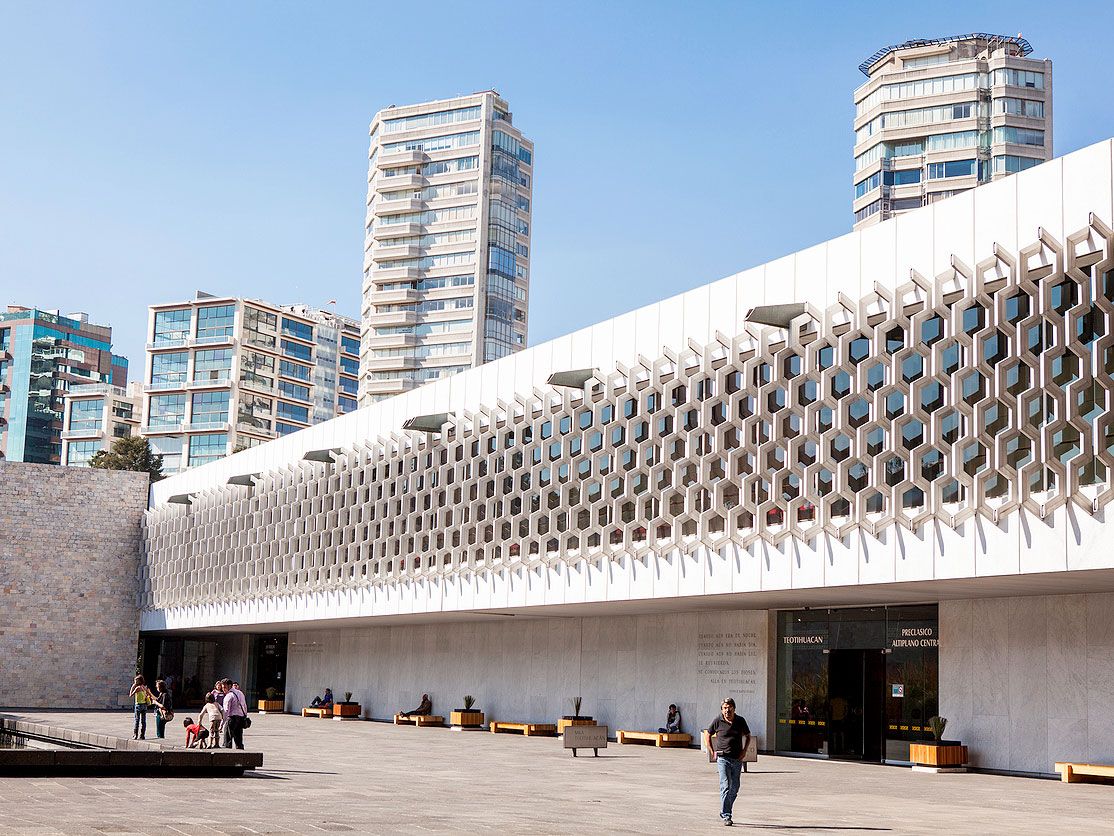
Courtyard and exterior of National Museum of Anthropology in Mexico City with skyline in background
Photo credit: erlucho/ iStock

Known locally as the Museo Nacional de Antropología, this Mexico City institution showcases the vast anthropological and archeological history of Mexico, including the world’s largest collection of ancient Mexican art. Located in the Bosque de Chapultepec park — the oldest and largest urban park in Latin America — the museum spans an area of nearly 20 acres, with over 80,000 square feet of interior space spread over 23 exhibition halls. The National Museum of Anthropology was founded in 1825 and acquired its current name in 1939. In 1964, the museum moved to its current building, which is renowned for its striking architecture — including a massive concrete water feature in the center courtyard known as El  Paraguas (“The Umbrella”).

Some of the highlights among the museum’s approximately 600,000 exhibits include a 22-ton Aztec “Sun Stone,” as well as a “Group of Figures,” which are human-like relics from the indigenous Olmec peoples. The museum also features a replica of the tomb of famous Maya leader K’inich Janaab Pakal I, who reigned over the empire from 615 to 683 CE.

The British Museum – London, England
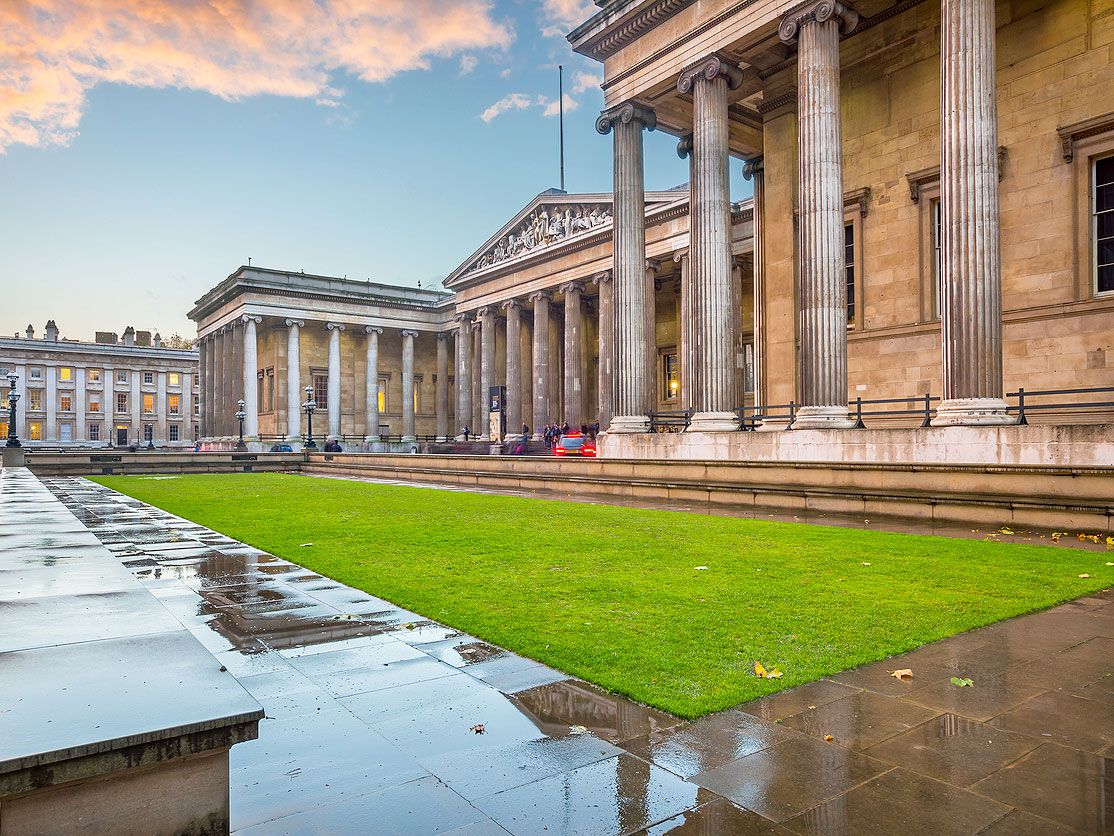
Classical columned exterior of British Museum with grassy lawn in front
Photo credit: benedek/ iStock

The British Museum, located a few blocks north of the River Thames in downtown London, occupies 990,000 square feet of exhibition space, which contains upwards of 100 individual galleries. Founded in 1753 and opened six years later, the museum has since increased its collection to such a vast size that it has since opened two other museums to house its wide array of artifacts: the Natural History Museum and the British Library.

Approximately 6.5 million annual visitors come to the British Museum to gaze upon its expansive collection of over 8 million objects. (About 80,000 individual items — representing just 1% of the collection — are on display at any given time.) The museum not only highlights British history, but also world history, showcasing historic objects from ancient Sumeria, Assyria, Egypt, and Greece, among other civilizations. Highlights include the Rosetta Stone — the famous slab dating to 196 BCE that helped to decipher ancient Egyptian hieroglyphs — a collection of 2,500-year-old sculptures from the Greek Parthenon, and a 7.5-ton bust of Egyptian pharaoh Ramesses II.

The Smithsonian Institution – Washington, D.C.

Smithsonian Institution Building in Washington, D.C.
Photo credit: traveler1116/ iStock

The Smithsonian Institution is the umbrella organization that operates and oversees 19 history museums and galleries, plus nine research facilities throughout the D.C. area. Popular Smithsonian exhibitions include the National Air and Space Museum, the National Portrait Gallery, and the National Museum of American History. All told, the Smithsonian’s facilities encompass a total area of over 2.87 million square feet — making it the world’s largest museum, education, and research complex. The Smithsonian Institution Building — aptly nicknamed “The Castle” — is the organization’s signature building. Made of red sandstone, it opened in 1855, once served as an archive, and now houses the organization’s administrative offices.

Some of the Smithsonian’s highlights include the many animal-themed exhibits at the National Museum of Natural History, where visitors can learn about the ecology of African elephants, gaze upon dinosaur fossils, and walk through a hall of mammals from around the world. The Smithsonian also houses historic artifacts from the world of television and film at its National Museum of American History, including the ruby slippers worn by Judy Garland in 1939’s The Wizard of Oz, an original Kermit the Frog puppet, the Lone Ranger’s felt mask, and around 50,000 archival sound recordings dating to 1903.

National Palace Museum – Taipei, Taiwan
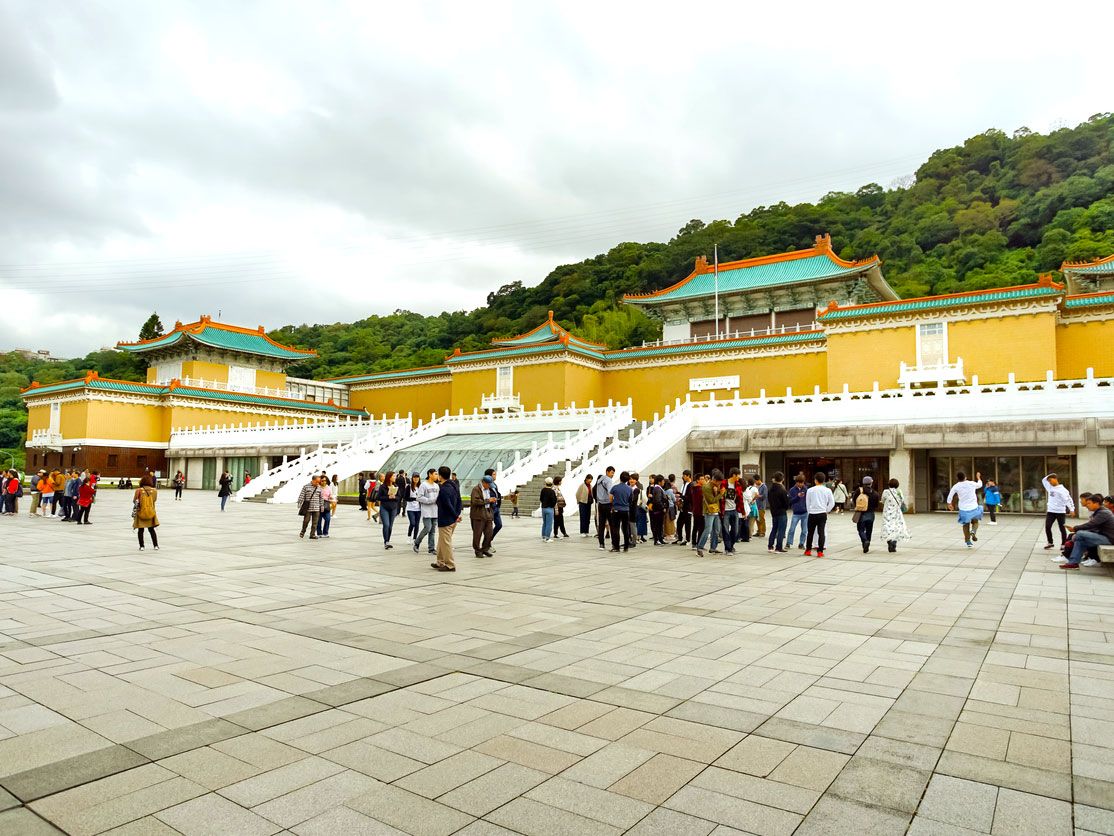
Yellow exterior in traditional architecture of the Taiwan National Palace
Photo credit: SuriyaDesatit/ iStock

Taiwan’s National Palace Museum features one of the world’s greatest collections of ancient Chinese sculpture and art, chronicling centuries of history that span the course of many bygone dynasties. The museum contains an estimated 538,000 square feet of interior space, as well as more than 170,000 square feet of surrounding gardens and foot paths. This Taipei-based museum was formed in 1965, combining the collections of Taiwan’s previous National Palace Museum with several other collections, including ancient artworks previously housed in Beijing.

The museum showcases approximately 6,000 pieces of the 650,000 objects that make up the entire collection at any given time, meaning it takes 12 years to display every artifact (they are regularly changed every three months). Some of the National Palace Museum’s exhibits date back 5,000 years; among those many treasures, visitors can gaze upon sculptures and artifacts from the Song, Yuan, Ming, and Qing imperial collections. 

National Museum of Natural History – Paris, France
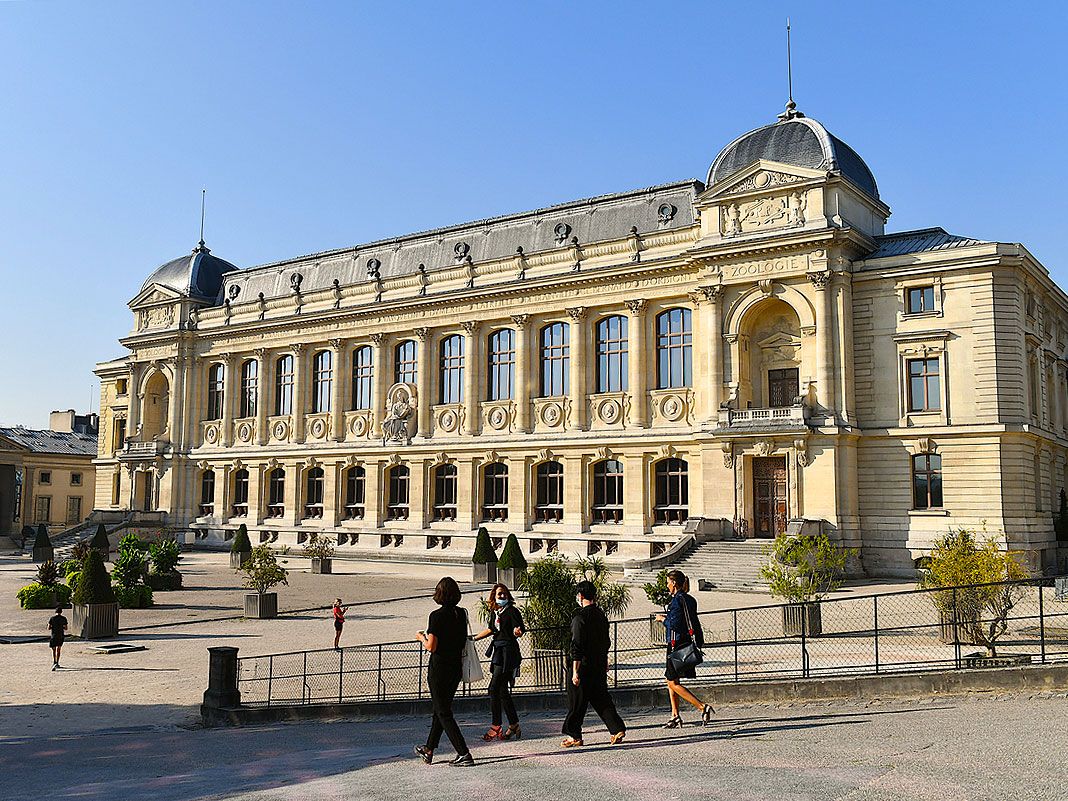
People walking in front of National Museum of Natural History in Paris, France
Photo credit: Olivier DJIANN/ iStock

Founded in 1793, France’s Muséum National d’Histoire Naturelle (National Museum of Natural History) is located in Paris’s 5th arrondissement and consists of four main spaces: a rose and vegetable garden (the Jardin des Plantes), a gallery dedicated to evolution (the Grande Galérie de l’Évolution), an outdoor zoo area with over 1,000 species of animals (the Ménagerie), and a series of greenhouses (the Grandes Serres) that highlight plants from different climates. In total, the museum covers just over 56 acres. 

Visitors are also drawn to the stunning architecture found throughout the Muséum National d’Histoire Naturelle, such as the 10,700-square-foot glass ceiling that tops the Grande Galérie de l’Évolution. This massive ceiling illuminates the many fossils and taxidermied creatures that are exhibited throughout the gallery’s 65,000 square feet of space.

American Museum of Natural History – New York, New York
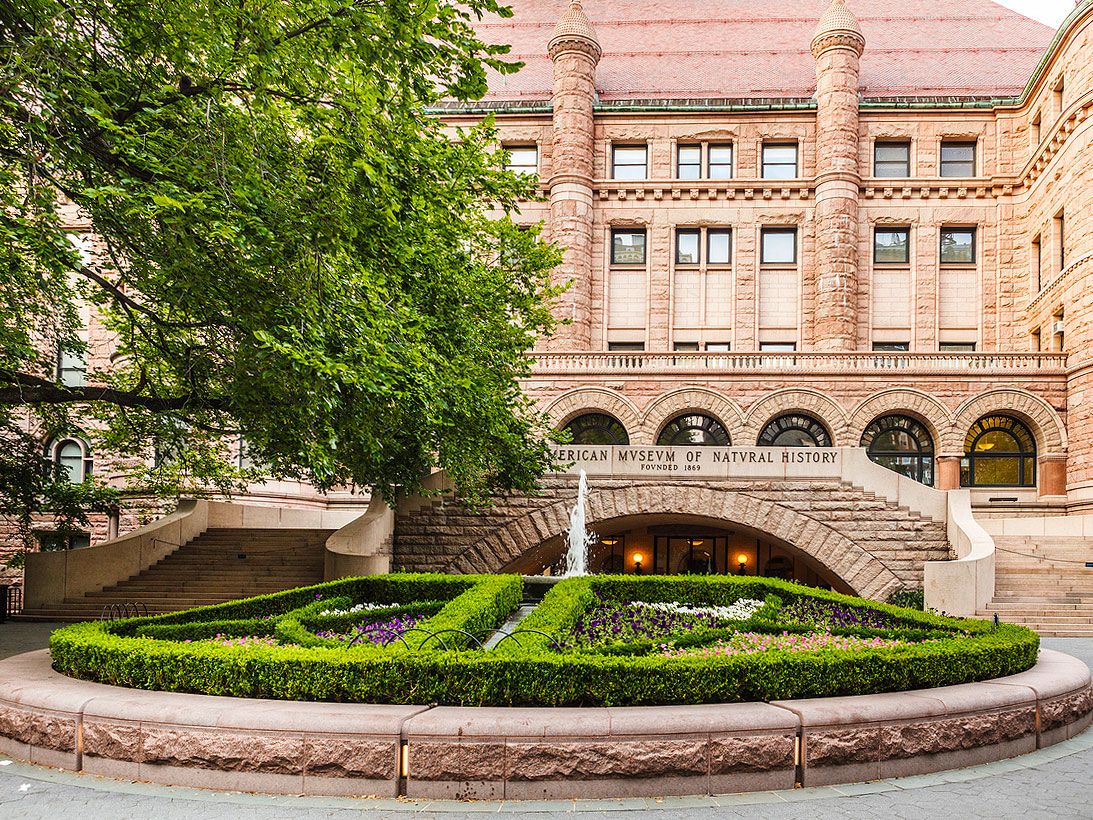
Fountain and gardens fronting the American Museum of Natural History in New York City
Photo credit: wdstock/ iStock

Located at the western end of Central Park on Manhattan’s Upper West Side, the American Museum of Natural History was founded in 1869. Today, the museum is made up of 25 interconnected buildings that encompass four entire city blocks and 2 million square feet of exhibition space, enough to house the institution’s incredible collection of over 33 million specimens.

One of the most popular exhibits is the collection of dinosaur bones located on the main building’s top floor. The centerpiece of these ancient relics is a Tyrannosaurus Rex fossil that was discovered in Montana in 1908 before making its way to New York City; its massive skeleton featuresa four-foot-long jaw and six-inch-long teeth. The T. Rex isn’t the biggest exhibit in the museum’s collection, however — that honor lies with a realistic blue whale model suspended over one of the exhibition halls. Based on photographs from 1925, the model was constructed in the mid 1960s. The final result is a 94-foot-long whale composed of foam and fiberglass that weighs 21,000 pounds.

Post Banner Image
History

7 Places to Follow in the Footsteps of Famous Historical Marches

By Julia Hammond
Read time: 6 minutes
June 1, 2023
Updated: July 25, 2023

7 Places to Follow in the Footsteps of Famous Historical Marches

By Julia Hammond
Author
Julia Hammond
Julia is a U.K.-based travel writer whose work has been featured in The Independent, The Telegraph, The New Zealand Herald, and Culture Trip, among others. She’s an enthusiastic advocate for independent travel and a passionate geographer who has had the privilege of traveling to more than 130 countries in search of a story.

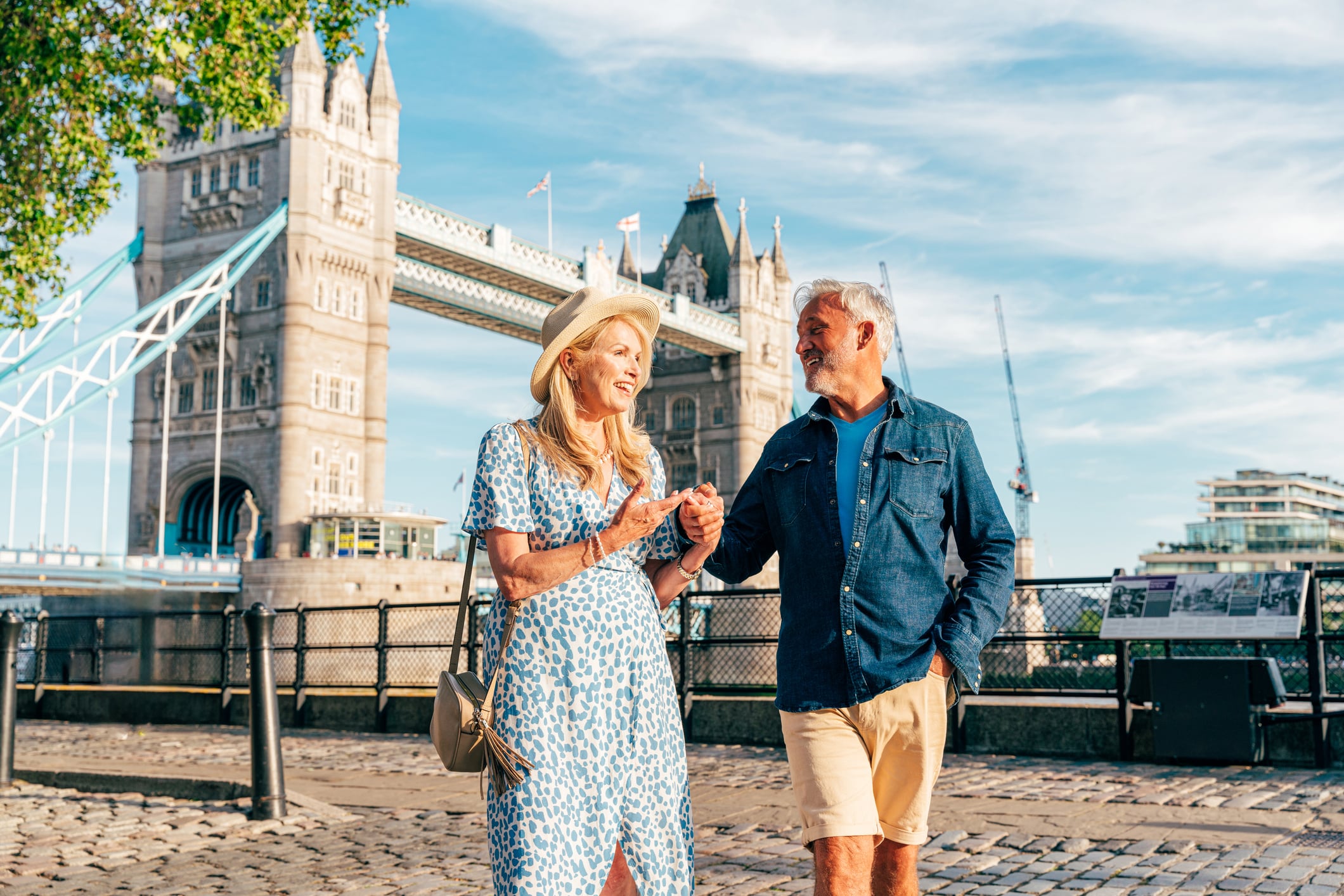
The right to protest is a vital element of any democracy. Non-violent actions such as marches, rallies, and sit-ins can have far reaching consequences, spotlighting important issues and becoming a catalyst for change. From the storming of the Bastille to the March on Washington, visit the locations of seven famous marches throughout history.

The Mud March – London, England

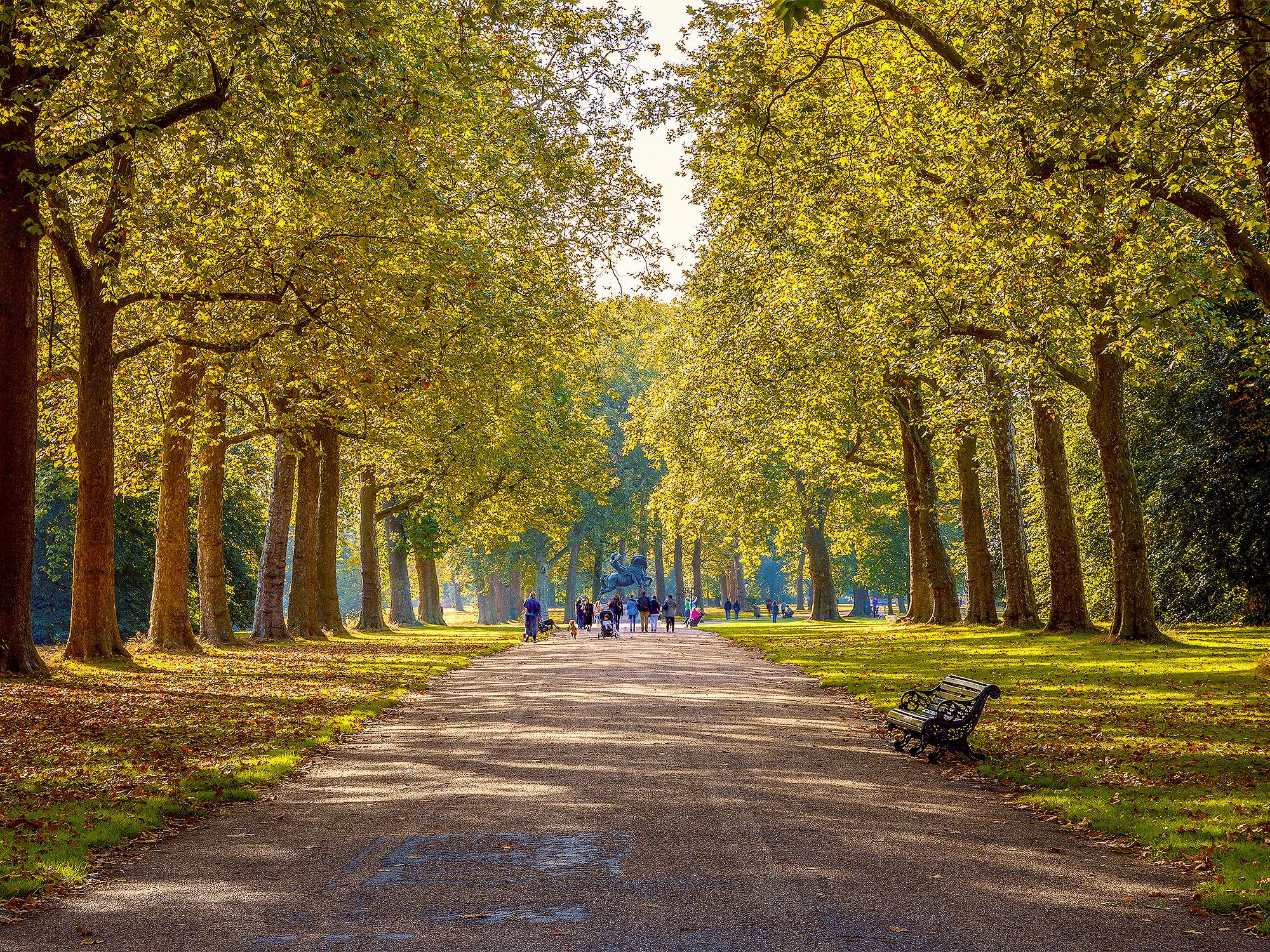
People strolling on shady path in London's Hyde Park
Photo credit: I Wei Huang/ Shutterstock

In the early 20th century, the creation of suffrage societies was instrumental in women gaining the right to vote. Their activities highlighted the injustice and need for change. One of the early catalysts in the movement was the United Procession of Women, organized by the National Union of Women’s Suffrage Societies in the U.K. as the largest pro-suffrage march at the time. 

On February 9, 1907, more than 3,000 women marched from London’s Hyde Park Corner to the Strand, a major thoroughfare in Westminster, carrying placards that demanded women have the right to vote. The day’s heavy rain left the roads in a mucky state, and as a result, the press referred to it as the Mud March. Newspaper coverage was sympathetic to the cause and much-needed publicity was created, but there would be no change to the status quo for more than a decade. A similar large-scale event, organized by the National American Woman Suffrage Association in the United States, took place on Pennsylvania Avenue in Washington D.C. on March 3, 1913, the eve of Woodrow Wilson’s presidential inauguration. 

The Salt March – Dandi, India

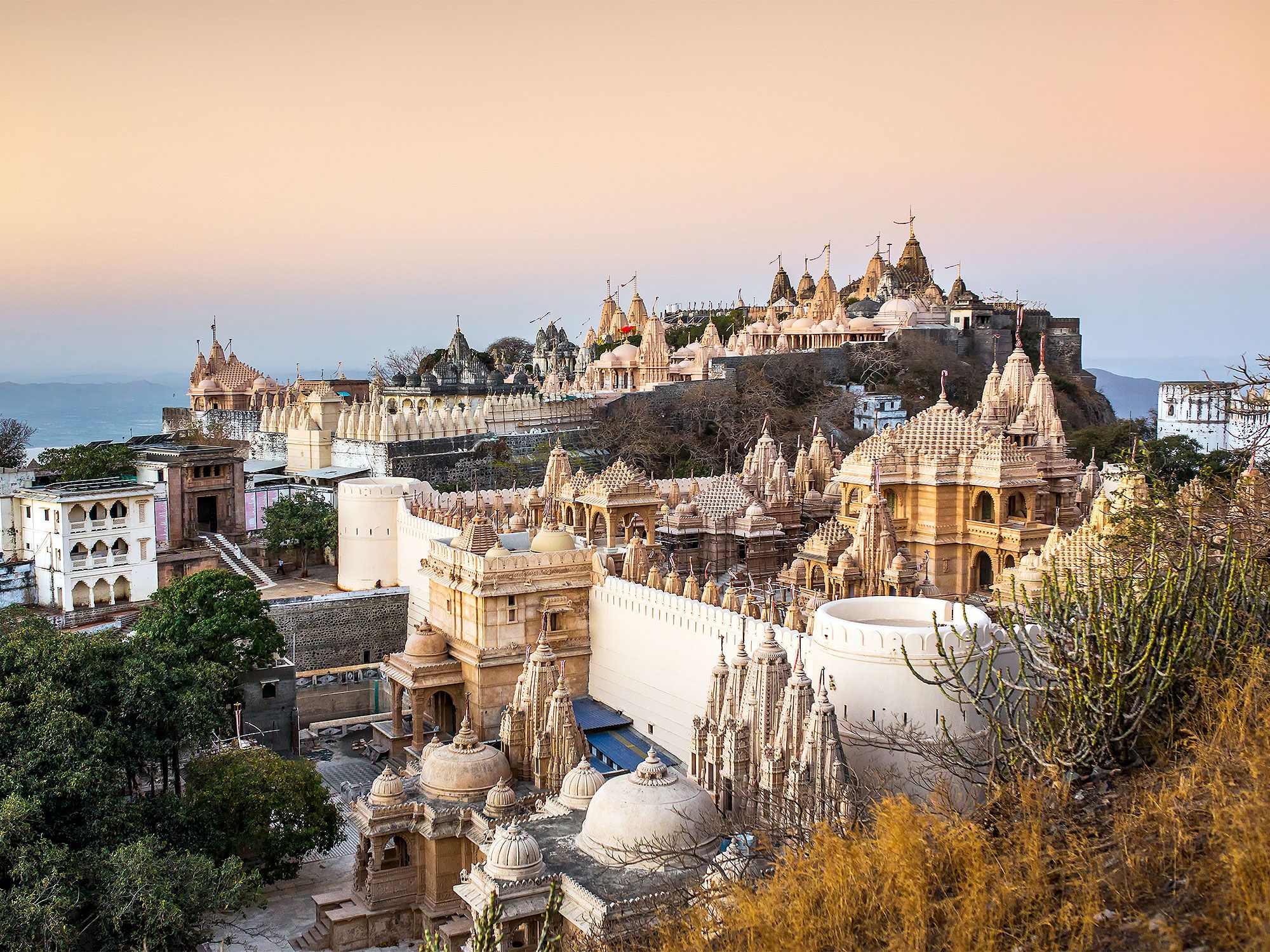
Hilltop temples in India, seen from above
Photo credit: Mazur Travel/ Shutterstock

In 1882, the United Kingdom passed the Salt Act, which created a monopoly on the salt trade in colonial India and prohibited Indian citizens from collecting or selling their own salt. This action set in motion a string of events that would eventually lead to the Salt March. On March 12, 1930, pacifist leader Mahatma Gandhi, accompanied by his supporters, set out on a 240-mile march from Sabarmati Ashram, his residence in the western Indian city of Ahmedabad. He reached the coastal village of Dandi in the state Gujarat on April 5 and began collecting water from the Arabian Sea, evaporating the liquid to create salt.

In doing so, Gandhi broke the law, but he inspired many others to join in similar acts of nonviolent civil disobedience. Gandhi was jailed — as were approximately 60,000 others — and although the law wasn’t repealed, the publicity from the march bolstered anti-colonial sentiment and brought India’s independence a step closer. The National Salt Satyagraha Memorial opened in Dandi in 2019 to mark the 90th anniversary of the Salt March.

The March on Washington for Jobs and Freedom – Washington, D.C.

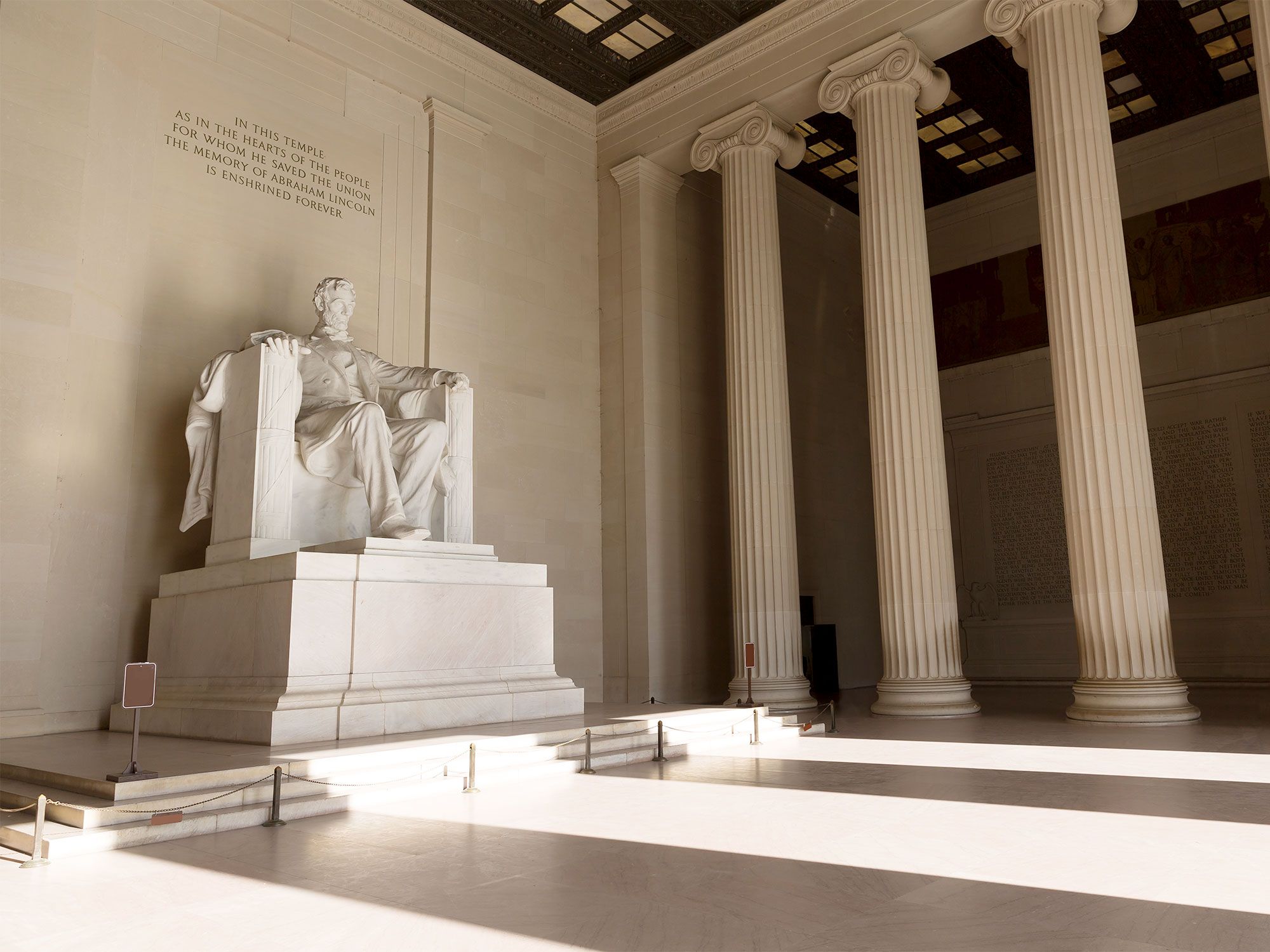
Lincoln Memorial in Washington, D.C.
Photo credit: lunamarina/ Shutterstock

The March on Washington took place a century after President Abraham Lincoln administered the Emancipation Proclamation, ending slavery in the United States, but at a time when Black unemployment rates remained disproportionately high. Those who did have a job were often forced to accept low wages. Voter registration was suppressed, and many Black Americans could not exercise their constitutional right to vote. In 1963, leaders of a number of civil rights organizations notified President John F. Kennedy that they would march to the Lincoln Memorial in Washington, D.C. to draw attention to the inequalities Black Americans faced. 

On August 28 of that year, more than 200,000 people took part in the March on Washington for Jobs and Freedom. Upon reaching the Lincoln memorial, the marchers fell silent to listen to Martin Luther King Jr. deliver what would later be dubbed his “I Have a Dream” speech. The Civil Rights Act was passed the following year, though the fight for racial equality and justice was far from over. 

The Selma to Montgomery March – Alabama

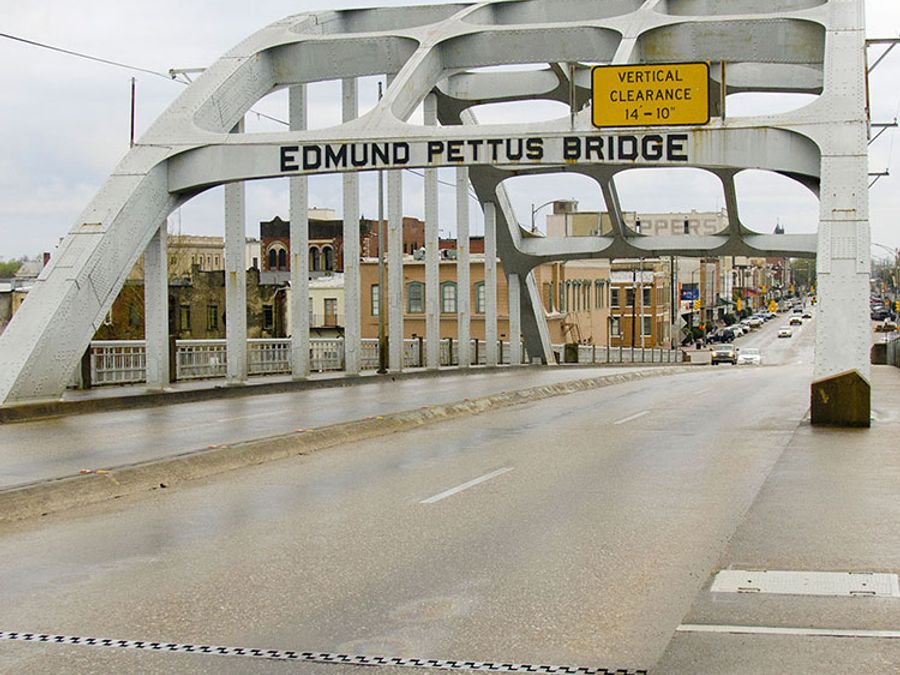
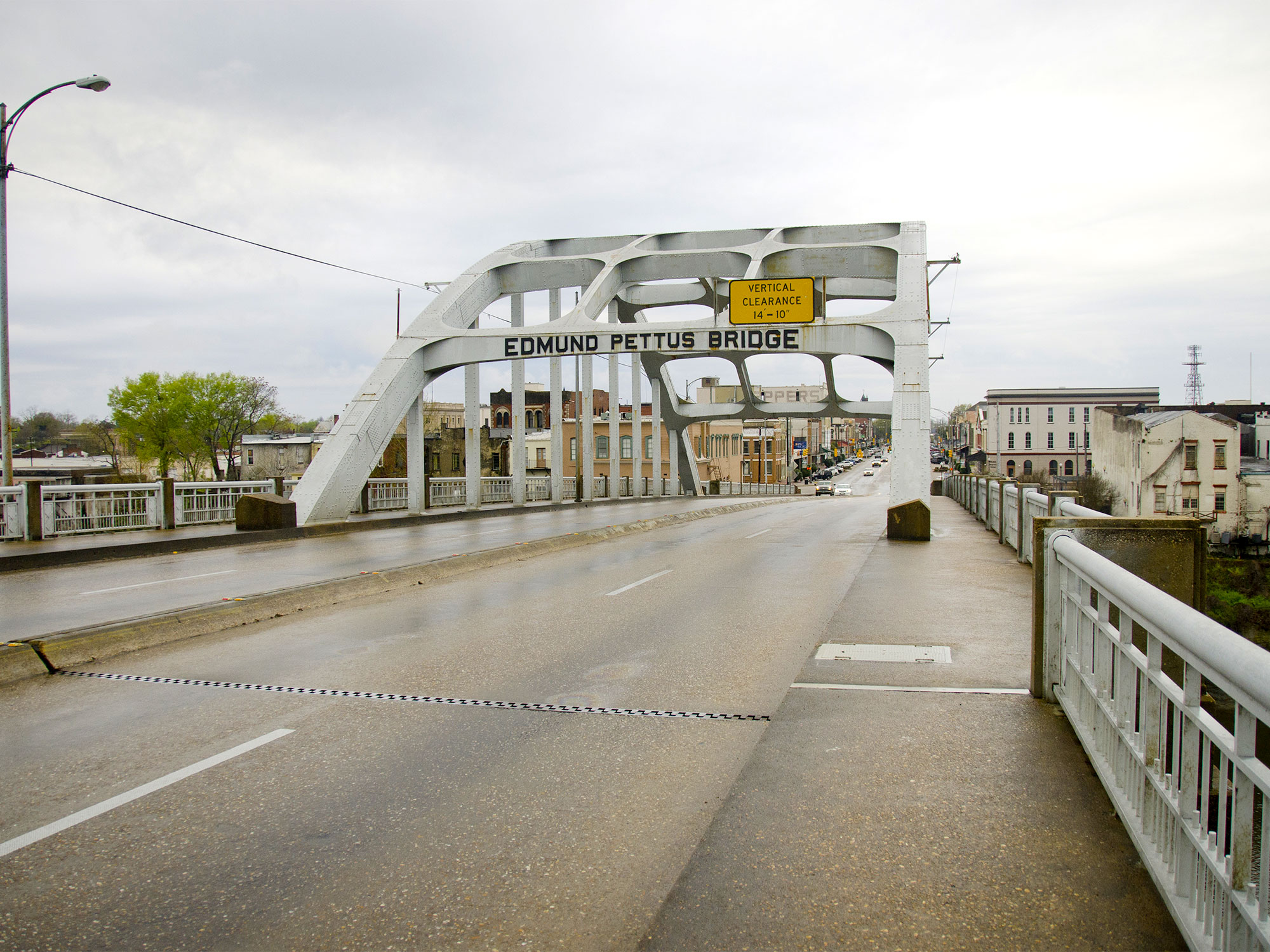
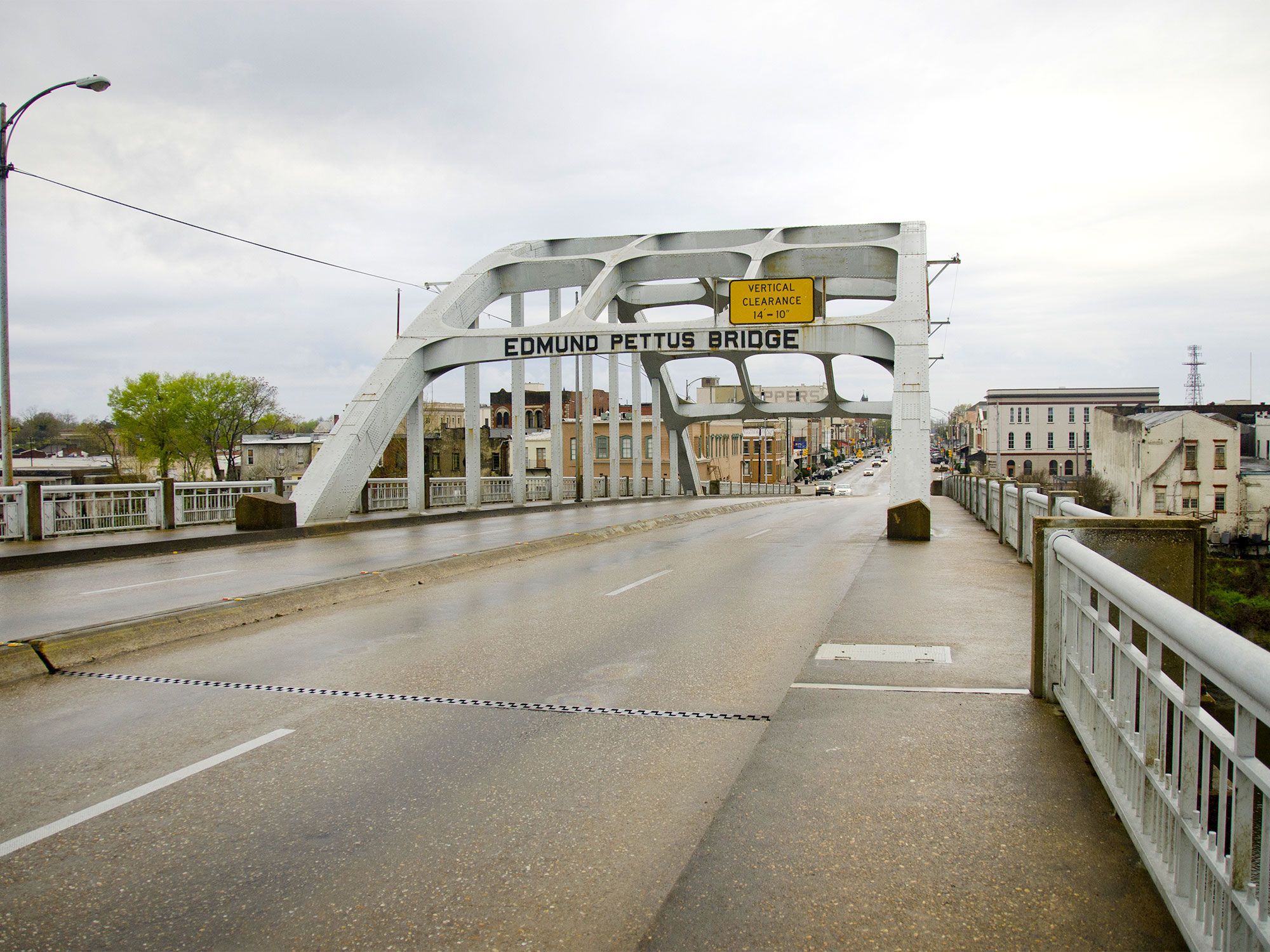
Edmund Pettus Bridge in Selma, Alabama
Photo credit: Terry W Ryder/ Shutterstock

In 1965, Alabama was the setting for a series of landmark civil rights protests — including the pivotal Selma to Montgomery March. Around 25,000 people joined Martin Luther King Jr. at the end of a 54-mile, five-day journey that would lead to the passing of the Voting Rights Act. Prior to the march, there were huge inequalities in voter registration — in the city of Selma, just 2% of the Black community were eligible to vote. 

Previous peaceful action had failed to achieve a result, and on March 7, 1965 — a day which would become known as “Bloody Sunday” — police stopped marchers on the Edmund Pettus Bridge in Selma with tear gas and violent, deadly beatings. The tragic event spurred King to call on religious leaders from around the country to join a nonviolent march for freedom. Waiting until President Lyndon B. Johnson could guarantee federal protection for the marchers, the march left Selma on March 21 and concluded in Montgomery on March 25.   

The Storming of the Bastille – Paris, France

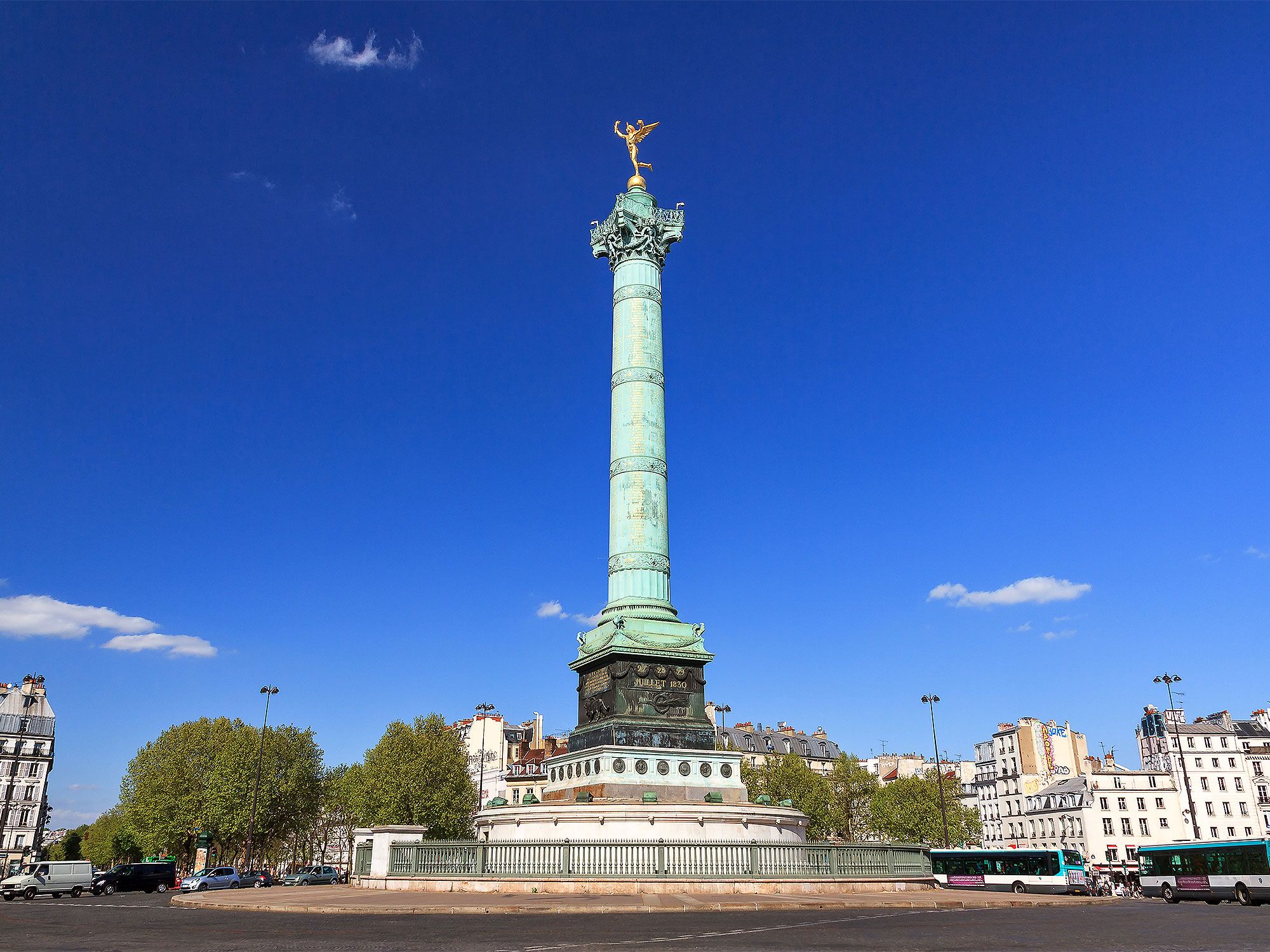
The July Column on the Place de la Bastille in Paris, France
Photo credit: Dennis van de Water/ Shutterstock

In 18th-century France, regressive taxation, costly foreign policy decisions, and a poor harvest at home created a significant burden on the working class. Meanwhile, lavish spending by King Louis XVI rubbed salt into the wounds. Protesting against the old regime and its abuse of power, an angry mob marched through Paris on July 14, 1789, and stormed the Bastille — a medieval armory, fortress, and political prison — demanding arms and ammunition. The target had particular significance, as the French king could send people to this hated prison without trial or right of appeal. The storming would prove to be a defining event of the French Revolution. Each July 14, France celebrates Bastille Day with a military parade down the Champs-Élysées to the Arc de Triomphe in Paris..

The Soweto Uprising – Soweto, South Africa

Memorial for the Soweto Uprising in South Africa
Photo credit: laranik/ Shutterstock

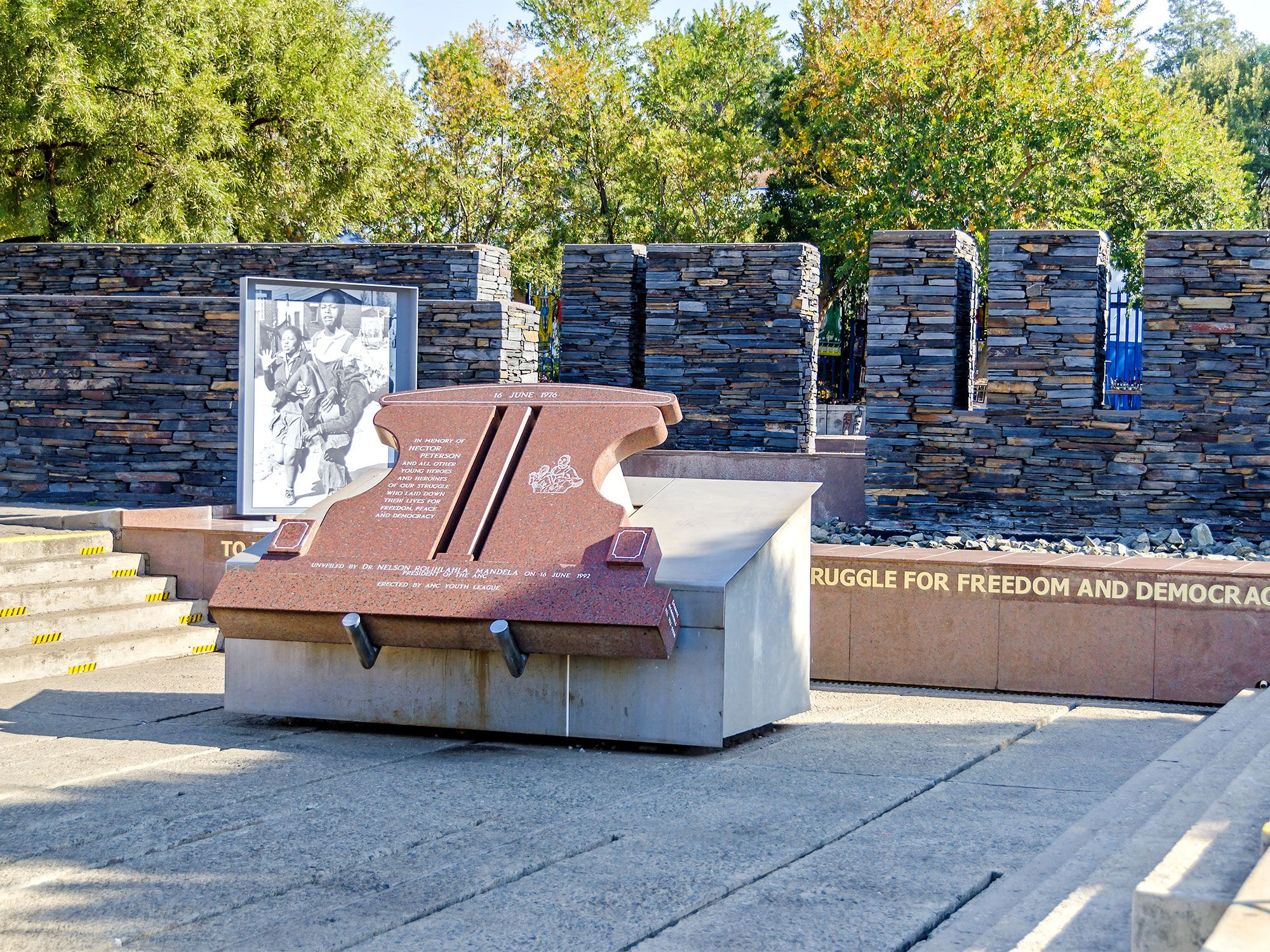
Under South Africa’s apartheid system, a law was introduced in 1974 requiring students to be taught some classes in Afrikaans, seen by the Black community as the language of the oppressor. In response, the Soweto Students’ Representative Council organized a protest at nearby Orlando Stadium on June 16, 1976, to highlight the unfair practice. More than 10,000 students attempted to march peacefully through the streets of Soweto, a township in Johannesburg, but found instead that police roadblocks hindered their progress along their planned route.

Undeterred, the peaceful march took a different route, but as it neared Orlando High School, the police began firing tear gas and shooting at the students, and around 600 people tragically lost their lives (though only two of them were white). Today, a museum and memorial to 12-year-old Hector Pieterson, whose death became emblematic of the struggle, is a reminder of those tragic events.

The Jarrow Crusade – Jarrow, England

Historic church grounds in Jarrow, England
Photo credit: Graeme J Baty/ Shutterstock

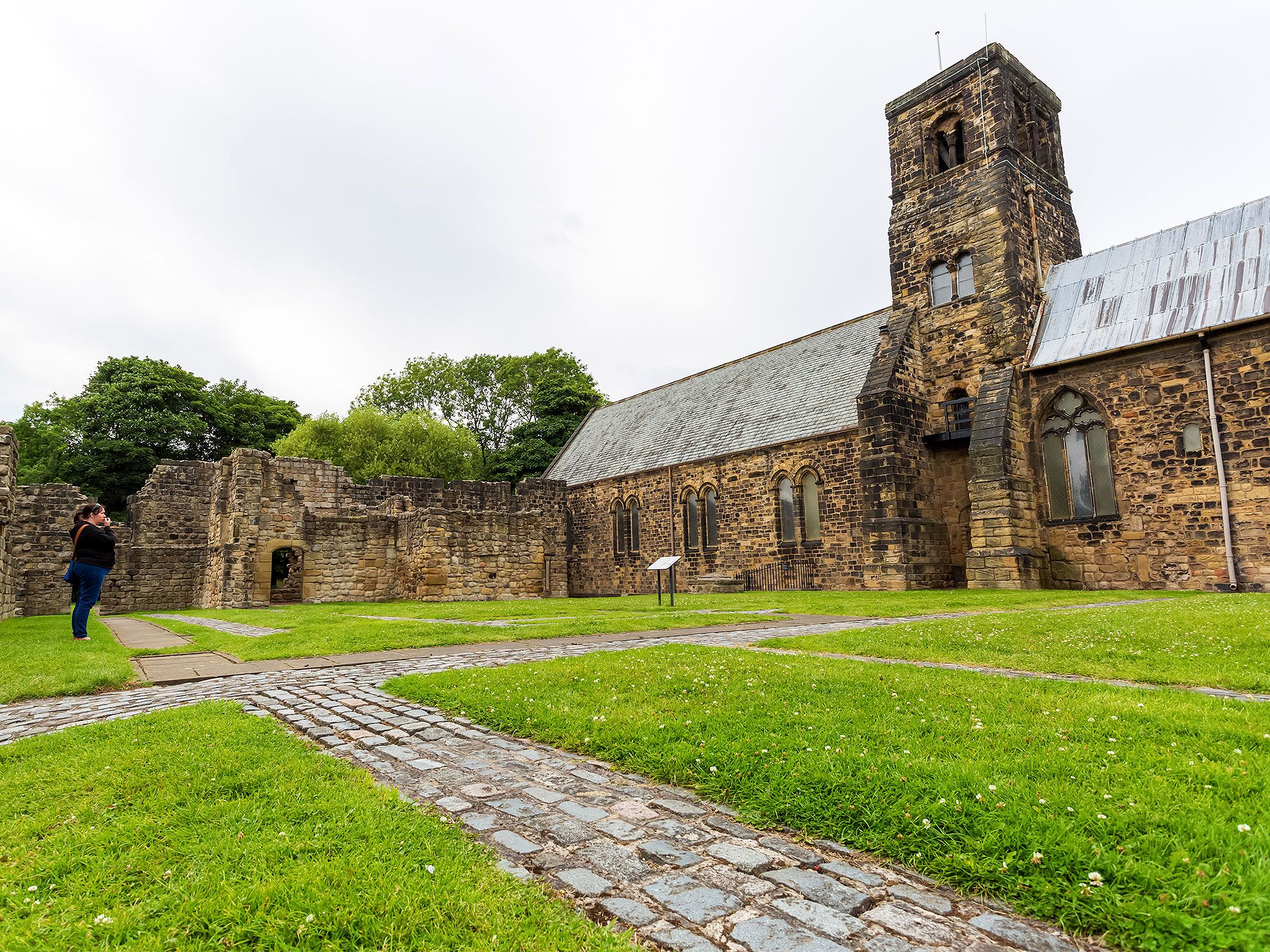
Jarrow is a town on the River Tyne in northern England, located a few miles east of the city of Newcastle-upon-Tyne. It was famously the starting point for the Jarrow Crusade, also known as the Jarrow March, which took place from October 5 to October 31, 1936, and saw around 200 people journey on foot for 280 miles to London. 

The protestors were Jarrow residents impacted by the closure of Palmer’s Shipyard two years earlier. Many of those laid off had not been able to find work, and poverty in the town was rife. The marchers carried with them a petition that called for the British government to create an alternative source of employment. It was received by Parliament, but the matter was not formally debated, and the marchers returned to Jarrow disheartened by what they perceived as failure. However, their ability to highlight the need for social reform was instrumental in paving the way for future initiatives. A memorial statue called the Spirit of Jarrow was unveiled in Jarrow’s town center to commemorate the 65th anniversary of the march.

Post Banner Image
Outdoors

The 8 Newest National Parks in the U.S.

By pvandenbos
Read time: 7 minutes
June 1, 2023
Updated: July 25, 2023

The 8 Newest National Parks in the U.S.

By pvandenbos

There are few better ways to experience the beauty of America’s great outdoors than at its national parks. Whether you’re seeking jaw-dropping natural scenery, historic monuments, or endemic wildlife, these pristine landscapes have something to offer everyone. Since Yellowstone National Park was first established in 1872, the National Park Service has created 63 official national parks across the United States and its territories. Here, we take a look at the newest areas to be added to the list since 2000.

8. Cuyahoga Valley National Park – Ohio

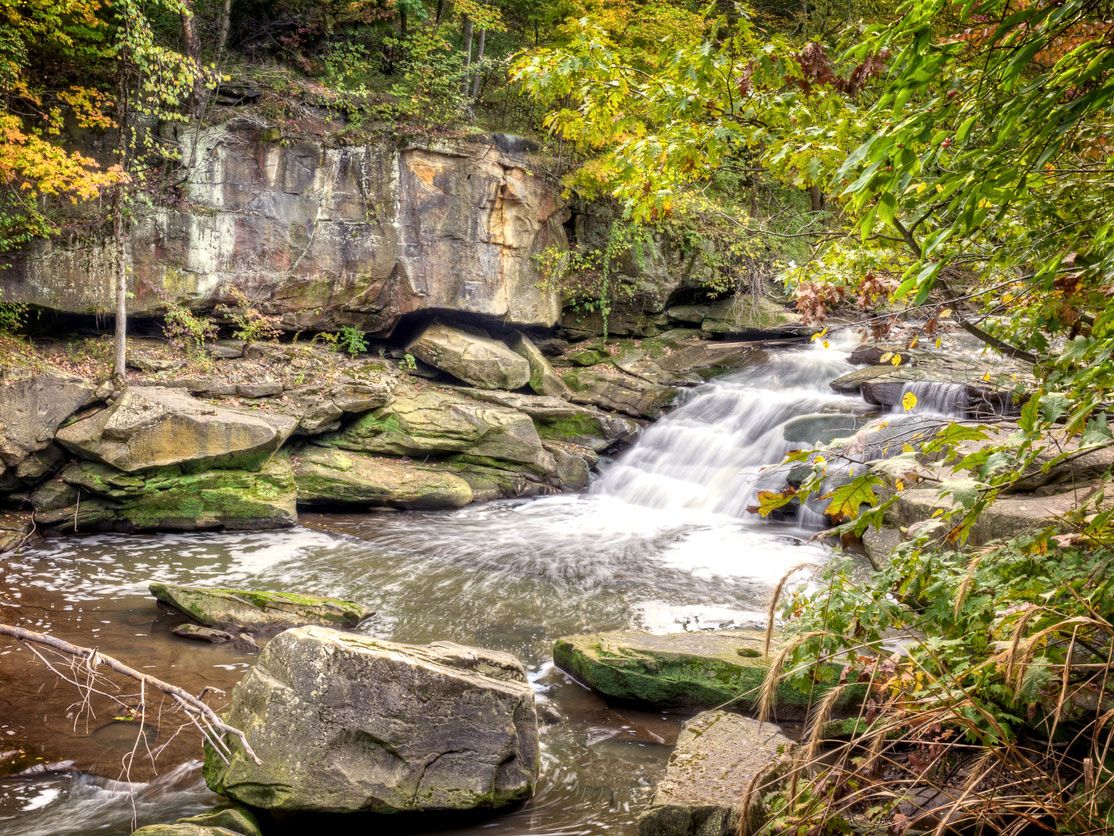
Waterfall in Cuyahoga Valley National Park
Photo credit: Mshake/ iStock

Northeastern Ohio’s Cuyahoga Valley National Park provides a scenic natural oasis between the nearby cities of Cleveland and Akron. Originally protected as a national recreation area in 1974, the site became a national park in 2000. Today, the spectacular 33,000-acre park consists of forests, hills, and farmland crisscrossed by 22 miles of the Cuyahoga River. Its varied ecosystems provide a home for some 900 plant species, 200 types of birds, 32 mammals, and 20 reptiles. Humans have inhabited the region for more than 12,000 years, a history which is explored and celebrated at the Boston Mill Visitor Center and Canal Exploration Center.

Options for recreation range from biking, hiking, and horseback riding to kayaking, ice fishing, and snowshoeing. A favorite spot among locals is the Ohio & Erie Canal Towpath Trail, which follows the path of the historic canal built in 1832 to stimulate the state’s economy. Alternatively, the Cuyahoga Valley Scenic Railroad offers another tour option through the heart of this natural wonder. 

7. Congaree National Park – South Carolina

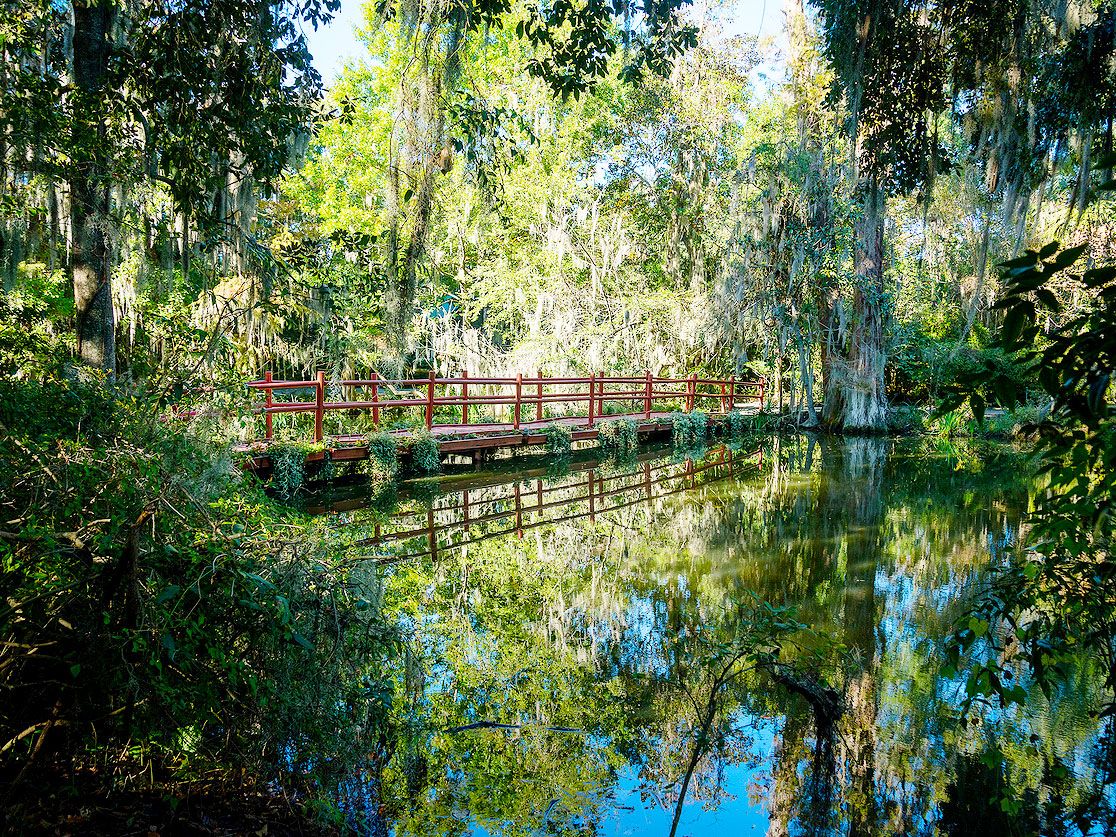
Old-growth forest in Congaree National Park
Photo credit: WendyOlsenPhotography/ iStock

Established in 2003, South Carolina’s Congaree National Park boasts the largest preserved area of old-growth bottomland hardwood forest remaining in the Southeast. This 20,000-acre wilderness comprises a massive floodplain teeming with a wide array of birds, mammals, and plants. Bald cypress, pine, and tupelo forests are visible throughout the park, which earned UNESCO World Heritage status as the Congaree Biosphere Reserve in 1983.

Canal and kayak tours are popular ways to explore this swampy wilderness. The Congaree River Blue Trail starts in Columbia and travels downstream for 50 miles. Along the way are numerous spots where it’s easy to moor up, jump onto dry land, and wander along boardwalks and trails. These trails lead to oxbow lakes and large expanses of breathtaking old-growth forests. They retrace the lands once traversed by Native Americans, European explorers, lumberjacks, and conservationists. 

6. Great Sand Dunes National Park and Preserve – Colorado

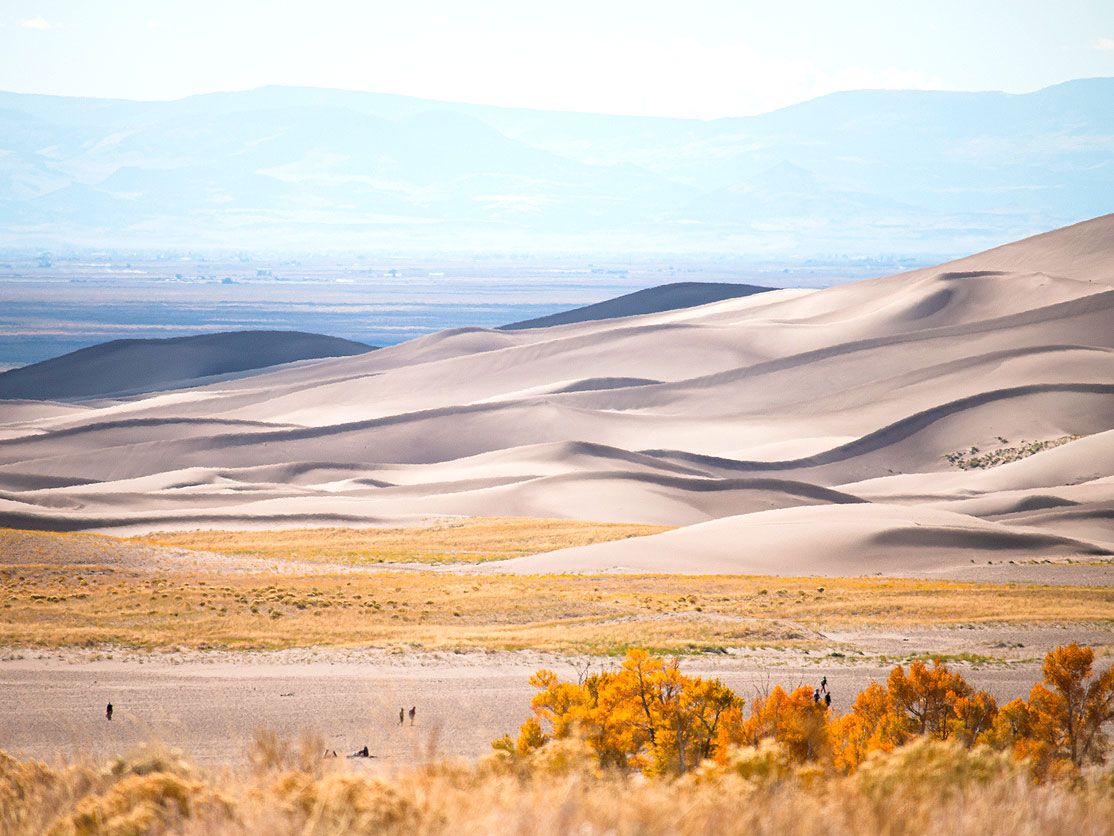
Rolling sand dunes in Colorado's Great Sand Dunes National Park and Preserve
Photo credit: supitchamcsdam/ iStock

Rising to heights of 750 feet, Great Sand Dunes National Park and Preserve proudly showcases North America’s tallest sand dunes. But that’s just the tip of the iceberg in this 150,000-acre Colorado national park, established in 2004. Alpine lakes, forests, grasslands, tundra, and wetland lakes also thrive here. Adding to the area’s mystical appeal is Blanca Peak, a 14,345-foot mountain deemed sacred by the Indigenous Dine’ (Navajo People) population. The incredible geological diversity makes the region a home for curious critters like tiger salamanders, Ord’s kangaroo rats, and around 250 bird species. 

High on the agenda for the many who visit the park is sand boarding and sand sledding down the colossal dunes. The gently flowing Medano Creek is ideal for swimming and tubing to a backdrop of snow-capped peaks, even during the warm summer months. Recognized as an International Dark Sky Park, the area is great for stargazers. Stay on a moonless night to witness the magic of the Milky Way up above. 

5. Pinnacles National Park – California

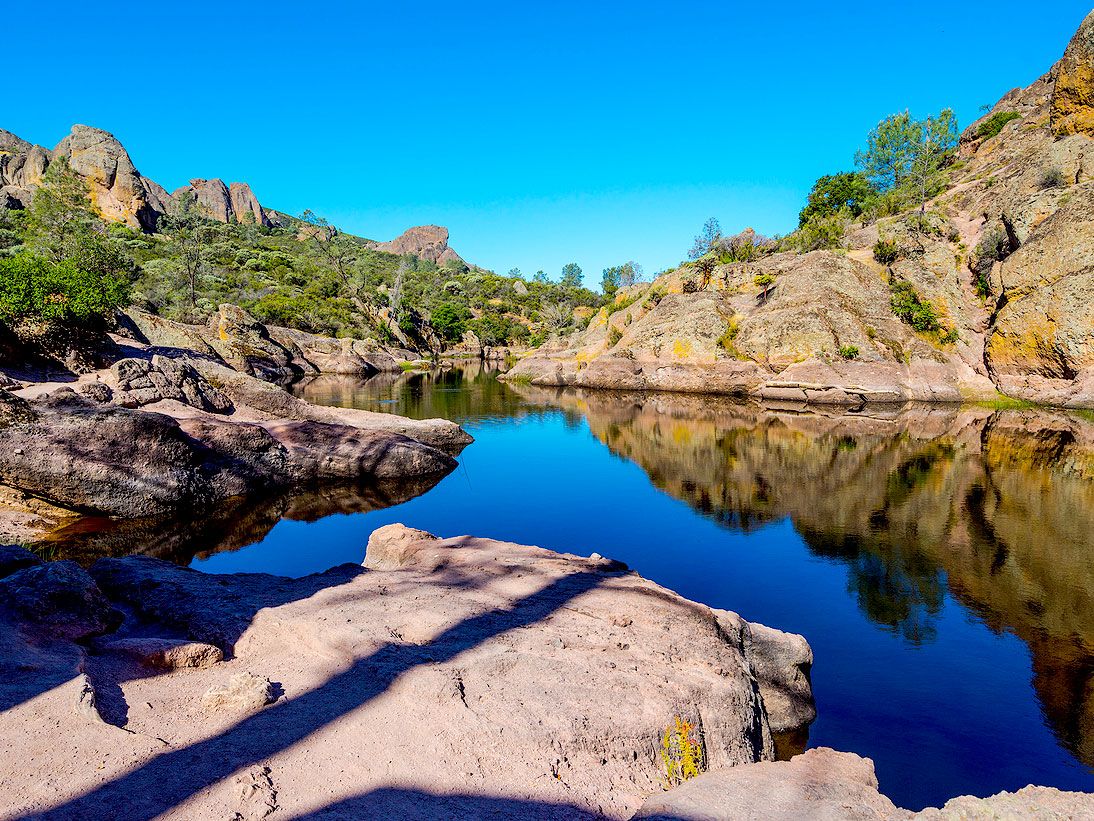
Lake surrounded by rocky landscape of Pinnacles National Park in California
Photo credit: MWP/ iStock

Although Pinnacles National Park was only established in 2013, its otherworldly landscapes were formed some 23 million years ago. At this time, several volcano eruptions forced lava to slide across Central California. When it cooled, the lava hardened to create a sprawling collection of rock spires and deep canyons. Today, chaparral shrubland and oak woodlands thrive in an area that was inhabited by native groups for 10,000 years. It has become a natural habitat for bobcat, gray fox, and birdlife such as the California condor, golden eagle, and peregrine falcon.

Hikers can explore 30 miles of trails within the park, which range from easy walks to challenging treks. Overnight camping is possible, and there are scheduled ranger tours from fall through spring. Not to be missed is the Bear Gulch Cave, home to the largest maternity colony of big-eared bats found between San Francisco and Mexico.

4. Gateway Arch National Park – Missouri

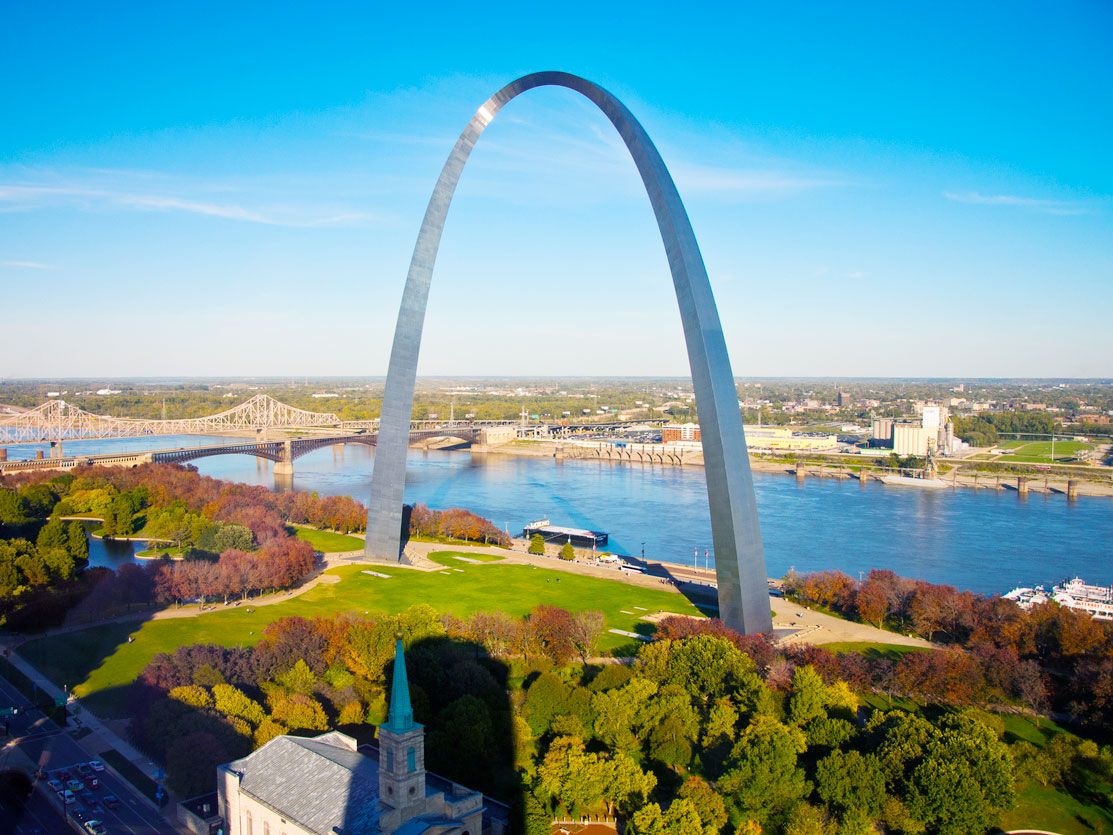
Gateway Arch towering over Missouri River and St. Louis skyline
Photo credit: amolson7/ iStock

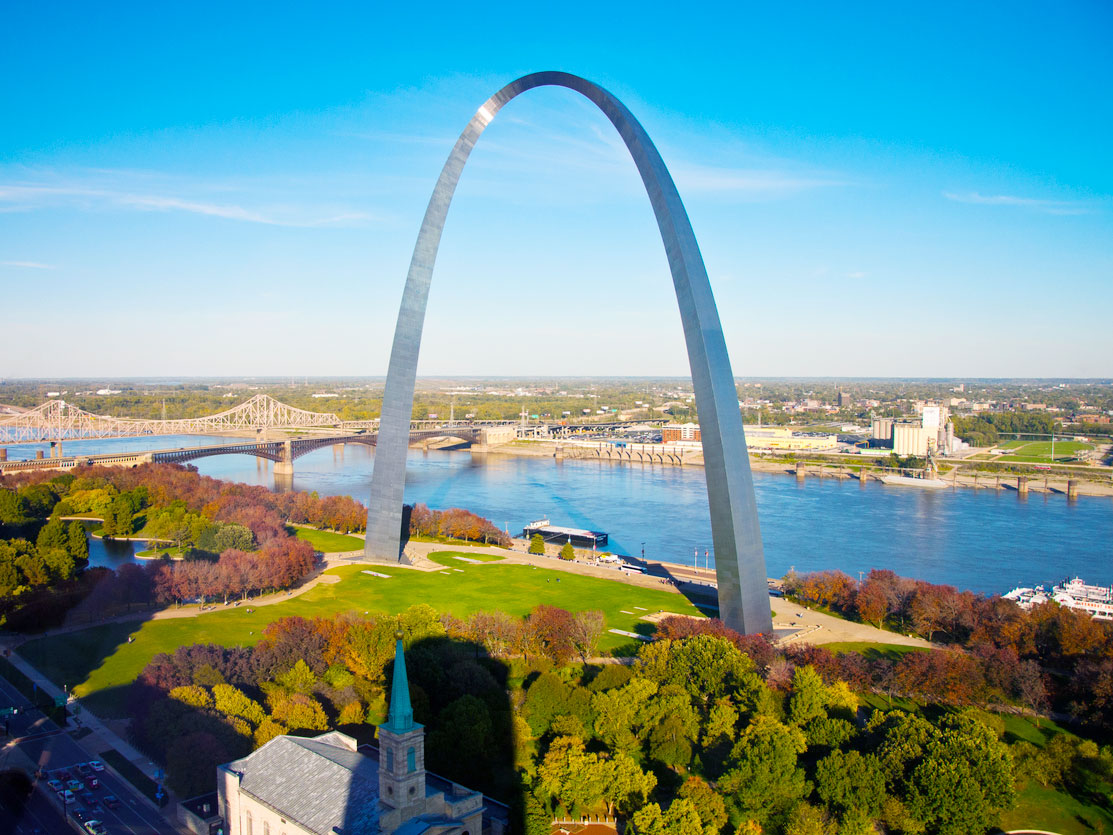
While many national parks are famed for their remote locations and dramatic topography, Gateway Arch National Park goes against the grain. This 91-acre human-made park — the smallest national park in the system — is located on the banks of the Missouri River in downtown St. Louis. Originally protected as the Jefferson National Expansion Memorial in 1935, the site became a national park in 2013. The focus here is national history: It’s a memorial to the westward expansion of the United States initiated by Thomas Jefferson through the 1803 Louisiana Purchase. 

Rising above lush green lawns and meandering pathways is the 630-foot-tall Gateway Arch, the tallest monument in the U.S. A major highlight is the tram ride to the top of the arch, which affords sweeping views over the city. Other points of interest include the Old Courthouse, which has been the setting for several monumental trials, including the Dred Scott Case. Visitors can also walk in the footsteps of Lewis and Clark at the Explorer’s Garden. 
3. Indiana Dunes National Park – Indiana 

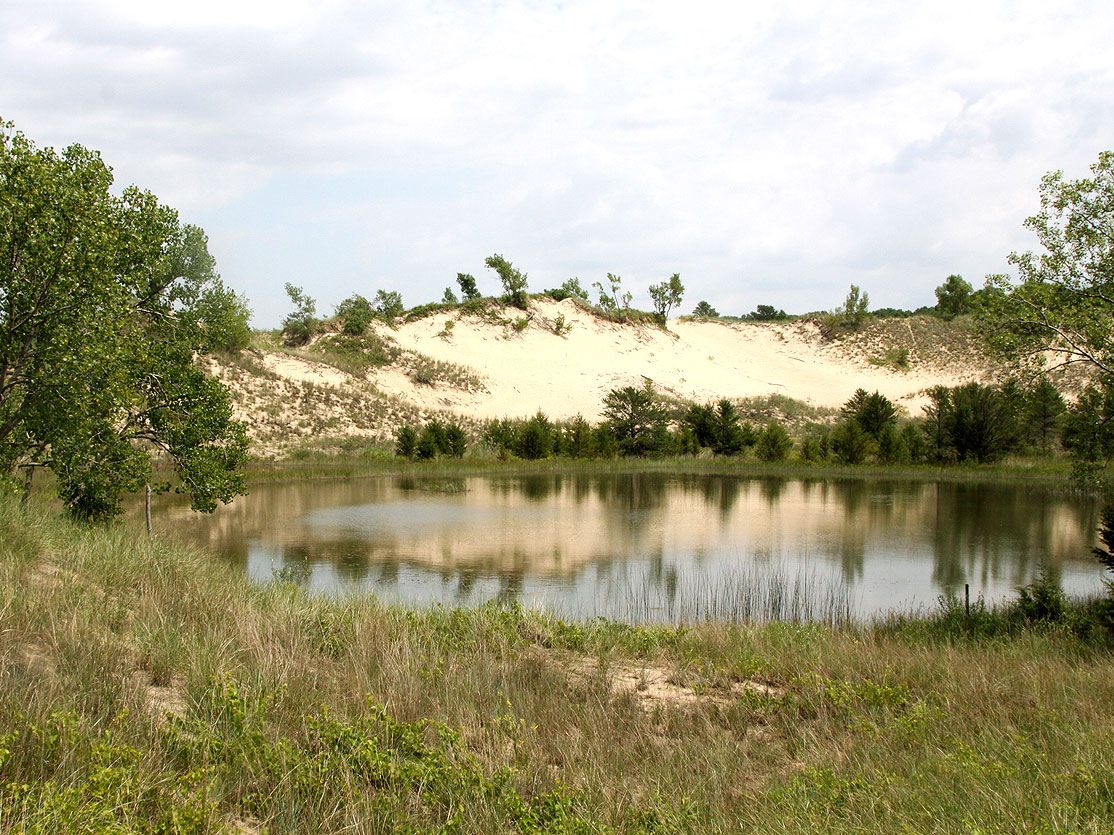
Pond surrounded by sand dunes in Indiana Dunes National Park
Photo credit: davelogan/ iStock

Established as the Indiana Dunes National Lakeshore in 1966, Indiana Dunes National Park became the country’s 61st national park in 2019. It occupies 15 miles of Lake Michigan shoreline and features diverse habitats that range from sandy beaches and rolling dunes to forests and wetlands. The landscape of this 15,000-acre area has been shaped over thousands of years by glacial movements and climatic changes. It’s home to over 1,000 varieties of native plants, more than 350 bird species, and 46 mammal species. 

A big lure of the park is its 14 trail systems, which cover 50 miles of routes. Whether for hiking in summer or cross-country skiing and snowshoeing in winter, the park offers year-round adventure opportunities. Beaches like West Beach are ideal for swimming, picnics, and glorious sunsets. Overnight camping is possible from April through October at designated sites. In September, the Dunes Outdoor Festival invites visitors to take part in biking, birding, geo-caching, and other events. 

2. White Sands National Park – New Mexico

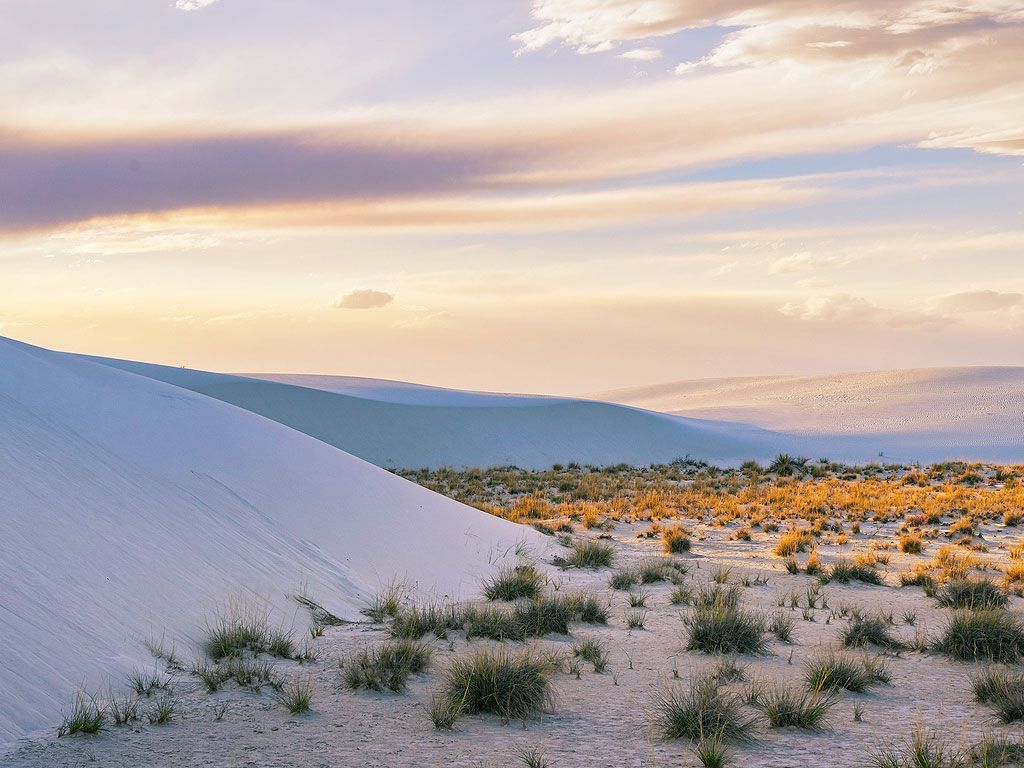
White sand dunes in White Sands National Park in New Mexico
Photo credit: Mlenny/ iStock

White Sands National Park is the world’s largest gypsum dunefield, and entering it is like discovering another planet. The national park — established in 2019 — protects a 228-square-mile oasis of shapeshifting dunes that sprawl across New Mexico’s Chihuahuan Desert. The dunes began to take shape some 280 million years ago, when the Permian Sea engulfed the area and gypsum settled on the seabed. Gypsum is scarcely found in sand, which makes the park even more of a unique wonder.

Not only a mesmerizing sight to witness in person, White Sands National Park also offers countless opportunities for adventure. The park is open for backcountry camping, biking, dune drives, and hiking (both day and night). There’s a visitors center with museum exhibits that explain the history and ecology of the area. And high on the list of many visitors is the chance to sled down the powdery dunes — plastic snow-saucers are available to buy at the park’s gift shop.

1. New River Gorge National Park and Preserve – West Virginia

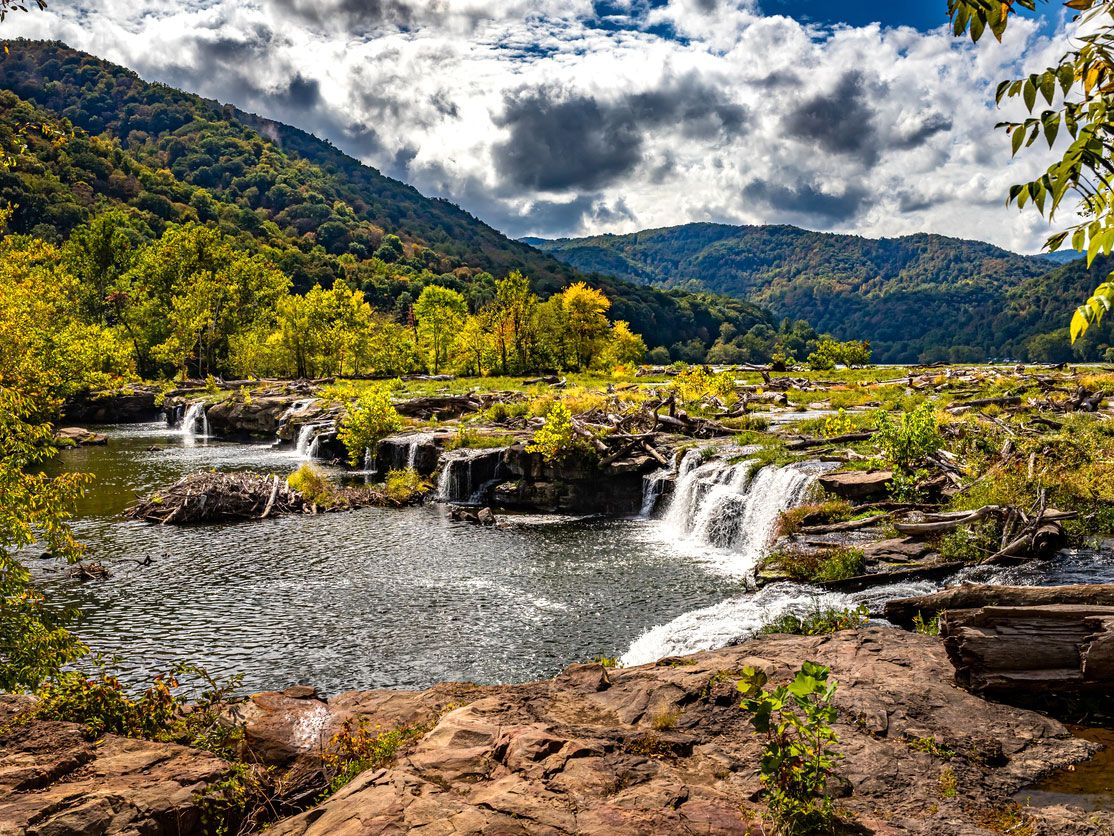
Waterfalls along New River in New River Gorge National Park and Preserve in West Virginia
Photo credit: Different_Brian/ iStock

The Mountain State is home to the newest inclusion in the national parks system (as of 2023). Established in 2020, New River Gorge National Park and Preserve occupies 700,000 acres of terrain along one of the world’s oldest rivers. On its meandering 53-mile journey through the park, the New River passes rocky outcrops, spectacular gorges, hardwood forests, and former coal mines. Each provides a habitat for varied flora and fauna, including wood warblers and white-tailed deer. The park is also home to the former boomtown of Thurmond, plus a trail that the young pioneer Mary Draper Ingles once traversed. 

New River Gorge is a veritable playground of outdoor pursuits for all ages. It offers 1,600 climbing routes, around 100 miles of walking trails, and spectacular whitewater rafting. One of the best ways to experience it all is the 83-mile-long New River Gorge Scenic Drive; make sure to stop at the Canyon Rim Visitor Center for an unbeatable view of the New River Gorge Bridge. 

Post Banner Image
Geography

What Are America’s Most Populous Capital Cities?

By K.C. Dermody
Read time: 5 minutes
June 1, 2023
Updated: January 25, 2024

What Are America’s Most Populous Capital Cities?

By K.C. Dermody

The U.S. is one of the world’s largest countries in terms of both area and population. Interestingly, though, some of America’s biggest and most populous cities aren’t the capitals of their respective states. For example, while New York City — home to nearly 8.5 million people — is the most populated city in the U.S.,  Albany is the New York state capital, with a population of less than 100,000. Some state capitals — like Montpelier, Vermont and its 8,000 residents — are even tinier. But of course, there are some capital cities that are far bigger, even ranking among the most populous cities in the country. Check out the eight most populous U.S. state capitals below. 

8. Oklahoma City, Oklahoma

Statue atop Oklahoma state house overlooking Oklahoma City
Photo credit: Aaron Yoder/ iStock

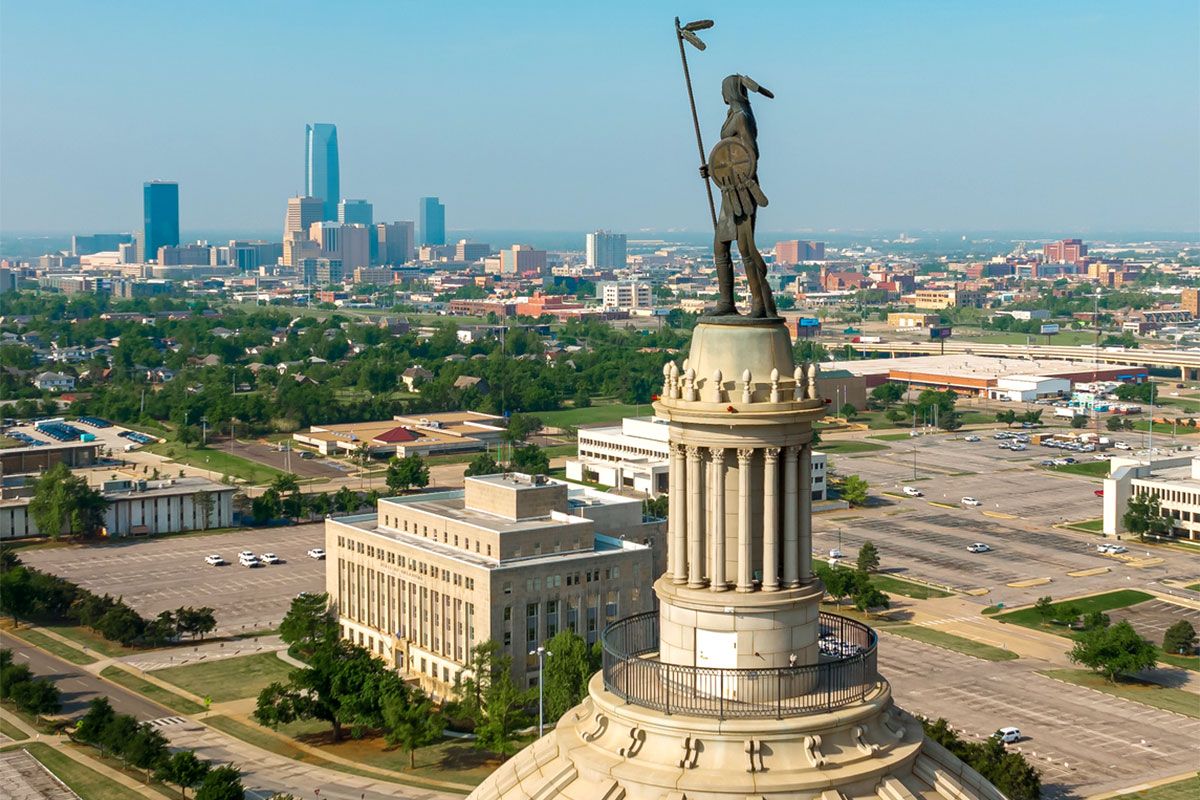
Nicknamed OKC for short, Oklahoma City was established as a 400-acre settlement in 1889. The city grew rapidly and was chosen as the Oklahoma state capital in 1910. Today, OKC has an estimated population of 695,000 people (as of 2022), and population growth has continued to explode in recent years thanks to the city’s excellent business opportunities, variety of cultural activities, and affordable cost of living — which is about 16% lower than the national average. Oklahoma City has 14 unique districts, including the Adventure District — home to the National Cowboy Museum, the Science Museum, OKC Zoo, and the Remington Park racetrack and casino. Film Row is a hub for arts and film festivals, while the Bricktown and Downtown neighborhoods offer a wide range of bars, restaurants, and nightlife venues.

7. Nashville, Tennessee

Bars lining Broadway in Nashville, Tennesseee
Photo credit: f11photo/ Shutterstock

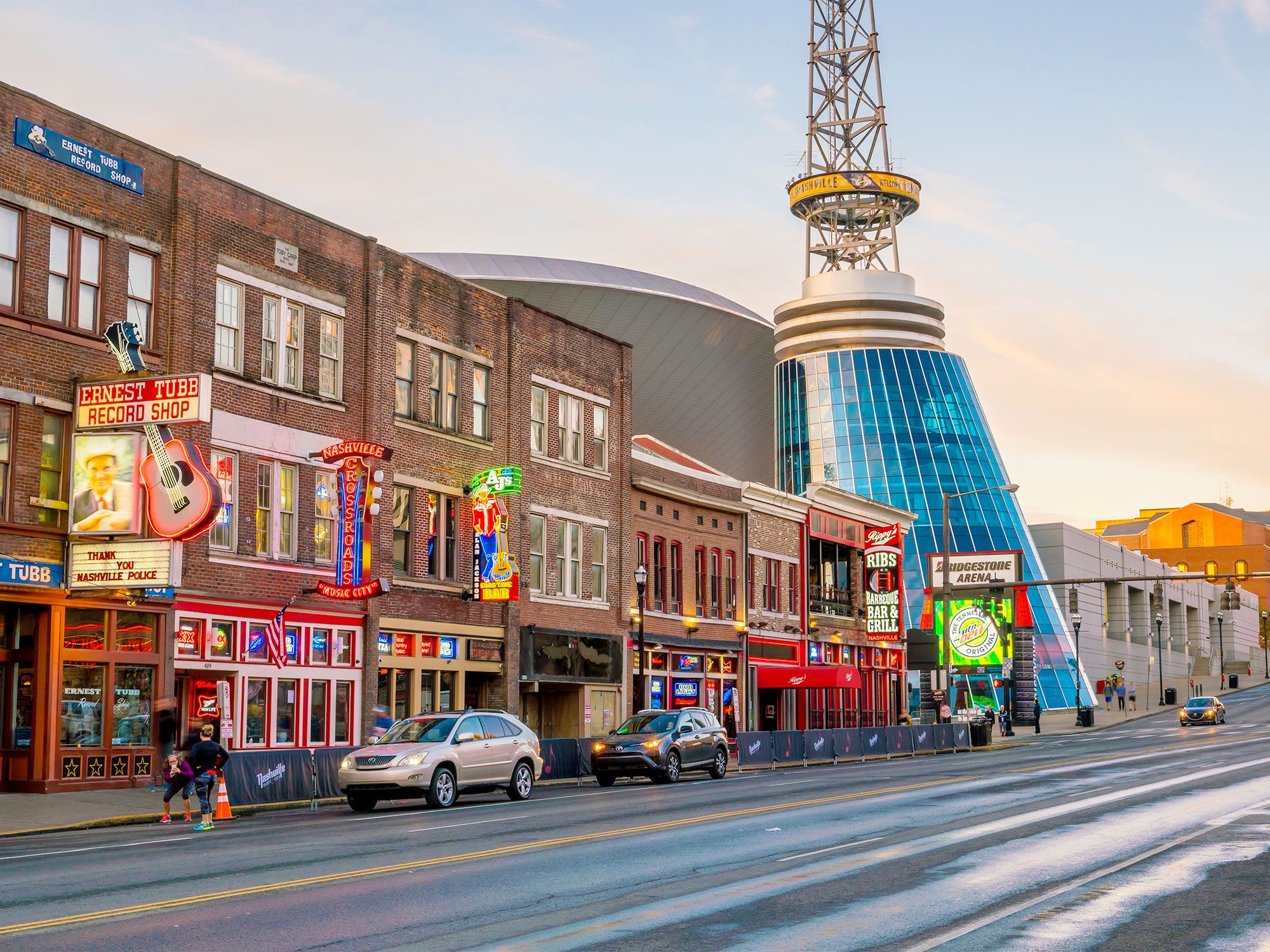
With a population of 684,000, Nashville is another fast-growing capital fueled by rapid economic growth Nashville was founded on Christmas Eve in 1799 and was named the state capital in 1843. The city became a hub for music publishing in the 19th century, and after the launch of the Grand Ole Opry radio show in 1925, Nashville cemented its status as “Music City.” When it comes to entertainment, there’s something happening in Nashville almost 24/7, from the famous Broadway honky tonks hosting live country music to historic venues like the Ryman Auditorium and internationally renowned art exhibits. Nashville also has two major league sports teams: the NFL’s Tennessee Titans and the NHL’s Nashville Predators.

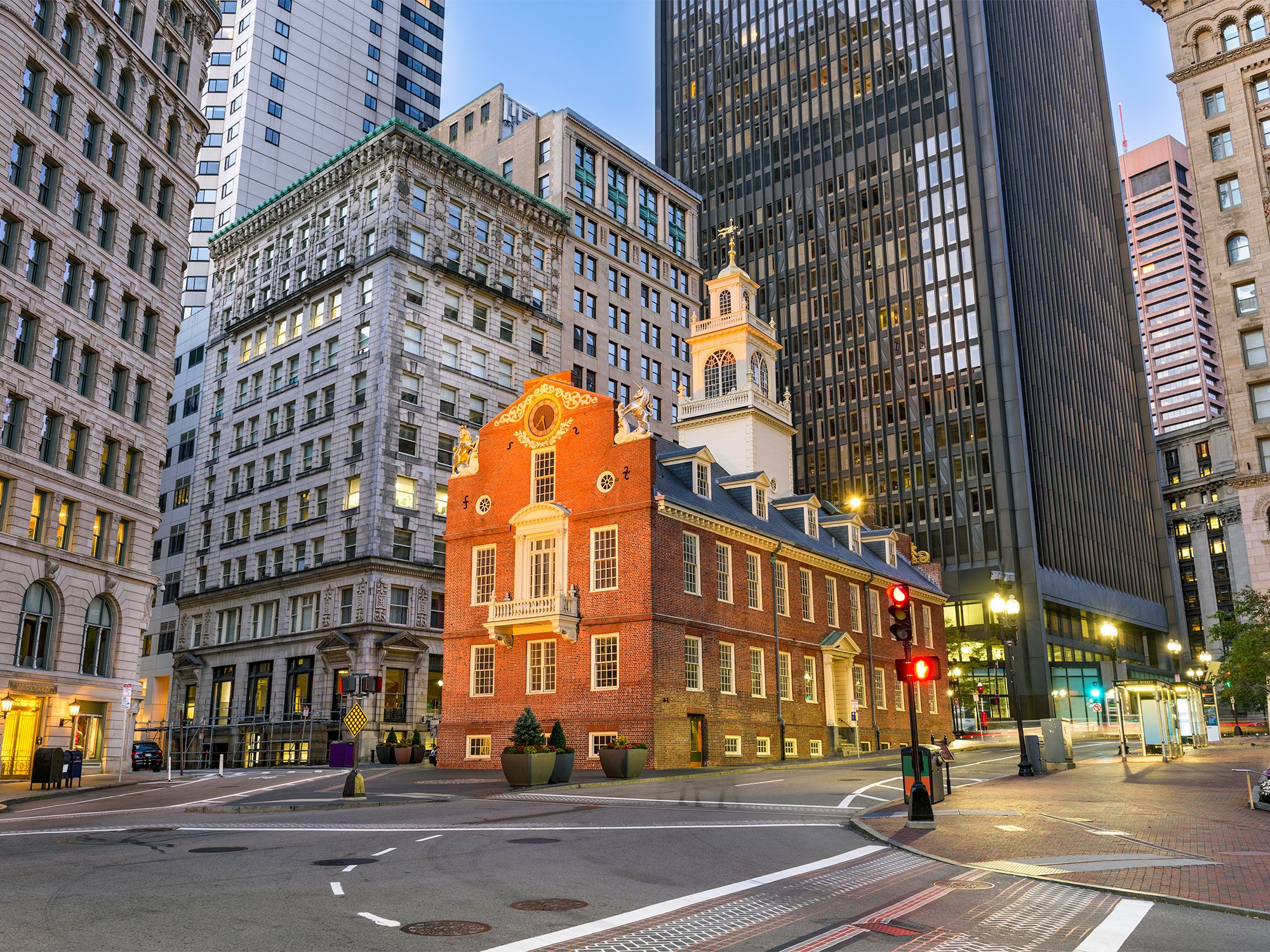
6. Boston, Massachusetts

Old State House in Boston surrounded by skyscrapers
Photo credit: Sean Pavone/ Shutterstock

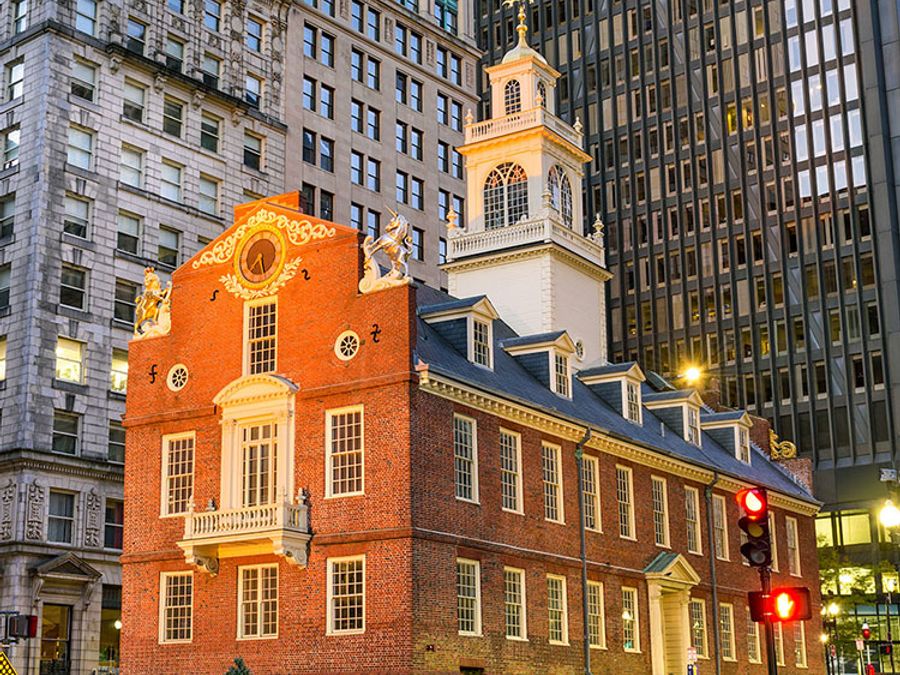
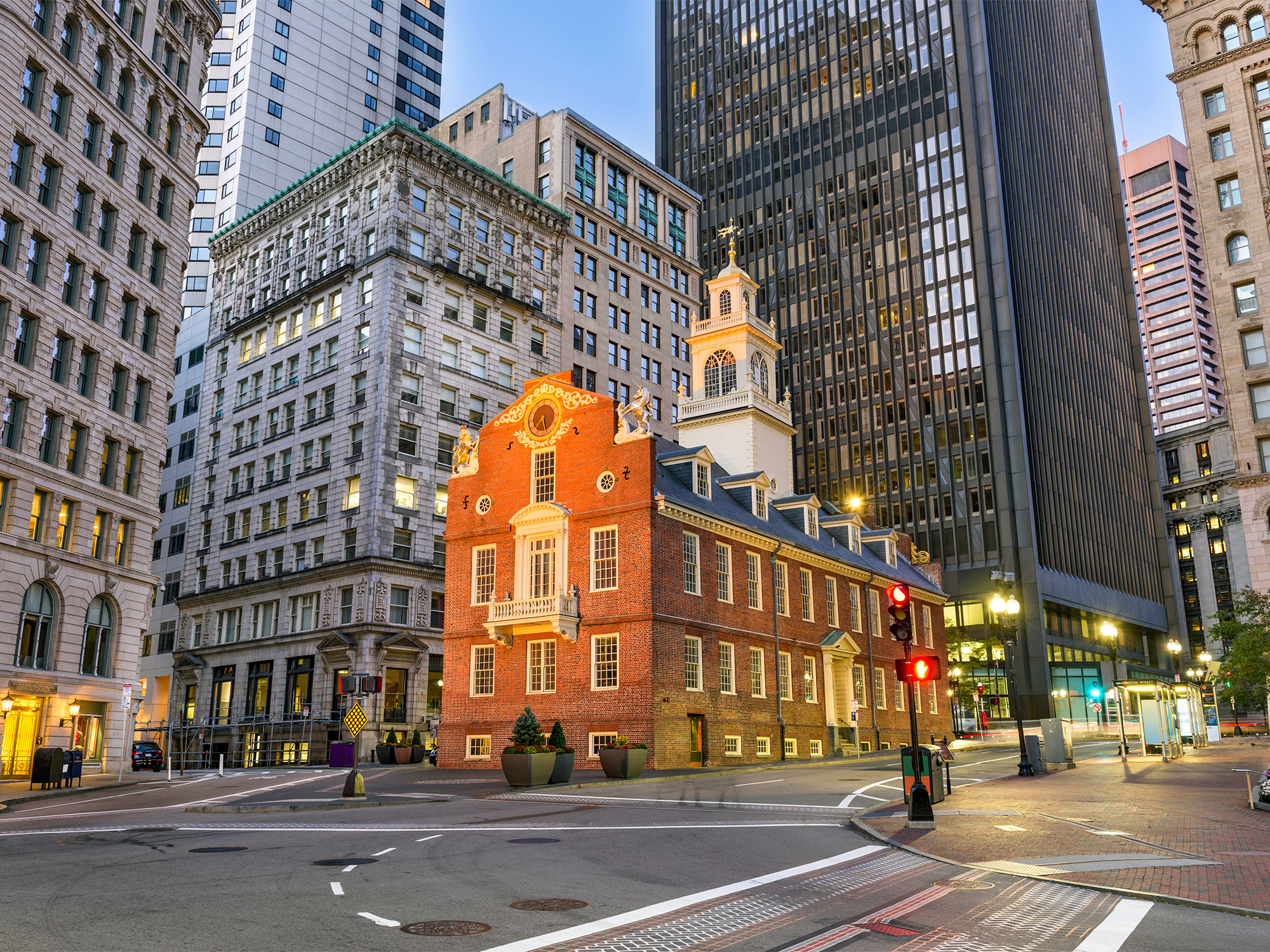
With a population of 675,000 as of 2022, Boston is the largest city in Massachusetts and one of the oldest cities in the U.S. Boston was founded by Puritan colonists in 1630 and played a significant role in the American Revolution, as the home of events such as the Boston Tea Party, the Boston Massacre, and the Battle of Bunker Hill. Its rich history is a major draw for tourists today, many of whom come to walk the 2.5-mile Freedom Trail that starts in Boston Common, America’s oldest park. It runs through the historic downtown and the North End, concluding at the Charlestown waterfront, with 16 important sites pertaining to the Revolutionary War along the way.

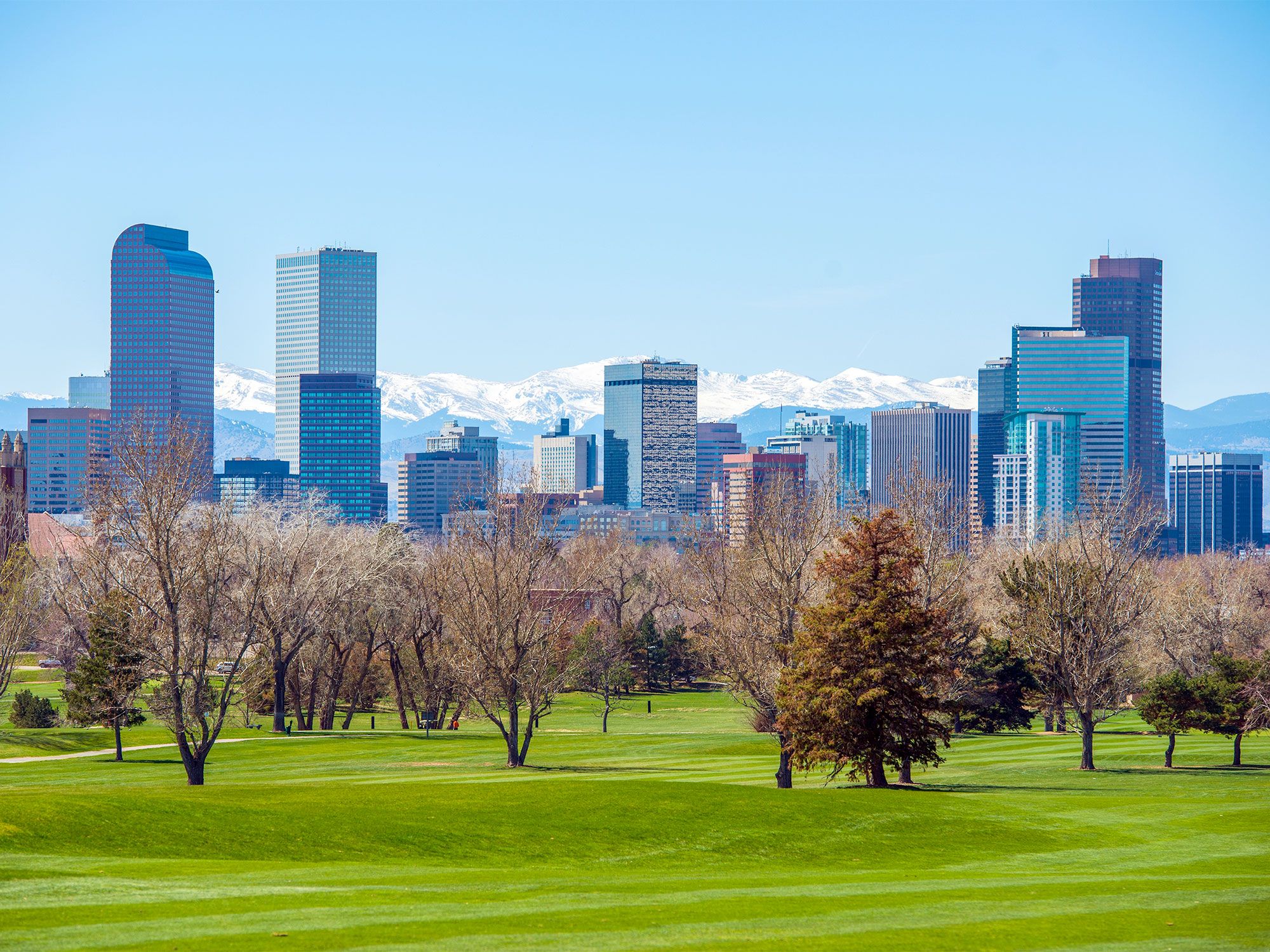
5. Denver, Colorado

View of Denver skyline and Rocky Mountains from grassy park
Photo credit: Virrage Images/ Shutterstock

Denver — known as the “Mile High City” thanks to its official elevation at exactly one mile above sea level — is Colorado’s most populous city, as well as its capital since 1867. The city’s estimated 2022 population was 713,000 people, an increase of nearly 20% over 2010. Denver’s growth has been credited to a robust economy, numerous cultural attractions, and myriad opportunities to enjoy the great outdoors — with its proximity to the Rocky Mountains being a major draw. The Mile High City is also home to multiple pro sports teams, including the NFL’s Denver Broncos, NBA’s Denver Nuggets, MLB’s Colorado Rockies, and the NHL’s Colorado Avalanche.

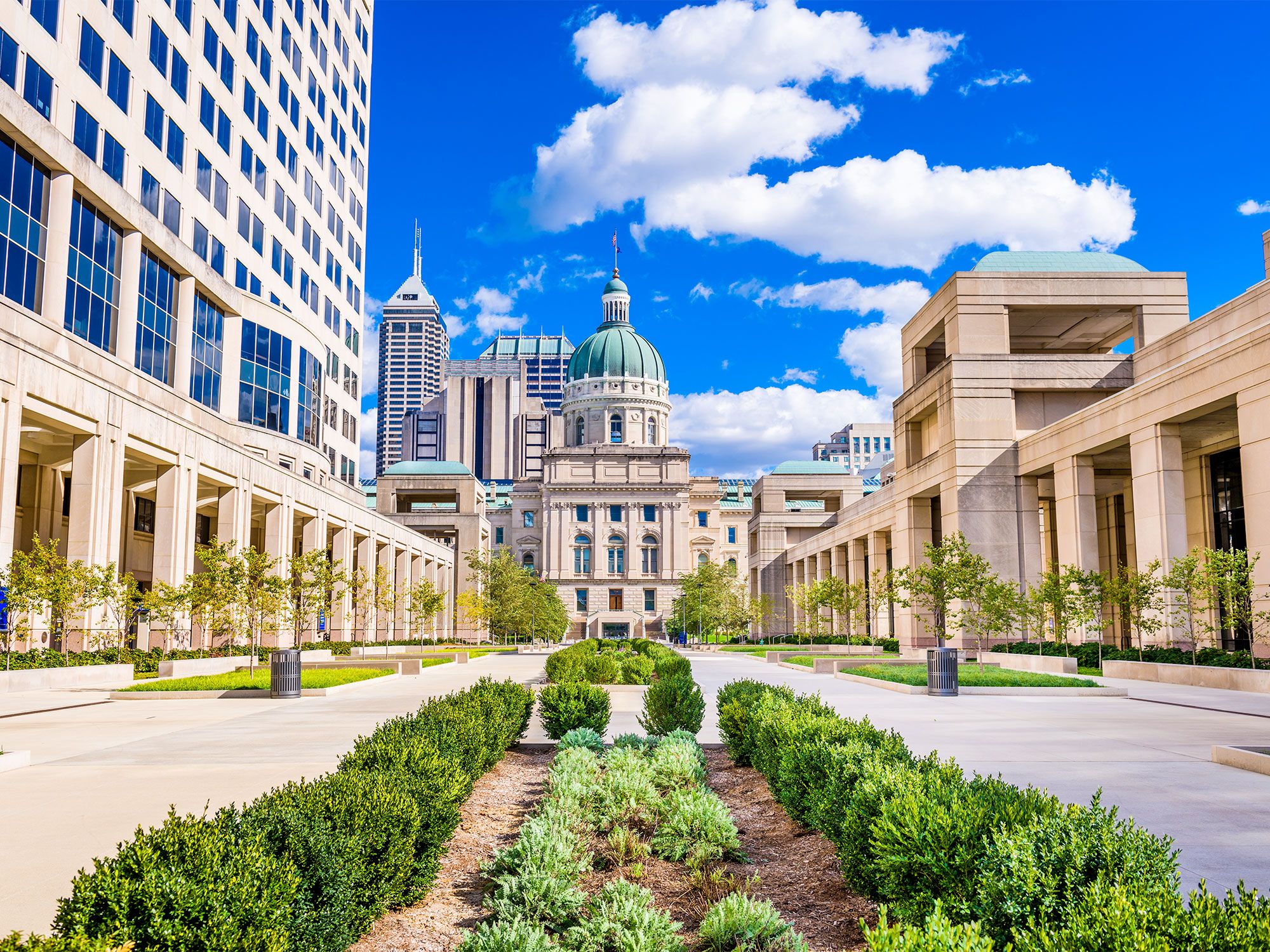
4. Indianapolis, Indiana

Plaza in front of Indianapolis state house in Indianapolis, Indiana
Photo credit: Sean Pavone/ Shutterstock

With a population of 881,000 people, Indianapolis is the country’s fourth-largest capital city. Named the state capital in 1825, Indianapolis is also known as the “Racing Capital of the World,” The city hosts the Indianapolis 500, the world’s largest single-day sporting event, which draws thousands of fans to the Indianapolis Motor Speedway over Memorial Day weekend every year. Throughout the year, visitors can also enjoy the Indianapolis Zoo in White River State Park, which includes a zoo, aquarium, and botanical garden. Downtown’s Mass Ave Cultural Arts District is home to many art galleries, quirky shops, eclectic boutiques, and restaurants.

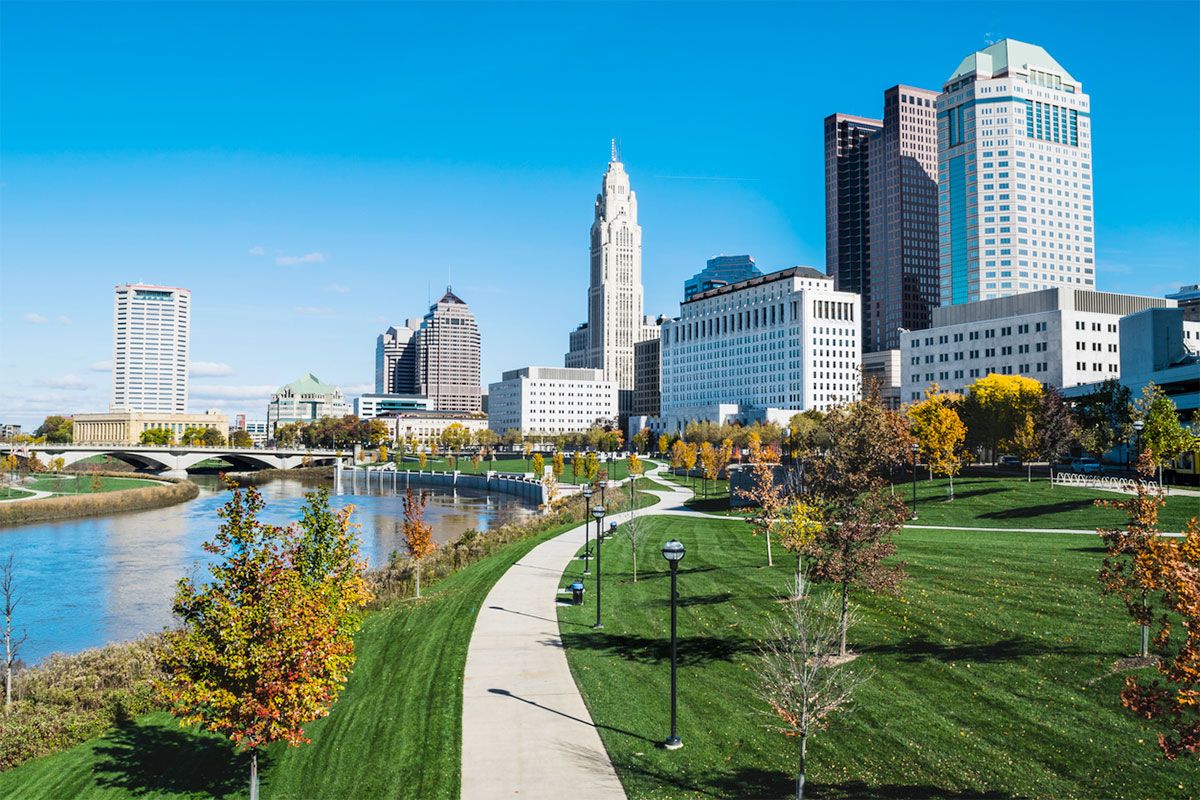
3. Columbus, Ohio

Riverfront park and skyscrapers in Columbus, Ohio
Photo credit: Sean Reid/ iStock

Founded in 1812, Columbus is Ohio’s capital and largest city, with a population of 908,000. Nicknamed the “Biggest Small Town in America,” Columbus is known for its relatively low cost of living (10% less than the national average) and high quality of life, with a friendly, small-town feel combined with big-city amenities. Columbus offers 19 parks with over 230 miles of trails and family-friendly activities like the world’s largest indoor ropes course at CBUS Adventure Park. 

2. Austin, Texas

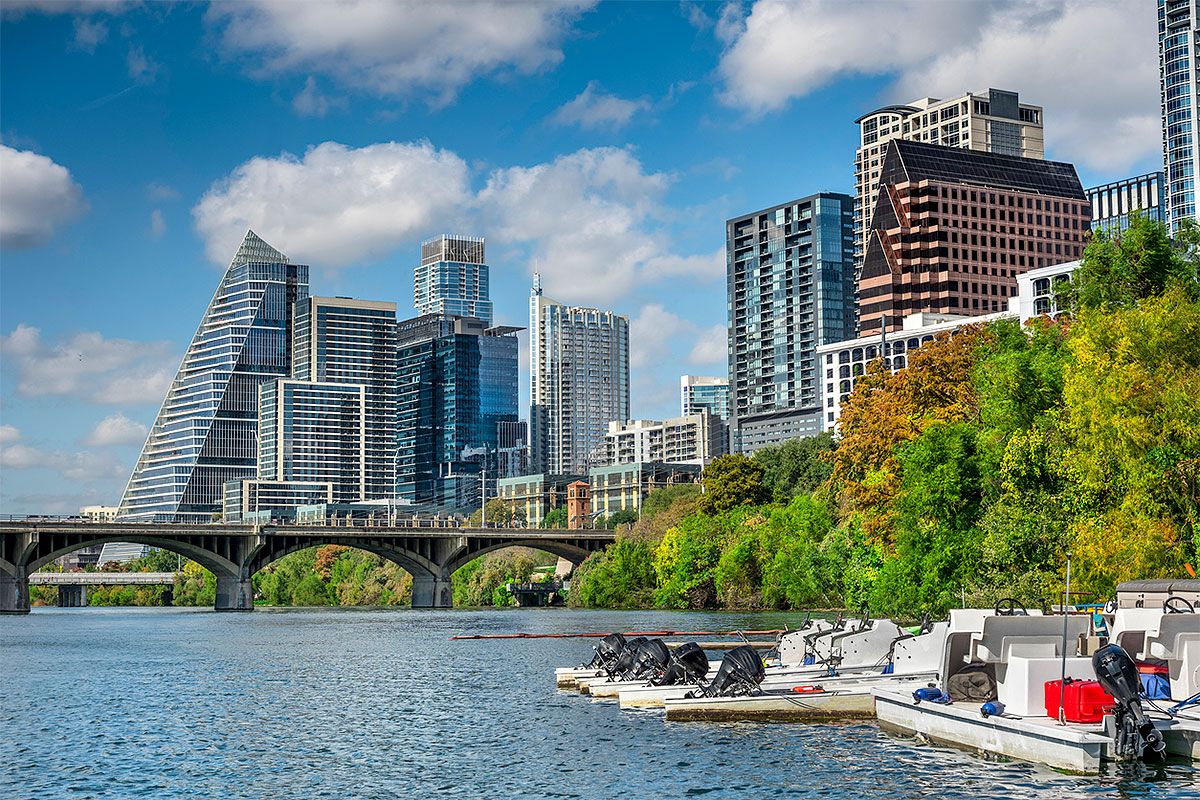
Paddle boats on Colorado River with Congress Avenue Bridge and Austin skyline in background
Photo credit: Pgiam/ iStock

Established as the capital of the Republic of Texas in 1839, Austin has the second-largest population of the U.S. capital cities with 974,000 residents. Despite that, Austin is only the fourth-most populous city in Texas, behind Houston, San Antonio, and Dallas. The Texas capital is sometimes referred to as “Silicon Hills,” with many tech companies contributing to the booming job market, including Apple, Hewlett-Packard, Google, and others. The city’s famous barbecue can be enjoyed everywhere from food trucks to gourmet eateries. Burn off the calories at nearly 400 parks, with miles of trails for biking, walking, or running. As the “Live Music Capital of the World,” Austin also has a long list of venues for enjoying a show, including the Broken Spoke, The Continental Club, Antone’s Nightclub, and Icenhauer’s.

1. Phoenix, Arizona

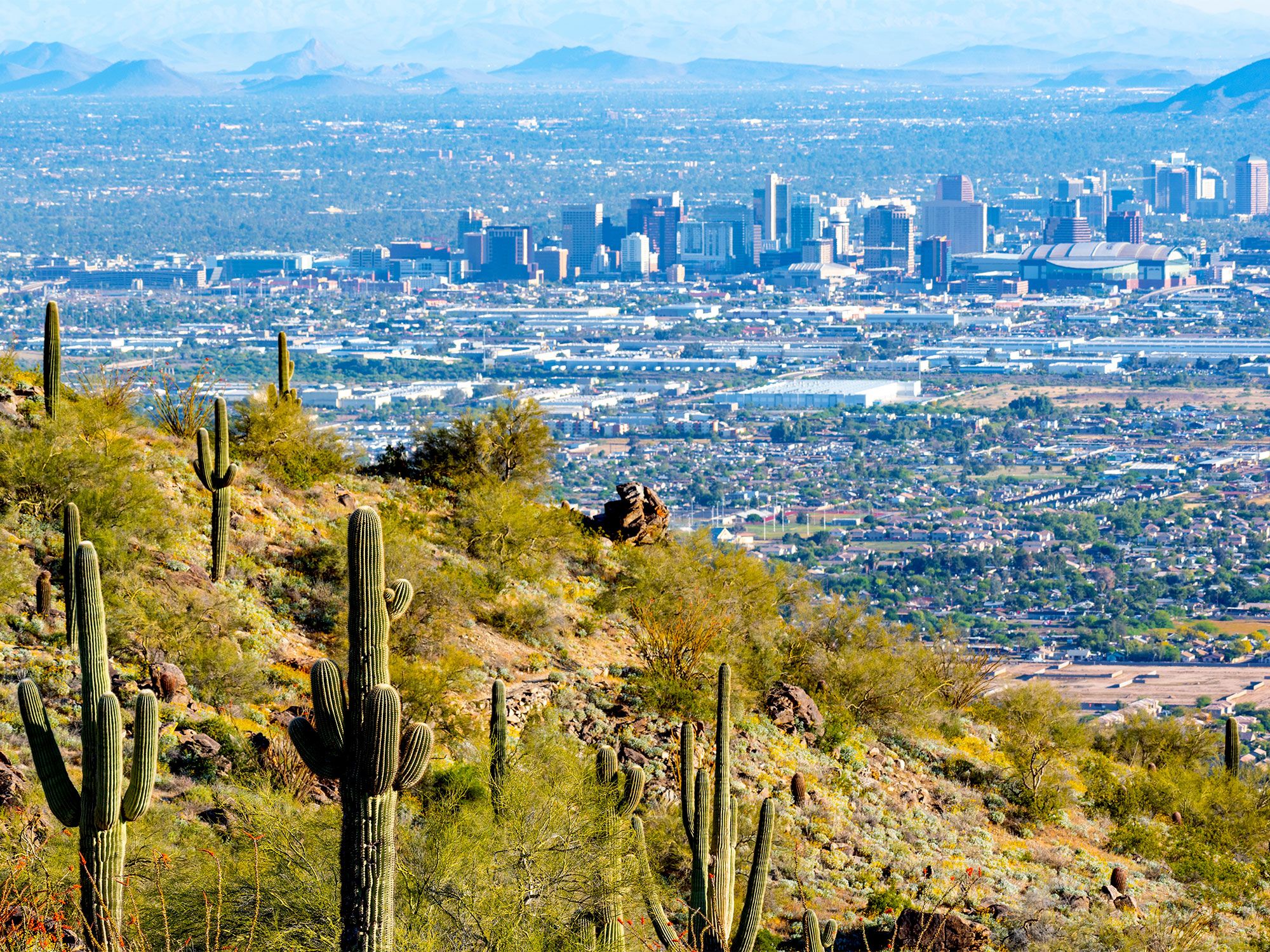
Cacti on hilltop overlooking Phoenix, Arizona, skyline
Photo credit: Gregory E. Clifford/ Shutterstock

Topping the list of most populous capitals is Phoenix with 1.6 million residents as of 2022. That makes the Arizona capital the country’s fifth-largest city overall. Between 2010 and 2020, the city grew by 11.2%, faster than any major U.S. city during that same period. Known as the “Valley of the Sun,” Phoenix attracts many newcomers with its strong economy, lower-cost housing, warm weather, and numerous recreational opportunities. Phoenix is surrounded by mountains offering miles of hiking trails, there’s a thriving dining and entertainment scene, and the city is also home to the NFL’s Arizona Cardinals, NBA’s Phoenix Suns, MLB’s Arizona Diamondbacks, and NHL’s Arizona Coyotes.

Post Banner Image
Culture

The Most Famous Filming Locations in the U.S.

By Cynthia Barnes
Read time: 4 minutes
June 1, 2023
Updated: July 25, 2023

The Most Famous Filming Locations in the U.S.

By Cynthia Barnes
Author
Cynthia Barnes
Cynthia kicked around the world for a while before landing in Colorado. Her work has appeared in Food & Wine, the Boston Globe, and National Geographic, among others. She loves dives — both scuba and bars — baseball, the Oxford comma, and live music.

In 1891, Thomas Edison, the inventor of the light bulb, also created the Kinetograph — the world’s first motion picture camera — and went on to establish the first movie studio in West Orange, New Jersey. Although much of the cinematic action soon moved across the continent to Hollywood, America’s bustling city streets, bucolic small towns, and panoramic natural landscapes still dominate screens large and small today, capturing the imagination of audiences around the globe. Here, we explore some of America’s favorite locations that frequently play a pivotal role in movies and television.

Wilmington, North Carolina

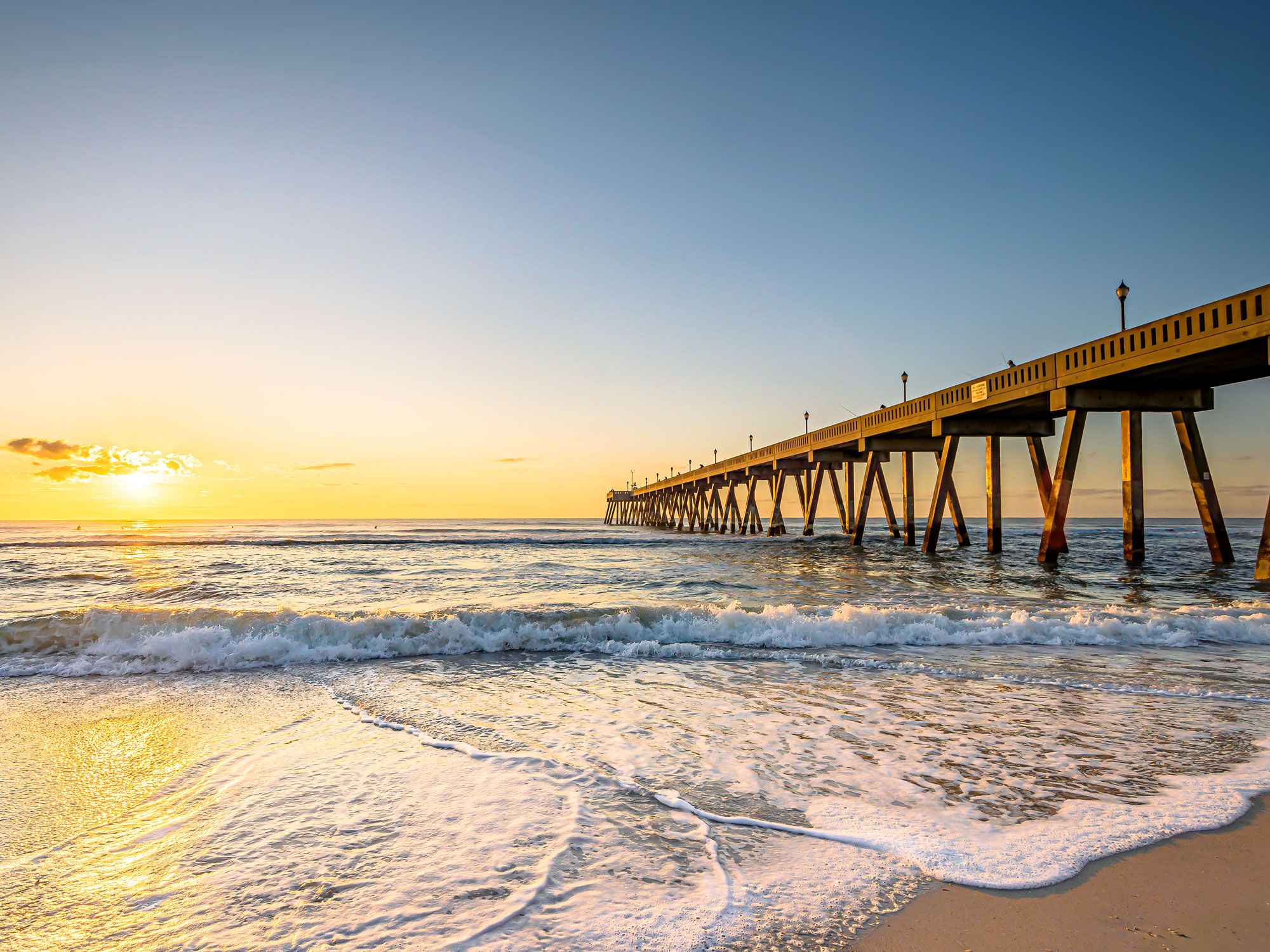
Pier off the coast of Wilmington, North Carolina, at sunset
Photo credit: Chansak Joe/ Shutterstock

Iron Man 3, Matlock, and more Hallmark Christmas movies than you can shake a (peppermint) stick at have been filmed in and around this charming small town in eastern North Carolina. Cobblestoned streets, extravagant azaleas, and historic antebellum architecture make Wilmington a draw for film studios — not to mention the dramatic Cape Fear River, the coastal beaches, and the USS North Carolina, an impressive World War II warship docked in town. Wilmington has also played home to several favorite teen TV series like Dawson’s Creek and One Tree Hill. The city currently has a starring role in teen drama The Summer I Turned Pretty.

Los Angeles, California

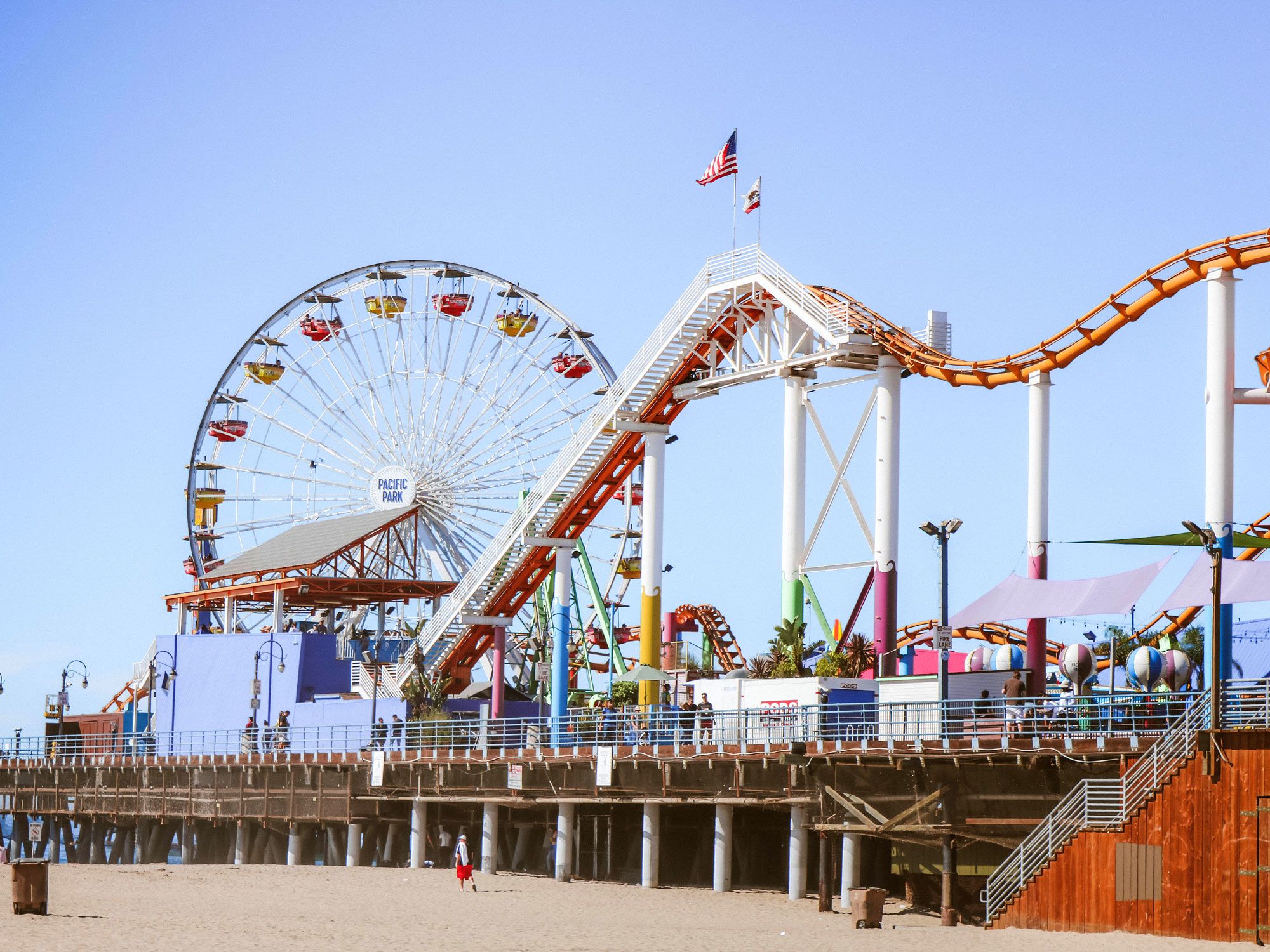
Ferris wheel and roller coaster on Santa Monica Pier
Photo credit: Barbara Brockhauser/ Shutterstock

Who can forget the swanky shops of Rodeo Drive in Pretty Woman or the looming noir of Union Station in Blade Runner and The Dark Knight Rises? The heart of the American film industry, Los Angeles has long been a favorite location for shooting movies and TV shows, from the iconic Hollywood sign to the eclectic vibe of Venice Beach. Since the first movie made in Hollywood (1908’s The Count of Monte Cristo), Tinseltown has been featured in countless movies and TV shows. Films such as Chinatown, The Graduate, Pulp Fiction, and La La Land have captured the city from all angles and cemented its status as a filming capital, while shows like ‘Beverly Hills 90210 and Entourage have made it synonymous with the glitz and glamor of showbiz.

New York, New York

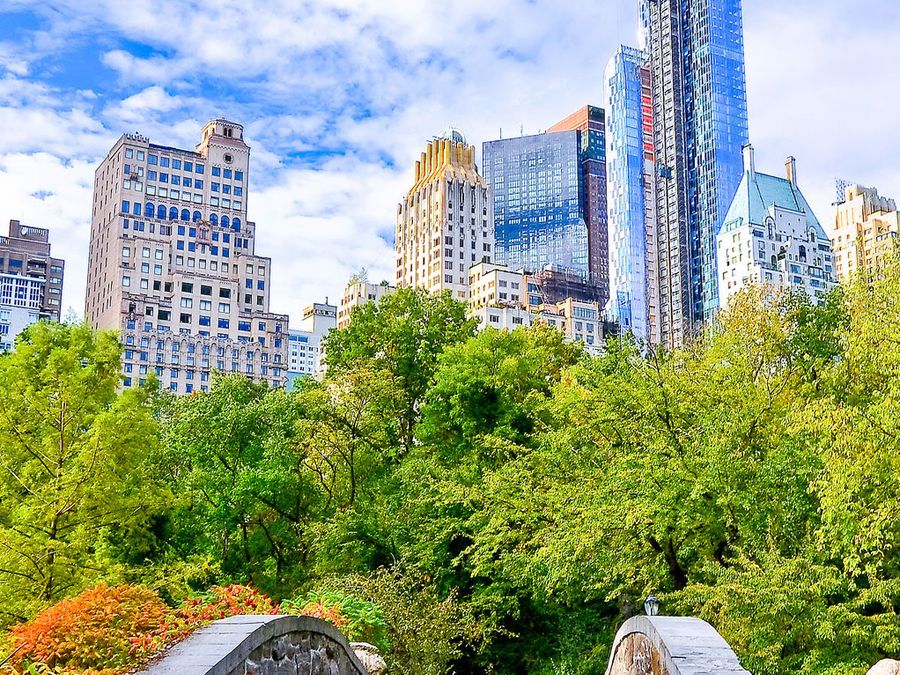
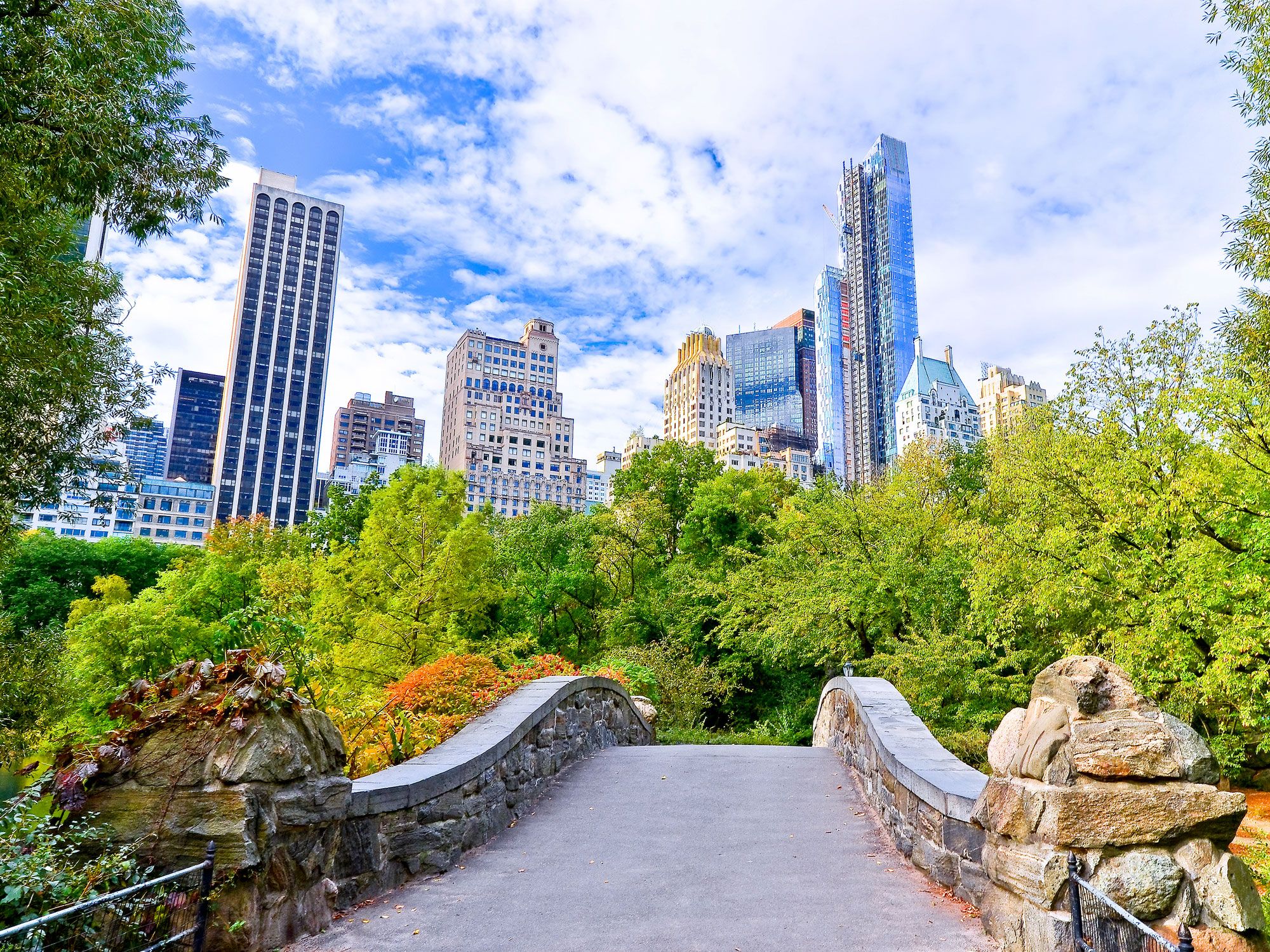
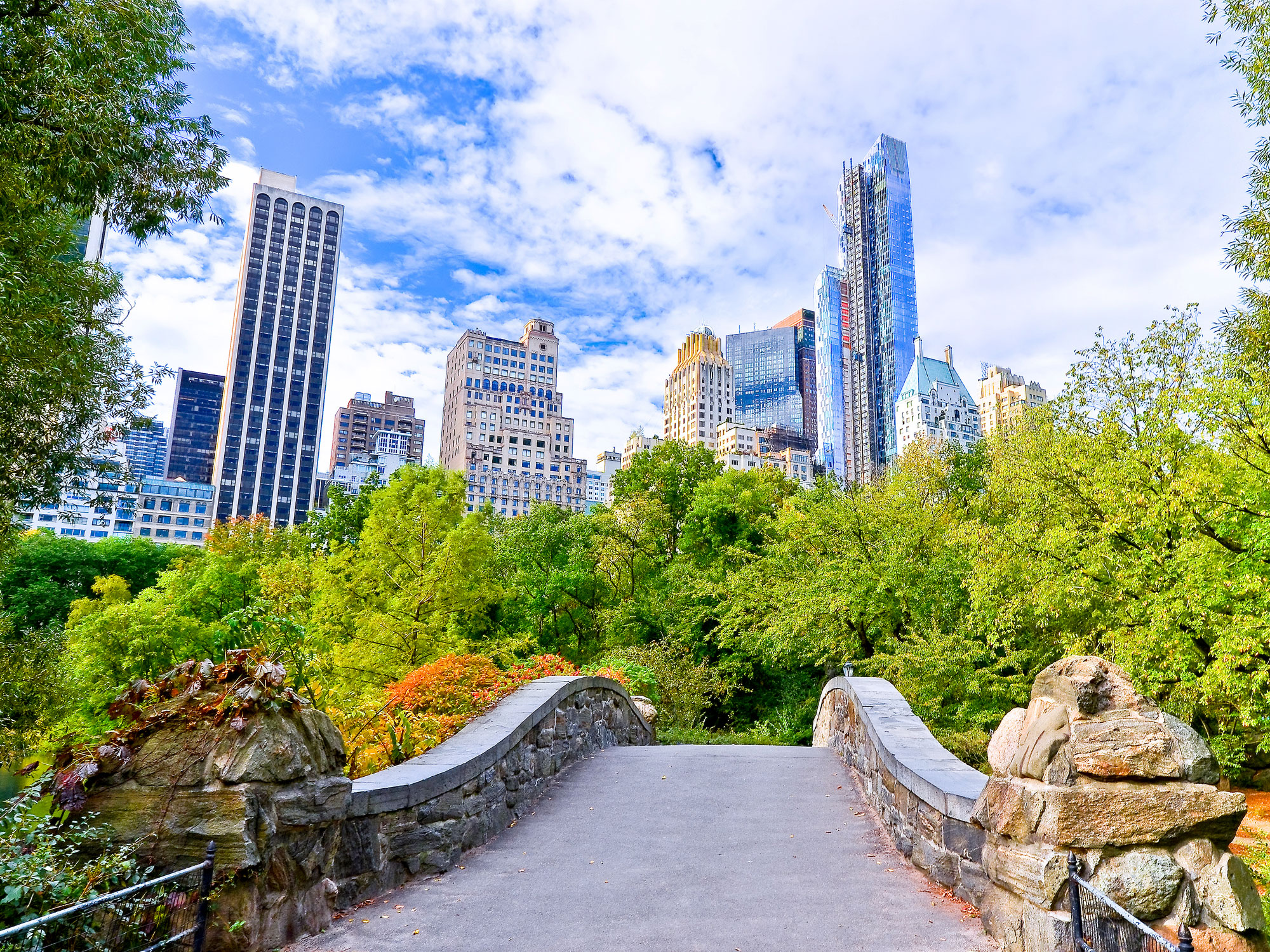
Bridge in New York City's Central Park with skyscrapers in background
Photo credit: Javen/ Shutterstock

Law and Order, Sex and the City, When Harry Met Sally… New York City is perhaps the most famous film set in the world, and with good reason. From the skyscrapers of Manhattan to the brownstones of Brooklyn, the city offers a diverse range of iconic backdrops that have been featured in countless movies and TV shows — from Gossip Girl to The Godfather to Goodfellas. Of the city’s many iconic locales, Central Park takes the cake, and not just in the Big Apple — it is the most-filmed location in the world with 532 credits to date. 

Las Vegas, Nevada

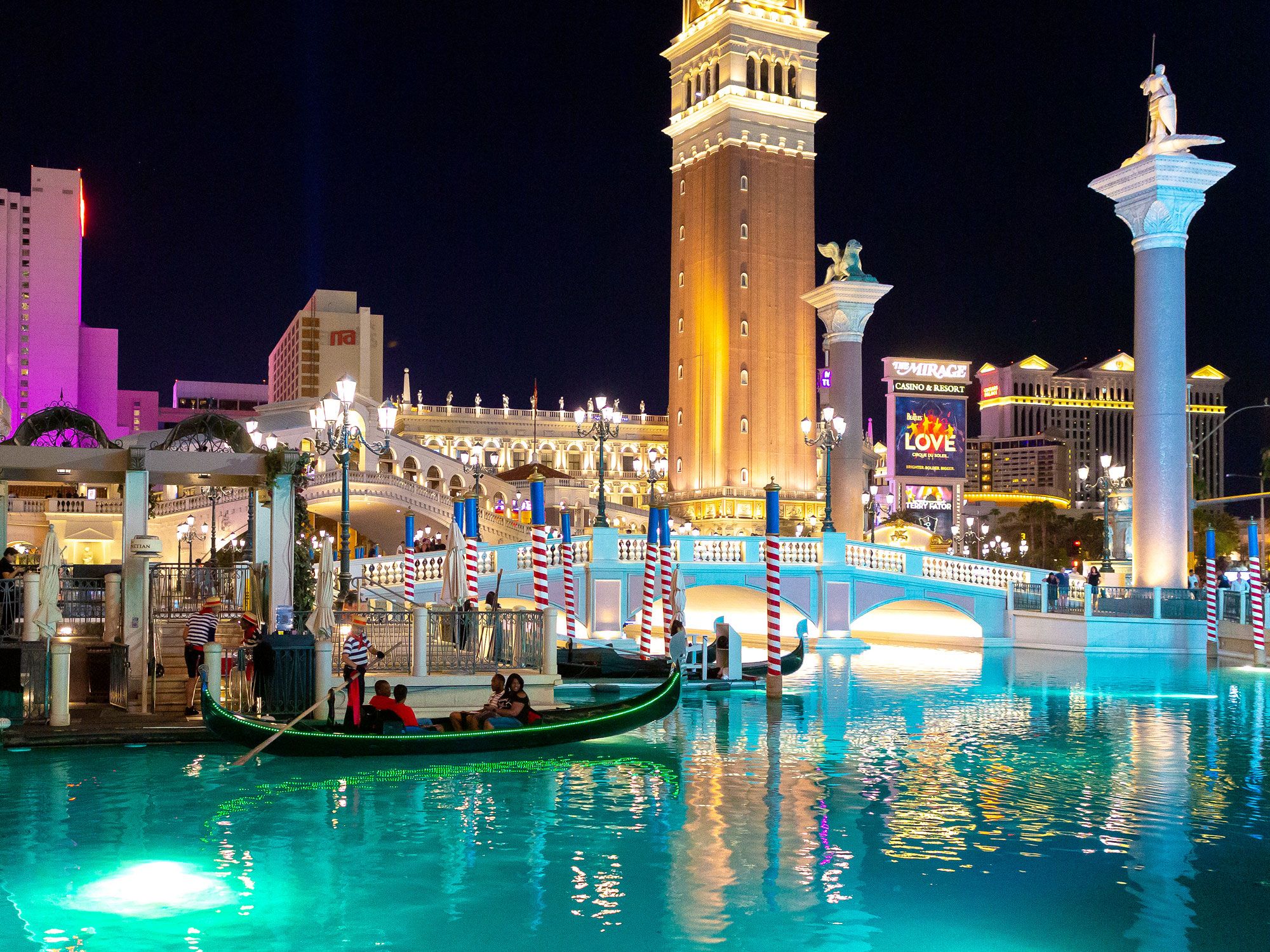
The Las Vegas Strip at night
Photo credit: Sergii Figurnyi/ Shutterstock

A popular location for filmmakers, Las Vegas is often called “the Entertainment Capital of the World,” and it’s easy to see why. Bright lights, towering casinos, and unique neon signs have made it a filming jackpot for producers, including those of the Ocean’s 11 trilogy, The Hangover, and CSI: Crime Scene Investigation. Whether it’s the iconic Strip, the scenic Red Rock Canyon, or the harrowing heights of Hoover Dam, the city and its surroundings offer a wealth of unique backdrops that make it a staple of American cinema.

San Francisco, California

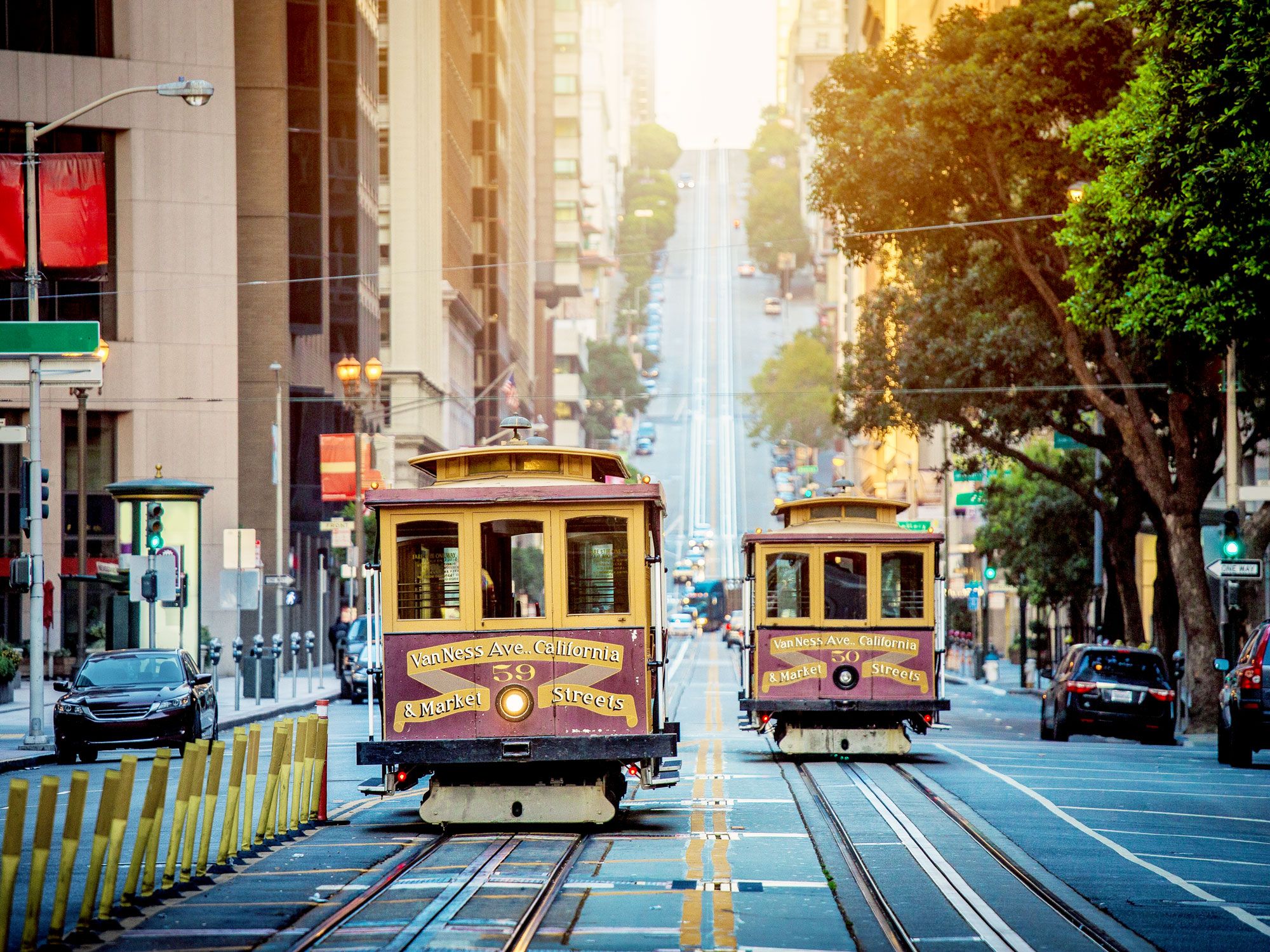
Street cars on streets of San Francisco
Photo credit: canadastock/ Shutterstock

Cable cars, colorful houses, hilly streets, and iconic landmarks such as the Golden Gate Bridge and the winding Lombard Street have made San Francisco a favorite filming spot for decades. From movies like Rise of the Planet Apes, Alfred Hitchcock’s Vertigo, and the beloved Mrs. Doubtfire, to TV shows like Full House and Monk, the “streets of San Francisco” are easy to spot on screens both big and small.

Monument Valley, Arizona/Utah

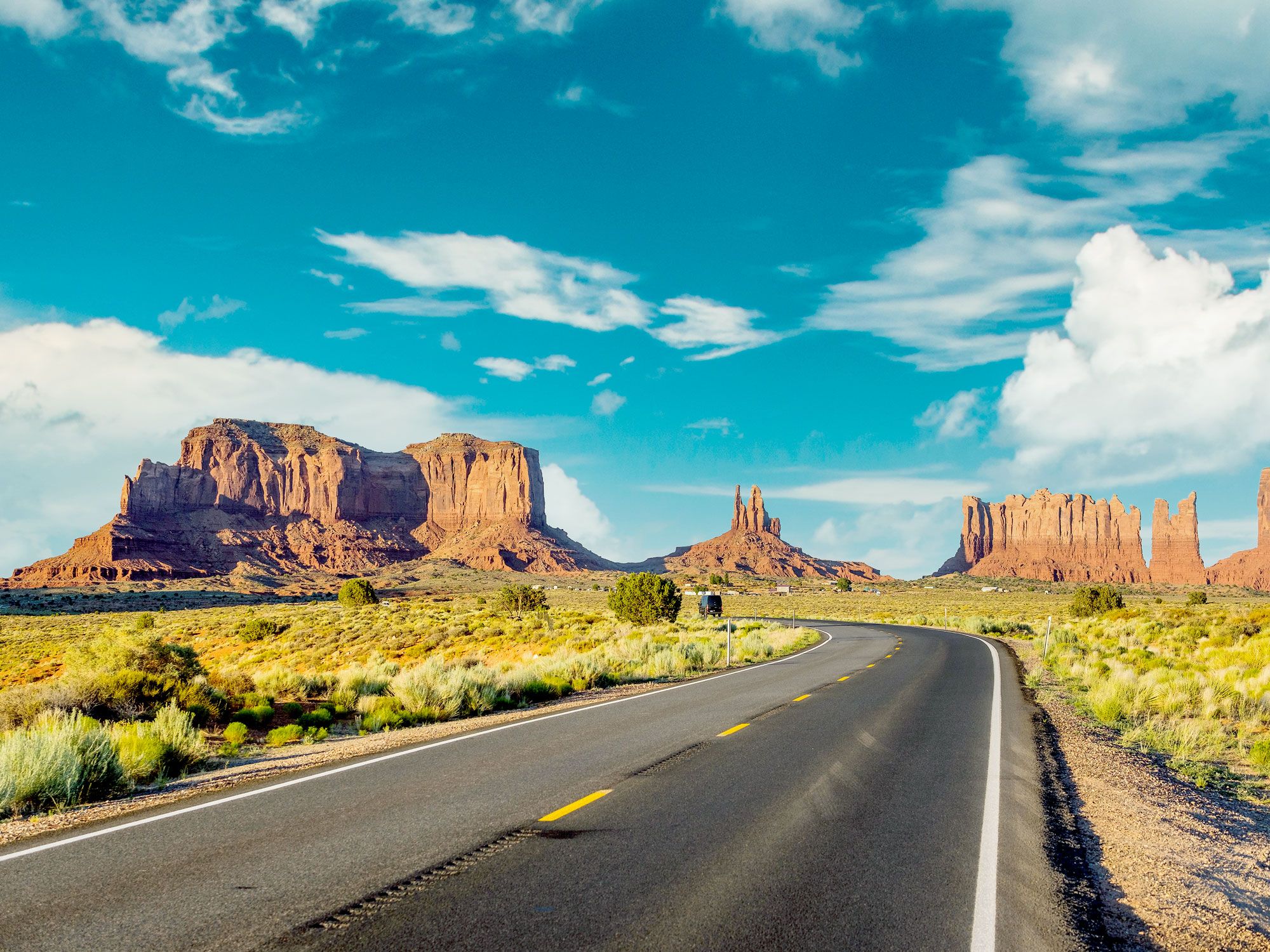
Empty highway in Monument Valley
Photo credit: haveseen/ Shutterstock

These stunning sandstone buttes, located in the heart of the Navajo Nation in the southwestern United States, have captured the imaginations of filmmakers and audiences alike. John Ford’s classic 1939 Western Stagecoach helped make the valley a symbol of the American West. Other notable films shot here include The Searchers, Once Upon a Time in the West, and Forrest Gump. TV shows filmed in Monument Valley include Saturday-morning staple The Lone Ranger, campy action adventure Air Wolf and, more recently, HBO’s otherworldly sci-fi series Westworld

Post Banner Image
Geography

What Is an Exclave? Discover 6 Fascinating Border Anomalies

By Bennett Kleinman
Read time: 6 minutes
May 25, 2023
Updated: July 25, 2023

What Is an Exclave? Discover 6 Fascinating Border Anomalies

By Bennett Kleinman
Author
Bennett Kleinman
Bennett is a New York City-based staff writer for Daily Passport. He previously contributed to television programs such as the Late Show With David Letterman, as well as digital publications like the Onion. Bennett has traveled to 48 U.S. states and all 30 Major League Baseball stadiums.

When looking at a map of the world, you may notice territories that are geographically separated from the nations that control them. These areas are known as exclaves — territories belonging to one sovereign state that are completely surrounded by the land of one or more foreign dominions. (Other areas are known as semi-exclaves, which feature coastlines that lie adjacent to international waters but are otherwise akin to a traditional exclave.) Some exclaves can also be classified as enclaves, which are sovereign nations or territories of other nations that are entirely enclosed within the borders of a single foreign entity — such as Vatican City or San Marino, both of which fall within Italy. Here, we’ll explore six of the world’s most interesting exclaves.

Nakhchivan Autonomous Republic, Azerbaijan

Mausoleum site in the Nakhchivan Autonomous Republic of Azerbaijan
Photo credit: Polad Gasimov/ Shutterstock

The Nakhchivan Autonomous Republic is an exclave belonging to Azerbaijan, a nation that sits along the Caspian Sea and Caucasus Mountains in Central Asia. Separated from the Azerbaijani mainland by a 30- to 50-mile-wide strip of Armenian territory, Nakhchivan borders Armenia to the north and east, Iran to the south and west, and a small sliver of Turkey to the exclave’s northwest portion. Nakhchivan comprises an area of over 2,000 square miles, about 6% of mainland Azerbaijan’s total area. Around 450,000 residents live here, making it the world’s largest entirely landlocked exclave by both area and population. In 1924, the region became an autonomous republic governed by the Soviet Union and was later transferred to an independent Azerbaijan in 1991. Nakhchivan also happens to boast some of the most stunning sites in Azerbaijan, including a mausoleum that has existed since the fourth millennium BCE and is the purported burial location of the prophet Noah.

Nahwa, UAE / Madha, Oman

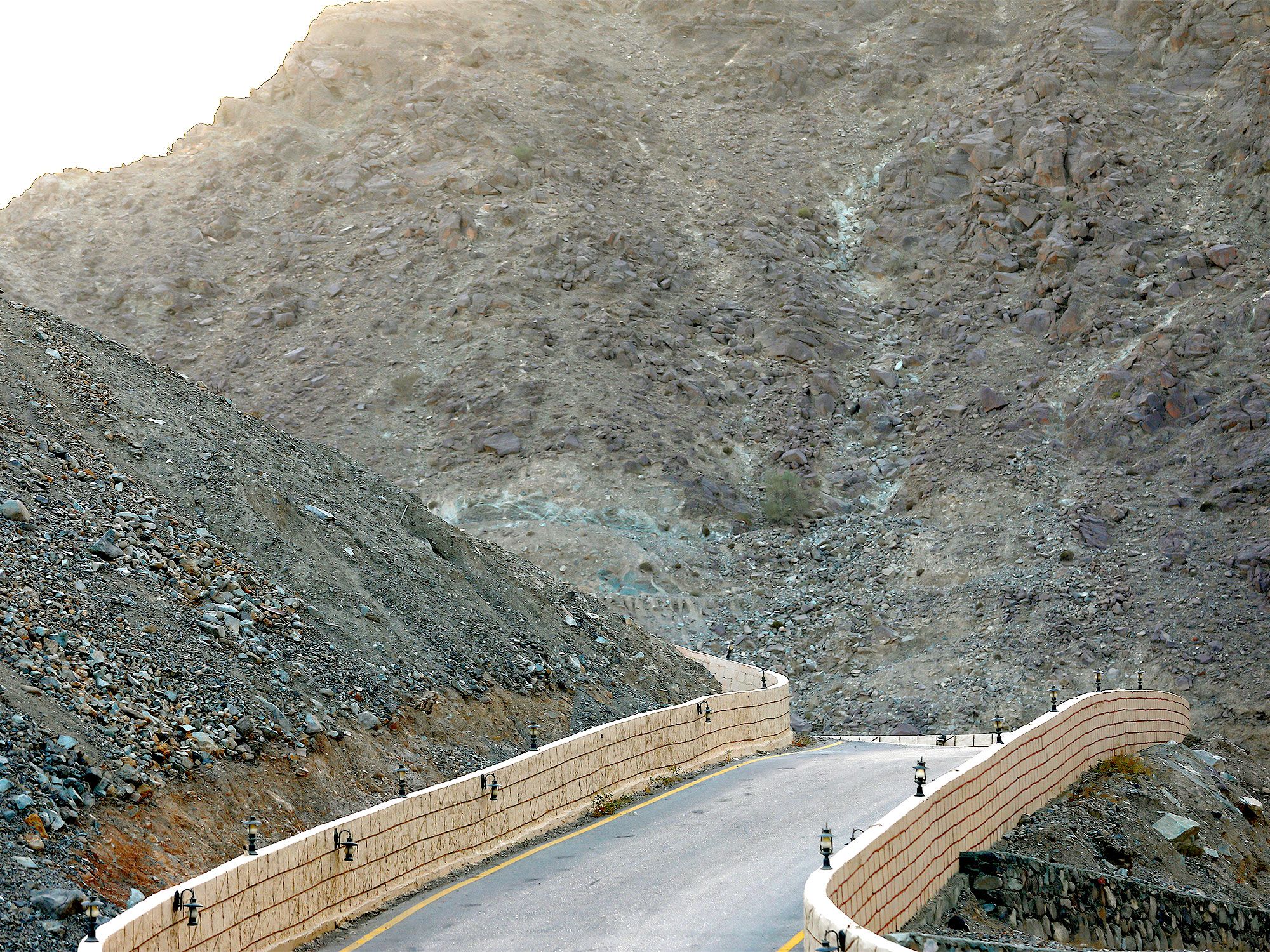
Roadway through the Wadi Madha Mountains of Oman
Photo credit: iamjameer/ Shutterstock

The Emirati territory of Nahwa and the Omani territory of Madha may be but small blips on a map, but they form one of the more unique series of exclaves anywhere in the world. Located on the northern tip of the Arabian Peninsula off the Gulf of Oman, these two exclaves both exist entirely within the confines of the United Arab Emirates. Encompassing 29 square miles, Madha is a short distance from Oman’s mainland yet surrounded on all sides by the UAE. Located within Madha is the 1.70-square-mile territory of Nahwa, which itself belongs to the UAE. This unique geographical quirk — an exclave within an exclave — stems back to the formation of the UAE in 1971. As the country came into existence, the UAE decided against challenging the territorial boundaries of Oman, allowing them to maintain their ownership of the Madha region. Madha is home to around 2,000 residents, while Nahwa has just three villages and about 40 houses.

Cabinda Province, Angola

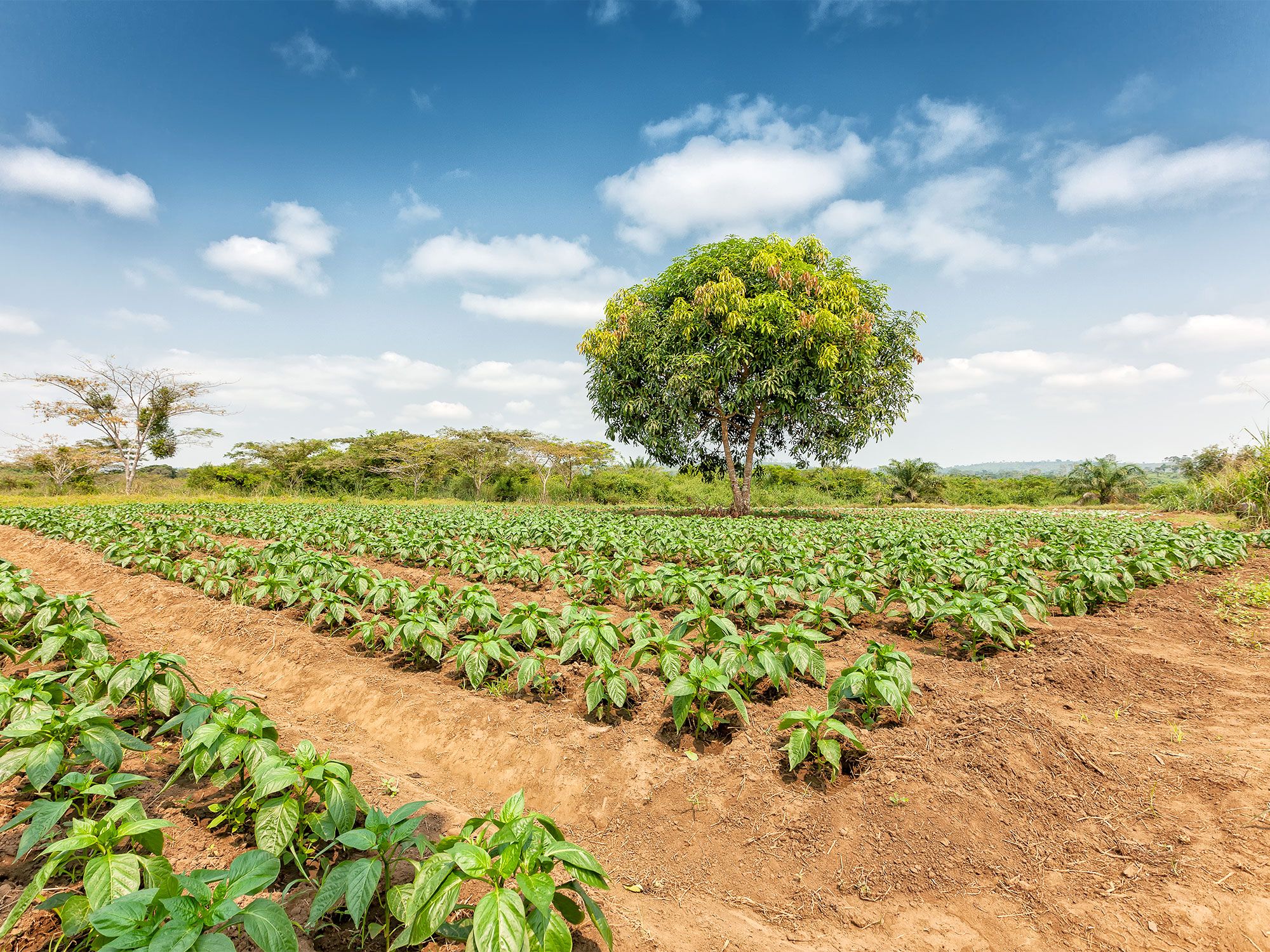
Crops growing in the Cabinda Province of Angola
Photo credit: Andre Silva Pinto/ Shutterstock

Cabinda is one of Angola’s 18 provinces — and the only Angolan exclave. The province sits on the Atlantic coast of the African continent about 20 miles north of mainland Angola, with a 56-mile-long coastline. Cabinda is surrounded by the Republic of the Congo to the north and the Democratic Republic of the Congo to the south. The exclave’s maximum width is just 70 miles, and it encompasses a total area of 2,807 square miles. Cabinda’s origins stem back to the late 1800s, when it was the site of Portuguese logging camps. Portugal also established a separate colony known as Portuguese West Africa, which later became modern-day Angola. When Portugal withdrew from its African colonies in the 1970s, Cabinda was granted to the newly formed Angola, despite its geographical separation. Angola has maintained its steadfast control over Cabinda in large part because of oil reserves that were discovered within the province in 1967.

French Guiana, France

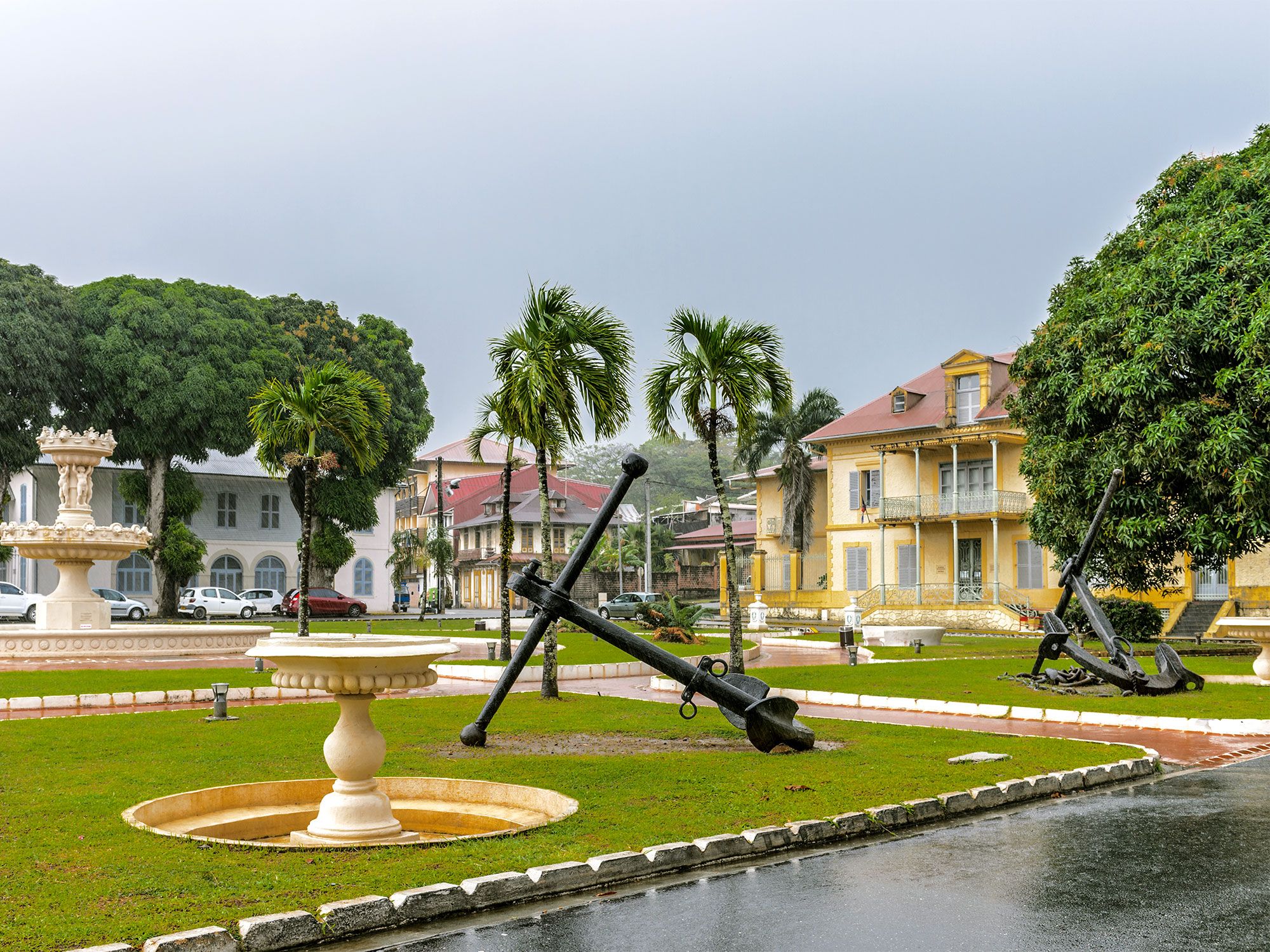
Fountains in park in Cayenne, French Guiana
Photo credit: Anton_Ivanov/ Shutterstock

The South American region of French Guiana may be located on an entirely different continent than France, but it remains a territorial exclave under French jurisdiction. Amazingly, the capital of French Guiana, Cayenne, is located 4,398 miles across the Atlantic Ocean from Paris. This French exclave is bordered by the Atlantic Ocean to the northeast, Brazil to the south and east, and Suriname to the west. An estimated 294,600 people inhabit the 34,750 square miles of French Guiana. European explorers first reached the territory in 1500, and Spanish explorers settled near Cayenne in 1503. The 1667 Treaty of Breda awarded the territory to France. Residents of the exclave were later made French citizens in 1877, and French Guiana became a département of France in 1946. Currently, French Guiana’s government is led by a local president who governs the territory alongside a prefect appointed by France.

Ellis Island, New Jersey/New York

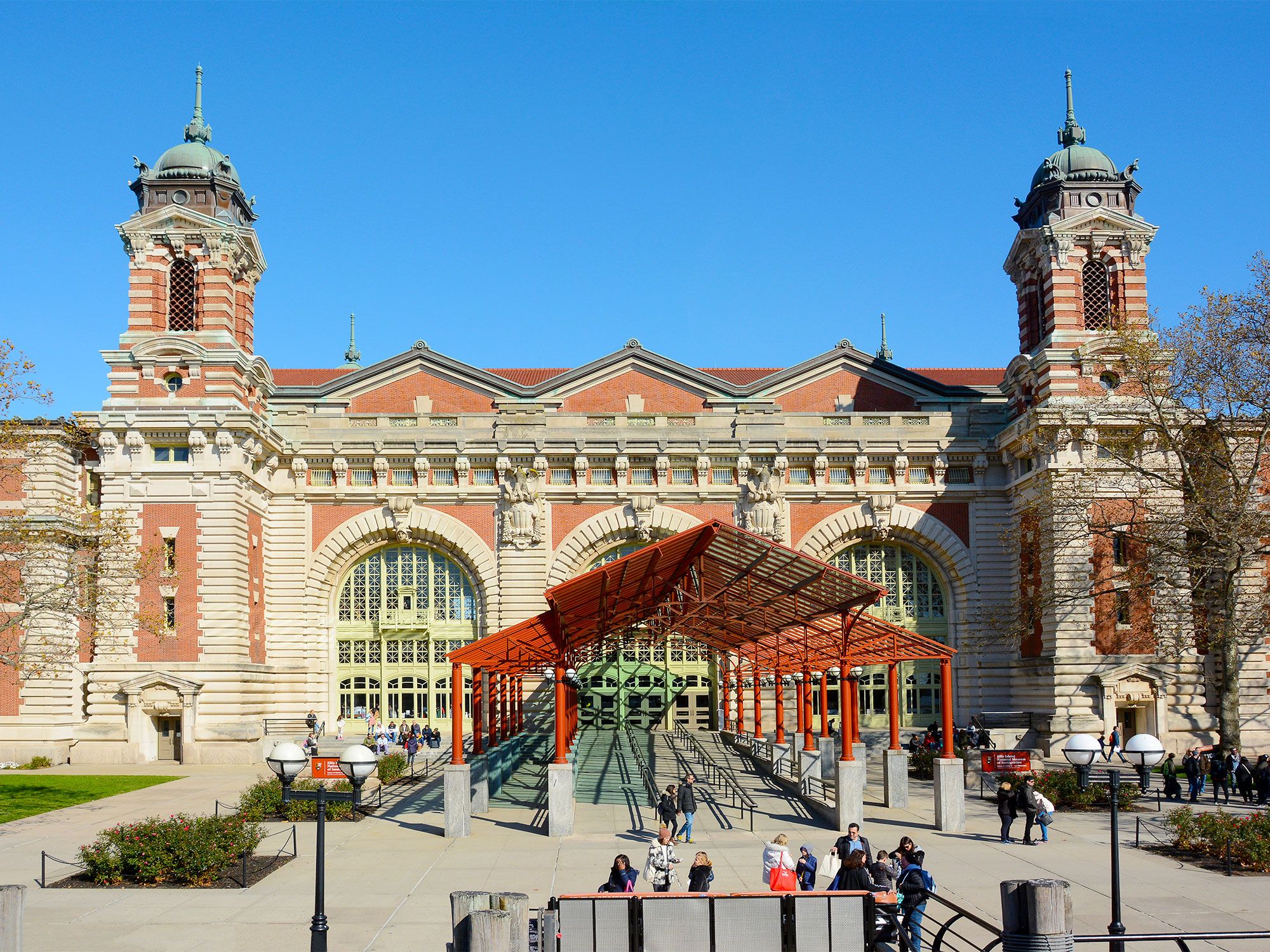
Main Arrivals Building in Ellis Island in New York
Photo credit: Steve Cukrov/ Shutterstock

Rather than an exclave surrounded by another country, Ellis Island is home to a unique exclave belonging to the state of New York — while the rest of the island falls under New Jersey’s control. The island, located in Upper New York Bay, once held an important role as an immigration processing center that welcomed over 12 million newcomers to the United States between 1892 and 1954. Ellis Island sits a mile off the coast of the island of Manhattan in New York City and 1,300 feet east of New Jersey’s mainland shore. It was originally around 3.3 acres in area but has since expanded to 27 acres due to a series of land reclamation projects.

It’s those projects that turned parts of Ellis Island into an exclave. Though an 1834 agreement between the two states granted total control of Ellis Island to New York, that changed in 1998, when the U.S. Supreme Court ruled that New Jersey had authority over the majority of Ellis Island’s territory that had been gained due to land reclamation. However, the court also determined that New York maintained control over the island’s Main Arrivals Building, as well as the original lands that existed prior to the island’s expansion. This created New York’s exclave, as those original lands have since become surrounded by reclaimed land owned by New Jersey.

Baarle-Hertog, Belgium / Baarle-Nassau, Netherlands

Bike pathway indicating Belgium-Netherlands border in Baarle-Hertog
Photo credit: Frolova_Elena/ Shutterstock

In the Baarle-Hertog region, the Belgian-Dutch border is a complicated one — to say the least. Baarle-Hertog is a series of exclaves that lie just outside of the Flanders region of northern Belgium. The Baarle-Hertog municipality is made up of 22 Belgian exclaves that are entirely surrounded by the Netherlands and three additional semi-enclave territories jutting up against Dutch lands from the Belgian border. All told, these scattered lands are home to around 2,663 Belgian residents and total a mere 2.9 square miles in area. 

Making things even more complex, portions of the Dutch municipality of Baarle-Nassau form seven additional Dutch exclaves that are located within these Belgian exclaves. The border was established per the Treaty of Maastricht in 1843, signed 13 years after Belgium declared independence from the Netherlands, creating this geographical conundrum that continues today. Thankfully, the two countries have peaceful relations, and this strange alignment has even led to various properties and restaurants that are split in half between the Belgians and Dutch.

Post Banner Image
Outdoors

7 Stunning U.S. Landmarks You Never Knew Existed

By K.C. Dermody
Read time: 5 minutes
May 25, 2023
Updated: January 18, 2024

7 Stunning U.S. Landmarks You Never Knew Existed

By K.C. Dermody

Some landmarks in the U.S. — the Grand Canyon, Niagara Falls, Times Square, Mount Rushmore — are seemingly on every traveler’s radar. While those famous spots are well worth a visit, there are many lesser-known American landmarks that offer fascinating history, dazzling scenery, and — best of all — a serious lack of crowds. Check out seven under-the-radar natural landmarks you probably didn’t know, but should.

Shoshone Falls – Idaho

Aerial view of Shoshone Falls in Idaho forming a rainbow
Photo credit: Png Studio Photography/ Shutterstock

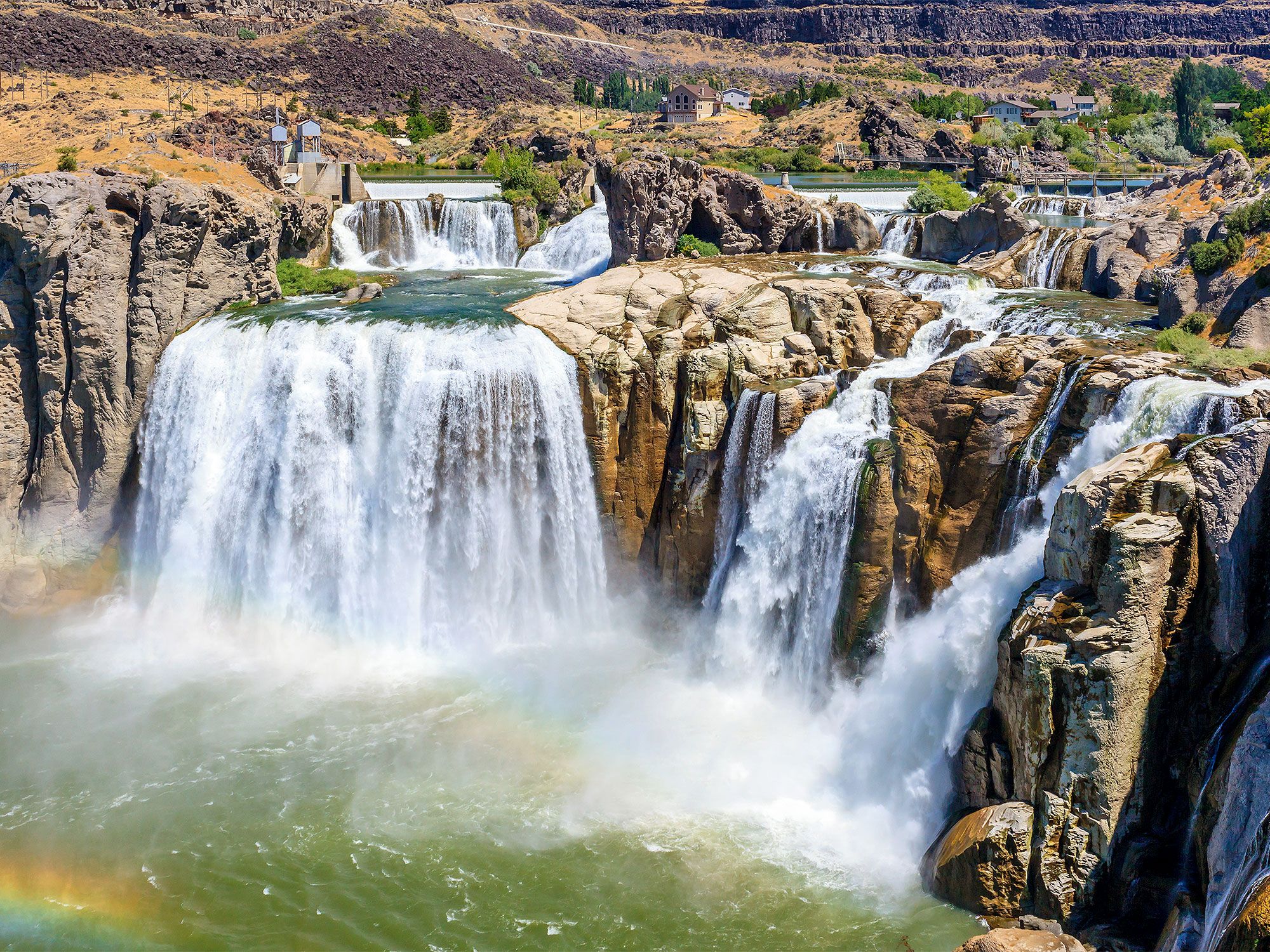
While Niagara Falls in New York often steals the spotlight, Shoshone Falls — nicknamed the “Niagara of the West” — is even larger. In fact, it’s one of the country’s largest natural waterfalls, located about two hours southeast of Boise. Part of the Snake River in Shoshone Falls Park, the falls plunge a jaw-dropping 212 feet (about 30 feet higher than Niagara) and spread 900 feet wide. After a particularly heavy snowpack melts in spring, the waters can flow at more than 20,000 cubic feet per second. The surrounding park offers multiple facilities that make it well worth spending a day here. While swimming near the falls isn’t permitted, Dierkie’s Lake offers a swimming area with a sandy beach. Kayaks and paddleboards are available for rent, and you’ll also find picturesque trails to hike.

Apostle Islands Mainland Ice Caves – Wisconsin

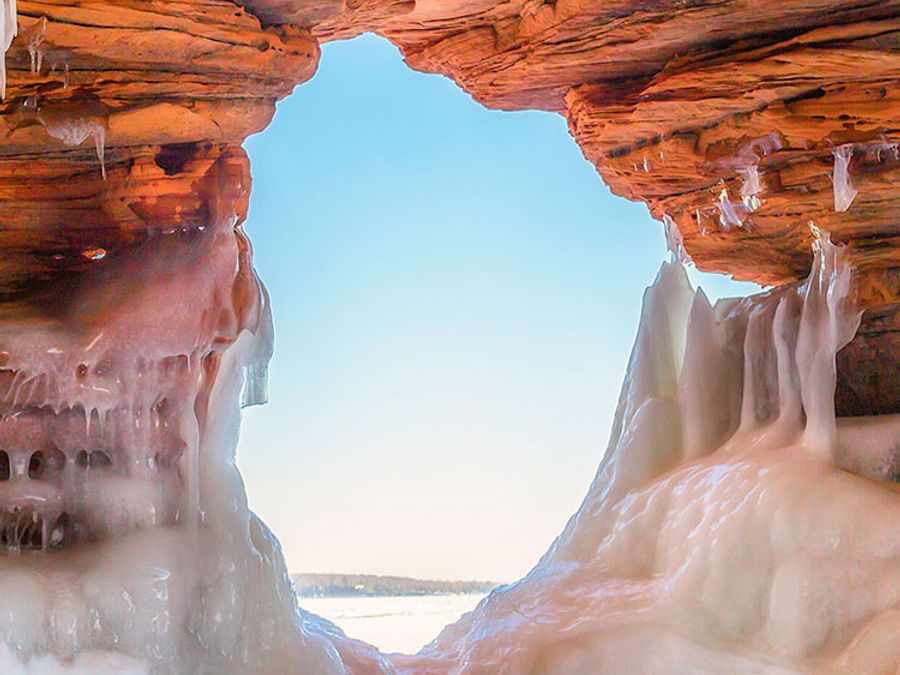
View from inside the Apostle Islands ice caves in Wisconsin
Photo credit: Dendron/ iStock

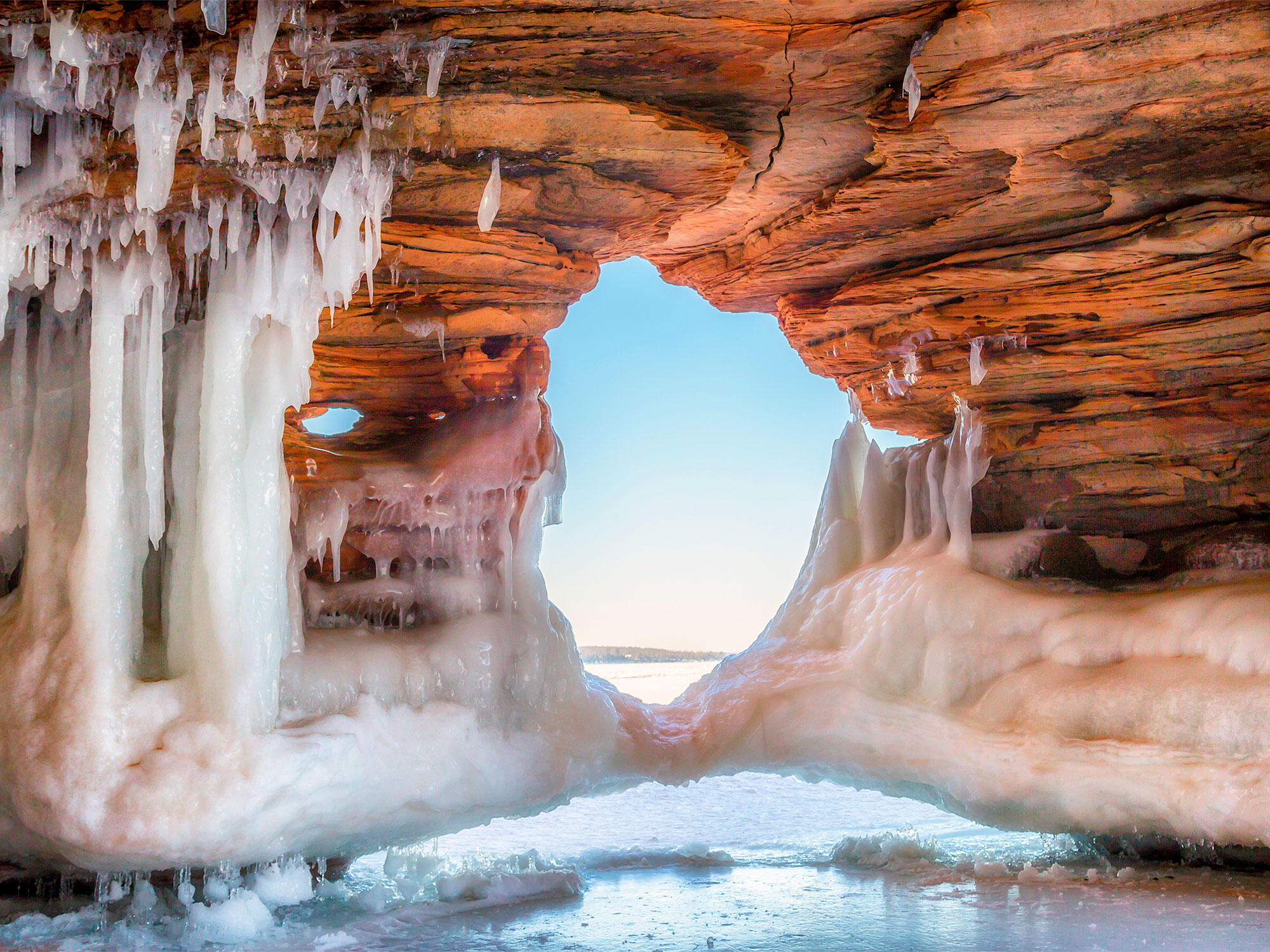
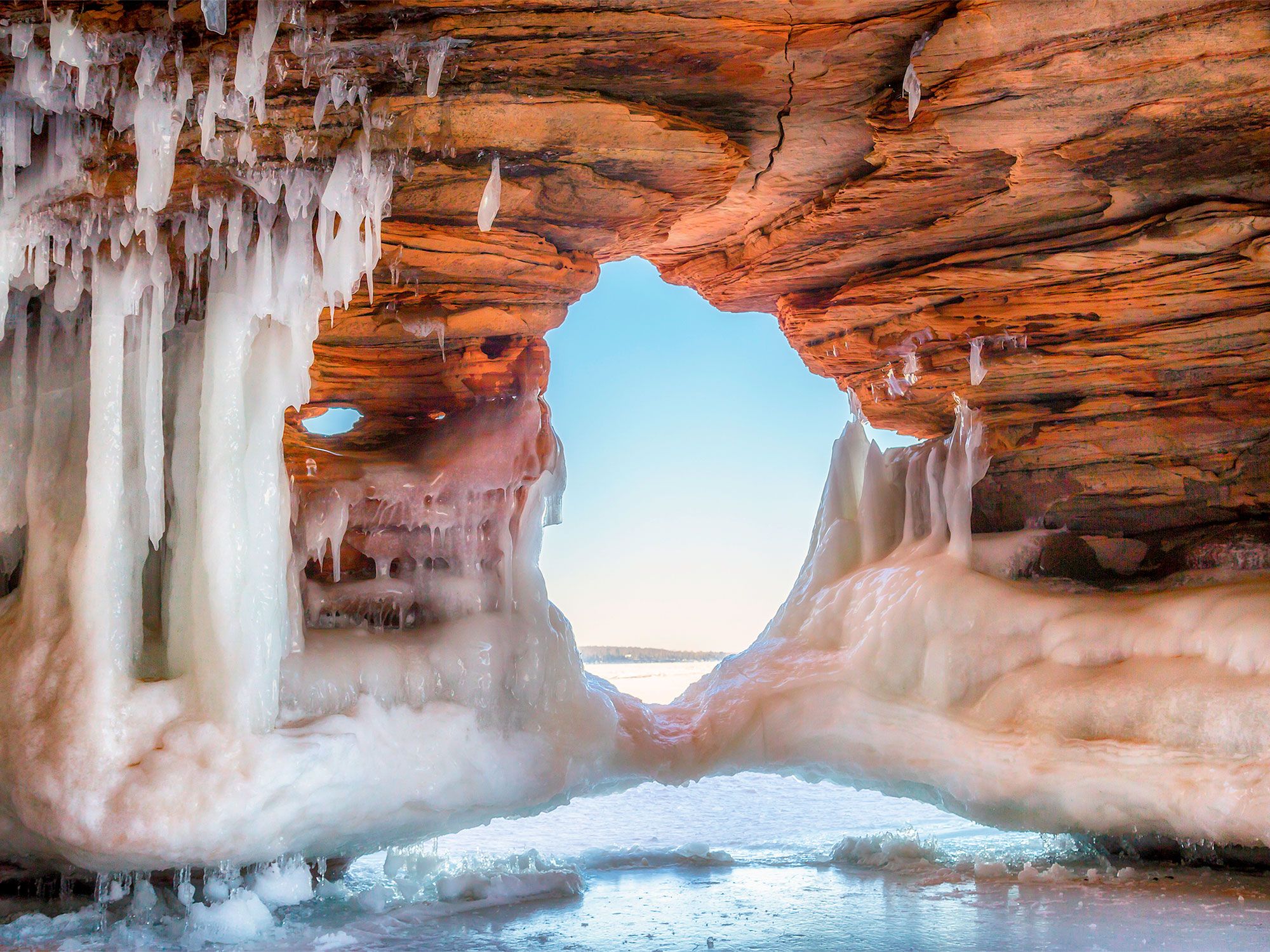
The 22 wooded islands in Lake Superior that make up northern Wisconsin’s Apostle Islands National Lakeshore are popular during the warmer months for paddling, sailing, and hiking — but winter may actually be the best time to visit. That’s when you can marvel at one of the most unique landmarks in the country, the Apostle Islands mainland ice caves, located 18 miles west of the town of Bayfield. When Lake Superior freezes over, visitors can walk about a mile to the stunning rock formations and sea caves from the stairs at the end of Meyers Beach Road. Park officials monitor ice conditions carefully to ensure it’s safe; if conditions are right, you’ll be rewarded with a mesmerizing wonderland of needle-like icicles. You can even sometimes crawl into the caves, and marvel as the ice floor beneath reveals the bottom of the lake like a sheet of see-through glass.

Kasha-Katuwe Tent Rocks National Monument – New Mexico

Hoodoo rock formations at the Kasha-Katuwe Tent Rocks National Monument in New Mexico
Photo credit: sumikophoto/ Shutterstock

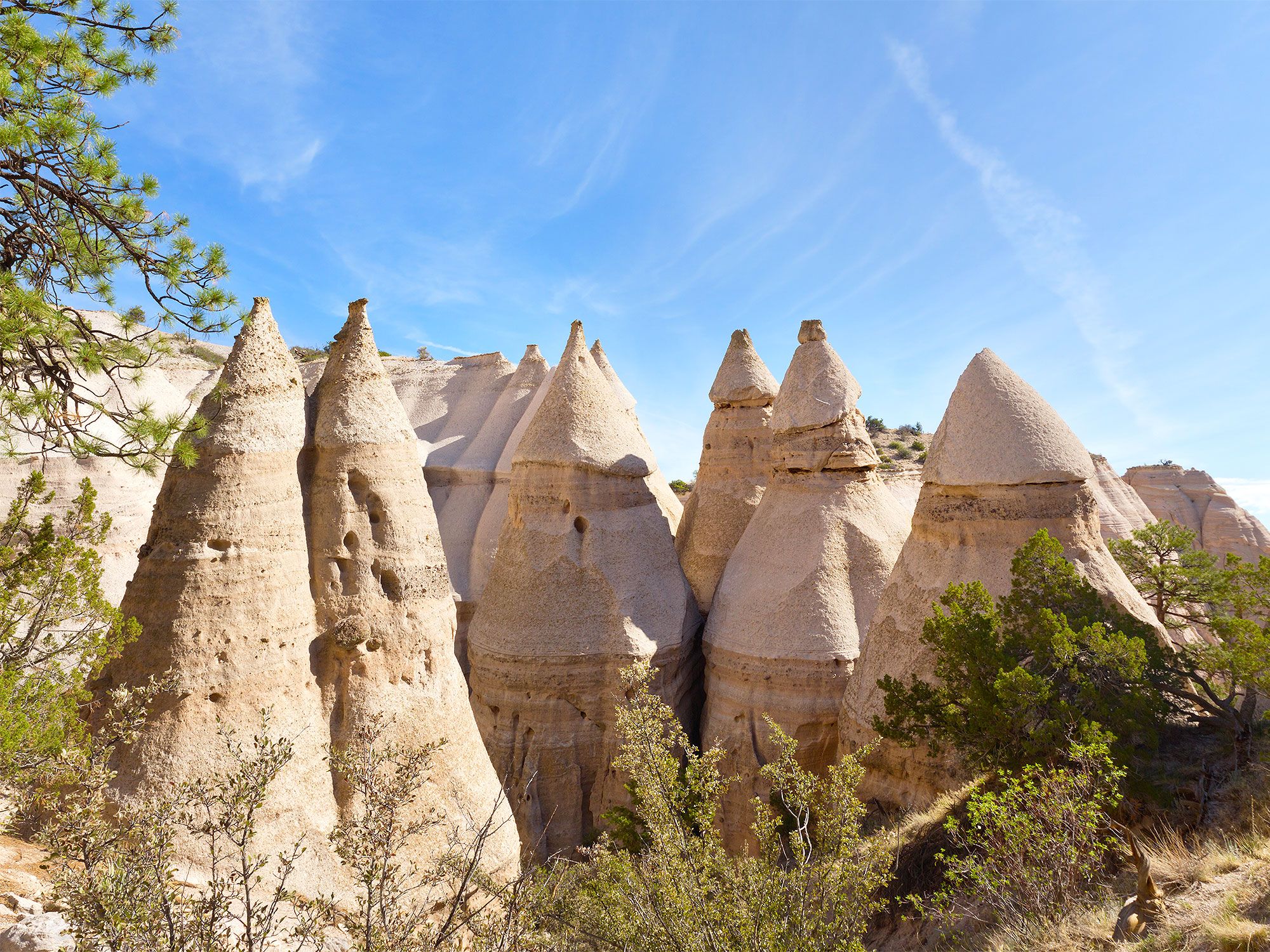
Located about 40 miles southwest of Santa Fe, the Kasha-Katuwe Tent Rocks National Monument boasts some of the most intriguing geology in the U.S., yet it’s rarely found on lists of the country’s top natural wonders. The fact that it’s overlooked by many just means there will be fewer people around to share the area’s incredible views of hoodoos and striated rocks. The cone-shaped rock formations are the result of massive volcanic eruptions that occurred approximately 6 to 7 million years ago, blanketing the landscape with over 1,000 feet of ash, pumice, and tuff deposits. Hiking the three-mile loop trail affords awe-inspiring views of the formations that range in height from a few feet to as tall as 90 feet. Note that, as of mid-2023, the area is closed, but the Bureau of Land Management is working with the Pueblo de Cochiti peoples to reopen the site in a way that reduces impacts on the lands, resources, and Indigenous population.

Spencer Hot Springs – Nevada

Overview of Spencer Hot Springs surrounded by Nevada desert and mountains
Photo credit: Dominic Gentilcore PhD/ Shutterstock

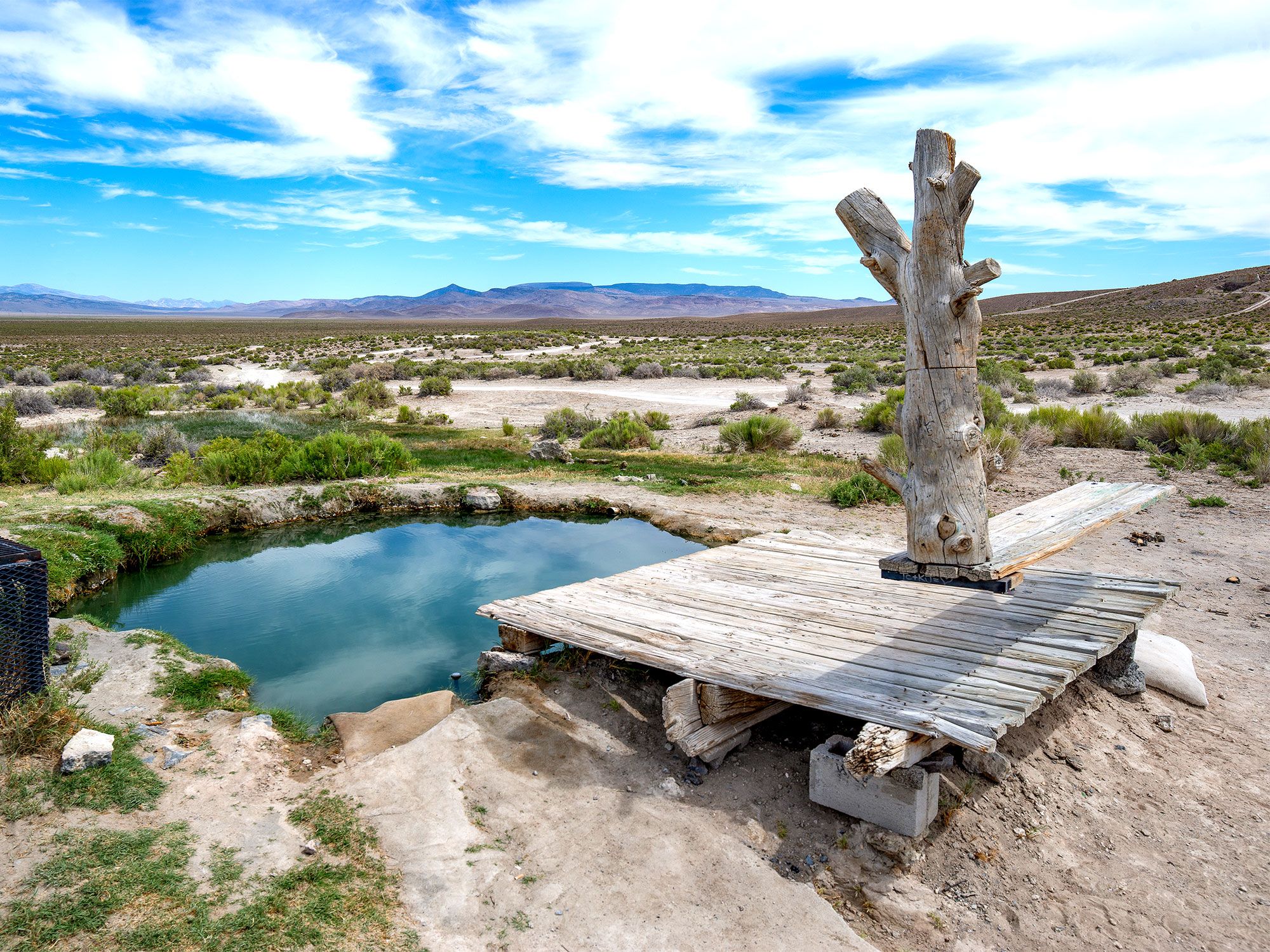
When driving U.S. Route 50 — dubbed the “Loneliest Road in America” for its long, empty stretches through remote central Nevada — you’d never know that a hidden gem sits among the sea of sagebrush. The Silver State is home to many natural hot springs, but there may be none more consistent than Spencer Hot Springs. There are no bathrooms or facilities of any kind, but visitors will find pools with idyllic water temperatures and stunning mountain vistas that can be enjoyed year-round. 

It’s a place in-the-know Nevadans have been visiting for decades, but one out-of-staters have only recently “discovered.” Located about 20 miles southeast of the town of Austin, the pools blend into the terrain, kept well hidden from passersby. They sit on public land, and over the years, frequent visitors have made significant improvements, such as the unique bathing tubs made out of cattle troughs, with hot water flowing in through pipes. If the water is too hot, you can easily remove the pipes, and vice versa if it gets too cold.

Hovenweep National Monument – Colorado/Utah

Archaeological ruins at Hovenweep National Monument in Colorado and Utah
Photo credit: Zack Frank/ Shutterstock

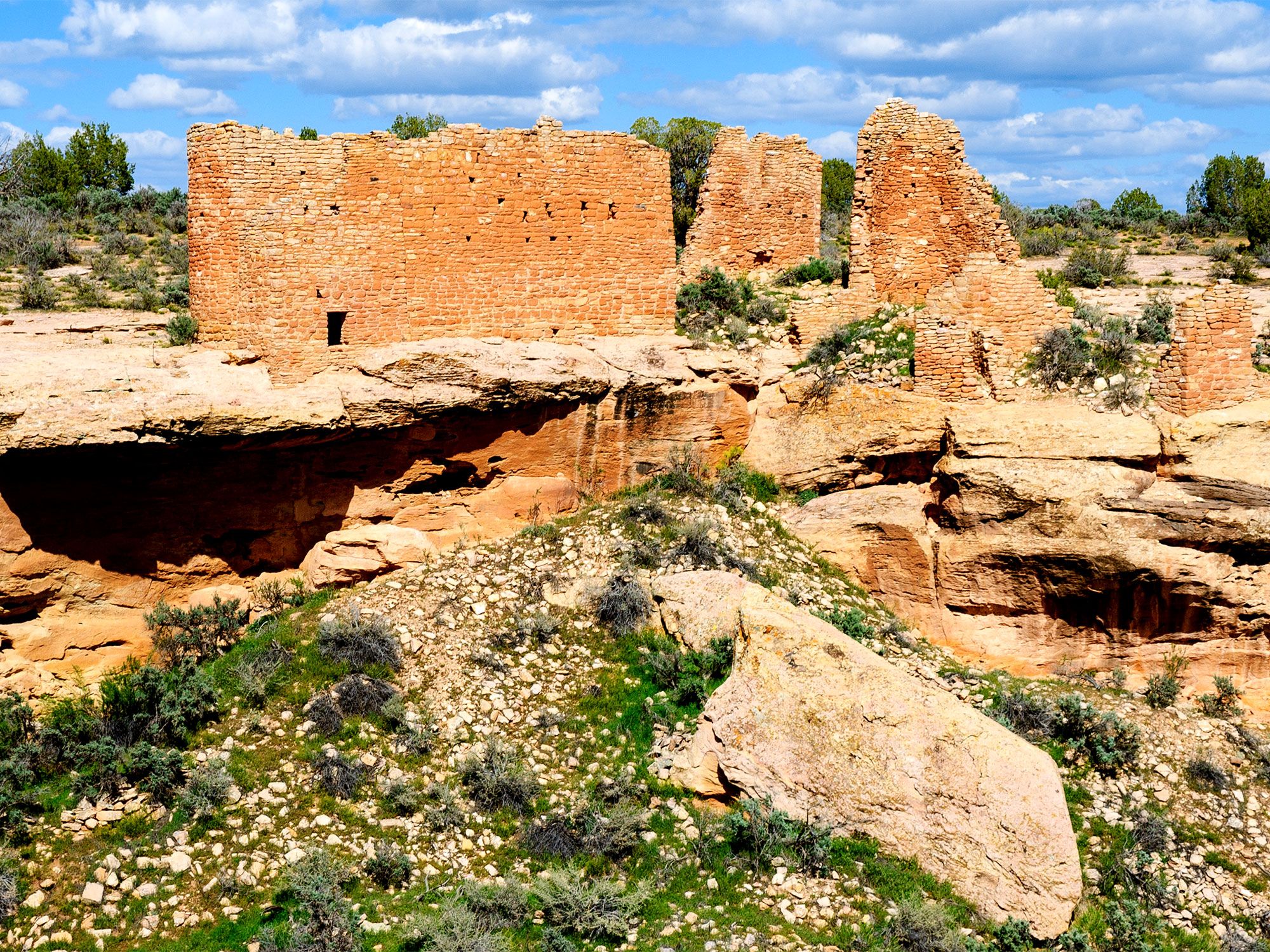
Located on the Cajon Mesa between Cortez, Colorado, and Blanding, Utah, Hovenweep National Monument features a fascinating and sprawling collection of Ancestral Puebloan archaeological sites. While it may not be considered an Instagram hot spot, this beautiful, remote area has been inhabited for at least 10,000 years, with structures that date from the 13th and 14th centuries, some of which include multi-story towers. The monument features six village groups strewn along a 16-mile road in the high desert. The visitor center is on the Utah side and includes exhibits detailing the site’s history. A two-mile loop trail will bring you through the Square Tower Group, the monument’s largest collection of structures. If you want to spend the night, there’s also a first-come, first-served 31-site campground nearby.

Thor’s Well – Oregon

Pacific Ocean flowing into Thor's Well sinkhole off the coast of Oregon
Photo credit: Lijuan Guo/ Shutterstock

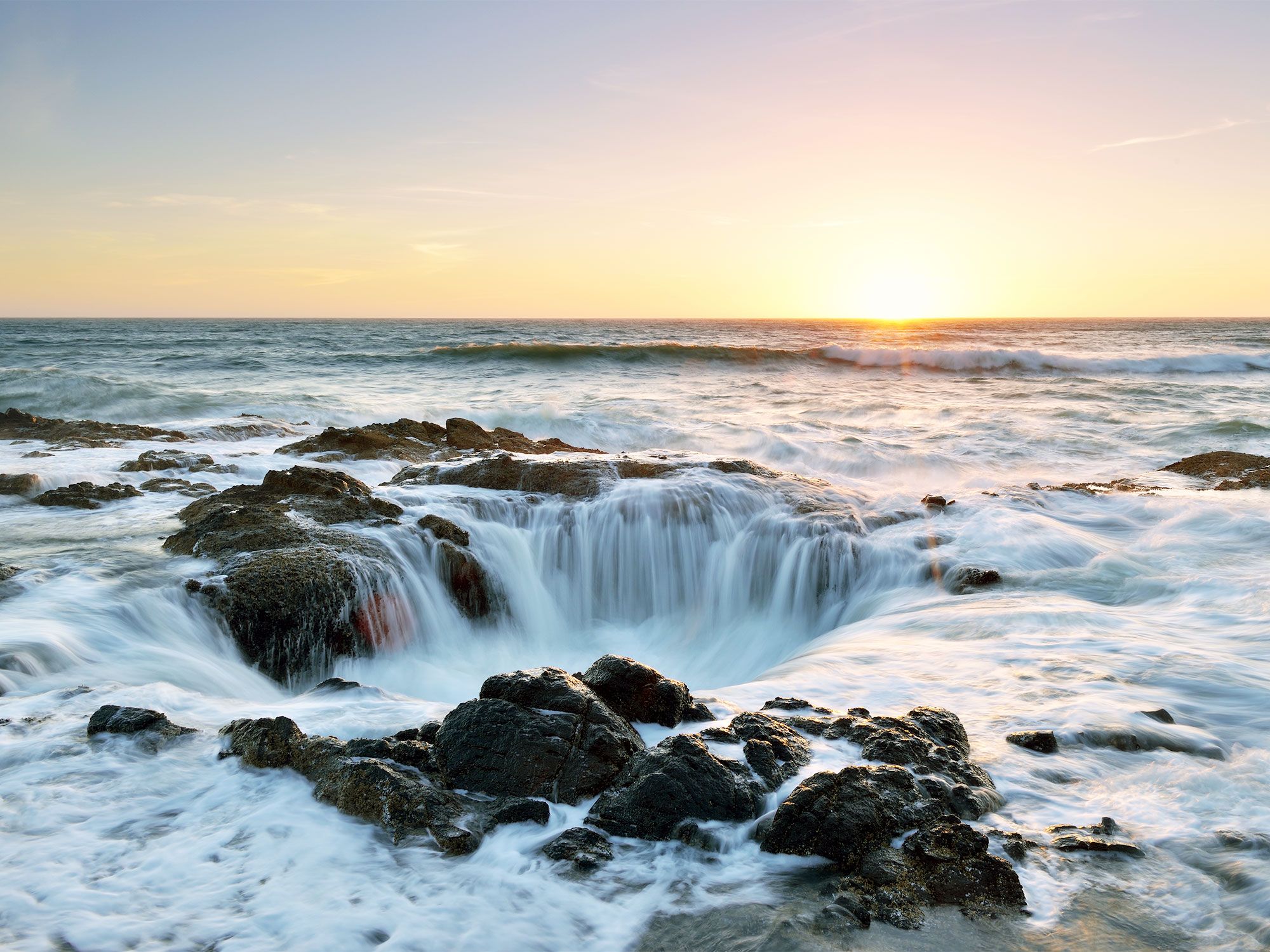
Tucked away near the tiny coastal village of Yachats, Thor’s Well was once a sea cave, but after the roof collapsed due to erosion, it became a natural sinkhole reaching depths of about 20 feet. But what makes Thor’s Well so unique is that it appears to be a massive drain that sucks in the ocean and never seems to fill, despite the continuous flow of water. The gaping hole is best viewed at high tide, when the water rushes in and then shoots up into the air, or during a storm when the waves violently wash over it before falling back through. A paved trail leads visitors to the overlook, and there are other trails that lead to a ground-level view. However, visitors should be extra cautious and keep a safe distance from this stunning wonder.

Skull Rock – California

Skull Rock at Joshua Tree National Park in California
Photo credit: Hanka B./ Shutterstock

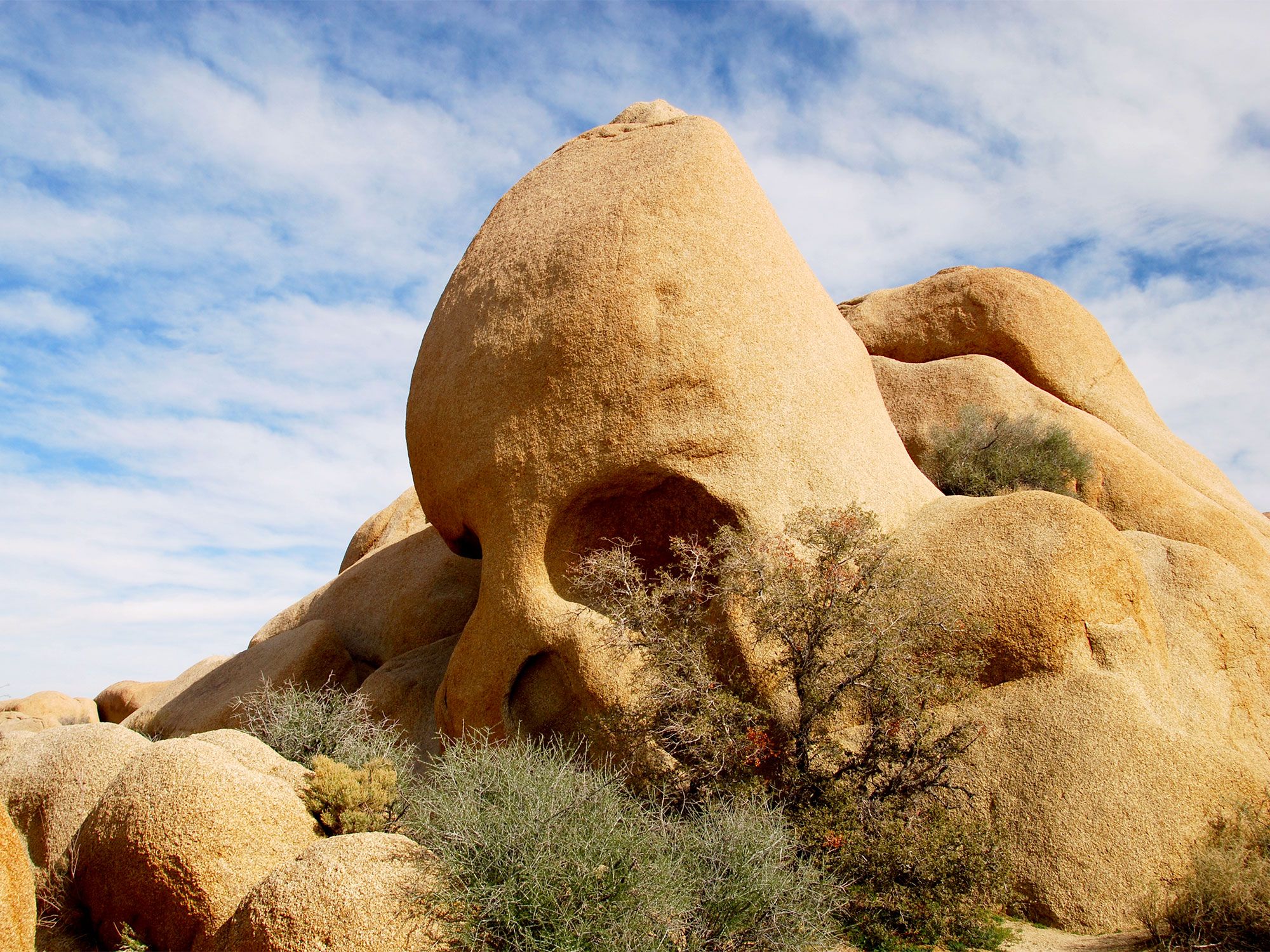
Southern California’s Joshua Tree National Park is famous for its bizarre, spiky Joshua trees and other unusual desert plants, but it also hosts some incredible rock formations that are popular with climbers. One of the most unique such attractions is Skull Rock, which has been naturally sculpted by the elements over time. As rain began to accumulate in tiny depressions, it eroded the granite until, eventually, two hollowed-out eye sockets formed — giving the rock a skull-like appearance (and its name). Visitors can follow a 1.7-mile nature trail to reach the spectacular and relatively unknown rock. 

Post Banner Image
Culture

9 Historic U.S. Music Venues Every Music Lover Should See

By pvandenbos
Read time: 6 minutes
May 25, 2023
Updated: July 25, 2023

9 Historic U.S. Music Venues Every Music Lover Should See

By pvandenbos

From tiny backstreet clubs to purpose-built arenas and huge stadiums, the United States is filled with thousands of places to enjoy the thrill of live music. If you’re looking for somewhere that not only guarantees a great show but is also steeped in history, these are nine historic concert venues in America every music fan should experience.

Red Rocks Amphitheatre – Morrison, Colorado

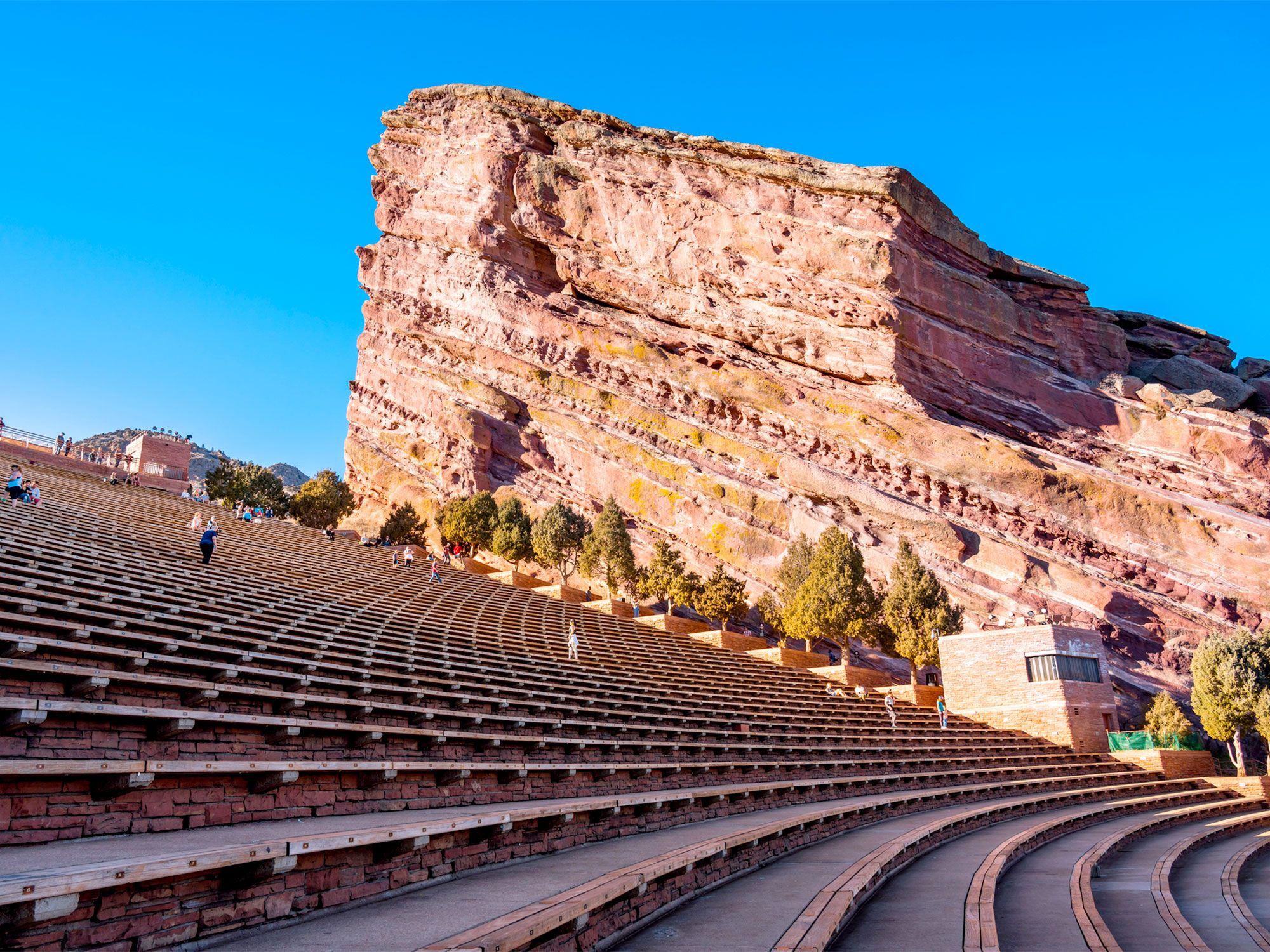
Stands at Red Rocks Amphitheatre in Morrison, Colorado, framed by red rock formations
Photo credit: yongyuan/ iStock

Carved directly into the stunning red-hued rocks that surround it, the Red Rocks Amphitheatre is built where the Great Plains converge with the Rocky Mountains at 6,450 feet above sea level. Construction of this National Historic Landmark — designed by renowned architect Burnham Hoyt — required workers to remove 50,000 cubic feet of rock before laying 90,000 square feet of sandstone. The 9,525-seat open-air venue features a 100-foot elevation difference between the stage and top row. And since its opening in 1941, some of the biggest names in music — from Jimi Hendrix to John Denver, Bob Dylan, and Stevie Wonder — have performed under the starry skies here. Red Rock is more than just a concert venue, though: Surrounding it is the 738-acre Red Rocks Park, which is home to geological wonders, dinosaur relics, museums, art exhibits, and miles of biking and hiking trails. 

40 Watt Club – Athens, Georgia

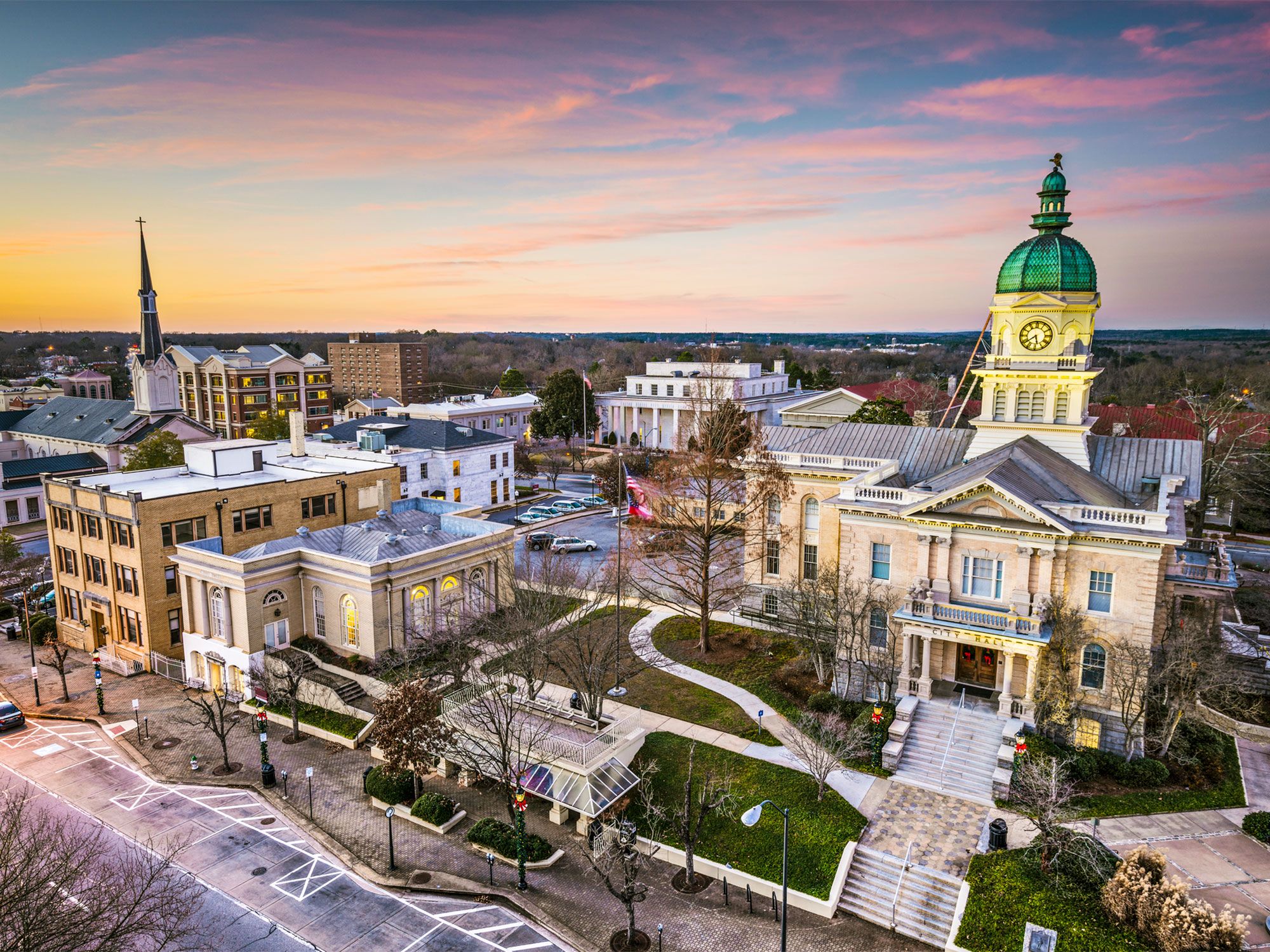
Aerial view of Athens, Georgia, at sunset
Photo credit: SeanPavonePhoto/ iStock

Established in 1978, the 40 Watt Club played a fundamental role in nurturing the punk rock and college rock scene, putting the otherwise unassuming college town of Athens, Georgia, on the cultural map. The club got its unofficial start with a Halloween party at the apartment of Curtis Crowe, the drummer for the new wave and post-punk band Pylon. The venue’s name is a reference to the power of the only working light at the time in the student digs. Throughout the 40 Watt Club’s 45-year history, it has helped launch the careers of bands such as the B-52s and R.E.M. While the focus remains on local bands, today the club has broadened its lineup to include DJ nights, burlesque, and drag shows.

Carnegie Hall – New York, New York

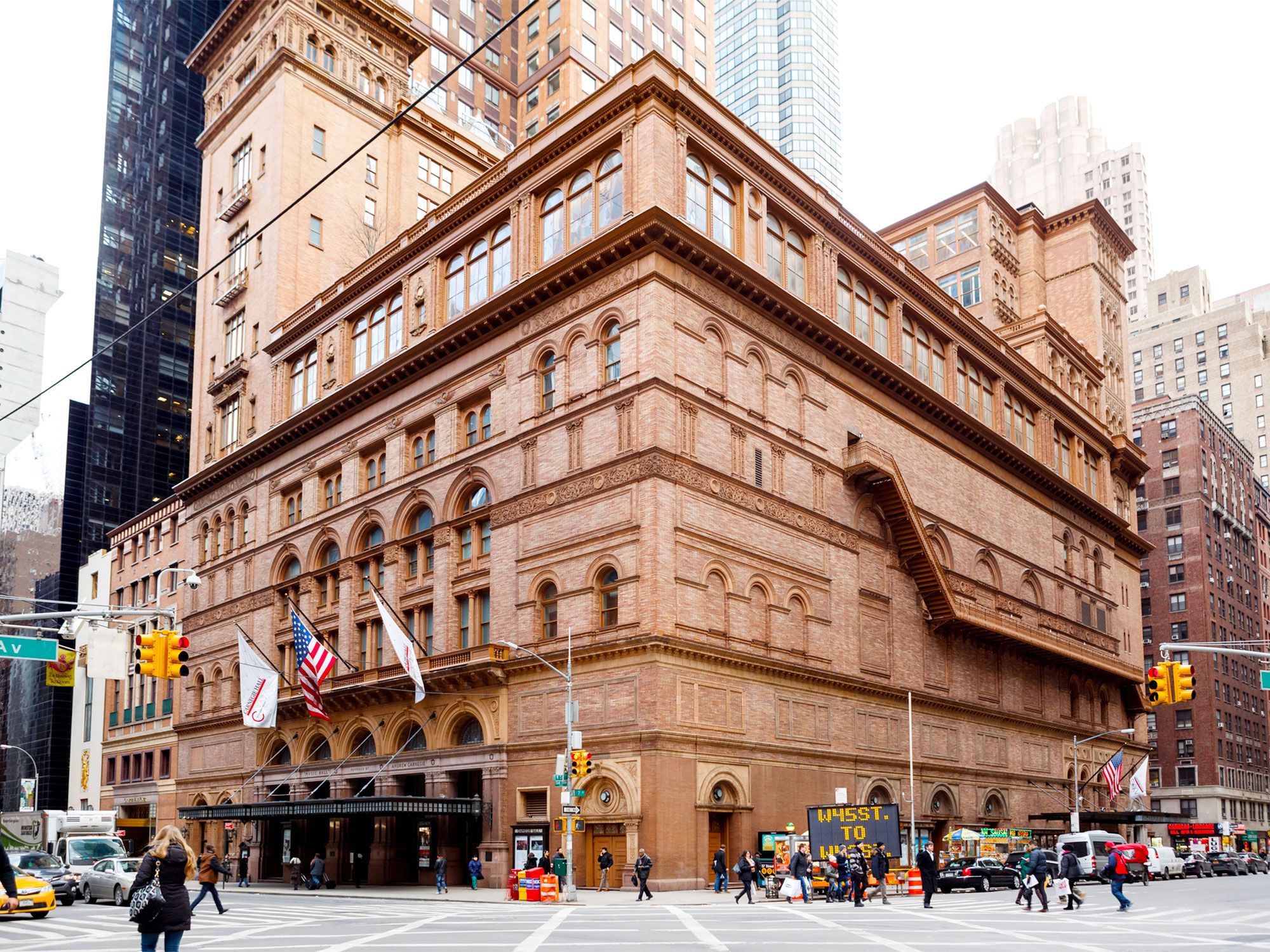
Brick exterior of Carnegie Hall in Manhattan, New York City
Photo credit: wdstock/ iStock

Since opening in 1891, Carnegie Hall has hosted a who’s who of music royalty, from Tchaikovsky on opening night (when tickets cost just $1) to the New York Philharmonic, Billie Holiday, the Beatles, and Bill Withers. The venue is split into three performance halls, the largest of which is the regal Stern Auditorium, which has a 2,804-seat capacity split over five levels. The musical history of the venue isn’t limited to concerts, either. The Rose Museum showcases a chronological timeline of the hall’s history through programs, posters, photographs, and other artifacts. Visitors can also take guided tours of this emblematic Midtown Manhattan landmark.  

Club Ebony – Indianola, Mississippi 

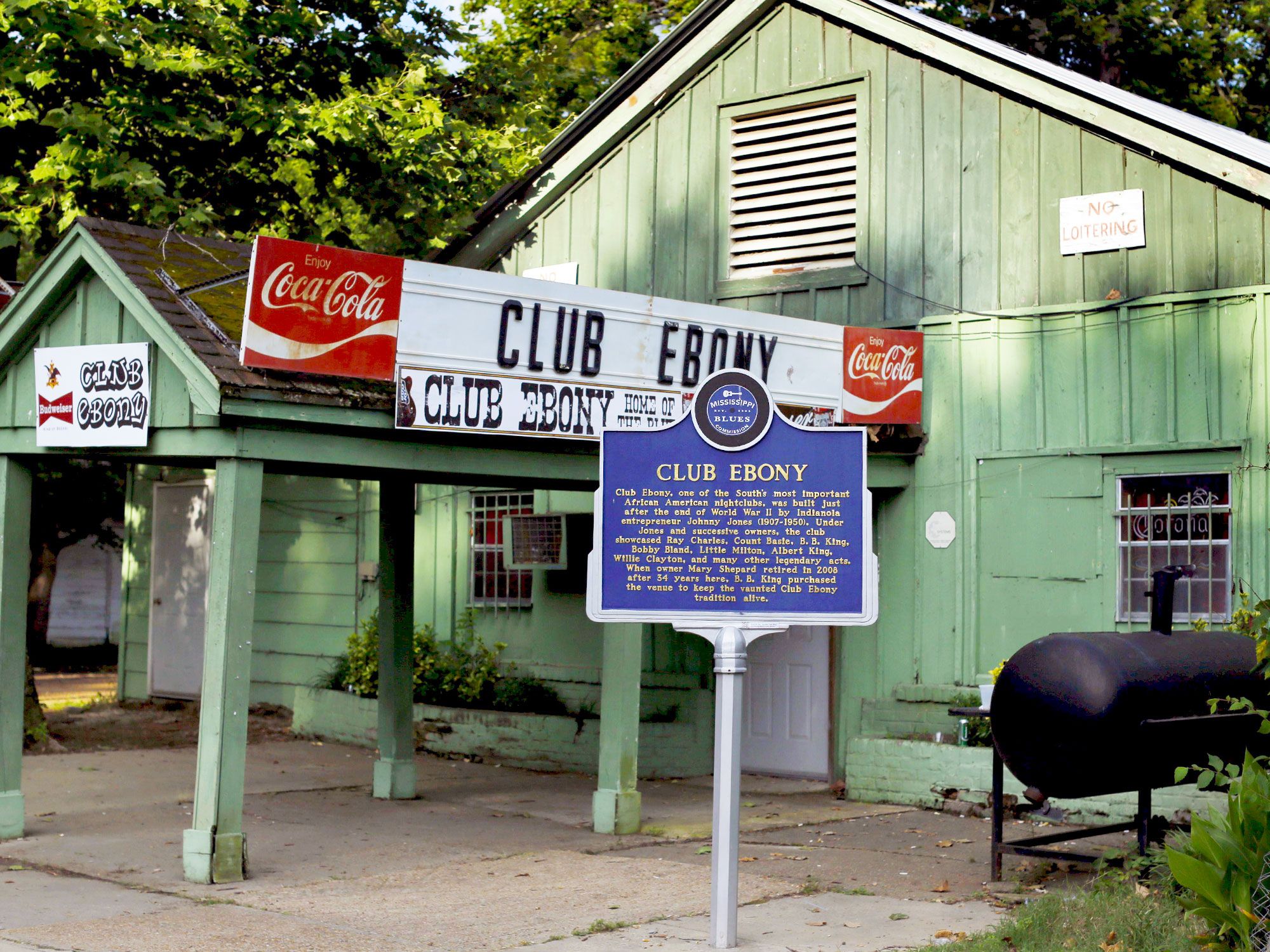
Marquee and exterior of Club Ebony in Mississippi
Photo credit: REUTERS/ Alamy Stock Photo

Club Ebony is a must-see for any blues fan. Opened in 1948, the intimate juke joint soon became a popular stop on the Chitlin’ Circuit, a group of venues throughout the South, Midwest, and East Coast that championed Black music. During this time, Club Ebony gained fame for attracting names like B.B. King, Count Basie, and Ray Charles to its stage. B.B. King himself even took over the ownership of the club in 2008. Today, it forms part of the Mississippi Blues Trail and opens for special events. Music and history lovers can learn more about the blues and Mississippi Delta at the nearby B.B. King Museum & Delta Interpretive Center.

The Fillmore – San Francisco, California

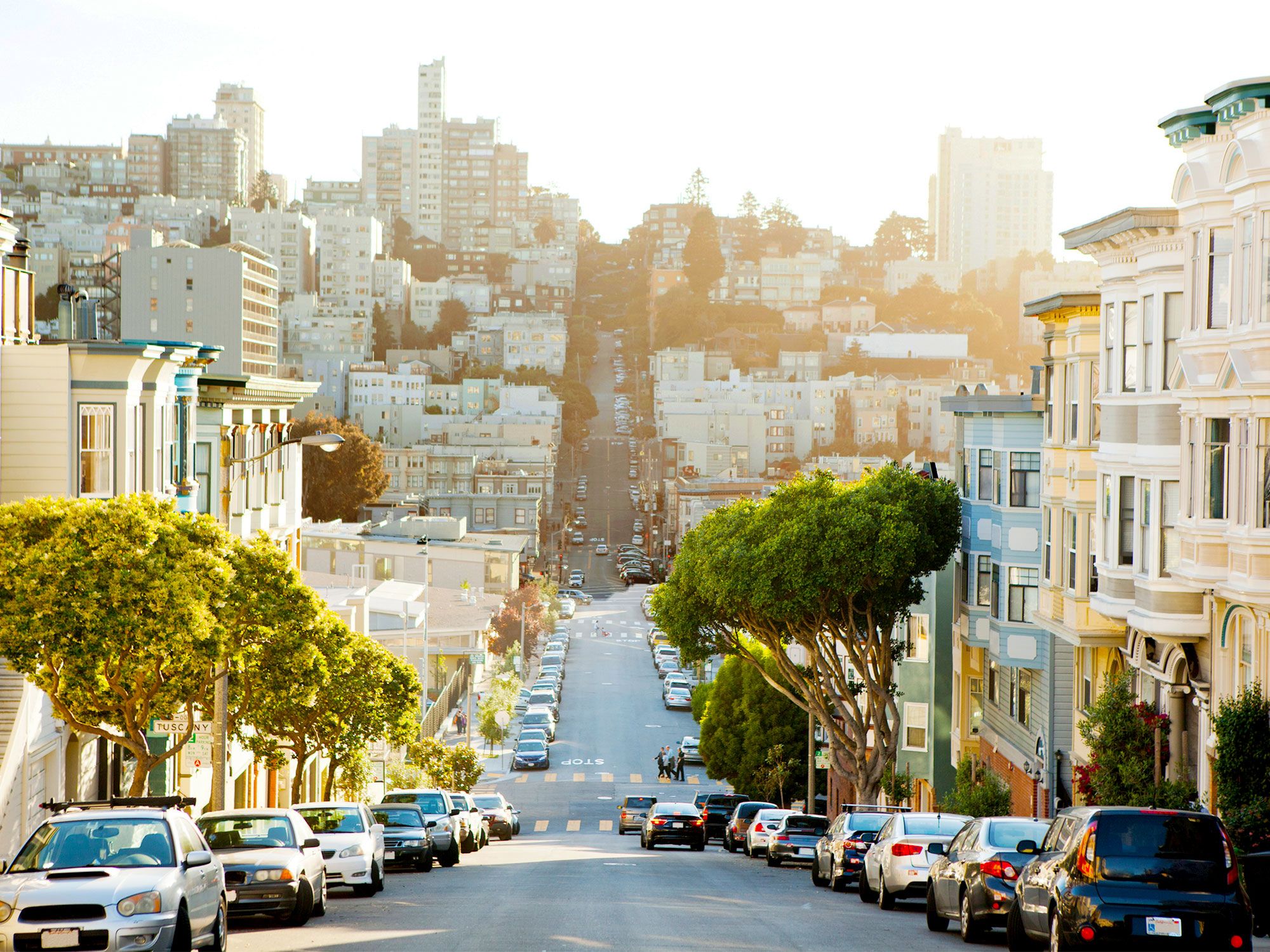
Hilly streets of San Francisco, California
Photo credit: ibsky/ iStock

When psychedelic rock took off in the 1960s, it found its spiritual home in San Francisco, particularly at the Fillmore. Hippies came to see pioneering California acts such as the Grateful Dead, the Doors, and Jefferson Airplane. British bands the Who, Led Zeppelin, and Pink Floyd soon followed. The venue opened in 1912 as a ballroom called the Majestic Hall, and from 1939 to 1952, it operated as a skating rink. Renowned for its light shows and uninhibited dancing, it became a hub for 1960s counterculture and live music. Today, the Fillmore puts on eclectic shows ranging from hip-hop to Latin pop and surf rock. 

Madison Square Garden – New York, New York

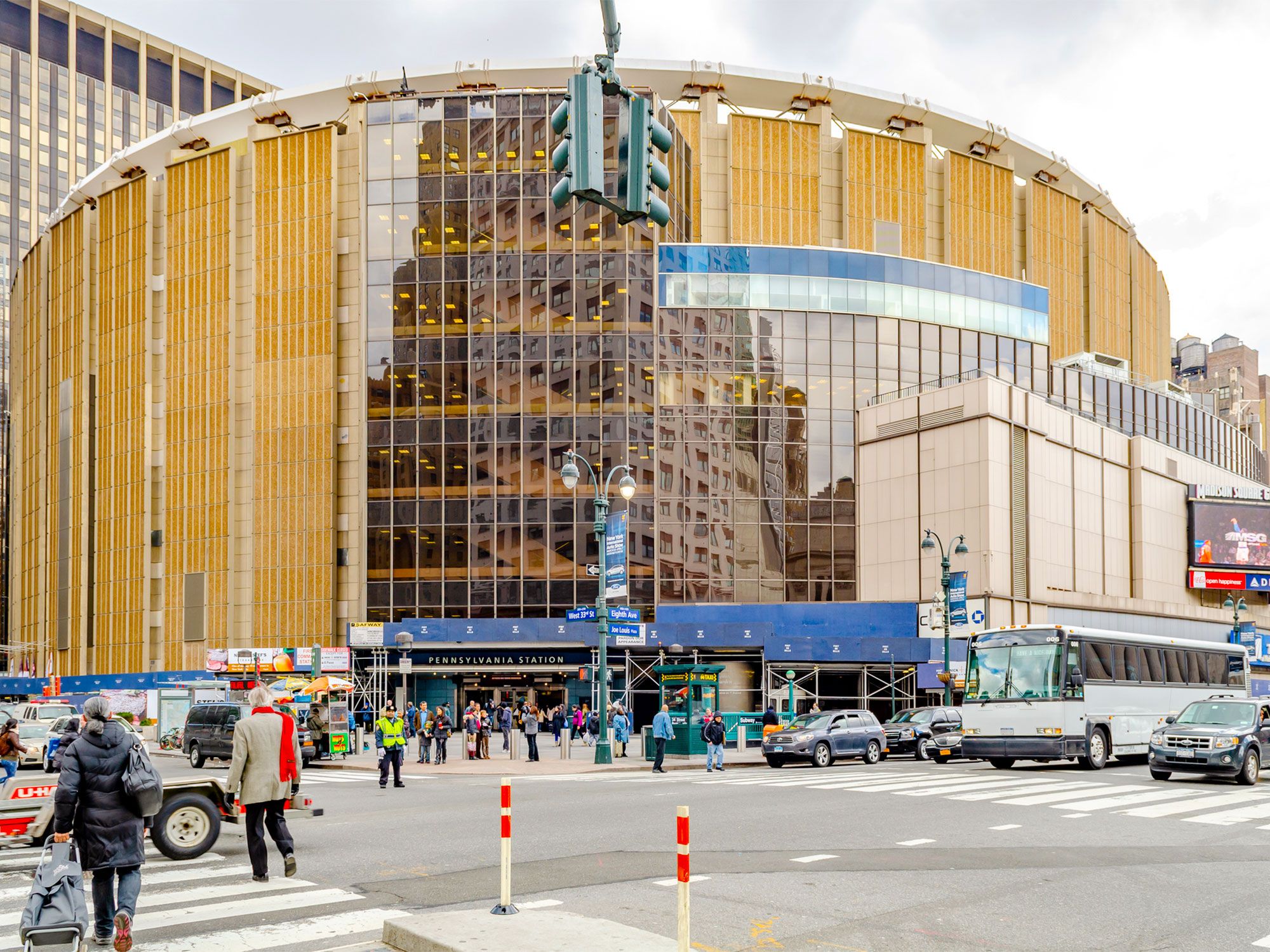
Exterior of Madison Square Garden in Manhattan, New York City
Photo credit: MarkusBeck/ iStock

First opened in 1879 and moved to its current location in 1968, Madison Square Garden (or simply “the Garden”) is another one of New York City’s most historic music venues. Headlining a show here is often considered a major milestone of an artist’s career — Elvis Presley, Frank Sinatra, the Rolling Stones, U2, and Madonna have all played in front of sold-out crowds of around 20,000 fans. And in 1972, John Lennon performed what would turn out to be his last complete gig at the Garden. In 2019, Billy Joel notched the Guinness World Record for most performances at the venue with his 107th-show at the Garden (and that number only continues to grow). From an architectural standpoint, the arena is notable for its circular shape and cable-supported ceiling, which contribute to its first-rate acoustics. Music and sports fans can go behind the scenes and learn more about the 150-year history on a guided tour.

Preservation Hall – New Orleans, Louisiana

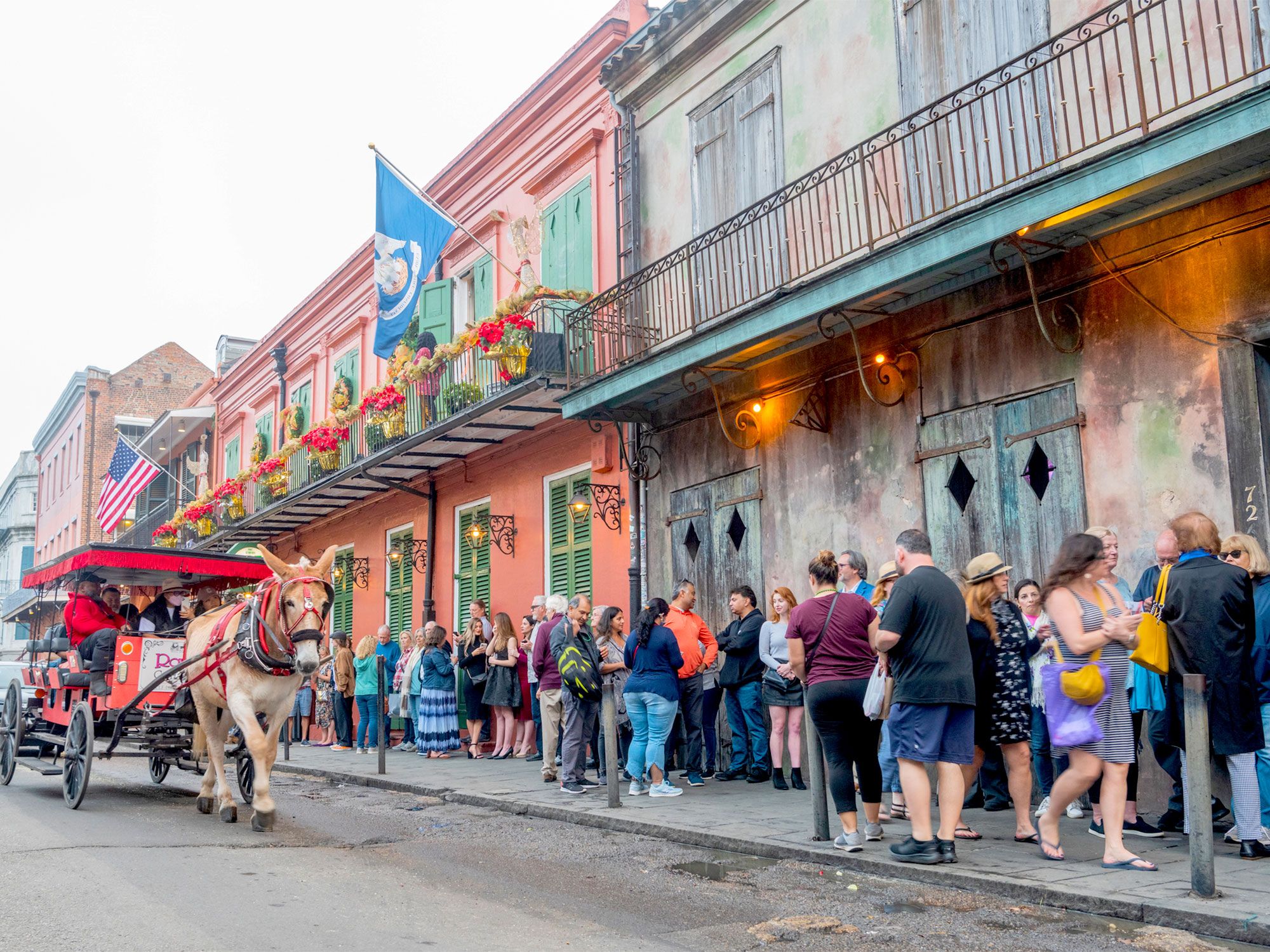
People lined up outside Preservation Hall in New Orleans, Louisiana
Photo credit: AlizadaStudios/ iStock

Set in New Orleans’ vibrant French Quarter, Preservation Hall is the beating heart of traditional jazz. At this no-frills venue, concert goers share benches or elbow up against the back wall during shows that take place nearly every night of the year. At each show, a collective of more than 50 musicians put on jam sessions — no one night is the same, but each one is a showcase of infectious jazz melodies. It all began in the 1950s, when local jazz legends such as George Lewis and Punch Miller began using a French Quarter art gallery as a rehearsing studio, which was turned into a live music venue in 1961. The popularity of Preservation Hall skyrocketed several months later, after the jazz-loving and honeymooning couple Allan and Sandra Jaffe took over management of the venue. Today, the couple’s son Ben Jaffe is a member of the resident Preservation Hall Jazz Band. 

Ryman Auditorium – Nashville, Tennessee

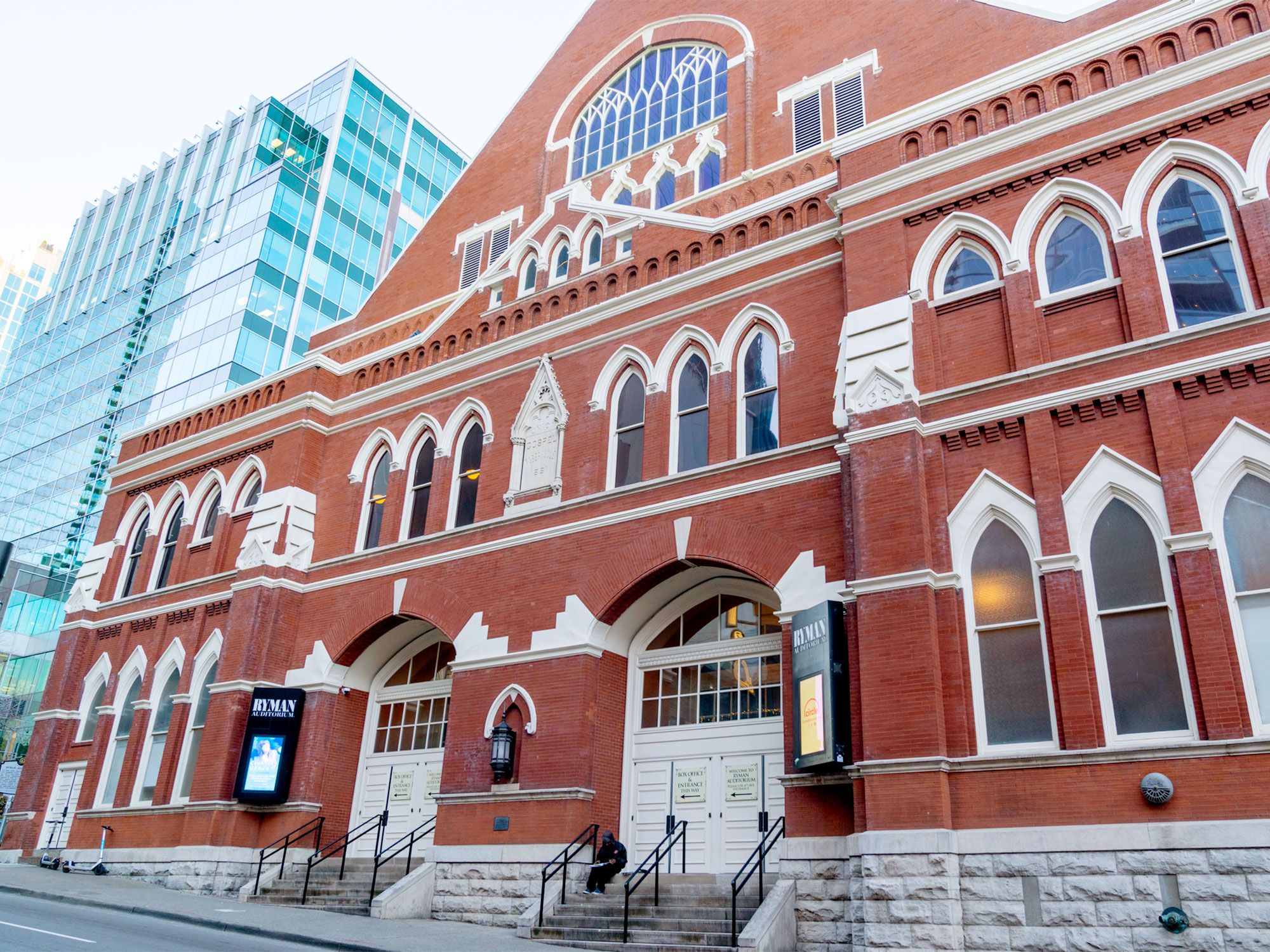
Exterior of the Ryman Auditorium in Nashville, Tennessee
Photo credit: Melissa Kopka/ iStock

If walls could talk, few venues on Earth would have more stories to tell than the Ryman Auditorium. Arguably the most famous concert hall in Nashville (aka Music City), this is where bluegrass was born and many of the great country music artists got their break. Originally a church, the Gothic redbrick building hosted its first concert in 1892 and earned legendary status after it was chosen as the location for the Grand Ole Opry. From 1943 to 1974, this weekly country music stage show turned the Carter family, Loretta Lynn, Johnny Cash, and others into household names. Following a downturn from 1974 to a grand reopening in 1994, the auditorium is alive again with state-of-the-art technology and unrivaled acoustics. 

Whisky a Go Go – West Hollywood, California

Billboard above the Whisky a Go Go on a street corner in West Hollywood, California
Photo credit: AaronP/Bauer-Griffin via Getty Images

In January 1964, a small nightclub opened on a corner of the Sunset Strip in West Hollywood. Folk-blues artist Johnny Rivers performed that night, and in turn laid the foundations for one of the world’s most venerable live music clubs. Two years later, Whisky a Go Go became the storied stage for the earliest shows by the Doors. For a period of three months, the band opened for other L.A. rock bands, including Buffalo Springfield and The Turtles, and this stint at Whisky a Go Go catapulted them to fame. Throughout the 1960s, the club established itself as the go-to spot on the iconic Sunset Strip thanks to shows by the likes of Janis Joplin and Van Morrison’s Them. Whisky a Go Go also helped put L.A. rockers Mötley Crüe and Guns N’ Roses on the map. In 2006, it was the first live music venue to be inducted into the Rock and Roll Hall of Fame.

Post Banner Image
Outdoors

5 of the Most Colorful Places on the Planet

By Cynthia Barnes
Read time: 4 minutes
May 25, 2023
Updated: January 7, 2026

5 of the Most Colorful Places on the Planet

By Cynthia Barnes
Author
Cynthia Barnes
Cynthia kicked around the world for a while before landing in Colorado. Her work has appeared in Food & Wine, the Boston Globe, and National Geographic, among others. She loves dives — both scuba and bars — baseball, the Oxford comma, and live music.

Paul Gauguin spoke of color as a “deep and mysterious language, the language of dreams.” The French painter covered his canvases with the brilliant blues of Tahiti and the rich yellows of farms in Brittany. Scientists also explore the power of color in chromotherapy — based on the theory that colors can influence us mentally and physically, a belief that goes back to at least ancient Egypt. In nature, the beauty of color never fails to impress, delighting our eyes (and our cameras), whether in rainbows or rock sculptures. Here are five of the world’s most colorful locales.

Caño Cristales – Colombia

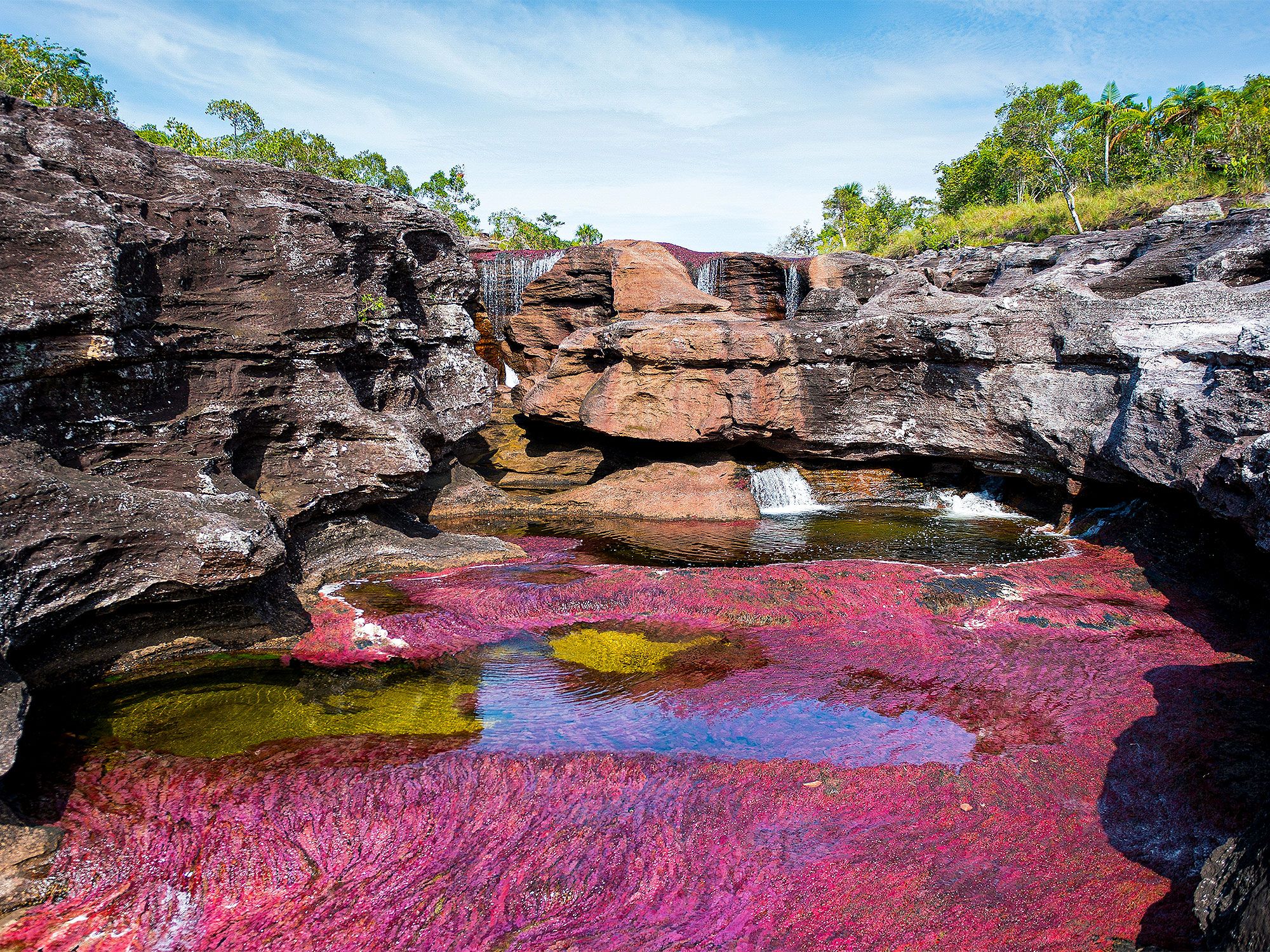
Striking red and green colors in Colombia’s Caño Cristales river
Photo credit: k-libre35/ Shutterstock

One of South America’s most beautiful natural spectacles is the “liquid rainbow” of Colombia’s Caño Cristales (Crystal Channel). The phenomenon typically occurs from June through November each year, when the conditions are ideal for the unique aquatic plants (macarenia claviger) growing in this 62-mile “River of Five Colors” to bloom in shades of bright red, yellow, green, blue, and black — a phenomenon found nowhere else in the world. There are even designated swimming areas where you can soak in the brilliantly hued waters flowing through Colombia’s Serranía de la Macarena National Park. Besides the river itself, the area is a hotbed of biodiversity. The Amazon and Orinoco river basins converge with the Andes to form an ecosystem that’s home to iguanas, turtles, and more than 400 species of birds. Book early to secure a permit and a local guide, both of which are required when visiting this protected area.

Red Sea Beach – China

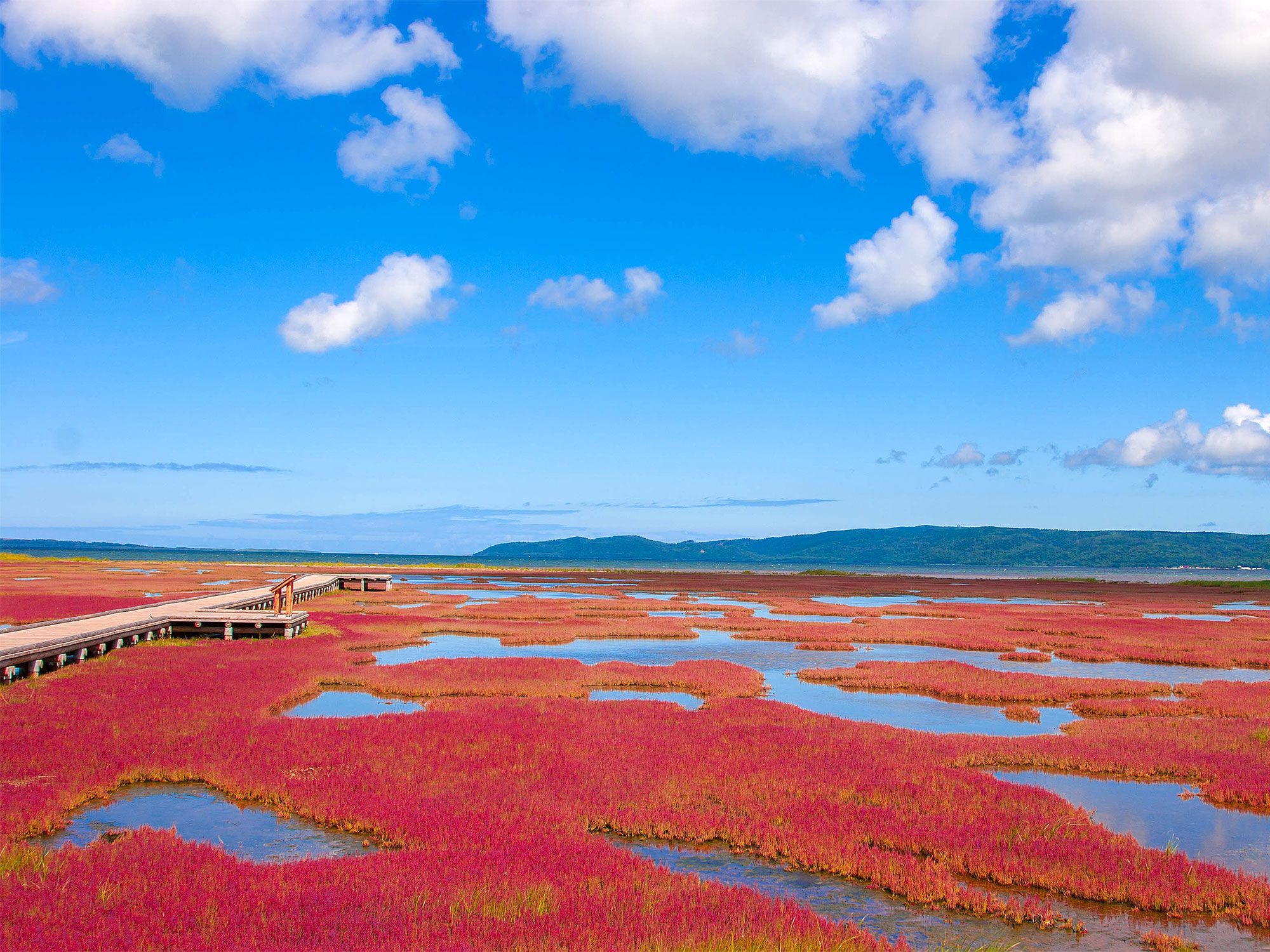
Deep-red flora of Red Beach in China, seen from above
Photo credit: T. Kingfisher/ Shutterstock

On the gulf of China’s Yellow Sea, at the mouth of the Shuangtaizi River outside the city of Panjin, lies one of the world’s largest wetlands and reed marshes. More than 260 species of birds and nearly 400 types of animals frequent these shallow tidelands, located about a six-hour drive from Beijing. Despite the name “beach,” you won’t find any sand here. But each fall, you can find an astonishing display, as the seepweed species that grows here absorbs saltwater, which turns the initially green plants to a brilliant shade of crimson. Elevated wooden walkways traverse the scarlet carpet, which stretches 16 miles along the banks of the river.

Rainbow Mountain – Peru

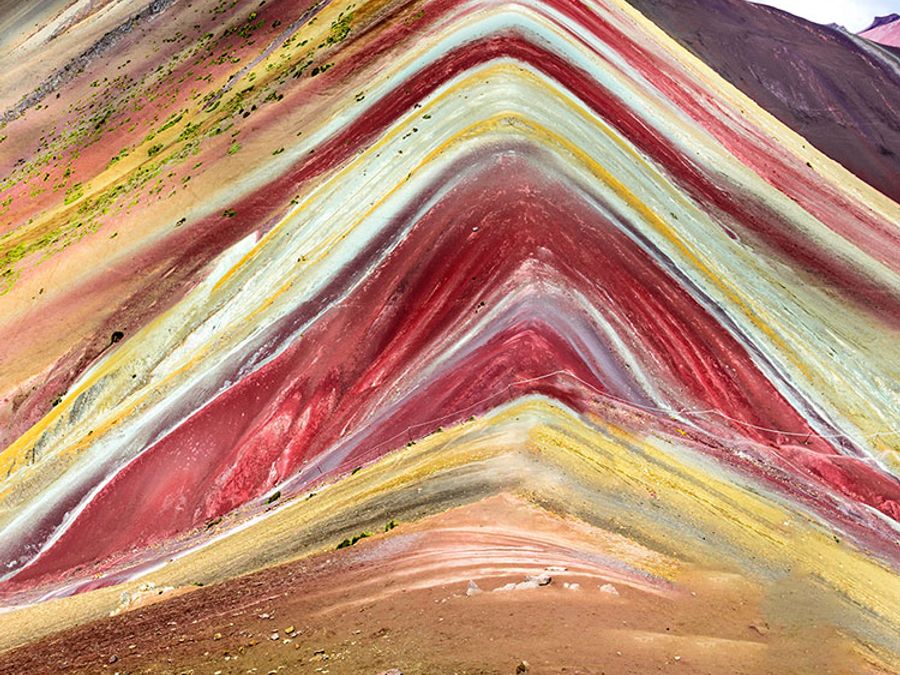
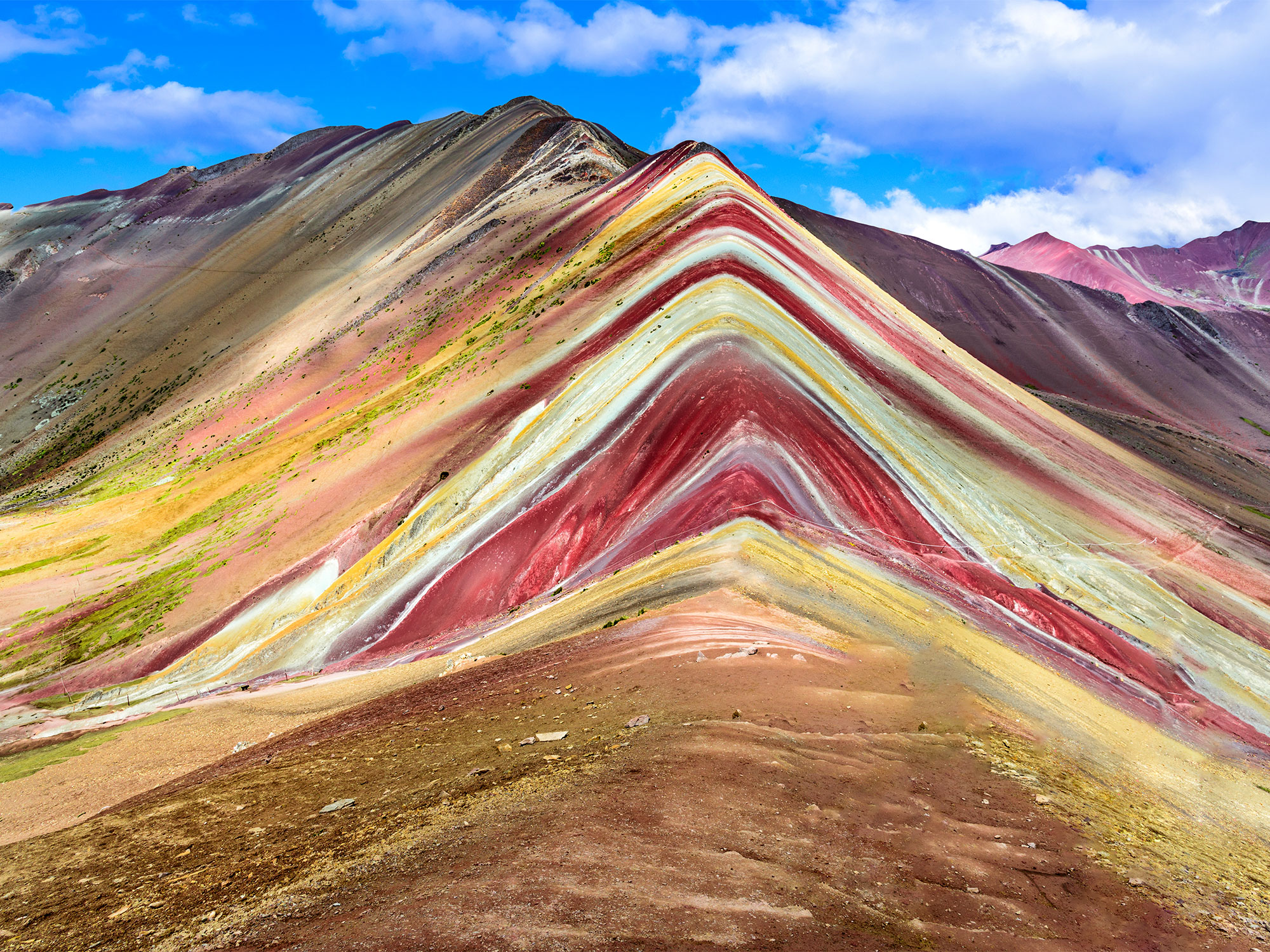
Striated rainbow colors of Rainbow Mountain in Peru
Photo credit: ecstk22/ Shutterstock

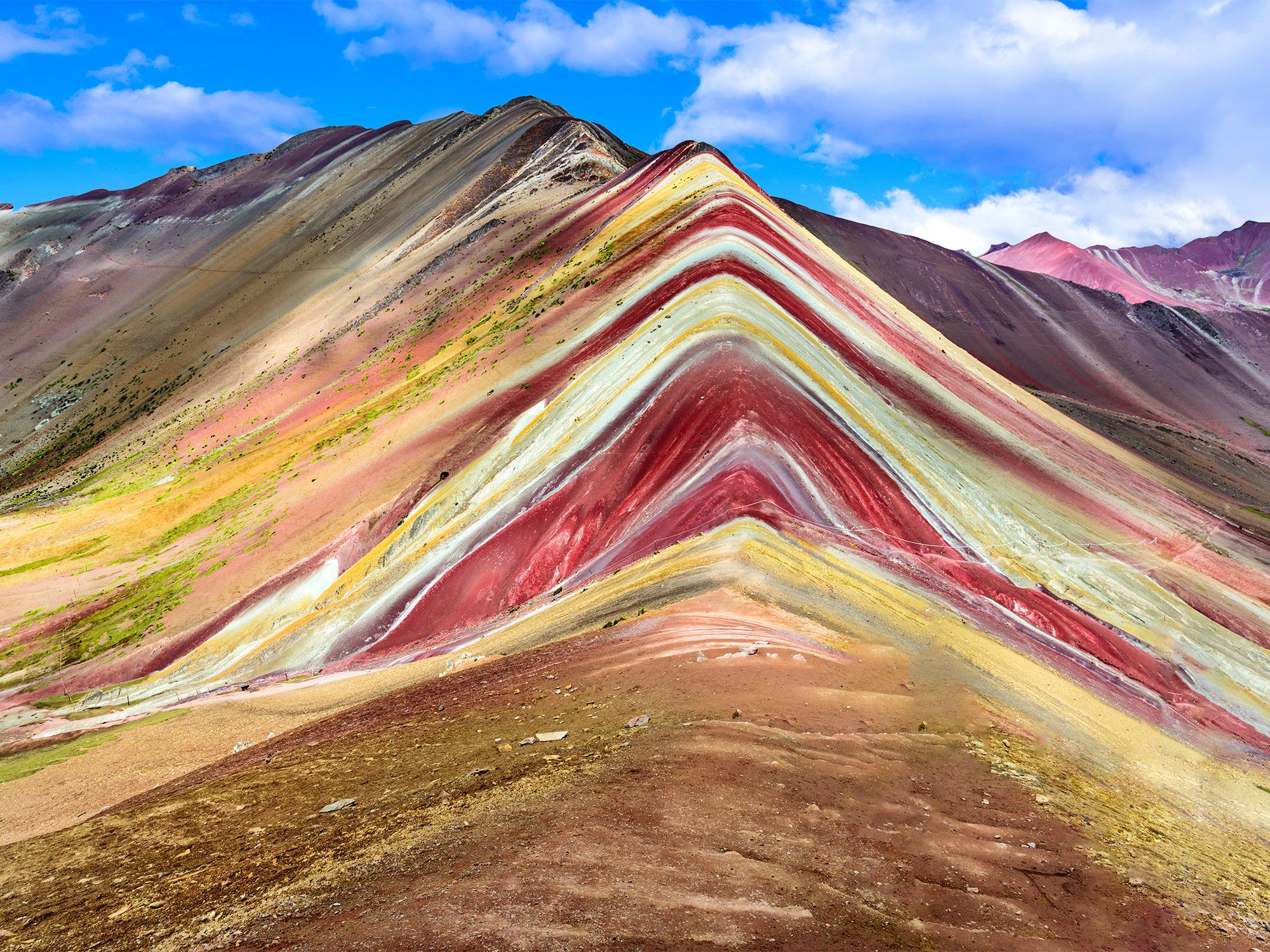
The vivid stripes of color painting Peru’s Rainbow Mountain (which locals call Vinicunca) are 100% real — although photos of this natural wonder are usually enhanced. Located in the Cusco region of the Andes, the Montaña de Siete Colores (Mountain of Seven Colors) is the result of ice that once covered this 17,060-foot peak. As temperatures have warmed over the past decade, the waters melted and mixed with mineral sediments in the soil, forming bands of red (thanks to rust), gold (iron sulfide), lavender (goethite), and green (chlorite). Getting to the mountain is an investment — requiring a three-hour drive from Cusco and a six-mile out-and-back hike that isn’t recommended for beginners or those not yet adapted to the altitude. You can rent a horse if the trek proves too difficult. March through November are typically the best months to visit.

White Sands National Park – New Mexico

Pathway over white sand dunes of White Sands National Park in New Mexico
Photo credit: Michael Rosebrock/ Shutterstock

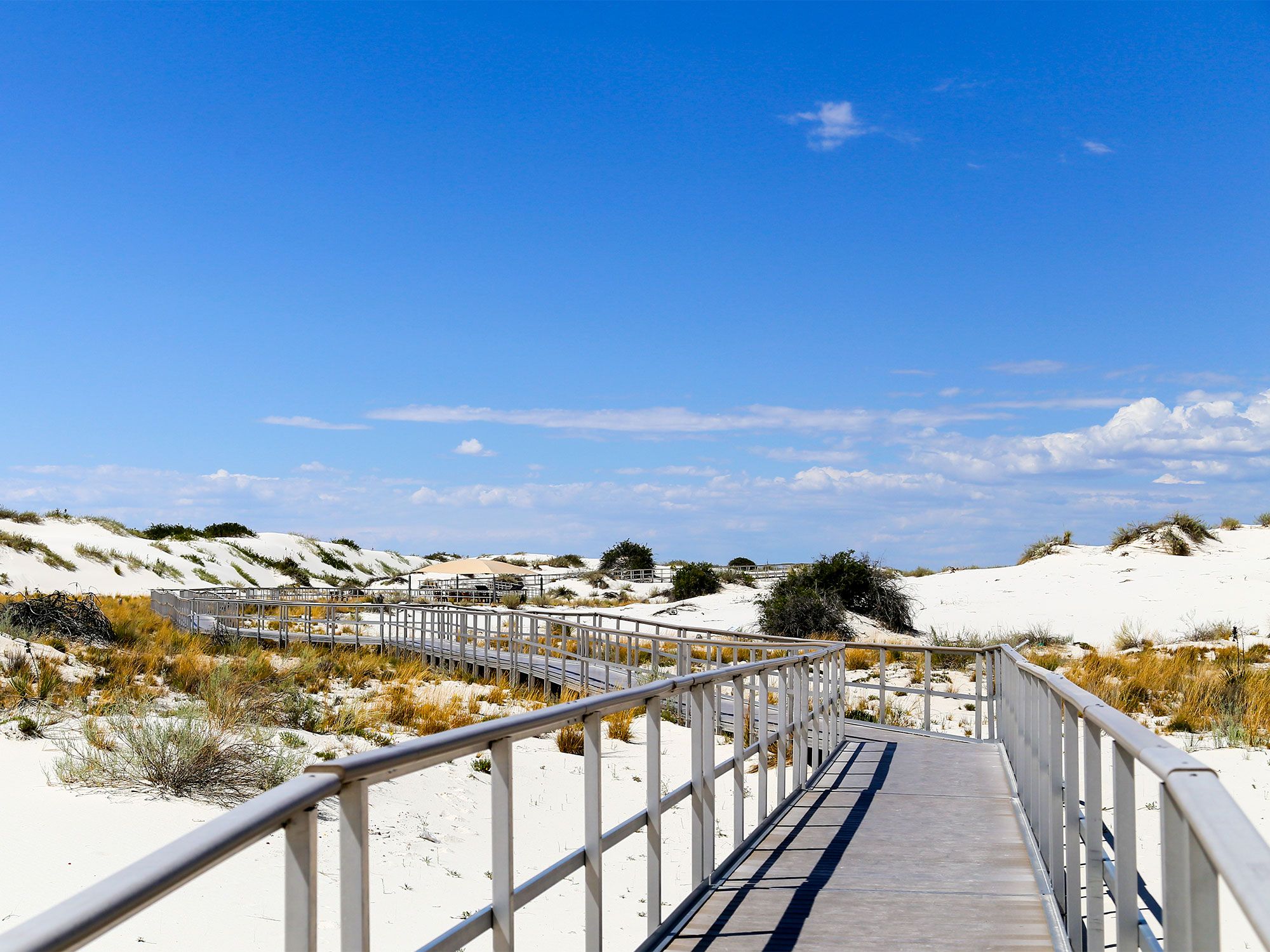
In physics, it’s argued that white isn’t actually a color — it’s a wavelength that contains every other visible hue. So the blindingly white sands of the aptly named White Sands National Park might actually be the most colorful place on the planet, spectrum-wise. Regardless of which side you pick on the color debate, the park is a place of grandeur. Nestled between the Sacramento and San Andres Mountain ranges of southern New Mexico, White Sands National Park is home to glistening dunes of white that rise from the Tularosa Basin, creating the world’s largest gypsum dunefield. Cycling, hiking, horseback riding, and sledding are popular activities at the park, which is also a great spot for stargazing. The park’s entrance road, Dunes Drive, runs through the White Sands Missile Range, and is occasionally closed for a few hours while tests are in progress.

Komodo National Park – Indonesia

Boats moored off sandy beach in translucent waters of Komodo National Park in Indonesia
Photo credit: Ivoha/ Shutterstock

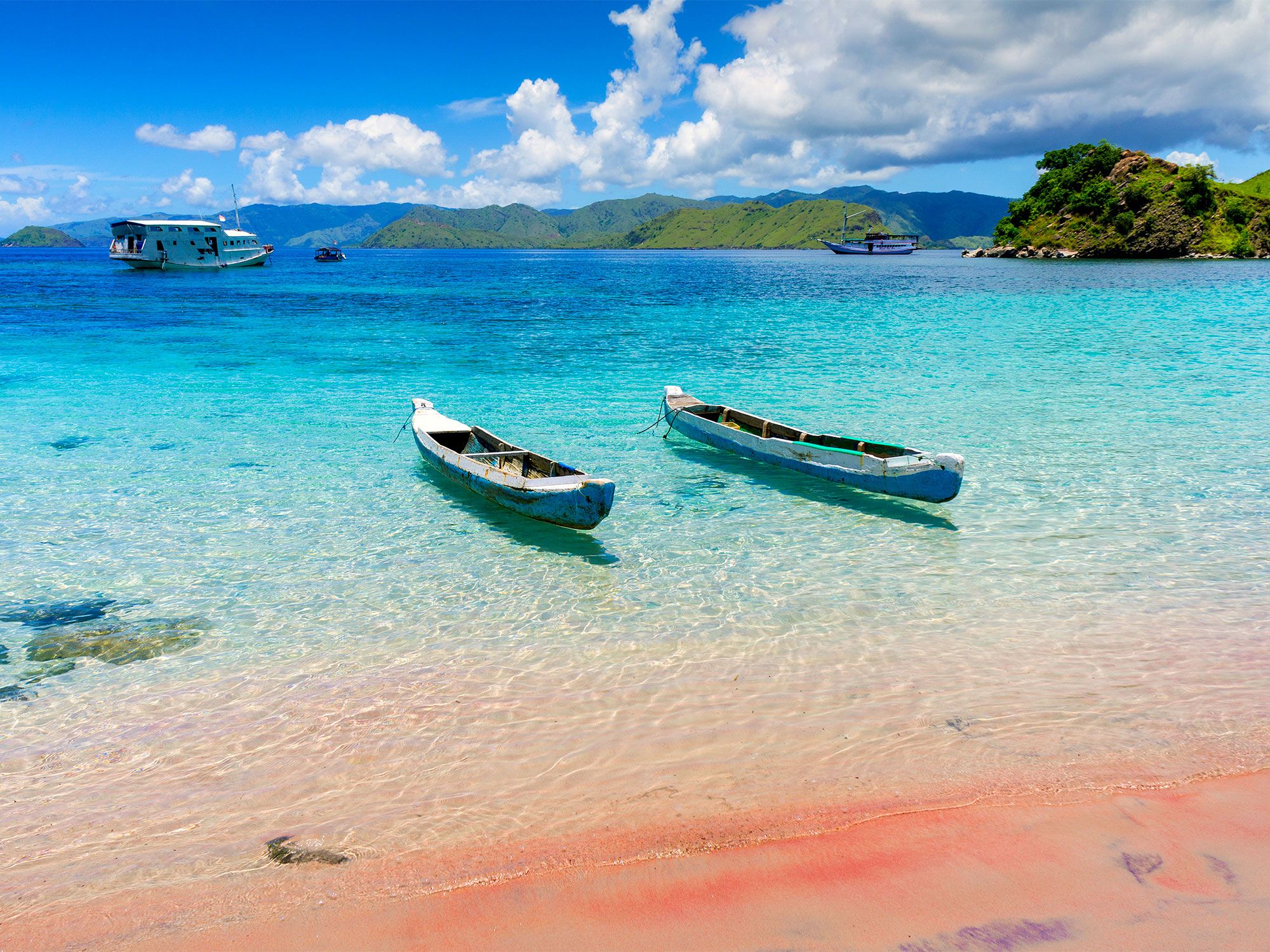
Old maps often warned “here be dragons” when depicting dangerous or unexplored territories, but on this Indonesian archipelago, it’s actually true. Three large (Komodo, Padar, and Rinca) and 26 smaller islands are home to the fierce Komodo dragon. Growing up to 10 feet long and weighing up to 150 pounds, the Komodo is the world’s largest species of lizard. But the drab-colored dragons are no match for Komodo National Park’s famous Pink Beach. One of only seven pink beaches in the world, the cotton candy-colored sands are formed by microscopic organisms called foraminifera, which produce a red pigment that blends with the white sand and results in a soft rose hue. Pink is far from the only shade in Komodo: Beneath the park’s brilliant turquoise waters are some of the healthiest and most diverse coral reefs in the world, teeming with their own rainbow of life.

Post Banner Image
Culture

7 Historic U.S. Restaurants Worth the Reservation

By Jersey Griggs
Read time: 5 minutes
May 25, 2023
Updated: December 19, 2023

7 Historic U.S. Restaurants Worth the Reservation

By Jersey Griggs
Author
Jersey Griggs
Jersey is a travel and lifestyle writer whose work has appeared in publications such as Condé Nast Traveler, Business Insider, and Bust. When she’s not exploring her adopted home state of Maine, she’s likely planning her next big trip.

Historic restaurants are time capsules of the past. Dating as far back as the 17th century, the oldest eateries in America remind us how people gathered, ate, and drank throughout the decades. From the swinging doors of a Wild West saloon to a fine-dining establishment favored by New Orleans’ upper crust, here are seven historic U.S. restaurants worth the reservation.

Fraunces Tavern – New York, New York

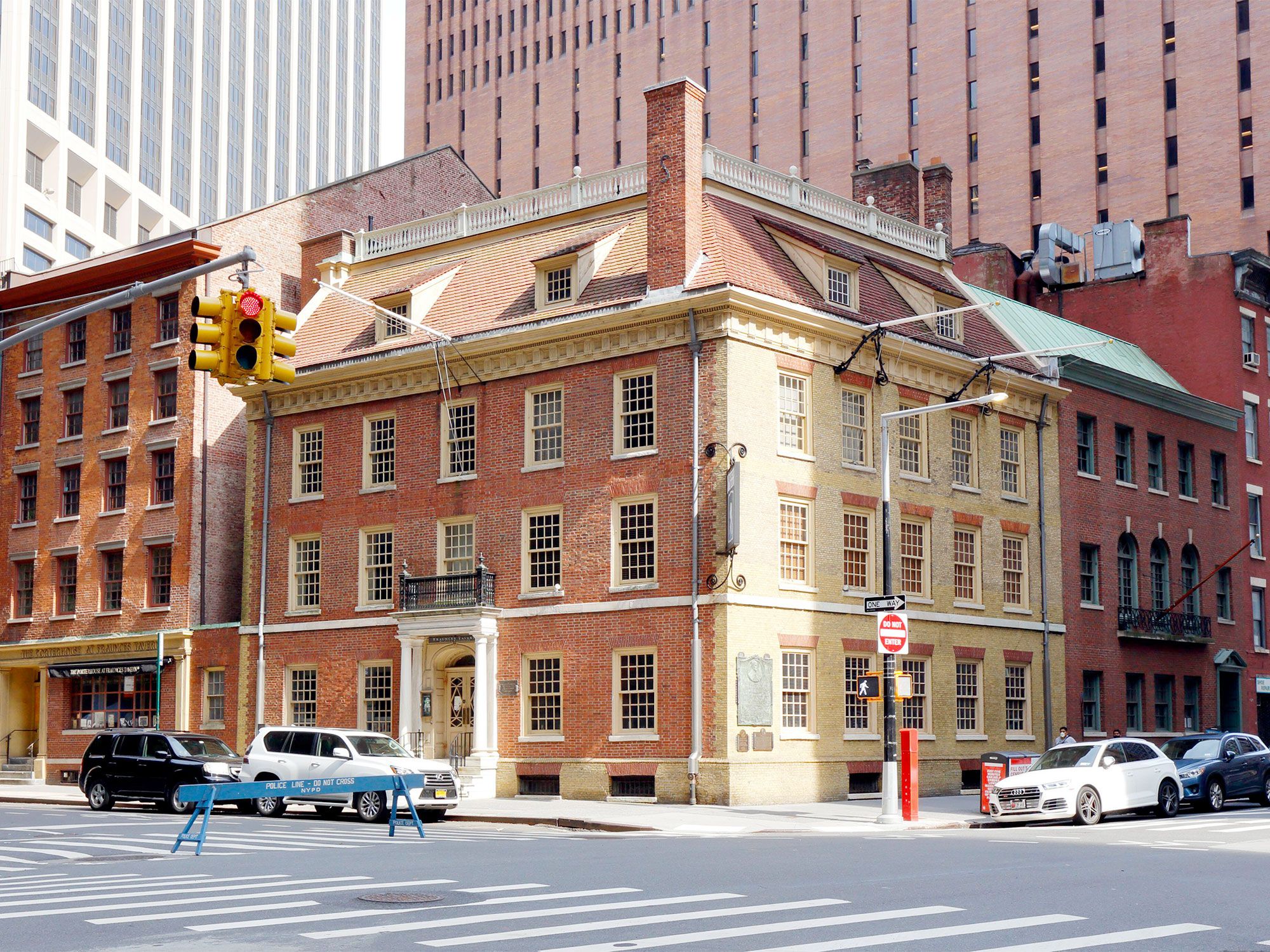
Exterior of Fraunces Tavern in New York City
Photo credit:  Robert K. Chin – Storefronts/ Alamy Stock Photo

Founded in 1762, Lower Manhattan’s Fraunces Tavern has certainly seen its fair share of history. Since the building at 54 Pearl Street was constructed in 1719, it has served as a private residence, hotel, and Revolutionary War watering hole. In fact, it was in these hallowed halls that George Washington assembled a group of officers for a farewell dinner at the end of the Revolutionary War in 1783. 

Today, Fraunces Tavern is both a restaurant and a museum, with exhibitions that include replicated dining rooms from the late 18th century and art depicting the tavern’s most famous visitor, George Washington. The tavern’s restaurant is extensive, featuring two bars, a dining room with outdoor seating, and a piano lounge.

Antoine’s Restaurant – New Orleans, Louisiana

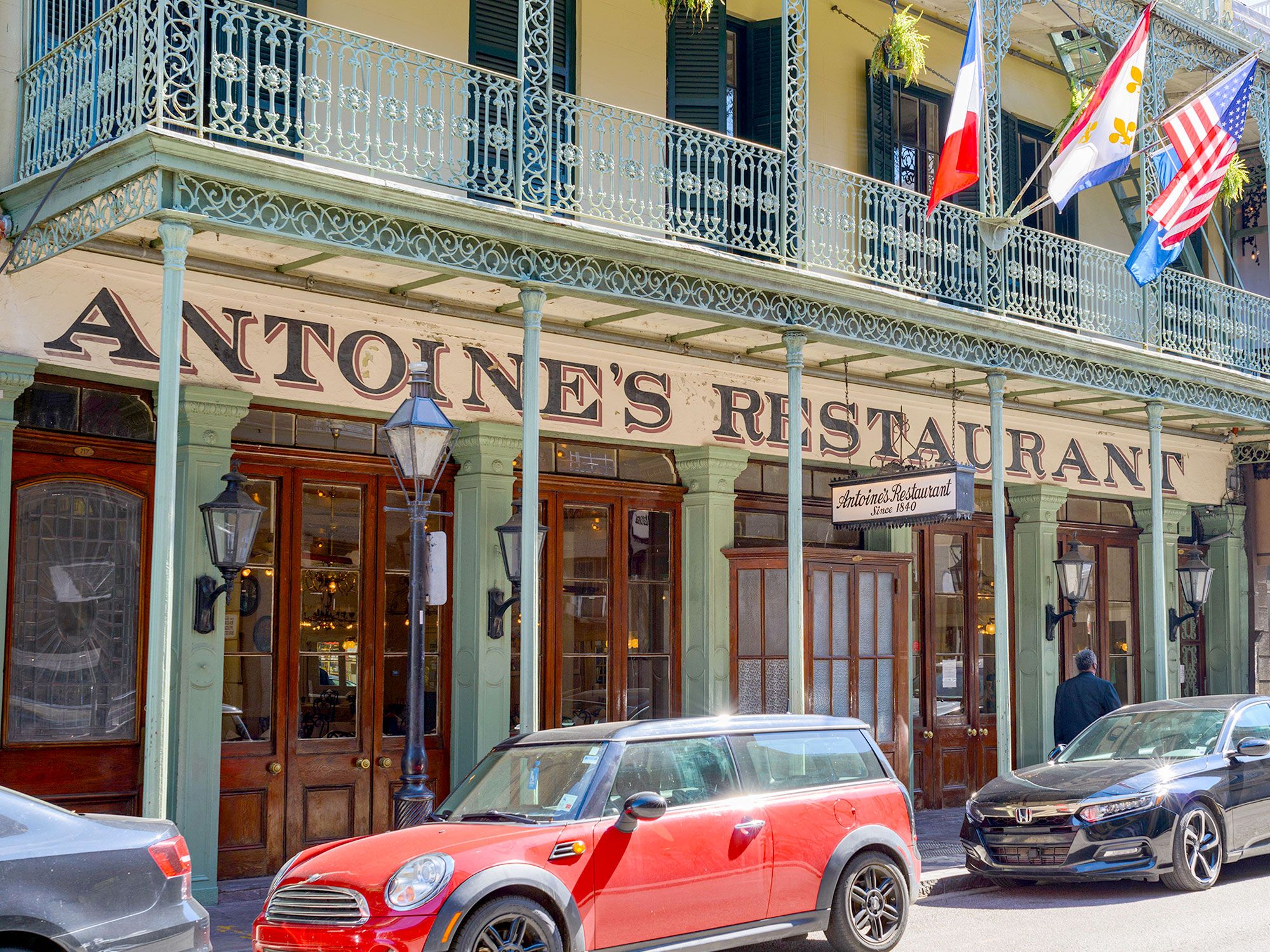
Exterior of Antoine's Restaurant in New Orleans, Louisiana
Photo credit: William Morgan/ Alamy Stock Photo

Restaurateur Antoine Alciatore opened his eponymous eatery as a young upstart in New Orleans in 1840. Since then, Antoine’s Restaurant has been passed down through five generations, making it the oldest family-run restaurant in the country. Located in the historic French Quarter, Antoine’s originated as an elegant establishment for the city’s upper class, and it retains that charm to this day.

Today, the restaurant continues to celebrate old-world elegance with white tablecloths, ornate chandeliers, and a strict dress code of collared shirts for men. Serving classic French-Creole cuisine, Antoine’s is the birthplace of dishes such as oysters Rockefeller (baked oysters with a butter-crumb topping) and eggs Sardou (poached eggs over artichokes and topped with Hollandaise).

The Palace Restaurant and Saloon – Prescott, Arizona

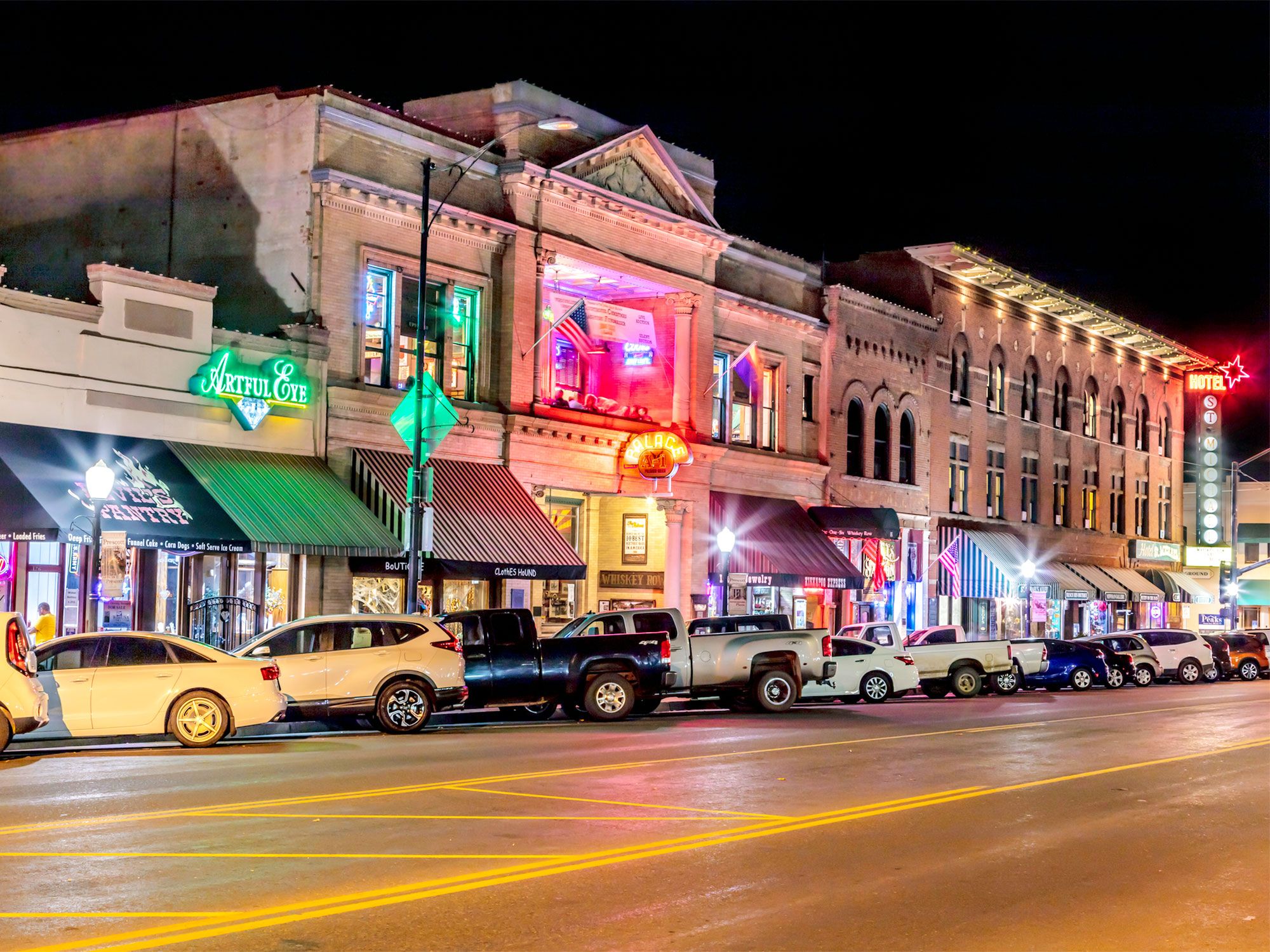
Historic Whiskey Row featuring restaurants and saloons in Prescott, Arizona, at night
Photo credit: desertsolitaire/ iStock

The Wild West lives on at the Palace Restaurant and Saloon in Prescott, Arizona. Situated along the historic Whiskey Row, named for all the saloons that once stood there, the Palace opened its swinging doors in 1877 to thirsty cowboys, justice-seeking lawmen, and rough-riding vagabonds looking to imbibe. The saloon was a favorite watering hole of gambling gunfighter Doc Holliday, who used to belly up to the bar alongside lawman Virgil Earp.

Located across from the Courthouse Plaza, the Palace features the ornately carved Brunswick Bar, which dates back to the 1880s and was salvaged from a fire that destroyed the original establishment in 1900. Bartenders and servers dress in traditional Old West garb and may share a story or two of the supposed hauntings that frequent the joint.

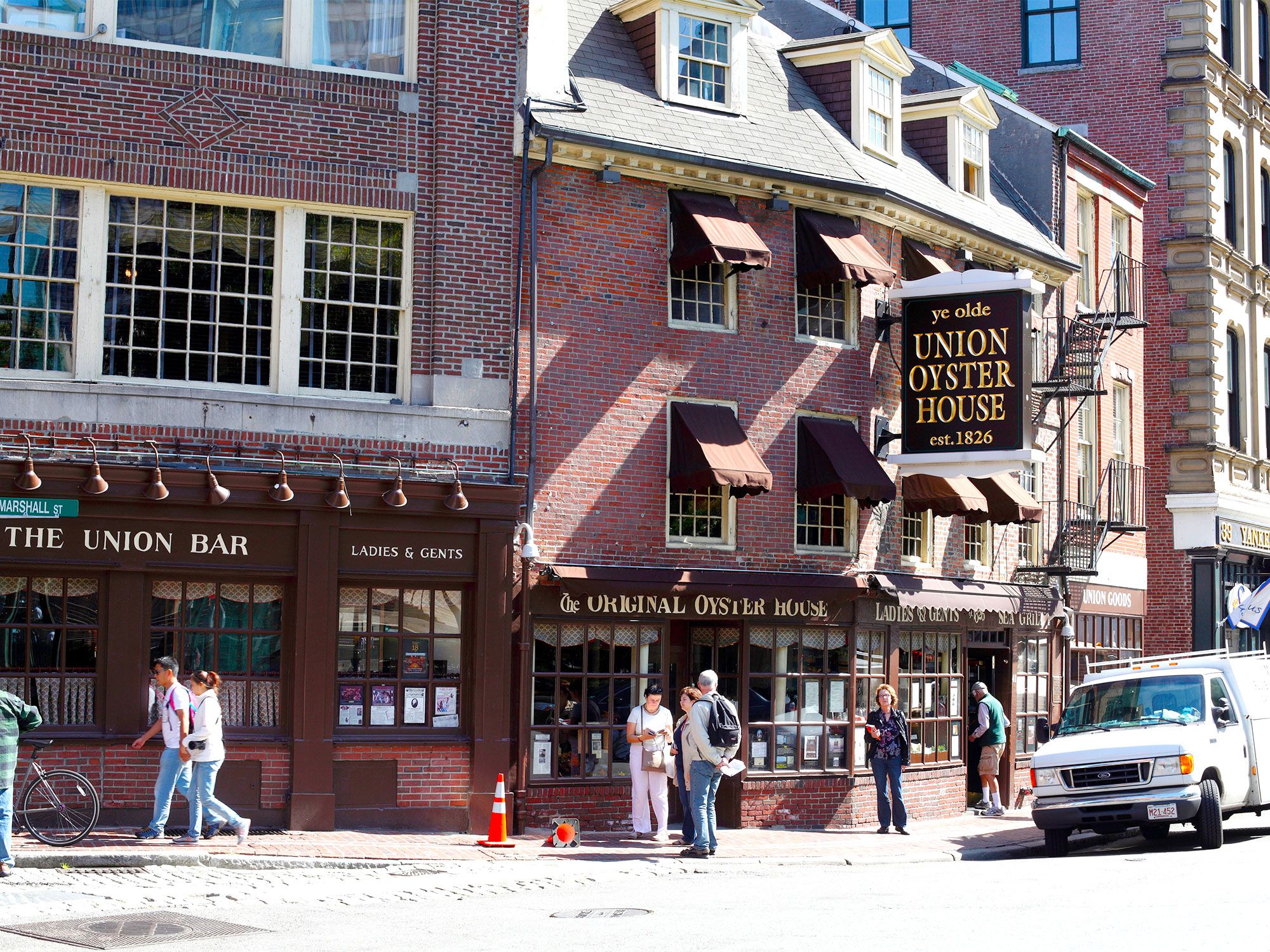
Union Oyster House – Boston, Massachusetts

Brick exterior of Union Oyster House in Boston, Massachusetts
Photo credit: Norman Pogson/ Alamy Stock Photo

A stone’s throw from Faneuil Hall, Union Oyster House has been in operation since 1826, making it the oldest restaurant in Boston. Located along the historic Freedom Trail, the building was formerly a dry goods establishment, selling imported clothing to high-end Boston residents.

The restaurant’s first iteration, Atwood and Bacon, took advantage of the oyster craze that swept the nation in the early 19th century, and sold oysters, clams, and buttered toast to hungry patrons. After becoming the Union Oyster House, the restaurant installed its iconic circular bar, where statesman Daniel Webster was a daily regular. The Kennedy clan were also famous patrons, choosing to either dine in a private room or in J.F.K’s favorite booth, which still exists today.

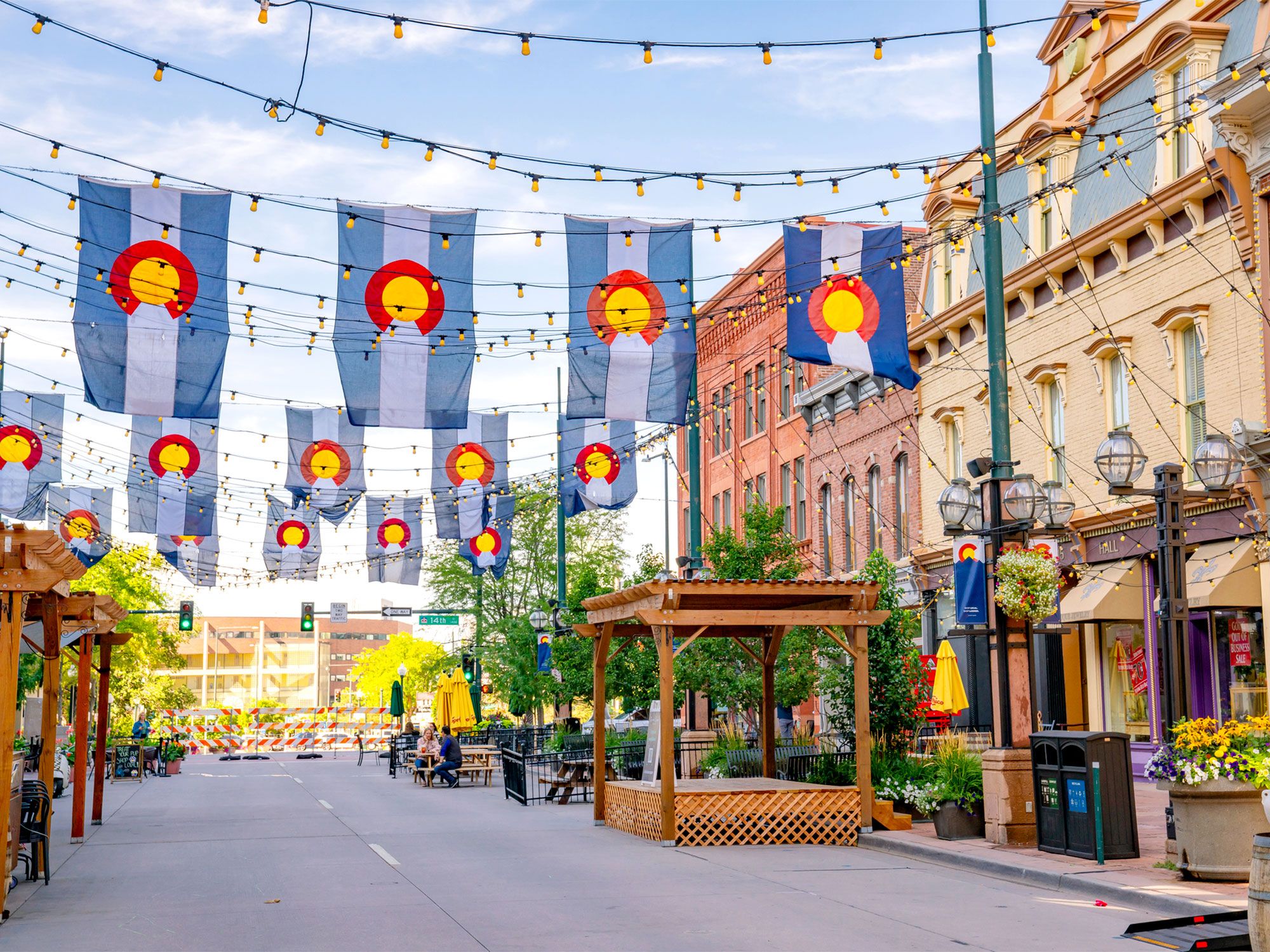
Buckhorn Exchange – Denver, Colorado

Colorado flags flying over pedestrian street in Denver, Colorado
Photo credit: pabradyphoto/ iStock

Founded in 1893, the Buckhorn Exchange is a historic Denver establishment that feels right at home in the Old West. Located across the street from the Rio Grande Railroad, the saloon was once a popular spot for railroad workers in need of sustenance after a long day’s work. The bar’s founder, Shorty Zietz, ran in the same circles as the legendary Buffalo Bill, who would regularly frequent the bar for his signature drink: apple cider and bourbon in a quart-sized jar. 

Since then, five Presidents have dined at the Buckhorn Exchange, along with celebrities such as Bob Hope, Will Rogers, and Princess Anne. Filled to the brim with historic artifacts and Old West memorabilia, the steakhouse has a menu featuring prime-grade beef, buffalo, and elk — in addition to a cocktail inspired by Buffalo Bill himself.

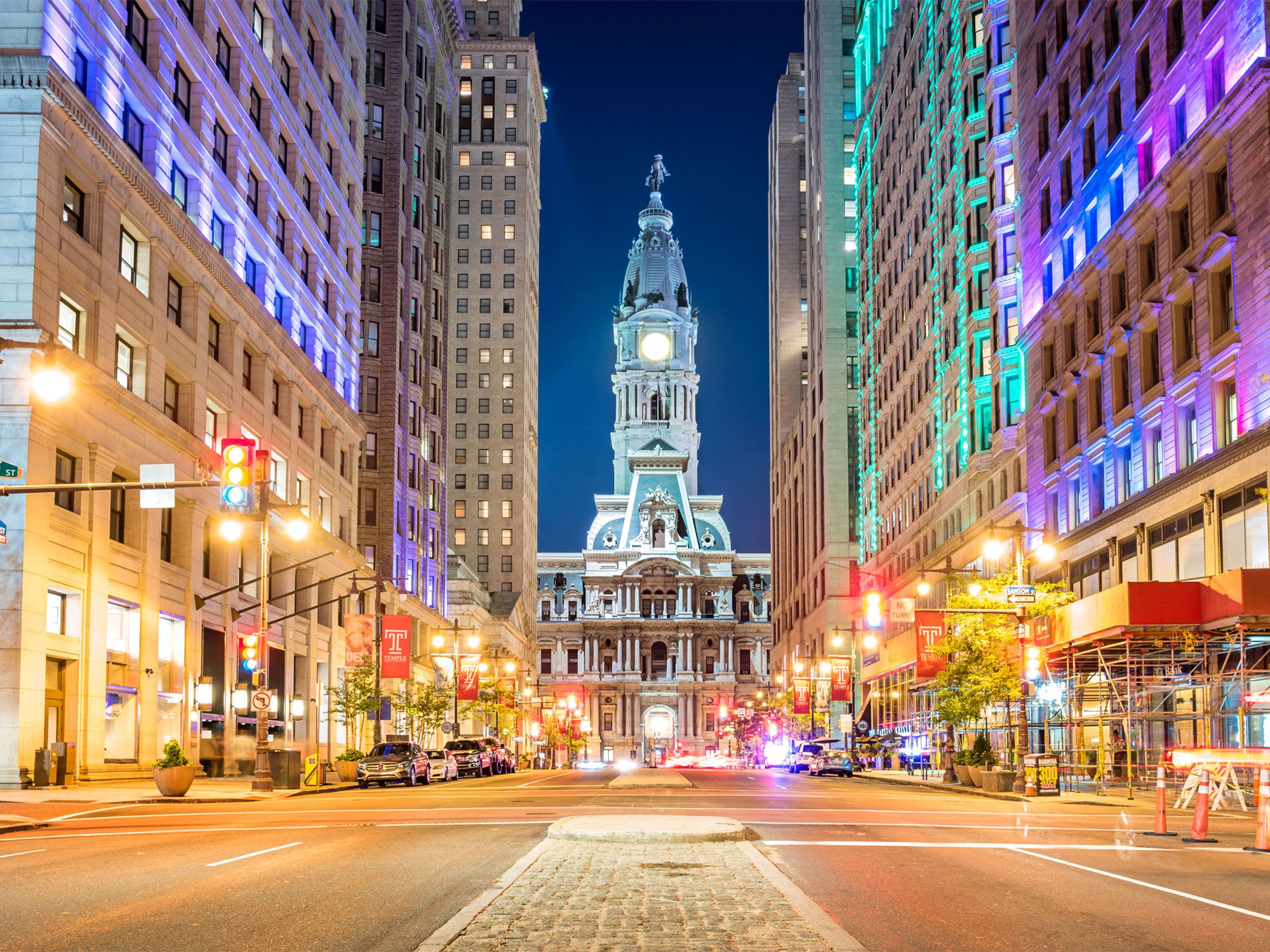
McGillin’s Olde Ale House – Philadelphia, Pennsylvania

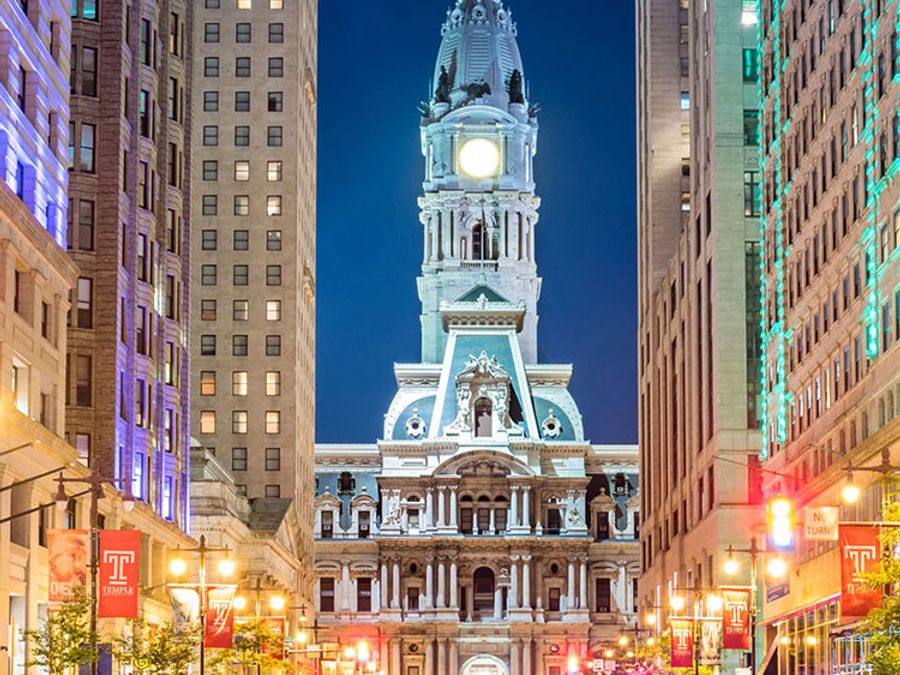
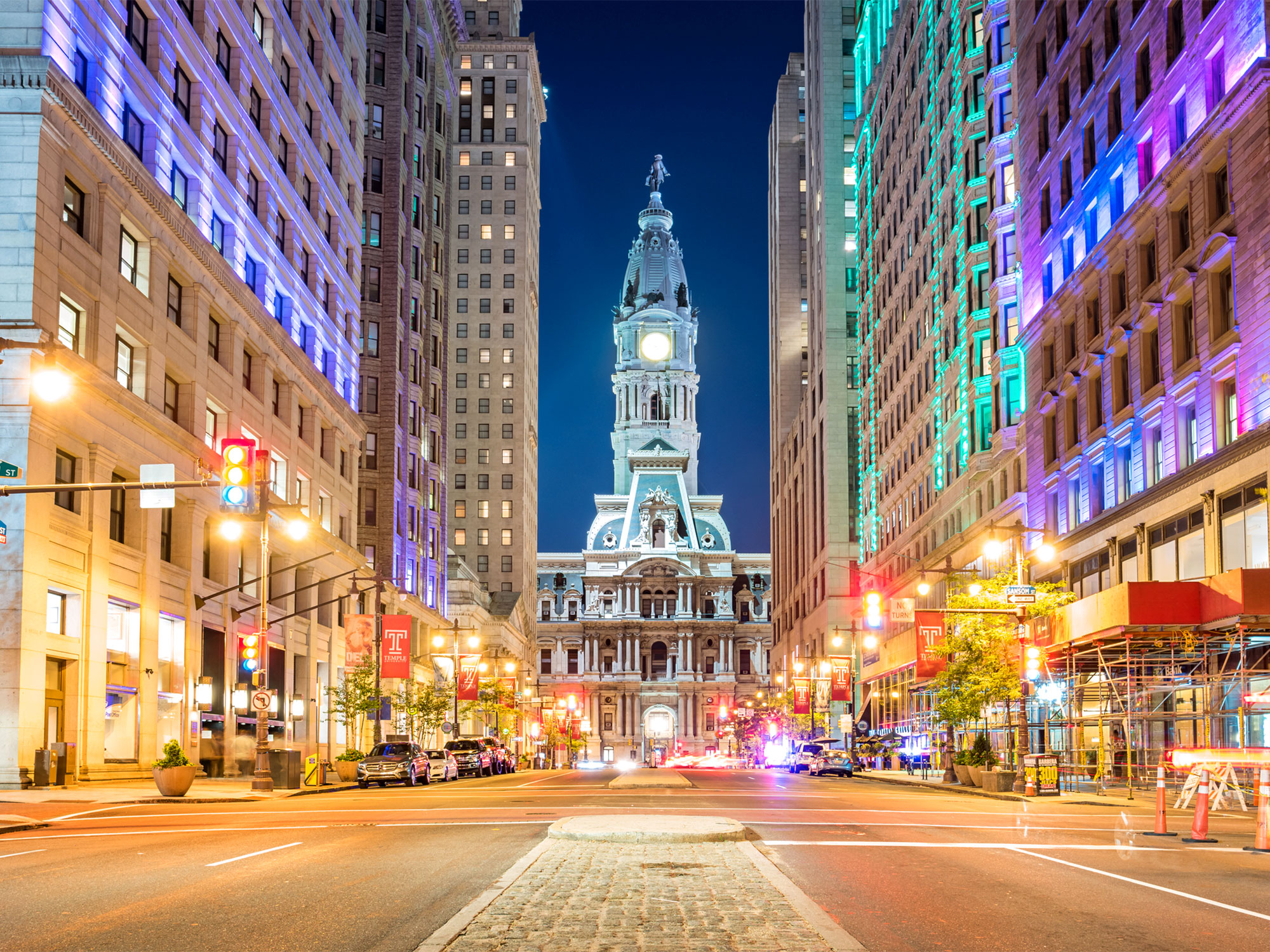
Downtown Philadelphia with view toward City Hall at dusk
Photo credit: benedek/ iStock

Established in 1860, the same year Abraham Lincoln was elected President, McGillin’s Olde Ale House is the oldest, continuously operating tavern in Philadelphia and one of the oldest taverns in the country. These days, thirsty patrons can choose from 30 beers on draft, including several Philadelphia-made microbrews. 

The ale house has seen a lot in its 150-year history: the construction of Philadelphia’s City Hall two blocks away, Prohibition (during which it served food, ice cream, and “tea”), and the invention of the Philly Cheesesteak, which McGillin’s began serving in 1930. Stop by for a pint of Yuengling, Pennsylvania’s famous beer from America’s oldest brewery, alongside a plate of fish and chips or shepherd’s pie.

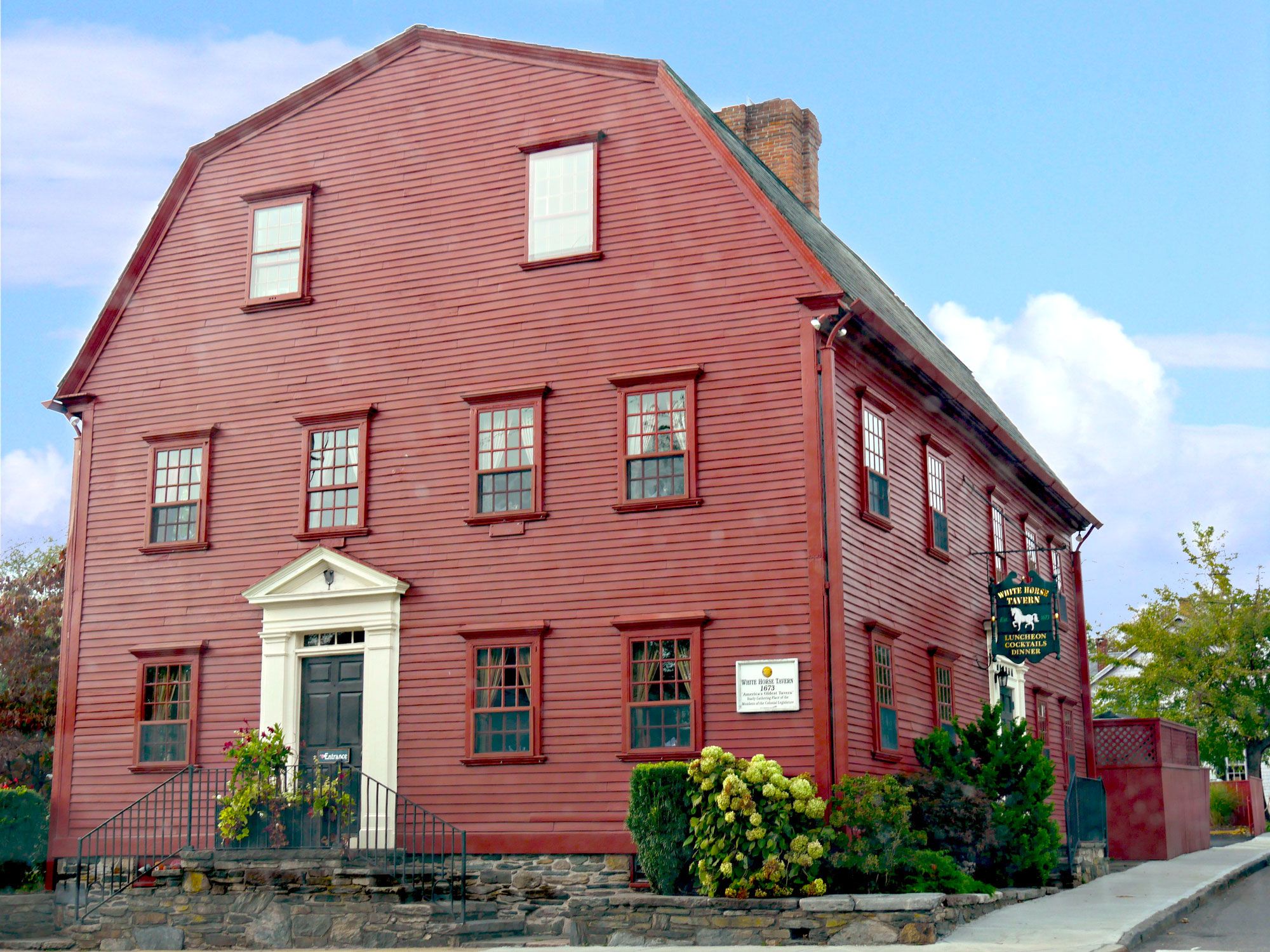
White Horse Tavern – Newport, Rhode Island

Red-clapboard exterior of the White Horse Tavern in Newport, Rhode Island
Photo credit: raksyBH/ iStock

When the White Horse Tavern opened its doors in Newport in 1673, the sign outside with a painted white steed welcomed guests inside for food and lodging. Today, the same white horse continues to grace the restaurant’s exterior, while the interior features colonial-era details such as clapboard walls, large fireplaces, and even a resident ghost.

As the oldest restaurant in the United States, the tavern has long been a gathering place. In addition to being the former site of Rhode Island’s general assembly, notable patrons of the establishment include Ernest Hemingway, E.E. Cummings, Bob Dylan, and Jack Kerouac. Today, the menu features fresh meat, fish, and produce sourced from local New England farms.