





Post Banner Image
Tips

The Surprising Item You Should Always Pack in Your Carry-On

By Bennett Kleinman
Read time: 4 minutes
October 21, 2025
Updated: April 28, 2026

The Surprising Item You Should Always Pack in Your Carry-On

By Bennett Kleinman
Author
Bennett Kleinman
Bennett is a New York City-based staff writer for Daily Passport. He previously contributed to television programs such as the Late Show With David Letterman, as well as digital publications like the Onion. Bennett has traveled to 48 U.S. states and all 30 Major League Baseball stadiums.

For all the joy that travel can bring, sitting in a cramped economy seat for hours on end isn’t something to look forward to. Tight quarters can inhibit circulation, leaving passengers feeling uncomfortably achy at the end of a long journey. To prevent these aches and pains, some people get up mid-flight and walk around the aisle, while others splurge for business class so they can spread out and relax. But those solutions aren’t necessarily convenient or affordable — here’s a clever one that is.

An Ace of a Solution

Person using tennis ball to stretch against wall
Credit: BrasilNut1/ iStock via Getty Images Plus 

Feeling achy during or after a flight is often the result of poor circulation that comes with sitting in a confined space without much room to move. Impeded blood flow can also cause swelling, which can lead to deep vein thrombosis. Potential solutions to this issue include everything from compression socks to loose-fitting clothing, staying hydrated, and walking up and down the aisle to improve circulation. But there’s one other, often overlooked strategy to consider: packing a tennis ball in your carry-on and using it to give yourself an acupressure massage.

Tennis balls are not only permitted under TSA regulations but also take up very little space in your carry-on. Think of the ball as a personal masseuse sitting right next to you — only one that’s small, circular, and lime green. You can use the ball to provide acupressure to certain areas on the body, which can help stimulate blood flow, keep the muscles loose, and prevent potential stiffness or swelling. (Just be careful to keep your movements confined within your own personal space so as not to disturb your neighbor or anyone else on the aircraft.)

One technique is to place a tennis ball between your back and the seat, and then roll it up and down the muscles along your spine or around your shoulders. These areas can really stiffen up if you find yourself sitting for a long time, and a tennis ball can help relieve some of that tension. Alternatively, kick off your shoes and roll the tennis ball under the arch of each foot — loosening up the arches will help to loosen up your legs in general.

Personal trainer Laura Coleman offered a recommendation of her own on Instagram. Bring not one, but two tennis balls with you, stuff them in a sock, and place the sock between your back and the seat above the hips and below the shoulders. During the flight, press into the tennis balls in order to break up the muscles in your back and provide a bit of relief.

While this tip is perfect for the tight confines of an aircraft, it’s also worth considering when taking a long journey aboard Amtrak or riding as a passenger on a cross-country road trip. Even though you don’t have to worry about TSA checking your luggage in either case, you may find it’s worth having a tennis ball on hand, given how little space it takes up in your bag. 

Other Stretches To Help You Stay Loose

Airline passenger stretching in seat
Credit: LordHenriVoton/ E+ via Getty Images

Whether or not you bring a tennis ball with you in your carry-on, there are other recommended stretches to help improve circulation on long-haul flights. For the lower body, try:

  • Ankle circles: Lift each ankle off the ground one at a time. While raised, turn your ankle clockwise, then counterclockwise, and repeat as needed.
  • Knee lifts: Raise your knee upward and slowly place it back on the ground, alternating between each leg. This helps activate muscles in the upper leg toward the hip.
  • Calf raises: Remain seated and lift your heels off the ground as high as possible, hold, and then lower them back down. Repeat several times to encourage better blood flow.
  • Figure-four seated stretch: While seated, cross one foot over the other knee and lean forward for several seconds. You should feel tension in your upper thighs. Alternate legs and repeat as necessary. (However, be careful to avoid crossing your legs when simply sitting still, as doing so can impede blood flow.)

For the upper body and spine, here are several helpful stretches:

  • Neck rolls: Begin by relaxing the shoulders. Then, lean your head down toward either side and slowly roll your neck from shoulder to shoulder, repeating several times.
  • Shoulder rolls: Keep your neck steady and rotate your shoulders in circular motions. Begin by rotating them clockwise, then switch directions and turn counterclockwise.
  • Arm stretches: Bring each arm across your body (one at a time) and hold it to your chest with the other arm for 10 to 15 seconds before releasing. 
  • Spinal twists: Remain seated with both feet flat on the floor, and place one arm onto an armrest. Twist your back toward the direction of the armrest, hold for several seconds before releasing, and repeat by twisting the other direction.

In addition to these stretches, it’s advisable to stand up and walk around the aisle every hour or two in order to keep the blood flowing. Remember to always be cognizant of others on the aircraft — you may find that some of these stretches are easier to complete in the airport before your flight or after you get to your hotel.

Featured image credit: ozgurcankaya/ E+ via Getty Images

Post Banner Image
History

These States Don’t Observe Daylight Saving Time — Here’s Why

By Bennett Kleinman
Read time: 5 minutes
October 21, 2025
Updated: October 21, 2025

These States Don’t Observe Daylight Saving Time — Here’s Why

By Bennett Kleinman
Author
Bennett Kleinman
Bennett is a New York City-based staff writer for Daily Passport. He previously contributed to television programs such as the Late Show With David Letterman, as well as digital publications like the Onion. Bennett has traveled to 48 U.S. states and all 30 Major League Baseball stadiums.

The mnemonic “spring forward, fall back” reminds us to change our clocks twice per year. In March, we jump ahead one hour, while in November we turn the clocks back one hour — that is, unless you reside in one of two states. While the other 48 U.S. states observe daylight saving time, in these states the clocks remain consistent year-round. Here’s why these rare holdouts haven’t adopted daylight saving time like the rest of the country.

A Brief History of Daylight Saving Time

Person holding alarm clock
Credit: Kinga Krzeminska/ Moment via Getty Images 

Though Benjamin Franklin suggested the idea of daylight saving time in a 1784 essay, it wasn’t formally adopted by many countries until the 20th century. The U.S. was among several nations to start observing daylight saving time during World War I. With an extra hour of daylight, there was less need to produce artificial light, which in turn helped conserve energy and fuel for the war effort. On a federal level, standard time and daylight saving time were established in the U.S. in 1918 as part of the Standard Time Act.

Decades later, Congress enacted the Uniform Time Act of 1966 in an effort to simplify adoption of the concept nationwide. The specific dates for when to change clocks were updated in 1986 and again in 2007.

Arizona

Cacti overlooking Tucson, Arizona, skyline
Credit: Ron and Patty Thomas/ iStock via Getty Images Plus 

While most Americans look forward to that extra hour of sunlight during the summer, the same can’t be said for Arizonans. The Grand Canyon State opted out of the Uniform Time Act in 1967, choosing to remain on standard time year-round. In practice, this means that most of Arizona follows Pacific Time from mid-March to early November and Mountain Time the rest of the year.

The reason for this decision was twofold. Since Arizona is one of the hottest and sunniest states in the U.S., locals rely heavily on air conditioners to stay cool. If the state were to observe DST, a lot of ACs would be running for that extra hour to keep Arizonans comfortable. Sticking to standard time means less sunlight during conventional waking hours, which lessens the overall strain on the state’s energy grid.

The other reason is that, in summertime, many residents avoid going outside until the sun sets due to the extreme heat. By sticking to standard time, Arizonans can venture outside in the height of summer an hour earlier — around 8 p.m. instead of 9 p.m. — without feeling like their skin is about to melt off.

However, there is one exception to this exception: the Navajo Nation. The country’s largest Native American reservation is mostly located in the northeastern corner of Arizona, with parts that extend into New Mexico and Utah. In an effort to remain consistent across the entire reservation, the Navajo choose to observe daylight saving time, even though it clashes with the rest of Arizona.

Matters get even more convoluted, though, when you consider the Hopi Reservation, which is located within the Navajo Reservation. The Hopi do not observe DST, which falls in line with the rest of Arizona, meaning that you can end up jumping back and forth between times on a short car ride. For example, say you were driving from Flagstaff to the heart of the Hopi Reservation in the month of July. You’d begin in one time zone, jump an hour ahead when entering the Navajo Reservation, and then return back to the original time zone once you enter Hopi territory — all in the span of just over an hour of actual travel time.

Hawaii

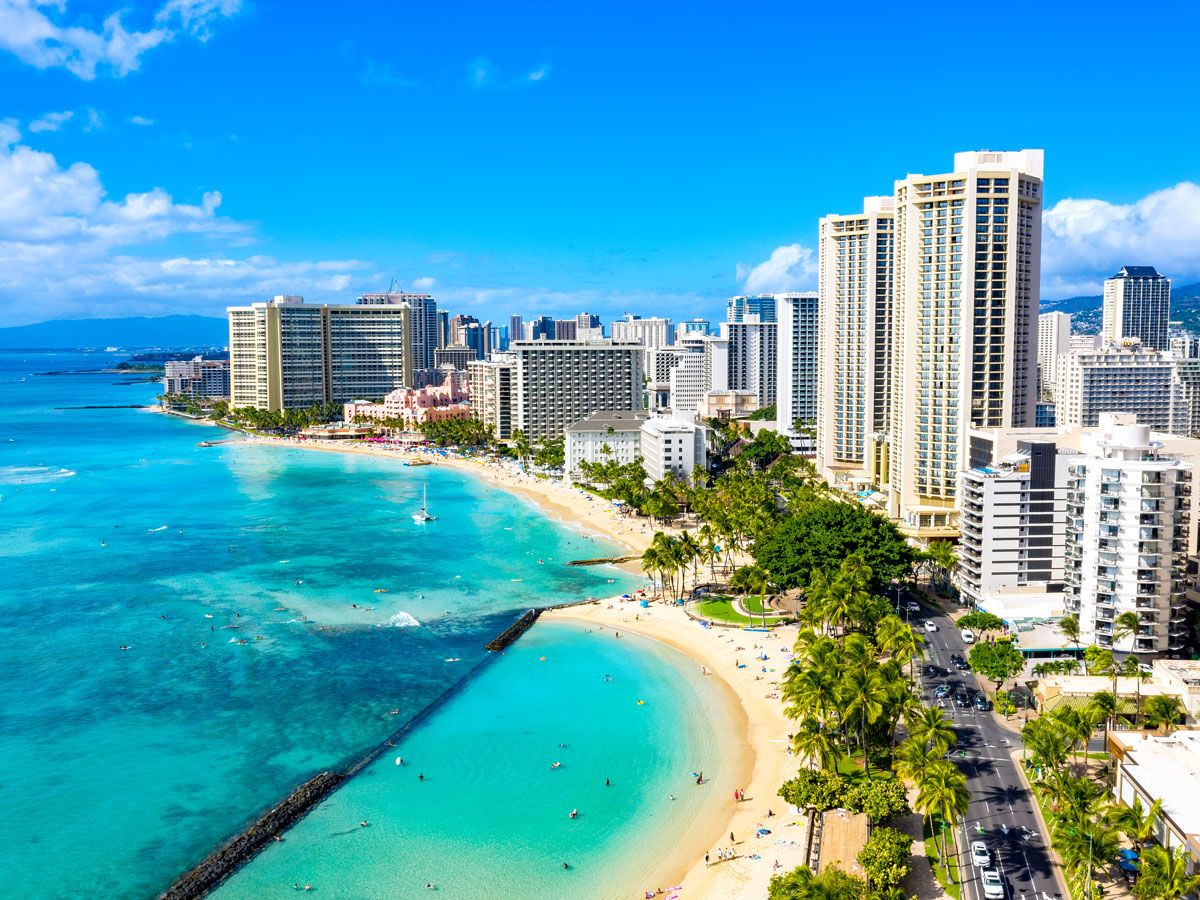
Waikiki Beach in Honolulu, Hawaii
Credit: Bridgendboy/ iStock via Getty Images Plus 

A major reason why so many states embrace daylight saving time is to get that extra hour of summer daylight during the evening. But in a place like Hawaii — the state located closest to the equator — there’s little variation in the total sunlight hours throughout the year. Given the abundance of sunlight that already exists, the Aloha State felt little need to disrupt residents’ routines in search of more sun.

Part of the logic behind this decision has to do with the medical benefits of keeping clocks consistent. Studies show the potential negative health effects of messing with the body’s natural rhythm, suggesting that it’s beneficial to keep clocks the same throughout the year.

But while Hawaii residents don’t observe daylight saving time these days, this wasn’t always the case. The concept was trialed in 1933, but the law was revoked after just three weeks. After Hawaii achieved statehood in 1959, the state Legislature eventually decided to formally opt out of the Uniform Time Act in 1967.

Related: 8 Things You Probably Don't Know About Hawaii

Other Exceptions

Downtown Lansing, Michigan
Credit: DenisTangneyJr/ E+ via Getty Images 

For a brief time, Michigan joined Arizona and Hawaii in opting out of daylight saving time. In a November 1968 referendum, Michigan voters chose to stick to standard time year-round. This remained in effect until the act was repealed in 1972, with daylight saving time once again adopted by Michigan the following year. The state has observed DST ever since.

Notably, all five major U.S. territories — American Samoa, Guam, the Northern Mariana Islands, Puerto Rico, and the U.S. Virgin Islands — observe standard time year-round. Much like Hawaii, these territories are located in tropical regions where the amount of daily sunlight is consistent throughout the year.

Related: A Guide to the 5 Major U.S. Territories
Post Banner Image
Culture

Headed Across the Pond? A Guide to Popular British Slang Terms

By Daily Passport Team
Read time: 6 minutes
October 21, 2025
Updated: October 21, 2025

Headed Across the Pond? A Guide to Popular British Slang Terms

By Daily Passport Team
Author
Daily Passport Team
Daily Passport writers have been seen in publications such as National Geographic, Food & Wine, CBC, Condé Nast Traveler, and Business Insider. They're passionate about uncovering unique destinations and sharing expert tips with curious travelers.

Anyone who’s visited the U.K. can tell you the differences between American and British English can be vast — so much that it might seem you’re not speaking the same language at all. When it comes to casual slang, the Brits have words to describe everything from your mood to your friends to your drinking habits, but many of them may sound peculiar to American ears. So, if you want to really blend in with the locals on your next trip, start by learning these popular British slang terms you might hear in shops, museums, restaurants, and definitely pubs.

Chuffed

Two people hugging in backyard
Credit: Halfpoint Images/ Moment via Getty Images 

To be chuffed is a good thing — it means to be happy or otherwise pleased, particularly if taken by surprise. The word first appeared in British dialect in 1860, from the now-obsolete “chuff,” a word that emerged in the 1520s and meant “swollen with fat.” There’s a similar American idiom of “fat and happy” — to be chuffed isn’t far off.

I didn’t think you’d be able to make it to the wedding, but I’m chuffed to see you!

Gutted

“Gutted” is the polar opposite of “chuffed.” It describes the feeling of being terribly upset. While Americans often think of “gutted” in a more literal sense — such as the way one guts a fish to prepare it for eating — the British use this word in a metaphorical way. The OED points to roots in British prison slang, and it was first cited in Jonathon Green’s Dictionary of Contemporary Slang in 1984.

I’m gutted to have to leave our vacation early because of the weather.

Bare

“Bare” is an intensifier, effectively meaning “very” or “many” — similar to “hella” in the U.S. It originally came from Jamaican influences, but has worked its way into many British dialects.

I stayed up all night, and now I’m bare tired.

Quid

The currency of the U.K. is the pound, but shoppers are likely to hear cashiers give their total in quids. The slang replacement for “pound” appeared in the 1680s, possibly from the Latin quid, meaning “that which is, essence,” as used in quid pro quo, a Latin phrase indicating an exchange of value.

Can I borrow a few quid for lunch? I left my wallet at home.

Fiver or Tenner

Two people exchanging a five-pound note
Credit: simarik/ iStock via Getty Images Plus 

Two of the most commonly used denominations of currency are the £5 and £10 notes (£ is the symbol for the pound). These are colloquially known as fivers and tenners. (However, the award for most creative currency nicknames goes to the Canadians, who use “loonie” and “toonie” to refer to their dollar and two-dollar coins.)

This bloke tried to charge me a tenner, but I gave him a fiver and ran.

Knackered

Pronounced “NACK-urd,” this word means “worn out” or “exhausted.” You can be knackered (physically exhausted), or an item can be so knackered (worn out), it just needs to hit the bin (British slang for a trash can). The roots of this slang are in agriculture — the earliest usage of “knacker/nacker” is from a harness-maker who probably also helped with other horse health-related matters. By the 1880s, people began describing themselves as knackered, to suggest that they felt as tired as an old, sick horse.

After that gym session, I’m completely knackered. Those shoes are knackered, mate. You need to get a new pair.

Kip

Woman napping on couch
Credit: urbazon/ E+ via Getty Images 

The answer to feeling knackered is to take a kip, or a nap. This word can also be used as a verb, as in, “I kipped properly last night.” “Kip” further carries a connotation of sleeping somewhere other than your own bed, related to the Danish kippe, or “tavern.”

Can I grab a kip in your room in between my classes this afternoon?

Reckon

To reckon is to suspect or have a theory about something. This word has made the journey from Great Britain to the American South, where it maintains the thoughtful usage.

I reckon it’s going to rain today, and my team’s going to lose.

Bloody

In British slang, “bloody” is a mild expletive. It’s used to express anger, annoyance, shock, or simply emphasis — for example, “Oh, bloody hell!” According to etymologists, “the use of bloody to add emphasis to an expression is of uncertain origin, but is thought to have a connection with the ‘bloods’ (aristocratic rowdies) of the late 17th and early 18th centuries.” While it’s a bit impolite, its usage is so common that it’s become generally acceptable in modern British English.

We’re going to have a bloody good time this weekend!

Cheeky

A cheeky British child sneaking a biscuit from the counter
Credit: Jessica Peterson/ Tetra images via Getty Images 

A bit of cheekiness is a quintessential part of British life. It can be hard to nail down a definition of “cheeky,” but one that comes close is “endearingly rude.” Being cheeky is often cute, but it can be taken the wrong way, so pay attention to context.

Your son was very cheeky and grabbed a cookie off my plate when I wasn’t looking.

Proper

“Proper” is a tough one to define concretely, because the British use it so frequently to describe many different things. In general, it’s used as an alternative to “very” or “extremely,” but to do something properly also means to do it correctly or in the right way. One might say, “That’s a proper good cup of tea,” meaning that not only is it very good, but it’s also prepared in the accepted manner.

You played a proper match today!

Mate

Group of people drinking coffee
Credit: Hispanolistic/ E+ via Getty Images 

In the U.S., “mate” is often thought of in the sense of a romantic partner, but for Brits, it’s more casual. It can be used affectionately to mean “friend,” and it’s also used more informally when referring to or addressing strangers.

Johnny has been my best mate since university. I take sugar in my coffee, mate.

Plastered, Trolleyed, Pissed, Battered, or Gazeboed

It’s often said that language reflects culture. Inuits have many words for snow, and Arabic has myriad words for sand. In Britain, they have a huge volume of words for being drunk. Add “-ed” to any number of nouns or verbs, and your mates will understand you mean “drunk.”

After fours hours in the pub, I was completely cauliflowered.

Cuppa

Steaming mug of tea on counter
Credit: Giles Jenkyn/ DigitalVision via Getty Images 

Playing right into the stereotype, Brits really do love tea. So much so, in fact, that “cup of tea” has been shortened to “cuppa.” You don’t need to clarify what’s in your cup, because everyone already knows it’s tea.

I had a lovely cuppa with my biscuits.

Dodgy

To describe something as dodgy suggests that it’s suspicious or otherwise questionable — the word might be used to characterize a car salesman’s tactics, for example. It could also refer to food that seems like it’s spoiled. “Dodgy” comes from the verb “to dodge,” which appeared in the 1680s to mean “to evade (something) by a sudden shift of place.” This context of sly, quick movement ultimately led to the modern verb definition, which implies an intent “to swindle, to play shifting tricks with,” leading to the “shifty” adjective. So, if a deal seems a bit dodgy, or too good to be true, listen to your gut.

Mate, this kebab seems a bit dodgy.

Related: Visiting the U.K. Soon? Entry Requirements Are Changing for U.S. Travelers

A version of this article originally appeared in our sister publication, Word Smarts.

Post Banner Image
Tips

This U.S. Airport Is Testing Off-Site TSA Screening

By Bennett Kleinman
Read time: 4 minutes
October 21, 2025
Updated: October 21, 2025

This U.S. Airport Is Testing Off-Site TSA Screening

By Bennett Kleinman
Author
Bennett Kleinman
Bennett is a New York City-based staff writer for Daily Passport. He previously contributed to television programs such as the Late Show With David Letterman, as well as digital publications like the Onion. Bennett has traveled to 48 U.S. states and all 30 Major League Baseball stadiums.

With more people flying through U.S. airports than ever before, it’s not unusual for more than 3 million travelers to pass through TSA checkpoints on the busiest travel days. This inevitably leads to long lines at airport security, but fortunately, many airports are investing in potential solutions to ease congestion. Soon, one U.S. airport plans to test a first-of-its-kind pilot program in which travelers will be screened off-site before being securely shuttled to the terminal. Here are all the details.

Logan Airport’s Remote Terminal Pilot

Plane taking off from Logan Airport with Boston skyline in background
Credit: SPO123/ iStock via Getty Images Plus 

In 2024, Boston Logan International Airport handled a record 43 million passengers. While this is an impressive accomplishment, it meant that the airport was more congested than ever before, which led to longer lines at security checkpoints. In an effort to alleviate the problem, Logan plans to test out a new remote terminal pilot program. Peter Howe of the Massachusetts Port Authority (Massport) shared with CBS News that the goal is “reducing the stress of getting to the airport and through security.”

Instead of heading directly to the airport, passengers who choose to use this service will begin their journey at a remote TSA screening facility in Framingham, located about 22 miles west of Logan Airport. The facility will be built in a parking lot along Flutie Pass on the Massachusetts Turnpike, and travelers will need to reserve tickets in advance.

Upon arrival, passengers will check their bags and undergo TSA screening with their carry-on luggage, then board an hourly bus with roughly 15 to 30 other passengers. Carry-ons will be allowed aboard the bus, but all checked bags will be stored under the bus in a separate, secure location. The bus will then drop off travelers airside at either Terminal A or Terminal C — bypassing those long checkpoints and allowing folks to head straight to their gate.

Why Framingham? Well, many frequent flyers are already familiar with the area because Framingham serves as a departure point for the Logan Express, a popular airport shuttle bus service. While those who take the existing bus service still have to undergo security checks upon arrival, this new program will get those checks out of the way early, while still utilizing the same bus route that many travelers are familiar with.

When Will It Start?

Cars on Zakim Bridge in Boston, Massachusetts
Credit: LUNAMARINA/ iStock via Getty Images Plus 

Massport aims to implement this pilot program in summer 2026 once the agency receives TSA approval. One of the chief roadblocks in implementing the pilot program is the concern that prescreened bags could be tampered with during the journey from Framingham to Logan Airport, which can take anywhere from 30 minutes to two hours, depending on traffic. Massport’s Peter Howe told WBUR that they are working with the TSA to “make sure that everything follows the correct standards and regulations.”

Buses will run once per hour for four or five hours each morning, though the service could be increased based on demand. If successful, Massport officials expect to expand the program to other areas such as Woburn and Braintree. 

As for the cost, Massport CEO Rich Davey shared with WBUR that the price of the service (bus included) will be the same as a ticket on the Logan Express, which currently costs $9 to book online.

Similar Programs

Passenger looking out bus window
Credit: Pekic/ E+ via Getty Images 

While Boston Logan’s pilot program is the first of its kind, it takes inspiration from an existing program run by American Airlines: the Landline bus service. This shuttle bus connects Chicago’s O’Hare Airport and Philadelphia International Airport with smaller regional airports nearby.

Landline connects O’Hare to Chicago Rockford International Airport and South Bend International Airport. In Philly, travelers can take a Landline bus to or from Lehigh Valley, Wilkes-Barre Scranton, Atlantic City, Trenton-Mercer, or Wilmington. Rather than pass through security at both airports, passengers need to do it only once before boarding the bus.

However, this program is reserved for American Airlines passengers, whereas the Logan pilot program is meant for anyone flying on any airline out of Logan. Also, tickets aboard the Landline bus must be booked as part of your airline reservation, while bus tickets out of Framingham can be booked separately.

Post Banner Image
Culture

This Surprising Museum Was Named No. 1 in the U.S.

By Michael Nordine
Read time: 3 minutes
October 21, 2025
Updated: October 21, 2025

This Surprising Museum Was Named No. 1 in the U.S.

By Michael Nordine
Author
Michael Nordine
Michael is a staff writer for Daily Passport and film critic who writes the weekly newsletter Movie Brief. His writing and criticism have also appeared in the Los Angeles Times, Variety, and the Washington Post, among others. A native Angeleno, his favorite countries to visit are Norway and Japan.

When thinking of America’s history museums, cities such as New York and Washington, D.C., tend to be top of mind. As vital as institutions like the American Museum of Natural History and the Smithsonian are, however, neither of them received the honor of being named the country’s No. 1 history museum in the most recent edition of USA Today’s Readers’ Choice Awards. After USA Today’s panel of editors and experts narrowed down a list of nominees, the public was invited to select their favorites. The 2025 winner was a museum you might not have heard of — but here’s why it’s a must-visit for any history buff.

A Repeat Winner

Exterior of the Heinz History Center in Pittsburgh, Pennsylvania
Credit: Vespasian/ Alamy Stock Photo 

And the award for America’s top history museum goes to … the Heinz History Center in Pittsburgh, Pennsylvania. The renowned history museum is no stranger to the top, either: It also crowned the 2024 list and came in second the year before. (The National Underground Railroad Freedom Center in Cincinnati, Ohio, came in first in 2023.) 

“At the History Center, visitors of all ages can have a meaningful experience while exploring American history,” Andy Masich, the organization’s president and CEO, said in a statement. “This national recognition means a lot to our staff and volunteers. It reflects the impact we have on communities here in Western Pennsylvania and throughout the country.”

On Display

Exhibit at the Heinz History Center in Pittsburgh, Pennsylvania
Credit: ZUMA Press, Inc./ Alamy Stock Photo 

Perhaps the most exciting reason to visit the History Center is its Mister Rogers’ Neighborhood exhibit, which features the iconic show’s actual living-room set, King Friday XIII’s Castle, and a life-size figure of Fred Rogers in his signature outfit. The beloved children’s program, which aired from 1968 to 2001, was produced in Pittsburgh by PBS member station WQED. 

Other highlights at the museum include From Slavery to Freedom, an exploration of over 250 years of African American history; Clash of Empires: The British, French & Indian War, 1754-1763, detailing this turning point in U.S. history; and an exhibit devoted to the museum’s namesake, the H.J. Heinz Company, best known for its ketchup. In addition to video loops of vintage commercials and a display of pickle pins, this exhibit also features an 11-foot-tall ketchup bottle made up of more than 400 individual bottles.

The Top 10

Exterior of the National Underground Railroad Freedom Center
Credit: Ian Dagnall/ Alamy Stock Photo 

The National Underground Railroad Freedom Center, which took pride of place in 2023, ranked No. 2 on this year’s list. Here’s the rest of the top 10, ranked in order:

Related: Step Back in Time at the World’s Largest History Museums

Featured image credit: Amy Cicconi/ Alamy Stock Photo 

Post Banner Image
Outdoors

8 of the Rainiest Cities in the U.S.

By Daily Passport Team
Read time: 5 minutes
October 21, 2025
Updated: October 22, 2025

8 of the Rainiest Cities in the U.S.

By Daily Passport Team
Author
Daily Passport Team
Daily Passport writers have been seen in publications such as National Geographic, Food & Wine, CBC, Condé Nast Traveler, and Business Insider. They're passionate about uncovering unique destinations and sharing expert tips with curious travelers.

While many cities have a reputation for being wet year-round — we’re looking at you, Seattle — clinching the crown for rainiest city in the U.S. often comes down to the severity of the rain storms, not simply how frequently it rains. If sunny skies simply aren’t your thing, and you’re looking to curl up with a good book instead, check out the list of the eight rainiest cities in the U.S., some of which may surprise you.

8. Atlanta, Georgia

Atlanta skyline under storm clouds
Credit: Sean Davis/ iStock via Getty Images Plus 

Average rainfall per year: 50.4 inches

Atlanta receives a considerable amount of rain year-round, but some months are definitely wetter than others. Precipitation peaks in March and again in July. September and October tend to be the driest months of the year in Atlanta, but visitors should prepare for rain any time of year, as the city has an average of nine rainy days per month. When wet weather does arrive, the College Football Hall of Fame, World of Coca-Cola, and Georgia Aquarium are just a few of the Georgia capital’s many options for indoor entertainment.

7. Nashville, Tennessee

Nashville's Broadway on rainy evening
Credit: Ayman Haykal/ iStock Editorial via Getty Images Plus

Average rainfall per year: 50.5 inches

Prone to residual rain from hurricanes,, Nashville receives more rain than Seattle. May is the wettest month in Music City, followed by November and December. The driest months are August and October — the latter’s mild temperatures also make it one of the best times to visit. However, don’t let the possibility of rain deter you: Stay dry by taking in a show at the Grand Ole Opry, appreciating the state’s status as country music capital at the Country Music Hall of Fame Museum, and tasting whiskey at Nelson’s Green Brier Distillery

6. Orlando, Florida

Storm clouds over Orlando highway
Credit: ablokhin/ iStock via Getty Images Plus 

Average rainfall per year: 51.5 inches

Home to Walt Disney World, Universal Studios, and other popular theme parks, Orlando doesn’t let a little rain stand in the way of a good time. And due to its more northerly inland location, the central Florida city still sees less rain than other Sunshine State cities like Miami. A chance of rain is almost always reported in the daily forecasts in Orlando, but it’s typical for precipitation to occur in short bursts in the afternoon. If it does decide to really come down, you can tap the kids’ creative side at Crayola Experience or test your wits and patience at the Escape Room Orlando.

5. Memphis, Tennessee

Memphis' Beale Street on rainy evening
Credit: Kirkikis/ iStock Editorial via Getty Images Plus

Average rainfall per year: 54.9 inches

It may rain often in Memphis, but with bars, blues clubs, and live music venues in bountiful supply, there are few better places to be stuck inside. Most of the annual precipitation in the “Birthplace of Rock ‘n Roll” falls in spring and winter months, while autumn is your best bet for a rain-free experience. Rain or shine, and spend as much time as possible soaking up the renowned music culture in the land where B.B. King, Elvis Presley, and Johnny Cash (among many others) got their start. Don’t miss stopping in at Blues City Cafe, Lafayette’s Music Room, and B.B. King’s Blues Club, all located on famous Beale Street.

Related: 5 Places You'll Recognize From Famous Songs

4. Houston, Texas

Flooding in downtown Houston, Texas
Credit: Mathew Risley/ iStock via Getty Images Plus 

Average rainfall per year: 55.6 inches

While the Lone Star State might evoke images of dusty, wide open plains, severe rain and floods are fairly common in the state’s largest (and wettest) city, Houston. The upside of all that rain is the 43,000-plus acres of green space and 580 parks that Houston residents and visitors get to enjoy (when it’s not raining, of course). There’s plenty to keep you entertained if the rain does drive you inside, from the Houston Museum of Natural Science to the Space Center Houston and the Music Box Theater.

3. Birmingham, Alabama  

Aerial view of Birmingham skyline on cloudy day
Credit: George Dodd/ Alamy Stock Photo 

Average rainfall per year: 56.6 inches

Hot, muggy summers give way to rainy winters in Birmingham, the third-wettest city in the U.S. The rainiest months are February and March, but fortunately, visitors have plenty of indoor options to enjoy during the wet winter months. Check out Birmingham’s abundant museums (the Barber Vintage Motorsports Museum is a must for motorcycle enthusiasts), attend a show at the historic Alabama Theatre, or sip locally crafted beer at Avondale Brewing Company.  

2. New Orleans, Louisiana

French Quarter in New Orleans on a rainy day
Credit: Edwin Remsberg/ The Image Bank via Getty Images 

Average rainfall per year: 63.4 inches

From powerful hurricanes to good old-fashioned summer downpours, New Orleans is notorious for wet weather. The high humidity clashing with the dry air that swoops down from the north has helped NOLA set some impressive precipitation records.

Overall, though, the city sees an average of 56 rainy days each year, a number that pales in comparison to other places known for heavy rain, like Buffalo (167 days per year) and Portland, Oregon (164 days). That means that when it rains in New Orleans, it tends to pour. But don’t worry if you happen to be in the Big Easy when the sky opens up — there are plenty of entertaining indoor activities. Listen to some traditional Jazz at Preservation Hall, check out the National WWII Museum, or live it up at Blaine Kern’s Mardi Gras World.

1. Miami, Florida

Miami skyline under storm clouds
Credit: Boogich/ iStock via Getty Images Plus 

Average rainfall per year: 67.4 inches

The southeast coast of Florida is a magnet for low pressure systems, which are responsible for creating intense bursts of rain and hurricanes that regularly swing through Miami. The coastal metropolis is the wettest city in the U.S., with the majority of its precipitation falling during May to October. If you’re planning a beach getaway in Miami, it’s wise to avoid the rainiest months of June, August, and September. When the weather gets too wet, seek shelter in Time Out Miami Market, a snack and happy hour haven, gawk at the creative light installations and digital displays at Superblue Miami, or dip into the Aventura Mall, the largest shopping plaza in the city.

About the data: To determine the rainiest cities in the U.S., we consulted the climate research and data website Current Results, which analyzed precipitation amounts in the country’s 56 largest metro areas. The averages were based on weather data from the NOAA National Centers for Environmental Information from 1991 to 2020. You can view the full report here.

Post Banner Image
Culture

7 American Foods Banned in Other Countries

By Marissa Kozma
Read time: 4 minutes
October 21, 2025
Updated: October 21, 2025

7 American Foods Banned in Other Countries

By Marissa Kozma
Author
Marissa Kozma
Marissa is a cheap airfare aficionado who loves exploring offbeat destinations with her husband. Based in Los Angeles and Joshua Tree, Marissa has been featured in publications such as San Diego Magazine, Palm Springs Life Magazine, 303 Magazine, and Mountain Living.

If you’re perusing the aisles at a supermarket abroad, you might not be able to find some familiar brands on the shelf. Certain foods or ingredients are often restricted in other countries due to different safety standards when it comes to food additives and preservatives. Although these products are popular in the U.S., their ban in other countries has prompted discussion on what we might be able to do to make them healthier. In the meantime, here are seven popular American foods that other countries won’t allow — and the reasons behind their bans.

Ritz Crackers

Bowl of Ritz crackers
Credit: Thatphichai Yodsri/ iStock via Getty Images Plus 

Though it’s one of America’s favorite cracker brands, Ritz isn’t sold in many European Union countries, including Denmark, Iceland, Norway, Hungary, Austria, and Switzerland. The crackers contain partially hydrogenated cottonseed oil, a trans fat that has been linked to heart disease, which is why many countries in the EU have prohibited Ritz crackers. (Some locations may sell them with different formulations that adhere to local regulations.) Trans fats such as partially hydrogenated cottonseed oil raise “bad cholesterol” (LDL), which increases the risk of cardiovascular disease.

Twinkies

Twinkies on plate
Credit: bhofack2/ iStock via Getty Images Plus 

You won’t find Twinkies in many European countries, such as Norway, Finland, and Austria, as they contain banned or heavily regulated ingredients. Specifically, Yellow 5 (tartrazine), Yellow 6, and Red 40 food dyes either require warning labels or are outright restricted in some EU countries. There are concerns that the unnatural food colorings can cause hypersensitivity reactions (such as allergic reactions or asthma symptoms); some research suggests they also may be linked to behavioral issues like hyperactivity in certain children. Additionally, the sponge cakes with creamy filling contain high-fructose corn syrup and hydrogenated oils, which are highly regulated in the EU. 

Stove Top Stuffing

Stuffing in bowl
Credit: Carolyn Robb/ The Washington Post via Getty Images

Although it’s popular in the states for Thanksgiving, Stove Top Stuffing is more difficult to find abroad. It contains the preservatives butylated hydroxyanisole (BHA) and butylated hydroxytoluene (BHT), which are restricted or banned in the EU, as well the United Kingdom and Japan. BHA and BHT are flavor enhancers that prevent oxidation and spoilage, but research has shown they are associated with blood-clotting risks. 

Coffee-Mate

Bottle of Coffee-Mate French vanilla creamer
Credit: Dony Syahrastany/ Alamy Stock Photo 

Coffee-Mate is a popular shelf-stable creamer in the United States, but several countries in the EU — such as Norway, Iceland, Denmark, and Switzerland — have determined that there are too many hydrogenated oils and trans fats in the product. Studies suggest that these increase the risk of heart disease, Type 2 diabetes, and Alzheimer’s.

Pork

Plate of bacon
Credit: Esin Deniz/ iStock via Getty Images Plus 

Although many Islamic countries such as Saudi Arabia prohibit the sale of pork for religious reasons, many other countries have strict rules for importing it. In the case of EU countries, pork with ractopamine, a drug used to increase muscle growth in pigs, is banned. Scientists have linked the beta-agonist drug with an increased risk of cancer, atherosclerosis (hardening of the arteries), increased heart rate (tachycardia), elevated blood pressure, and neurological side effects. Additionally, some countries, such as South Korea and the United Kingdom, often temporarily ban pork to control disease outbreaks such as foot-and-mouth disease or African swine fever (ASF) in livestock. 

Froot Loops

Spoonful of Froot Loops cereal
Credit: padnpen/ iStock via Getty Images Plus 

Toucan Sam is a staple in many American households, but you might find a different version of the popular kids’ cereal abroad. The fruity cereal contains Red 40, Yellow 5, and Yellow 6 dyes, as well as the preservative BHT. Kellogg’s sells a version with natural colorings in the United Kingdom and Canada, but some countries ban the breakfast cereal altogether. 

Gatorade

Various Gatorade flavors on supermarket shelf
Credit: Sara Stathas/ Alamy Stock Photo 

Countries such as the United Kingdom, Japan, Norway, and Austria have also restricted Gatorade, one of America’s favorite sports drinks. Some research suggests artificial dyes such as Yellow 5 and Yellow 6 may be linked to hyperactivity in children. Gatorade also used to contain brominated vegetable oil (BVO), which can cause thyroid damage and neurological symptoms, including memory loss and tremors, but it has been phased out of the product. 

Related: 15 Foods That Go By Different Names Abroad
Post Banner Image
Tips

11 States With the Lowest Property Taxes

By Bennett Kleinman
Read time: 7 minutes
October 21, 2025
Updated: October 21, 2025

11 States With the Lowest Property Taxes

By Bennett Kleinman
Author
Bennett Kleinman
Bennett is a New York City-based staff writer for Daily Passport. He previously contributed to television programs such as the Late Show With David Letterman, as well as digital publications like the Onion. Bennett has traveled to 48 U.S. states and all 30 Major League Baseball stadiums.

Have you ever gone on vacation in a new city and enjoyed it so much that you dream about living there full-time? Or maybe you’re just looking for a part-time getaway in a spot where the weather is always warmer than back home. Whatever the case may be, it’s important to do some research about local property taxes before making any big decisions. The property tax rate in some U.S. states may seem prohibitively high, but others are known for lower tax rates. Based on recent data compiled by the Tax Foundation — a nonprofit research group specializing in tax policy — here’s a look at the 11 U.S. states with the lowest effective property tax rates, as of 2025.

10. Colorado (tie)

Main street in Colorado mountain town
Credit: Nicholas Klein/ iStock via Getty Images Plus 

Effective property tax rate: 0.50%

Colorado is tied with Delaware for the 10th-lowest effective property tax rate in the U.S. This makes cities such as Denver a particularly attractive place to own property. According to an analysis by the Colorado Sun, the property tax on a $550,000 house in Denver would be just $2,860 — far less than the $5,059 tax bill for an identically priced property in Atlanta, $6,379 in Los Angeles, or $14,243 in Portland, Oregon. 

On an individual county level, Colorado’s rates are lowest (0.21%) in Jackson County — a sparsely populated county of just over 1,200 people located in the north along the Wyoming border. Because of high home values, though, Coloradans still pay the 15th-highest total amount of property taxes per capita in the country, at $7,263 annually, according to additional data provided by the Tax Foundation.

10. Delaware (tie)

Market Street in Wilmington, Delaware
Credit: Dmitry Vinogradov/ iStock via Getty Images Plus 

Effective property tax rate: 0.50%

Like Colorado, Delaware has a 0.50% effective statewide property tax rate. However, the exact rate you’ll pay varies depending on which of the state’s three counties you own property in. For instance, in New Castle County — home to major cities such as Wilmington and Newark — the tax rate hovers around 0.74%. In Kent County (home to the capital city of Dover), the rate drops to 0.46%, while in Sussex County it’s just 0.33%. 

Despite the low tax rates, Delawareans still pay the 13th-highest total amount of annual property taxes per capita in the country, at $7,693 per household. The Delaware Legislature passed a bill in August 2025 to help provide property tax relief to any locals facing increased tax bills in the wake of a recent statewide property reassessment. And fortunately, Delaware is one of only a handful of states not to charge a statewide sales tax.

Related: 5 States That Don’t Have Sales Tax

8. Nevada (tie)

Hotels on the Las Vegas Strip
Credit: NeoPhoto/ iStock via Getty Images Plus 

Effective property tax rate: 0.49%

Nevada is one of two states with a 0.49% effective property tax rate. While that is the average statewide, in terms of individual Nevadan counties, the tax rate is lowest (0.40%) in Storey County, which is located east of Reno and is home to just over 4,000 full-time residents. 

If you’re eyeing property in Las Vegas (located in Clark County), the property tax rates are slightly higher but still affordable. Despite the city’s association with glitz, glamour, and wealth, the property tax rate in Clark County is just 0.50%.

Related: The 8 States Without Income Tax

8. Tennessee (tie)

Skyline of Nashville, Tennessee
Credit: Michael Warren/ iStock via Getty Images Plus 

Effective property tax rate: 0.49%

While Tennessee’s effective property tax rate recently rose from 0.45% to 0.49%, it remains in a tie for the eighth-lowest rate in the country. Locals also pay an average of just $4,731 in annual property taxes per capita, which ranks second-lowest among U.S. states after Alabama. 
Tennessee’s property tax rates are their lowest (0.31%) in Cumberland County, a community of more than 65,000 residents located halfway between Knoxville and Nashville. Notably, there are ongoing efforts to ban state property taxes altogether in Tennessee, with a vote set to take place in 2026.

6. Idaho (tie)

Highway leading to downtown Boise, Idaho, seen from above
Credit: knowlesgallery/ iStock via Getty Images Plus 

Effective property tax rate: 0.48%

Idaho claims the sixth-lowest effective property tax rate in the U.S. in a tie with West Virginia. The lowest rate is just 0.29% in Clark County; however, very few Idahoans get to take advantage of such a low number, as there are fewer than 800 people who call the county their full-time home. When it comes to total taxes paid per capita each year, Idaho ranks the ninth-lowest among U.S. states, with a total of $5,173 per person.

6. West Virginia (tie)

Skyline of Charleston, West Virginia, at sunset
Credit: Sean Pavone/ iStock via Getty Images Plus

Effective property tax rate: 0.48%

While West Virginia’s effective property tax rate is 0.48% statewide, those rates on a county level drop as low as 0.30% in Summers County, which is located toward the southern part of the state and includes the city of Hinton. But even at their peak, countywide property tax rates in the state of West Virginia remain quite low. The highest tax rate is 0.68% in Kanawha County, home to the state capital of Charleston. In total, West Virginians pay an estimated $5,335 annually in terms of property taxes per capita, which is the 16th-lowest statewide average in the country.

4. South Carolina (tie)

Waterfront homes in Charleston, South Carolina
Credit: benedek/ iStock via Getty Images Plus 

Effective property tax rate: 0.47%

South Carolina is another state where the average property tax rate comes out to 0.47%. South Carolinians also pay the seventh-lowest amount of total property taxes per capita, at just $5,052 annually. 

The lowest effective property tax rate (0.34%) among individual counties in South Carolina can be found in Horry County, which includes Myrtle Beach and is located along the Atlantic Coast. The rates jump a bit higher in places such as Allendale County, which levies a property tax rate of 0.88%.

4. Utah (tie)

Businesses in Logan, Utah, with mountains in background
Credit: DenisTangneyJr/ iStock via Getty Images Plus 

Effective property tax rate: 0.47%

On a statewide basis, Utah is one of two states tied for having the fourth-lowest effective property tax rate in the country. However, rates creep up in places such as San Juan County (0.84%), which makes up the southeastern part of the state and includes parts of Canyonlands National Park

But generally, Utah’s property tax rates are quite low, especially in Rich County (despite what its name might suggest). Bordering both Idaho and Wyoming in northern Utah, Rich County has an effective property tax rate of 0.29%. Per capita, Utah residents pay around $6,277 in property taxes, which is right around the midpoint for all states.

3. Arizona

Cityscape of Tucson, Arizona
Credit: Sean Pavone/ iStock via Getty Images Plus 

Effective property tax rate: 0.44%

While Arizonans pay an average property tax rate of 0.44%, the 9,500 residents of Greenlee County, which is located along the New Mexico border and contains parts of the Apache National Forest, are subject to a property tax rate of just 0.36%. The average homeowner in Arizona shells out around $5,232 in annual property taxes, which is the 11th-lowest such number in the United States.

2. Alabama

Aerial view of Selma, Alabama, and Alabama River
Credit: traveler1116/ iStock via Getty Images Plus 

Effective property tax rate: 0.36%

Alabamans not only pay the second-lowest property tax rate in the nation, but also pay the lowest amount of property taxes per capita each year, at just $4,722. When you break it down by county, the property tax rate is lower than 0.30% in 18 of Alabama’s 67 counties, with the lowest total dipping below 0.20%. That rate can be found in Choctaw County, which borders the state of Mississippi and imposes a property tax rate of just 0.18%.

1. Hawaii

Oceanfront businesses in Lahaina, Maui
Credit: Peter Unger/ Stone via Getty Images 

Effective property tax rate: 0.32%

Hawaii has the lowest property tax rate of any state. The most affordable rate on a county level is in Maui County, where residents pay just 0.17% on property taxes. But this rate can be deceiving — as noted by the Grassroot Institute of Hawaii, property taxes are assessed based on total property value, which is extremely high across the board in the Aloha State. In fact, the average Hawaii resident spends $9,503 in annual property taxes, which is the fourth-highest amount in the country, after New York, California, and Connecticut.

Summary of States With the Lowest Property Taxes

Effective Property Tax RateAmount Residents Pay Per Capita
Hawaii0.32%$9,503
Alabama0.36%$4,722
Arizona0.44%$5,232
South Carolina0.47%$5,052
Utah0.47%$6,277
Idaho0.48%$5,173
West Virginia0.48%$5,335
Nevada0.49%$6,196
Tennessee0.49%$4,731
Colorado0.50%$7,263
Delaware0.50%$7,693
Source: Tax Foundation State and Local Tax Collections Per Capita by State, 2025
Related: 10 States With the Highest Cost of Living
Post Banner Image
Tips

The One Item You Should Never Put in a TSA Bin

By Michael Nordine
Read time: 3 minutes
October 16, 2025
Updated: October 16, 2025

The One Item You Should Never Put in a TSA Bin

By Michael Nordine
Author
Michael Nordine
Michael is a staff writer for Daily Passport and film critic who writes the weekly newsletter Movie Brief. His writing and criticism have also appeared in the Los Angeles Times, Variety, and the Washington Post, among others. A native Angeleno, his favorite countries to visit are Norway and Japan.

Ah, the confusing world of TSA rules. Are we meant to remove our shoes or aren’t we, and do electronic devices stay in our luggage or go in the bin? The answer seems to change frequently and perhaps arbitrarily, but there are some airport security tips that never go out of style. Chief among them, according to a conversation-starting viral video, is to never put a certain item directly in the TSA bin. Find out more about this important travel tip below.

Ring, Ring

Bins filled with travelers' items at TSA security checkpoint
Credit: Salameh dibaei/ iStock via Getty Images Plus 

Travel vlogger Tiffany, who publishes under the name Travel.by.the.Books, recounted in a viral TikTok video an incident that occurred at a TSA checkpoint during a recent trip. After she placed her cellphone in the bin, the TSA agent on duty looked at her and said, “You don’t like your phone?” After Tiffany replied that she did indeed, the agent told her that putting it directly in the bin on its own is “the fastest way to get it stolen.”

It’s easy to see why: Depending on how many people are going through security at the same time as you, there’s no telling whether you’ll make it through before your bag is scanned. If you don’t, there’s nothing stopping a quick-fingered traveler on the other side from swiping a loose phone and bringing it along to their final destination while you’re stuck frantically looking for it. 

“The number-one thing [TSA agents] see stolen on a regular basis is phones,” Tiffany claims. “They’re left out and available, the lines get backed up, and people don’t notice until it’s too late.”

A Simple Solution

Passenger undergoing security screening at airport
Credit: AzmanL/ iStock via Getty Images Plus 

To avoid sending your phone on a different flight, simply put it inside your bag before your luggage goes through the scanner — and be sure to zip it up. The odds of theft are considerably lower when the would-be thief in question has to unzip other travelers’ bags in the hopes of finding a phone to plunder, especially with so many other people — including and especially TSA agents — around. Putting away your phone gives you one less thing to worry about. 

Even if your device isn’t stolen, you may accidentally leave it behind. You won’t be alone: The TSA estimates that 90,000 to 100,000 items are left behind at security checkpoints each year. If you notice your device is missing, you have 30 days to make a claim with the TSA by visiting the TSA’s Lost and Found section of its website.

And now, there’s one less thing for travelers to worry about with security screening: taking off their shoes. In July 2025, the TSA amended this long-standing rule, first introduced in 2006, citing new security technology. The agency hopes that the move — along with several others like the addition of dedicated family lines and new eGates — will speed up security processing times. Just be sure to do your part and avoid these seven common mistakes travelers make at the TSA checkpoint. 

Featured image credit: monkeybusinessimages/ iStock via Getty Images Plus 

Post Banner Image
Culture

8 Must-Visit Stops Along the Mississippi River

By Daily Passport Team
Read time: 5 minutes
October 16, 2025
Updated: October 22, 2025

8 Must-Visit Stops Along the Mississippi River

By Daily Passport Team
Author
Daily Passport Team
Daily Passport writers have been seen in publications such as National Geographic, Food & Wine, CBC, Condé Nast Traveler, and Business Insider. They're passionate about uncovering unique destinations and sharing expert tips with curious travelers.

Stretching 2,350 miles through 10 states, from its headwaters at Lake Itasca, Minnesota, to the Gulf of Mexico, the mighty Mississippi looms as large culturally as it does geographically. Whether you’re interested in Civil War history, wildlife, or food and music, cruising up and down the Mississippi is one of America’s most timeless journeys. From north to south, here are eight must-see ports along the Mississippi River.

Red Wing, Minnesota

Aerial view of Red Wing, Minnesota
Credit: BackyardProduction/ iStock via Getty Images Plus 

Named for a Dakota Sioux chief, the city of Red Wing grew around the Shakopee Mdewakanton Sioux reservation established in 1886. Located about 50 miles from Minneapolis, Red Wing is famous for the shoe and boot and pottery companies that both bear its name. The historic downtown has museums celebrating both. Be sure to get a photo with the world’s largest boot at the Red Wing Shoes Museum, then enjoy a Prohibition-inspired cocktail at the Port in the historic St. James Hotel.

Hiking to Barn Bluff, also known as He Mni Can by the Dakota peoples, is also a must for the epic river and city views from its summit. If you have time, you can also take a 40-minute drive to the National Eagle Center to learn more about the national symbol of the United States.

Bettendorf, Iowa

Bridge spanning the Mississippi River in Bettendorf, Iowa
Credit: Randall Runtsch/ Alamy Stock Photo 

Part of the Quad Cities Metropolitan Area in Illinois and Iowa, the city of Bettendorf is the site of a bridge spanning across the Mississippi to Moline, Illinois. Kids will enjoy hands-on fun at the Family Museum of Arts and Sciences, while adults may want to revisit their inner child at Nerdspeak Brewery, which has retro board games. Or, enjoy something stronger at the Cat’s Eye, a micro-distillery, and browse works by local artists at Bereskin Gallery and Art Academy. Avid baseball and film fans with sufficient time might also want to make the 90-minute drive to Dyersburg, home of the famed Field of Dreams.

Hannibal, Missouri

Downtown Hannibal, Missouri
Credit: larrybraunphotography.com/ Moment via Getty Images 

As the hometown of Samuel Clemens, the charming city of Hannibal is the setting for both The Adventures of Tom Sawyer and The Adventures of Huckleberry Finn. The town’s Mark Twain Boyhood Home and Museum is therefore a must-stop for literature lovers. Afterward, get a great view of the town and river while admiring the Gilded Age Rockcliffe Mansion, hunt for haunts on a ghost tour, or enjoy a scrumptious Turkish meal and authentic Turkish coffee at the upscale LaBinnah Bistro.

Related: 5 Famous Literary Destinations for Bookworms To Visit

St. Louis, Missouri

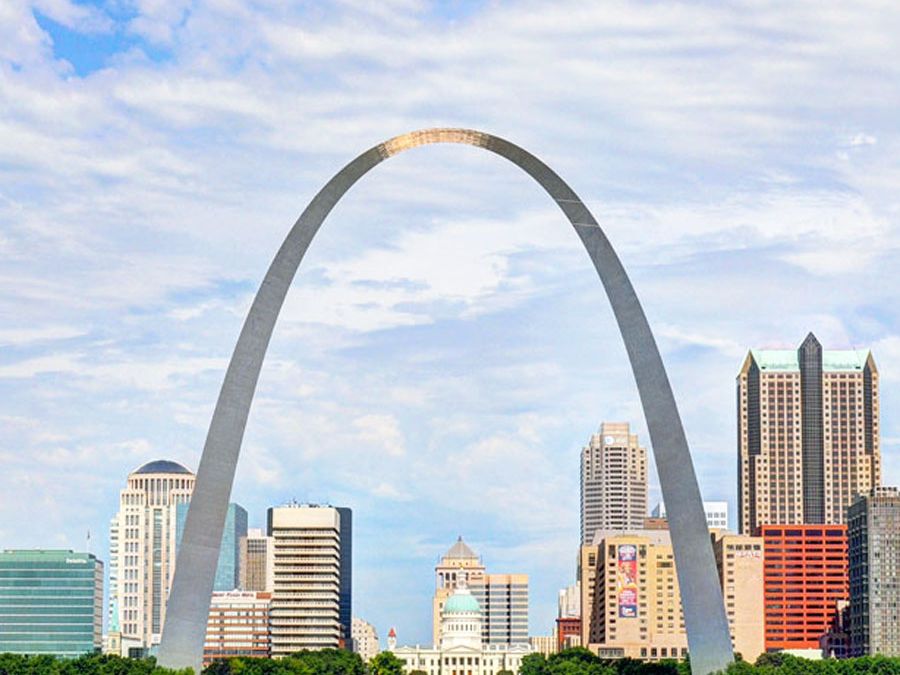
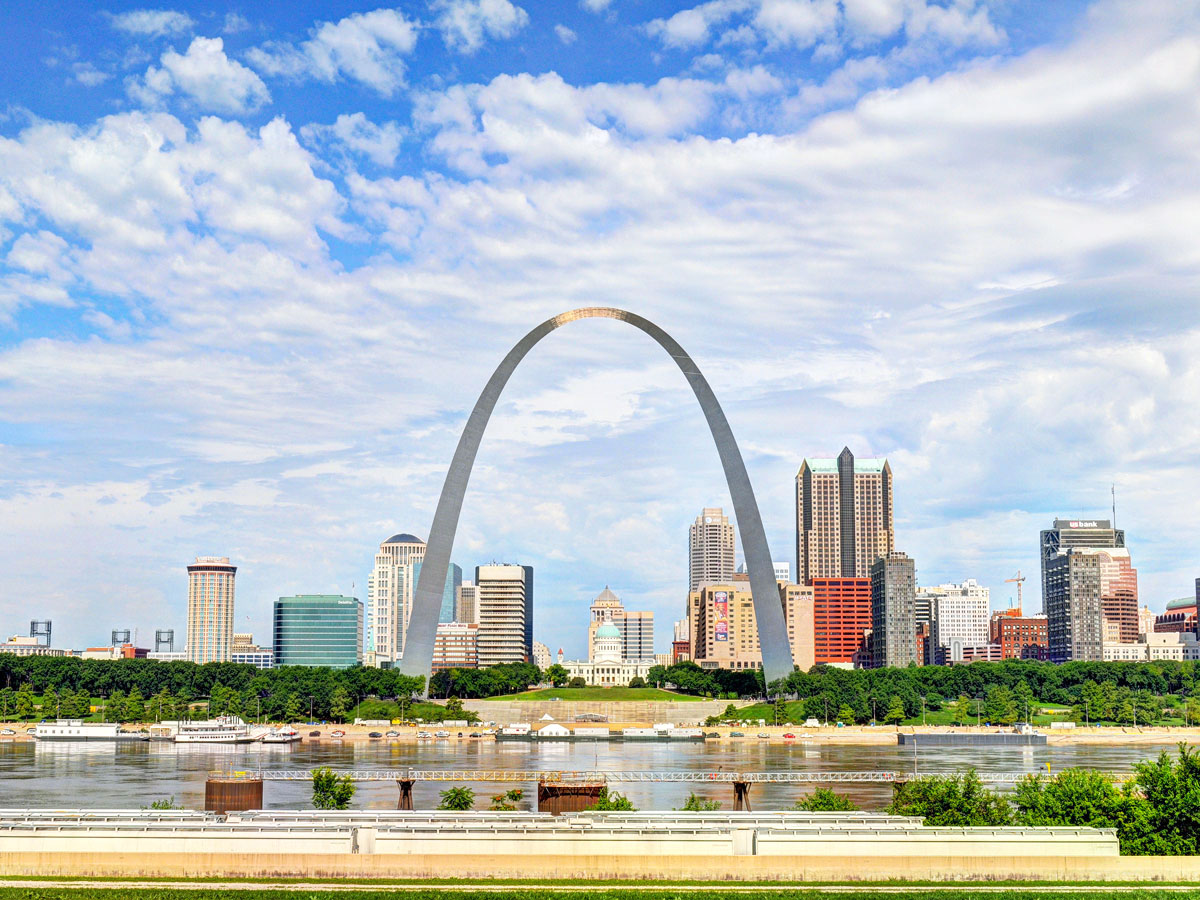
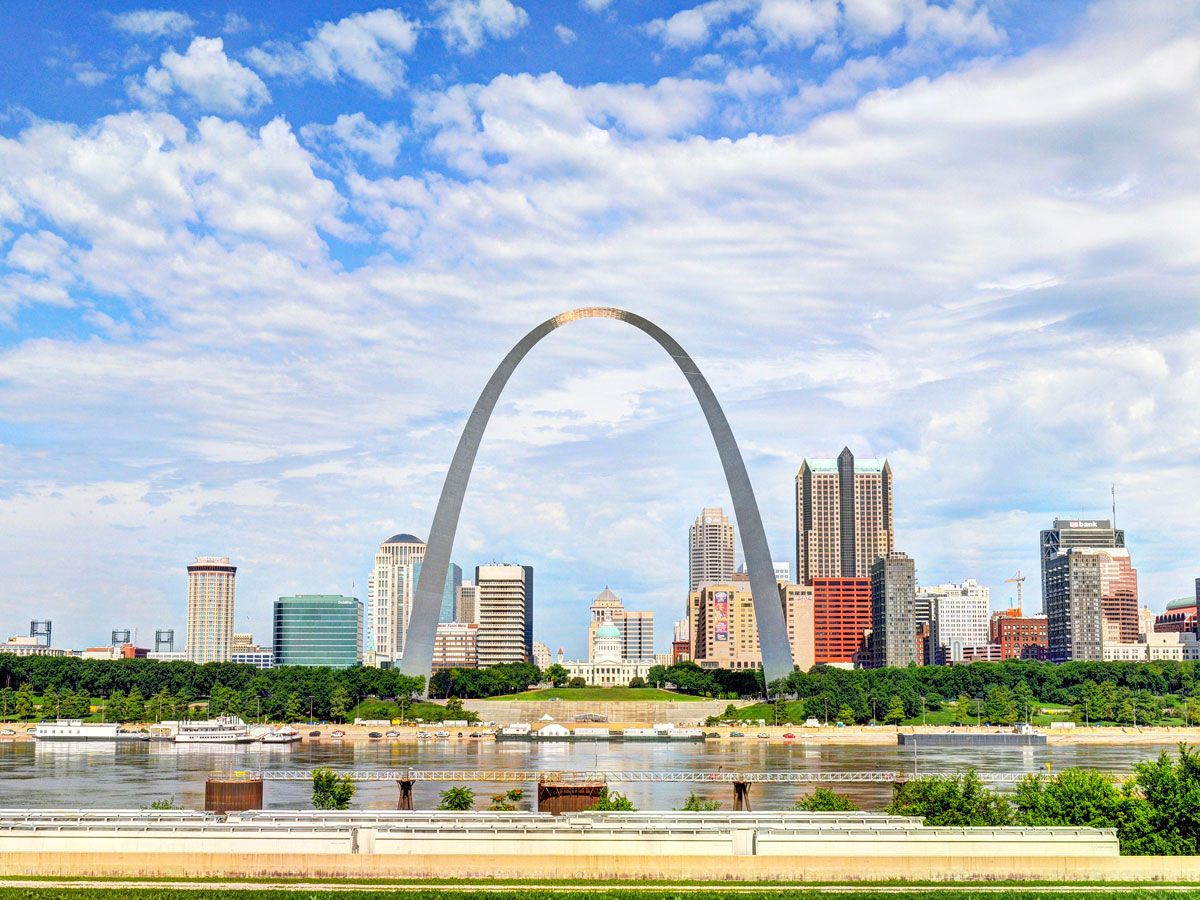
Gateway Arch over St. Louis skyline
Credit: Marie-Josée Lévesque/ Moment Open via Getty Images 

St. Louis was the official “Gateway to the West” during the westward expansion of America in the 19th century. That status is celebrated at the 630-foot-tall Gateway Arch, which comprises the smallest U.S. national park along with the adjacent historic courthouse. Take the tram to the top for an incredible view of the city and the river. Afterward, enjoy one of the many world-class cultural offerings endowed by the prominent families of St. Louis — several of which are free and located in or near Forest Park

Don’t miss the St. Louis Art Museum or the Missouri Botanical Garden, ranked as one of the best gardens in the world. Toasted ravioli is a St. Louis delicacy, and you can find it (along with amazing sandwiches) at Amighetti’s on the Hill, which has been serving the city’s Italian-food lovers for over a hundred years. 

Memphis, Tennessee

Fountain in park in Memphis, Tennessee
Credit: Dan Reynolds Photography/ Moment via Getty Images 

Blues, soul, and rock ‘n’ roll — Memphis can reasonably argue that it’s home to all three. Named after the majestic Egyptian city on the Nile, Memphis was home to Elvis Presley (visit his mansion at Graceland), Beale Street blues legend B.B. King, and Stax Records, second only to Motown and the recording studio of everyone from Big Star to the Staple Singers. 

The city also has a rich civil rights history, admirably explored at the National Civil Rights Museum at the Lorraine Motel. It’s a barbecue capital, too, hosting the world championship every year in May. (Locals have their favorites, but we’re sticking with Corky’s.) And no visit to Memphis would be complete without a visit to Mud Island, where you can stroll down a scaled replica of the very river you’re cruising.

Vicksburg, Mississippi

Dual bridges spanning the Mississippi River in Vicksburg, Mississippi
Credit: VisionsbyAtlee/ iStock via Getty Images Plus 

Since the city is the site of one of the Civil War’s most crucial battles, historians will want to visit Vicksburg. At the National Military Park, visitors can see the restored USS Cairo gunboat — one of the first ironclad warships used during the Civil War. There is also a Lower Mississippi River Museum, a well-preserved selection of historic homes, and tons of boutiques and galleries. Save your appetite for the best in old-fashioned Southern cuisine and feast on grits, vegetables, fried catfish, and pie at Walnut Hills Restaurant.

Natchez, Mississippi

Natchez Eola Hotel on Main Street in Natchez, Mississippi
Credit: Ian Dagnall/ Alamy Stock Photo 

Start your tour of Natchez by learning about the area’s earliest inhabitants at the Grand Village of the Natchez Indians. The 128-acre site features three prehistoric Native American mounds and a reconstructed Natchez Indian house, as well as a museum.

Explore the grounds further on a walking tour, and don’t miss Rose Hill Missionary Baptist Church, home of the oldest organized Black Baptist congregation in Mississippi. (The building was erected in 1908, but the church was organized before the Civil War.) If you have extra time, pay a visit to Natchez Under the Hill, home to a lively food scene — the pan-fried redfish at Magnolia Grill will leave you with no regrets.

New Orleans, Louisiana

Historic architecture in the French Quarter of New Orleans, Louisiana
Credit: rmbarricarte/ iStock via Getty Images Plus 

Whether you call it the “Crescent City,” the “Big Easy,” or “Nola,” New Orleans is pure magic. Simultaneously the most European and the most Caribbean of American cities, New Orleans keeps its rhythm as one of the most lively cities in the country.

In the famed French Quarter, wait in line with both locals and tourists at Café du Monde for pillowy sweet beignets and chicory-infused coffee, or at Central Grocery for an overstuffed muffaletta. (Or both!) Check out the artists in Jackson Square, home of St. Louis Cathedral, the oldest church in North America. Outside the Quarter, don’t miss the National World War II Museum, the Garden District, and the incredible Audubon Aquarium of the Americas.

Related: The Uniquely Beautiful Architecture of New Orleans