7 Places in the U.S. Reachable Only by Boat or Plane
By
Marissa Kozma
Read time: 5 minutes
September 22, 2025
Updated: September 22, 2025
7 Places in the U.S. Reachable Only by Boat or Plane
Outdoors •September 22, 2025•Updated: September 22, 2025
By Marissa Kozma
Author
Marissa Kozma
Marissa is a cheap airfare aficionado who loves exploring offbeat destinations with her husband. Based in Los Angeles and Joshua Tree, Marissa has been featured in publications such as San Diego Magazine, Palm Springs Life Magazine, 303 Magazine, and Mountain Living.
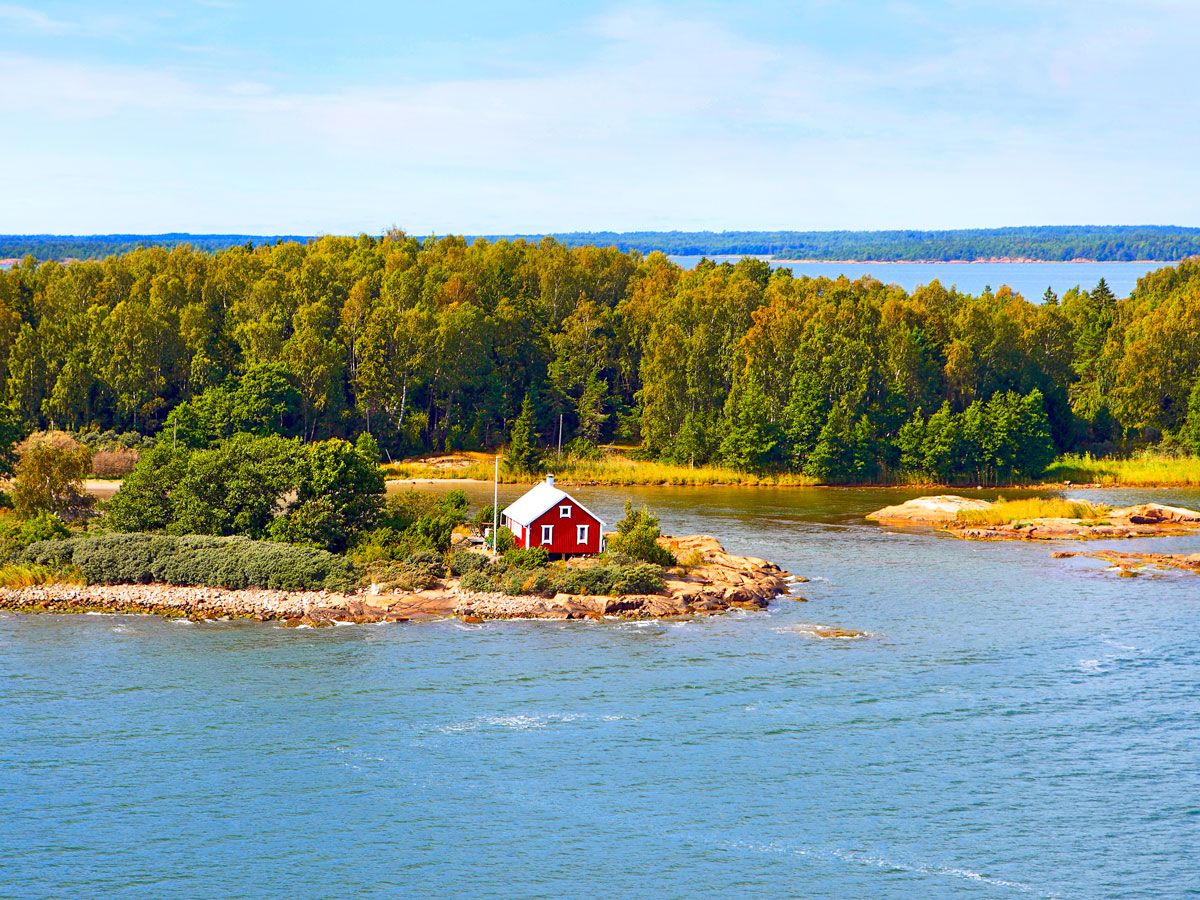
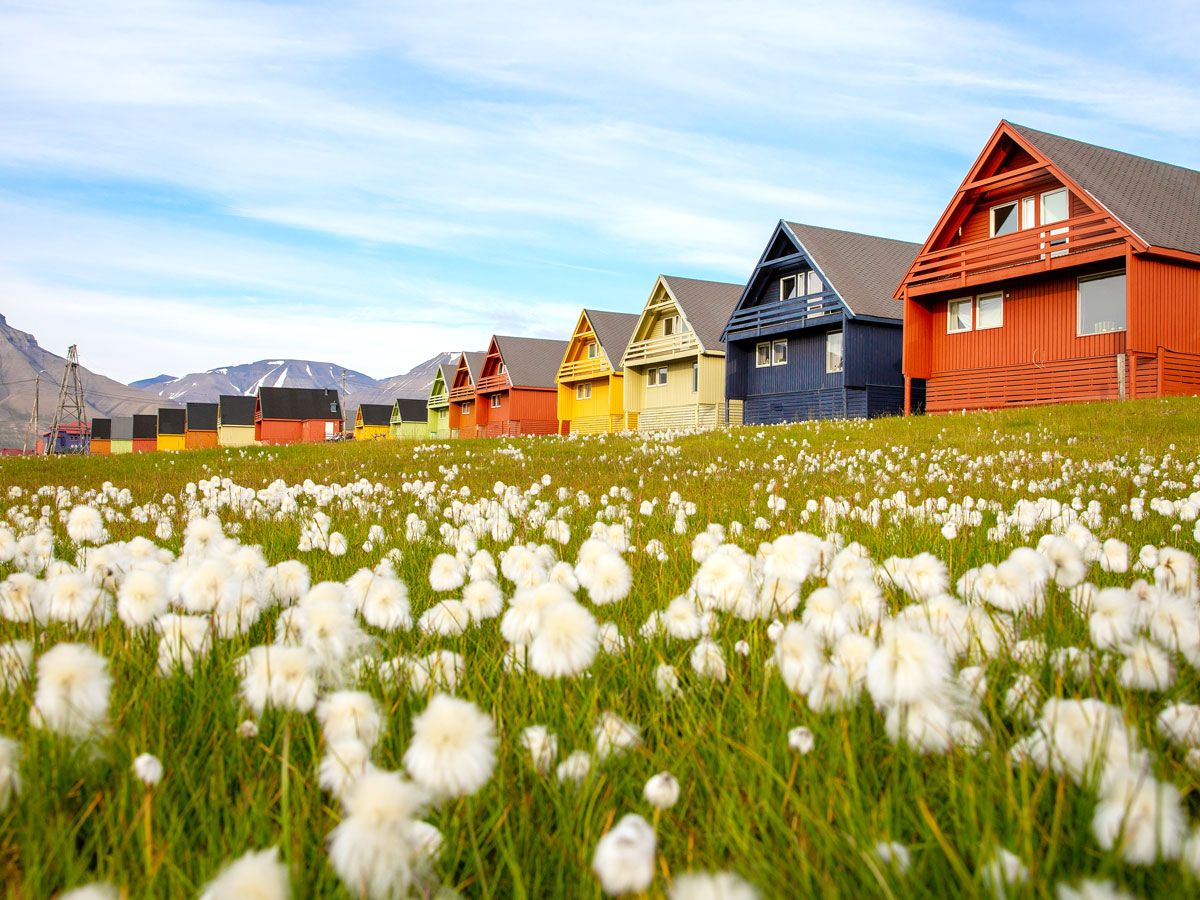
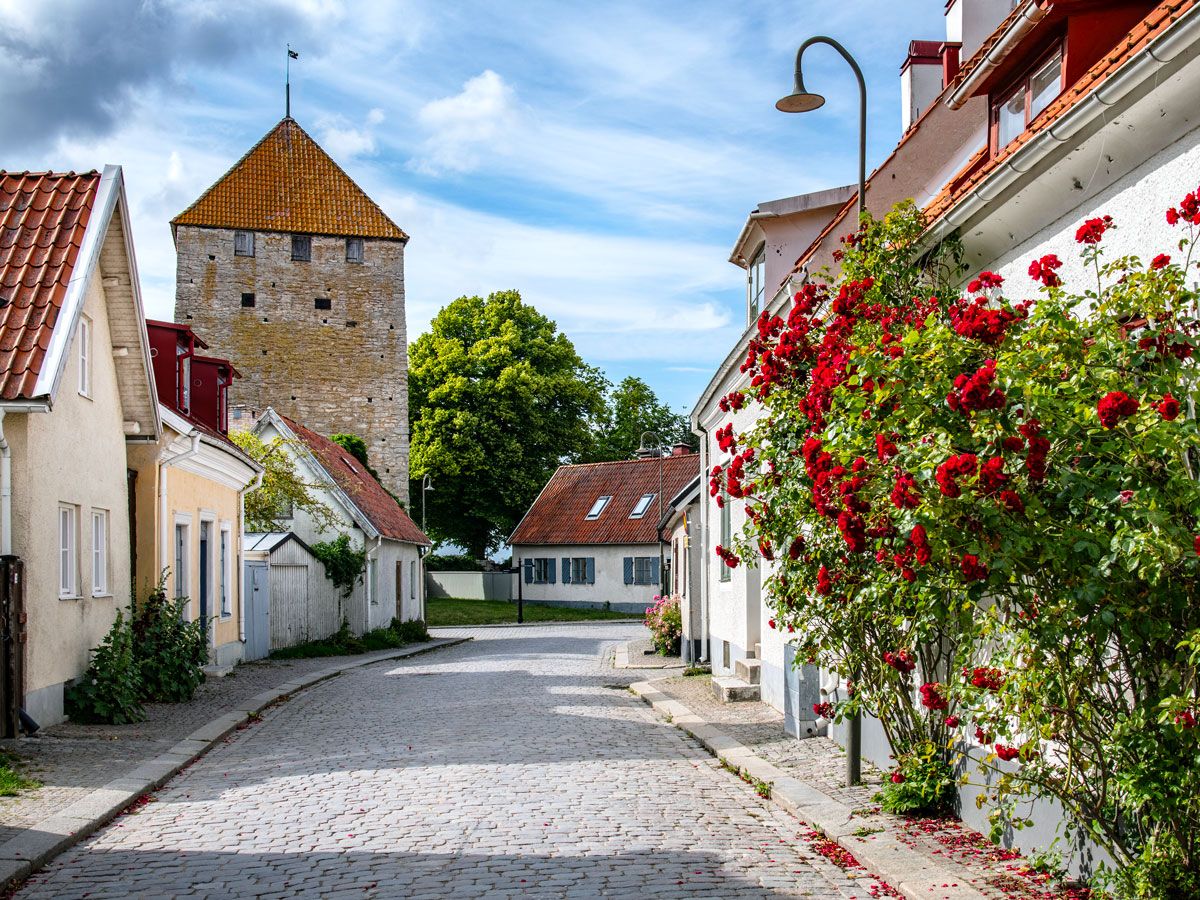
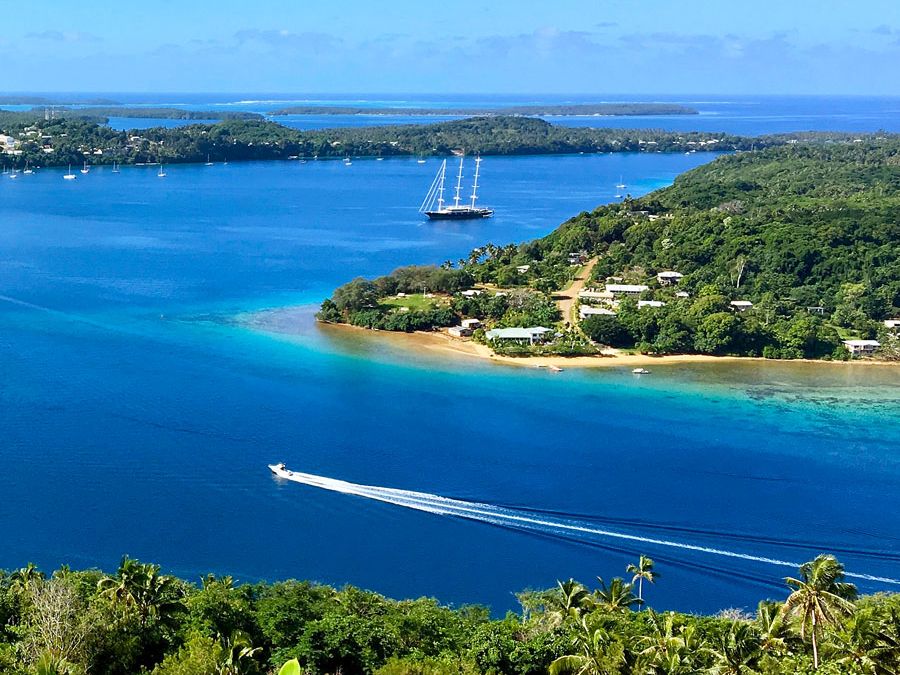
From the glacial waters of Alaska to an island teeming with marine life off the coast of Florida, there are some breathtaking locations in the U.S. that you simply can’t drive to. But that only makes the adventure more thrilling. So, hop on a ferry or book a cruise or a seaplane to reach these seven stunning remote U.S. getaways.
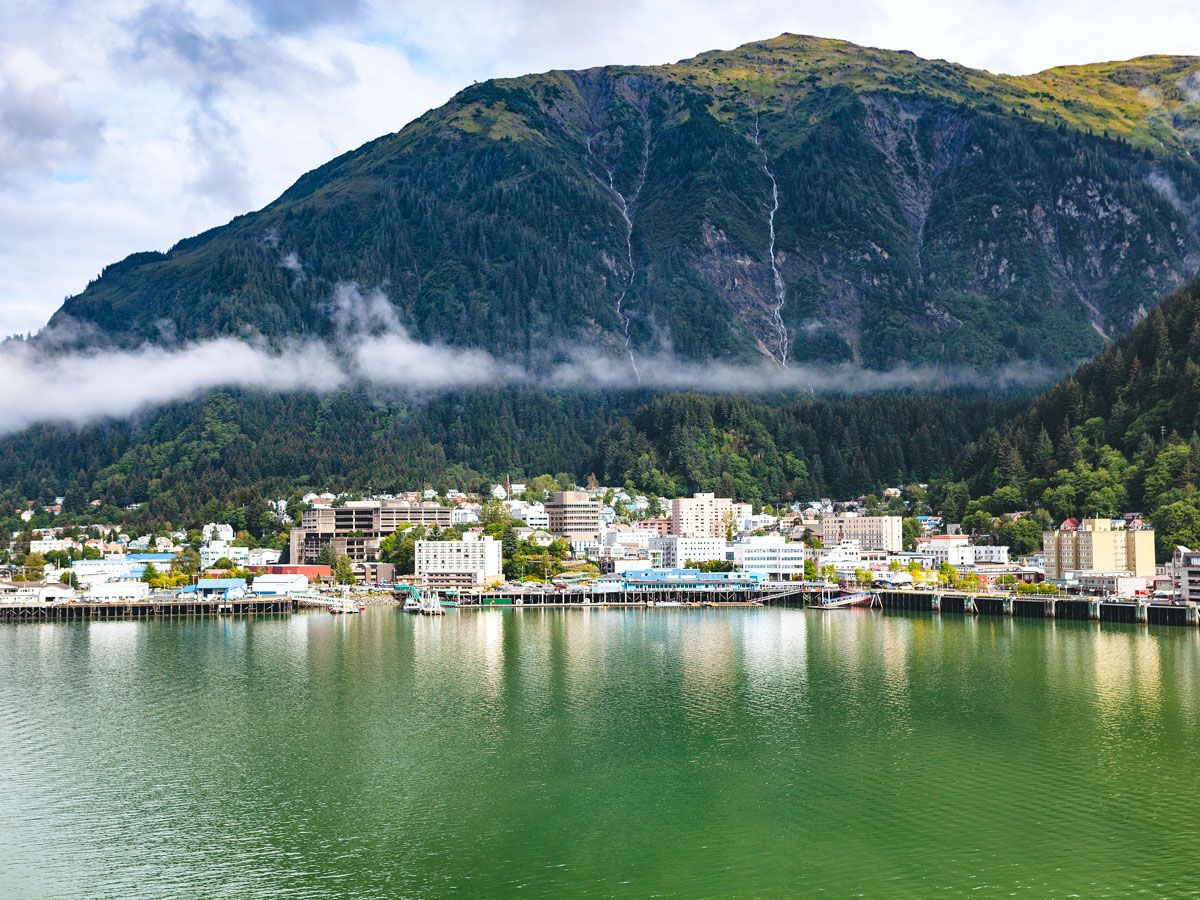
Juneau is the lone U.S. state capital not accessible by car — you can reach it only by boat or plane. Due to Juneau’s remote location, most out-of-towners fly into the port city, but some make the long journey by cruise or ferry from Bellingham, Washington; Prince Rupert, British Columbia; or other smaller Alaskan ports.
Home of the famous Mendenhall Glacier (the only glacier in southeast Alaska accessible by road), Juneau is coveted for its remarkable natural landmarks. Other highlights include Nugget Falls, the Tracy Arm Fjord, and Tongass National Forest, the latter of which is home to brown and black bears, spawning Pacific salmon, humpback and killer whales, Steller sea lions, harbor seals, sea otters, and Dall’s porpoises. Attractions on land include the Goldbelt Tram up Mount Roberts, the Alaska State Museum, and the DIPAC Macaulay Salmon Hatchery.
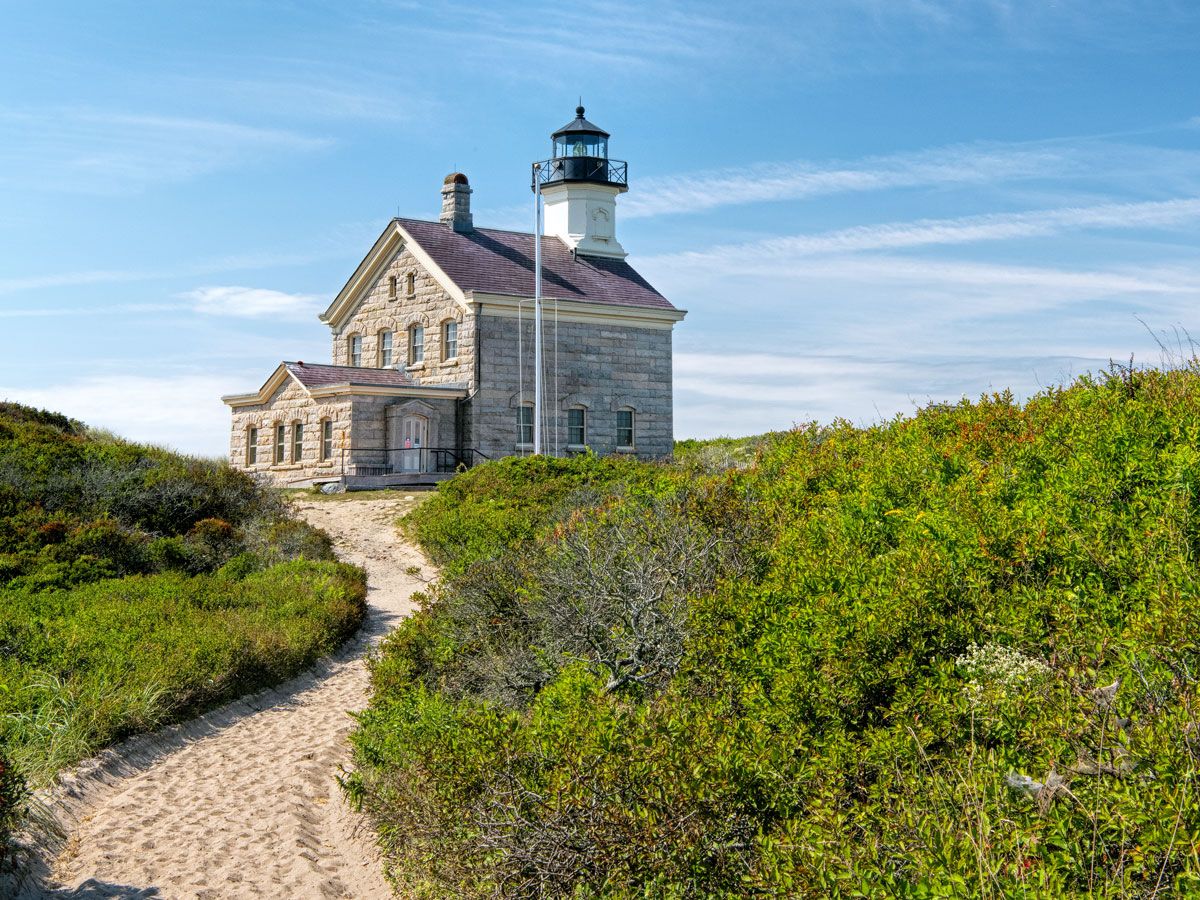
With dramatic clay cliffs and two picturesque lighthouses — the 19th-century red-brick Southeast Lighthouse and granite-and-iron North Lighthouse — Block Island sits just 13 miles off the coast of Rhode Island. One of New England’s top boating destinations, the hamlet is accessible in warmer summer months with daily ferries departing from Point Judith and Newport, Rhode Island; New London, Connecticut; and Montauk and Orient Point, New York. You can also fly via New England Airlines from Westerly, Rhode Island.
Block Island’s main town, New Shoreham, is the smallest town in America’s smallest state. Though it’s home to just over 1,000 full-time residents, in summer, the population swells up to 20,000 vacationers.
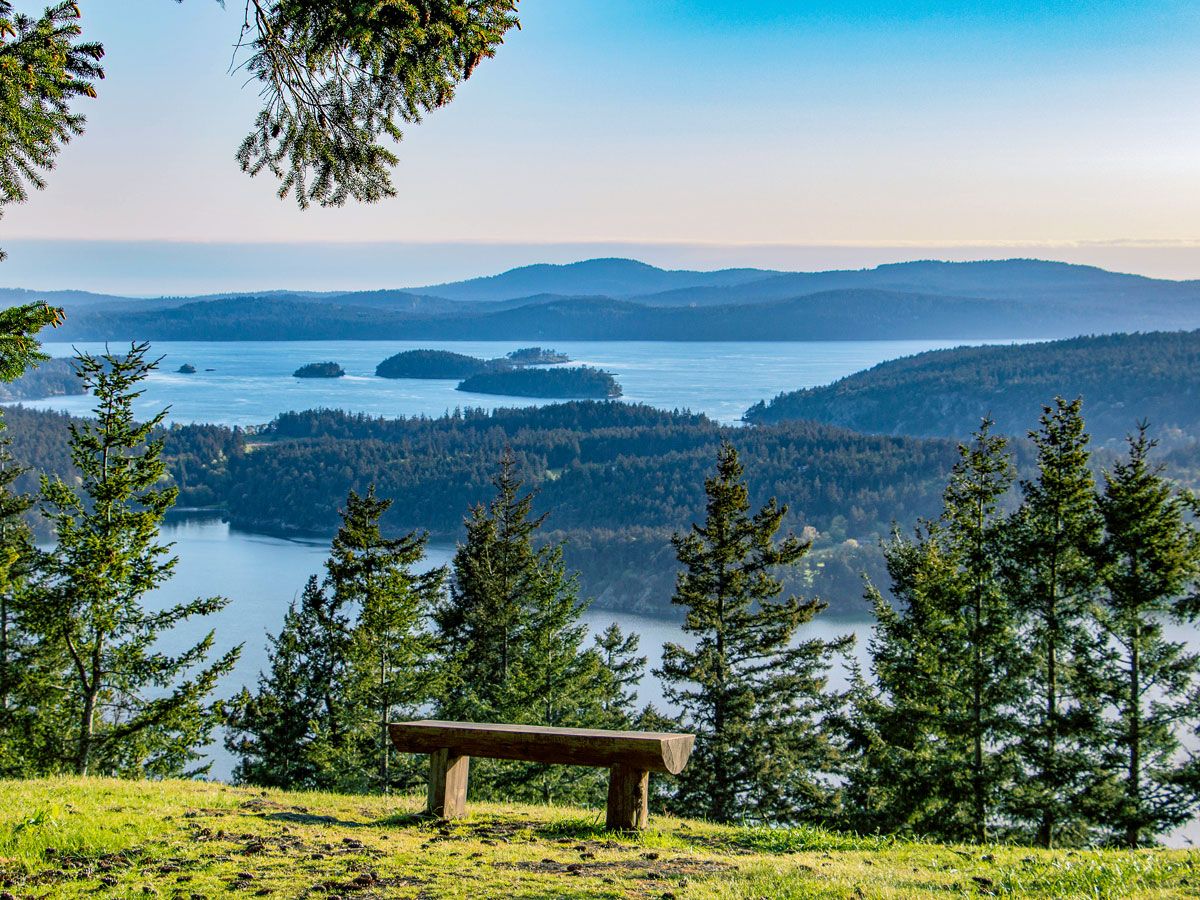
An archipelago consisting of 176 named islands and reefs off the northern coast of Washington state, the San Juan Islands are an adventurer’s paradise. They’re home to old-growth forests, Mount Constitution (the second-highest mountain on an ocean island in the contiguous 48 states), weathered lighthouses, rocky coves perfect for sea kayaking, and whale-watching lookout points.
The four main islands — San Juan Island, Orcas Island, Lopez Island, and Shaw Island — are accessible by ferry from the port city of Anacortes and by seaplane from Bellingham and Seattle. Each island is home to fewer than 10,000 full-time residents, but it’s easy to see the appeal of visiting. The sun casting shadows across the deep blue sound with snow-capped peaks in the distance is a remarkable scene you won’t find anywhere else in the U.S.
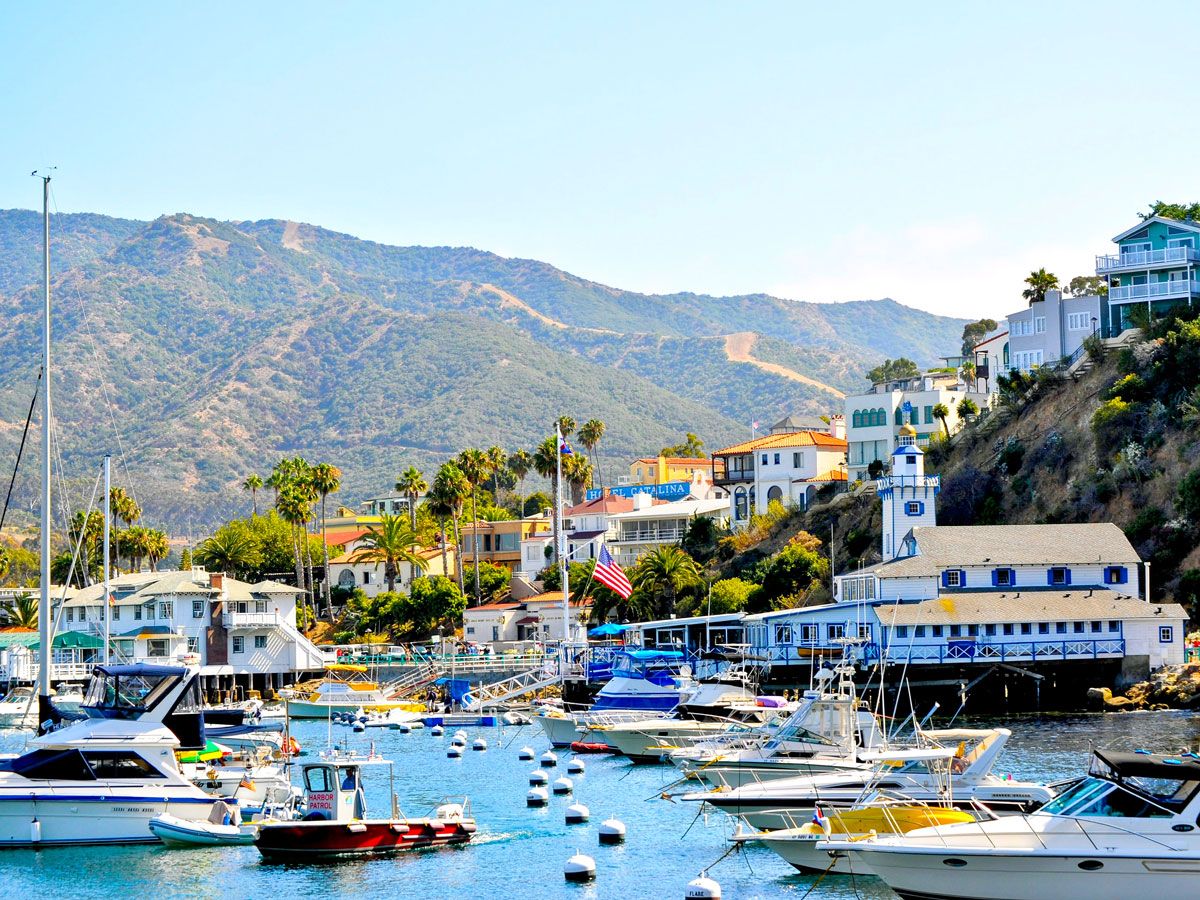
Many Angelenos take the hour-long ferry ride from Long Beach or fly via seaplane for a quick getaway to sunny Catalina Island, located just 22 miles off the coast of Southern California. No personal vehicles are allowed on the island, which is home to approximately 4,000 full-time residents.
Catalina’s idyllic resort community of Avalon looks like it belongs in the Mediterranean, with colorful fishing boats, the red-roofed casino perched over the rocky coastline, and the white Spanish-style bell tower built in 1925. With beachside restaurants and bars, an art and history museum, a botanical garden, galleries, and shops, the island has something for everyone — and it feels worlds away from the sprawling city across the water.
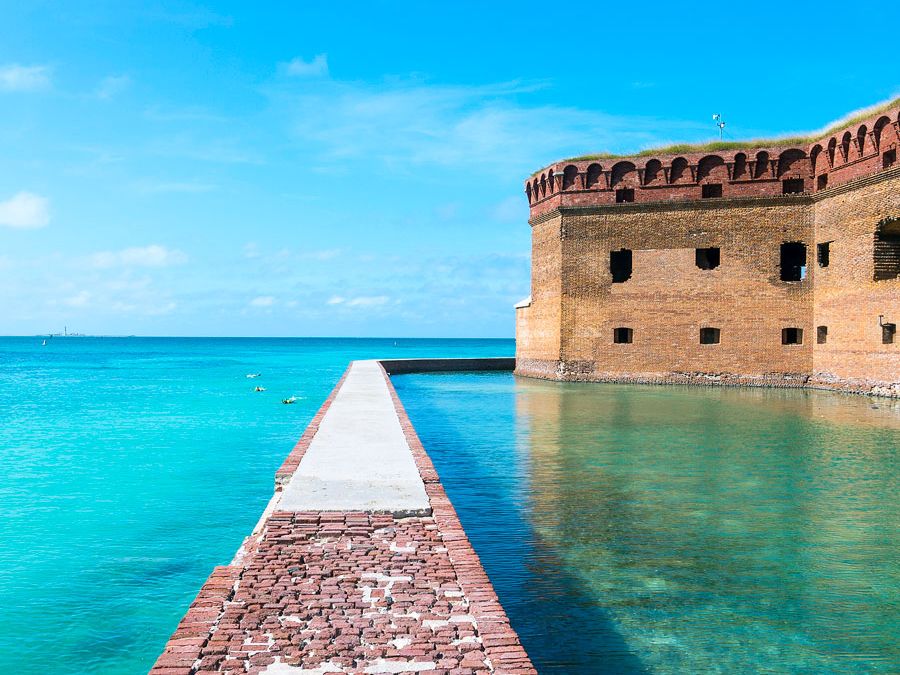
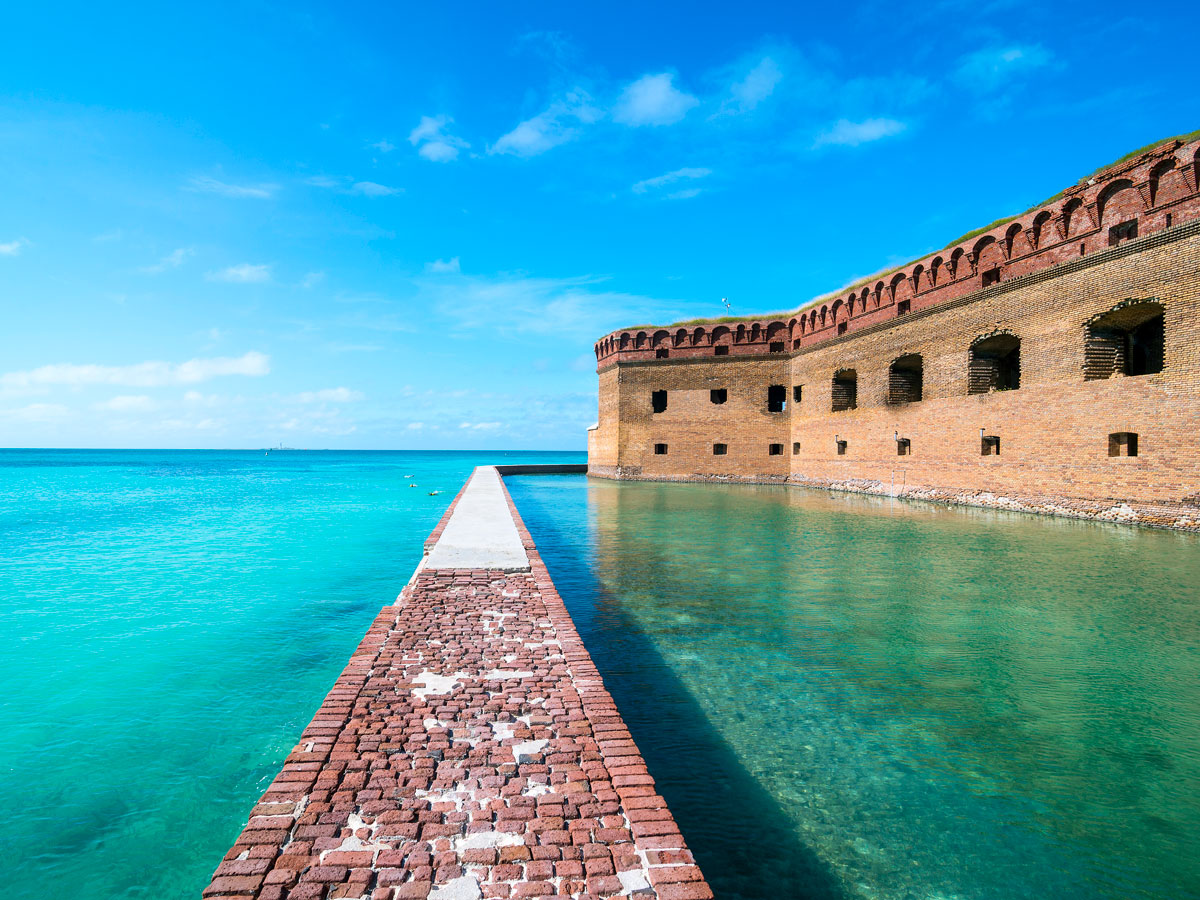
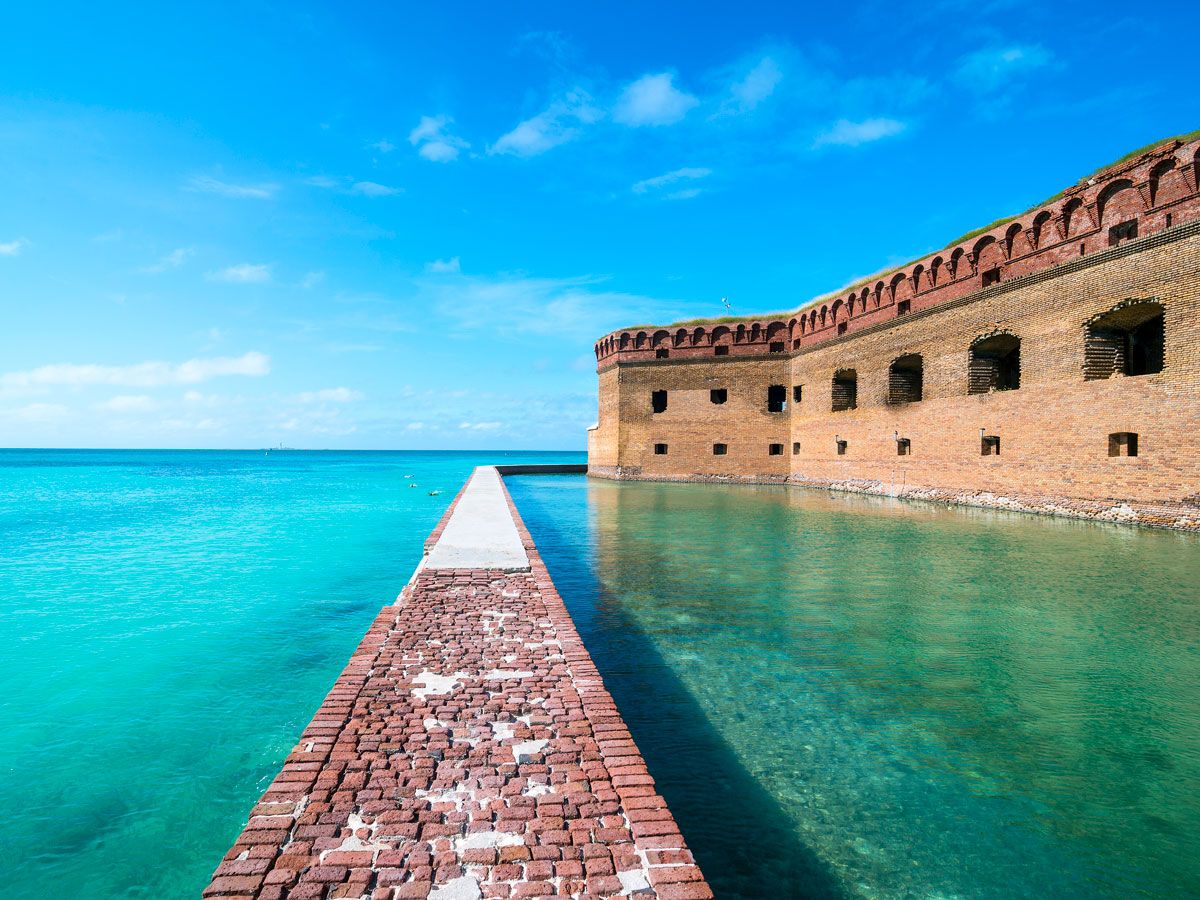
One of the 10 least-visited national parks in the United States, Dry Tortugas is a remote reserve 70 miles west of Key West, covering 100 square miles of mostly open water, plus seven small islands. Accessible only by boat or seaplane, the national park is home to the 19th-century Fort Jefferson — the largest brick masonry structure in the Americas — and is teeming with marine life swimming in the protected coral reefs. To see the park in all its glory, many visitors embark on scuba-diving, snorkeling, or boating tours. Or you could simply take a swim and relax at campsites on lush Garden Key, the only island with amenities for tourists.
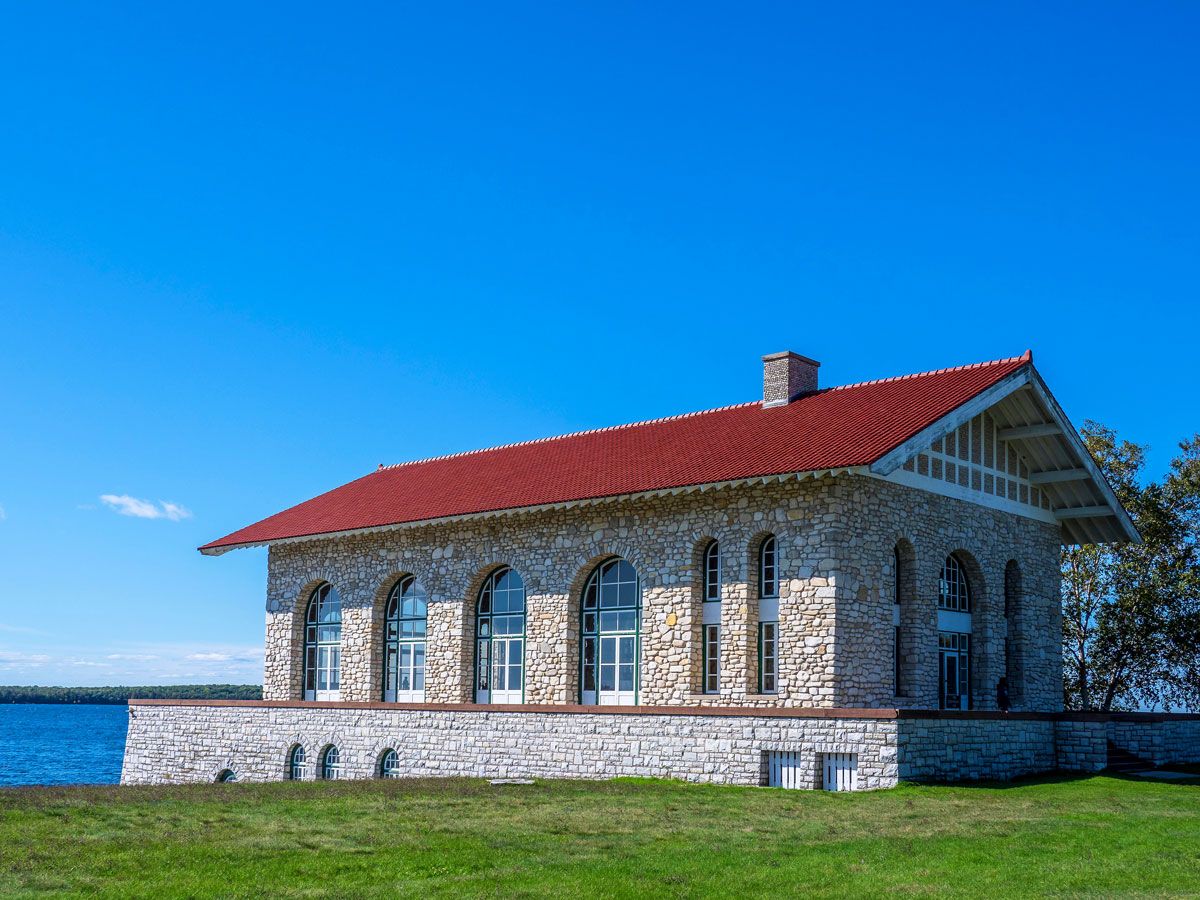
This forested isle located at the mouth of Green Bay in Wisconsin’s Door County is another secluded spot that’s only reachable by ferry. To visit Rock Island, hop on the seasonal ferry (which operates from Memorial Day weekend through early October) from adjacent Washington Island, which itself is also reachable only via ferry from the mainland.
Once you reach the shores of Rock Island, you can explore Rock Island State Park, which features the Pottawatomie Lighthouse as well as stone buildings built by an inventor who owned the island between 1910 and 1964. Visitors can also explore the island’s rugged beauty along 10 miles of hiking trails and go camping, swimming, and fishing.
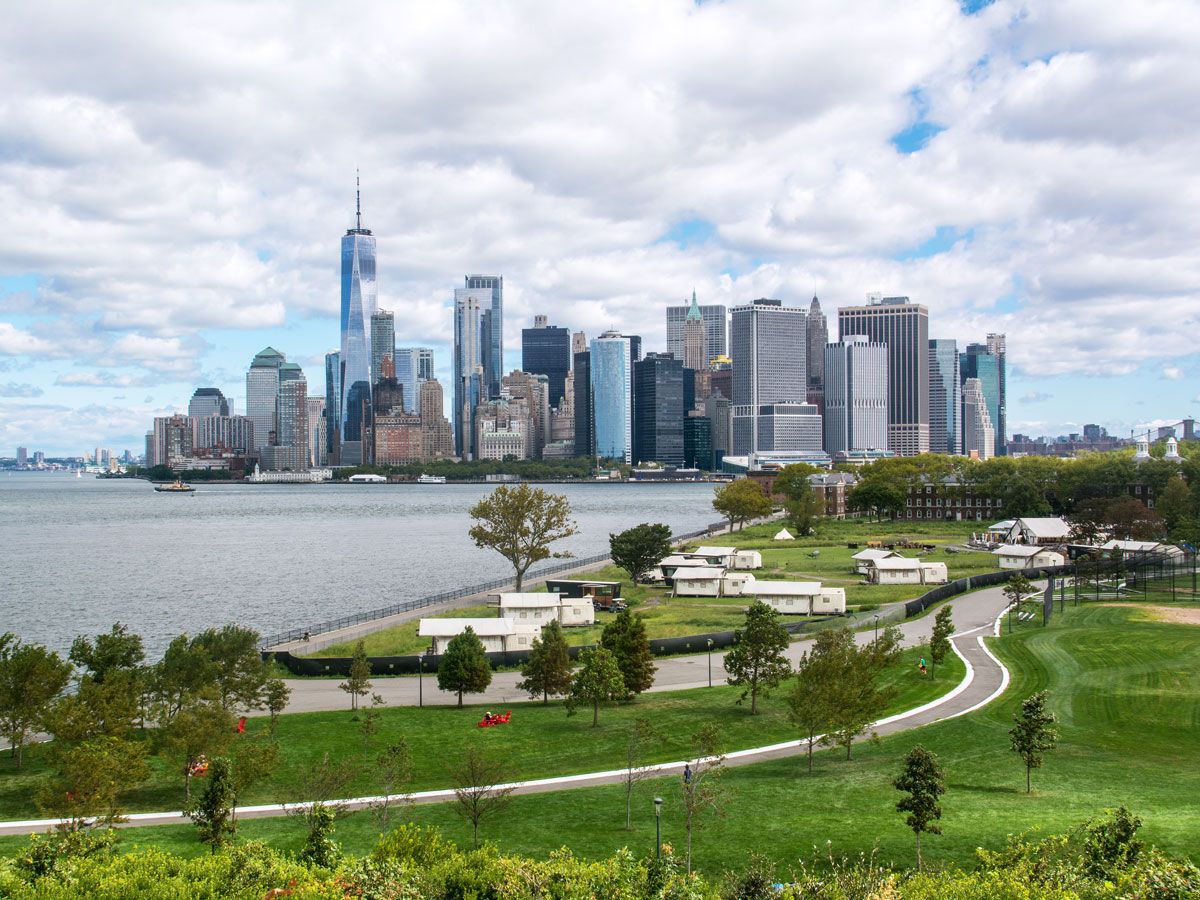
Governors Island is a mere 400 yards from Brooklyn and 800 yards south of Manhattan. Covering only 172 acres, the island took its current name in 1699, when British colonists used it for royal governors. Later, it was home to the U.S. Army from 1794 to 1966 and the U.S. Coast Guard from 1966 to 1996.
Today, the tiny island features public art installations, parks with epic views of the New York skyline, biking trails, historic sites including Castle Williams and Fort Jay, restaurants, and the popular Hammock Grove, a relaxing spot featuring 50 red hammocks anyone can lounge in. The island is accessible by a short eight-minute ferry from either the Battery Maritime Building in Lower Manhattan or Pier 6 in Brooklyn.
6 Do’s and Don’ts for Dining in Paris Like a Local
By
Michael Nordine
Read time: 4 minutes
September 22, 2025
Updated: September 22, 2025
6 Do’s and Don’ts for Dining in Paris Like a Local
Tips •September 22, 2025•Updated: September 22, 2025
By Michael Nordine
Author
Michael Nordine
Michael is a staff writer for Daily Passport and film critic who writes the weekly newsletter Movie Brief. His writing and criticism have also appeared in the Los Angeles Times, Variety, and the Washington Post, among others. A native Angeleno, his favorite countries to visit are Norway and Japan.
France and fine dining are practically synonymous, but that doesn’t mean you need to seek out high-end restaurants to have a good meal in Paris. Quite the opposite, in fact, as excellent food is everywhere, from streetside cafés to casual bistros and bustling brasseries. Along with how seriously they take food, the French also have a number of unwritten but deeply ingrained etiquette rules as to the dining experience. Here are six dining do’s and don’ts to learn before your next trip to Paris.
Like in many European countries, people in France tend to eat late. Many restaurants will close for a few hours between lunch and dinner, so plan accordingly and don’t expect to have your final meal of the day any earlier than 7 p.m. (or, as the French like to call it, 19:00). Dinner tables at most restaurants in Paris start to fill up between 8 p.m. and 9 p.m., but many kitchens are open later into the evening.
Credit: Klaus Vedfelt/ DigitalVision via Getty Images
Unlike as is often the case in the U.S., eating out is a leisurely affair in France. Your waiter might not check on you as often, but don’t interpret this as rudeness. They simply don’t want to rush you, as quick turnover isn’t as high a priority as it would be at a busy chain stateside restaurant. You’ll get used to it quickly, though, as it allows you to savor every aspect of your meal — including the social aspects, which some might consider just as important as the food.
It isn’t just Americans who think American tipping culture is out of control. Most Europeans tip far less, if they tip at all. France falls into the latter category. It’s considered unnecessary, as waiters take home higher wages and don’t depend on gratuity, and French restaurants, bars, and cafes must legally include a 15% service charge (service compris) on all bills. Adding a small additional tip isn’t out of the question if you receive truly exceptional service as part of a great meal, but you shouldn’t feel obligated.
Credit: 10’000 Hours/ DigitalVision via Getty Images
French restaurants are now required by law to give customers to-go boxes when they request them, so taking home leftovers is becoming somewhat more acceptable, but it’s still not a common practice in France. That’s partly because portion sizes are smaller than they are in America, and most diners finish their meals (or at least come close). Some may still consider the practice inelegant, so it’s best to skip the doggie bag after your meal.
If you don’t feel comfortable putting your high school French to the test while dining out in Paris, fear not — many servers will speak enough English for you to not worry about ordering in a language you can’t speak. Still, a little courtesy goes a long way. Greeting your waiter (and just about everyone else) by saying “bonjour” (“hello”) or “bonsoir” (“good evening”) will be appreciated, as will saying “merci” rather than “thank you.” They’ll know from your accent that these two words are probably the extent of your French ability, but it’s considered a nice gesture nevertheless.
Over the last few years, the anecdotes have become more common: An American asks for oat milk with their latte at a Parisian café and is met with confusion (or worse). French food is pretty dairy-forward — think of all that fromage, not to mention buttery croissants — and most Parisians still pair their coffee with actual milk instead of the oat, soy, or almond varieties. However, dairy substitutes are (slowly) popping up more and more in Paris, particularly with younger generations.
Advertisement
More from our network
Daily Passport is part of Inbox Studio, an email-first media company. *Indicates a third-party property.
Bennett is a New York City-based staff writer for Daily Passport. He previously contributed to television programs such as the Late Show With David Letterman, as well as digital publications like the Onion. Bennett has traveled to 48 U.S. states and all 30 Major League Baseball stadiums.
As any air traveler can attest, getting your luggage X-rayed is a standard part of the TSA’s security screening process. But have you ever paused and wondered what it would be like to view those X-rays with your own eyes? Sure, some flyers might catch a brief glimpse of the screen, but most travelers are left wondering what the agents actually see when they scan your bags. Let’s take a closer look at the type of information these X-rays provide.
Airports have been using X-ray baggage scanners since the 1970s. In 1970, a device called the Saferay debuted, which created a two-dimensional, black-and-white image of a bag’s contents. In those images, metal objects appeared darker, with vivid outlines, while nonmetal items such as clothing or shoes had faint outlines. During a 1970 demonstration of this new technology, a reporter for Popular Scienceremarked, “The picture was remarkably sharp and clear,” and noted that they were able to clearly see the outline of a revolver hidden in the luggage. However, the technology had its limitations — all it could really do was produce two 2D images, one from the top and one from the side.
When the TSA was founded in 2001, standard airport X-ray scanners still relied on these 2D images, though they had evolved to be color-coded. Colors were assigned based on atomic weight, allowing agents to determine the material that an item was made from. The darker the color, the more dense the object. Nick Bowring, head of the Centre for Sensing and Imaging at Manchester Metropolitan University, explained in a 2015 interview with the BBC that heavier metal objects were colored blue, lighter metals appeared green, and organic materials came out orange.
However, one issue with this color-coded system, which remains in place at some airports today, is the fact that all organic material appears orange, whether it’s a bottle of water or a potentially explosive device. With these older X-ray scanners, there’s no surefire way for a TSA agent to distinguish between harmless and harmful items. It’s up to them to take note of the color, carefully inspect the object’s shape, and make a determination from there. This can potentially lead to time-consuming physical bag inspections. Thankfully, these machines are slowly being replaced by a newer, more sophisticated technology that debuted within the last decade.
In 2017, the TSA began testing a technology known as computed tomography, which is similar in quality to a medical CAT scan. Though the rollout of these scanners has been slow, they’ve been appearing at more and more airports in recent years. The European Union set a 2026 deadline to have CT scanners at all airports, while the TSA estimates that it may take until 2040 to have these machines at all screening lanes throughout the United States.
Unlike their predecessors, CT scanners can produce highly detailed, cross-sectional, 3D images of a bag’s contents. These images are so detailed that TSA agents can manipulate, rotate, and enhance them however they see fit — for example, by altering the contrast to make specific types of materials stand out. The hope is that these 3D images will cut down on false alarms, thus lessening the need for physical bag inspections and speeding up the security line.
Interestingly, the technology is so thorough that some passengers at international airports such as London’s Gatwick Airport are being told to keep objects such as laptops or liquids inside their luggage (items that they would’ve been required to take out using the older system). This new software algorithm is advanced enough to detect whether a liquid is harmless or if it poses an explosive risk. The TSA may soon follow suit, with reports that the agency is considering scrapping its long-standing liquid rules for passengers.
Credit: EvgeniyShkolenko/ iStock via Getty Images Plus
The thought of a stranger looking through your luggage seems intrusive enough, but what about body scanners? In an interview with Reader’s Digest, TSA researcher Malvini Redden explained that while the “early versions of the scanners came out without any privacy protections,” those scanners were removed in 2013 amid privacy concerns.
Modern body scanners rely on what’s known as Advanced Imaging Technology, and their goal is to detect any metallic or nonmetallic threats that may appear on a passenger’s person. In doing so, the scanners keep all personal information private, rendering your likeness as if you were a generic image. In that same Reader’s Digest article, TSA adviser Eri Jenkins assured travelers that today’s scanners “provide a nondescript avatar image of the human anatomy,” so you needn’t worry about potential privacy issues.
10 U.S. Cities With Record-Breaking Temperature Swings
By
Bradley O'Neill
Read time: 5 minutes
September 18, 2025
Updated: September 18, 2025
10 U.S. Cities With Record-Breaking Temperature Swings
Outdoors •September 18, 2025•Updated: September 18, 2025
By Bradley O'Neill
Author
Bradley O'Neill
Bradley is an English travel writer who’s wandered through 50-plus countries and lived on four continents while chasing waves, the perfect pint, and family adventures. Bradley's work has appeared in publications such as Skyscanner and Matador Network, and he now splits his time between Buenos Aires and Uruguay.
Think your hometown weather is unpredictable? Across the United States, some cities don’t just live with seasonal climate changes — they wrestle with them daily. These places are famous for jaw-dropping temperature swings that can turn a pleasant morning stroll into a furious sprint for shelter. From the remote extremes of Montana to the Rocky Mountains and Great Plains, here are 10 U.S. cities that have taken the phrase “four seasons in one day” to heart.
Spearfish, South Dakota
Credit: dosecreative/ iStock via Getty Images Plus
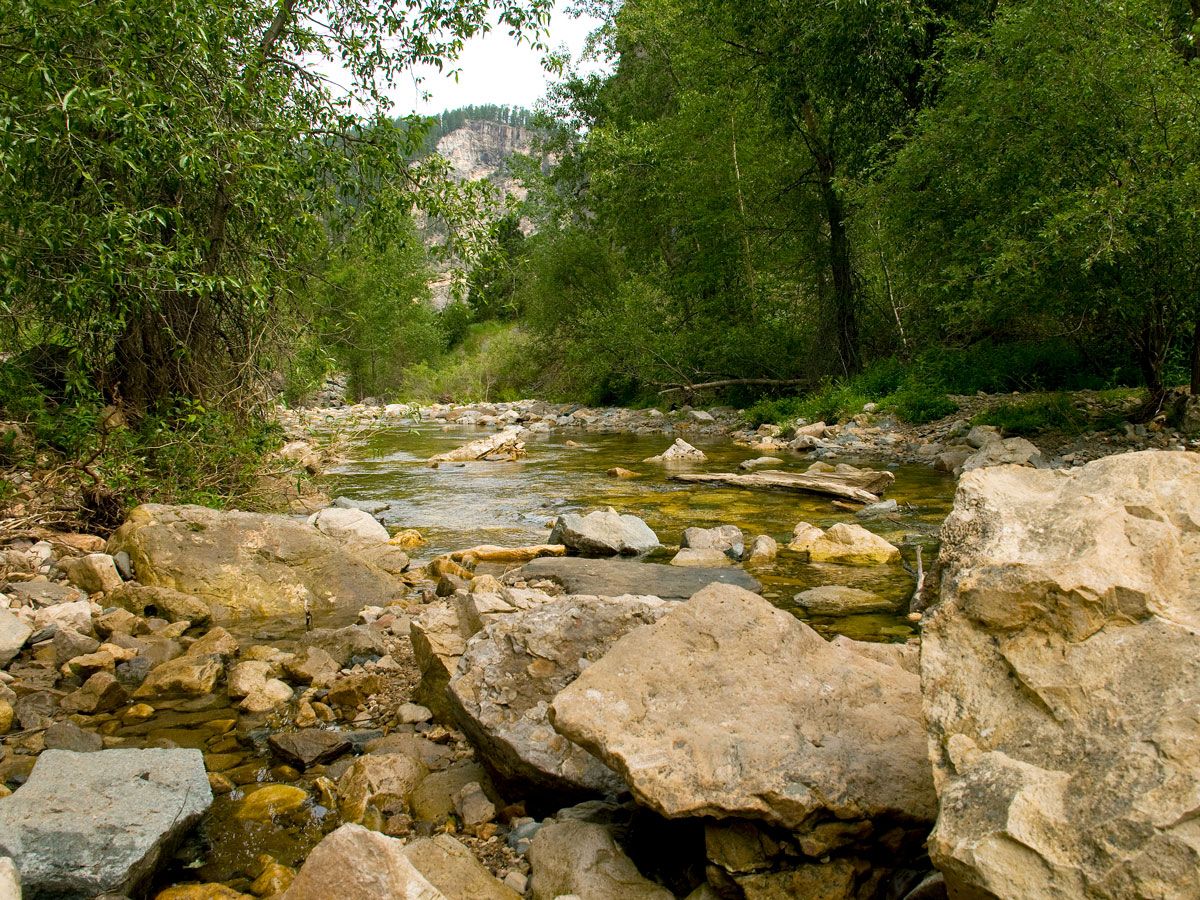
The small city of Spearfish is located about midway between Mount Rushmore and Devils Tower, the country’s first national monument. Typical year-round temperatures in Spearfish range between 40 degrees and 80 degrees Fahrenheit, but a sudden turn of events on January 22, 1943, saw the city set a Guinness World Record for the world’s fastest temperature drop. The day began at -4 degrees, but in two short minutes, the temperature rose to 45 degrees. Incredibly, on the same morning, the city witnessed a 27-minute, 58-degree drop from 54 back to −4, cracking windows and covering car windshields with an instant frost.
Rapid City, South Dakota
Credit: James_Gabbert/ iStock Editorial via Getty Images Plus
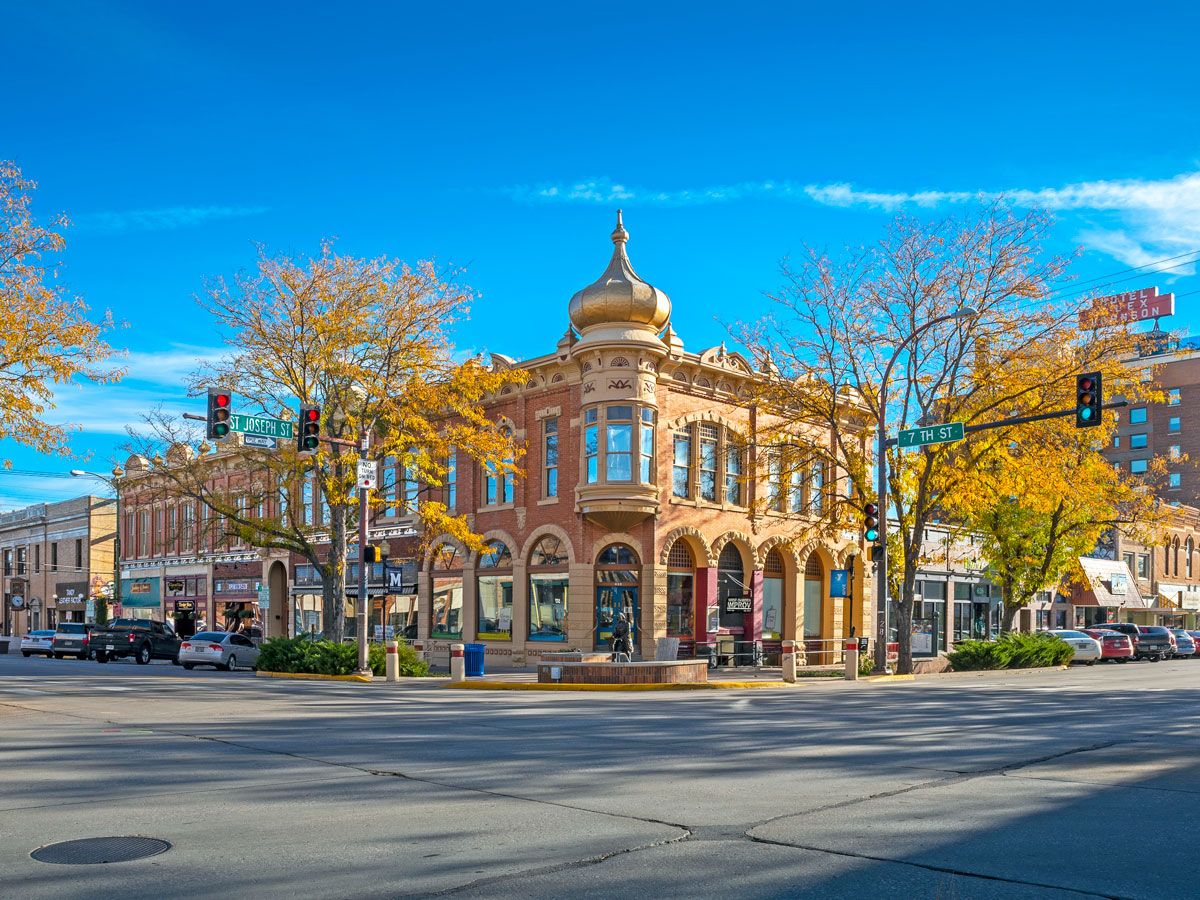
On November 9, 1911, residents in Rapid City woke up to an unseasonably mild day, with the thermometer reading 55 degrees Fahrenheit. By 8 a.m., however, an arctic blast tore through the northern plains, sending the mercury plunging to a bitter 3 degrees — an incredible 52-degree drop in just two hours. After chilling South Dakota, the cold front moved eastward, causing tornados and blizzards across the Midwest.
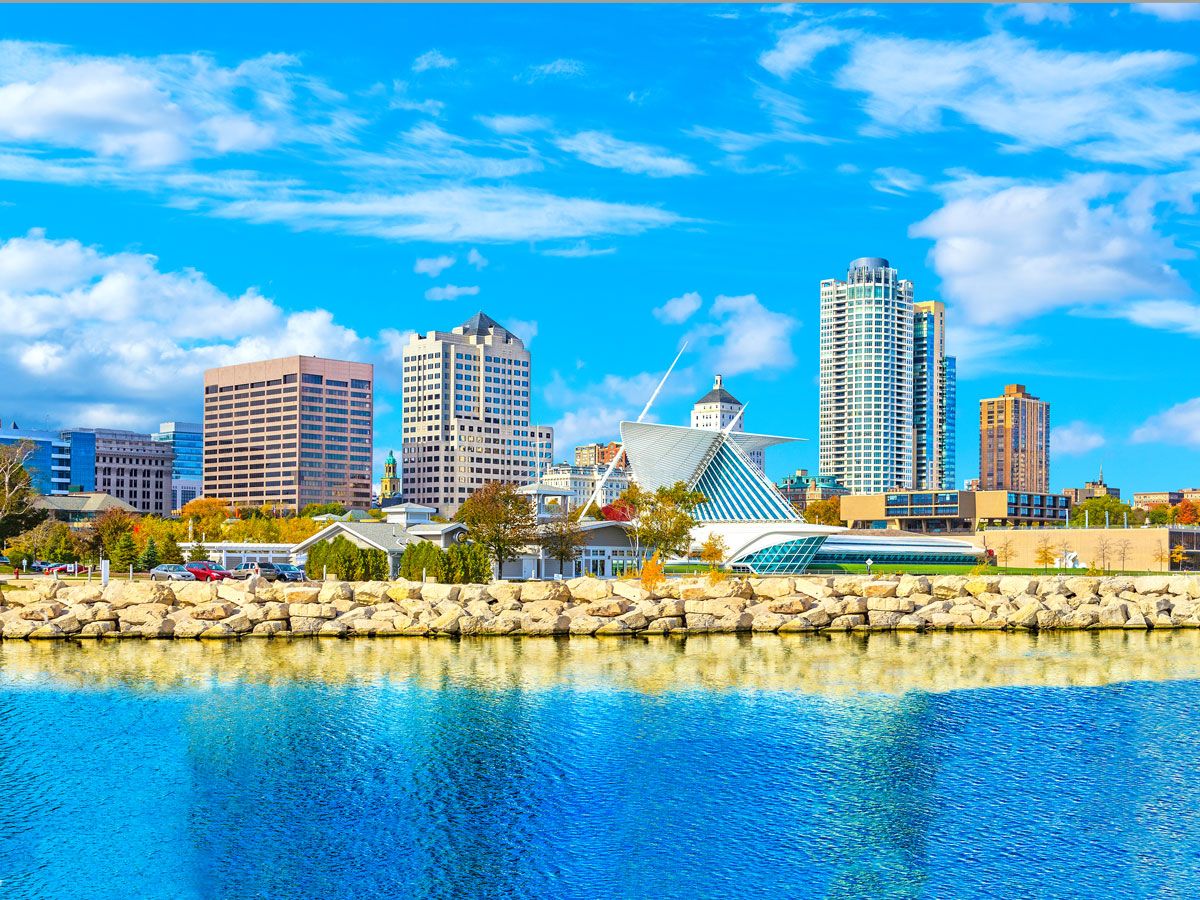
In the space of 16 hours between February 27 and February 28, 2024, Milwaukee witnessed a dramatic temperature swing of 58 degrees. Locals went from basking in a toasty 74 degrees on Tuesday to waking up to a frigid 16 degrees on Wednesday morning. This abrupt change also blanketed some parts of the region in overnight snow. Local meteorologists reported that it was one of the wildest nights in local weather history, matching similar drops in 1911 and 1934.
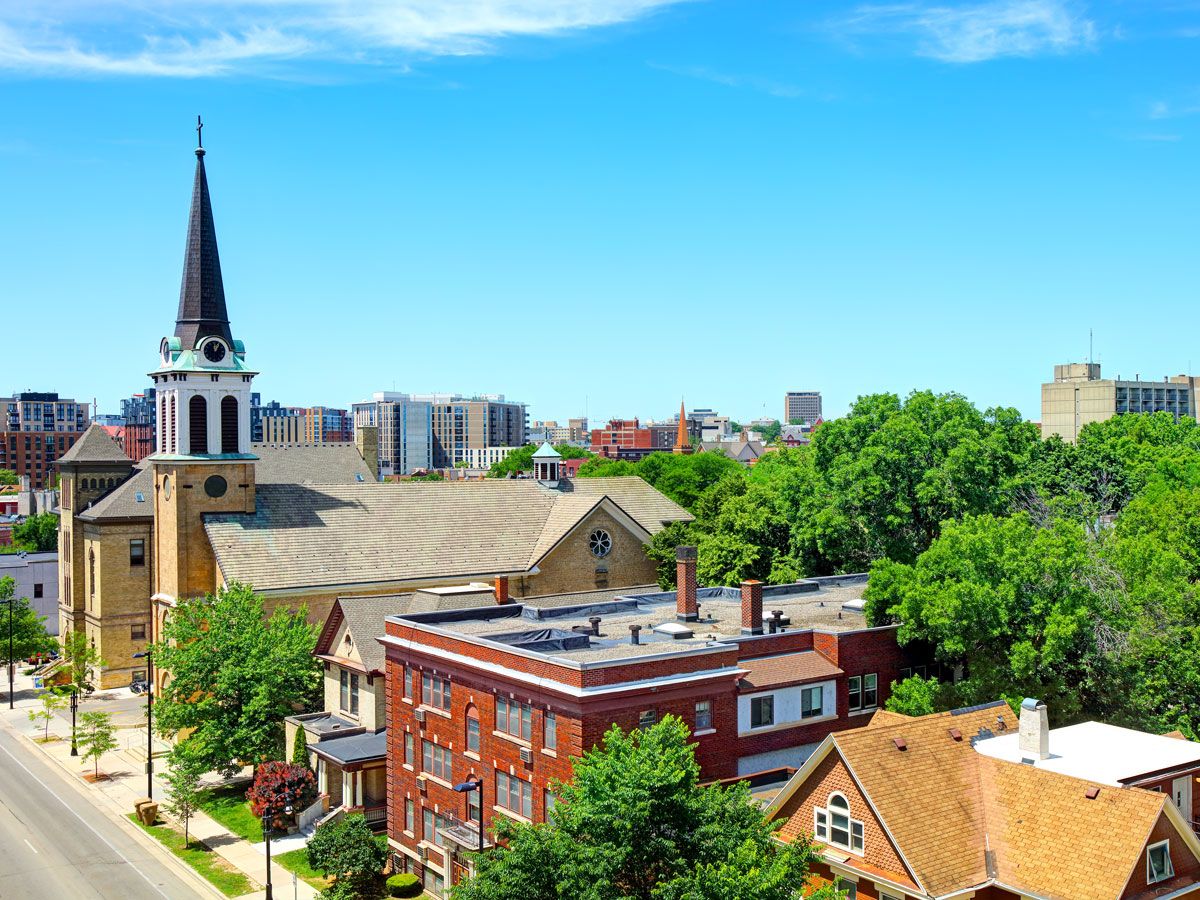
Just 80 miles away from Milwaukee, Madison experienced its own record-breaking temperature drop on the same night in February 2024. The mercury dropped 59 degrees, from a springlike 70 degrees on Tuesday to a chilly 11 degrees on Wednesday morning. The sudden swings in both Madison and Milwaukee were attributed to a notably strong El Niño weather pattern that year.
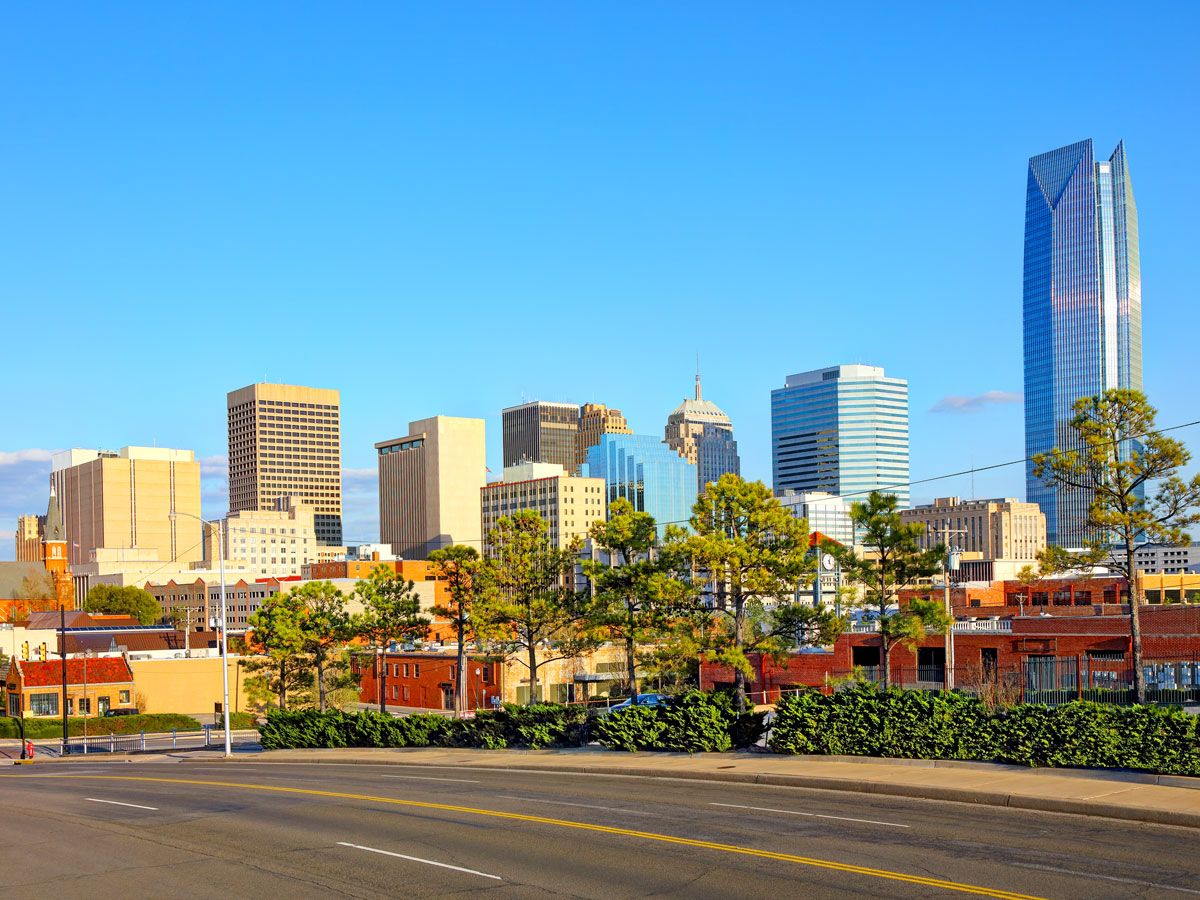
With its location in Tornado Alley, Oklahoma is accustomed to dramatic weather. That was particularly true on November 11, 1911, when the state set records for its most extreme temperature swing. That day, the mercury in Oklahoma City soared to 83 degrees before plummeting 65 degrees to a reading of 17 by midnight. Both the high and low temperature remain as records for November 11. The culprit was the Great Blue Norther, a powerful cold front that followed similar events in Rapid City just days earlier.
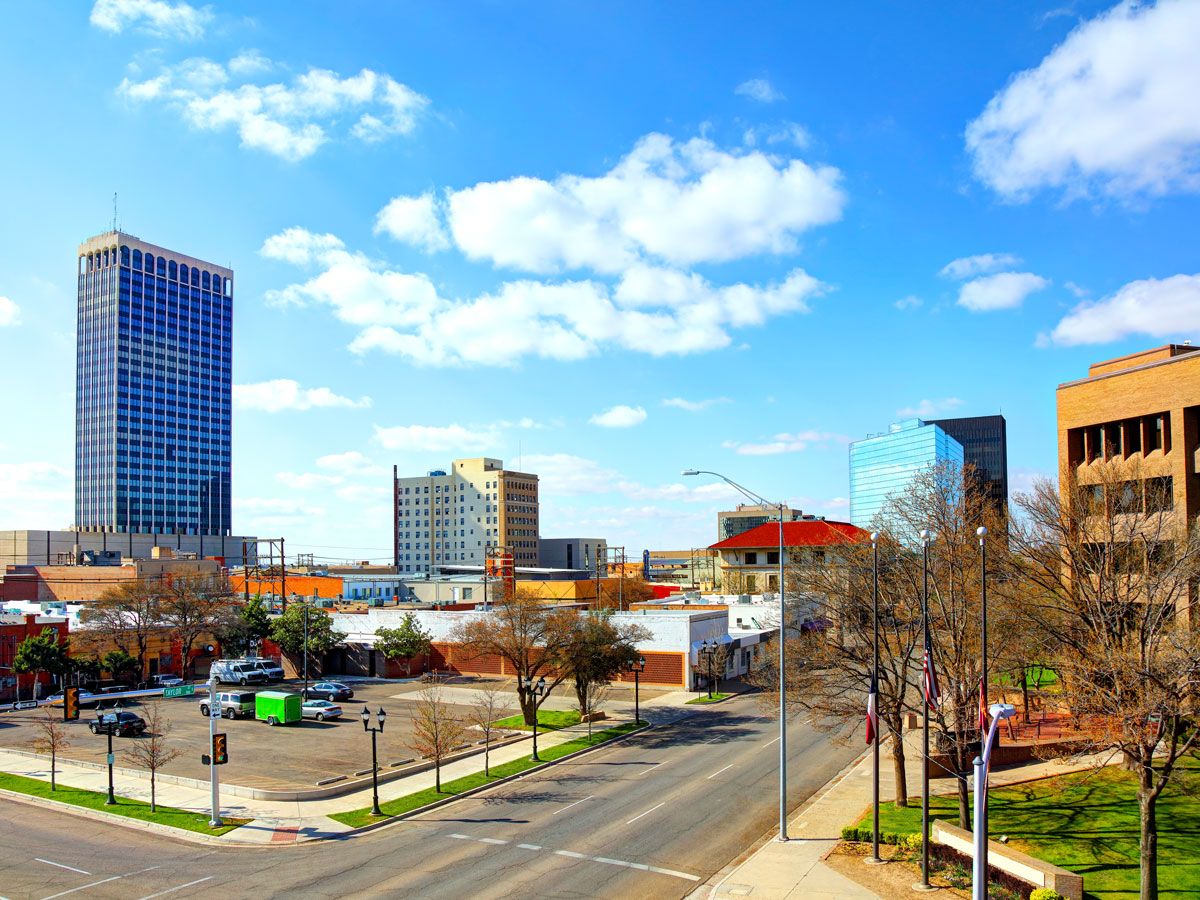
An unforgiving Blue Norther cold front was also responsible for a 66-degree temperature swing in Amarillo on December 12, 1919. In just one hour during midday, the temperature dropped from 67 to 23 degrees Fahrenheit. By 7 p.m. that evening, it had plummeted even further to a bone-chilling 1 degree. While December daytime temperatures in Amarillo typically hover between 25 and 49 degrees, the city’s setting on the High Plains leaves it exposed to persistent winds and dramatic changes in weather.
Denver, Colorado
Credit: John Coletti/ The Image Bank via Getty Images
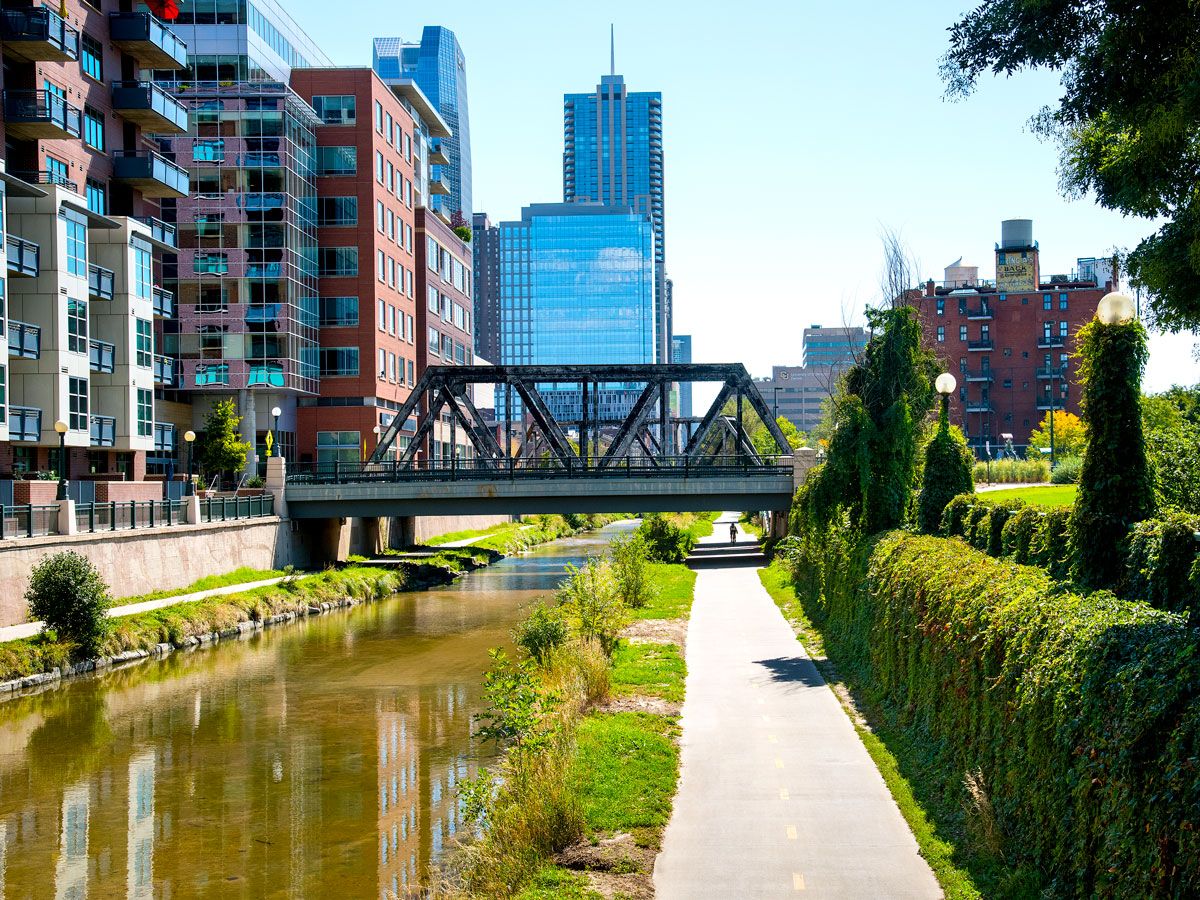
Dramatic weather patterns are also a part of life in the Mile High City, owing to its setting beside the Rocky Mountains. In winter, vast temperature shifts are caused by warm Chinook winds and cold arctic air masses originating in Canada. Denver’s largest swing on record occurred on December 14, 2008, when the mercury dropped 76 degrees, from 58 to 18 over a two-day period. The largest one-day swing was a 66-degree drop from 46 to -20 in January 1872.
Montana is no stranger to weather extremes, either, with Christmas Eve 1924 in Fairfield being a particular standout. In just 12 hours, residents endured a staggering 84-degree drop from 63 to -21 degrees. This is widely considered to be the largest 12-hour temperature swing ever recorded in the U.S. Fairfield sits near the Rocky Mountain Front, where arctic air from the north can collide with warmer Pacific air. This makes the city susceptible to rapid temperature swings between the mountains and Great Plains, especially in winter.
Montana was also the location for one of the country’s largest temperature drops over a 24-hour period. It occurred in Browning between January 23 and 24, 1916, when the thermometer changed from 44 degrees to a bone-chilling -56 reading, thanks to a warming Chinook wind pattern colliding with a powerful arctic cold front from the north.
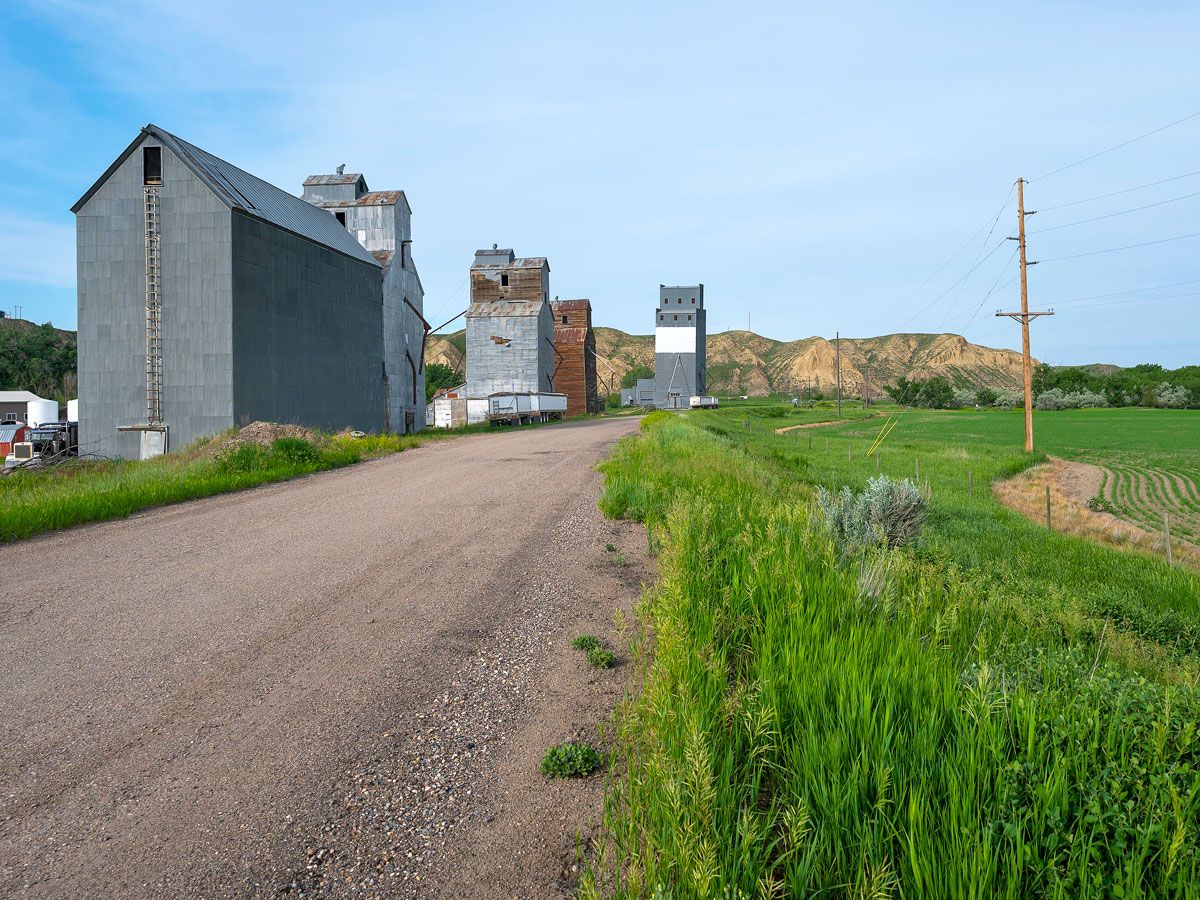
And lastly, another Montana city holds the current Guinness World Record for the largest temperature range in a single day: a staggering 103-degree rise from -54 to 49 degrees over 24 hours between January 14 and 15, 1972. On that frigid morning, cool Arctic air settled in the valleys and lowlands of northern Montana, but swift Chinook winds from the Rockies sent temperatures soaring along the mountain front. Temperature swings aren’t the only climate-related records held by Montana, either. In January 1887, the largest snowflakes on record, measuring 15 inches wide and 8 inches thick, were found near Missoula.
Advertisement
More from our network
Daily Passport is part of Inbox Studio, an email-first media company. *Indicates a third-party property.
The One Thing You Should Do To Get a Better Hotel Room
By
Rachel Gresh
Read time: 6 minutes
September 18, 2025
Updated: April 22, 2026
The One Thing You Should Do To Get a Better Hotel Room
Tips •September 18, 2025•Updated: April 22, 2026
By Rachel Gresh
Author
Rachel Gresh
Rachel is a Washington, D.C.–based travel and lifestyle writer with roots in the Great Lakes region. When she’s not writing for publications such as The Discoverer and Interesting Facts, you’ll find her wandering through museums or exploring destinations off the beaten path.
How many of us have held our breath while opening the door to a hotel room for the first time? What awaits us on the other side can either delight us or disappoint us, setting the tone for the rest of our vacation. You might think that hotel rooms are randomly assigned, but this isn’t always the case. A mix of technology, loyalty programs, human judgment, and guest profiles determines who gets that coveted ocean-view suite — and who ends up with a view of the parking lot. So, what factors really influence your hotel room assignment, and what can you do to hopefully get a better room? Let’s find out below.
Assigning rooms is no easy feat. It can take hotel staff hours to consider many factors, including arrival and departure times, special requests, length of stay, the room category each guest has booked, which rooms have been cleaned by housekeeping at the time the guest checks in, and any maintenance issues with specific rooms. To speed up this process, many hotels use an automated program known as a Property Management System (PMS). These systems automate room assignments, process payments, and integrate third-party booking channels.
However, not every hotel uses a PMS. Jessica Vanel, a former hotel employee who has worked at major hotel chains as well as a boutique hotel, explains in a YouTube video, “At the smaller boutique hotel, it was actually up to the front desk agents to assign the rooms themselves.” Vanel describes how the morning agent was responsible for reviewing the check-ins for that day, looking for any requests or comments, and considering the guests’ membership statuses before assigning rooms in order of priority, from the highest tier to the lowest.
Interestingly, most larger hotels consider membership status before all else when assigning rooms. The two largest hotel chains in the world, Marriott and Hilton, have set industry standards for room upgrades by following a standardized set of protocols. Let’s explore how they dish out the best rooms.
When staying at a hotel that is affiliated with a larger chain, such as Hyatt or IHG, the most crucial factor in getting a “good” room is member status. Membership programs are free to join, but top-tier members — those who stay the most nights at a particular hotel brand each year — typically get better rooms. This system encourages guests to remain loyal to one brand.
Marriott has six membership tiers, ranging from Member (for those who stay nine nights or fewer a year) to Ambassador Elite (loyal members who stay 100 nights or more and spend more than $23,000 annually). The highest four tiers — Gold, Platinum, Titanium, and Ambassador — are eligible for complimentary room upgrades upon arrival, subject to availability. This means that if a better room becomes available, you may be automatically upgraded. You can also politely inquire about an upgrade at check-in.
Still, even the lower membership tiers — Member and Silver — have a better chance of receiving a “good” room compared to nonmembers. This is because hotel staff can view guest profiles and consider specific requests, such as preferences for floor levels or proximity to amenities. Additionally, hotel staff see these guests as potential repeat customers, increasing the likelihood of enticing them to return.
Hilton’s room selection process works similarly. This brand offers four membership tiers — Member, Silver, Gold, and Diamond — with space-available upgrades for the highest two tiers at check-in.
It’s worth noting that lower-tier members at hotel chains like Marriott and Hilton do not regularly receive complimentary upgrade benefits. However, they can still make room requests in advance through their online member profile, which may result in a better room assignment. If you have preferences or perhaps are celebrating a special occasion, be sure to communicate that during the booking process or by calling the front desk before you arrive.
Although hotels with membership programs prioritize their elite members for preferred room assignments, any member — regardless of status — has a higher chance of receiving a better room compared to nonmembers. This is why it’s always worthwhile to sign up for free membership programs before booking your stay. In smaller hotels that do not have a membership program, room assignments and requests are typically managed by hotel staff, who will consider requests based on availability.
Typically, guests who book through a third-party system get the less sought-after rooms. That’s because when you book through a third-party such as Expedia or Booking.com, the hotel staff sees minimal information about you, including any specific preferences you may have, and these bookings are typically less profitable for the hotel because they have to pay a commission to the third-party site.
Third-party bookings are typically passed to the “auto-assign” feature on the PMS, meaning they’re the leftovers that the computer system randomly assigns because they do not have elite status or any other preferences that require attention from hotel staff. This means that your chances of getting a “good” room are generally based on luck (or how full the hotel is that day).
Hilton, for instance, explains that guests are more than welcome to book through any reputable third-party website, but these guests will not receive Hilton Honors points, stay or night credits, or any additional Hilton Honors member benefits. Similarly, Marriott classifies third-party bookings as a “Non-Qualifying Rate,” so members will not receive points or other benefits for those stays. To receive your member benefits and potentially secure a better room, it’s always recommended to book directly through the hotel’s website.
For years, hotels have combined staff input and property management systems to generate room assignments, but new technology may soon change the status quo. Marriott is piloting an AI program to streamline room assignments. The company says that the goal is not to replace staffers, but to reduce the workload of hotel staff, allowing for more guest interaction and reducing tedious backend tasks.
Naveen Manga, global chief technology officer for Marriott International, explains that the new program is “essentially, taking hours and hours of manual work — all that heads-down work the associates do — and in a fraction of a second, 1.2 million rooms can be assigned.”
The program is still in its pilot phase, but some guests may already notice a difference. The new AI system aims to make upgrades easier and automatically available for elite members when there are open rooms. Previously, those members had to contact the hotel to request upgrades.
Even with new technology on the horizon, the key takeaway remains that to get a “good” hotel room, first, you should always book directly with the hotel using your loyalty member number, rather than a third-party platform. Additionally, be sure to complete your online guest profile and preferences and reach out to the hotel the morning of your check-in to communicate any special requests.
Advertisement
More from our network
Daily Passport is part of Inbox Studio, an email-first media company. *Indicates a third-party property.
Geography •September 18, 2025•Updated: September 18, 2025
By Bennett Kleinman
Author
Bennett Kleinman
Bennett is a New York City-based staff writer for Daily Passport. He previously contributed to television programs such as the Late Show With David Letterman, as well as digital publications like the Onion. Bennett has traveled to 48 U.S. states and all 30 Major League Baseball stadiums.
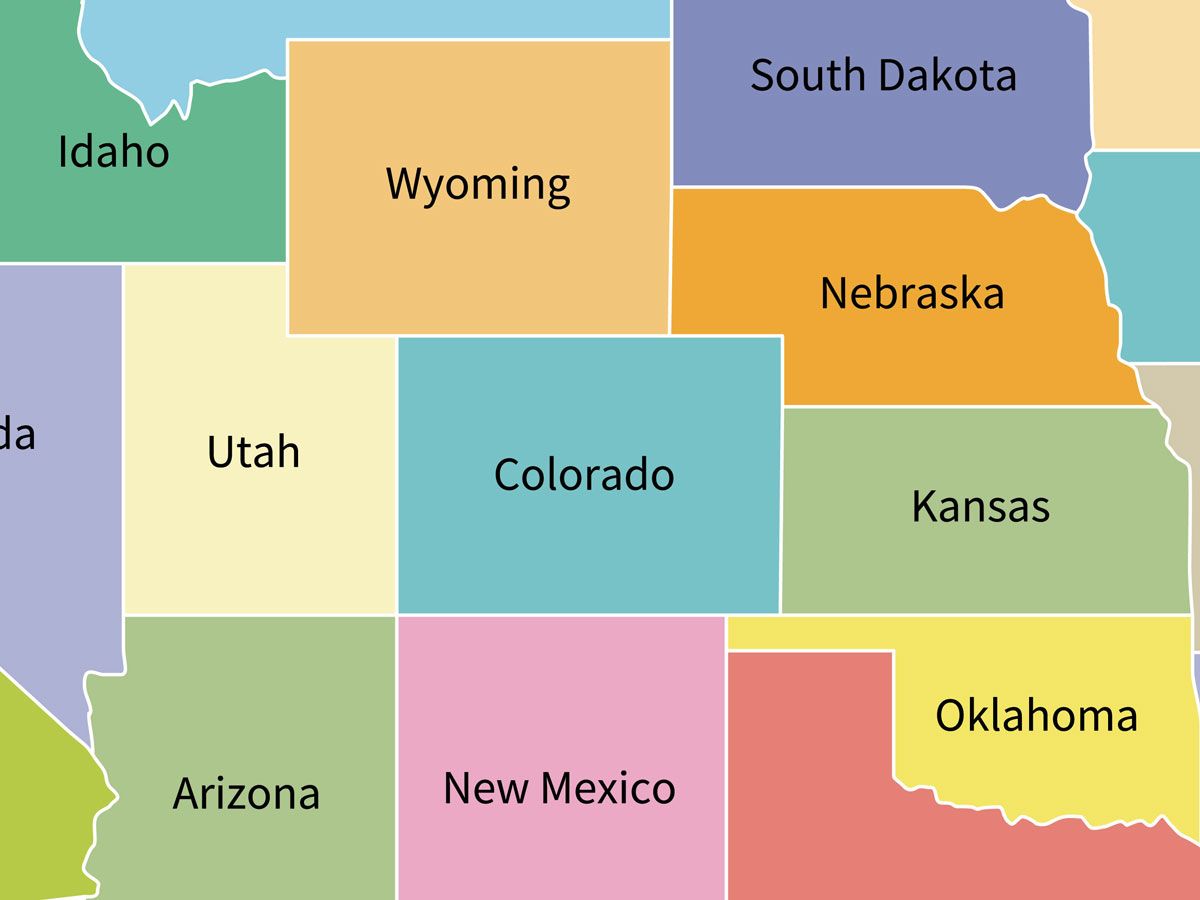
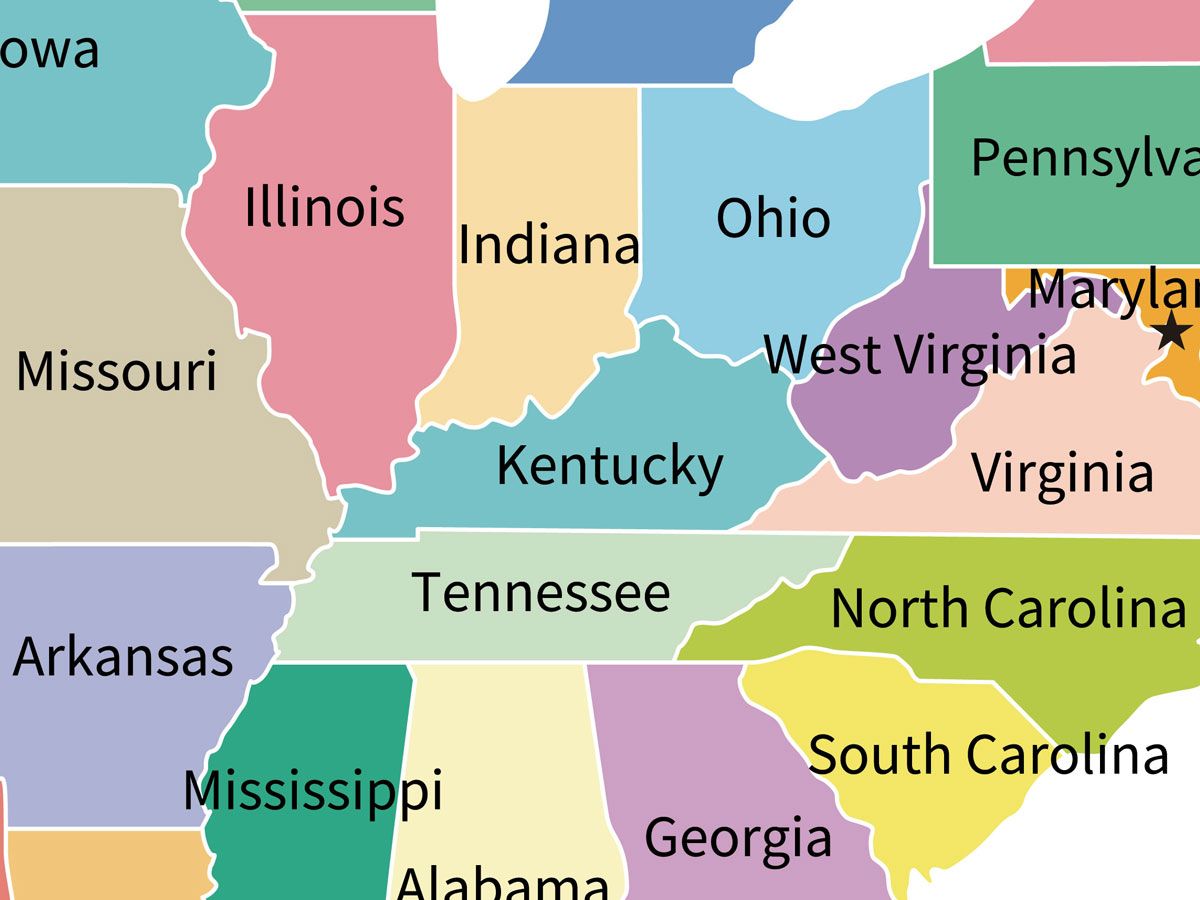
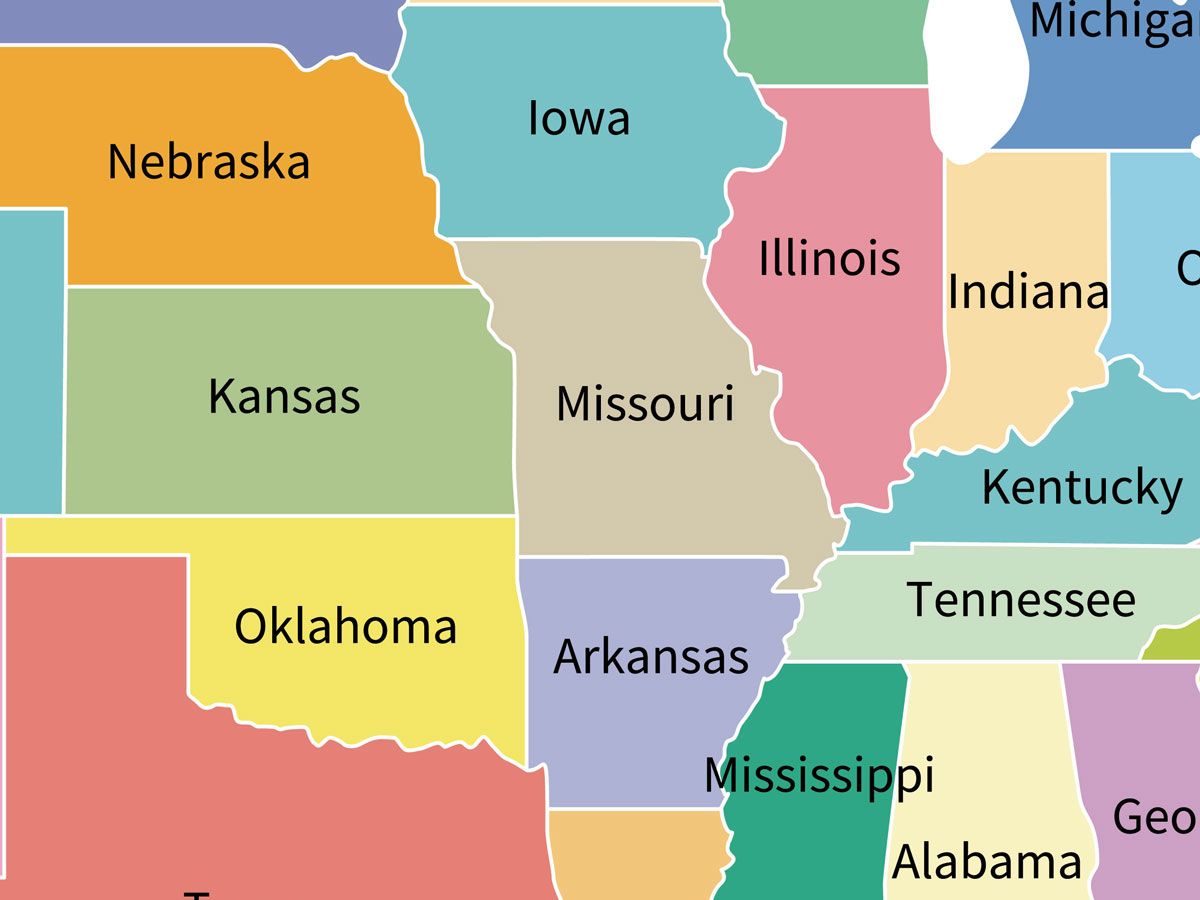
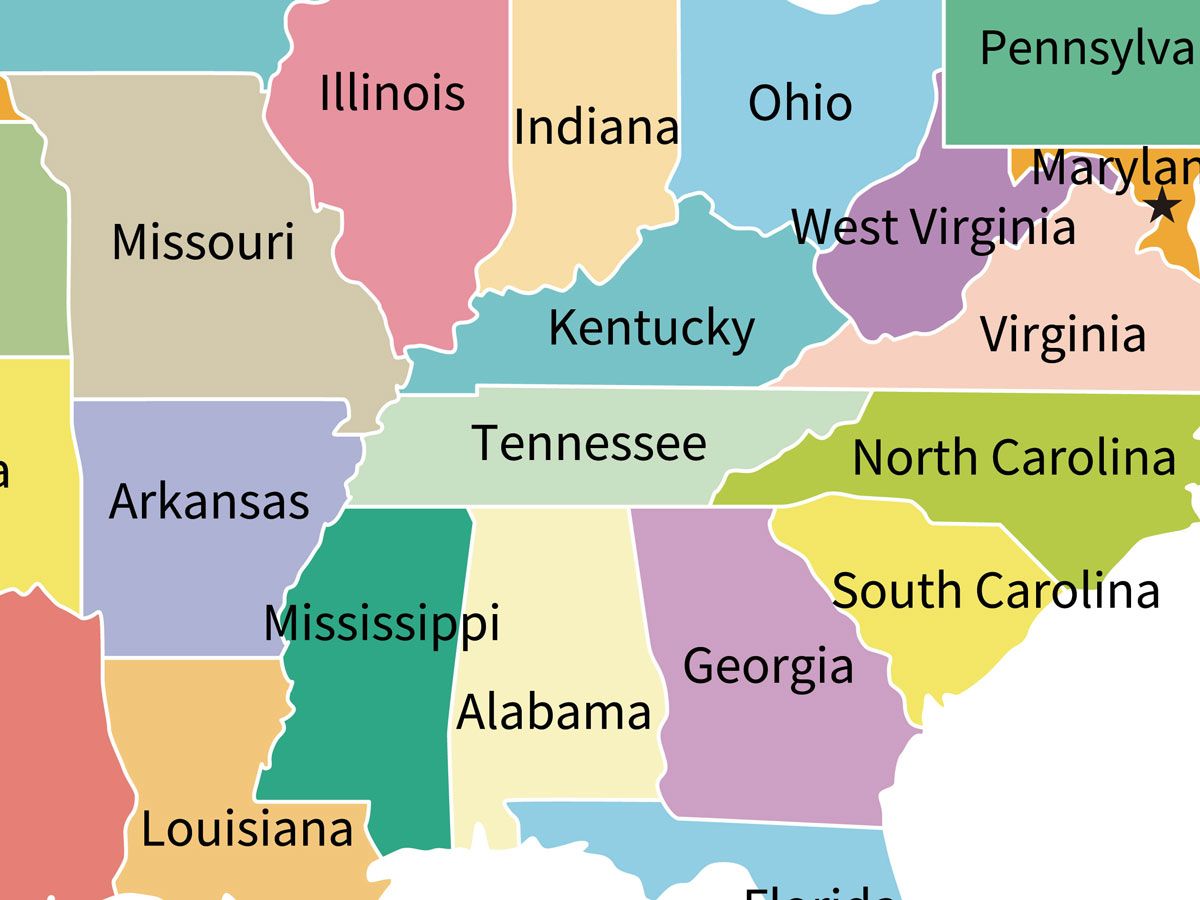
Each state in the contiguous U.S. borders at least one other, but a handful of states have not just one, two, or three neighbors but as many as seven or eight. In this article, we’ll take a closer look at the four states that border the most of the bunch, and the fascinating ways those borders were drawn in the first place.
Colorado
Credit: NJphoto/ Alamy Stock Photo
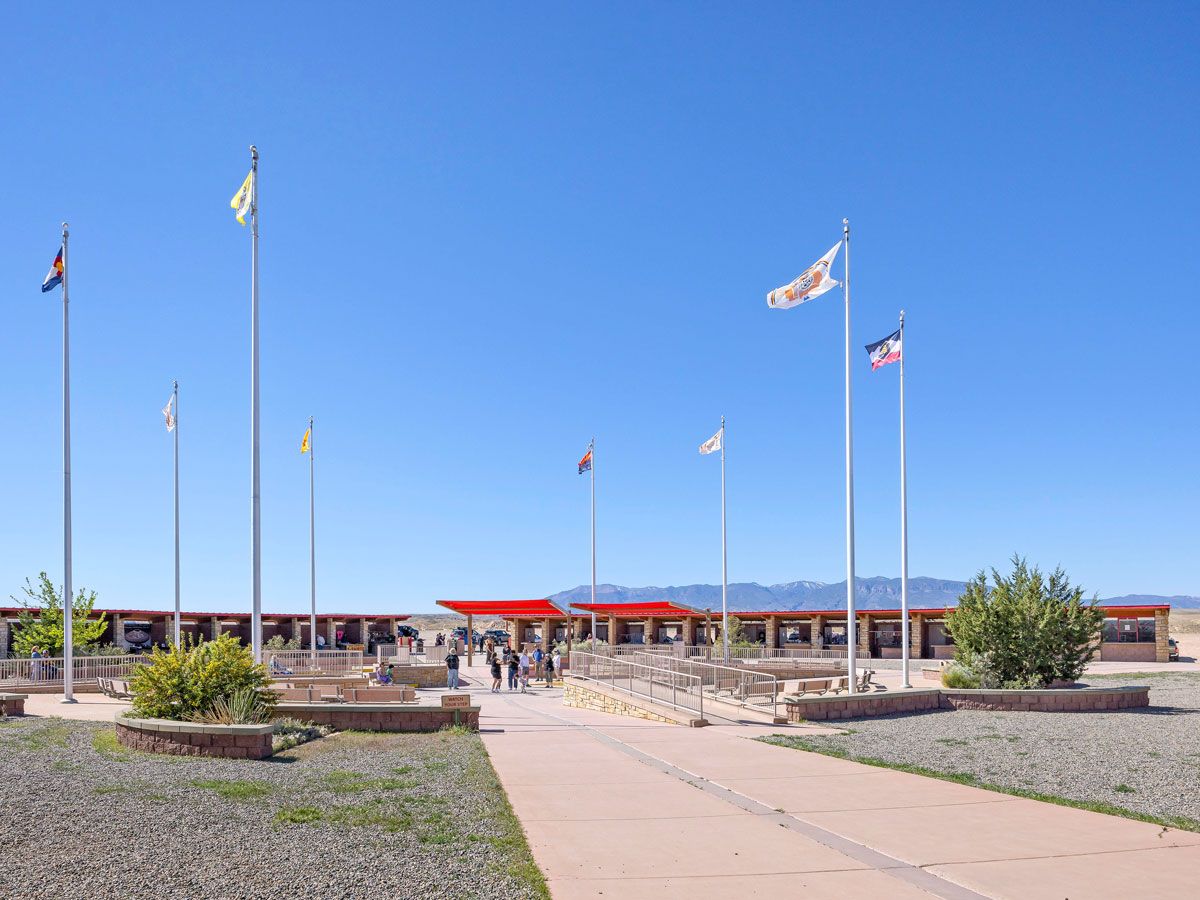
Colorado is one of two states that border seven neighboring states. If you glance at a map, you may assume that Colorado is a perfect rectangle, but there are a number of small quirks along its borders, resulting in a whopping total of 697 sides. The most famous of Colorado’s borders is located in the southwest corner of the state at the Four Corners Monument, where Colorado, New Mexico, Arizona, and Utah all meet at a single point. This is the only spot where Colorado and Arizona touch, as well as the only place in the country where four states meet.
Colorado’s entire western border is shared with Utah, and it largely follows a straight line. To the north, Colorado and Wyoming share an extensive border that runs just south of Wyoming’s capital city of Cheyenne. Nebraska wraps around Colorado’s northeastern corner, while the rest of Colorado’s eastern border is shared with Kansas.
To the south, Colorado borders two states: Oklahoma and New Mexico. Colorado sits next to Oklahoma’s Cimarron County, which is the only county in the country to touch five states: Oklahoma, Colorado, New Mexico, Kansas, and Texas. The remainder of Colorado’s southern border is shared with New Mexico, bringing us back to the Four Corners Monument.
Kentucky
Credit: Jacqueline Nix/ iStock via Getty Images Plus
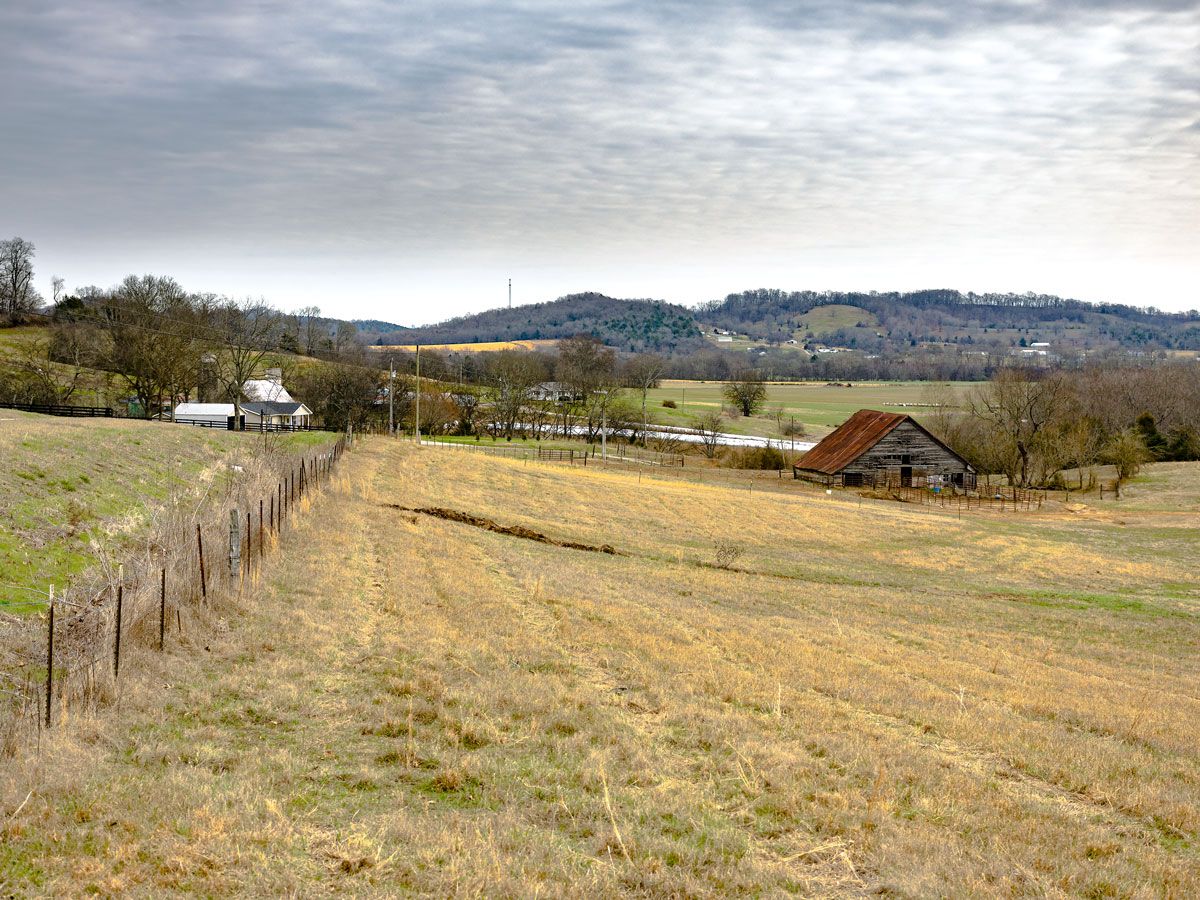
Kentucky also borders seven neighboring states. Let’s begin with the simple part: The Bluegrass State’s entire southern border is shared with Tennessee.
Meanwhile, both Kentucky’s western and northern borders are formed by rivers. To the west is the Mississippi River, which separates Kentucky from Missouri. To the north, you’ll find the Ohio River, which forms Kentucky’s jagged northern border, separating it from Illinois, Indiana, and Ohio.
The state’s eastern border has a fair bit of history. When Kentucky became the 15th state in 1792, it was established using land from Fincastle County, which was formerly a part of Virginia. Its eastern border was — and still is — largely defined by two natural features: the Big Sandy River and the Cumberland Mountains. For 71 years, Kentucky’s eastern border was shared exclusively with Virginia. But in 1863, West Virginia broke off from Virginia to become its own state, and, suddenly, Kentucky had a brand-new neighbor.
Missouri
Credit: Photo by Mike Kline (notkalvin)/ Moment via Getty Images
Missouri is one of only two states that border eight others. Let’s start in the north, where you’ll find the border with Iowa, which largely runs in a straight path along the Sullivan Line. This 1816 boundary was intended to delineate the Missouri Territory from the lands of the Osage Nation, but it later became the subject of an 1839 territorial dispute known as the Honey War, in which the state of Missouri and the Iowa Territory contested the exact specifications of the Sullivan Line. The U.S. Supreme Court ultimately ruled in Iowa’s favor. However, a small easternmost portion of the Missouri-Iowa border juts south from that line, traveling along the Des Moines River until it converges with the Mississippi River, which is where the border between the two states ends.
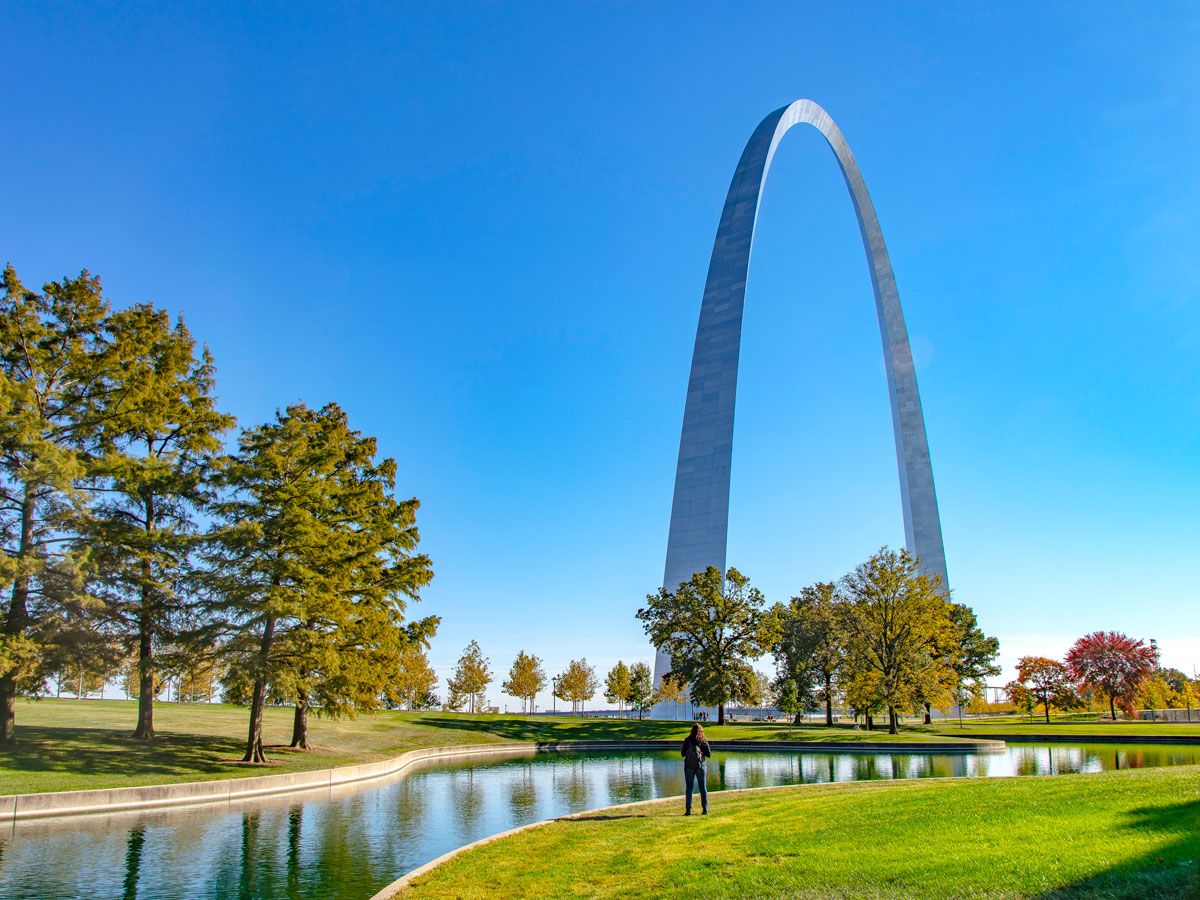
Missouri’s eastern border runs along the Mississippi River, and the vast majority of this eastern boundary is shared with Illinois. Also along Missouri’s eastern border, you’ll find the city of St. Louis and the iconic Gateway Arch. As you travel farther south, you’ll arrive at the part of the river that forms the Missouri-Kentucky border, before finally arriving at the Missouri-Tennessee border.
Missouri shares its entire southern border with Arkansas, including an odd geographical bit at the easternmost end called the “Missouri Bootheel.” Initially, Missouri’s southern border was intended to run straight along the 36 degrees 30 minutes north parallel; however, a man named John Hardeman Walker swayed local officials to change course.
In the 1810s, Walker — who lived in the Bootheel region — argued that the land should be included in the new state of Missouri instead of remaining part of the Arkansas Territory. Walker wanted to be part of a new state, rather than an existing territory, and those who lived in the region hoped to maintain strong existing economic ties with the Missouri communities to the north. Walker succeeded, and the borders were redrawn to accommodate this request prior to Missouri’s admission to the Union in 1821.
To the west, Missouri shares a small part of its border with Oklahoma to the south and Nebraska up north. But the majority of the state’s western border is shared with Kansas. This includes the Kansas City metropolitan area, which is divided into distinct cities on both sides of the border. Missouri’s side includes some of the metro area’s most notable attractions, including the National WWI Museum and Memorial, as well as both the Royals baseball and Chiefs football teams.
Of the eight states that Tennessee borders, two are located along its northern edge: Kentucky and Virginia. First, let’s talk about Kentucky. While the Tennessee-Kentucky border largely runs in a straight line, there are some small, yet notable exceptions, including a portion known as the “Triangular Jog.”
Here, the Kentucky border dips 3 miles into Tennessee, which is due to an error made by land surveyors in 1780, who were reliant on imperfect measurements. This mistake was discovered in the 19th century, but the Triangular Jog remained in place. The Tennessee-Virginia portion of the northern border also primarily runs in a straight line, bisecting the city of Bristol along the way.
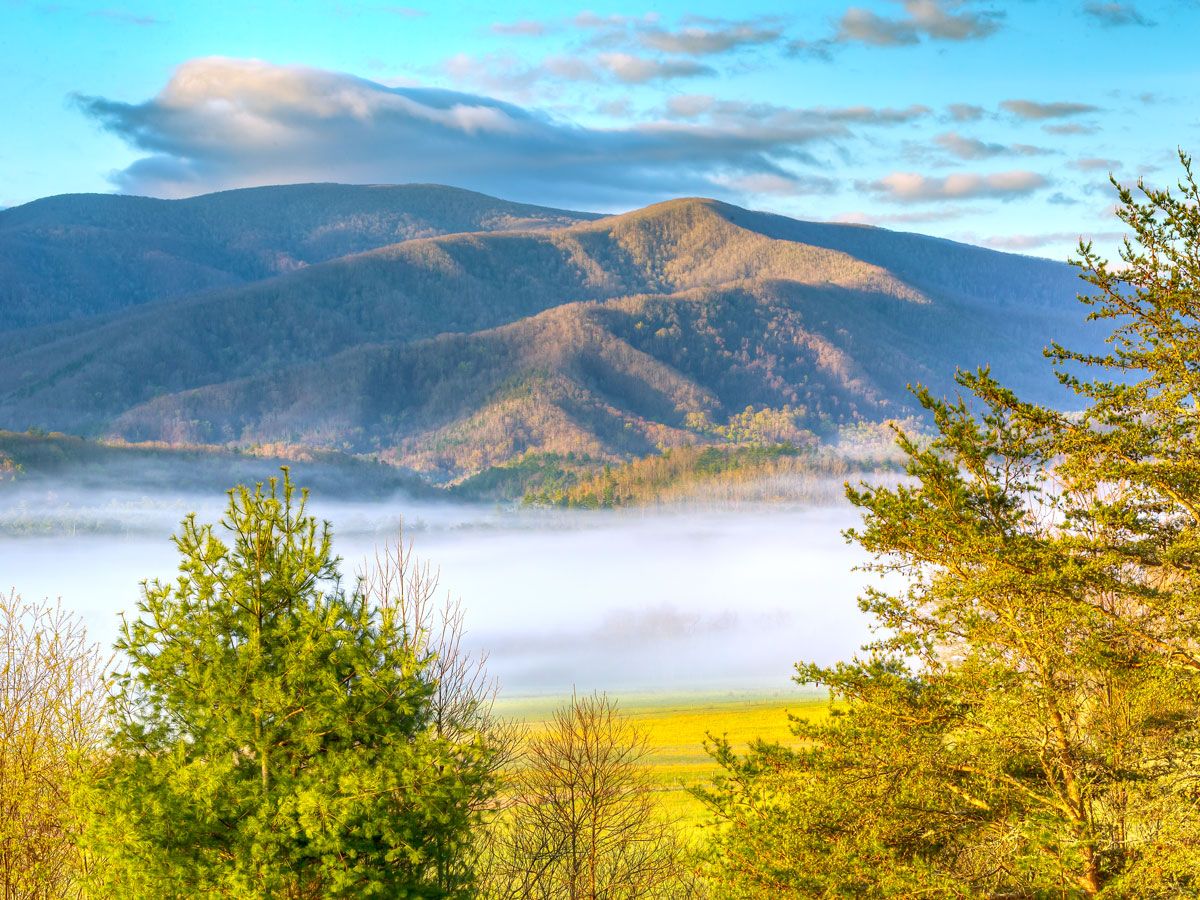
To the east, Tennessee shares its entire border with North Carolina, with the boundary cutting through the Great Smokies, a subrange of the Appalachian Mountains. Great Smoky Mountain National Park, the most-visited U.S. national park, lies on both sides of the Tennessee-North Carolina border.
In the south, Tennessee borders Georgia, Alabama, and Mississippi. When Tennessee gained statehood in 1796, the southern border was meant to run along the 35th parallel; however, that border was errantly placed a mile south, dipping into the state of Georgia. While some Georgians continue to dispute that boundary today, the border is still largely accepted as the line between the states.
Tennessee’s western border runs along the Mississippi River. On this side of the state, you’ll find a shared border with Missouri to the north and Arkansas to the south. Memphis is located in the state’s southwestern corner, where it borders both Arkansas and Mississippi. The city is home to major attractions such as Elvis Presley’s Graceland and Beale Street, the latter of which played a pivotal role in the history of blues music.
While there are only four states that border at least seven others, the numbers skyrocket from there. For example, 11 states border six others. These are Arkansas, Idaho, Illinois, Iowa, Nebraska, New York, Oklahoma, Pennsylvania, South Dakota, Utah, and Wyoming. And then there are 10 states that border five others, 10 that border four others, and nine that border three others. Interestingly, only one state can claim to border just one other state — Maine, which borders New Hampshire.
Culture •September 15, 2025•Updated: September 15, 2025
By Daily Passport Team
Author
Daily Passport Team
Daily Passport writers have been seen in publications such as National Geographic, Food & Wine, CBC, Condé Nast Traveler, and Business Insider. They're passionate about uncovering unique destinations and sharing expert tips with curious travelers.
When planning a trip around the U.S., many travelers set their sights on major tourist destinations such as New York or Los Angeles. But often, it’s just as rewarding to immerse yourself in a more intimate environment. What many small towns lack in size, they more than make up for with unique claims to fame, mouthwatering cuisine, and stunning natural beauty. And perhaps best of all, you can really get to know the locals in a way that would be more difficult in a big city. To help inspire your next small-town getaway, the writers and editors at Daily Passport chose our favorite small town in each state. Take a look at our picks below.
The tiny town of Monroeville is known as the “Literary Capital of Alabama,” and for good reason. Not only is it the birthplace of To Kill a Mockingbird author Harper Lee and Pulitzer Prize-winning journalist Cynthia Tucker, but Monroeville was also the childhood home of author Truman Capote. Visitors can explore the town’s rich literary history by strolling along the Literary Capital Sculpture Trail, which showcases 14 bronze sculptures dedicated to authors with ties to Monroeville. Each spring, Monroeville also stages a production of To Kill a Mockingbird, a local tradition since 1991.
Even if you’re not a book lover, there’s still much to explore in Monroeville. The Monroe County Rodeo takes place each August and features riding, roping, and barrel racing competitions. One of the top eateries in town is Cherry Street Bar-B-Que — be sure to arrive early, because their decadent pork butt and pulled pork usually sell out within just a few hours.
It’s only fitting that the small Alaskan town that shares the name of Santa Claus’s hometown pulls out all the stops for Christmas. But the village of North Pole — located 14 miles outside of Fairbanks — celebrates the holidays year-round, with parades in July and nostalgic red-and-white candy cane stripes splashed across the city streets. In the town center, you’ll find the Santa Claus House, a one-time post office turned holiday shop. You can visit live reindeer, shop for Christmas gifts, take a photo with the world’s largest Santa statue, and say hello to the man in red himself. Perhaps best and most spirited of all, a resident who is legally named Santa Claus serves on the North Pole city council — long white beard and all.
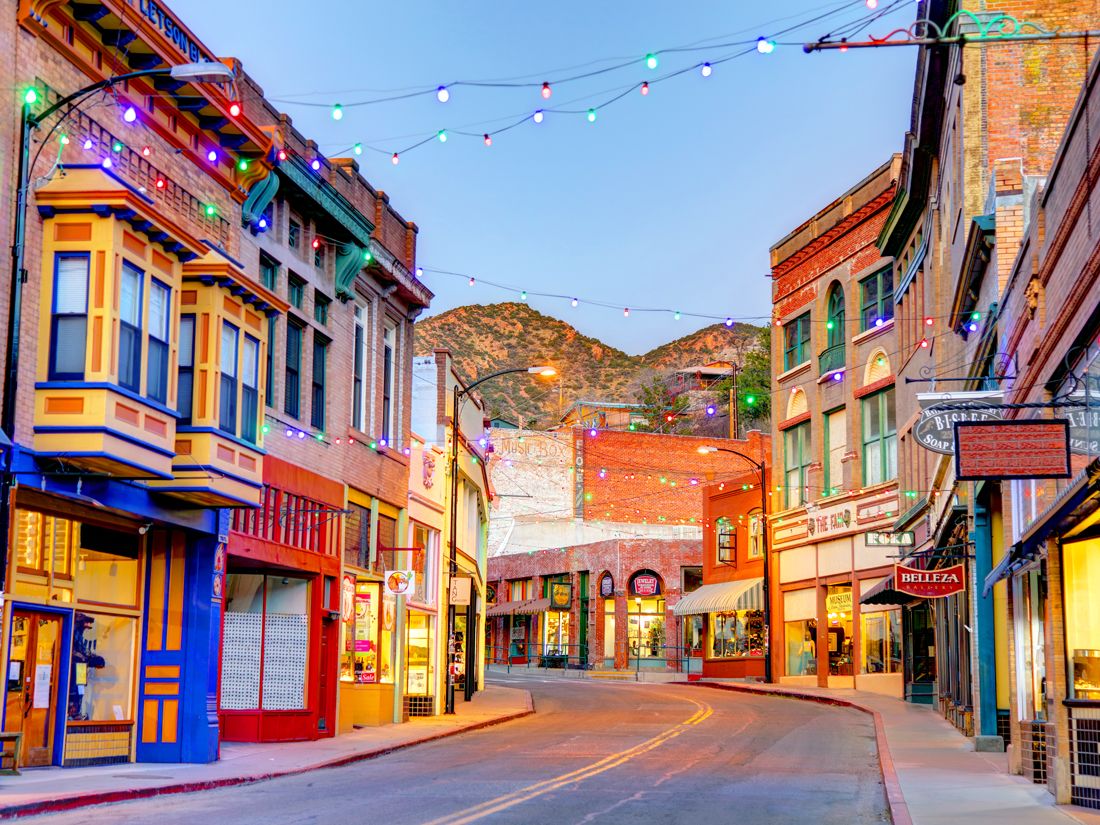
The quirky canyon town of Bisbee in southeastern Arizona sits at an elevation of 5,538 feet — making it America’s southernmost “mile-high” city. After copper was discovered in a nearby mine in 1877, Bisbee was incorporated in 1880 and became one of the largest cities in what was then the Arizona territory. By 1900, Bisbee had a population of more than 20,000, but after the mine closed in 1974, the number of residents began to dwindle.
Today, the former saloons and inns remain relics of the town’s mining past, and locals are careful to preserve them, as well as their tight-knit community of artists and others who prefer the quiet desert scenery of the Mule Mountains. But with a lively downtown of dive bars, galleries, gift shops selling copper-themed trinkets, museums, and Wild West-themed restaurants, Bisbee also offers plenty of appeal as a weekend getaway for history buffs.
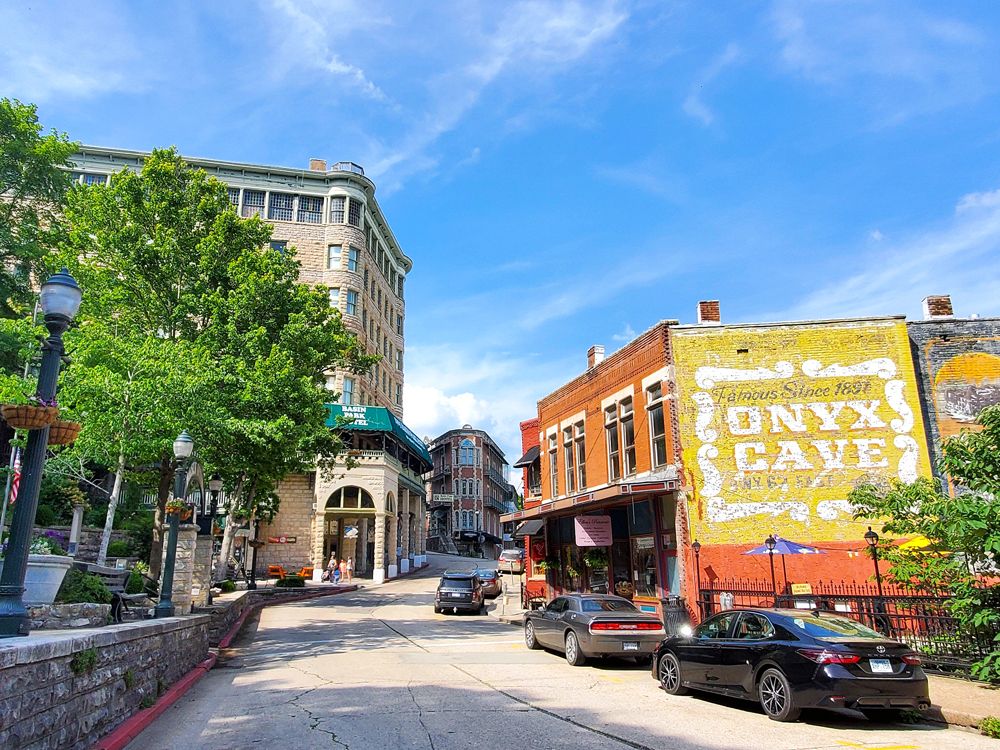
Eureka Springs, a small town of around 2,200 people in Ozark Mountains, may seem like a blip on the map, but it has long attracted droves of visitors in the summer months, many of whom come to enjoy nearby Beaver Lake and Lake Leatherwood. However, the main draw here is access to multiple natural mineral springs that encircle Eureka Springs.
Within walking distance of the town center, you’ll find bathhouses and spas supplied with the natural spring water, but the most popular is Palace Hotel and Bath House, the only one of the town’s former historic bathhouses still in use today. Whether you choose to spend time on the lake or in the healing mineral waters, a visit to Eureka Springs is a sure bet for a memorable small-town getaway.
Solvang, California
Credit: delray77/ iStock Editorial via Getty Images Plus
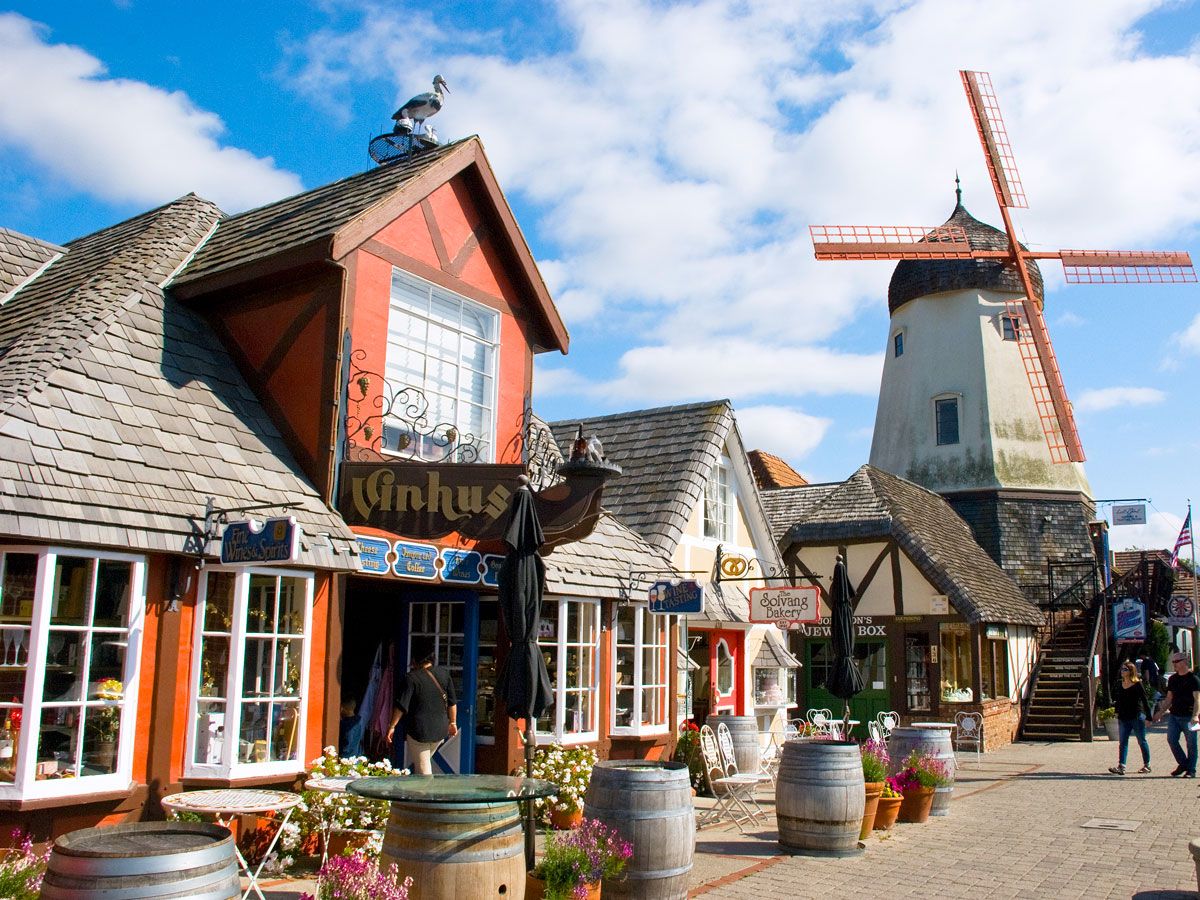
Founded in 1911 by Danish immigrants, the charming town of Solvang, California, remains a testament to Danish culture. Upon their arrival to the Santa Ynez Valley, Solvang’s founders sought to preserve their Danish heritage by building a Danish folk school, Lutheran church, and local college. Today’s visitors to Solvang will immediately notice the town’s Danish roots, from the Solvang Windmill to the replica of Copenhagen’s Little Mermaid statue. Since it’s located in the heart of Southern California’s wine country, downtown Solvang is also filled with wineries and tasting rooms, which only adds to the town’s charm.
Ouray, Colorado
Credit: Starcevic/ iStock via Getty Images
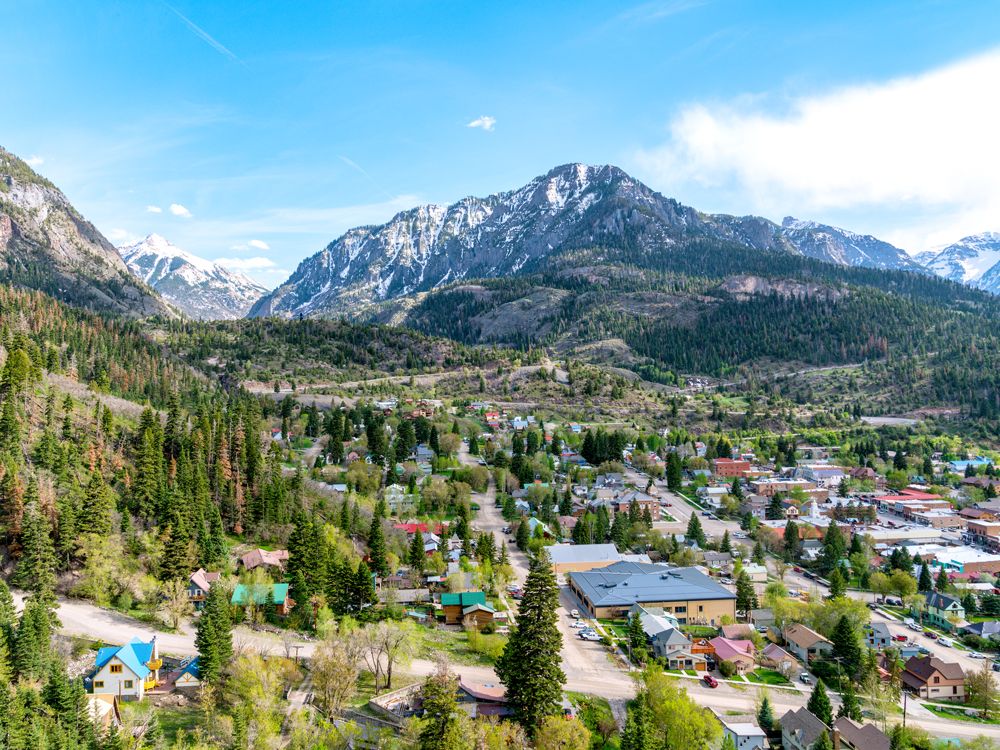
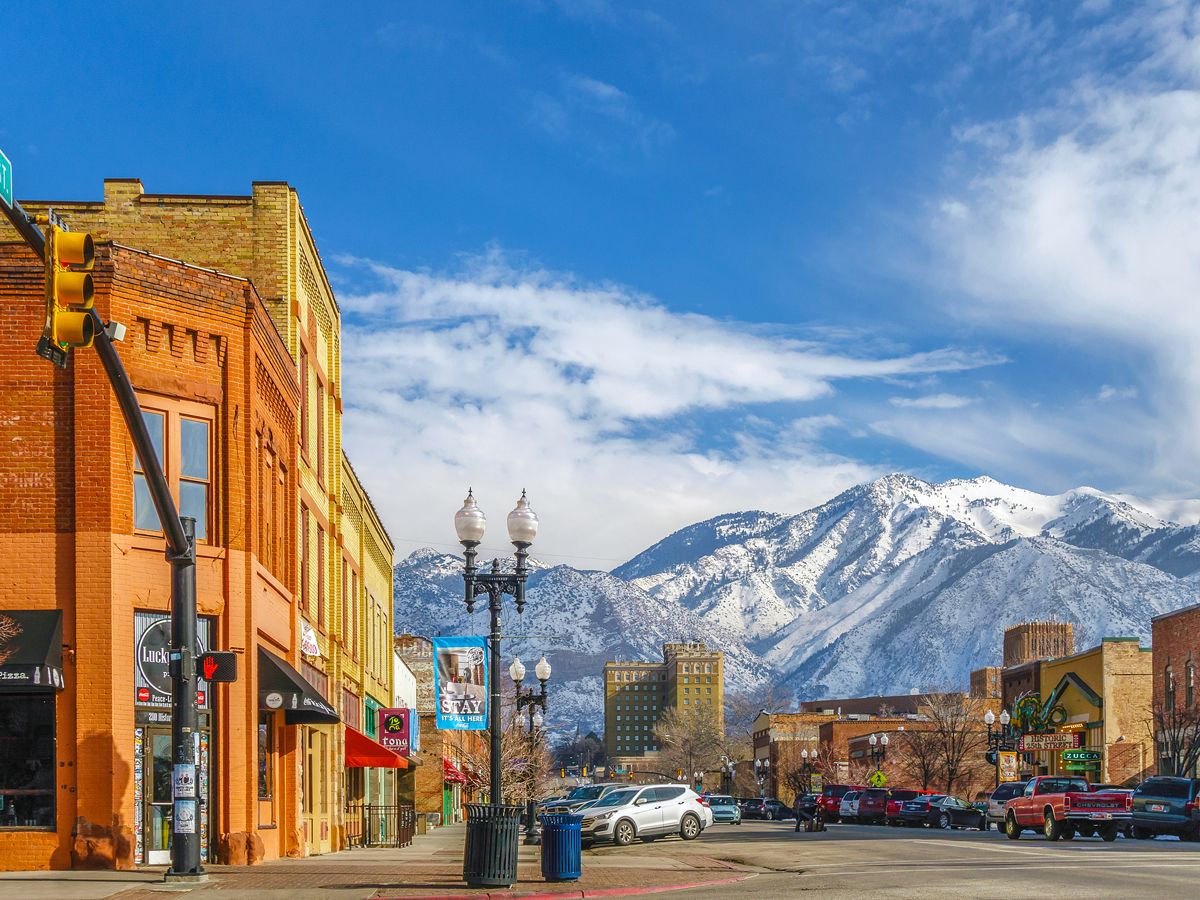
With the San Juan Mountains of Southwest Colorado providing a stunning backdrop, the town of Ouray bills itself as the “Outdoor Recreation Capital of Colorado.” In warmer months, visitors can enjoy easy access to hiking trails, such as the nearby Box Cañon Falls Park with its 285-foot waterfall, plus other adventures such as horseback riding and mountain biking. Home to art galleries, restaurants, boutique shops, and breweries, Ouray’s downtown also has plenty of Rocky Mountain charm to capture your heart no matter the time of year. And if you need some downtime, Ouray Hot Springs is home to multiple heated pools and views of the mountains, making it the perfect place to unwind.
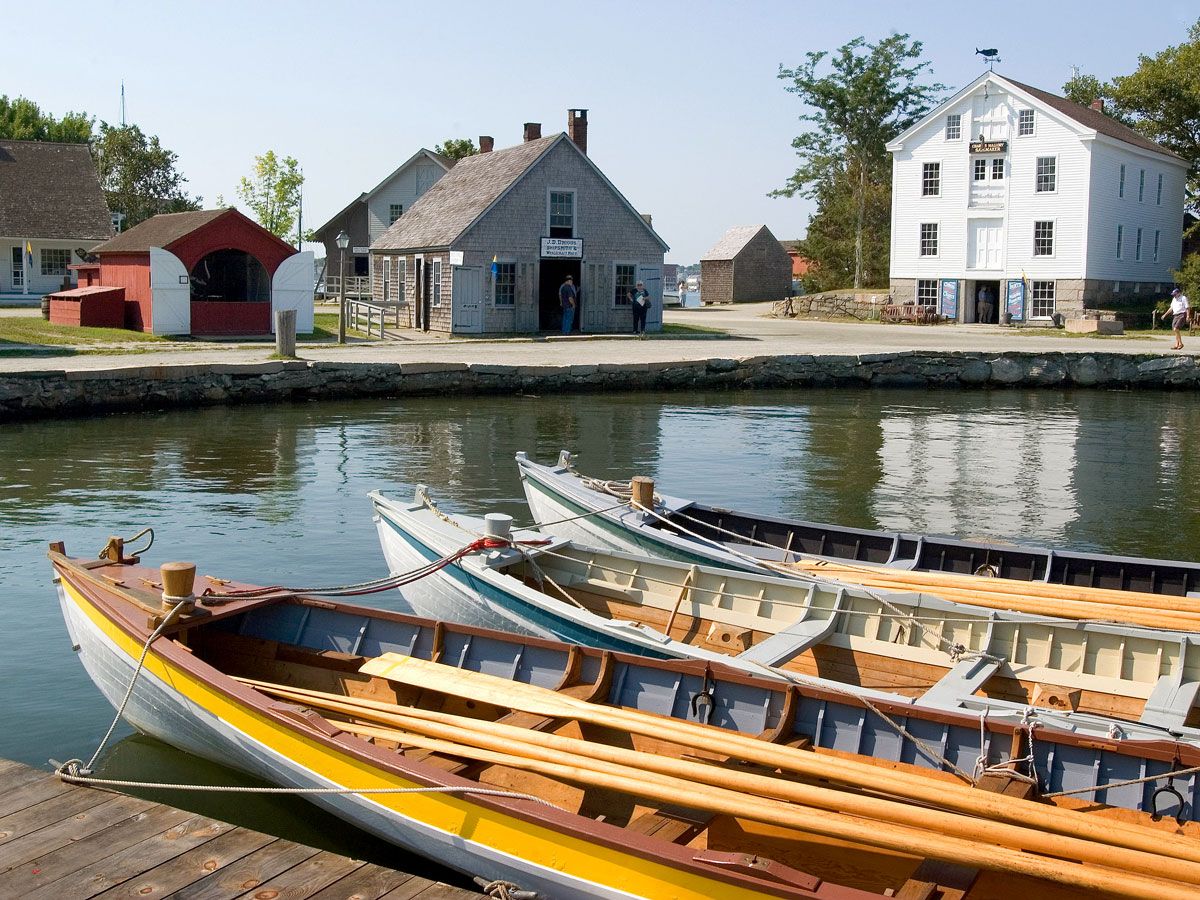
The village of Mystic is home to under 5,000 people, but what the seafaring community lacks in size it makes up for in rich history. At the height of the American maritime industry, between 1784 and 1919, the village was a hub for shipbuilding and produced around 600 boats. Visitors can learn the prosperous history at the Mystic Seaport Museum — the largest maritime museum in the country — and see the only wooden whaling vessel still in existence, the Charles W. Morgan.
Movie fans may also recognize Mystic as the inspiration for Mystic Pizza, the 1988 movie that put Julia Roberts on the map. The real-life Mystic Pizza refused to shut down their business for filming, so much of the movie’s scenes were filmed nearby and in a staged pizza parlor. The shop later renovated its appearance to look more like the movie set version and has benefitted from a surge in popularity ever since the film’s release.
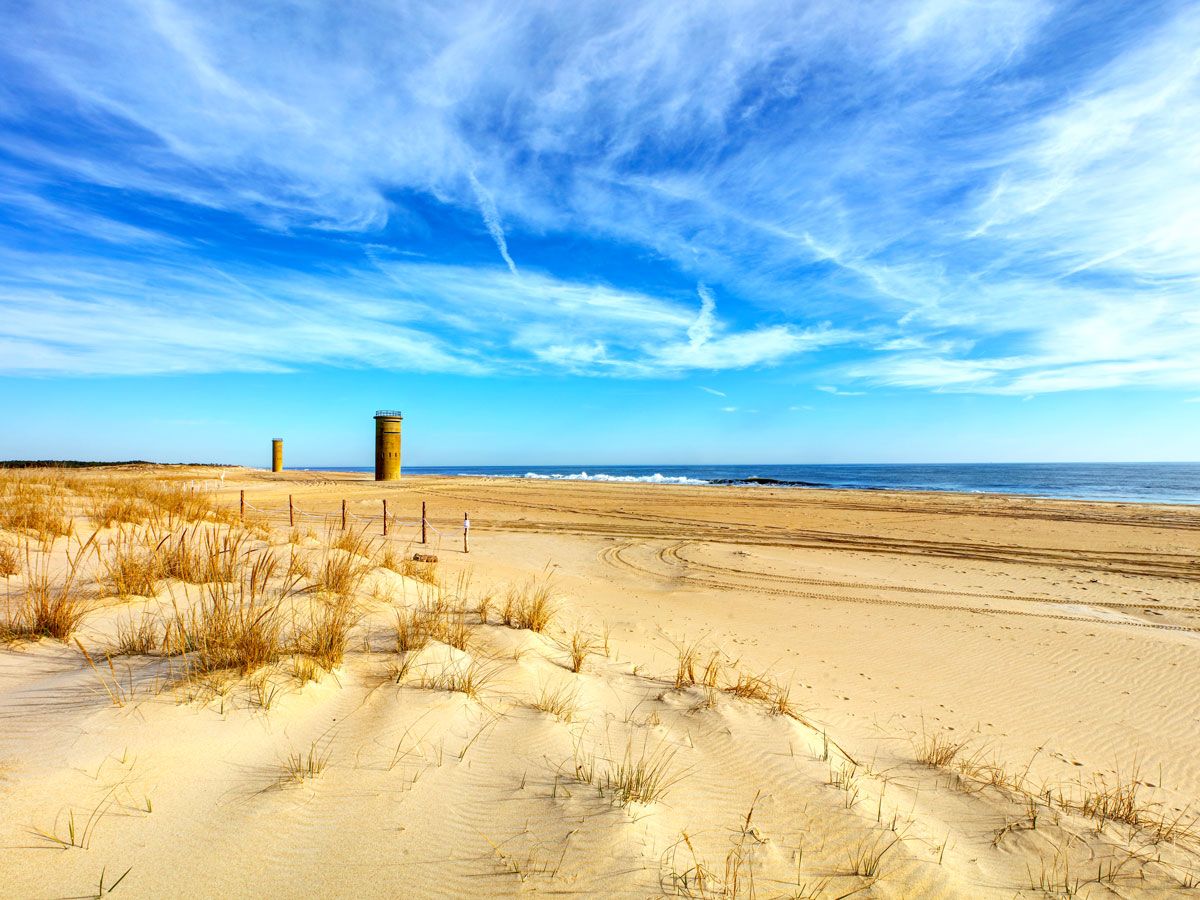
Located along the state’s Atlantic Coast, Rehoboth Beach is home to roughly 1,400 residents year-round. However, during the height of summer, tens of thousands of visitors flock to this coastal paradise in search of family-friendly fun.
The town’s most well-known landmark is the mile-long boardwalk, which was originally built in 1873. Here, visitors can enjoy frozen custard at the century-old Kohr Bros., browse for souvenirs at Penny Lane Mall, or hop aboard one of the rides at the Funland amusement park. You may even run into a famous local or two — former U.S. president and Delaware native Joe Biden owns a home in Rehoboth Beach, and celebrities such as Denzel Washington and Sandra Bullock have been spotted there on vacation.
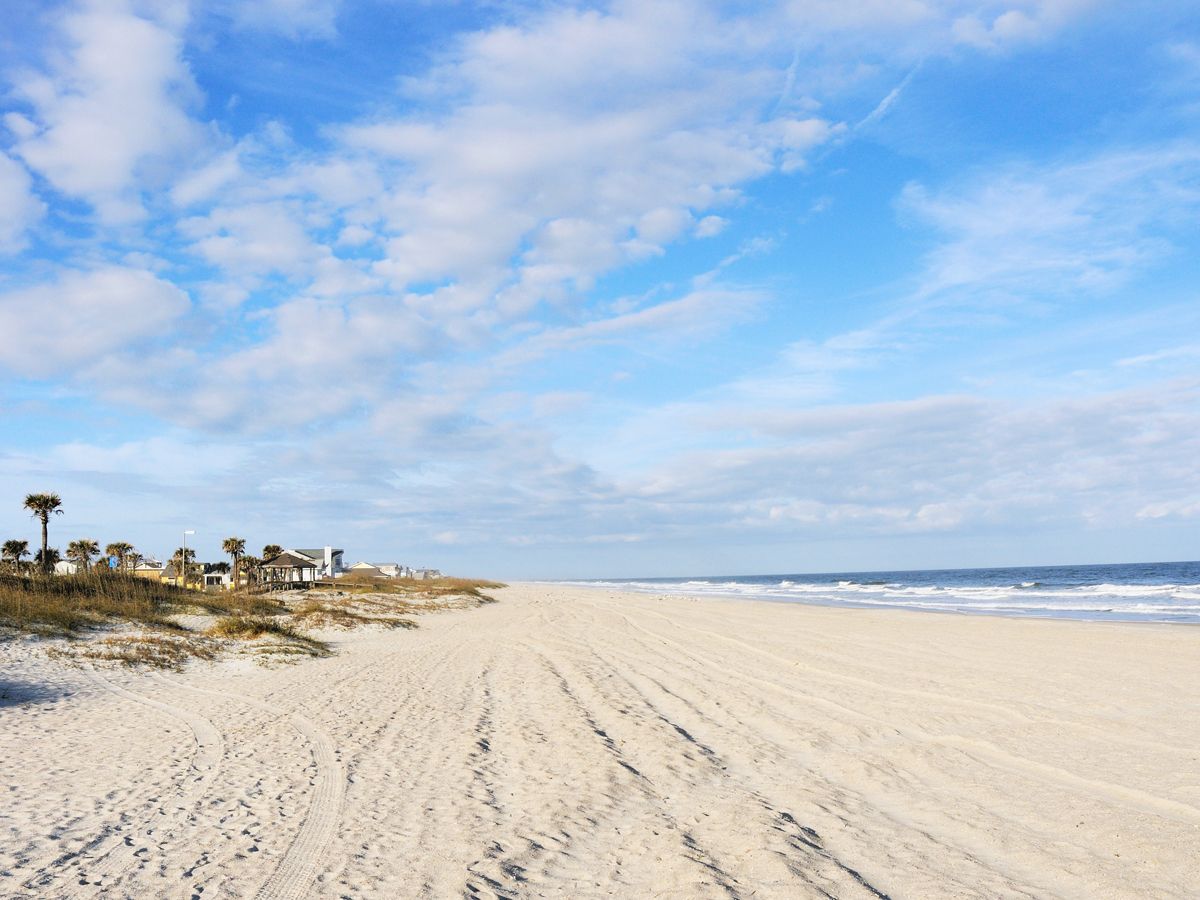
While it technically falls within the Greater Jacksonville area, Fernandina Beach doesn’t feel like a big city in the slightest. Instead of tall buildings, you’ll find beach bungalows lining its sandy shores. The northernmost city on Florida’s Atlantic coast, Fernandina Beach is located on Amelia Island, originally inhabited by the Timucuan peoples and later various French, English, and Spanish communities. That history is exemplified by several historic homes, churches, and other buildings that can be found throughout the 50 blocks of downtown Fernandina Beach’s historic district, listed on the National Register of Historic Places. Fernandina Beach is known for its warm summer weather and mild winter seasons, making it an ideal beach town to visit year-round.
Helen, Georgia
Credit: Dr_Verner/ iStock Editorial via Getty Images Plus
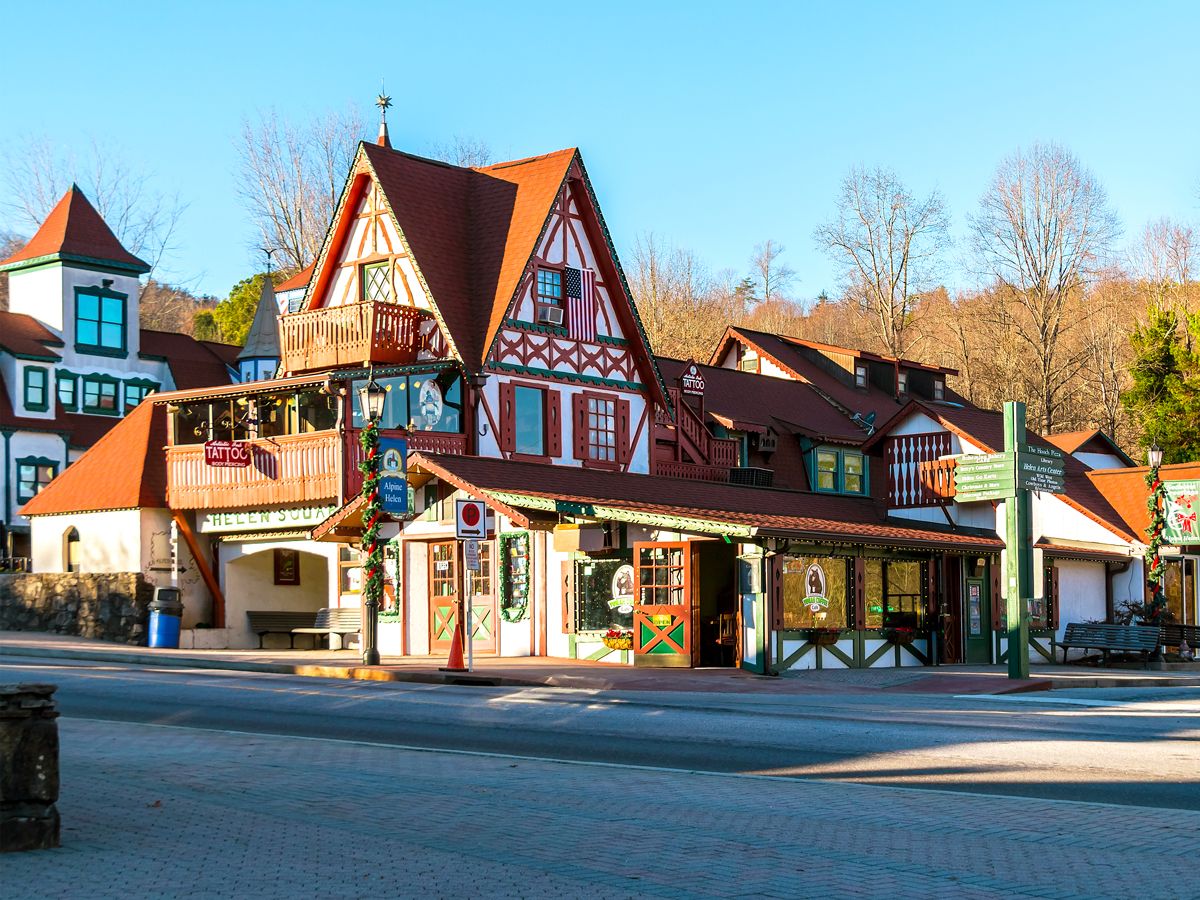
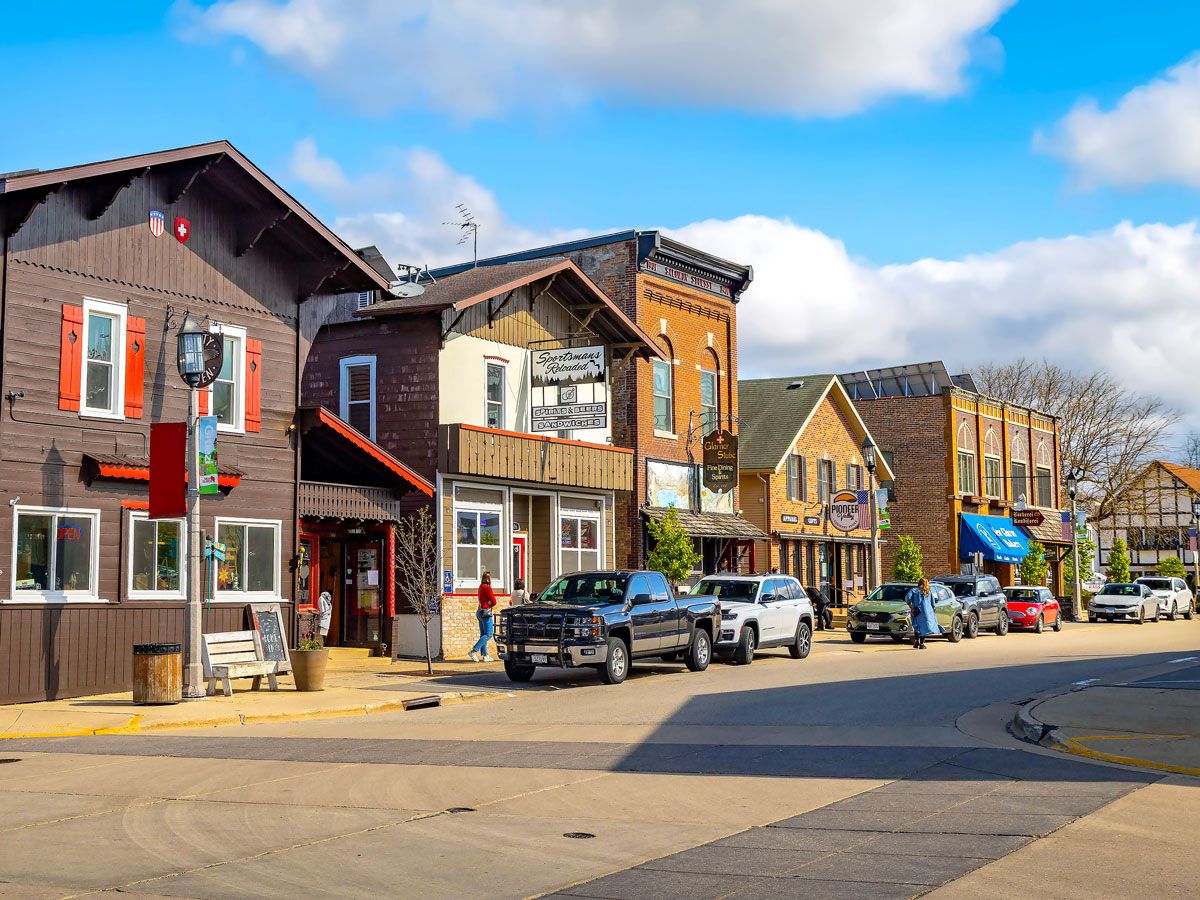
Arrive in Helen and you’ll feel as though you’ve been immediately transported to the Bavarian Alps. Once a thriving lumber and mining town, Helen faced economic decline in the 20th century. To revive the town, John Follack, a local businessman and World War I veteran who spent time in the German Alps, inspired the townsfolk to transform Helen with Old World-inspired architecture. Follack’s plan worked, and today, Helen is one of the most-visited destinations in Georgia, despite its small population of just over 600 people.
Beyond German-inspired architecture, the village offers abundant outdoor adventures at its doorstep. Visitors can enjoy hiking, white-water rafting, waterfall exploring, and zip-lining, all of which has earned Helen its reputation as “Georgia’s Official Outdoor Adventure Destination.”
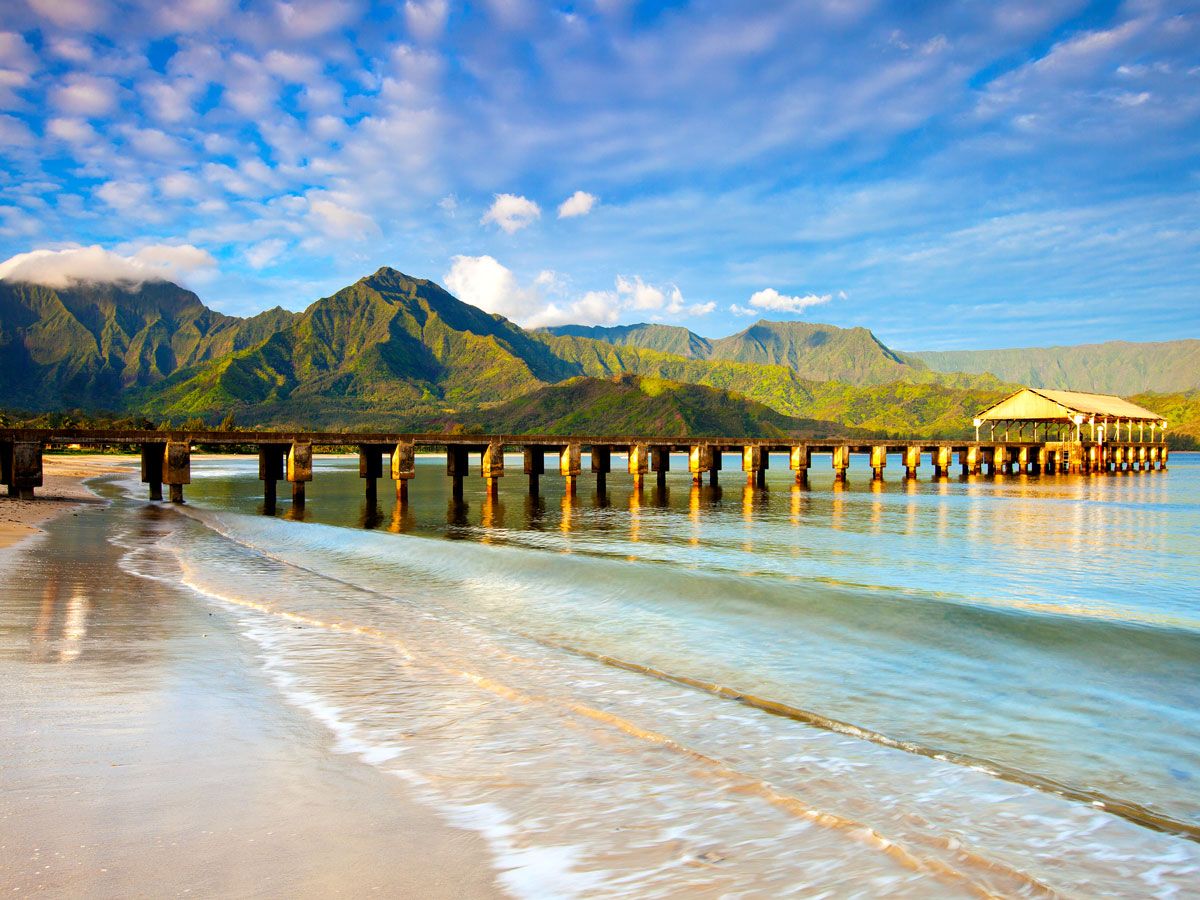
While bigger islands such as Oahu and Maui certainly have their charms, the lush beauty of Kauai — aka the “Garden Isle” — is impossible to ignore. (The relative lack of development and crowds doesn’t hurt, either.) And though the island’s sunny south shore is more popular with visitors, it’s the windswept and rugged north shore of Kauai where you’ll find Hawaii’s most charming small town: Hanalei.
Accessible via a one-lane bridge on the Kuhio Highway, Hanalei sits between mist-covered mountains and a gorgeous crescent-shaped bay of the same name. Just west of town, the highway around Kauai ends at the Napali Coast — a dramatic 17-mile stretch of rugged cliffs you may recognize from films such as Jurassic Park. The only way to traverse it is on foot, but you can also board one of the many boat tours leaving from Hanalei to admire the stunning cliffs from the water.
Wallace, Idaho
Credit: Kirk Fisher/ iStock Editorial via Getty Images Plus
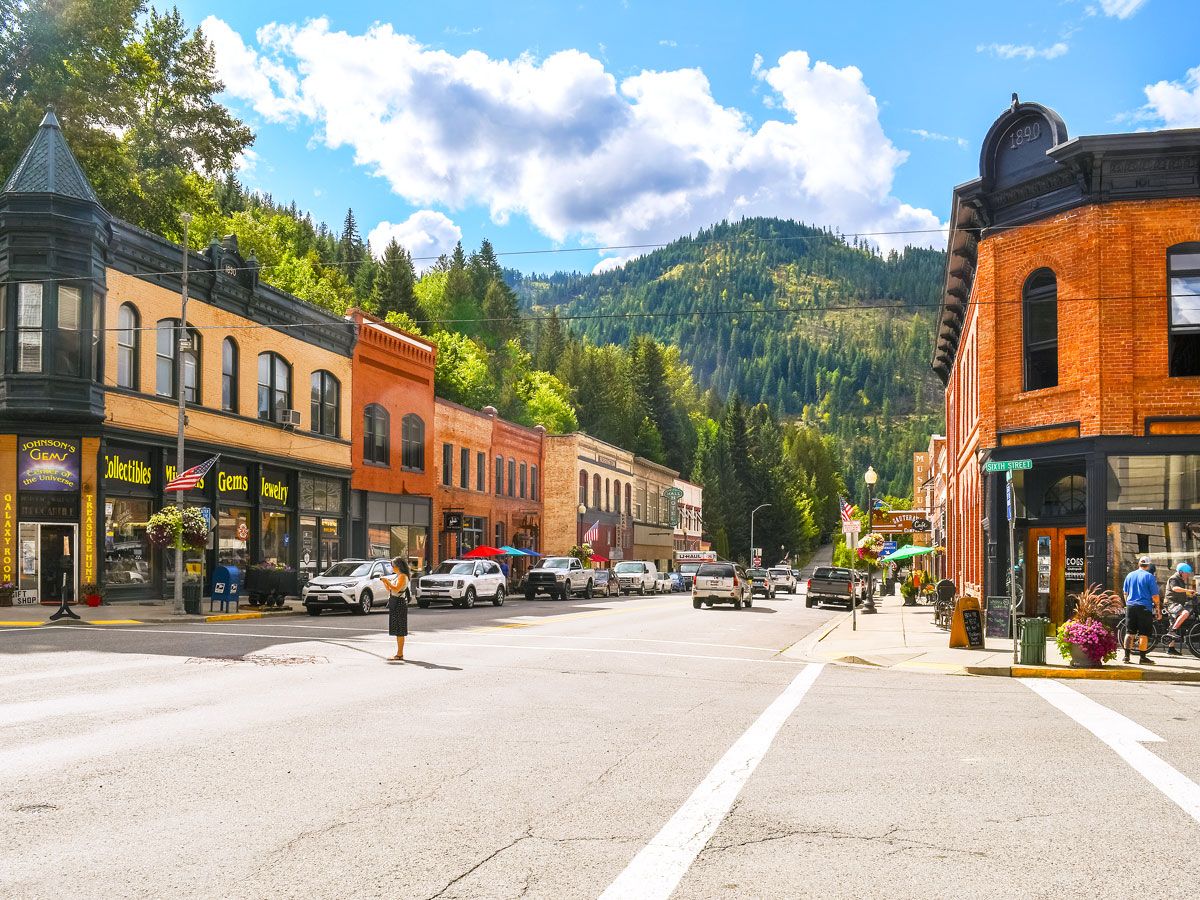
Despite the fact that less than 900 people live there, Wallace is known as the “Silver Capital of the World.” An estimated 21% (or 1.2 billion ounces) of the world’s silver has been mined in surrounding Shoshone County since 1884. The town’s influential history means that every downtown building is listed on the National Register of Historic Places. There are also four museums throughout town where you can learn all about Wallace’s fascinating past.
Locals also take pride in the town’s cheekily self-proclaimed status as the “Center of the Universe.” The joke started with former mayor Ron Garitone, who in 2004 declared, “If something can’t be disproved, it must be true.” Today, a manhole cover denotes the “exact center,” and residents gather annually to celebrate this humorous distinction.
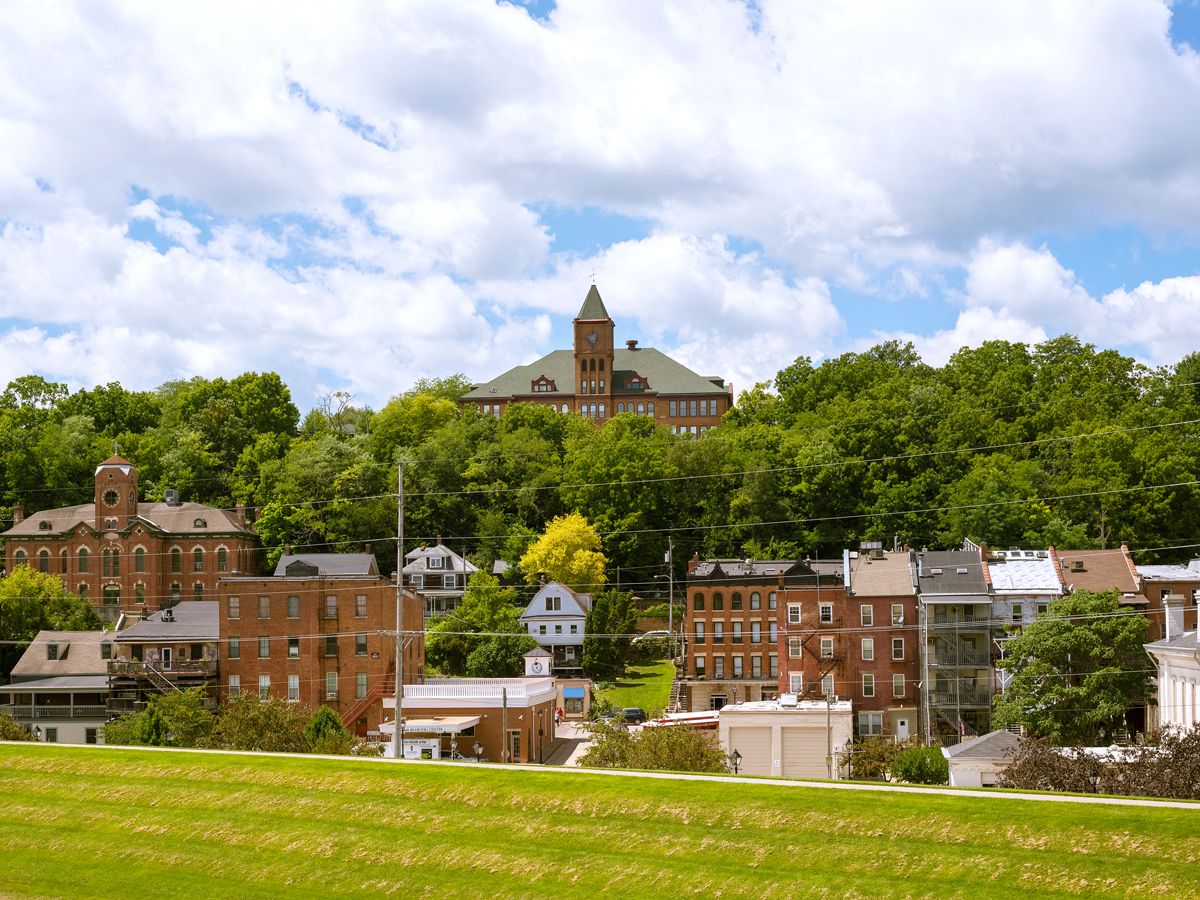
Nestled in northwest Illinois’ Mississippi River valley, Galena is a beautifully preserved 19th-century gem. Its historic Main Street, fondly known as the “Helluva Half Mile,” is lined with unique boutiques, local bakeries, ice cream parlors, candy shops, and wine bars, all housed in picturesque 1800s brick buildings. Between shopping and dining, history buffs can visit the U.S. Grant History Museum, where exhibits explore the life and military career of the nation’s 18th president, Ulysses S. Grant. Just a short walk away, the Ulysses S. Grant Home provides a glimpse into the former president’s life as a Civil War general.
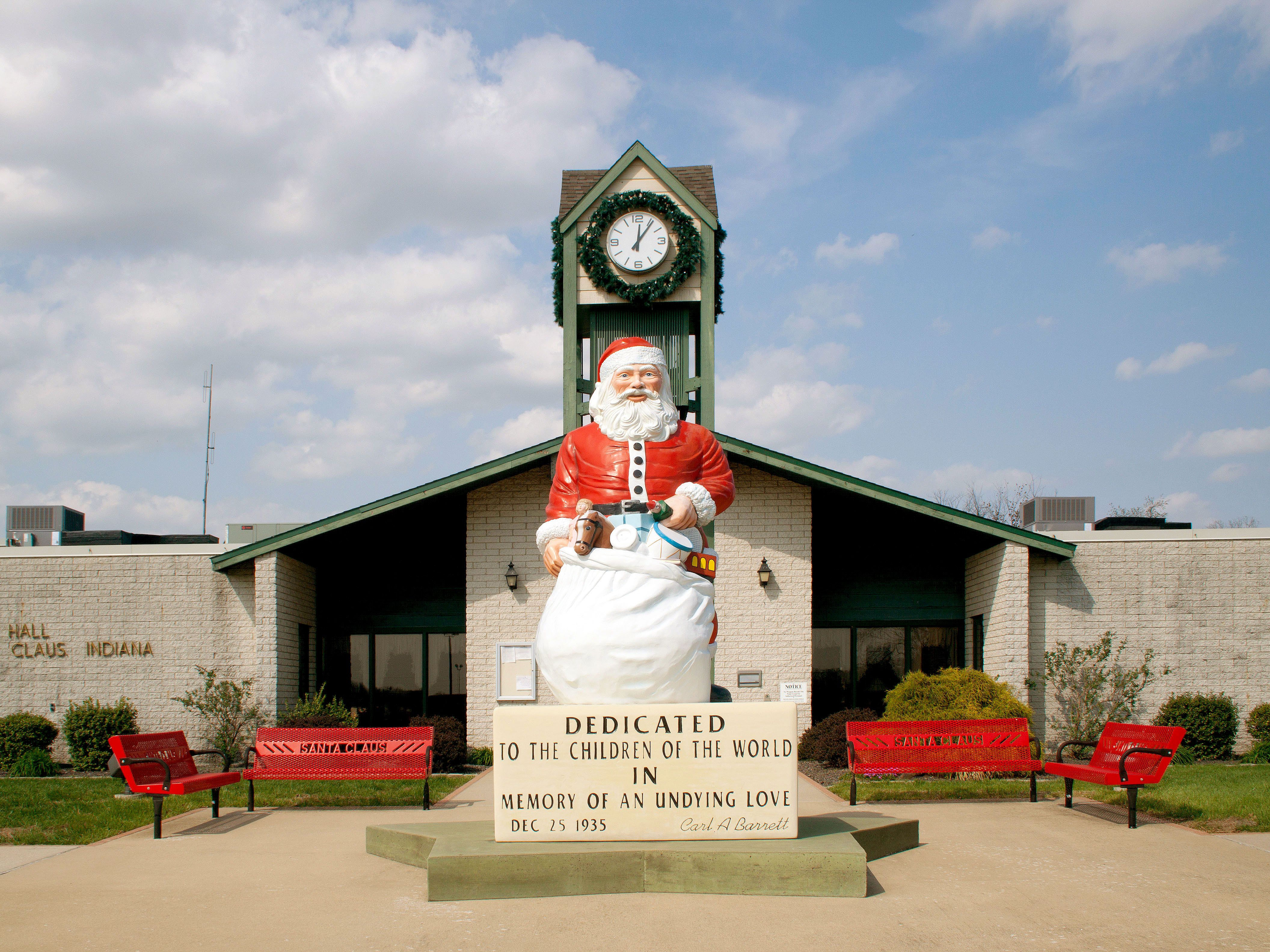
This Indiana town’s festive name certainly provokes curiosity. Legend has it that when the town applied for a post office under its former name, Santa Fe, in 1856, the request was rejected because a nearby town had already claimed the name, and the townspeople were instructed to pick something else. As it was the holiday season, Santa Claus was suggested, and the name stuck.
To say the town has leaned into its name is perhaps an understatement: In Santa Claus, there are dozens of Santa Claus statues, a Christmas Lodge, a Christmas Store, Santa’s Candy Castle, and the Holiday World and Splash Safari theme park — attractions that altogether attract bring around 1 million visitors to the town year-round. A visit to Santa Claus during the holiday season will predictably coincide with the many events happening in this festive town.
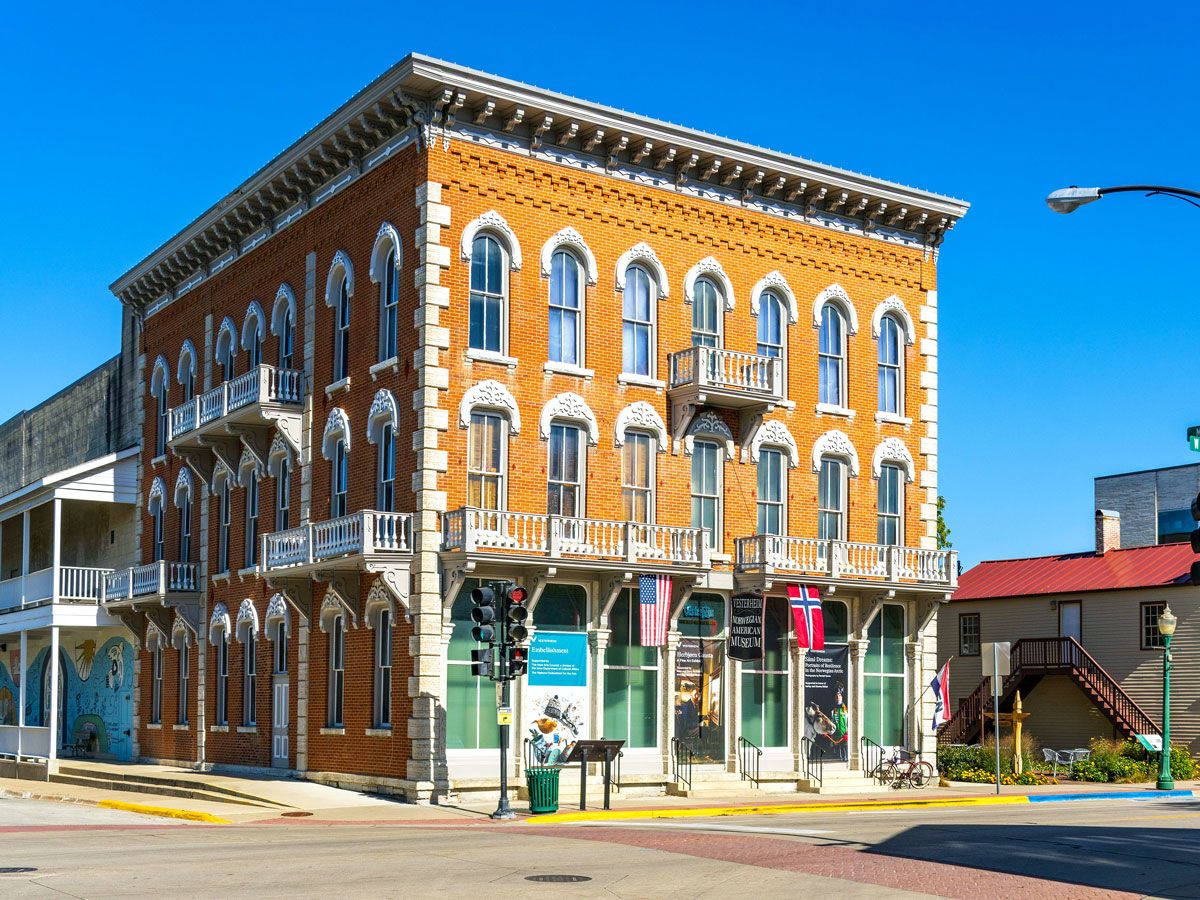
Located in the northeast corner of the state, Decorah is renowned for its rich Norwegian American heritage. Norwegian settlers first came to the region in the 1850s, and in 1877, they founded the Vesterheim Norwegian-American Museum. This local institution, which remains an important part of the community today, is home to 33,000 artifacts, 12 historic buildings, a heritage park, and a folk art school.
The town also honors its Norwegian heritage each July with the Nordic Fest, a celebration of all things Scandinavian. Tens of thousands people attend each year to listen to traditional Norwegian folk music, taste classic fare such as lingonberry ice cream, and admire contemporary folk art inspired by Norwegian traditions.
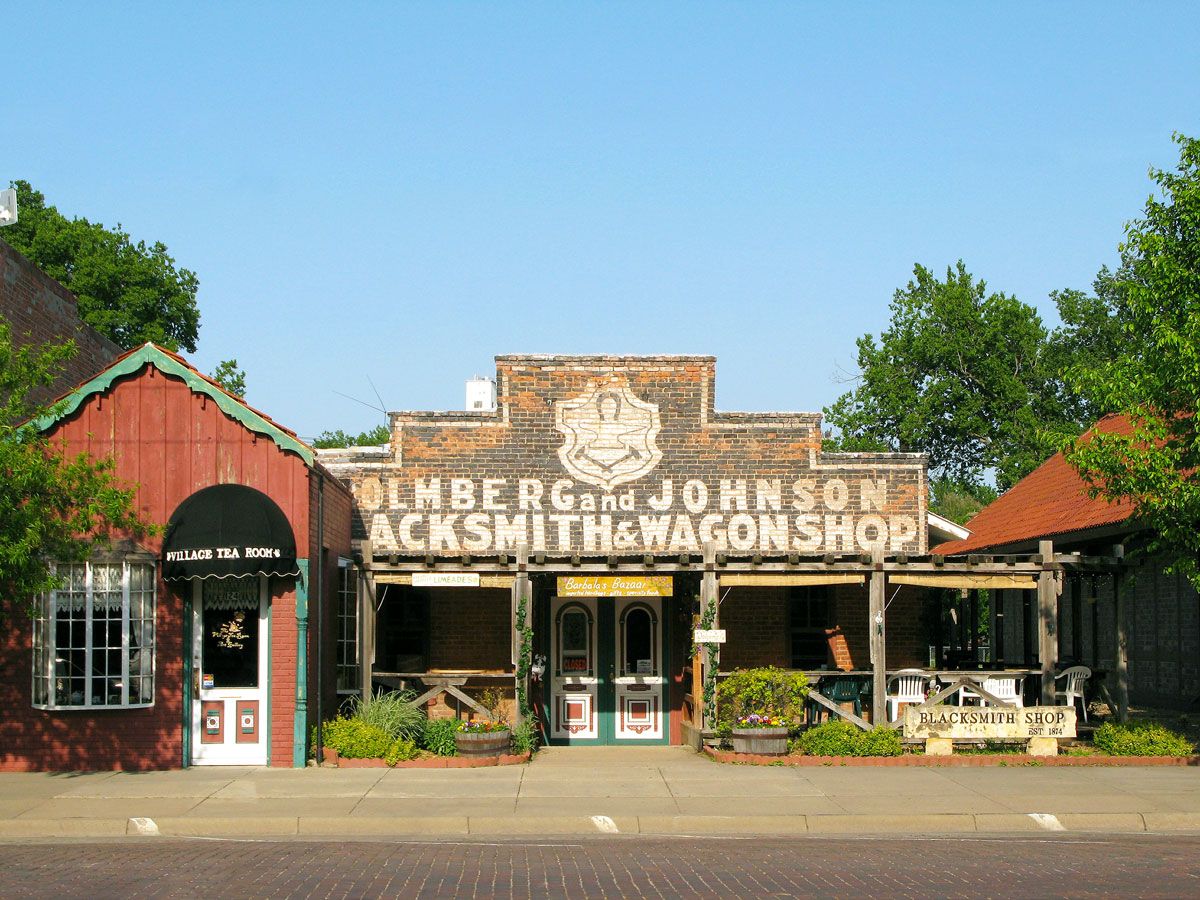
Nicknamed “Little Sweden,” the small town of Lindsborg, Kansas, has deep roots in Swedish culture. Settled in 1869 by a group of Swedish immigrants, Lindsborg was originally a haven for the Swedish community, with a focus on religion and the arts. The result is a Midwestern town that shares a strong fondness for its homeland, a fact that is evident from the life-size Dala horses on display along Main Street. Lindsborg also hosts Swedish heritage festivals, like Svensk Hyllningsfest, which honors all Swedish immigrants in the region. Lindsborg is so famously engulfed in Swedish culture that the King of Sweden himself paid the small town a visit in 1976.
Located less than an hour drive south of Louisville is the “Bourbon Capital of the World.” Bardstown has a longstanding tradition of distilleries that dates back to 1792. Neighboring Loretto is home to the world’s oldest working bourbon distillery, the Maker’s Mark distillery, which has been operating in the same location since 1805.
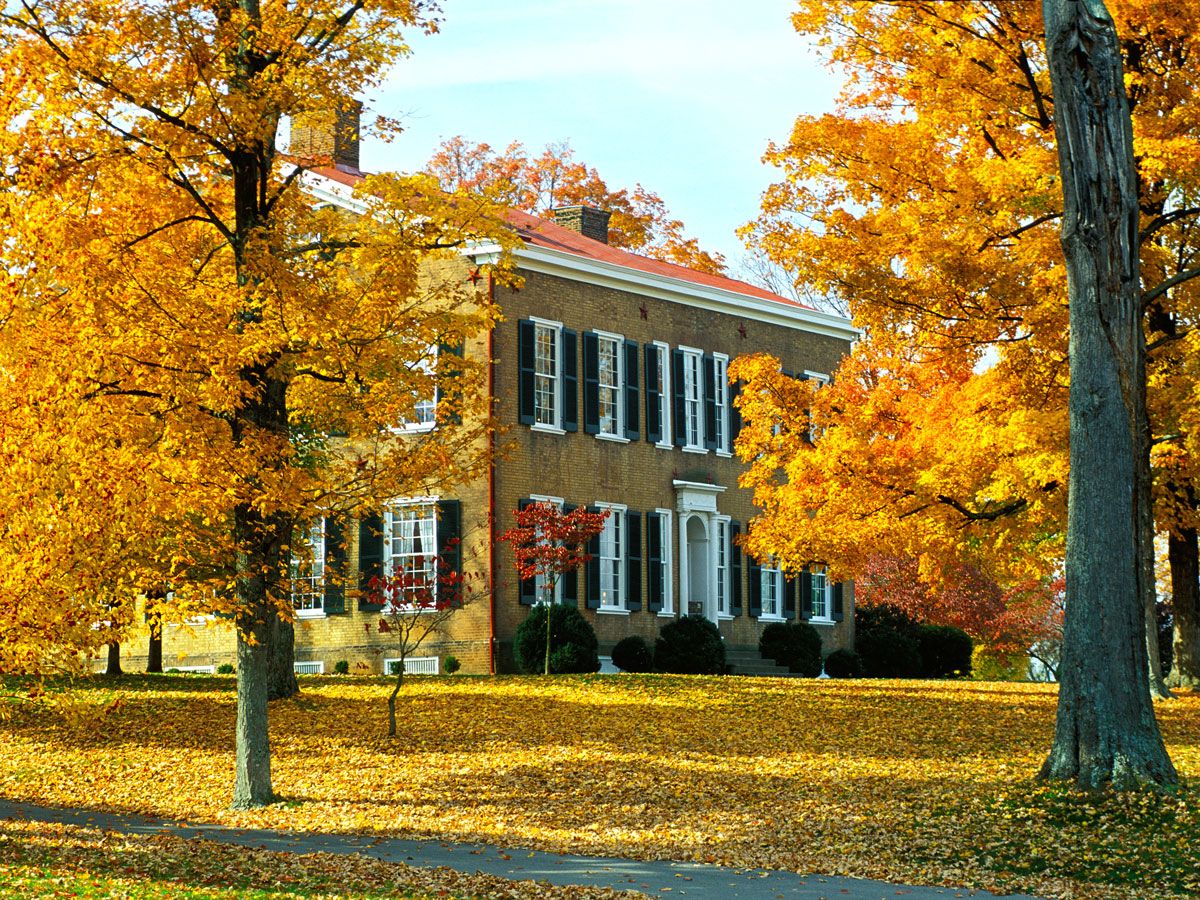
In Bardstown, you’ll also find My Old Kentucky Home State Park, inspired by a classic Stephen Foster song of a similar name. The visitor center is located inside a three-story, red brick mansion that was built in 1818, and the park is also home to a golf course, campgrounds, and an array of birdlife, including red-tailed hawks, great horned owls, and mourning doves.
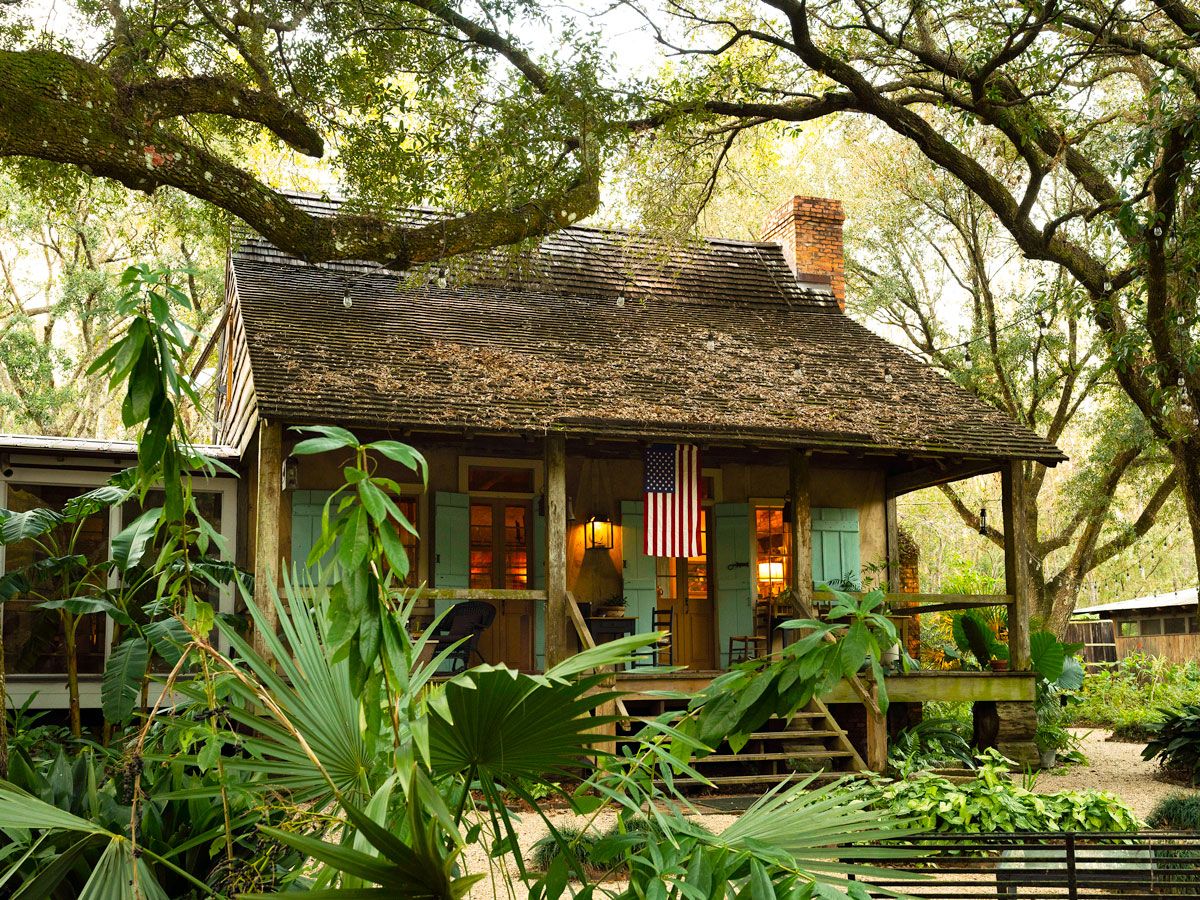
If you’re looking for an introduction to Cajun country, look no further than Breaux Bridge. Located 5 miles from Lake Martin, the town of approximately 7,500 is known as the “Crawfish Capital of the World.” Breaux Bridge claims to have invented the crawfish etouffee and continues to host an annual crawfish festival. Needless to say, sampling crawfish while in town is a must.
Breaux Bridge is also a great jumping-off point to explore the surrounding bayou landscape. Swamp tours on Lake Martin and Atchafalaya Basin offer excellent opportunities for spotting wildlife including heron, barred owls, turtles, osprey, and alligators. Meanwhile, you can admire the majestic cypress trees with moss-draped branches that grow straight out of the lake floor.
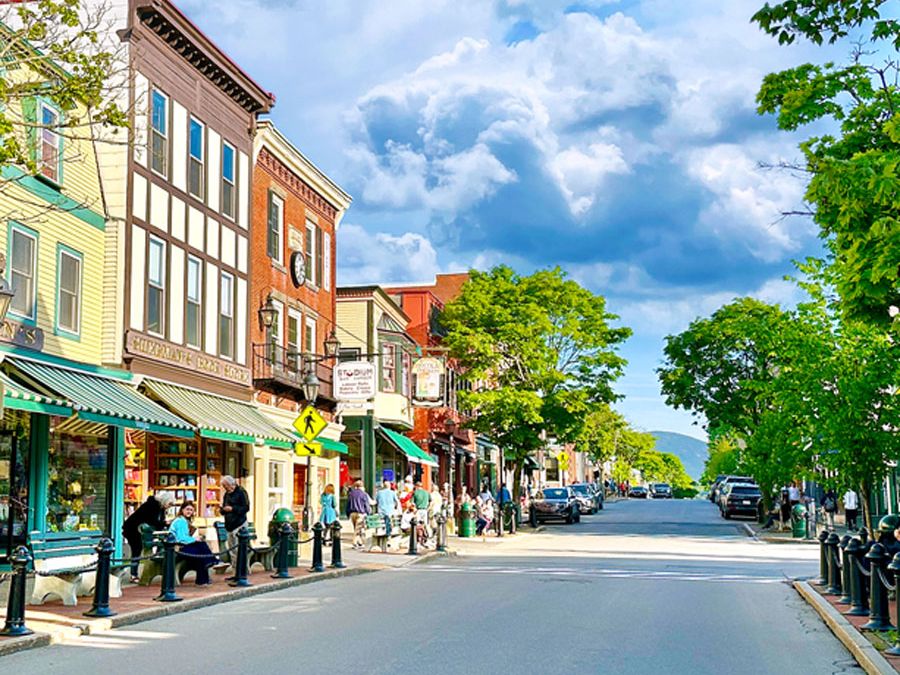
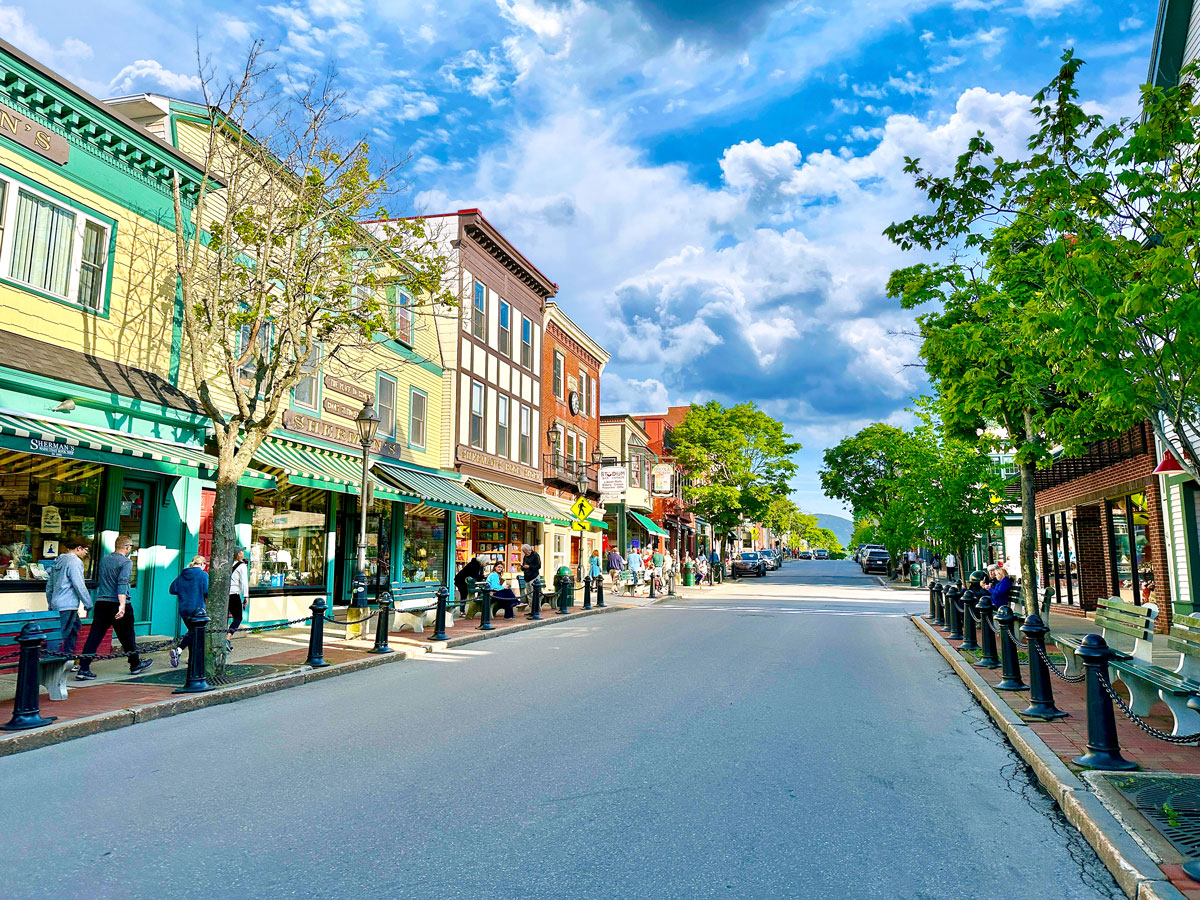
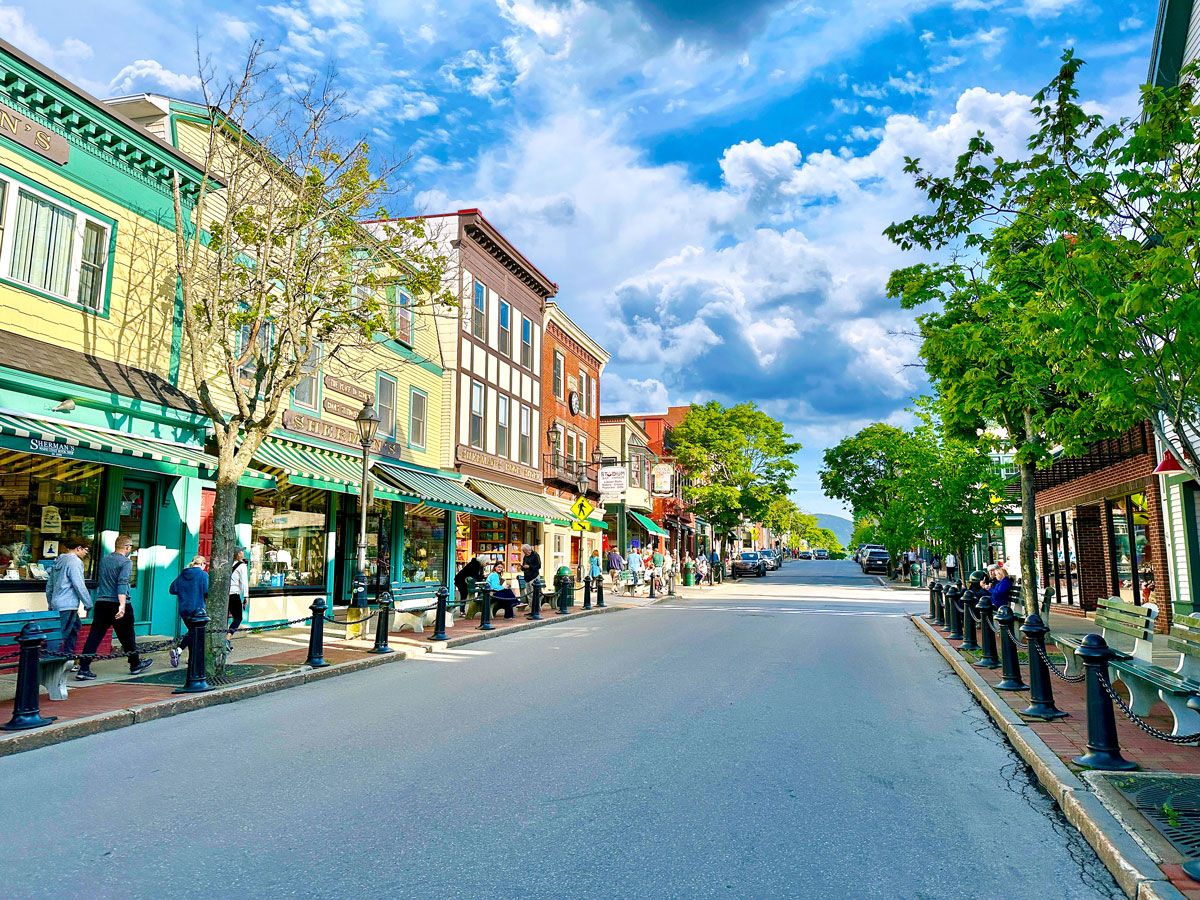
Bar Harbor is best known for being the gateway to Acadia National Park, one of Maine’s most treasured natural wonders. While biking the Carriage Roads and hiking Cadillac Mountain at sunrise are must-do activities, Bar Harbor is the perfect small town to enjoy after a day exploring Maine’s nature.
Wandering around colorful Main Street, you can refuel with some local Maine seafood at Galyn’s or enjoy oysters at the Barnacle, shop for gifts at upscale craft shops such as Island Artisans and In The Woods, and end your walk at the water’s edge, where Main Street meets the picturesque waterfront. It’s a lovely spot to take in the views across Bar Harbor to Bar Island, which you can walk to at low tide.
Berlin, Maryland
Credit: Brycia James/ iStock Unreleased via Getty Images
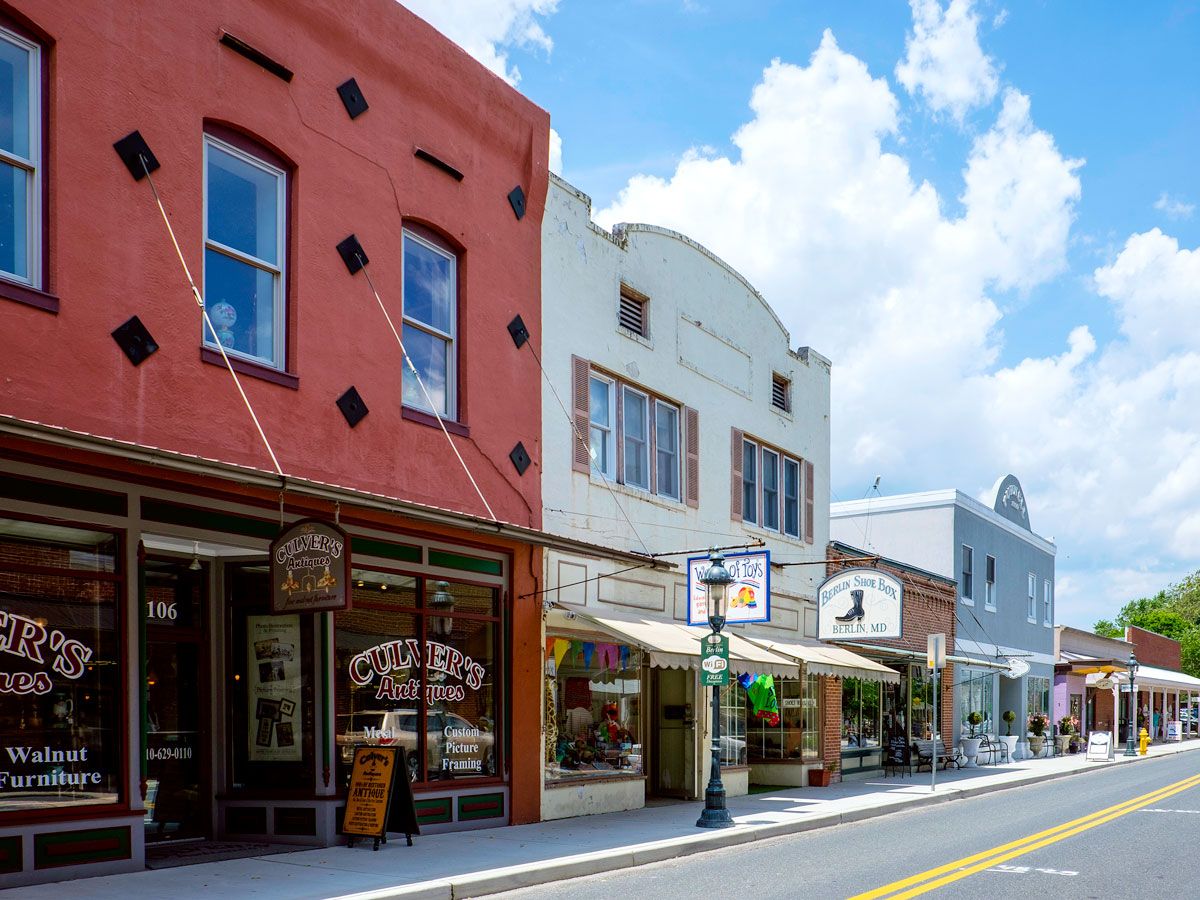
Berlin’s status as an incorporated community can be traced back to almost a century before the United States came to exist. In 1677, the Burley Plantation received a 300-acre land grant, and a small village grew around it in the 1790s. Today in Berlin, you’ll find 47 structures on the National Register of Historic Places, designed in architectural styles ranging from the Federal style to Victorian. The town’s streets are also lined with glorious foliage, such as magnolia trees, sycamores, and other stunning shrubbery.
You may also recognize Berlin from the silver screen, perhaps without even realizing it. The town served as a key setting for 1999’s Runaway Bride starring Richard Gere and Julia Roberts, and also 2002’s Tuck Everlasting starring Sissy Spacek and Ben Kingsley.
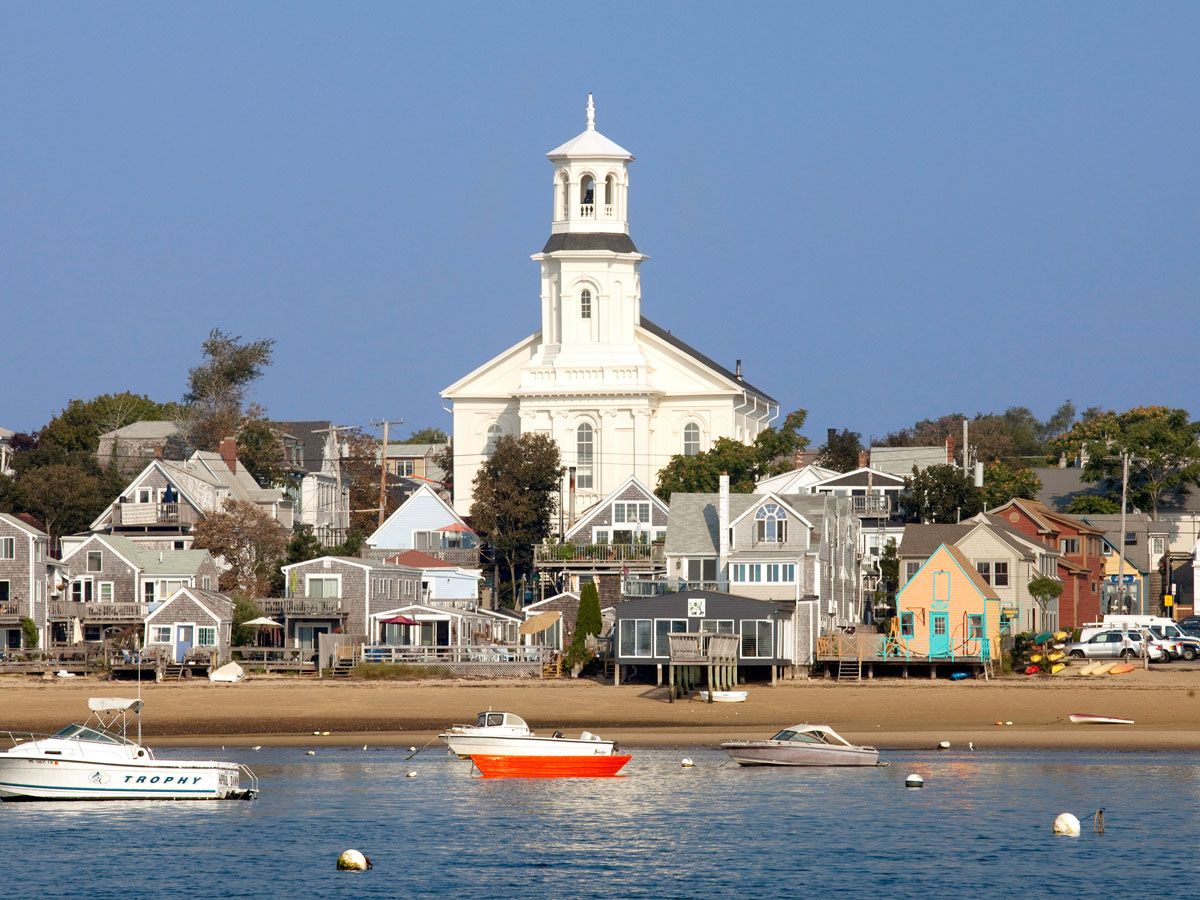
Sitting at the northernmost tip of Cape Cod, Provincetown draws a more laid-back crowd than much of the peninsula. A picturesque coastal destination with a free and easy-going attitude, Provincetown appeals to artists, creatives, and, in particular, the LGBTQ+ community. P’town (as it’s affectionately known) is also where stars like Al Pacino, Bette Davis, and Angela Lansbury launched their acting careers. Some, like Al Pacino, got their start at the historic Gifford House, a historic inn that once hosted an experimental theater. The same inn has also welcomed several presidents, including Ulysses S. Grant, Theodore Roosevelt, and William Howard Taft.
Saugatuck, Michigan
Credit: William Reagan/ iStock via Getty Images
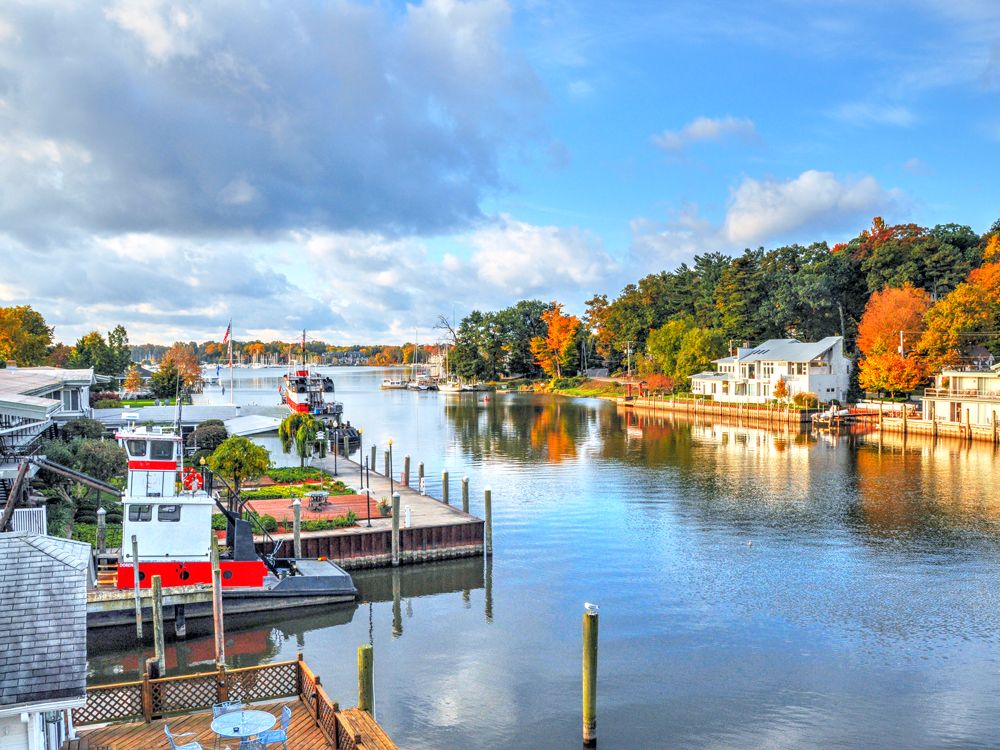
If it’s a pretty lake town you seek, the Mitten State won’t let you down. Part of Michigan’s “Art Coast,” Saugatuck is an especially quaint lake town that brims with beauty both natural and human-made, from the strip of art galleries and restaurants in old Victorian buildings that line the town’s historic main drag to the golden sandy shores of Oval Beach on Lake Michigan. Away from the water, Saugatuck offers a host of nature activities in Saugatuck Dunes State Park, such as swimming, wildlife viewing, and miles of pretty hiking trails that traverse the coastal dunes and adjacent forest.
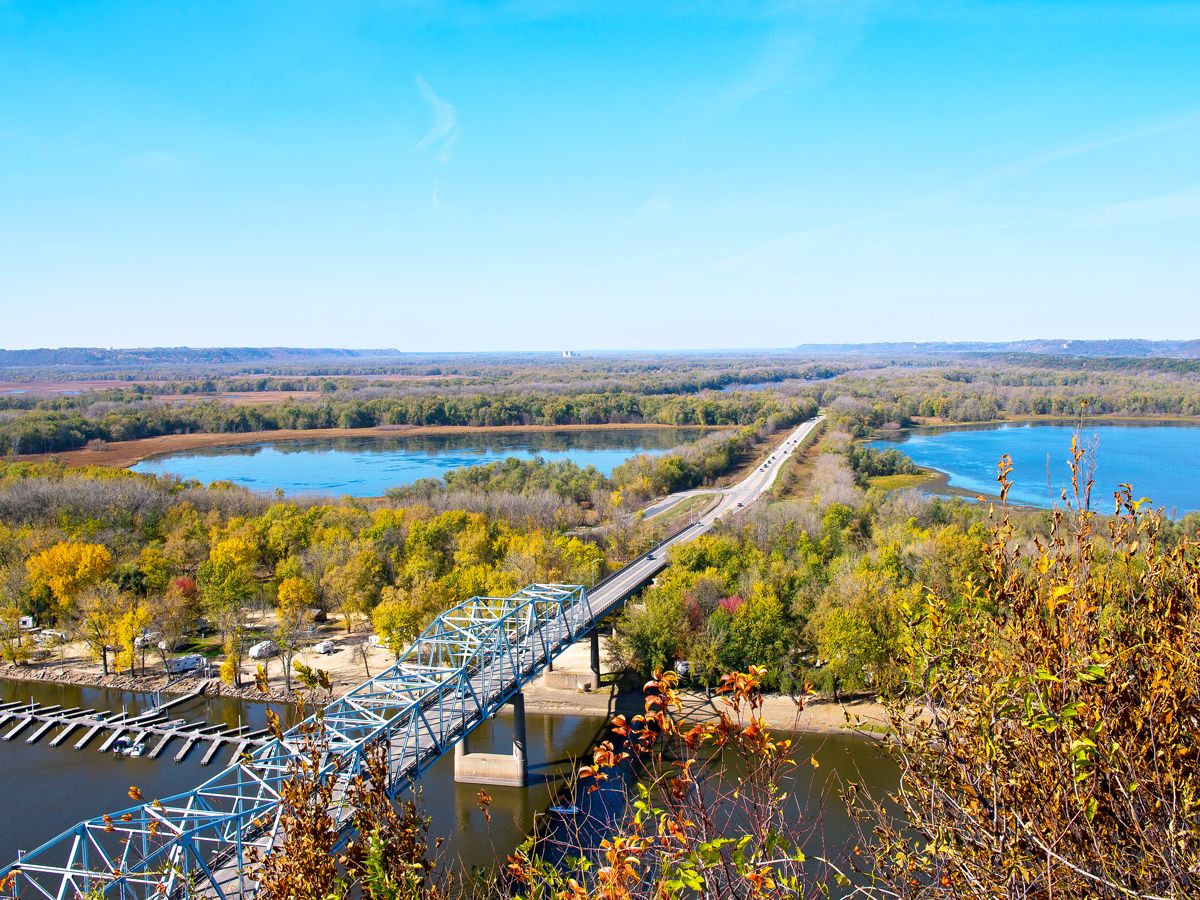
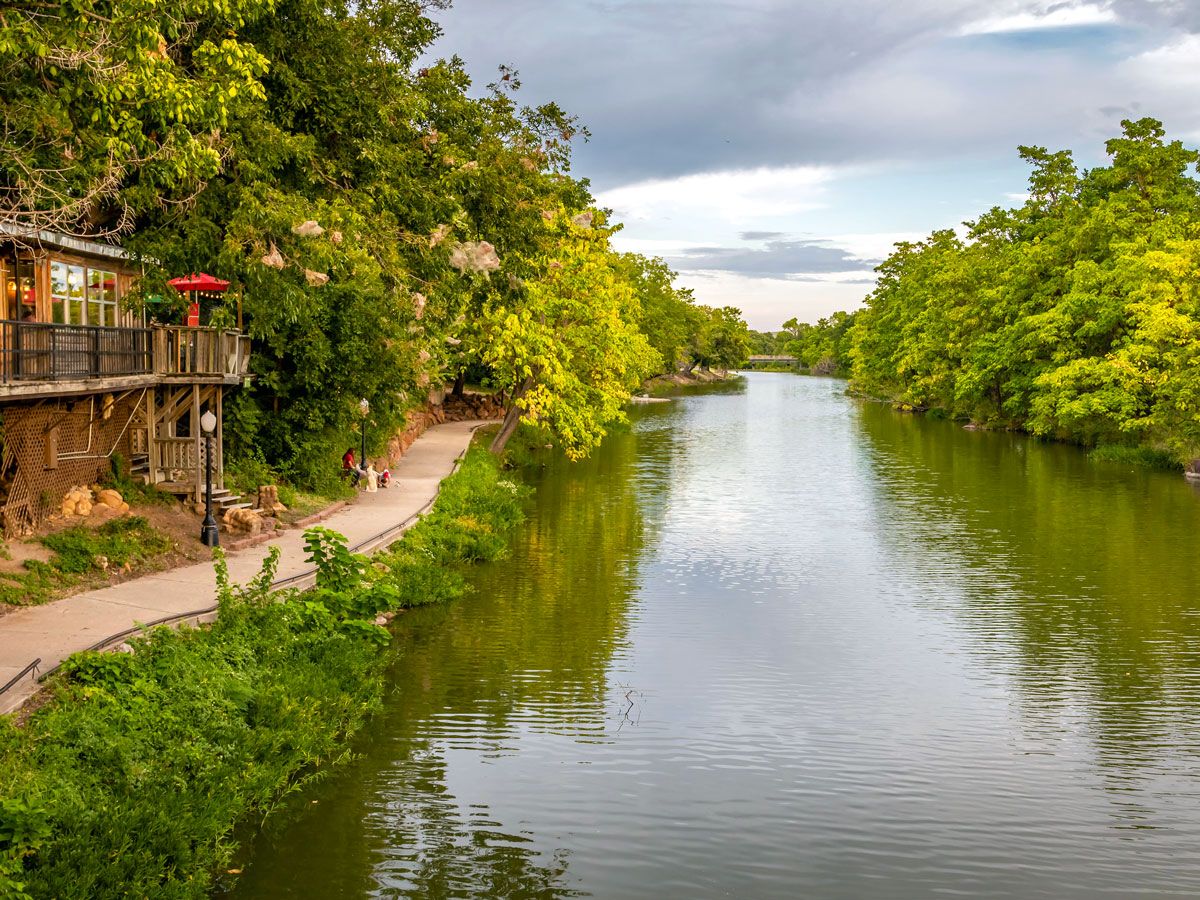
Red Wing, Minnesota, is best known for its iconic pottery and the boot brand that bears the same name. Nestled along the Mississippi River, Red Wing is also the perfect place to unwind in nature, with many bike paths, nature trails, and public parks to explore. The world’s largest boot is located at the Red Wing Shoe Company Museum, and the Pottery Museum of Red Wing features thousands of the town’s most famous pots. Adding to the town’s charm is its robust festival and event lineup in summer, including the Plein Air Art Festival in June, the Prairie Island Traditional Powwow in July, and River City Days in August.
Natchez is the starting point of the 444-mile-long Natchez Trace Parkway — a historic route that travels through Alabama to just outside of Nashville, Tennessee. Now managed by the National Park Service, the Natchez Trace was used for centuries by Native Americans as a thriving trade route, and that practice continued when European and American settlers arrived in the 18th century.
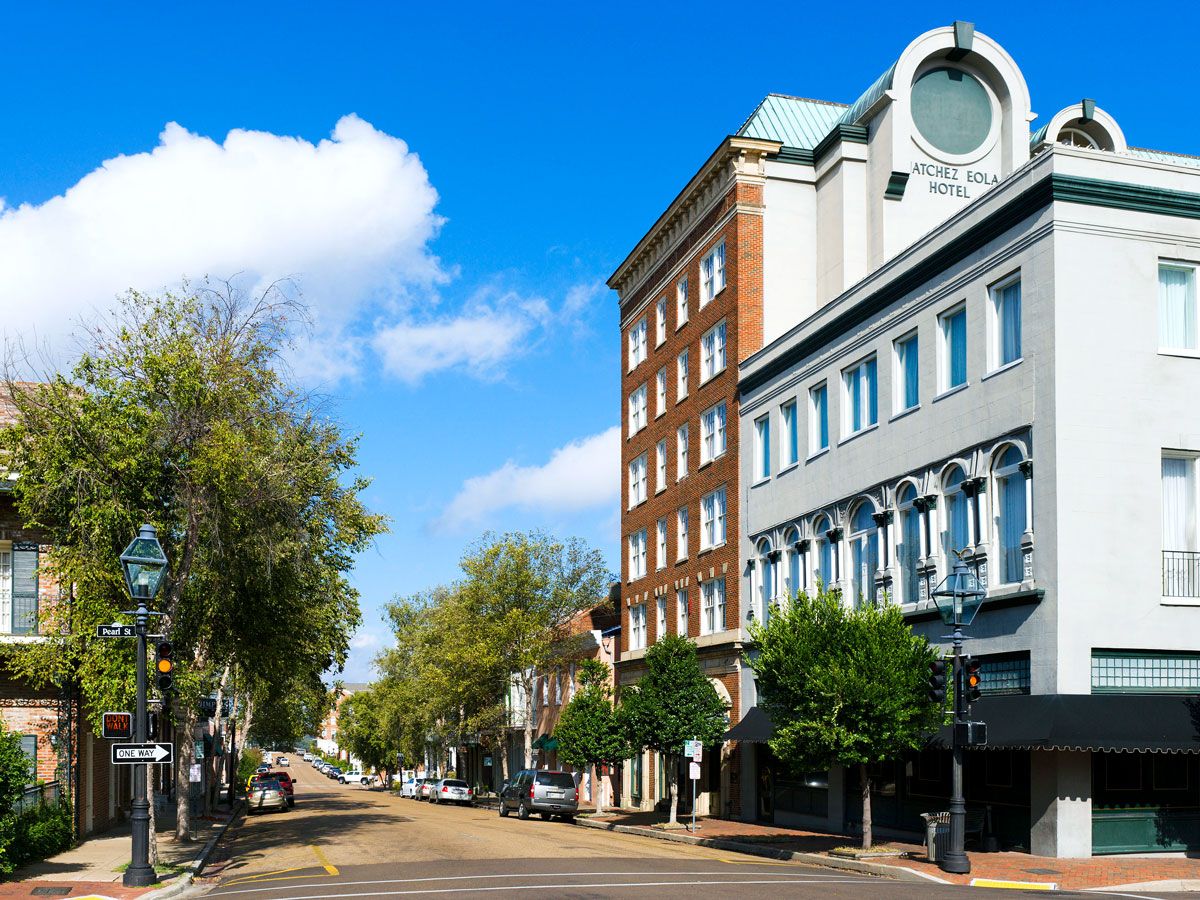
The town of Natchez, established by the French in 1716, is among the oldest European settlements along the Mississippi River. Visit local landmarks such as the historic Stanton Hall and the Rosalie Mansion, the Natchez Museum of African American History and Culture, and the Magnolia Bluffs Casino, which boasts stunning views of the adjacent Mississippi River and neighboring Louisiana.
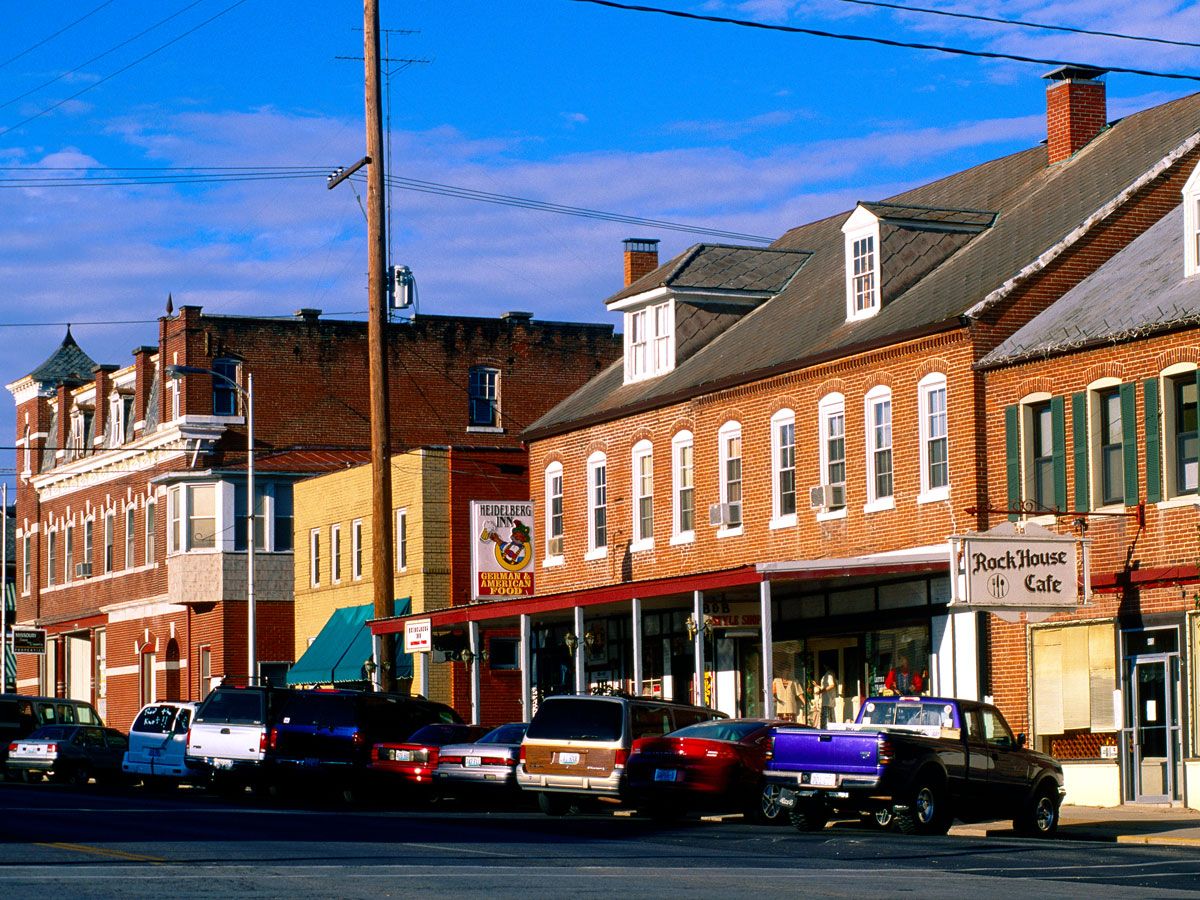
German settlers homesick for the Rhine Valley found the rolling hills of the Missouri River Valley a suitable substitute, and decided to call them home. Planting vineyards on the rocky hillsides and erecting brick buildings along the Missouri River, the early 19th-century colony prospered. Today, the picturebook-pretty town is on the map again, holding a lively Oktoberfest and boasting a varied selection of restaurants and boutiques in its historic downtown. One of its wineries, Stone Hill, has won gold medals at wine competitions around the globe, and at one point was the second-largest winery in the country.
Whitefish, Montana
Credit: Pierdelune/ iStock Editorial via Getty Images Plus
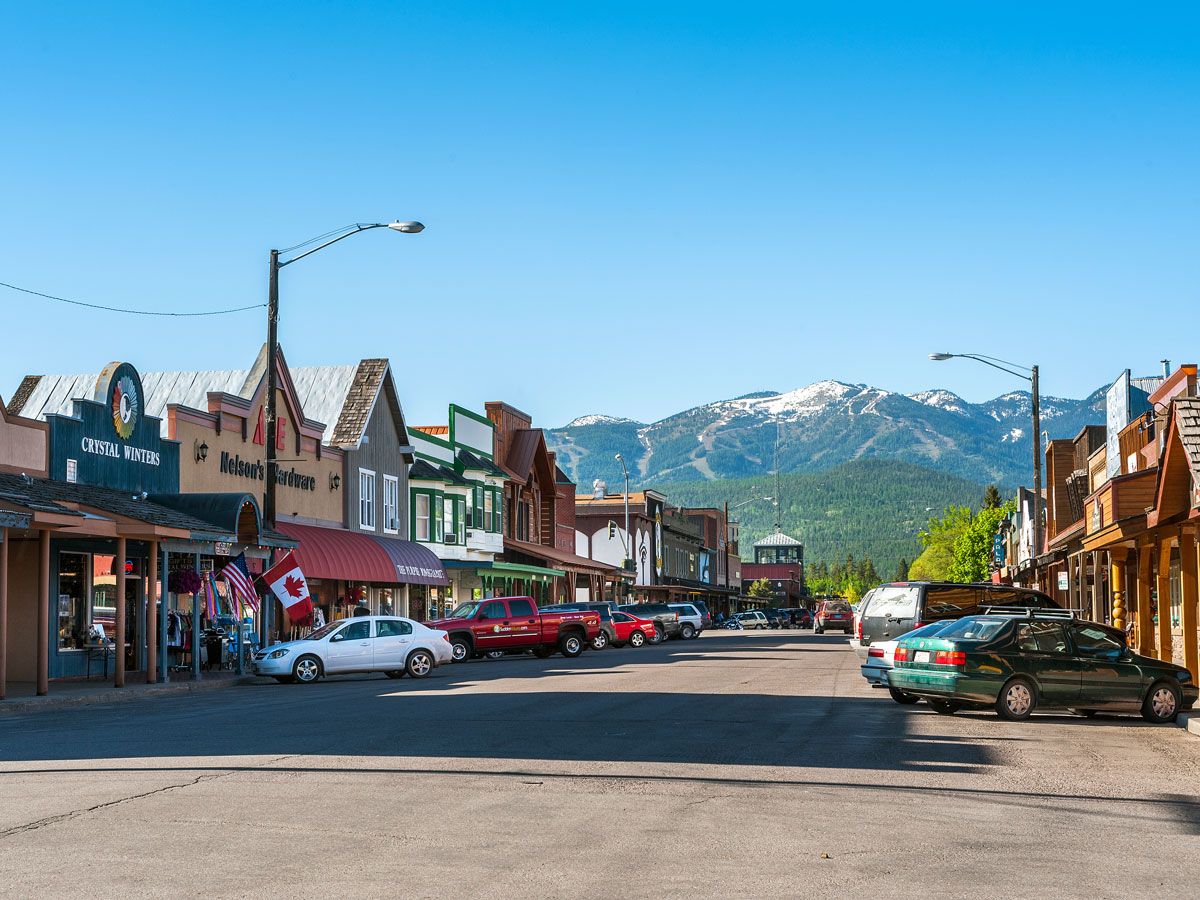
Few resort towns are as idyllic as Whitefish. While the town is just a 35-minute drive away from the entrance to Glacier National Park, there’s plenty of natural beauty to admire in Whitefish itself. During the winter, Whitefish Mountain Resort offers prime snowboarding and skiing opportunities, while in the warmer months you can rent a boat or kayak out on Whitefish Lake. Don’t leave town without stopping by Whitefish Depot, which contains various exhibits about the community and the historic railways that once passed through it.
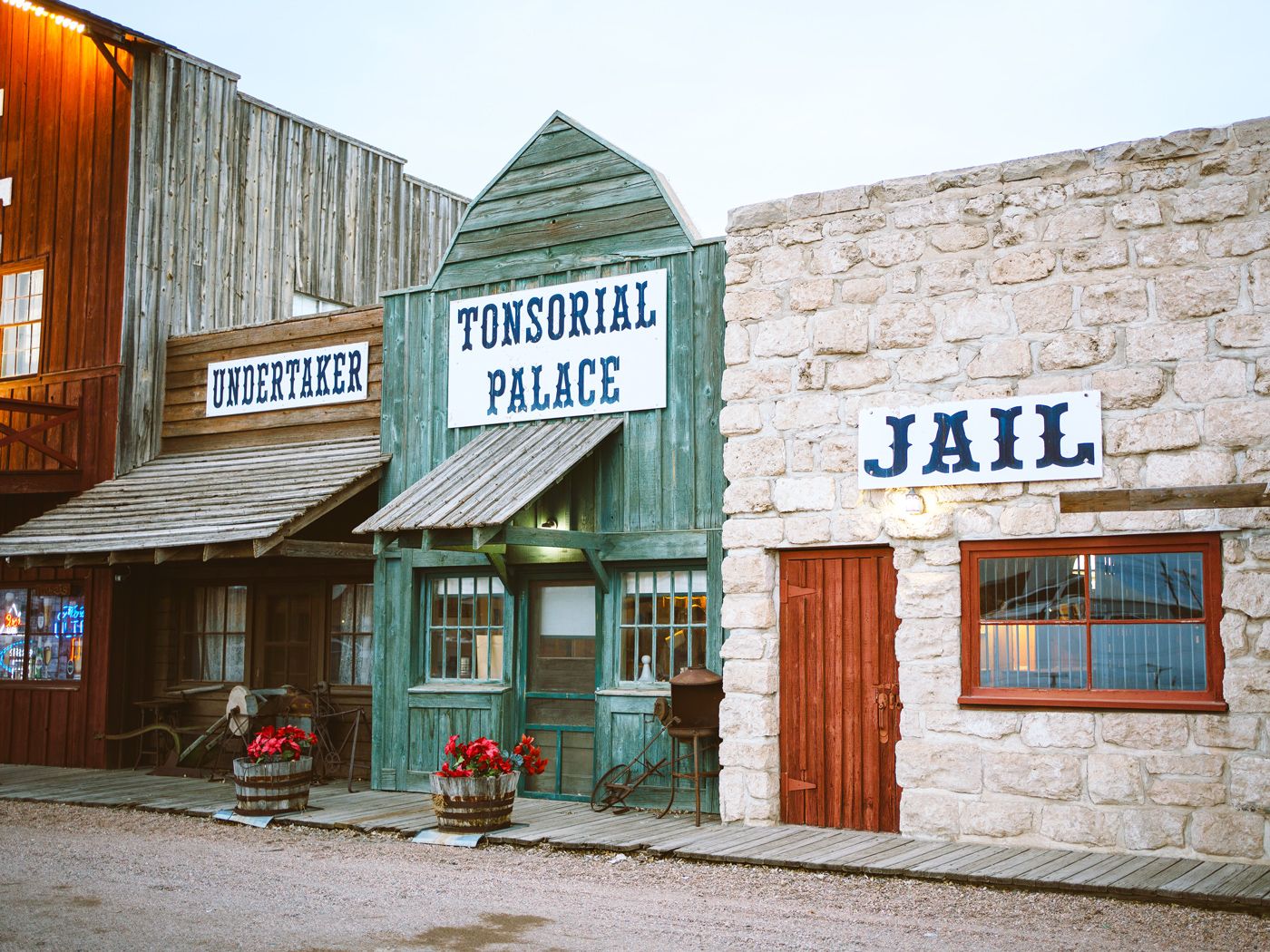
Looking to relive the days of the Wild West? Consider a visit to the former frontier town of Ogallala. In the 1870s, it was considered the most dangerous town in Nebraska, as Ogallala was the center of the cattle industry and frequented by rough-and-tumble cowboys herding their cattle through town. These cowboys gathered at the town’s saloons, where the alcohol flowed and the bullets flew.
However, present-day Ogallala is a far cry from its wild past — the quiet city of 5,000 residents welcomes visitors with a peaceful atmosphere and day trips to Lake McConaughy for fishing, boating, camping, and swimming. Staying true to the town’s roots, downtown’s Front Street caters to Wild West aficionados with 19th-century-style buildings, bars, cafes, and a general store.
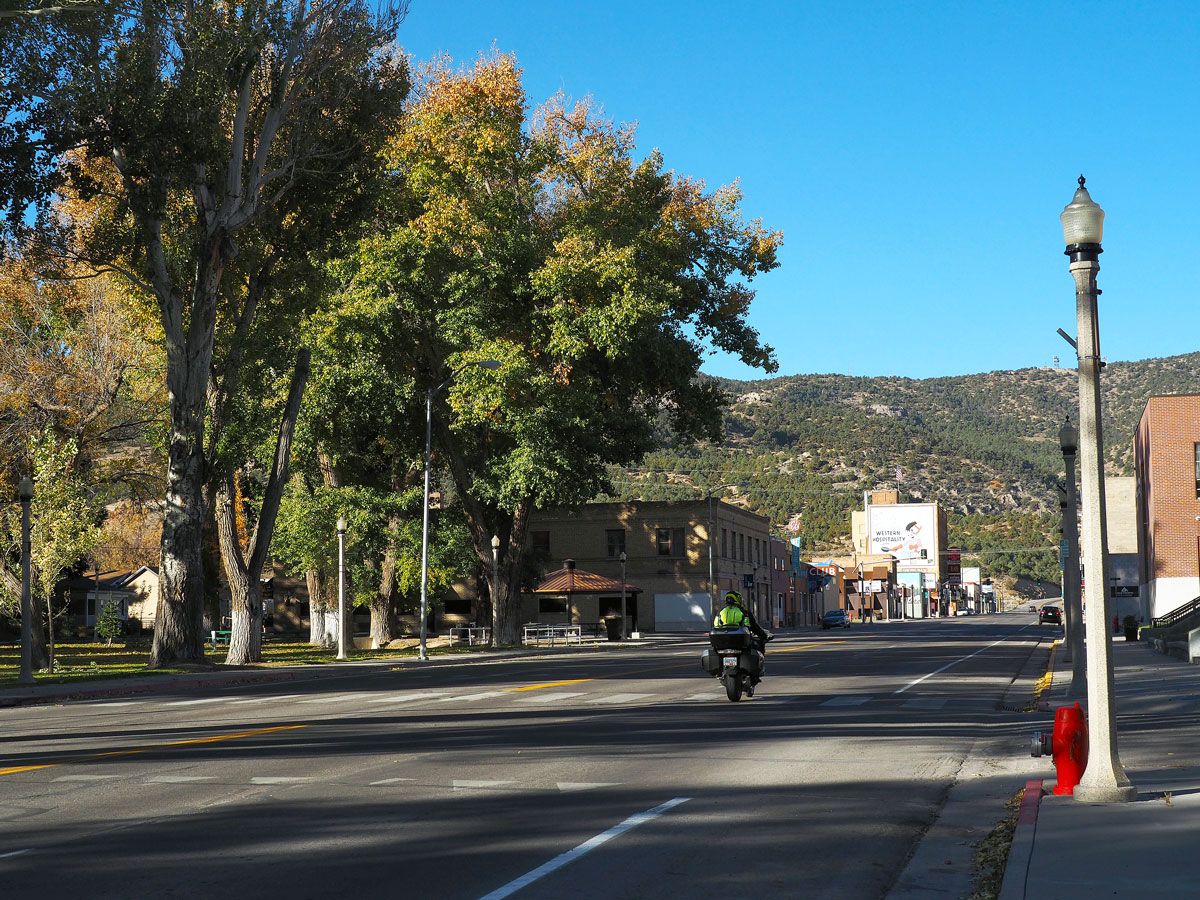
It may not be as glitzy or glamorous as Las Vegas, but Ely is just as worth visiting on your next trip to Nevada. To reach this charming small town, you can drive along U.S. Route 50, which has earned the notorious distinction of being the “Loneliest Road in America.” But once you reach Ely, you’ll feel right at home and surrounded by welcoming locals. Ely was originally founded in 1881 as a stagecoach station along the Pony Express, and it became a lively copper mining community in the early 20th century.
Today, Ely is the perfect home base for folks visiting the nearby Great Basin National Park. The town is also home to Ward Charcoal Ovens State Park, which contains six beehive-shaped ovens that were used from 1876 to 1879 by miners to help process silver ore. These ovens were later repurposed as hideouts for stagecoach bandits, and they remain a popular tourist attraction for visitors.
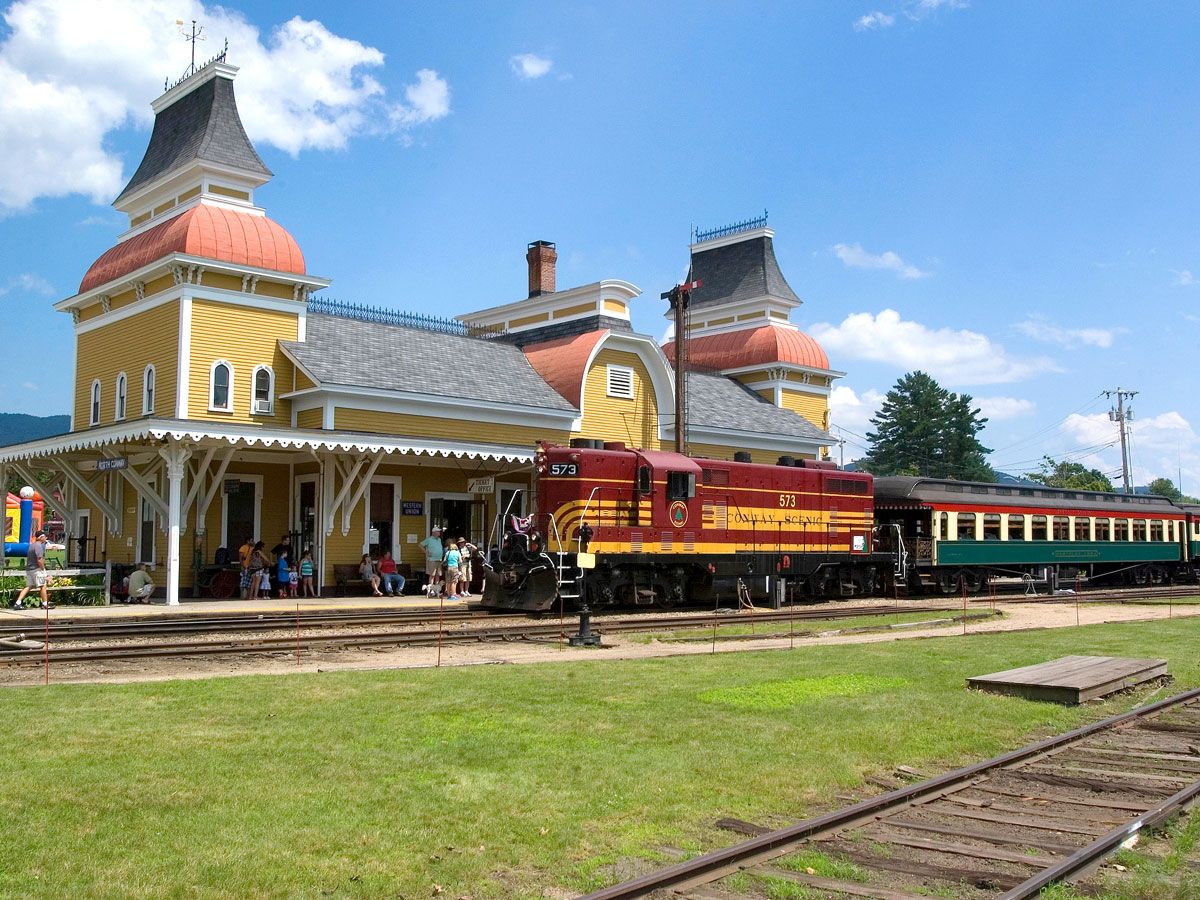
Conway attracts a mix of tourists, some who come to take advantage of its proximity to the region’s famous White Mountain National Forest, and others who are drawn to the quaint vibes and family-friendly activities. Serving as the gateway to the White Mountains, a range that covers roughly a quarter of New Hampshire, the town of roughly 10,000 people is a hub for avid hikers eager to tick hiking those mountains off their bucket lists. Less keen hikers might choose to experience New England nature in a more laid-back manner by riding the Conway Scenic Railroad or taking a dip at Echo Lake State Park.
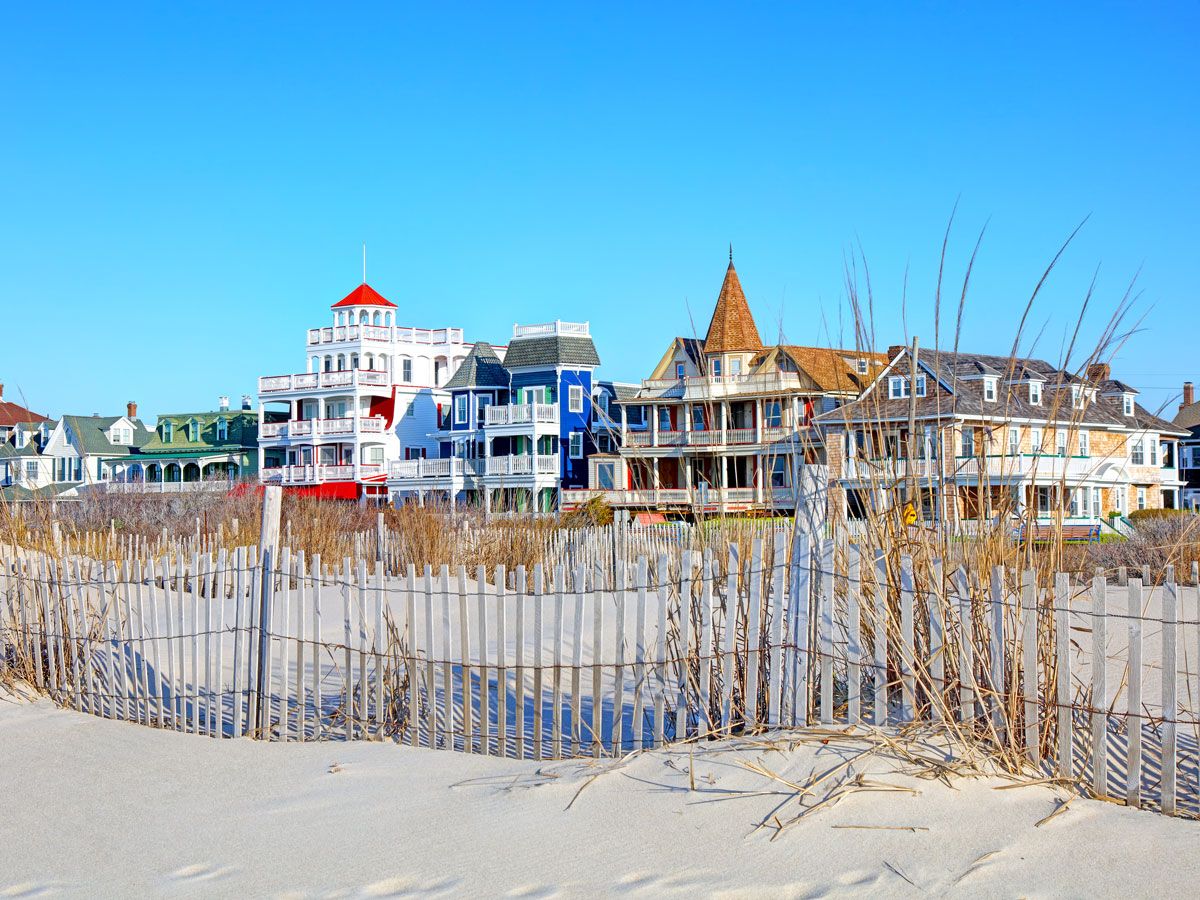
Cape May has the distinction of being America’s first seaside resort destination, and it remains as charming as ever. When the community was established in 1761, it drew visitors by horse-drawn wagons, stagecoaches, and sailboats from the nearby cities of Philadelphia and New York. In those days, members of high society — including former U.S. presidents Franklin Pierce, Benjamin Harrison, and James Buchanan — were frequent visitors to Cape May. (Harrison even called the seaside resort his “Summer White House.”)
In 1976, the entire city of Cape May was designated a National Historic Landmark. Since then, there have been numerous efforts to restore the 19th-century architecture and bring back local festivals and traditions. For historic offerings in town, check out the John Hand Black and White House (dating back to 1690), the Washington Street Mall, the Cape May Lighthouse, and the Cape May Historic District. Guests at the historic Congress Hall hotel, welcoming guests since 1816, will also get a glimpse into the early history of America’s first seaside resort town.
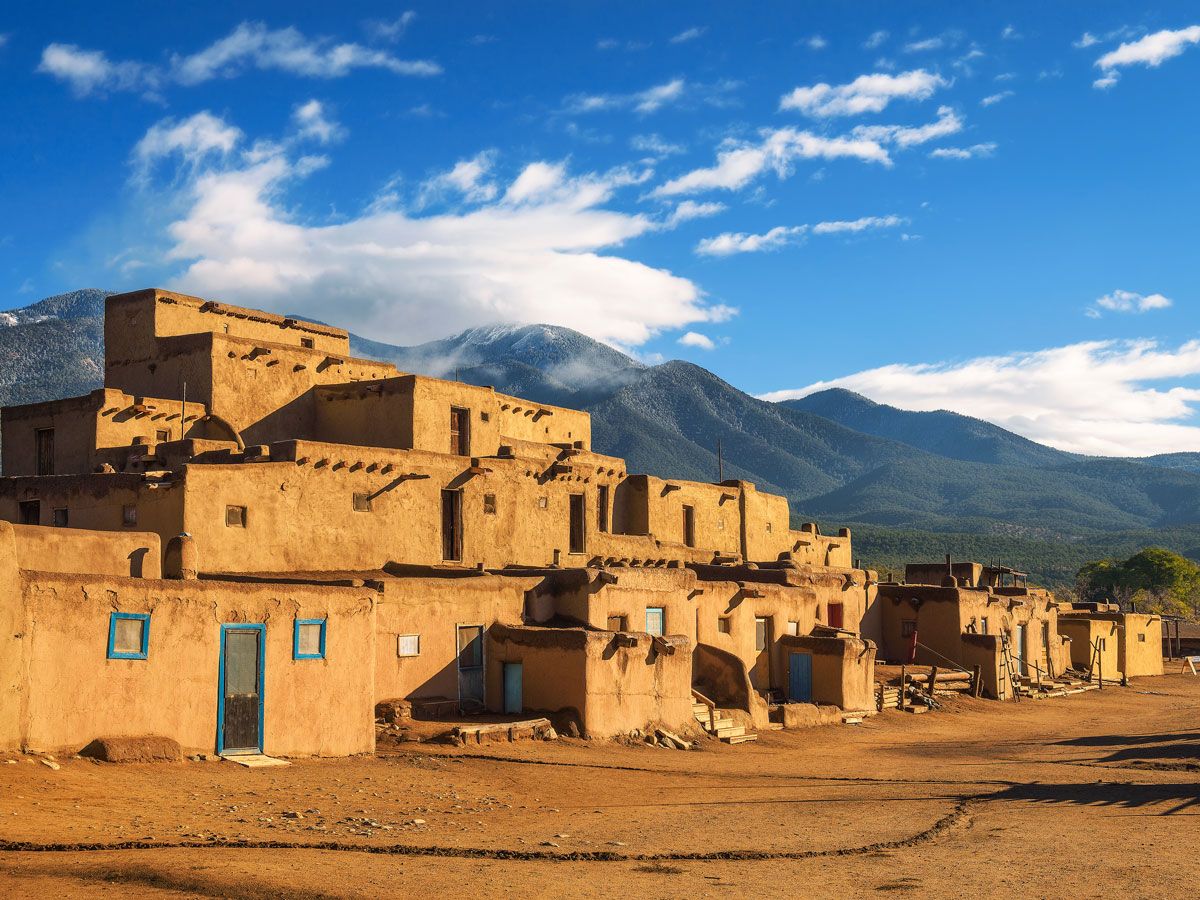
Many come to Taos to visit nearby Taos Pueblo — one the oldest continually inhabited communities in North America and a UNESCO World Heritage Site. After diving into the pueblo’s fascinating history, they’re left to explore the charming town of Taos and all it has to offer. With its main plaza dating to 1796, Taos is surrounded by four mountain resorts that offer skiing and snowboarding as well as summer outdoor recreation. Taos is also famed as an art colony, drawing creatives with its piercing light and breathtaking landscapes. The town is home to more than 70 galleries, offering everything from painting and photography to sculpture, mixed media, printmaking, and glass.
Sleepy Hollow, New York
Credit: John Greim/ LightRocket via Getty Images
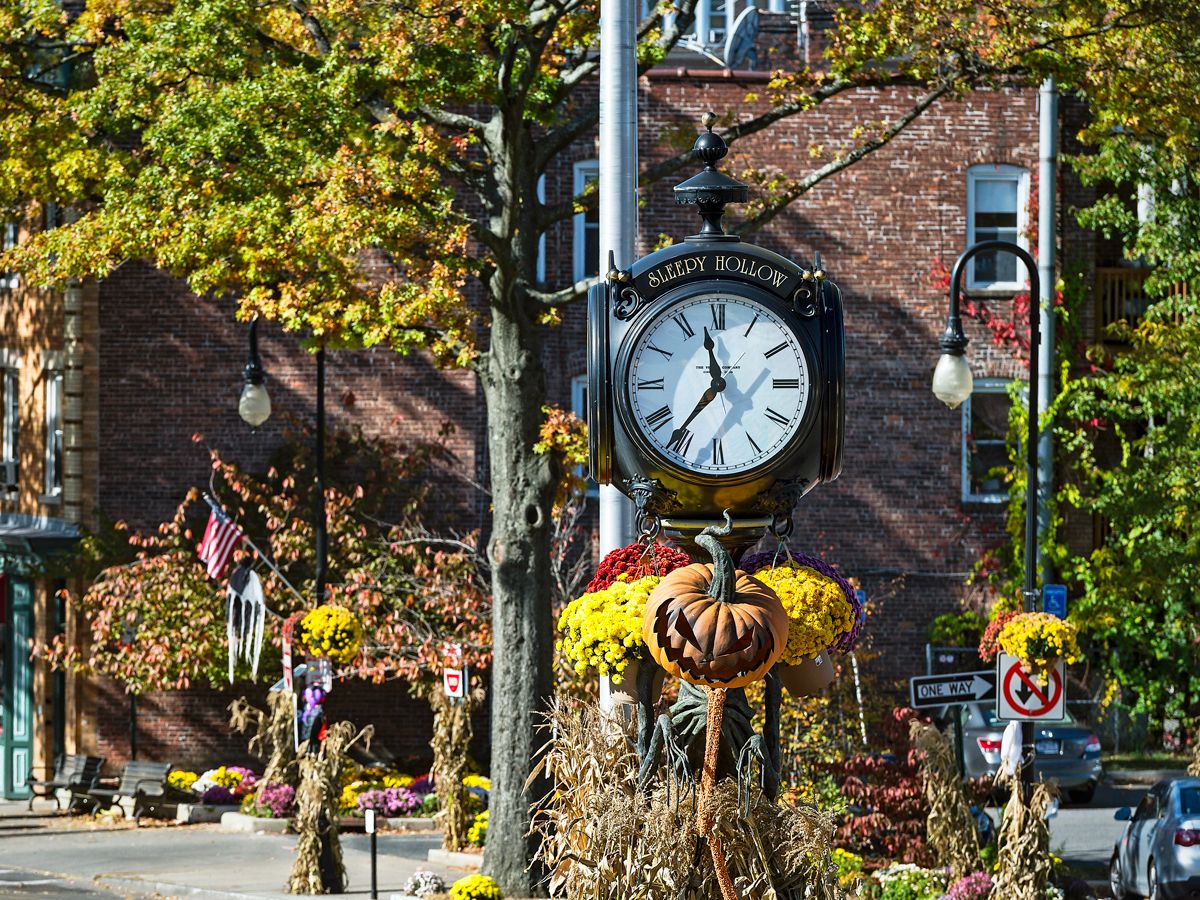
Washington Irving put this New York village on the map with his 1820 short story The Legend of Sleepy Hollow. The author was a New York native and spent time in Sleepy Hollow, located about 30 miles north of New York City, and some theories suggest he was influenced by the local legend of a headless Hessian soldier who was decapitated by a cannonball during the American Revolution.
Today, Ichabod Crane fans can visit the spooky Old Dutch Church (the Headless Horseman’s supposed home) and the adjacent Sleepy Hollow Cemetery, the final resting place for over 45,000 people — including Irving himself. While the town definitely leans into its spooky spirit, especially around Halloween, Sleepy Hollow checks all the boxes for a year-round small-town getaway. Visitors can wander the narrow streets of its historic downtown, lined with boutiques and cozy cafes, and admire the peaceful views of the Hudson River.
Boone, North Carolina
Credit: J. Michael Jones/ iStock Editorial via Getty Images Plus
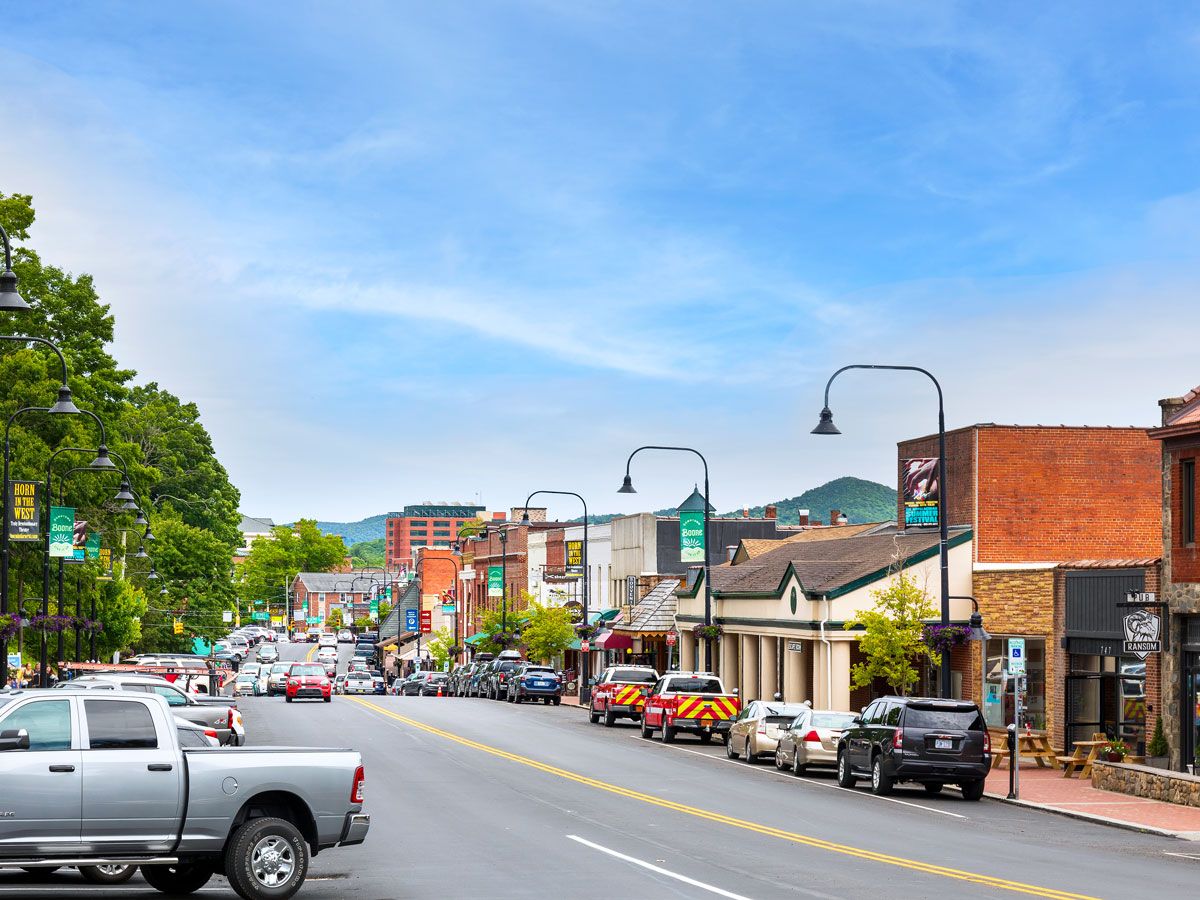
Deep in the Blue Ridge Mountains, Boone feels like a true escape from the grid. As the home of Appalachian State University, the city boasts a mix of mountain and college cultures, resulting in an eclectic, inviting atmosphere. For an easy hike, try Howard’s Knob, a mountain which sits in the middle of Boone. A more difficult option is the trek to the Grandfather’s Bridge — a mile-high suspension bridge that offers 360-degree views of the mountains. There’s plenty more to do and see when you return to town, from shopping and exploring King Street to enjoying the modern Southern food at popular local eateries like Vidalia.
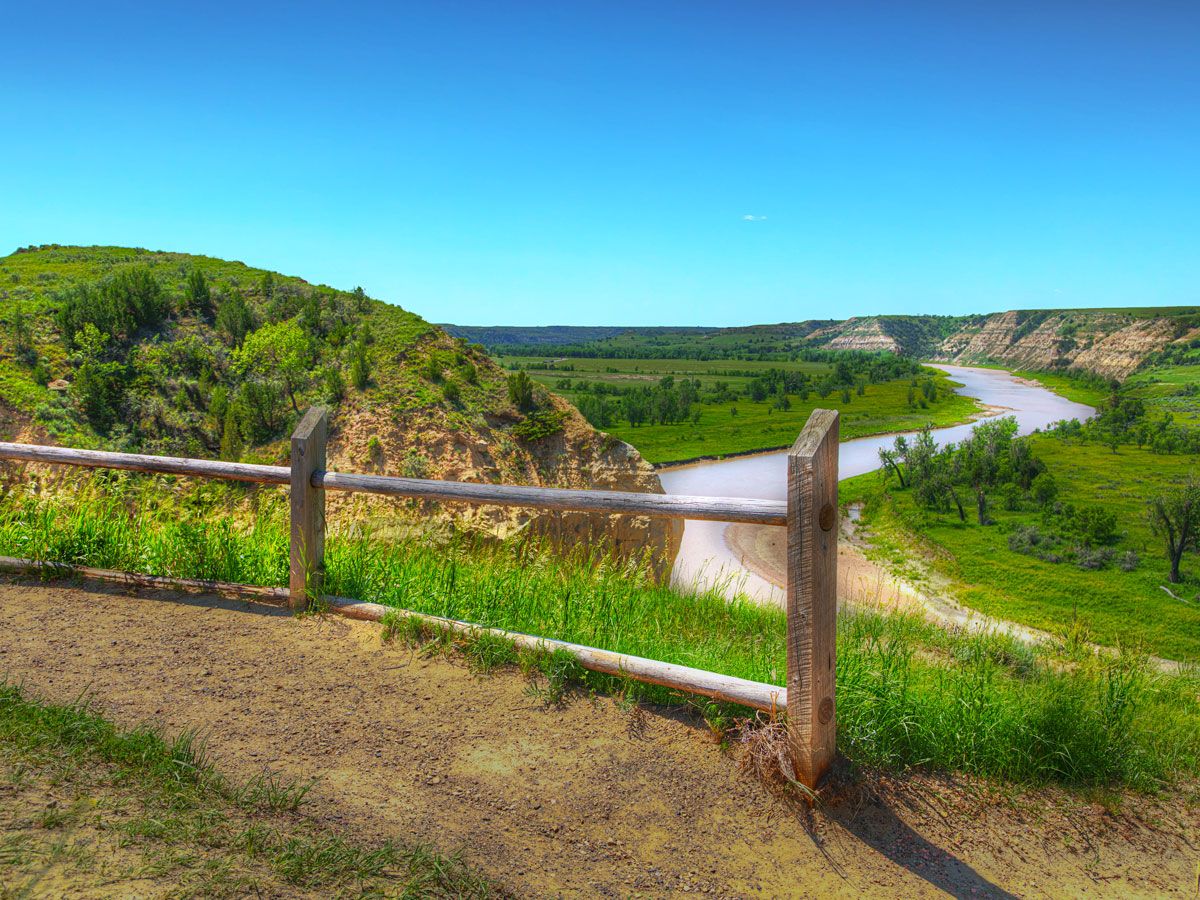
In 1883, Theodore Roosevelt visited Medora for the first time, and It quickly became a favorite destination of the future president. Roosevelt’s legacy remains ever-present today, as Medora serves as the gateway to Theodore Roosevelt National Park, where you’ll find bison, wild horses, and prairie dogs roaming the serene landscape. Medora will also be the home of Roosevelt’s presidential library, which is set to open on July 4, 2026, in celebration of the nation’s 250th birthday. Back in town, don’t miss the Medora Musical, a long-running local stage production celebrating the community’s Western heritage.
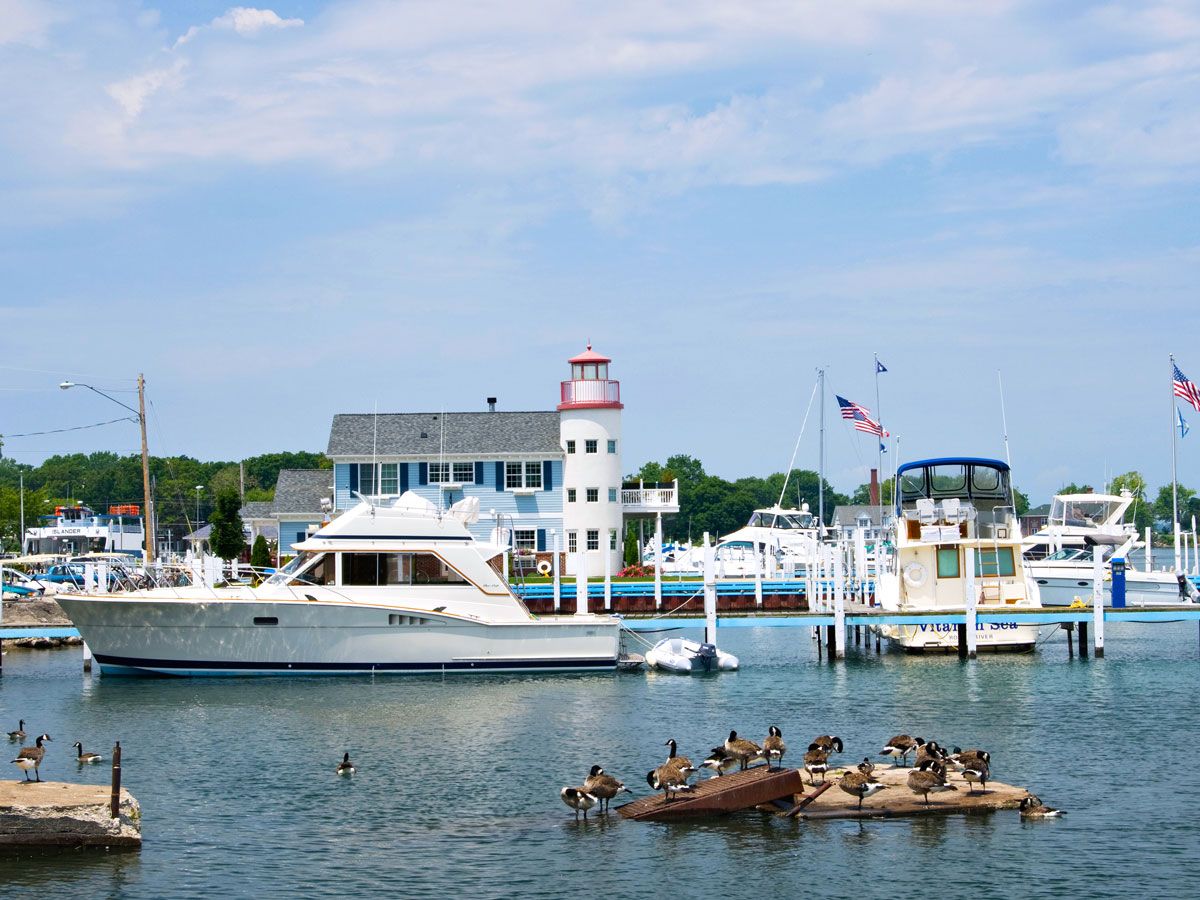
Midwesterners don’t have to travel all the way to Florida for a taste of the Keys — the “Key West of the North” is right in their backyard. A popular summer destination, Put-in-Bay gets its nickname from its Caribbean feel and laid-back vibe. The village sits on South Bass Island in Lake Erie — a 20-minute ferry ride from the mainland — and while only 300 residents live there full-time, the population swells during peak tourist season, when more than 750,000 visitors arrive on its shores. Visitors will find plenty to do, from fishing to water sports to museums, but one of the most popular ways to see the island is by renting a golf cart to explore this little slice of paradise.
The small town of Medicine Park is renowned for its Cannonball Architecture style. This unique aesthetic incorporates the region’s small, rounded, pink granite cobblestones into walls, arches, and building designs. It began with the construction of a hotel in 1916, which was restored in 2009 using old photos to recreate it as precisely as possible. In addition to Medicine Park’s stunning architecture, the town has several natural wonders worth exploring. Take a stroll through its namesake park, swim in Bath Lake, or gaze upon the nearby Wichita Mountains, which are particularly stunning in the evening as the sun begins to set behind them.
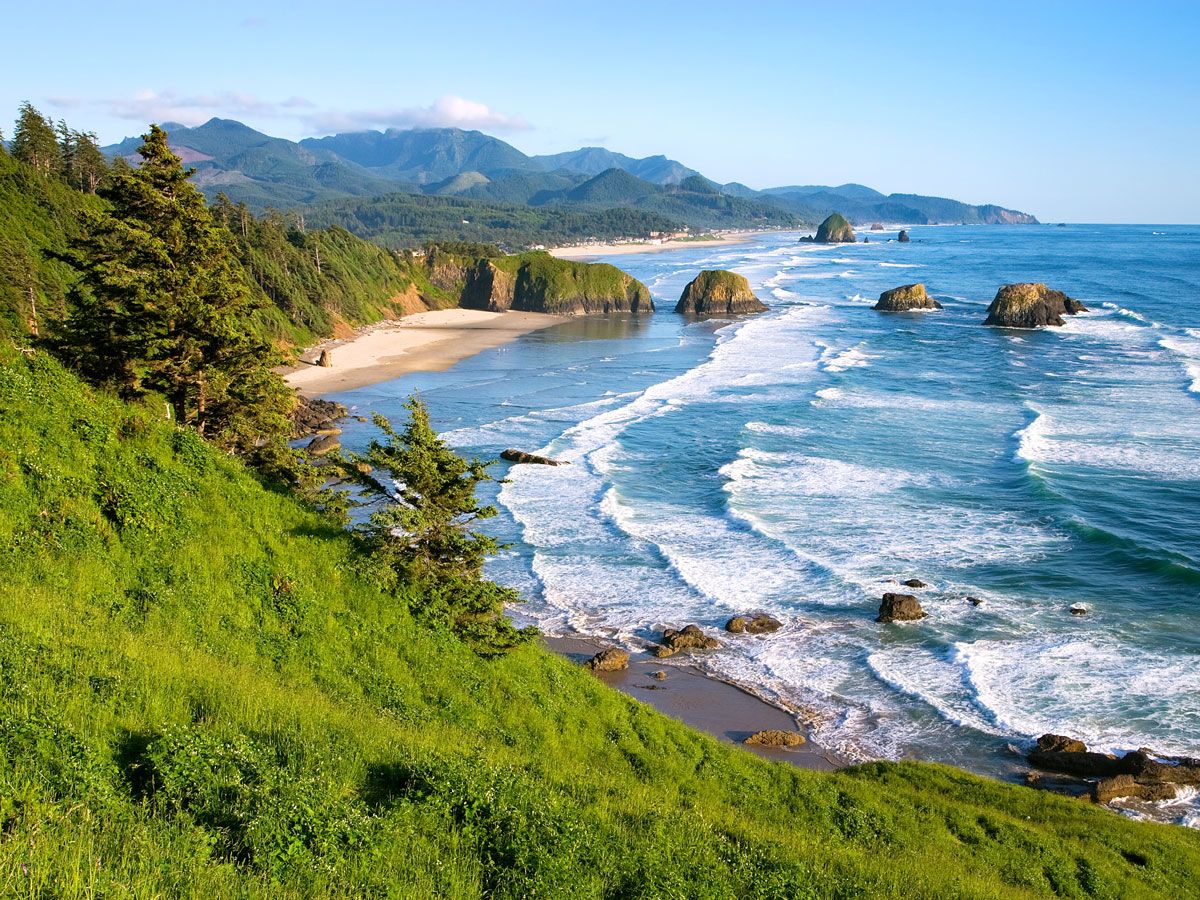
Fans of the 1985 film The Goonies will likely recognize Oregon’s Cannon Beach and its shimmering sand that beckons visitors toward a 235-foot-high sea stack, aptly named Haystack Rock. The towering basalt rock and its three smaller neighbors — nicknamed the Needles — are by-products of lava that settled in the Pacific Ocean approximately 17 million years ago, then surfaced due to plate tectonics and sea level changes.
During low tide, you can approach Haystack Rock’s tidepools on horseback to glimpse marine life such as orange and purple sea stars and furls of green anemone, all while eavesdropping on the coos of puffins, pelagic cormorants, and occasional bald eagles nesting in the sea stack’s crevices. Beyond the stunning scenery, Cannon Beach is a well-known destination for the arts, home to numerous art galleries and abundant live music. All that art culminates each November with the Stormy Weather Arts Festival, when visitors can enjoy live musical performances and wander among several galleries admiring art.
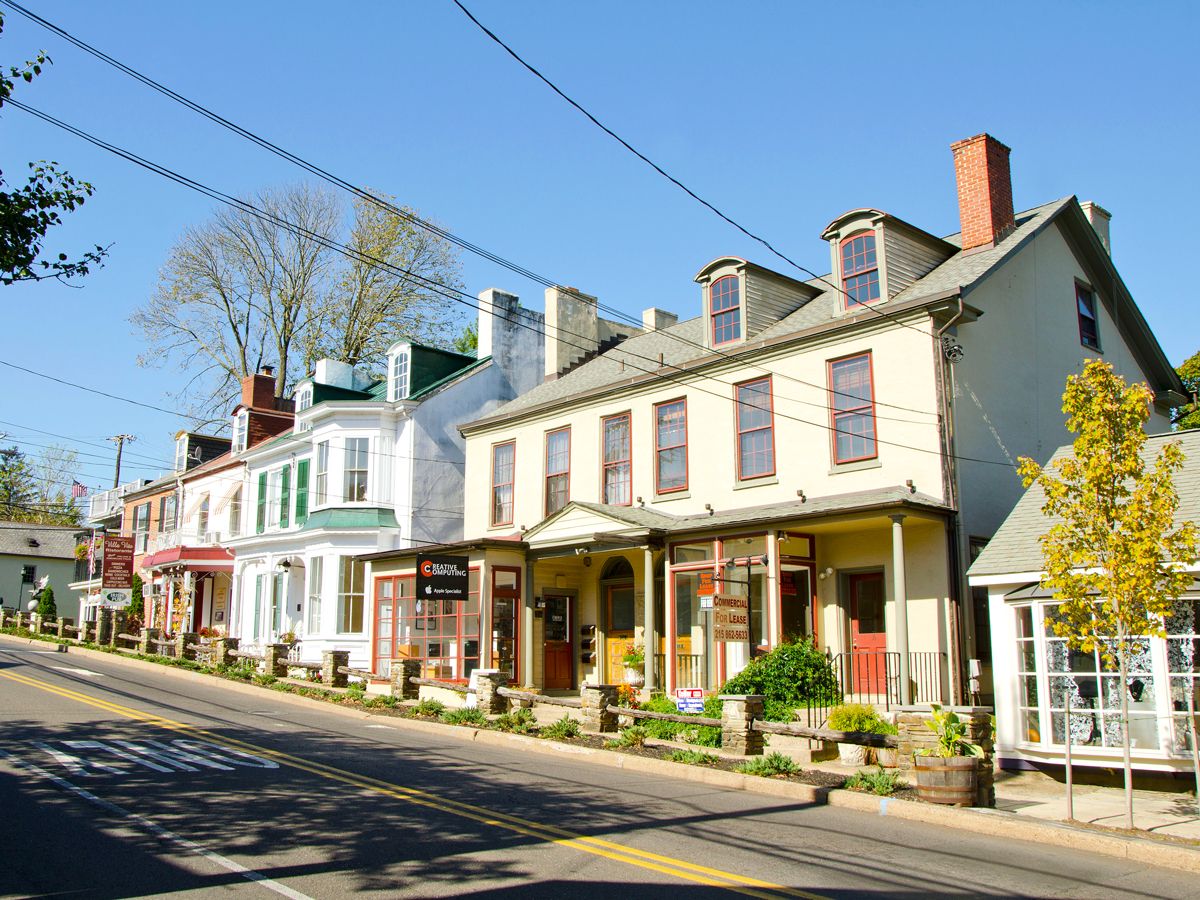
Located on the Delaware River in eastern Pennsylvania, the picturesque town of New Hope has long been a haven for painters, writers, composers, and actors — earning it a reputation for being a vibrant arts and cultural hub.
Start your visit with stunning river views on a stroll or bike ride along the Delaware Canal Towpath, and then head to Main Street, lined with eclectic shops, art galleries, artisan bakeries, and riverside dining. New Hope is filled with historic landmarks, including the Bucks County Playhouse, a beloved theater dating back to 1939 that still hosts acclaimed performances, and the 19th-century New Hope Railroad, which delves into the history of New Hope and the surrounding towns.
Wickford, Rhode Island
Credit: KenWiedemann/ iStock Unreleased via Getty Images
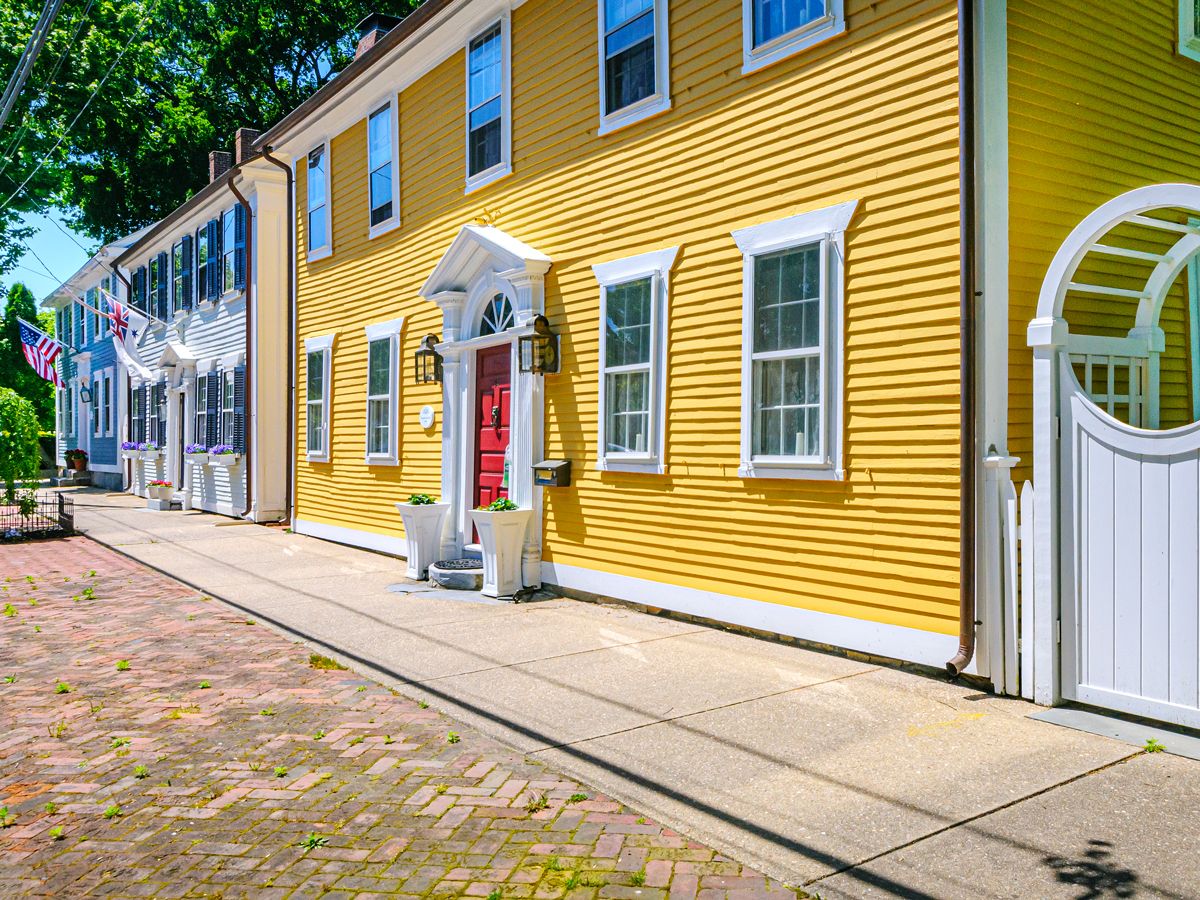
Wickford is a picturesque village that began as a humble fishing settlement in 1709 and still retains much of its historic charm today. Colonial homes and centuries-old churches line the village streets, with most of the activity centered around Brown Street, which wraps around the harbor, and Main Street, stretching out toward Wickford Bay. Shops and eateries now occupy the former 19th- and 20th-century homes, giving the village a quintessential New England charm. Brown Street offers excellent shopping opportunities, with a collection of local art galleries and unique boutiques featuring nautical decor, antiques, and handcrafted gold and silver jewelry — including the region’s signature quahog shell pieces.
About a 20-minute drive north of Greenville — one of our favorite small cities for foodies — you’ll find the 8,000-person community of Travelers Rest. Situated in the foothills of the Blue Ridge Mountains, the town has long served as an aptly named rest stop for travelers passing through the region. The area was also the home of Revolutionary War-era heroine Dicey Langston, who played a pivotal role spying on British loyalists in support of the patriotic cause.
Today, one of the most frequented local sites is the 28-mile Swamp Rabbit Trail greenway, where bikers, joggers, and anyone else looking to enjoy some outdoor recreation regularly congregate. When visiting, consider staying at the European-inspired Hotel Domestique, which offers stunning views of the Blue Ridge Mountains.
Deadwood, South Dakota
Credit: twilightproductions/ iStock Editorial via Getty Images Plus
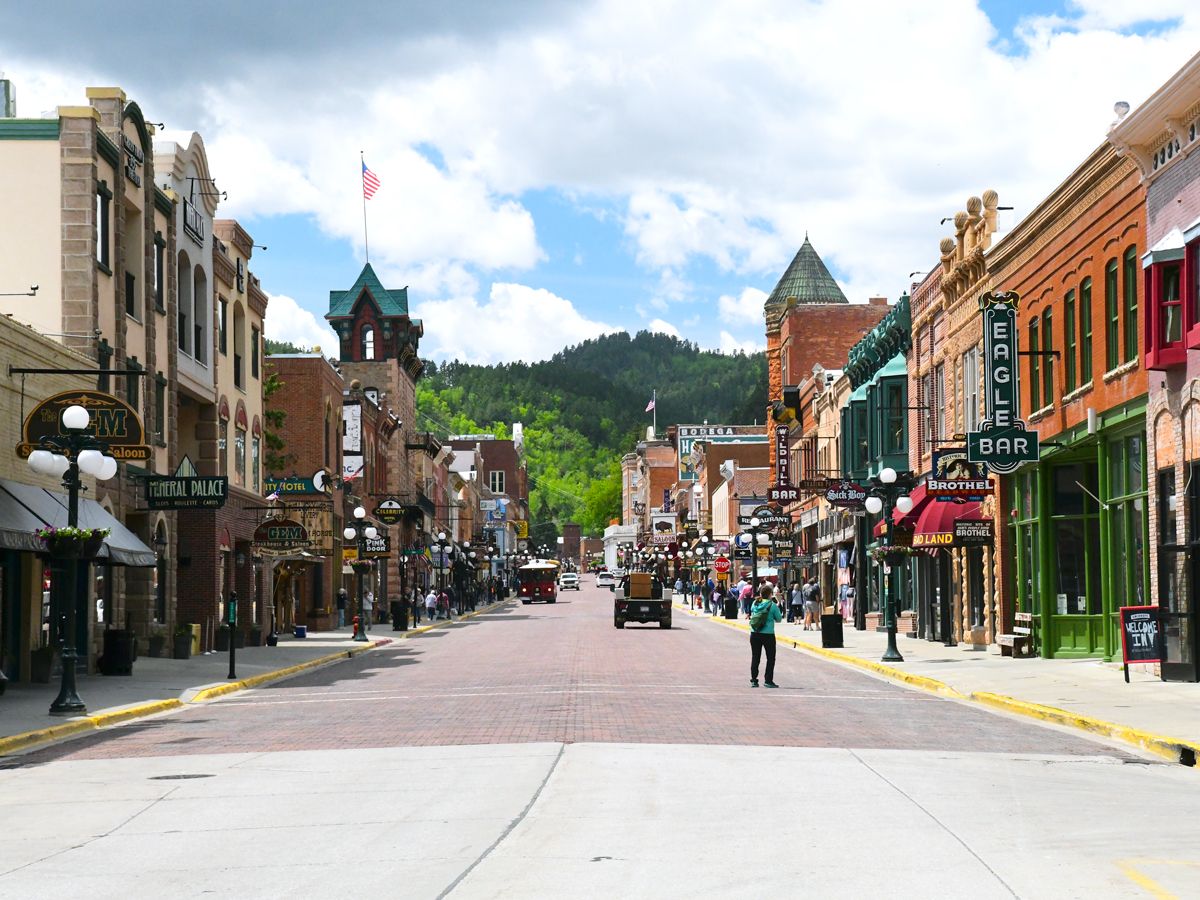
Deadwood, a small Midwest town of about 13,000, is famous for its Wild West history, which inspired the hit HBO show of the same name and earned the town a National Historic Landmark designation. Established in 1876, the town was named after early settlers found dead trees in a nearby ravine — as good a name as any, we suppose! Deadwood boomed during the 1870s Black Hills gold rush, attracting notorious figures like Wild Bill Hickok, Calamity Jane, and Seth Bullock, to name a few.
These days, Main Street showcases the town’s early gold rush-era architecture, which still houses a number of historic saloons. Visitors can also explore the underground gold mines that made the town a frontier legend and learn about the town’s history at museums like the Brothel Deadwood and the Adams Museum.
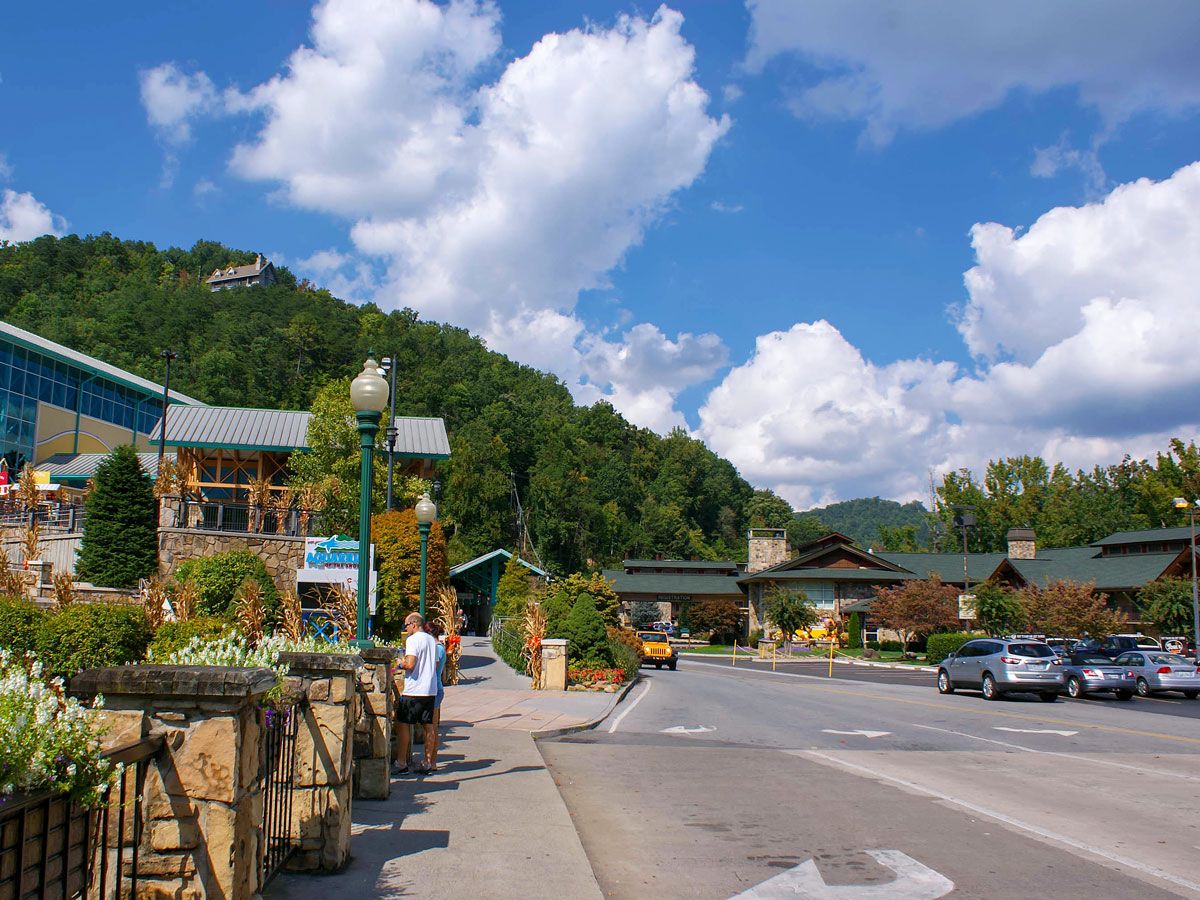
Great Smoky Mountains National Park attracts more visitors than any other national park in the U.S., but the nearby town of Gatlinburg is a delightful destination in its own right. Offering far more than just souvenir shops, Gatlinburg is home to a vibrant folk art scene, including numerous art galleries and creative workshops, a slew of southern barbecue restaurants and pancake houses, and a scenic chairlift that takes riders to a 1,800-foot overlook of the mountains.
Gatlinburg even has its own 400-foot-tall version of Seattle’s Space Needle, where visitors can soak in 360-degree views of the Great Smoky Mountains and the city — no hiking necessary. The area also boasts the only ski resort in the state, as well as countless hikes to the mesmerizing Laurel Falls and Rainbow Falls, Ramsey Cascades, and the historic ghost town of Elkmont.
Fredericksburg, Texas
Credit: dlewis33/ iStock Unreleased via Getty Images
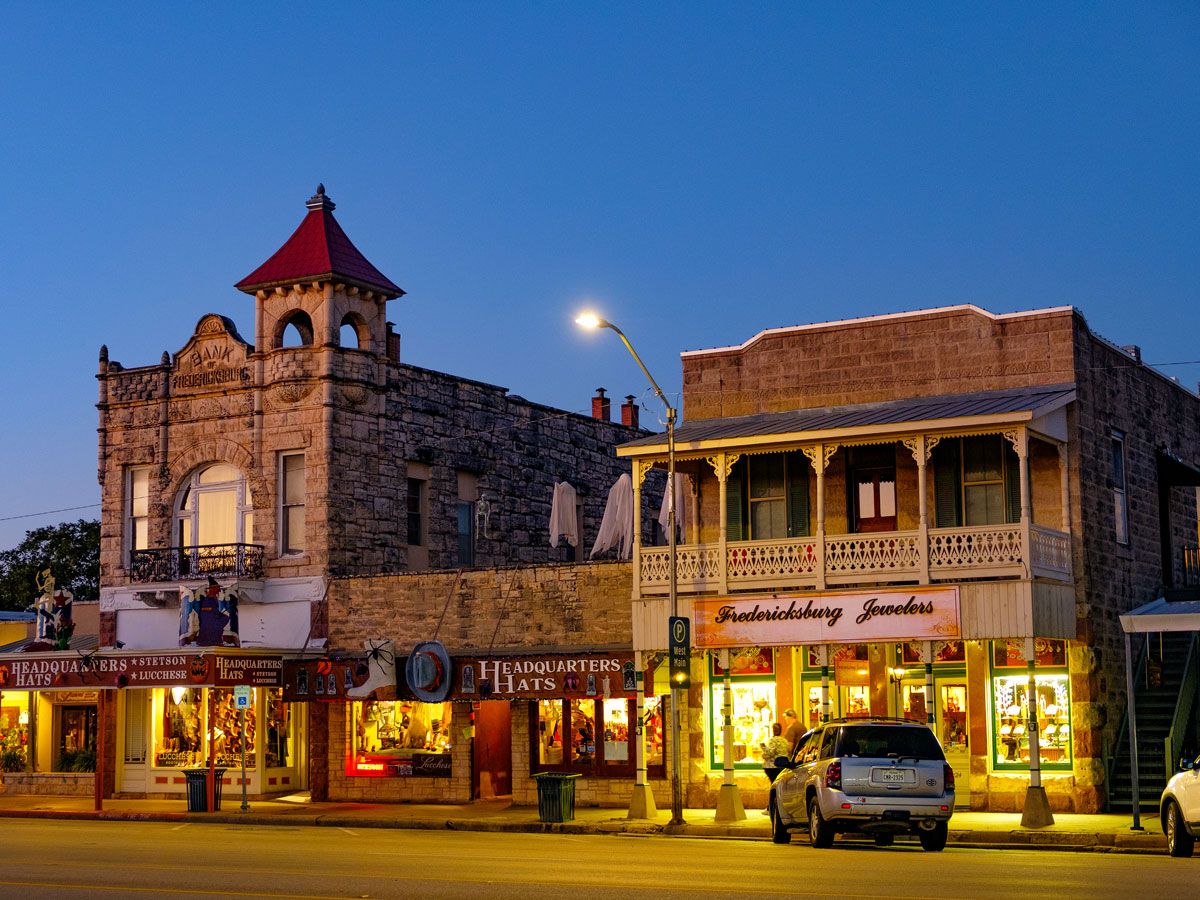
If you’re looking for a piece of Germany in the heart of Texas, look no further than the town of Fredericksburg. Established in 1846 and named for Prince Frederick of Prussia, Fredericksburg’s original founders lured other German immigrants to the town with the promise of farmland and Sunday Houses (second homes located near the church for weekend visits to town). Main Street is the place to see the town’s full-fledged German influence, with historic stone architecture, German shops, and Altstadt Brewery, which serves up lagers, Bavarian-style soft pretzels, and housemade sausages. Plus, many of the town’s original Sunday Houses have been converted to bed-and-breakfasts for a delightful getaway in a historic home.
Ogden, Utah
Credit: HABesen/ iStock Editorial via Getty Images Plus
Although it was first settled in 1845, Ogden, located about 40 miles north of Salt Lake City, wasn’t officially founded until 1889 when construction of the Transcontinental Railroad led to a population boom. Today, the town still buzzes with historic charm and energy.
The former brothels, saloons, and speakeasies of Historic 25th Street now house art galleries, eateries, and shops, their historic facades preserving a piece of the past. Murals and street art add color and creative flair, and local events — like Farmers Market Ogden, the First Friday Art Stroll, and the Harvest Moon Celebration — offer plenty of entertainment along the main drag. There are also a few historic and cultural attractions not to miss on 25th Street, including the century-old Union Station and the Monarch, a collective art space open to the public.
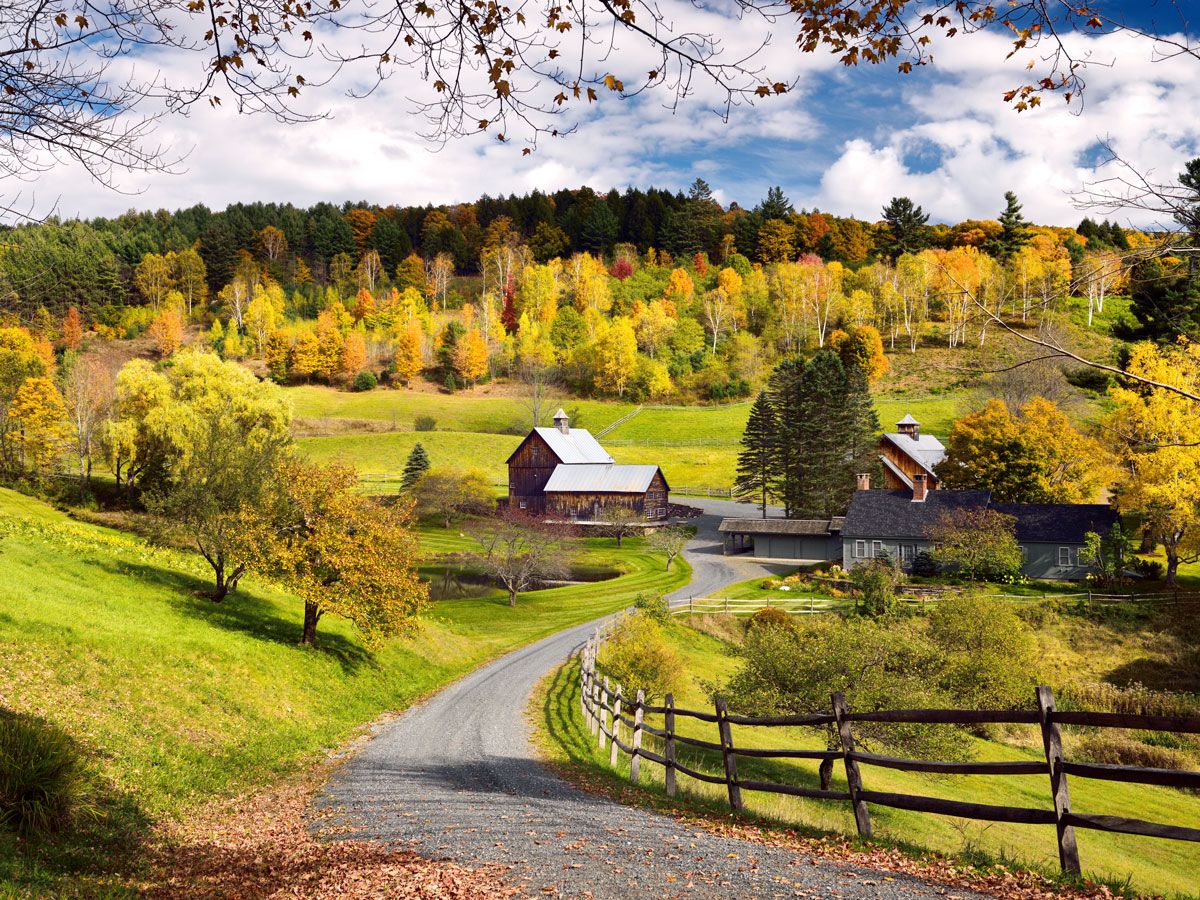
Woodstock’s artsy vibe and buzzing creative atmosphere become apparent as soon as you step foot in the town of roughly 3,000 people in central Vermont. It’s not your imagination: Woodstock was founded by artisans, entrepreneurs, and craftsmen who settled here in 1786 and made it one of the largest towns in Vermont at the time.
The town’s artistic roots and entrepreneurial spirit can be found in the quirky boutiques, farm-to-table restaurants, and unique creations and handicrafts sold by local makers. A number of attractions are clustered near the town center, known as the Green. From here, you can easily walk between the iconic Middle Covered Bridge, the historic Town Hall Theater (be sure to catch a show if you have time), the 19th-century Norman Williams Public Library, and a host of charming cafes and shops.
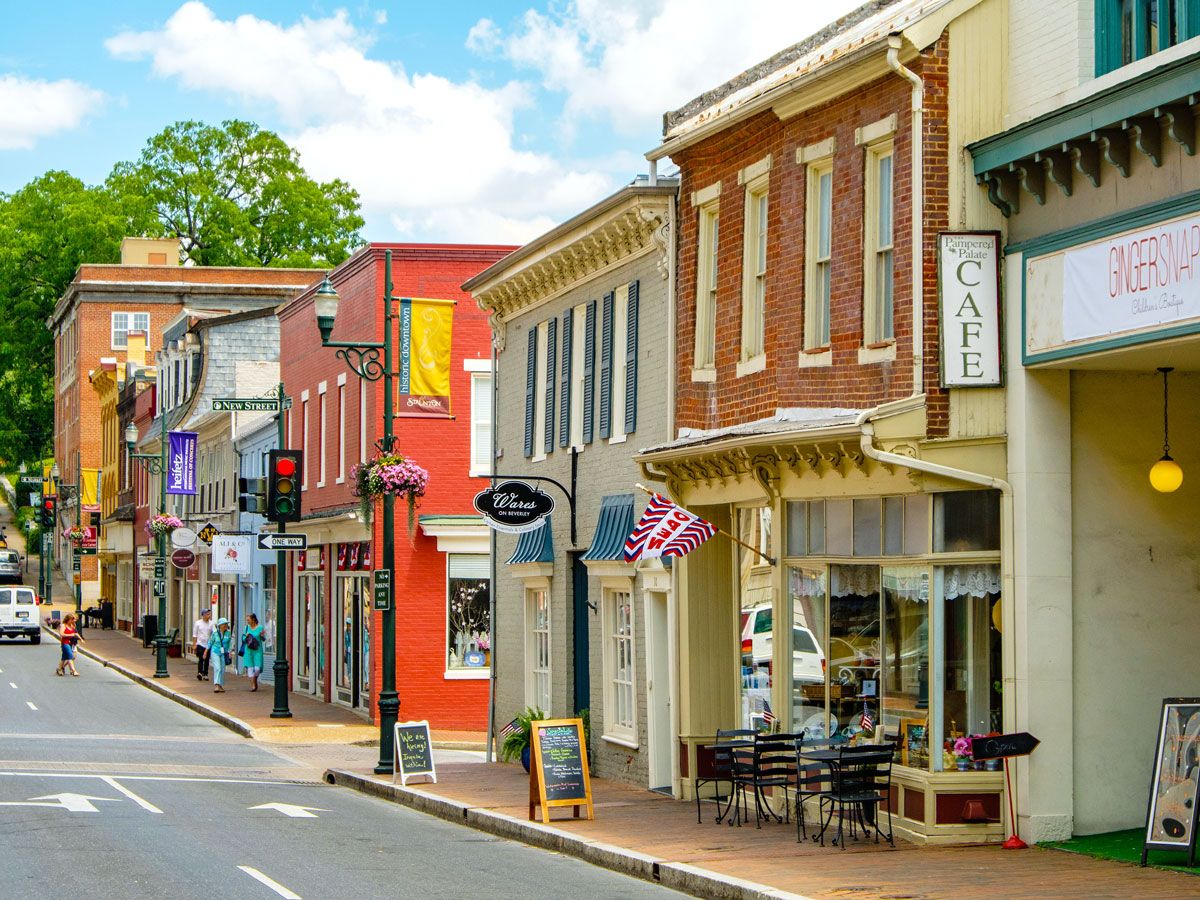
Staunton is best known for being the birthplace of president Woodrow Wilson, but its history dates back long before his 1856 birth. The town was established in 1761 and later served as a supply base during the Civil War. In 1908, Staunton was also the first incorporated community to use a city manager form of government, which has since influenced thousands of town governments around the country.
Today, popular local attractions include Wilson’s presidential library, the Jumbo Antique Fire Engine Museum, and the Frontier Culture Museum — an open-air museum with working farms that tells the story of the people who inhabited the Shenandoah Valley region. Staunton is just a 20-minute drive from the southern entrance to Shenandoah National Park, where visitors can also enjoy stunning views of the valley while motoring along the 105-mile scenic Skyline Drive byway.
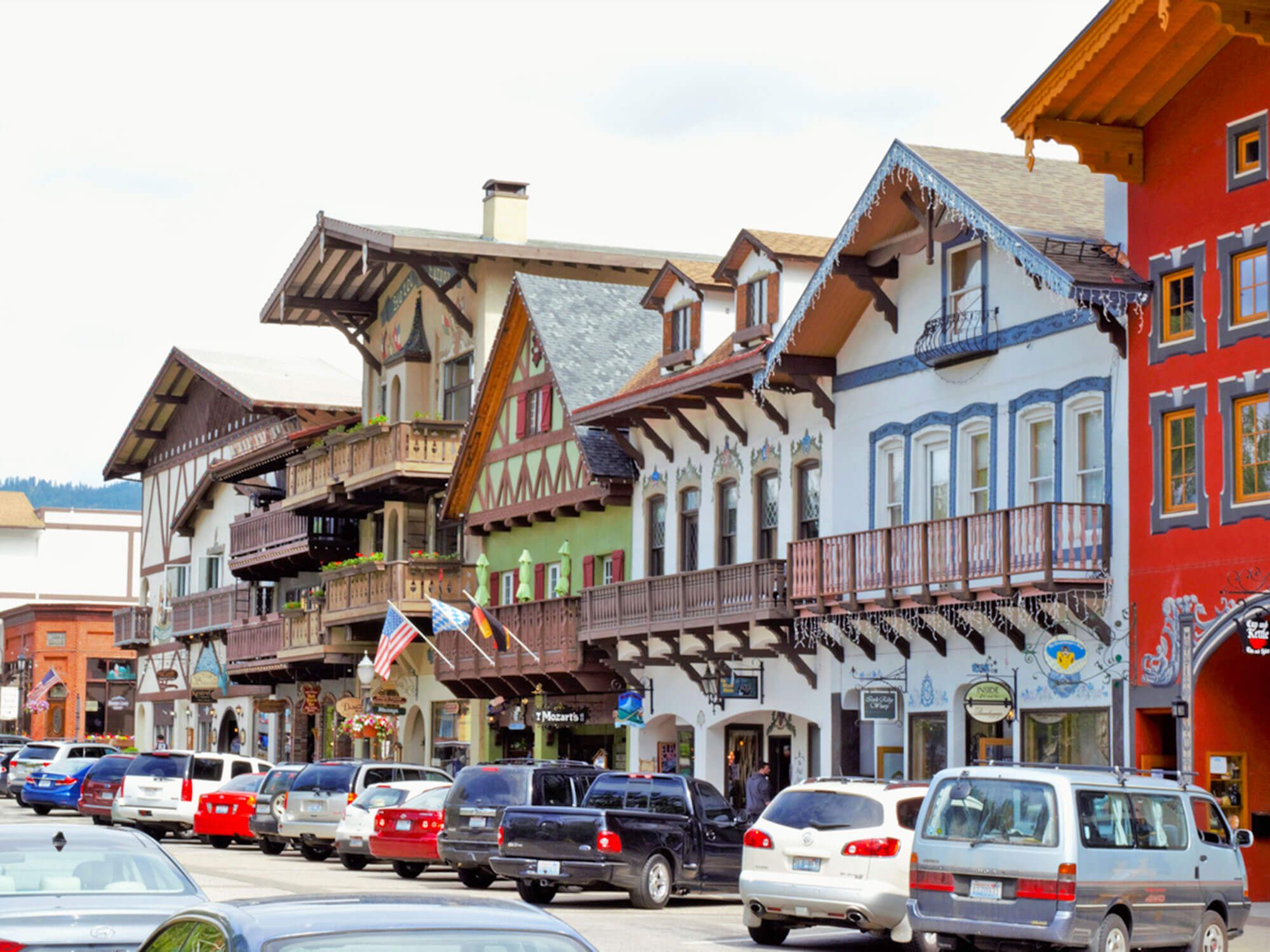
One could easily mistake Leavenworth, Washington, for a charming Bavarian village — and that’s by design. Founded in 1890, Leavenworth was a typical Old West town until the 1960s, when local leaders decided to revamp the town’s appearance to make it more enticing to tourists. Surrounded by the Cascade Mountains (reminiscent of the German Alps), Leavenworth was remodeled after the three German towns of Bemalte Fassaden, Leipzig, and Munich.
Several unmistakable features make this town feel distinctly German, including the Bavarian-style architecture, the Nutcracker Museum (home to 7,000 nutcracker dolls) and an authentic German beer hall, Stein Leavenworth. In addition to these German staples, Leavenworth also enjoys year-round German festivals, including Oktoberfest, Winter Karneval, and Maifest.
Harpers Ferry, West Virginia
Credit: traveler1116/ iStock via Getty Images Plus
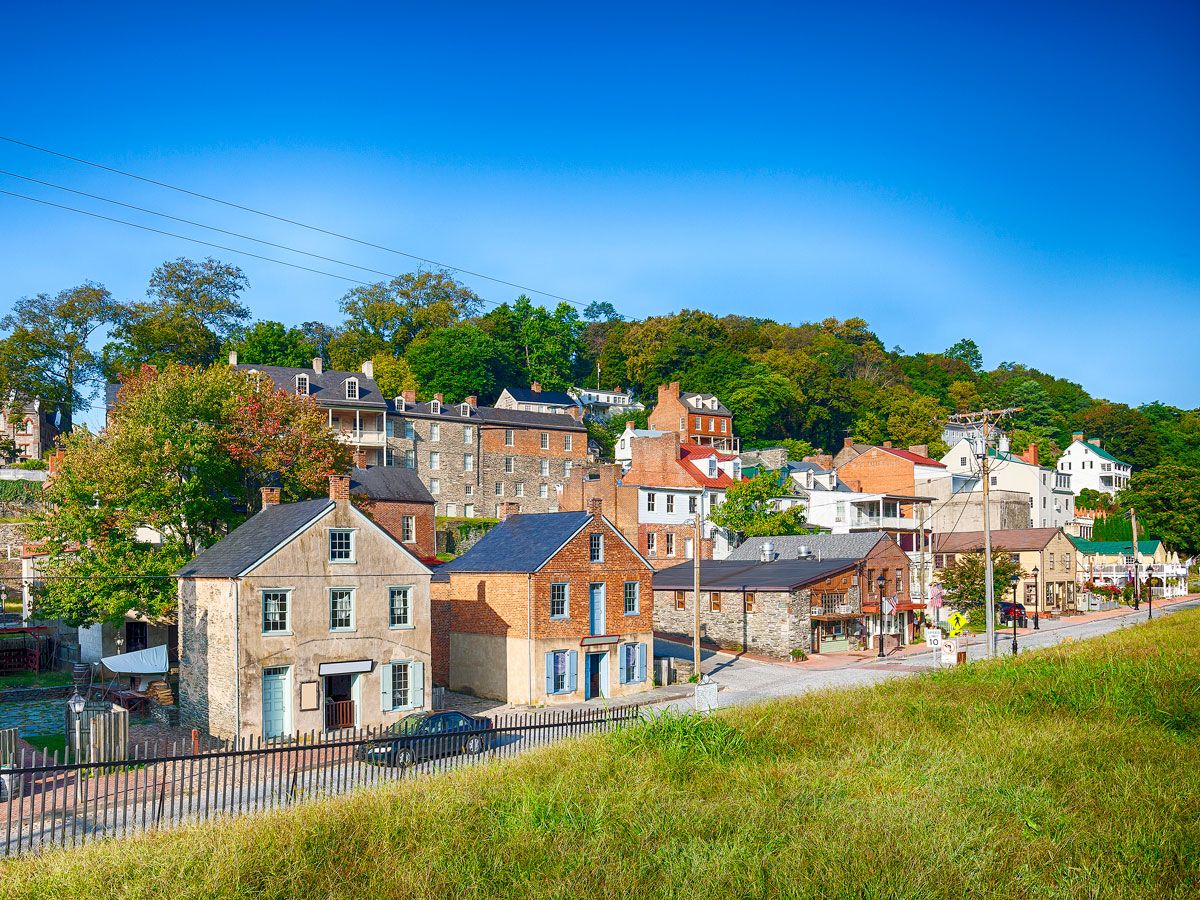
Harpers Ferry may have a population of only about 300 people, but this small town is packed with history. Perched where the Potomac and Shenandoah rivers meet, Harpers Ferry was once a bustling transportation hub and home to a federal armory. In 1859, abolitionist John Brown led a raid on the Harpers Ferry Armory in an attempt to arm the enslaved peoples in the area and spark an uprising. Brown’s bold move shocked the nation and pushed a country rife with conflict even closer to the brink of the impending Civil War.
Today, Harpers Ferry is known for its preserved streets and historic buildings, where visitors can take a deep dive into its fascinating past, while also enjoying the beautiful natural environment and scenery of the two rivers.
New Glarus, Wisconsin
Credit: GummyBone/ iStock Editorial via Getty Images Plus
If you’ve ever traveled to Wisconsin, you may have come across a Spotted Cow farmhouse ale or a Moon Man pale ale from the New Glarus Brewing Company. True to the brewery’s name, these beers are produced in the town of New Glarus and sold exclusively within the borders of Wisconsin, and they have become a point of regional pride among locals.
The town of New Glarus has plenty to offer, too — even for those who don’t drink beer. It’s considered “America’s Little Switzerland,” a nickname dating to 1845 when immigrants from Canton Glarus, Switzerland, founded the town. Learn more about the town’s history at the Swiss Historical Village Museum and the Chalet of the Golden Fleece.
Jackson, Wyoming
Credit: Jef Wodniack/ iStock Editorial via Getty Images Plus
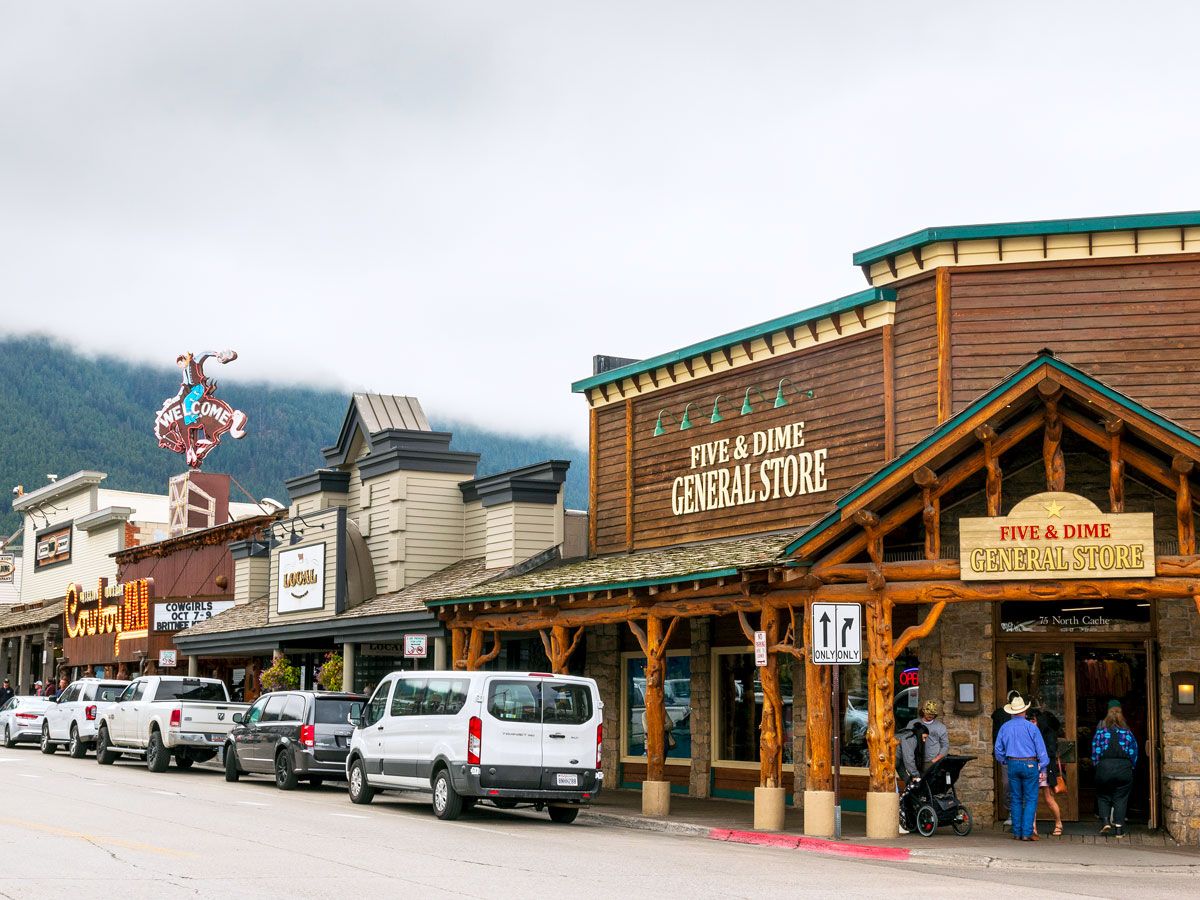
At the rim of Grand Teton National Park (and not far from Yellowstone), the small town of Jackson has long been known for its historic hotels, classic steakhouses, cowboys bars, and independent boutiques. Hand-constructed log cabins nestled between aspens and evergreens and elk-antler arches greet visitors at each corner of the old Town Square.
After you’re done exploring the national park, Jackson offers several opportunities for soaking in local culture — including the nearby National Museum of Wildlife Art, the Historical Society and Museum, and the Jackson Center for the Arts. Beyond world-class skiing available in the Tetons, Jackson abounds with hiking paths that meander up the wooded slopes around Ski Lake and over rushing streams. Rafting on Snake River is also a treat for thrill-seekers visiting in warmer months.
What Is a Go-Around? What Happens When Your Plane Can’t Land
By
Julia Hammond
Read time: 4 minutes
September 15, 2025
Updated: September 15, 2025
What Is a Go-Around? What Happens When Your Plane Can’t Land
Tips •September 15, 2025•Updated: September 15, 2025
By Julia Hammond
Author
Julia Hammond
Julia is a U.K.-based travel writer whose work has been featured in The Independent, The Telegraph, The New Zealand Herald, and Culture Trip, among others. She’s an enthusiastic advocate for independent travel and a passionate geographer who has had the privilege of traveling to more than 130 countries in search of a story.
When flying, just as you’re on the final approach, you might hear a roar from the engines as the plane suddenly climbs rapidly instead of landing. This is called a go-around, and although it’s a rare occurrence, it’s actually a routine maneuver. Aviation enthusiasts might get a kick out of go-arounds, but if it’s the first time you’ve experienced one, you might feel anxious. In this article, we’ll take a deep dive into what necessitates a go-around, how often they happen and, most importantly, why you shouldn’t be alarmed if one does.
In the world of aviation, the term “go-around” refers to a missed approach. The plane doesn’t land on the runway as initially intended but instead climbs steeply and remains in the air until it’s safe to attempt another landing.
Depending on the circumstances, sometimes this occurs well ahead of the airport, early in a plane’s approach. However, it can also happen much later, even right after the landing gear has touched the runway, which is known as a balked or rejected landing. Since it results from a last-minute decision, a rejected landing is considered a higher risk maneuver than other forms of go-arounds.
Still, according to the FAA, go-arounds are a “safe, routine maneuver,” and can be requested by an air traffic controller if they believe it is not safe to allow a plane to touch down. A pilot can also elect to abort landing if they decide conditions aren’t right on approach. To do so, the pilot increases power to gain altitude, retracts the landing gear, and begins to retract the flaps.
The plane then takes a clearly defined route to avoid coming into conflict with the flight paths of other aircraft in the vicinity. This varies from airport to airport; however, regardless of who has initiated the go-around or the route the aircraft takes, “the pilot and the air traffic controller are in full command of the situation,” according to the FAA.
A 2024 NASA analysis of U.S. airlines found that a “third of the landings are aborted below 400 feet, but the majority of the go-arounds occur at significantly higher altitudes.” Aborting a landing happens relatively infrequently — the same report suggested the rate was around “one to three per 1,000 approaches.”
Go-arounds may be necessary for a variety of reasons to ensure the safety of the aircraft and those on board. For instance, if a plane that has just landed hasn’t had sufficient time to taxi off the runway on its way to the gate, or if a departing aircraft needs more time before taking off, air traffic control cannot permit the incoming aircraft to complete its landing.
Similarly, if debris is spotted on a runway, this could also require a go-around until the potential hazard is cleared. Sometimes, the reason is more unexpected, such as wildlife on the runway. From bears on the runway in Japan and Russia to diamondback terrapins crossing at New York’s JFK Airport, go-arounds and delayed take-offs have been known to occur to prevent collisions. On other rare occasions, a go-around might take place for technical reasons, such as if the landing gear hasn’t deployed correctly.
A more common reason for a missed approach is weather, such as low cloud or fog creating poor visibility, or crosswinds which can make it tricky for aircraft to land. During Storm Eunice, which affected the U.K. in February 2022, NATS (the U.K.’s main air traffic control service) reported nine missed approaches in a row and 40 within a seven-hour period; the norm is approximately one go-around a day.
Are Some Airports More Prone to Go-Arounds Than Others?
In short, yes. For instance, busier airports are more prone to go-arounds since the gap between planes landing on the same runway is shorter. According to FAA data for the 2023 fiscal year, Washington, D.C.’s Ronald Reagan Washington National Airport had the highest rate of go-arounds as a percentage of arrivals, followed by Denver, San Diego, LaGuardia in New York City, and Philadelphia.
Another study focused on European airports calculated the rate of go-arounds using data collected between 2019 and 2023. According to the report’s findings, Istanbul’s Sabiha Gökçen International Airport recorded a relatively high 1,673 go-arounds in 272,956 landings (0.61%), while Rome’s Fiumicino Airport experienced 488 missed approaches in 325,878 (0.15%) and busy Charles de Gaulle in Paris had a rate of 0.39%.
Geography •September 15, 2025•Updated: September 15, 2025
By Bennett Kleinman
Author
Bennett Kleinman
Bennett is a New York City-based staff writer for Daily Passport. He previously contributed to television programs such as the Late Show With David Letterman, as well as digital publications like the Onion. Bennett has traveled to 48 U.S. states and all 30 Major League Baseball stadiums.
When looking at a map of the globe, it’s difficult to appreciate just how many islands exist around the world. Beyond the more obvious ones, such as Greenland (the world’s largest island), countless smaller islands are scattered across the planet. Even geographers have struggled to come to a consensus on the exact number of islands on Earth, though we do have relatively accurate surveys for certain nations. Below, discover the 10 countries with the most islands, some of which are home to hundreds of thousands within their borders.
The archipelagic nation of the Philippines comprises 7,641 islands, roughly 2,000 of which are inhabited. Luzon — the largest island in the country with an area of 42,458 square miles — is home to Manila, the capital and most populous city in the Philippines, along with many stunning UNESCO World Heritage Sites, including the Mayon Volcano and the rice terraces of the Cordillera mountain range. The second-largest Philippine island is Mindanao, which contains the tallest mountain in the Philippines, 9,692-foot Mount Apo. The Visayan Islands also contain Cebu, Panay, and several more well-known tourist spots.
According to statistics provided by the Australian government, the Land Down Under is home to 8,222 islands. Western Australia has the most islands of any Australian state, with 3,747, but the biggest island in Oz is the state of Tasmania, which measures 26,410 square miles and sits off the country’s southeastern coast, some 155 miles from the mainland. Australia’s second-biggest island is Melville Island in the Northern Territory, which is part of the Tiwi Islands. As with many of the other Tiwi Islands, the majority of permanent residents on Melville Island are of Aboriginal descent.
An updated 2023 survey reported over 14,000 islands in Japan, more than double the previous estimate. Of those islands, 1,479 are located in the Nagasaki Prefecture, followed closely by Hokkaido with 1,473.
Japan is composed of four main islands: Hokkaido, Kyushu, Shikoku, and Honshu, the latter of which is the largest island in the country, with an area of 87,992 square miles. Honshu is also home to many of Japan’s major cities, including Tokyo and Osaka. Elsewhere, the Ogasawara Islands — located more than 620 miles south of Tokyo in the middle of the Pacific Ocean — are home to pristine beaches and some of the most sought-after snorkeling spots in Japan.
Though the official figure currently lists 17,508 Indonesian islands, a 2021 census conducted from space suggests the true number may be closer to 13,558 islands. In either case, there’s no doubt that Indonesia has a lot of islands, not to mention some of the biggest ones in the world.
For example, Indonesia controls the western part of New Guinea — the world’s second-largest island — which has a total area of 317,150 square miles. Then, there’s the island of Borneo, which Indonesia co-adminsters alongside Malaysia and Brunei. At 288,869 square miles, Borneo ranks as the world’s third-largest island. Indonesia also controls Sumatra, which is the world’s sixth-largest island (171,069 square miles) and home to three UNESCO World Heritage Sites — Bukit Barisan Selatan, Kerinci Seblat, and Gunung Leuser.
Between its states and territories, the United States contains 18,617 islands. Some states are home to many more than others — for example, Maine has more than 4,600 islands along its coast, while Alaska is home to 2,670 islands. Appropriately, Hawaii’s Big Island is the largest island in the U.S., measuring 4,028 square miles. It’s closely followed by Alaska’s Kodiak Island (3,588 square miles) and the territory of Puerto Rico (3,513 square miles). The rest of the top 10 largest U.S. islands are all located in Alaska.
In 2019, the Chilean government estimated there were 43,471 islands in the country, including 19,571 public islands and 11,078 unnamed islands at the time. The largest Chilean island is the 11,384-square-mile Isla Grande de Tierra del Fuego, which sits at the southern tip of South America and is shared with neighboring Argentina. The largest island solely controlled by Chile is Chiloé (3,241 square miles). This pristine expanse is home to a namesake national park and majestic marine life such as blue whales, Chilean dolphins, and Humboldt penguins.
4. Canada
Credit: Petr Kahanek/ iStock via Getty Images Plus
Number of islands: 52,455
Canada has the longest coastline of any country, in part thanks to the 52,455 islands located within Canadian territory. The country is also home to three of the 10 largest islands on the planet. The biggest is Baffin Island, which measures 195,928 square miles (ranking fifth globally) and is located in the far north Nunavut territory. Baffin is home to Auyuittuq National Park, which became Canada’s first national park located above the Arctic Circle in 1972. Canada’s second-largest island is Victoria Island (83,896 square miles), which is split between the Northwest Territories and Nunavut. Last but not least is Ellesmere Island, encompassing 75,767 square miles within the Arctic Archipelago.
According to statistics provided by Finland’s Ministry of Employment and the Economy, this Nordic nation contains 178,947 islands. However, due to frigid weather and isolated geography, a mere 549 of these islands are inhabited year-round. The Åland Islands, located in southwest Finland about 25 miles away from Sweden, are popular with tourists. With around 6,500 uninhabited islands and 35 inhabited ones, they offer some of the sunniest climates in northern Europe.
While there are nearly 240,000 islands in Norway, there are an additional 81,192 skerries, which are small rocky isles that are considered too tiny for habitation. The largest Norwegian island is Spitsbergen, with an area of 14,545 square miles. Spitsbergen is part of the Svalbard archipelago, which is made up of nine main islands plus many smaller ones. During winter in Svalbard, you’ll experience “Polar Night,” a period of continuous darkness that produces ideal conditions to gaze upon the northern lights.
The country with the most islands is Sweden, though only 984 of its 260,000-plus islands are inhabited. The islands also make up less than 3% of the country’s overall landmass. Gotland — a 1,156-square-mile island located in the Baltic Sea off Sweden’s southeast coast — is the country’s largest island. Closer to the coast is Öland, Sweden’s second-largest island (520 square miles). It’s also worth venturing up to northern Sweden to the Bothnian Bay archipelago, where you’ll find over 4,000 pristine islands with dense forests, sandy beaches, and clear skies to view the northern lights.
Advertisement
More from our network
Daily Passport is part of Inbox Studio, an email-first media company. *Indicates a third-party property.
6 Countries or Islands You Can Walk Across in Under an Hour
By
Julia Hammond
Read time: 5 minutes
September 15, 2025
Updated: September 15, 2025
6 Countries or Islands You Can Walk Across in Under an Hour
Geography •September 15, 2025•Updated: September 15, 2025
By Julia Hammond
Author
Julia Hammond
Julia is a U.K.-based travel writer whose work has been featured in The Independent, The Telegraph, The New Zealand Herald, and Culture Trip, among others. She’s an enthusiastic advocate for independent travel and a passionate geographer who has had the privilege of traveling to more than 130 countries in search of a story.
Some advantageously shaped countries and islands are so small that you can explore them by foot in almost no time at all. So, while you’ll need a little longer to traverse the likes of Liechtenstein, Malta, and Nauru, let’s take a look at six countries or islands you can walk across in under an hour.
With an area of just 0.17 square miles, Vatican City, the headquarters of the Roman Catholic Church, is the world’s smallest country. If you have an hour at your disposal, you could both walk across the Vatican and make a loop around its perimeter, though that’s missing the point. This is a place to linger, drinking in the detail of the impressive architecture of St. Peter’s Basilica and climbing its roof to appreciate the expansive view of St. Peter’s Square. Give yourself time to absorb the colors of the sumptuous frescoed ceiling of the Sistine Chapel and admire the quirky outfits worn by the Swiss Guard, too, before you exit this tiny city-state entirely surrounded by Rome.
Credit: Maremagnum/ Corbis Historical via Getty Images
Monaco, a 0.8-square-mile microstate that neighbors the French Riviera, is also one of the world’s smallest independent countries. The wealthy principality attracts the rich and famous, both as a playground and because of its status as a tax-free haven. Tourists come to chance their luck in its iconic casino, the Monte Carlo, or to admire the super yachts that moor in its prestigious marina.
Given Monaco’s diminutive size, it takes only an hour to walk roughly northeast to southwest across its length. However, you’ll want to follow the advice of Visit Monaco and follow themed routes such as the Chemin des Sculptures Rainier III, which meanders past 200 works of art, or the Heritage Tree Trail, which showcases Monaco’s many beautiful gardens.
This South Pacific archipelago consists of nine main islands, along with several reefs and atolls, and sits about halfway between Hawaii and Australia. Tuvalu gained independence from the U.K. in 1978 and was admitted into the United Nations in 2000. To walk the north-south length of its largest island, Fongafale, you’ll need a few hours, but to cross its width takes just 10 minutes or so. However, this might not be possible for much longer — this low-lying strip of land, like everywhere else in Tuvalu, is exceptionally vulnerable to climate change. Even a relatively small rise in sea level is expected to have a devastating effect, and the rate of coastal erosion is already increasing.
Also in the South Pacific, the Kingdom of Tonga extends across more than 170 islands, the largest of which is Tongatapu. Here, you’ll find the sleepy capital Nuku’alofa, home to about a quarter of the country’s 104,000-strong population. You don’t have to travel far beyond the city limits to immerse yourself in rural Tongan life.
If you’re keen to walk from one coast of the island over to the other coast, begin at Paepae ‘o Tele’a, a low-slung pyramid most likely built in the 16th century from huge slabs of coral limestone. It was intended as a royal tomb for the monarch Tele’a, also known as ʻUluaki-mata, though he was buried beside his wife in her homeland of Samoa. From there, it’s a 3-mile, roughly hour-long walk to ‘Ana Hulu, where a cool underground lake is ideal for an invigorating swim.
If you’re determined to walk across the island of St. Kitts, set your sights on Frigate Bay. At its narrowest point, the isthmus that separates the island’s Atlantic and Caribbean coasts is less than half a mile across, and in barely a quarter of an hour you can walk from one sandy beach to another.
But it would be a waste not to lace up your hiking boots and explore more of this country’s breathtaking landscapes. Allow at least six hours to follow the trail that hugs the crater rim of Mount Liamuiga, a forested stratovolcano that marks this tiny country’s highest peak. Climbing up through lush vegetation to reach Dos d’Anse Pond is equally challenging, as is the hike from the base of Olivees Mountain to Lawyer Stephen’s Cave and the waterfalls that lie beyond it.
Another Caribbean nation that lends itself to short country-spanning walks is St. Vincent and the Grenadines. While the oval shape and hilly terrain on St. Vincent demands a full day for any cross-island walk, that’s not the case on Bequia (pronounced “beck-way”), the northernmost of the Grenadines, where it’s easily possible to stroll from Port Elizabeth to Friendship Bay in under an hour. However, you’d be remiss not to spend time in the water, which offers some of the most remarkable diving in the region. The Devil’s Table, Stratmann Wreck, Boulders, and Moonhole area variously attract beginner and intermediate divers for their abundant marine life and colorful corals.