Post Banner Image
Architecture

20 of the World’s Largest Religious Structures

By Daily Passport Team
Read time: 11 minutes
July 20, 2023
Updated: December 18, 2024

20 of the World’s Largest Religious Structures

By Daily Passport Team
Author
Daily Passport Team
Daily Passport writers have been seen in publications such as National Geographic, Food & Wine, CBC, Condé Nast Traveler, and Business Insider. They're passionate about uncovering unique destinations and sharing expert tips with curious travelers.

Many religious monuments and places of worship around the world have one thing in common — bigger is better. From opulent European cathedrals to sprawling mosques in the Middle East and colossal gilded Buddha statues in Asia, these are 20 of the largest religious buildings in the world and the fascinating histories behind them.

Hagia Sophia – Istanbul, Turkey

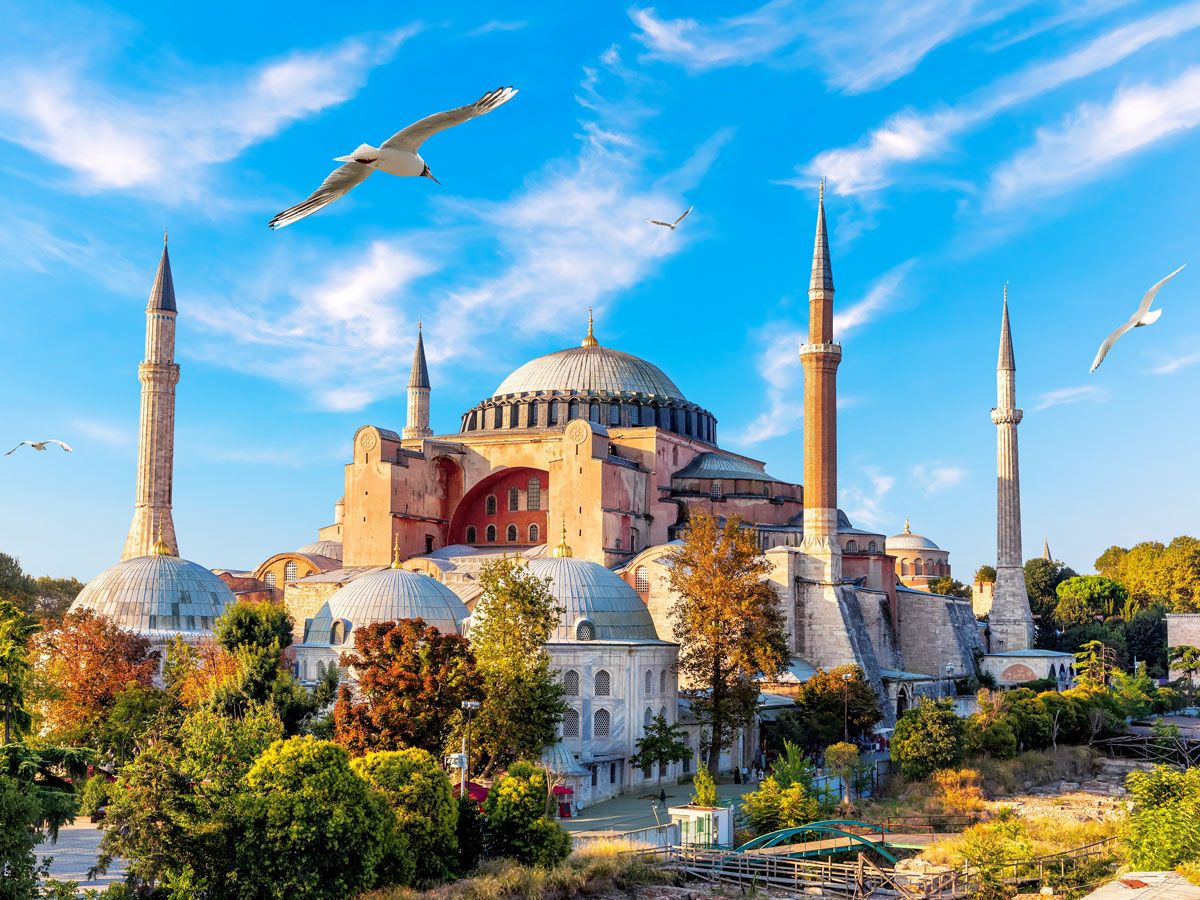
Image of Hagia Sophia in Istanbul, Turkey
Photo credit: Anna Jedynak/ Shutterstock

Few religious buildings have lived such a fascinating history as Istanbul’s Hagia Sophia. This architectural wonder was first constructed by the Byzantines in the sixth century as a Christian church. When the Ottomans conquered Constantinople in 1453, they converted it into a mosque. In 1934 it was turned into a museum, and again a mosque in 2020.

The enormous building is arguably the finest known example of Byzantine architecture — inside are 104 columns brought from the Temple of Artemis in Greece, while outside, four minarets and a 108-foot-wide dome dominate the skyline of Istanbul’s Old City.

Dohány Street Synagogue – Budapest, Hungary

View upwards of Dohány Street Synagogue in Budapest, Hungary
Photo credit: A great shot of/ Shutterstock

Tucked into the inner city district of the Pest side of Budapest is Europe’s largest synagogue. The Dohány Street Synagogue has a capacity of almost 3,000 worshipers and was designed by Austrian architect Ludwig Forster. The ornate building blends elements of the Moorish, Byzantine, Romantic, and Gothic styles — bright red and gold leaf geometric patterns beautify the lavish interior, as do a 5,000-pipe organ and a large rose window emblazoned with a Star of David.

Outside, twin 143-foot-tall polygonal towers topped with onion domes flank the entrance. The larger synagogue complex includes the fascinating Hungarian Jewish Museum and Archives, a Jewish cemetery, and the Raoul Wallenberg Holocaust Memorial Park.

St. Peter’s Basilica – Vatican City

St. Peter's Basilica in Vatican City seen at sunset
Photo credit: Mistervlad/ Shutterstock

The centerpiece of Vatican City, St. Peter’s Basilica is the world’s largest church building, after Basilica of Our Lady of Peace in Yamoussoukro, Côte d’Ivoire. Regarded as the holiest of all Roman Catholic shrines, said to be where St. Peter is buried, it can accommodate up to 20,000 worshippers at one time.

Construction of the cathedral began in 1506 and continued for 120 years. It features the work of esteemed artists and architects of the Renaissance, such as Bernini, Maderno, and Michelangelo. St. Peter’s Basilica stores several extraordinary art pieces, including Michelangelo’s Pietá, which portrays Mary holding Jesus after the Crucifixion. The basilica’s 138-foot-wide dome was a model for the domes at St. Paul’s Cathedral in London, and the United States Capitol in Washington, D.C.

Ulm Minster – Ulm, Germany

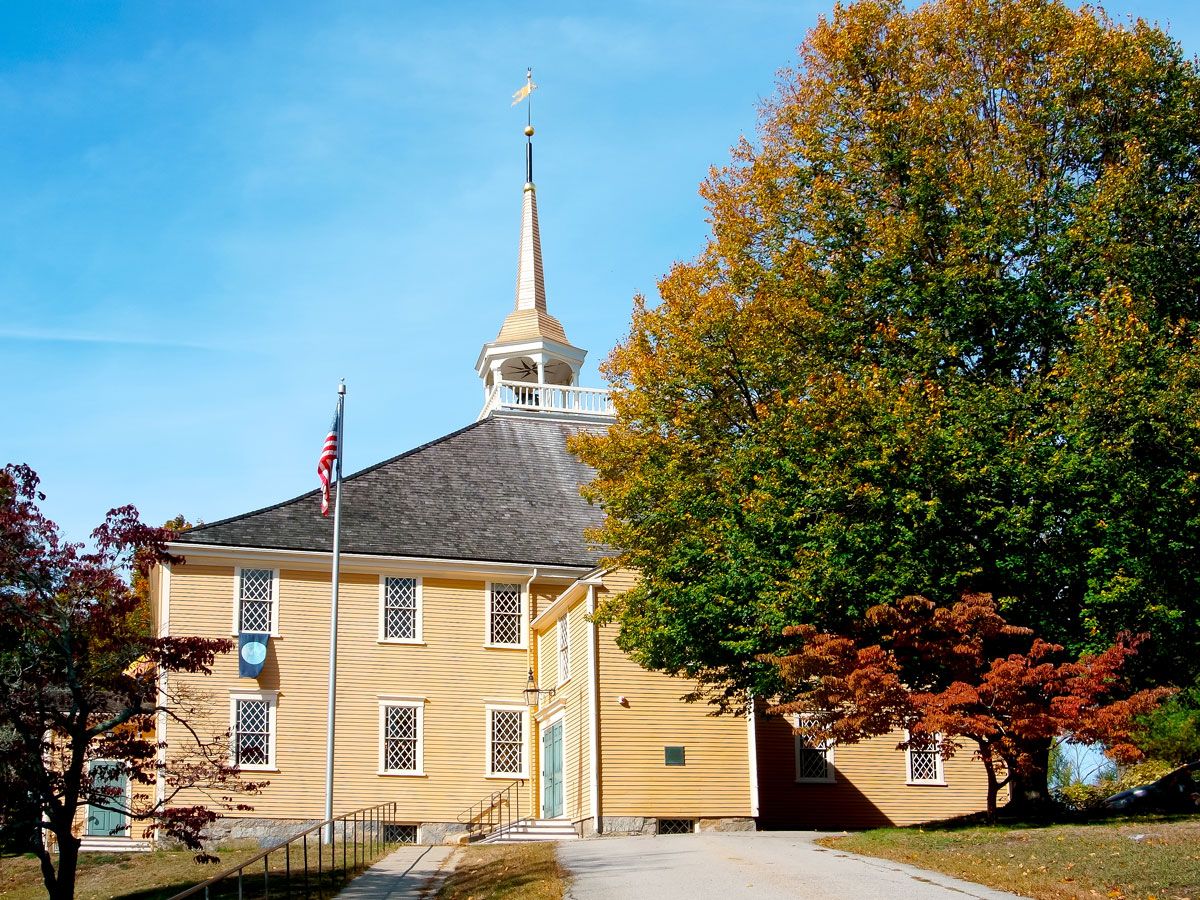
Yellow building with mural and steeple of Ulm Minster in Germany
Photo credit: ArTono/ Shutterstock

Ulm Minster may seem humble when compared with the other biggest church buildings in the world, but it holds one distinct honor: the world’s tallest steeple. The 528-foot-structure soars above the main entrance of the Gothic landmark and dominates the skyline of Ulm, a city in southern Germany. A 768-step staircase leads up through the steeple to a viewing platform, where visitors can see over the city’s medieval city rooftops, the Danube River, and the Alps in the distance.
Like many of Europe’s emblematic churches and cathedrals, Ulm Minster took several centuries — in this case, five — to complete. Work started in 1377 and was eventually finished in 1890. Incredibly, the church escaped undamaged during a World War II air raid.

Belz Great Synagogue – Jerusalem, Israel

Image of Belz Great Synagogue in Jerusalem, Israel
Photo credit: Yokypics/ Shutterstock

Inaugurated in 2000 after 15 years of construction, the Belz Great Synagogue is the largest synagogue in Israel — or anywhere in the world. The grandiose central sanctuary can hold more than 6,000 worshippers. The massive scale of the synagogue was deliberate, built to replicate a synagogue located in the Ukrainian town of Belz that was destroyed during World War II.

Some say that the temple also bears resemblance to one built thousands of years ago by Herod the Great on Temple Mount, the holiest site in Judaism. The sanctuary of Belz Great Synagogue dazzles with nine chandeliers, each made with 200,000 pieces of Czech crystal, and features a wooden ark capable of holding up to 70 Torah scrolls.

Spring Temple Buddha – Lushan County, China

Gold-covered Spring Temple Buddha statue in China
Photo credit: Paulino Leon/ Shutterstock

An imposing yet solemn figure against a backdrop of forest-clad hills in China’s Henan province, the 420-foot-tall Spring Temple Buddha is the world’s tallest religious statue. When the statue was built in 2008, after 11 years of construction, it was the world’s tallest statue overall, but India’s Statue of Unity overtook it in 2018.

The golden Spring Temple Buddha portrays Vairocana, the celestial Buddha, standing on a lotus flower throne. Below the main structure are two pedestals, which extend the landmark’s total height to 682 feet. Leading to the Buddha’s feet are two staircases, each divided into 12 flights of 365 steps to represent the months and days of the year.

Hassan II Mosque – Casablanca, Morocco

Image of Hassan II Mosque in Casablanca, Morocco
Photo credit: saiko3p/ Shutterstock

The most prominent landmark on Casablanca’s waterfront is the ornate Hassan II Mosque, completed in 1993. With capacity for more than 100,000 worshippers, it is the second-largest mosque in Africa. But perhaps more impressively, its 689-foot minaret is the one of the tallest on the planet, towering almost like a lighthouse over the Atlantic Ocean.

The impetus for construction of the mosque came from King Hassan II, who was concerned by Casablanca’s lack of historical monuments and desired a proper burial place for his predecessor on the throne, King Mohammed V, who died in 1961. The king employed thousands of artists and craftspeople to etch intricate designs on cedar wood and granite imported from all over Morocco. The seafront location is a reference to a verse in the Quran that says that Allah’s throne is above the water.

Milan Cathedral – Milan, Italy

Image of Milan Cathedral in Italy
Photo credit: Noppasin Wongchum/ Shutterstock

Adorned with a collection of 135 spires, one of which stands a staggering 357 feet tall, Milan Cathedral (Duomo di Milano) is one of the world’s finest examples of Gothic architecture. The largest church in Italy and second-largest in Europe, it took more than 70 architects almost 600 years to erect this enduring landmark.

Construction began in 1386, using pink-hued marble extracted from quarries in nearby Candoglia and transported to the city via a network of purpose-built canals. The exterior of Milan Cathedral boasts a collection of 3,400 statues. Perched atop the tallest spire is the famous gold statue of Mary called the Madonnina.

Faisal Mosque – Islamabad, Pakistan

Image of Faisal Mosque in Islamabad, Pakistan
Photo credit: K_Boonnitrod/ Shutterstock

Despite being located in Pakistan’s capital city and considered the country’s national mosque, the Faisal Mosque was named after the late King Faisal bin Abdul-Aziz of Saudi Arabia, who funded the project. Constructed in 1976, the main hall, courtyard, and porticoes of the mosque can host around 300,000 worshippers.

While the size of this Muslim landmark is indeed notable, what’s even more striking is the modern, almost alien-like exterior design devoid of the traditional mosque dome. Instead, it resembles an inverted Bedouin tent and is flanked on all four corners by 260-foot-tall minarets. There’s even an urban myth that the CIA wanted to inspect the minarets because they believed them to be missiles.

Prophet’s Mosque – Medina, Saudi Arabia

Prophet’s Mosque in Medina, Saudi Arabia
Photo credit: Shanuakd/ Shutterstock

The Prophet’s Mosque (also known as Al-Masjid al-Nabawi) holds immense religious and historical value for Muslims. According to Islamic scripture, the Prophet Muhammad himself built the mosque in 622 CE. Today’s building is a two-tiered rectangular structure that houses both the tomb of the prophet and an area on which his humble family home once stood. Decorating the flat roof of the mosque are 24 raised domes, which can be moved to create an additional prayer area during peak times. An estimated 1 million Muslim devotees visit the mosque for the annual pilgrimage.

Seville Cathedral – Seville, Spain

Horse-drawn carriage in front of Spain's Seville Cathedral
Photo credit: Sina Ettmer Photography/ Shutterstock

Covering a whopping 124,000 square feet, Seville Cathedral is a Gothic-style cathedral that stands on the site of a former mosque. Upon its completion in 1506, it overtook Istanbul’s Hagia Sophia as the world’s largest cathedral; today it is the third-largest cathedral in Europe. City leaders ordered the building of the cathedral (officially named Cathedral of Saint Mary of the See) to showcase the wealth of Seville that emerged after the Reconquista years and the expansion of Christianity throughout the Iberian Peninsula.

The cathedral features the impressive 343-foot-tall Giralda bell tower and a 66-foot-high altar piece, which is decorated with 45 wood panels that depict the life of Jesus and Mary. Seville Cathedral is also the final resting place of explorer Christopher Columbus.

Karnak Temples – Luxor, Egypt

Statues lining the Karnak Temples in Luxor, Egypt
Photo credit: Bist/ Shutterstock

Construction of the Karnak Temples began some 4,000 years ago, when Thebes, a city on the east bank of the Nile River where modern-day Luxor is located, was chosen as the site of the new Egyptian capital. Occupying more than 200 acres, the temples showcase the achievements of great Egyptian architects and rulers, such as Intef II, Hatshepsut, and Thutmose III.

One of the most impressive areas of the temples is the Great Hypostyle Hall, which has 134 columns, each 72 feet tall and carved with hieroglyphics. You may even recognize the hall from the James Bond movie The Spy Who Loved Me.

Great Mosque of Mecca – Mecca, Saudi Arabia

Worshippers at the Great Mosque of Mecca
Photo credit: Fauzan Fitria/ Alamy Stock Photo

A visit to the Great Mosque of Mecca (aka Masjid Al-Haram) is also a rite of passage for many Muslims. A cube-shaped building at its center, the Kaaba, is the holiest shrine in Islam — on any given day, droves of worshippers come to visit it. Other significant areas of the Great Mosque are the sacred Zamzan Well, from which pilgrims drink holy water, and the Station of Abraham, a small square stone associated with the building of the Kaaba.

First recorded as a Muslim structure in 638 CE, the mosque has undergone several major renovations since the 1500s that were commissioned by caliphs, sultans, and Saudi rulers. At present, it is undergoing an expansion that will increase the capacity to over 2 million worshippers.

Cristo de la Concordia – Cochabamba, Bolivia

Image of the Cristo de la Concordia statue in Cochabamba, Bolivia
Photo credit: Jess Kraft/ Shutterstock

The Christ the Redeemer statue in Rio de Janeiro, Brazil, might be the more famous monument to Jesus, but neighboring Bolivia boasts one that is even bigger. Cristo de la Concordia lords 869 feet over the town of Cochabamba, and the statue itself is a symbolic 108 feet tall, which equates to 33 meters — one for every year of Jesus’s life. What gives Bolivia’s statue the edge over Rio’s revered Redeemer is an extra 1.5 feet of stylishly quaffed hair. Built between 1987 and 1994, Cristo de la Concordia is a popular tourist attraction accessible via cable car or a 1,250-step staircase.

Guanyin of Nanshan – Hainan, China

Imposing statue of Guanyin of Nansha in China
Photo credit: Julie Ermolina/ Shutterstock

The celestial Guanyin of Nanshan statue rises 354 above a small island in the South China Sea, just off the coast of Sanya in the island province of Hainan. Accessible via a causeway, the whitewashed three-faceted statue depicts the Buddhist bodhisattva Guanyin, and each of the statue’s faces has an individual pose.

The Guanyin facing inland holds a sutra (Buddhist scripture) and makes the vitarka sign with her right hand, which symbolizes teaching, growth, and awakening. Two other deities face the sea, one holding prayer beads and another other with a lotus flower. The statue forms part of the Nanshan Temple, a complex home to replica temples from the Tang dynasty.
Jetavanaramaya – Anuradhapura, Sri Lanka

Image of Jetavanaramaya ancient Buddhist stupa in Sri Lanka
Photo credit: saiko3p/ Shutterstock

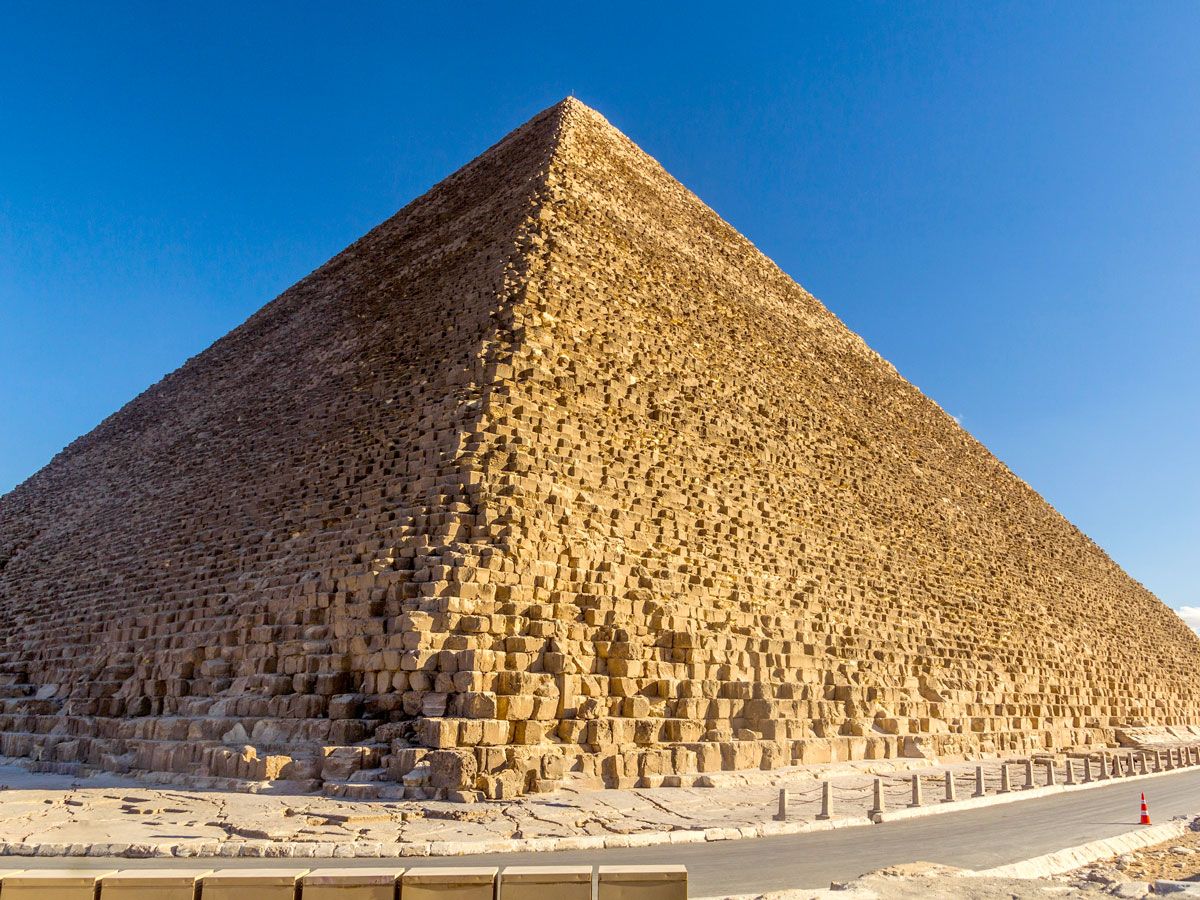
Jetavanaramaya is an ancient Buddhist stupa (a dome-shaped shrine for meditation) located within the ruins of the Jetavana monastery. When erected at the beginning of the fourth century, the 400-foot-tall stupa was among the world’s tallest structures — only two of the Pyramids of Giza were taller.

It’s no longer the tallest stupa, but with a base area covering more than 2.5 million square feet, it is the largest when measured by volume. An estimated 93 million bricks were used to build Jetavanaramaya, and the foundations are embedded 28 feet into the ground. The stupa belongs to one of the Buddhism world’s most significant shrines and can house an estimated 10,000 monks.

Kesaria Stupa – Bihar, India

Kesaria Stupa built into hillside in Bihar, India
Photo credit: charnsitr/ Shutterstock

Located amidst tranquil surroundings in northeastern India and partly overgrown by vegetation, this multitiered Buddhist monument is also one of the largest stupas in the world, rising 104 feet tall with a circumference of approximately 400 feet. The original structure dates back to the third century BCE, although what is seen today was likely built between 200 and 750 CE.

Kesaria Stupa is closely associated with the final days of Buddha, who had announced his attainment of nirvana upon departing from Vaishali for Kesaria. The Licchavi clan followed Buddha to the town and erected the stupa in his memory. Excavations in 1998 uncovered arrowheads, Islamic coins, and ruined idols, among other artifacts.

Sri Ranganathaswamy – Tamil Nadu, India

Colorful Sri Ranganathaswamy Hindu temple in Tamil Nadu, India
Photo credit: D Currin/ Shutterstock

Sri Ranganathaswamy is the largest Hindu temple in India, covering 156 acres in Tiruchirappalli, a city in the Indian state of Tamil Nadu. The temple is dedicated to Lord Ranganatha and is considered the holiest of the 108 Divya Desams (Vishnu temples) mentioned in an ancient collection of Tamil verses.

The architecture is classic Dravidian, which is a colorful style that originated in South India. The sprawling complex also features 21 ornamental gopurams (tower gateways), the tallest of which is 240 feet. Each December, hundreds of thousands of pilgrims attend the 21-day Vaikunta Ekadasi festival at the site.

Borobudur Temple – Magelang, Indonesia

Buddha statue overlooking countryside at Borobudur Temple in Indonesia
Photo credit: Anom Harya/ Shutterstock

Set on a majestic hill and surrounded by lush jungle is Borobudur Temple, which lays claim to being the largest Buddhist temple ever built. This UNESCO World Heritage Site took 75 years to construct and was unveiled in 825 CE. It has a surface area of approximately 26,000 square feet and is designed in three tiers: a pyramidal base, a core of three circular platforms, and a crowning stupa.

Other notable aspects are a collection of 72 smaller stupas and over 2,500 bas reliefs. Borobudur was abandoned and overgrown with jungle sometime between the 10th and 15th centuries, but it was rediscovered in the 19th century by Thomas Stamford Raffles, the British ruler of Java at the time, and restored in the 1970s.

Angkor Wat Temple – Siem Reap, Cambodia

Image of Angkor Wat temple complex in Cambodia
Photo credit: Rolf_52/ Shutterstock

Sprawling across a vast area of over 400 acres in northern Cambodia, the Angkor Wat temple complex is the world’s largest religious structure. Erected by the Khmer Empire in the 12th century, this awe-inspiring monument began as a Hindu temple and was later converted into a Buddhist place of worship.

The temple design is an architectural portrayal of Mount Meru, which is the center of the Hindu universe. The five towers represent the five peaks of the mountain, and the surrounding moat and defensive wall symbolize the oceans and mountain ranges. How colossal is Angkor Wat? It’s so large that many of its features are visible from space.

Post Banner Image
History

10 Cities With the World’s Oldest Subway Systems

By Daily Passport Team
Read time: 7 minutes
July 20, 2023
Updated: October 23, 2025

10 Cities With the World’s Oldest Subway Systems

By Daily Passport Team
Author
Daily Passport Team
Daily Passport writers have been seen in publications such as National Geographic, Food & Wine, CBC, Condé Nast Traveler, and Business Insider. They're passionate about uncovering unique destinations and sharing expert tips with curious travelers.

In the wake of the Industrial Revolution, rapidly growing cities faced a newfound problem. Their streets — built wide enough for modest horse and carriage traffic — were now jammed to a standstill with public buses and private carts, trolleys and streetcars, delivery carts, pedestrians, and eventually automobiles. So, tunnels were dug beneath the streets — and subways were born. Wondering which cities were the first to build subways? The following 10 cities are home to the world’s oldest metro systems.

10. New York, New York

Street entrance to subway station below in New York City
Photo credit: Andriy Blokhin/ Alamy Stock Photo

Year opened: 1904

Service on the New York City subway began on October 27, 1904. Back then, the city’s subways were privately owned and constructed, and companies raced to dominate the emerging market. The independent lines eventually linked to one another so passengers could transfer between them, and the city finally stepped forward and unified the system in the 1940s. But there remains one lingering difference between the systems: The tunnels and trains that run on the IRT lines (which are the numbered subway lines today) are narrower than those of the rest of the system (the lettered lines).

Today, there are 36 subway lines criss-crossing the Big Apple. They run on 248 miles of track and provide transportation for more than 4 million people each day, making it the largest transit system in North America.

9. Athens, Greece

View of graffiti-covered metro in Athens, Greece
Photo credit: Pahas/ Alamy Stock Photo

Year opened: 1904

While Athens’ original metro line dates to 1869, the underground tracks were originally laid for conventional steam locomotive service. The tracks were electrified in September 1904, from which time it was considered a rapid transit system.

As crews continue to dig additional tunnels to modernize and augment the Athens subway system, their shovels strike more here than they do elsewhere — like second-century Roman baths, Byzantine mosaics, ancient obsidian knife blades, burial sites, and massive stone-carved storage urns. The authorities have accepted that the tunneling process takes longer in Athens, so they plan around the antiquities: For a 1992 dig, teams of archaeologists started months before construction crews and then labored alongside the workers, cataloging artifacts as they were unearthed.

8. Berlin, Germany

Yellow subway train on elevated tracks in Berlin, Germany
Photo credit: Imagebroker/ Alamy Stock Photo

Year opened: 1902

In the late 1800s, Berlin undertook the construction of a two-pronged mass transit system: an elevated electric train, the Hochbahn, and an underground electric train, the Untergrundbahn (shortened to U-Bahn). The terminal station of the oldest section of the U-Bahn, Warschauer Brücke on the northern side of the Spree River, was closed from 1961 to 1995 because it was beyond the Berlin Wall in East Germany. It was renovated and reopened to passengers in 1995 as the Warschauer Strasse station. The station now also serves as the starting point for the Berlin Wall Trail. The modern U-Bahn carries 530 million passengers each year through its 173 stations.

7. Paris, France

View up at Paris metro train on bridge
Photo credit: incamerastock/ Alamy Stock Photo

Year opened: 1900

The dawn of the 20th century in Paris brought a chain of exciting events: the Summer Olympics (the first in which women competed and the first held outside of Greece); a world’s fair called the Exposition Universelle, where inventions like the X-ray and the diesel engine were unveiled; and an upgrade to the Eiffel Tower with electric lights. Another auspicious event was the 1900 opening of the first portion of the city’s Metro, between Porte Maillot and Porte de Vincennes.

The extensive and reliable subway system now stretches 140 miles, with upwards of 1.5 billion passengers each year. Eighty-six of the station entrances are still adorned by the curvy Art Nouveau-style cupolas introduced in 1900 and emblazoned with the word “Métropolitain.”

6. Boston, Massachusetts

Train pulling into Boston "T" station as commuters wait on platform
Photo credit: agefotostock/ Alamy Stock Photo

Year opened: 1897

North America finally got its first subway in 1897. Sure, Chicagoans had been riding the “L” for a few years prior, but the Massachusetts Bay Transit Authority decided to excavate a tunnel to divert electric streetcars underground, allowing them to pass under a congested stretch of Tremont Street.

While the tunnel was being dug, workers uncovered the graves of 90 people, who had been buried in a section of the Central Burying Ground that had been blithely paved over by a road project in 1836. The bodies were reinterred in the cemetery, and digging continued. The original four-track tunnel segment on Tremont Street, now registered as a National Historic Landmark, is still one of the busiest sections of the system, which is called the “T.”

Related: 10 U.S. Cities With the Best Public Transportation

5. Glasgow, Scotland

Orange subway train entering station in Glasgow, Scotland
Photo credit: Kay Roxby/ Alamy Stock Photo

Year opened: 1896

The Glasgow subway system is nicknamed the “Clockwork Orange” (after Anthony Burgess’ 1962 novel) for its vividly painted railstock and single, circular loop under the city. The system’s sole line stretches just 6.5 miles long, but it is intersected by several above-ground commuter rail lines. The 11-station subway opened on December 14, 1896, initially as a steam-powered, cable-hauled system, before electrification in the 1930s. The system, which serves a relatively small area of Glasgow, has been the subject of debate over the years, as several expansions have been proposed but have never materialized.

4. Budapest, Hungary

Empty bench in subway station in Budapest, Hungary
Photo credit: Joanne Moyes/ Alamy Stock Photo

Year opened: 1896

The Budapest metro system, which opened in May 1896, is notable for being only 8.8 feet beneath the street. The subway, the oldest electrified system in Europe, was first constructed as part of the city’s millennial celebration. That original 2.3-mile section, Line 1, is still in use today. Building the shallow tunnel was done relatively quickly over 21 months by digging a trench down the street, then bricking up the open channel and paving back over the top.

The Budapest metro has expanded several times over its history, including a project undertaken on Line 2 during the 1950s, which includes a Cold War-era secret bunker with a tunnel leading to the Hungarian Parliament Building.

3. Chicago, Illinois

Chicago "L" train on elevated tracks above busy street
Photo credit: Gary Woods/ Alamy Stock Photo

Year opened: 1892

Unlike the mostly underground trains on this list, the modern public transit system adopted in Chicago was originally a train line running along elevated tracks, which were cheaper and easier to build without disruption. Though it now includes underground portions, the “L” (short for “elevated”) took its first run in June 1892: a ​​steam-powered, 3.6-mile trip along today’s Green Line between 39th Street and Congress Street stations.

Rapid modernization of the city — thanks in part to the successful 1893 Columbian World’s Exposition — led to expansion of the elevated tracks and a project to convert the entire system from steam to electric third-rail power (an invention introduced at the fair). The current “L” system, which still runs on third-rail technology both on elevated tracks and underground, is 224 miles long and carries an average of more than 420,000 passengers per day.

2. Istanbul, Turkey

Railway bridge in Istanbul, Turkey, at dusk
Photo credit: Timo Christ/ Alamy Stock Photo

Year opened: 1875

The world’s second-oldest metro was built as part of Istanbul’s wide-reaching public transportation network, which also included ferries and above-ground trams. The first section of the subway, known as the Tünel, was proposed to the Ottoman government by a visiting French engineer named Eugène-Henri Gavand. He suggested that a tunnel be cut beneath the steep slope between Galata, at the Bosphorus River, and the Beyoğlu district.

That tunnel is a narrow, 1,820-foot long tube containing two sets of tracks. Originally, two wooden two-car trains operated in opposition in the tunnel, one coming and the other going at the same time. The trains were powered by a stationary steam engine that moved them via a single continuous belt, so that the acceleration of the downhill train counterbalanced the effort of the train climbing the hill. The engine was changed over to electricity in 1971, and the Tünel is still in use today.

1. London, England

London Underground riders entering turnstiles in station
Photo credit: Richard Baker/ In Pictures via Getty Images

Year opened: 1863

Today, up to 5 million passengers use the London Underground (affectionately known as “the Tube”) each day, but the system was originally intended as a way to move goods and livestock as much as to transport humans. January 1863 marked the opening of the six original stations that make up the stretch of the Metropolitan line, from Paddington to Farringdon Street.

Additional lines, dug deeper below the surface, didn’t open until after the turn of the 20th century, when the reliability of electric trains and elevators adequately reassured investors to fund the project. The original 1863 stations and tunnels are still in use today, a small but busy part of the 250-mile, 272-station system.

Related: These Cities Get Creative With Public Transportation
Post Banner Image
Culture

Beyond Stonehenge: 8 Stunning Stone Circles to Discover

By Daily Passport Team
Read time: 6 minutes
July 20, 2023
Updated: July 25, 2023

Beyond Stonehenge: 8 Stunning Stone Circles to Discover

By Daily Passport Team
Author
Daily Passport Team
Daily Passport writers have been seen in publications such as National Geographic, Food & Wine, CBC, Condé Nast Traveler, and Business Insider. They're passionate about uncovering unique destinations and sharing expert tips with curious travelers.

England’s Stonehenge has long held the crown of the world’s most famous stone circle, but it’s just one of over 1,000 located in the British Isles alone. Around the world, prehistoric stone circles are shrouded in mystery and legend, having intrigued the humans who came after them for millennia. Some were created as ceremonial grounds, while others were used as astronomical tools and burial sites. For some, scientists can only guess about their purpose. From the remote islands of Scotland to Senegal, discover nine fascinating stone circles.

Ring of Brodgar – Orkney, Scotland

The Ring of Brodgar stone circle surrounded by blooming flowers on the Orkney Islands of Scotland
Photo credit: M. Timothy O’Keefe/ Alamy Stock Photo

Located 10 miles north of mainland Scotland, the Orkney Islands are home to Britain’s third-largest stone circle. The Ring of Brodgar stands on an isthmus surrounded by emerald green pastures and vast brackish lochs. It dates back to around 2500 to 2000 BCE and once featured 60 stones — 27 of which survive today — encompassed by a rock-carved ditch. Archaeologists believe the site was either a religious shrine or a place to observe the equinox and solstice. The circle forms part of a collection of prehistoric monuments known as the Heart of Neolithic Orkney UNESCO World Heritage Site.

Bryn Cader Faner – Talsarnau, Wales

Bryn Cader Faner stone circle in northwestern Wales
Photo credit: Realimage/ Alamy Stock Photo

Perched on a hillside in the remote moorlands of northwestern Wales is Bryn Cader Faner. The site has drawn similarities to a crown of thorns and a wall of spears with its 15 jagged stone pillars, each six feet tall, that lean outwards. In the center of the circle is a 28-foot-wide, three-foot-tall cairn burial mound. Though it is unclear who built the site, when erected around 3000 BCE, the circle is thought to have possessed up to 30 standing stones. Unfortunately, several of them were removed when the British Army chose the site for shooting drills prior to World War II and treasure seekers left a hole in the cairn in the 1800s when looking for remains.

Calanais Standing Stones – Isle of Lewis, Scotland

Image of the Calanais Standing Stones on the Isle of Lewis, Scotland
Photo credit: funkyfood London – Paul Williams/ Alamy Stock Photo

Erected approximately 5,000 years ago, the Calanais (or Callanish) Standing Stones predate Stonehenge by around 2,000 years. The 12-foot-tall monoliths are laid out to form a central circle with rows stretching outwards to create a cruciform pattern. Nobody knows who built the circle or why they did so, but common belief is that it was an astronomical observatory that was used until around 800 BCE. The stones are aligned with the sun and moon paths at varying stages of the solar circle. Like other sites on this list, Calanais has inspired many folkloric tales. One suggests that the stones are giants that were petrified by a saint who thought that they were evil spirits.

Rollright Stones – Chipping Norton, England

Imageof the the Rollright Stones in England
Photo credit: David Lyons/ Alamy Stock Photo

The Rollright Stones are a group of megalithic monuments made from Jurassic-era limestone, set at the northern edge of the Cotswold Hills. The complex is split into three areas that date to different eras of the Neolithic period and the Bronze Age. The Whispering Knights (3800-3500 BCE) consist of four upright stones and one that has fallen. It’s the oldest part of the complex and regarded as one of Britain’s earliest funerary monuments.

Some 70 weather-worn stones make up the King’s Men (2500 BCE) ceremonial circle, but according to local lore, it’s impossible for one to count the stones three times and end up with the same number. The King Stone (1500 BCE) is a solitary stone erected as a memorial to a Saxon burial ground. Legend states that the stones are a petrified king and his army that were tricked by a wicked witch.

Rujm El-Hiri – Golan Heights, Israel

Image of Rujm el-Hiri stones in Israel
Photo credit: naive/ Alamy Stock Photo

Set at the heart of a plateau peppered with dolmens (megalithic single-chamber tombs) is a series of stone circles called Rujm el-Hiri. The monument features five concentric circles that get progressively thinner from the outside in. An estimated 40,000 tons of basalt rocks were used to arrange the circles, the largest of which reaches about eight feet in height. They surround a 15-foot-tall central mound that once functioned as a burial site.

Theories about the purpose of the site range from it being a ritual center to a celestial calendar, dakhma funerary tower, or observatory. Its age is also a subject of debate, with some dating it to the early Bronze Age (3000-2700 BCE) and others to around 3800 to 3540 BCE.

Stone Circles at Odry – Odry, Poland

Stone Circles at Odry in Poland
Photo credit: Panther Media GmbH/ Alamy Stock Photo

Nestled amid a forest in northern Poland, the Stone Circles at Odry is one of the largest megalithic complexes in Europe. This Iron Age site consists of 10 complete and two incomplete circles, each made up of 16 to 29 upright stones. In the center of most of the circles are either one or two larger monoliths. Excavations have found 602 barrows (burial mounds) that contain the skeletons of one to three humans each.

The Odry circles have close ties to the Wielbark culture. This ancient culture was established by the Goths and Gepids of Scandinavia and flourished in the historic Pomerania region of Poland and eastern Germany. Other Polish stone circles, such as those in Grzybnica, Leśno, and Węsiory, are also associated with the Goths.

Sine Ngayène – Kaolack Region, Senegal

Image of Stone Circles of Senegambia in northern Senegal
Photo credit: DorSteffen/ Shutterstock

Spread across a vast area in southern Senegal and northern-central The Gambia is the UNESCO-listed Stone Circles of Senegambia. The site consists of four groups of megaliths that collectively form the world’s largest concentration of stone circles. In total, the Senegambia area has over 1,000 circles, almost 29,000 monoliths, and large numbers of tumuli burial mounds. The largest of the four sites is Senegal’s Sine Ngayène. It features 52 stone circles and 1,102 carved stones that were erected in stages between 700 and 1350 CE. Archaeologists have also unearthed the remains of houses and iron melting sites that date to the same period. Less than a mile away is the quarry from which the stones were carved.

Wassu Stone Circles – Wassu, The Gambia

Wassu Stone Circles in the Gambia
Photo credit: MJ Photography/ Alamy Stock Photo

The Wassu Stone Circles comprise another remarkable area of the larger Stone Circles of Senegambia complex. This 11-circle site sits at the edge of Wassu, a town situated on a bend of the Gambia River. The stones are the tallest in the Senegambia region and rise as high as 7.5 feet. It’s likely that these laterite rock megaliths were first quarried and then carved with primitive tools.

Like many other stone circles on this list, mystery surrounds the origin and purpose of Wassu. However, unearthed pottery, funerary ornaments, and human relics suggest it was once occupied by an organized and prosperous civilization. It’s also been said that the circles are the burial tombs of ancient kings. Today, locals leave stones and vegetables at the circles as good luck offerings.

Post Banner Image
Outdoors

Where Are the Quietest Places in the U.S.?

By Jersey Griggs
Read time: 5 minutes
July 20, 2023
Updated: July 25, 2023

Where Are the Quietest Places in the U.S.?

By Jersey Griggs
Author
Jersey Griggs
Jersey is a travel and lifestyle writer whose work has appeared in publications such as Condé Nast Traveler, Business Insider, and Bust. When she’s not exploring her adopted home state of Maine, she’s likely planning her next big trip.

Feeling stressed out? You might just need some peace and quiet. According to the Hearing Health Foundation, noise triggers a stress response in the brain. And since 83% of Americans live in urban populations, noise pollution from modern-day city life is unavoidable. Fortunately, the following eight locations are backed by Science as being some of the quietest places in the U.S.

Hoh Rainforest – Washington

Image of the Hoh Rainforest in Washington
Photo credit: f11photo/ Shutterstock

Olympic National Park is home to the Hoh Rainforest, said to be the quietest place in the country according to acoustic ecologist Gordon Hempton. While collecting sound data in the park, Hempton was able to precisely locate the rainforest’s quietest spot. Dubbed the “One Square Inch of Silence,” this unique location is a two-hour hike from the visitor center and is virtually free from any noise pollution created by humans.

Averaging 140 inches of rain annually, the greater Hoh Rainforest is a lush and tranquil oasis, carpeted with moss, ferns, and coniferous and deciduous trees. Through various hiking trails and a designated campground situated in an old-growth forest, visitors will learn that the rainforest’s rhythms are far from silent, but they are certainly serene.

Glacier National Park – Montana

Mountains, glaciers, and blooming wildflowers in Montana's Glacier National Park
Photo credit: MarksPursuit/ Shutterstock

Named by Outside as one of the quietest parks in the U.S., Glacier National Park contains over a million acres of rugged mountains, glacial streams, hiking trails, and campsites. Situated along the border of Canada, the park has less air traffic than other remote areas, which leads to a more serene experience in the wilderness.

In the summer months, the park’s most popular sites — such as Going to the Sun Road and Lake McDonald — are often subject to minor noise pollution. To experience the park’s quietest spots, plan a visit to North Fork Valley, accessible via a dirt road, or hike into one of Glacier’s 65 backcountry wilderness campsites.

Big Bend – Texas

River through tall, narrow gorge in Big Bend, Texas
Photo credit: Linda Moon/ Shutterstock

According to a national acoustic study, southwestern Texas is one of the quietest regions in the U.S. Located on the northern end of the Chihuahuan Desert, Big Bend is home to dramatic limestone canyons, pitch-black skies, and stunning cacti blooms. Best of all, the remote region provides an endless expanse free from noise pollution.

To explore the region, visitors can take their pick between Big Bend National Park and Big Bend Ranch State Park. Both parks are geographically diverse. The national park is home to hot springs, 100 miles of the Rio Grande, and natural water holes like Ernst Tinaja. Meanwhile, Big Bend Ranch State Park is slightly more remote and houses Madrid and Mexicano Falls, the state’s second and third-highest waterfalls, respectively.

Boundary Waters Canoe Area Wilderness – Minnesota

Red canoe docked on rocks in Boundary Waters Canoe Area Wilderness in Minnesota
Photo credit: Dan Thornberg/ Shutterstock

Probably the only noise you’ll hear in Boundary Waters Canoe Area Wilderness is the lonesome call of the common loon, Minnesota’s state bird. Another extremely quiet location highlighted by acoustic ecologist Gordon Hempton, this wilderness area is situated in the remote Superior National Forest of northern Minnesota, and contains over a million acres of land and water wilderness. 

Home to 1,200 miles of canoe routes and 2,000 campsites, the Boundary Waters is primarily accessible by boat. For a relaxed itinerary, paddlers should plan a visit to Sea Gull Lake for a few days of camping and fishing. Then, head back to civilization with a trip to the nearby town of Grand Marais for a range of eats and eclectic art.

Great Sand Dunes National Park – Colorado

Shifting sand dunes of Great Sand Dunes National Park in Colorado
Photo credit: Bill Florence/ Shutterstock

With background noises lower than 20 decibels, Great Sand Dunes National Park is about three times as quiet as the average city. Besides its namesake sand dunes, this southern Colorado park’s diverse landscape also includes grasslands, alpine lakes, forests, and tundra.

Popular park activities include sandboarding and sand sledding down the eponymous dunes. Nearby, Medano Creek flows around the base of the dunes and creates a wide natural beach in the Rocky Mountains. For overnight stays, numerous campsites are available throughout the park for visitors to experience a quiet evening beneath a blanket of stars.

Bold Coast – Maine

Flowers on beach and boats docked in bay along Maine's Bold Coast
Photo credit: Remo Nonaz/ Shutterstock

Running 147 miles along the lower 48’s northernmost coastline, Maine’s Bold Coast is one of the quietest locations in New England. Accessible via the Bold Coast Scenic Highway — a section of Route 1 that travels from Milbridge, Maine, to the Canadian border — this remote region of the U.S. contains miles of granite shoreline, coastal wilderness, and blueberry barrens.

Numerous hikes dot the coastline, including the Cutler Coast Preserve, a remote section of Maine wilderness that provides access to backcountry campsites. Another popular site is Quoddy Head State Park, home to a historic lighthouse on the easternmost point of the continental United States. Nearby, the small town of Lubec is downright bustling by Downeast standards, but it’s small and quaint to most visitors — with zero traffic lights or shopping malls.

Haleakalā National Park – Hawaii

Clouds forming over Haleakalā National Park in Hawaii
Photo credit: MH Anderson Photography/ Shutterstock

Located on the island of Maui, Haleakalā National Park is the third location on this list named by acoustic ecologist Gordon Hempton. (Notably, Hempton refuses to reveal his other nine chosen locations, asserting anonymity is crucial to the protection of these places.) Home to ancient volcanic landscapes, lush rainforest, and stunning coastline, Haleakalā is akin to a scene from a postcard.

Hiking trails abound throughout the park, allowing visitors to access Hawaii’s ancient rock craters, including Kawilinau, the floor of a volcanic pit. Visitors can also make reservations to watch the sunset from Haleakalā’s summit at 10,000 feet above sea level and then stay to watch the stars come out.

Yellowstone National Park – Wyoming

Multi-colored thermal hot spring in Yellowstone National Park
Photo credit: Kris Wiktor/ Shutterstock

According to Science, Yellowstone National Park remains as quiet as the U.S. was before European colonization. But since the park attracted 3.29 million visitors in 2022 alone, the crowds at Yellowstone are likely to cause noise pollution, especially at popular sites like Old Faithful.

For a more relaxed experience, consider visiting Yellowstone in autumn or winter, when the park is notably quieter. Fall hiking is also an excellent time to see wildlife, and it’s the best season for fishing for trout. And while many facilities are closed in the winter, Old Faithful Snow Lodge remains open, as do several warming huts for travelers cross-country skiing or snowshoeing through the park’s serenely quiet landscape.

Post Banner Image
History

12 Interesting Country Nicknames, Explained

By Bennett Kleinman
Read time: 9 minutes
July 20, 2023
Updated: October 9, 2024

12 Interesting Country Nicknames, Explained

By Bennett Kleinman
Author
Bennett Kleinman
Bennett is a New York City-based staff writer for Daily Passport. He previously contributed to television programs such as the Late Show With David Letterman, as well as digital publications like the Onion. Bennett has traveled to 48 U.S. states and all 30 Major League Baseball stadiums.

While many of us may know Japan as the “Land of the Rising Sun,” the story behind that nickname is less often discussed. But it’s not just Japan that can claim a fascinating nickname — from the “Land of Poets” to the “Rainbow Nation,” countries all around the world are known by playful monikers that tie into centuries of history, geography, and culture. Here are the backstories behind 12 interesting country nicknames.

Monaco – “The Billionaire’s Playground”

Streets of Monaco
Credit: Alexander Spatari/ Moment via Getty Images

Monaco is the world’s second-smallest country by area, covering a total land area of just over 0.77 square miles. But despite its small size, the country attracts individuals with big pockets. Nicknamed the “Billionaire’s Playground,” Monaco is home to roughly 40,000 residents. Of those people, over 27,000 have a net worth in excess of $1 million USD, according to a 2022 report, and 208 of them have a worth in excess of $30 million. While there are technically only three billionaires living in Monaco, it is still the country with the highest number of billionaires per capita.

Part of Monaco’s wealthy reputation comes from its thriving casino industry, which has operated since the 1860s. Perhaps no casino is more famous than the Monte Carlo Casino, which opened in 1865. Interestingly, Monegasque citizens are actually prohibited from gambling at local casinos, but in exchange, they’re not required to pay any income tax. Monaco is also home to the world’s most expensive real estate — according to a 2023 Knight Frank Wealth Report, $1 million USD only gets you an average of 183 square feet of living space.

Finland – “Land of a Thousand Lakes”

Aerial view of lakes and forest in Finland
Credit: Sitikka/ iStock via Getty Images Plus

Minnesota may be known as the “Land of 10,000 Lakes,” but across the Atlantic, Finland has earned a similar distinction. The nickname “Land of a Thousand Lakes” is actually selling Finland short, as there are around 187,000 lakes in the country, responsible for around 10% of the country’s total area. These lakes likely formed about 10,000 years ago due to glacial melt throughout the region.

The largest lake in Finland is Lake Saimaa, with an area of 443 square miles. This size also makes it the fourth-largest freshwater lake on the European continent. It’s part of the larger region of Saimaa, often known as the Finnish lake district, made up of 120 lakes and totaling an area of 1,690 square miles. Local salmon call the lakes home, as does an endangered species of ringed seal. The lakes are also used by the Finnish people as essential transportation routes, and several large hydroelectric stations provide power to the whole country.

Japan – “Land of the Rising Sun”

Image of Japanese temple next to lake
Photo credit: Nita Limo/ Shutterstock

The nickname “Land of the Rising Sun” primarily refers to Japan’s geographic location, as it’s among the first countries to see sunlight on any given day. Prior to the seventh century, Japan was known as Wa, a name that, when written, implied “insignificance” in nearby China. In an effort to send a message to Chinese rulers during the seventh century, Japan adopted the new name Nippon, a word that translates to “the sun’s origin” in Japanese. 

Japan’s association with the sun only grew throughout the following centuries. When Marco Polo visited China in the 13th century, Chinese locals informed Polo of a land called Ji-pang — meaning “sun’s origin” in regional dialect — located to the east in the direction that the sun rose. These terms were westernized in the years that followed, ultimately resulting in Japan’s “Land of the Rising Sun” nickname that we know today. Japan’s national flag even features a depiction of the sun.

South Africa – “Rainbow Nation”

Pair of penguins walking on beach lined with boulders in South Africa
Photo credit: Luther Lockwood/ Shutterstock

Archbishop Desmond Tutu first used the term “Rainbow Nation” to describe South Africa in 1994. It was in that same year that the country held its first multiracial national elections, resulting in the presidency of anti-apartheid candidate Nelson Mandela. While apartheid-era South Africa was deeply segregated, Tutu coined “Rainbow Nation” to describe his future vision for the country as a whole — he hoped that people of all ethnicities would thrive together and work to support one another’s best interests in the post-apartheid era. 

Upon taking office, Mandela embraced the “Rainbow Nation” nickname, stating in his inaugural address, “We enter into a covenant that we shall build the society in which all South Africans, both black and white, will be able to walk tall, without any fear in their hearts, assured of their inalienable right to human dignity — a rainbow nation at peace with itself and the world.” This hopeful nickname persists today as a call for racial unity not just in South Africa, but around the globe.

Singapore – “Lion City”

Merlion statue and fountain on the waterfront of Singapore
Credit: Sean3810/ iStock Editorial via Getty Images Plus

Singapore’s nickname is derived from the Malay words singa pura, which translate to “lion city.” It dates to an ancient legend in which Prince Sang Nila Utama landed on the shores of what is now Singapore in 1299. The prince thought he saw a lion when he arrived, so he decided to name his new kingdom Singapura.

The lion’s head was proclaimed an official national symbol of this city-state in 1986 to represent leading principles of Singapore: courage, excellence, and strength. The mythical “merlion” — with the head of a lion and the body of a fish — is also considered to be the national mascot of Singapore. A merlion statue was unveiled in the city in 1972 along the Singapore River.

Chile – “Land of Poets”

Steps leading up to ornate church building in Chile
Photo credit: Georgios Tsichlis/ Shutterstock

Despite its comparatively small population of around 19.5 million residents, around half that of California alone, Chile has produced a disproportionately large number of legendary poets. In fact, two such individuals won the Nobel Prize for Literature: Gabriela Mistral in 1945 and Pablo Neruda in 1971. Mistral — the first Latin American to receive the Nobel Prize in Literature — was known for her inspiring poetry collections including Desolación (“Despair”) and Ternura (“Tenderness”), while Neruda earned the Nobel Prize “for a poetry that with the action of an elemental force brings alive a continent’s destiny and dreams.” 

However, it’s not just Nobel laureates who make up Chile’s rich poetry tradition — individuals such as Nicanor Parra perfected the literary art form as well, solidifying this South American nation as the true “Land of Poets.”

Ireland – “Emerald Isle”

Lush green rolling hills and small lakes in Ireland
Credit: Anthony Murphy / 500px/ 500Px Plus via Getty Images

As you might expect, Ireland’s “Emerald Isle” nickname refers to the lush green landscape that the island nation is known for. The moniker was coined in a 1795 poem by William Drennan titled “When Erin First Rose,” in which Ireland was referred to as “the em’rald of Europe.” Drennan also wrote, “Let no feeling of vengeance presume to defile / The cause of, or men of, the Emerald Isle,” thus forever immortalizing the nickname in conjunction with Ireland.

It wasn’t always the case, however, that Ireland was associated with the color emerald or green. In fact, Ireland was originally more closely intertwined with shades of blue. This correlation dates to the time of St. Patrick, who is considered the patron saint of the island. Early depictions of St. Patrick from a 13th-century French manuscript show him clad in a blue robe. In 1541, King Henry VIII declared himself to be king of Ireland and presented the Irish Kingdom with a new coat of arms featuring a dark blue background. And, in 1783, King George III established the Order of St. Patrick in Ireland, whose members wore blue outfits. It was only during the Irish Rebellion of 1798 that the Irish adopted the color green as a symbol of national pride, replacing the blue emblems that had been imposed on the country by the British.

Iceland – “Land of Fire and Ice”

Black-sand coastline of Iceland
Photo credit: Fotokon/ Shutterstock

The story behind Iceland’s nickname is tied to the unique geological terrain of this Nordic nation. Iceland is known as the “Land of Fire and Ice” due to its combination of violent volcanoes and glistening glaciers that can be found throughout the country. This reputation as a meeting point of fire and ice dates back to when Iceland was first explored, as early 16th-century maps included elements such as polar bears floating on icebergs depicted alongside erupting fires elsewhere. 

Today, around 269 glaciers cover approximately 11% of Iceland. Those glaciers are accompanied by over 100 Icelandic volcanoes, many of which are still active. All told, the Icelandic terrain exemplifies the extremes of hot and cold, making its “Land of Fire and Ice” nickname extremely appropriate.

Comoros – “Perfume Isles”

Coastline of Comoros in eastern Africa, seen at sunset
Credit: mbrand85/ iStock via Getty Images Plus 

Comoros, located off the coast of Mozambique in East Africa, is an archipelagic nation made of four islands. When visiting, you’ll probably notice a delightful scent emanating through the air, earning Comoros the nickname “the Perfume Isles.” These welcoming odors are due to the abundance of flowers on the islands.

One of the most prominent flowers grown in Comoros is the ylang ylang flower. The scent of this flower is so highly regarded that it’s become an important ingredient in the Chanel No. 5 perfume. Comoros is also the second-largest producer of vanilla in the world, after nearby Madagascar. So, home bakers can likely Comoros for the delicious smell wafting through their kitchens, too.

Afghanistan – “Graveyard of Empires”

Mountains looming over buildings and river in Afghanistan
Photo credit: Mushtaq B/ Shutterstock

The nickname “Graveyard of Empires” refers to the historic difficulty that many nations have endured in attempting to conquer the area that makes up modern-day Afghanistan. While the historic region was successfully conquered by powerful rulers such as the Mongol Empire, many others have struggled to lay siege to Afghanistan. Great empires such as the Mughals came up short against the local Safavids in the 17th century, and even the British failed in their attempt to conquer Afghanistan during the First Anglo-Afghan War in 1842. 

From 1979 to 1988, the Soviet occupation of Afghanistan proved to be a disastrous waste of resources for the U.S.S.R., with some claiming that the failed war contributed to the Soviet Union’s downfall shortly thereafter. Even the United States struggled to achieve their diplomatic goals in their 21st-century occupation of Afghanistan, as the “Graveyard of Empires” nickname remains relevant in modern times.

Bhutan – “Land of the Thunder Dragon”

Farm surrounded by mountains in Bhutan
Credit: UlyssePixel/ iStock via Getty Images 

“Land of the Thunder Dragon” sounds like a mythical place from Game of Thrones, but it’s also the very real nickname of Bhutan. One of the world’s highest countries, Bhutan is situated in the Himalayas mountain range, north of eastern India. For years, Bhutan remained isolated, before opening itself up to tourism in the 1970s. Locals refer to the country as “Druk Yul,” which is Bhutanese for “Land of the Thunder Dragon.”

There are several aspects of Bhutanese culture that contribute to this nickname. First, the region is known for its powerful thunderstorms, which legend once said to be fire coming from a dragon. The “Druk,” or dragon, is also an important figure in Bhutanese mythology, and is now regarded as a national symbol and the focal point of Bhutan’s national flag.

Malta – “Land of Honey”

Coastal walled city in Malta
Photo credit: kavalenkava/ Shutterstock

The Mediterranean is known for its indulgent and desirable food products, and Malta is no exception. This tiny island nation is heralded for its rich history of beekeeping, which dates back to the time of the ancient Greeks. The region was referred to in Greek as Melitē, a term translating to “honey sweet.” 

As sea levels rose and segmented Malta from nearby Sicily, this “Land of Honey” became home to an endemic species of honey bee known as Apis mellifera ruttneri. These Maltese honey bees produced incredibly pure and delicious honey, though their population was decimated in 1992, thus necessitating the importation of non-Maltese bees. However, the Maltese honey bee remains the dominant bee species found on the island of Malta — and so the “Land of Honey” nickname remains relevant as ever.

Post Banner Image
Culture

“The City Under One Roof” and 4 Other Places With Unique Living Arrangements 

By Julia Hammond
Read time: 4 minutes
July 20, 2023
Updated: June 5, 2024

“The City Under One Roof” and 4 Other Places With Unique Living Arrangements 

By Julia Hammond
Author
Julia Hammond
Julia is a U.K.-based travel writer whose work has been featured in The Independent, The Telegraph, The New Zealand Herald, and Culture Trip, among others. She’s an enthusiastic advocate for independent travel and a passionate geographer who has had the privilege of traveling to more than 130 countries in search of a story.

Some of the world’s communities buck the usual trends and opt for highly unconventional living arrangements. The reasons for this — and the ways people adapt to their environments — make them fascinating places to learn about and to visit. From a town of 6,000 people with just one street to a community that fills up an entire island, these are the stories behind five such towns and communities with unique living arrangements.

Whittier, Alaska

Lake and snow-capped mountains in Alaska
Photo credit: Arctic Light Imagery/ Shutterstock

Whittier, Alaska, started out as an army base during World War II, when the U.S. military sought an ice-free Alaskan port in a secluded location. They found the ideal spot at the head of Passage Canal, a deep fjord that forms part of Prince William Sound, surrounded by mountains often shrouded in clouds. However, the army personnel needed somewhere to live, so in 1953 they constructed the 273,660-square-foot Buckner Building — and thus Whittier was dubbed “the city under one roof.” 

When the army left town in 1960, the building sat empty and became derelict. The population of Whittier shrunk dramatically, and today it numbers fewer than 300 people. All but a handful of them live under a different roof: the 14-story Begich Towers, an army-built property turned condominium. As well as housing, the building features a medical clinic, police station, grocery store, post office, laundromat, council offices, and an indoor playground for Whittier’s school, which is connected to the main building via a tunnel.

Coober Pedy, Australia

Desert mining community in Coober Pedy, Australia
Photo credit: John Warburton-Lee Photography/ Alamy Stock Photo

The South Australian mining town of Coober Pedy is located around 525 miles north of Adelaide. The town has a population of 1,566 people, and according to the latest census data, there are 142.4 males for every 100 females. Many residents come to mine opals, which are still found in rich seams below ground.

Unfortunately, the climate here is harsh and unforgiving — particularly in summer when average maximum temperatures can soar well above 90 degrees Fahrenheit. To cope, many of the population have moved into homes hewn from the hillside, excavating the rock to create subterranean dwellings they call dugouts. They maintain a more comfortable temperature year-round, meaning there’s no need for expensive air conditioning. Another upside is that the ground is relatively stable, allowing for reasonably sized rooms.  

Matmata, Tunisia

Homes carved out of desert landscape in Matmata, Tunisia
Photo credit: imageBROKER.com GmbH & Co. KG/ Alamy Stock Photo

If you’ve heard of the Tunisian town of Matmata, a Berber village in the south of Tunisia, that’s most likely because of its role as a filming location in the Star Wars franchise. Although movie-themed tours have since become commonplace, the town’s star attraction are its unique living arrangements. 

Some local residents of Matmata have chosen to live as troglodytes, which in this case means cave dwellers. They excavate a deep pit in the region’s soft sandstone and then dig caves into the sides, with rooms that overlook a hollow, central courtyard. Nevertheless, film fans will want to stay at the Sidi Driss Hotel, which featured in Star Wars Episode IV: A New Hope, as the home of Luke Skywalker and the Lars home on the planet Tatooine, and again in Episode II: Attack of the Clones

Sułoszowa, Poland

Aerial view of homes and fields in Sułoszowa, Poland
Photo credit: Curioso.Photography/ Alamy Stock Photo

There’s nothing unusual about a village that has only one street — linear settlements are found all over the world, many following the course of a river or the flat floor of a valley. But what sets Sułoszowa, Poland, apart is its scale: The vast majority of the almost 6,000 people who live here share a single road. It stretches for more than five miles, with narrow perpendicular plots that branch off it like the legs of a centipede. 

Other than the layout, life around Sułoszowa is pretty normal. Some earn a living through farming potatoes, wheat, or oats, noting that the long, thin strips of land they cultivate are an efficient shape to plough. Others commute to nearby Krakow, or make a living from tourism — the village is home to the 14th-century Pieskowa Skała Castle, which forms part of the Trail of the Eagle’s Nests and is also a short distance from Ojcow National Park.

Santa Cruz del Islote, Colombia

Image of coastline of Santa Cruz del Islote in Colombia
Photo credit: Ceciliamp/ Shutterstock

Santa Cruz del Islote is the most densely populated island on the planet. Measuring a total of just 2.5 acres, the island is located off Colombia’s Caribbean coast close to the Gulf of Morrosquillo. Around 1870, fishermen discovered this mosquito-free patch of coral and piled stone and anything else they could find on top to create reclaimed land. 

Some estimates claim that today, more than a thousand people live on the island. Though these reports may be somewhat exaggerated (the actual number is likely between 500 and 900), space is clearly at a premium on Santa Cruz del Islote. Every available piece of land on this semi-artificial island has been developed. There’s a strong sense of community — around four dozen families occupy its approximately 100 houses. Day-trippers are welcomed, but the reality of life for the residents of Santa Cruz del Islote is a tough one, with limited services and many forced to work on neighboring islands.

Post Banner Image
Geography

What Are the Tallest Peaks on Each Continent? 

By K.C. Dermody
Read time: 5 minutes
July 13, 2023
Updated: July 25, 2023

What Are the Tallest Peaks on Each Continent? 

By K.C. Dermody

Fewer than 500 people worldwide have scaled the so-called Seven Summits — the highest mountain peaks on each of the seven continents. In 1985, an American businessman named Richard Bass was the first to climb to the top of all seven. While you’re probably familiar with lofty peaks like Mount Everest and Mount Kilimanjaro, can you name all seven? Below, discover the tallest peaks on each continent and the climbers who have made it all the way to the top.

North America – Denali (20,310 Feet)

Snow-covered peak of Denali in Alaska
Photo credit: Steve Allen/ Shutterstock

The highest peak in North America, Denali (formerly known as Mount McKinley) sits roughly in the center of the 600-mile-long Alaska Range in the south-central part of the state. The official elevation of the higher, more southerly of Denali’s two summits was established in the early 1950s at 20,320 feet above sea level. However, in 2015, the U.S. Geological Survey (USGS) reassessed Denali’s peak using state-of-the-art equipment and determined it to be 10 feet lower than previously thought. 

In 1910, two prospectors of what was dubbed the “Sourdough Expedition” were the first climbers to conquer Denali’s North Peak. Hudson Stuck and Harry Karstens led a party to the South Peak, the true summit, on June 7, 1913. Today, hundreds of climbers attempt to reach Denali’s summit each year.

South America – Mount Aconcagua (22,831 Feet)

View of Mount Aconcagua from valley in Argentina
Photo credit:GC photographer/ Shutterstock

Mount Aconcagua, which straddles the Chilean border in the Andes mountains of west-central Argentina, is the highest point in both South America and the Western Hemisphere overall. However, its precise elevation has been debated since the early 20th century. In January 2001, a team of scientists using advanced GPS technology reported an elevation of 22,840 feet, but neither Argentina’s government nor the National Geographic Society recognizes this figure. The peak’s 22,831-foot height established by the Military Geographical Institute of Argentina remains the generally accepted figure. 

Mount Aconcagua has a north and a south summit, which are connected by a ridge. The lower southern summit has been measured at 22,736 feet, while the higher northern summit was first reached in 1897 by Swiss climber Matthias Zurbriggen.

Europe – Mount Elbrus (18,510 Feet)

Dirt path leading to snow-covered Mount Elbrus in the distance
Photo credit: Gideon Ikigai/ Shutterstock

The highest peak of the Caucasus mountains — and the highest point in Europe — is Mount Elbrus in southwestern Russia. Formed more than 2.5 million years ago, this extinct volcano has twin cones that extend to elevations of 18,510 feet and 18,356 feet. The taller cone was first ascended in 1874 by a British expedition led by Swiss guide Peter Knubel. Elbrus is covered by 22 glaciers, which feed the Kuban River.

Asia – Mount Everest (29,032 Feet)

Snowy peak of Mount Everest in Nepal and Tibet
Photo credit: Vixit/ Shutterstock

Mount Everest, the highest mountain in Asia and Earth’s highest peak above sea level, lies on the border between Nepal and the Tibet Autonomous Region of China in the Himalayas. The majestic mountain reaches an elevation of 29,032 feet — and it’s still growing. In 2020, researchers from Nepal and China jointly announced that the world’s tallest peak is even taller than originally thought.  

Everest was first recognized as the highest point on the Earth’s surface by the governmental Survey of India in 1852. Major expeditions up Everest began in the 1920s, but it wasn’t until 1953 that Edmund Hillary and Tenzing Norgay — members of an expedition sponsored by the Royal Geographical Society and the Alpine Club — reached its summit. But mystery still surrounds the disappearance in 1924 of George Mallory and Andrew Irvine, who may have reached the summit before vanishing. Mallory’s body was found at 26,760 feet in 1975; Irvine remains missing.

Africa – Kilimanjaro (19,340 Feet)

Signs for Mount Kilimanjaro in Tanzania
Photo credit: Erik barrow/ Shutterstock

The highest peak in Africa, Kilimanjaro is a volcanic massif in northeastern Tanzania, near the Kenyan border. The massif extends approximately east-west for 50 miles and consists of three principal (extinct) volcanoes. The youngest and highest of these has a central cone, Kibo, that rises to 19,340 feet. 

In 1889, German geographer Hans Meyer and Austrian mountaineer Ludwig Purtscheller were the first to reach the Kibo summit. Mount Kilimanjaro National Park, established in 1973 to protect the mountain as well as the six forest corridors that extend downslope through the montane forest belt, was designated a UNESCO World Heritage site in 1987.

Australia/Oceania – Puncak Jaya (16,024 Feet)

Climbing ropes on steep rocky slopes of Puncak Jaya
Photo credit: Arfani Mujib/ Shutterstoc

Though there’s some disagreement on the highest peak in Australia, if a wider net is cast Down Under to include Oceania, the region’s highest mountain is Puncak Jaya (also known as Mount Carstensz). Found in the Sudirman Range of the west-central highlands on the island of New Guinea, Jaya Peak rises to an elevation of 16,024 feet, and is the world’s highest island peak. 

Dutch explorer Hendrik A. Lorentz first reached Jaya Peak’s snowfield in 1909, but it was another 53 years before an expedition led by Austrian explorer and writer Heinrich Harrer (author of Seven Years in Tibet) climbed its summit in 1962.

Antarctica – Mount Vinson (16,050 Feet)

Snow-covered Mount Vinson in Antarctica, seen from across lake
Photo credit: Lua Carlos Martins/ Shutterstock

Discovered in 1935 by American explorer Lincoln Ellsworth, Mount Vinson (also known as the Vinson Massif) is the highest mountain in Antarctica. Located in the Sentinel Range of the Ellsworth Mountains, in the western part of the continent, the peak overlooks the Ronne Ice Shelf. It rises to an elevation of 16,050 feet above sea level. 

Vinson is named for Carl Vinson, a U.S. congressman who championed exploration of Antarctica. Its summit was first reached in 1966 by an American expedition that was supported by the American Alpine Club and the National Science Foundation.

Post Banner Image
Architecture

5 Impressive Ancient Aqueducts Around the World

By Sarah Etinas
Read time: 4 minutes
July 13, 2023
Updated: July 25, 2023

5 Impressive Ancient Aqueducts Around the World

By Sarah Etinas

Aqueducts were incredibly useful in ancient times. For centuries, these conduits transported water to cities and towns that needed it, which were often many miles away. In particular, the Roman Empire was well-known for its advanced system of aqueducts, which were constructed from 312 BCE to 226 CE. Today, only a few of these ancient feats of engineering are still standing, all the more impressive when you consider they’ve remained for more than a millennium. From Spain to India and Peru, here are five of the most spectacular ancient aqueducts around the world.

Pont du Gard – Vers-Pont-du-Gard, France

Three-tiered Pont du Gard aqueduct bridge in France, seen from across riverbank
Photo credit: Imagebroker/ Alamy Stock Photo

One of the the best-preserved examples of a Roman aqueduct standing today, France’s Pont du Gard was built in the first century CE. Part of a 31-mile aqueduct built to carry water over the Gard River to the Roman city of Nîmes, the three-story Pont du Gard is the world’s tallest Roman aqueduct bridge (reaching 160 feet tall) and the most-visited ancient monument in France.

In 1985, it was designated a UNESCO World Heritage Site as “an outstanding example of bridges built in ancient times” and “a technical as well as artistic masterpiece.” Visitors can stroll along the 3.5-mile Aqueduct Trail for the best views and check the Pont du Gard Visitor Center and Museum. Be sure to stick around for the evening bridge lighting at nightfall.

Aqueduct of Segovia – Segovia, Spain

View up at stone structure of Aqueduct of Segovia in Spain
Photo credit: javarman/ Shutterstock

France’s Pont du Gard and Spain’s Aqueduct of Segovia have a surprising number of similarities. Both were built under the rule of the Roman Empire, both were constructed around the year 50 CE and are exceptionally well-preserved today, and both were named UNESCO World Heritage Sites in 1985.

A symbol of the city where it stands, the Aqueduct of Segovia is still in use today, transporting water for 10 miles from the Frío River to central Segovia. The 2,388-foot-long structure was made with granite blocks from the nearby Guadarrama Mountains and features 165 scenic arches. While the aqueduct of Segovia doesn’t have dedicated walking trails or a museum like the Pont du Gard, it does have a few unique viewpoints, including Azoguejo Square and Mirador del Postigo.

Aqueduct of Valens – Istanbul, Turkey

Person taking a photograph of Aqueduct of Valens in Istanbul, Turkey
Photo credit: Sun_Shine/ Shutterstock

Built in 373 CE, the 3,186-foot-long Aqueduct of Valens was built to supply water to Constantinople, now called Istanbul. Named after Roman Emperor Valens, the Aqueduct of Valens is believed to be the longest aqueduct of its time, spanning 265 miles. While many ancient aqueducts were left to stand on their own away from modern developments, the Aqueduct of Valens remains standing in the heart of modern-day Istanbul. Cars will even drive right through this aqueduct’s ancient arches when traveling on Atatürk Boulevard.

Bukka’s Aqueduct – Hampi, India

Stone remains of Bukka's Aqueduct in Hampi, India
Photo credit: RealityImages/ Shutterstock

While the aqueducts of the Roman Empire — built across Europe and into the Middle East — tend to be the better-known ancient aqueducts, other nations and empires constructed remarkable aqueducts of their own. Located in Hampi, India, Bukka’s Aqueduct was built under the reign of Bukka Raya I (1356-1377 CE) in the Hindu Kingdom of Vijayanagara. Unlike many of the Roman aqueducts, the system was primarily underground to provide water to the village of Hampi — part of an advanced network of irrigation channels that connected its temples, palaces, and storage tanks. Today, the ruins at Hampi, including the aqueduct, are a UNESCO World Heritage Site.

Nazca Aqueducts – Cantalloc, Peru

View of circular underground Nazca Aqueducts in Peru
Photo credit: Daniel Prudek/ Shutterstock

The Nazca Aqueducts were built by the Nazca peoples who inhabited the southern coast of modern-day Peru starting around the first century BCE. Like Bukka’s Aqueduct, the system — built to store water from the nearby Rio Grande River — is mostly underground. In fact, the only part of this water transportation system that you can see from the surface are the puquios, which are the spiraling rock paths that guide water into the underground aqueduct system. This clever set-up allowed the desert-living Nazca people to thrive in the region’s arid climate for approximately 900 years.

Post Banner Image
Outdoors

What Are the Largest National Parks in the World?

By Bradley O'Neill
Read time: 6 minutes
July 13, 2023
Updated: October 12, 2023

What Are the Largest National Parks in the World?

By Bradley O'Neill

National parks protect and preserve unique and invaluable natural environments across the globe, from glaciers and mountains to desert valleys and marine areas. They also often offer up-close encounters with wildlife and glimpses into the lives of ancestral groups. Today, there are thousands of national parks spread across hundreds of countries. These are nine of the biggest national parks on the planet.  

9. Vatnajökull National Park – Iceland (4,633 Square Miles)

Massive glacier in Iceland's Vatnajökull National Park
Photo credit: Shaiith/ Shutterstock

One of three UNESCO World Heritage Sites in Iceland, Vatnajökull National Park is an unforgettable meeting point of fire and ice. It’s where glaciers and volcanoes stand side-by-side and help shape a landscape that ranges from black sands and birch forests to geothermal springs, glacial rivers, and thundering waterfalls.

The park itself occupies 13% of Iceland’s total area and shelters one of the world’s largest glaciers, Vatnajökull. Other notable features are the horseshoe-shaped Ásbyrgi Canyon and the deafeningly powerful Dettifoss Waterfall. Biking and hiking are popular ways to explore the landscape, including a multi-day alpine hiking route between the wilderness areas of Snæfell and Lónsöræfi. 

8. Death Valley National Park – California (5,270 Square Miles)

People overlooking undulating desert landscape of Death Valley National Park in California
Photo credit: Dan Sedran/ Shutterstock

The site of the world’s hottest recorded air temperature, Death Valley National Park is located in California’s Mojave Desert between the Amargosa and Panamint mountain ranges. This often unforgiving desert region is marked by extremes — from North America’s lowest point at Badwater Basin to, yes, even sometimes snow-capped mountains, large wildflower meadows, and oases home to tiny fish species.

In spite of the name and its triple-digit summertime temperatures, the park is a surprisingly welcoming place for visitors. Easy hikes — best explored in the cooler winter months — pass by spectacular sights like Badwater Salt Flat and Mesquite Flat Sand Dunes. Golfers can even play 18 holes within the solitude of the park at the one-of-a-kind Furnace Creek Golf Course

7. Kruger National Park – South Africa (7,523 Square Miles)

Pair of elephants wading in river in Kruger National Park
Photo credit: JMx Images/ Shutterstock

Few places on Earth are as revered for spotting majestic wildlife as Kruger National Park. Hundreds of thousands of visitors arrive here annually on self-drive and guided Jeep safaris to search for Africa’s iconic “Big Five”: lions, leopards, rhinos, elephants, and buffalo.

In addition to the wildlife, Kruger National Park is home to dozens of archaeological sites such as Masorini and Thulamela. They act as reminders of humankind’s interaction with nature over thousands of years and how people have helped in the creation and conservation of the park. Intimate interactions with the park’s free-roaming animal residents await at waterholes and along rustic backpacking and wilderness trails. 

6. Denali National Park and Preserve – Alaska (9,492 Square Miles)

Hiker standing on boulder overlooking Denali National Park in Alaska
Photo credit: rybarmarekk/ Shutterstock

The colossal 20,310-foot Mount Denali, North America’s highest peak, dominates the landscape of Denali National Park and Preserve. Glaciers, rivers, boreal forests, and alpine tundra also shape this dramatic landscape. It all creates a natural habitat for Denali’s own “big five,” which include caribou, Dall sheep, grizzly bears, moose, and wolves. Hiking, biking, dog-sledding, flightseeing, and snowmobiling are popular activities within the park, while a stop at the Denali Visitor Center offers an educational insight into the history and culture of the region. 

5. Gates of the Arctic National Park and Preserve – Alaska (13,238 Square Miles)

River winding through mountainous landscape of Gates of the Arctic National Park in Alaska
Photo credit: BlueBarronPhoto/ Shutterstock

With no roads and no trails, northern Alaska’s Gates of the Arctic National Park and Preserve is the true definition of an untouched wilderness. Here, rugged mountains — from the dramatic granite spires of the Arrigetch Peaks to the massive Brooks Range — tower above an expansive tundra and meandering rivers.

Despite the lack of infrastructure, this is a dreamlike destination for solitude seekers and backcountry explorers. With challenges like boggy terrain and tussocks, accomplished hikers often consider six miles as a reasonable daily target. Along the way are numerous chances to take in magnificent vistas and spot caribou, lynx, muskox, and other wildlife.

4. Wood Buffalo National Park – Canada (17,300 Square Miles)

Fields and forest in Canada's Wood Buffalo National Park
Photo credit: Dancestrokes/ Shutterstock

Wood Buffalo National Park, Canada’s largest national park, straddles the border of the province of Alberta and the Northern Territories. Consisting of boreal forests, plains, and wetlands, the park is home to the world’s biggest free-roaming herd of wood bison and an important colony of whooping cranes. Indigenous groups, including the Cree, Dene and Métis peoples, have inhabited the region for over 8,000 years.

Recreational opportunities within the park include day hikes to the ethereal landscapes around Grosbeak Lake and summertime watersports at Pine Lake. The park is also the world’s largest International Dark Sky Preserve, and a great vantage point for experiencing the northern lights. 

3. Namib Naukluft National Park – Namibia (19,216 Square Miles)

Twisted bare tree trunks on salt pan surrounded by sand dunes in Namib Naukluft National Park
Photo credit: Oleg Znamenskiy/ Shutterstock

Distinguished by a collection of towering sand dunes that appear as giant red mountains, Namib Naukluft National Park occupies a significant portion of the Namib Desert, a coastal desert in Southern Africa considered the oldest desert on the planet. The most famous and tallest of the dunes is Sossusvlei, which rises over 1,000 feet and can be climbed on foot.

Another popular area to visit is Deadvlei, where ancient pitch-black camel thorn trees sprout from a bleached white clay pan. Oryx, springboks, wolves, and almost 350 bird species thrive in this arid region. Those who visit typically do so on four-wheel-drive and overland safari tours. 

2. Wrangell-St Elias National Park and Preserve – Alaska (20,625 Square Miles)

Glacial pool with mountains in background in Wrangell-St. Elias National Park and Preserve
Photo credit: Galyna Andrushko/ Shutterstock

The third Alaskan park on the list, Wrangell-St. Elias National Park and Preserve also has the honor of being the largest national park in the U.S. It stretches from the shores of the Gulf of Alaska to the 18,008-foot summit of Mount St. Elias — one of seven of North America’s 20 tallest peaks located inside the park.

While almost a third of the park is glaciers, it’s still rich in wildlife, namely bald eagles, brown bears, and caribou. Opportunities for adventure range from boating on backcountry rivers to day hiking, mountaineering, and winter sports such as snowshoeing. 

1. Northeast Greenland National Park – Greenland (375,000 Square Miles)

Mountains, glaciers, and icebergs floating on lake in Northeast Greenland National Park
Photo credit: Chris Howey/ Shutterstock

Taking top spot on the list of the world’s largest national parks is the impossibly vast Northeast Greenland National Park. It occupies an area that’s almost as big as France and Spain combined. It’s also the only national park in Greenland and the northernmost national park in the world.

Visitors can discover a diverse and awe-inspiring landscape made up of fjords, glaciers, ice fields, mountains, and tundra. Within this rugged park reside varied wildlife species, including the arctic fox, musk oxen, and polar bear. Despite an often inhospitable climate, the park has around 40 permanent residents, plus their faithful sled dog companions.

Post Banner Image
Culture

7 Secrets of the New 7 Wonders of the World

By Julia Hammond
Read time: 6 minutes
July 13, 2023
Updated: July 25, 2023

7 Secrets of the New 7 Wonders of the World

By Julia Hammond
Author
Julia Hammond
Julia is a U.K.-based travel writer whose work has been featured in The Independent, The Telegraph, The New Zealand Herald, and Culture Trip, among others. She’s an enthusiastic advocate for independent travel and a passionate geographer who has had the privilege of traveling to more than 130 countries in search of a story.

In 2007, more than 100 million votes were cast in a poll to decide the New 7 Wonders of the World. From a selection of more than 200 iconic sites — such as the Pyramids of Giza, the Statue of Liberty, and the Eiffel Tower — voters settled on seven places of outstanding cultural and historic significance. While you’re probably already familiar with the New 7 Wonders of the World, here are seven fascinating facts you might not know. 

The Tiles That Clad Christ the Redeemer Bear Concealed Messages

People admiring Christ the Redeemer statue in Rio de Janeiro, Brazil
Photo credit: Graham Prentice/ Alamy Stock Photo

The world’s largest Art Deco monument, Cristo Redentor (Christ the Redeemer) looks over Rio de Janeiro from the top of Corcovado Mountain in Brazil’s Parque Nacional da Tijuca. A mosaic of soapstone tiles covers the 125-foot-tall concrete structure, which depicts Jesus with his arms outstretched, reaching a wingspan of 92 feet. But many visitors don’t realize that the workers who prepared and installed the soapstone tiles in 1922 wrote wishes on the back, which are now hidden from sight. And that’s not the only secret on the inside: The statue also contains a four-foot-wide heart. 

From time to time, the statue is even damaged by lightning strikes. Checks on the statue’s structural integrity are carried out from inside, via stairwells and access tunnels. The maintenance team enters through a door roughly aligned with Christ’s right ankle, but there’s also a trapdoor in his right shoulder.

There’s a Hidden Cenote Beneath Chichén Itzá 

Temple pyramid of Chichén Itza in Mexico
Photo credit: Iryna Kalamurza/ Shutterstock

Mexico’s Yucatán Peninsula is famous for both its Mayan ruins and abundance of cenotes, the sinkhole lakes that form when the permeable limestone above them collapses. Archaeologists continue to explore the area, and in 2015, they found evidence which points to there being water directly underneath Kukulcán, Chichén Itza’s temple pyramid. 

Archaeologists and geophysical researchers from the University of Mexico carried out an electrical resistance survey, which indicated that there was a water-filled cavity under the layer of rock which supported the pyramid. At its widest point, this cenote measures about 114 feet in diameter. You don’t have to walk very far to get a sense of what it might look like: Cenote Xtoloc, open to the elements, is situated between Kukulcán and El Caracol observatory.  

A Door at Machu Picchu Might Lead to a Secret Chamber Filled With Gold

Image of a llama with Inca citadel of Machu Picchu in the background
Photo credit: Don Mammoser/ Shutterstock

More than a million people visit Machu Picchu in Peru every year, but few visit a cave on the far side of Huayna Picchu, the peak which rises above the former Inca citadel. The Temple of the Moon is a ceremonial shrine with niches cut into the cave walls. As with the purpose of Machu Picchu in general, there’s plenty of speculation about what they were used for, though a popular theory suggests they might have held mummies. 

It’s possible there are more secrets yet to be unlocked. In 2011, French explorer Thierry Jamin came to Machu Picchu to investigate what appeared to be a sealed door. With permission from Peru’s Ministry of Culture, he used ground-penetrating radar technology to try to determine whether there was anything behind it. He believes he may have found an Inca funerary chamber filled with gold, but Jamin has yet to convince the authorities to give him permission to excavate.

There’s a Basement at the Taj Mahal, But It’s Off-Limits 

Image of the Taj Mahal in India
Photo credit: David F. Tidwell/ Shutterstock

Eagle-eyed travelers visiting the Taj Mahal in Agra will spot sealed-up passages leading below ground. Built by Shah Jahan to honor his late wife Mumtaz Mahal, this lavish 17th-century mausoleum is enveloped in white marble, which features intricate carving and inlay work studded with precious and semi-precious gems. But what lies beneath? 

Some locals may remember the rooms being accessible until the late 1970s, but since then, flooding from the adjacent Yamuna River and the need for restoration has kept them closed. In 2022, India’s High Court rejected a request to have them opened up. Rumors abound as to what might be behind closed doors, but photos that have emerged suggest that there’d be little to see, and certainly nothing as striking as what’s above ground.

The Sewers at the Colosseum Reveal Roman Habits

Image of the Colosseum in Rome, Italy
Photo credit: KJ Kohs/ Shutterstock

At its peak, Rome’s Colosseum had a capacity of 50,000 people, making it the largest structure of its kind anywhere in the Roman Empire. These spectators would pour in through 80 entrances to watch gladiator fights and other shows; the amphitheater was designed so that they could take their seats quickly. 

However, arguably the most interesting part of the structure is that which sits beneath the level of the arena, with its dense network of rooms and passageways. Archaeologists excavated the sewers beneath the Colosseum in 2022 hoping to find out more about how the arena was flooded for water-based spectacles such as mock sea battles. Instead, they learned about the people who watched, uncovering discarded fruit seeds and pips, dropped coins, and even the bones of small dogs.   

The Great Wall of China Has a Series of Hidden Doorways

Great Wall of China winding through hilly, tree-covered landscape
Photo credit: Braden Pruitt/ Shutterstock

Here’s a conundrum: What would be the point in going to all the trouble of building a massive defensive wall yet putting doors in it? A 2020 National Geographic documentary about the Great Wall of China highlighted this curious architectural detail. In the documentary, archaeologist and presenter Allan Maca explained that the doorways would be large enough to allow a person through. A few are even large enough to accommodate a person on horseback. 

The findings stem from the work of Professor Li Zhe of Tianjin University and his team, who used drones to map around 220 of the wall’s hidden doorways. These heavily camouflaged doorways would have likely been used by the military when they needed to dispatch scouts, to launch surprise attacks, or to receive supplies.

There’s a Smaller Version of Petra Just Up the Road

Building carved into sandstone facade of Petra, Jordan
Photo credit: Lubo Ivanko/ Shutterstock

Three miles from the UNESCO World Heritage Site of Petra, Jordan, visitors will find a remarkably similar, though smaller, ancient settlement. It’s called Siq al-Barid (the Cold Siq), but it’s known to foreign tourists as Little Petra, and it was probably a suburb of Petra during Nabatean times.

Like its larger counterpart, it’s squeezed into a narrow sandstone gorge and boasts carved façades, tombs, irrigation channels, and rock cisterns. Steps cut out of the rock lead to the upper stories of temples and rock-hewn spaces once used as dining rooms. There are also a number of interesting frescoes at the Painted Biclinium (Painted House). One features a picture of a winged Eros with a bow and arrow and Pan playing a flute. Another depicts grapevines, which confirms that this was a wine producing area during the Nabataean Empire, which reached its heydey in the first century CE.